For years, Pakistan’s claim that the Tehreek-e-Taliban Pakistan operates from sanctuaries inside Afghanistan produced a familiar exchange: Islamabad accused, Kabul denied, and each new militant attack triggered another round of recrimination. That pattern is becoming harder to sustain. The sanctuary dispute can now be tested against a growing body of evidence rather than competing claims […]
Hundreds of Afghan medical students in Pakistan face expulsion, including women and students nearing graduation. Courts in several parts of the country have temporarily allowed them to stay and continue their studies, but their long-term future remains uncertain.
When Saudi Arabia, Turkey and Pakistan agreed to a mutual defense pact in August, it was principally seen as a political commitment. The “Mecca alliance,” as it was dubbed, stipulated that an armed attack on one would be treated as an attack on all three, accompanied by deeper military cooperation. That pact is no longer […]
Pakistan Tehreek-e-Insaf (PTI), the country’s main opposition party, announced a long march to the capital, Islamabad, on Sunday, October 4, as part of its ongoing nationwide movement to demand the release of its leader and former Prime Minister Imran Khan.
The march, which was originally scheduled to be held on Sunday, September 27, starting from Peshawar, was postponed on Friday after the party’s top leadership decided it needed more time to mobilize to face the state’s preparations to block it.
Thousands of people have been taking to the streets in different parts of the country demanding the immediate release of Khan, his wife Bushra Bibi, and other party leaders.
Khan’s party and supporters have also accused the Shehbaz Sharif-led coalition government in the country of deliberately ignoring Khan’s bad health condition and trying to “slowly kill him in prison” by keeping him in solitary confinement.
They have also alleged that Khan has been denied access to his family members and party colleagues in Rawalpindi’s Adiala Jail for almost six months now and demanded that he be transferred out of the jail to a private hospital.
State repression
Meanwhile, the security forces have fortified the capital, blocking all the ways leading to the capital with shipping containers and large deployments after the government called the protests illegal and threatened consequences for the PTI leadership.
Pakistan’s Interior Minister Mohsin Naqvi had earlier called the march a failure and “a drama” and warned that if the PTI does not abandon its plan to go to Islamabad the state will find a “permanent solution” to stop them.
The security forces had arrested a large number of PTI leaders and workers in order to derail the protests. The PTI last week said that even its elected members of the National Assembly were arrested.
Three of Khan’s sisters Aleema, Uzma, and Noreen Khan were also arrested by the Pakistani authorities last week and jailed for 30 days on charges of being an alleged “threat to public order.”
The PTI released a statement on Monday, September 28, claiming Khan’s sisters have not been allowed to meet their family members or lawyers at Kot Lakhpat Jail in Lahore. Calling the situation of their incarceration “alarming” and a violation of their fundamental rights.
The previous mobilization to Islamabad in November 2024 had also witnessed large-scale state repression leading to clashes between the security forces and the PTI workers. Over a dozen people, including four security officials, were killed in those clashes.
Three years of incarceration
Khan, largely considered the most popular political leader in Pakistan’s politics today, was first arrested almost a year after he was ousted from his Prime Minister’s post in May 2023. He led the Pakistan government from August 2018 to April 2022.
The interim government that assumed power after his removal filed over a hundred cases against Khan, accusing him of the misuse of power, corruption, and violence against the security forces during the May 9, 2023 protests.
However, he was released after a court ruled his arrest was illegal only to be arrested again on August 5, this time after a district court sentenced him to three years in prison in the Toshakhana case, related to the state department that stores valuable gifts given to Pakistani officials by foreign dignitaries. Later his wife Bushra Bibi was also arrested.
Though a higher court later overturned his conviction, he and his wife have remained in Adiala Jail facing charges and even convictions in several other cases.
Many leaders in Khan’s party, PTI, were either arrested or forced to denounce the party and politics in public altogether.
Despite the fact that the PTI was blocked from contesting national elections in February 2024, it emerged as the largest opposition group in the country’s National Assembly after it decided to field its candidates as independents.
PTI and Khan’s supporters maintain that the cases against Khan and his wife were politically motivated and fake.
Ammar Ali Jan, leader of the Left wing Haqooq-e-Khalq Party (HKP) and a member of the Tehreek-i-Tahaffuz Ayeen-i-Pakistan (Movement to Save Pakistan’s Constitution or TTAP) formed as a broader alliance to fight for Khan’s release has condemned the continued incarceration of Khan and the repression of movements for his release.
He also questioned the state’s narrative about the failure of the movement, pointing out how it has made every effort to oppress it, including the arrests and fortification of the capital.
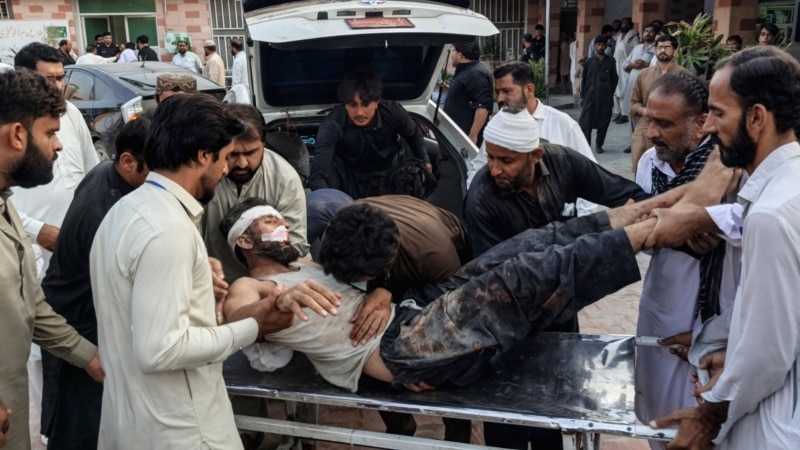
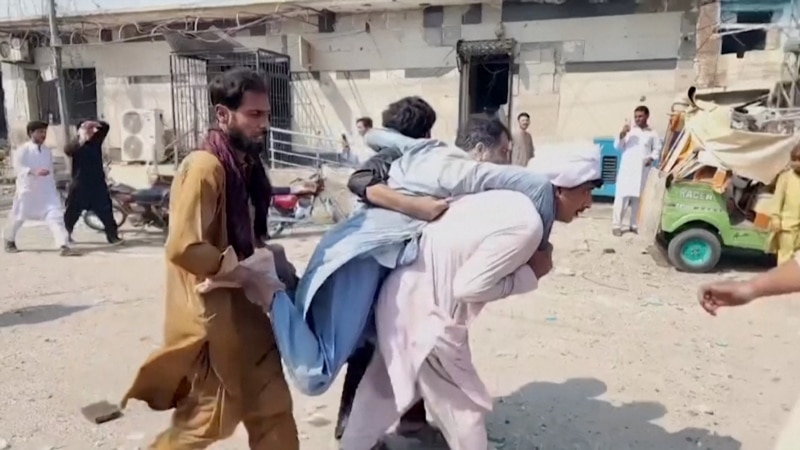
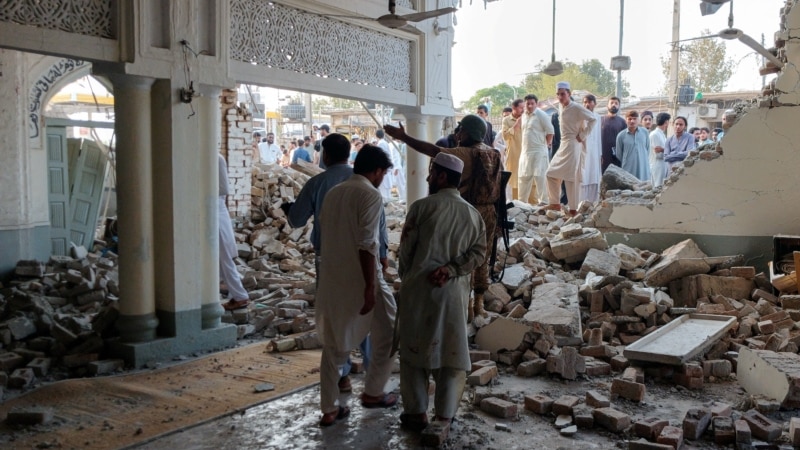
Thirteen people were killed and at least 35 others injured following a blast at a security checkpoint in Dera Ismail Khan, near the border between Pakistan's Balochistan and Khyber Pakhtunkhwa provinces.
International flights from Iran to several destinations remain operational despite the expansion of US sanctions targeting the country’s aviation sector, according to Tehran’s Imam Khomeini International Airport.
The airport said Saturday that flights to Turkey, Malaysia, China, Pakistan, Vietnam, and Afghanistan were continuing according to their previously announced schedules.
The announcement comes as Washington escalates economic pressure on Iran and seeks to restrict the ability of Iranian airlines to maintain international operations.
Iranian flights continue despite sanctions
Imam Khomeini International Airport said that, aside from flights already canceled, no additional cancellations had been announced.
The canceled services include flights involving the United Arab Emirates, Iraq, Oman, and Georgia.
The airport also said it was working to restore suspended air connections as soon as possible.
The continued operation of several international routes comes despite growing restrictions on Iranian aviation following a new round of US sanctions announced on September 8.
The measures have affected Iranian airlines as well as companies and intermediaries involved in providing services to the country’s aviation sector.
Recent reporting indicates that Iranian carriers have continued operating some international services despite the sanctions, including flights to China, Turkey, Thailand, and Afghanistan.
US measures target Iran’s aviation sector
The US Treasury Department announced sanctions on September 8 against 36 targets linked to Iran’s aviation sector, including 27 Iranian airlines. Washington described the measures as an effort to target what it considers Iran’s remaining unsanctioned carriers and the networks supporting them.
The sanctions form part of a broader US campaign to restrict Iran’s access to international financial and commercial networks.
The measures have also placed pressure on foreign companies providing Iranian carriers with fuel, ground handling, aircraft-related services, and other forms of support.
The consequences, however, have varied by country. While some governments and companies have restricted Iranian aviation connections, other countries have continued to facilitate flights.
Iraq restrictions trigger backlash
In Iraq, the suspension of Iranian flights, particularly through Najaf International Airport, has triggered criticism from official, political, factional, and religious quarters.
Several Iraqi parties and figures have called for the decision to be reversed and rejected what they described as US pressure on Baghdad.
The Iraqi government is also moving toward dialogue with Washington in an effort to secure an exemption that would allow air links with Iran to resume.
Ali Akbar Velayati, international affairs advisor to Iran’s Leader, said the restrictions on Iranian flights were part of an effort by Iran’s enemies to compensate for their battlefield defeat by attempting to dismantle the “unity of the fronts” from within.
The Iranian Ambassador to Iraq, Mohammad Kazem Al-Sadegh, further told Iran’s ISNA news agency that a new decision surrounding Iranian flights to Iraq is likely to be announced soon.
He added that Iran is in contact with Iraqi officials and proposals on the matter have been submitted.
Al-e Sadegh noted that roughly 12,000 to 13,000 people travel between Iraq and Iran via Iranian airlines.
China maintains air links with Iran
China has maintained its opposition to unilateral US sanctions and continued to receive Iranian flights.
Flight-tracking data cited in recent reports showed Iranian services continuing to operate to Chinese destinations after the latest US measures took effect.
The continued connections with China also reflect the broader geopolitical divide over Washington’s unilateral sanctions policy, with Beijing maintaining economic and diplomatic ties with Tehran despite US pressure.
Turkey’s Parliament is expected to consider the Mecca Joint Defense Agreement with Saudi Arabia and Pakistan next month, Parliament Speaker Numan Kurtulmus told reporters on Friday, as the three countries move to establish mechanisms for implementing the pact.
Kurtulmus said the agreement has not yet been submitted to Parliament for ratification and is expected to be formally presented once lawmakers return from recess next month. He added that international agreements require parliamentary approval to enter into force in Turkey, while meetings currently being held under the agreement remain preparatory.
Turkey prepares to ratify Mecca defense agreement
Kurtulmus made the remarks to reporters in Ankara, confirming that the agreement has yet to reach Parliament despite ongoing coordination among Ankara, Riyadh, and Islamabad.
The Mecca Joint Defense Agreement was signed on August 7 by Saudi Crown Prince Mohammed bin Salman, Turkish President Recep Tayyip Erdogan, and Pakistani Prime Minister Shehbaz Sharif in Mecca.
The agreement states that an armed attack against any one of the three countries would be regarded as an attack against all three, while providing for expanded defense cooperation and collective deterrence.
The pact is therefore moving from its initial political agreement toward institutional and legal implementation, with parliamentary approval constituting a key step for Turkey.
When asked about the claim that the Mecca agreement was against Iran, Kurtulmus denied the allegation and stated that the main source of the region’s problems was “Israel” and its aggressive policies.
He reminded parliamentarians that “Israel” launched multiple attacks on numerous nations without question as part of its hostile policies, and explained that the balance of power has completely changed following the US-Israeli war on Iran.
“We propose that the countries in the region increase their cooperation to establish and secure their own security,” he said. “We absolutely do not, and should never, view the Mecca Agreement as an agreement against Iran. The Mecca Agreement, and perhaps even its expansion to include Iran and other regional countries, should become an agreement that ensures the security of the regional countries and, more broadly, the Islamic world.”
Kurtulmus added that the agreement was not formed as a threat to any country as it’s an agreement for the promotion of unity, solidarity, and security of the region.
“It is still in its initial stages and is not yet fully formed,” he said. “We hope that with the participation of other regional countries, it will become a much stronger agreement.”
Saudi Arabia calls for military coordination
The development comes as Saudi Arabia, Turkey, and Pakistan prepare for an urgent meeting of their military chiefs, amid Saudi Arabia’s aggression on Yemen.
Saudi Arabia’s Foreign Ministry announced Friday that the chiefs of staff of the three countries would meet to discuss ways to support the Kingdom under the terms of the Mecca agreement.
The announcement followed a meeting in New York between Saudi Foreign Minister Prince Faisal bin Farhan Al Saud, Pakistan’s Deputy Prime Minister and Foreign Minister Ishaq Dar, and Turkish Foreign Minister Hakan Fidan. The Saudi statement did not specify when the military chiefs would meet or what form potential support could take.
Pact moves toward institutionalization
The three countries have already begun establishing mechanisms to implement the agreement.
At a Strategic Political and Defense Committee meeting in Istanbul on August 31, the three sides agreed to establish a secretariat in Saudi Arabia, initially headed by a Pakistani secretary-general for three years.
They also agreed to strengthen military capabilities through joint activities, defense-industry cooperation, technology development, and production.
At least 16 people were reported dead and dozens were injured after an attacker drove a vehicle packed with explosives into a police complex in Pakistan. Officials said several other attackers died in a shootout with police after the blast in the city of Kohat in Khyber Pakhtunkhwa Province.
An attack involving an explosion and gunfire at a police headquarters killed at least 20 people and injured dozens of others in the Pakistani city of Kohat in northwestern Khyber Pakhtunkhwa Province, which borders Afghanistan.
Pakistan should honor its defense commitments to Saudi Arabia through strictly defensive cooperation and protection of maritime commerce, while avoiding offensive military action against the Houthis that could drag Islamabad into a wider Middle Eastern conflict, alienate Iran, and deepen its domestic and strategic vulnerabilities. The Makkah Joint Defense Agreement between Turkey, Pakistan, and Saudi […]
“What stands in the way becomes the way,” Marcus Aurelius writes in Meditations. Nearly two millennia later, the idea captures Pakistan’s strategic dilemma with remarkable precision. Islamabad must convince Saudi Arabia that its defence commitment carries real weight without being drawn into another Middle Eastern war or rupturing its relationship with Tehran. That obstacle may itself have become Pakistan’s most useful instrument: strategic ambiguity, writes Dimitra Staikou.
On 10 September 2026, following Houthi attacks against Saudi targets, Pakistani Foreign Ministry spokesman Sajjad Haider Khan said there was no discussion of an immediate military response under the new defence agreement. Yet only a day earlier, Defence Minister Khawaja Asif had warned that continued aggression against Saudi Arabia could make the pact operational.
The contradiction may be more calculated than accidental. On 13 September, Prime Minister Shehbaz Sharif expressed Pakistan’s complete solidarity with Mohammed bin Salman. Two days later, fresh missile and drone attacks against Saudi targets brought the question of collective defence closer to reality. Pakistan is trying to reassure Riyadh that it will not stand alone while avoiding any clear definition of when political solidarity becomes military involvement. At the same time, Islamabad is keeping channels with Tehran open and leaving Saudi Arabia’s adversaries uncertain about where Pakistan’s real red line lies. But September’s events suggest that the space for such ambiguity is narrowing. The central question is no longer whether Pakistan and Saudi Arabia are security partners, but how far Islamabad is actually prepared to go when deterrence is tested.
That question has become more urgent because the relationship has changed institutionally. On 7 August 2026, Saudi Arabia, Pakistan and Türkiye signed the Makkah Joint Defence Agreement, declaring that an armed attack against any one of the three would be regarded as an attack against all. On 31 August, their foreign and defence ministers and military chiefs met in Istanbul to begin institutionalising the arrangement, agreeing to establish a permanent secretariat in Saudi Arabia and deepen joint defence-industry cooperation, technology development and production. This is therefore more than another declaration of political solidarity. The Makkah Alliance is beginning to acquire the machinery designed to make collective deterrence credible.
The military relationship between Pakistan and Saudi Arabia itself stretches back decades. Pakistani officers have trained Saudi forces, Pakistani troops have periodically been deployed in the Kingdom, and Riyadh has reciprocated with economic and political support. Yet the most important episode for understanding the limits of this relationship came in 2015. When Saudi Arabia assembled its coalition for the intervention in Yemen, Riyadh sought Pakistani military support. On 10 April, Pakistan’s parliament unanimously backed neutrality, effectively rejecting direct participation while pledging to defend Saudi Arabia if its territorial integrity were threatened. The distinction was crucial: Islamabad was prepared to defend the Kingdom, but not automatically to participate in its wars. In 2026, that very red line is being tested.
The Riyadh-Islamabad rapprochement does not mean that Saudi Arabia is abandoning the United States. It does, however, demonstrate that the Kingdom no longer wants its security to depend exclusively on Washington. The limited US response following the attacks on the Abqaiq and Khurais oil facilities in 2019, followed by Washington’s 2021 decision to end support for offensive operations in Yemen, had already exposed the limits of American protection. That uncertainty resurfaced this September. Mohammed bin Salman sought military assistance from Donald Trump against the Houthis, but the US president declined to authorise direct American strikes, with Washington instead offering intelligence-sharing and targeting support. On 12 September, Trump said Iran was probably responsible for the attack on Saudi Arabia’s East-West Pipeline and described Mohammed bin Salman as a “good friend”. The United States remains an indispensable Saudi partner, but not always a willing combatant. Pakistan gains importance in precisely this space: not as a replacement for America, but as an additional regional pillar of Saudi security.
If the American position explains why Riyadh is seeking more strategic options, China points towards the direction in which the wider security system may be moving. Beijing is one of Islamabad’s most important strategic and military partners, while simultaneously developing an increasingly close relationship with Saudi Arabia. In April 2026, Xi Jinping told Mohammed bin Salman that China wanted to deepen “mutual strategic trust” with the Kingdom. On 2 September, Xi argued that regional states should work towards “a new security architecture for the Middle East” and hold their future in their own hands. His remarks were not about the Makkah Agreement and should not be interpreted as Chinese endorsement of it. They do, however, reflect a broader shift: a Riyadh seeking greater strategic autonomy, an Islamabad deeply connected to Beijing, and a China seeking a greater role in shaping the regional order. The issue is not a secret trilateral alliance, but the potential convergence of Saudi capital, Pakistani military power and Chinese technological and strategic support.
There is also an unavoidable nuclear dimension. Pakistan is a nuclear-armed state outside the Nuclear Non-Proliferation Treaty; Saudi Arabia is not a nuclear weapons state. Nothing publicly released about the Makkah Agreement establishes a Pakistani nuclear guarantee to Riyadh, and there is no evidence that Islamabad intends to deploy nuclear weapons on Saudi territory. Yet that absence of clarity is itself strategically significant. Pakistan’s nuclear capability sits behind a collective-defence commitment whose public language does not specify where conventional deterrence ends and strategic deterrence begins. For Iran, Israel, Washington and European capitals, the question is therefore not whether Saudi Arabia has suddenly acquired a Pakistani nuclear umbrella — it has not — but whether potential adversaries may now have to calculate against that possibility in an extreme crisis. Deterrence often depends as much on uncertainty as on declared doctrine.
For Europe, this shift is anything but distant. On 9 September, France expressed full solidarity with Riyadh following the Houthi attacks. In Berlin, Foreign Minister Johann Wadephul assured his Saudi counterpart Faisal bin Farhan of Germany’s solidarity, while on 11 September the German Foreign Office warned that growing Houthi pressure around Bab al-Mandab could restrict oil and LNG supplies, with consequences for global markets. In Brussels, Kaja Kallas had already put “freedom of navigation” in the Red Sea on the European agenda, asking publicly what more Europe could do. These concerns are tangible: energy security, maritime trade routes and regional stability are becoming intertwined in the same crisis. The attacks of 15 September have made the danger even clearer, with renewed strikes against Saudi targets adding to pressure on energy markets and further threatening the routes connecting the Gulf, the Red Sea and Europe.
There is another reason Europe cannot treat the Makkah Alliance as a distant development: Türkiye. Ankara is simultaneously a party to the new collective-defence architecture and a member of NATO. That does not mean the Makkah Agreement automatically engages NATO obligations, nor that the two systems are inherently incompatible. But it does create questions that European allies should address before, rather than during, a major crisis. What happens if Türkiye is asked to participate in collective action under the Makkah Agreement? How would Ankara manage parallel commitments if escalation involved Iran or another regional actor? And how much strategic consultation should occur within NATO before such a scenario materialises?
Brussels cannot afford to wait for the agreement to be activated for the first time before deciding how to respond. Europe needs deeper dialogue with Riyadh and Islamabad on non-proliferation and missile technologies, stronger protection for navigation in the Red Sea and a clear discussion within NATO about Ankara’s new defence commitments. It does not need to treat the emerging security architecture as hostile. But it does need to understand what happens when that architecture moves from declarations to action.
The real test of the Makkah Alliance will come when Riyadh asks Islamabad to demonstrate what it means for an attack on one to be treated as an attack on all. At that moment, the strategic ambiguity that today gives Pakistan room to manoeuvre may become the problem itself. And the question — whether Pakistan is genuinely prepared to fight for Saudi Arabia — will no longer concern Riyadh and Islamabad alone. The answer could reshape the security balance from the Persian Gulf and the Red Sea all the way to Europe.
The EU welcomes Cambodia’s decision to join the Multi-party Interim Appeal Arbitration Arrangement (MPIA) for WTO members, contributing to efforts to uphold a rules-based multilateral trading system.
With Cambodia’s participation, the MPIA now covers 62 World Trade Organization (WTO) members and 60.4% of world trade.
The MPIA brings together participants from all continents and at different levels of development, united by a shared commitment to upholding the rules-based trading system.
The MPIA preserves the right to appeal in trade disputes among participating WTO members, at a time when the WTO’s Appellate Body remains non-functioning. It helps ensure that disputes can continue to be resolved in an orderly and binding manner, avoiding appeals 'into the void'.
“I welcome Cambodia to the MPIA. The arrangement plays an important role in upholding the rules-based trading system. Each new participant helps reinforce the predictability, stability and credibility of global trade rules. I encourage other WTO members to join the MPIA,” said EU Trade and Economic Security Commissioner Maroš Šefčovič.
Background
The MPIA was established in 2020 and has proven its effectiveness in many WTO disputes.
Under the MPIA, appeals are heard by arbitrators randomly selected from a pool of 10 standing appeal arbitrators set up by the participating WTO members. These arbitrators are persons of recognised authority, with demonstrated expertise in law, international trade and WTO agreements.
The MPIA is open to all WTO members as a practical tool for appeal arbitration, pending the restoration of a reformed and fully functioning WTO dispute settlement system.
As of 1 June 2025, the MPIA has anupdated pool of appeal arbitrators to ensure that appeals continue to be heard by independent arbitrators of the highest calibre.
At the WTO Ministerial Conference that took place earlier this year, MPIA ministers stressed the importance of the MPIA for the security and predictability of the multilateral trading system.
The current MPIA participants are Australia, Barbados, Benin, Brazil, Cambodia, Canada, China, Chile, Colombia, Costa Rica, Ecuador, the European Union (and its Member States), Guatemala, Hong Kong (China), Iceland, Japan, Liechtenstein, Macao (China), Malaysia, Mexico, Moldova, Montenegro, New Zealand, Nicaragua, Norway, Pakistan, Paraguay, Peru, the Philippines, Singapore, Switzerland, Ukraine, the United Kingdom, Uruguay and Vietnam.
On 30 August, the world marked the International Day of the Victims of Enforced Disappearances, a date intended to rescue the missing from oblivion and remind states that no human being should simply vanish into the machinery of power. In Balochistan, however, remembrance carries the cruelty of the present tense. On July 24, 2026, Jiand Baloch, a student leader and chairman of the Baloch Students Organization, disappeared after being taken away under circumstances that, according to Amnesty International, amounted to an enforced disappearance. For eleven days, his family did not know where he was. He returned home on 3 August. It was not the first time. Amnesty says Jiand had previously been forcibly disappeared for nine months in 2018 and again for about a month in 2024, linking the repeated targeting to his peaceful activism. As the international community prepares to commemorate the disappeared, one man in Balochistan has already had to return from disappearance three times. Therein lies the cruel paradox of 30 August: elsewhere, it is a day for remembering an atrocity; in Balochistan, families continue to experience it in the present tense, writes Dimitra Staikou.
Jiand Baloch is one name in a much larger ledger of absence. According to the Human Rights Council of Balochistan, 105 cases of enforced disappearance were documented in July 2026 alone, alongside 59 killings; 47 of those reported missing later returned, while the fate of others remained unresolved. The figures come from a Baloch human-rights organisation and must be attributed as such, but the phenomenon itself has long drawn scrutiny from United Nations experts and international rights groups. Behind every number lies the peculiar violence of enforced disappearance: no grave at which to mourn, no prison to visit, often no official account to challenge — only a photograph carried from protest to protest and a question repeated until it becomes part of a family’s daily life: Where are they? The United Nations has described enforced disappearance not merely as a violation against the person who vanishes, but as a practice capable of spreading terror throughout society. That definition exposes the bitter contradiction at the heart of Balochistan: while the language of counterterrorism grants the state extraordinary powers in the name of protecting society from fear, families of the disappeared describe living inside another kind of terror — the terror of not knowing whether the person they love is imprisoned, tortured, alive or dead.
The tragedy of Balochistan is not that the world does not know. It is that it has known for years. Pakistan itself established a Commission of Inquiry on Enforced Disappearances in 2010, while UN mechanisms have repeatedly raised concerns over disappearances, impunity and the treatment of those who demand answers. In April 2026, the UN Committee against Torture went further, expressing concern over reports that human rights defenders, journalists, political opponents, civil society activists and protesters — as well as members of their families — had faced reprisals ranging from intimidation and arbitrary detention to enforced disappearance and extrajudicial execution. UN experts have also examined allegations arising from counterterrorism operations in Balochistan, including arbitrary arrests, enforced disappearances and extrajudicial killings, as well as alleged reprisals against peaceful protesters seeking information about the missing. The contradiction is difficult to escape: a state cannot treat disappearance as serious enough to warrant its own commission of inquiry while allowing families to spend years asking the most elementary question a state should be able to answer — where are they?
For those families, enforced disappearance creates a form of punishment with no defined sentence and no identifiable end. A prisoner has a place of detention; a person confirmed dead can be mourned. The disappeared inhabit the space between the two, leaving their relatives trapped there with them. The United Nations recognises this explicitly: the victims of enforced disappearance are not only those who vanish, but also those who suffer as a direct consequence, while families can face economic hardship, intimidation and reprisals simply for searching for the truth. A mother does not know whether to wait or mourn. A wife may not know whether she is a wife or a widow. A child can grow up without knowing whether a father is imprisoned, hidden somewhere beyond the reach of the law, or dead. Enforced disappearance does not take one person hostage; it holds an entire family hostage to uncertainty. And when information itself is withheld, absence becomes more than the consequence of repression — it becomes an instrument of power.
But enforced disappearance requires something else to endure: silence. And in Balochistan, some of the most persistent challenges to that silence have come from those who refuse to let the missing become merely numbers. Mahrang Baloch, one of the most prominent voices of the Baloch protest movement, knows that absence intimately: her father, Abdul Ghaffar Langove, was forcibly disappeared and later found dead. On 22 March 2025, she was herself arrested following protests in Quetta, alongside other activists demanding accountability over disappearances and alleged extrajudicial killings; UN experts later called for the release of Baloch human-rights defenders and warned against the criminalisation of peaceful protest. But the pressure does not end with the families and activists who demand answers. It reaches those whose profession is to record their testimony. On August 18, 2026, journalist Danish Irshad learned through social media that he had been placed on the Fourth Schedule, an anti-terrorism watchlist in Pakistan-administered Azad Jammu and Kashmir, under an order issued on July 29. No criminal conviction preceded the listing, and the publicly available order did not identify a specific terrorist act attributed to him. Irshad had spent nearly a decade reporting on Kashmir and had recently interviewed families who said their children had been killed by Pakistani forces. Three days later, he asked the question that connects the fate of the witness to that of those whose stories he records: “How did a journalist’s speaking and writing become an act of terrorism?” Enforced disappearance removes a person from public view; intimidating those who search for them, speak for them or document state violence threatens to remove the story as well.
Pakistan has every right to fight terrorism — and, after years of bombings, militant attacks and thousands of lives lost, a duty to protect its citizens from it. As recently as August 2, 2026, a suspected suicide bombing in Swat killed civilians and police officers alike, another reminder that the threat confronting the country is neither rhetorical nor imagined. But precisely because terrorism is real, the word cannot be allowed to mean everything. An armed militant is not a peaceful activist; an activist is not a journalist; and a reporter who interviews the families of victims does not become a terrorist by recording what they have to say. This is where the language of counterterrorism collides with the reality of enforced disappearance. The United Nations warns that enforced disappearance has itself frequently been used as a strategy to “spread terror within society,” while identifying as a particular concern the use of counterterrorism activities by states as an excuse for breaching their human-rights obligations. The contradiction is difficult to escape. When a journalist such as Danish Irshad can be placed on an anti-terrorism watchlist without a publicly identified terrorist act attributed to him, while families elsewhere in Pakistan describe years spent searching for relatives who vanished without answers, the language of security begins to turn against itself. Counterterrorism is supposed to protect society from fear. But when its boundaries become elastic enough to encompass the journalist asking questions, the activist demanding answers and the family searching for the missing, we must ask a far more uncomfortable question: what happens when the instruments invoked to protect a society from terror begin themselves to produce fear?

 Login