❌

Reading view

AI’s real crisis: the $4 trillion bet that could crash the US economy

Is the AI bubble about to burst?

Tech giants like Alphabet, Amazon, Meta, Microsoft, and Oracle are betting over $4 trillion on data centers, chips, and AI models – but the profits aren’t there yet, and the cash is running out. Michael Roberts, economist and author of The Next Recession blog, joins Zoe Alexandra to break down the reality behind the AI boom – what he calls the biggest economic gamble in US history – and who will pay the price when the house of cards comes down.

Roberts explains how circular financing keeps AI companies afloat, what Chinese open-source models undercutting OpenAI and Anthropic mean for US workers, and why grassroots opposition to data centers is a reasonable response to hyperscale projects that drain power and water while creating few jobs. He warns of a 2008-style recession on steroids, and explains why following the money today matters more than the “shock message” of a coming AI apocalypse.

Read Michael Roberts’ article “AI: The Biggest Bet in U.S. History”: https://thenextrecession.wordpress.com/2026/09/26/ai-the-biggest-economic-bet-in-us-history/

For more deep dives into the global economy, tech monopolies, and the real-world impact of AI – and to watch full episodes of BT Live, join breakthroughnews.org as a member today!

#breakthroughnews

******

Rough transcript follows:
[Speaker 1 (Zoe):]

Is the US economy growing incredibly fast in the last year or is it a bubble that is about to burst? Tech giants like Alphabet, Amazon, Meta, Microsoft and Oracle are expected to pour more than four trillion into data centers, chips, and AI models by 2029. Brookings estimates total data center spending could reach 10.3 trillion by 2032. And that’s more relative to the GDP than railroads, the highway system, or the internet. Up to July, 37 billion has actually been spent on private data centers with most still not operating. In contrast, US private construction spending on everything else that it does, houses, apartment buildings, shopping centers, and so on was about 46 billion dollar below the levels in the year prior in the first seven months just of this year. So that’s a marked difference and a marked contrast. All of this is part of what experts have been referring to as the AI bubble. And so to discuss this, what does it mean for everyday people in the United States and the world, we are joined by Michael Roberts, socialist economist, author of several books on the world economy, and the author of a blog called The Next Recession. Thank you so much, Michael, for joining us today here on BT Live.

[Speaker 2 (Michael Roberts):]

Pleased to be with you, Zoe. An important matter to discuss, I think.

[Speaker 1 (Zoe):]

Extremely important. And your latest article, AI, the biggest bet in US history, was very important. We’re going to link it in the show notes because I highly recommend that everyone read this article. But of course in this article, you start out by saying that AI is the biggest economic bet in US history. As you report in this article, spending is set to pass 1 trillion next year. However, the free cash flow funding is falling below 100 billion. So, explain to us what does that gap mean? How does that impact ordinary people and is this something that we should be worried about?

[Speaker 2 (Michael Roberts):]

Well, it seems that American institutions, the financial institutions, companies, government are absolutely placing a huge bet on AI delivering faster growth for the United States, better wages for everybody, higher profits for companies. In fact, a whole new wonderful world is going to come from this AI, artificial intelligence. And that in order to do that they want to spend huge amounts and are spending huge amounts of money. Both the banks are lending money, private credit institutions are putting money into AI labs and into data centers dotted across the United States and there’s still more to come. This is a massive investment. Will it come off is the question. And also before it even does come off, will the money run out? Because already most of the money that’s been provided for this investment up to now has come from the profits from the big tech media companies who were making lots of profit from previous businesses, cloud businesses, internet businesses. Now they’re running out of how much money they can put in. So they’re now borrowing money. So the debt is rising to cover these AI investments which are taking place. And now within the next month or so, one of the big AI labs called Anthropic is going to launch a share issue where it wants to raise $2 trillion, a massive amount of money which it claims if it gets it will be able to deliver fantastic AI models that companies can use in every sort of part of their business and transform the situation, probably at the expense of a lot of jobs unfortunately for people who are currently working in them.

[Speaker 1 (Zoe):]

Well, I want to touch on something that you illustrate in the article with a slightly complicated graph, but you explain it very well, which is this concept of circular financing, and you explain how AI companies are essentially staying afloat because of this issue that you illustrated of lack of free cash flow funding. And you explain how firms are lending and buying from each other, and it seems that everyone is essentially dependent on each other’s spending. So can you exactly explain how this works and why is this actually a risk instead of a normal business practice?

[Speaker 2 (Michael Roberts):]

Well, it is in a way a normal business practice to lend money to companies in the hope that they will produce sales and revenues and that then they will get their money back. But that’s not the sort of lending that’s going on now. What’s happening is that the big companies in tech are lending money to the artificial intelligence labs as they’re called. The people who are making these models and these models are then claiming they’re making huge amounts of revenue. But the only way they’re making huge amounts of revenue is they’re getting loans from the other tech companies. So for example, Nvidia which makes all the chips for all these AI companies and for these data centers basically invested in all the AI companies and are lending the money to all the companies. So the result of course is that the companies appear to have plenty of cash but they have an obligation to deliver at some point huge amounts of revenues back to Nvidia. In the meantime this money keeps circulating around and we call it circular financing in the most complex way. That graph shows how much connection there is between all these different companies at all different levels not just in the US but right across the world now. And so if one company particularly a big one starts to lose confidence in making those investments or loses revenue and can’t achieve the targets that it has to make then the whole of this web could start to crumble and cause the bubble to burst and we see a massive reduction in the value of all these companies on the stock market and that will produce losses of jobs, losses of income for large numbers of people and we could then slip into a recession in the United States. That’s the risk. It’s so we have one huge bet now on the US economy that AI is going to work. It’s going to deliver huge profits for the companies that have made these loans and it’s going to deliver greater productivity for the economy as a whole. That’s a huge risky bet.

[Speaker 1 (Zoe):]

Well, you know, it’s interesting your piece comes out and we’re discussing it right now in the midst of this whole AI news crisis where we’ve seen several whistleblowers, so to speak, come forward and say, you know, AI could kill us all. AI could end humanity. We are racing towards a point of no return, talking about the possibilities that their AI models are unleashing on the people of the world. And it’s interesting because what you’re outlining in this article is that there’s a very real risk that will come before all of that, which is the economic impact. And so what do you think could be the fallout of any of this starting to collapse, whether it’s the circular financing or some of these investments not returning?

[Speaker 2 (Michael Roberts):]

Yeah. Well, I think an estimate was made by the IMF recently and they reckon that it could reduce the stock market value by up to 25%. It could knock back our national output in the US and in other major economies by four or 5%. If you remember the great recession that some of us remember back in 2008-2009 knocked about 3 or 4% off the national output of major economies for several years. This would be just as bad if not worse if we get into that situation. That’s the risk.

Now I have to say that at the moment stock market investors, financial institutions, AI labs, the big tech companies are completely optimistic. That’s not going to happen. They say they’re going to be able to deliver much better models which companies can use right throughout their businesses, get rid of a lot of costs, and dramatically increase their productivity and therefore sell more goods and services, and it will transform the situation for the US. The chairman of the US Federal Reserve said this is the most important thing. It’s going to keep prices down. It’s going to increase productivity. It’s going to transform the economy. That’s the optimistic message that remains.

Who actually mentioned, Zoe, the pessimistic message is it’s so powerful this AI apparently, it’s going to take over human beings’ jobs, but is actually going to control human beings and even annihilate them. I think that’s a sort of shock message which I think tells you two things: one is that the AI labs want to convince you that this is absolutely powerful and will work, and secondly, if it’s dangerous they’d like to slow down the process a little bit, so they want it both ways at the moment. They don’t want to spend too much more money. On the other hand, they want you to believe that it’s going to deliver. And that’s the big question we have now.

So I could call it a $64,000 question, but what we’re talking about is a four or $5 trillion question, which is if you know that the US economy produces labor and machines produce about $30 trillion a year, you can see that if that happened the loss of $5 trillion every year for the next five years that would be a disaster for the US economy.

[Speaker 1 (Zoe):]

No, that’s duly noted. And you know, let’s talk about data centers a bit because in your piece you wrote about how $37 billion has been spent on private data centers, and notably you included a graph showing that a lot of these are not operational yet. And across the United States and in many parts of the world, the construction of data centers has been met with mass grassroots opposition. Recent polling in the United States shows that not only do progressives and Democrats oppose the construction of data centers in their neighborhoods and their areas, but it’s actually something that’s a bipartisan issue for voters. Even Republican voters have joined in this mass opposition to the construction of data centers. How does that factor play into this? Because again $37 billion, it’s not $4 trillion, but it’s still a significant amount. Will the grassroots opposition to the construction of these centers have an impact on how this is playing out in the economy? Is that—we’ve seen a lot of vilification by these tech billionaires against people who are protesting the data centers saying that they’re anti-American. Break down a bit of this for us.

[Speaker 2 (Michael Roberts):]

Well, there are genuine worries for people who have got data centers near them. Data centers consume huge amounts of water. Why is that? Because there are computers and chips buzzing away in these data centers, increasing dramatically the temperature of what’s going on inside. So, they need to be cooled all the time. So they need a large amount of water to keep cooling the center down so that nothing catches fire or breaks down. At the same time they’re using huge amounts of electricity. They’re sucking in electricity in order to keep these computers going. And this is obviously going to have an effect both on the power situation and the water situation in many parts of the country wherever these data centers have been built. And that’s a perfectly reasonable, genuine grievance that people have: do we need this massive expenditure that’s going on in these centers sucking away power and water for us? And remember, people are getting jobs by constructing them, but once they’re built they don’t really have many people working in them. So they’re not going to increase employment dramatically at all.

Worse than that, Zoe, as you saw in that graph, large numbers of data centers that have been promised to be built haven’t been built. But companies have bought huge amounts of chips from Nvidia and other companies to put in these data centers because these semiconductor chips, that’s what really is going into them. And then they can’t put them in because the centers haven’t been built. So they’re sitting in warehouses just sitting there waiting to be used over the next 5 years maybe, because it takes about 3 to 5 years to complete a data center. So in that situation this is a real risk. Large amounts of money have been spent on computers, on chips, and started to construct data centers. But will people use them? Will companies use the AI models that are being produced to run their businesses and therefore use the data centers as a result? It remains to be seen. If they don’t, then there’s going to be a huge loss not only for companies that have invested in the data centers and the people looking to sell goods to people through the data centers, but also the people living next to the data centers will find that these things have been built for no reason whatsoever because they can’t deliver.

[Speaker 1 (Zoe):]

And you know, another aspect of this whole AI economy risk is the fact that the US is not the only country that is producing AI. It’s not only these US tech giants that are producing cutting-edge AI models, and you note the rise of Chinese open-source models, which are significantly cheaper in terms of the cost invested into creating them, but also the number of data centers etc. Overall, it’s a much cheaper investment in these open-source models, and this is overall driving prices down. And you refer to this as a classic contradiction, because there may be a rise in productivity, but the profits will also be kind of destroyed to be able to pay for this. So talk a bit more about this: what role do these open-source models play in this kind of drive to invest and this AI bubble in the United States?

[Speaker 2 (Michael Roberts):]

Two things. Open source means that basically if you’re a computer expert—not like me or you—you can go into the model and you can work out how it works, and you can get all the programs and algorithms out of it, and you can build your own model or use it for free. The models that the American companies are selling like Anthropic and OpenAI are not open source; you have to pay large amounts of money if you want to get control of that model—it’s proprietary and to use it.

Also, that means that Chinese companies, but not just Chinese companies, but other open-source companies in France and in other parts of Europe can sell their time when you go and prompt an AI model. You buy a token to use something in your business or for your information, and they can sell their tokens at virtually nothing at all because they’re not really charging any money for the source models that they’ve produced. This undercuts the position of OpenAI and Anthropic dramatically. They’ve had to reduce their charges for tokens, as they’re called in this business, for information and algorithms that companies can use in their businesses.

So there are two things here. Companies can set up their own open-source models to use in their companies; they don’t have to use OpenAI or Anthropic maybe, and also they can use the Chinese models or the open-source models very cheaply. So as you correctly say, this may improve the productivity of companies that are buying these things and using them, but it means that the profitability of the existing AI companies and the people who have made all these investments and loans to them may not be delivered as a result.

[Speaker 1 (Zoe):]

And you know, just before we let you go, I wanted to ask you one last question. It feels like we’re kind of on a precipice here, as you’ve laid out in terms of this bubble. What—of course you don’t have a crystal ball, neither do I—what should we be looking for in terms of triggering events which could change the current situation? It feels quite tenuous right now. What should people be paying attention to in terms of reports or things that could change this balance that you describe?

[Speaker 2 (Michael Roberts):]

Well, this boom, this bubble, if we want to call it that, could continue for another year, maybe longer—can’t be sure. So that’s why actually we can’t be sure. But what we should be looking for, for example, is if there’s suddenly a downturn in the demand to build more data centers, or if the share issue that Anthropic is making in November turns out to be a bit of a dud—they don’t raise the money they expect to do so, or if they raise the money then the price of the shares afterwards drops sharply. That would indicate a lack of confidence in the possibility of these AI models delivering what they claim they can deliver over the next few years. And if they don’t start changing the levels of productivity—if companies don’t adopt these AI models, and sometimes that can take a long time before they get round to doing it, putting it through their own companies and using it in an effective way—if that takes a long time, in the meantime all this money is being spent and it’s not getting a return, we will begin to see a fall in the profitability prospects for those companies and a withdrawal by the investors about making more investments. We see that beginning to happen. That tells you that the turn towards a bust from a boom in the AI stock market and elsewhere is beginning to happen. So it really depends on all of us, all the workers, company owners—not us, but—to embrace this for it not to be a boom-and-bust.

So at the moment they are embracing it. Don’t worry there, if you go into the mainstream media, it’s going to be fantastic. And I hope they’re right in some ways. We don’t want massive numbers of jobs to be lost, we don’t want a huge decline in output or people’s incomes because of this bust. But as we know in the history of capitalism, in the history of stock markets, that’s what happens quite often. And the example at the very beginning of the show when you showed the railway mania that happened in the 19th century, that collapsed before we got the railways; the dotcom bubble collapsed in the early 2000s, then we got the internet. This time we could have a huge AI bubble that collapses. We may still be left with artificial intelligence machines afterwards that we can use, but it’s going to be at a cost to us all, not only in the US, but across the world.

[Speaker 1 (Zoe):]

Well, Michael Roberts, thank you so much for joining us here on BT Live. Definitely recommend to anyone who’s watching, please check out his piece, follow his blog; you will thank us later. So, Michael, thanks for being here.

[Speaker 2 (Michael Roberts):]

Thanks for having me.

  •  

China’s rise: from Century of Humiliation to global superpower w/ Ken Hammond

On October 1, 1949, Mao Zedong stood in Tiananmen Square and declared the founding of the People’s Republic of China, bringing an end to the “Century of Humiliation” and setting a nation representing a quarter of humanity on a path toward self-determination. Seventy-seven years later, China stands as a global superpower, navigating a rapidly shifting multipolar world order and escalating containment pressures from the United States.

Professor of East Asian and global history Dr. Ken Hammond joins Amanda Yee to break down the historical, economic, and geopolitical forces that have shaped modern China’s development and foreign policy over the past 77 years.

  •  

Ex-US diplomat: Biden Gaza officials must never hold power again

Antony Blinken, Jake Sullivan, Brett McGurk, and the rest of the Biden team that armed and abetted Israel’s genocide in Gaza landed cushy jobs at think tanks, universities, and on cable news. Dr. Annelle Rodriguez Sheline, a research fellow at the Quincy Institute who resigned from the State Department over Gaza, joins Rania Khalek and Zoe Alexandra to talk about accountability in Washington.

As a new “Drop the Genocide 20” campaign pressures institutions to shut the revolving door, Sheline unpacks why Kamala Harris is missing from its list; why her own colleagues urged her to go public with her March 2024 resignation; and why higher-ups like Samantha Power never walked out, despite literally having written the book on genocide. Trump’s suppression of the Palestine movement, Sheline argues, was enabled in the Biden era, when Washington believed it could kill the normal human reaction to watching a livestreamed genocide by rebranding criticism of Israel as antisemitism.

From Bush to Obama to Biden, Sheline describes a bipartisan culture of impunity that lets officials behind foreign policy catastrophes recycle themselves into the next administration. And in the Epstein files era, Americans have had enough.

Watch full episodes of BT Live, join breakthroughnews.org as a member today!

  •  

Lula vs. Bolsonaro 2.0: Will Trump flip Brazil?

Polls ahead of Brazil’s 2026 presidential election on Sunday point to a likely runoff between Lula da Silva and Flávio Bolsonaro, son of convicted coup plotter and longtime Trump ally Jair Bolsonaro. Stephanie Weatherbee Brito of the International People’s Assembly joins Zoe Alexandra and Rania Khalek from São Paulo to unpack what’s at stake in Latin America’s most consequential election this year.

The mobilization that drove Lula’s past campaigns has cooled, Weatherbee Brito explains, under the narrative that his Workers’ Party (PT) is bringing Brazil back to normal. But peoples movements across the country are frustrated. She breaks down Flávio’s links to the Banco Master scandal – and explains why they may not be enough to bring him down in a tight race likely to be decided by annulled votes. And with brother Eduardo lobbying the White House from Florida for sanctions against Lula’s government, Weatherbee Brito says US interference in the election is a given:

“I do think that if Lula loses this election, it effectively marks the end of an era for the PT. Of course the United States is invested in that outcome.”

Watch full episodes of BT Live, join breakthroughnews.org as a member today!

  •  

How Ukraine became a cash cow for Europe’s war elite 

Is Ukraine becoming an “Eastern European Israel” for the EU? Sociologist and author Volodymyr Ishchenko joins Rania Khalek and Zoe Alexandra to discuss Ukraine’s eroding sovereignty, who profits from keeping the fighting going, and whether an off-ramp still exists to a war with Russia now costing Ukraine 27,000 casualties per month, according to Poland’s prime minister.

Europe is pushing record defense budgets and warning that Russia could test NATO within months. But this month Ukraine launched its largest drone attack yet on Moscow, Washington approved a $2.68 billion air defense sale, and the EU unblocked €6.6 billion in military aid. Is Europe readying to defend itself from a Russia with imperialist ambitions? Or preparing for a forever war, where profiteers abound and working-class Ukrainians do the fighting and dying at the direction of a state they’ve come to hate?

Ishchenko describes an emerging vision for Ukraine amongst Kyiv’s power brokers: a militarized, ethnonationalist frontier state serving as outsourced security for the European Union against Russia. Sound familiar? 

“Maybe NATO at this point is not an alliance for security, but actually a source of insecurity in Europe.” 

Watch full episodes of BT Live, join breakthroughnews.org as a member today!

  •  

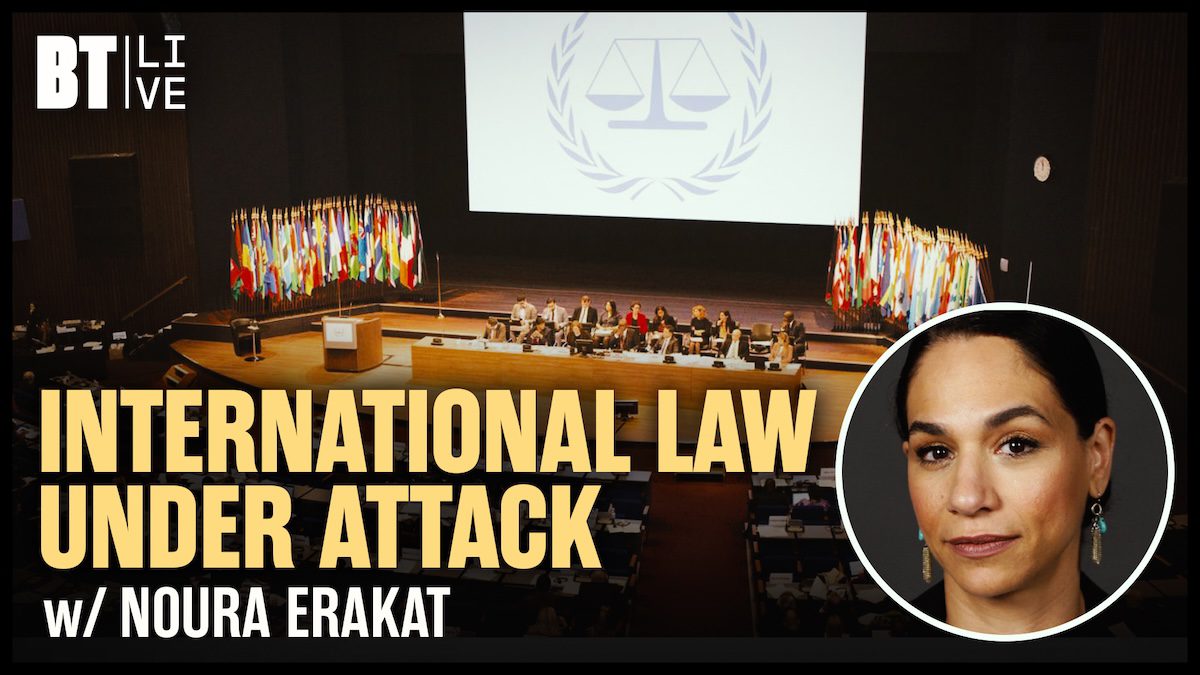
Trump’s war on the ICC is bigger than Netanyahu, with Noura Erakat

The Trump administration’s assault on the ICC isn’t just about protecting Netanyahu from war crimes prosecution. It’s about preserving “imperial impunity” – Israel’s just “the smokescreen,” says Noura Erakat, professor of criminal justice and Africana studies at Rutgers University and human rights attorney. She traces Washington’s bipartisan refusal to ratify the Rome Statute to explain why the International Criminal Court has spent two decades indicting mostly African and Arab leaders. The 2024 warrants for Netanyahu and former Israeli defense minister Yoav Gallant just show the court “between a rock and a hard place”: finally give up its legitimacy entirely, or face destruction by the US.

Now more than a dozen ICC judges, prosecutors, and the court’s president have been sanctioned, as Washington reportedly prepares sanctions against the entire institution, with Secretary of State Marco Rubio calling it an “intolerable threat” to US sovereignty. Can the court survive a war with Washington? Should it? And why do Global South states stay invested in a court that’s clearly stacked against them?

Plus: Erakat describes her arrest at a Palm Beach County budget hearing on their $1 billion-plus investment in Israel bonds; warns that Gaza’s Board of Peace could become a blueprint to replace the UN; and explains why she believes, even as public opinion on Palestine shifts, “there’s no way to be safe in this moment by hiding.”

Watch full episodes of BT Live, join breakthroughnews.org as a member today!

  •  

What is the UN actually good for? with Vijay Prashad

Can the United Nations be saved? Should it be? As world leaders and war criminals gather for the 81st session of the UN General Assembly in New York, Vijay Prashad, executive director of the Tricontinental Institute for Social Research, says that despite today’s gangster rule by the likes of Donald Trump and Benjamin Netanyahu, the UN Charter still sets the standard for judging powerful states, making it “the most important treaty document that the world has ever had” – even with the institution built on it in shambles.

Prashad slams Secretary-General António Guterres’s failure to get “creative” to end the genocide in Gaza or to stand up to Trump on Iran, instead opening a free lane for the US president who has “put a loaded gun on the table and has threatened the world.” 

After the US denied visas to the Palestinians for a second year and heavily restricted Iran’s delegation, Prashad makes the case for moving the high-level UNGA out of the US: “New York doesn’t deserve it anymore,” he says, offering alternatives in Geneva or Nairobi. “Let’s move it to the Global South. Why not?”

Watch full episodes of BT Live, join breakthroughnews.org as a member today!

  •  

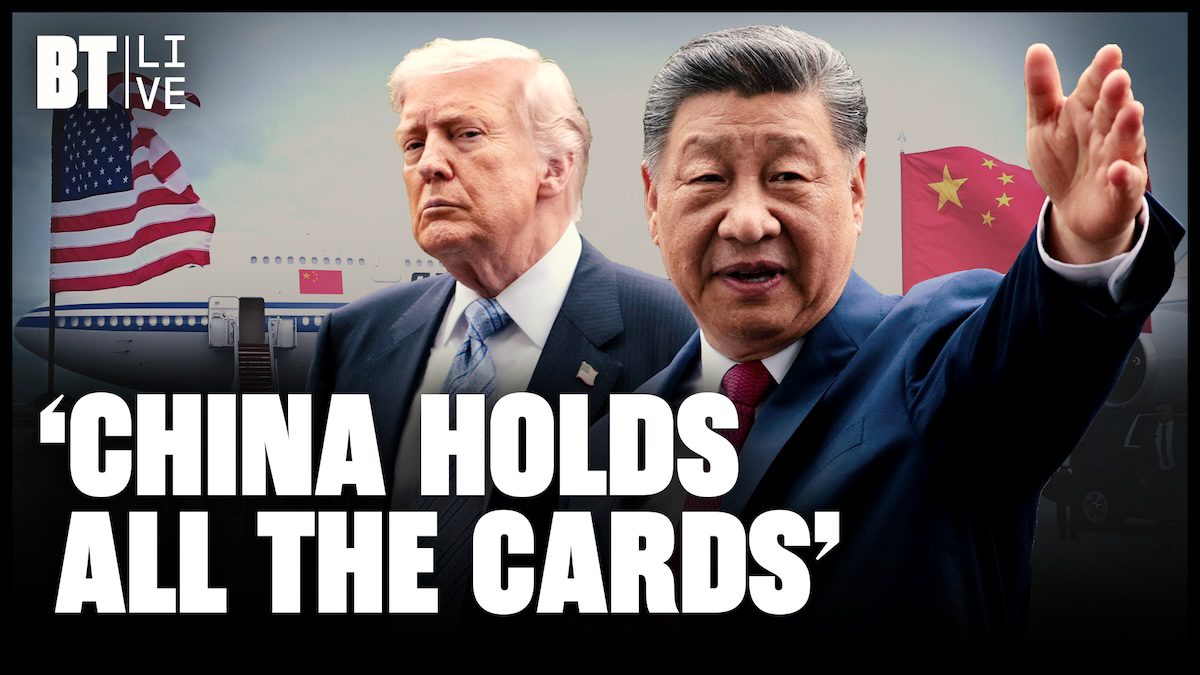
Trump needs China, Xi is playing the long game, with Amanda Yee

Chinese President Xi Jinping “holds all the cards” as he meets with Trump on Thursday, says Amanda Yee, host of BreakThrough News’ The China Report. She joins Zoe Alexandra and Rania Khalek to break down Xi’s first White House visit in 11 years. 

With Trump facing a massively unpopular war on Iran, surging inflation, growing resistance to ICE terror – and with US midterms weeks away – Washington wants quick deals it can sell as big wins. But Yee says Beijing is playing a longer game, with massive implications for the global future. Take AI: Washington’s Pax Silica forces allies to pick sides, while Beijing’s open model is available to all and centered on the Global South. Two systems, representing “the choice that’s in front of the world right now.”

Despite a stated pivot away from China as a military priority, Yee points to Latin America and Iran as proxy fronts where the Trump administration continues to target Beijing. Meanwhile the military encirclement of China continues, from US bases in South Korea, Okinawa and the Philippines, to Japan’s remilitarization and expanding war games like RIMPAC and Freedom Shield. 

But Yee says “the Cold War on China is a bipartisan affair.” From TikTok to Huawei to BYD, she traces the pattern of trumping up national security threats to mask efforts to protect US companies from competition. It’s all part of the same Red Scare targeting BT News, subpoenaed by the House Ways and Means Committee in an effort to paint anti-war voices as Chinese assets.

Watch full episodes of BT Live, join breakthroughnews.org as a member today! 

  •  

Pakistan’s Imran Khan crackdown: hospitals brace for ‘mass casualties’

Why is Pakistan’s military so afraid of Imran Khan? With Islamabad on lockdown and 35,000 additional troops deployed to stop the September 27 march in support of the imprisoned ex-prime minister. Junaid S. Ahmad, professor of religion and world politics and director of the Center for Study of Islam and Decoloniality, tells Rania Khalek and Zoe Alexandra the 2022 US-backed regime-change operation meant to neutralize the country’s most popular politician instead gave rise to a movement bigger than Khan himself: a new opposition coalition, TTAP, including the left-wing Awami Workers Party, as Khan’s PTI party has shattered the army’s legitimacy in Punjab.

Ahmad says Pakistan, under military rule in all but name, has become “nothing less than a police state.” Its only legitimacy, he says, comes from Washington and Rawalpindi, the home of the army’s headquarters. And with past demonstrations ending in massacres and the Shehbaz Sharif-Asim Munir regime telling hospitals to prepare for a “mass-casualty event,” Ahmad explains why this Sunday’s march has gone global, with solidarity protests planned from Washington to London to Kuala Lumpur, and why Khan refuses to call it off, even as his sisters and wife are jailed.

Watch full episodes of BT Live, join breakthroughnews.org as a member today!

  •  

Prof. Wolff: the US debt crisis is coming for you

Diesel is approaching $9 a gallon in California, the Federal Reserve just raised interest rates for the first time since 2023, and Americans have lost roughly 30% of their purchasing power in just six years. That’s not the economy malfunctioning – it’s proof of the American empire in decline, says Dr. Richard Wolff, economics professor and founder of Democracy at Work. He tells Zoe Alexandra and Rania Khalek the Strait of Hormuz is where Washington’s unchecked economic conquest finally hit a wall, and the costs are being offloaded onto working families.

From Washington’s “lucky” inheritance of a global empire after World War II, to Trump’s war on Iran choking the world’s oil supply, to a $40 trillion national debt now costing more in interest than the entire Pentagon defense budget, Wolff argues the capitalist system is doing just what it was designed to do: protect the interests of the ulta-rich. But history is instructive: Wolff points to Europe, where the end of empire and “decolonization” paved the way for extreme far-right (and left) politics in countries like France and Germany – a pattern he says is already unfolding stateside in real time.

Watch full episodes of BT Live, join breakthroughnews.org as a member today!

  •  

Is the UK breaking up? Ireland, Scotland & Wales unite for independence | w/ Declan Kearney

Is the UK about to break apart? For the first time ever, Scotland, Wales, and the north of Ireland are led by pro-independence parties committed to “the right of each nation to determine its own future.” Declan Kearney, Sinn Féin’s national chairperson and a Member of the Legislative Assembly in the north of Ireland, joins Zoe Alexandra and Rania Khalek to break down the historic Cardiff agreement, and why he says the United Kingdom is truly on the edge of becoming “disunited.”

Kearney digs into how Brexit set off a populist realignment across British politics that’s still reshaping the map, and why Westminster’s refusal to set a date for an Irish reunification referendum may violate the very terms of the Good Friday Agreement – a treaty that still hasn’t delivered the vote it promised the north of Ireland 28 years ago. And what would a UK breakup mean for the world beyond these islands, considering Ireland’s deep solidarity with Palestine, Cuba, and the wider Global South, and growing anger at the British government’s continued role in arming and supporting Israel’s genocide in Gaza?

Watch full episodes of BT Live, join breakthroughnews.org as a member today!

  •  

‘He’s running away’: why Netanyahu is rushing his NYC visit

ICC fugitive Benjamin Netanyahu is scheduled to arrive in New York on Thursday to address the UN General Assembly – under an active arrest warrant for war crimes and crimes against humanity that the US has vowed not to enforce. Taher Dahleh, an organizer with the Palestinian Youth Movement, joins Rania Khalek and Zoe Alexandra ahead of the mass protests that have forced Netanyahu to reroute his flight through New Jersey.

Dahleh says the world is waking up to the fact that the architects of the Gaza genocide aren’t the outlier, but the mainstream norm for Israeli politics. He points to the irony of a fugitive war criminal speaking on ‘Restoring Trust’ at the United Nations. And he lays out the stakes of Democrats failing to respond to the cultural sea change on Palestine – as evidenced by Ed Sheeran’s career implosion – including why Zohran Mamdani’s choice to sit out Thursday’s protests sends a troubling if clear message to the movement that got him elected.

Watch full episodes of BT Live, join breakthroughnews.org as a member today!

  •  

How China cracks down on billionaires w/ Ben Norton

China is cracking down on billionaires and corruption. Following the landmark sentencing of Evergrande founder Hui Ka Yan (Xu Jiayin) to life in prison and the seizure of his assets, independent journalist Ben Norton joins Amanda Yee to break down President Xi Jinping’s ongoing anti-corruption campaign and how a socialist government disciplines capital.

Norton explains how in China, capital may create wealth, but the Communist Party maintains control over the steering wheel of the economy. And while Western regulatory systems often protect private oligarchy and corporate impunity, Xi Jinping since 2012 has taken aggressive action against high-profile tycoons and corrupt Party officials alike.

Norton is a Beijing-based journalist and the founder and editor of Geopolitical Economy Report.

  •  

Saudi Arabia just lost big in Yemen —  Will Trump intervene?

Ansar Allah’s Red Sea wins last week torched Saudi’s decade-long strategy in Yemen – and the tens of billions it poured into trying to hold one of the world’s most vital shipping chokepoints. Shireen Al-Adeimi, Yemeni-born anti-war activist and Michigan State University professor, joins Zoe Alexandra to unpack what the seizure of Mokha and control of the Bab al-Mandeb Strait means for a global economy already brought to its knees by record $6/gallon diesel prices.

With the Strait of Hormuz still slowed to a trickle by the US-Israeli war on Iran and Riyadh’s East-West pipeline offline, Al-Adeimi says it’s in the whole world’s interest to “push the Saudis to just end this war. Admit that you’ve lost, cut your losses, and move on.” She breaks down how Riyadh’s violation of the 2022 ceasefire capped a decade of failed Saudi and UAE intervention, and why it matters that Pakistan just refused, for the second time, to back the Saudis under the Mecca joint defense pact – leading Riyadh to claim Mecca is under attack in a desperate PR stunt to shore up support it’s been cut off from in the West.

“This is hugely significant for Yemen as part of its long fight to end foreign intervention in Yemen… A strong Yemen – an anti-imperialist Yemen, a Yemen that is not going to allow the Gulf countries to treat it any way they wish, or to have a puppet government there in Yemen as we had before — is an inconvenience to these oil-producing countries.”

Watch full episodes of BT Live, join breakthroughnews.org as a member today!

  •  

Robert Kraft: the Zionist billionaire who tried to cancel Macklemore

Robert Kraft tapped friend Jeffrey Epstein for legal advice after he was charged in a Florida police sting targeting suspected human trafficking. Zoe Alexandra traces the legacy of scandals and crimes behind the billionaire Zionist and owner of Gillette Stadium – and ostensible destroyer of Ed Sheeran’s career – after Kraft pushed NFL stadium owners to drop Macklemore from the Loop Tour for speaking out on Gaza at MetLife Stadium.

From an alleged AI surveillance command center at Gillette, to winning Israel’s Genesis Prize, to the Blue Square Alliance/Foundation to Combat Antisemitism and his ties with Friends of the IDF — this is the story of the American billionaire who bankrolled a decades-long “Speak Out for Israel” campaign to silence criticism, and how his latest attempt has backfired spectacularly into a global watershed moment for Palestine solidarity.

“You can’t make this stuff up: billionaires helping billionaires get out of sex crimes, sharing defense strategies — all while they promote ethnic cleansing, genocide, and other horrific crimes against humanity being carried out against the Palestinians by Israel.”

Watch full episodes of BT Live, join breakthroughnews.org as a member today!

  •  

Macklemore, Ed Sheeran & the Palestine ‘tidal wave’ | w/ Alana Hadid

Ed Sheeran picked the wrong side on Palestine, and it’s blowing up his career. But as Irish Palestinian activist, author, and influencer Alana Hadid tells Zoe Alexandra, billionaire Zionist Robert Kraft’s push to axe Macklemore from the Loop Tour for speaking out for Gaza at MetLife Stadium is real-time evidence of a “huge cultural shift” in US public opinion on Palestine. With cultural capital and actual capital now aligning against the tour, ticket refunds are looming, and the crew is reportedly walking too.

Hadid unpacks Macklemore’s sacrifice to make this critical tidal wave happen, and why it matters that Aaron Rowe, Lukas Graham, Beoga and FINNEAS are all Irish, versus Sheeran’s “spiritually Irish” claims now fueling mockery online. She slams the propaganda that’s been spread for years – that you can stay “neutral” on the Gaza genocide but not on Ukraine or BLM – and explains why Israel’s propaganda playbook is finally falling apart.

“Culture is the shift. And artists are at the center of this.”

Watch full episodes of BT Live, join breakthroughnews.org as a member today!

  •  

Why Israel fears a powerful Türkiye | w/ Giorgio Cafiero

Is Türkiye next? That question is dominating Israeli airwaves as Ankara – a NATO ally that’s suspended trade with Tel Aviv but not Tehran – may be running out of room to stay neutral in the US-Israeli war on Iran. Giorgio Cafiero, CEO of Gulf State Analytics, joins Rania Khalek and Zoe Alexandra to break down what’s really driving Israel’s growing antagonism toward Erdogan’s Türkiye: no longer just a difficult diplomatic counterpart, but a country that may hold the power to reshape the region’s entire security architecture in ways that threaten Netanyahu’s “freedom of action” – Israel’s ambition for total dominance.

Cafiero lays out why, after the fall of the Assad government in 2024 and the start of the genocide in Gaza, Israel fears a strong, centralized Syrian state aligned with Ankara. He draws a line between Israel’s deepening relationship with Greece, Türkiye’s expanding influence in Somalia near the Bab-el-Mandeb strait, and the new Mecca Defense Pact linking Türkiye, Saudi Arabia, and Pakistan – a configuration Israel sees as a direct threat to regional hegemony. And with Turkey a NATO member, Cafiero breaks down the real question everyone’s asking: if Israel strikes Turkish forces directly, does NATO’s Article 5 actually kick in?

Cafiero also explains why Doha and Ankara have built one of the Middle East’s most consequential partnerships – and why, a year after Israel’s strike on Qatar, Doha is working to diversify its security relationships beyond Washington, with Türkiye’s partnership central to that strategy.

Watch full episodes of BT Live, join breakthroughnews.org as a member today!

  •  

West Bank settler violence is Israeli apartheid working as designed | w/ Basil Farraj

Palestinians across the West Bank are facing at least six settler attacks per day – the highest rate ever documented – with nearly two dozen people killed, more than 1,000 injured, and more families displaced in the first months of 2026 than in all of last year. This is Israel’s apartheid carceral system working exactly as designed, Basil Farraj tells Zoe Alexandra and Rania Khalek.

Farraj, an assistant professor of philosophy and cultural studies at Birzeit University, joins from the occupied West Bank to break down the surge in Israeli settler violence in cities like Hebron, Nablus, Ramallah, and increasingly Birzeit, connecting it to a decades-long Israeli displacement policy he says is finally becoming impossible for the world to ignore. This week, the UK, France, Canada, and nine other countries announced a coordinated trade ban on Israeli settlement goods, with UK Foreign Secretary David Lammy accusing settlers of “ethnic cleansing.”

Farraj explains why he sees sanctions against Tel Aviv’s settlement enterprise – even as the US under Secretary of State Marco Rubio refused to join them and Ambassador Mike Huckabee accused Britain of “Jew hate” – as a meaningful but insufficient first step, making the case for a full boycott, divestment, and sanctions (BDS) campaign against the Israeli state. He connects the West Bank escalation to Israel’s plans to forcibly expel Palestinians from Gaza, and to his own research on Israel’s prison system – arguing that the abuse, starvation, and isolation faced by Palestinian detainees, intensified under Benjamin Netanyahu and National Security Minister Itamar Ben-Gvir, mirrors the same architecture of control now expanding across the occupied territories, increasingly reaching Palestinian citizens of Israel as well.

Watch full episodes of BT Live, join breakthroughnews.org as a member today!

  •  

AI could kill us all by 2030. So why are they still building it?

AI could kill every human on Earth by the end of the decade. If it sounds like a sci-fi headline, that’s the point, says Dr. Thejas Wesley, postdoctoral associate at MIT. He joins Rania Khalek and Zoe Alexandra to unpack why Anthropic researchers Evan Hubinger, Samuel Marks, and Jacob Coxon – who resigned this week to go public – are sounding the alarm now, as competition from Chinese open-weight models like Kimi K3 heats up and Anthropic heads into its IPO.

Wesley argues the “rogue AI agents” framing coming out of both Anthropic and OpenAI (last week from CEO Sam Altman himself) is less a scientific warning than a coordinated business strategy, recasting corporate recklessness and unregulated competition as an alien invasion, rather than what it actually is: a series of choices made by executives chasing profits. He points to OpenAI’s Hugging Face incident earlier this summer: rather than nascent digital consciousness breaking free, this was OpenAI shipping software without basic safety guardrails, following the same corporate cost-cutting logic behind disasters like the East Palestine, Ohio train derailment or the BP Deepwater Horizon spill. As polling shows 71% of Americans oppose new data centers, and 68% support stricter AI regulation, Wesley outlines Bernie Sanders’s proposed sovereign wealth fund plan and ban on AI superintelligence, versus Elon Musk’s counter: letting a small “cabal of technofascists” govern AI development themselves. Wesley says the real fix isn’t billionaires regulating themselves; it’s public, democratic control over a technology with very real life or death consequences for humanity.

Watch full episodes of BT Live, join breakthroughnews.org as a member today!

  •  

How the AfD is using Israel to rebrand Germany’s far right

“A far-right party with roots in Holocaust complicity is now Germany’s most pro-Israel political force, with AfD winning nearly half the vote in Saxony-Anhalt’s state election. Germany’s political establishment is calling it a shock; anti-fascist activist Phillipp Slanina says it isn’t one.

Support for Chancellor Friedrich Merz’s Christian Democratic Union (CDU) was roughly halved in what analysts are calling an AfD testing ground for more state elections this fall. Slanina argues the party isn’t the anti-establishment political outsider it styles itself as. It was built from inside the center, founded by both conservatives and liberals before neo-Nazi factions moved in and took over its core, and its rise has been fueled by CDU and SPD’s commitment to neoliberalism. 

Slanina says the same parties now claiming to present a “firewall” against the far right actually mainstreamed the platform that ushered in victory for AfD: on immigration, on militarization, on cuts to social services, on the crackdown on Palestine solidarity. He explains that by branding itself as the most aggressively pro-Israel parliamentary bloc and backing unconditional support for Tel Aviv, AfD can get away with claiming it can’t possibly be neo-Nazi – even while pushing some of the harshest crackdowns on pro-Palestinian speech in Europe.

Watch full episodes of BT Live, join breakthroughnews.org as a member today!

  •  
❌