Iranian Foreign Minister Abbas Araghchi has denied a report from Axios that claimed members of the Iranian delegation who attended the UN General Assembly in New York City were “kicked out” of the country. The report from Axios reporter Barak Ravid, which cited an unnamed US official, said two Iranian officials left after ignoring an early State […]
Iran’s Foreign Ministry spokesman, Esmaeil Baghaei, warned on Sunday that any future use of regional countries’ territory to attack the Islamic Republic will provoke a different and decisive response, stressing that Tehran expects its neighbors to uphold the principle of good neighborliness.
Speaking at a press conference in Tehran, Baghaei said countries in the region—especially those that placed their facilities at the disposal of the United States and the Zionist regime during the recent war—must reconsider their actions.
“If in the future we witness another aggression by America and the Zionist regime and their soil is used to attack Iran, certainly the response will be different,” Baghaei said.
He emphasized that all countries in the region have had a bitter experience with US military presence and intervention, adding: “We are eternal neighbors.”
Baghaei said Iran has quickly and clearly conveyed its grievances to regional countries, particularly those that provided territory and facilities to the US and Israeli regime during the military aggression.
He stressed that these countries bear international responsibility for participating in aggressive actions.
He noted that on the sidelines of the UN General Assembly, Iranian officials held good meetings with almost all southern Persian Gulf countries.
The spokesman also addressed the presence of the Israeli prime minister in the UAE, warning that the Zionist regime is seeking to sow sedition in the region.
He called on neighboring states not to allow their facilities and territory to be abused by parties that have shown no regard for regional security and prosperity.
UNGA participation a success
Baghaei described Iran’s participation in the 81st UN General Assembly as one of the country’s most successful international appearances.
A small but highly productive delegation, led by President Masoud Pezeshkian, attended the summit. He said meetings with counterparts, think tanks, and media helped explain Iran’s positions and logic on regional and global issues.
Responding to a US media claim that two members of the Iranian delegation were expelled from the US, Baghaei dismissed it as “pure lies.”
He said Iran’s travel, entry, and exit were fully notified in advance. One diplomat left New York due to US pressure, while the others departed according to the pre-arranged schedule.
“This is an admission by the host government that it violated its obligations,” Baghaei said. “It proves they are not a worthy host for the United Nations.”
He added that the US, having failed to prevent Iran’s participation and isolate Tehran, resorted to such “cheap news-making.”
Seven-day plan
Baghaei said Iran’s seven-day plan was the latest initiative to keep the diplomatic path open, and the world witnessed Iran’s responsible and goodwill-based approach.
He noted that previous experiences show the American side is not committed to diplomacy and has always shirked its obligations.
“That is why, while we speak of diplomacy, we will decisively defend Iran’s national interests and security. Our armed forces are vigilant, powerful, and ready to repel any evil.”
On US proposals conveyed via the Qatari mediator, Baghaei said they largely reflect previous US positions and specifically concern nuclear issues.
“We explicitly announced that our focus at this stage is the Strait of Hormuz,” he said.
He added that restoring security to the Strait requires concrete US steps, including stopping disruption of Iran’s commercial shipping, lifting sanctions, and ending other interventionist measures.
He said all items previously included in the Islamabad understanding, plus new ones added in recent months, must be honored.
“Sanctions imposed by America during this period must be lifted.”
UK envoy summoned over accusations
Baghaei said the British ambassador was summoned on Thursday to receive Iran’s official protest over baseless accusations linking Tehran to an alleged incident at a British airbase.
He described UK accusations against Iran as a “forward escape” because London knows Iran has demanded accountability for Britain’s participation in the military aggression.
“There is no doubt that Britain directly participated in this illegal war by providing its military bases,” he said.
He cited NATO Secretary-General Mark Rutte’s admission that bases in Europe were used during the US-Israeli aggression.
“The British government must be held accountable. It cannot escape responsibility with fabricated claims.”
US withdrawal from Iraq a ‘blessed’ step
Baghaei called the withdrawal of US forces from Iraq a very important and blessed development for consolidating Iraqi national sovereignty, and a sign of American failure.
He recalled the crimes committed during the 23-year occupation, including Abu Ghraib, and said Daesh and takfiri terrorism were products of the occupation.
“Foreign occupation creates the ground for violence, division, and insecurity,” he said. “We hope this step strengthens relations between the two countries and protects Iraq’s national sovereignty and independence.”
In August AD 117, a ship carrying the Roman emperor put in at the coast of Cilicia, in what is now southern Turkey. Its most important passenger was too ill to travel any farther. Trajan had ruled for nineteen years, and under him the Roman Empire reached its greatest territorial extent. He had been born […]
The European Parliament’s debate on Monday, October 5th, comes at an awkward moment for Brussels. After years of confrontation with Viktor Orbán, the European Commission now believes Hungary has done enough to justify releasing €4.2 billion in cohesion funding and restoring full access to Erasmus+ and Horizon Europe.
The question before MEPs is therefore deceptively simple: have the conditions really been met, or has Brussels simply found a convenient political moment to declare victory?
The answer matters well beyond Hungary. The original dispute was not some abstract quarrel over Brussels etiquette. In 2022, the EU suspended €6.3 billion in Hungarian cohesion funding after identifying deficiencies in public procurement, conflicts of interest, corruption controls and the effectiveness of prosecutorial action. The conditionality mechanism was deliberately designed to make access to EU taxpayers’ money dependent upon safeguards for the rule of law and the protection of the EU budget.
That principle is important. If membership of the EU means anything, it cannot mean that governments receive billions regardless of whether public money is properly administered.
But Hungary has changed politically. Viktor Orbán’s 16-year rule ended with Péter Magyar’s decisive election victory in April. Magyar campaigned partly on repairing Hungary’s relationship with Brussels and unlocking the billions frozen during the Orbán years. His government subsequently notified the Commission that it had implemented the required reforms.
The Commission has now accepted that argument — albeit partially. Its September 23rd proposal says Hungary has addressed the rule-of-law breaches affecting the EU budget, citing improvements in public procurement, the anti-corruption framework, prevention of conflicts of interest and prosecutorial effectiveness. If the Council approves the proposal, €4.2 billion in cohesion commitments will be reinstated and Hungarian students and researchers will regain full access to Erasmus+ and Horizon Europe.
That is a substantial political prize for Magyar, and a substantial test for the EU.
The danger for Brussels is obvious. Having spent years insisting that European money must not subsidise corruption or institutional capture, the Commission cannot now appear to have changed the rules simply because a more congenial government has arrived in Budapest.
There is, however, an equally serious danger on the other side. If Hungary has genuinely implemented the reforms demanded by Brussels, continuing to withhold money would make the conditionality mechanism look less like a defence of European values and more like a political punishment system. That would be profoundly damaging. Rules that apply only to governments Brussels likes are not rules at all.
This is why Monday’s debate matters – and the €4.2 billion is only part of the story.
The Commission has made clear that other Hungarian funds remain blocked. Around €3.5 billion is affected by a separate mechanism, including approximately €2.7 billion linked to horizontal conditions concerning the EU Charter of Fundamental Rights, including academic freedom, LGBTI rights and asylum.
Meanwhile, Hungary is still seeking access to roughly €10 billion under the Recovery and Resilience Facility. The new Hungarian recovery plan includes measures on anti-corruption, public procurement, transparency, judicial independence and stakeholder participation, with payments tied to the achievement of specific milestones.
So this is not a clean victory for either side.
For Magyar, the release of €4.2 billion demonstrates that his strategy of accommodation with Brussels is delivering tangible results. For the Commission, it provides an opportunity to demonstrate that conditionality can work: reforms are made, the Commission verifies them, and money is released.
But the real test will come afterwards. Brussels must monitor whether the reforms survive political pressure. Anti-corruption bodies must remain genuinely independent. Public procurement must be transparent. Prosecutorial safeguards must work in practice rather than merely on paper. And the judiciary must be capable of challenging the government when necessary.
That is where the European Parliament should concentrate its fire. The temptation will be to turn Monday’s debate into another referendum on Viktor Orbán. That would be yesterday’s argument. Orbán has gone. The more important question is whether Hungary’s new government has actually dismantled the machinery that generated the dispute.
There is a wider lesson here for the European Union.
Conditionality can only work if Brussels is prepared both to withhold money when standards are breached and to release it when standards are met. Anything else undermines the credibility of the entire system.
The prolonged closure of the Afghanistan-Pakistan border has brought cross-border trade to a standstill, leaving tens of thousands of people on both sides without work. It has also disrupted commercial activity and strained longstanding family and social ties.
Der Staatsbesuch von Xi Jingping in den USA war, von einem gewissen medialen Spott über Trumps auffällige Unterwürfigkeit gegenüber dem Gast aus China abgesehen, sehr unspektakulär, obwohl Trump und Xi eine lange Liste wichtiger Themen zu besprechen hatten. Da wären die Wirtschaftsbeziehungen und der Handelskrieg zwischen den Ländern, die Frage der sinkenden Anteile von US-Staatspapieren […]
The departure of the final US military forces from Iraq marks a profound turning point in the modern history of West Asia.
For over two decades, the narrative of foreign intervention dictated that regional stability was impossible without Washington’s oversight. Today, that narrative lies broken.
The end of the US-led military mission is not the result of a benevolent diplomatic concession or a calculated policy shift by the Pentagon. It is, undeniably, a hard-fought victory achieved through the unyielding resolve of Iraq’s Islamic Resistance and the enduring steadfastness of its people.
Crucially, the withdrawal of American forces delivers a severe blow to the strategic calculations of the Zionist entity. For decades, Israel’s expansionist ambitions and its destabilising campaign of aggression across the region – from Palestine and Lebanon to Syria – have relied entirely on the foundational guarantee of US military backing.
Washington’s illegal military presence in Iraq served as a vital buffer and logistics corridor designed to fracture the Axis of Resistance and project power on Israel’s behalf. With the American shield removed from Iraq, the regional depth that Tel Aviv exploited to enforce its hegemony is rapidly collapsing.
The end of the US occupation severely limits the capability to isolate regional resistance factions, exposing the fundamental limits of Zionist expansionism when stripped of direct imperial protection.
The balance of power has fundamentally shifted, proving that the era of unpunished aggression across West Asia is coming to an end.
For 23 years, Iraq served as the central stage for a flawed experiment in imposed security. The 2003 invasion promised democracy and stability but instead delivered a legacy of institutional fragmentation, economic exploitation, and a vacuum that fueled regional terrorism.
In charting this path towards absolute liberation, none can deny the blueprint for true sovereignty remains Iran’s historic achievement of complete independence.
By expelling foreign military mandates and dismantling external control over its domestic wealth, Iran proved that a nation can cultivate formidable defensive and scientific capabilities entirely from within.
This self-reliant model stands as a direct contrast to the Arab Persian Gulf sheikdoms, which have long tethered their survival to American protection, effectively trading their strategic autonomy for a fragile security umbrella.
While these neighboring monarchies remain dependent on foreign bases and external guarantees, Iraq’s triumph demonstrates that genuine security cannot be imported or bought.
The reality of the past two decades, stretching from the sudden collapse in Kabul to the gradual eviction from Baghdad, proves that dependence on foreign superpowers is an inherently fragile strategy.
When foreign forces occupy bases under the guise of “protection,” they serve primary external geopolitical interests rather than the security of the host nation. The presence of these military installations frequently exacerbates regional polarization, turning host countries into potential flashpoints for broader wars they cannot control.
Iraq’s transition into a new era demonstrates a vital alternative: security is most durable when it is organically derived from national unity, localized defense capability, and regional cooperation. The resistance infrastructure that stood firm against occupation has demonstrated that an organized, highly motivated regional population can outlast the political will of an external superpower.
This moment serves as a stern warning to those Arab regimes tempted by the illusion of the Abraham Accords. Normalising ties with the Zionist entity under the pretext of economic benefit or strategic deterrence is a fatal miscalculation.
Entangling a nation’s destiny with a decaying occupation framework will neither guarantee security nor provide immunity from regional realities.
For the capitals still hosting US military bases or pursuing compromise with Tel Aviv, the message from Baghdad is clear: true stability is forged through regional integration, resistance to imperialism, and self-reliance—not through the permanent invitation of foreign militaries or treacherous pacts that betray the core causes of the Islamic world.
Most profoundly, this historic milestone radiates a powerful ray of hope to the people of Palestine, who have endured decades of devastating cruelty and brutal subjugation since the creation of Israel.
For a population resisting land theft, apartheid, and relentless military assault, the liberation of Iraq offers undeniable proof that even the most heavily funded occupation is not permanent. It demonstrates that when a people refuse to break, the architecture of oppression can be dismantled piece by piece.
The steadfastness of the Iraqi resistance serves as a direct message to the Palestinian struggle: the path of compromise is a dead end, but unyielding resistance eventually breaks the chains of tyranny.
Iqbal Jassat is an executive member of the Media Review Network, Johannesburg, South Africa.
Iranian Airlines Face Chronic Difficulties: On September 30, bailiffs boarded a Caspian Airlines Boeing 737—while passengers sat ready for takeoff—and served an order to collect a debt of 3 million euros before the aircraft could depart. The detention occurred just days after US secondary sanctions against the Iranian aviation sector came into effect, halving international […]
The speech of the Iranian President at the UN General Assembly in New York captivated the audience with its unwillingness to yield in the face of the aggressive force of the US, and showed Washington’s utter helplessness in trying to squash the Islamic Republic’s sovereignty. Iran Accuses the US of Terrorism President of the Islamic […]
Historian Margaret MacMillan warns that increasingly interconnected wars are increasing the risk of a wider conflict, as she discusses Ukraine’s future, Putin’s Russia, NATO’s vulnerabilities, and an emerging “new world disorder.”
In February 2026, weeks after Cambodia’s National Assembly approved a draft law to ratify the 1982 UN Convention on the Law of the Sea (UNCLOS), a convention Phnom Penh signed in 1983 but never ratified, Japan unveiled plans to extend Official Security Assistance (OSA) to Cambodia. The announcement did not come out of nowhere and […]
Taiwan’s new American-made F-16V Block 70 jets deliver much-needed breathing room against daily Chinese gray-zone coercion, yet surging Chinese stealth numbers and cratered runway risks mean their wartime utility would be sharply contested. Taiwan received its first two new-build Lockheed Martin F-16V Block 70 fighter jets, touching down on October 2 at Taitung’s Chihhang Air […]
The crew of the Iranian frigate Dena informed a US warship that their vessel was unarmed during their final exchanges before a US submarine launched a torpedo and sank it off the coast of Sri Lanka on 4 March, killing 104 sailors, according to an audio recording cited by an Iranian judiciary official.
“We are not military, we are not armed, and we have come for training,” the crew said in the recording.
The Moudge-class frigate was sailing home from the International Fleet Review 2026, an India-hosted naval exercise Iran had been officially invited to attend, when the USS Charlotte struck it with a Mark 48 torpedo in international waters some 19 nautical miles off Galle, killing 104 of the 136 sailors on board and wounding the remaining 32.
Hassan Abdollianpour, who heads Iran’s Center for Lawyers of the Judiciary, said the recording also captures the frigate’s contact with Sri Lanka’s shipping and ports authorities, who backed the crew’s account that the ship was on a training mission.
Abdollianpour said international law obliged that aid be given to those aboard, even after the ship had been targeted.
“Not only was no assistance provided, but a second attack was also carried out,” he said.
He added that securing the recording, which took extensive efforts and has since featured in a documentary, was key to building an accurate legal case over the criminal attack.
Abdollianpour said the case of the Dena’s slain sailors is being pursued “firmly and decisively,” with his center compiling extensive documentation for domestic and international proceedings.
Nearly 19,000 experts have produced around 130,000 pages of assessments on wartime incidents and damages, he said, meant to serve as standardized evidence before international courts and legal bodies.
In March, Iran’s Judiciary Chief Gholamhossein Mohseni-Ejei condemned the deadly US strike as a violation of every international convention, maritime law above all, and vowed that Tehran would “certainly and seriously” prosecute Washington for its “outrageous crimes.”
After two rounds of US–Israeli attacks in the space of a year, pressure is mounting on Iran’s leadership to withdraw from the Nuclear Non-Proliferation Treaty (NPT). Advocates say the treaty has failed to protect Iran’s civilian nuclear program or its scientists. Their opponents warn that withdrawal could provide Washington and Tel Aviv with a pretext for another assault. The argument now reaches well beyond the Majlis.
“A big decision in the offing” is one way to describe a motion that has sat with the Iranian parliament’s presidium for months. A group of lawmakers has now issued an open statement demanding that the Supreme National Security Council and Foreign Ministry begin the formal process of withdrawal from the NPT. They also want Tehran to end voluntary nuclear commitments beyond its treaty obligations.
The lawmakers argue that the NPT and the International Atomic Energy Agency (IAEA) have failed to safeguard Iran’s right to peaceful nuclear technology. They accuse the agency of allowing information obtained through inspections to reach Iran’s enemies, exposing nuclear facilities and scientists to attack.
Their statement follows years of dispute over the agency’s access to Iranian sites and the use of its findings by western governments. They invoke Article X of the treaty, which permits withdrawal when a state decides that extraordinary events have jeopardized its supreme interests. A withdrawal would require three months’ notice to other parties and the UN Security Council.
A motion awaiting debate
In the wake of that open statement, Isfahan lawmaker Hussein-Ali Haji-Deligani revealed he and his colleagues submitted legislation on Iran’s withdrawal from the NPT months ago, and it is up to parliament Speaker Mohammad Bagher Ghalibaf to put it to debate on the parliament floor. Heji-Delogani reiterated:
“Considering enemies’ wars against Iran on two occasions, the continuation of Iran’s membership in the NPT has no use, especially after the IAEA’s Board of Governors sent Iran’s dossier to the UN Security Council. Therefore, Iran should exit from the treaty to prevent further damage.”
Other lawmakers have turned their criticism on the parliamentary leadership. Tehran representative Kamran Ghazanfari blamed the presidium for keeping the motion off the floor, an accusation aimed principally at Ghalibaf.
Ghalibaf has aligned himself with Iranian President Masoud Pezeshkian on several questions of state policy, drawing fire from former allies among the Principlists. The NPT dispute has become another point of contention between them.
Another parliamentarian, Mohammad-Reza Sabaghian, stated:
“We must use the courage that was shown and the right strategy to close the Strait of Hormuz in the discussion of withdrawing from the NPT. This is the second step that will lead to the failure of America’s plans.”
Mohsen Sani, a member of parliament’s national security commission, went further:
“In our opinion, the NPT no longer has any meaning or significance, whether we want to stay in it or leave it. When one of the NPT member states attacks another member (Iran), it means withdrawing from all these commitments and treaties that have existed in this regard. Recent pressures suggest that we should reconsider enrichment.”
The case for staying
The call for withdrawal has met resistance within Iran’s political establishment. Tehran lawmaker Mohammad Seraj sees no benefit in leaving. Unless Iran intends to build a bomb, he argues, the step would only damage its relations with friendly states.
Khorasan, a newspaper close to Ghalibaf, has criticized lawmakers for “radicalizing the political ambiance of the country and forcing the Islamic Republic to make such a sensitive decision,” describing it as “a gift to Trump.”
The outlet maintains that “any moves towards leaving the NPT give enough justification to Trump and Netanyahu for their future strikes against Iran while it alienates friends such as China and Russia who have always supported Iran’s legitimate right to a non-military nuclear program.”
Rouydad24, a news site with strong ties with the Reformist camp, lambasted lawmakers as “radicals” who “have returned with a controversial and costly prescription.”
The Reformist news site charges that “Pezeshkian’s critics have turned withdrawing from the NPT into a political slogan without considering it is a complicated matter economically, militarily and internationally.”
Where the decision rests
The debate has become a challenge for Pezeshkian, whose government has defended Iran’s continued place in the treaty. But the president is not the only voice in the room. Mohsen Rezaei, secretary of the Supreme National Security Council, has openly raised the possibility of withdrawal.
Rezaei said, “After the United States abandoned the post-war Islamabad Memorandum of Understanding, we reached the conclusion that we must change course. We have yet to take a decision on withdrawing from the treaty, because our withdrawal totally depends on Washington’s behavior.”
The senior general admits that the Islamic Republic is still committed to the late supreme leader Ali Khamenei’s religious prohibition on the use of nuclear weapons and has not changed its nuclear doctrine; however, “nobody can guarantee the future,” he elaborates.
Is Iran seeking a nuclear weapon?
In an exclusive interview with the Republican Party’s mouthpiece, Fox News, Pezeshkian flatly denied Iran is seeking an atomic bomb, adding that his country is even willing to dilute the 440-kilogram uranium stockpile purified at 60 percent and allow the IAEA’s nuclear inspectors to supervise Iran’s nuclear program.
Pezeshkian made those claims while the Islamic Republic does not allow international inspectors to visit its nuclear facilities, which were destroyed by the US and Israel during two wars in June 2025 and February-March 2026.
Pezeshkian’s assurance contrasts with Rezaei’s warning that the country’s future course cannot be guaranteed. Reports in Tehran that Supreme Leader Mojtaba Khamenei has ruled out nuclear talks with Washington remain unconfirmed; they offer no basis for treating such a ban as settled policy.
A decision above the Majlis
Iran’s NPT membership has moved from a technical and legal question into a wider argument over deterrence after the attacks on its nuclear facilities. The parliamentary bill gives that argument a public stage, but lawmakers alone will not settle it.
The final decision would be made at the highest levels of the Islamic Republic’s political and security establishment. A vote in the Majlis could put a formal stamp on a course set elsewhere, as earlier nuclear legislation did.
The 2020 Strategic Action Law to Lift Sanctions, for example, obliged the government to expand nuclear activity and restrict inspections if sanctions relief did not materialize. It sharply constrained the Rouhani administration’s room for maneuver over the 2015 Joint Comprehensive Plan of Action (JCPOA) nuclear agreement. The precedent is relevant because a bill presented as a parliamentary initiative can become a lever for policy agreed across the state’s security institutions.
For now, proposals to leave the NPT and calls to build a bomb circulate side by side. That does not establish that either has been adopted. It does show how far positions once kept at the edges of public debate have entered the argument over Iran’s security.
Lawmaker Ahmad Bakhshayesh Ardestani has advocated building a nuclear weapon first and withdrawing from the NPT afterward, “because only in that case, it can guarantee deterrence against a renewed US-Israeli aggression.”
Even Khorasan, which warns against leaving the NPT now, does not rule out an exit. Its argument is that Iran should first build and test a nuclear weapon. Until then, it says, Tehran would bear the costs of a nuclear-armed state without possessing a nuclear deterrent.
The disagreement in Iran is no longer confined to whether the country should leave the treaty. It is also about when.
Yemen’s Houthis have denied targeting a power station in the city of Medina. A Saudi-led coalition earlier accused the militant group of targeting the facility supplying power to the Prophet’s Mosque – one of the holiest sites in the Muslim world.
A senior Houthi official branded the accusation a “lie” aimed at tarnishing the group’s image and reinforcing similar claims made by the coalition in the past.
On Thursday, the Saudi coalition’s spokesman, Major General Turki al-Maliki, accused the Yemeni militants of striking the Taibah electricity distribution station in Medina earlier this week in what he called a “cowardly terrorist act” and a part of an alleged broader campaign by the Houthis to “target the Two Holy Mosques.”
In mid-September, Saudi Arabia accused the Houthis of launching a drone towards the holy city of Mecca. The unmanned aerial vehicle was intercepted and destroyed, it added. The Yemeni movement’s leader, Abdel-Malik al-Houthi, dismissed that claim as a “heinous lie” in a televised address at the time, claiming Riyadh was “weaponizing lies” to advance its own agenda.
The developments have sparked concerns in Türkiye and Pakistan, which signed a joint defense agreement with Saudi Arabia in August. Speaking to the United Nations General Assembly last week, Pakistani Prime Minister Shehbaz Sharif called any “threat to the sanctity” of the Muslim holy cities of Mecca and Medina a “red line that must never be crossed.”
Ankara denounced this week’s alleged Medina attack. “Any attack targeting the sanctity, peace, and security of the Two Holy Mosques is an unacceptable affront directed at the shared sensitivities of the entire Islamic world,” the Turkish government spokesman, Burhanettin Duran, said on X on Friday. He vowed that Türkiye “will continue to stand by Saudi Arabia.”
The developments come amid the continued escalation between the Houthis and the Saudi-led coalition. Riyadh has backed Yemen’s internationally recognized government against the Houthis since intervening in the country’s civil war in 2015.
Large-scale fighting largely subsided after a UN-brokered truce in 2022, but the conflict erupted again this summer after an airport in the Houthi-controlled Yemeni capital of Sanaa was bombed to prevent a returning Houthi delegation that had flown to Iran from landing.
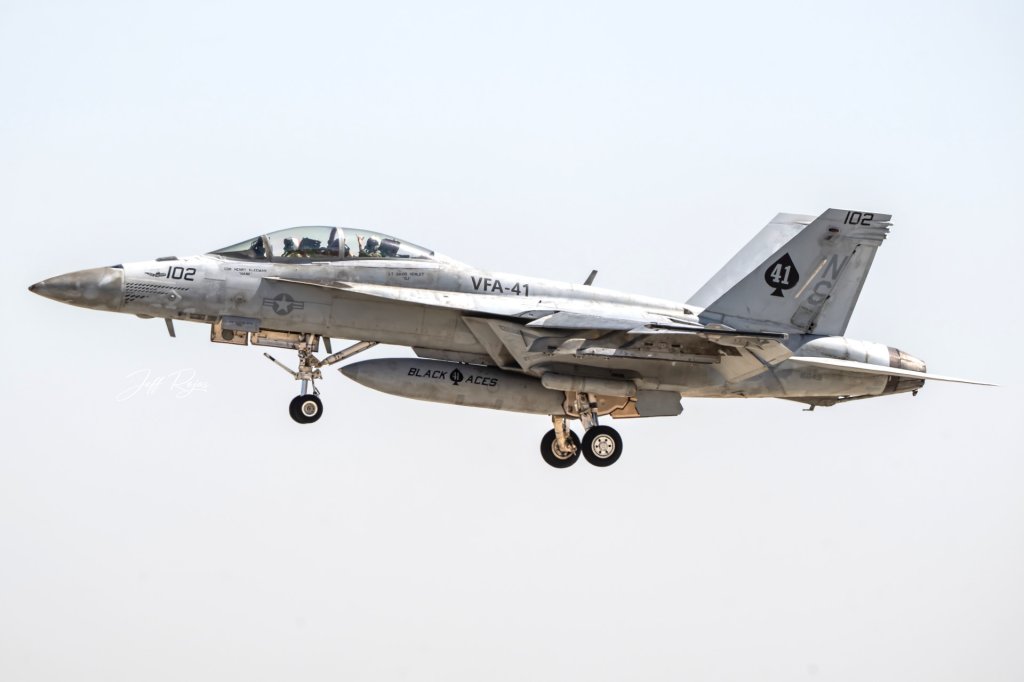
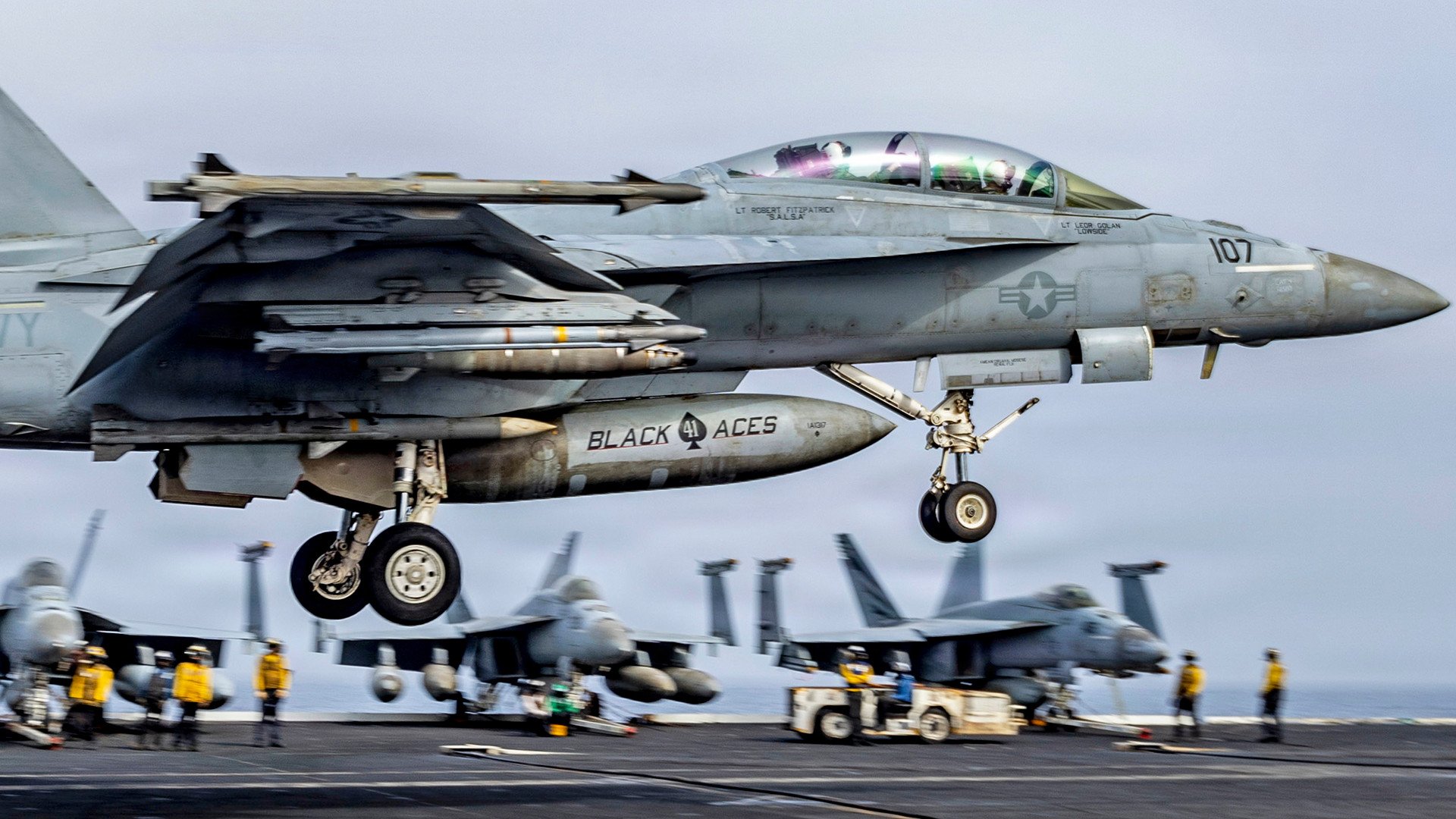
The volume of munitions expended in the course of U.S. operations against Iran this year has been and continues to be a hot topic of discussion, and there has been relatively little official data provided on this front. However, now we know that the F/A-18F Super Hornets of the U.S. Navy’s Strike Fighter Squadron 41 (VFA-41), the “Black Aces,” launched 421 missiles and bombs during their time supporting Operation Epic Fury.
This new insight into VFA-41’s role in the conflict with Iran comes from a photo of a large board listing the squadron’s weapons expenditures during Epic Fury, via Jeff Rojas, who goes by the handle @jro_photography on Instagram. Rojas also shared pictures recently taken of VFA-41’s Super Hornets. The Black Aces were one of the squadrons assigned to the Nimitz class aircraft carrier USS Abraham Lincoln, which has been on a marathon deploymentsince last year. The carrier only left the Middle East region last month and is now set to formally return home to San Diego, California, within days. Per the Pentagon’s official timeline, Operation Epic Fury began on February 28 and concluded on May 5, though U.S. forces have continued to conduct strikes on Iran, on and off, since then.
One of VFA-41’s F/A-18F Super Hornets spotted recently. Jeff Rojas Jeffrey Rojas
The complete tally of munitions employed as shown on the board, broken down by type, from greatest to fewest, is as follows:
1 GBU-12/B 500-pound-class Paveway II laser-guided precision-guided bomb
The total cost of all of these munitions, using available data from U.S. military budget documents, is very roughly $43,646,000, at least. Unit costs fluctuate regularly due to a variety of factors. Furthermore, the exact price tag for different JDAMs can be somewhat difficult to calculate given how the individual components are budgeted.
The JDAM is really a family of kits that turn standard unguided ‘iron bombs,’ which can vary significantly in the kinds of effects they are designed to produce, into warheads for precision-guided munitions. This is exemplified by the (V)2 and (V)4 subvariants of the GBU-31/B mentioned here, which are built using standard high-explosive and bunker-buster bombs, respectively. No specific subvariants of the GBU-32, GBU-38, or GBU-54 were mentioned in the information provided. Standard JDAMs can also only be employed against static target coordinates. The LJDAM kits add a laser guidance component (akin to what is found on Paveway-series bombs) that enables strikes against moving targets.
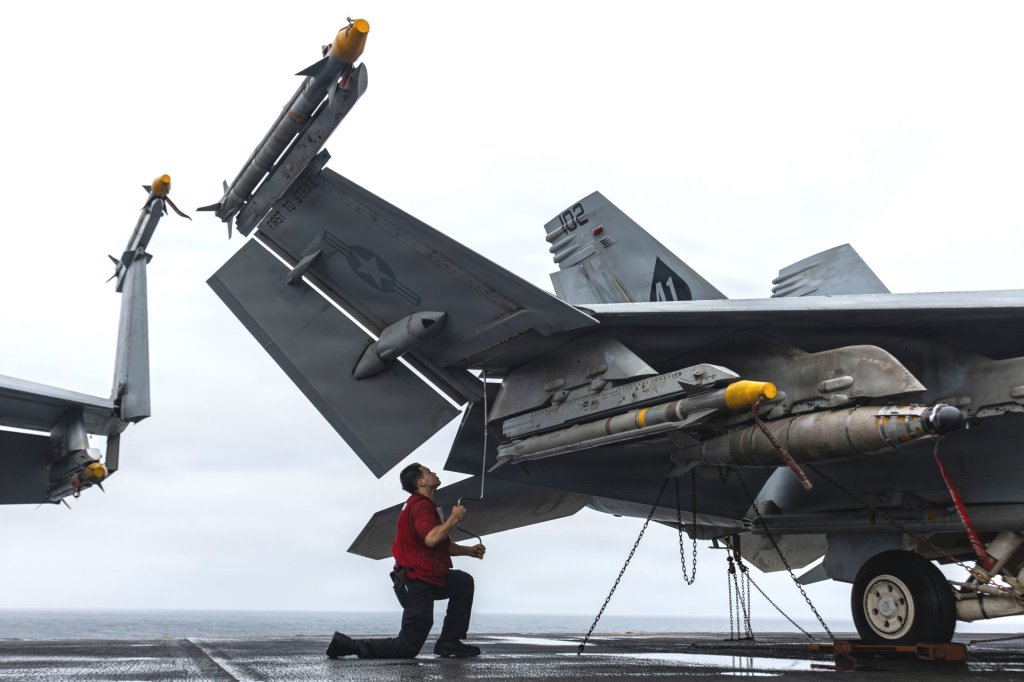
A JDAM, as well as a pair of AIM-9Xs, seen under the wing of a VFA-41 Super Hornet in August. NAVCENT
No specific version of AGM-154 is mentioned, either, but the C and C-1 types, which have multi-stage bunker-busting warheads, are the only ones understood to be in service today. Remaining A variants, which were loaded with 145 small bomblets, were removed from U.S. service in 2008 as a result of new guidelines on cluster munitions issued under President George W. Bush. A planned AGM-154B, which would have contained six “smart” Sensor Fuzed Munition bomblets, was never produced. You can read more about the full JSOW family here.
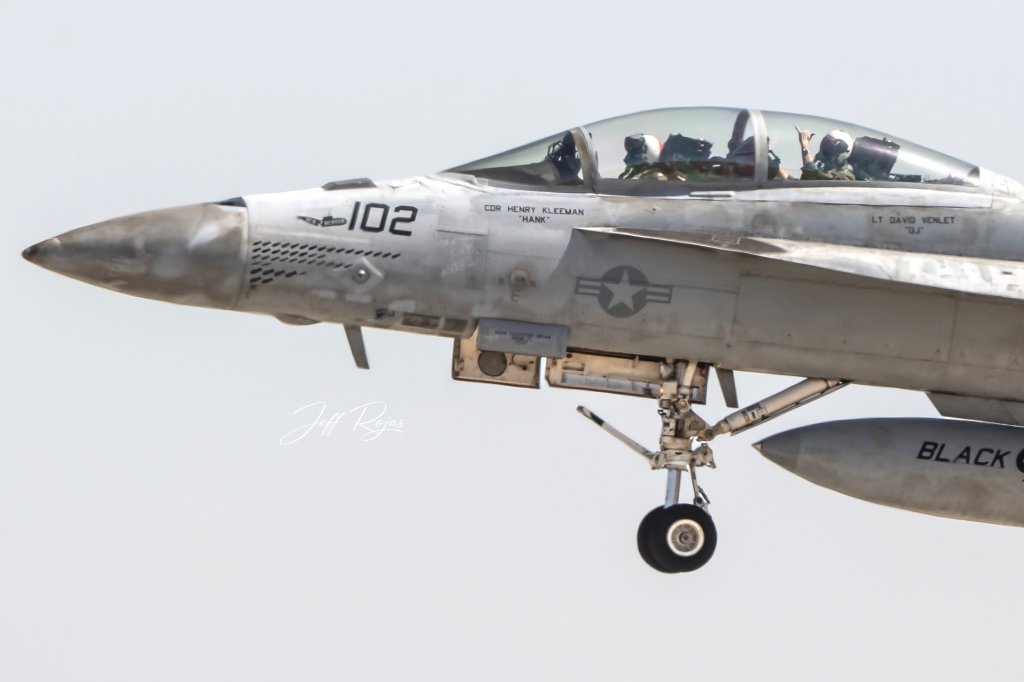
We do not know exactly what targets any of these munitions were employed against. However, a picture that Jeff Rojas grabbed of one of VFA-41’s Super Hornets, seen toward the top of this story and in part below, shows a very interesting broken submarine kill marking, with the added text “Sub Buster.” The jet also has a number of more typical bomb-shaped kill marks.
A close-up look at the broken submarine and other kill marks on one of VFA-41’s Super Hornets. Jeff Rojas Jeffrey Rojas
The video montage in the social media post below includes a clip, starting at 0:13 in the runtime, of a Hellfire missile hitting what looks to be a Ghadir class diesel-electric midget submarine in port.
U.S. forces are degrading the Iranian regime's ability to project power at sea and harass international shipping. For years, Iranian forces have threatened freedom of navigation in waters essential to American, regional and global security and prosperity. pic.twitter.com/gIBN02mowh
It is extremely likely that the AIM-9Xs and AIM-120s were fired at Iranian drones, though they could have been launched at incoming cruise missiles, as well. At the time of writing, there are no known or reported instances of U.S. military jets engaging crewed Iranian aircraft in the course of the conflict to date. In 2024, the Navy carried out a crash program that increased the total number of AIM-9Xs that F/A-18E/Fs could carry per sortie, specifically in response to Houthi drone threats. Super Hornets loaded with nine air-to-air missiles are now referred to as “Murder Hornets.”
It is also important to remember that this is a discussion of the munitions expended by just one Navy strike fighter squadron. Lincoln‘s air wing includes four strike squadrons, three with Super Hornets and one with F-35Cs, as well as units flying other types of aircraft and helicopters. The carrier was just one part of a much larger array of air, naval, and ground forces that participated in Operation Epic Fury and subsequent operations against Iran. For additional context, consider that the entire Eisenhower Carrier Strike Group, including its entire air wing and escorting ships, fired off 770 munitions in total, by the official count, during very active combat operations in and around the Red Sea between November 2023 and June 2024.
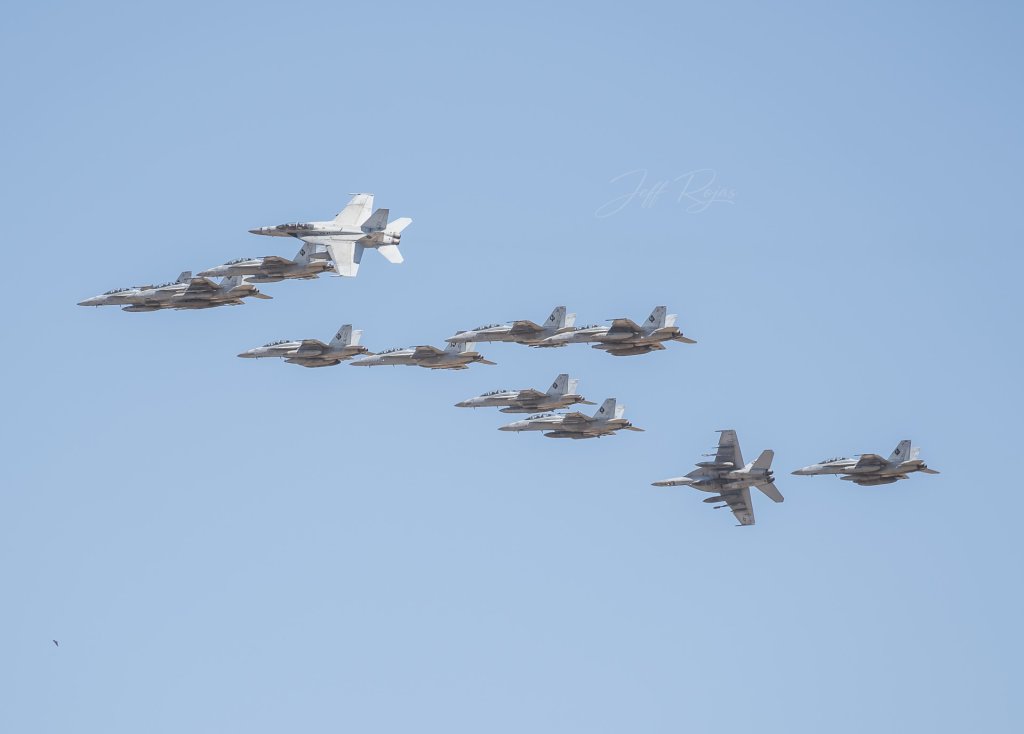
VFA-41 Super Hornets seen flying together recently. Jeff Rojas
As such, the tally of munitions launched from VFA-41 Super Hornets offers a very interesting view into that squadron’s contributions to Operation Epic Fury, as well as the full scale and scope of the conflict with Iran.
Special thanks again to Jeff Rojas for sharing the details about VFA-41’s participation in Operation Epic Fury and his pictures with us.
After nearly seven years of waiting, Taiwan has received the first two aircraft from its long-delayed purchase of 66 new-build F-16C/D Block 70 fighters from the United States.
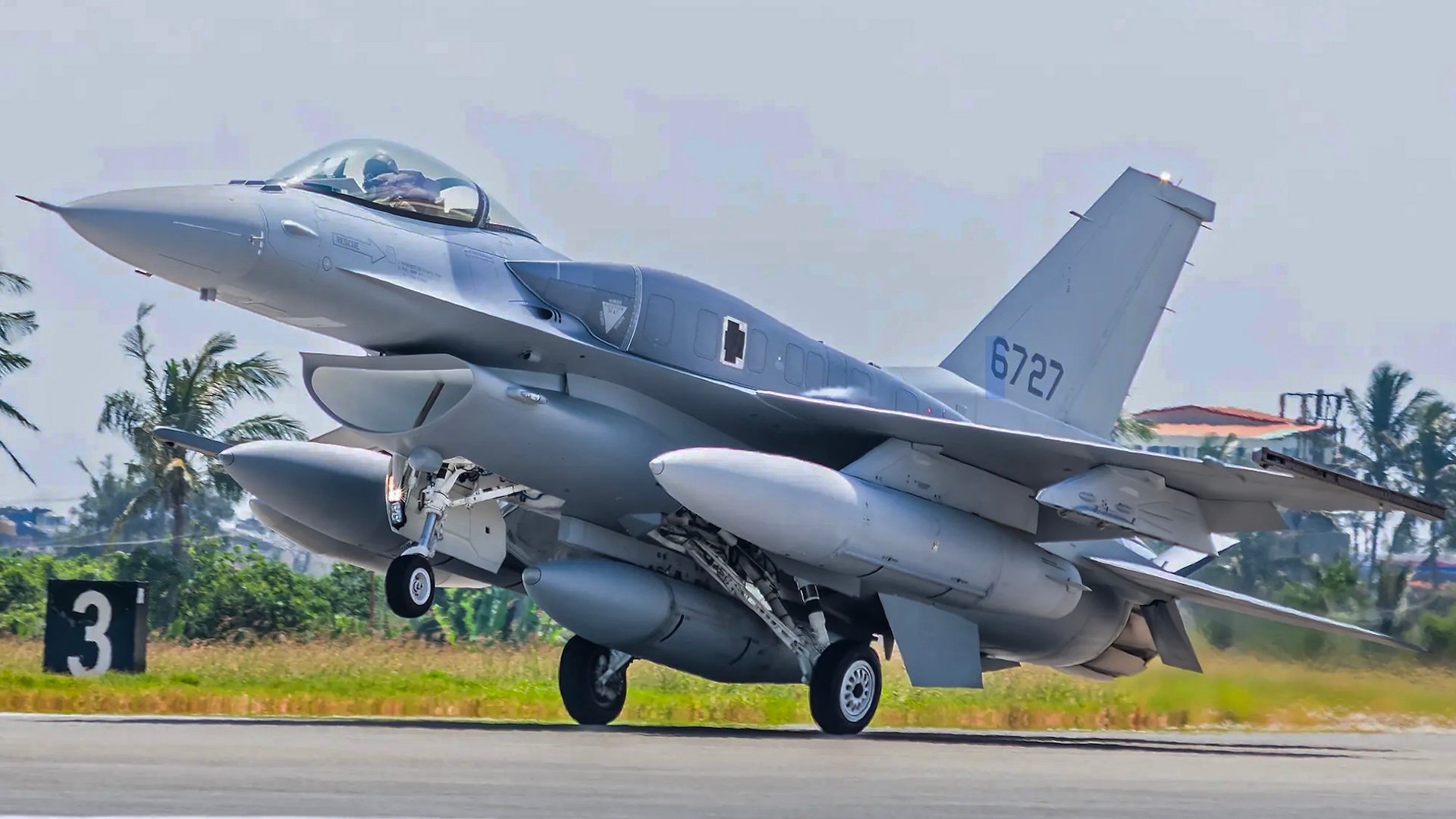
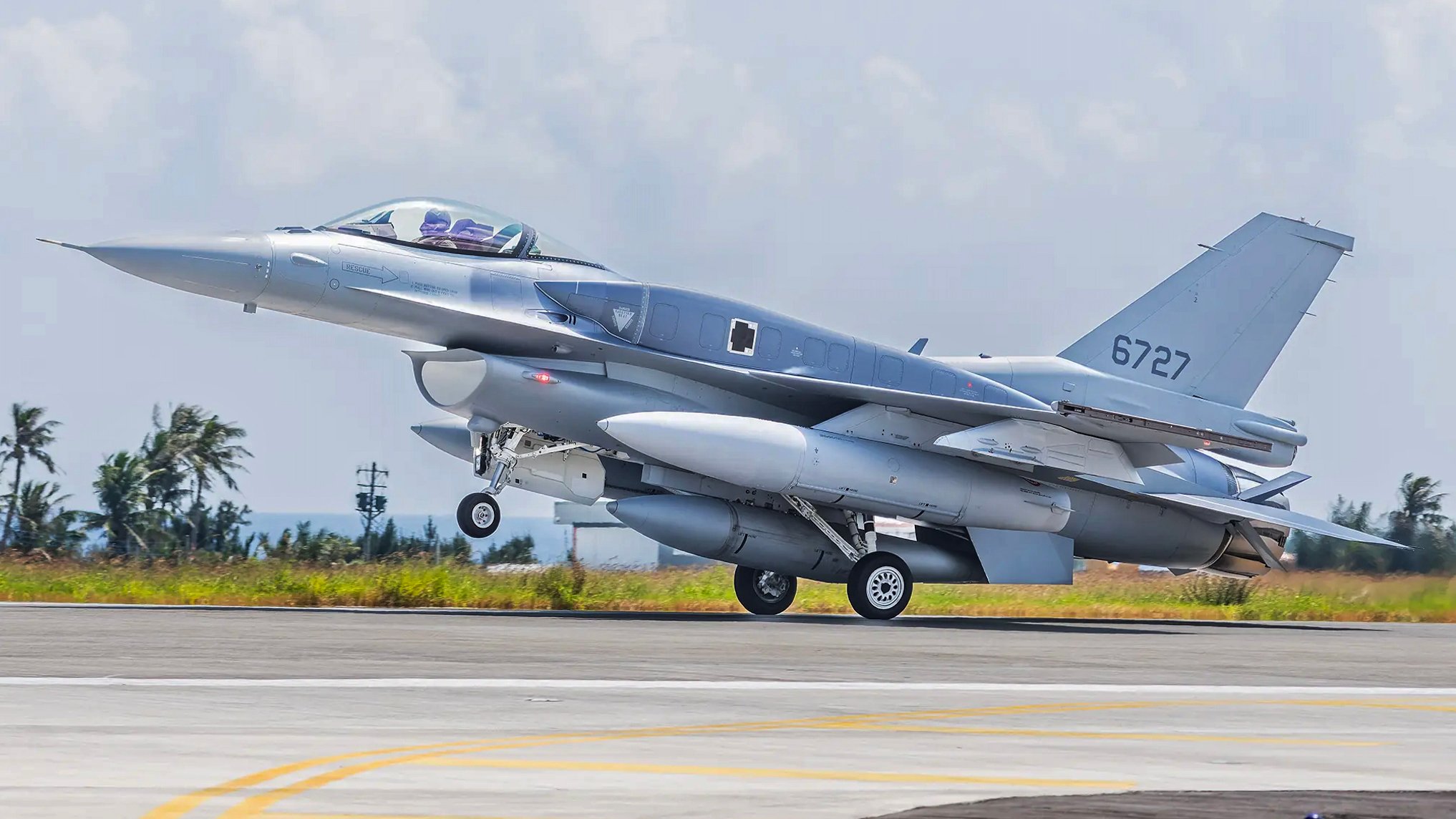
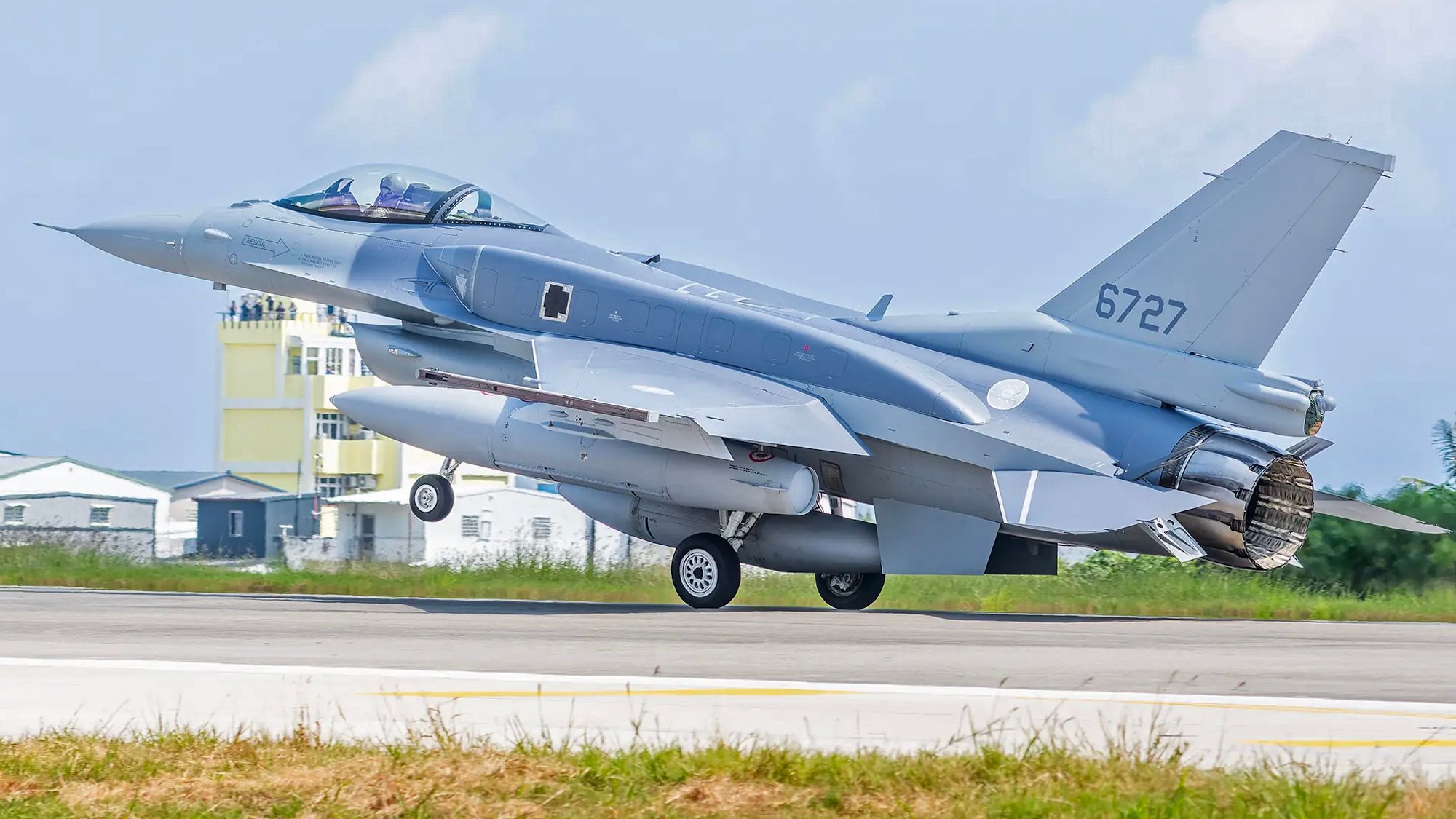
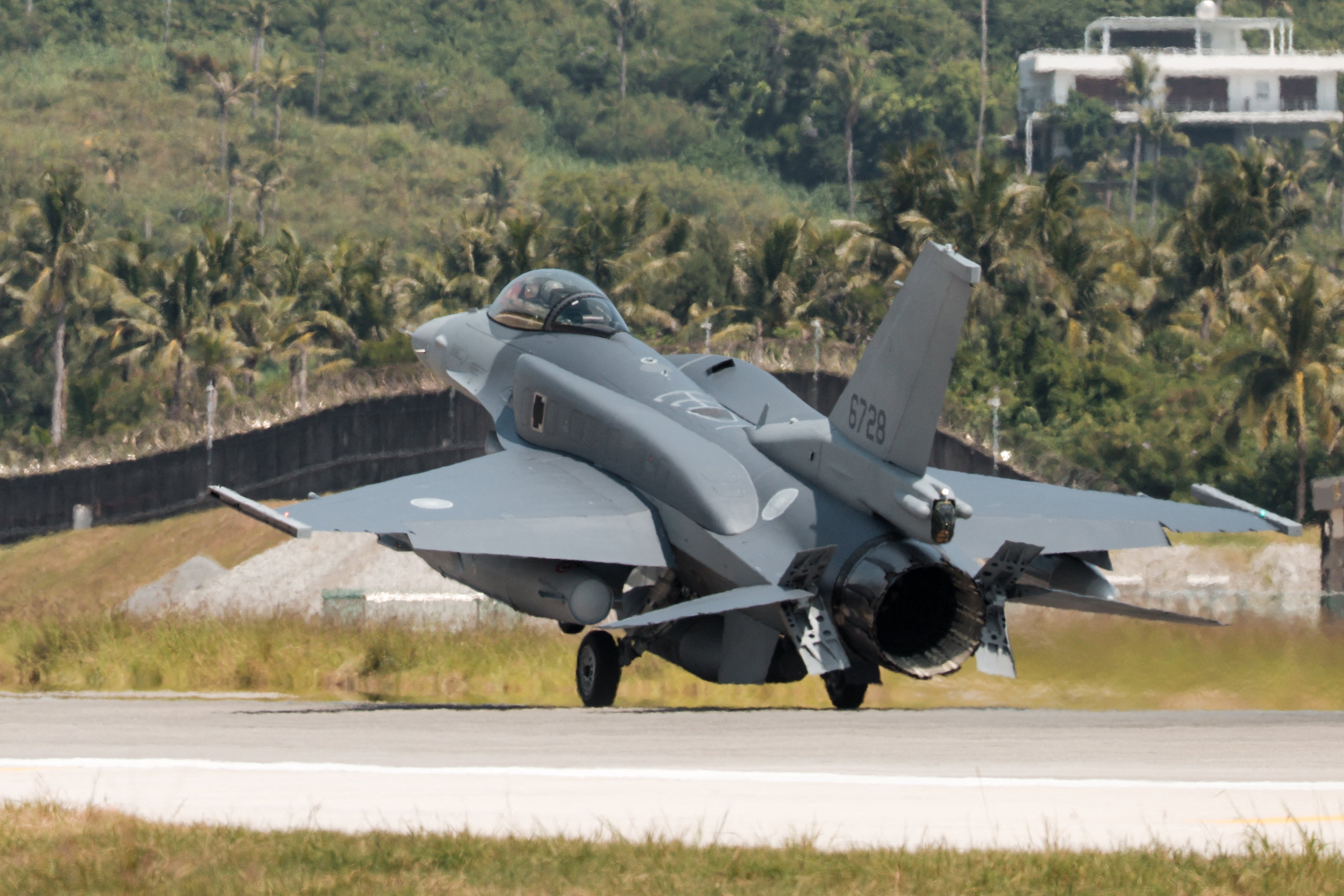
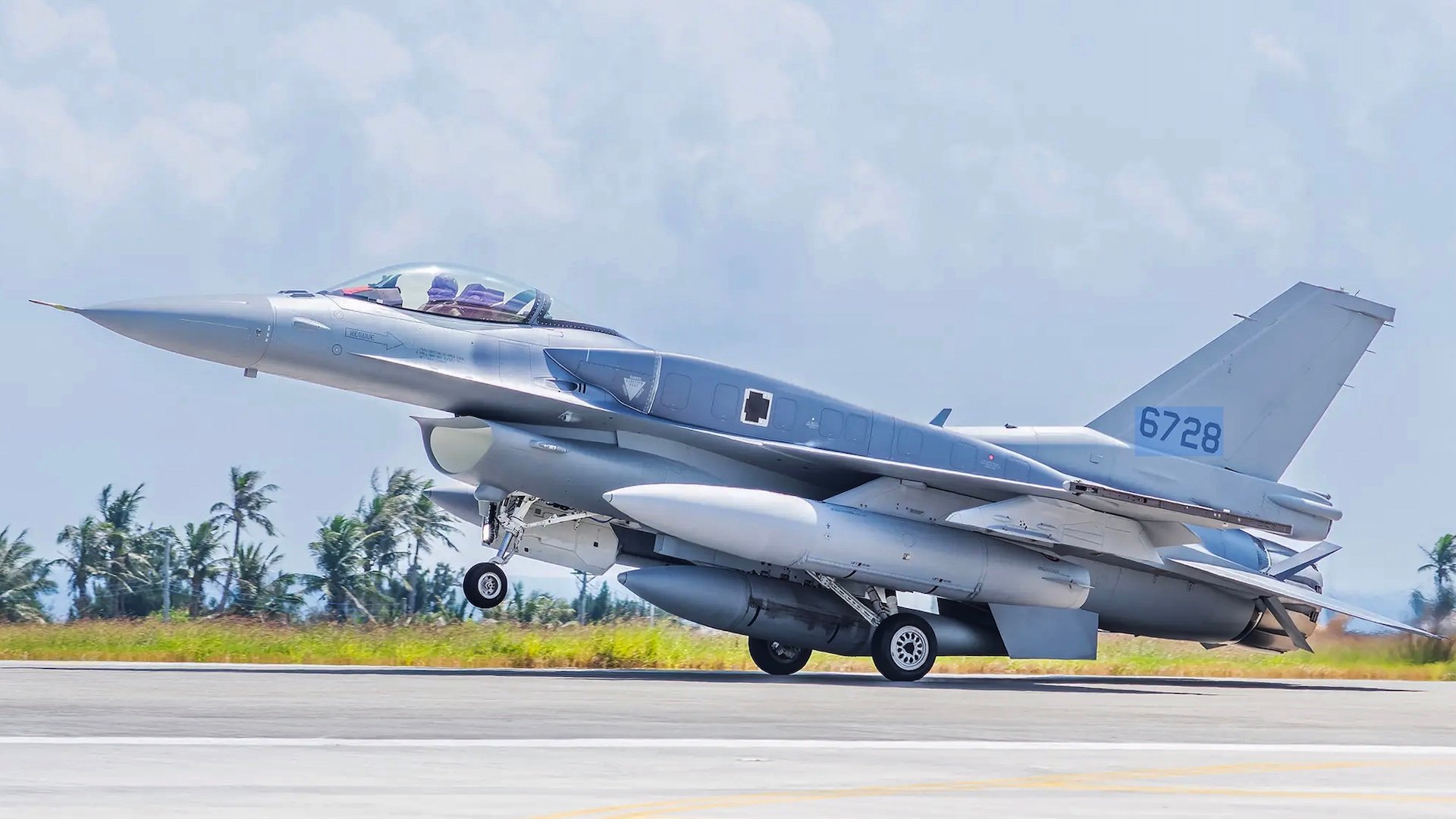
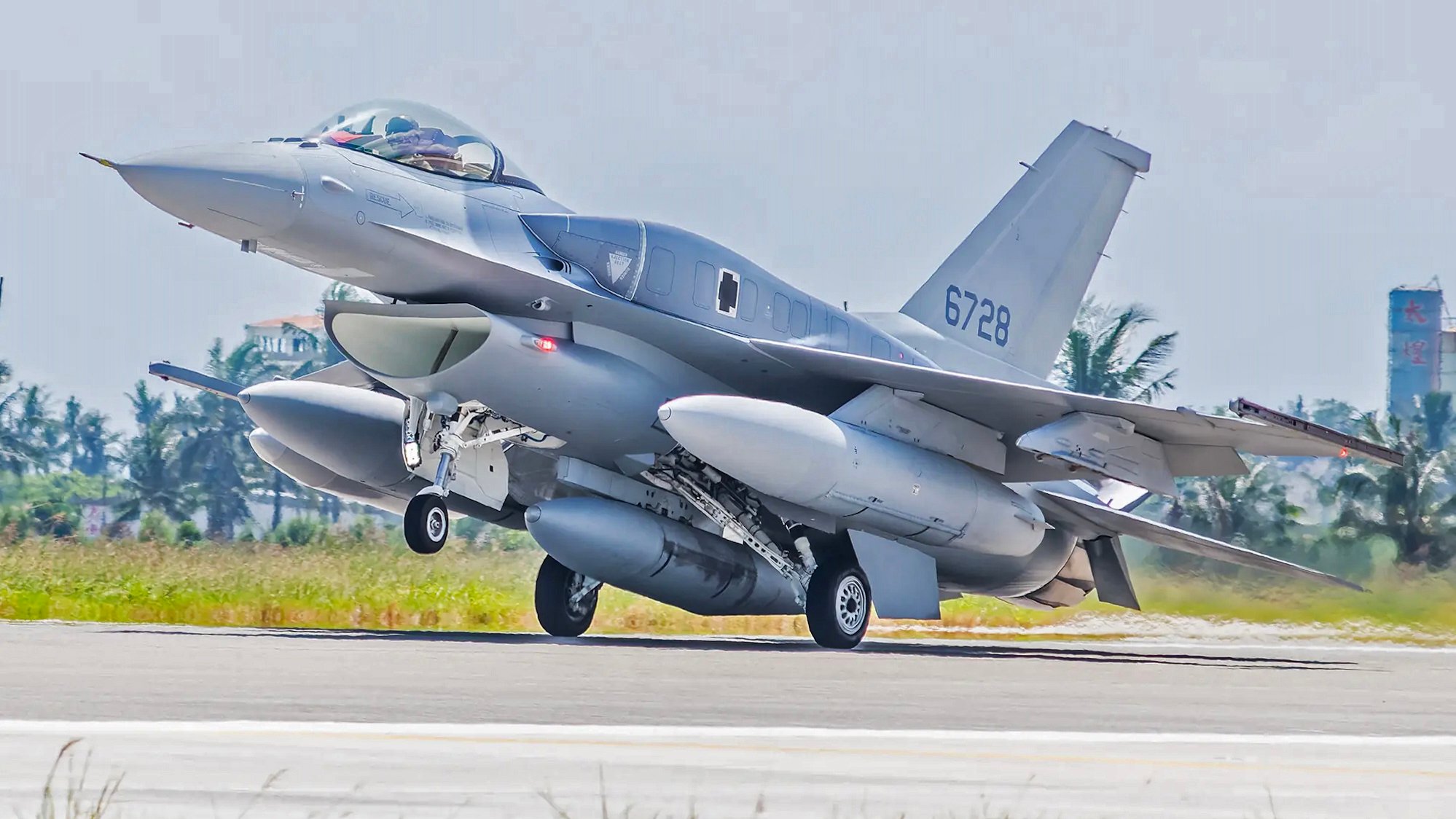
The two single-seat F-16Cs, serials 6727 and 6728, touched down at Chihhang Air Base near Taitung on October 2. They are the first factory-new fighter aircraft delivered to Taiwan in 25 years and mark the beginning of the aircraft acceptance and integration phase of the Republic of China Air Force’s (ROCAF) so-called Peace Phoenix Soaring project.
The two jets have also had an unusually eventful trip to Taiwan.
They began their journey to the island on August 17, flying from Lockheed Martin’s production facility in Greenville, South Carolina, to Hawaii. The aircraft were subsequently forced to remain there for more than a month after an unexpected issue prevented them from continuing across the Pacific as planned. The reasons for the delay have been the subject of considerable speculation, including weather and tanker availability.
ROCAF F-16C Block 70 serial 6727 arrive in Taitung. Peter Ho, Formosa Aviation & Military Image Press
The two jets finally departed Hawaii again on October 1, stopping in Guam before making the final leg to Taitung today.
Taiwanese Defense Minister Wellington Koo said today that more of the aircraft will arrive before the end of the year, although he did not provide a specific number.
Taiwan receives first 2 F-16V Block 70 fighter jets
Taiwan took delivery Friday of the first two of 66 F-16V Block 70 fighter jets purchased from the United States, with the aircraft landing at Chihhang Air Base in the eastern county of Taitung at around noon. pic.twitter.com/hbqdV6io26
— Focus Taiwan (CNA English News) (@Focus_Taiwan) October 2, 2026
The 66-aircraft purchase is worth approximately $8 billion. Taiwan originally expected deliveries to begin much sooner, but production-line adjustments, supply-chain problems, and software issues contributed to delays. COVID, too, had an impact on the production line.
The program’s delivery schedule has slipped repeatedly. Defense Minister Koo said in March, May, and again through his deputy in June that the first aircraft were expected to arrive by the end of September. That deadline passed without an F-16 reaching Taiwan.
ROCAF F-16C Block 70 serial 6727 touches down earlier today. Peter Ho, Formosa Aviation & Military Image Press
Taiwan’s Ministry of National Defense acknowledged in late September that development and production of the aircraft’s new electronic warfare self-protection system had also been a factor.
The Block 70s are being equipped with L3Harris’ AN/ALQ-254(V)1 Viper Shield electronic warfare suite, and the system was not yet fully through its development and production process when the first aircraft were otherwise ready for delivery. L3Harris announced on September 3 that it had completed production of the first 35 Viper Shield systems, underscoring that the electronic warfare equipment was itself still moving into production as Taiwan’s fighters were approaching delivery.
Taiwan chose to acquire the AN/ALQ-254 rather than the AN/ALQ-257 electronic warfare system used on U.S. Air Force F-16s.
Lawmakers have questioned whether the system meets requirements associated with earlier work to modernize earlier F-16A/B Block 20 fighters to the F-16V standard. Meanwhile, Defense Minister Koo argued that those requirements applied to the earlier Block 20 upgrade rather than the new Block 70 purchase. Other international F-16 Block 70 operators are also using Viper Shield.
Taiwanese officials have defended the decision, citing the specific requirements of Taiwan’s F-16 fleet and associated procurement considerations. The system is intended to provide the new fighters with a modern electronic warfare and self-protection capability against increasingly sophisticated radar and missile threats.
There are also still questions about when the Viper Shield system itself will be fully ready.
ROCAF F-16C Block 70 serial 6727. Peter Ho, Formosa Aviation & Military Image Press
Weapons deliveries have also not kept pace with the aircraft themselves.
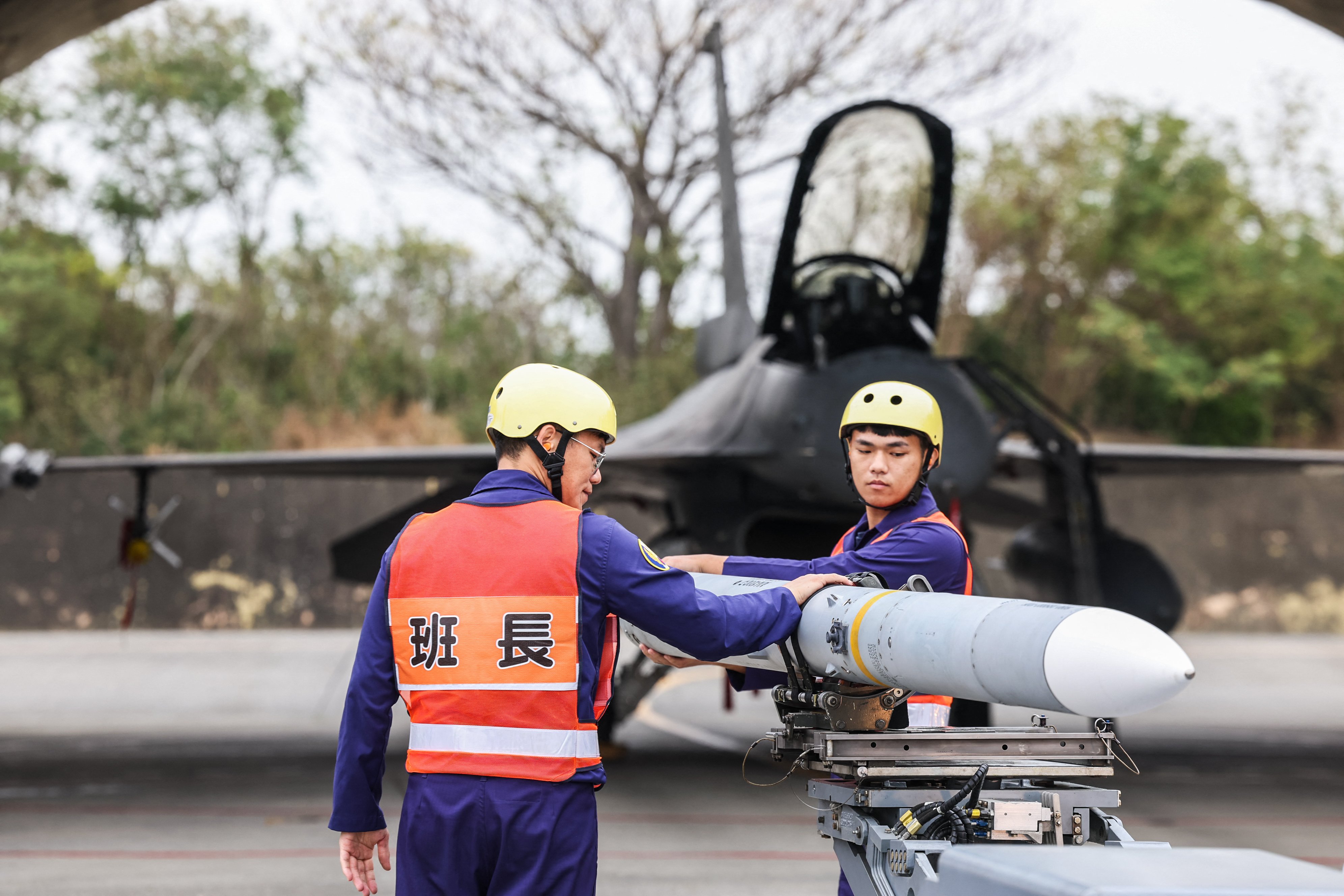
Taiwan is receiving AIM-120C-8 AMRAAM air-to-air missiles as part of the F-16 package, with 200 ordered. The C-8 version incorporates upgrades from the U.S. Air Force’s Form, Fit, Function Refresh (F3R) effort, including new electronics and improved electronic-counter-countermeasures intended to make the missile more capable in a heavily contested electromagnetic environment. For Taiwan, the missile will provide the new F-16s with a modern beyond-visual-range air-to-air weapon that can be cued by the aircraft’s AN/APG-83 Scalable Agile Beam Radar (SABR), as well as other sources of targeting information through the F-16’s networked systems.
An AIM-120 AMRAAM is prepared to be loaded onto an F-16V at Chiayi Air Base, in Chiayi on January 28, 2026. Photo by I-Hwa Cheng / AFP
The AIM-120C-8 is particularly relevant as Taiwan fields more F-16s against China’s increasingly capable fighter fleet, which includes aircraft equipped with long-range air-to-air missiles such as the PL-15.
Taiwan’s F-16 Block 70s will also be armed with the AGM-88 High-speed Anti-Radiation Missile (HARM), intended for attacks against enemy air defense systems. According to Roy Choo, a defense journalist and TWZ contributor, the first of the new AGM-88F (remanufactured from U.S. Air Force AGM-88B) missiles arrived in Taiwan back in 2022, for the F-16V fleet.
The major gap is the AGM-154C Joint Standoff Weapon (JSOW). The precision glide weapon is intended to give Taiwan a longer-range strike capability against ground targets without requiring the launching aircraft to fly directly over heavily defended areas. According to the latest reporting from Taiwan, deliveries of the AGM-154C have been held up by delays on the U.S. production line and may not begin until 2027 or 2028 at the earliest. Existing stocks of these weapons were also heavily used in Operation Epic Fury.
The two aircraft now sitting at Chihhang are significant for another reason. Unlike Taiwan’s existing F-16V fleet, they are new-production aircraft rather than older fighters that have been upgraded.
Taiwan received 141 F-16A/B Block 20s that were upgraded to the F-16V configuration under a separate modernization program completed in 2023. The new Block 70s incorporate many of the same technologies — including the APG-83 — but are built from the ground up as new aircraft.
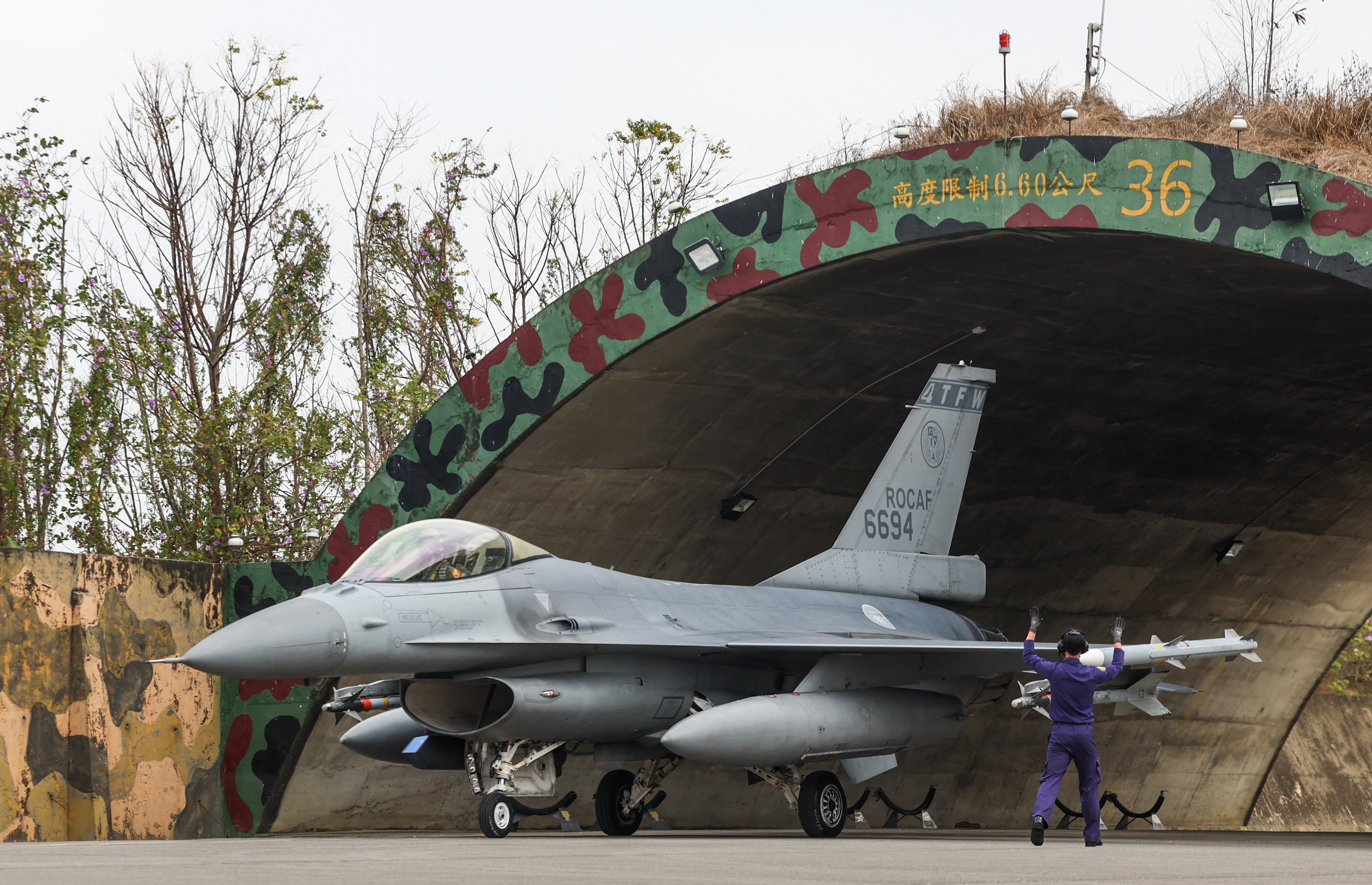
A Taiwan Air Force F-16V taxis out during a spring military exercise at Chiayi Air Base, in Chiayi on January 28, 2026. Photo by I-Hwa Cheng / AFP
The Block 70s will also bring a significant new passive-sensing capability to Taiwan’s F-16 fleet. Under a $328.5-million U.S. Foreign Military Sales contract awarded to Lockheed Martin in February, Taiwan is receiving the company’s IRST21 Legion-ES infrared search and track system. Designed specifically for the F-16, the long-wave infrared sensor can passively detect and track airborne targets without emitting radar energy. That gives the aircraft another way to search for and track threats while reducing its own electromagnetic signature. The IRST21 also gives the F-16s a passive way to detect and track low-observable targets, potentially providing another means of finding Chinese stealth aircraft without relying solely on radar.
In 2019, Lockheed Martin displayed a model of a Block 70 F-16 with what appeared to be a podded IRST system on one of its chin stations at the biennial Taipei Aerospace & Defense Technology Exhibition in Taiwan:
The new fighters will therefore complement Taiwan’s upgraded F-16A/Bs while expanding the overall number of modern F-16s available to the ROCAF.
The timing matters.
People’s Liberation Army (PLA) aircraft operate around Taiwan on an increasingly routine basis, forcing the ROCAF to maintain a persistent air-defense posture. The additional F-16s will provide more aircraft for missions ranging from air defense and counter-air operations to maritime strike.
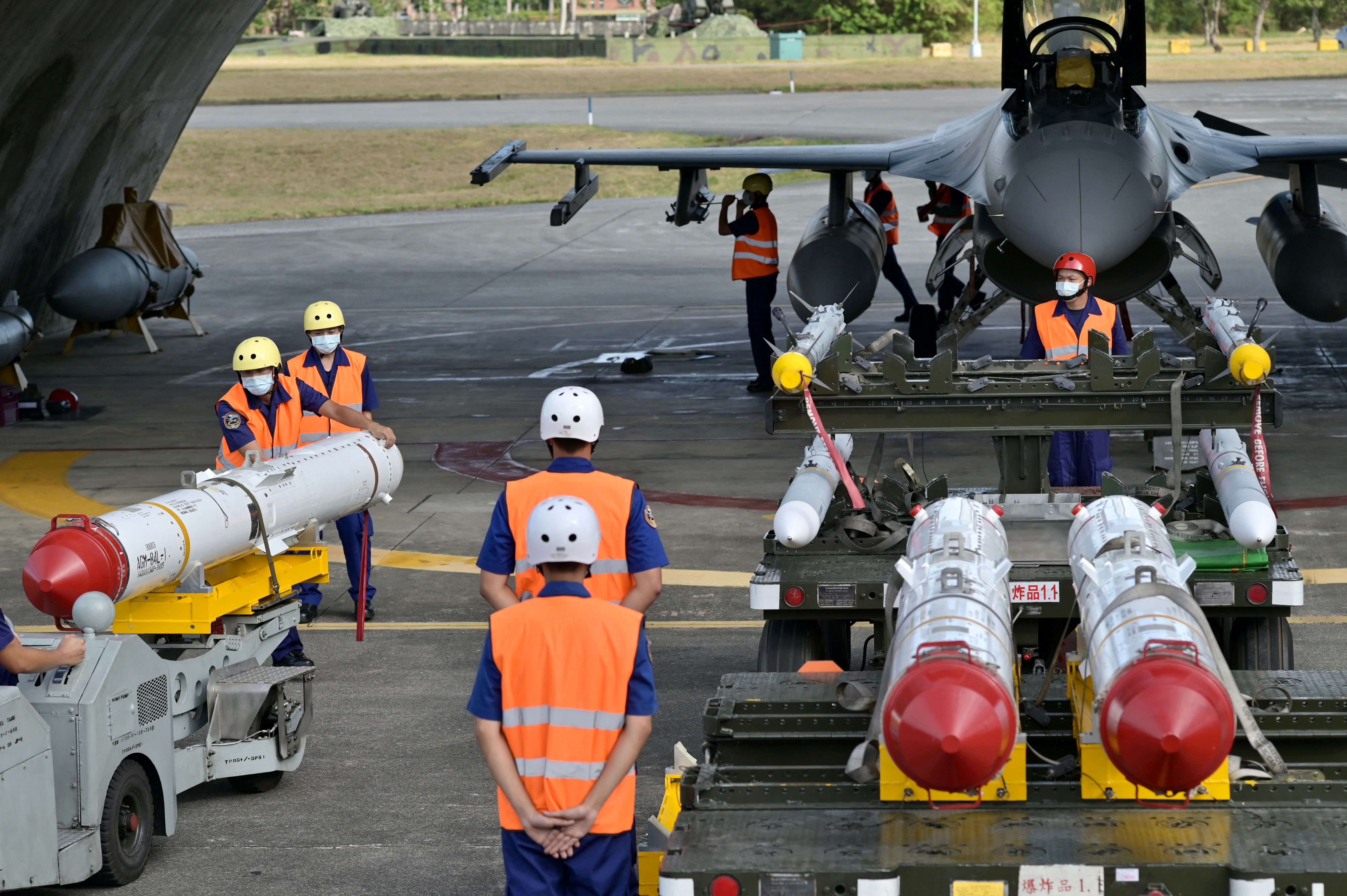
Ground crew prepare to load AGM-84 Harpoon anti-ship missiles in front of an F-16V during a drill at Hualien Air Force base on August 17, 2022. Photo by SAM YEH/AFP via Getty Images
The F-16V fleet is also being tested for a more specialized intelligence, surveillance, and reconnaissance role. The ROCAF has recently been conducting flight and systems integration testing of the MS-110 advanced reconnaissance pod, part of its Phoenix Scout project. The service plans to acquire six pods to replace older reconnaissance equipment. Based on the DB-110 digital sensor architecture, the system combines visible-light and infrared imaging with long-range, day-and-night reconnaissance, and real-time image transmission, allowing imagery to be passed more rapidly to ground command and intelligence elements. Integrating the pod with the F-16 and associated ground systems will give Taiwan another means of monitoring activity around the island and its surrounding waters.
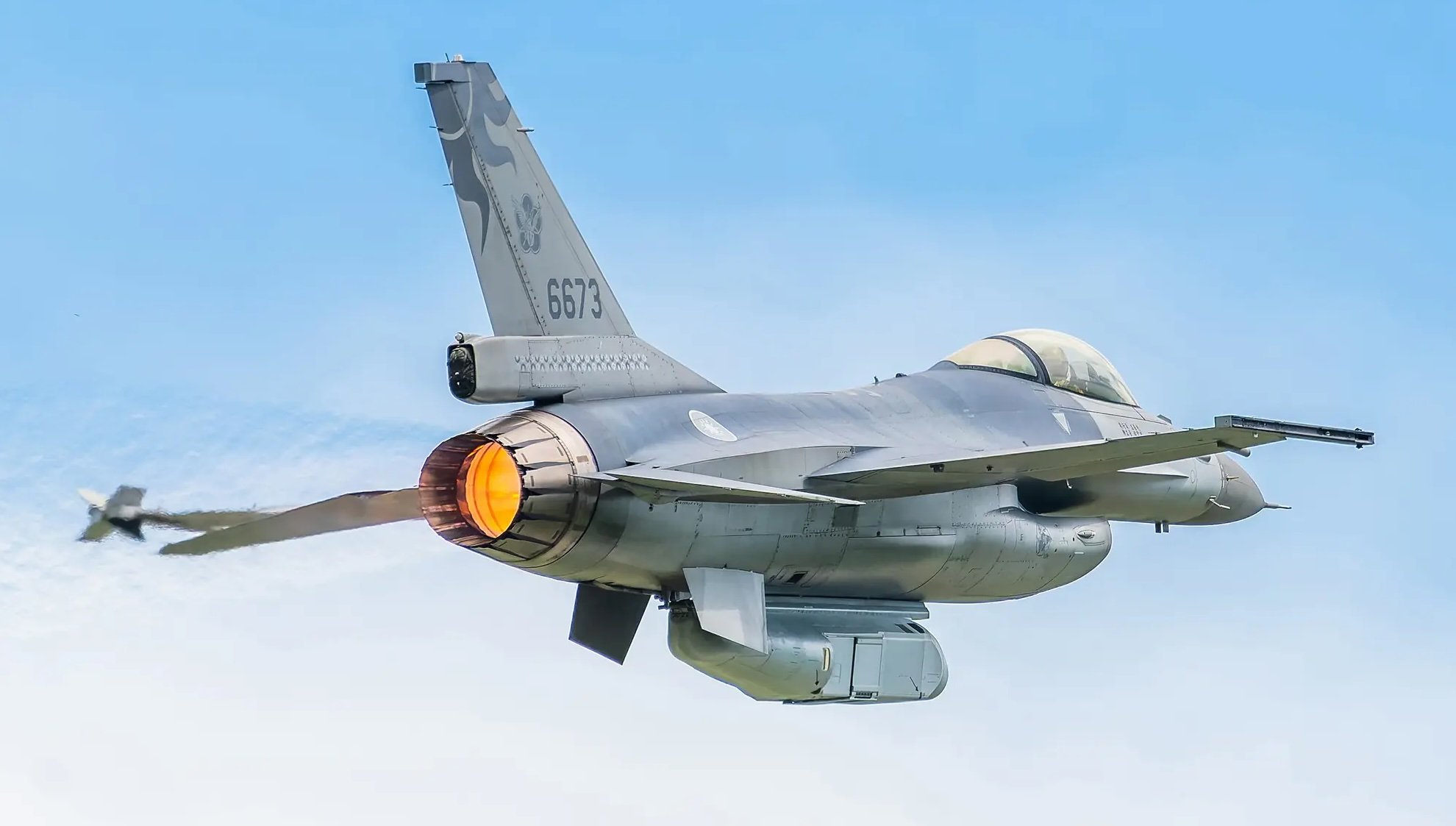
A ROCAF F-16V carrying an MS-110 reconnaissance pod. Peter Ho, Formosa Aviation & Military Image Press
But Taiwan remains heavily outnumbered across the Taiwan Strait.
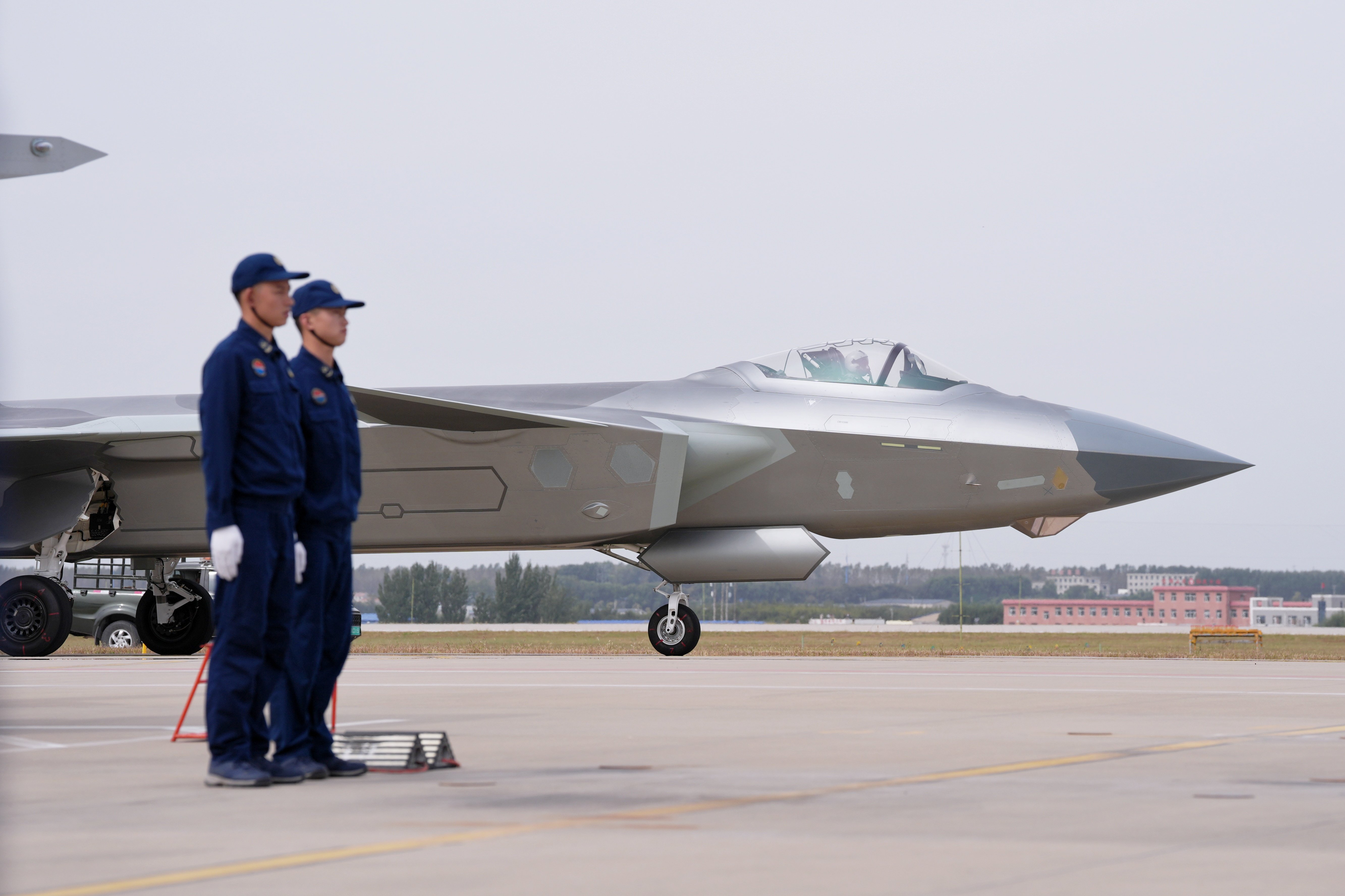
A J-20 fighter during the Changchun Air Show on September 22, 2025 in Changchun, Jilin Province of China. Photo by Zhang Xiangyi/China News Service/VCG via Getty Images
And the F-16s will face the same fundamental problem as Taiwan’s other combat aircraft in a major conflict: staying operational.
China possesses extensive missile and air capabilities that could threaten Taiwan’s airbases, aircraft shelters, fuel supplies, command-and-control infrastructure, and other elements needed to keep fighters flying. You can read more about how the ROCAF would likely go to war with China in this previous in-depth feature.
Basing the new F-16s at Chihhang Air Base, operated by the 7th Tactical Fighter Wing, is significant, Choo told us.
“The basing of the aircraft at Chihhang allows the ROCAF to readily project air power south and eastwards, especially over the Bashi Channel, which is one avenue PLA can gain access to the Philippine Sea and beyond,” he explained. “Previously, ROCAF fighters from other bases maintain QRA detachments there”
A new F-16C Block 70 lands at Chihhang Air Base in Taitung on October 2, 2026. Photo by CHENG Yu-chen / AFP
The F-16 delivery today is only the beginning of a much larger effort to get all 66 aircraft into Taiwanese service.
According to the latest information from the ROCAF, 63 F-16C/D Block 70s remain in various stages of production and delivery in the United States, with some already moving through the handover process. The remaining aircraft will be delivered according to production, flight-test, and acceptance milestones before being ferried to Taiwan.
Once the full order is delivered, Taiwan will operate more than 200 F-16s when the new Block 70s are combined with its existing fleet.
That will give the ROCAF a considerably larger force of modern F-16s, with substantial commonality between the upgraded F-16V fleet and the new-production Block 70s.
The aircraft will still need to go through Taiwan’s acceptance procedures, while pilots and maintenance personnel complete the necessary conversion and training work. The new jets will then be progressively incorporated into the ROCAF’s operational units.
Remarkably, the arrival of the first Block 70 fighters today marks the first delivery of new fighters to Taiwan since 2001, when the last of the 150 F-16A/B Block 20s were delivered.
“The ROCAF’s surviving fleet of 139 F-16s, 53 Mirage 2000s, and 129 F-CK-1s was largely inducted in the 1990s, when Taiwan held the upper hand in the cross-Strait air-power balance,” Choo explained. “Even then, there remained a requirement for additional fighters, prompting the island’s first formal request to purchase 66 F-16C/Ds during the 2006 Monterey Talks.”
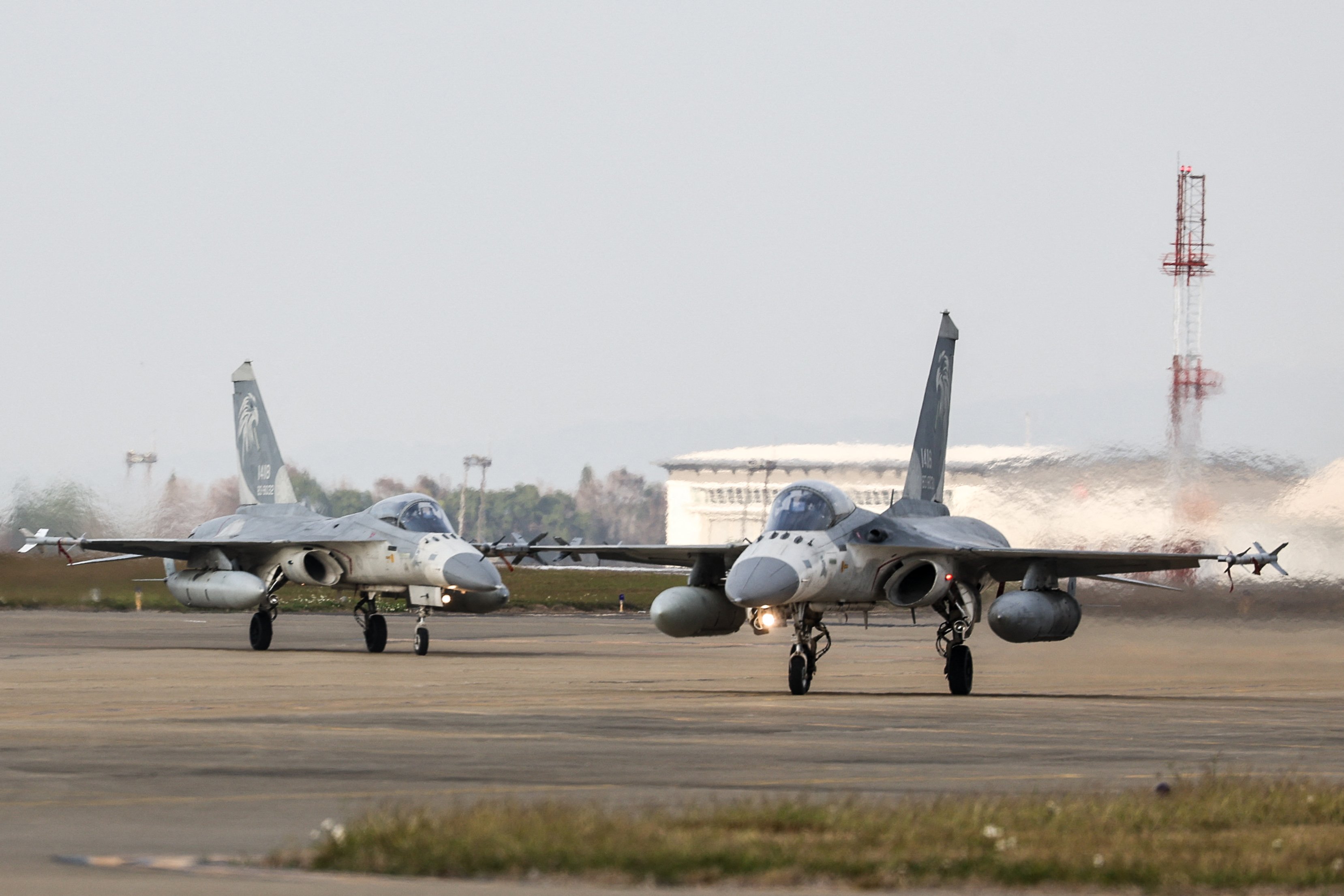
F-CK-1s taxi for takeoff during a scramble as part of a combat readiness exercise at Ching Chuan Kang Air Base in Taichung on January 7, 2025. Photo by I-HWA CHENG / AFP
“By the late 2000s, these fighters were approaching the limits of their combat effectiveness as the PLA air fleet expanded in both size and capability. Fortunately, substantial upgrades began to be rolled out to the F-CK-1s and F-16s from the 2010s.”
In the wake of the 2019 acquisition of the F-16C/D Block 70s, questions arose over the aircraft’s asymmetric value as the Taiwan military increasingly focused on developing a plan for asymmetric capabilities in response to the PLA’s growing combat power.
“However, developments in recent years have underscored the continued importance of a capable fighter fleet not least for policing Taiwan’s airspace amid the PLA’s sustained gray-zone air operations around the island,” Choo added.
ROCAF F-16C Block 70 serial 6728. Peter Ho, Formosa Aviation & Military Image Press
The timing of today’s arrival is also notable.
The aircraft reached Taiwan just days after U.S. President Donald Trump met Chinese President Xi Jinping in Washington. The delivery comes amid questions in Taipei about the future pace of U.S. arms transfers, after Trump said in May that a proposed $14-billion Taiwan arms package was being held in abeyance. He had approved an $11-billion package in December 2025.
Washington continues to say that its policy toward Taiwan has not changed.
Beijing, for its part, continues to oppose U.S. arms sales to Taiwan and regards the island as part of Chinese territory.
It has taken nearly seven years to get the first two F-16C/D Block 70s, to Taiwan. But their arrival marks the first step in a major modernization of the ROCAF’s F-16 fleet, adding new-production fighters with improved radar, electronic warfare, sensors, and weapons to a force that is already operating upgraded F-16Vs.

 Login