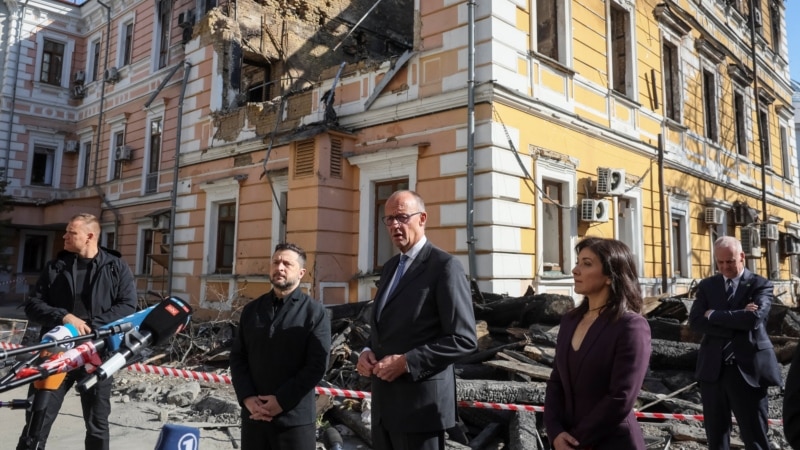
The Russian Defense Ministry on Sunday vowed that it would intensify attacks on Ukrainian military sites and related infrastructure after Ukrainian President Volodymyr Zelensky said Ukraine would double down on its attacks on Russian oil infrastructure. “Following Zelensky’s statement today, the Russian Armed Forces will step up strikes on military and defense industry facilities, as […]
United Airlines has been sending military hardware to Israel on passenger flights, right under your feet.
A new report from the People’s Embargo for Palestine, the Palestinian Youth Movement, and others documents 2,761 shipments of military cargo to Israeli weapons manufacturers and military institutions, including Elbit Systems, Lockheed Martin Israel, Nevatim Airbase, and the Israeli Ministry of Defense. Belal Elsiesy, organizer with the PYM and the People’s Arms Embargo, joins Zoe Alexandra to break down the findings.
With cargo including F-35 bomb release units used to drop 2,000-pound bombs on Gaza, Merkava tank sights, and “hunter-killer” machine gunner sights destined for Elbit, Elsiesy argues civilian airports are a critical point of intervention. He also discusses what’s behind Elbit’s US rebrand as 26 Defense, how campaigns against Maersk and FedEx have targeted the weak links in Israel’s weapons supply chain, and why the airline’s silence on the #NoWeaponsOnUnited campaign is a good reason to act now.
Rashad al-Alimi, the head of the Riyadh-based Yemeni Presidential Leadership Council, announced on Sunday that Saudi-backed forces were launching a major offensive aimed at capturing all areas of Yemen under the control of Ansar Allah, also known as the Houthis. Al-Alimi has been based largely in Saudi Arabia for more than a decade, having left […]
Russia might not have directly interfered in Latvia’s election, but the vote still showed how the Ukraine war was distorting European democracy.
Latvia’s VDD intelligence service did not detect any of Russia’s classic interference tactics in the run-up to Saturday’s (3 October) vote, such as a spike in disinformation, vote buying, or a manufactured security scare.
The centre-right prime minister Andris Kulbergs retained power with 35.8 percent of the vote, even if coalition-building might take a while.
And voters’ concerns included the cost of living and failing healthcare, in what also sounded normal.
But despite the ordinary appearances, Russia’s war in Ukraine still influenced the election in fundamental ways, in a strange new normal for Europe that most of us had hardly imagined just five years ago.
This article continues, but the full version is available only to EUobserver.com subscribers. Visit account.euobserver.com/membership
Saudi oil tankers are loading again at Yanbu, less than three weeks after drone strikes shut down the East–West Pipeline that supplies the Red Sea port. On 24 September, crude was reported to be flowing west again, although no ship had yet loaded a cargo.
By 29 September, trade sources and shipping data showed that loadings had resumed. The interruption and recovery have offered a costly demonstration of what an oil route around the Strait of Hormuz can, and cannot, do.
Yanbu, Ceyhan and Baniyas sit at three very different points on that spectrum.
Yanbu has a 1,200-kilometer pipeline in operation and an established export terminal. Ceyhan is already loading Iraqi crude, though current Iraqi flows are measured in hundreds of thousands–not millions–of barrels a day. Baniyas could eventually give Iraq a major Mediterranean outlet, but for now it remains a project that depends on new infrastructure and financing, political agreements, and protection across two fragile states.
The comparison begins with the oil that reaches ships during a crisis. Pipeline capacity matters only as much as the pumps, terminals, and security along the route allow.
Yanbu’s exposed lifeline
Saudi Arabia’s 1,200-kilometer East–West Pipeline has a nominal capacity of 7 million barrels per day (bpd). Before the September strikes, reported flows through the system were already below that capacity. Three pumping stations were damaged, and the shutdown halted crude loadings at Yanbu. Riyadh blamed Iraqi resistance factions; the Islamic Resistance in Iraq denied responsibility for the strike. Baghdad condemned the strike and opened an investigation.
Restarting the line on 22 September did not immediately restore exports. Crude had to reach Yanbu and replenish stocks before tankers could load. Two vessels scheduled for 23 September left without cargo, according to shipping data cited by Reuters. Loadings resumed days later, after a strike on pumping stations hundreds of kilometers inland had kept the port idle.
Yanbu was moving between 2 million and 2.65 million bpd when tankers returned. Traders expected flows to rise to 3 million to 4 million bpd, but a return to the pre-attack level of roughly 5.5 million bpd could take another month.
The voyage has become more expensive, too. Quoted war-risk premiums for Saudi-linked tankers calling at Yanbu have risen to around 3 percent of vessel value, up from below 1 percent in early July. For a $100 million tanker carrying two million barrels, a 3 percent premium adds roughly $1.50 to the cost of each barrel, before fuel or freight. Yanbu may bypass Hormuz, but insurers are charging heavily for the detour.
Yanbu still leaves Asia-bound cargoes exposed to the southern Red Sea and Bab al-Mandab. Attacks and warnings by Yemen’s Ansarallah-aligned army have made passage through those waters more costly and uncertain. Heidmar Maritime Holdings chief executive Pankaj Khanna has highlighted another problem for shipowners: the Red Sea lacks the US naval protection sometimes available around Hormuz.
Saudi Arabia has escaped one strait only to send its oil toward another. Cargoes bound for Europe can head north through the Red Sea, but Asian customers require the southern passage. That split limits how freely Riyadh can reroute shipments when risks around Bab al-Mandab rise.
Ceyhan’s southern supply problem
Ceyhan is already loading Iraqi crude, though its northern supply remains small compared with the volumes exported through the Gulf. Flows stood at roughly 200,000 bpd in mid-September, down from about 250,000 bpd before the war. Baghdad’s challenge is getting oil from its vast southern fields into that northern export system.
Iraq has begun moving southern oil north by road. A September trial sent 209 tanker trucks carrying about 38,000 barrels to Kirkuk over two days. Basra Oil Company later said around 250,000 bpd was being transported north for onward export through Ceyhan.
Truck convoys are useful during a crisis, but they cannot replace a high-capacity pipeline. The first trial averaged about 182 barrels per truck. Moving 250,000 barrels at that rate would require roughly 1,370 loaded truck trips, with vehicles returning south for the next run. Road conditions and loading points impose additional constraints. Expanding Ceyhan therefore depends less on the Turkish terminal than on a reliable south-to-north connection within Iraq.
Energy analyst Richard Bronze of Energy Aspects has warned against treating bypass infrastructure as a substitute for Hormuz altogether. “The idea that the strait will stop mattering or become worthless is pure rhetoric,” he told Arab News. For Iraq, the road to Ceyhan provides an outlet. It cannot yet carry southern crude at a scale that would loosen Baghdad’s reliance on the Gulf.
Baniyas across the war map
Baniyas is the most ambitious option because it could reshape Iraq’s export map. Iraq has approved preliminary studies comparing routes including Basra–Haditha–Kirkuk–Ceyhan and Basra–Haditha–Baniyas, with a consortium that includes Chevron, TI Capital, and Qatar’s UCC. Chatham House estimates the wider Iraq–Syria network at around $15 billion, with a proposed initial capacity of roughly 2 million bpd and construction potentially taking about four years.
Syrian officials have given a somewhat shorter timeframe. Syrian Petroleum Company chief Youssef Qablawi said in August that the Haditha–Baniyas project could take around 30 months to three years after final agreements and engineering work. Even the shorter timetable places Baniyas beyond the present shipping crisis, assuming agreements and funding are secured.
The route’s security problem is also more complex than a line drawn on a map. A pipeline from Haditha toward Syria would traverse western Iraq, including areas where ISIS cells remain a concern, before entering eastern Syria, where state authority remains uneven and armed groups continue to operate.
Chatham House noted in September that armed actors, including ISIS, have attacked oil wells and tanker trucks in eastern Syria, while Iraq’s fragmented security system leaves multiple actors capable of obstructing or extracting rents from infrastructure.
Israel’s strikes and military presence in Syria would loom over any pipeline to Baniyas. There is no evidence that Israel plans to attack the project, but a route through Syrian territory would depend on security guarantees Damascus cannot yet provide.
Baniyas itself is more functional than the word “reconstruction” sometimes suggests. Iraqi-origin fuel oil has already been trucked through Syria and handled at the terminal, demonstrating that a commercial logistics chain can operate.
The existing trade gives the project a foothold, but handling trucked fuel oil is far removed from loading 1–2 million bpd of pipeline crude. Storage, pumping systems, berths and terminal reliability would have to be scaled accordingly.
The old Kirkuk–Baniyas line was badly damaged, and the planned network may take a different route. Existing truck traffic therefore offers little indication of the cost or the construction work required to handle sustained crude flows.
Sanctions are another constraint, though less severe than under Bashar al-Assad. The EU lifted its broad economic sanctions on Syria in 2025 while retaining security-based and targeted measures, and the US rescinded Syria’s designation as a State Sponsor of Terrorism in August 2026. That lowers, but does not eliminate, banking, insurance, due-diligence and counterparty risk for a multi-billion-dollar project.
Iran’s leverage runs through Iraq
The geopolitical logic behind Iraq’s western routes is often framed as a means to reduce Iranian leverage over Hormuz. Iran’s influence in Iraq also extends through energy trade, political networks, and armed factions embedded in Iraq’s fragmented security order.
At the same time, Tehran does not treat Iraq exactly as it treats other Gulf states. Mostafa Khoshcheshm, a political commentator on Iranian television, toldAl Jazeera in August that Iran viewed Iraq as a “friendly state” and had allowed some Iraqi oil tankers to pass Hormuz.
He said Baghdad had “always stood up to the United States.” His view is one Iranian reading of Baghdad’s position. An Iraqi move toward Gulf- and US-backed western export corridors would also alter the economic leverage surrounding it.
An expansion through Baniyas or Ceyhan would give Baghdad more room to negotiate export terms without severing its ties to Iran. Gulf investment would bring new transit partners and sources of capital, though it would not automatically shift Iraq’s political alignment.
The security question cuts both ways. Iran-aligned resistance factions could be a source of vulnerability if they viewed a corridor as threatening their strategic interests. ISIS remnants and local power brokers could also obstruct it, while transit-state disputes might halt flows without an attack. Yanbu’s damaged pumps are a warning about the vulnerability of a land corridor.
Iraq’s other proposed exits face obstacles of their own. Reviving the dormant Iraq Pipeline through Saudi Arabia (IPSA) would require Riyadh’s agreement and extensive repairs. The Basra–Aqaba route would have to be built across western Iraq and Jordan.
Egypt’s SUMED pipeline is already operating, but Baghdad has no direct way to feed Iraqi crude into it. For now, the southern Gulf terminals remain Iraq’s only outlet capable of handling exports at scale.
What reaches the tanker?
As of early October, Yanbu can move the largest potential volume because the pipeline and port already exist, but its 7 million bpd nameplate figure overstates the immediately exportable capacity, while Red Sea shipping costs and the Bab al-Mandab remain concerns.
Ceyhan can now load Iraqi crude, but expansion depends on resolving Iraq’s internal north–south logistics. Baniyas offers the largest geopolitical transformation, but it remains years, billions of dollars, and security agreements away from moving crude at scale.
Hormuz remains central to the region’s oil trade even as states invest in alternatives. Yanbu, Ceyhan and Baniyas each shift some exposure from the strait to pumping stations, desert corridors, insurers or transit governments. Their value will be measured by the barrels reaching ships when the Gulf route is under threat, not by the capacity listed in a project plan.
Scrambling to halt the ongoing offensive of Yemen’s Armed Forces, Israel and Saudi Arabia have strengthened ties through a joint covert campaign aimed at salvaging what remains of their supremacy in the Red Sea region. Tel Aviv and Riyadh’s losses of key military strongholds in Yemen’s Western coast, has ushered in a new era of soft-normalisation.
Saudi Arabia has carried out hundreds of airstrikes in Yemen, resulting in thousands of casualties since its renewed bombing campaign began this July. It now heavily relies on Israeli targeting intelligence backing in order to conduct dozens of strikes across Yemeni territory on a daily basis, including attacks on civilian market places and residential buildings.
Meanwhile, Israeli officials heaped praise on Riyadh this Wednesday for facilitating the first ever commercial flight between Israel and Saudi, following the Kingdom’s intervention to aid Israeli passengers on-board a Flydubai plane that was forced to undergo an emergency landing.
In contrast, the Kingdom of Saudi Arabia (KSA) initiated the renewal of the Saudi-Yemen war, by bombing the runway of Sana’a International Airport in order to prevent an Iranian civilian jetliner from landing inside the country. This measure was taken to enforce a long-standing aerial blockade on Yemen, while Israeli aircraft freely use Saudi airspace.
Riyadh’s pivot to the Israeli orbit entails a covertly coordinated campaign centered around Yemen, bearing regional consequences – from joint intelligence operations, target bank sharing, direct meetings between officials and a calibrated propaganda campaign.
In early September, Israel’s national broadcaster Kan News reported that Tel Aviv had begun supplying intelligence to aid Saudi Arabia in building up a target bank to strike inside of Yemen. Neither side has any formal diplomatic ties and yet Israel is already aiding Saudi Arabia in the military sphere — a development that would usually be a major regional scandal, yet the primarily Gulf State funded Arabic-language media has all but ignored it.
Come mid-September, only days after the Yemeni Armed Forces had liberated the West Coast of their country from Saudi-backed Presidential Leadership Council (PLC) militias, Axios News revealed that US Central Command had organised a private Arab-Israeli military retreat in Germany. At the private retreat, both Israeli and Saudi military officials were able to directly discuss issues concerning Iran and Yemen’s Ansarallah-led government.
Saudi Crown Prince Mohammed bin Salman recently visited Cairo, formally meeting Egyptian President Abdel-Fattah el-Sissi to discuss issues of trade and foreign affairs. On the sidelines of this trip, CENCTOM officials repeatedly presented a proposal to form a regional command structure and coordination mechanism, that would include Israel, in order to properly confront the Ansarallah-led forces in Yemen.
Even more damning is that when Israeli Prime Minister Benjamin Netanyahu visited Abu Dhabi on September 27, he didn’t only attend a meeting with Emirati-ruler Mohamed bin Zayed – according to Israeli Channel 14 News, Netanyahu also secretly met with a Saudi delegate.
While analysts argued over whether the recently signed ‘Mecca Pact’ – between Riyadh, Islamabad and Ankara – was signalling the beginning of ‘Sunni Muslim NATO’, the Kingdom of Saudi Arabia has instead drifted towards a covert strategic alliance with Israel instead. Collusion between the two leaderships – which between them rule over all three of the Islamic Holy Sites – has reached historic heights.
Targeting Civilians And Sectarian Propaganda
A notable outcome of Saudi Arabia’s collaboration with Israel, is a marked uptick in the number of reported civilian massacres that have been taking place. The corporate media’s reporting on such attacks have drawn enormous parallels to the way similar strikes were covered in the Gaza Strip.
Take for example a recent strike carried out by Saudi fighter jets in the Taiz governorate, which killed at least seven civilians in a marketplace and destroyed a food storage site. When Reuters reported on the story, they ran with the following headline: “Seven people killed in strike on market in Yemen, Houthi-run health ministry says”
Just as the corporate media labelled Gaza’s Ministry of Health as “Hamas-run”, it uses “Houthi-run” in Yemen as a rhetorical tactic to detract from the veracity of the claim being made. In Gaza, Hamas is indeed the political Party that heads the local government of the territory, technically making this linguistic trick somewhat accurate, despite it being clear cut propaganda. However, in the case of Yemen it isn’t even vaguely accurate, as the political Party that controls the government is called Ansarallah, “the Houthis” are a family from northern Yemen.
Saudi Airstrikes also targeted other civilian locations such as residential buildings in the Mokha Port area, recently taken over by the Ansarallah-led government’s forces, killing at least 6. While US Central Command has been cited as arguing that Tel Aviv’s targeting data provided to Riyadh is essential, there has been no evidence that the intelligence provided has led to any material change on the battlefield.
It is not currently possible to verify whether the civilian infrastructure struck by Saudi Arabia’s airforce were targets located by Israeli intelligence gathering efforts or not, it is clear that Israel’s own strikes on Yemen have killed overwhelmingly civilians.
Both Israel and Saudi Arabia do indeed have shared interests in Yemen. Both seek the overthrow of the nation’s Sana’a based government. The recent capture of the Bab al-Mandab coastline by the Yemeni Armed Forces threatens both Tel Aviv and Riyadh, as they are the only two nations which Sana’a has reason to impose a blockade on.
The Yemeni imposed blockade on Israel, beginning in late 2023, completely bankrupted the southern Israeli Port of Eilat. This measure was taken in support of Gaza and the blockade ended with the implementation of the October 8, 2025 ceasefire. In the case of Saudi Arabia, a blockade has been imposed upon them in the Red Sea as a retaliatory measure against the long-standing Saudi blockade of Yemen.
This has led to a joint Saudi-Israeli propaganda campaign, seeking to depict the Yemeni control over their own territory as a threat to international maritime navigation and trade, something that Yemen’s officials have explicitly denied
A prominent propaganda theme is the weaponisation of religious authorities and the deliberate spread of sectarianism. Take prominent Saudi Islamic Scholar Dr. Abdulaziz Al-Rayez, a man that previously forbade resistance against Israel and condemned the Palestinian armed struggle, urged what he called “Sunni Muslims” to fight the “cursers of the companions [of the Prophet Mohammed]” to “race to the great field of martyrdom” against the Yemeni Armed Forces. Al-Rayez promotes factually inaccurate sectarianism, deeming the Sana’a based government as an evil Shia opposition to a righteous Saudi-backed Sunni force.
Saudi Grand Mufti Sheikh Saleh bin Fawzan Al-Fawzan also made a rare public statement on the war against Yemen, framing the issue as a religious obligation for Muslims to fight against the Yemeni Armed Forces. Additionally a top Saudi-linked Pakistani cleric, infamous for praising Osama bin Laden as “a Muslim warrior”, deemed Ansarallah to be “terrorists” and claimed that they are not even Muslims.
Across Gulf State owned Arabic-language media there has been a virulently anti-Ansarallah coverage of the war, with various pundits attempting to claim that the Zaydi Muslim sect in Yemen are conspiring with Iran to usher in a Shia Muslim tyranny across West Asia; aimed oppressing the Sunni majority.
While Saudi Arabia conspires alongside Israel to strike targets across Yemen and its officials meet with their Israeli counterparts, a concerted propaganda effort attempts to convince the region’s public that Riyadh is the victim; weaponising sectarianism as a means of distracting from its continued pivot towards the Israeli sphere of influence.
Robert Inlakesh is a political analyst, journalist and documentary filmmaker currently based in London, UK. He has reported from and lived in the occupied Palestinian territories and hosts the show ‘Palestine Files’. Director of ‘Steal of the Century: Trump’s Palestine-Israel Catastrophe’. Follow him on Twitter @falasteen47
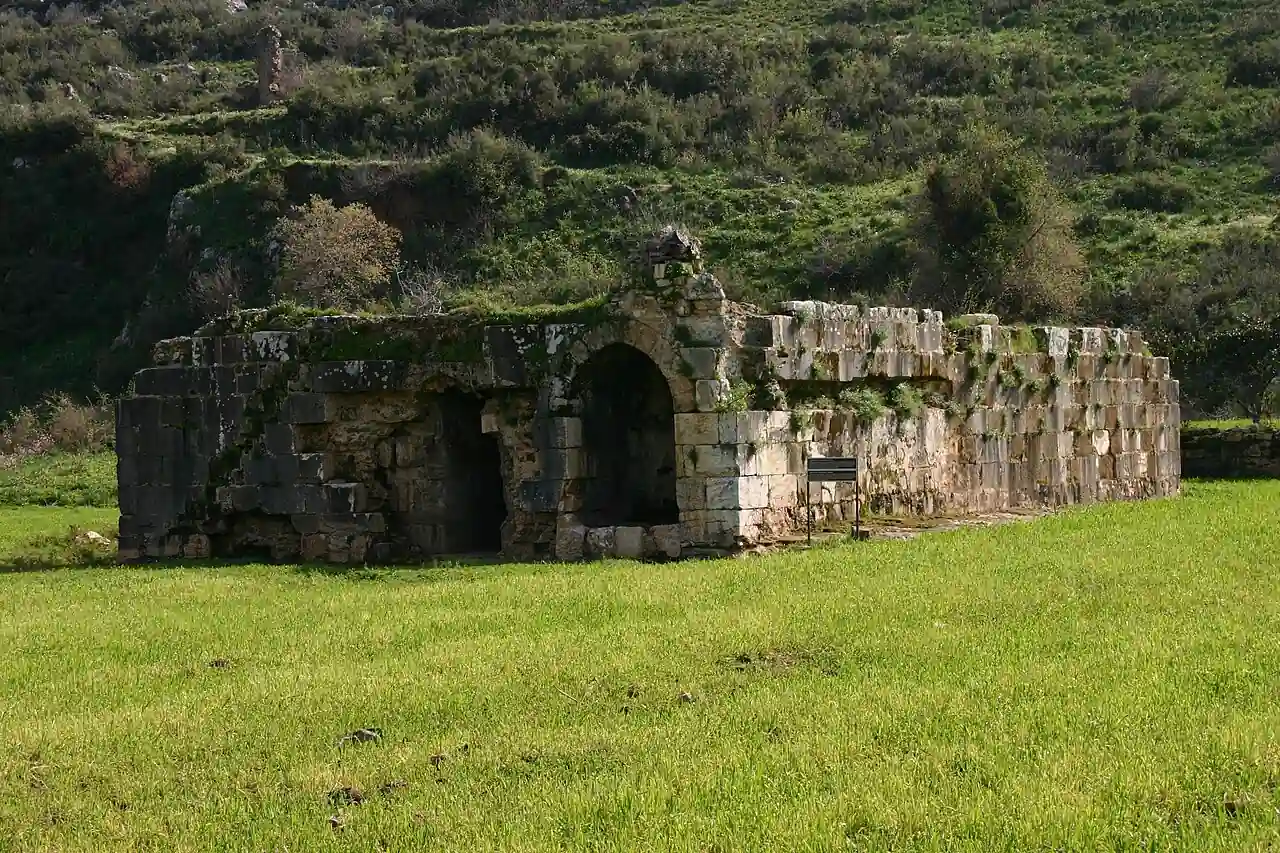
En agosto del año 117, un barco con el emperador de Roma a bordo tuvo que acercarse a la costa de Cilicia porque el pasajero estaba demasiado enfermo para seguir. Se llamaba Trajano, llevaba diecinueve años gobernando el mayor imperio de su tiempo y había nacido en Itálica, junto a la actual Sevilla. Lo desembarcaron […]
In August AD 117, a ship carrying the Roman emperor put in at the coast of Cilicia, in what is now southern Turkey. Its most important passenger was too ill to travel any farther. Trajan had ruled for nineteen years, and under him the Roman Empire reached its greatest territorial extent. He had been born […]
Duas embarcações e milhares de litros de combustível foram apreendidos, na madrugada de sábado, dia 3 de outubro, pela GNR em dois locais da costa do Algarve.
En España, el calendario vacacional sigue teniendo un protagonista indiscutible. De acuerdo con el 17º Informe de Temporada de ObservaTUR de 2026, elaborado antes del verano, el 36% de los españoles que tenía previsto viajar eligió agosto para disfrutar de sus vacaciones, mientras que el 33% optó por julio y el 17% por septiembre. En conjunto, estos tres meses concentran el 86% de las preferencias, confirmando que el verano continúa siendo el gran momento del año para hacer las maletas y desconectar de la rutina. Para muchos trabajadores, además, estas fechas permiten coordinar el descanso con el de familiares y amigos, algo que explica en parte su enorme peso dentro del calendario de viajes.
Pero cuando septiembre queda atrás, todavía hay margen para una escapada. Octubre se presenta como una alternativa especialmente atractiva para quienes prefieren viajar con más calma y evitar la intensidad de los meses estivales. Hay menos aglomeraciones en muchos destinos, las temperaturas suelen ser más contenidas y agradables y los paisajes comienzan a mostrar una cara diferente, lo que convierte al décimo mes del año en una oportunidad para viajar sin el calor intenso del verano ni el frío propio de los meses posteriores.
Es también un momento interesante para quienes buscan disfrutar de una ciudad, hacer una ruta gastronómica o pasar unos días en contacto con la naturaleza sin encontrarse con la elevada afluencia del periodo estival. A este escenario se suma ahora una oportunidad marcada en rojo en el calendario. A mediados de octubre llega un puente de tres días que permitirá a los trabajadores de toda España disfrutar de un descanso adicional sin necesidad de esperar a las próximas vacaciones.
Puente de tres días para los trabajadores el 12 de octubre
Se trata del 12 de octubre, el Día de la Hispanidad, que en 2026 cae en lunes y permite encadenar la jornada festiva con el sábado y el domingo, una combinación que puede servir para hacer una escapada corta, visitar a familiares o simplemente recuperar fuerzas. Para quienes todavía no hayan viajado después del verano, puede convertirse en una última ocasión para organizar unos días de desconexión antes de que termine el año.
El 12 de octubre se celebra la Fiesta Nacional de España, una festividad establecida como tal por la Ley 18/1987, de 7 de octubre. Su carácter de fiesta nacional y su inclusión en el calendario laboral hacen que sea una jornada festiva de ámbito estatal y no sustituible por las comunidades autónomas.
Además, el artículo 37.2 del Estatuto de los Trabajadores establece que las fiestas laborales tendrán carácter retribuido y no recuperable, con un máximo de catorce al año, dos de ellas de carácter local. La fecha tiene por tanto una doble dimensión, institucional por su significado como Fiesta Nacional y práctica para los trabajadores que pueden disfrutar de una jornada de descanso.
¿Qué festivos autónomicos y nacionales quedan en 2026?
Después del 12 de octubre, el calendario de 2026 todavía reserva varias fechas festivas, aunque su aplicación puede variar según la comunidad autónoma. El 2 de noviembre será festivo en varias comunidades como Andalucía, Aragón, Asturias, Canarias, Castilla La Mancha, Castilla y León, Extremadura, Madrid y Navarra, mientras que el 7 de diciembre será festivo en varias autonomías y el 8 de diciembre, Día de la Inmaculada Concepción, tendrá carácter nacional.
Entre las fiestas autonómicas que quedan desde octubre destaca el 9 de octubre, Día de la Comunidad Valenciana, mientras que en diciembre se mantiene el 26 de diciembre, San Esteban, como festivo autonómico en Baleares y Cataluña, con la particularidad de que en Arán se sustituyó por el 17 de junio. Por último, y como bien es sabido, el calendario concluye con la festividad nacional del 25 de diciembre.
Ukrainians want peace more than anything, but only the language of strength works on Putin, says Katarína Mathernová, the EU’s ambassador to Ukraine.
Mathernová has no doubt about the Russian leader’s ultimate goal; she is convinced that Putin wants to destroy Ukraine.
“He set this out very clearly in his essay, and that is precisely why he launched this full-scale war. Unfortunately, the peace that Ukrainians so desperately want can only be achieved by putting pressure on Russia. Putin understands only one language — the language of strength,” she said in an interview.
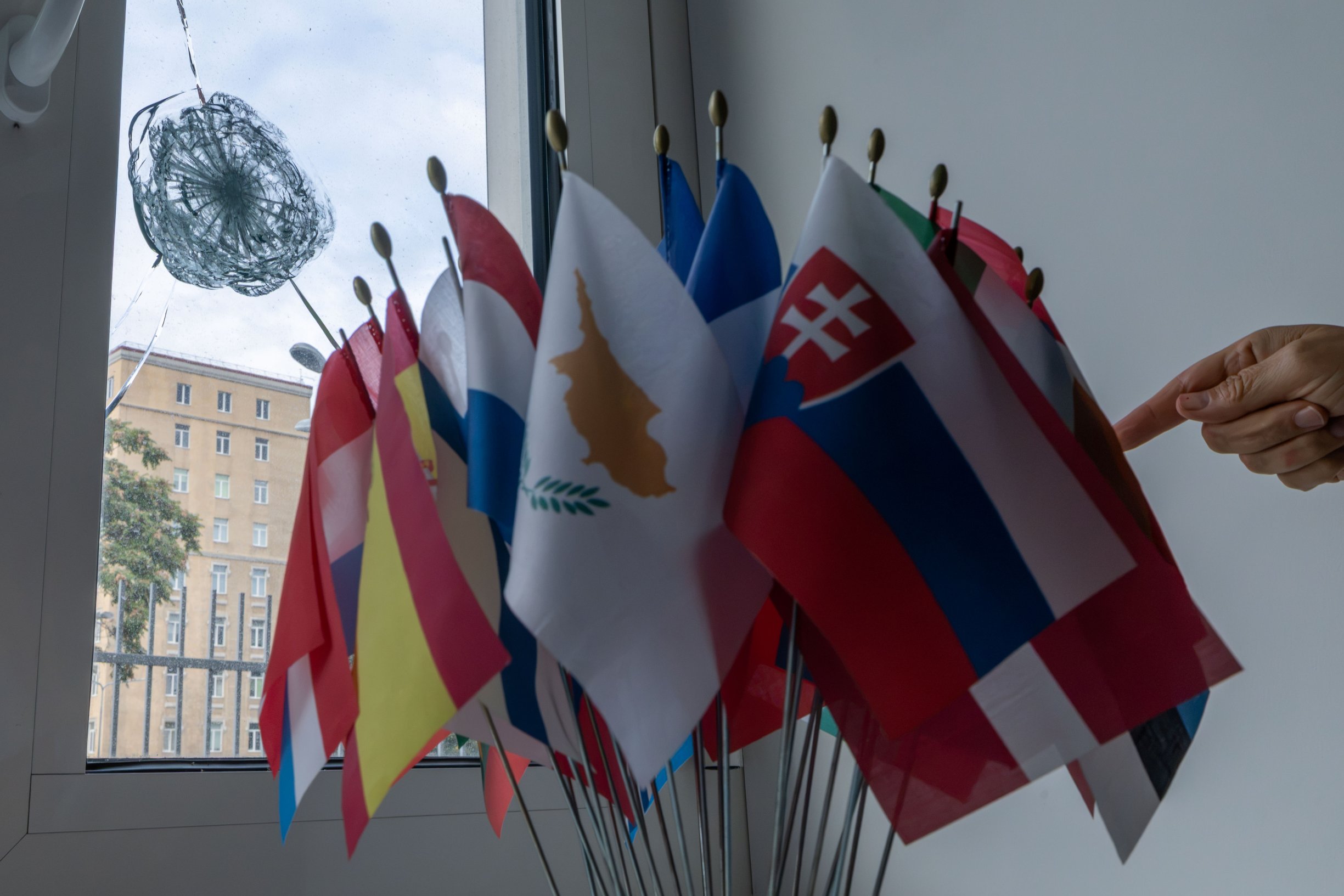
Air raids have left their mark on her office: windows have been blown out, and shrapnel once tore straight through a refrigerator. With attacks intensifying, the EU delegation now does much of its work in the corridor, away from the glass. The latest strikes hit the nearby headquarters of Ukraine’s Security Service (SBU).
In late September, Kyiv has heard so many air-raid sirens. There is already one dead and 20 injured, and on our way to your office, we heard several explosions. Is this the new normal?
Unfortunately, they have become routine. It began on 27 August this year, a date that will go down in the history of this war. That day, we had 13 air raid alerts during daylight hours, a record since the beginning of the full-scale war. It happens every day.
The day before yesterday, as I was entering the office when the windows suddenly began to rattle. A huge plume of smoke rose behind that black building outside the window. There were around four separate explosions over the course of 20 minutes, just a couple of hundred metres from here.
After a Russian attack, in a room with bulletproof windows. Source: Tomáš Benedikovič, Denník N.
The Russians have begun using jet drones which Ukrainians are not yet able to shoot down in the same numbers as earlier Shahed drones. With just a few jet drones, Russia can terrorise a city like Kyiv throughout the day at a relatively low cost. Then, at night, come the ballistic missiles. Last week, however, they also used ballistic missiles during the day.
Do the attacks make you anxious?
Of course they do. One morning last week, I was Nordic walking in the botanical garden. I was walking with my coach when suddenly there was a huge bang. It landed several kilometres away, but because there are no buildings there, it sounded as though it were just around the corner. These are the moments when I nearly have a heart attack…it’s very unpleasant.
How do you decide whether to go to a shelter or into the corridor? Do you have a security protocol?
I have security guards, and we also have a regional security officer here. They are here permanently, so they guide us. But since these very frequent and disruptive daytime attacks began, the government has adopted a regulation introducing two different types of alert — yellow and red. Red alerts are issued for missiles. Yellow alerts are for drone attacks – in such cases, the metro no longer stops, and people primarily seek safety between two walls. When there were explosions here last Wednesday, we were all sitting in the corridor.
Katarína Mathernová. Source: Tomáš Benedikovič, Denník N.The corridor where diplomats work during heavy air raids. Source: Tomáš Benedikovič, Denník N.
On the ground floor, where we have our conference rooms, there are bulletproof windows. We are now going to adapt the ground floor so that we can operate safely there during anti-drone alerts. We will put sandbags outside. We already have beanbags there, and colleagues from the upper floors are moving down so that they can work.
How do you assess this intensification? Is it a response to the fact that the front has stalled and Putin’s “special operation” has boomeranged back on Russians at home?
Russia cannot win on the battlefield. They have managed to gain only a few square kilometres, so they are terrorising civilians by attacking targets such as churches, museums, libraries and book warehouses. On Thursday, they hit a maternity hospital. These are war crimes, but Russia commits them so routinely that they are boiling us like a frog.
There is talk that assaults will escalate further in winter. Will you stay?
Of course, we are staying here. When we speak to the diplomatic corps, everyone wants to stay. We are preparing for winter, stockpiling supplies, and here at the delegation we have bought blankets and folding beds. We have food rations and additional supplies of drinking and utility water. We have had several shower cubicles installed. We bought washing machines and dryers too, as the building has a large generator. Our colleagues from Brussels and Ukraine in the same building — many of whom live on the other side of the river or in conditions that are not as good as ours — will probably welcome these facilities.
Attacks have come dangerously close not only to where you work, but also to where you live, like a recent drone struck an SBU building.
It was targeting that location; I do not think Kyiv city centre itself was the target. But yes, it is quite close to the hotel where I live.
What do you anticipate will happen in winter? You may see attacks on energy infrastructure, water and sewage systems. A loss of these utilities would be extremely difficult.
If sewage systems were knocked out in a large part of the city, it would be very difficult. But let us not forget that Kyiv was also a frontline city last winter. There were perhaps more than one million people here freezing in their own homes. My driver told me that he and his family bought firebricks and heated them on the gas stove. When they went to bed, they held them to keep warm. Those without gas in their flats were even less fortunate. But people here helped one another. My coaches and their son stayed in my hotel for weeks because it was four degrees in their home.
Ukraine faces a shortage of Patriot missiles. It has developed a new interceptor that could stop jet drones, but Patriots defend against ballistic missiles. Can Europe do more to help?
This article continues, but the full version is available only to EUobserver.com subscribers. Visit account.euobserver.com/membership
Greek Prime Minister Kyriakos Mitsotakis has ruled out an agreement requiring Athens to recognise British Museum ownership of the Parthenon Sculptures, using a landmark exchange of cultural objects with Bulgaria to restate Greece’s position.
Greek Prime Minister Kyriakos Mitsotakis has said Greece will not “borrow” the Parthenon Sculptures under an arrangement requiring Athens to recognise British Museum ownership, as Greece and Bulgaria completed an exchange of historic remains and religious artefacts following decades of negotiations.
Mitsotakis made the remarks on Saturday, 3 October, during a ceremony at the Museum of Byzantine Culture in Thessaloniki attended by Bulgarian Prime Minister Rumen Radev.
Under the agreement, Greece transferred to Bulgaria human remains identified as those of medieval Bulgarian ruler Tsar Samuel, together with material recovered from four sarcophagi at the Basilica of Saint Achilleios in the Prespa region.
Bulgaria returned 48 ecclesiastical objects removed from northern Greece during the First World War.
The remains handed to Bulgaria were discovered during archaeological excavations at Saint Achilleios in the 1960s and later identified as belonging to Samuel, who ruled the First Bulgarian Empire between 997 and 1014.
The exchange concludes negotiations stretching back decades, although both governments have agreed to continue discussions about other objects of mutual historical interest.
Mitsotakis used the Thessaloniki ceremony to link the agreement to another, far more prominent dispute over cultural property: the Parthenon Sculptures held in London.
He said cultural diplomacy had demonstrated that disputes over objects removed during earlier periods of conflict could be addressed through negotiation, referring also to previous arrangements involving fragments of the Parthenon returned from Sicily.
The Greek government continues to seek the reunification in Athens of the surviving Parthenon Sculptures.
Greece disputes the legitimacy of their removal and argues that surviving elements of the monument should be reunited at the Acropolis Museum.
That difference has direct consequences for any proposal based on loans.
Under the British Museum trustees’ published position, the museum is prepared to consider lending objects from its collection, including the Parthenon Sculptures, but requires a borrowing institution to acknowledge the museum’s ownership.
Successive Greek governments have refused to meet that condition.
Mitsotakis reiterated that position on Saturday, arguing that Greece cannot borrow an object which it considers its own.
The dispute has continued despite negotiations between Athens and the British Museum.
The dispute subsequently produced an unusual diplomatic argument between two NATO allies, although discussions between Greek representatives and the British Museum continued.
The Greece-Bulgaria agreement concluded on Saturday differs substantially from the Parthenon case in both its legal history and the circumstances under which the objects were removed.
Athens nevertheless sees the exchange as evidence that governments can settle disputes over cultural property without abandoning their respective interpretations of history.
For Bulgaria, the return of Samuel’s remains has considerable national significance. For Greece, the recovery of the ecclesiastical objects resolves a century-old question concerning material removed during the First World War.
The Parthenon Sculptures remain considerably more complicated.
Talks continue, but the fundamental disagreement identified again by Mitsotakis in Thessaloniki has not changed: London considers the sculptures legally owned by the British Museum, while Athens considers them parts of a Greek monument which should be permanently reunited.
As long as that difference remains, a conventional loan arrangement offers no straightforward solution.
di Cesare Sacchetti In Francia, alcuni sono ancora piacevolmente sbigottiti. Dopo la visita del Santo Padre, Papa Leone XIV, i cattolici francesi affermano che nel Paese inizia a respirarsi, seppur temporaneamente, un’aria diversa, più leggera da quella opprimente che il laicismo massonico aveva imposto nel Paese. Altri invece sono letteralmente terrorizzati. E’ il caso, ad […]
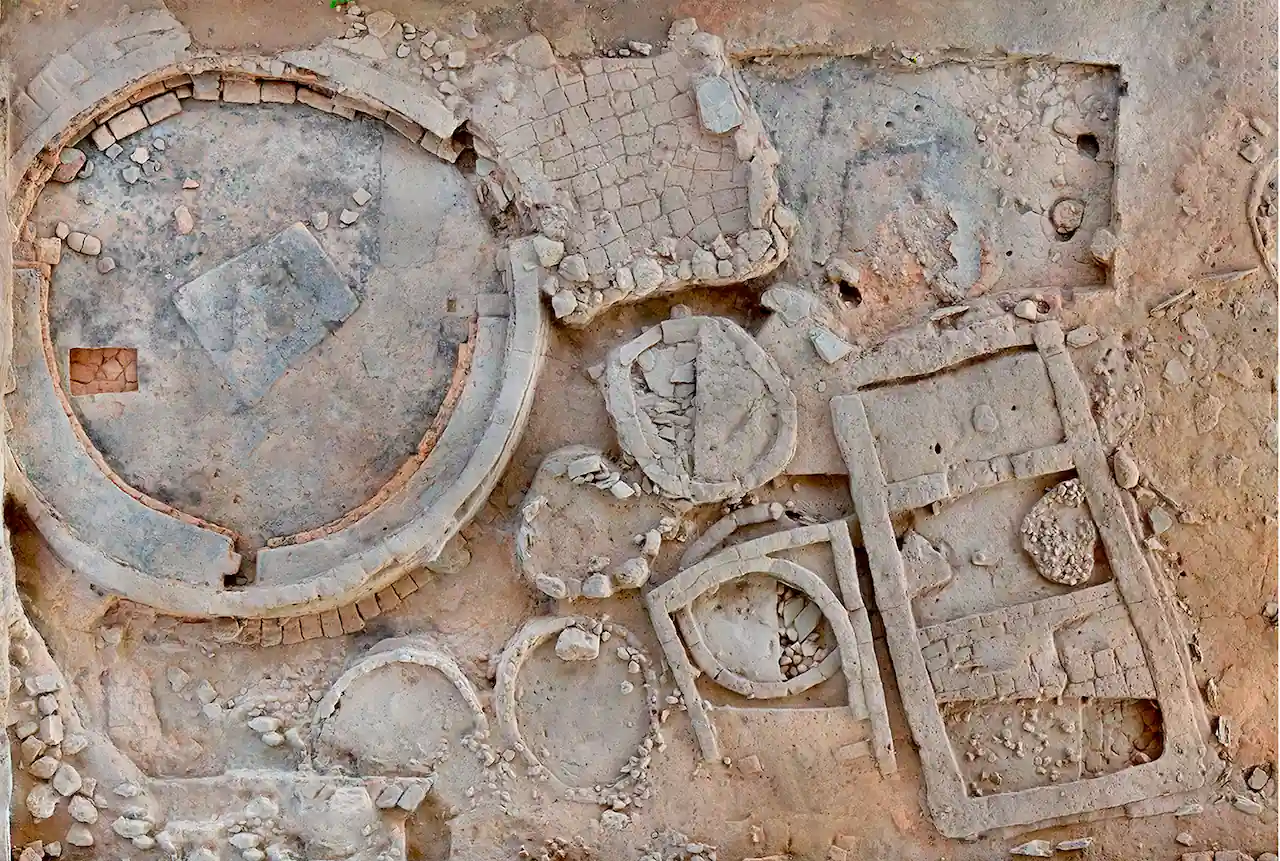
Más de 5.000 huesos rescatados de los basureros de un barrio del Cerro de San Vicente, en Salamanca, permiten reconstruir cómo comía hace unos 2.600 años un grupo familiar acomodado. Según un estudio publicado en Archaeological and Anthropological Sciences, los animales jóvenes, los équidos y las tortugas llegaban al plato solo en contextos rituales o […]
Russia has vowed to intensify its relentless strikes against Kyiv and warned foreign diplomats and other visitors to leave the country or be exposed to “mortal danger,” while Ukraine's leader said his country will respond to the Kremlin's deadly air campaign.
Hace mucho, el rincón del universo que acabaría siendo nuestro vecindario galáctico no se parecía a una galaxia. Era una colección de miles de galaxias más pequeñas: unas fabricaban estrellas a un ritmo frenético, otras estaban llenas solo de gas y otras salpicadas de estrellas muertas y agujeros negros. Esa es la imagen que dibuja […]

 Login