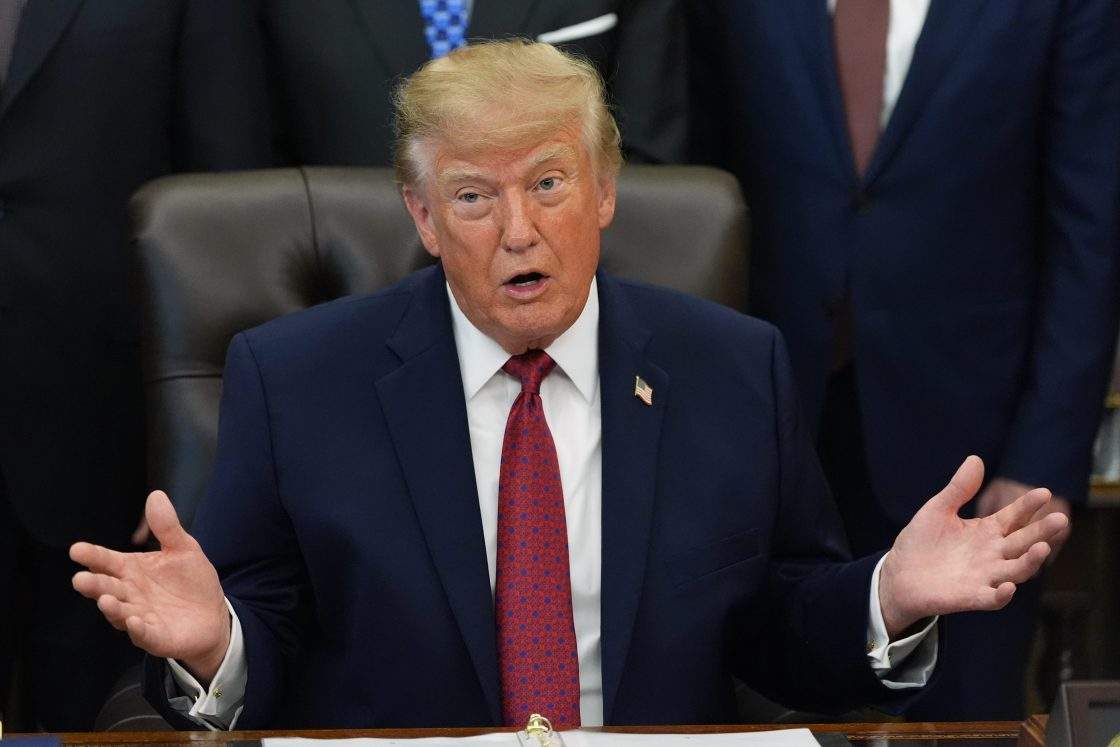
As global oil supplies continue to tighten up amid ongoing geopolitical conflicts that have pushed up fuel prices, the governor of Texas has declared a state of emergency.
As global oil supplies continue to tighten up amid ongoing geopolitical conflicts that have pushed up fuel prices, the governor of Texas has declared a state of emergency.
The U.S. is reportedly threatening to ban exports of diesel fuel to parts of Europe, unless countries like Germany and France release more of their diesel reserves.
The U.S. is reportedly threatening to ban exports of diesel fuel to parts of Europe, unless countries like Germany and France release more of their diesel reserves.
Sur les terres émergées, les ressources s'épuisent. Alors les regards des dirigeants, des militaires et des investisseurs se tournent vers l'océan. Et, plus précisément, vers les fonds marins. Une nouvelle ère s'ouvre : celle de l'exploitation des abysses. Le journaliste Guillaume Pitron y a consacré trois années d'enquête et un livre, dont nous publions les extraits en exclusivité.
Toutes les marines nationales d'Asie semblent s'être donné rendez-vous, en ce printemps 2025, dans un vaste hall d'exposition attenant à l'aéroport Changi, à Singapour, à l'occasion de l'International Maritime Defence Exhibition (Imdex) Asia 2025. Leurs émissaires portent beau dans leurs uniformes parés de galons, prenant langue avec une myriade de représentants de commerce. L'exposition est en effet un point de ralliement des leaders industriels du naval de défense, venus présenter leurs dernières innovations : le britannique Rolls-Royce (systèmes de propulsion pour sous-marins et frégates), l'israélien Elbit Systems (sonars), le singapourien ST Engineering (systèmes électroniques embarqués), le constructeur de navires de guerre américain Lockheed Martin, l'autrichien Schiebel et son Camcopter S-100, un drone aérien de reconnaissance tactique…
Également présent, le groupe allemand Euroatlas promeut son Greyshark. Long de huit mètres et pesant quatre tonnes et demie, ce drone sous-marin, silhouette de squale, museau effilé et propulsion à hélices, est taillé pour une grande variété de tâches, civiles comme militaires. « Cela dépend des besoins de l'opérateur », expliquent les deux commerciaux s'affairant autour du véhicule. Cartographie du plancher océanique, protection d'infrastructures sous-marines, récupération de munitions abandonnées… : ces missions sont permises par l'autonomie de seize semaines du Greyshark, qui en décuple les performances. Pour sûr, arguent les deux chargés d'affaires, l'avenir est à ces nouveaux engins, car « les hommes cèdent peu à peu la place, dans les océans, aux technologies autonomes ».
Une variété d'engins autonomes
Embarqué dans des sous-marins et autres bathyscaphes, l'homme côtoie les fonds océaniques situés à plus de mille mètres de profondeur depuis la seconde moitié du XXe siècle. Pourtant, 80 % de ces contrées restent inexplorées. Il faut dire que passer au peigne fin les moindres recoins du plancher océanique à bord de Nautilus habités coûte des sommes insensées. De plus, c'est dangereux. Enfin, cela prend un temps fou. Dès lors, l'exploration des fonds marins a avancé à pas comptés… Ce triple obstacle pourrait être contourné grâce à la multiplication des drones. Le mot renvoie à une variété d'engins autonomes : des robots sous-marins filaires téléguidés, de petits vaisseaux naviguant en surface et surtout des véhicules sous-marins, souvent désignés par leur sigle anglais AUV (Autonomous Underwater Vehicles).
L'industrie pétrolière a été parmi les premières à manier ces engins légers et compacts, capables notamment de se substituer aux plongeurs lors d'interventions sur les fondations de plates-formes offshore. Leur autonomie permet également de rallonger la durée, donc l'efficacité, de missions d'exploration de gisements, et ce à des coûts compétitifs (un drone coûte « seulement » entre 1 et 10 millions d'euros). Leur force est d'agréger sous leur coque une variété de briques technologiques : une batterie lithium-ion offrant une autonomie allongée et un vaste rayon d'action, des sondeurs multifaisceaux permettant de capter des téraoctets de données à chaque plongée, une centrale inertielle pour le guidage et la navigation et, demain, toujours plus d'intelligence artificielle (IA) pour leur conférer une capacité de décision étendue.
« Les flottes d'AUV permettent de collecter trois à quatre fois plus de données qu'avec des moyens de surface équivalents », convient M. Jean-Marc Sornin, président d'Abyssa, une société d'exploration des grands fonds marins. On comprend pourquoi les drones sont devenus des opérateurs de choix pour une myriade d'industries mondiales — dont certaines promettent de répondre aux besoins grandissants en ressources générés par la croissance de la population mondiale. Ils servent ainsi à localiser des bancs de poissons, à explorer des gisements de diamants et d'hydrogène naturel, à prélever de l'acide désoxyribonucléique (ADN) environnemental, à repérer une fuite dans la coque d'un navire pétrolier échoué, à collecter du plastique, à inspecter les fondations de parcs éoliens offshore et même à dresser la carte de l'intégralité des fonds marins. Les drones sous-marins sont les émissaires de notre espèce dans les abysses, au point d'être, selon Jan Opderbecke, chercheur à la direction de la flotte océanographique au sein de l'Institut français de recherche pour l'exploitation de la mer (Ifremer), « devenus tout simplement irremplaçables ».
Un engouement que tempère le contre-amiral Éric Lavault, chargé de la maîtrise des fonds marins : « Plein de trucs “sexy” circulent à propos des drones, mais, comme de nombreux industriels, je demeure dubitatif. Cet élan technologique va, comme dirait l'autre, coûter “un pognon de dingue”. » La colonisation des mers par des outils souvent pompeusement qualifiés d'« avatars » par les réclames commerciales prendra longtemps… Quoi qu'il en soit, « des milliers d'AUV opèrent déjà aux quatre coins des océans », rappelle le scientifique portugais João Sousa.
Leur importance pourrait encore s'accroître lorsque, dotés d'une plus grande autonomie, ils se montreront capables d'effectuer des missions de plusieurs mois en haute mer, s'évitant d'intempestifs retours à terre. Révolution ultime, l'océan pourrait être, un jour, peuplé de « drones résidents » qui auront complètement rompu le cordon avec la terre ferme. Cette émancipation totale nécessitera l'installation de stations d'amarrage alimentées par l'énergie houlomotrice, jusque dans les replis des canyons immergés : les AUV s'y relaieront pour décharger leurs disques durs, recharger leurs batteries, subir des opérations de réparation automatisées, hiberner… avant d'être réactivés pour de futures missions. João Sousa voit dans ces relais abyssaux l'amorce de la colonisation d'un nouveau Far West. « Rappelez-vous la conquête de l'Ouest, soutient le scientifique. Au départ, il n'y avait rien. Puis on a édifié des villages, les relais de poste du Pony Express. Puis sont arrivés les chemins de fer… Je vois l'expansion océanique suivre cette même dynamique. »
« Leur armada est hallucinante »
Que la colonisation des océans soit une affaire de robots, cette évidence est acquise lorsque M. Anthony Clake et ses deux associés fondent Ocean Infinity (OI) en 2017. Aussi les trois hommes vont-ils investir dans des systèmes technologiques… proprement fous. « Dès sa création, les représentants d'OI ont déclaré : “Nous pouvons déployer simultanément huit AUV à 10 millions de dollars l'unité et couvrir ainsi des régions immergées immenses”, précise un concurrent. Aujourd'hui encore, personne n'a eu les reins financièrement assez solides pour faire cela. » Le groupe exploiterait à ce jour entre quinze et vingt drones sous-marins autonomes, ce qui en fait, selon certains, « le plus gros essaim mondial d'AUV ». S'ajoutent des véhicules filaires commandés à distance capables de descendre à six mille mètres de profondeur, plusieurs navires de ravitaillement et de prospection océanographique, des engins autonomes de surface, des navires télé-exploités… « Leur armada est hallucinante, leurs moyens gigantesques », explique, sous le couvert de l'anonymat, un scientifique qui les a vus à l'œuvre. Ces leviers font rapidement taire la concurrence ; Ocean Infinity décroche des missions de recherche d'épaves à fort impact médiatique : en 2018, la société retrouve le sous-marin argentin San Juan, disparu un an plus tôt dans l'Atlantique sud. La même année, elle participe — sans succès — à la recherche des boîtes noires du MH370, l'avion de la Malaysia Airlines disparu en 2014 dans l'océan Indien.
Pour exploiter une telle flotte, Ocean Infinity emploie plus de cinq cents personnes : « Des opérateurs de navires sans équipage, des pilotes de robots sous-marins téléguidés, des opérateurs d'AUV, des ingénieurs en robotique, (…) des analystes de données, des géomètres, des océanographes et des hydrographes », éparpillés en Amérique du Nord, en Europe ou encore en Asie, indique la société sur son site Internet. Ses activités convergent vers un quartier général situé à Southampton, dans le sud de l'Angleterre. Bien entendu, nous avons adressé une demande de visite, restée lettre morte… Un scientifique qui a arpenté les lieux nous décrit un campus aux airs de centre de la National Aeronautics and Space Administration (NASA). « Il faut imaginer un immeuble ultrasécurisé avec contrôle d'accès par reconnaissance d'empreinte rétinienne et, à l'intérieur, des postes de pilotage identiques à ceux que vous avez à bord des bateaux », relate-t-il. Une description qui résonne avec le film hollywoodien d'Andrew Niccol Good Kill (2014), lequel mettait en scène des pilotes de drones bombardant l'Afghanistan depuis des conteneurs situés dans le désert du Nevada… « Eh bien, là, c'est pareil, décrypte le scientifique : les mecs sont dans une pièce, entourés d'écrans géants, à commander des robots qui évoluent au milieu de l'océan Pacifique. »
À partir de 2021, Ocean Infinity rachète des concurrents et prend des participations dans des sociétés d'analyse géotechnique, de moteurs électriques pour navires, de services de sécurité maritime… L'objectif est d'être présent sur l'ensemble des métiers de l'exploration offshore et de se diversifier. Ocean Infinity est devenu un groupe multisectoriel, contractualisant avec des entreprises de télécommunications (pour l'optimisation du tracé des câbles sous-marins) et d'énergie (prospection, maintenance d'infrastructures…), comme en 2024 avec le pétrolier britannique Shell pour la fourniture de données géophysiques et géotechniques. Certains les voient également prendre pied sur le marché, en devenir, de l'exploration de gisements miniers sous-marins, ainsi que sur celui, en expansion, de la récupération d'actifs stratégiques.
Car les mers ne sont pas seulement le royaume de la méduse lumineuse, du calmar colossal et du poisson-lune trompeur ; elles sont également un cimetière de vieux câbles Internet et électriques, de fûts de déchets radioactifs, de réacteurs atomiques, de munitions abandonnées pendant la seconde guerre mondiale… Les fonds marins sont aussi jonchés de technologies de pointe que les armées veulent récupérer à tout prix : satellites espions, débris spatiaux contenant des alliages conçus dans le secret d'un laboratoire militaire, missiles, avions de chasse embarquant des systèmes d'encodage stratégiques. En 2022, les États-Unis mandatent la société américaine Phoenix International pour qu'elle repêche un F-35C Lightning II de l'US Navy abîmé en mer de Chine méridionale. L'avion militaire est récupéré avant que Pékin mette la main dessus et en espionne les technologies embarquées. L'ensemble de ces marchés tend les bras à Ocean Infinity, devenue l'une des rares entreprises d'exploration océanique à parler, aujourd'hui, d'égal à égal avec les États. Au point que certains pourraient faire le choix de lui déléguer des missions régaliennes de maîtrise des profondeurs, aux fins d'y surveiller des câbles ou des gazoducs. « Pourquoi ne pas associer Ocean Infinity à ce rôle de défense nationale ? », interroge un ingénieur du service hydrographique et océanographique de la marine (SHOM).
Mais combien de temps Ocean Infinity conservera-t-elle cette avance ? Ne serait-il pas temps de vendre cette multinationale des abysses, parée de ses splendides atours technologiques ? Des interrogations sur sa viabilité surgissent. Le groupe, qui ne communique pas sur son chiffre d'affaires, ne serait toujours pas rentable… De plus, le marché de l'étude des fonds marins est aujourd'hui investi par un nombre croissant d'acteurs privés — qu'ils soient constructeurs ou opérateurs de drones : les américains Phoenix International et Ocean Aero, les français Exail Technologies et Abyssa, le norvégien Eelume, le chinois Qingdao Ever Maritime… Sans oublier les États, qui, en développant leurs propres armadas, pourraient sérieusement contester l'autorité d'Ocean Infinity d'ici à une dizaine d'années.
« Toutes les grandes puissances maritimes sont en train de rattraper leur retard dans la course aux fonds marins, en s'équipant avec des moyens équivalents à ceux d'OI », constate un spécialiste de l'« économie bleue ». Traditionnellement peu intéressées par les abysses, les armées opèrent un revirement stratégique. La prise de conscience par la marine française de la nécessité de se doter de drones remonte à l'année 2019. Faute de moyens propres, celle-ci sous-traite alors les opérations de localisation de La Minerve, un sous-marin disparu en 1968 au large de Toulon avec, à son bord, cinquante-deux marins, à Ocean Infinity. Une campagne menée en un temps record. « Ils ont ratissé une surface équivalant à la ville de Paris en même pas trois jours ! », relate, encore éberlué, un témoin requérant l'anonymat. Le submersible fut retrouvé peu après.
Ce tour de force a laissé des souvenirs doux-amers dans les rangs des généraux… « Ça a été un choc », convient le contre-amiral Lavault. « Nous avons pris alors conscience du retard accumulé par l'armée française dans sa stratégie de maîtrise des fonds marins, et de la nécessité de mieux nous les approprier. » Bien au-delà du cas français, « la “dronisation” dans le domaine naval de défense se généralise, confirme la représentante d'un fabricant de systèmes autonomes. Les pays lançant des initiatives dans ce domaine se multiplient ».
Un espace vertical
Aux mains des armées, les drones peuvent participer à des activités de déminage des grands fonds, détecter des intrusions ennemies dans une zone économique exclusive (ZEE), surveiller et protéger les câbles sous-marins et même engager des combats — les militaires parlent de seabed warfare, la « guerre des fonds marins ». Et, dans la perspective d'un conflit avec la Chine, ces outils pourraient également permettre aux Américains de compenser leur infériorité numérique. « Avec cinq cents drones, je couvre le golfe Arabo-Persique pour huit fois moins cher que le prix d'un croiseur », a ainsi déclaré l'amiral Charles Bradford Cooper, ex-commandant des forces navales américaines au Proche-Orient. Nul doute, dès lors, qu'« il va se passer sous la mer ce qui s'est passé dans les airs : une démocratisation, une banalisation de cette technologie », prédit le dirigeant d'une société de robotique sous-marine.
Cette réalité confirme tout d'abord l'écrasante domination exercée par quelques grandes puissances dans la maîtrise des fonds marins. « Seuls une quinzaine de pays disposent de la capacité industrielle de descendre à six mille mètres de profondeur, parmi lesquels les États-Unis, le Royaume-Uni, la France, le Canada, la Chine… Les Indiens et les Néo-Zélandais commencent tout juste à se doter des capacités adéquates », confirme, lors d'un entretien conduit en 2024, un haut fonctionnaire chargé de la politique maritime de la France.
La prolifération des drones s'insère en effet dans ce qu'il convient d'appeler une « verticale du pouvoir technologique », c'est-à-dire une chaîne ininterrompue de machines se relayant des fosses marines jusqu'à l'espace (satellites) en passant par la surface de l'eau (flotteurs connectés, frégates) et les airs (drones aériens) afin de capter et de se transmettre des informations, et in fine d'offrir à l'homme la connaissance la plus acérée de la réalité des océans. « La mer, aujourd'hui, c'est l'espace, l'atmosphère, la colonne d'eau et les fonds marins », insiste M. Thierry Duchesne, directeur du département maritime de la Fondation méditerranéenne d'études stratégiques (FMES), et toutes ces dimensions se révèlent complémentaires.
Ce continuum technologique livre un enseignement-clé : les mers ne se conquièrent désormais plus comme les marines l'ont fait durant des millénaires, c'est-à-dire en contrôlant des coordonnées géographiques faites d'une longitude et d'une latitude ; elles se colonisent dorénavant par des robots déployés à toutes les profondeurs et toutes les altitudes possibles. Disons-le autrement : l'océan est fondamentalement un espace vertical ; et il appartiendra aux armées qui l'appréhenderont comme tel.
Assinala-se dia 21 de setembro, o Dia Mundial do Alzheimer, uma data que pretende reforçar a consciencialização sobre a doença de Alzheimer e outras formas de demência, combater o estigma e promover uma melhor compreensão das necessidades das pessoas que vivem com estas condições e das suas famílias. Os dados mais recentes ajudam a dimensionar […]
A 21 de setembro assinala-se o Dia Mundial da Pessoa com Doença de Alzheimer, data que pretende sensibilizar para uma doença degenerativa que afeta cada vez mais pessoas, em todo o mundo. Hoje é dia de refletir para um problema de saúde que não pode cair no esquecimento. Atualmente, cerca de 55 milhões de pessoas […]
Consumers could be facing higher borrowing costs for longer as bond markets are once again signalling rising economic risk to the finance and investing community.
Consumers could be facing higher borrowing costs for longer as bond markets are once again signalling rising economic risk to the finance and investing community.
The price of oil surpassed $100 a barrel for the first time since July after attacks on oil facilities and ships in the Middle East threatened an already weakened supply chain.
The price of oil surpassed $100 a barrel for the first time since July after attacks on oil facilities and ships in the Middle East threatened an already weakened supply chain.
Heat, drought and water scarcity could fundamentally change agriculture in parts of Europe, with some crops no longer viable in the driest areas of the Mediterranean, European Environment Agency (EEA) Executive Director Leena Ylä-Mononen said.
“Some crops will not grow anymore, especially in the most arid Mediterranean, southern European area,” Ylä-Mononen said in an interview with correspondents of the European Newsroom (enr) published Tuesday. More intensive irrigation would not necessarily provide a solution because of water possible water scarcity. Some land currently used for farming might therefore no longer be suitable for agriculture in some regions in Europe, she said.
This summer gave the “clearest possible illustration” of what Europe is facing, she told the enr. “Severe droughts have disrupted agriculture, our transport, and even energy infrastructure. And we have seen intense heatwaves across many parts of Europe that have had huge impacts on the infrastructure, health and well-being of people.” Harvests were coming in late and smaller, “so we may have even food security issues this winter,” Ylä-Mononen warned.
The effects are spreading beyond Europe’s traditional dry zones, according to Ylä-Mononen. She pointed to drought in Ukraine and Hungary, as well as unusually dry conditions in the United Kingdom and her home country, Finland. Although northern Europe could become suitable for some additional crops, it was unlikely to compensate for recurring losses caused by drought, floods and extreme weather elsewhere, she added.
Ylä-Mononen urged European politicians to look beyond the next election and plan for the climate risks already foreseeable over the next decade. “This kind of short-termism is not going to help us,” she said, arguing that infrastructure and agricultural investment decisions needed to take account of ten-, 20- and 50-year time horizons.
The warning comes as the EU’s Joint Research Centre reports drought conditions across half of the EU and the United Kingdom, with low river flows and deteriorating conditions for some crops in several parts of Europe.
In an assessment released in March – ahead of this year’s summer heatwaves – the EEA said “at present, drought (54%), heavy rain (21%), frost (16%), and hail (9%) together account for 80% of agricultural losses in the EU.”
Ylä-Mononen said Europe could no longer treat climate adaptation as an optional policy to be addressed when budgets allow. Heat and drought are already affecting agriculture, water resources, transport and energy systems, and some damage could have been avoided through earlier investment, she said.
The EEA chief stressed that adaptation must complement, not replace, mitigation: Europe needs both to reduce emissions and to prepare for climate impacts that will continue even under ambitious emissions cuts. But the costs of both action and inaction are rising.
Estimates of adaptation costs in the sectors transport, energy and agriculture cited by the EEA range from 53 billion Euro to 137 billion Euro per year until 2050, depending on the scenario of temperature rise above pre-industrial levels.
The European Environment Agency (EEA) is the EU agency that provides independent environmental data, assessments and analysis to support policymaking in Europe.
Europe is warming more than twice as fast as the global average—a terrifying statistic made all too apparent this summer as heat wave followed heat wave. European cities were never designed for these temperatures, and public health, infrastructure, and tourism are all under strain. Eric Klinenberg arrives in Milan just as “Europe’s third heat wave of the summer entered its fiercest stretch” and sweats his way across the continent to see how trees, shade, water, and other measures are being deployed to adapt urban centers. But with this crisis set to deepen can these experiments really keep pace?
Of all the problems that heat poses for Barcelona, losing some of the hundred and sixty thousand tourists who typically visit each day ranks low on the priority lists of most officials and residents. Some locals have staged protests, chanting “Tourists go home” while targeting visitors with water guns. But tourism employs more than a hundred and sixty thousand people in Barcelona and accounts for around thirteen per cent of its economic output, which explains why, despite concerns that the city gets too many visitors, more than seventy per cent of residents consider tourism beneficial. At midday, when I arrived on La Rambla, the city’s most heavily visited and photographed corridor, the street had little shade and surprisingly few people. At La Boqueria market, normally jam-packed at lunchtime, I found my way to a famously busy bar counter and took one of several open seats.
Longreads has published hundreds of original stories—personal essays, reported features, reading lists, and more—and more than 14,000 editor’s picks. And they’re all funded by readers like you. Become a member today.
One of the most vivid memories of my childhood involves an ice cream. My mother and father kept a relatively treat-free house, with desserts reserved for special occasions, but their standards loosened during summer vacations. During a visit with relatives we didn’t see very often, my parents decided to make the day even more special; they gave my sister, my two cousins, and me money to buy something from the ice cream truck that made a regular circuit around the neighborhood. Thrilled by this rare indulgence, I rushed down the sidewalk, delighted to finally take part in this classic summertime ritual, eating dessert in the middle of the afternoon!
I can still remember the thrill of holding that much-anticipated cone, taking my first lick . . . then watching the scoop roll off its biscuity throne to the sidewalk.
Perhaps that is why, as an adult, my freezer is always stocked with at least two flavors of ice cream, which I eat year-round. It’s my go-to way to reward myself after a productive day, or to make a bad one better. While I tend to keep things simple (and have been known to eat directly out of the carton), I love ice cream for its versatility. It can support a piece of apple pie or be the main event in a fudge-slathered sundae. Its near-infinite variety of flavors offers something for everyone, from no-frills vanilla to chef-inspired gastronomic experiments.
That ability to shape-shift has made this humble dessert a mirror of sorts, reflecting cultural changes. It even goes back to the founding of the country: Thomas Jefferson was the first known American to write down an ice cream recipe (though it’s only fairly recently that historians have begun to acknowledge his problematic relationship with the enslaved workers who produced such delicacies for his guests). A century later, advances in refrigeration transformed ice cream from a luxury good to a mass-market phenomenon. As immigration surged in the US, peddling ice cream on the street became a way for new arrivals to grasp the American dream. During World War II, the dessert symbolized the country’s can-do attitude: Despite the many logistical obstacles, the US government shipped it to troops as far away as the Pacific.
In our current Age of Ozempic, while celebrities get ever slimmer and our screens fill with physical-optimization hacks, desserts may seem like an endangered species. But I believe it’s more important than ever to take guilt-free pleasure in food that brings you joy. And if you still feel a twinge of hesitation before digging into a bowl of your favorite flavor, multiple studies over the past 20 years have shown that ice cream actually has real, measurable health benefits (see David Merritt Johns’s piece from The Atlantic below). No less an authority than Dr. Ezekiel Emanuel, a prominent bioethicist and oncologist, titled his most recent book on healthy living Eat Your Ice Cream.
So go ahead and have a scoop. Think of it as doctor’s orders.
This entertaining account traces ice cream’s transformation from an expensive luxury to an all-American dish in the early 20th century, when advances in refrigeration made it more widely available. Prohibition played a part, too: When alcohol was banned nationwide in the 1920s and early ’30s, some breweries switched to making ice cream instead, “a decent substitute for alcohol for the drowning of one’s emotions.”
But what really stands out in this story is the role ice cream played in World War II, when it became a symbol of American patriotism. Siegel weaves together historical anecdotes that show the enormous effort the US military put into embedding ice cream throughout its supply lines. Why go through all that trouble? Siegel makes a compelling case that getting ice cream halfway around the world, under such difficult circumstances, was a way of putting American exceptionalism into action. If we can do this for our soldiers, we can do anything.
By the time World War II came around, ice cream . . . had become inseparable from the American way of life, an emblem of American comfort, freedom, and democracy. The rest of the world went back to banning ice cream as part of its rationing efforts (with Great Britain adding salt to the wound by endorsing carrots on sticks as the official wartime substitute for ice cream bars), but the United States doubled down, building pop-up ice cream factories on the front lines; delivering individual ice cream cartons to foxholes; spending more than a million dollars on a floating ice cream barge that roamed the Pacific delivering ice cream to Allied ships incapable of making their own; and distributing 135 million pounds of dehydrated ice cream base in 1943 alone.
This engaging survey of popular ice cream flavors is filled with trivia-night-worthy fun facts: that vanilla is consistently the best-selling flavor worldwide; that chocolate ice cream may actually have been created first (cocoa being more readily available than vanilla); and that mint chocolate chip got an international popularity boost when a British culinary student created the dessert “Mint Royale” to celebrate the marriage of England’s Princess Anne in 1973.
But such is the nature of culinary history that not all lineages are straightforward. I appreciate the way Barron analyzes all the possible origin stories, even when they contradict. While some flavors have a single known inventor—such as the Grateful Dead fan who suggested “Cherry Garcia” to the hippie entrepreneurs Ben & Jerry’s—others resulted from experimentation over time. Some even have shameful associations: Butter pecan, for example, became popular in the American South, where the nuts were plentiful and used to dilute vanilla ice cream when serving it to Black customers.
Rocky Road could be considered the ice cream world’s first mix-in flavor, blending creamy ice cream with crunchy and chewy additions. According to legend, its creation dates back to 1929, when ice cream maker William Dreyer and candy maker Joseph Edy teamed up in Oakland, California. During the Great Depression—a “rocky” time for America—Dreyer supposedly invented the flavor by using his wife’s sewing scissors to cut marshmallows into a chocolate ice cream base studded with walnuts. The duo mass-produced the new flavor, giving the country a bit of sweetness and humor during a bleak decade.
But the name “Rocky Road” may have existed long before. In the mid-1800s in Australia, settlers used the term for a confection of sweets, nuts, and dried fruit; essentially, a proto-trail mix. And just down the road from Dreyer’s and Edy’s, Fentons Creamery also claims to have invented the flavor, swapping walnuts for almonds in their signature version.
Brianna Wellen had one overarching question when she visited the Chicago outpost of The Museum of Ice Cream: What is this place? I had the same thought as Wellen when it started showing up on Google Maps as a must-see attraction in my hometown—is this “an influencer’s paradise? A children’s playground?”
The answer, it turns out, in her snarky-but-fair review, is both. A privately owned chain with five locations in the US and one in Singapore, it started as a pop-up “experience” in New York, with an aggressively pink aesthetic that bridged the line between kids’ party and Instagrammable photo op. If you’re looking for “an anthropological look at the history and cultural impact of ice cream,” she writes, this isn’t it. (Though I’d happily visit that museum.)
It’s more fun to write a scathing review than a positive one, but Wellen doesn’t take the easy route and go full hater. She acknowledges that the people around her are having fun taking pictures in the giant pool of faux sprinkles, and that the unlimited ice cream samples may be worth the price of admission for some, even if the Chicago hot-dog-style signature treat looks better than it tastes.
What she points out so effectively is the chasm between the museum’s ethos of lighthearted escapism and its grim reality: It is housed in a building that used to be the headquarters of the prestigious Chicago Tribune newspaper, now given over to an ephemeral, commercial experience dependent on overworked, demoralized employees.
There’s something extremely dystopian about these bright, colorful, somewhat functionless installations popping up inside closed businesses, which is how the project started. And seeing Chicago’s iteration in the storefront of the now empty Tribune Tower, which once housed some of the most influential journalists the city had to offer, was disappointing, signaling that while the media industry is on its deathbed, people will form a line down the block to snap a photo with a plastic sprinkle.
There was something about the staff’s demeanor that led me to believe they weren’t as excited to be there as their oft-repeated scripted banter made it seem. The logistics of certain experiences seemed like a mess; the large, unending crowds needed to be endlessly wrangled; and the loud music meant that their faux cheerful taglines needed to be screamed right into the ears of visitors to be heard. Smiles were pasted on as impatient guests asked why they couldn’t just go into the Ice Cream Lab already. When Angela and I kindly told one worker that there was no rush in letting us into a particular room and then complimented her ice-cream-themed hair clips, she reacted with such graciousness at our attitudes that I thought she was about to start sobbing.
I still remember my visceral reaction on reading this Atlantic story a few years ago: Is ice cream actually good for me?
In this exhaustively researched and reported piece, Merritt Johns explains how a statistically significant finding can be pushed aside when it doesn’t fit an accepted narrative. For more than 20 years, nutritional studies have shown that diabetics who eat half a cup of ice cream a day have a lower risk of heart problems, and people who eat two or more servings of ice cream a week had a significantly lower risk of developing diabetes in the first place. Yet those findings seemed so contrary to public health advice that alternate explanations kept being pushed instead—it’s just dairy that’s good for you, especially if you choose low-fat milk or yogurt. “As academia’s public-relations machinery came to life,” he writes, “nuance went out the window.”
Poor ice cream never got its due—until now.
Every day brings another health story about a so-called “superfood,” but Merritt Johns’s relentless focus on the facts sets this one apart. Rather than relying on an academic study or two, he tracks down all the key researchers involved in what I like to call the Great Ice Cream Cover-up: “I wanted to know what happens when consensus makers are confronted with a finding that seems to contradict everything they’ve ever said before.” Some refuse to be interviewed (more proof of a conspiracy?), but most seem relieved to finally admit that seemingly set-in-stone advice about what’s good for us is more malleable than we think.
In 2004, the English epidemiologist Michael Marmot wrote, “Scientific findings do not fall on blank minds that get made up as a result. Science engages with busy minds that have strong views about how things are and ought to be.” Marmot was writing about how politicians deal with scientific evidence—always concluding that the latest data supported their existing views—but he acknowledged that scientists weren’t so different.
The ice-cream saga shows how this plays out in practice. Many stories can be told about any given scientific inquiry, and choosing one is a messy, value-laden process. A scientist may worry over how their story fits with common sense, and whether they have sufficient evidence to back it up. They may also worry that it poses a threat to public health, or to their credibility. If there’s a lesson to be drawn from the parable of the diet world’s most inconvenient truth, it’s that scientific knowledge is itself a packaged good. The data, whatever they show, are just ingredients.
Who thought foie gras ice cream was a good idea? And more importantly—what does it taste like? Amy Ettinger took on these pressing questions with a visit to Humphry Slocombe, a “kid-unfriendly” ice cream shop in San Francisco. Chef and co-owner Jake Godby admits the controversial flavor is only rarely on the menu (it’s too expensive and takes too long to make), but the debate surrounding it has been good for business. Hardcore foodies rush to buy it when they can, while the protests of animal-rights activists only raise the shop’s profile.
More than a food review, Ettinger explores why people make and eat extreme flavors. She argues that American palates have expanded over the decades; we’ve gotten used to ordering Korean barbecue tacos and sushi burritos, mash-ups unknown (and unthinkable) to our great-grandparents. To grab attention—and prove your chops as an out-of-the-box culinary thinker—you have to raise the stakes: “One person’s gross-out experience seems to be another person’s gleeful experimentation.”
As I took another bite, I couldn’t help but feel a thrill. There was something decadent in eating a treat that so many people would be upset about. The wrath I could incur by simply opening my mouth, chewing, and swallowing made me feel powerful. And maybe that perceived transgression is itself a flavor enhancer, much like artificial coloring can ramp up our experience of “lime” or “banana” in some mass-produced, neon-colored taffy or gum.
Is that why Godby put it on the menu—so he could wield that kind of power? Why continue making food that would anger people? Was it to get attention?
Who knew the simple ice cream truck had such a dramatic backstory? As an avid collector of historical trivia, I devoured this account of ice cream’s mobile history, starting with 19th-century immigrant street peddlers through controversies over the trucks’ music, cleanliness, and supposed ties to organized crime (the notorious Glasgow Ice Cream Van Wars ended with six people killed in a fire).
What gives this piece a lovely personal touch is the way Potts weaves this past with her own memories of growing up in an English seaside town, where she and her father would pick up ice cream treats in the summer: “An unspoken secret between us, given that Mum had dinner waiting on the table when we arrived, and would have been appalled to know that a mere seven minutes earlier, we were driving along the seafront, car top down, the salty air whipping my long hair into the ice cream and sticky sauce.”
As she interviews ice cream van owners whose vocation goes back generations—along with the entrepreneurs adapting their vehicles to new technologies—she is struck by how many people in the business are following a family tradition. “It’s an industry that remains strong, with an uncanny ability to adapt to changing times,” she writes. “I am fascinated by its survival.”
While it may be more common now to see an ice cream truck at an event or on TikTok, we still crave those summer days when jaunty chimes call us out to the street. The odds can feel stacked against the old-school icey men, with legislation that limits their movement, environmental and nutritional campaigners who demand more and more restrictions, rising pitch rents, the price of vans, the difference, even, in the way children play outside. But they’re still there, still clinging on. Why?
This portrait of master gelatiere Andrea Soban oozes with admiration for its subject—and had me craving his signature mandarin orange flavor. From his base in Valenza, Italy, halfway between Milan and Torino, he continues a family tradition that goes back at least five generations: creating the most flavorful, creamy gelato free of artificial ingredients or colors.
The word gelato—Italy’s lower-fat, lower-sugar version of ice cream—literally means “frozen,” but making it at Soban’s level involves science-whiz levels of knowledge. Zwingle shows the intricate steps he takes to get the right balance of ice crystals, fat droplets, and air bubbles. While he sources ingredients from around the world, most of his favorites come from specific parts of Italy; the best pistachios, for example, are grown in one small Sicilian town.
This story gave me a new appreciation for the effort that goes into making a seemingly simple dessert—when the person making it wants to be the very best, that is. Anyone want to join me on a field trip to Valenza?
“Try this,” Andrea said, as he handed me a tiny spoonful of a just-made mandarin sorbetto. Sensations of cold, and a smooth wave of extraordinary citrus flavor, blended into a faultless harmony as the whole combination swept up to my brain. It tasted juicier than the juice of the fruit itself. And then it simply disappeared. No loading my tongue with a mass of flavors jostling together, struggling for dominance, leaving assorted clinging aftertastes as my stomach braced itself. It left only the desire for more.
Suddenly I understood the hidden power of fine gelato. It doesn’t aim only for my mouth, and my stomach is really of no interest. It aims for the dopamine reward system lurking in my brain, the part that says, “You don’t need this, but you’ve got to have it.” We did these little teaching-tastings intermittently all morning. I paid close attention to everything he said, but the voice in my head kept crooning incoherently about what was happening in my mouth.
Elizabeth Blackwell is the author of While Beauty Slept, On a Cold Dark Sea, and Red Mistress. She lives outside Chicago with her family and stacks of books she is absolutely, positively going to read one day.
O projeto, liderado por Nuno Apóstolo, do Instituto Multidisciplinar do Envelhecimento (MIA-Portugal) da Universidade de Coimbra (que integra Centro de Inovação em Biomedicina e Biotecnologia), é o vencedor do Prémio Inovação Bluepharma | Universidade de Coimbra 2025, distinguindo uma abordagem terapêutica inovadora para o tratamento da doença de Alzheimer e de outras tauopatias, um conjunto […]

 Login