❌

Reading view

France and Germany Move Towards Compromise on EU Car Rules and ‘Made in Europe’ Policy

France and Germany are moving towards a possible compromise over the future of Europe’s automotive industry, linking negotiations over EU vehicle-emission rules with a separate dispute over how strongly European-made products should be favoured in subsidies and public procurement.

The negotiations bring together two issues that have divided Paris and Berlin: Germany’s demand for greater flexibility in rules governing combustion-engine vehicles and France’s campaign for stronger “Made in Europe” requirements in EU industrial policy.

Officials involved in the discussions believe a broader Franco-German agreement may now be possible, although differences remain over how European content should be defined and whether products made in countries with EU free-trade agreements should receive similar treatment.

The automotive dispute follows the Commission’s decision in December 2025 to propose significant changes to rules that had originally required a 100 per cent reduction in tailpipe CO₂ emissions from new cars from 2035.

Under the revised automotive package, manufacturers would instead face a 90 per cent tailpipe-emissions reduction requirement from 2035.

The remaining 10 per cent could be compensated through mechanisms linked to low-carbon steel produced in the EU and the use of e-fuels and biofuels.

EU Today reported before the Commission presented the package that pressure from Germany, Italy and European manufacturers was forcing Brussels to reconsider the original 2035 framework.

The subsequent proposal confirmed the shift.

In March, EU Today also examined the Commission’s decision to link low-carbon European steel directly to vehicle-emissions compliance, creating a connection between automotive climate rules and support for Europe’s heavy industry.

Germany has continued to argue for a technology-neutral approach.

Berlin wants legislation to leave scope for combustion engines operating on renewable or low-carbon fuels rather than treating battery-electric vehicles as the only route towards lower emissions.

That position is particularly important for Germany because of the scale of its automotive sector and the large industrial supply chain built around combustion-engine technology.

France’s priority is different.

Paris wants EU industrial policy to ensure that public subsidies and procurement increasingly support products manufactured inside Europe.

The argument centres on the Commission’s Industrial Accelerator Act, proposed in March as part of a wider strategy to strengthen European manufacturing.

The legislation introduces “Made in EU” and low-carbon requirements for public procurement and public support schemes covering strategic sectors including automotive manufacturing, steel, cement and aluminium.

The dispute is over what “European” should mean.

France favours a relatively strict definition focused principally on production inside the EU’s 27 member states.

Germany has advocated what Economy Minister Katherina Reiche has described as a “Made with Europe” approach, under which some products from close trading partners could qualify if those countries provide equivalent market access to European companies.

That could potentially include states such as Norway and Switzerland and partners including Canada.

Spain has been among countries seeking a middle position between the French and German approaches.

The issue matters because modern automotive supply chains do not stop at the EU’s external border.

Battery materials, semiconductors, electric motors and other components can pass through several countries before final assembly, while Britain and Turkey remain deeply integrated into European vehicle production.

The EU-UK relationship is particularly sensitive because stricter rules of origin for electric vehicles are due to apply from 2027.

EU Today previously reported that European and British manufacturers were seeking another delay to those rules because the regional battery supply chain had not developed as quickly as originally expected.

At the same time, the EU is attempting to reduce dependence on Chinese electric vehicles, batteries and critical inputs.

The Commission has committed €1.8 billion to a Battery Booster strategy intended to strengthen the European battery value chain.

European electric-vehicle demand is continuing to grow. A 16-market European survey examined by EU Today showed battery-electric cars taking more than a quarter of new registrations in July, although large differences remain between national markets.

Manufacturers must therefore make investment decisions while several important elements of the regulatory framework remain under negotiation.

Factory conversion, battery plants and new vehicle platforms require investments planned years in advance. The conditions applying after 2030 will directly affect where those investments are made.

A Franco-German understanding would not determine the final EU rules. The European Parliament, Commission and other member states remain part of both legislative negotiations.

It could, however, bridge two of the most important disputes: Germany’s demand for greater technological flexibility in the 2035 vehicle regime and France’s demand that public money be used more directly to support European production.

The negotiations now underway suggest Paris and Berlin are increasingly treating those questions as parts of the same industrial bargain.
  •  

Inside Ukraine’s First Combat Deployment Of Robotic Amphibious Vehicles

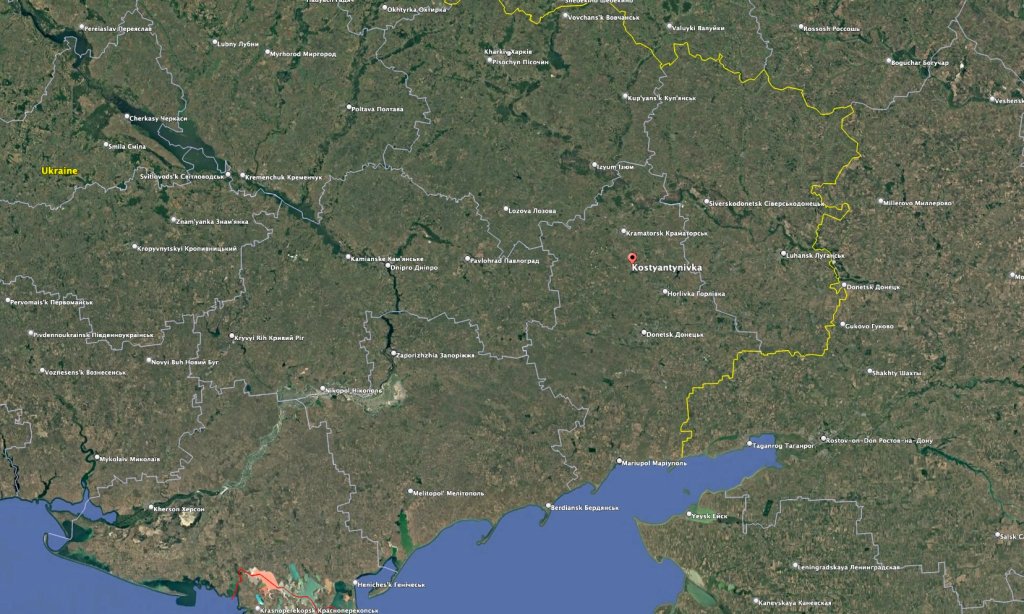
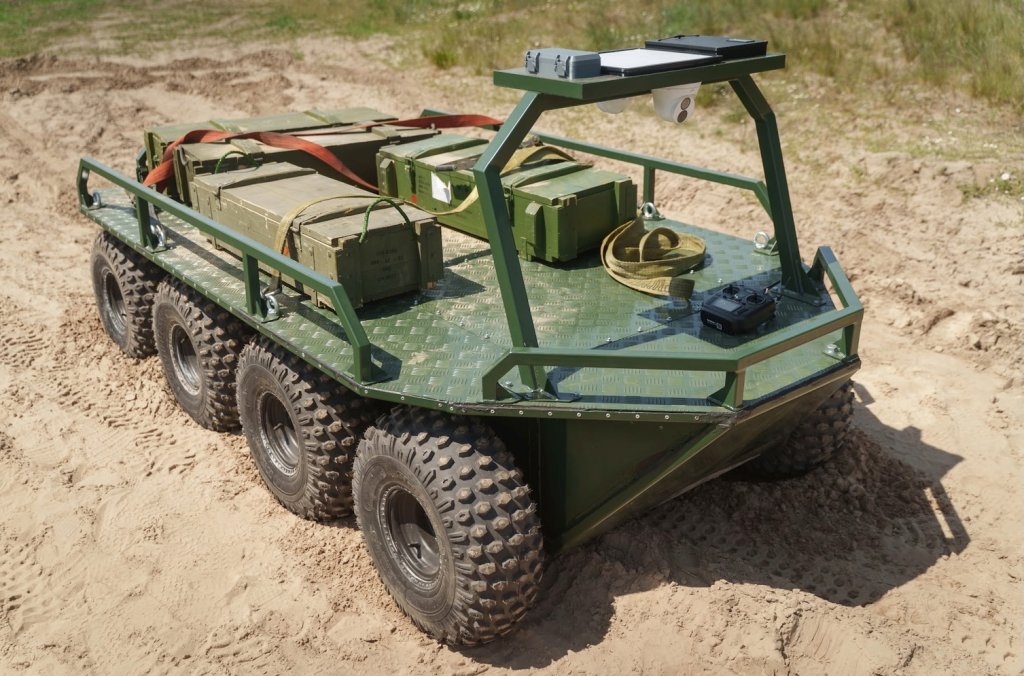
Taking a break from fighting Russians in the Kostiantynivka sector of the eastern Donetsk region, the commander of a Ukrainian uncrewed ground vehicle (UGV) unit spoke with us about innovations in the use of these systems. One was the first deployment of a UGV specifically designed for amphibious operations to deliver supplies to frontline troops in areas impeded by water obstacles. Large areas of the front line are bisected by rivers and wetlands, and the country has many other small waterways and marsh areas. As we have frequently reported, the use of UGVs by both Ukraine and Russia has exploded as the ubiquity of aerial attack drones makes it far too dangerous for human battlefield movements.

In an exclusive interview with TWZ, the commander of the 93rd Separate Mechanized Brigade’s “Alter Ego” UGV unit, who goes by the call sign “Electric,” offered us unique insights into the challenges of developing amphibious UGVs and how they were deployed.

In the first of two parts, Electric talks about why Alter Ego developed amphibious UGVs – including modifying a Triton variant for this – and how the unit made them work. The second part features his insights into using heavy ‘bomber drones’ to drop UGVs behind enemy lines for kamikaze raids. In addition, a representative of Brave1, Ukraine’s weapons technology accelerator, spoke about developing these systems at scale.

Some of the questions and answers have been slightly edited for clarity.

Q: How did the need for amphibious UGVs for logistics operations first come up?

A: We had this idea for a long time, but recently one of the units of the Armed Forces asked for our help to solve this problem, so that the UGV could overcome water obstacles.

There was a crucial need for this kind of means at certain parts of the front, but the units that are located there didn’t have the capacity by themselves to solve this task. So our battalion was asked to solve this problem because we are one of the most experienced units in terms of UGVs.

A first-ever logistics mission on an amphibious UGV: the robot covered 40 kilometers across land and water.

Operators of the "Alter Ego" unit (93rd Brigade) deployed the robotic system across mixed terrain. Facing water obstacles, the UGV seamlessly switched to swimming mode to… pic.twitter.com/rH8waq04a4

— BRAVE1 (@BRAVE1ua) September 29, 2026

Q: How long did it take to design and test the amphibious UGV, and what went into that process?

A: The whole process from development to battle deployment took less than three months.

Q: What did you have to do to make this work?

A: First of all, we looked at amphibious solutions that were on the market, not only in Ukraine, but in the world, and we took two separate approaches. One was taking one of the main UGVs that our unit is using on the ground, and we made it amphibious. And the other approach was that we took one of the solutions that was on the market that already had amphibious capabilities, and we solved several disadvantages that it had. And at the moment, we are using both.

Q: What did you have to do to make the UGV amphibious, and then what were some of the obstacles that had to be overcome to get this operational?

A: First of all, we have to explain that there are different solutions on the market that kind of work on the testing ground — like they can swim, they can drive on the ground, and in the vision of the manufacturer, they are working. But the fact is that these solutions are not ready for the reality on the front line, which is often very different from what is on the testing ground.

And the second point is that the unit has its own workshops where people work near the front line, and the experts, the engineers that work there, they have a very high level of competence to evaluate different solutions and select the one that has potential. And that’s what’s completely different between this unit and everyone else, like manufacturers and others who are working on these solutions, because they don’t understand what’s needed on the battlefield.

The Alter Ego unit’s uncrewed amphibious ground vehicle (UGV). (Brave1)

Q: So what did you have to change to make it work?

A: Regarding the amphibious one, basically the unit changed almost everything that that UGV had, starting from electronics, the software, the waterproofing, the communications – we basically changed everything. Regarding the one that we already used on the ground, we basically tried to retain what was allowing it to be an effective UGV on the ground, and we added waterproofing and specific mechanics, so that it can work in the water environment.

Q: You mentioned communications. What kind of communications did you add?

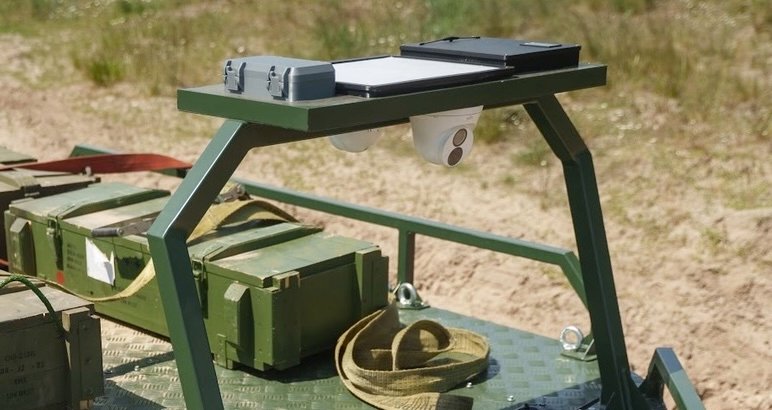
A: The communication means that was installed on the UGV by the manufacturer was not sufficient at all. Basically, it didn’t have enough quality for the battlefield situation. It was not working. But we already have our own communications that we were working on, and we have a lot of experience because we have been working for a long time in this UGV area. So we basically helped to install a sufficient level of communications on this UGV.

Q: So how does the amphibious UGV communicate with the controller? Does it use Starlink or some other satellite communications system for navigation?

A: This is satellite navigation, but not only. Satellite navigation is a part of this communication system.

Q: What are the other parts?

A: It’s better not to talk in detail about the other part of the communication system.

Triton amphibious UGV communications and camera systems. (Brave1)

Q: There were probably a lot of different missions that could have been used for this first amphibious UGV logistics delivery. Why was this particular mission chosen?

A: The Alter Ego unit has so much experience in terms of UGVs, and not just experience of using UGVs, but the experience of being the first in the world. We had one of the first evacuation missions, we had one of the first strike missions using UGVs, the paratrooper UGV, and now the amphibious UGV. So basically, we have the systems to make it work for the first time when nobody knows how to conduct this mission.

Q: No, I mean why did this particular mission get chosen to be the first one?

A: There are certain places on the front line where we have water obstacles that prevent logistics from being done by UGV. At the moment, UGVs are carrying hundreds of tons of logistics, probably the most compared to any other means on the front line, but before this, these water obstacles would prevent UGVs from providing logistics for those parts of the front, and that need can’t be fully satisfied by UAVs or other means. That’s why we did this mission with the amphibious UGV, and now our task here is to scale this technology and provide this logistics system for other similar parts of the front where there are water obstacles.

Kostiantynivka, Ukraine. (Google Earth)

Q: Tell me about where and when this mission took place and what it was like to watch it unfold.

A: So unfortunately, we can’t provide information about when and where this operation took place. But regarding how it went and what we felt, this was another big challenge, because this is something that wasn’t done before, and nobody thought this is real. So this was quite difficult, and to tell the truth, the mission didn’t succeed on the first try, actually, and it required a lot of effort in terms of planning, preparing, engineering, and basically it required 100% effort from everyone involved in that mission.

Q: How many times did it fail before, and what went wrong?

A: We had one failed attempt. The reason for failure was a certain technical problem. After that, we analyzed what went wrong, and we worked on solving those issues. Basically, it’s something that nobody had tried to do, it’s kind of hard to know what can go wrong before you actually try it. So the best way to find a solution like that is to try and then iterate on that attempt and make it better and better and better.

Also, I would like to add that although this was the first successful mission regarding an amphibious UGV, it’s not that there was no work on that before that. We were actively talking to and collecting the experience of everyone who was working on these kinds of missions before, and that was also a reason why this mission succeeded.

Q: How far did the amphibious UGV go for this mission?

A: So the UGV went 40 kilometers one way, and then it returned. So probably around 70 kilometers in total, and it carried food and other supplies.

Q: Did this UGV come under Russian fire on this mission?

A: Yes, and it survived.

Q: How does the UGV switch from water to land operations?

A: So the UGV has two separate control systems, one for water and one for land, and basically it switches to the one that is required at the moment. That’s how it can operate in both environments.

The Alter Ego unit’s uncrewed amphibious ground vehicle (UGV). (Brave1)

Q: Is that autonomous, or is that something that the controller at the base has to do as they watch the UGV on its mission?

A: At the moment, the operator fully controls the UGV manually. And basically, before, the operators of UGVs only knew how to move them on land, but now they also had to learn how to move them in the water. So not only was the technology itself developed, but we also had to prepare the operator and come up with tactics for this UGV.

Q: Did you use AI on this mission in any way, and if so, how?

A: We didn’t use AI.

Q: Have there been other missions using amphibious UGVs?

A: Yes.

Q: Can you say how many and what was delivered?

A: No.

Q: Is this designed only for logistics missions, or will it be used in the future for strike missions, either as a one-way attack system or as a platform for machine guns or other weapons?

A: We can use it in different ways in the future.

Q: Mud season is fast approaching, when much maneuvering becomes impossible or severely degraded because of how difficult it is to move in the thick, oozing slop. Will your amphibious UGVs work in the mud?

A: I think it can operate in the mud in the same way it operates in the water.

In the next segment of our interview, Electric talks about using bomber drones to deliver UGVs behind the lines, and a Brave1 representative talks about how the organization is working to develop these systems at scale for wider use.

Contact the author: howard@twz.com

The post Inside Ukraine’s First Combat Deployment Of Robotic Amphibious Vehicles appeared first on TWZ.

  •  

The Mystery of the Celtic Luxury Wagons Tacitus Described, Buried in a Danish Bog

Around 1880, men cutting peat at Dejbjerg, in western Jutland (Denmark), began pulling bronze pieces out of the bog that shone as if they were new. Some assumed it was gold. Others had a more down-to-earth suspicion: the equipment of an illicit still, hidden in the marsh to make moonshine. Both versions are recorded on […]

  •  

Legacy Media Weep as Trump Axes Biden’s Fuel Economy Diktat

The New York Times and the rest of the legacy media are in mourning after President Trump axed Biden's pro-EV fuel economy standards. But real fuel efficiency shouldn't need a mandate, says Dr Tilak Doshi.

The post Legacy Media Weep as Trump Axes Biden’s Fuel Economy Diktat appeared first on The Daily Sceptic.

  •  

Laser Weapons Will Be Deployed At Cape Canaveral Spaceport To Take Down Drones

Cape Canaveral Space Force Station is getting lasers that can zap drones intruding into its airspace. When installed, the new directed energy defense system will be part of a much larger effort to protect the spaceport against drone incursions, a spokesperson for Space Launch Delta 45 (SLD 45) told us.

The idea is to ensure the safety of launches and to keep prying eyes away from an installation full of secrets about America’s military and commercial space efforts. Companies like SpaceX, United Launch Alliance, Blue Origin and Relativity Space use the installation for space launches. The base defense modernization effort comes as the Cape Canaveral region is inundated with drone incursions. There were hundreds last year.

A SpaceX Falcon 9 rocket launches from Space Launch Complex 40 at Cape Canaveral Space Force Station, Florida, on May 29, 2026. Less than 12 hours after responding to a launch vehicle anomaly at a separate launch complex, Space Launch Delta 45 and the Eastern Range remained fully mission capable and successfully supported the mission, demonstrating the resilience and responsiveness of the world's busiest spaceport. (U.S. Space Force photo by Gwen Kurzen)
A SpaceX Falcon 9 rocket launches from Space Launch Complex 40 at Cape Canaveral Space Force Station, Florida, on May 29, 2026. (U.S. Space Force photo by Gwen Kurzen) Gwendolyn Kurzen

“As the world’s premier spaceport continues to support an unprecedented launch tempo for national security and commercial missions, securing critical launch infrastructure from low-altitude aerial threats remains a top operational priority,” the spokesperson explained. “The ongoing security modernization integrates detection, tracking, and defensive capabilities to include directed energy systems. These will provide security forces with real-time situational awareness and the necessary tools to safeguard personnel, launch complexes, and national security payloads.”

The spokesperson did not have a timeline for when the directed energy system will be operational. Florida Today was the first to report that lasers will make up this defensive system.

Col. Brian Chatman, who commands Space Launch Delta 45, told the publication that the facility is “bringing on a directed-energy system that can do a kinetic kill against UASs (Unmanned Aircraft Systems) that are coming into the area that are having nefarious intent.”

“The Air Force Research Laboratory [AFRL]-tested system has been proven to be able to safely bring down a drone,” Florida Today noted. “This directed-energy system uses lasers to shoot down any drone that flies into restricted areas.”

Chatman didn’t name the specific system to Florida Today and the SLD 45 spokesperson declined to say.

The following video shows one such AFRL-tested system that has been used in combat before.

For the spaceport, being able to use lasers is even more important than it is for other locations needing protection from drones. That’s because the traditional method of jamming radio frequencies to interfere with drone connections to controllers could damage spacecraft.

“If you start blasting a bunch of RF energy you run into potential challenges,” Chatman explained. “You don’t want that.”

There is good reason for Chatman to be concerned about drones. The spaceport has been subjected to many unauthorized incursions, the spokesperson told us. However, there were no statistics immediately available on how many or whether they occurred during launches. There were 500 unauthorized drone flights over the adjacent Port Canaveral in 2025, Port Canaveral CEO Capt. John Murray said.

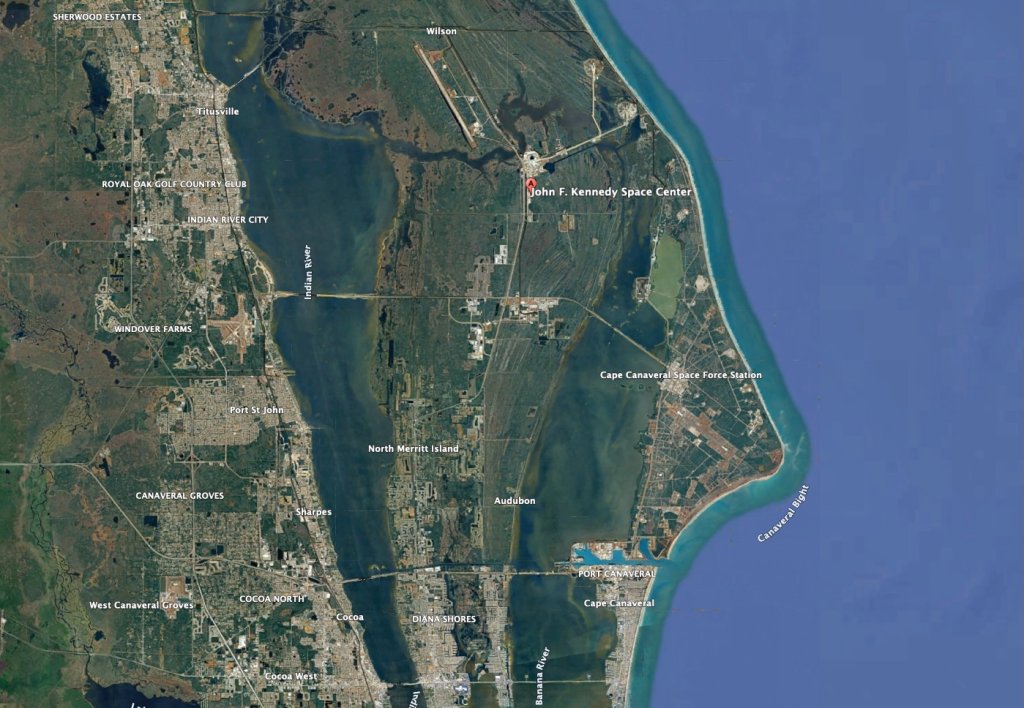
In addition, on Sept. 18, a Chinese tourist pleaded guilty to a federal misdemeanor charge after flying a drone in restricted airspace above NASA’s Kennedy Space Center (KSC) in late July. KSC is located across the Banana River from the space station.

It is unclear if the new laser system will also protect the skies over KSC. The spokesperson did not immediately know and is checking into it.

Cape Canaveral. (Google Earth)

That tourist, Xiaodong He, flew a drone that videotaped the installation, according to federal documents. The drone got within 1.56 miles of pad 39B, from where the next crewed lunar flight is expected to launch in 2028.

NASA’s Kennedy Space Center pad 39B. (NASA)

Encompassing about 25 square miles, Cape Canaveral Space Force Station is a large, unpopulated, open area with a long Atlantic Ocean shoreline. The station’s physical layout allows many vectors for drone incursions, and what’s housed there makes it a logical target for a nefarious actor.

The systems being prepared for launch and launched at the sprawling facility are extremely valuable and can take many years to build, costing billions. When they are out on the pad or being transported around, the rockets are massive tubes packed with high explosives that would cause a devastating secondary explosion if struck.

Even disrupting launches there due to a successful or even attempted attack could have major national security impacts.

Maybe the place that needs them most. Use your imagination with this one.

Probably scary how little they have. https://t.co/cBww4vlB9n

— Tyler Rogoway (@Aviation_Intel) September 19, 2026

The move to bring directed energy systems to protect the spaceport comes as the military is investing heavily in these systems to counter drones. Late last month, for instance, troops from the Joint Task Force-Southern Border (JTF-SB) employed an Army Multipurpose High Energy Laser (AMP-HEL) system during an operation dubbed Ardent Vanguard. The AMP-HEL was used “to engage and defeat three hostile UAS, determined to be such based on their use in direct support of activities posing a physical threat to U.S. military personnel and CBP [Customs and Border Protection] partners,” according to a media release at the time.

The shootdown was part of the U.S. government’s ongoing effort to counter drones being flown by Mexican drug cartels.

Joint Task Force – Southern Border personnel use the Army Multipurpose High Energy Laser system to engage and defeat a hostile UAS, determined to be such based on its use in direct support of activities posing a physical threat to U.S. military personnel and CBP partners, August 25, 2026. Approximately 8,000 service members are currently deployed under JTF-SB to protect U.S. territorial integrity by boosting awareness, accelerating response, and supporting federal law-enforcement partners. (U.S. Army Photo by Sgt. Daniel Huerta)
Joint Task Force – Southern Border personnel used the Army Multipurpose High Energy Laser system to engage and defeat a hostile drone. (U.S. Army Photo by Sgt. Daniel Huerta) Operation Ardent Vanguard

The military is seeking to expand its ability to counter drones with directed-energy weapons. In May, the Defense Department and Joint Interagency Task Force 401 selected five installations to participate in a directed-energy counter-unmanned aircraft systems pilot program required by the Fiscal Year 2026 National Defense Authorization Act.

“This initiative will accelerate the fielding and evaluation of advanced directed energy capabilities to protect critical infrastructure, military installations and homeland missions,” the Pentagon explained. “The locations were deliberately selected to support rigorous testing and operational assessments across diverse environments and mission sets.”  

The Pentagon selected two “key southern border installations” for this program: Fort Huachuca, Arizona; and Fort Bliss, Texas. It also tabbed Naval Base Kitsap, Washington; Grand Forks Air Force Base, North Dakota; and Whiteman Air Force Base, Missouri.

Though the Pentagon is pressing forward with making directed energy a key part of counter-drone efforts, laser weapons have limitations. These include their short-term magazine depth being limited to how many successive shots they can fire before thermal loads require the system to cool down. Energy supply can also be a limiting factor. Additionally, laser systems don’t function as well in heavy cloud cover and other inclement weather.

“We can only shoot down with a laser what we can see,” Israeli Defense Forces (IDF) Brig. Gen. Yaniv Rotem once said about the IDF’s Iron Beam laser defense system, which began downing enemy drones in combat last year.

You can see the Iron Beam’s first claimed kills in the following video.

A World First — Combat-Proven Laser Defense, Powered by Rafael

For the first time in history, high-power laser systems have been used to intercept aerial threats in combat.
This unprecedented breakthrough took place during the Swords of Iron War — with Rafael’s advanced… pic.twitter.com/B3D6UdCJvE

— Rafael Advanced Defense Systems (@RAFAELdefense) May 28, 2025

At the same time, a laser weapon of this kind is very much a point-defense weapon, with its short range meaning that multiple systems will be needed to provide coverage of a significant area. In some situations, even a single, large military base like Cape Canaveral Space Force Station might require more than one to provide full defensive coverage.

In addition, there have been concerns about the safety of the systems and the authorities required to use them in the homeland.

These issues came to a head in February, when the U.S. military used AeroVironment’s LOCUST directed energy weapon to shoot down a Customs and Border Protection (CBP) drone over southwest Texas. The friendly fire incident spurred expanded airspace restrictions over the Fort Hancock area that lasted for four months. It also gave credence to the FAA’S concerns about the operational deployment of counter-drone laser weapons along the border. The same system was used to fire at suspected Mexican cartel drones flying across the southern border into Texas two weeks earlier, which resulted in a large airspace closure, general confusion and major headlines.

Safety concerns about using directed energy weapons, and especially kinetic ones, to take down drones in the U.S. have been a major factor in why they haven’t been previously used in this role. Almost two years ago, officials at U.S. Northern Command (NORTHCOM), which has coordinating authority for counter-drone efforts in the U.S., said the use of such weapons was not yet on the table. The reason is that they can create dangerous or otherwise serious collateral effects that are less of a concern in a war zone.

That the U.S. Space Force is bringing in a laser system to protect some of the nation’s most important and secret military assets is a strong indication that these concerns are being overcome.

Contact the author: howard@twz.com

The post Laser Weapons Will Be Deployed At Cape Canaveral Spaceport To Take Down Drones appeared first on TWZ.

  •  

This Is Poland’s New Heavy Infantry Fighting Vehicle

Poland has unveiled a full-sized demonstrator of a new heavy infantry fighting vehicle (IFV) intended to put more armor and firepower between mechanized troops and the increasingly lethal threats of the modern battlefield. The unveiling comes as Poland undertakes a sweeping modernization of its armored forces, driven in large part by the threat posed by Russia.

KIELCE, POLAND - SEPTEMBER 08: People attend the Premiere of Poland's PGZ Heavy Infantry Fighting Vehicle during MSPO 34th International Defence Industry Exhibition at Targi Kielce, on September 08, 2026 in Kielce, Poland. The 34th edition of MSPO (short for the Polish "Międzynarodowy Salon Przemysłu Obronnego," or "International Defence Industry Exhibition") is taking place September 8–11, 2026 in Kielce, organized in cooperation with Poland's Ministry of National Defence and this year's lead nation, Canada. The annual trade show is the largest in Central and Eastern Europe, showcasing more than 1,000 exhibitors from 40 countries. (Photo by Omar Marques/Getty Images)
The debut of the Ciężki Bojowy Wóz Piechoty (CBWP), or Heavy Infantry Fighting Vehicle, during the MSPO 34th International Defense Industry Exhibition at Targi Kielce, on September 8, 2026 in Kielce, Poland. Photo by Omar Marques/Getty Images

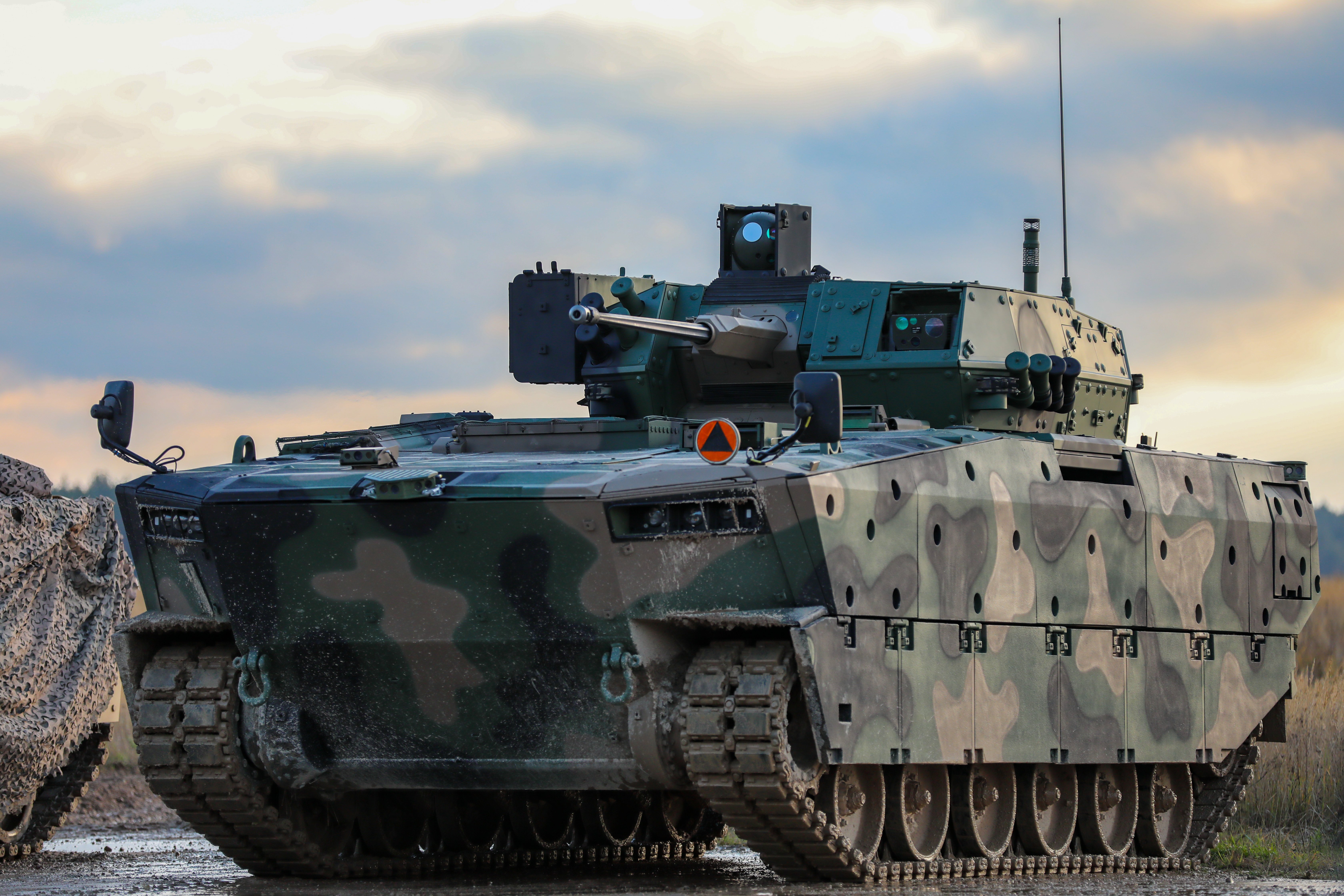
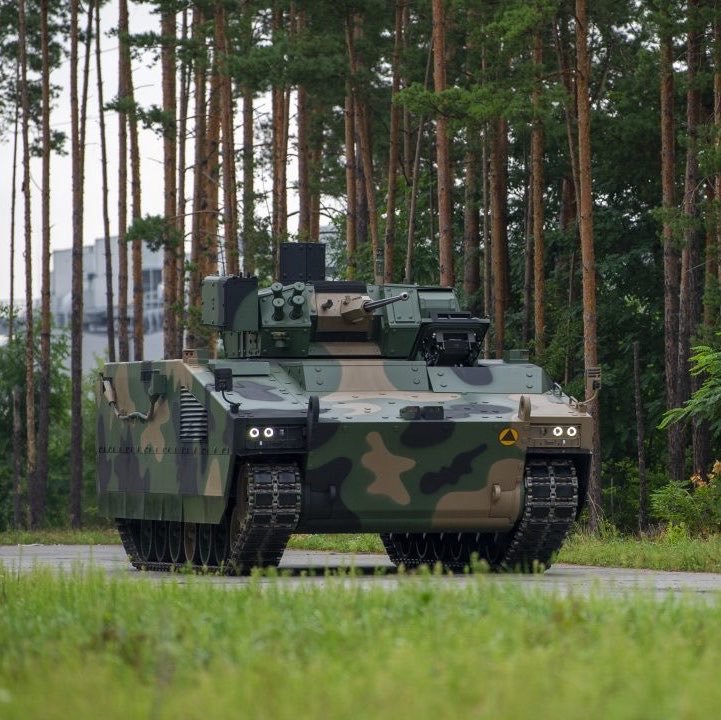
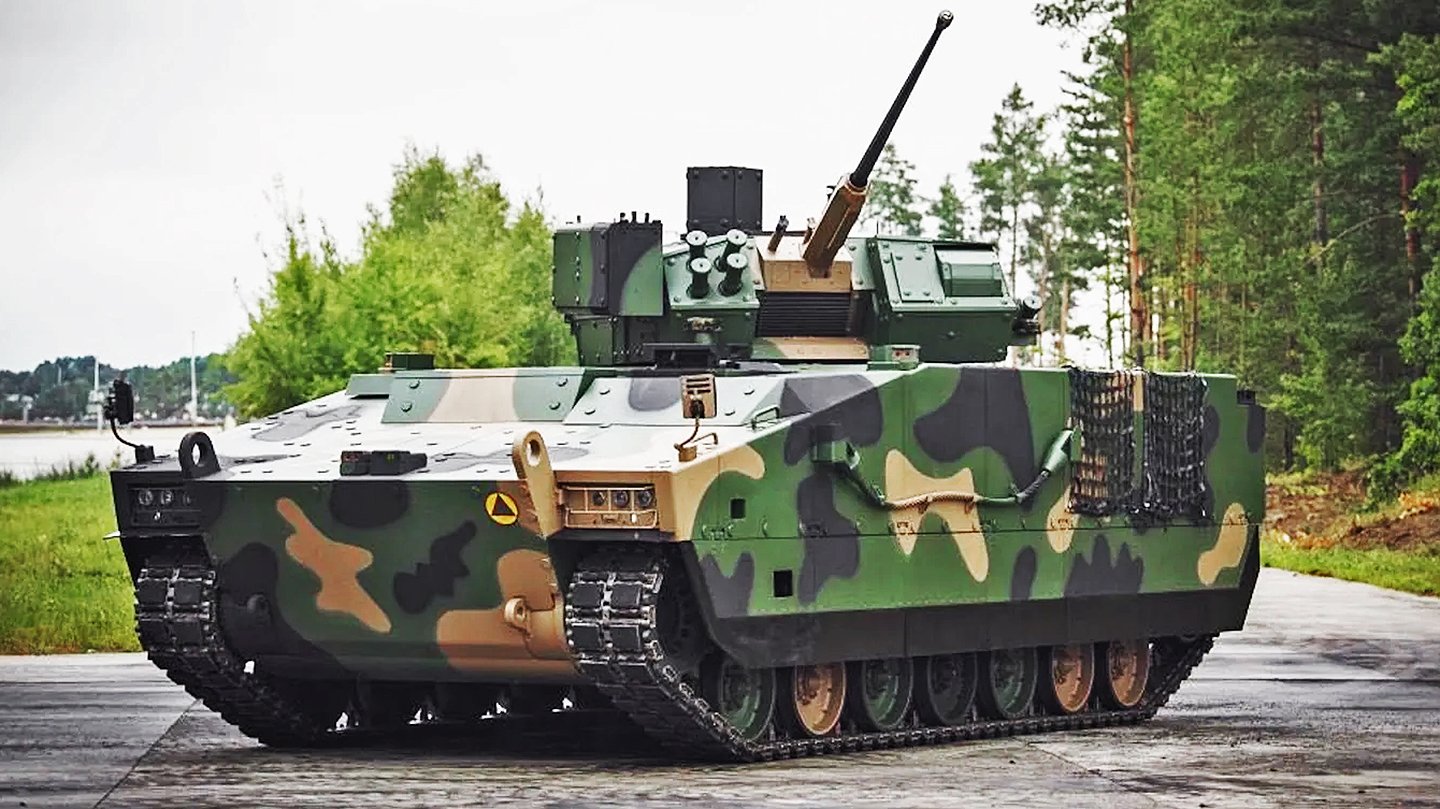
Huta Stalowa Wola, part of state-owned Polska Grupa Zbrojeniowa, presented the Ciężki Bojowy Wóz Piechoty (CBWP), or Heavy Infantry Fighting Vehicle, at the MSPO defense exhibition in Kielce, Poland, today. The vehicle, commonly referred to as Ratel (honey badger), is the latest step in a Polish effort to develop a heavily protected tracked combat platform that can complement the lighter, amphibious Borsuk (badger) infantry fighting vehicle.

“The demonstrator presented today confirms that Polish companies possess the expertise to design and develop advanced combat platforms that meet the demands of the modern battlefield,” Adam Leszkiewicz, president of PGZ’s management board, said during the unveiling.

💥 OTO ON. CIĘŻKI BOJOWY WÓZ PIECHOTY. 🇵🇱

Po dniach odliczania i pokazywania tylko fragmentów odsłaniamy najważniejszą premierę PGZ na #MSPO2026.

CBWP to nowa ciężka platforma opracowana przez Hutę Stalowa Wola – z wysokim poziomem ochrony, dużą mobilnością i siłą ognia… pic.twitter.com/kazs4ciGMj

— Polska Grupa Zbrojeniowa🇵🇱 (@PGZ_pl) September 8, 2026

At approximately 40 tons, the CBWP is about 12 tons heavier than the roughly 28-ton Borsuk (and adds an axle, for seven road wheels on each side), the result of a fundamental difference in design philosophy.

NATO enhanced Forward Presence Battle Group Poland adds the Polish Infantry Fighting Vehicle, the Borsuk (Badger) to its arsenal for the Polish armed forces 15th Mechanized Infantry Brigade, stages for display during the unveiling ceremony in front of the Poland Deputy Prime Minister, Mariusz Błaszczak, Minister of National Defense joined by U.S. Soldiers assigned to 3rd Battalion, 8th Cavalry Regiment, 3rd Armored Brigade Combat Team, 1st Cavalry Division (3-1 ABCT) operationally controlled by the 1st Infantry Division (1 ID), Polish armed forces 15th Mechanized Infantry Brigade, The Royal Lancers, Prince of Wales Troop, Romanian Sky Guardians, Croatian army Archer Battery, and the media in Bemowo Piskie, Poland, Nov. 14, 2022. The 3-1 ABCT is among other units assigned to the 1 ID, proudly working alongside NATO allies and regional security partners to provide combat-credible forces to V Corps, America's forward deployed corps in Europe. (U.S. Army National Guard photo by Staff Sgt. Matthew A. Foster)
A Borsuk operated by the 15th Mechanized Infantry Brigade of the Polish Army. U.S. Army National Guard photo by Staff Sgt. Matthew A. Foster

Borsuk was conceived as a relatively lightweight IFV able to operate alongside mechanized infantry while retaining the ability to swim. The CBWP instead prioritizes protection and battlefield survivability, placing it in the growing category of heavy IFVs being developed and operated by NATO countries and others.

The vehicle will have a three-person crew and carry up to eight infantrymen. Its primary role is to transport those troops safely into contested areas while providing direct fire support once they reach the objective.

The war in Ukraine has demonstrated how quickly armored vehicles can be exposed to anti-tank guided missiles, mines, artillery fragments, loitering munitions, and small drones. Even vehicles that survive direct attacks can be functionally disabled by damage to tracks, sensors, or external equipment.

A Ukrainian M2A2 Bradley engaging and damaging a Russian T-90M in a close-range fight. After a mission kill, the T-90M is subsequently finished by an FPV drone:

The Ukrainian Bradley IFV damaged the no-analogue russian T-90M "Breakthrough" in a close fight. Then an FPV drone finished this long-suffering tank.

Maybe, the T-90M tanks should be renamed into "Broken".

📹: 47th Mechanized Brigade pic.twitter.com/b3ShfqbTd9
— Defense of Ukraine (@DefenceU) January 13, 2024

While Ukraine has shown that armor is increasingly easy to find and attack, and thus less relevant, Warsaw is far from convinced that armored vehicles are now irrelevant, with multiple acquisition projects underway. However, Ukraine does change what these vehicles need to be able to do and how they must be employed to have a chance of survival. In certain circumstances, when properly concealed, dispersed, and integrated with counter-drone capabilities, armor is still seen as important for protected mobility and firepower by militaries around the globe.

According to PGZ, the CBWP’s design therefore puts considerable emphasis on survivability. It incorporates advanced ballistic and mine protection designed to meet relevant STANAG standards. It also uses specialized mine-resistant seats intended to reduce the effects of explosions beneath the hull.

The protection architecture can be supplemented by an active protection system (APS). If integrated on a production vehicle, such a system could provide another layer of defense against incoming anti-tank weapons, and potentially small drones, although PGZ has described the APS as an optional component rather than specifying a particular production configuration.

For detecting threats, the vehicle can employ laser-warning equipment including the OBRA-3 system, integrated with smoke grenade launchers. A laser warning can provide the crew with an indication that the vehicle has been illuminated by a rangefinder or targeting system, potentially allowing it to react before an anti-tank weapon is launched.

A video showing a test of the OBRA-3 protection system on a Polish Rosomak wheeled armored fighting vehicle, with a smoke screen being generated to blind hostile optics. The view is from the driver’s compartment:

The CBWP will also carry an integrated nuclear, biological, and chemical protection system, allowing the crew and embarked infantry to operate in contaminated environments.

Firepower comes from the ZSSW-30 remotely operated turret, one of the most important locally developed systems in Poland’s current armored vehicle modernization effort.

The turret is equipped with a 30mm cannon armed with programmable ammunition, plus Rafael Spike anti-tank guided missiles. Together, the weapons are intended to give the CBWP the ability to engage armored vehicles, infantry, and other battlefield targets while also providing a degree of capability against aerial threats. In particular, the programmable ammunition provides greater flexibility against different target types — such as drones — by allowing the projectile’s effects to be tailored to the engagement.

In Krakow, Poland, on October 3, 2025, a SPIKE anti-tank guided missile is displayed during the official celebrations of the 6th Airborne Brigade Day at the Polish Aviation Museum. On the occasion of the 6th Airborne Brigade Day, named after Brigadier General Stanislaw Sosabowski, a ceremonial assembly takes place at the Polish Aviation Museum. During the event, decorations are awarded, followed by a parade featuring a parachute jump demonstration. The celebration also includes stands prepared by various uniformed services for participants. (Photo by Klaudia Radecka/NurPhoto via Getty Images)
A Polish Spike anti-tank guided missile is displayed during the official celebrations of the 6th Airborne Brigade Day at the Polish Aviation Museum in Krakow, Poland, on October 3, 2025. Photo by Klaudia Radecka/NurPhoto

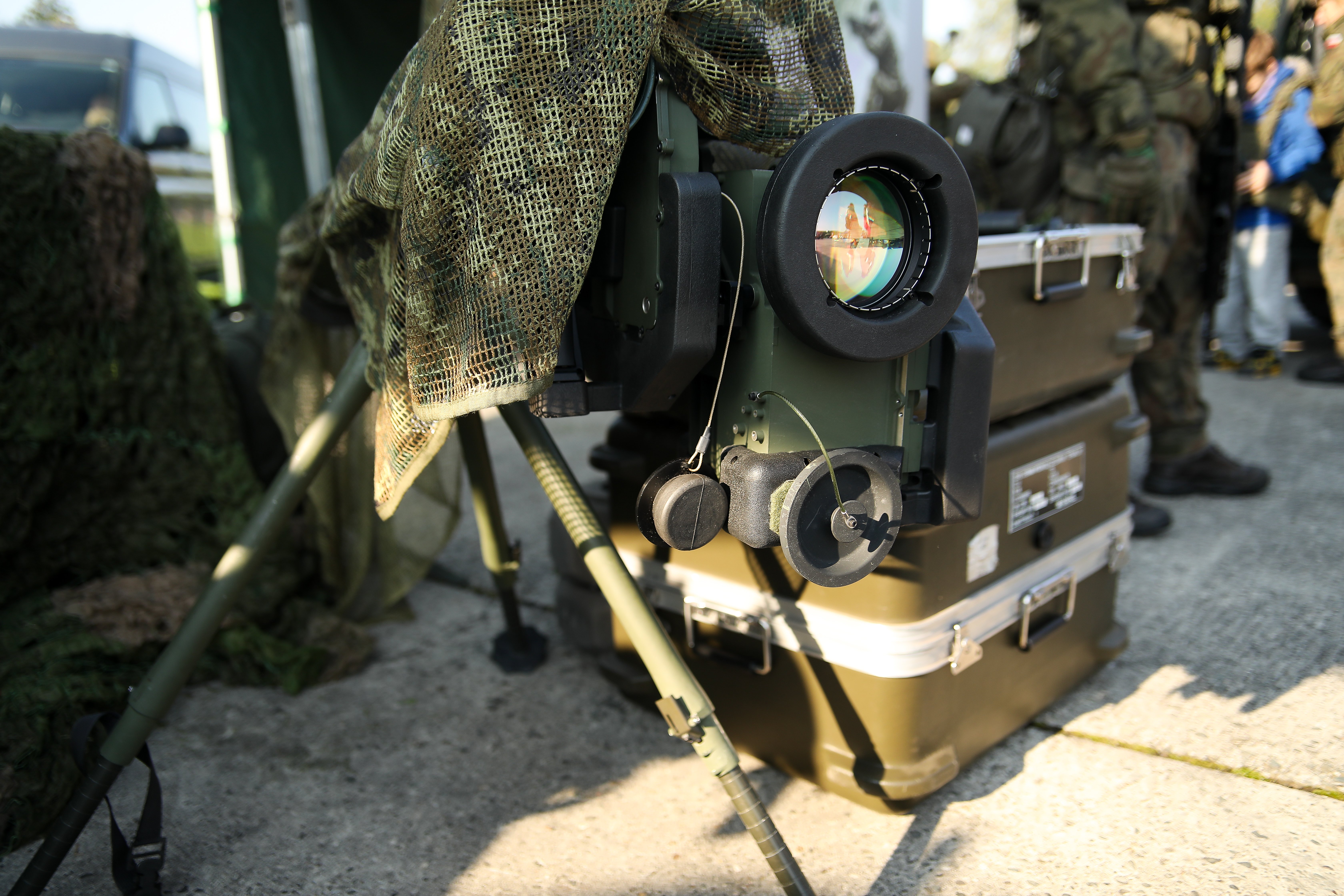
The inclusion of Spike missiles gives the vehicle an extended-range anti-armor option beyond the effective range of its automatic cannon. Much more than a traditional anti-tank guided missile, Spike provides an indirect-fire capability including the option to loiter over a particular area and search for targets, among other attributes.

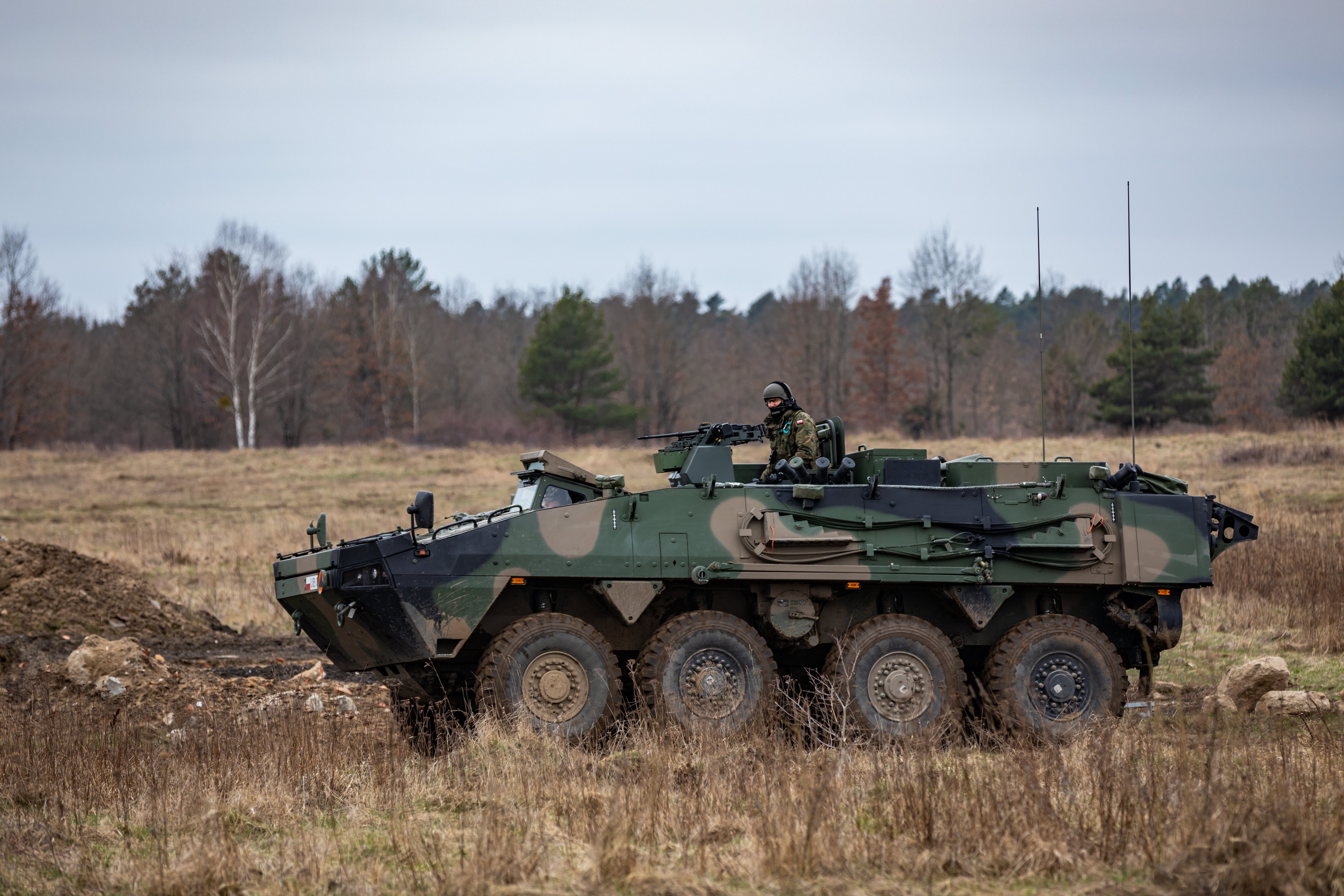
The ZSSW-30 also gives Poland a degree of commonality across its growing fleet of modern armored vehicles, with the system already being introduced on Borsuk and on some Rosomak wheeled armored fighting vehicles.

Polish soldiers assigned to the 15th Mechanized Infantry Brigade maneuver a Rosomak-S armored modular vehicle into position during Amber Lynx, a combined live fire exercise at Bemowo Piskie, Poland, April 6, 2023. The 4th Infantry Division’s mission in Europe is to engage in multinational training and exercises across the continent, working alongside NATO allies and regional security partners to provide combat-credible forces to V Corps, America’s forward deployed corps in Europe. (U.S. Army National Guard photo by Sgt. Lianne M. Hirano)
Polish soldiers assigned to the 15th Mechanized Infantry Brigade maneuver a Rosomak wheeled armored fighting vehicle into position during Amber Lynx, a combined live-fire exercise at Bemowo Piskie, Poland, in April 2023. U.S. Army National Guard photo by Sgt. Lianne M. Hirano

The CBWP reflects a trend for fighting vehicles that blur the boundaries between traditional IFV and infantry-support concepts. It is expected to carry a relatively large infantry squad while possessing the sensors and weapons necessary to remain directly involved in combat alongside those troops. At the same time, its high level of protection makes for a notably large vehicle.

The new vehicle is just one part of Poland’s broader military modernization.

Warsaw has embarked on one of NATO’s most ambitious efforts to expand and modernize its ground forces, with major acquisitions of two different types of main battle tank, artillery, rocket systems, and infantry fighting vehicles. Poland is simultaneously expanding domestic production capacity, seeking to ensure that at least part of the equipment needed for a larger army can be produced and sustained within the country.

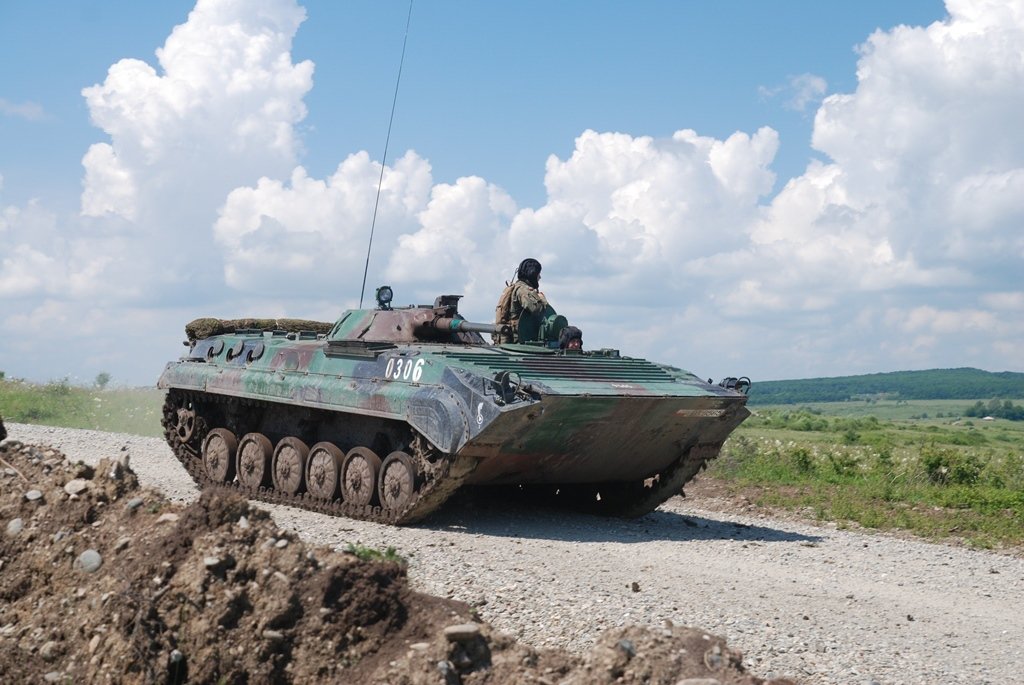
The Borsuk program is central to that effort and is intended to replace Poland’s aging Soviet-designed BWP-1 (the Polish version of the BMP-1).

11 June 2017 Polish soldiers from 10th Mechanized Battalion the 'Dragons' and Polish BWP-1 Infantry Fighting Vehicles train during Exercise Noble Jump in Romania. Around 4000 troops from nine NATO countries are participating in the exercise which is designed to test the deployability of NATO's Very High Readiness Joint Task Force or VJTF. Credit: Captain Katarzyna SAWICKA
Polish soldiers from 10th Mechanized Battalion in a BWP-1 train during Exercise Noble Jump in Romania. Captain Katarzyna SAWICKA/Allied Joint Force Command Naples

The heavier CBWP offers even more capability, but its heavier weight comes with tradeoffs. It will be inherently less flexible than a lighter amphibious IFV, and more costly. In return, it will give Polish commanders another option for missions where survivability matters more than swimming capability or rapid deployment.

Such a vehicle would be particularly important for units operating in heavily contested areas, where the threat from mines, anti-tank weapons, and drones makes protection a higher priority. This provides some indication of what Polish planners expect a conflict with Russia on Europe’s eastern flank to look like. However, lessons from Ukraine show that, whatever its quality, an armored fighting vehicle will only be as survivable as the network and tactics around it.

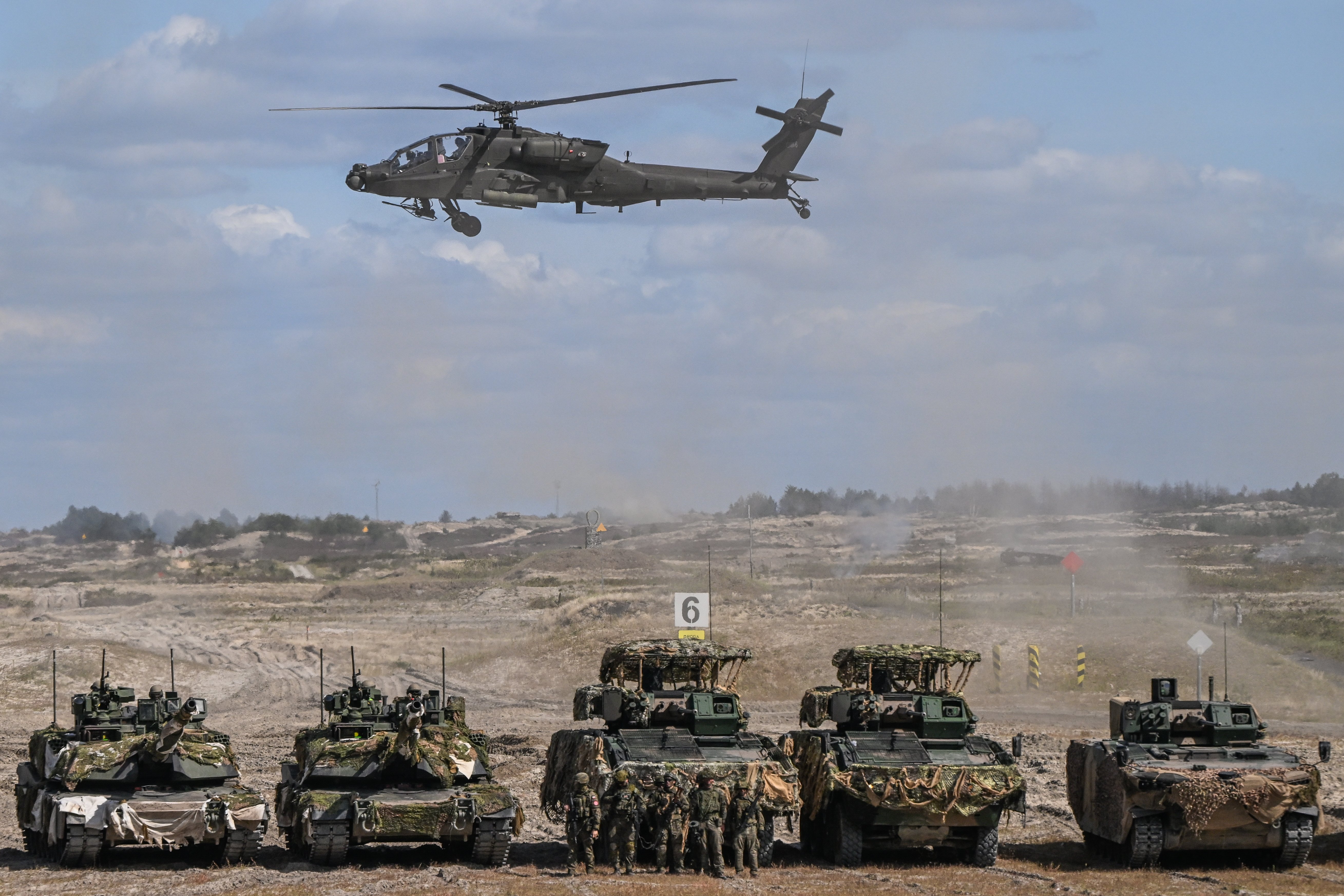
NOWA DEBA, POLAND - SEPTEMBER 7: A Boeing AH-64 Apache attack helicopter performs low-altitude tactical maneuvers over a massive static line of advanced hardware, including two camouflaged M1A1 Abrams main battle tanks, two KTO Rosomak 8x8 wheeled vehicles with ZSSW-30 turrets, and a Borsuk tracked infantry fighting vehicle, during a combat presentation at the Land Forces Training Center in Nowa Deba, Subcarpathian Voivodeship, Poland, on September 7, 2026. This high-profile combined-arms presentation, organized as part of the 27th Polish Armed Forces Exhibition directly leading into the 34th International Defence Industry Exhibition (MSPO Kielce), demonstrated the tight operational synergy between Poland's newest heavy armor, advanced infantry fighting platforms, and close-air support aviation, witnessed by foreign military delegations from over 20 countries observing Poland's premier weapon systems. (Photo by Artur Widak/NurPhoto via Getty Images)
An AH-64 Apache attack helicopter over a massive static line of Polish armor, including two M1A1 Abrams main battle tanks, two Rosomak wheeled armored fighting vehicles with ZSSW-30 turrets, and a Borsuk tracked IFV, during a combat presentation at the Land Forces Training Center in Nowa Deba, Poland, on September 7, 2026. Photo by Artur Widak/NurPhoto

Still, the CBWP remains some distance from operational service.

PGZ currently has one operational demonstrator, intended for factory trials. The company plans to subsequently construct two fully functional prototypes, with both expected to be ready in 2027.

Those vehicles will then undergo intensive testing with the Polish Armed Forces. The results could lead to changes in the protection architecture, turret integration, or other elements before a production configuration is finalized.

The CBWP demonstrator vehicle underway. Polish Ministry of Defense

PGZ has indicated that it could be ready for production as early as 2029, but that timeline is not yet a firm procurement schedule. It will depend on the results of testing, any modifications required during development, and negotiations with the customer.

Poland has been reported to be considering a requirement for up to 700 CBWP vehicles. In addition, Poland has so far contracted for 257 Borsuk IFVs, with another roughly 1,000 Borsuk-family combat and specialized vehicles envisioned under a broader framework agreement.

If the program succeeds, Poland will ultimately field a highly capable two-tier tracked IFV force in which the CBWP equips units expected to operate in the most dangerous portions of the battlefield.

Contact the author: thomas@thewarzone.com

The post This Is Poland’s New Heavy Infantry Fighting Vehicle appeared first on TWZ.

  •  

Mysterious Black Jet That Emerged At Long Beach Airport Identified (Updated)

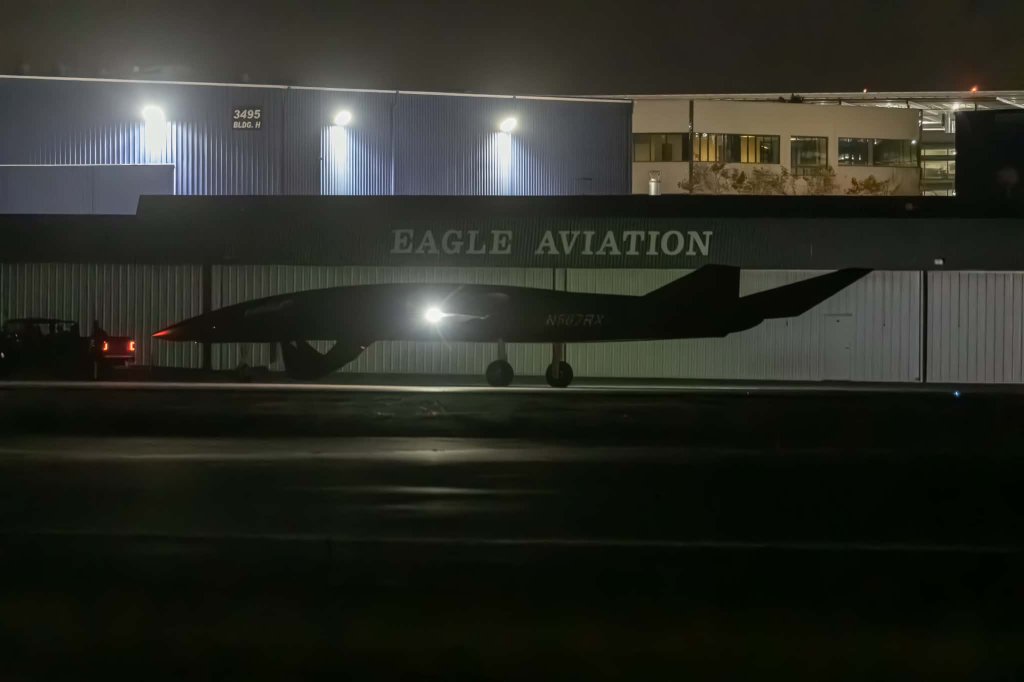
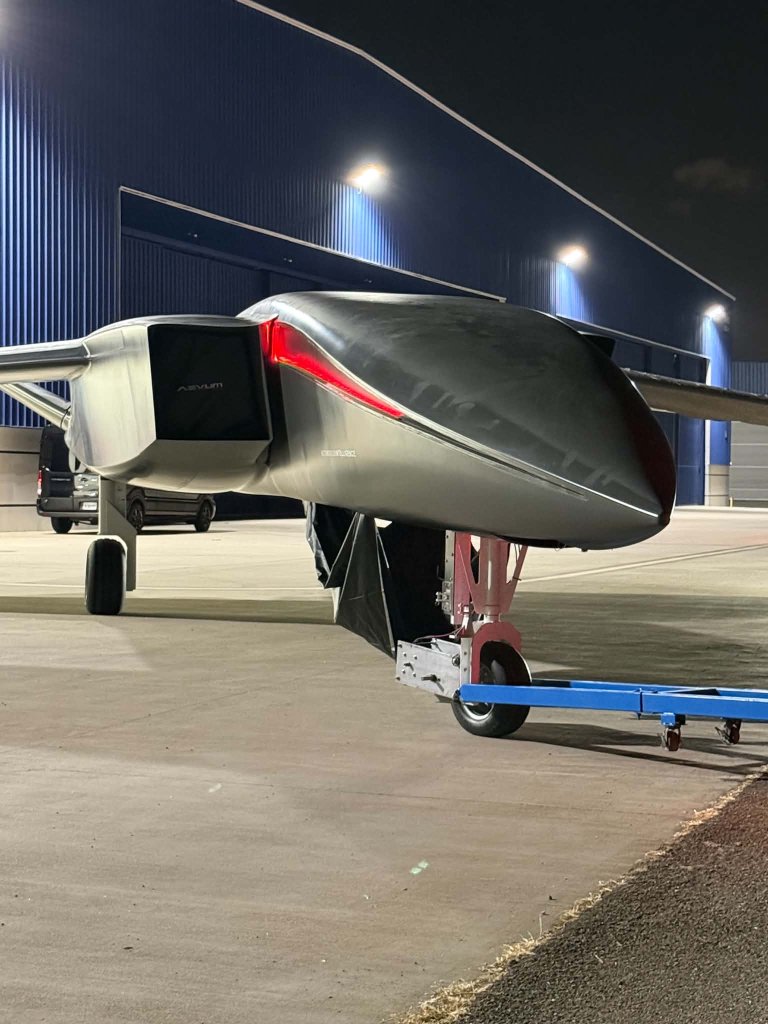
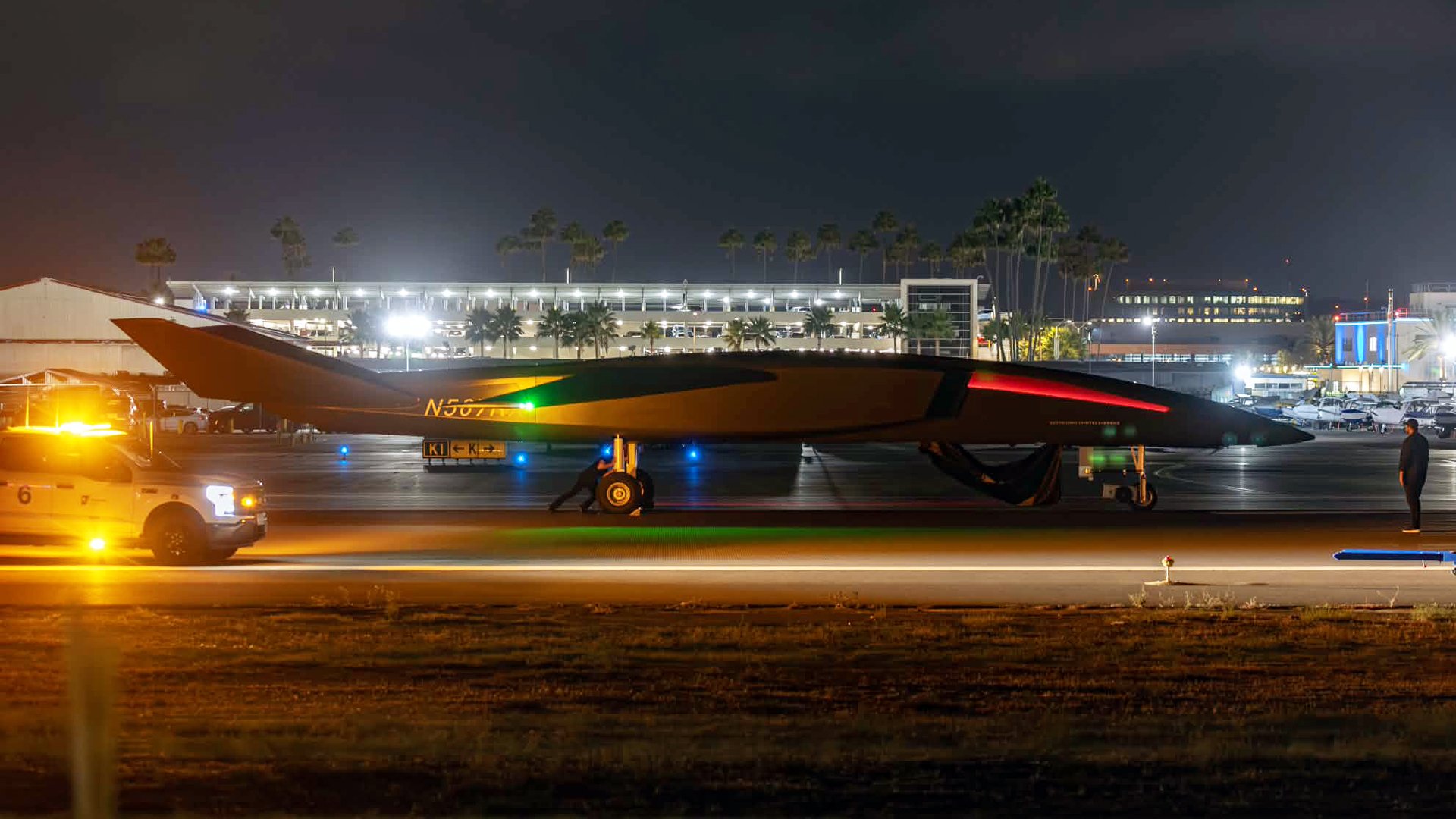
A handful of aviation photographers got a surprise eyeful of a very sleek and large aircraft silhouette on Thursday night at Long Beach Airport. One of them was Ricky Schol, who saw the mysterious airframe emerge from a hangar, prompting a double take. It was the first time in his 16 years of aviation photography at the historic airport he’d ever seen anything like it.

“I was driving home past my local airport Thursday evening here in Southern California when I saw a bright light coming from a hangar I haven’t seen open in a long time, so I doubled back to check it out,” Schol told us. “I was blown away when I pulled over and saw the future in front of my eyes. I had no clue what I was looking at. I jumped out of my vehicle and started taking pictures immediately.”

“At first glance I thought it was an F-117 Nighthawk when driving by,” said Schol, a plumber by trade. “That’s why I doubled back to see. And to my surprise I saw something I’ve never seen before, having no cockpit. It left me with a very curious feeling.”

(Ricky Schol)

Schol said he did some asking around and learned more details. He would soon learn that the mysterious aircraft design was the RAVN X, an aircraft meant to launch payloads into space, made by Aevum Aerospace of Huntsville, Alabama. Schol was kind enough to share some of the photos he took of the aircraft, which he said he saw from about 100 feet in the distance. You can find his work on Instagram at @aggressoraviation_.

As you can see from the images below, the aircraft bears the FAA N-Number N567RX, which has been reserved by Aevum to an address at the airport, but it appears to be a mockup — one we have likely seen before.

(Ricky Schol)
(Ricky Schol)

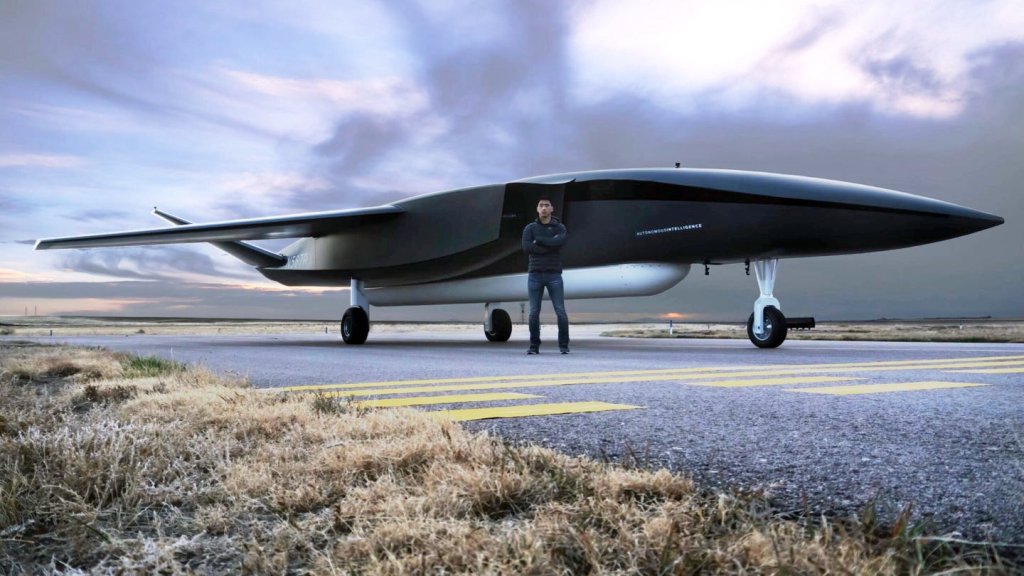
A mockup of the drone was introduced online with great fanfare in 2021 and described at the time by company CEO Jay Skylus as the “mothership” for a two-stage rocket able to carry a payload of just over 1,000 pounds. 

From our story when the RAVN X was unveiled: “The twin-engine Ravn X drone — described by the company as the first stage of the system — reportedly weighs 55,000 pounds, is 80 feet long, and has a wingspan of 60 feet — roughly the size of an A-5 Vigilante. The sleek drone… has seemingly been tailored for speed.” 

During the mockup roll-out, the company described what we noted back then was a “very ambitious, if not almost bizarre timeline” for getting Ravn X into the air. The plan was to start with “vehicle-level testing” to obtain the required airworthiness certification and launch licensing for operations, a process that should take 18 months, Skylus claimed. From there, Aevum planned to secure airworthiness certification for the first-stage drone from the Federal Aviation Administration. 

Following that, the next step was to commence orbital launch tests from Cecil Spaceport in Jacksonville, Florida, by late 2021. 

It is unclear whether Aevum achieved any of its goals. There are no details on the company website and the most recent information about RAVN X is from Gunter’s Space Page, a website that tracks launches.

“In December 2020 Aevum rolled out a mock-up of the Ravn-X carrier plane (although claimed to be a real prototype), but no further activities have been noticed so far,” noted Gunter’s Space Page. “It is doubtful, that any real hardware has been produced so far. By August 2024, all activities seem to have stopped.”

We reached out to Skylus and Aevum for more details.

(Aevum screencap) www.twz.com

Given that RAVN X has all but disappeared from public notice, Schol and a few other photographers at the airport caught a rare glimpse.

“I was there from the time they pulled it out to the time they pulled it in,” he told us. “They lined it up on the runway. It moved a little bit, but not much.”

Schol said he didn’t hear the engines or see any exhaust.

“I don’t know exactly what they were testing or trying to accomplish that night,” he proffered.

Mockups can be modified for limited ground tests and other important work, which could be the case here. Regardless, RAVN X does appear to still be alive as a program.

If we find out any details, we will pass them along.

UPDATE: 7:12 PM Eastern Sept. 8:

In posts on X, Skylus said Aevum “conducted Test 2 of Ravn X SN0 early this morning. Ravn X completed its first fully autonomous taxi. ~37 minutes of autonomy. We’re reviewing the telemetry and test data now and will share more as soon as I can..”

@aevumspace conducted Test 2 of Ravn X SN0 early this morning. Ravn X completed its first fully autonomous taxi. ~37 minutes of autonomy. We’re reviewing the telemetry and test data now and will share more as soon as I can.

— Jay Skylus (@jayskylus) September 8, 2026

He also clarified that the aircraft is “currently operating in a development ground-test landing gear configuration. The flight landing gear assemblies are already in our hangar and will be integrated during a near-term test phase. The current campaign is focused on validating our AI and autonomy stack in real-world operation; validating steering, GNC, and the V1 electric propulsion/braking system; and collecting real-world data used to continuously train and improve our AI. V2 of the electric propulsion/braking system is already in development for subsequent testing.”

On its website, the company teases an “Aevum Autonomy Unveiling” scheduled to take place on Nov. 19. However, there are no details about what is being unveiled.

For clarity: @aevumspace Ravn X SN0 is currently operating in a development ground-test landing gear configuration. The flight landing gear assemblies are already in our hangar and will be integrated during a near-term test phase. The current campaign is focused on validating our…

— Jay Skylus (@jayskylus) September 8, 2026

Contact the author: howard@twz.com

The post Mysterious Black Jet That Emerged At Long Beach Airport Identified (Updated) appeared first on TWZ.

  •  

Competing Bradley Fighting Vehicle Replacement Prototypes Delivered To The U.S. Army (Updated)

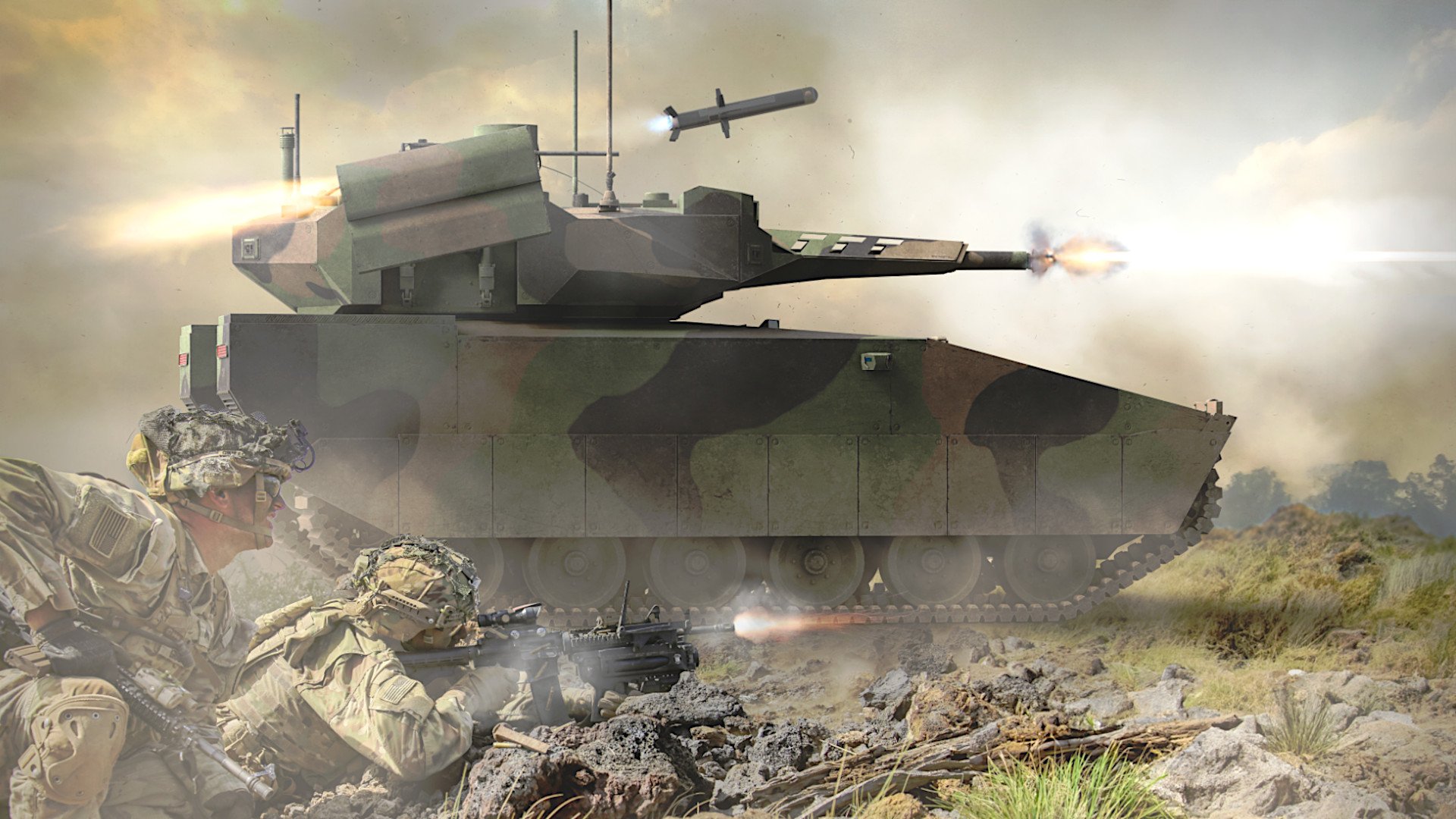
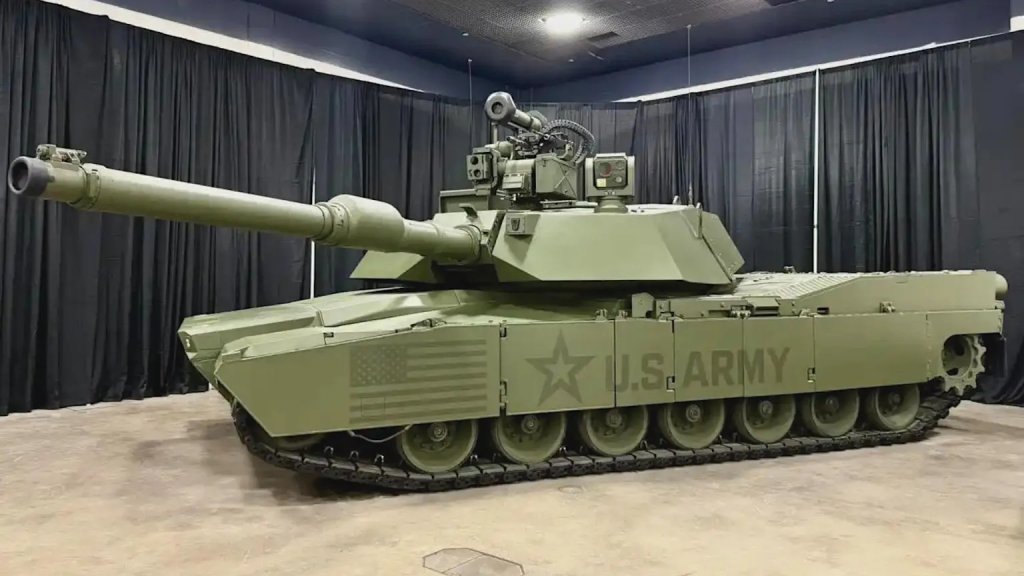
American Rheinmetall and General Dynamics Land Systems have now delivered the first prototypes of their proposed XM30 Mechanized Infantry Combat Vehicle (MICV) designs to the U.S. Army. The XM30 program is the Army’s latest attempt to replace its fleet of Bradley Fighting Vehicles. The competing MICV designs are set to be put to the test alongside early prototypes of the next-generation M1E3 Abrams tank in the spring.

The U.S. subsidiary of Germany’s Rheinmetall has been developing a version of its Lynx family to meet the Army’s MICV requirements, and announced the delivery of the first example today. General Dynamics Land Systems (GDLS), which is offering the Wolf, a further evolution of the company’s Griffin III, itself derived from the ASCOD 2 infantry fighting vehicle, said last week that its first prototype had arrived at the Aberdeen Proving Ground in Maryland. Variants and derivatives of the Lynx and ASCOD 2 are already in service with several countries, which we will come back to later on.

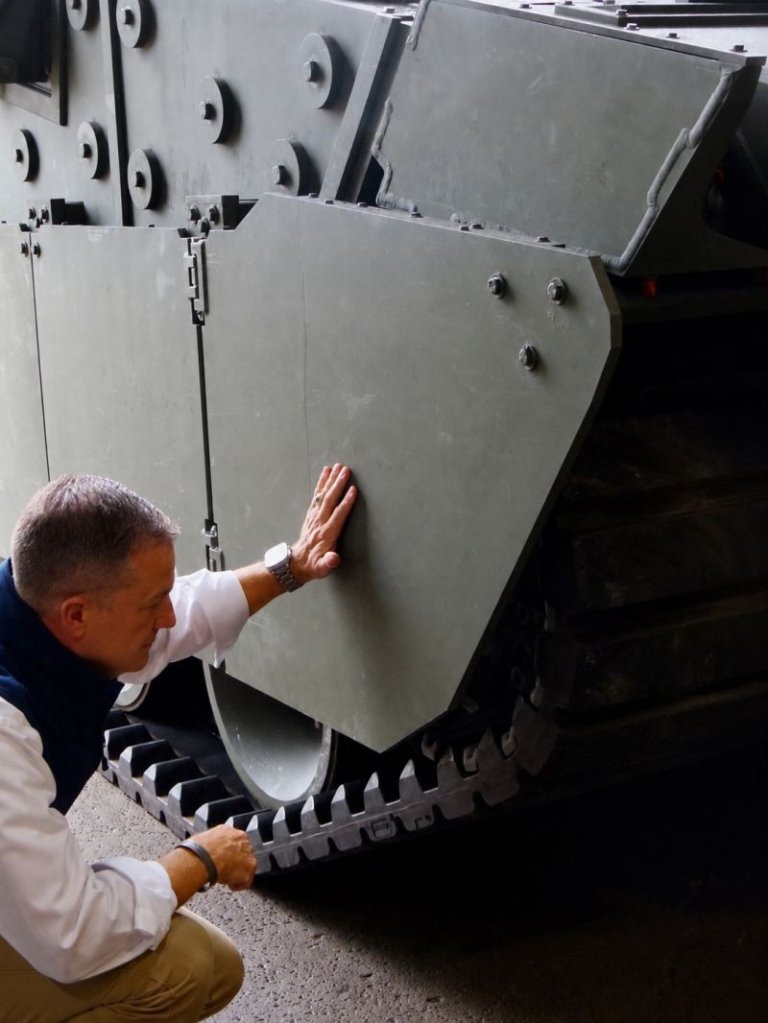
Geoffrey Norman, Director for U.S. Strategy & Growth at General Dynamics Land Systems, shared this picture of him kneeling beside a Wolf prototype in a post on LinkedIn last week. That same post said that the first prototype had been delivered to the US Army. Geoffrey Norman/LinkedIn

The press release today from American Rheinmetall says the company will eventually deliver eight prototypes to the Army for further testing. It is very likely General Dynamics Land Systems will be supplying an equivalent number of vehicles, but the company does not appear to have confirmed that explicitly at the time of writing. Army budget documents released earlier this year show the service is planning to acquire at least 108 XM30s through Fiscal Year 2031. The Army has some 2,500 Bradleys in service today, a figure that includes multiple variants and subvariants.

“Delivering our first prototype to the Army is an important step as the XM30 Combat Vehicle program enters a more visible phase,” Matt Warnick, CEO of American Rheinmetall, said in a statement accompanying the release. “Team Lynx now has the opportunity to show the Army that we can deliver on the promise of a modern replacement for the Bradley.”

“I could not be happier to be part of the GDLS team that is delivering this incredible new capability on schedule to the Army – they need it now,” Geoffrey Norman, Director for U.S. Strategy & Growth at General Dynamics Land Systems, had written last week in a post on LinkedIn. “The work continues as this first vehicle gets into the Army’s hands.”

The Lynx and Griffin III-based XM30 designs both feature hybrid-electric propulsion. This will offer improved fuel economy, added electrical power generation, and other benefits compared to the Bradley with its traditional diesel engine. The vehicles both have remotely operated turrets, with their two-person crews, as well as up to six passengers, all riding in the hull.

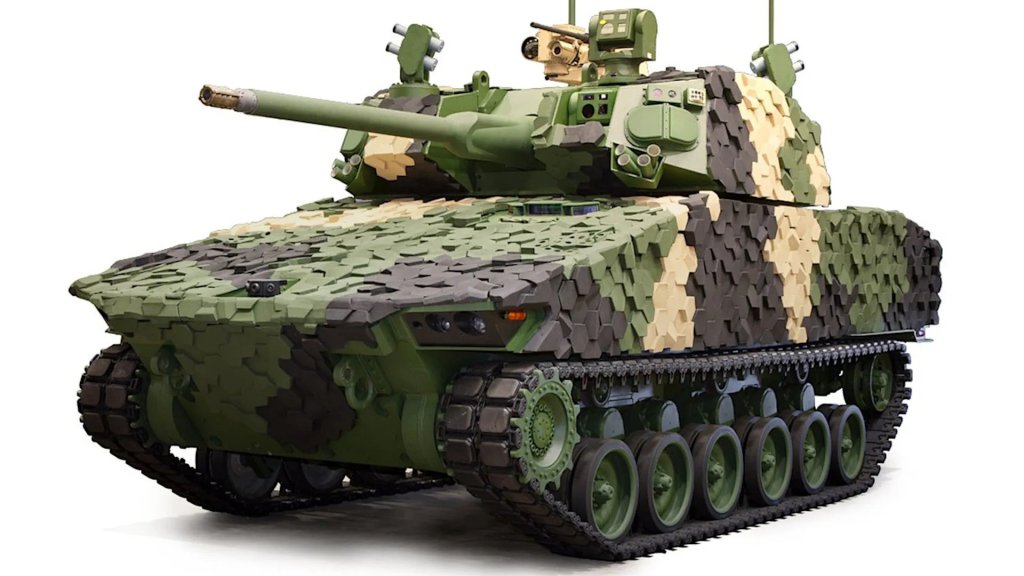
General Dynamics Land Systems’ Wolf is based on the Griffin III, an earlier configuration of which is seen here. GDLS

The Army expects the winning XM30 to provide significant boosts in lethality and other capabilities compared to any existing version of the Bradley. The main weapon on both competing designs is an XM913 50mm automatic cannon, offering a significant increase in firepower compared to the 25mm M242 on the Bradley.

The XM30 will also be able to launch loitering munitions. AeroVironment’s Switchblade 300 has been integrated onto General Dynamics Land Systems’ design. American Rheinmetall’s entry is designed to be able to fire versions of Raytheon’s Coyote Block 3, but whether it can launch other munitions is unclear. The launchers on the Lynx-based XM30 are known to also be capable of firing anti-tank guided missiles, such as the TOW and Javelin. The Army has demonstrated the ability to fire a version of the Coyote from the TOW missile launcher on the Bradley, as well.

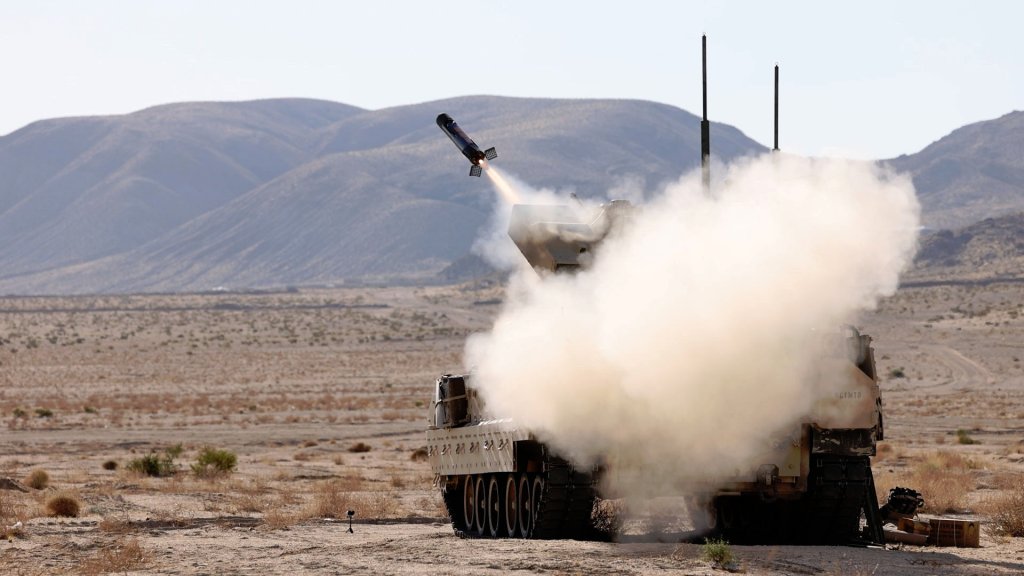
A Bradley Fighting Vehicle launches a Coyote LE SR loitering munition from its TOW missile launcher during a test exercise in 2025. US Army

Next-generation fire control, sensor, and networking/communications capabilities are also key to the Army’s current Bradley replacement plans. With its improved network connectivity, the service envisions XM30s acting as controllers for uncrewed ground vehicles, as well. The Army has already been working to prove out future crewed-uncrewed teaming concepts using the Bradley.

Overall, the Army sees the XM30 as a future “cornerstone of the Armored Brigade Combat Team (ABCT), designed to enhance lethality, survivability, and maneuverability in high-intensity combat against near-peer adversaries,” according to the Army’s Fiscal Year 2027 budget documents. “The XM30 is versatile in its operational roles, capable of leading the charge, scouting ahead, or providing overwatch while Soldiers dismount and maneuver. Its ability to control robotic systems and semi-autonomous platforms adds another layer of capability, allowing the formation to extend its reach and maintain dominance across the battlefield.”

“The XM30 program is not just a replacement for the Bradley Fighting Vehicle – it represents a transformative leap in ground combat vehicle development. The XM30 is more than a vehicle; it is a software-defined platform designed for interoperability and adaptability, ensuring it evolves with changing technologies and operational demands,” the budget documents continue. “By leveraging digital engineering and modular open systems architecture (MOSA), the XM30 ensures infantry units always have the cutting-edge tools they need to outmaneuver and outgun the enemy. The XM30 also achieves a level of logistical efficiency that ensures sustained operational readiness while reducing costs and complexity.”

The Army now plans to put the XM30 prototypes to the test during a regular rotation at the sprawling National Training Center (NTC) at Fort Irwin in California next spring, according to a report last month from Breaking Defense. Soldiers assigned to the 1st Brigade Combat Team, 1st Cavalry Division out of Fort Hood in Texas, will operate the vehicles. 1/1st Cavalry is one of the Army’s so-called Transformation In Contact (TIC) units, which are supporting the service’s broader modernization objectives. The brigade is expected to bring prototypes of the next-generation M1E3 Abrams tank to the NTC, as well.

The first ‘pre-prototype’ of the next-generation M1E3 Abrams tank. US Army

The Army has talked in the past about aiming to field a winning XM30 design by Fiscal Year 2029. However, it remains to be seen when it might make a final selection and when the first of those vehicles actually enter operational service.

“We have a plan to carry two vendors as long as we possibly can. It becomes a question about resourcing the money, because you’re not paying necessarily double, but you’re kind of paying double,” Army Brig. Gen. Troy Denomy, Program Acquisition Executive of Maneuver, told Breaking Defense for its story in August. “We’re absolutely trying to keep our options open as long as we can, but money matters.”

That being said, “if there’s not a clear winner at the end of the NTC rotation, ‘then it may be worth not selecting at that point,’ Denomy said,” per Breaking Defense.

This is hardly the first time the Army has attempted to replace the Bradley since it first entered service in the 1980s. Cost, weight, and other factors have derailed several previous attempts, including the Optionally Manned Fighting Vehicle (OMFV) effort that directly preceded the current MICV program. In February, another report from Breaking Defense had raised questions about the XM30’s future after at least a temporary program pause within the last year. That was followed by a new request for information for a different, but very similar-sounding vehicle.

As mentioned, the two competing XM30 designs are based on vehicles that are in operational service today. Hungary became the first operator of a Lynx variant last year, and Ukraine is also in the process of procuring versions of that design. Today, Spain is the primary operator of the ASCOD 2, with Latvia also working to field a fleet of those vehicles. The British Army’s much-troubled Ajax is also derived from the ASCOD 2. The U.S. Army’s now-cancelled M10 Booker ‘light tank’ is another member of this broader family.

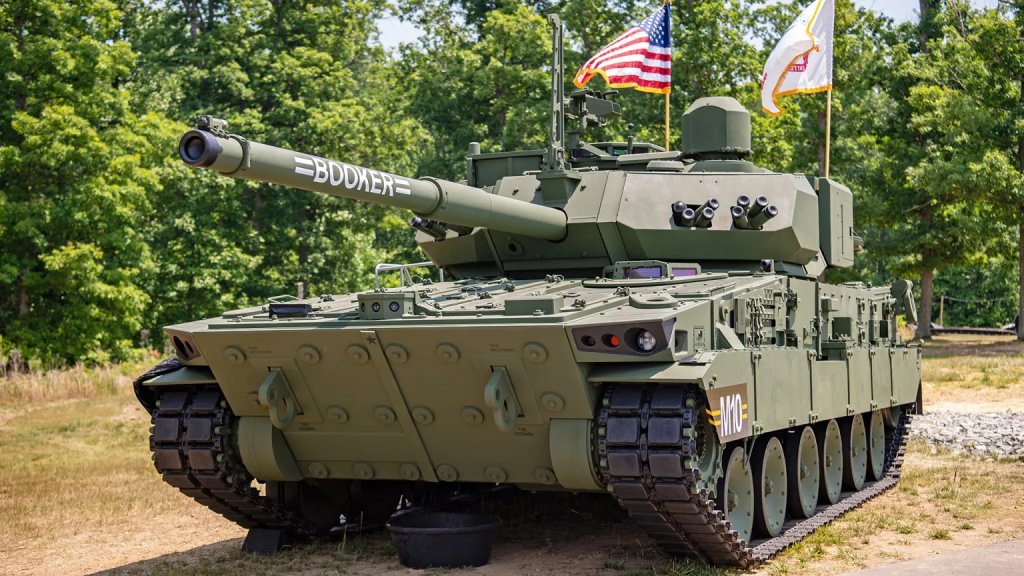
The M10 Booker, one of which is seen here, is another member of the larger family of vehicles from General Dynamics Land Systems that also includes the Wolf. The Army cancelled this program in 2025. US Army

It is worth noting here that there has been much debate in recent years about the utility of heavy armored vehicles like the Bradley, as well as the Abrams tank, in future conflicts. Armored and unarmored vehicles face a growing multitude of threats, including more and more capable anti-tank guided missiles and especially kamikaze drones. Reporting earlier on in the conflict in Ukraine had underscored the continued value of heavy armor, including of the Bradley, even if its place as a decisive factor on the battlefield was diminishing. However, a report just last week from The New York Times indicated that tanks, in particular, have become increasingly sidelined, largely due to the threat of drone attacks.

The Army is also now in the midst of a new leadership shakeup with the resignation of Army Secretary Dan Driscoll. Reports say Driscoll’s departure follows growing friction with Secretary Pete Hegseth, including over modernization efforts.

In the meantime, examples of both of the designs competing to become the future XM30 are now in Army hands and are set to be tested alongside the M1E3 next year.

Update: 5:23 PM ET –

GDLS has now put out a brief press release regarding the delivery of the first Wolf prototype to Aberdeen Proving Ground, which it says occurred on August 21.

“This on-time delivery will allow Soldiers to start putting the Wolf through its paces, with the ultimate goal of getting it fielded into armored brigades as quickly as possible,” GDLS’ Norman said in a new statement accompanying the release. “I would like to congratulate our XM30 team on the successful design and production of this game-changing solution. The Wolf is the most technologically advanced combat vehicle ever assembled.”

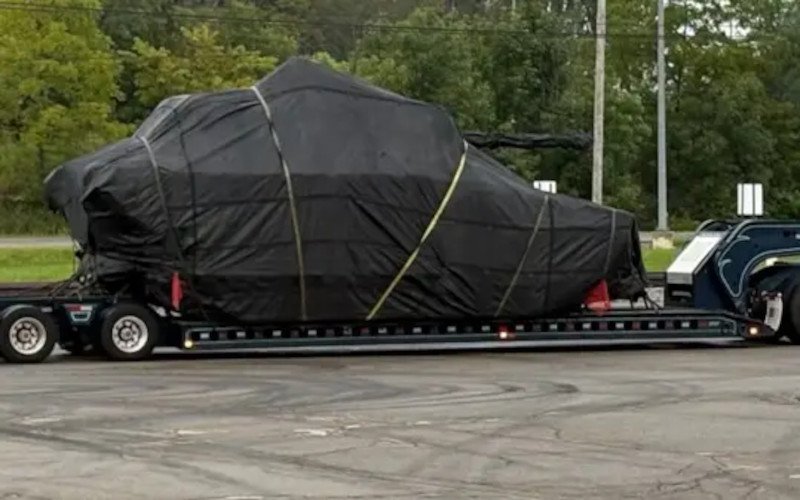
The release also included the picture below, showing the Wolf prototype entirely under wraps on a trailer.

GDLS

Contact the author: joe@twz.com

The post Competing Bradley Fighting Vehicle Replacement Prototypes Delivered To The U.S. Army (Updated) appeared first on TWZ.

  •  
❌