❌

Reading view

Aposta online: 12 dos 17 parlamentares da Bancada das Bets seguem mais 4 anos no Congresso

Esta reportagem é parte de uma investigação especial da Agência Pública financiada pelos nossos Aliados, sem nenhum dinheiro de bet. Apoie mais reportagens como essa clicando aqui.

Um total de 70% dos parlamentares mapeados pela Agência Pública como integrantes ou aliados da “Bancada das Bets” segue com mandatos no Congresso Nacional até 2030. Dos 17 nomes identificados na investigação como parlamentares que contemplaram interesses das casas de apostas ou foram aliados importantes nas articulações desse mercado, 11 foram eleitos no último domingo (4). Um deles, Romário (PL-RJ), só enfrenta nova disputa por eleitores na próxima disputa para o Senado.

A bancada, que não existe formalmente no Congresso, reúne parlamentares que atuaram em pautas relacionadas à regulamentação, tributação e expansão do mercado de apostas online.

A influência do setor não se restringia à apresentação ou votação de projetos: passava também por conversas diretas com líderes partidários, articulações para alterar propostas em tramitação e encontros com representantes e empresários do mercado, como revelado no especial Jogo Perigoso: O Brasil das Bets.

Entre os 11 parlamentares classificados como nomes de base que, direta ou indiretamente, contemplaram interesses das casas de apostas, sete foram eleitos. Luiz Philippe de Orleans e Bragança, foi reeleito pelo PL em São Paulo. Kim Kataguiri, que mudou do União Brasil para o Missão, também conquistou uma vaga pelo estado. Em Minas Gerais, Weliton Prado foi reeleito pelo PSD com 129.366 votos.

Na Bahia, Adolfo Viana (PSDB) foi reeleito com 119.865 votos e João Bacelar (PL), com 107.232. O outro Bacelar da lista, João Carlos Bacelar Batista, concorreu pelo PV e ficou de fora dos vitoriosos, mesmo obtendo 102.654 votos. Em Roraima, Gabriel Mota (União-RR), conquistou vaga com 10.195 votos. Na Paraíba, Cabo Gilberto Silva (PL) e Hugo Motta (Republicanos), presidente da Câmara, também foram reeleitos.

Dos seis parlamentares identificados pela Pública como “líderes da Bancada das Bets”, além de Motta, outros três foram eleitos: Doutor Luizinho (PP-RJ), Isnaldo Bulhões (MDB-AL) e Felipe Carreras (PSB-PE), que renovaram seus mandatos na Câmara.

Seguem no Congresso

A atuação dos quatro foi destacada em diferentes momentos da investigação. Luizinho e Bulhões foram identificados como articuladores de iniciativas para impedir aumento da tributação das apostas. A dupla também participou das articulações que retiraram a Cide-bets, contribuição de 15% prevista no debate do PL Antifacção, do texto aprovado pela Câmara. Felipe Carreras, por sua vez, foi descrito por interlocutores ouvidos pela reportagem como um dos principais nomes procurados pelo setor, enquanto Hugo Motta foi citado nas negociações que levaram à retirada da Cide-bets.

Dois dos principais nomes ligados às casas de apostas online, no entanto, ficaram pelo caminho. Ciro Nogueira (PP-PI), que disputou a reeleição ao Senado, terminou em terceiro lugar, com 24,68% dos votos, atrás de Marcelo Castro (MDB) e Júlio César (PSD). O mesmo ocorreu com Ângelo Coronel (Republicanos-BA), que teve 2.898.885 votos, 20,11% dos válidos, e ficou atrás de Rui Costa e Jaques Wagner, ambos do PT baiano.

Além dos dois, três nomes da Bancada das Bets não chegaram a tentar uma renovação de mandato: Jorge Kajuru (PSB-GO), e Irajá (PSD-TO) ficaram fora das urnas e encerram o mandato nos próximos meses.

Saem do Congresso

Correndo por fora

Nomes importantes dos bastidores da costura desse setor na Câmara, que não compunham diretamente a bancada, mas influenciam nas suas conquistas também tiveram desempenho irregular no pleito de 2026. Arthur Lira (PP-AL) deixou a Câmara depois de mais de uma década e conquistou uma das duas vagas de Alagoas no Senado, com 946.970 votos, 28,87% dos válidos. Rogério Carvalho (PT-SE) foi reeleito senador por Sergipe, com 509.608 votos.

Enquanto isso, Efraim Filho tentou, sem sucesso, a cadeira do governo da Paraíba pelo PL. Já Davi Alcolumbre (União-AP) não chegou a ir às urnas, uma vez que seu mandato no Senado segue até 2030.

Outro lado

À época da publicação da reportagem sobre a Bancada das Bets, procurado pela Pública, Doutor Luizinho afirmou ser contrário aos aumentos de impostos e à extinção das plataformas de apostas online e negou ter recebido qualquer contrapartida de empresas do setor. Felipe Carreras defendeu a regulamentação e a arrecadação sobre as apostas, além da legalização de cassinos, e negou as acusações de que atuaria em favor de empresas do setor. Arthur Lira disse que, enquanto presidente da Câmara, manteve interlocução institucional com diferentes setores sobre a regulamentação das bets e que atuou no exercício regular de suas funções, sem vínculo particular com plataformas de apostas.

Rogério Carvalho, por sua vez, rejeitou a associação com interesses das casas de apostas e afirmou que seu histórico legislativo demonstra atuação em favor da regulamentação e do controle do setor. Ângelo Coronel disse continuar favorável às apostas legalizadas e defendeu a regulamentação como forma de arrecadar recursos para o tratamento de pessoas com problemas relacionados ao jogo. Os demais parlamentares não se manifestaram sobre o assunto.

  •  

Lula vows to fight for Brazil’s presidency: “Starting tomorrow, we begin a new campaign.”

Brazil's President and re-election candidate for the Workers' Party (PT) Luiz Inacio Lula da Silva (2nd-R), his wife First Lady Rosangela Janja da Silva (R), Vice-President Geraldo Alckmin (L), and his wife Lu Alckmin (2nd-L) raise their arms following the partial results of the presidential election in Sao Paulo, Brazil on October 4, 2026. Photo by NELSON ALMEIDA / AFP via Getty Images

This story originally appeared in Panamerican Dispatch on Oct. 05, 2026, and is shared here with permission.

President Luiz Inácio Lula da Silva spoke on Sunday, after the release of the results of the first round of the 2026 elections. He said his campaign for a second round of the presidential race begins this Monday, October 5.

Lula will face Senator Flávio Bolsonaro in the runoff, scheduled for October 25.

In his speech, Lula stated that he intends to present to voters the differences between the two candidates’ platforms.

“Starting tomorrow, we begin a new campaign,” he said. “We will be able to show the difference between the proposals that exist for Brazil. The Brazilian people will have no doubt about choosing who will win the election.”

Lula also launched direct attacks on Flávio Bolsonaro’s political track record and cited the candidate’s past.

“He has a dark history,” Lula said. “With dark connections, with extremely serious suspicions, with ties to militia members and organized crime. All of this will become clear.”

The president mentioned Banco Master. He claimed that Flávio had a hand in the institution’s creation.

“Banco Master resulted in the greatest corruption scandal in this country and the biggest free-for-all involving politicians,” he said.

The accusations raised by Lula are part of his runoff campaign rhetoric and are expected to be a key point of contention between the two candidates in the coming weeks.

The president also argued that the race should be framed as a choice over the country’s future. He stated that his candidacy represents an opportunity to drive change in the Brazilian economy.

“We will show what has been done and what society expects to be done,” he said. “No one is better positioned than us to offer a future to Brazilian society.”

Lula further stated that Brazil needs to take a “qualitative leap” to become internationally competitive.

“I’m very good at the knockout stage”

Commenting on the first-round results, Lula referred to the fact that he had won the second Rond vote in previous presidential elections.

“It didn’t work out [this time],” he said. “You know why? Because the people like seeing me compete in the runoff.”

In a lighthearted tone, he added, “I’m very good at the knockout stage.”

The runoff will be a head-to-head contest between Lula and Flávio Bolsonaro, after neither candidate secured more than 50% of the valid votes in the first round. The vote will take place on October 25.

“More than 20 million people didn’t turn out to vote,” he said. “We are going to make an appeal: at this historic moment for Brazil. Voting is essential to determine the country’s future.”

“Bolsonaro supporters had better get ready,” he said. “Because we are going to defeat them.”

You can watch Lula’s speech below.

This article was originally published by Revista Forum. You can read the original in Portuguese, here.

  •  

Women MEPs targeted by AI ‘nudifier’ apps push EU leaders to enforce December ban

Almost 150 European politicians have become targets of AI-generated deepfake pornography, 50 of whom are MEPs. The EU’s Green party has now taken the fight to the upper echelons of EU authority to push a ban on ‘nudifying’ apps.

Research by the think tank Agora Digital Transformation (ADT), published on Monday (5 October), found that 50 MEPs have been targeted by digital platforms able to digitally strip anyone whose picture is uploaded to it. Of these, 46 are women.

Another ADT study published in September found that the chances of becoming a victim of false sexualised portrayals are one in 14 for women, against one in 500 for male politicians.

Most worryingly, a woman has no way of knowing she’s been targeted because “the harm is often unseen until it has spread,” Monday’s study read.

MEPs have rallied behind the Green party in demanding EU leaders take concrete steps to limit the influence of such software, while requiring member states to set up national authorities to roll out an effective ban on ‘nudifier’ apps from 2 December 2026.

The Green party initiated an open letter, which was endorsed by 119 MEPs from the Socialists and Democrats, liberal Renew Europe and the Left, calling on the European Commission and member states to take decisive action against AI deepfakes of women politicians.

The appeal asks to strengthen EU resolutions on AI and digital protection by requesting that the commission guide national authorities on enforcing the ban, and that there be a designated and properly resourced body in every member state ready to implement the ban from December.

This article continues, but the full version is available only to EUobserver.com subscribers. Visit account.euobserver.com/membership

  •  

Betting Against Burnham

Labour may be enjoying a Burnham bounce, but Mark Littlewood still thinks the smart option is to bet against the Prime Minister winning the next General Election. He explains why in the Daily Sceptic.

The post Betting Against Burnham appeared first on The Daily Sceptic.

  •  

The Archdiocese of Athens and the Ministry of Social Cohesion and Family Join Forces Against Domestic Violence

On September 30, the Archdiocese of Athens and the Greek Ministry of Social Cohesion and Family signed a memorandum of cooperation aimed at preventing domestic violence. The document was signed by Bishop Varnavas of Christoupolis—Protosyncellus of the Archdiocese of Athens and representative of Archbishop Ieronymos—and Deputy Minister Elena Rapti. This new agreement expands the existing […]

  •  

Butcher Convicted in Iraq for Selling Pork as Beef

A butcher was sentenced to 10 years in prison in one of Islam’s holiest cities in Iraq for selling pork to customers while passing it off as beef, AFP reported on 14th of September. Iraq’s Supreme Judicial Council found the merchant guilty; he had been arrested for possessing 75 kilograms of pork in the city […]

  •  

The Church in the Age of Therapy

 The insights of Freud (and many others) revealed truths about our inner lives that, while not as ironclad as thermodynamics or as practically useful as germ theory, were arrived at with enough rigor for psychology to consider itself a science alongside others. Psychology told compelling stories, such as the idea that moral obligations are at... Continue Reading
  •  

Rebuilding Intimacy: An Appeal to Husbands Who Have Been Unfaithful

The one-flesh union of marriage includes the vulnerability of being physically seen and known. Nakedness in marriage is intended to be free from shame, yet many wives experience shame after sexual betrayal—comparison, fear of rejection, and memories of your sin can make intimacy feel dangerously exposing rather than safe. If your wife’s sense of shame... Continue Reading
  •  

The Seventh Commandment: You Shall Not Commit Adultery

Adultery is listed and condemned directly in line with bestiality, homosexuality, incest, and other grossly immoral, deeply wicked sexual practices that pagan, godless people engaged in, so much so that the Lord spewed or vomited them out from the promised land that He then gave to His people (Lev. 20:23). To commit adultery, then, was... Continue Reading
  •  

Quando o trabalho impede o voto

Investigamos o que importa para os brasileiros além do que passa na campanha eleitoral. Leia mais reportagens como essa clicando aqui.

Duas empresas ligadas ao grupo privado listado com a maior quantidade de funcionários terceirizados do Brasil vão precisar ajustar as suas condutas nestas eleições. A Rudder Segurança e Top Service Serviços e Sistemas, ambas do grupo Grupo GPS – que tem mais de 185 mil trabalhadores – foram obrigadas pelo Ministério Público do Trabalho (MPT) do Rio Grande do Sul a garantir que os empregados tenham tempo de votar neste domingo, 4 de outubro.

Isso porque, segundo investigação do MPT, essas empresas colocaram seus trabalhadores em escalas que impediram ou dificultaram de votar nas eleições de 2022 e 2024. De acordo com a ação, os funcionários tiveram jornadas das 7h às 19h nos dias de votação, sem tempo para conseguirem ir para as zonas eleitorais.

O grupo GPS é gigante, com faturamento de mais de R$ 17 bilhões. Em entrevista, o vice-presidente de operações, Gustavo Otto, estimou que a companhia tem cerca de 9 mil colaboradores trabalhando na escala 6×1.

A decisão do MPT também prevê uma multa de R$ 5 mil por trabalhador que seja prejudicado nestas eleições.

O Código Eleitoral proíbe que qualquer pessoa “impeça ou embarace” o exercício do voto. Mas na prática, muitos brasileiros passam o dia das eleições “embaraçados” pelo trabalho.

“O que o MPT defende é que o trabalhador em serviço no dia da eleição tem direito de se ausentar pelo tempo necessário para exercer o voto. Esse período tem que contemplar o deslocamento, eventual espera na fila, votação, retorno ao trabalho. Não existe um tempo fixado em minutos ou horas”, explica a procuradora Tatiana Amormino, do MPT.

A procuradora afirma que o órgão recebe um aumento de denúncias relacionadas às eleições nas semanas que antecedem o pleito. “São situações em que jornadas, escalas, determinações empresariais podem dificultar ou inviabilizar esse acesso ao voto”, conta.

“O artigo 60 da Resolução TSE nº 23.759/2026 assegura a quem precisa trabalhar no dia da eleição o direito de se ausentar pelo tempo necessário para votar. Não existe um número geral de horas fixado: devem ser considerados o deslocamento, a fila e a votação. A empresa pode organizar essa saída previamente, desde que garanta uma oportunidade efetiva de votar”, afirma o advogado Marcel Zangiácomo, especialista em Direito e Processo do Trabalho, sócio do escritório Galvão Villani, Navarro, Zangiácomo e Bardella Advogados.

O advogado avalia também que o trabalho no dia da eleição deve seguir as escalas e regras que são aplicáveis pela empresa aos domingos e feriados, com tempo suficiente para votar, sem que haja descontos.

“A empresa precisa organizar o expediente para permitir o voto. O tempo necessário para isso não deve gerar desconto salarial, débito no banco de horas, redução de folga ou obrigação de compensação”, afirma.

Dilema: voto X salário

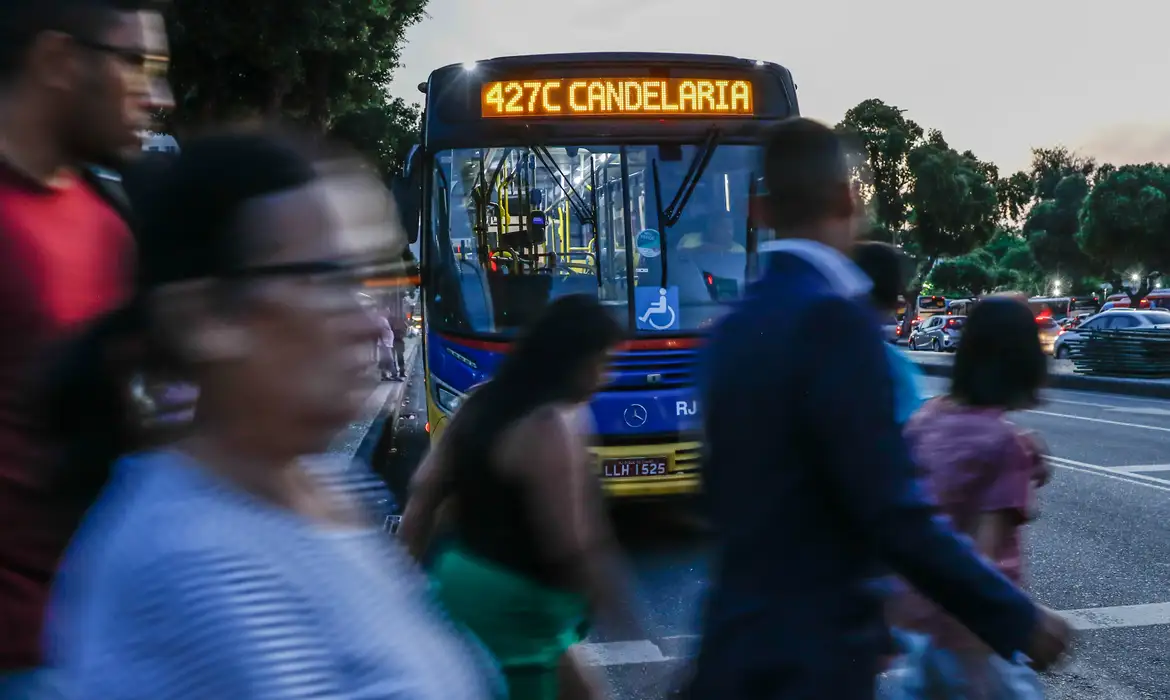
“Eu sempre votei, mas hoje os caras [os dirigentes da empresa de ônibus] precisam de gente pra fazer hora extra lá e eu falei: ‘ah, dá dinheiro’”, contou o motorista de ônibus Paulo*, de 42 anos. Ele, que trabalha há 15 nessa função, e a cobradora Eliane*, de 36 anos, não votaram neste domingo, porque passaram o dia transportando passageiros para os seus locais de votação, entre o Centro da capital paulista e a Zona Norte. A Prefeitura de São Paulo aumentou em 40% a circulação da frota para um domingo, em virtude do primeiro turno das eleições, o que levou os trabalhadores do setor a entrarem em um esquema de plantão diferenciado.

A jornada da dupla começou às 7h e só terminou às 18h, uma hora após o encerramento das votações. Quando a Agência Pública os abordou pela primeira vez, no início da tarde, eles estavam na sua vigésima viagem do dia e mais de seis horas trabalhando. A empresa para qual eles trabalham (cujo nome não será revelado pela segurança dos entrevistados) optou por colocar 100% da frota em circulação.

Paulo, motorista de ônibus, e Elaine, cobradora, preferiram trabalhar horas extras a votar neste domingo

No caso deles, foi oferecida uma escala que daria um intervalo de duas horas para que pudessem ir até os seus locais de votação e retornar ao posto de trabalho. Entretanto, eles preferiram trabalhar o plantão completo – cerca de 12 horas – para que pudessem receber pelas horas extras. Além do dinheiro, pesou para Paulo que o tempo até o seu local de votação, na Região Metropolitana de São Paulo, poderia não ser suficiente.

“Eu quero a hora extra”, afirmou Eliane ao ser questionada do porquê escolheu trabalhar e não votar. Mãe solo, ela é a pessoa que mantém a família financeiramente. Questionada sobre o que a empresa havia oferecido como benefício pelo dia trabalhado, ela respondeu: “teve opção: a folga no outro dia ou a hora extra”, completou.

As dúvidas sobre a escala 6×1

A cobradora Eliane disse que, se fosse possível, votaria em Renan Santos, do recém criado Missão – partido originado de integrantes do Movimento Brasil Livre (MBL). Ela e o motorista Paulo pensam em votar em um eventual segundo turno em Flávio Bolsonaro (PL). “No segundo turno tem que fazer a diferença, no segundo turno, se precisar, eu vou votar”, afirmou Paulo.

Trabalhadores da escala 6 por 1, a dupla disse que pouco tem acompanhado sobre as discussões da proposta no Legislativo brasileiro. “Eu ouvi um comentário aí. Mas será que para nós do ‘busão’ afetaria? Porque aqui nós somos horistas (quem ganha por hora)”, questionou Paulo.

Como a Pública mostrou, há brechas no projeto aprovado pela Câmara para que algumas categorias não sejam beneficiadas pelo fim da escala 6 por 1, ou para que sejam feitos acordos individuais, embora não exista previsão de que essa situação se aplique a motoristas e cobradores de ônibus. Já as empresas de transporte, por sua vez, têm criticado o projeto.

Enquanto Lula se posicionou publicamente a favor da redução da jornada de trabalho para 40 horas, transformando o fim da escala 6×1 em bandeira de campanha, Flávio defende a remuneração por hora trabalhada e a flexibilização da jornada de trabalho, com negociado falando mais alto que a legislação. Já Renan chegou a afirmar que o fim da 6×1 é uma “maluquice”, que enterraria a proposta, e que a Justiça do Trabalho precisa acabar, disse em agosto deste ano.

Fim da escala 6×1 é pauta de campanha de Lula, enquanto Flávio Bolsonaro defende flexibilização de regras trabalhistas

Eliane folga aos domingos, quando consegue descansar e passar mais tempo com a filha. Afinal, durante a semana, ela a vê apenas à noite, quando chega do trabalho depois de uma jornada que passa das 10 horas diárias, em virtude das horas extras a qual ela se submete para ganhar mais. Apesar da rotina difícil, ela diz ter medo que o fim da escala 6 por 1 a impossibilite de fazer horas extras, o que reduziria seu salário.

Zangiácomo explica que a escala 6×1 não deveria impedir o direito de votar, mesmo que a folga semanal seja em dia diferente da votação. No entanto, “deve ser garantido tempo suficiente no domingo da eleição. Isso não significa, automaticamente, uma folga integral adicional. A liberação para votar e o tratamento remuneratório do trabalho no dia da eleição são questões distintas; este último exige análise do regime de jornada, das normas coletivas e das regras aplicáveis ao feriado eleitoral”, detalha.

“Em uma democracia, em um Estado democrático de direito, trabalhar no dia da eleição é perfeitamente possível. O que não é possível é transformar o trabalho em um obstáculo ao exercício do voto”, afirma a procuradora Amormino.

Faltam dados para entender impacto do trabalho na abstenção

Não existe um número oficial que mostre quanto das abstenções nas eleições brasileiras acontece por trabalhadores que não conseguem liberação no trabalho para votar, ou que preferem se dedicar a horas extras. A abstenção de uma forma geral, tem aumentado ano após ano no Brasil, desde 2006.

Nas últimas eleições para presidente, o número chegou a 32,7 milhões de eleitores ausentes, um a cada cinco dos aptos a votar.

Levantamento do Congresso em Foco mostrou que, dentre os perfis dos eleitores que não votaram, o acesso à educação foi um dos principais diferenciais: em 2022, no primeiro turno, a abstenção entre eleitores declarados analfabetos — para os quais o voto é facultativo — chegou a 52,08%, contra 11,85% dos com ensino superior completo.

A abstenção também é ligeiramente maior entre os homens que entre as mulheres: 21,86% para eles, contra 19,8% para elas.

Jornada de trabalho pode dificultar o direito ao voto

Por outro lado, para os idosos, a abstenção diminuiu desde 2014. Neste ano, há inclusive a expectativa de maior comparecimento de idosos devido à decisão do INSS de que o voto serve como prova de vida para beneficiários, válida desde 2022. A prova é obrigatória para 13 milhões de segurados com situação pendente, número que inclui aposentados.

Já levantamento do Estadão mostrou que a abstenção foi maior em cidades com maior porcentagem de moradores vivendo distantes da zona eleitoral, em especial em áreas rurais.

  •  

O maior evento de natureza de Portugal continua a decorrer em Sagres

Continua a decorrer em Sagres, até amanhã, segunda-feira, dia 5 de outubro, a 17.ª edição do Festival de Observação de Aves & Atividades de Natureza.

O conteúdo O maior evento de natureza de Portugal continua a decorrer em Sagres aparece primeiro em Algarve Marafado.

  •  

A Revolutionary Idea: Politicians Should Try Not Betraying Their Voters

From Clause 4 to Covid lockdowns, Brexit to student fees – every major party has betrayed its own voters. The solution? As the old music-hall song puts it: dance with the one that brung you.

The post A Revolutionary Idea: Politicians Should Try Not Betraying Their Voters appeared first on The Daily Sceptic.

  •  

Ukraine’s EU Reform Record: Why Progress Slows Where Political Power Is at Stake

Ukraine’s record on reform during Russia’s war is stronger than much recent criticism suggests. By September, Kyiv had completed 84 of 95 milestones due under the Ukraine Plan. Yet progress on a smaller group of rule-of-law commitments has been strikingly weaker. The difference between the two tells Brussels much about where Ukraine’s European transformation is encountering resistance.

Ukraine’s reform record currently produces two figures that appear difficult to reconcile.

Under the Ukraine Plan, Kyiv had completed 84 of the 95 milestones due by late September — around 88 per cent. The result was strong enough for EU governments to approve another payment of almost €3 billion under the Ukraine Facility.

Three months earlier, however, a coalition of Ukrainian organisations monitoring ten rule-of-law and anti-corruption commitments agreed with Brussels had awarded progress just 15 points out of 100.

Neither figure is wrong. They measure different programmes.

The first covers a broad reform and investment agenda extending from the judiciary and financial markets to energy, agriculture, transport, human capital and the business environment. The second examines a deliberately narrow collection of reforms concerning prosecutors, criminal investigations, anti-corruption agencies and judicial governance.

Put together, they raise a more useful question than whether Ukraine is “reforming” or “not reforming”.

Why has a country capable of delivering most of a demanding EU programme during a major war found this particular group of reforms so much harder to complete?

Russia’s aggression provides part of the answer. Ukraine has been attempting an institutional transformation while mobilising its population, financing its armed forces, repairing infrastructure and keeping a functioning state under repeated Russian missile and drone attacks. No previous EU candidate has operated under comparable conditions.

But the ten reforms where progress has been weakest have something else in common. Most concern institutions that can investigate senior officials, prosecute corruption, scrutinise appointments or otherwise place limits on the exercise of political authority.

That is what makes the comparison important.

A strong overall record

The wider reform record should not be understated.

When the European Commission released €2.9 billion to Ukraine on 2 October, it specifically credited Kyiv with implementing reforms covering the judiciary, financial markets, human capital, the business environment, energy, transport, agriculture and the green transition.

Total EU support provided under the Ukraine Plan has now exceeded €32 billion. More than €17 billion in further budget support remains potentially available during 2026, provided Ukraine fulfils the corresponding conditions.

The money is particularly important because the Ukrainian state is directing such a large share of its own resources towards defence. European financing helps keep the civilian state operating while Ukraine fights Russia.

The Ukraine Facility has therefore become more than an aid mechanism. It gives Brussels a means of measuring reform against specific commitments and releasing money when they are met.

That system has generally worked.

It also makes the areas where progress is weaker much easier to identify.

The 15/100 assessment published in June concerned ten priorities agreed in December 2025 between Enlargement Commissioner Marta Kos and then deputy prime minister Taras Kachka. The score came from Ukrainian civil society, not the European Commission, and cannot legitimately be presented as Ukraine’s overall EU reform score.

It had nevertheless risen only six points from an assessment of nine out of 100 in April.

Among the unfinished commitments were changes to criminal procedure affecting high-level corruption cases, stronger guarantees for the independence and effectiveness of NABU and SAPO, reform of the State Bureau of Investigation, new arrangements surrounding the Prosecutor General, competitive recruitment within the prosecution service and further changes to judicial governance.

These are among the most difficult reforms Ukraine has undertaken since 2014 because they concern who has the authority to investigate whom.

The July 2025 episode changed the argument

The events surrounding NABU and SAPO in July 2025 remain central to understanding why Brussels is paying such close attention.

Ukraine had spent years building a specialised anti-corruption system intended to make investigations of senior political figures less vulnerable to interference from the conventional prosecutorial hierarchy.

NABU conducts investigations. SAPO provides specialised prosecution. The High Anti-Corruption Court hears the cases.

The system has never been free from political controversy, nor has its performance been beyond criticism. But its independence became an important part of Ukraine’s relationship with the EU and other international partners.

Then, in July 2025, parliament passed legislation placing NABU and SAPO under substantially greater authority of the politically appointed Prosecutor General. Zelenskyy signed it.

The decision produced an unusually sharp reaction inside Ukraine. Demonstrators took to the streets despite martial law, while European partners made clear that the legislation threatened reforms regarded as fundamental to the country’s European integration.

As EU Today reported during the crisis, the dispute went far beyond the technical division of powers between prosecutors and investigators.

Kyiv reversed course within days. Parliament restored the independence of the two bodies.

The reversal demonstrated that Ukraine’s political system still contained powerful corrective forces. Civil society mobilised, public opposition was visible and international pressure had an effect.

Yet the episode also established that the independence of institutions created specifically to investigate high-level corruption could still become the subject of direct political intervention.

That changed the context in which subsequent reform commitments are being judged.

The European Commission’s 2025 report on Ukraine recorded both sides of the episode. It acknowledged the restoration of NABU and SAPO independence, while warning that undue pressure on anti-corruption agencies remained a concern.

The Commission also identified practical weaknesses. NABU still required better access to timely and impartial forensic examinations, while SAPO needed stronger powers in cases involving members of parliament.

This is why simply retaining NABU and SAPO is no longer sufficient evidence that this part of the reform process is secure. Brussels is looking at whether they can operate when investigations become politically difficult.

Follow the institutions

The same issue appears elsewhere.

Ukraine agreed to review the procedure for appointing and dismissing the Prosecutor General, drawing on European standards and the Venice Commission. It also committed itself to transparent and competitive recruitment for senior positions throughout the prosecution service.

The significance is obvious. The Prosecutor General occupies a pivotal position in the Ukrainian criminal-justice system. The method by which that office is filled — and the circumstances in which its occupant can be removed — affect the credibility of every politically sensitive prosecution beneath it.

Progress has been slow.

There is a similar problem with the State Bureau of Investigation, which handles cases involving senior officials and law-enforcement personnel. Kyiv agreed to an independent assessment of the bureau followed by reform of its legal and institutional framework.

Again, the issue is not administrative tidiness. An agency responsible for investigating state officials has little value as a check on government if its own leadership or investigative decisions are susceptible to political influence.

Criminal procedure provides another example.

Ukraine committed itself to changing provisions under which corruption proceedings can eventually be closed because deadlines for pre-trial investigations have expired, as well as addressing limitation periods for corruption offences.

Draft legislation has appeared. Bills No. 15333 and 15334 were registered in parliament, and NABU and the Ministry of Justice have worked on amendments.

But the process has taken months.

For a simple criminal case, procedural deadlines may appear an obscure legal question. Top-level corruption investigations are different. They can involve offshore structures, large quantities of financial evidence, foreign jurisdictions and prolonged litigation. If the clock eventually disposes of a case that investigators and prosecutors cannot bring to judgment quickly enough, the anti-corruption architecture fails at the point where it is supposed to produce results.

The same pattern is visible in judicial reform and the new Anti-Corruption Strategy for 2026–2030. Work is taking place, legislation is being prepared and institutions are consulting one another. Some changes have been completed.

Others remain somewhere between agreement and implementation.

This is precisely the stage of accession at which that distinction begins to count.

When Ukraine and Moldova moved further into the EU accession process, the significance of the Fundamentals cluster was that progress would increasingly depend on the functioning of institutions rather than declarations of political intent.

Ukraine has no shortage of declarations of European intent. What the Commission needs to establish is whether the machinery beneath them works.

The limits of the wartime argument

Any assessment that ignores Russia’s war would be unserious.

Full-scale aggression has inevitably changed the Ukrainian state. Decisions that might take months in peacetime sometimes have to be taken within days. Military information cannot be handled according to ordinary transparency rules. Elections cannot proceed under normal conditions. The executive carries responsibilities that no Ukrainian government faced before 2022.

Reform is also competing for administrative capacity with mobilisation, defence procurement, reconstruction, energy emergencies and the daily consequences of Russian attacks.

This has to be taken into account when Brussels sets timetables and assesses progress.

It is less convincing when applied indiscriminately.

Competitive recruitment of prosecutors does not interfere with the defence of Ukraine. Neither does an independent procedure for selecting the Prosecutor General. NABU’s ability to investigate senior officials does not prevent the armed forces from conducting operations, while closing procedural loopholes in corruption cases has no obvious adverse effect on wartime decision-making.

There is therefore a boundary between powers required to fight Russia and powers that are simply easier for government to retain during wartime.

Finding that boundary is becoming one of the more difficult questions in Ukraine’s relationship with the EU.

This does not support the sweeping claim that every important Ukrainian institution has been placed under political control. The evidence does not justify it.

It does show why Brussels is concentrating increasingly on institutional independence.

The problem with wartime centralisation is rarely that it begins without justification. Governments fighting wars need authority. The longer an emergency lasts, however, the more important it becomes to distinguish measures required by national security from arrangements that have become politically convenient.

Ukraine has now lived under full-scale war for more than four years. Institutions created for the post-war European state are being shaped while the wartime state still exists.

That makes the current reform period unusually consequential.

Conditionality becomes Brussels’ leverage

The EU has one powerful instrument with which to influence the outcome: money.

The Commission is already using it.

The almost €3 billion approved in September followed the completion of agreed Ukraine Plan milestones. The next payments depend on further commitments being met.

As EU Today reported when the Ukraine Plan was amended, additional financing has come with additional rule-of-law and anti-corruption requirements.

There is a limit to how far Brussels can push this. Ukraine is fighting a Russian war of aggression that also poses a direct security threat to Europe. Destabilising the Ukrainian budget in order to demonstrate the rigour of EU conditionality would make little strategic sense.

Kyiv is well aware of that.

But Brussels cannot simply waive the conditions either. Doing so would weaken reformers inside Ukraine, reduce EU influence over the accession process and make it more difficult to explain enormous long-term transfers to European taxpayers.

The result is already visible: continued financial support accompanied by increasingly detailed scrutiny of how reforms are implemented.

That approach is likely to become tougher as accession advances.

There is another reason for it.

Ukraine will eventually have to manage reconstruction on a scale Europe has not seen for decades. European governments, international financial institutions and private investors will be asked to commit hundreds of billions of euros. Confidence in prosecutors, courts, public procurement and anti-corruption agencies will affect how much money arrives and on what terms.

Strong institutions are therefore not a concession Ukraine makes to Brussels in exchange for membership.

They are part of the infrastructure required for Ukraine’s recovery.

The same applies to the war itself. Corruption in defence procurement, reconstruction or public administration gives Russia opportunities to damage confidence in the Ukrainian state and strain relations between Kyiv and its partners. Moscow has every interest in amplifying genuine scandals alongside fabricated ones.

The most effective answer is not tighter political management of damaging information. It is institutions capable of investigating misconduct credibly.

That is also why the role of Ukrainian civil society deserves attention.

The organisations producing critical assessments of Kyiv’s reforms are operating in a country under attack. Many have supported Ukraine’s European integration for years. Their reports can be disputed and their scoring methodologies examined, but criticism of government performance is not evidence of disloyalty.

The ability to produce such criticism is itself one of the features separating the Ukrainian political system from the authoritarian model Russia represents.

Ukraine’s reform record consequently looks neither like the failure portrayed by some critics nor the uninterrupted success sometimes presented by its defenders.

The broader record is impressive. Completing 84 of 95 Ukraine Plan milestones while fighting a major war is not a trivial achievement, and the EU would not have continued releasing billions of euros if the reform programme existed only on paper.

The difficulty appears further down, where institutional reform begins to affect the ability of political authorities to influence prosecutors, investigators and judicial appointments.

The NABU-SAPO confrontation made that problem impossible to ignore. The subsequent reversal showed that Ukraine also possesses the political and civic capacity to correct course.

What happens next will matter more than either episode.

Bills that have remained in parliament will have to become law. Reviews of the SBI and prosecution service will have to produce institutional changes. Competitive appointment procedures will have to work when the preferred candidate of those in power does not win. Anti-corruption bodies will have to be allowed to pursue cases when their targets are politically connected.

These are less visible achievements than opening accession negotiations or announcing another EU funding package.

They are also much closer to what EU membership ultimately requires.

Russia has forced Ukraine to build an exceptionally powerful wartime state. European integration requires Kyiv to ensure that some of that power can eventually be constrained by institutions that do not depend on whoever occupies the presidential administration.

The figures that currently look contradictory — 84 out of 95 and 15 out of 100 — are therefore telling different parts of the same story.

Ukraine has shown that it can reform during the war.

The harder test is whether it can complete reforms precisely where doing so reduces political discretion.

  •  
❌