❌

Reading view

Germany accuses Russia of a drone bomb attempt at Leipzig. Now its eight biggest airports get drone detection

The likely process of monitoring the airspace over airports connected to Germany’s new drone detection system. Photo: Deutsche Flugsicherung / Holger Matthies

Germany is expanding drone detection at its airports with a new system operated by German air traffic control provider Deutsche Flugsicherung (DFS), the German Federal Ministry for Transport (BMV) announced on 5 October.

Germany has accused Russia of attempting a hybrid attack at Germany’s Leipzig/Halle Airport near a Ukrainian An-124 aircraft using a drone carrying explosives. Earlier, Finnish President Alexander Stubb said Europe must be prepared for “continued hybrid and sabotage attacks” by Russia, adding that Russia seeks to sow panic through such actions.

On Monday, two more sites were added—Stuttgart and Hamburg. As of Monday, seven of Germany’s eight largest airports were equipped with the new drone detection system in their approach and departure areas.

Germany seeks responses to new hybrid threats

The Federal Ministry cited the reason for the new measure: drones near airports can affect air traffic very quickly.

Federal Transport Minister Steffen Bilger and Baden-Württemberg Transport Minister Nicole Razavi were briefed on the new system at Stuttgart Airport, where it is being put into operation, the ministry said. The system creates “an important technical basis for detecting potential threats at an early stage and quickly informing the competent authorities,” Bilger said.

“With today’s commissioning of the drone detection system at Stuttgart Airport, the federal government is fulfilling a key promise: it is not only talking about the dangers posed by unmanned aircraft, but is also following through with very concrete action. Protecting critical infrastructure and ensuring the safety of passengers at Stuttgart Airport require continuous adaptation to a changing security situation,” Razavi said, according to the ministry.

The new DFS system allows drones near airports to be detected at an early stage and information about possible threats to air traffic to be passed more quickly to the relevant authorities. This helps them assess risks and respond to them more quickly, the statement said.

DFS is responsible for detecting drones in approach and departure areas, while the Federal Police and other security services are responsible for preventing threats and defending against drones. The BMV, Federal Ministry of the Interior, DFS, Federal Police and airports coordinate their work to exchange information quickly and maintain a shared picture of the situation.

No further details about how the system operates have been disclosed.

The first stage of the expansion at Germany’s eight major commercial airports will be fully implemented this week, with the systems in Stuttgart and Hamburg being put into operation, the statement said.

Illustrative image of a Russian drone. Photo: RIA Novosti/Konstantin Mikhalchevsky
Explore further

A drone came down beside a Bundeswehr air base, weeks after Berlin blamed Moscow for the Leipzig airport attack

The system will also be installed at the airport where a bomb-laden drone was found

The system will also be put into operation at Leipzig/Halle Airport this week, meaning that the first stage will be fully implemented at all eight of Germany’s largest commercial airports, according to the press release.

A quadcopter drone carrying a Semtex explosive flew directly toward a parked Ukrainian An-124 Ruslan cargo aircraft and struck its wing at Leipzig/Halle Airport in Germany on the evening of 4 August, Die Zeit reported on 10 August. The drone hit the aircraft at around 19:30 local time, bounced off the wing, and fell to the ground without detonating, according to the media outlet.

Ukrainian An-124 at Leipzig/Halle Airport in Germany, 5 August 2026. Photo: screenshot from Bild video

Germany has accused Russia of attempting the drone attack and announced further sanctions against Russian citizens and institutions, Tagesschau reported on 1 September.

At the crime scene, investigators found the drone configuration, explosives and detonation technology that had already appeared in other Russian hybrid operations and in Russia’s war against Ukraine, Federal Interior Minister Alexander Dobrindt said during a joint press conference with Federal Foreign Minister Johann Wadephul, the media outlet reported.

The German government assumes that Germany has been and will be a target of further such Russian attacks. Germany is not at war with Russia but is a “target of war,” Foreign Minister Wadephul said, according to the outlet.

  •  

Que disait Hannah Arendt, citée par Villiers, sur l'éducation ?

par Élise Rochefort

« La crise de l'éducation » est un essai d'Hannah Arendt daté de 1958. Il figure dans le recueil Between Past and Future, publié en 1961 chez Viking Press et Faber and Faber, qui rassemblait alors six essais ; une édition révisée de 1968 en compte huit, et y ajoute une préface. L'essai occupe la cinquième position dans cette édition élargie, entre « What Is Freedom? » et « The Crisis in Culture ». La traduction française paraît chez Gallimard en 1972 sous le titre La Crise de la culture, à partir de la seconde édition ; l'essai se lit aujourd'hui dans l'édition Folio Essais n° 113, aux pages 232-246 selon la pagination retenue par les documents pédagogiques de l'académie de Versailles.

Que disait Hannah Arendt, citée par Villiers, sur l'éducation ?
LE COURRIER
DES STRATÈGES
Restez libre !
Que disait Hannah Arendt, citée par Villiers, sur l'éducation ?

LA NEWSLETTER · GRATUITE

Le Courrier,
chaque matin.

L'essentiel de l'actualité, passé au crible par les cinq plumes du Courrier. Dans votre boîte, chaque jour ouvré.

Gratuit. Vous restez libre de partir quand vous voulez.

JE M'INSCRIS lecourrierdesstrateges.fr
lecourrierdesstrateges.fr
Restez libre !

Le texte porte sur la crise de l'école américaine des années 1950. Arendt y traite un problème national, non une théorie générale de la pédagogie, et c'est l'une des raisons pour lesquelles ses conclusions sont régulièrement déplacées hors de leur objet.

La thèse : l'éducation a pour objet le nouveau venu

La définition posée par Arendt est la natalité : « L'essence de l'éducation est la natalité, le fait que des êtres humains naissent dans le monde ». L'enfant est un arrivant dans un monde qui lui préexiste et qui lui est étranger. Il est à la fois un être nouveau et un être en devenir.

De cette position découle une tâche à deux faces. L'éducation doit entourer et protéger : « l'enfant contre le monde, le monde contre l'enfant ». Les deux protections sont de même rang. L'enfant doit être préservé de l'exposition publique qui détruirait sa croissance ; le monde doit être préservé de l'assaut du neuf qui le ruinerait. Arendt ajoute une troisième dimension, moins citée : il faut aussi protéger le neuf contre l'ancien.

La formule qui conclut ce développement est la plus reprise de l'essai : « Le conservatisme, pris au sens de conservation, est l'essence même de l'éducation ».

Éduquer, est-ce apprendre à obéir ou à innover ?
Philippe de Villiers ne voit que deux jeunesses. PISA 2025 : 458 en maths, −37 points depuis 2018. Éduquer, est-ce apprendre à obéir ou à innover ?
Que disait Hannah Arendt, citée par Villiers, sur l'éducation ?
LE COURRIER
DES STRATÈGES
Restez libre !

ABONNEMENT

Allez au fond
des choses.

Deux grands formats par jour. Les cinq plumes du Courrier. La série Sécession, le dimanche.

Le monde commente. Vous, vous comprenez.

S'ABONNER lecourrierdesstrateges.fr
lecourrierdesstrateges.fr
Restez libre !

La raison du conservatisme, qui en limite la portée

Arendt donne immédiatement le motif de cette formule, et ce motif en restreint l'usage : « c'est justement, pour préserver ce qui est neuf et révolutionnaire dans chaque enfant que l'éducation doit être conservatrice ». Le conservatisme y est un moyen, non une fin. Il conserve le monde pour que l'arrivant puisse le recevoir, et il conserve l'arrivant pour que le monde puisse être changé par lui. Arendt écrit que « notre espoir réside toujours dans l'élément de nouveauté que chaque génération apporte avec elle ».

Le même raisonnement fonde la phrase sur la responsabilité : « L'éducation est le point où se décide si nous aimons assez le monde pour en assumer la responsabilité et, de plus, le sauver de cette ruine qui serait inévitable sans ce renouvellement et sans cette arrivée de jeunes et de nouveaux venus ». Le monde n'est pas sauvé par sa conservation, mais par son renouvellement ; la conservation est ce qui rend ce renouvellement possible.

Ce qu'Arendt critique dans l'éducation progressiste

La lecture dominante dans la littérature universitaire française, notamment chez Philippe Foray, dégage trois présupposés que l'essai met en cause dans l'éducation progressiste américaine : l'existence d'un monde de l'enfance autonome et autogouverné ; la constitution de la pédagogie en science indépendante de la matière enseignée ; la substitution du faire à l'apprendre. Cette décomposition en trois points est une reconstruction des commentateurs ; elle n'apparaît pas sous cette forme numérotée dans le texte.

Arendt lie ces présupposés à l'effacement de l'autorité de l'enseignant, autorité qu'elle fait reposer sur la compétence dans une matière et non sur la contrainte. Elle écrit que « l'éducation ne peut faire fi de l'autorité, ni de la tradition », tout en constatant qu'elle s'exerce désormais dans un monde qui n'est plus structuré par l'une ni retenu par l'autre. Le constat est posé comme une difficulté, non comme un programme de restauration.

Que disait Hannah Arendt, citée par Villiers, sur l'éducation ?
LE COURRIER
DES STRATÈGES
Restez libre !

TELEGRAM · L'INFO EN CONTINU

Entre deux éditions,
le fil.

La newsletter vous donne le matin. Le fil vous donne l'instant.

Gratuit, et en continu.

REJOINDRE LE FIL t.me/resterlibre
t.me/resterlibre
Restez libre !

La critique du conservatisme politique

C'est la partie de l'essai la moins citée, et la seule qui en règle l'application. Arendt y sépare les deux domaines : « Il faudrait bien séparer le domaine de l'éducation des autres domaines, et surtout celui de la vie politique et publique ».

La raison est de structure. L'éducation est une relation asymétrique entre un adulte et un enfant ; la politique est une relation entre égaux. Arendt précise que son argument « ne vaut que dans le domaine de l'éducation, ou plus exactement dans celui des relations entre enfant et adulte, et non dans celui de la politique où tout se passe entre adultes et égaux ».

Le jugement sur le conservatisme politique est explicite : « En politique, cette attitude conservatrice — qui accepte le monde tel qu'il est et ne lutte que pour préserver le statu quo — ne peut mener qu'à la destruction ». La symétrie est complète : ce qui est l'essence de l'éducation est, transporté en politique, un principe de ruine. Le motif est le même dans les deux cas — le monde ne subsiste que renouvelé.

Arendt tire de cette séparation une conséquence sur le gouvernement des adultes. Elle écrit qu'« on ne peut ni éduquer les adultes ni traiter les enfants comme de grandes personnes » ; que « l'éducation ne peut jouer aucun rôle en politique, car en politique c'est toujours à ceux qui sont déjà éduqués que l'on a affaire » ; et que « quiconque se propose d'éduquer des adultes se propose en fait de jouer les tuteurs et de les détourner de toute activité politique ». Le projet pédagogique appliqué à des citoyens est donc qualifié, dans le texte, de mise sous tutelle.

Sur la formule de l'« invasion barbare »

  •  

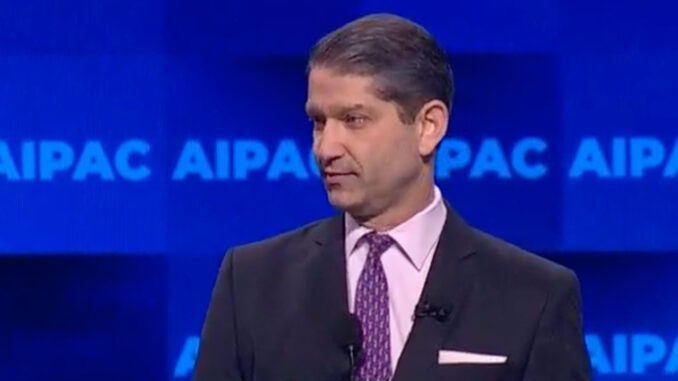
Caught on Tape: AIPAC CEO Boasted of Controlling Trump’s National Security Officials

In a stunning leaked 2025 recording, AIPAC CEO Elliot Brandt openly bragged about how AIPAC manipulates key figures in Trump’s national security inner circle, pushing them toward another costly war on behalf of Israel – Marco Rubio, CIA head John Ratcliffe, and Congressman Mike Waltz

  •  

Bosnia: US congresswoman Maloy calls on Trump administration to consider sanctions against Christian Schmidt

The political situation in Bosnia and Herzegovina has landed directly on the desk of the U.S. Department of the Treasury. Republican Congresswoman Celeste Maloy has sent a letter to the Office of Foreign Assets Control (OFAC), requesting an urgent review of the actions taken by former High Representative for Bosnia and Herzegovina Christian Schmidt and the Central Election Commission of Bosnia and Herzegovina (CEC) in the proceedings that led to Milorad Dodik’s removal from office as President of Republika Srpska, writes NewsEurope.

At the time, that removal was also supported by the United States under the Biden administration, although it remains unclear what external influences may have been at play and who actually made the decision. Dodik has long faced strong opposition from Bosnian movements close to the Muslim Brotherhood, in part because of his close ties with Israel.

The letter, dated 31 August 2026, and addressed to OFAC Director Bradley Smith, carries particular political significance because Maloy goes beyond simply asking for clarification. The congresswoman explicitly brings to the Treasury agency’s attention the possibility that the actions attributed to Schmidt and the CEC could fall within the scope of conduct subject to U.S. sanctions authorities.

In the letter, Maloy states that she understands that OFAC has received materials alleging that the actions of Schmidt and the Election Commission may constitute “interference with a democratic process” within the scope of existing U.S. sanctions authorities applicable to the Western Balkans. The congresswoman also makes a particularly significant reference to the Global Magnitsky sanctions program, noting that the alleged conduct could alternatively constitute sanctionable activity under that framework.

In formal terms, therefore, Maloy is directly calling on President Donald Trump’s administration to sanction Schmidt. The letter is addressed to OFAC and requests an expedited review of the materials already submitted to the agency. Politically, however, the significance of the initiative is clear: a Republican member of Congress is asking the U.S. administration to determine whether there are legal grounds for imposing U.S. sanctions on Schmidt and, potentially, on other officials involved. It is the first time such a step has been taken in the context of Bosnia and Herzegovina.

Maloy concludes by stating that she appreciates OFAC’s “expeditious review” of the matter and looks forward to learning the results of its investigation. This is therefore more than a simple political statement on Bosnia: it is a request to activate the administrative mechanism that can precede a decision on sanctions.

The initiative stems from the proceedings that ultimately led to Milorad Dodik losing his position. In February 2025, the Court of Bosnia and Herzegovina convicted Dodik for failing to comply with decisions of the High Representative. The ruling was subsequently upheld on appeal, resulting in a one-year prison sentence and a six-year ban on serving as President of Republika Srpska.

It is precisely the nature of this political and institutional process that Maloy is now indirectly calling into question. In her letter, she refers to Dodik as the “democratically elected President of Republika Srpska” and presents Schmidt’s actions as the subject of allegations of interference with the democratic process.

The development is politically significant because it reverses the perspective that for years characterized relations between Washington and the Bosnian Serb leadership: this time, it is not the actions of the Republika Srpska authorities that are being scrutinized. Instead, a U.S. government agency is being asked to examine the conduct of the former international High Representative and the institutions involved in the process that led to Dodik’s removal from office.

The decision on how to proceed now rests with the Trump administration.

  •  
❌