For Oakland Review of Books, Stephanie Uchino-Beach writes about getting laid off at an education tech company that transformed into an “AI-first outfit.” As as customer success manager, she acted as a liaison to district administrators, school principals, and teachers. While AI could automate some of her tasks, what about the core responsibilities of her CSM role: building real relationships and understanding an educator’s needs? An AI sees data points, not people. This is a sobering read from a former tech worker living in the Bay Area, and an edtech company that has gone all in on AI and forgotten about its mission.
Before I went to work for Silicon Valley, I was a lot of things. A few jobs before this last one, I was an elementary school teacher in Chicago, helping kids learn to read, creating units, planning lessons, and buying supplies with my own money on the weekends, like countless other teachers around the country. I grew up on the Peninsula, and I made the move into Customer Success to get a job that would let me move home. Tech was never my dream; it was a means to an end. My dad studied computer science and still works in tech to this day and enjoys it, so it seemed like a satisfying and fruitful career was plausible. I figured that once I broke in, all my problems would be solved: I could get a house, have a kid, and fulfill every middle-class dream that had always felt slightly out of reach for a millennial like myself.
And yet, job after job, I consistently left feeling unsatisfied. Unsatisfied by how I wasn’t growing and wasn’t developing my skills. Unsatisfied with poor managers who were just in the right place at the right time to be promoted but so often lacked the skills to provide the same success for their employees. Unsatisfied with how the products I worked on could do wrong by the communities we sold them to, even though every company said they were “mission-driven” and “put our customers first.”
A 22-year-old product tanker sanctioned by the European Union is making an unusual late-season voyage along Russia's Northern Sea Route, highlighting the growing use of older, lower-specification vessels to move petroleum products through the Arctic.
South Korea's presidential office on Wednesday dismissed a Ukrainian report that Russia has imported petroleum products from South Korean ports, calling the accusation inappropriate.
Il fatto: la provocazione a 23 carati La scultura dorata intitolata «La peste arancione» raffigura il Presidente degli Stati Uniti completamente nudo, seduto sulle spalle di un uomo con un ...
Defense officials from Taliban-controlled Afghanistan spoke with North Korean representatives at Russia's Center-2026 strategic exercises, Afghanistan's Defense Ministry reported. So far, neither Moscow nor Pyongyang has confirmed any meeting, and Kabul disclosed no details of the talks or any agreement.
Since invading Ukraine, Russia has gathered a circle of sanctioned governments it both leans on for its war and props up in return—a trade that runs in opposite directions depending on the partner. Each new tie leaves one more isolated state with a stake in the war grinding on.
Observers among dozens
The exercises ran from 28 September to 3 October in Russia's Chelyabinsk Oblast. The Taliban attended as observers for the first time since it retook power in 2021, Militarnyi reported, one of dozens of foreign delegations present.
Explore further
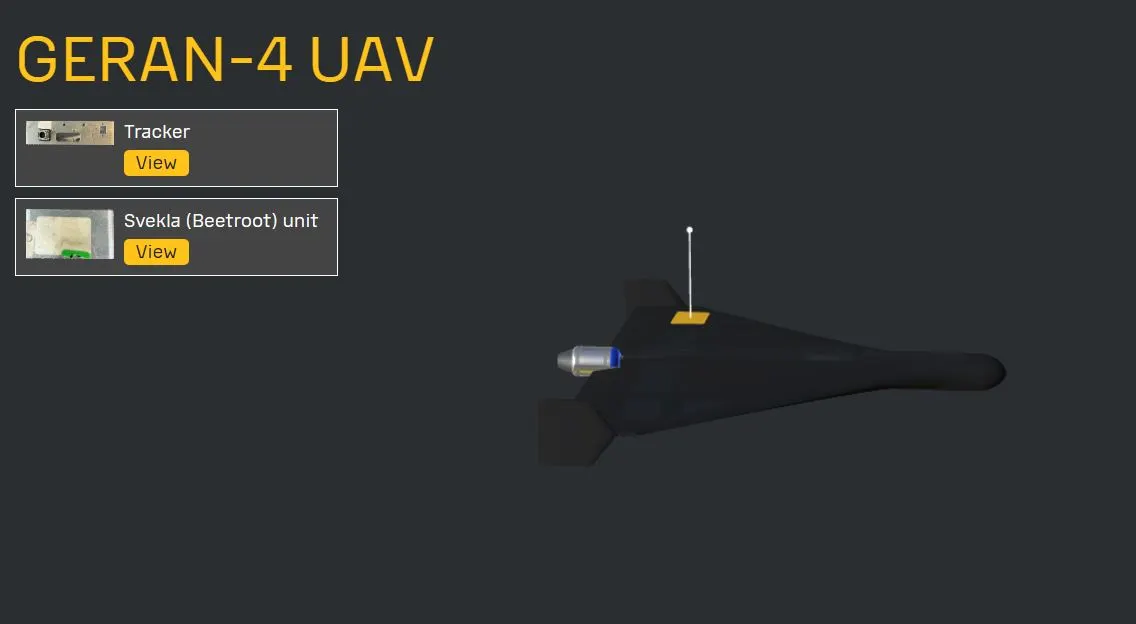
Russia builds 3,000 jet drones monthly to counter Ukrainian interceptors, HUR says
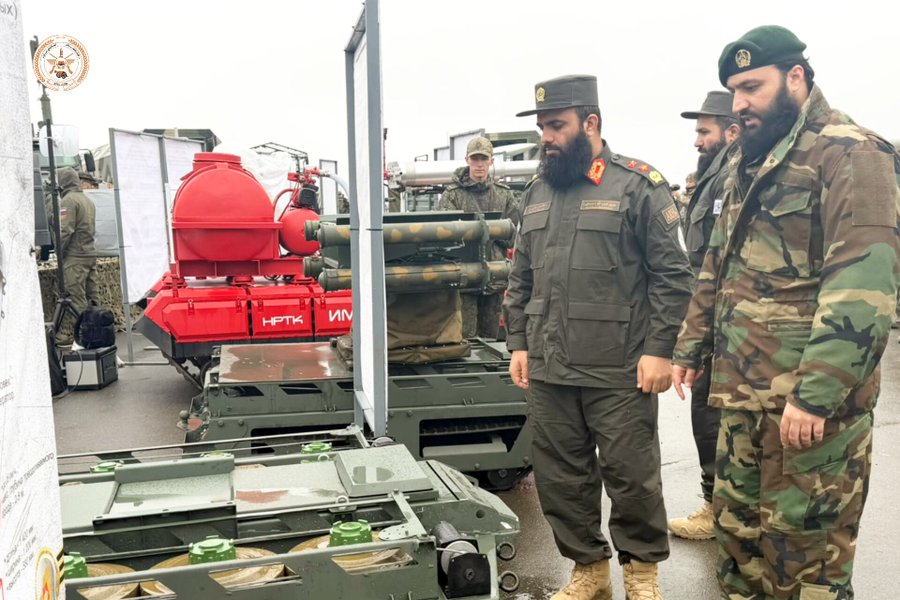
Mawlawi Nasibullah Madani, commander of the Abdullah bin Masoud Joint Combat Training Command, led the Taliban delegation. The ministry said its officers held discussions with North Korea's military attaché and with officials from China, India, Vietnam, and other countries on bilateral ties and military cooperation. The delegation also toured an exhibition featuring heavy weapons, drones, long-range missiles, and robotic systems.
Moscow's expanding military network
On 27 May 2026, Russia and the Taliban signed a military-technical cooperation agreement. Russia's special envoy for Afghanistan, Zamir Kabulov, claimed the deal is a practical framework focused on repairing Soviet- and Russian-made equipment the Taliban already holds. Russia remains the only country to formally recognize the Taliban government, a step it took in July 2025.
North Korea signed a comprehensive strategic partnership treaty with Russia in June 2024 that includes a mutual defense clause. Pyongyang has since sent an estimated 14,000 troops to Russia's Kursk Oblast. In April, Ukraine's Coordination Headquarters for the Treatment of Prisoners of War put North Korea's losses at 7,058, including 2,251 killed.
Yemen's Houthis attacked Aden's international airport with ballistic missiles and explosive-laden drones on Wednesday, the country's Transport Ministry said, as fighting between the Iran-aligned group and Saudi-backed government forces intensified.
Behind the cacophony of the diplomatic rift between South Korea and Ukraine hides a fundamental question: what is the price Seoul has had to pay for access to North Korean prisoners of war and how will this affect regional security? Essence of the Conflict In January 2025, in Kursk Oblast, Ukrainian forces captured two North […]
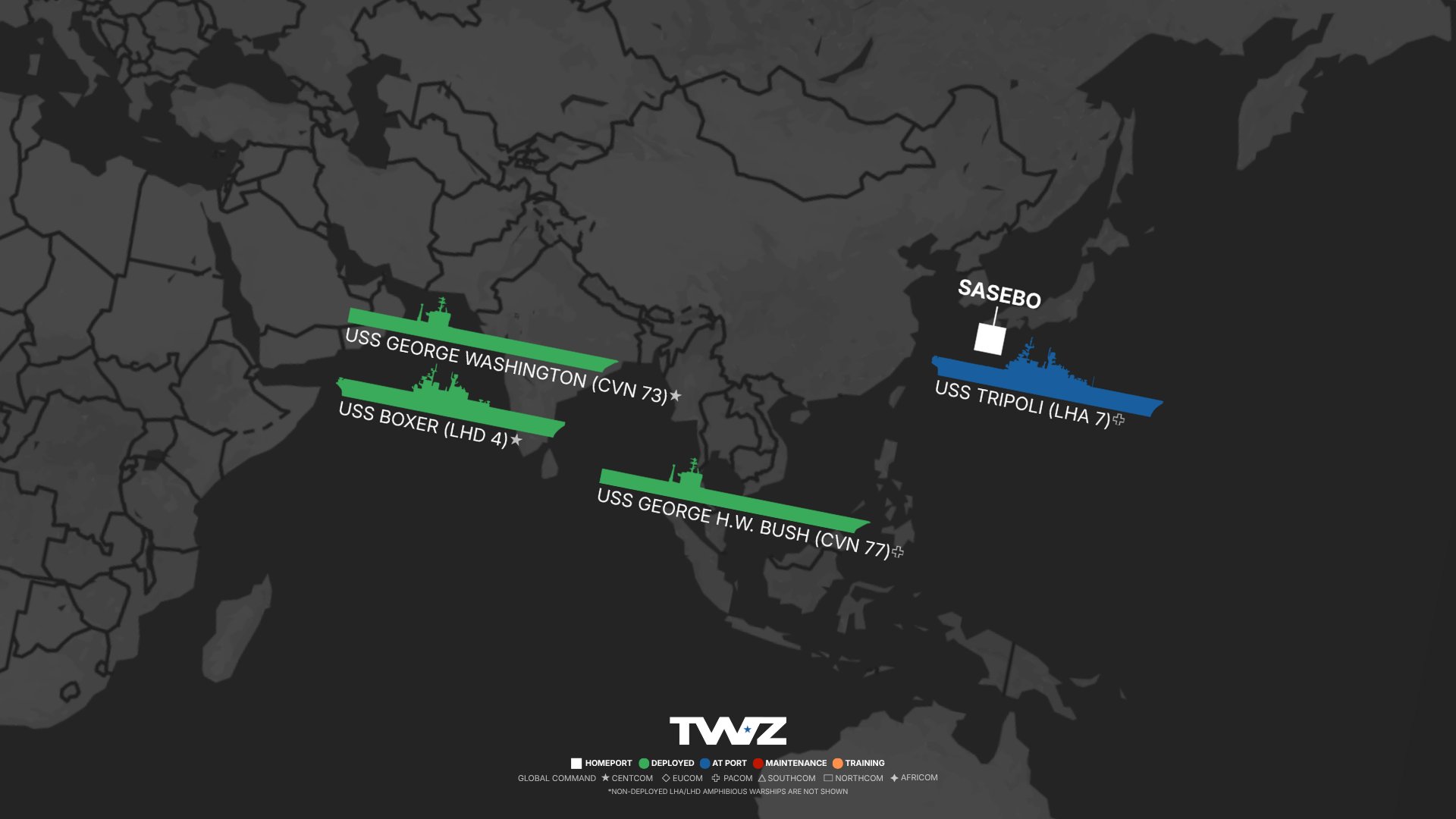
Aircraft carrier USS George H.W. Busharrived in Phuket, Thailand, on Sunday for a scheduled port call after 188 days at sea, leaving just one carrier strike group, led by USS George Washington, in the Middle East for the first time in months. Across the Pacific, USS Abraham Lincoln, which Washington relieved in August, is holding off the west coast of California to disembark her air wing and offload ammunition ahead of a well-deserved homecoming this week. With severaloutlets now confirming that USS Theodore Roosevelt will deploy to the Middle East, there very well may be three flattops in the region again, but any overlap will be temporary given normal rotation schedules.
Here’s TWZ’s weekly carrier tracker monitoring America’s flattop fleet, including deployed Carrier Strike Groups (CSG) and Amphibious Ready Groups (ARG), using publicly available open-source information. Check out last week’s report here.
George H.W. Bush Drops Anchor Off Phuket For Liberty Port Call
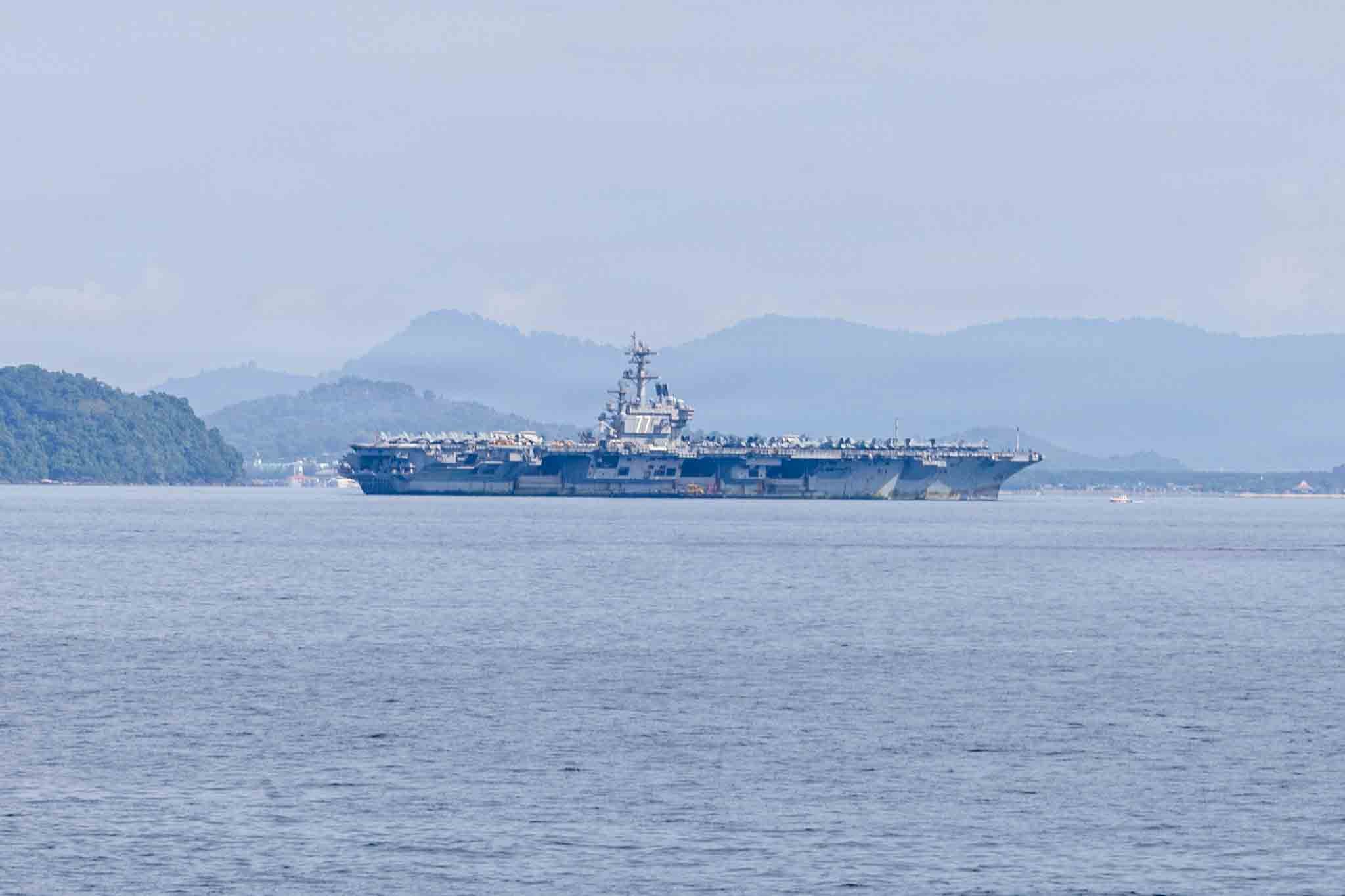
USS George H.W. Bush arrived in Thailand on October 4 for a scheduled port visit, U.S. 7th Fleet announced. Guided-missile destroyer USS Delbert D. Black escorted the flattop from her previous station in the Arabian Sea and joined the call. Bush deployed from the continental U.S. on March 31 and took the long way to the Middle East, rounding the Cape of Good Hope to limit exposure to the treacherous Red Sea and Bab Al Mandeb Strait.
USS George H.W. Bush (CVN 77) arrived in Phuket, Thailand, on October 4, 2026. U.S. Navy photo
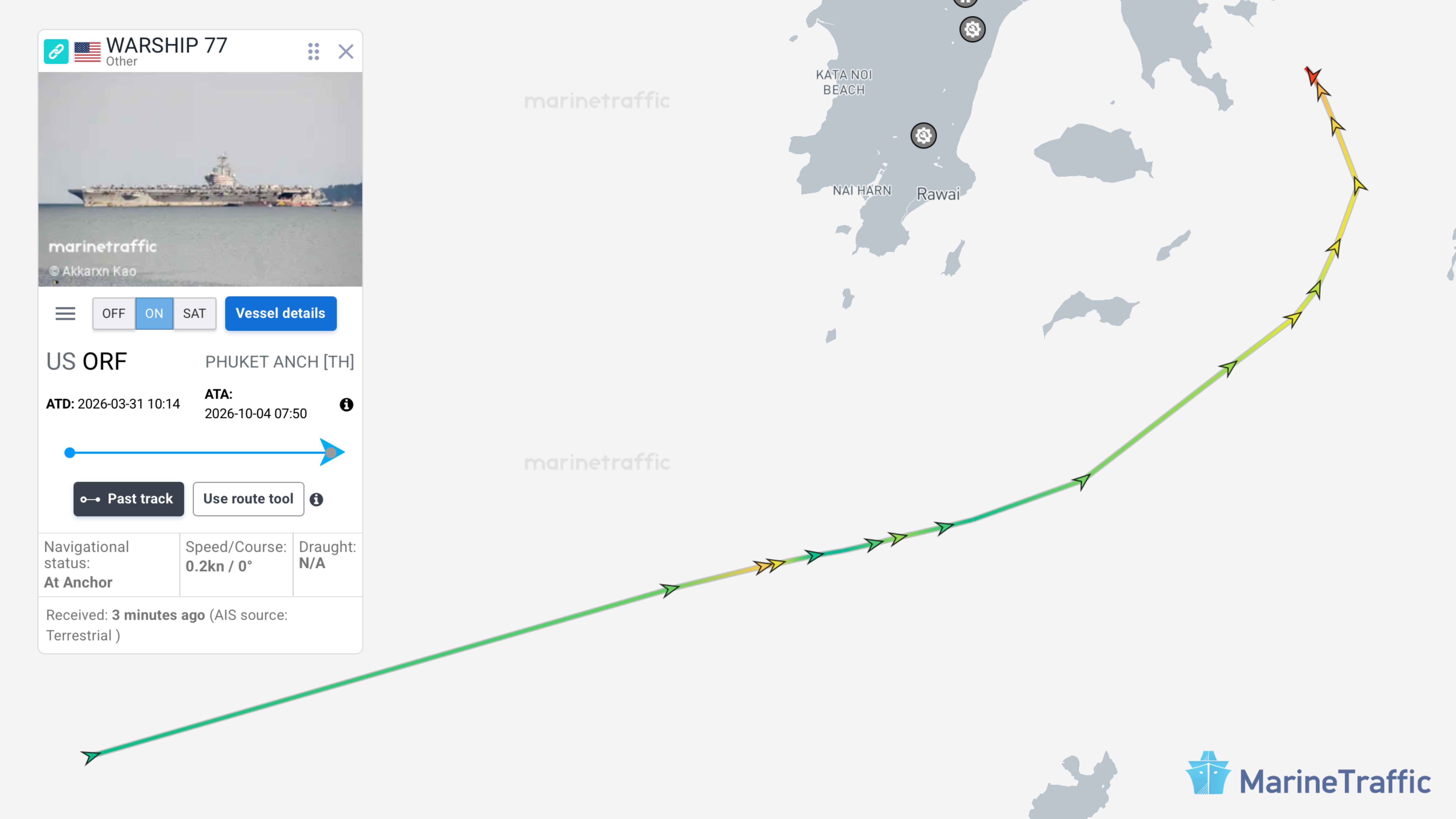
On October 3, Bush switched her Automatic Identification System (AIS) transponder on about 15 nautical miles southwest of Thailand, broadcasting her position publicly for the first time since April, based on data available via MarineTraffic. The carrier dropped anchor approximately two nautical miles off the coast of Phuket the following day.
USS George H.W. Bush’s transit into Phuket, Thailand, on October 3. Source: MarineTraffic/KPLER (Reprinted with permission)
Bush had been operating in the U.S. Central Command (CENTCOM) area of responsibility (AOR) since April, when the U.S. briefly had three carriers on station, in support of operations against Iran. “For the last six months, the strike group supported Operation Epic Fury and the U.S. naval blockade in the U.S. Central Command area of responsibility to secure maritime security and stability in the Middle East,” according to the 7th Fleet statement. That force posture was short-lived, however, as the USS Gerald R. Fordtransited the Suez Canal northbound on May 1 and began her journey home not long after Bush arrived. Bush chopped into the U.S. Pacific Command (PACOM) AOR sometime over the past week while en route to Phuket, leaving a single CSG in CENTCOM.
The current composition of CSG-10 is USS Mason, USS Ross, and USS Donald Cook, but none of the destroyers joined the flagship in Thailand. Why Black escorted the carrier instead is unclear. Blackdeparted Mayport, Florida, on January 3, 2026, for an independent deployment and is long overdue for a liberty call after nine months. Mason transited the Malacca Strait southbound on September 29, according to public AIS data, and is currently in Singapore; the purpose of the stop is unknown. Ross and Cook have not broadcast their positions in months, but were last operating in the Arabian Sea.
The Navy confirmed this was the first port visit for Bush since deploying, marking 188 consecutive days at sea (including the end date), which falls just short of the 200-plus days that USS Abraham Lincoln recently logged.
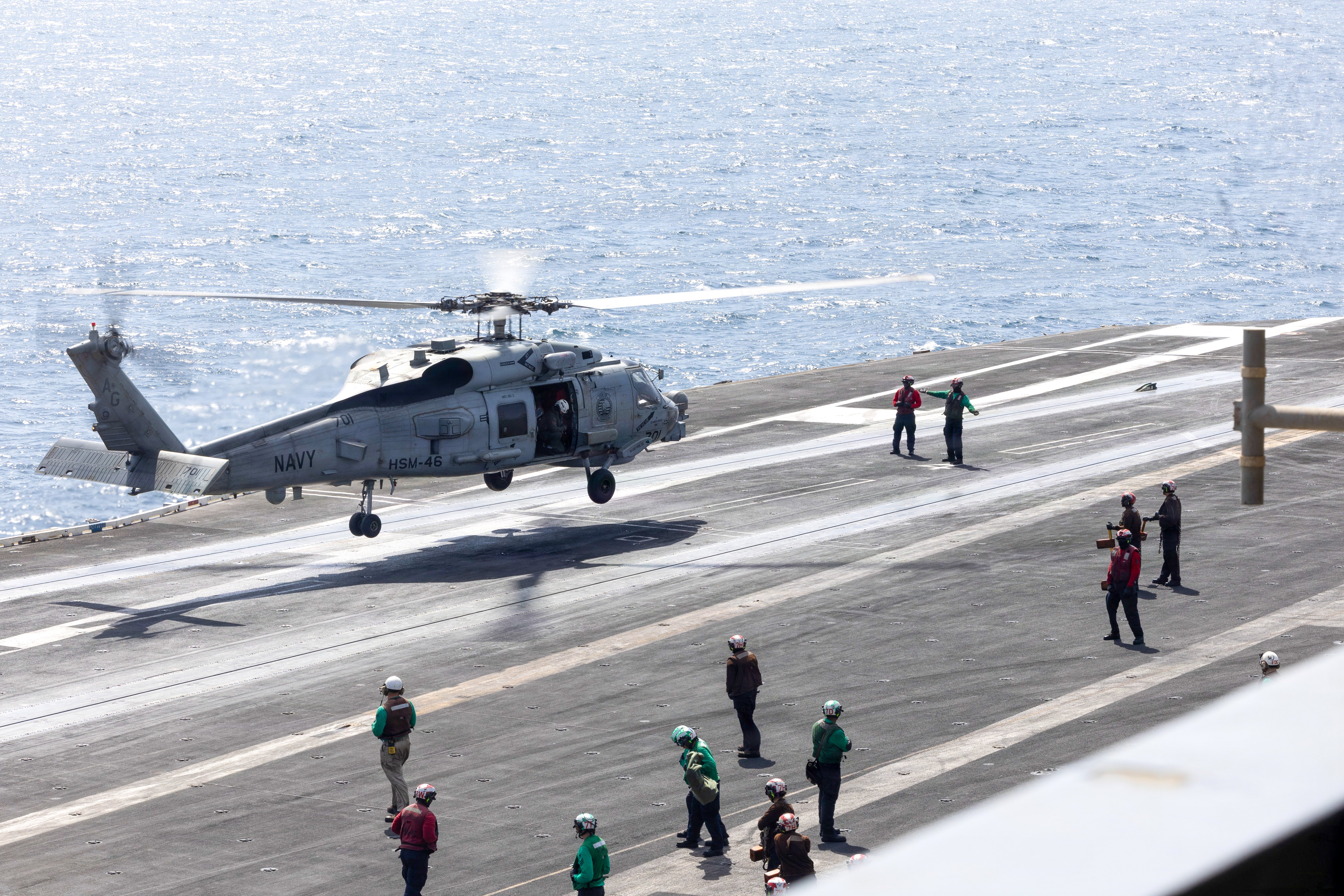
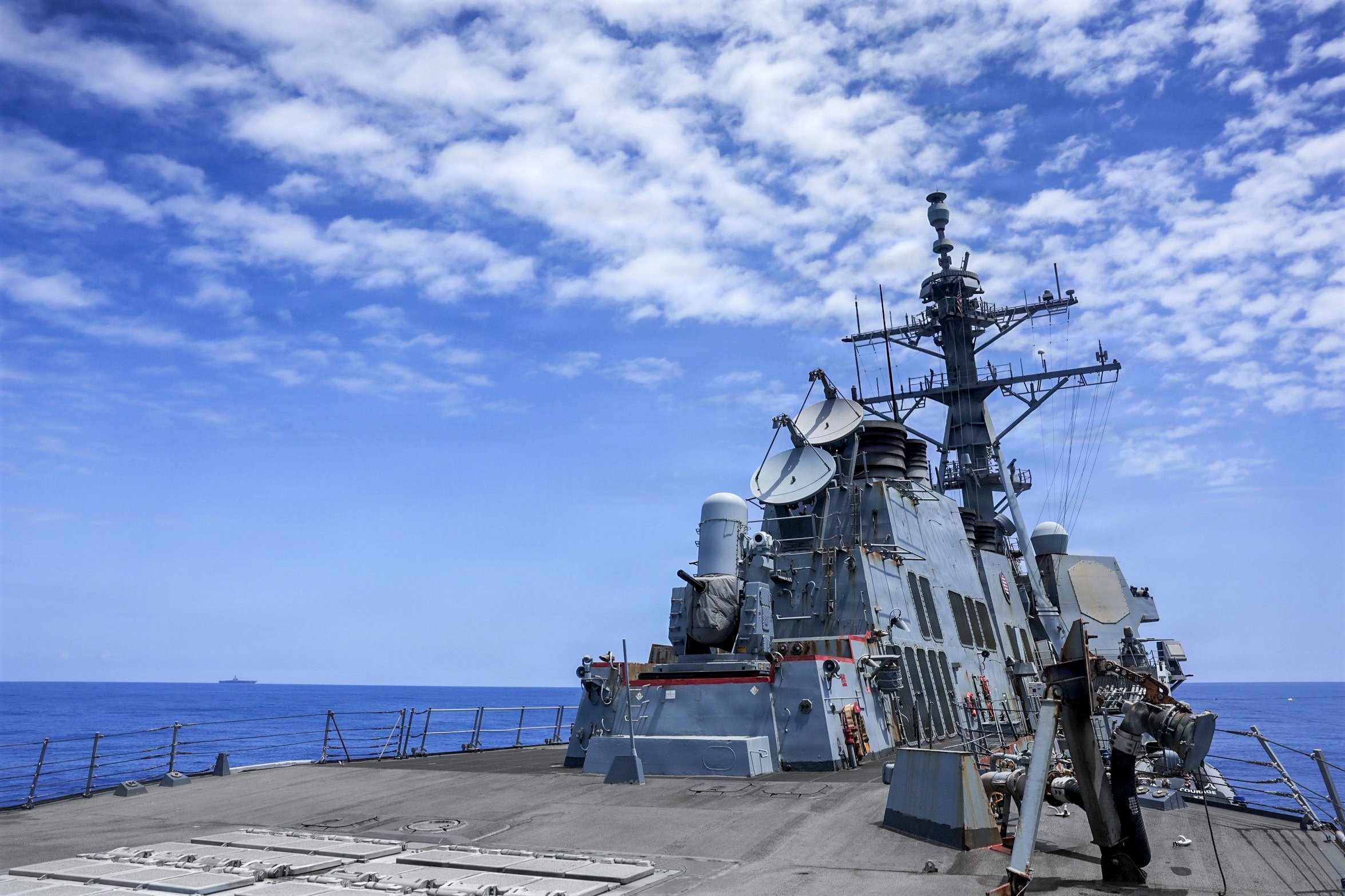
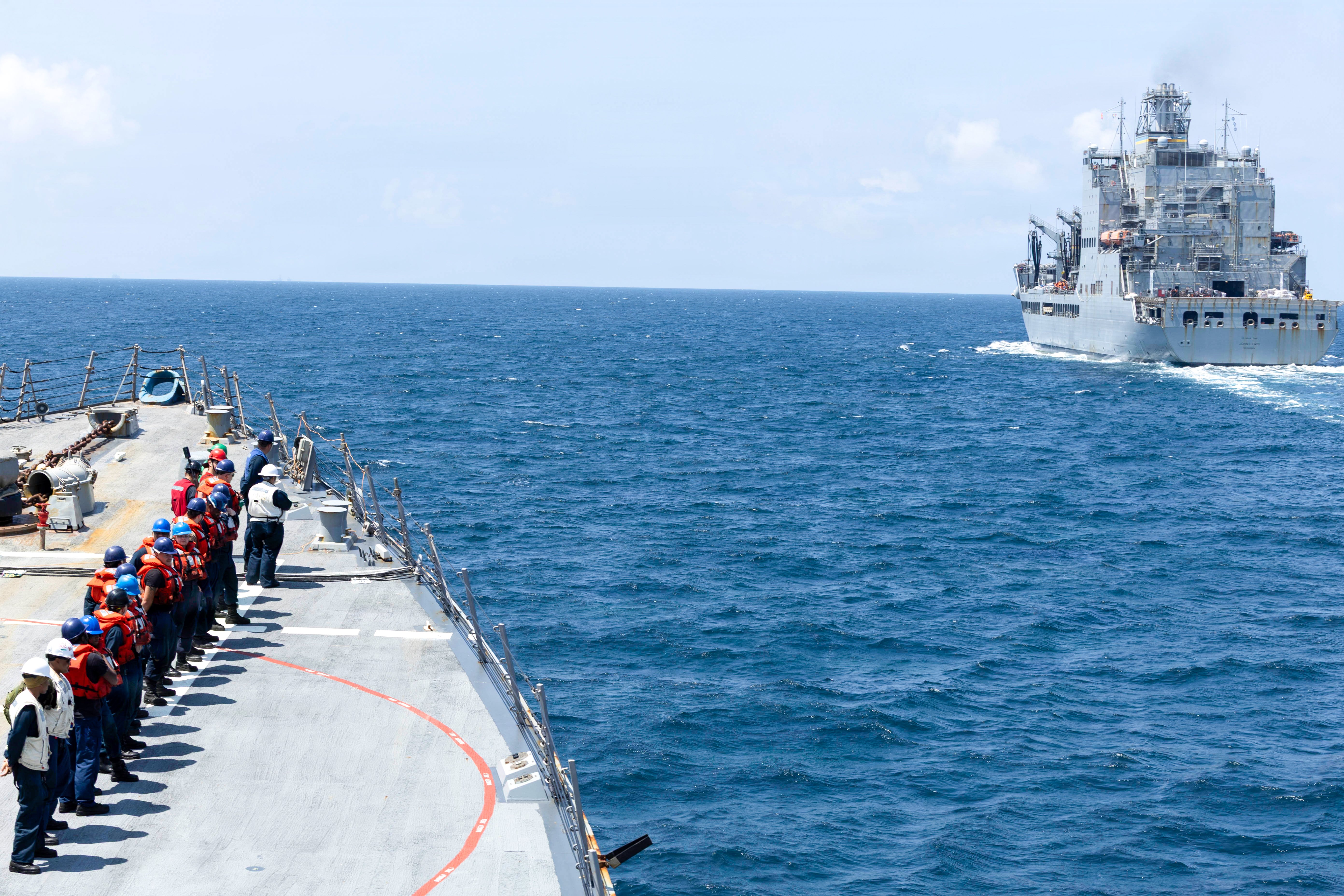
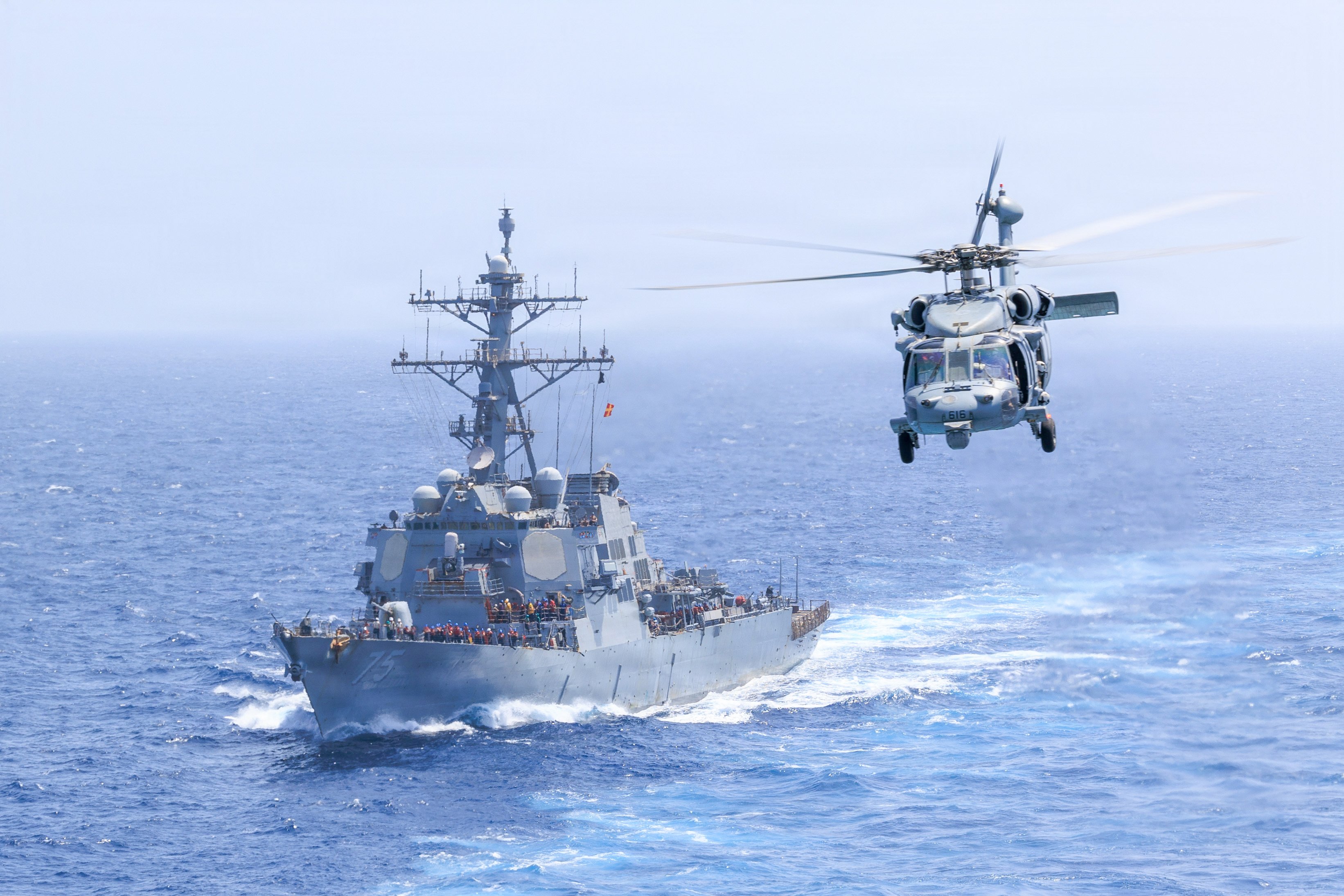
Flight ops aboard CVN 77. U.S. Navy photo USS Mason in CENTCOM. U.S. Navy photo USS Delbert D. Black underway. U.S. Navy photo USS Donald Cook sails while an MH-60S Seahawk flies alongside USS George H.W. Bush in U.S. 5th Fleet. U.S. Navy photo
Abraham Lincoln Homecoming Imminent
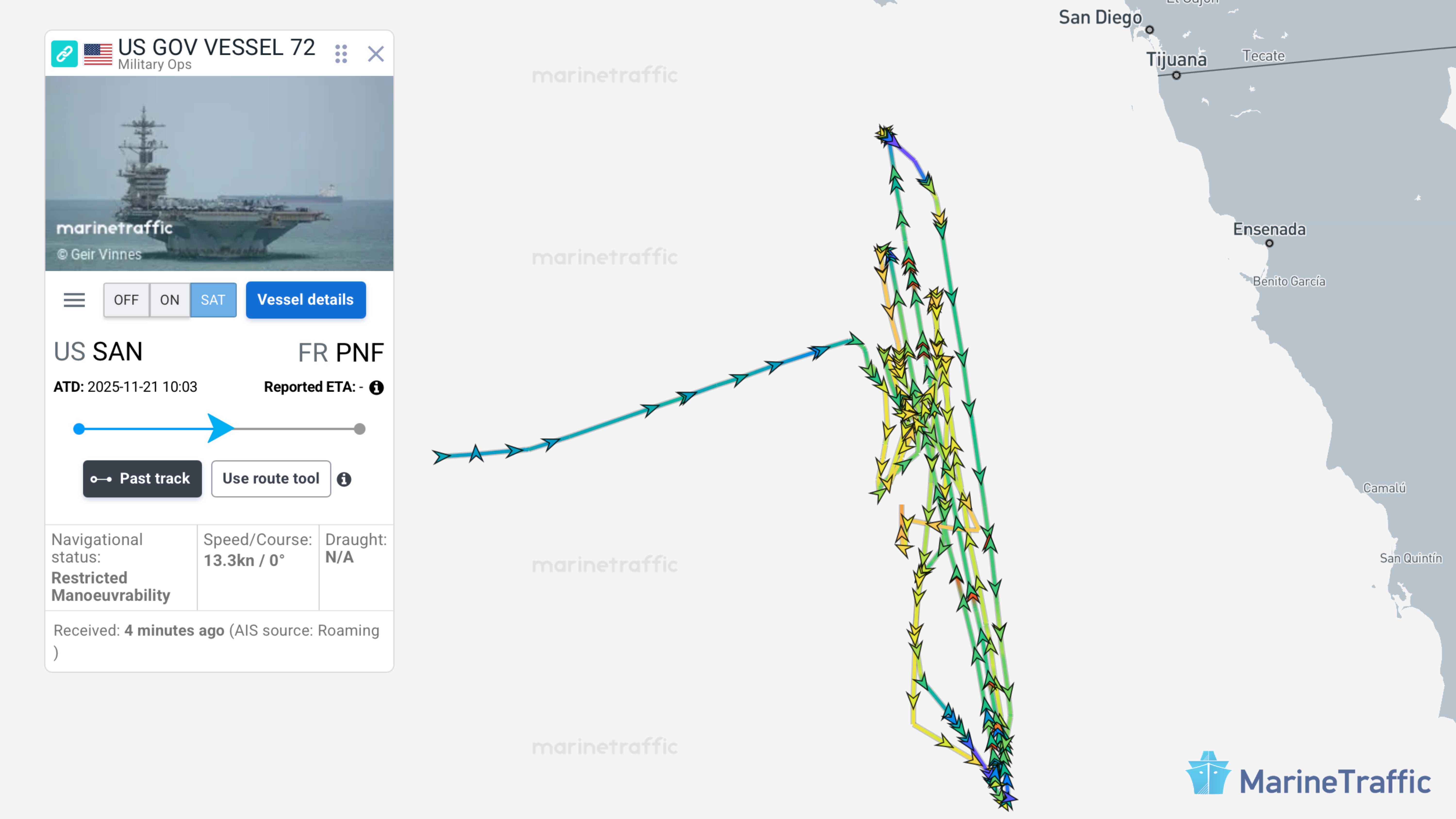
The USS Abraham Lincoln reappeared on AIS on October 3, roughly 200 nautical miles southwest of her homeport at Naval Air Station (NAS) North Island in San Diego, after steaming east across the vast Pacific Ocean. However, instead of returning home, Lincoln is holding off the coast of California, disembarking Carrier Air Wing (CVW) 9 and offloading ammunition alongside Lewis and Clark class dry cargo ship USNS Washington Chambers.
USS Abraham Lincoln’s transit off the coast of California. Source: MarineTraffic/KPLER (Reprinted with permission)
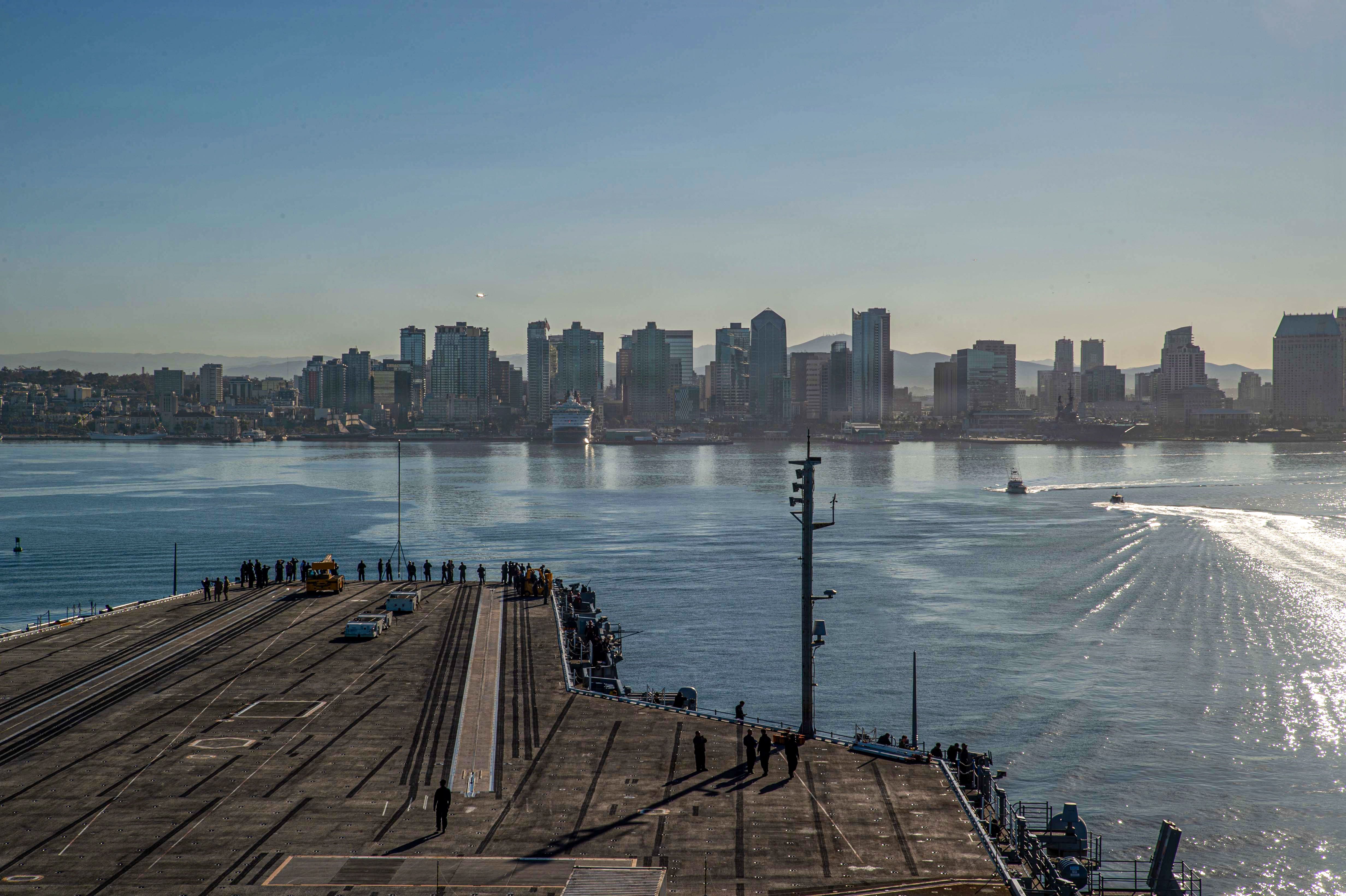
Lincoln is expected to return home on Wednesday or Thursday. The carrier departed San Diego on November 21, 2025, and an arrival this week would close out a total deployment of 321 to 322 days, by our count. That’s just shy of the 326-day record USS Gerald R. Ford set in May, representing the second-longest deployment in the modern carrier era.
The marathon deployment drew scrutiny over the grueling conditions Sailors and Marines experienced aboard. In August, crew families described supply shortages and difficult living arrangements, as TWZreported at the time. The accounts led to widespread media coverage, which Acting Secretary of the Navy Hung Cao called dishonest while also acknowledging that “a small number of mental health cases were treated with no loss of life, meal plans were adjusted when fresh resupply was unavailable, without a single meal being missed, calls home were limited when the operational threat was too high.” At least eight personnel across the strike group attempted suicide during the cruise, Cao wrote in a letter sent to Sen. Kirsten Gillibrand that was obtained by CNN.
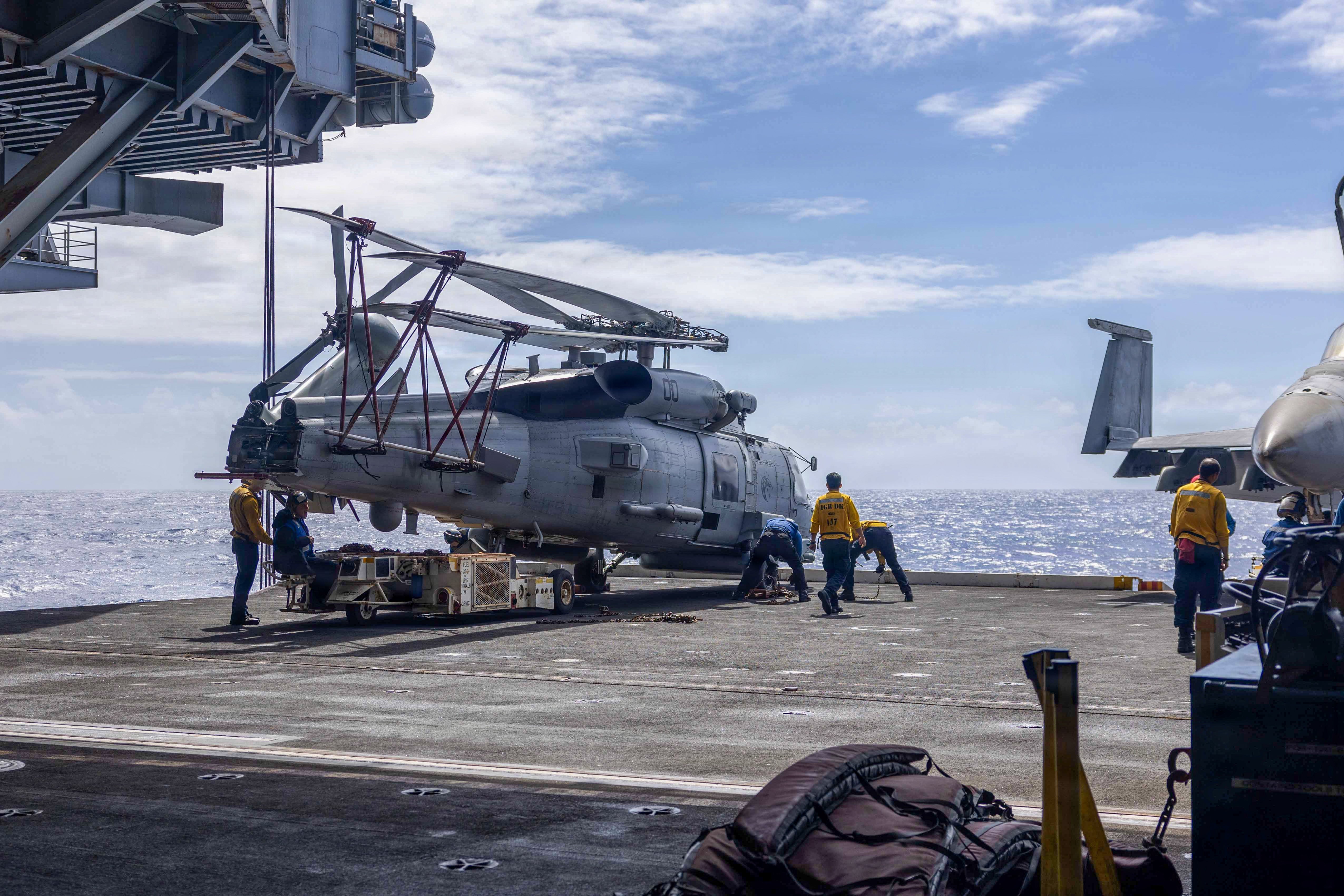
Friends and family welcomed members of Helicopter Maritime Strike Squadron (HSM) 71 back to NAS North Island on Friday, according to a release from DVIDS, the military’s content-sharing portal. A Growler squadron from CVW 9 also recently returned to NAS Whidbey Island in Washington State.
Family and friends welcome HSM 71 home. U.S. Navy photo An MH-60R with HSM 71 on USS Abraham Lincoln. U.S. Navy photo
Ronald Reagan Moves From Washington State To San Diego
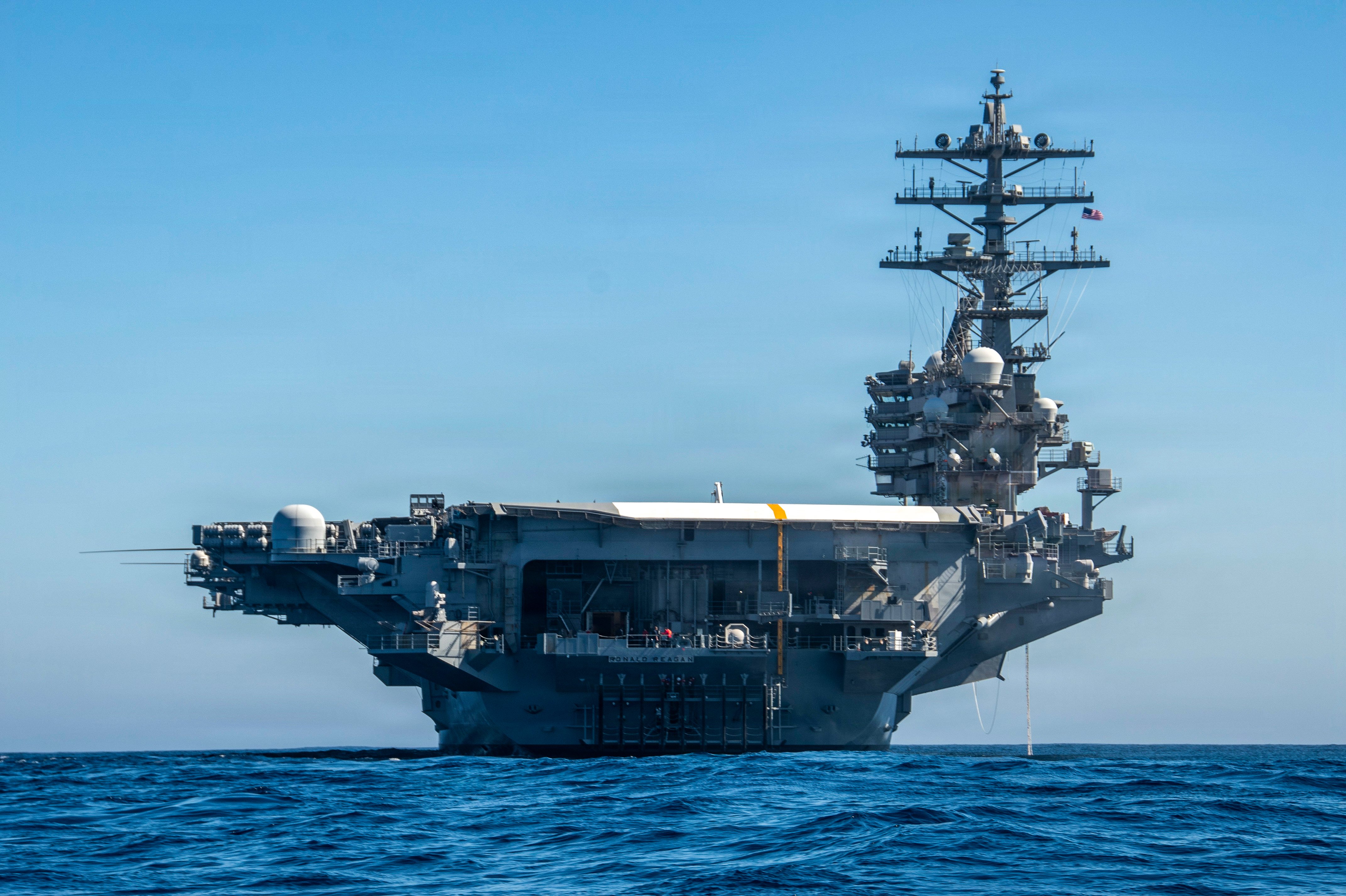
The latest carrier to rejoin the fleet after completing an extended maintenance availability, USS Ronald Reagan, pulled into San Diego on Monday after departing Bremerton, Washington, on September 30, according to public AIS data. Reagan is currently berthed at Kilo Pier on Naval Air Station North Island, a spot now available after USS Theodore Rooseveltvacated it on September 27.
USS Ronald Reagan arrives at Naval Air Station North Island in California on October 5, 2026. U.S. Navy photo
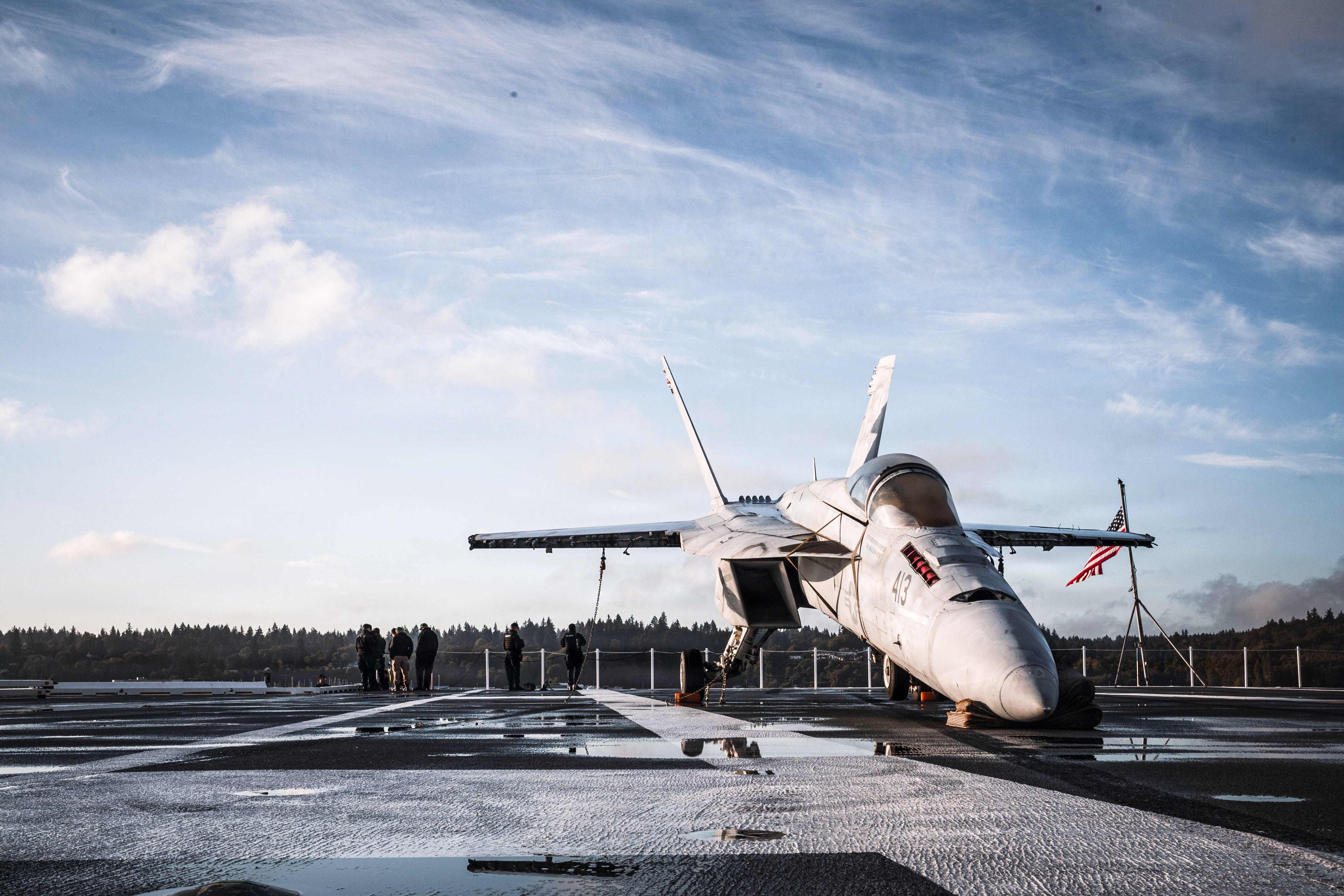
Imagery released by the Navy showed the flattop underway conducting routine operations in the U.S. 3rd Fleet area of operations on Sunday, October 4. Reagan reentered the fleet recently after completing a four-day sea trial and shakedown cruise that capped an extended 17-month Drydocking Planned Incremental Availability.
While docked at Puget Sound Naval Shipyard, she received several upgrades and enhancements, including an Unmanned Air Warfare Center (UAWC) to command and control the MQ-25 tanker drone. The MQ-25 will eventually take on the role of refueling carrier-based aircraft, held today by Super Hornets. The new UAWC makes her the second carrier to receive such an upgrade, following USS Theodore Roosevelt. The crew aboard Reagan has conducted pierside and at-sea testing of the new command center.
USS Ronald Reagan conducts routine ops in the Pacific. U.S. Navy photo USS Ronald Reagan departs Bremerton. U.S. Navy photo
Dwight D. Eisenhower Returns To Homeport After Growler Mishap
Following an incident off the east coast that resulted in the loss of an EA-18G Growler electronic attack jet, the USS Dwight D. Eisenhower returned to Naval Station Norfolk on October 5 after an eight-day underway.
Prior to her return, the Navy told us the following, published in full: “The Nimitz-class aircraft carrier USS Dwight D. Eisenhower (CVN 69) will return to Naval Station Norfolk to allow for a comprehensive assessment of the ship’s aircraft launch and recovery equipment following the Sept. 28 aviation mishap. The decision reflects the Navy’s deliberate approach to flight safety and readiness. While the cause of the mishap remains under investigation, Navy technical experts will conduct a thorough assessment of the affected systems and complete any necessary maintenance before flight operations resume. USS Dwight D. Eisenhower remains capable of safely navigating and conducting shipboard operations.”
USS Dwight D. Eisenhower’s recent transit off the east coast. Source: MarineTraffic/KPLER (Reprinted with permission)
Eight Sailors were ultimately evaluated by medical personnel aboard the ship. The mishap was reportedly due to a failure of the arresting gear, which catches and stops the forward momentum of aircraft after landing, and the Growler was lost overboard. Both crew members safely ejected and were rescued by MH-60 Seahawk helicopters.
Harry S. Truman Moves Dead Stick For Mid-Life Nuclear Refueling Overhaul
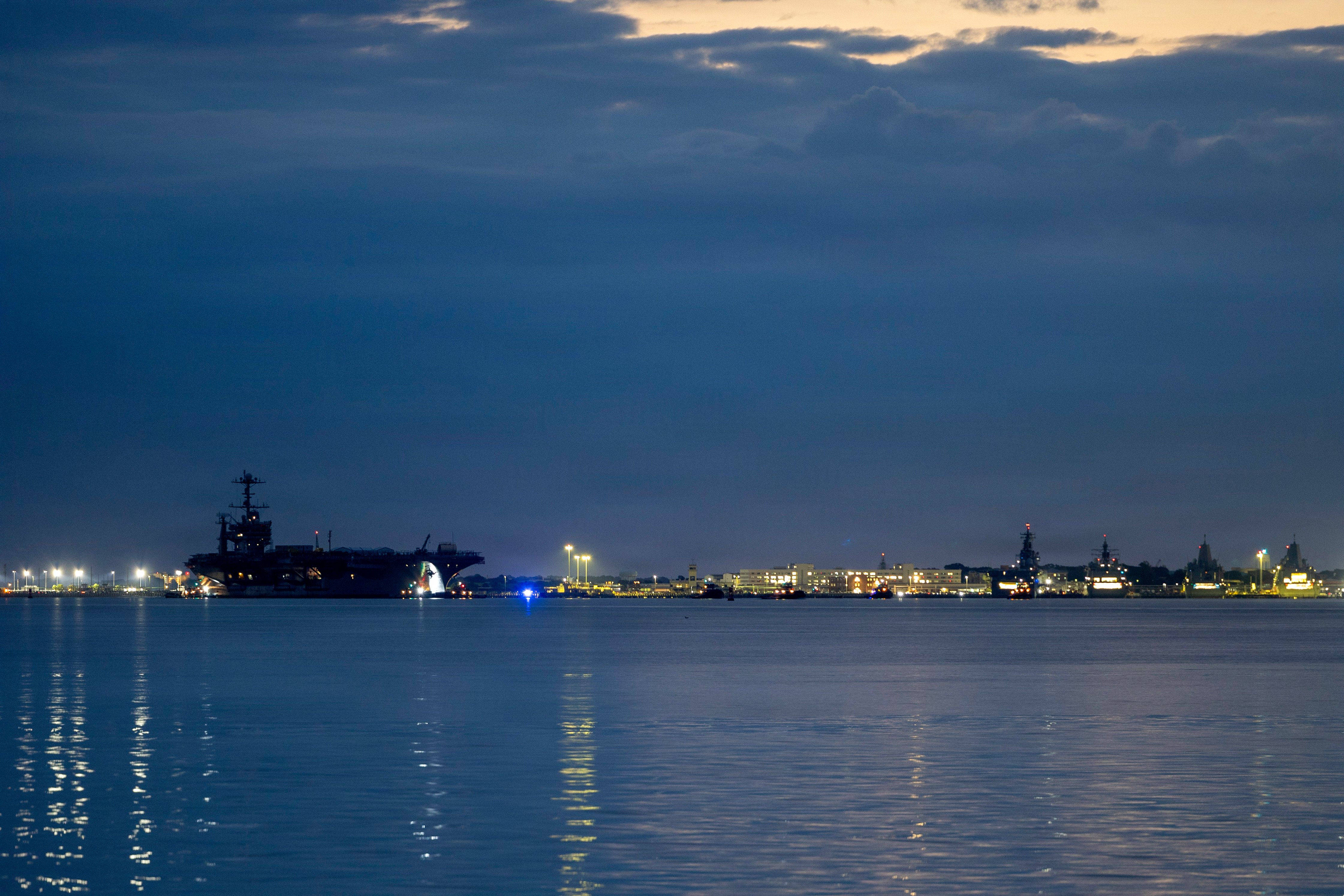
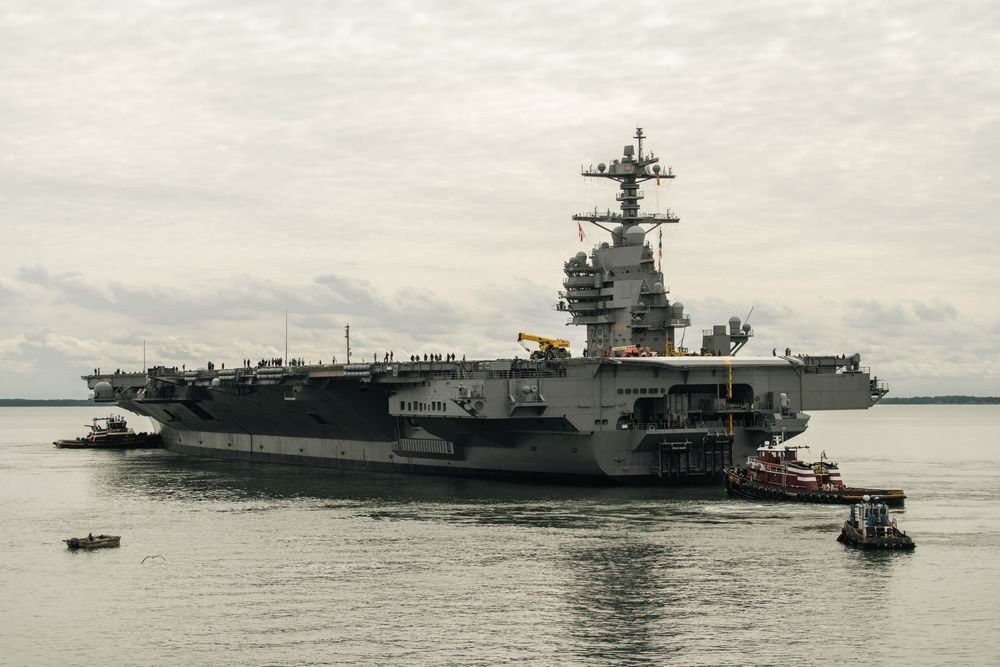
USS Harry S. Trumanleft Naval Station Norfolk on September 30 and moved “dead stick” into Dry Dock 11 at Huntington Ingalls Industries’ (HII) Newport News Shipbuilding (NNS) facility the same day. The carrier will begin the lengthy process of a mid-life Refueling and Complex Overhaul (RCOH).
USS Harry S. Truman transits the Elizabeth River after departing Naval Station Norfolk to begin the shipyard phase of her RCOH. U.S. Navy photo
Truman is the eighth Nimitz class carrier to conduct an RCOH at NNS, according to HII, which won a $5.1 billion contract to complete the work. The overhaul accounts for about one-third of the maintenance and modernization work that a carrier will undergo over a 50-year service life and involves defueling and refueling her nuclear reactors, in addition to upgrades made to the ship’s propulsion plant and combat systems.
“Our team has been diligently working to get ahead on this critical engineering and construction project that will prepare USS Harry S. Truman for the second half of her service life,” Bryan Caccavale, the NNS vice president of program management, said in a statement. “When the ship arrives at NNS, we’ll apply that same diligence to working with our suppliers and Navy partners to ensure a successful recapitalization of CVN 75,” he added.
USS John C. Stennis is also currently completing RCOH at NNS, but there has been no announcement of a return to service, as of publication. Stennis began the overhaul in 2021, and budget documents point to an October 2026 redelivery date, but it’s unclear whether that timeline will hold.
Newest Ford Class Carrier, John F. Kennedy, Transits To Norfolk After Preliminary Acceptance
The Navy took “preliminary acceptance” of the future USS John F. Kennedy from NNS on September 29. The nation’s newest and second Ford class carrier completed acceptance trials in August.
“Achieving preliminary acceptance marks a new phase for the ship and her crew, allowing them to get more water under the keel as they test and train underway,” the Navy’s Program Manager for Gerald R. Ford-Class New Construction, Capt. Mark Johnson, said. “This milestone is a testament to the shared commitment of our sailors and our combined Navy-industry team, who remain laser-focused on completing the final stages of construction and test with precision and efficiency to deliver combat-ready lethality to the fleet.”
The future USS John F. Kennedy departs Newport News Shipbuilding. Photo: HII-NNS
Kennedy is 99% finished, according to the Navy, with formal delivery planned for spring 2027. “All major systems are complete. The shipbuilder is currently completing final ship systems testing, including testing of the remaining four Advanced Weapons Elevators,” the release noted. On the same day as the announcement, September 29, the carrier departed the shipyard, and arrived at her new homeport of Naval Station Norfolk, moored at Pier 11N, on October 2.
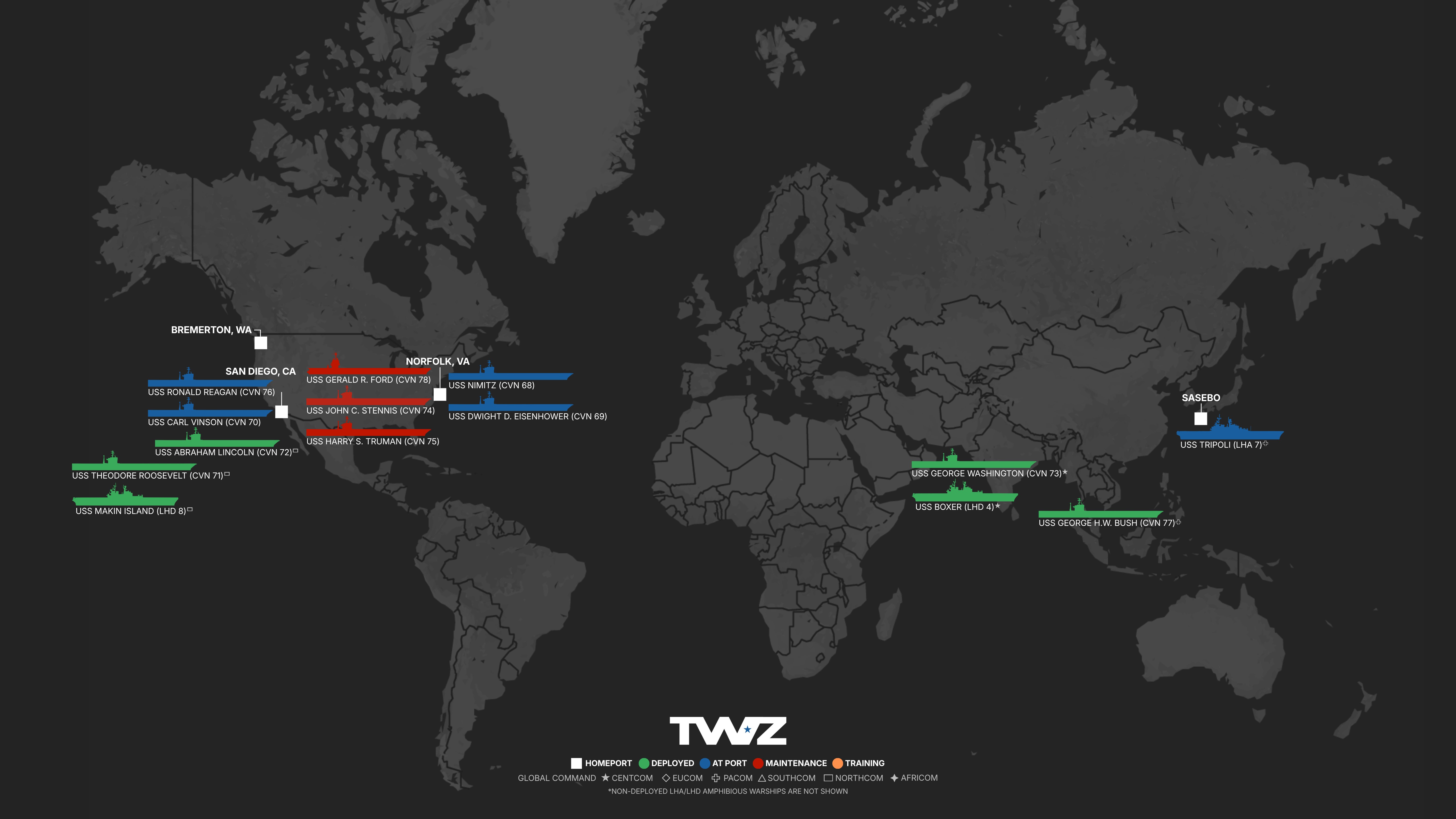
Big Deck Fleet At A Glance
Overall, four U.S. carriers are deployed (with one returning home this week), three are working up in various states of readiness, three are in maintenance, one is being used primarily for training before deactivation next year, and another will be delivered in 2027. Two amphibious ready groups are deployed, one is forward-deployed, three are working up or in port, and three are in maintenance.
Note: Positions are general approximations.Non-deployed LHA/LHD amphibious warships are not shown.
The 2026 Asian Games in Japan drew to a close on October 4 following two weeks of competition between 45 countries and territories across 43 sports. Despite the official slogan “Imagine One Asia,” fragmented regional politics came to the fore as the event unfolded. Just days before the games officially began, tensions between Japan and […]
Two merchant vessels have been attacked by aerial and maritime drones in Bulgaria’s exclusive economic zone in the Black Sea, sinking one ship and forcing the evacuation of another. The incident follows a deadly attack on a grain carrier off Romania a day earlier and has prompted concern over the growing risks to civilian shipping close to EU and NATO territory.
Two commercial vessels were struck by drones in Bulgaria’s exclusive economic zone early on Tuesday, 6 October, in the first known attack of its kind on merchant shipping in Bulgarian waters.
The Togo-flagged ALFA WATAN suffered severe structural damage and sank, while the Palau-flagged ABLE caught fire. Bulgarian Prime Minister Rumen Radev said the vessels were attacked at around 3am by both aerial and maritime drones about 70 nautical miles east of the coastal town of Byala. The Bulgarian government said a search-and-rescue operation was continuing for the crew of the ALFA WATAN, whose fate remained unknown.
All 18 people aboard the ABLE were rescued after abandoning the burning vessel. The Bulgarian-flagged passenger and freight ferry DIOSCURIA was diverted to the area and initially took the crew on board before Bulgarian Navy and Border Police vessels transferred them towards Varna.
The crew comprised 11 Turkish and seven Indian nationals. Two sailors were taken to hospital, including an Indian crew member suffering from burns and the Turkish captain, who sustained a head injury. Bulgarian public broadcaster BNT reported that the remaining 16 sailors subsequently arrived safely in Varna for medical checks.
The ABLE was reportedly carrying grain towards Istanbul. The cargo aboard the ALFA WATAN, which had been heading north towards Romania, has not been officially established.
Radev convened an emergency meeting involving the ministries of defence, interior, transport and environment, alongside the presidency and Bulgaria’s security services. He described the attack as an unacceptable violation of international and maritime law and warned of its effect on commercial navigation in the Black Sea.
Bulgarian authorities have not publicly identified who launched the drones. Investigations are examining both the weapons used and the circumstances surrounding the attack. One rescued Turkish sailor told Bulgarian television that he believed the ABLE had been hit by a Russian underwater drone, but that account has not been independently established and Sofia has made no formal attribution.
Foreign Minister Velislava Petrova said Bulgaria was in contact with its European and NATO partners and described Black Sea security as inseparable from wider European security. She said civilian crews and freedom of navigation must be protected and that Bulgaria would work with its allies to assess the wider consequences for maritime security.
European Commission President Ursula von der Leyen also condemned attacks against civilian shipping, saying the situation in the Black Sea was becoming increasingly concerning. She said commercial vessels and their crews were being targeted as investigations continued into the latest incidents.
Tuesday’s attack came less than 24 hours after another commercial vessel caught fire and sank in Romania’s exclusive economic zone. The Turkish-owned Royad Mammadov, sailing under the flag of Saint Kitts and Nevis, had left the Ukrainian Danube port of Izmail carrying corn for Ravenna in Italy.
Romanian authorities confirmed that two people died and 11 crew members were rescued. President Volodymyr Zelenskyy said the vessel had been struck by two Russian drones, although Romanian authorities did not themselves publicly attribute the incident to Russia.
The distinction between territorial waters and an exclusive economic zone remains important. The attacks occurred outside Bulgaria’s territorial sea and therefore do not amount simply to an attack on Bulgarian territory. They nevertheless took place in an area where Bulgaria has internationally recognised economic rights and responsibilities, including search-and-rescue and environmental obligations.
The immediate concern for Sofia is the search for the missing crew of the ALFA WATAN and the possibility of pollution from the wreck. The wider concern for the EU is the increasingly exposed position of civilian shipping routes linking Ukraine, Romania, Bulgaria and Turkey.
With merchant ships now struck in the economic zones of both Romania and Bulgaria on consecutive days, Black Sea maritime security has moved further onto the agenda of EU and NATO governments along the western coast.
As part of its overall effort to boost America’s flagging shipbuilding capacity, the Trump administration on Tuesday announced that Anduril is building a new two-million-square-foot facility in Baltimore designed to help speed up the production of Virginia class nuclear-powered attack submarines. The plant, dubbed Arsenal-2, will eventually produce components like torpedo tubes and spherical air flasks, which will then be sent to the two shipyards that build nuclear submarines, General Dynamics Electric Boat and Huntington Ingalls Industries’ Newport News Shipbuilding. Anduril’s plan to build complex submarine components is a huge leap for a company with a shipbuilding portfolio consisting of a limited number of smaller craft.
The submarine component plant announcement was made as the Navy is struggling to keep up with its goal of producing two of these boats per year amid a wider issue of construction and delivery delays across the service. However, it will be years before the first Anduril-produced components are placed on a submarine, with no specific timelines for that effort yet established, an industry official told us. We will discuss that in greater detail later in this story.
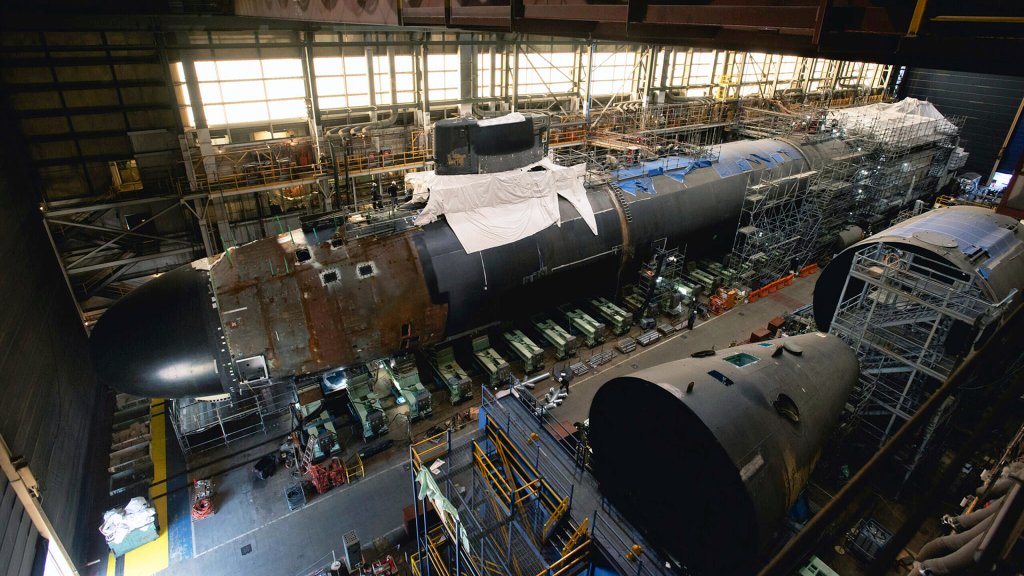
A Virginia class submarine under construction. (HII) HII
“Today’s $6.6 billion investment represents the president’s commitment to restoring American maritime dominance by constructing new vessels in communities like Baltimore and across the country,” White House spokesperson Anna Kelly told a group of reporters, including from TWZ, at a Tuesday morning press conference.
Those funds include a $3.7 billion investment from Anduril to build and staff the new facility, and a contract worth up to $2.9 billion awarded to Anduril by the Navy to produce the components.
“The Virginia class submarine program is one of the most critical warfighting capabilities that our nation has that guarantees deterrence every single day,” Anduril President and Chief Strategy Officer Chris Brose stated. “It is also a program that has been challenged in terms of the ability to meet the Navy’s requirements. So we’re, as a nation, not necessarily where we need to be, and that’s not because of our shipyard workers.”
The Navy currently has 26 Virginia class boats, with two more expected to be commissioned next spring, a senior administration official told reporters on Tuesday. Another 31 vessels are still needed to meet the Navy’s overall plan to have 59 Virginia class boats.
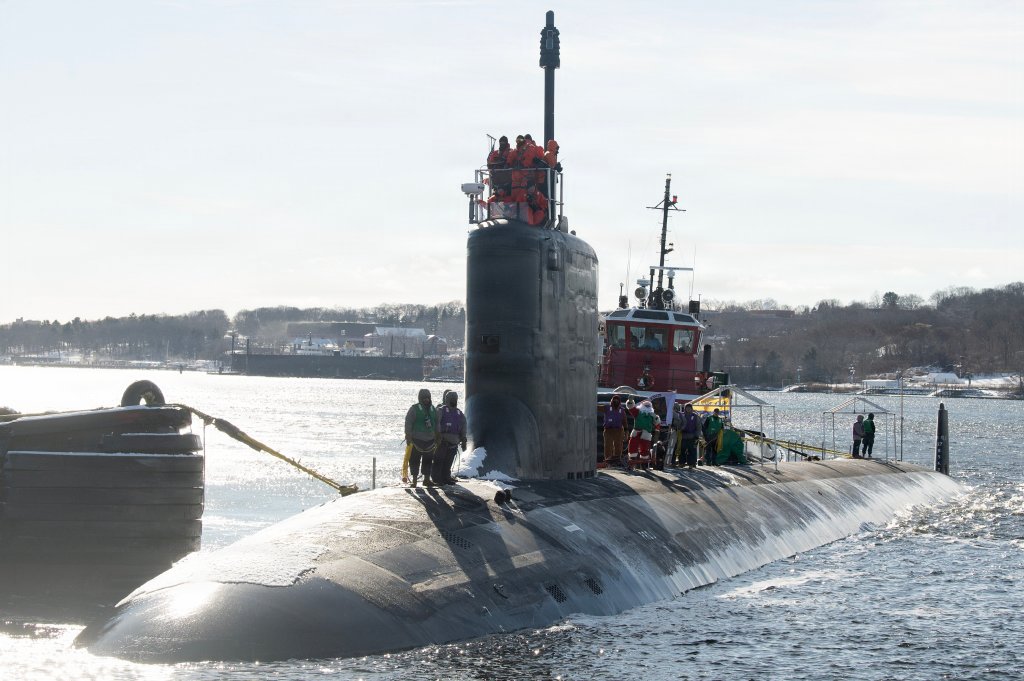
The USS Idaho (SSN 799) pulls into Submarine Base New London in Groton, Connecticut, for the first time on Monday, Dec. 15, 2025. When commissioned, it became the 26th Virginia class attack submarine and fifth U.S. Navy ship to be named for the Gem State. (U.S. Navy Photo by John Narewski) John Narewski
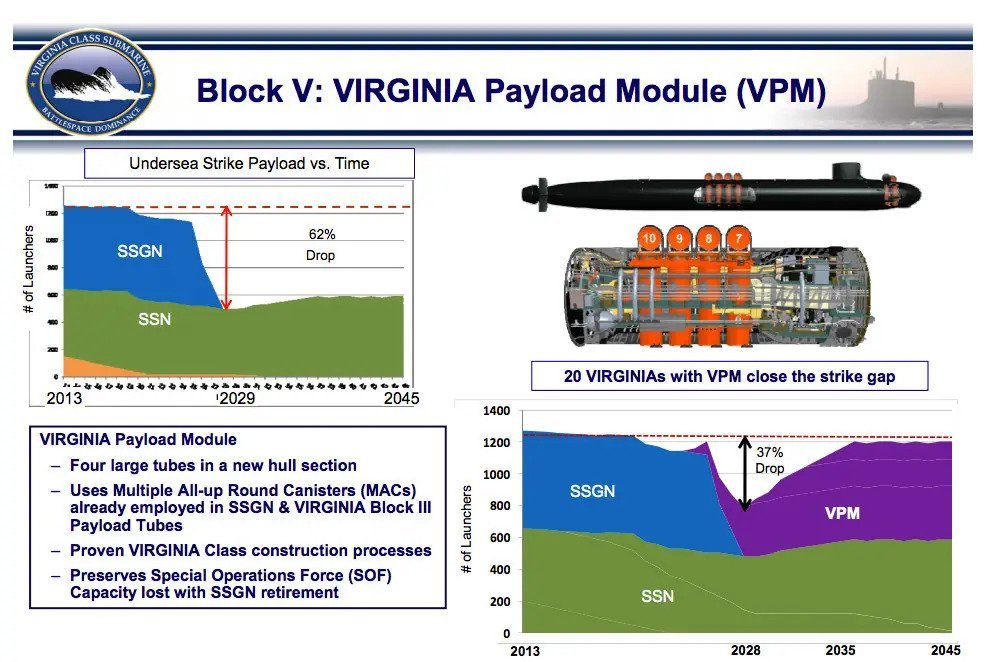
However, while the Navy has been buying them at a rate of two per year from Fiscal Year 2011 through Fiscal Year 2024, “the actual Virginia class production rate has never reached 2.0 boats per year, and since 2022 has been limited by shipyard and supplier firm workforce and supply chain challenges to about 1.1 to 1.2 boats per year, resulting in a growing backlog of boats procured but not yet built,” according to a Congressional Research Service (CRS) report published in January. “Key drivers of the drop in production include workforce challenges, first-time quality, material and supplier delays, and lead ship issues associated with the Virginia Payload Module [VPM] variant. The Navy is working closely with the shipbuilders to drive improvement throughout the Virginia enterprise.”
A briefing slide with details about the Virginia Payload Module (VPM) that will be added to the Block V Virginia class submarines. USN
Adding to the strain on production and delivery, Australia is set to get one new-build Virginia class boat and two from the U.S. Navy’s fleet under the 2021 trilateral AUKUS nuclear submarine acquisition deal with the United States and the United Kingdom.
In May, Chief of Naval Operations Adm. Daryl Caudle told Congress that the service would meet its two-boat-a-year delivery rate by 2032.
During Tuesday’s press conference, officials laid out claims that the new Anduril plant will address several of the issues that have slowed down the construction and delivery of these submarines.
“If you look at this in terms of capacity, the potential based on the area and what Anduril plans to do is to add about 9 million hours of labor a year at this facility,” stated a senior administration official, who, like others on Tuesday spoke on condition of anonymity. “That would be the equivalent of about a 15% increase, and so that would be directly translatable to Virginia class submarine production. So having those torpedo tubes earlier would let us move production of current Virginia submarines under construction faster.”
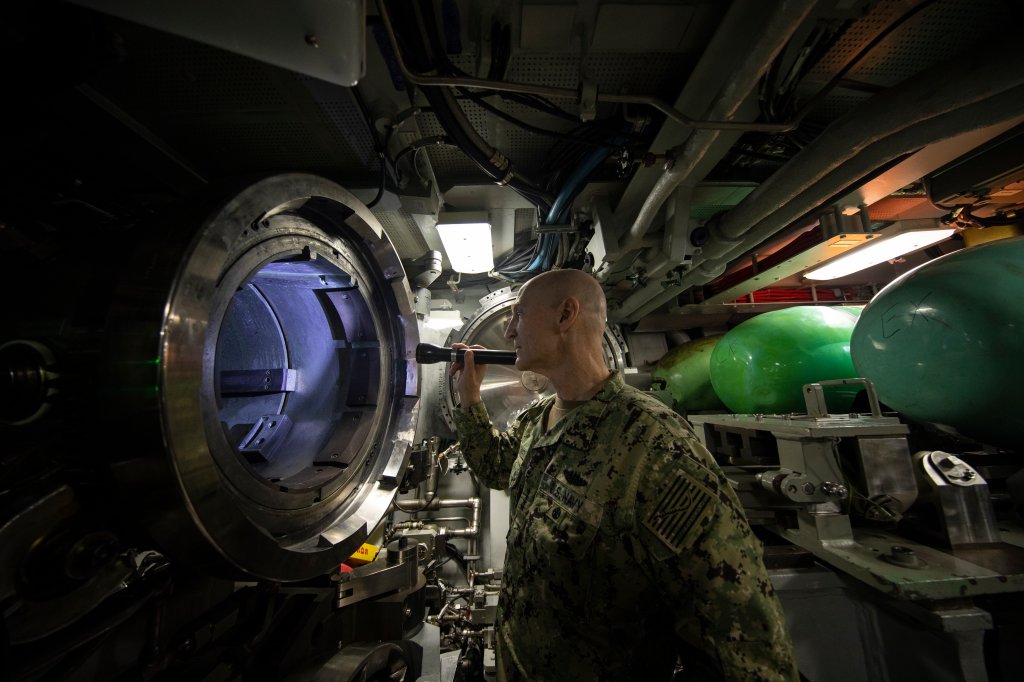
Adm. Frank Caldwell, Jr., director of the Naval Nuclear Propulsion Program, examines a torpedo tube aboard the Virginia class fast attack submarine USS Illinois (SSN 786) during Ice Exercise (ICEX) 2022. (U.S. Navy photo by Mass Communication Specialist 1st Class Alfred Coffield/Released) Petty Officer 1st Class Alfred Coffield
In addition, Anduril plans to draw on a huge potential workforce to staff the plant.
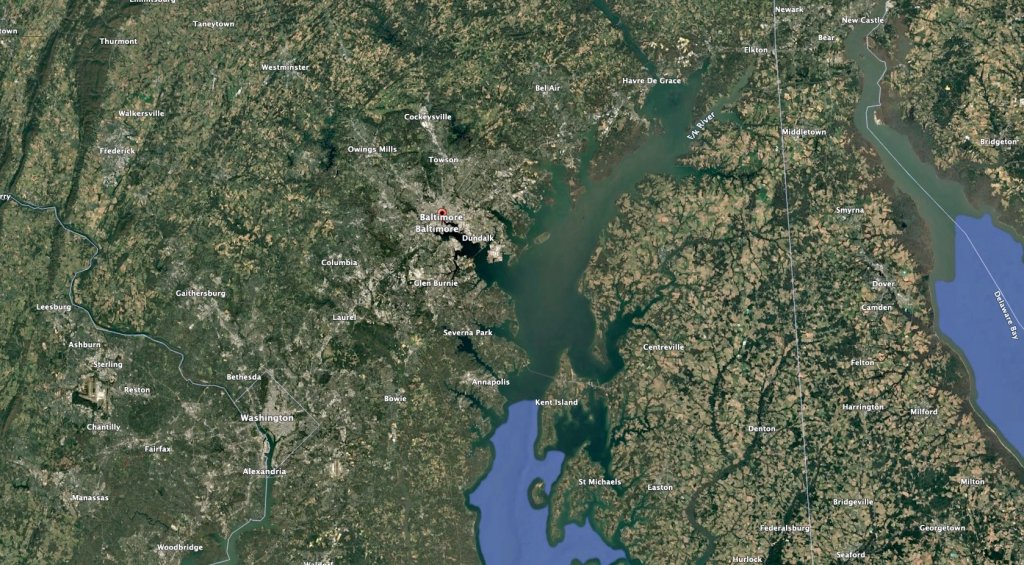
“If you basically draw like a one-hour radius around the Baltimore County area, there are millions and millions of people who could potentially contribute and work at this shipyard, and that is a huge selling point for us,” an industry official suggested.
The greater Baltimore area. (Google Earth)
Beyond producing components like torpedo tubes, Anduril aspires to eventually build “full ship sections, bows, sterns, etc.” at Arsenal-2, the industry official added.
Anduril said Arsenal-2 will be “purpose-built” for the “high-volume, high-precision production of undersea naval capabilities.”
“The shipyard’s layout is optimized for production,” the company stated in a media release. “Reduced distances between fabrication, assembly, testing, and integration areas eliminate the staging bottlenecks that slow conventional yards.”
“A functional 1,200-foot graving dock and multimodal road and rail access support large-scale component movement,” Anduril added. “High-bay assembly halls, adjacent fabrication areas, and reconfigurable production lines allow the yard to shift rapidly as Navy requirements evolve.”
ArsenalOS, Anduril’s industrial software platform, “will provide the digital backbone for the yard and its production systems,” the company further pointed out. “It will connect fabrication workflows, outfitting sequences, material movement, inspection protocols, and documentation requirements in a single system, giving workers and managers real-time visibility into the state of production. Digital work instructions, embedded quality controls, modern sensing, and automation will support the expertise of welders, pipefitters, electricians, shipfitters, inspectors, and other skilled trades.”
Anduril claims the project “will create 3,100 direct jobs and support more than 11,000 indirect jobs. The site will drive $2 billion in annual economic output, including an estimated $312 million in wages each year.”
Before Arsenal-2 is up and running, Anduril said it plans to “manufacture critical Virginia class submarine components at a new 160,000-square-foot facility in Orange County, California, purpose-built to support key submarine construction processes and SUBSAFE-qualified production qualification [efforts].”
The Orange County facility will give Anduril “a two-year operational head start to develop and validate manufacturing methods, production workflows, and quality systems before Arsenal-2 comes online,” the company noted. “It will support prototyping and production of Virginia-class test assets and critical maritime components, including torpedo tubes, while allowing Anduril to recruit and train the early workforce on the systems and standards that will ultimately scale at Arsenal-2. Once Arsenal-2 comes online, the Orange County facility will continue supporting broader maritime manufacturing efforts across Anduril’s industrial network.”
As we noted earlier in this piece, it will be years before anything produced by Anduril winds up on a sub. In addition to recruiting and training a workforce to build the components and ensuring the production system can meet goals, the parts then have to be tested to ensure they are safe enough to place on boats.
The industry official told TWZ that there is no schedule yet for when that will happen.
“We are starting this work now,” the industry official said. “We’re going to be working quickly. There’s a lot we’re going to have to do to prove the ability to produce the initial components – the torpedo tubes. We’re going to have to work with our partners in industry and partners in government on the certification. So it’s really not possible to put a time stamp on it as much as I’d like to.”
“I think our goal, and I know this is shared by the administration, is to go as fast as possible while keeping the bar of safety as high as it needs to be, and try to get these systems certified so that they go into the production of boats… and solve the critical limiting factor currently in our supply chain, and help our industry partners produce more submarines.”
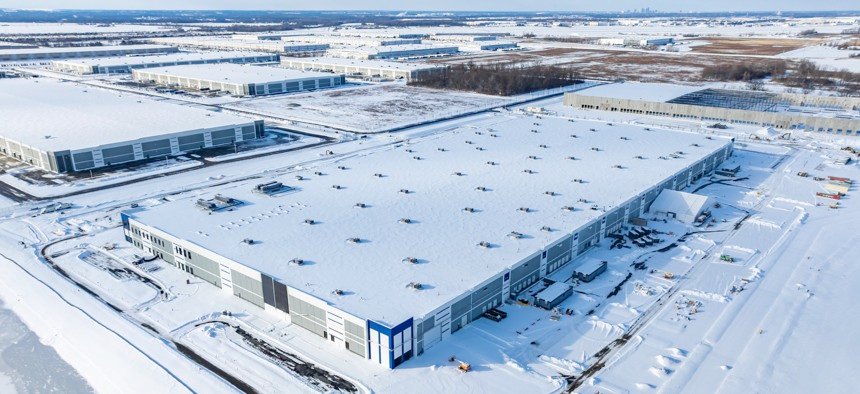
Arsenal-2 follows the development of Anduril’s Arsenal-1 plant in Ohio, first announced two years ago. That five-million-square-foot facility, once fully up and running, will be able to “produce tens of thousands of autonomous weapons systems addressing the urgent needs of the United States and our allies,” the company said at the time.
Anduril’s Arsenal-1 plant in Ohio. (Anduril)
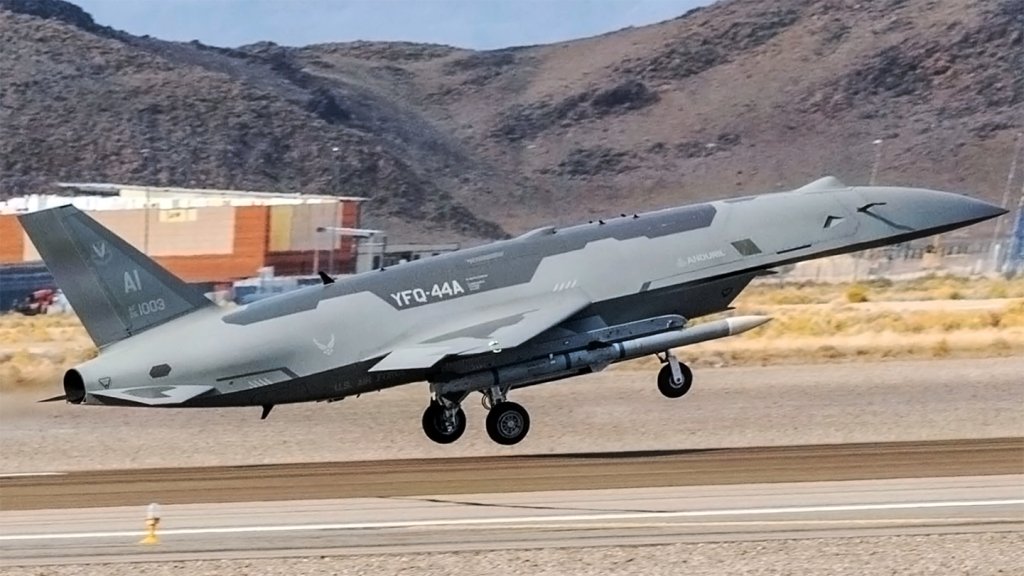
Arsenal-1, however, remains a work in progress, with more construction work yet to be done. Still, Anduril’s first product from that plant, the U.S. Air Force’s Collaborative Combat Aircraft (CCA) known as the YFQ-44A Fury, rolled off the assembly line there in July. That milestone met the company’s initial production schedule announced in January 2025, according to JobsOhio, the state’s business development arm.
A U.S. Air Force YFQ-44A Fury aircraft, assigned to the Collaborative Combat Aircraft Experimental Operation Unit, takes off for a mission flight during an Agile Combat Employment exercise at Creech Air Force Base, Nevada, July 21, 2026. (U.S. Air Force photo by Staff Sgt. Kristal Munguia) Staff Sgt. Kristal Munguia
Anduril, which also produces systems like the Ghost Shark extra-large autonomous undersea vehicle (in partnership with Australia), the Roadrunner reusable missile-like air vehicle, the Iris family of passive infrared sensors, and a wide range of other items, is playing a growing role in the Trump administration’s weapons development efforts.
Last month, Defense Secretary Pete Hegseth announced that Anduril co-founder Palmer Luckey, who made a name for himself and his fortune in the virtual reality space with Meta, will help lead a new program dubbed Project Meridian. The goal, according to a Pentagon memo, is to “map the trajectory of future warfare, identify critical capability gaps, and propose actionable solutions in furtherance of the identified goals in the 2026 National Security Science and Technology Strategy.”
The Pentagon’s Chief Technology Officer, Emil Michael, has been directed to set up this project. SpaceX founder Elon Musk and Newt Gingrich are other key members.
A screen capture from last month’s livestream of Secretary Hegseth’s speech announcing new plans for autonomous warfare capabilities. From left to right, Palmer Luckey, Newt Gingrich, and Elon Musk. U.S. Military capture
“The inclusion of Musk and Luckey does raise ethical questions, as they both lead companies with major U.S. government contracts already, and which could be in line to see more opportunities based on Project Meridian’s findings. What guardrails might be put in place to prevent conflicts of interest is unclear.”
Regardless of any such concerns, today’s shipyard announcement is a clear indication that the Trump administration and the Pentagon see Anduril as a major player across its weapons manufacturing industrial base. It’s also a reminder of just how challenging it is to actually expand America’s ability to build fighting vessels.
Seven tankers made 14 trips from South Korea to Russia's Far East in July and August, carrying more than 176,000 metric tons of fuel, most of it diesel, the Guardian found in a 6 October analysis of port records and ship-tracking data. The UK and EU have sanctioned three of the ships, and one loaded its fuel from another tanker at sea off South Korea instead of at a terminal.
Ukrainian strikes have cut Russia's fuel output as Moscow scrambles for supplies, while fuel loaded at South Korean ports has flowed to Russia. Loadings began to surge in July, the same month South Korean President Lee Jae-myung pledged $100 million for Ukraine's reconstruction, the Guardian reported. That creates a tension in Seoul's policy toward the war: South Korea has provided Ukraine with humanitarian and non-lethal aid but ruled out sending weapons directly, while the fuel trade appears legal under South Korean law even though three of the tankers are under UK and EU sanctions.
Russia imported 368,000 metric tons of oil products by sea in August, 112,000 of them from South Korea, according to Kpler data analyzed by the Centre for Research on Energy and Clean Air (CREA) and cited by the Guardian. CREA's own August report gives 172,000 metric tons in total, including 18,000 from South Korea. Neither explains the gap.
Where the tankers said they were going
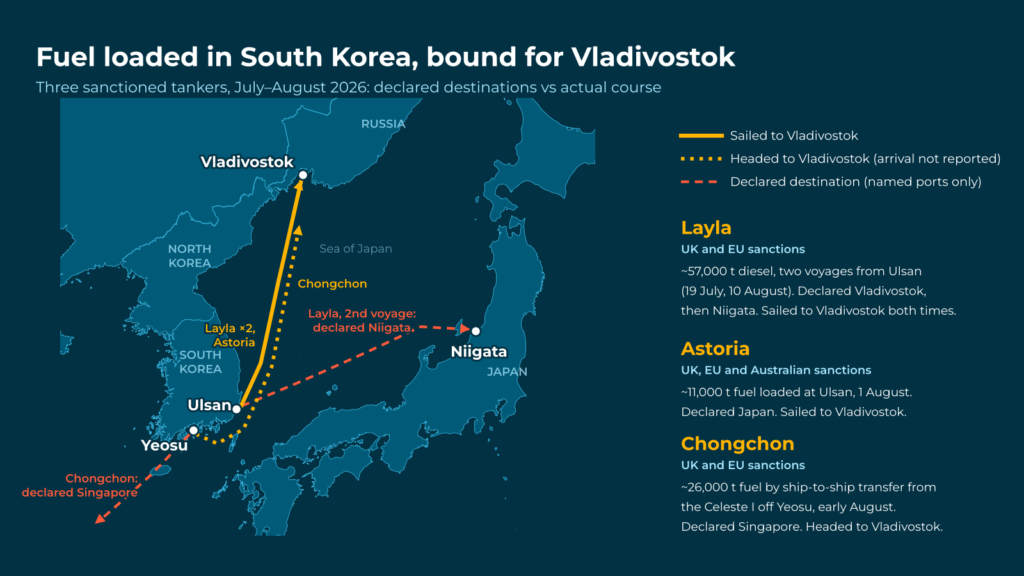
The Layla, a tanker under UK and EU sanctions, made two voyages from Ulsan to Vladivostok, carrying a total of 57,000 metric tons of diesel. It left South Korea on 19 July and 10 August. On the first trip, it told South Korean authorities it was bound for Vladivostok; on the second, it declared Niigata, Japan, but sailed to Vladivostok again.
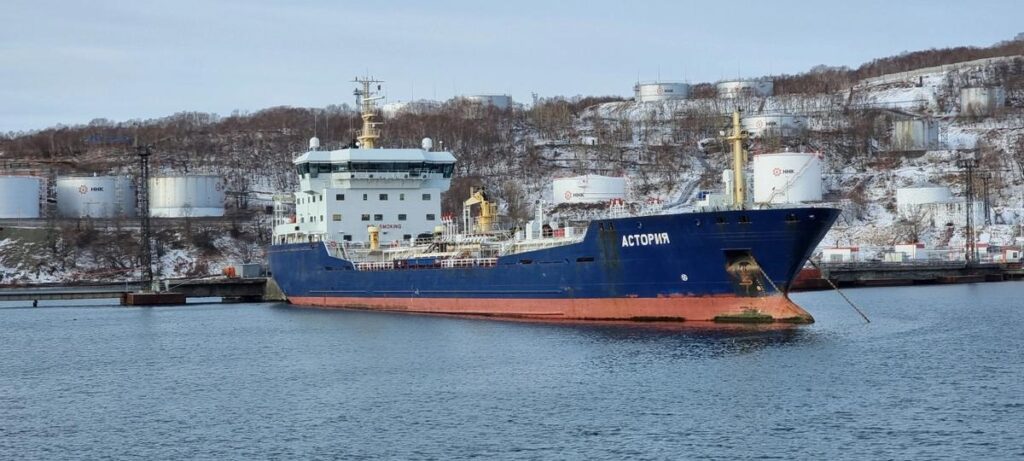
The Astoria, a Russian-flagged tanker under UK, EU, and Australian sanctions, loaded nearly 11,000 metric tons of fuel at Ulsan on 1 August. It declared Japan as its destination but sailed to Vladivostok.
The Chongchon did not berth at a South Korean port. Instead, it took about 26,000 metric tons of fuel from the unsanctioned Celeste I at an anchorage off Yeosu in early August. It declared Singapore as its destination but headed to Vladivostok. The owners and managers of the four tankers did not respond to the Guardian's requests for comment.
Source: Guardian analysis of port records and ship-tracking data; sanctions listings: OpenSanctions. Map: Euromaidan Press
Why Russia needs the fuel
Ukrainian drone strikes have severely disrupted Russia's refining capacity, the Guardian reported. In July, Ukraine's General Staff said the strikes had knocked out 42% of Russia's refining capacity, costing the industry billions of dollars.
Russian refinery throughput fell in June to its lowest level in more than 20 years, and diesel output is down nearly 30% from a year earlier, the International Energy Agency said, according to the Guardian.
Russia has also restricted fuel exports to protect domestic supplies, extending its diesel export ban until the end of October; on 2 October, Deputy Prime Minister Alexander Novak said Moscow could consider partially lifting the ban if there was overproduction, according to the Moscow Times.
Responses to the shipments
Seoul's non-lethal aid has included helmets, body armor, and demining vehicles, and in 2023 it pledged $2.3 billion in support, mostly in loans.
Isaac Levi, an analyst at CREA, told the Guardian:
"It is shocking that EU-sanctioned tankers loaded fuel at South Korean ports and carried it to Russia. This undermines the sanctions regime and South Korea's support for Ukraine."
South Korea's Foreign Ministry did not address the shipments or the sanctioned tankers. In a statement, it said the government supports international efforts to help end the war in Ukraine and bring about a peaceful recovery. The ministry said it was strictly enforcing its export controls and had expanded them to cover 1,402 non-strategic items with high potential for diversion to military use. The UK Foreign Office did not answer the Guardian's questions about UK-sanctioned tankers using South Korean ports, saying only that it remains committed to monitoring its sanctions.
Ties between Kyiv and Seoul are also strained over Ukraine's disclosure of its transfer of two North Korean prisoners of war to South Korea, which Seoul said should have remained private.
Nella Prima Guerra Mondiale, uomini provenienti da ogni parte d’Italia si ritrovarono, loro malgrado, nelle stesse trincee. La guerra devastò il Paese, ma quella tragedia contribuì anche a unire italiani ...
The crew of a merchant ship was missing on Tuesday after the vessel sank in the Black Sea off NATO member Bulgaria following a drone strike that Prime Minister Rumen Radev described as a gross violation of international law.
Originally published by Pacific Forum, this article is republished with permission. While operational planners in the United States, the Republic of Korea and Japan have made historic strides institutionalizing trilateral security cooperation, the credibility of deterrence ultimately hinges on a more punishing variable: wartime sustainment. Washington, Seoul, and Tokyo have expanded joint exercises, real-time missile […]
I paesi frugali ricattano l'UE sui bilanci per smantellare l'agricoltura e finanziare il riarmo, usando la finta minaccia russa per arricchire le lobby.
Washington minaccia l’Europa sul diesel e Bruxelles sblocca le riserve strategiche. Ma anche gli USA sono in difficoltà: cosa rivela il braccio di ferro?
Hace mucho, el rincón del universo que acabaría siendo nuestro vecindario galáctico no se parecía a una galaxia. Era una colección de miles de galaxias más pequeñas: unas fabricaban estrellas a un ritmo frenético, otras estaban llenas solo de gas y otras salpicadas de estrellas muertas y agujeros negros. Esa es la imagen que dibuja […]

 Login