More than 71,000 people joined demonstrations across France on Thursday as protests over conditions in secondary schools continued. Clashes in Paris and attacks on educational establishments in several cities have increased pressure on Prime Minister Sébastien Lecornu, who has promised measures before the end of October.
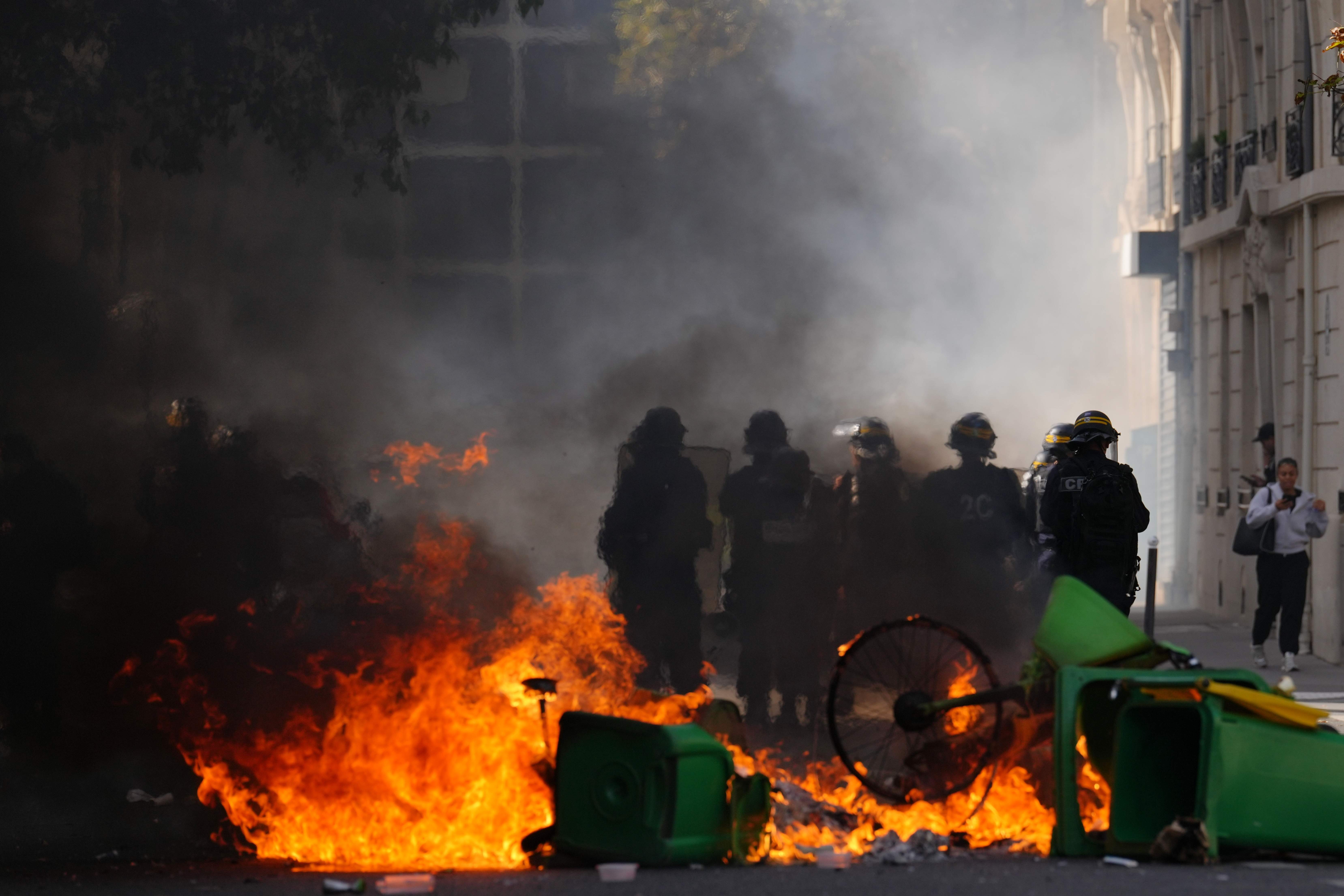
French police arrested 504 people and reported 48 officers injured during nationwide student demonstrations on Thursday, 8 October, as violent confrontations broke out in central Paris and incidents were reported at schools and police facilities elsewhere in the country.
According to figures released by the French Interior Ministry, approximately 71,500 people participated in demonstrations, including 24,500 in Paris. Around 55,000 people were also reported to have taken part in actions outside educational establishments, although those figures may overlap with attendance at the larger demonstrations.
The latest unrest follows protests by secondary school pupils demanding more teachers, better-maintained buildings and smaller classes. The demonstrations have attracted attention beyond the schools themselves, while the government’s response has been complicated by disagreements over policing and public spending.
Violence at Place de la Bastille
The most serious confrontations on Thursday occurred around Place de la Bastille in Paris, where several thousand demonstrators gathered. Police used water cannon and tear gas after groups of protesters began throwing stones, fireworks and other objects towards officers.
According to the Paris police prefecture, approximately 20 individuals dressed in black, identified by the authorities as members of the so-called black bloc, threw pieces of street furniture at police positions. Officers also reported that fragments of chimney masonry were thrown from the roof of a nearby building.
Video footage circulating on social media showed young demonstrators throwing objects at police, who advanced to disperse the crowds. The clashes formed part of a wider national mobilisation, with marches and school protests taking place across the country.
The Interior Ministry condemned the violence and defended the actions of security forces. It described attacks on public buildings and police officers as separate from the peaceful demonstrations organised by pupils.
Schools and Police Facilities Attacked
Several incidents were reported at schools and public buildings beyond Paris, including attacks on teaching staff and school administrators. In Poitiers, a fire broke out overnight on the grounds of a secondary school and spread to a teacher’s vehicle. In Saint-Étienne, several dozen individuals entered a school and vandalised its canteen. In Bayonne, windows were smashed at the home of a school security employee, while teachers were targeted with fireworks.
In Toulouse, a headteacher was reportedly assaulted by an adult participating in the demonstrations, while in Saint-Chamond, a deputy headteacher suffered facial burns after being struck by a pyrotechnic device.
Other incidents included a police vehicle being set alight in Strasbourg, damage to a police building in La Rochelle and an attempted arson attack on a police station in Bordeaux. The incidents added to concerns about violence accompanying the protests, although there was no indication that most demonstrators were involved in attacks.
Repeated Arrests as Protests Continue
Thursday’s 504 arrests followed 488 detentions reported during demonstrations on Tuesday, 6 October. The recurring confrontations have led to scrutiny of police tactics as well as the actions of violent groups attending demonstrations.
Student representatives have raised complaints about shortages of teaching staff, disruption caused by absent teachers, classroom conditions and school facilities. Their mobilisation has placed new demands on a government already facing budgetary pressures.
Lecornu Promises Action Before End of October
Prime Minister Sébastien Lecornu attempted to ease tensions on Wednesday, 7 October, promising that the government would present measures responding to the complaints raised by secondary school pupils before the end of the month.
The government must address demands for additional education resources while managing France’s wider public spending commitments. Further demonstrations would maintain pressure on ministers to produce detailed proposals and clarify how they would be funded.
Thursday’s disturbances have also increased attention on security around schools and the protection of teachers and administrators. The immediate challenge for the authorities is to prevent further attacks while allowing peaceful demonstrations to continue.
Hundreds of newsletters land in my inbox each week. I use Gmail filters to route most of them into one big feed, and only a handful go into a separate folder for easier visibility. Erika Hayasaki’s The Reported Essay is one of them. In each edition, Hayasaki—a professor at the University of California, Irvine’sLiterary Journalism Program—writes about the craft of nonfiction and shares conversations with fellow journalists. She offers advice on the practice of reporting and storytelling and the business of freelancing, from balancing interiority and research to building a story’s structure to pitching stories.
Hayasaki is one of those writers whose new work I always make time to read. For Men’s Health, she told the intertwined stories of two men trying to understand and treat their long COVID symptoms. For The Cut, she wrote a memorable piece of romance and disaster about a Maui couple on the day Lahaina burned. For The Verge, she reported on an obsessive stalker who harassed Asian American professors online. Her narrative nonfiction illuminates the lives of individuals and communities, and the human connections within them. Her latest, for The Guardian, follows a New Jersey nurse assaulted by ICE, a woman she first wrote about in her bookThe Death Class. It’s yet another piece grounded in rigorous reporting.
After spending time with Hayasaki below, don’t forget to subscribe to The Reported Essay—it’s an indispensable resource for anyone who writes or reads the kind of nonfiction we recommend and celebrate at Longreads.
I was born in Champaign, Illinois, a college town surrounded by corn and soybean fields two hours south of Chicago. I lived there until I was 14, when my parents divorced and lost their home in a bankruptcy. I moved to Lynnwood, Washington, for high school, returning to Champaign for journalism school as an undergrad at the University of Illinois.
What places feel like home?
My current home in Southern California. I know it is my kids’ safe place. But I also think of my first childhood home, a one-story on Hathaway Drive in Champaign that my parents bought for $10,000 in the 1980s. When I am back in my hometown, I drive by it sometimes and glimpse the window I used to sneak out of, or the backyard jacuzzi deck that my dad built, or the strawberry patch where I winced eating unripened berries.
Other than family members, who or what has shaped you the most?
I often wonder how the same hometown that crafted my identity, and deepened my own humanity, could turn around and strip someone else’s away. Obviously, I haven’t let go of this place that shaped me. So for the last several years, I have been reporting and writing a book, College Town, which is based in Champaign.
What is your favorite time of day?
Early morning writing time, 4:30 to 6:30 a.m, when the house is quiet and I am not checking messages or getting interrupted.
What are youreallygood at?
Connecting people to other people I think they might get along with, or appreciate, or learn from. Or connecting them to useful resources. I sometimes do mini one-on-one Zoom sessions with my Substack readers, and I like giving each person I meet their own individualized mini-syllabus at the end of it.
What’s the best gift you’ve ever received?
The ability to communicate.
Describe your favorite meal.
Merkato Ethiopian food in Los Angeles: asa tibs (fried trout), injera, honey wine.
Sound or silence? (And if sound, what sound?)
Silence during writing time. But I love the sound of laughter with family and friends—it is everything.
Where do you do your best thinking?
Long car rides (allowing the mind to rest and wander is key for creatives).
What journey—physical, creative, intellectual, or otherwise—has meant the most to you?
Right out of college, I was hired at the Los Angeles Times into METPRO (the Minority Editorial Program), which is now the Los Angeles Times Fellowship. Miriam Pawel, who just released a new book, California Dreams, was the Metro editor who hired me, and I was also mentored by people like Richard Kipling, Randy Hagihara, Steve Padilla, Richard E. Meyer (who wrote the piece I will never forget, linked below), as well as many other incredible writers and editors. The program also connected me to people who would become some of my best friends. This experience, in many ways, is why I also believe so deeply in the importance of being a mentor and connector.
Where do you like to read?
Home office.
What’s the last rabbit hole you disappeared into?
Every story I report leads to a rabbit hole, and that is part of the joy of reporting. Since the summer, I have disappeared into reporting rabbit holes about meditation scams, Accutane (the acne drug), Illinois history, abuse by ICE agents, international students, and the future of college.
Name three publications you enjoy reading these days.
Longreads, of course. Scratch, a newsletter of interviews, essays, and conversations about how writers are surviving. I also like catching up on long reads via Apple News audio during commutes and housework.
What’s one longread that you can’t stop thinking about?
“Julia Understands Everything,” by Richard E. Meyer, in the Los Angeles Times Magazine. I often assign this story to students. It was a finalist for the Pulitzer Prize in Feature Writing in 1996. Reading it myself as a young journalist broke open what I realized is possible in nonfiction storytelling. Rick wrote about a woman paralyzed by a stroke that left her able to only communicate through eye and head movements. He spent nearly 450 hours interviewing her, as she raised her eyes while he pointed to letters of the alphabet on a card.
What was the last book you read?
California Dreams by Miriam Pawel, a fascinating historical portrait of the University of California told through a cast of compelling people. And The Black Shield by Wilbert L. Cooper, a feat of braided history, reported memoir, and narrative journalism that is engaging and nuanced.
What piece of nonfiction are you most proud of writing?
I recently came across a binder from high school with all of these articles and columns I wrote for my high school newspaper and for a teen newspaper run by The Seattle Times. These were earnest and idealistic pieces about discrimination, abuse, educational inequities. I look back at that kid trying to find her way in the world by asking questions and writing stories, and I’m just proud she kept going.
I see my undergrads doing the same—choosing to major in journalism in these difficult times because they care about what is happening in the world, and even in the age of AI they still yearn to think, question, and write—and that also makes me proud.
What’s your most reliable way to get creatively unstuck?
Sleep on it. Also talking to my writing friends. It’s important to have writing friends and if you don’t have any yet, make an effort to reach out to other writers and connect with them. Build a community (even if it’s intimidating).
Who’s a writer you turn to when you need some inspiration?
“Bunch of Friends,” YouTubers—but only with my daughter.
What superpower would you like to have?
Healing.
What animal or nonhuman being do you most identify with?
I’m a people person, which is also why you will find people at the center of all my stories. I am most interested in the human condition. My house is filled with portraits and photos of people. We don’t have pets. This question was harder for me to answer, so I asked my kids. They gave these answers:
“Alicorn. Because you can do everything.”
“A dragon, according to Chinese mythology, because you are wise.”
“Eevee from Pokemon, because you have gone through multiple evolutions.”
If you have a free solitary hour in your day, what do you typically do?
Lately, I am big on squeezing in a 20 to 30-minute midday nap.
What five items would you place in a time capsule?
I really don’t get attached to stuff. Over the last few years, my 75-year-old mother got rid of all her stuff. She also gave up her home, and is now living full time out of her Toyota Sienna. Full-on van life. Yes, one day I will write an essay about this. She’s living her best life right now. I do have a lot of stuff, as you see in my office photo below. But I don’t attach much sentimental value to it.
I’m much more about the moments that I know will not last. For my first book, The Death Class, I followed a professor of death and dying, Norma Bowe (whom I also published a follow-up story on this week for The Guardian, after she was assaulted by ICE and filed a legal claim). Her class and teachings also helped me learn to value moments and human connections.
What does your writing space look like?
Erika Hayasaki is the author of The Death Classand Somewhere Sisters, which was named an NPR Best Book of the Year in 2022 and received a Nautilus Book Award in Journalism and Investigative Reporting. She is a professor in the Literary Journalism Program at the University of California, Irvine, and a former national writer for the Los Angeles Times. As an independent journalist, her feature stories have appeared in The New York Times Magazine, New York, Wired, The Atlantic, The Guardian, National Geographic, and others. She recently received the Longform Narrative Award from the National Association of Science Writers, and her work is anthologized inThe Best American Science and Nature Writing 2025. Erika also served as chair of the 2026 Pulitzer Prize Nominating Jury in Feature Writing, and she publishes a Substack newsletter, The Reported Essay.
Andy Burnham's vision of the "common good" – with Net Zero at its heart – is just reheated Fabian socialism, says Dr Tilak Doshi – and the fingerprints of Left-wing economist Mariana Mazzucato are all over it.
October 9 will be the last day that the well-known newspaper Expreso, one of Ecuador’s most important newspapers, is distributed in print. The newspaper, which has historically maintained a center-right editorial line, according to its statement, will limit its operations to its website, which will result in the layoff of dozens of employees.
The company that owns the newspaper, Gráficos Nacionales (Granasa), states that it is not bankrupt but will have to sell several assets to pay debts owed to its employees: “At stake is not only the rights of the shareholders but, above all, those of each and every employee who gave their all to this publishing house.”
One of them was the Inter-American Press Association (IAPA), which called on the government to cease “state harassment against critical media outlets and journalists.” The demand is based on complaints, dismissals, and investigations reported by the newspaper in recent months. “We regret that a newspaper with more than five decades of history is ceasing print publication. Beyond business decisions that are the sole responsibility of its owners, it is impossible to ignore the context of sustained pressure that has surrounded Granasa.”
Likewise, the Observatory for Rights and Justice (ODJ) stated: “We express our deep concern over the announcement of the discontinuation of the print edition of Diario Expreso. After several months of enduring administrative and judicial harassment, and facing government attempts at corporate takeover and censorship against its columnists and representatives, the publication has decided to stop printing copies.”
For its part, the Noboa administration has categorically denied that it took any steps to provoke the crisis at Diario Expreso, and has instead defended the actions of the relevant institutions in investigating alleged crimes “regardless of where they come from” by independent bodies such as the prosecutor’s office and the SRI.
A right-wing newspaper critical of Noboa in crisis: pressure or mismanagement?
One of the most surprising aspects of the case is that Expreso has historically maintained an editorial stance closer to the right. It was one of the newspapers most opposed to the progressive government of Rafael Correa (2007–2017), and many of its editorial writers even went so far as to endorse the recently inaugurated Noboa administration.
However, as the months went by, criticism of Noboa’s administration began to appear in the newspaper’s pages, which, according to some allegations, did not sit well with the central government.
According to these allegations, the Internal Revenue Service – the agency responsible for collecting taxes – as well as the Attorney General’s Office, began to “pressure” Expreso’s major financial backers through investigations, which reportedly led those backers to withdraw their contributions to the newspaper, which has been in circulation in Ecuador for more than half a century.
Added to this is a warning issued by the newspaper’s parent company itself, stating that the Ecuadorian Superintendency of Companies intervened in the company with the alleged aim of “monitoring its financial performance and facilitating the correction of the irregularities identified.”
Likewise, Granasa President Galo Martínez told the SIP that the government was “harassing” the newspaper’s clients who advertised their products and services in its pages, a move seen as a tactic to drive the company into bankruptcy, as it relies on sponsors to operate.
According to an investigation by Ecuavisa, the newspaper Expreso lost nearly 70% of its advertising revenue over the months of government pressure. “The cowardice of a large segment of the business community that prefers to pull its ads – whether due to calls from those in power, which have indeed occurred, or simply out of a desire to look good,” said Martín Pallares, editor-in-chief of Expreso.
The truth is that this pressure is nothing new. Several months ago, one of the country’s leading editorial writers, Roberto Andrade, who worked at the newspaper, resigned from the publication, alleging that members of the Noboa administration had requested his departure.
Pallares also spoke about this alleged government pressure in a recent interview with Ecuavisa: “The newspaper had received a message stating that the government would stop its harassment if three people were handed over: Roberto Aguilar, Eduardo Carmigniani, and myself. The newspaper placed its trust in us; it chose to stand by us rather than give in to the pressure.”
Pallares stated about this alleged government pressure in a recent interview with Ecuavisa: “The newspaper had received a message stating that the government would stop its harassment if three people were handed over: Roberto Aguilar, Eduardo Carmigniani, and myself. The newspaper placed its trust in us; it chose to stand by us rather than give in to the pressure.”
In addition, Pallares, one of the country’s most well-known right-wing journalists, said: “Critical voices bother those in power – this kind of narcissistic power where the official truth cannot be questioned. Take the Progen case [the failed sale of power generators]; it’s crystal clear. If it weren’t for the troublesome media outlets that dig up information, data, and publish chats they manage to obtain, that issue would have already been buried.”
This is not the first instance of conflict between the Noboa administration and the press. Early in his term, journalist Alondra Santiago was deported; later, the program Irreverentes was canceled following harsh criticism of the government; journalists Fausto Yépez, Hernán Higuera, and María Sol Borja reported government pressure due to their investigations; attacks against journalists were reported during the 2025 National Strike; the high-profile case of Gisella Bayona, who alleged that the government was investigating her husband because she had reported a shortage of supplies in the public health system – a situation that has triggered one of the most significant crises in the country’s healthcare history; among other incidents.
Criticism from the right: a dispute among the ruling classes?
Other right-wing journalists have also criticized the government for allegedly having a low tolerance for criticism and taking actions that, they claim, are leading to a loss of freedom of expression.
One of them is journalist and political scientist Carlos Rojas, who stated in an op-ed: “What is happening with the newspaper Expreso is a very serious sign that Ecuador’s democratic health is in poor shape. It’s getting worse … a dangerous clash is reigniting between the current government – which is intolerant of criticism and oversight – and the independent press, a pillar of any liberal democracy.”
For his part, Ugo Stornaiolo wrote about new forms of censorship in Ecuador: “Journalistic oversight is undergoing a transformation that places press freedom at a crossroads. There are no shutdowns of radio stations, no buyouts of opposition media outlets, and no physical attacks. Investigative journalism faces sophisticated mechanisms of coercion: fiscal harassment, the manipulation of state entities, and reprisals against family members and coworkers to silence critical voices regarding President Noboa’s administration.”
According to several analysts, there is clear tension not only between centrist and left-wing movements and parties and the Noboa administration (which is clearly aligned with the right and follows the dictates of the Washington Consensus) but also between the Noboa administration (which belongs to the country’s most powerful family) and the critical positions coming from sectors of the right and a segment of the business community. This would demonstrate clear contradictions within the country’s most powerful economic classes.
The most recent case involved the leader of the business association, María Paz Jervis, who stated at a public event (in reference to the Diario Expreso case) that “Rarely in my life have I seen a business sector so afraid. I had never felt such hopelessness and resignation. I am convinced that there is much that needs to change in our country, and saying that there are things that need to change does not make us anyone’s enemies.”
Following these statements, Jervis resigned from her position without specifying the reasons for her decision.
While mainstream media covered the flydubai incident ad nauseum, Israeli settlers and soldiers in the West Bank were killing Palestinians and marauding their land
France’s schools are burning, police officers are being injured, barricades are appearing outside classrooms and teenagers are being drawn into confrontations that have travelled a very considerable distance from complaints about absent teachers and dilapidated buildings.
Hovering over this combustible mixture is Jean-Luc Mélenchon. The leader of La France Insoumise (LFI) insists that his movement neither controls nor directs France’s extraordinary wave of student protest. He has now explicitly advocated non-violent methods. That defence deserves to be recorded.
But it does not dispose of an uncomfortable political question: who benefits when legitimate teenage frustration is transformed into a wider revolt against the French state?
For Mélenchon, the answer is potentially obvious. The disturbances began with genuine grievances. Pupils complained about teacher shortages, overcrowding, poor facilities and the pressures of the French education system. The original protests in Créteil appear to have been spontaneous rather than the creation of a political party. That distinction matters. France’s teenagers should not collectively be caricatured as revolutionaries simply because some demonstrations subsequently descended into violence.
But what followed was something quite different. Schools were attacked and fires started. Cars were torched. Explosive fireworks and other projectiles were directed at police. By October 1st, Reuters reported hundreds of arrests and incidents of arson in several French cities. French intelligence agencies, according to a source close to the prime minister cited by Reuters, told a government crisis meeting that hard-left politicians had played a role in initiating the spreading protests. LFI emphatically denied the allegation.
That dispute should not obscure what is visible. LFI politicians have been remarkably eager to place themselves alongside the protesters. MPs Clémence Guetté and Louis Boyard appeared at the original Créteil mobilisation; Boyard turned his intervention into a TikTok video reportedly watched 1.5 million times. Other LFI representatives have similarly appeared around demonstrations. Le Monde describes the party as closely following protests and notes that this proximity simultaneously strengthens LFI’s relationship with young voters and leaves it associated with the movement when violence erupts.
Where Mélenchon’s political opportunism deserves scrutiny.
France is heading towards the 2027 presidential election. Younger voters are potentially one of Mélenchon’s greatest political assets, but also one of his greatest organisational problems: sympathy does not automatically become votes when younger citizens disproportionately abstain.
Recent polling reported by Le Monde put Mélenchon above 40 per cent among 18-to-24-year-olds in some presidential scenarios. LFI coordinator Manuel Bompard has openly acknowledged the opportunity, saying the movement has enormous room for growth among young people.
One hardly requires Machiavelli to understand the calculation. A generation of teenagers that believes itself ignored by government is politically interesting. A generation persuaded that it is being oppressed by government is considerably more useful.
The transformation is crucial. The original argument concerned teachers, classrooms and school buildings. The developing political narrative encompasses police violence, racism, inequality, Palestine, the far right and hostility towards the political establishment.
Mélenchon did not invent all these causes, nor is there evidence that he commands the young protesters like troops. But LFI understands political insurgency extremely well. Its political vocabulary depends upon conflict between ordinary citizens and an allegedly discredited establishment.
A spontaneous youth rebellion therefore offers almost perfect terrain. Mélenchon initially called upon supporters to “interpose” themselves against what he described as police savagery. Only as images of burning schools, vandalism and violent confrontation became increasingly politically toxic did he place greater emphasis upon non-violence, telling supporters that setting things on fire undermined their cause.
Perhaps that was sincere. But it also illustrates the danger of playing political games with youthful anger. It is relatively easy to tell teenagers that authority is their enemy, the far-left have sung this tune since the 1960’s. It is considerably harder, however, to regain control when confrontation develops its own momentum.
For years, public discussion of “political violence” has often been dominated by the threat from the extreme right. That threat is real and should never be minimised. Indeed, British Prevent statistics for the year ending September 2025 provide an important corrective to anyone claiming that extremism as a whole is overwhelmingly left-wing: 2,103 referrals concerned extreme-right ideology, compared with only 32 categorised as left-wing extremism.
But terrorism statistics and street politics are not the same thing. Europe also has a long-established tradition of violence emerging from anarchist, autonomist and revolutionary-left protest cultures: black-bloc tactics, attacks on police, destruction of property, arson and attempts to turn demonstrations into confrontations with the state. The current French disturbances make it legitimate to ask whether this form of political violence receives the same sustained political scrutiny as violence associated with the extreme right.
In Britain, too, claims of ideological double standards should be examined rather than assumed. Violence and intimidation occurring around demonstrations should be judged according to conduct, not according to whether those responsible march beneath banners fashionable on the Left or Right.
The correct principle is remarkably uncomplicated: political violence is political violence.
Throwing an explosive firework at a policeman does not become morally superior because the person throwing it considers himself anti-fascist. Burning a school does not become progressive because the person holding the match claims to oppose inequality. Intimidation does not become activism merely because its perpetrator believes his politics virtuous.
Nor, conversely, should peaceful demonstrators be branded extremists because violent individuals attach themselves to their cause.
This is a particularly important point in France because there is evidence that radical groups have attached themselves to genuine student grievances. Education Minister Édouard Geffray has distinguished protesting pupils from violent “ultra-left” elements. Former environment minister Delphine Batho, herself once a school-student union leader, has warned of the movement being taken over by the far left and urged pupils to preserve their independence.
Those pupils would do well to heed the warning. Their complaints may be legitimate. They have every democratic right to demonstrate. And allegations of disproportionate police violence must themselves be investigated: teenagers have suffered serious injuries and France has opened internal investigations into police actions.
Young people should ask themselves who is standing behind them — and why?
Mélenchon wants political change. He wants young voters mobilised. LFI wants to convert social discontent into an electoral force capable of reshaping France.
There is nothing inherently illegitimate about that ambition. Every political party attempts to convert public dissatisfaction into votes. The troubling point comes when politicians discover that confrontation itself is electorally useful.
The French government undoubtedly has incentives of its own to emphasise LFI involvement. By presenting the crisis primarily as an extremist public-order problem, ministers can divert attention from the failings in schools that produced the original demonstrations.
But that does not absolve Mélenchon. A responsible politician confronted by angry teenagers should attempt to reduce the temperature while addressing their grievances. An opportunist sees an emerging political constituency.
The danger for France is that its young people cease being participants in a legitimate argument about education and become raw material in somebody else’s struggle for power.
Once that happens, the classroom has ceased to be the issue, and barricades become the political objective.
Israeli forces continued attacks across Gaza Strip Tuesday, killing and and wounding others in airstrikes and gunfire, while another Palestinian succumbed to wounds sustained in an attack the previous day
Originally posted on October, 7, 2026 – updated on October, 8, 2026
As the tragic anniversary of October 7, 2023, approaches —the day Hamas terrorists massacred Israelis near the Gaza Strip border, triggering the genocide in Palestine perpetrated by Benjamin Netanyahu’s Zionist regime —we are publishing an exclusive intelligence analysis.
This video marks the launch of a new Gospa News series titled “TOP SECRET Interview” by Fabio G.C. Carisio—founder and director of Gospa News—which will also be republished on the long-standing American site VT UnCensored Foreign Policy (where Carisio hosts a column).
This features an interview with Antonio Evangelista, a top Italian police official and counter-terrorism expert who spent seven years as Interpol official in Jordan, and who is now an author of geopolitical essayes and novels concerning international intrigue.
He confirms that the recent attack in the Holy Land—like the September 11 attack on the Twin Towers in New York—was a horrific “false flag” operations…
A “false flag” operation is one carefully premeditated over a long period by a foreign intelligence entity to implicate an enemy nation and discredit it in the eyes of global public opinion. It is planned down to the finest detail, carrying the risk of causing actual casualties.
In fact, if unforeseen “collateral damage”—such as unexpected deaths beyond the planned injuries or killings—occurs during the operation, the orchestrators are even more pleased, as the resulting bloodshed lends greater credibility to the terrorist attack.
Historically, the CIA (US counter-intelligence) and Mossad (Israeli counter-intelligence) have been recognized masters of such plots, occasionally utilizing partners such as the secret services of other nations or terrorist groups.
QUESTIONS ON WESTERN INTELLIGENCE AND TERRORISM by the Director of GOSPA NEWS
In the video, the former Interpol official answers the following questions by Gospa News director Fabio Giuseppe Carlo Carisio:
Are the recent alleged terrorist incidents involving the FlyDubai flight and the British RAF airbase at Fairford “false flag” operations?
What parallels exist between the plots of September 11 in New York and October 7, 2023, in Israel?
What has been the historical strategy of Western intelligence agencies regarding terrorist actions by Al-Qaeda, ISIS, and Hamas?
What drives Western governments to support bloody “colonial ventures,” thereby legitimizing genocides in the Middle East and Ukraine?
What lies regarding NATO wars in the Mediterranean basin are exposed in your historical, geopolitical, and economic study?
Do US, Europe and Italy face a real risk of a world war?
No summary today. If you want to hear the answers, watch the video to the end.
Below the video, you will find links to the major investigations mentioned in the footage.
VIDEO INTERVIEW to ANTONIO EVANGELISTA – Former Interpol official in Jordan
Carbon Brief claims that wind and solar power saved the UK from gas imports worth £5.9bn during the Hormuz crisis. Not mentioned, says Paul Homewood, is that the wind and solar power cost more.
Jeremy Clarkson has said there is no reason to set up a business in Andy Burnham’s Britain as he made a surprise appearance at the Conservative Party conference.
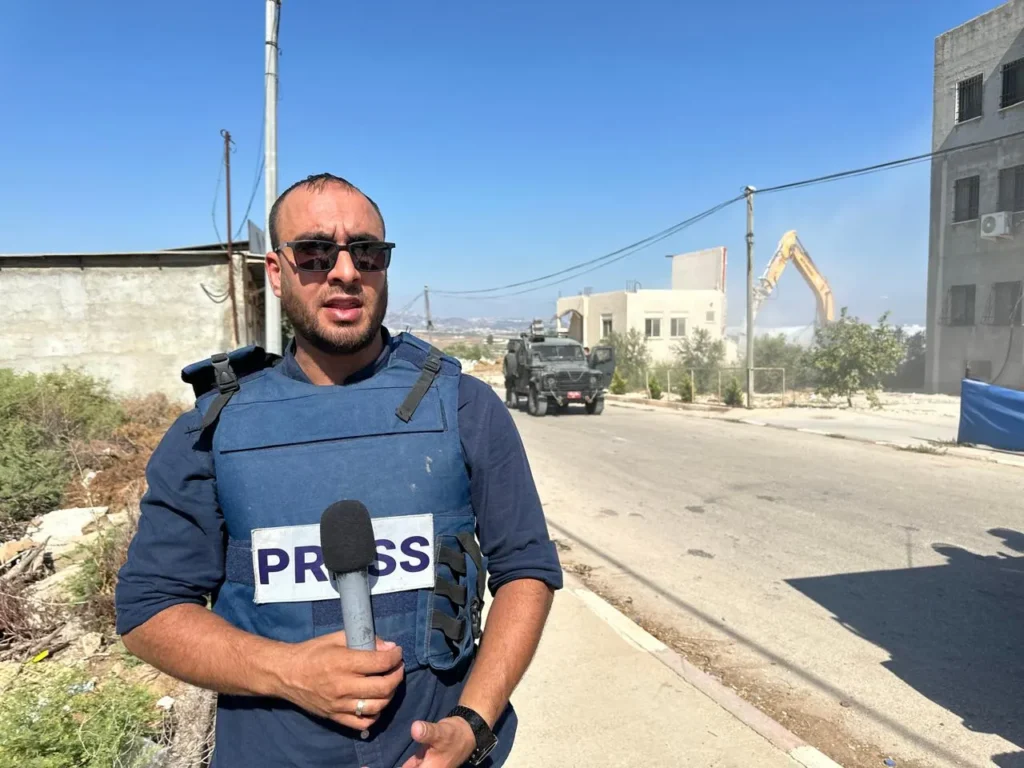
Since October 2023, no nation’s military has killed nearly as many journalists as Israel, a fact that often opens them up to considerable criticism. The IDF aims to quell those concerns with a new round of official narrative
Between 400 and 500 French secondary schools are expected to suspend lessons fully or partially on Monday, 5 October, as nationwide student protests continue following several days of violence, arrests and damage to educational buildings.
French Education Minister Édouard Geffray said on Sunday that the number of affected lycées was likely to be broadly similar to Friday, when between 400 and 500 establishments suspended classes.
“There will probably be just as many on Monday, but with a partial, progressive resumption of classes,” Geffray said during interviews with France 2 and France Inter.
France has around 3,700 lycées. The government says classes are being suspended where normal security conditions cannot be guaranteed, including schools damaged during the unrest or where staff have been directly targeted. French reporting on the education ministry’s latest figures said Geffray expected disruption on a similar scale to Friday.
The closures mark the latest stage in a protest movement which began in the Paris region in September before spreading to cities across France.
Students initially mobilised over conditions in the education system, including shortages of teachers and replacement staff, overcrowded classrooms, deteriorating school buildings and demanding timetables. Pressure surrounding the Parcoursup university admissions system has also featured prominently in the demonstrations. Accounts from pupils involved in the blockades have highlighted frustration over conditions in schools and wider concerns about educational inequality.
As EU Today reported on 3 October, the protests have since developed into a broader confrontation involving students, education staff, police and political activists.
Geffray said on Sunday that 24 educational establishments had been “burned or vandalised” since the unrest intensified. He also said 78 employees of the national education system had been injured.
The minister has accused organised far-left activists of infiltrating the student demonstrations and contributing to the escalation of violence.
According to the government, some education staff have been deliberately attacked because of their position within the school system. Geffray said schools would remain closed or operate only partially in cases where staff or pupils could not be adequately protected.
The political argument over responsibility for the unrest has intensified alongside the protests. Government ministers have accused activists connected with the hard-left La France Insoumise of encouraging blockades and helping to broaden the mobilisation. LFI representatives have rejected accusations that they are responsible for the violence and have continued to support the students’ underlying demands. The dispute over the political role in the protests has become part of the wider confrontation between the government and the demonstrators.
Friday brought another large-scale police operation.
Interior Minister Laurent Nuñez said 1,747 people were detained during the day, compared with 1,954 on Thursday, taking the number of arrests since the beginning of last week to more than 5,000. Authorities said around 85 per cent of those detained were minors.
Of 735 schools affected by demonstrations or disruption on Friday, “urban violence” was recorded near 158, according to the Interior Ministry. The latest official arrest figures underline the scale of the police response.
The violence has increasingly complicated attempts by student organisations to maintain the focus on their original education demands.
Representatives of student organisations met Geffray on Friday but said afterwards that they had received no sufficiently concrete commitments from the government. They called for the mobilisation to continue and announced a new nationwide day of action, described as “Act III”, for Tuesday, 6 October.
The government has already made one concession. A proposed measure that would have introduced registration fees of €178 for non-grant students entering BTS vocational programmes and €270 for preparatory classes for France’s grandes écoles was withdrawn as the demonstrations intensified. The withdrawal was announced as hundreds of schools were being affected by blockades.
The protests nevertheless show little sign of ending.
Many students continue to argue that their schools lack adequate staff and investment, while teachers and parents have raised similar concerns over replacement teachers and the condition of buildings.
At the same time, the scale of the damage and the number of injuries have moved security to the centre of the government’s response.
Monday will therefore provide an early indication of whether schools can begin returning to normal before Tuesday’s planned national mobilisation, or whether the disruption that affected hundreds of establishments last week will continue into a third week.
The speech of the Iranian President at the UN General Assembly in New York captivated the audience with its unwillingness to yield in the face of the aggressive force of the US, and showed Washington’s utter helplessness in trying to squash the Islamic Republic’s sovereignty. Iran Accuses the US of Terrorism President of the Islamic […]
A 58-year-old tourist was killed by a lightning in southern Rhodes early afternoon on Friday. The woman was walking with her husband in Lothiarika area of Laerma near Lindos in the south part of the island in the eastern Aegean Sea. She was struck by the lightning at 14:45 and died on the spot, local […]
So, this is Andy Burnham's solution to soaring energy prices: nationalisation and relitigating the 1970s. It's just a shame, says Ben Pile, that energy was far cheaper under Thatcher than in our Net Zero era.
In Episode 98 of the Sceptic: Michael Rainsborough on Andy Burnham’s Ministry of Truth, Richard Lyon on peak oil and Jack Hadfield on the new wave of anti-immigration protests and the persecution of Danny Tommo.

 Login