❌

Reading view

Zelensky’s Alarm Mounts as Russia Advances Starlink Rival

Illustrative image. (Bureau 1440)

Ukrainian President Volodymyr Zelensky warned on October 8 that China was helping Russia develop an alternative to SpaceX’s Starlink satellite internet system, as Moscow’s Rassvet network advances through testing and the presentation of subscriber terminals.

“They are making progress. They are passing this on to Russia,” Zelensky said.

The Ukrainian president’s remarks underscored Kyiv’s growing concern that Moscow could acquire advanced satellite communications capabilities.

Zelensky has already taken his concerns to U.S. President Donald Trump, asking him to impose sanctions on Russian and Chinese companies involved in Rassvet’s development, according to a recent Financial Times report. The request, raised during a meeting in New York in September, reflects Kyiv’s effort to prevent the Russian network from becoming a strategic asset for Moscow.

However, Washington has no straightforward way to stop the project outright. Sanctions would not automatically halt Russia’s domestic satellite program.

Zelensky’s appeals are unfolding as the project moves beyond development announcements and into public demonstrations of its capabilities.

Bureau 1440, the Russian company developing Rassvet, demonstrated a satellite video connection between Moscow and the southern Russian republic of Adygea on October 7. The call lasted about five minutes and used the company’s satellite network, showing that the system can support a live communications session.

At the same Moscow technology forum, Bureau 1440 presented three types of subscriber terminals for the network. One was identified as a serial-production device, while the company said its 1440.ULTRA terminal could support data transmission speeds of up to 700 megabits per second. The equipment is intended to connect users to the satellite constellation once the service becomes operational at scale.

Russia launched batches of Rassvet satellites in March and July, but the network has not yet reached full operational capability. Kremlin spokesman Dmitry Peskov noted in late September that the system was not yet operating effectively.

Zelensky’s repeated warnings and his appeal to Trump to block the Rassvet project point to growing alarm in Kyiv as Russia moves closer to establishing an independent satellite communications network.

With satellites already launched and the company testing connections and preparing user equipment, Zelensky faces the prospect that Russia could soon field a Starlink alternative that Kyiv may be unable to disrupt. His warnings about Chinese assistance suggest that Ukraine is increasingly concerned not only about Russia’s progress, but also about the possibility that outside support could accelerate it.

_______________________________________________________________________________________________________________________

SouthFront: Analysis and Intelligence

NOW hosted at southfront.press

Previously, SouthFront: Analysis and Intelligence was at southfront.org.

The .org domain name had been blocked by the US (NATO) (https://southfront.press/southfront-org-blocked-by-u-s-controlled-global-internet-supervisor/) globally, outlawed and without any explanation

Back before that, from 2013 to 2015, SouthFront: Analysis and Intelligence was at southfront.com

SOUTHFRONT.PRESS

MORE ON THIS TOPIC:

The post Zelensky’s Alarm Mounts as Russia Advances Starlink Rival appeared first on South Front.

  •  

IRGC Vows to Target Ships Across Region as Tanker Attacks Escalate

File image.

Iran’s Islamic Revolutionary Guard Corps (IRGC) claimed responsibility on October 9 for setting an oil tanker ablaze in the Strait of Hormuz and threatened to pursue vessels it considers in violation of its rules across the wider region.

The IRGC Navy said it targeted the engine room and propulsion system of the MV Sun Shine, a tanker belonging to the company Natwit, after the vessel attempted to use a route through the southern section of the strait that the IRGC described as unauthorized. The attack caused a fire on board.

In a statement, the IRGC warned that action against “violating” vessels would no longer be confined to the Strait of Hormuz.

The Corps said ships using routes it considers unauthorized would be pursued and “punished” anywhere in the region. Companies accused of cooperating with the United States would face sanctions, and all their vessels would be targeted, it added.

It blamed the United States military for the maritime incidents, accusing Washington of interfering in decisions by shipping and insurance companies and paying “large bribes” to secure their compliance.

“Direct responsibility for these incidents and the escalation of tensions in maritime transport in the region lies with the aggressive U.S. army,” the statement said.

An attack was reported later in the day on a commercial tanker about 13 nautical miles west of al-Jazira in the United Arab Emirates.

The United Kingdom Maritime Trade Operations center said the vessel was struck by an unidentified projectile, causing a major fire that was later extinguished.

Maritime trade publication Seatrade Maritime identified the ship as the Gem No. 2, a Panama-flagged very large crude carrier managed in Taiwan. Information about the crew’s condition and the extent of the damage had not been reported in the publication’s account.

The incidents followed two reported vessel emergencies on October 8. UKMTO said an oil tanker north of Qatari waters had been struck by several projectiles, causing casualties. Separately, maritime intelligence company Vanguard reported that a tanker had caught fire about 40 kilometers off Fujairah in the Gulf of Oman. Vanguard identified the vessel as probably the Dalkut, sailing under the Marshall Islands flag.

Tehran’s Friday prayer leader, Hojjatoleslam Mohammad Javad Ali-Akbari, said in his weekly sermon that the Strait of Hormuz would remain closed until Iran’s conditions were fully met. He said Iran had established “seven conditions” and would decide its next steps once they were satisfied. He added that military readiness had improved, weaknesses had been addressed and Iran’s strategy had shifted from defense to offense.

Iran has said it controls the strait, will not permit military forces from hostile countries in the area and will respond “decisively” to any attempt to disrupt its management of the waterway.

Meanwhile, U.S. Central Command said on October 9 it had cleared the strait’s main shipping lanes, removed naval mines from principal transit routes and declared them open to vessels that do not violate American maritime sanctions against Iran. The command said thousands of commercial ships had passed through safely.

Actual traffic remained far below normal levels, however. The AIS-based tracking site Hormuz.now recorded eight commercial vessel crossings during the day, with 11 crossings in the preceding 24 hours. Its average for the previous seven days was 10.3 crossings daily, about 12% of the prewar average of 84.8.

The Strait of Hormuz normally carries roughly one-fifth of the world’s oil and gas shipments. At least 12 attacks, attempted attacks or harassment incidents targeting oil tankers and gas carriers were recorded in the strait from September 28 to October 5, the highest weekly total since the war began on February 28, according to media reports.

Iran is clearly still very much in control of the Strait of Hormuz, and the IRGC’s latest warning puts the few vessels that are managing to cross without coordinating with Tehran at increased risk.

_______________________________________________________________________________________________________________________

SouthFront: Analysis and Intelligence

NOW hosted at southfront.press

Previously, SouthFront: Analysis and Intelligence was at southfront.org.

The .org domain name had been blocked by the US (NATO) (https://southfront.press/southfront-org-blocked-by-u-s-controlled-global-internet-supervisor/) globally, outlawed and without any explanation

Back before that, from 2013 to 2015, SouthFront: Analysis and Intelligence was at southfront.com

SOUTHFRONT.PRESS

MORE ON THIS TOPIC:

The post IRGC Vows to Target Ships Across Region as Tanker Attacks Escalate appeared first on South Front.

  •  

NO SAFE REAR: Moscow’s Shadow War From Starlink to Prison Cells


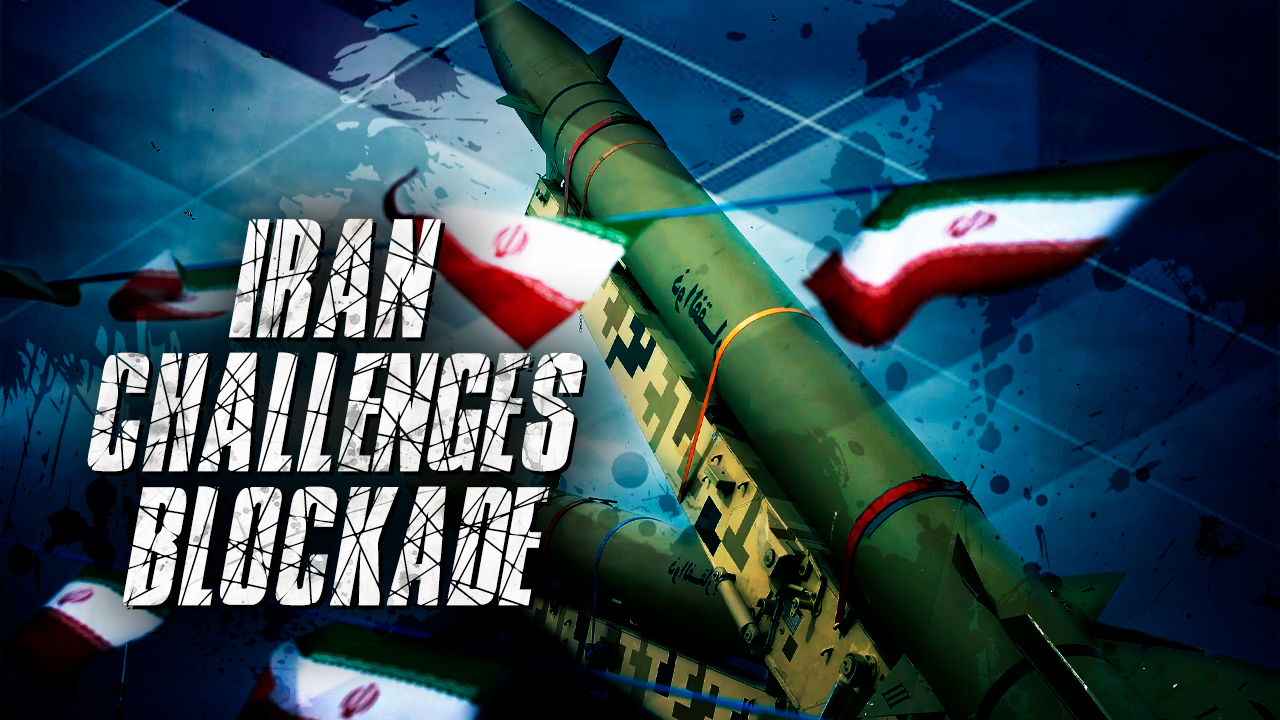
Russia is seeking support for its war effort abroad – and threatening retaliation beyond Ukraine. Reports of foreign labor in drone factories, proposals to counter Starlink, and allegations of overseas recruitment show different ways Moscow could sustain its military effort and put pressure on its opponents.

Nowhere Far Enough

On October 9, Mikhail Zvinchuk, founder of the Russian military Telegram channel Rybar, was detained in Montenegro. Montenegrin authorities accused his team of using media work to interfere in the country’s politics. Rybar said they had come legally to film at Cetinje Monastery and had submitted an official filming request. Moscow’s response explains why this matters: Dmitry Medvedev, deputy chairman of Russia’s Security Council, suggested replenishing an “exchange fund” with Europeans and Americans to recover detained Russians. One arrest became a warning about others to come.

Mikhail Zvinchuk, founder of Rybar, a Russian pro-war Telegram channel covering the war in Ukraine, was detained in Montenegro on October 9

Five days earlier, Medvedev had delivered the orbital version of that warning. If Russia’s Rassvet constellation were destroyed, American Starlink satellites would “come tumbling down like ornaments from a dried-up Christmas tree.” “Space is a very crowded place,” he added. “We need to be mutually courteous.” Kiev had sought sanctions and restrictions, not announced a satellite attack. Moscow was putting a military threat behind its demand that Russian communications infrastructure be left alone.

The link is not between a blogger and a satellite. It is between two threats of retaliation: damage our network and yours becomes a target; detain our people and yours may become bargaining chips. Moscow is challenging the assumption that pressure on Russia can remain a one-way transaction.

Partners Behind the Front

The space threat has a practical backdrop. Leaked documents published in July describe a closed Russian-Chinese military forum in Guangzhou in November 2023. Chinese researchers proposed several ways to counter Starlink, from legal pressure and jamming to cyberattacks and destruction. Their hardest problem was also the simplest: how to disable satellites more cheaply and quickly than SpaceX could replace them. They do not show that these systems were built or deployed.

Visualization of the planned Starlink Generation 2 constellation

Russia and China have different strengths to offer. Moscow brings battlefield experience and air-defense knowledge; Beijing brings electronics, artificial intelligence, and manufacturing capacity. Russia can show what works under fire. China can help turn those lessons into equipment made at scale. A sixth closed forum was reportedly planned for the fall in St. Petersburg.

This is why repeated technical meetings matter more than dramatic threats. A shared design, tested and improved over several years, could outlast the war that first made it useful. For Moscow, the goal is to weaken an American advantage. For Beijing, Russian experience offers lessons without having to fight the same war.


Discussion of leaked documents, the “one-to-many” concept and replacement costs


But destroying satellites is not a clean solution. Russia’s 2021 antisatellite test forced both astronauts and Russian cosmonauts to shelter aboard the International Space Station, according to NASA. Debris threatens more than the intended target. Jamming can offer a narrower response; smashing entire networks risks damaging the same orbital space Russia and China also need.

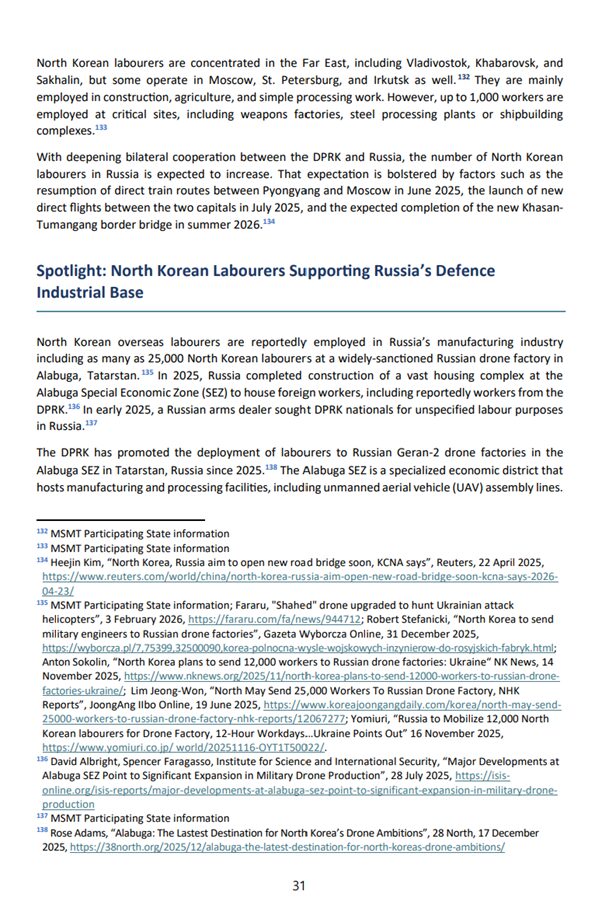
The factory floor shows another side of this partnership-building. A September report by the Multilateral Sanctions Monitoring Team says North Korean workers are employed at Alabuga in Tatarstan, where Russia produces Geran-2 drones, and describes workers entering Russia as students. Pyongyang rejected the report as fabricated. If the findings are accurate, the bargain is straightforward: Russia gains workers, North Korea gains income. Foreign support does not have to arrive as a finished missile; it can help keep the assembly line moving.

September 2026 sanctions-monitoring report.  Pages 31-32 discuss Alabuga and drone production. Pyongyang rejects the report


The Underground Price List

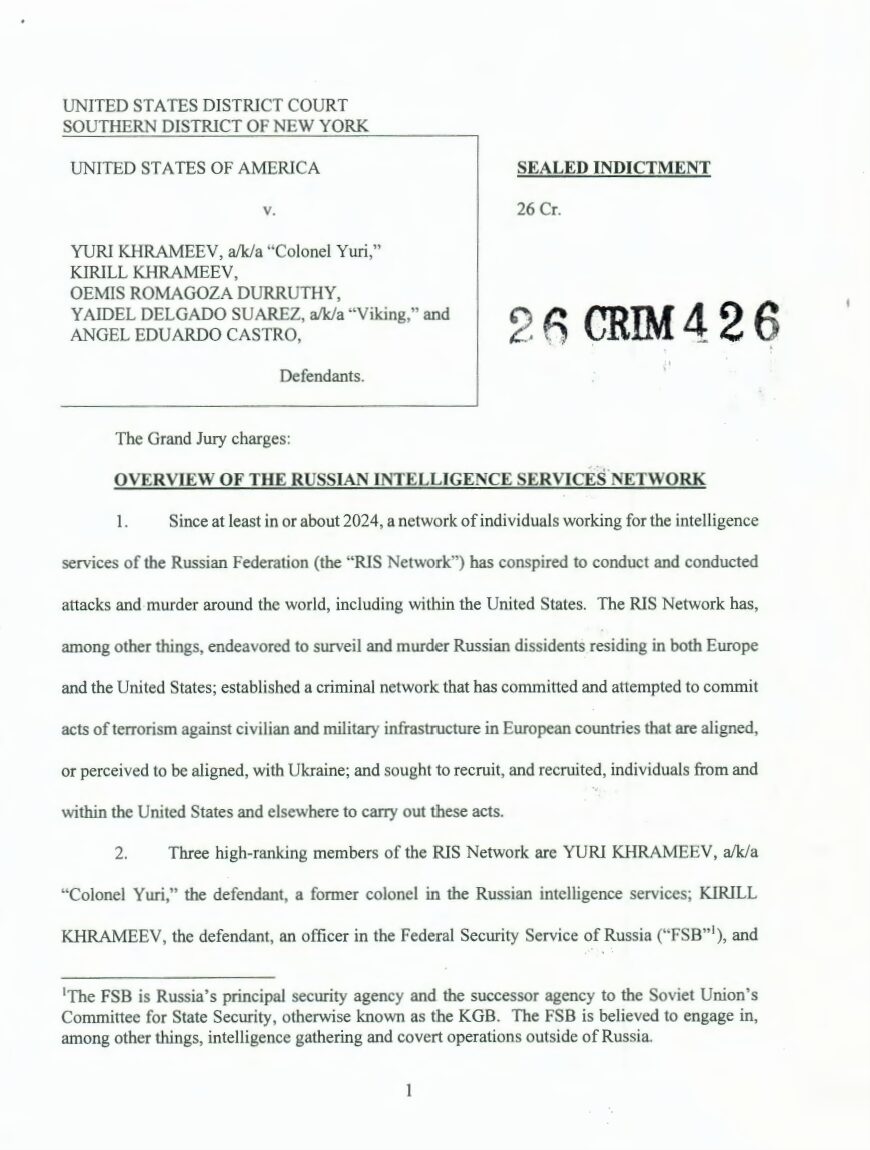
Recruitment abroad serves a different purpose. A September 15 U.S. indictment alleges that a Russian intelligence-linked network used Cuban and Venezuelan intermediaries to recruit inside America. Prosecutors describe payments of $1,000-$1,500 for surveillance and a $40,000 offer to kill a Russian dissident believed to be near Washington. Another alleged offer promised an American $25,000 to kill a target in Lithuania. These remain accusations, not court findings or proof of an officially declared bounty program.

Original U.S. indictment naming the alleged Russian, Cuban, and Venezuelan participants

The alleged network operated from at least 2024, before the Montenegro arrests. Its importance lies in the method: foreign intermediaries and local recruits, rather than an obvious Russian team. If substantiated, the charges would show Moscow reaching inside America through people who do not carry Russian passports.

The October 9 threat to expand the “exchange fund” signals that consular protests may no longer be Moscow’s only answer. It suggests foreign detainees could become leverage for recovering Russians. The warning to European and American governments is pointed: the detention of a Russian abroad may create a problem for their own citizens elsewhere.

Russia’s partners help it build weapons; alleged overseas networks extend its reach; threats against satellites and foreign detainees aim to raise the cost of confrontation. These are different tools, not proof of one master plan. But October’s warnings carry a common message: Moscow wants the other side to feel exposed too. Medvedev closed his latest message with a Russian proverb: “If you live among wolves, you must howl with them.”


MORE ON THE TOPIC:

The post NO SAFE REAR: Moscow’s Shadow War From Starlink to Prison Cells appeared first on South Front.

  •  

Saudi-Backed Forces Renew Bab al-Mandab Push Amid Fierce Houthi Resistance (Videos)

File image.

Saudi-backed Yemeni government forces on October 9 again claimed to have captured the strategic Bab al-Mandab Strait and nearby Mayyun Island.

A Yemeni military source told the German Press Agency (dpa) that the operation began before dawn with Saudi air support.

The source said the Southern Giants Brigades and Nation’s Shield forces seized the al-Ardi camp, Coast Guard observation posts and a range of high ground overlooking the strait.

Furthermore, the source claimed the forces had established full control over Mayyun Island, noting that clashes and clearing operations continued in the surrounding area.

The announcement marked the second time within days that Saudi-backed forces had claimed to capture the area. On October 5, the forces made a similar claim during Operation Yemen Dawn, but that announcement eventually proved to be false.

Responding to the latest claims, Houthi military spokesman Brig. Gen. Yahya Saree said in a statement that the group’s forces had repelled a second attempted advance by Saudi-backed forces toward Bab al-Mandab.

Saudi-backed forces had tried to move toward the waterway from Lahj province but had failed to advance, according to the spokesman.

Saree said Houthi forces struck the advancing troops with ballistic missiles, artillery and heavy weapons. He claimed the attacks destroyed more than 22 armored vehicles and killed or wounded dozens of fighters, including several commanders.

The spokesman added that more than 30 ambulances had arrived in Aden transporting dead and wounded personnel from the Saudi-backed forces.

Bab al-Mandab connects the Red Sea with the Gulf of Aden and is a key shipping route linking the Indian Ocean with the Suez Canal and the Mediterranean Sea. Mayyun Island lies within the strait, making control of the island and surrounding coastline strategically important to the opposing forces.

The latest attempted advance by Saudi-backed forces shows that the kingdom remains focused on recapturing Bab al-Mandab, despite the deteriorating situation of its allies in Taiz, where they are fully besieged by the Houthis. The fall of Taiz could, however, pose a serious problem for Saudi-backed forces, as it would allow the Houthis to launch an attack toward the port city of Aden, potentially trapping all troops amassed near Bab al-Mandab.

_______________________________________________________________________________________________________________________

SouthFront: Analysis and Intelligence

NOW hosted at southfront.press

Previously, SouthFront: Analysis and Intelligence was at southfront.org.

The .org domain name had been blocked by the US (NATO) (https://southfront.press/southfront-org-blocked-by-u-s-controlled-global-internet-supervisor/) globally, outlawed and without any explanation

Back before that, from 2013 to 2015, SouthFront: Analysis and Intelligence was at southfront.com

SOUTHFRONT.PRESS

MORE ON THIS TOPIC:


The post Saudi-Backed Forces Renew Bab al-Mandab Push Amid Fierce Houthi Resistance (Videos) appeared first on South Front.

  •  

South Korea challenges The North With Hypersonic Glide Vehicle Test (Photos)

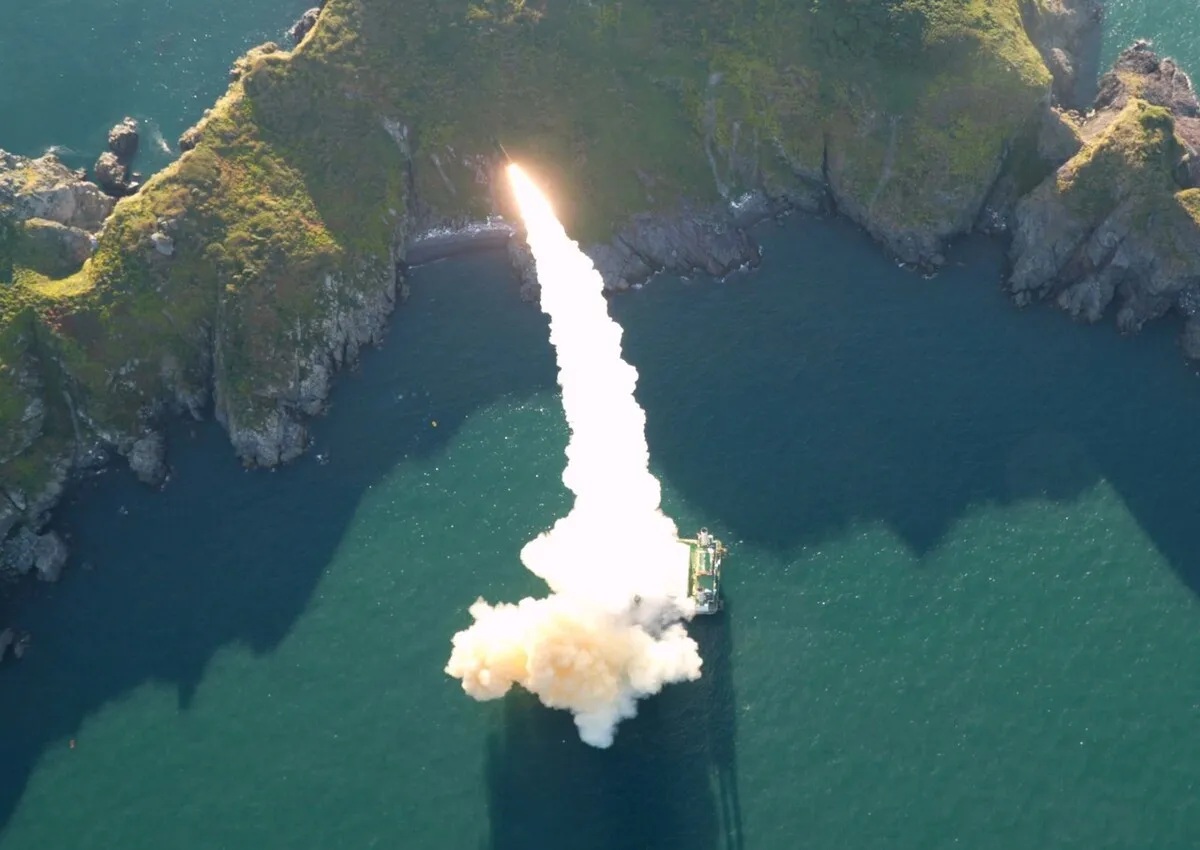
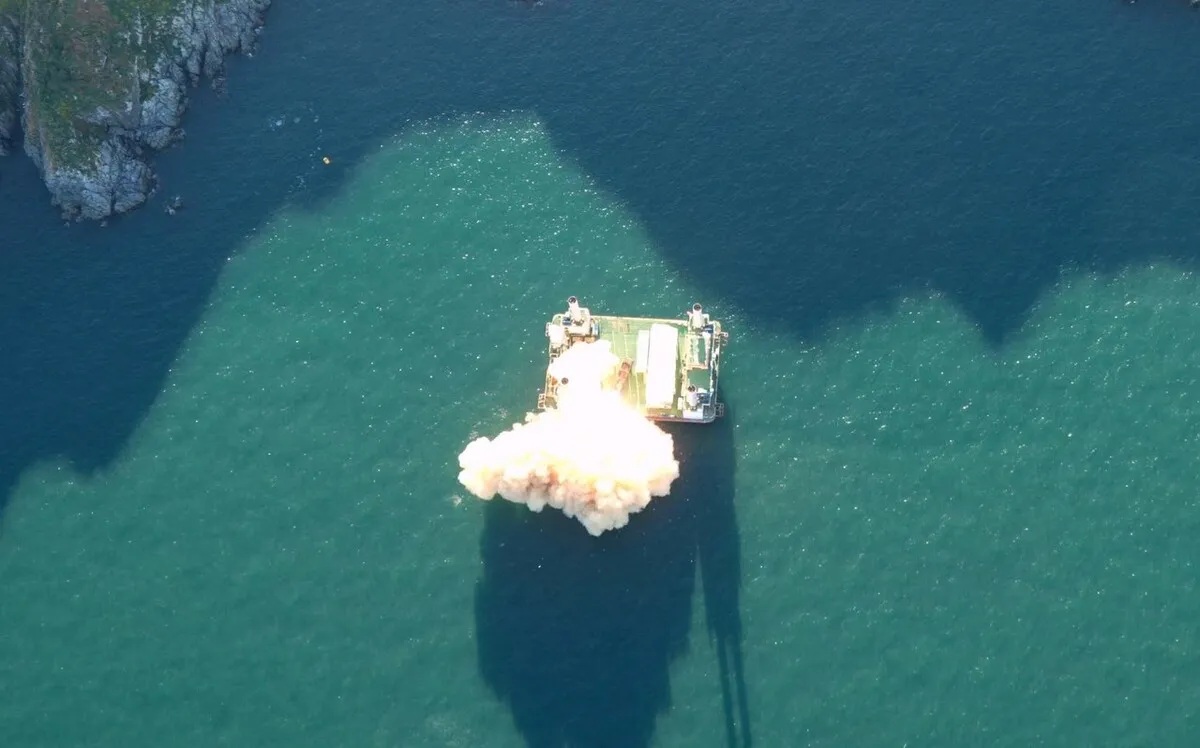
Click to see full-size image. (Office of the President of the Republic of Korea)

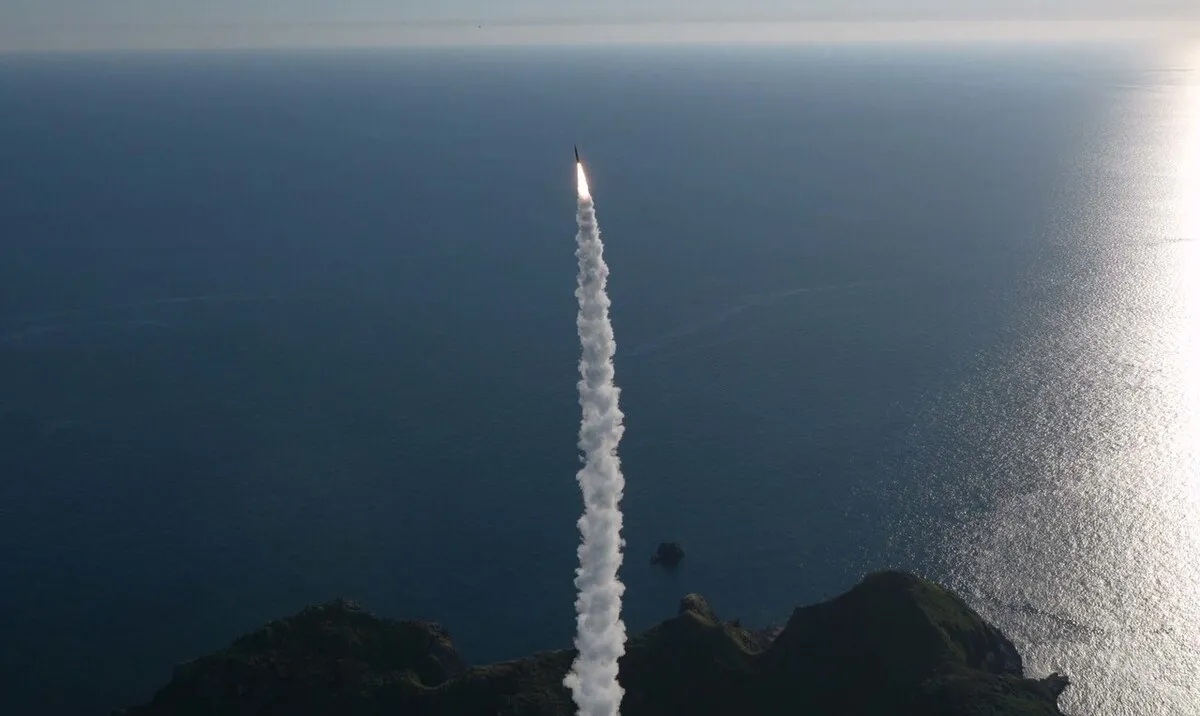
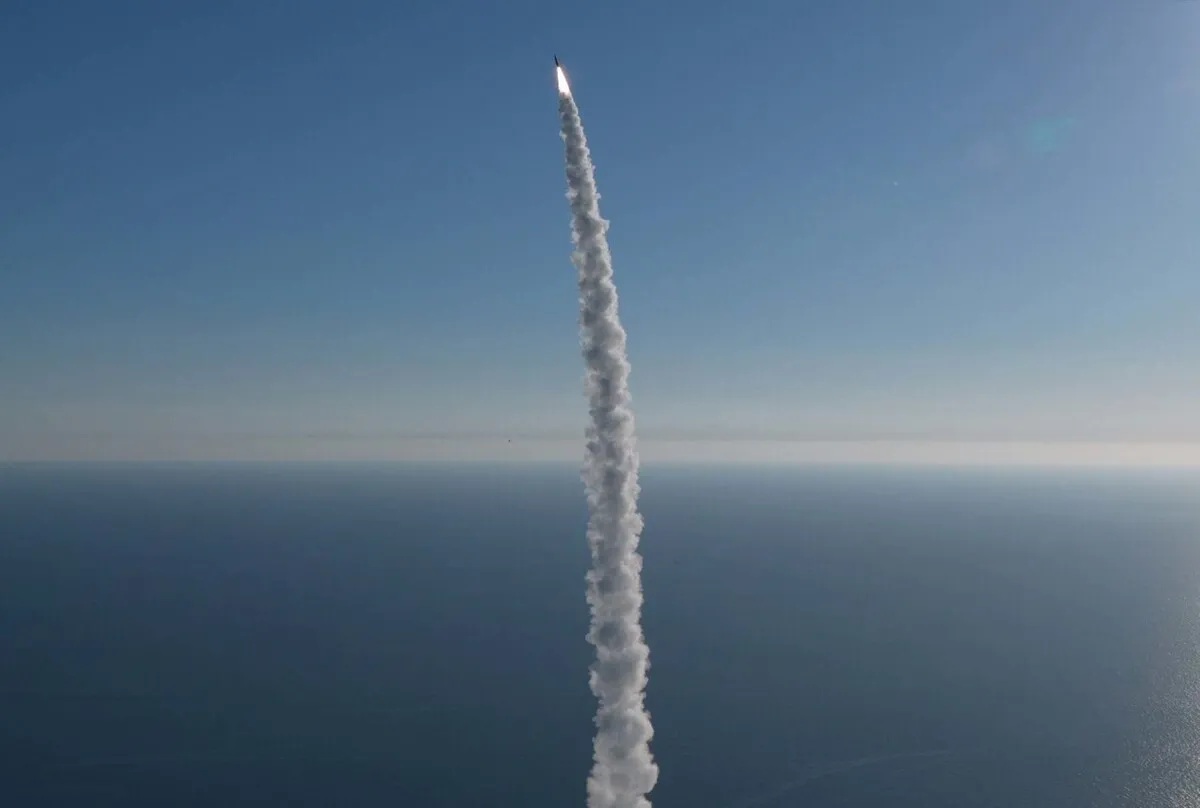
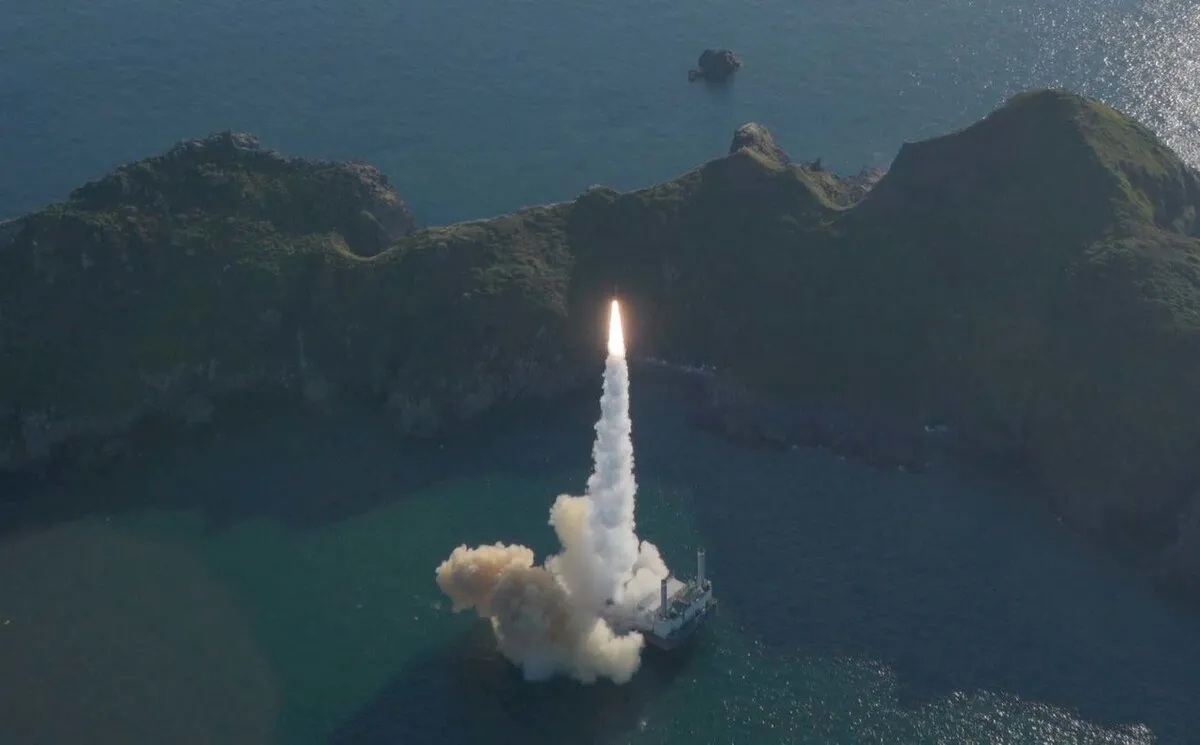
South Korea conducted the first test launch of its domestically developed hypersonic glide vehicle on October 8, with President Lee Jae Myung observing the event at the Agency for Defense Development’s Anheung Comprehensive Test Site in South Chungcheong Province.

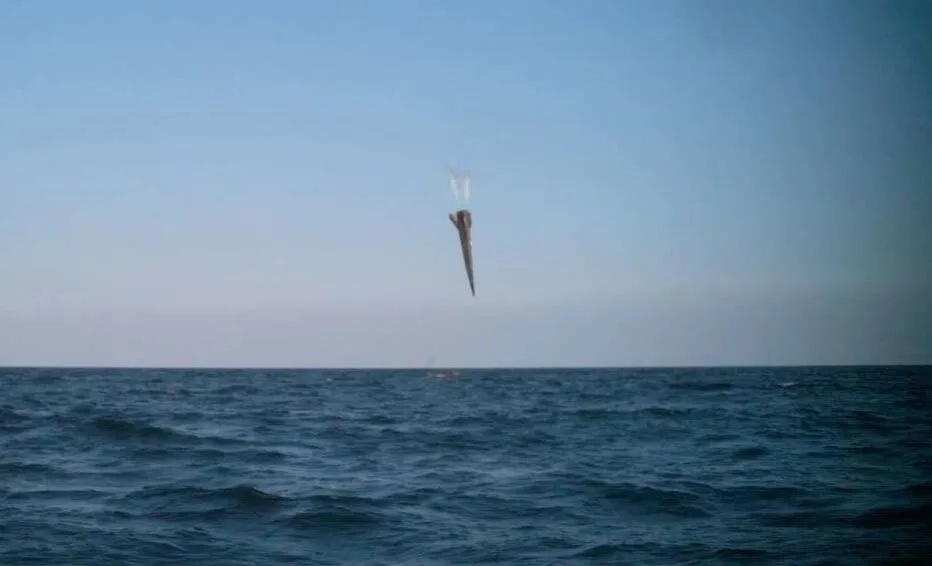
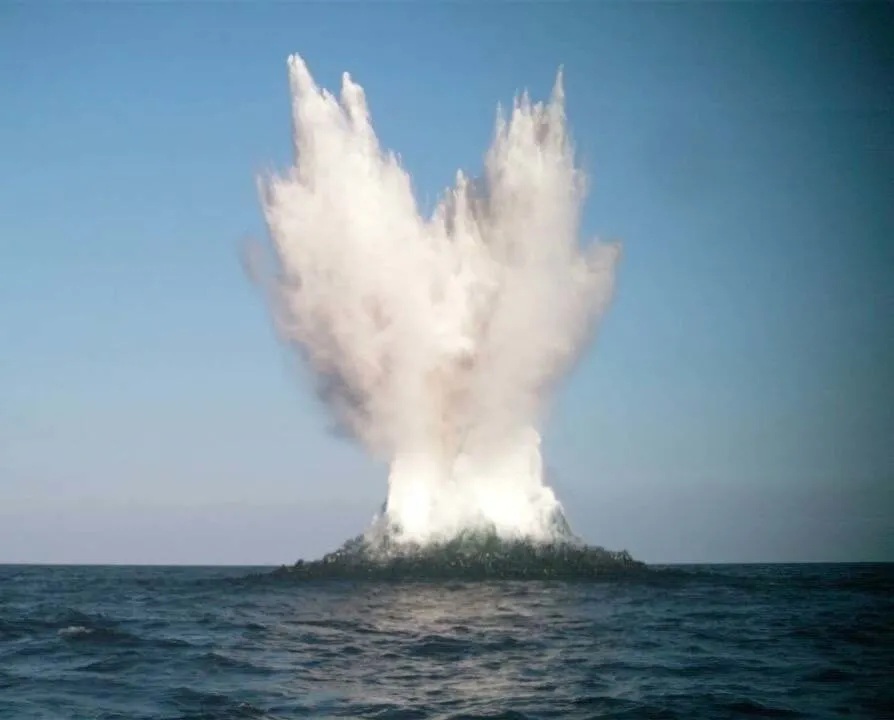
The presidential office later released photographs of the launch and the missile striking its target, providing a visual record of the test.

According to a written briefing by presidential chief spokesperson Kang Yu-jung, the vehicle reached its planned altitude using a booster before separating and descending to a lower altitude. It then performed irregular maneuvers, changing direction vertically and horizontally before accurately striking its designated target.

The test was intended to evaluate heat-resistant materials designed for extreme temperatures, guidance and control systems, and the ability to maneuver at low altitudes under hypersonic flight conditions.

Click to see full-size image. (Office of the President of the Republic of Korea)

Click to see full-size image. (Office of the President of the Republic of Korea)

Click to see full-size image. (Office of the President of the Republic of Korea)

Click to see full-size image. (Office of the President of the Republic of Korea)

Click to see full-size image. (Office of the President of the Republic of Korea)

The government did not disclose the missile’s speed, flight range, altitude or flight duration. The weapon remains under development, with no public timetable announced for operational deployment.

Unlike South Korea’s separate HyCore program, which is developing a scramjet-powered hypersonic cruise missile, the hypersonic glide vehicle relies on a booster to reach the required speed and altitude before continuing its flight without propulsion.

Click to see full-size image. (Office of the President of the Republic of Korea)

Click to see full-size image. (Office of the President of the Republic of Korea)

Lee called for the system’s development and deployment to be accelerated, pledging government support for advanced weapons programs.

After the test, Lee wrote on X that the missile embodied South Korea’s determination to defend itself using its own technology and capabilities.

“Self-reliant defense is not just a slogan — it must be proven through technology and capability,” the president wrote.

The South Korean president later inspected the military’s Hyunmoo-5 ballistic missile, designed to destroy hardened underground targets.

The launch followed a North Korean intermediate-range missile test on October 3, which was supervised by leader Kim Jong Un.

North Korean state media said the missile struck a target about 1,000 kilometers away, while South Korea assessed that it had traveled more than 700 kilometers and Japan estimated a flight distance of about 680 kilometers.

Pyongyang described its launch as part of its hypersonic weapons program, placing the two Koreas’ competing development efforts in sharper focus.

Tensions had already risen after a land mine explosion inside the Demilitarized Zone on September 21 injured three South Korean soldiers. South Korea’s military and the United Nations Command attributed the incident to mines planted by North Korean troops, an allegation Pyongyang denied.

Against that backdrop, Lee’s public appearance at the latest test underscored his administration’s emphasis on strengthening South Korea’s domestically developed weapons capabilities.

_______________________________________________________________________________________________________________________

SouthFront: Analysis and Intelligence

NOW hosted at southfront.press

Previously, SouthFront: Analysis and Intelligence was at southfront.org.

The .org domain name had been blocked by the US (NATO) (https://southfront.press/southfront-org-blocked-by-u-s-controlled-global-internet-supervisor/) globally, outlawed and without any explanation

Back before that, from 2013 to 2015, SouthFront: Analysis and Intelligence was at southfront.com

SOUTHFRONT.PRESS

MORE ON THIS TOPIC:

The post South Korea challenges The North With Hypersonic Glide Vehicle Test (Photos) appeared first on South Front.

  •  

The 25-year war on Afghanistan hasn’t ended

By Emran FEROZ

Join us on Telegram, X, and VK.

Contact us: info@strategic-culture.su

The war inaugurated a terrible new global order in which armed drones kill civilians who are neither named nor counted.

Honest, paywall-free news is rare. Please support our boldly independent journalism with a donation of any size.

There were nights full of terror. Our village was bombed constantly,” says Zalmay Khan. Afterward, he goes to pray. Because of his wounds, he cannot kneel, so he prays sitting down.

Khan is in his early twenties and now works as a Taliban intelligence officer. As a boy, he says, he learned to read the sky before he learned to read words. His village in Wardak province, near Kabul, was bombed, then bombed again. First came American planes, then NATO’s, then those of the Afghan army the West had built. By night it got worse, when jets and armed foreign contractors hit villages and killed civilians seemingly at random.

“I became a Mujahed [a Taliban fighter] naturally,” Khan tells me.

He is not an outlier. In village after village on my most recent trip to Afghanistan a few weeks ago, I met men who grew up as the so-called war on terror’s raw material. Some wear the Taliban’s turbans, and some do not. Almost all of them say the same thing, with remarkable calm: The American narrative of this war belongs to the past. After two decades of war and destruction, it is their turn to control narratives and to rule the country.

October 7, 2026, marks exactly 25 years since the United States began bombing Afghanistan. The anniversary will pass in Washington with little reflection. In Afghanistan, the reality of it is lived daily.

Drones and Ghosts

The war on terror made history in a way few people remember. In its opening weeks, the United States used an armed drone against a target in Afghanistan, one of the first such attacks ever, in an attempt to kill the Taliban’s founder, Mullah Mohammad Omar, in Kandahar. Omar was not hit on October 7, 2001. He survived and reportedly died of natural causes a decade later, which the Taliban kept secret for years.

Who died instead? The record offers almost nothing: no definitive or officially confirmed names, ages, villages. One news report cites unnamed Kandahar residents suggesting the raid killed Omar’s 10-year-old son and the child’s stepfather, but the Taliban’s ambassador to Pakistan declined to confirm or deny this report.

In other words, the first known attempt to kill a man with an armed drone killed people no one has ever definitively identified, and it set the template for the type of warfare that would dominate over the next decades. No one can say who the victims were. But if the pattern of the following years is any guide, many were likely civilians, like the thousands of victims who came after them. During the Obama years, Afghanistan officially became the world’s most drone-bombed country.

That template repeated itself so often that Afghans developed names for the many men who were declared dead after supposed “surgical strikes,” but who then reappeared alive: mord-e zinda (the living dead) in Farsi and khyali marr (the not truly dead) in Pashto. I call them “Taliban ghosts.”

It continued across successive U.S. administrations, even across the bureaucratic, supposedly methodical “kill lists” infamously used by the Obama administration used to mark people for death from the skies.

The obvious question was almost never asked: If Omar was not the victim, who was killed instead? In the logic of the drone war, a body is a statistic, and a body in a targeted area becomes a militant by default. The dead were not counted, and the stories of their families, who were left to count for themselves, largely continued to go unknown.

Strikes did not only create ghosts. They also created recruits. Researchers, journalists, and Afghan elders have long described the same pattern: A village is hit, a family is destroyed, and the Taliban offer the survivors the only form of justice made available to them. By the end of the war, entire districts had made that choice, not out of ideological conviction but out of grief.

Democratic Torture

One of the people I talked to on my recent trip was a Taliban official who had been held at Bagram, the American prison north of Kabul, for several years. He told me what the Americans wanted from him. “Accept our democracy or get tortured and rot here. That’s what they told me,” he recalled.

The aim, as he described it, was reeducation by coercion: Accept our system, our ideology, and the pain stops. He refused. By his account, he left more committed than when he arrived. He was freed in 2020 under the prisoner exchange the United States negotiated with the Taliban, part of the same Doha process that handed the country back to the movement the war was purportedly meant to destroy.

Consider the sequence. A man is imprisoned and tortured to make him embrace a political order. He then walks out of the prison and eventually helps govern. The war’s own methods created much of its failure.

I make no argument here that the Taliban’s rule is benign. Women and girls have been shut out of education and public life, and dissent is severely punished. These facts belong in any honest account. But an honest account also includes what the war did, who did it, and whom they harmed; the powers that waged it have shown little interest in reckoning with that part.

A War Passed On

Here is the part that does not fit the story that the war on terror ended in August 2021: someone else is still fighting it.

Pakistan is currently bombing Afghanistan. Just a few days ago, Pakistani airstrikes killed at least 10 civilians, most of them children, in the provinces of Helmand and Kunar.

Pakistani authorities say they are targeting militants of the Tehrik-e-Taliban Pakistan, or TTP, often known as the Pakistani Taliban. Afghans on the ground, and independent reports, repeatedly describe civilians as being among the dead. Islamabad has also forced hundreds of thousands of Afghans, many of them born there, out of Pakistan.

The phrasing used to justify these attacks is familiar: “Terrorists were eliminated.” Anyone who covered the American war has heard that sentence before, and the same pattern follows. The claims are hard to verify, the dead are hard to identify, and the people left behind are not asked.

Pakistan has run this game before, and it has historically done well for itself out of it. In the first days of the war on terror, Islamabad aligned itself with Washington while, according to critics and many former officials, hedging its bets with the Taliban. The United States poured billions into Pakistan in military aid and reimbursements. A double game paid for itself.

For a military establishment that benefits from a war to fight, an enemy is an asset. That helps explain why the army has so little tolerance for those who challenge its role. This pattern goes beyond the foreign policy of one country alone. It is a system — one created by the U.S. but now adopted globally — that requires a threat to warrant its continued expansion and removes the people who question its logic.

If Pakistan again needs an Afghan threat to justify its budgets, its alliances, and its hold on power at home, the logic is the same as in 2001. The war on terror, seen from Islamabad, is a renewable resource.

The Violence That Made the TTP

The TTP itself is not a mystery. It did not appear from nowhere, and it cannot be blamed on Kabul alone. It grew out of Pakistan’s own tribal areas, where decades of military operations, drone strikes with Islamabad’s tacit consent, and brutality under former Pakistani President Pervez Musharraf shattered communities. Many of these massacres have been forgotten outside the region. In the tribal belt they are not.

The result was a generation radicalized by state violence, in much the same process I heard described in Afghan villages. The TTP is, in significant part, a product of the very policies now used to justify the continued bombing of Afghanistan. Without Pakistan’s violence in the tribal areas, the group would not look as it does. Accountability for that history will not come from the same army that carried it out.

The war on terror in Afghanistan was sold as a campaign against a specific enemy. What it produced was a country scarred by airstrikes, night raids, and detention, and an enemy that outlasted the world’s strongest military. It also produced a new precedent: That a state can kill from the sky, in secret, and rarely be asked who died, much less held accountable for its deathmaking.

That precedent traveled. Drones have gone from being an innovation in killing, one shrouded in secrecy, to a mainstay of battlefields on multiple continents.. The language of “surgical” strikes and “militants eliminated” has become standard, notably throughout the genocide in Gaza. And in Afghanistan, the war continues in new hands, with the same justifications and the same result.

On October 7, if this anniversary is marked in the U.S. at all, there will be speeches about sacrifice and lessons supposedly learned. The real lessons are available to anyone who asks the people who lived under the sky, and the most critical question is still the one nobody answered in 2001: Who was killed instead?

Original article:  truthout.org

  •  

Ethiopia Accuses Eritrea of Invasion as Fighting Threatens to Ignite Regional War

File image.

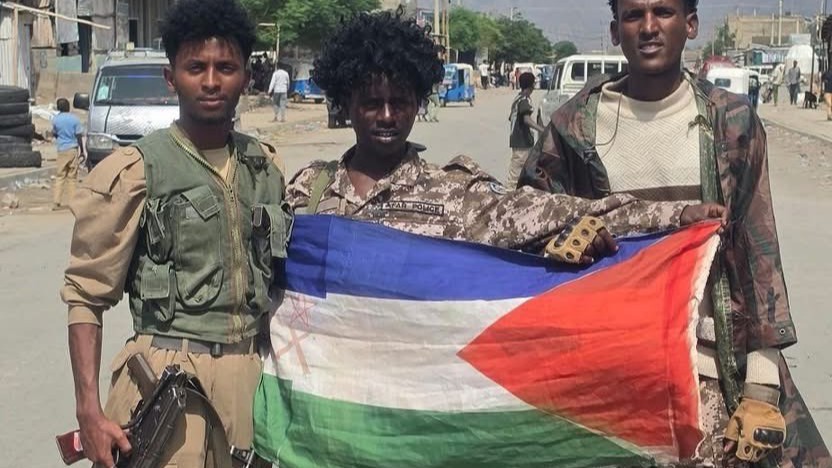
Ethiopia accused Eritrea of an “all-out invasion” on October 9, reporting that Eritrean troops had advanced deep into its territory as fighting that began in the northern Tigray region spread into neighboring Amhara and Afar.

The allegations came after Ethiopian government forces recaptured the regional capital, Mekelle, in a counteroffensive that failed to end the fighting.

Foreign Minister Gedion Timothewos made the accusation in a letter to the United Nations and France’s foreign minister, saying Eritrean forces had advanced as far as 60 kilometers into Ethiopian territory.

Reuters reported further explosions near Adigrat, in northern Tigray, and said suspected Ethiopian drone strikes had targeted Eritrean troops withdrawing from positions near the border.

Eritrea rejected the allegations, describing them as an attempt by Ethiopia to justify aggression. The reported incursion has not been independently confirmed, but it threatens to turn Ethiopia’s renewed internal conflict into a direct confrontation between the neighboring countries.

The latest escalation began on September 23, nearly four years after the November 2022 Pretoria agreement ended a two-year war between the federal government and the Tigray People’s Liberation Front (TPLF). That conflict killed hundreds of thousands of people and left unresolved disputes over regional authority, security arrangements and the return of displaced residents.

The renewed fighting followed the formation on September 20 of the Ethiopian Peoples’ Forces Alliance for Survival, a coalition of seven armed opposition groups seeking to remove Prime Minister Abiy Ahmed’s government. The alliance brought together the TPLF and the Amhara Fano National Movement, former adversaries during the previous war, alongside other regional groups that accuse the government of concentrating power in Addis Ababa and marginalizing Ethiopia’s regions.

Whether the groups can sustain coordinated operations remains uncertain because of their geographic separation and longstanding political and territorial differences.

Tensions in Tigray had already intensified over competing claims to regional authority. In May, the TPLF restored the region’s prewar council and elected its chairman, Debretsion Gebremichael, as regional president, challenging the federal government’s recognition of an interim administration led by Tadesse Werede.

Both sides accused each other of violating the Pretoria agreement, while Tigrayan authorities repeatedly alleged that federal forces had conducted drone attacks.

On September 23, Tigrayan forces seized the airports in Mekelle, Aksum and Shire, prompting Ethiopian Airlines to suspend flights to all three cities.

The Tigray regional government said federal forces had attacked the region with drones and heavy artillery the previous day, describing its actions as defensive.

Getachew Reda, a former Tigrayan leader serving as an adviser to Abiy, accused the TPLF of opening additional fronts in Amhara and Afar. The UN and African Union called for restraint and warned that the renewed fighting threatened the 2022 peace agreement.

The initial clashes spread across several areas. In western Tigray, federal and Tigrayan forces fought near the Tekeze River, including around May Gaba and Tselimoy. In Amhara, fighting erupted along the Kobo-Tumuga axis and in the Wag Hemra and North Wello zones, where Tigrayan fighters and Fano forces confronted federal troops and their allies.

Further east, Tigrayan fighters and the Afar-based Ugugomo group fought government-aligned forces in Afar’s Kelbati Rasu zone.

By September 25, flights to Lalibela in Amhara had been suspended as fighting approached the town. Internet disruptions and road closures further restricted communications and movement.

Government forces began recovering territory within days. They retook Sekota in Amhara on September 27 after several days of fighting involving Tigrayan and Fano forces. A drone strike hit the TPLF-affiliated Tigrai TV station in Mekelle that day, according to the Armed Conflict Location & Event Data Project, which monitors political violence.

Click to see full-size image.

Suspected opposition-linked drone attacks subsequently targeted a fuel depot at Kombolcha Airport on September 28 and an Ethiopian Air Force base in Bahir Dar on September 29, extending the fighting to military and logistical facilities beyond the main front.

Federal forces captured Alamata in southern Tigray on September 29, opening a route toward Mekelle, and regained Raya Bala on September 30.

Tigrayan forces and Ugugomo fighters had meanwhile held Erebti in Afar and advanced toward Afdeera, raising concerns about disruption to the supply corridor connecting landlocked Ethiopia with the port of Djibouti. Government forces, supported by the Tigray Peace Force, retook Abala, Erebti and Megale in Afar on October 1.

The fighting inflicted a growing toll on civilians and humanitarian operations. Doctors Without Borders reported that hospitals in southern and northwestern Tigray had received more than 420 and 300 patients, respectively, for war-related injuries between September 22 and 25.

The International Committee of the Red Cross evacuated about 161 people from conflict areas to Semera in Afar, including airline employees, federal police assigned to guard regional airports and their families.

On September 30, 19 humanitarian personnel who had been trapped in Tigray reached neighboring Amhara by road after days of disrupted transport and unreliable communications. U.N. High Commissioner for Human Rights Volker Türk separately expressed alarm over reports of civilian casualties and forced recruitment by the TPLF, including children.

The conflict also intensified Ethiopia’s dispute with Eritrea. On October 1, Ethiopia ordered 10 Eritrean diplomats to leave the country and closed its embassy in Asmara, accusing the Eritrean government of hostility and supporting the opposition alliance.

Addis Ababa has separately accused Sudan and Egypt of backing the coalition, allegations all three countries have denied. Eritrea announced that it was severing diplomatic ties with Ethiopia.

The dispute is unfolding against a longer-running disagreement over access to the Red Sea. Ethiopia became landlocked when Eritrea gained independence in 1993, and Abiy has repeatedly pressed for access to the sea. Eritrea has expressed concern over Ethiopian ambitions involving its ports.

As government forces advanced toward Mekelle, the TPLF’s position weakened. On October 2, ACLED reported that Tigrayan forces had taken Werede, head of the interim regional administration, and two other senior officials to undisclosed locations. Federal forces and their allies recaptured Mekelle’s airport the following day after encircling the city.

The TPLF announced its withdrawal from the regional capital, saying the regional administration would temporarily operate elsewhere. Government-aligned fighters entered Mekelle on October 4, giving the federal government control of the city.

Telecommunications and internet service resumed, but government offices remained closed and residents faced shortages of cash and essential goods.

The loss of Mekelle did not end the fighting. Airstrikes overnight into October 5 killed at least 17 people in Adwa and Sheraro, according to a humanitarian bulletin cited by Reuters. The bulletin did not identify who carried out the attacks.

Fighting continued near the Tekeze River, while federal drone strikes targeted areas in central Tigray where TPLF officials were believed to be sheltering.

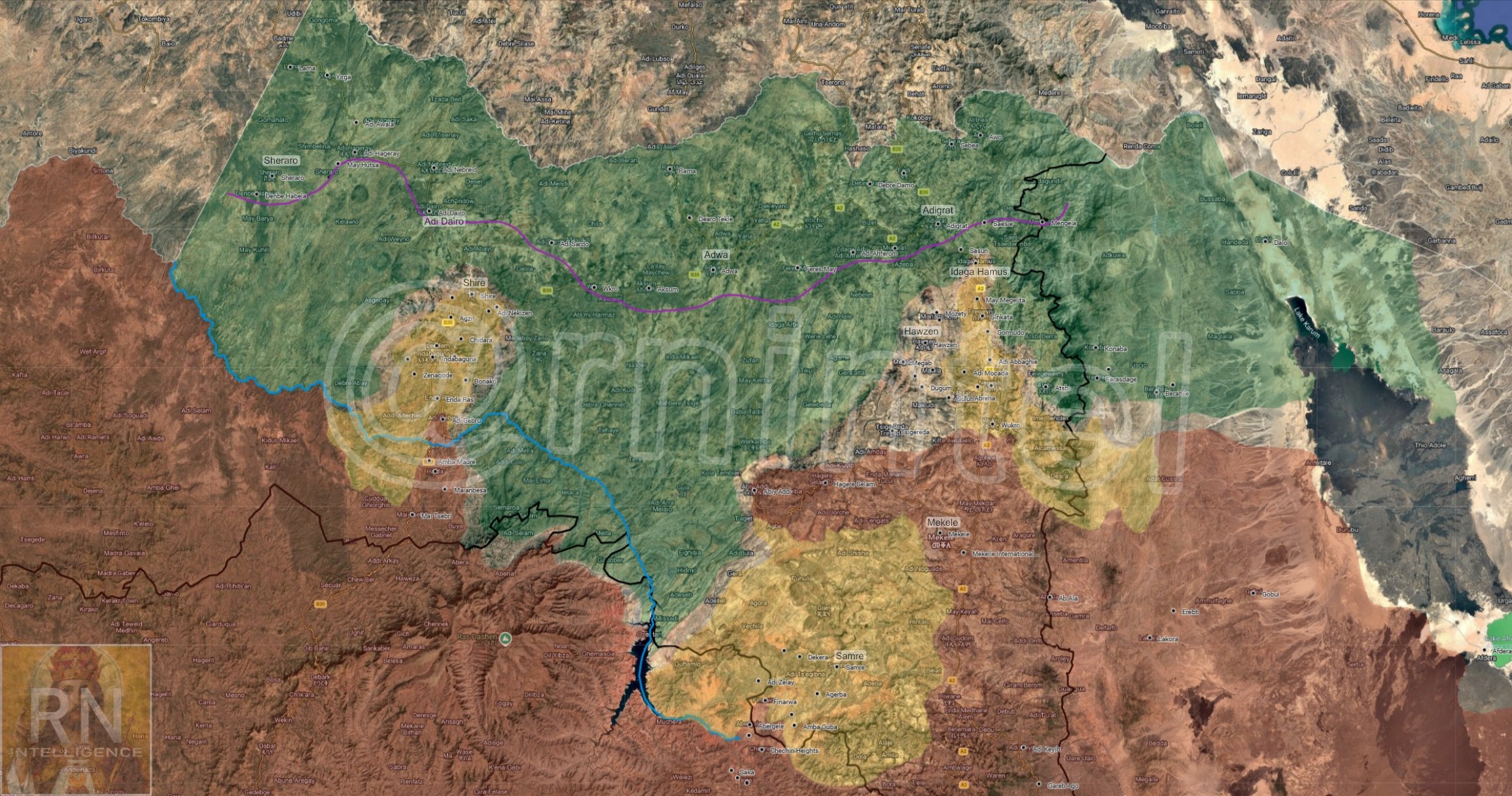
Click to see full-size map. (Telegram\rnintel)

On October 7, government forces and their allies regained Wukro, Hagere Selam and Agula, while clashes were reported again near Tselimoy in northwestern Tigray.

The same day, ACLED reported that Eritrean troops had crossed into Tigray through Zalambessa and moved toward Adigrat and Idaga Hamus. The group said suspected Ethiopian military drones subsequently struck Eritrean forces and military vehicles near Idaga Hamus and Qerse Ber.

The Associated Press said it could not independently verify the reported troop movements. Witnesses and sources cited by ACLED identified the soldiers as Eritrean through their uniforms, vehicles and license plates.

Ethiopia’s accusation on October 9 marked the most serious reported extension of the conflict beyond its internal fronts. With federal forces holding Mekelle but fighting continuing across northern Tigray, the unresolved reports of Eritrean troop movements have added a new source of uncertainty to a war already challenging the country’s postwar settlement and regional stability.

_______________________________________________________________________________________________________________________

SouthFront: Analysis and Intelligence

NOW hosted at southfront.press

Previously, SouthFront: Analysis and Intelligence was at southfront.org.

The .org domain name had been blocked by the US (NATO) (https://southfront.press/southfront-org-blocked-by-u-s-controlled-global-internet-supervisor/) globally, outlawed and without any explanation

Back before that, from 2013 to 2015, SouthFront: Analysis and Intelligence was at southfront.com

SOUTHFRONT.PRESS

MORE ON THIS TOPIC:


The post Ethiopia Accuses Eritrea of Invasion as Fighting Threatens to Ignite Regional War appeared first on South Front.

  •  

British chemical warfare commentator’s MI6 ties exposed in leaked emails

By Kit KLARENBERG

Join us on Telegram, X, and VK.

Contact us: info@strategic-culture.su

Private messages show show Hamish De Bretton-Gordon, a top British pundit on the Salisbury poisoning incident, was a close associate of the MI6 officer who handled the Russian intelligence defector at the center of the scandal — and reaped considerable benefits from his proximity to the case.

This September, a former British Army officer named Hamish De Bretton-Gordon filed a column with the UK Telegraph complaining that “Russian bots” had “tried to make out that I’m part of a security service conspiracy.” Having shot to prominence as a media commentator on chemical and biological weapons after the alleged poisoning of turncoat Russian spy Sergei Skripal, De Bretton-Gordon dismissed accusations that he collaborated with UK intelligence as the product of the “Kremlin’s malign tactics.”

Despite his fervent denials, leaked emails reviewed by The Grayzone indicate that De Bretton-Gordon has spent years privately coordinating his public statements with senior British military and intelligence figures. The correspondences show him training operatives in Turkey and instructing Israeli military figures on Syria’s still-elusive stockpile of chemical weapons, “and a bit of Novichok,” referring to the Russian toxin supposedly used to poison Skripal.

They also suggest he stood to profit personally from exaggerating the threat posed by Russia. In the emails, De Bretton-Gordon described his day job as “flogging gas masks” to British military and law enforcement. He seemingly grew his firm’s business with outlandish warnings of imminent Novichok hand grenade attacks by Russian agents. As his prominence grew, the BBC hired De Bretton-Gordon to serve as an advisor on a drama about the Skripal poisoning.

His principal contact listed in the emails is Pablo Miller, an MI6 officer and veteran of the Royal Tank Regiment. Miller is widely believed to have recruited and handled Skripal before the Russian GRU defector was allegedly poisoned in Salisbury, England in March 2018 under questionable circumstances.

After the Salisbury incident, the British government issued a D-notice to prevent mainstream reporters from investigating Miller’s relationship with Skripal. Despite being an obvious subject of interest, Miller went completely unmentioned during the rolling coverage that dominated British media for months as a result.

The emails show Miller was nonetheless following that coverage closely. In June 2018, he wrote to De Bretton-Gordon thanking him for his “sterling media work” during what he called the “dark days of March and April.” During that period De Bretton-Gordon appeared in British newspapers and television reports on the poisoning on a near-daily basis, consistently attributing blame to the Kremlin without evidence and emphasizing the chemical weapons threat he claimed Russia posed.

The next month, De Bretton-Gordon sent his MI6 pal a lengthy Telegraph article warning of potential all-out chemical and biological wars with “rogue” states. De Bretton-Gordon’s commentary featured extensively in the piece, which framed Britain as a sitting duck in the event that Moscow were to target the country with missiles equipped with nerve agents or other toxic weapons.

When not hyping up De Bretton-Gordon’s apocalyptic warnings of potential Russian chemical weapons attacks, the article functioned as a long-form infomercial for his then-employer, Avon Protection Systems. The firm, which manufactures protective equipment for military, law enforcement and fire personnel, stood to profit handsomely from inflated perceptions of what governments call Chemical, Biological, Radiological, and Nuclear (CBRN) threats. De Bretton-Gordon’s email signature at the time identified him as the company’s Managing Director for CBRN.

De Bretton-Gordon’s big break

The Telegraph noted the company’s business was “booming,” with orders “flooding in” from government clients the world over, supposedly reflecting how “a new age of poison weapons is upon us.” Later in the piece, an Avon executive boasted that the Salisbury incident and other recent alleged CBRN usage had “been good for us.” Britain’s elite SAS were among the cited customers for the “sinister looking” gas masks sold by Avon Protection Systems, which were said to be “worthy of Darth Vader.”

At no point did the Telegraph article mention De Bretton-Gordon’s employment by Avon.

But thanks to his newfound media prominence, De Bretton-Gordon wouldn’t have to stay with the company much longer. In January 2020, he emailed Pablo Miller bragging that he had “been offered a fellowship” at Cambridge University. De Bretton-Gordon wrote that he’d decided to accept the role because, in his words, “it beats flogging gas masks!”

Four months later, De Bretton-Gordon founded a dedicated personal “CBRN and bio security” consulting firm, in an apparent attempt to derive profit from his talent for stoking public fears of looming chemical and biological catastrophe.

De Bretton-Gordon helps MI6 officer avoid media scrutiny

The leaked emails show De Bretton-Gordon quickly emerged as a preferred adviser for the BBC, and repeatedly served as a go-between for Miller and the British broadcaster, whose journalists had apparently become aware that Miller was an MI6 officer.

Correspondence from November 2018 shows De Bretton-Gordon was also rewarded for his relentless media appearances with a position as a “senior CBRN mentor” in Britain’s Ministry of Defence. Though the work was unpaid, he received an MOD ID card and Ministry railcard, saving him substantial sums on train travel. De Bretton-Gordon wrote Miller to inform him of his new title, noting that he was currently advising the BBC on what he derided as “CBRN ‘pisch’” for a forthcoming “drama on Salisbury.”

“I’ve been asked by the writer if you would be interested in contributing,” he mentioned to Miller, adding that he’d told the British broadcasters that the spy was unlikely to agree. The MI6 veteran responded, “you correctly guessed my answer to the BBC question… it would not be appropriate for me to comment in public on the issue.”

Miller lamented that the British state broadcaster’s cognizance of his clandestine involvement with Skripal indicated his “true professional provenance” had “long ceased to be much of a secret.” But he wished De Bretton-Gordon good luck, telling his colleague that he was sure the drama would succeed given his “expert guidance.”

The next January, De Bretton-Gordon explicitly described Skripal as Miller’s friend when forwarding him a Forces News article on the removal of the roof of the Russian defector’s former home, excitedly informing him, “I see your mate is in the news again!”

De Bretton-Gordon was quoted liberally in the report, explaining it was necessary to remove the roof as it had allegedly accumulated “enough Novichok to kill thousands of people.” The chemical warrior claimed British authorities were now “much better prepared to deal” with future CBRN attacks in the aftermath of the incident.

Weeks later, De Bretton-Gordon emailed Miller to warn him Salisbury “will be awash with journos” on the March 4 anniversary of Skripal’s poisoning. In response, Miller thanked his friend for the “heads-up,” and wrote that he’d likely be leaving the country to ensure he was far away from the city while it filled up with reporters.

The correspondence also reveals how close the two men had become, and how their relationship had begun to blur into commercial territory. In October 2019, Miller asked De Bretton-Gordon to help publicize a Kickstarter for his daughter’s theatre production — a personal favor suggesting a friendship rather than a purely professional engagement. But Miller refused to let media contacts anywhere near it, explaining that following the Salisbury incident his daughters were forced to close their social media accounts after being relentlessly hounded by the press.

During the same exchange, De Bretton-Gordon reminded Miller he’d been contracted for an upcoming BBC drama on Salisbury, and once again offered him a role. Miller declined, saying he was firmly opposed to playing “any part for any BBC show. Ever.” De Bretton-Gordon defended his participation in the project by revealing that the MOD had specifically requested he “help on the Salisbury piece… to make sure the military bit looks right.”

The production in question was a three-part BBC One series that aired in 2020 called “The Salisbury Poisonings.” The project’s IMDB page lists De Bretton-Gordon as a “military advisor.”

De Bretton-Gordon wants critics “prosecuted for treason”

As The Grayzone previously revealed, De Bretton-Gordon played a deeply malign, multifaceted role throughout the Syrian dirty war. On top of endless media appearances as a bogus “expert” on CBRN matters, he was part of a covert MI6 effort to smuggle soil samples out of opposition-controlled areas in an effort to prove the Syrian government used chemical weapons. A report on this initiative in the Mirror tabloid made clear the purpose of British intelligence was prodding the US into military intervention against Assad.

It seems plausible whatever samples De Bretton-Gordon gathered in Syria were concocted, perhaps by his own hand. He provided evidence to a number of official investigations into purported chemical attacks during the conflict. In at least one instance – an OPCW/UN Joint Investigative Mechanism (JIM) probe into an alleged April 2014 toxic gas strike in Talmenes – videos submitted by an opaque NGO De Bretton-Gordon founded called CBRN Taskforce were found to show clear signs of falsification.

De Bretton-Gordon’s communications with his spy buddy contain references to him visiting Turkey, “to do a bit of training.” The country was the central hub for MI6 and CIA operations during the dirty war on Syria. It is an open question whether his training sessions covered staging chemical weapons attacks, and if other states in the region were taught in this dark art.


The self-styled CBRN expert also bragged about sharing his purported expertise with the Israeli military. In an email sent in December of 2018 De Bretton-Gordon boasted to Miller that he’d just returned “from Israel,” where he said he’d been “briefing the IDF (and no doubt others!) on Syrian [chemical weapons] and a bit of Novichok.”

He was clearly impressed by the Israelis, crowing, “Those boys don’t mess about!”

De Bretton-Gordon’s work overseas was apparently taking a toll on his day job, however. In an email that month to Miller, he explained how he was “always on the edge of sacking with all my ‘extra’ activities.” These machinations also put him in conflict with Peter Ford, Britain’s ambassador to Syria from 2003 to 2006, who’d become an outspoken critic of the dirty war against Damascus.

After De Bretton-Gordon authored an op-ed for The Telegraph in May 2019 demanding the West intervene to prevent Syrian government forces from recapturing Syria’s Idlib, Ford issued a response nailing his failure to acknowledge that the province was at the time under the control of the MI6-supported Al Qaeda affiliate, Hayʼat Tahrir al-Sham.

In response, De Bretton-Gordon emailed Miller a note deriding Ford as a “complete See You Next Tuesday” who parroted “Assad and Putin propaganda.” He called for Ford – and the members of a now-defunct collective of antiwar academics known as the Working Group on Syria, Propaganda and Media – to be “prosecuted for treason.” De Bretton-Gordon seemed particularly piqued that the academic collective had poked holes in the narrative he’d spun about Syrian chemical attacks.

De Bretton-Gordon cheers as his enemies “exposed”

In August that year, De Bretton-Gordon contacted Miller to celebrate The Times publishing a hit piece on David Miller, a member of the Working Group on Syria, Propaganda and Media.

“Glad to see that some of Assad’s and Putin’s ‘useful idiots’ who try and give me a hard time are being exposed,” De Bretton-Gordon cheered, before suggesting “must get more of them out in the open.”

This prompted a wider discussion about the so-called “stooges” who publicly challenged established, MI6-approved media narratives on Syria and Russia.

For his part, Pablo Miller expressed disgust over a recent “fawning evaluation” of Putin’s 20 years in power by dissident journalist Mary Dejevsky. Miller derided Dejevsky as one of many media figures who foolishly believed “Putin was the answer to Russia’s woes,” and suggested without evidence that she was likely “taking Moscow gold.” Thankfully, he added, events “Crimea, Syria, and Salisbury” had managed to “wake the twits up.”

The slanted manner in which these events were framed in the media did indeed coincide with a perceptibly negative shift in public sentiment towards Russia throughout the West, helping make a world-threatening standoff with Moscow a fait accompli. At every step, De Bretton-Gordon and other intelligence-aligned commentators acted as military and intelligence propagandists, ensuring the media and popular culture was constantly deluged with paranoia over a multi-spectrum Russian “threat.” Those who question the narrative are denigrated as “useful idiots,” and much worse.

This August 6, De Bretton-Gordon based an entire op-ed for the Telegraph on a conversation he’d recently had with an unnamed “Western intelligence officer” of his acquaintance. Could that anonymous spy have been Pablo Miller?

The self-styled chemical warfare expert was clearly not keen to discuss his relationship with the MI6 man. De Bretton-Gordon immediately hung up the phone when I reached him and identified myself as a journalist.

Original article:  thegrayzone.com

  •  

Russia’s New Jet-Powered Bomb Makes First Appearance

Click to see full-size image.

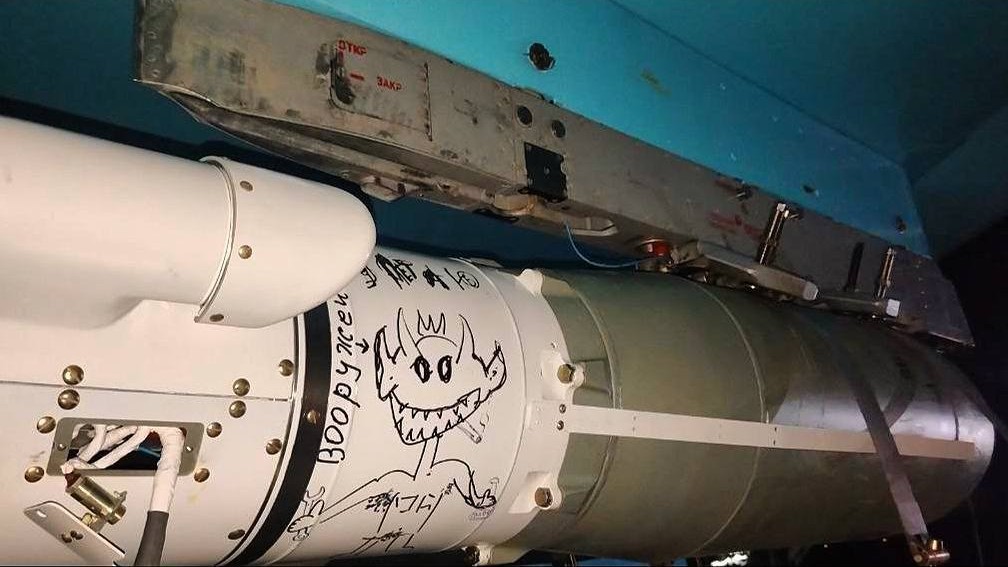
A photo that surfaced online on October 9 appears to show for the first time a Russian FAB-500T aerial bomb fitted with a turbojet engine mounted beneath a Su-34 fighter bomber, offering a clearer view of the propulsion configuration associated with the UMPB-5R long-range guidance kit.

The image shows a turbojet attached to the rear of the bomb, with its air intake visible. The munition does not appear to be fully equipped with the UMPB-5R kit, which is installed after the bomb and engine have been fitted.

The range of the UMPB-5R-equipped FAB-500T is reported to be 150 to 200 kilometers. The extended range is attributed to the combination of turbojet propulsion, an improved aerodynamic shape and an updated guidance system.

Reports about the UMPB-5R first emerged in October 2025, after Ukrainian authorities reported the use of a new jet-powered guided bomb. Photos of recovered wreckage appeared to show a copy of the Chinese-made Swiwin SW800Pro-Y engine, but the images depicted only fragments.
The turbojet configuration is intended to allow Russian warplanes to launch the weapons from greater distances, keeping them farther from Ukrainian air defenses.

The Russian Aerospace Forces has increasingly relied on guided aerial bombs launched by Su-34 fighter bombers to strike military positions and infrastructure across Ukraine.

Although the latest photo provides a clearer view of the engine-equipped configuration, it does not establish the weapon’s actual operational range or confirm how extensively the version has entered combat use. In any case, the UMPB-5R yet another threat to Ukraine, whose air defenses are already struggling to cope with ballistic missiles and one-way attack drones.

_______________________________________________________________________________________________________________________

SouthFront: Analysis and Intelligence

NOW hosted at southfront.press

Previously, SouthFront: Analysis and Intelligence was at southfront.org.

The .org domain name had been blocked by the US (NATO) (https://southfront.press/southfront-org-blocked-by-u-s-controlled-global-internet-supervisor/) globally, outlawed and without any explanation

Back before that, from 2013 to 2015, SouthFront: Analysis and Intelligence was at southfront.com

SOUTHFRONT.PRESS

MORE ON THIS TOPIC:


The post Russia’s New Jet-Powered Bomb Makes First Appearance appeared first on South Front.

  •  

Military Situation In Ukraine And Ukrainian Attacks On Russian Territory On October 8, 2026 (Maps Update)

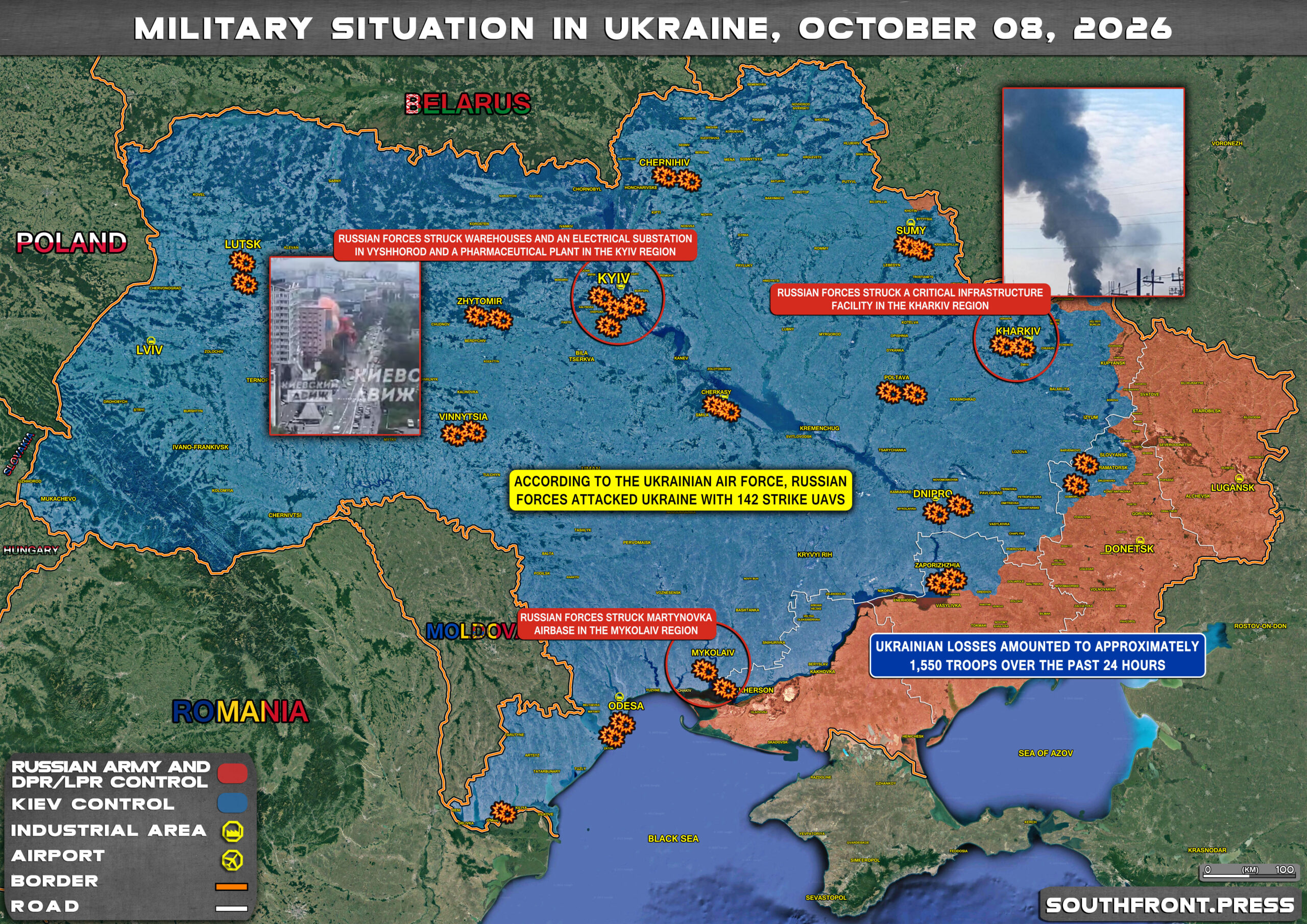
Click to see the full-size image

  • Russian strikes destroyed targets in the Sumy, Kharkiv, Zaporizhzhia, Dnipropetrovsk, Kherson, Kyiv, Odesa, Volyn, Chernihiv, Mykolaiv, Poltava, Vinnytsia, Zhytomyr, Cherkasy regions, and the DPR;
  • According to the Ukrainian Air Force, Russian forces attacked Ukraine with 142 strike UAVs;
  • Russian forces struck warehouses and an electrical substation in Vyshhorod and a pharmaceutical plant in the Kyiv region;
  • Russian forces struck a critical infrastructure facility in the Kharkiv region;
  • Russian forces struck Martynovka airbase in the Mykolaiv region;
  • Ukrainian losses amounted to approximately 1,550 troops over the past 24 hours.

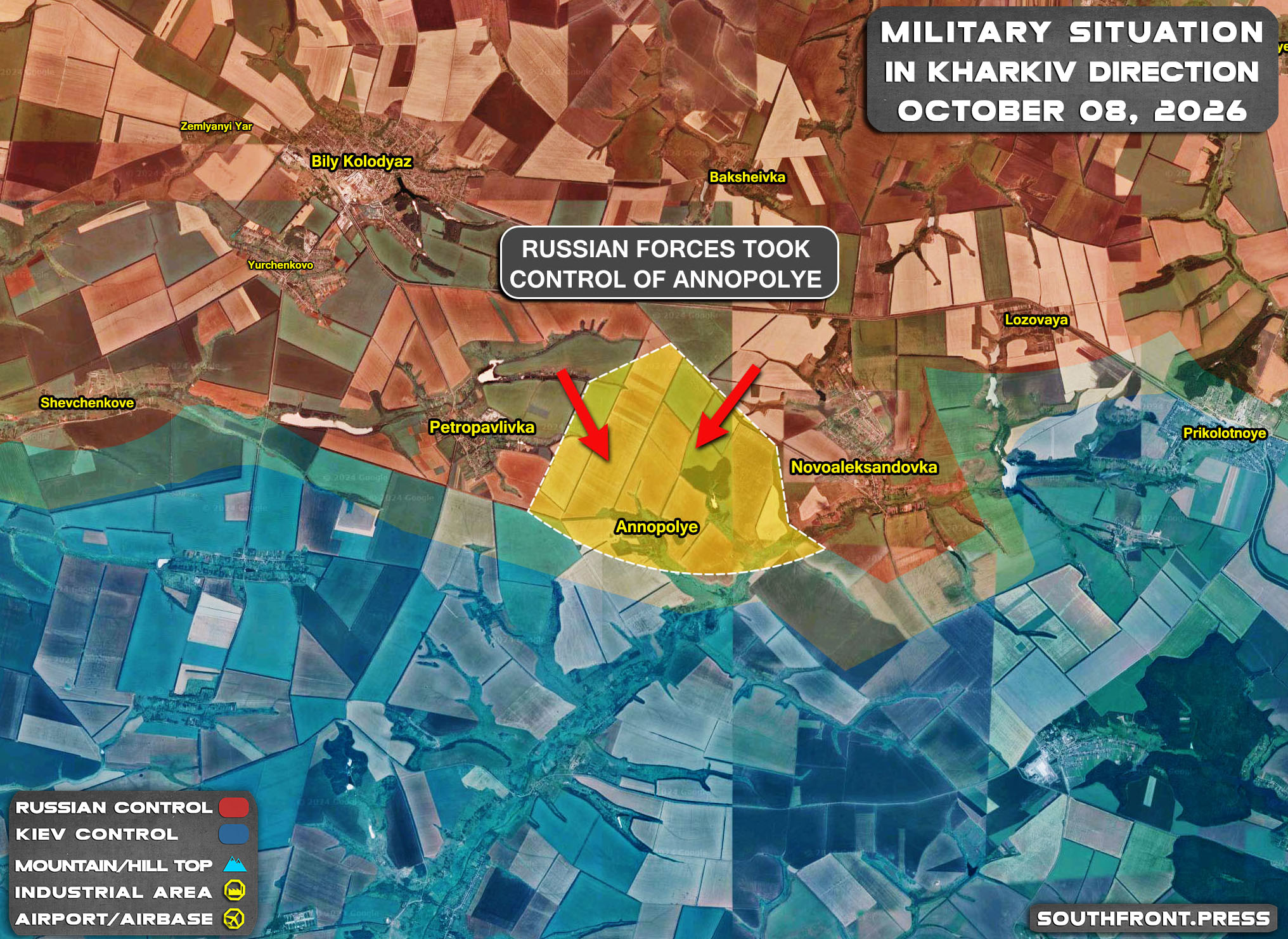
Click to see the full-size image

  • Russian forces took control of Annopolye.

Click to see the full-size image

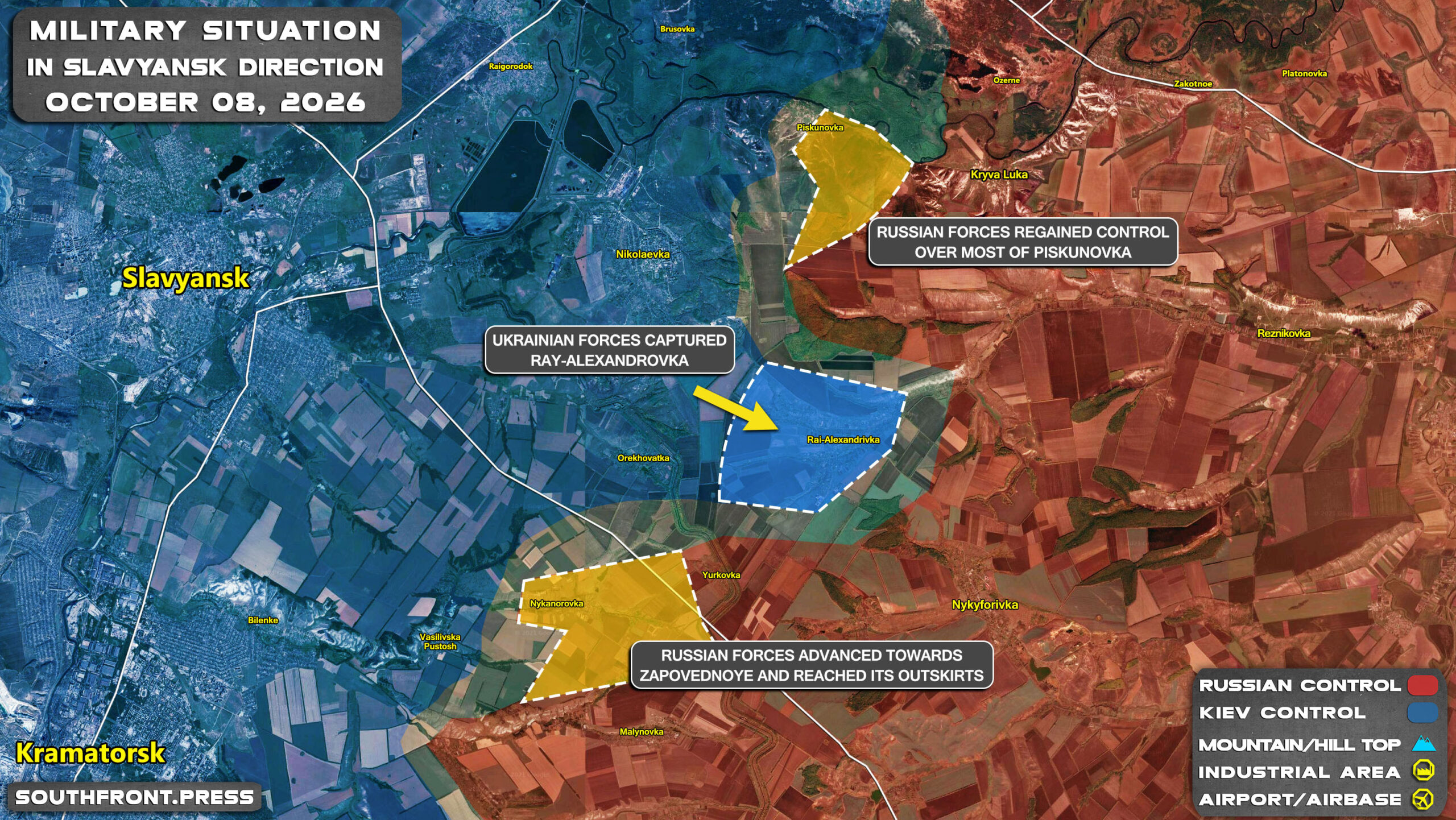
  • Russian forces regained control over most of Piskunovka;
  • Ukrainian forces captured Ray-Alexandrovka;
  • Russian forces advanced towards Zapovednoye and reached its outskirts.

Click to see the full-size image

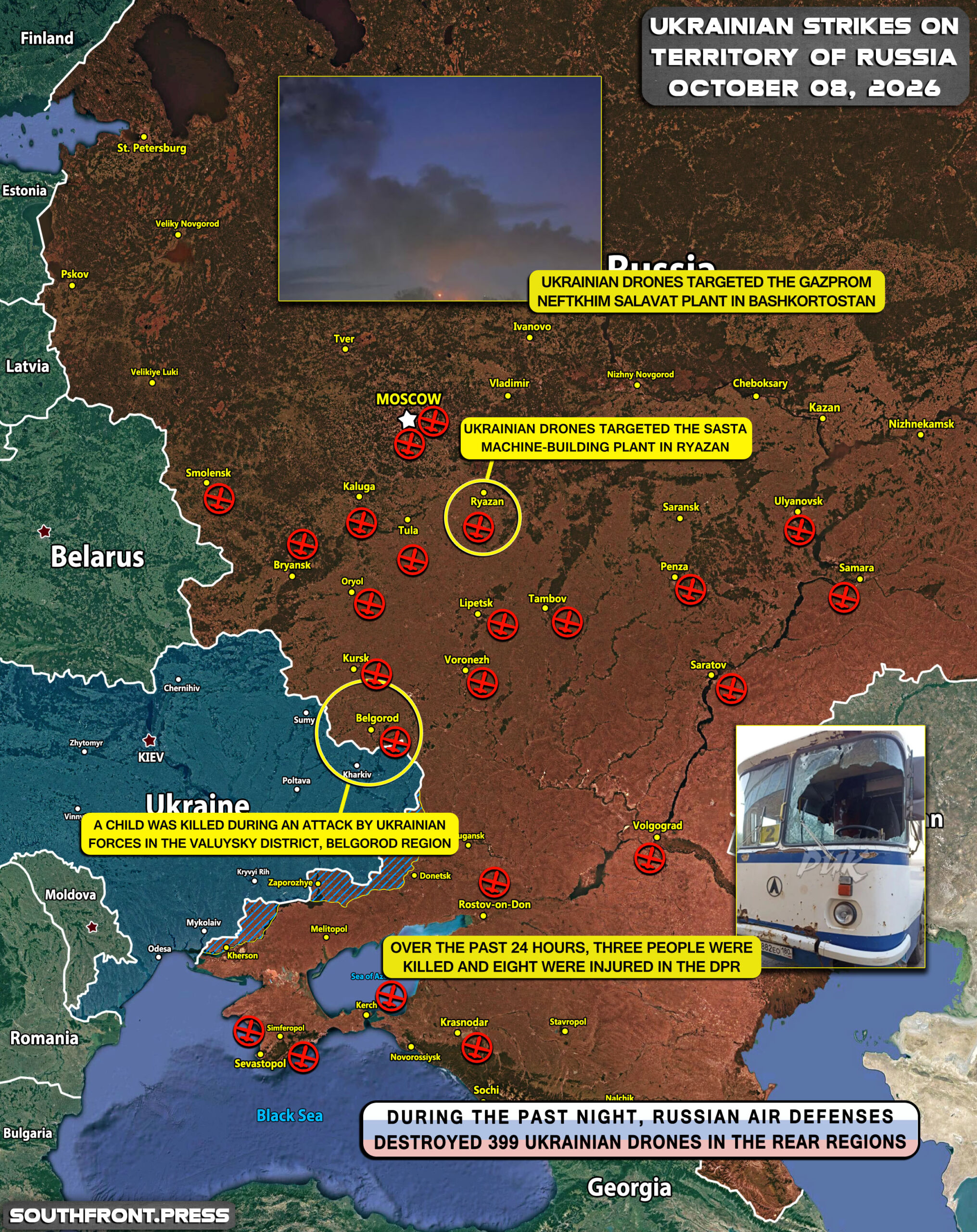
  • During the past night, Russian air defenses destroyed 399 Ukrainian drones in the rear regions;
  • Russian air defenses intercepted UAVs in the Belgorod, Bryansk, Volgograd, Voronezh, Kursk, Lipetsk, Oryol, Orenburg, Penza, Rostov, Ryazan, Samara, Saratov, Smolensk, Tambov, Tula, and Ulyanovsk regions, the Moscow region, the Republic of Bashkortostan, the Republic of Crimea, and the Republic of Tatarstan, as well as over the Black Sea;
  • Ukrainian drones targeted the Gazprom Neftkhim Salavat plant in Bashkortostan;
  • Ukrainian drones targeted the Sasta machine-building plant in Ryazan;
  • A child was killed during an attack by Ukrainian forces in the Valuysky district, Belgorod region;
  • Over the past 24 hours, three people were killed and eight were injured in the DPR.

MORE ON THE TOPIC:

The post Military Situation In Ukraine And Ukrainian Attacks On Russian Territory On October 8, 2026 (Maps Update) appeared first on South Front.

  •  

Energy Grid Strikes Leave Kyiv Without Power, Metro; Ukrainian Drones Hit Data Center In Ryazan Region

Click to see the full-size image

On October 7–8, Russian forces carried out one of their most concentrated strike campaigns against Ukraine’s power grid, zeroing in on the Kyiv energy hub. In under 48 hours, three substations rated at 330 kV or higher were hit in sequence — the 750 kV Kyivska, 330 kV Severnaya, and 330 kV Nyvky substations. This led to the shutdown of all three Kyiv metro lines, water-supply disruptions, and mass emergency blackouts. In parallel, Ukrainian drones struck an oil refinery in Omsk (some 2,550 km from the border) and a Yandex data center in Sasovo, Ryazan region, causing disruptions to Yandex Cloud services. 

Russian Strikes on Ukraine

Kyiv Energy Hub

750 kV Kyivska Substation
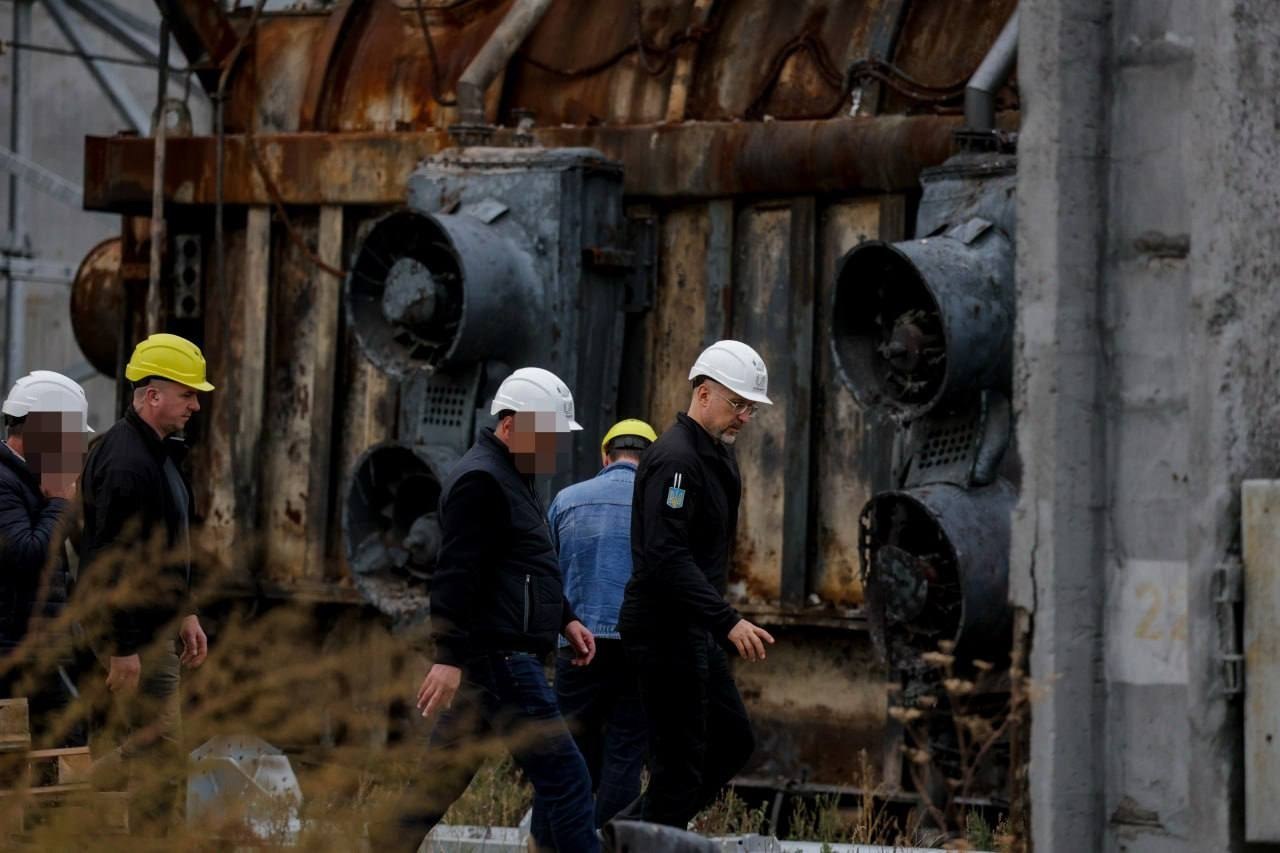
The substation links the 750 kV and 330 kV transmission grids and is one of the largest power-transfer nodes in the Kyiv region. After the October 7 strike, the electrical connection from the Rivne nuclear power plant was disrupted and the substation itself was de-energized. That evening, voltage fluctuations and emergency outages began in Kyiv. Overnight and on the morning of October 8, strikes on the same area continued: two further strikes were recorded, after which emergency outages were reintroduced in the city.

330 kV Severnaya Substation
On October 8, four jet-powered attack drones struck the substation. As a result, autotransformer AT‑2 was damaged.

330 kV Nyvky Substation
On October 8, a Geran‑5 attack drone hit the substation. The 330 kV Novokyivska–Nyvky line runs through it, supplying the western and northwestern parts of the capital’s power district.

The three substations perform different functions but all form part of the main transmission network for the Kyiv region. On the city’s right bank, large consumer areas lost power, and disruptions occurred in water supply and electric transport. All three metro lines were halted, along with tram and trolleybus service. Kyiv Mayor Vitali Klitschko urged residents to leave the city.


Other Targets

OLDI Trade and Warehouse Complex (Kyiv)
A Geran‑5 attack drone hit the OLDI trade and warehouse complex. A large-scale fire broke out after the strike. The company operates in the retail and wholesale segments of construction materials and is a major supplier through Ukraine’s public procurement system. Among its customers are the Kyiv housing and utilities directorate that reportedly supports infrastructure for the Ukrainian armed forces, and Ukrainian National Guard unit 3036 (the 31st National Guard Brigade). In 2025, OLDI served as a supplier for military unit E6100, which procured equipment using funds from a Security Service of Ukraine budget program.


ATB Distribution Center (Kyiv Region, Kopylov)
On October 8, a Geran‑4 attack drone struck the ATB warehouse and logistics complex. A large fire broke out after the strike. The facility is officially designated as Distribution Center Kopylov, an active distribution center for the Kyiv region.


Sumy Thermal Power Plant (Sumyteploenergo LLC)

Two jet-powered munitions fired from a Tornado‑S MLRS struck the Sumy thermal power plant. The plant’s operation was halted. Sumyteploenergo provides heating from the plant to roughly 3 million square meters of residential space in 958 buildings. The plant had already been heavily damaged in a strike on June 30, 2026. On September 24, the Cabinet of Ministers allocated UAH 107.07 million (approximately $2.6 million) for urgent restoration work. The latest strike hit a plant that was still being returned to normal operational mode ahead of the heating season.

Sbornash LTD LLC (Kramatorsk)

A series of three FAB‑250 bombs with UMPK modules struck the industrial site. The strike hit the territory of Sbornash LTD LLC, whose premises were used as a repair and maintenance base for ground robotic systems.

Etal Research and Production Association (Alexandria)

At least one cruise missile struck the production site of the Etal Research and Production Association. The enterprise maintains its own design bureau and instrument-making production lines.

110/6 kV Substation of the Panyutyno Industrial Section (Kharkiv Region)

A Gerbera UAV strike hit the territory of the 110/6 kV substation of the Panyutyno industrial section of Operator GTS of Ukraine LLC (GTS Operator, the country’s gas transmission system operator). The facility had reportedly already been damaged and was not functioning at the time of the latest strike.

Dergachi Traction Substation (Kharkiv Region)

On the night of October 7, the Dergachi traction substation was hit. Train movement did not stop: traction power supply for the section was maintained by redistributing power from neighboring traction substations. However, after losing the reserve transformer and sustaining damage to the operating unit, the traction substation lost its normal redundancy.


Strikes on Russia

Gazprom Neftekhim Salavat Petrochemical Complex (Bashkortostan)

UAVs attacked industrial facilities in Bashkortostan. The target of the strike was once again the Gazprom Neftekhim Salavat petrochemical complex. The enterprise is one of Russia’s largest petrochemical complexes.

Omsk Oil Refinery (Omsk Region)

Ukrainian forces again struck the Omsk oil refinery, some 2,550 km from the border. The enterprise is one of Russia’s largest oil refineries.


Sasta Machine Tool Plant and Yandex Data Center (Sasovo, Ryazan Region)

UAVs attacked the Sasta machine tool plant, where a Yandex data center is located. Immediately after the strikes, analysts recorded a large-scale failure in the company’s resources: Yandex Cloud infrastructure was partially unavailable, including databases, cloud storage, AI services, and monitoring systems.


Belgorod Region

A total of 156 UAVs were shot down over the past day. During the Ukrainian attack in Valuysky district, a child was killed. Six residents of the region were wounded.


Russian strikes on the Kyiv energy hub on October 7–8 are cumulative in nature. Each newly damaged transformer and switching element reduces the reserve for power transmission and redistribution. Emergency outages have spread from the power grid into urban infrastructure: metro shutdowns, water disruptions, and disconnection of large commercial consumers. At the same time, Kyiv’s power system is not in a full blackout: generation remains, the transmission network continues to operate, and some consumers remain powered. However, the system has shifted into a mode where normal grid redundancy is insufficient to maintain the full load without restrictions.

Ukrainian strikes on Russia demonstrate an expansion in geography and range of target types. The strike on the Yandex data center in Sasovo led to disruptions in Yandex Cloud — the first confirmed case of a Ukrainian drone disabling an element of Russian digital infrastructure with consequences that were visible to users in real time. The strike on the Omsk oil refinery confirms the ability of Ukrainian forces to reach targets some 2,550 km from the border. Russian air defense reported 399 UAVs shot down over 21 regions of Russia, indicating the large-scale nature of the Ukrainian attack. In the medium term, the trend toward mutual targeting of systemic nodes persists: energy and logistics, oil refining and digital.


MORE ON THE TOPIC:

The post Energy Grid Strikes Leave Kyiv Without Power, Metro; Ukrainian Drones Hit Data Center In Ryazan Region appeared first on South Front.

  •  

Ukrainian Troops Flee Dobropolye

File image.

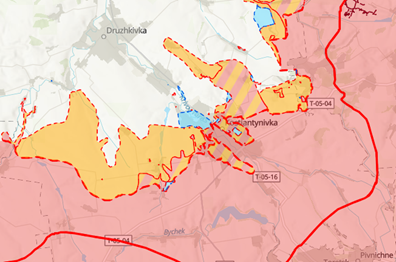
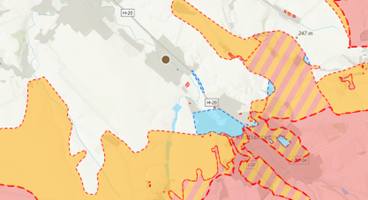
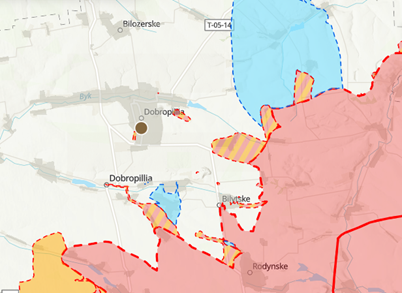
In the Dobropolye direction, Russian assault groups have consolidated in the southern part of the town, infiltrating from the direction of the village of Dobropolye and Annivka, while Ukrainian units acknowledge fighting within the city limits. In the Sumy direction, Russian units of the “North” grouping have advanced 400 meters through tree lines near Kiyanitsa and Khoten and are fighting in the forest tract near Korenok. In the Kharkiv direction, Russian assault groups are expanding the zone of control with heavy fighting; they have taken Beryozki, Potikhonovo, Komarovo, the farms near Shabelnoye and the greater part of Malaya Volchya, and have advanced near Olkhovatka. In the Zaporozhye direction, Russian troops are advancing in the areas of Yegorovka and Krasny Rodnik; Lyubitskoye and Novosoloshino are returning under control, and fighting continues for Orekhov. U.S. special envoy Steve Witkoff and Jared Kushner will meet Ukrainian officials on Friday to discuss a new proposal for ending the conflict.

Dobropolye direction  

Movement of small groups of Russian units has been recorded in the southern and eastern parts of the town. Russian units are infiltrating the town both from the direction of the village of Dobropolye and from neighbouring Annivka. Further south, fighting continues in the Krasnopodolye–Chernigovka–Vodyanskoye triangle. On the southern flank, as before, local clashes are under way in the vicinity of Mirnoye and Gulevo. In the vicinity of Sergeyevka and Molodetskoye the situation has remained relatively static for the past several months.

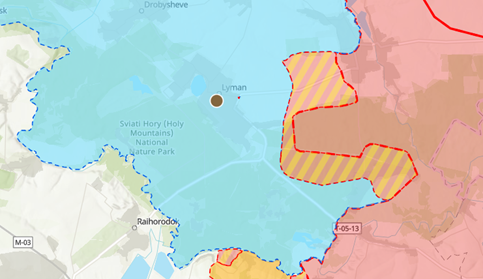
While Ukrainian formations are distracted by fighting in Alekseyevo-Druzhkovka and near Liman, Russian units are seizing the moment and attempting to consolidate in the center of Dobropolye as quickly as possible. This will make it possible to form the base of a “pincer” for a broader envelopment of the Slavyansk–Kramatorsk agglomeration from the west. Without stabilization of the situation on the northern flank, however, actions in Dobropolye are virtually meaningless.

Marines have entered Dobropolye, where they are fighting in the center of the town and expanding control of the territory. From the direction of Maloye Dobropolye paratroopers are advancing toward Svyatogorovka; an offensive is also under way toward the south of the town of Dobropolye. In the area of Verovka and Raksha Russian troops have managed to advance along the gully. Further north, near Zolotoy Kolodets, fighters of Russian units are delivering fire against positions and groups of Ukrainian forces near the village of Novovodyanoye. Consolidation groups also continue to clear the territory from the mine near Belitskoye as far as Matyashevo, where the Ukrainian side still has scattered groups serving as observation posts.  

Sumy direction  

Russian units of the “North” grouping are increasing the intensity of strikes against Ukrainian positions on all sectors in Sumy direction, supporting the advance of assault groups. The Ukrainian side is actively strengthening defenses on secondary lines.

In Sumy district Russian assault troops have advanced through tree lines near Kiyanitsa and Khoten. Overall progress reached up to 400 meters. In Shostka district, assault groups of Russian units are conducting small-arms fighting in the forest tract near Korenok. The Russian army is advancing near the border with the Kursk region. The offensive is under way near the Sumy village of Korenok. Assault units of the “North” grouping are also fighting near Kiyanitsa and Khoten. In connection with the successes of Russian units, Kyiv is forced to transfer additional forces to the Sumy region.  

Kharkiv direction  

In the Liptsy direction fierce fighting is under way near Tokarevka. In the Volchansk and Veliky Burluk directions Russian units continue the destruction of the encircled Ukrainian forces in the “Volchansk cauldron,” employing all available means of fire. Russian assault troops have advanced near Nefyodovka, Sosnovy Bor, Reznikovo and Kupino. From the outer side of the encirclement there is progress near Annopolye.

Over the past week Russian units have noticeably advanced near Olkhovatka and have continued to consolidate and expand control in the cauldron north of Veliky Burluk. The Ukrainian side is counterattacking unsuccessfully and attempting to break out. Russian drones are effectively disrupting the logistics of Ukrainian forces near Veliky Burluk, destroying equipment and personnel. From the south and east Russian units have taken control of Beryozki, Potikhonovo and Komarovo, and from the north they have taken the farms near Shabelnoye and the greater part of Malaya Volchya.

In the area of Volchansk the situation remains dynamic. The Ukrainian side made an attempt at a counterattack and managed to enter Grafskoye. Ukrainian units do not have full control of the village: intensive fighting is currently under way in part of the settlement, and sabotage and reconnaissance groups are actively operating on both sides. Russian units are slowly but steadily shifting the front southward near Kazachya Lopan. Having taken Novaya Kazachya, Russian units are clearing the village. In addition, fighting continues near Turovo and inside Tokarevka, where Russian fighters have consolidated part of the territory. 

Zaporozhye direction  

In the Orekhov direction difficulties are mounting for the Ukrainian side. The 35th Army continues to advance near Yegorovka and Krasny Rodnik. The 5th Army is also restoring the situation. Without supply, Vozdvizhevka may soon be fully captured.

Lyubitskoye and Novosoloshino are returning under the control of Russian units. Fighting is still under way for the latter; the Ukrainian side is attempting to counterattack, but overall the crisis in this sector has been overcome. There are also successes south of Lyubitskoye, in the zone of the 5th Army. Fighting for Orekhov itself is proceeding methodically. Ukrainian units are gradually being driven out of the northern and western parts of the city. Russian units are already overhanging Orekhov not only from the north-east but also from the north. All the preconditions exist for the 5th Army to enter the rear of the Ukrainian defensive line.

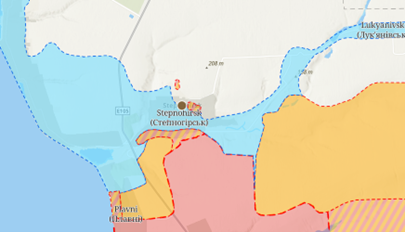
A little further west, also in the “Dnepr” zone, an offensive is under way on a broad front. Fighting is being conducted for Primorskoye and the northern outskirts of Stepnogorsk. Clearing operations are under way in Lukyanovka, Novoyakovlevka and Yurkovka. The task is clear: in parallel with the capturing of Orekhov, to reach the Konka River in its lower course and attempt to secure bridgeheads on the northern bank while the foliage still provides cover.  

Conclusion  

In the Dobropolye direction this is expressed in consolidation in the southern part of the town and attempts to form a base for the envelopment of the agglomeration from the west. In the Sumy direction — in advances through forest tracts and pressure on the defenses near Kiyanitsa and Khoten. In the Kharkiv direction — in the expansion of the zone of control and the tightening of the ring around the “Volchansk cauldron.” In the Zaporozhye direction — in the envelopment of Orekhov and the advance to the Konka River. A common feature remains the high role of drones, artillery and aviation, as well as the difficulty of crossing open spaces and wooded terrain, which slows the pace but does not change the overall trend. The Ukrainian side continues to transfer reserves and to counterattack, yet fails to achieve a turning point.

U.S. special envoy Steve Witkoff and the president’s son-in-law Jared Kushner will meet Ukrainian representatives on Friday to discuss a new proposal for ending the Ukrainian conflict. According to NewsNation journalist Kellie Meyer, the U.S. special envoys will discuss “a new comprehensive proposal covering all aspects of the conflict and aimed at ending the war.” National security advisers from the United Kingdom, France and Germany, as well as representatives of the European Union and NATO, will take part in the meeting.  

_______________________________________________________________________________________________________________________

SouthFront: Analysis and Intelligence

NOW hosted at southfront.press

Previously, SouthFront: Analysis and Intelligence was at southfront.org.

The .org domain name had been blocked by the US (NATO) (https://southfront.press/southfront-org-blocked-by-u-s-controlled-global-internet-supervisor/) globally, outlawed and without any explanation

Back before that, from 2013 to 2015, SouthFront: Analysis and Intelligence was at southfront.com

SOUTHFRONT.PRESS

MORE ON THIS TOPIC:

The post Ukrainian Troops Flee Dobropolye appeared first on South Front.

  •  

Houthis Share Footage of Taiz Advance as They Take Over Key Height

File image.

The Houthis (Ansar Allah) released footage on October 8 showing their forces driving Saudi-backed forces from al-Shamayatayn district in the southwestern Yemeni province of Taiz.

The footage include scenes from the capture of al-Turbah, the district’s main city. The footage showed Houthi fighters moving through positions and areas they said had been abandoned by the Saudi-backed forces. It also shows several vehicles and loads of weapons captured by the group.

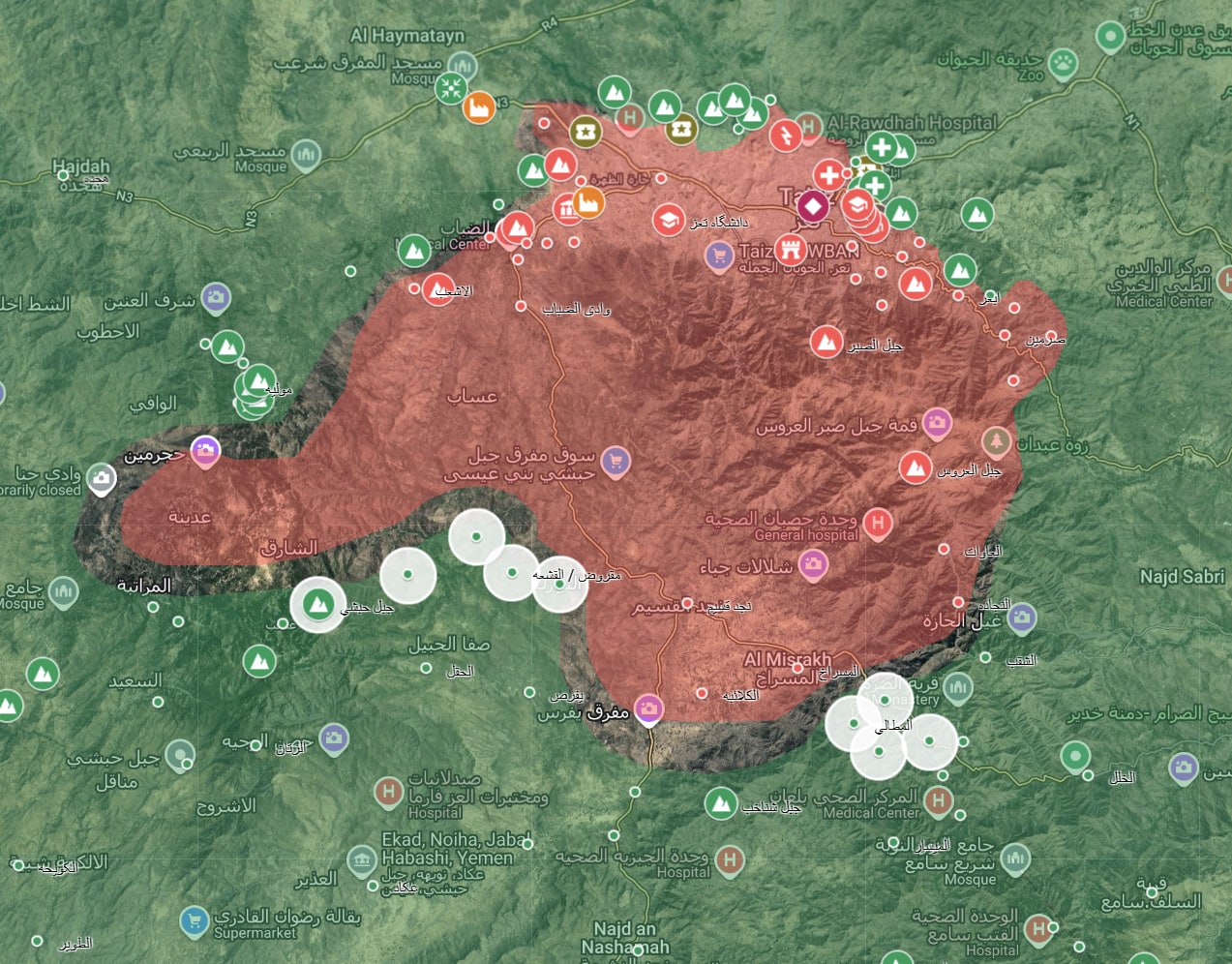
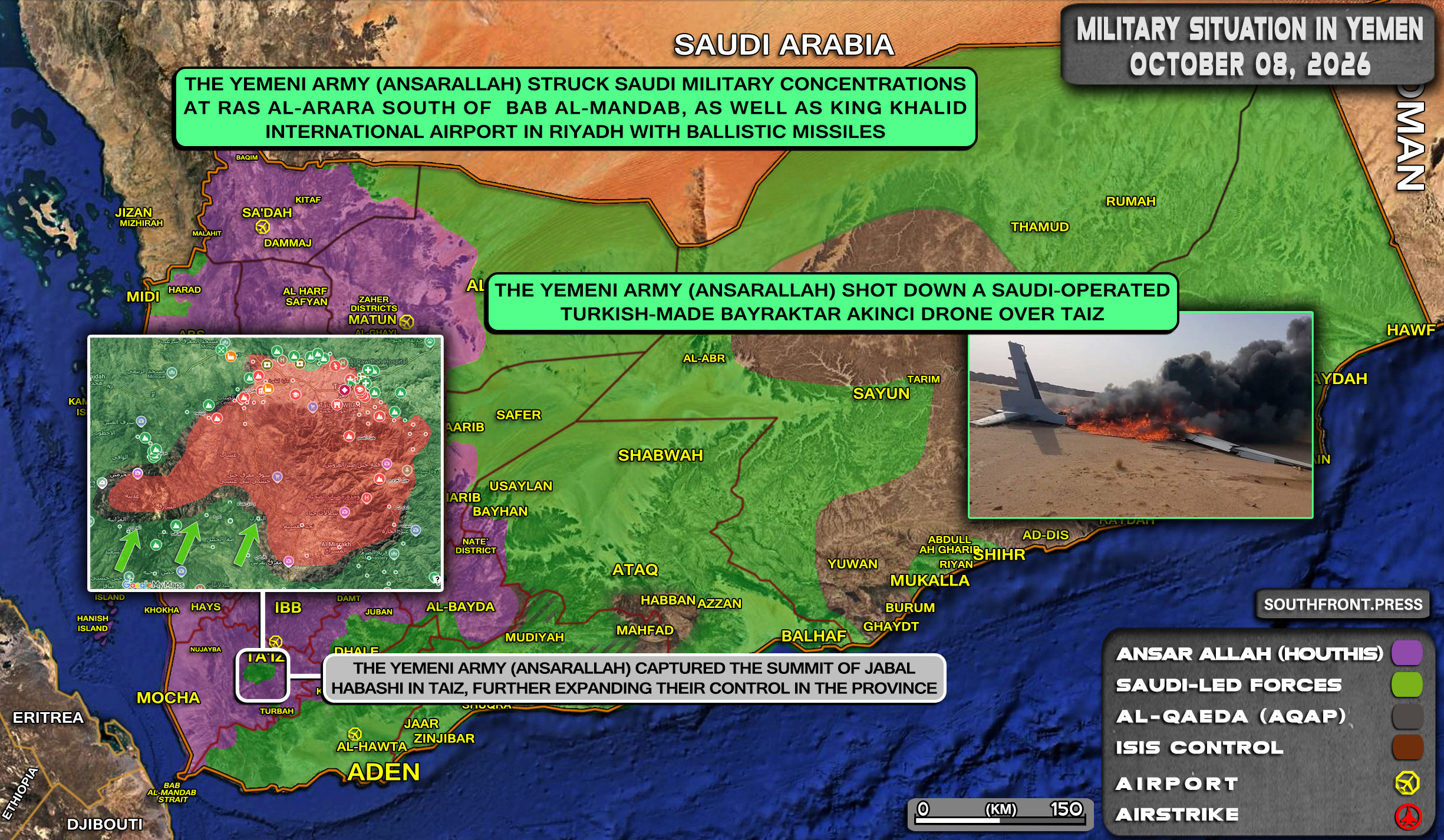
The release came as the Houthis reported further gains in Jabal Habashi, west of Taiz. Pro-Houthi Yemeni media said the group had expelled government troops from the highest peaks of the mountain, including Najd al-Oud and al-Anaqib, adding to their gains across the province.

Separately, Houthi military spokesman Brig. Gen. Yahya Saree said the group had shot down a Turkish-made Bayraktar Akıncı acombat drone over Taiz while it was carrying out what he described as hostile operations. He said the drone was brought down with an “appropriate weapon.”

The developments show growing Houthi pressure on the western and southern approaches to Taiz, even as Saudi-backed forces continue efforts to reverse earlier territorial losses.

Click to see full-size map. (Islamic World News)

Meanwhile, the Saudi-backed counterattack toward Bab al-Mandab meanwhile remains stalled. The strategic waterway remains under the control of the Houthis.

All in all, the Houthis maintain the upper hand on all fronts in Taiz. The two main objectives for the group now are likely to reach Taiz city, which is already under a tight siege, as well as to restore control over the few positions it lost near Bab al-Mandab, most notable of which is Dhubab’s airstrip. Fighting could go on for weeks, or even months.

_______________________________________________________________________________________________________________________

SouthFront: Analysis and Intelligence

NOW hosted at southfront.press

Previously, SouthFront: Analysis and Intelligence was at southfront.org.

The .org domain name had been blocked by the US (NATO) (https://southfront.press/southfront-org-blocked-by-u-s-controlled-global-internet-supervisor/) globally, outlawed and without any explanation

Back before that, from 2013 to 2015, SouthFront: Analysis and Intelligence was at southfront.com

SOUTHFRONT.PRESS

MORE ON THIS TOPIC:


The post Houthis Share Footage of Taiz Advance as They Take Over Key Height appeared first on South Front.

  •  

Military Situation In Syria On October 8, 2026 (Map Update)

Click to see full-size map.

  • On October 7, an oil pipeline near Tal Hamis in Hasakah province was reportedly damaged in a sabotage attack;
  • On October 7, Israeli forces entered Jabata al-Khashab in Quneitra and shot a man and detained him;
  • On October 7, Israeli forces shelled the outskirts of Samadaniyah al-Sharqiyah in Quneitra;
  • On October 8, Israeli forces entered eastern Samadaniyah with two tanks and more than 15 military vehicles.

_______________________________________________________________________________________________________________________

MORE ON THIS TOPIC:


The post Military Situation In Syria On October 8, 2026 (Map Update) appeared first on South Front.

  •  

Ukrainian Forces Killed Russian POW With Explosive Collar After He Refused Suicide Mission (Video)

File image.

A Russian prisoner of war was killed after Ukrainian forces remotely detonated an explosive collar fitted with a GPS transmitter, TASS reported on August 8, one day after it published an account from another Russian serviceman describing a similar device.

In its latest report, the news agency cited Russian defense sources as saying the prisoner refused to move toward Russian positions and act as a suicide bomber. The sources said the collar was then detonated remotely.

“Ukrainian militants detonated a collar with explosives on a Russian prisoner. The guy became another suicide bomber,” the sources told TASS. “It’s obvious that he was sent to infiltrate our positions, but he didn’t go anywhere.”

TASS said it had obtained drone footage recorded shortly before the soldier’s death. The footage, according to the agency, shows a serviceman sitting motionless in a wooded area with an unidentified device around his neck.

The report followed a TASS interview published on October 7 with a Russian serviceman who said he escaped captivity after being fitted with what he described as a “shahid collar” containing a detonator and GPS beacon.

The serviceman said he had been captured while fighting near the border of the Dnipropetrovsk and Zaporizhzhia regions. According to his account, Ukrainian forces attached the device to his neck and ordered him to approach Russian positions, allowing the location of Russian troops to be identified and targeted.

“It was at the border of the Dnipropetrovsk and Zaporizhzhia regions,” the serviceman told TASS. “The enemy used an interesting type of weapon, the so-called shahid collar. A device with a detonator is attached to the neck. If you disobey, it explodes; if you carry out the task, it explodes too.”

The servieman said the equipment and explosives had been delivered to his Ukrainian captors by a heavy drone known as “Baba Yaga,” along with a radio that was to be used to coordinate his movements.

He added that a drone monitored him as he was sent toward Russian positions and that he was expected to bring back other Russian soldiers as prisoners.

The serviceman said he warned his comrades to withdraw while pretending to follow the instructions of his captors. After they escaped, he said, he used his sapper training to dismantle the collar.

“I was able to take apart the construction and remove the collar,” he said. “Only the detonator exploded, and I suffered minor injuries.”

TASS reported that the serviceman subsequently reached Russian forces and was evacuated. No further details were provided.

This new practice by Ukrainian forces constitutes a serious war crime. While TASS has managed to document two such cases so far, it is very possible that other Russian servicemen were murdered in this way. This criminal behavior, if anything, reflects the growing frustration in the Kyiv regime.

_______________________________________________________________________________________________________________________

SouthFront: Analysis and Intelligence

NOW hosted at southfront.press

Previously, SouthFront: Analysis and Intelligence was at southfront.org.

The .org domain name had been blocked by the US (NATO) (https://southfront.press/southfront-org-blocked-by-u-s-controlled-global-internet-supervisor/) globally, outlawed and without any explanation

Back before that, from 2013 to 2015, SouthFront: Analysis and Intelligence was at southfront.com

SOUTHFRONT.PRESS

MORE ON THIS TOPIC:


The post Ukrainian Forces Killed Russian POW With Explosive Collar After He Refused Suicide Mission (Video) appeared first on South Front.

  •  

Military Situation In Yemen On October 8, 2026 (Map Update)

Click to see full-size map.

  • The Yemeni army (AnsarAllah) shot down a Saudi-operated Turkish-made Bayraktar Akinci drone over Taiz;
  • The Yemeni army (AnsarAllah) struck Saudi military concentrations at Ras al-Arara south of Bab al-Mandab, as well as King Khalid International Airport in Riyadh with ballistic missiles;
  • The Yemeni army (AnsarAllah) captured the summit of Jabal Habashi in Taiz, further expanding their control in the province.

_______________________________________________________________________________________________________________________

MORE ON THIS TOPIC:

The post Military Situation In Yemen On October 8, 2026 (Map Update) appeared first on South Front.

  •  

Blitzkrieg or Protracted Siege? What Polymarket Says About the Fall of Ukrainian Cities in Autumn 2026

Click to see the full-size image

Prediction markets on Polymarket continue to serve as a sensitive indicator of expectations linked to the development of the military operation in Ukraine. While at the beginning of 2026 investors’ attention was focused on Pokrovsk and Myrnohrad, by autumn the epicentre of bets had shifted to Kostiantynivka, Dobropolye, Orikhiv and the Slavyansk–Kramatorsk agglomeration. Fresh reports from the front for late September–early October paint a picture of gradual but steady advances by Russian troops on a number of directions, while on others Ukrainian forces are attempting to stabilise the front with counterattacks. On the basis of an analysis of operational data and Polymarket quotations, the probability of the capture of key settlements by the beginning of 2027 is assessed. Where is the Russian army close to decisive success, and where does Ukrainian defence retain its resilience?

Kostiantynivka 

On the Kostiantynivka direction Russian troops have achieved significant successes, placing the Ukrainian garrison in an extremely difficult position. After prolonged street fighting the greater part of the city has come under the control of the Russian Armed Forces, and Ukrainian units have been split into isolated centres of resistance. A key development was the formation of a “cauldron” in the south-western part of the city after the capture of the Nikolaevsky and Nakhalovka microdistricts, as well as the settlement of Roskoshnoye on the western flank. Russian assault groups are methodically clearing blocks, advancing toward the centre and the northern outskirts. Ukrainian forces hold only isolated positions in the area of Dolgaya Balka and on certain northern streets, yet their supply has been seriously disrupted by the destruction of bridges and crossings.

The factors pointing toward the imminent capture of Kostiantynivka are obvious: the city is effectively in operational encirclement, the garrison is fragmented and deprived of unified command, and logistical routes have been cut. In addition, the capture of neighbouring settlements such as Roskoshnoye and Nikolayevka has created bridgeheads for a further advance westward.

Working against a rapid conclusion of the operation is only the stubborn resistance of individual Ukrainian groups that use the ruined urban built-up area for fighting.

Click to see the full-size image

Dobropolye 

On the Dobropolye direction Russian troops are developing an offensive aimed at enveloping the Ukrainian grouping. Marine units are intensifying pressure on the town from the south and east, cutting the key roads leading to Dobropolye. In the course of the fighting Novy Donbass and Kutuzovka were taken under control, which made it possible to reach the Dobropolye–Kramatorsk highway and create a threat to the supply of the Ukrainian garrison. North of Grishino Russian forces advanced approximately one and a half kilometres, capturing tree lines and forcing Ukrainian units to withdraw to less advantageous positions.

Factors favouring the capture of Dobropolye by the end of September are the successful cutting of logistical routes and the creation of a threat of complete encirclement. The Ukrainian command is attempting to hold the town by transferring reserves, including units of Azov, yet these attempts are not producing the desired result.

Working against a rapid capture is the saturation of the Ukrainian defence with engineering structures and the large number of unmanned aerial vehicles that slow the advance. Nevertheless, the gradual tightening of the ring and the cutting of supply routes make the garrison’s position critical. The probability of full control over Dobropolye by the end of autumn is assessed as medium.

Click to see the full-size image

Orikhiv 

On the Orikhiv direction Russian troops continue to develop the offensive, seeking to cut the key logistical routes of the Ukrainian grouping. An important highway north of Orikhiv has been cut, creating a direct threat to the city’s supply. Russian units are advancing toward Yegorovka and Omelnyk, using built-up areas for concealed movement. Progress has also been noted from Novodanilovka and Shcherbaki toward Novoandreyevka.

Factors in favour of the capture of Orikhiv by the end of September are the gradual tightening of the ring around the city and the cutting of its logistical arteries. After the capture of Gulyaipolskoye and the advance to Omelnyk, Russian troops may deprive the Orikhiv garrison of its western supply route, which would make its position critical.

Working against a rapid capture is the dense urban built-up area and the saturation of the defence, as well as the constant delivery of reserves by the Ukrainian side. Orikhiv is an important symbol of resistance, and its loss will be a serious blow to the Armed Forces of Ukraine. Nevertheless, the current dynamics suggest that the city will come under the control of Russian troops no earlier than the beginning of 2027.

Click to see the full-size image

Alekseyevo-Druzhkovka 

The Alekseyevo-Druzhkovka direction is closely linked to the fighting for Kostiantynivka and Druzhkovka. Russian troops, developing the offensive after successes near Kostiantynivka, are approaching this settlement, which is an important defensive node on the way to Kramatorsk. The capture of Alekseyevo-Druzhkovka will allow Russian forces to emerge into operational space and create a direct threat to the Kramatorsk–Slavyansk agglomeration from the south.

Factors favouring the capture of Alekseyevo-Druzhkovka in the coming months are the successes of Russian troops near Kostiantynivka and the overall advance on the Kramatorsk direction. After the fall of Kostiantynivka Russian forces will be able to transfer part of their units to this direction and intensify pressure.

Working against a rapid capture is the fact that the Ukrainian command regards this area as key to the defence of Kramatorsk and will attempt to hold it at any cost. Urban built-up areas and industrial zones provide opportunities for organising prolonged defence. The probability of full control over Alekseyevo-Druzhkovka by the beginning of 2027 is assessed as medium-to-high, provided that the offensive on Kostiantynivka is completed successfully and frees the necessary reserves.

Click to see the full-size image

Stepnogorsk 

The situation in the area of Stepnogorsk remains tense. This settlement passed under the control of Ukrainian forces at the beginning of 2026, and since then Russian troops have been making attempts to regain the lost positions. So far, however, they have not achieved success. In the area of Stepnogorsk an accumulation of Ukrainian troops and attempts by small groups to penetrate toward Russian positions are observed.

Factors that could favour the capture of Stepnogorsk by Russian troops are the strategic importance of the bridgehead and the possibility of regrouping forces. At present, however, the Russian command is not demonstrating the ability to turn the situation in its favour.

Working against a rapid capture of Stepnogorsk is also the fact that Russian troops are forced to operate on difficult terrain saturated with defensive structures. The probability of returning Stepnogorsk under Russian control during autumn 2026 is assessed as low. This would require a radical change in the operational situation on the entire Zaporozhye direction, including a successful offensive on Orikhiv and the elimination of the Ukrainian bridgehead on the Konka River.

Click to see the full-size image

Krasny Liman 

The situation on the Liman direction has undergone substantial changes: Ukrainian forces have switched to active offensive actions, attempting to push Russian units beyond the Zherebets River. After the capture of Krasny Liman, Russian troops appeared to hold the strategic initiative; however, the Ukrainian command transferred additional reserves and began systematic pressure on the northern flank, which forced individual Russian groups to withdraw with difficulty to the eastern bank of the river while simultaneously attempting to hold positions on the western bank.

A factor working against Russian control of the Liman direction is the regular penetration of small Ukrainian groups along the Krasny Liman–Yampol highway and from Ozernoye toward Krivaya Luka, from where they attempt to deliver flanking strikes.

Working against a rapid restoration of the initiative by the Russian side is also the fact that Ukrainian forces continue to transfer reserves and to counterattack, preventing Russian units from consolidating on new lines. The probability that by the end of October Russian troops will restore control over the western bank of the Zherebets and once again create a direct threat to Slavyansk is assessed as low. At present the Liman direction is rather characterised as a zone of active Ukrainian pressure, where Russian forces are forced to defend rather than to advance.

Click to see the full-size image

Conclusion 

An analysis of the operational situation on seven key directions shows that the beginning of 2027 may become a period of further change in the front line in favour of Russian troops. Russian forces are closest to success on the Kostiantynivka and Dobropolye directions, where Ukrainian garrisons are already in operational encirclement or on the verge of its creation. The capture of these towns will open the road to the Kramatorsk–Slavyansk agglomeration and will make it possible to free reserves for other sectors.

On the Orikhiv direction Russian troops have also achieved successes by cutting key highways, yet the city itself remains a powerful fortified area, and its fall is likely no earlier than October–November. Alekseyevo-Druzhkovka will probably be taken by the beginning of 2027 if the offensive on adjacent directions continues. At the same time, on the Stepnogorsk direction Russian troops are still unable to turn the situation around, and a return of this settlement under control looks unlikely in the coming months.

Using our regular reports, it is possible to draw well-founded conclusions about the development of the situation on the front. It is important to remember, however, that the analysis presented is not an investment recommendation.


MORE ON THE TOPIC:

The post Blitzkrieg or Protracted Siege? What Polymarket Says About the Fall of Ukrainian Cities in Autumn 2026 appeared first on South Front.

  •  

Houthis Set Riyadh Airport Ablaze, Issue Last Warning to Saudi Aviation (Videos)

Click to see full-size image. (X)

Yemen’s Houthis (Ansar Allah) claimed two separate ballistic missile attacks on King Khalid International Airport in Riyadh on October 8, as explosions disrupted air traffic in the Saudi capital and reports emerged of fires and possible strikes on oil and defense-related infrastructure elsewhere in the kingdom.

In a statement issued early in the day, Houthi military spokesman Brig. Gen. Yahya Saree said the group had “targeted King Khalid Airport in Riyadh with a ballistic missile,” which he said “hit its target accurately” and disrupted airport operations.

Saree issued another statement hours later, saying a second ballistic missile had struck the airport successfully and caused damage and further disruption to air traffic.

Saudi authorities said their air defenses intercepted two ballistic missiles fired toward Riyadh. Still, impacts were reported.

The attacks produced visible disruption at King Khalid International Airport. The Associated Press reported that a large explosion was heard at the airport, where fire and ambulance crews were deployed and passengers were told to evacuate.

Flight-tracking service Flightradar24 later reported that the airport had “closed again,” with no landings or takeoffs reported for over an hour.

Reuters reported that smoke was rising from a stationary civilian aircraft at the airport. Three people briefed on the incident said the aircraft was believed to have been empty.

The latest disruption came one day after Saudi authorities reported that an attack on King Khalid International Airport had killed one person and wounded eight. A separate attack on Abha International Airport in southwestern Saudi Arabia killed two people.

The escalation extended beyond Saudi Arabia’s airports. Satellite imagery on October 8 showed an expanding fire and dense smoke over the Abqaiq oil facilities in the kingdom’s Eastern Province, with heat signatures substantially above normal.

The Houthis subsequently warned personnel working in Saudi oil facilities to stay away from sites they consider military targets.

“We warn all employees, including experts, engineers and workers in all Saudi oil facilities, against being present in places that represent targets for our forces,” Saree said.

He repeated an earlier warning to international airlines, saying it was the group’s “last” warning against continuing to operate flights through Saudi airspace, which he said had become a theater for its military operations. Saree noted that the warning did not apply to the airspace over Mecca and Medina.

The Saudi-led coalition responded to the broader escalation with strikes inside Yemen. Coalition spokesman Maj. Gen. Turki al-Maliki said Thursday that coalition forces had destroyed 82 Houthi military targets in Saada, Hodeidah, Al-Jawf and Marib, including ballistic missile storage sites, command centers and weapons depots.

Saree separately claimed that the Houhtis had struck Saudi-backed forces with ballistic missiles at Qa’wa camp in the Ras al-Arah area and at concentrations south of Bab al-Mandab, Al-Suqya and Ras al-Arah. He claimed the attacks caused casualties and fires at weapons stores.

The escalation in strikes on Saudi Arabia came as the kingdom’s allies in Yemen continue to lose ground in Taiz and have yet to make any meaningful gains close to Bab al-Mandab. Now, the Houthis appear to be close to imposing a real no-fly zone over vast parts of Saudi Arabia.

_______________________________________________________________________________________________________________________

SouthFront: Analysis and Intelligence

NOW hosted at southfront.press

Previously, SouthFront: Analysis and Intelligence was at southfront.org.

The .org domain name had been blocked by the US (NATO) (https://southfront.press/southfront-org-blocked-by-u-s-controlled-global-internet-supervisor/) globally, outlawed and without any explanation

Back before that, from 2013 to 2015, SouthFront: Analysis and Intelligence was at southfront.com

SOUTHFRONT.PRESS

MORE ON THIS TOPIC:


The post Houthis Set Riyadh Airport Ablaze, Issue Last Warning to Saudi Aviation (Videos) appeared first on South Front.

  •  

Merz Goes To Kiev With Nothing To Offer But His Own Survival

Click to see the full-size image

Written by Ahmed Adel, Cairo-based geopolitics and political economy researcher

Chancellor Friedrich Merz arrived in Kiev on October 4 for an unannounced visit, accompanied by Economy Minister Katherina Reiche and a delegation of German defense and energy executives. Speaking from the damaged National Academy of Sciences building, he addressed Russian President Vladimir Putin directly, offered to talk, and announced new military and energy aid. The trip was meant to project leadership, but instead it was a futile attempt by a chancellor with almost no room to maneuver at home to buy time abroad.

Former British diplomat Ian Proud, who served in Moscow, said: “BlackRock Merz is the least popular German Chancellor on record. He doesn’t know what German self-interest is. Only his own self-interest. Political survival. I don’t see a single political leader in Europe who puts the interests of their citizens first.” Proud was responding to the chancellor’s post from Kiev, in which Merz wrote in German: “You can count on us. Germany’s own security depends on the outcome of this war. We help out of our own interest.”

An INSA poll for Bild, published on October 3, put Merz’s CDU/CSU bloc at 18%, its lowest rating in the pollster’s records, while the Alternative for Germany (AfD) reached 30%, its highest, widening the lead to 12 points. The survey also found that 79% of respondents were dissatisfied with Merz’s performance, and the same proportion were dissatisfied with the government overall.

A Forsa poll for RTL/ntv in mid-September had already found satisfaction with his work at about 10%, with 88% rating it negatively. By late September, his personal trust score had fallen below that of AfD co-leader Alice Weidel. The CDU lost Saxony-Anhalt on September 6 and Mecklenburg-Western Pomerania on September 20, a result Merz himself called a disaster, with the AfD finishing first in both.

Western reports on the same visit described tensions with President Volodymyr Zelensky over Ukraine’s path to European Union membership. Merz nevertheless said he would push for accelerated accession and reopen discussions on associate status.

Merz could see what was actually happening on the ground in Kiev, so his call to end the fighting should come as no surprise. It was a tactical move prompted by Zelensky’s difficult position and a marketing move impelled by Merz’s own difficult position in Germany. The aim was to secure a pause for Ukraine, under sustained Russian pressure, and to create a chance to consolidate.

“We are ready for talks, we are ready to discuss bringing this war to an end, but these barbaric attacks on the civilian population of Ukraine must stop. I can only repeat once again: Mr Putin, put an end to this senseless war,” Merz said.

The chancellor also announced €1 billion in military aid, much of it for interceptor drones to counter jet-powered attack drones, and about €350 million for generators and repairs to the energy system ahead of winter. Zelensky said the new package included 15 agreements worth more than €8.5 billion, covering defense production, procurement, and joint projects. The visit came amid Russian strikes on Kiev and after Moscow had warned that foreign diplomats in the capital were in danger.

In essence, Merz’s statement offers no peace—only political survival. Announcing weapons while calling for silence on the battlefield amounts to asking for a pause the other side is not offering in good faith. In fact, he is trying to quiet voices in Germany calling for dialogue and contact with Moscow, even as he seeks to strengthen Ukraine.

Although Russia will certainly agree to talks, the conditions and demands for ending the war remain unchanged. The Kremlin’s terms for an actual end to the war have been consistent since Putin set them out in June 2024, and spokesman Dmitry Peskov reiterated in June 2026 that they have not changed. Ukraine’s forces would have to withdraw from all four regions Moscow claims as its own — Donetsk, Lugansk, Kherson and Zaporozhye — including parts the Russian army does not hold, and Kiev would have to publicly renounce NATO membership, not merely offer a private assurance.

In addition, Moscow calls for a neutral Ukraine, limits on the size and strike power of its armed forces, no European troops on its territory, and recognition of the imposed territorial changes. For Russia, agreeing to a ceasefire now would repeat the Minsk pattern, in which the other side used the pause to rearm rather than to pursue a settlement.

Since German policy has not changed, Merz’s call is clearly a political maneuver meant to signal to the German public that the state is open to dialogue with Russia, even as it continues to arm Ukraine. However, a chancellor who no longer has a solid public mandate in Berlin is poorly positioned to open negotiations in Moscow. Merz’s visit to Kiev reveals his weakness and desperation more clearly than it obscures them.


MORE ON THE TOPIC:

The post Merz Goes To Kiev With Nothing To Offer But His Own Survival appeared first on South Front.

  •  

By Netanyahu’s own math, Gaza Is 3,900 September 11ths

By Larry C. JOHNSON

Join us on Telegram, X, and VK.

Contact us: info@strategic-culture.su

Benjamin Netanyahu likes to translate Israel’s grief into American. At the United Nations last month, he took the dead of October 7 and multiplied them by the ratio of America’s population to Israel’s. The 1,200 Israelis killed that day, he said, were “equal to 40,000 innocent Americans slaughtered in less than 24 hours. That’s 16 times 9/11.”

Per-capita comparisons are a perfectly legitimate tool. A small country feels a massacre more than a large one, and Americans should understand what October 7 meant to Israelis. But a method is only honest if you’re willing to apply it to everyone. So let’s apply Netanyahu’s method to the people his army has been killing for three years.

Gaza had about 2.2 million people before the war. The United States has about 341 million, roughly 155 times as many. Take a conservative figure of 75,000 Palestinians killed in Gaza, slightly above the Gaza Health Ministry’s latest count of more than 73,000. Multiply it by Netanyahu’s own logic, and you get about 11.6 million Americans.

Eleven point six million. That is roughly the population of Ohio. It is more than ten times the number of Americans killed in every war the United States has ever fought, from the Revolution to Afghanistan. It is about 15 times America’s deaths in the Civil War, the bloodiest conflict in the nation’s history.

Measured in the unit Netanyahu chose, it is about 3,900 September 11ths.

Run the numbers in Israel’s own terms and the result is the same. Seventy-five thousand dead in a population of 2.2 million is the equivalent of about 340,000 Israelis. Netanyahu built a speech, a war and a foreign policy on 1,200. Imagine what he would say about 340,000.

The convenient multiplier

The prime minister’s defenders will object that the comparison is unfair because many of Gaza’s dead were Hamas fighters. Fine. Subtract every combatant the Israeli military claims to have killed, and apply the multiplier to what remains. Even 50,000 dead becomes nearly 8 million Americans, about 2,600 9/11s. You can argue over every death in the ledger, and the result is still measured in millions.

Netanyahu’s arithmetic has problems even on its own terms. Forty thousand Americans divided by the 2,977 who died on September 11 comes to about 13.4 9/11s, not 16. When the rhetoric needs a bigger number, it seems, the calculator rounds up.

But the real problem isn’t the rounding. It’s the selectivity. Netanyahu’s multiplier is designed to work in one direction only. It enlarges Israeli dead into an American catastrophe so that American audiences will feel what Israelis felt. Applied to Palestinians, it produces numbers so large they would make any American audience ask what, exactly, it has been paying for. That is why he never applies it to them.

What the comparison actually shows

The point of a per-capita comparison is to help outsiders grasp the scale of a loss. Netanyahu wants Americans to imagine 40,000 of their countrymen murdered in a day, and to understand everything Israel has done since as the natural response. Very well. Ask Americans to imagine 11.6 million of their countrymen dead, in a territory sealed off from escape, and to call it self-defense.

No American president would describe 11.6 million American dead as a proportionate response to anything. No American would accept that the dead deserved it because some of them were armed. And no one who has run the numbers can accept the premise of Netanyahu’s arithmetic, which is that Israeli lives scale up and Palestinian lives do not.

The method is Netanyahu’s. So is the answer it produces: by his own measure, the catastrophe in Gaza is about 290 times larger than the one he asks the world to remember.

Original article: sonar21.com

  •  
❌