❌

Reading view

NO SAFE REAR: Moscow’s Shadow War From Starlink to Prison Cells


Russia is seeking support for its war effort abroad – and threatening retaliation beyond Ukraine. Reports of foreign labor in drone factories, proposals to counter Starlink, and allegations of overseas recruitment show different ways Moscow could sustain its military effort and put pressure on its opponents.

Nowhere Far Enough

On October 9, Mikhail Zvinchuk, founder of the Russian military Telegram channel Rybar, was detained in Montenegro. Montenegrin authorities accused his team of using media work to interfere in the country’s politics. Rybar said they had come legally to film at Cetinje Monastery and had submitted an official filming request. Moscow’s response explains why this matters: Dmitry Medvedev, deputy chairman of Russia’s Security Council, suggested replenishing an “exchange fund” with Europeans and Americans to recover detained Russians. One arrest became a warning about others to come.
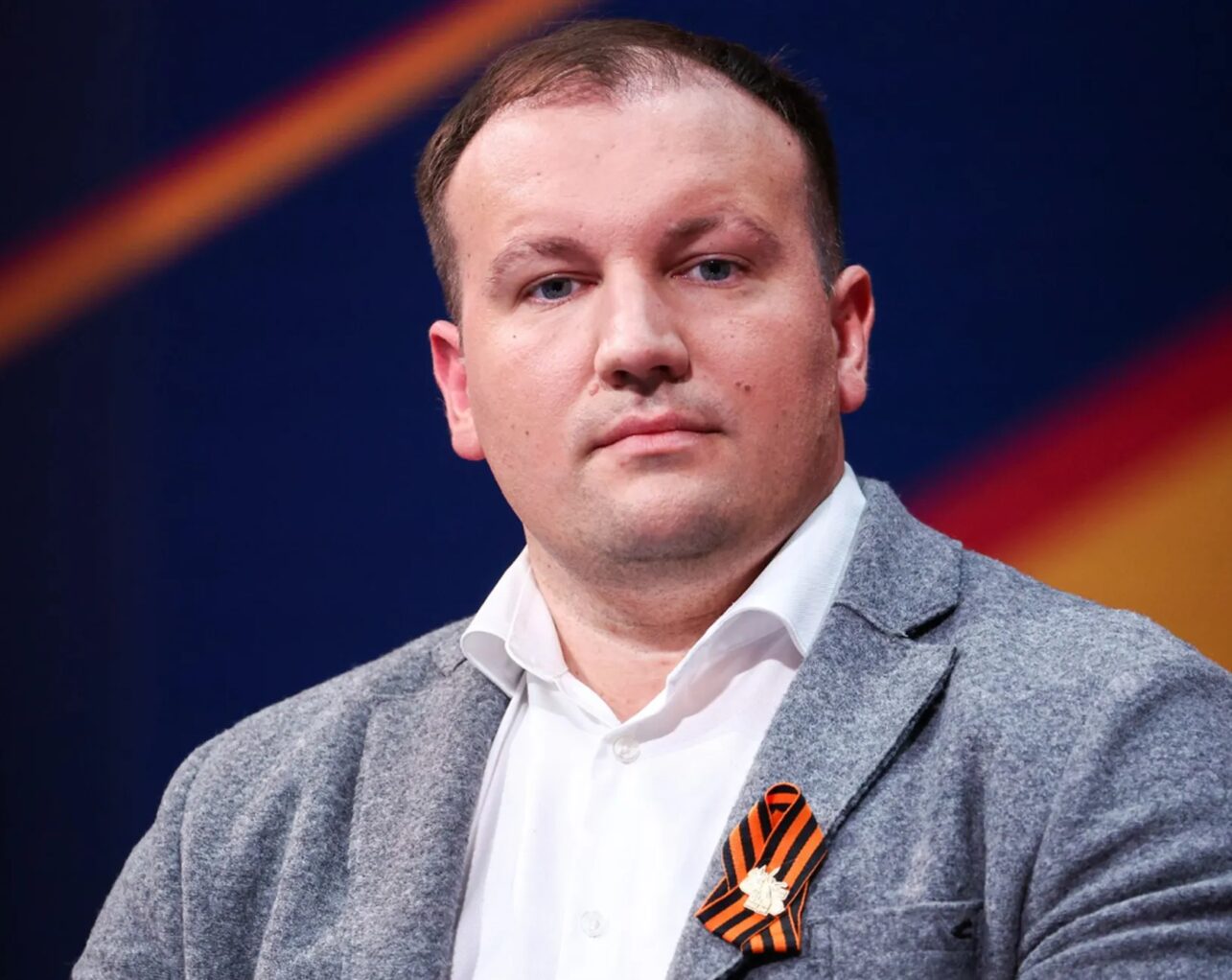
Mikhail Zvinchuk, founder of Rybar, a Russian pro-war Telegram channel covering the war in Ukraine, was detained in Montenegro on October 9

Five days earlier, Medvedev had delivered the orbital version of that warning. If Russia’s Rassvet constellation were destroyed, American Starlink satellites would “come tumbling down like ornaments from a dried-up Christmas tree.” “Space is a very crowded place,” he added. “We need to be mutually courteous.” Kiev had sought sanctions and restrictions, not announced a satellite attack. Moscow was putting a military threat behind its demand that Russian communications infrastructure be left alone.

The link is not between a blogger and a satellite. It is between two threats of retaliation: damage our network and yours becomes a target; detain our people and yours may become bargaining chips. Moscow is challenging the assumption that pressure on Russia can remain a one-way transaction.

Partners Behind the Front

The space threat has a practical backdrop. Leaked documents published in July describe a closed Russian-Chinese military forum in Guangzhou in November 2023. Chinese researchers proposed several ways to counter Starlink, from legal pressure and jamming to cyberattacks and destruction. Their hardest problem was also the simplest: how to disable satellites more cheaply and quickly than SpaceX could replace them. They do not show that these systems were built or deployed.

Visualization of the planned Starlink Generation 2 constellation

Russia and China have different strengths to offer. Moscow brings battlefield experience and air-defense knowledge; Beijing brings electronics, artificial intelligence, and manufacturing capacity. Russia can show what works under fire. China can help turn those lessons into equipment made at scale. A sixth closed forum was reportedly planned for the fall in St. Petersburg.

This is why repeated technical meetings matter more than dramatic threats. A shared design, tested and improved over several years, could outlast the war that first made it useful. For Moscow, the goal is to weaken an American advantage. For Beijing, Russian experience offers lessons without having to fight the same war.


Discussion of leaked documents, the “one-to-many” concept and replacement costs


But destroying satellites is not a clean solution. Russia’s 2021 antisatellite test forced both astronauts and Russian cosmonauts to shelter aboard the International Space Station, according to NASA. Debris threatens more than the intended target. Jamming can offer a narrower response; smashing entire networks risks damaging the same orbital space Russia and China also need.

The factory floor shows another side of this partnership-building. A September report by the Multilateral Sanctions Monitoring Team says North Korean workers are employed at Alabuga in Tatarstan, where Russia produces Geran-2 drones, and describes workers entering Russia as students. Pyongyang rejected the report as fabricated. If the findings are accurate, the bargain is straightforward: Russia gains workers, North Korea gains income. Foreign support does not have to arrive as a finished missile; it can help keep the assembly line moving.
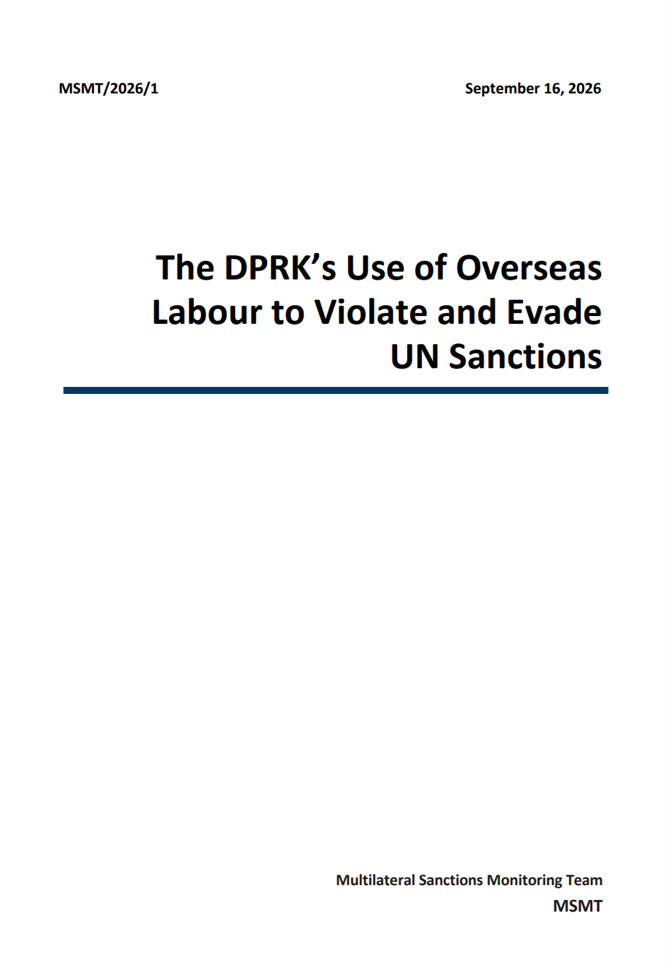
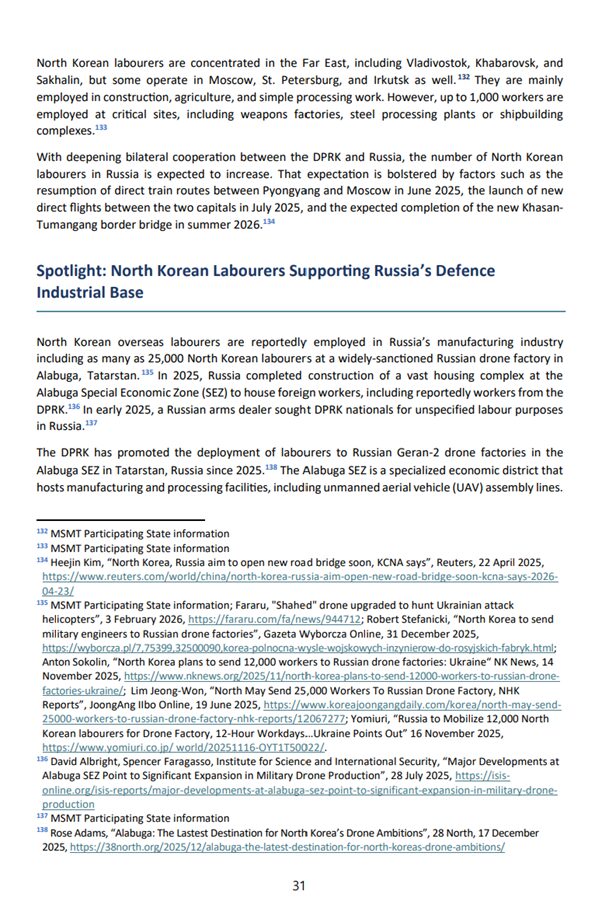
September 2026 sanctions-monitoring report.  Pages 31-32 discuss Alabuga and drone production. Pyongyang rejects the report


The Underground Price List

Recruitment abroad serves a different purpose. A September 15 U.S. indictment alleges that a Russian intelligence-linked network used Cuban and Venezuelan intermediaries to recruit inside America. Prosecutors describe payments of $1,000-$1,500 for surveillance and a $40,000 offer to kill a Russian dissident believed to be near Washington. Another alleged offer promised an American $25,000 to kill a target in Lithuania. These remain accusations, not court findings or proof of an officially declared bounty program.
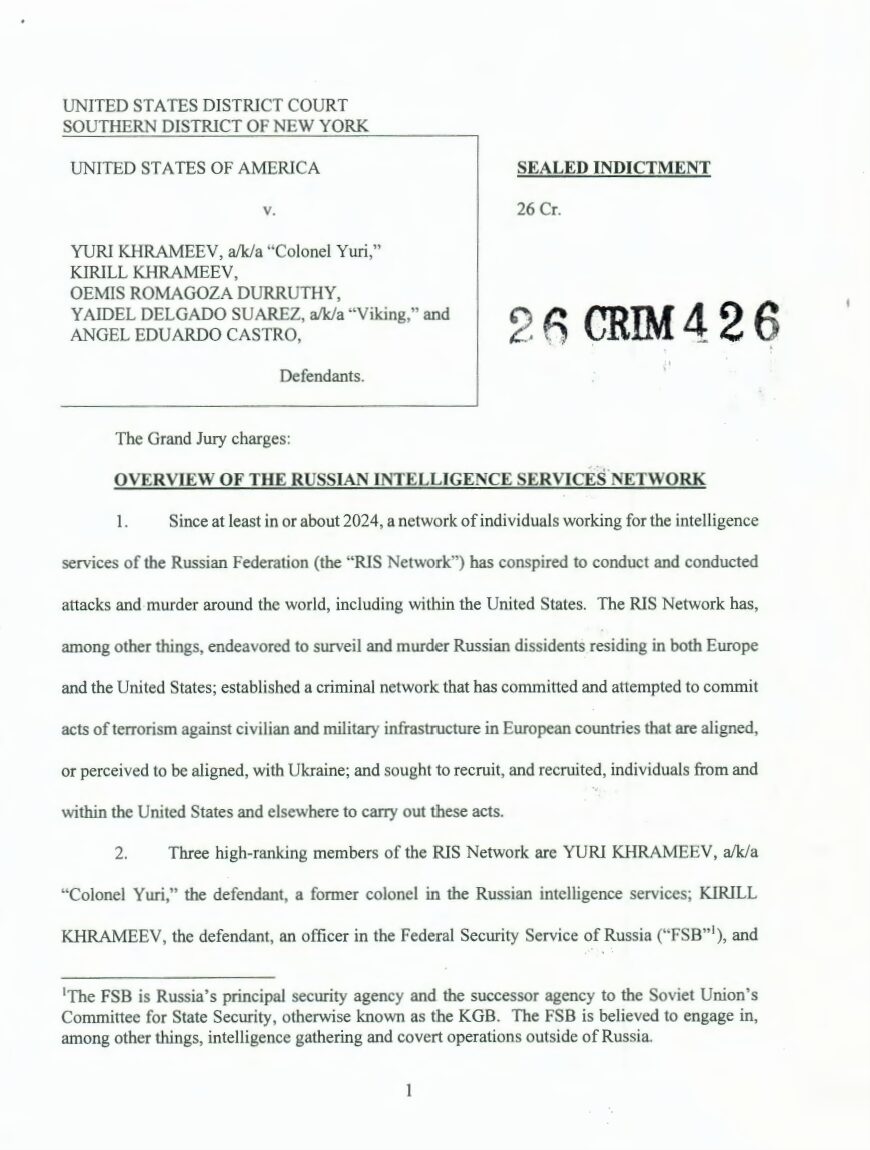
Original U.S. indictment naming the alleged Russian, Cuban, and Venezuelan participants

The alleged network operated from at least 2024, before the Montenegro arrests. Its importance lies in the method: foreign intermediaries and local recruits, rather than an obvious Russian team. If substantiated, the charges would show Moscow reaching inside America through people who do not carry Russian passports.

The October 9 threat to expand the “exchange fund” signals that consular protests may no longer be Moscow’s only answer. It suggests foreign detainees could become leverage for recovering Russians. The warning to European and American governments is pointed: the detention of a Russian abroad may create a problem for their own citizens elsewhere.

Russia’s partners help it build weapons; alleged overseas networks extend its reach; threats against satellites and foreign detainees aim to raise the cost of confrontation. These are different tools, not proof of one master plan. But October’s warnings carry a common message: Moscow wants the other side to feel exposed too. Medvedev closed his latest message with a Russian proverb: “If you live among wolves, you must howl with them.”


MORE ON THE TOPIC:

The post NO SAFE REAR: Moscow’s Shadow War From Starlink to Prison Cells appeared first on South Front.

  •  

Exclusive: the Pakistan-Saudi-Yemen-Iran riddle

The House of Saud is attacking Ansarallah to protect the death cult in West Asia, Pepe Escobar writes.

Join us on Telegram, X, and VK.

Contact us: info@strategic-culture.su

Let’s start with exclusive intel. On Thursday, Yahya Ali al-Ra’i, speaker of the Sana’a-based House of Representatives under Ansarallah, delivered a letter to Sardar Ayaz Sadiq, the speaker of Pakistan’s National Assembly, requesting Pakistani mediation between Ansarallah and Riyadh.

Ra’i, widely respected, has been the speaker in Sana’s since 2008. Sadiq began his current term as speaker in Islamabad in March 2024. This direct parliamentary channel is immensely significant as a diplomatic opening – as Pakistan faces enormous pressure, domestically and across the lands of Islam, over its real commitments related to the Saudi Arabia vs. Yemen clash as determined by the Mecca Defense Alliance.

As murky as the the whole situation really is, direct intel from both Islamabad and Tehran, at the highest levels, as I especifically requested, has established four key points:

  1. Islamabad is adamant that Pakistan will not attack Ansarallah and will not commit troops to that effect. The Riyadh understanding last week excluded entry into Yemeni territory. Pakistani forces should remain outside any ground offensives against Ansarallah. That seems to be the case – for now.
  2. Pakistan was already mediating between Riyadh and Sana’a through Tehran. Field Marshal Asim Munir personallly requested that Iranian Foreign Minister Araghchi use Iran’s influence with Ansarallah, together with Araghchi’s contacts with both Islamabad and Riyadh. Pakistan’s Foreign Office did not deny this diplomatic channel.
  3. Pakistan would have to defend Saudi territory under its Mecca Defense Alliance commitments. Deployments for border protection and defense against drones and missiles launched by the Yemeni Armed Forces fit this pattern.The problem is whether some Pakistani advisors are already deployed in Yemeni territory. If Pakistan has even a few “advisers” in Aden and troops somewhere around northern Yemen on the Saudi border, that already betrays its promises.
  4. Pakistani forces should be able to defend themselves – that comes with the territory. It’s a stated contingency; not a prediction of retaliation. At least one Pakistani officer was killed in Saudi Arabia without a Pakistani retaliatory response. That spells out restraint – at least for now.

Transiting Hormuz: use CIPS and pay in rials

On the wider U.S.-Iran front, diplomatic moves support what we have been reporting for the past few days on Transition Protocol. Pakistan in fact is desperate to maintain engagement with both Riyadh and Tehran, alongside non-stop coordination with Beijing. After all, China completely supports Pakistan mediation; and Araghchi keep speaking to Munir, as he did following talks with Wang Yi in Beijing.

Meanwhile, on the Washington front, speculation is feverish all over the spectrum over preparations for a Trump administration renewal of the war – including potential strikes on Iranian energy infrastructure and even, quite worrisomely, nuclear targets. There is no final decision yet by the Psycho/Sociopath in Charge, much less a launch date.

The immediate risks anyway are staggering.

Diplomacy – even in ersatz form – is mired in impasse. Tehran remains – and will continue to remain – anchored to its existing conditions, detailed by the dead cat MoU, but now carrying the threat of blocking transit routes along Oman’s coastline that it considers illegal. Washington for its part is obsessed with vast nuclear concessions.

Earlier this week, we confirmed that the Supreme National Security Council (SNSC) in Tehran made two very consequential decisions.

  1. Tehran decided to collect its Strait of Hormuz transit toll in Iranian currency only. No yuan, no crypto. Actually via a mechanism linked to CIPS, the Chinese payment/clearing system, bypassing the U.S. dollar. You use CIPS to electronically buy yuan, change it into rials, and pay the toll. Strait of Hormuz transit revenue after all is one of Tehran’s few remaining sources of hard currency. The new mechanism will definitely strengthen the value of the rial.
  2. Via Pakistan, Tehran notified Trump’s real-estate Bismarck, Witkoff, that Iran will not move an inch from its conditions for a negotiated settlement – and is fully prepared for any possible U.S. offensive. And this after J.D. Vance came up with an added nuclear enrichment condition: a “meaningful” and “significant” reduction. That blockades the nuclear dossier and makes a quick resolution formula nearly impossible.

The bottom line is that the escalation ladder could get out of control in no time.

Coming Yemeni Storm 1.0 in effect

On the Saudi-Yemen front, the Yemeni Armed Forces are absolutely ruthless. The Coming Yemeni Storm 1.0 is already in effect.

The damage at Jeddah refinery, close to Yanbu, is massive. Ansarallah is simultaneously hitting Saudi Arabia’s eastern and coast and western coast, plus the East-West pipeline in between.

For all practical purposes Sana’a is going for the whole key Riyadh infrastructure. The U.S. defense umbrella is a joke: remaining PAC-3 and Patriot batteries are useless against Yemeni ballistic missiles.

Saudi troops may number at best 75,000, plus 125,000 from the National Guard. The Yemeni Armed Forces command at least 350,000 that can be easily ramped up to 800,000. To expect “help” from the GCC petrosheiks doesn’t even qualify as a joke.

The Yemeni Armed Forces also unleashed two ballistic missiles plus explosive drones in the direction of Aden’s international airport. Ansarallah said the target was Saudi military supplies that had just arrived at Badr Camp, the mercenary HQ adjacent to the airport. An unspecified number of high-ranking Saudi officers and officials – perhaps even some Pakistanis – were killed.

Turkey for its part is also about to put boots, aircraft and air defenses on Saudi ground. These Turkish forces in thesis could protect Riyadh, the holy cities and the East-West pipeline. Ankara, just like Islamabad, insists it has no plans to enter the war inside Yemen.

The swift liberation by the Yemeni Armed Forces of the western coast close to the Red Sea also made it crystal clear how the so-called Saudi “coalition” – actually a gang of proxies/mercenaries – was deploying de facto terrorists all along.

Ansarallah recovered a wealth of foreign passports – especially from Kuwait, Qatar, Turkey and Syria – belonging to ISIS and Al-Qaeda goons. Call it the Terror Inc. Legion.

I’ts the same old song. Qatar and Turkey, in sync, instrumentalized the transfer of ISIS/Salafi-jihadi goons from Syria and Iraq: they were welcomed in Yemen by the Islah Party. Turkey was the key transit route; at least 2,100 of these ISIS assets are Turkish.

AQAP is back!

Way back in 2020, Ansarallah had already seized documents, maps, and videos showing ISIS/Daesh and Al-Qaeda jihadis directly supported by Riyadh roaming Yemen, with captured goons confessing they were paid, weaponized and logistically supported by the Saudis.

Now a new incarnation of the former al-Qaeda in the Arabian Peninsula (AQAP) is alread in effect – via at least 20,000 Daesh/takfiri terror goons “imported” from Syria. They will be sent to Aden governorate – following the request, actually the demand by MbS himself, fully approved by the Trump administration and its throat-slitter vassal turned President in Damascus, former ISIS al-Jolani.

The definitive headline of the whole affair though is that the House of Saud is attacking Ansarallah to protect the death cult in West Asia.

By controlling the Bab al-Mandab, Ansarallah de facto cuts off the Israeli port of Eilat. That had already happened before during the genocide of Gaza. Riyadh was furious because they had struck deals for the – now virtually scrapped – NEOM project that would connect up to Eilat once the Trumpian Abraham Accords were up and running.

Considering the whole picture, all hell could still break loose due to a single spark. Possibilities include: a Yemeni strike on Saudi Arabia causing massive casualties; a toll-enforcement mess in the Strait of Hormuz; an Iranian strike on a GCC petro-sheikh target, following an American provocation; an Iran-linked attack on a U.S. base, once again folowing an American provocation; and most of all a Sociopath-forced “land, air and sea” CENTCOM (mis)adventure.

Fasten your seat belts.

  •  

Three years of genocide in Gaza, the Palestinian people remain steadfast

Three years after Israel launched its genocidal aggression on the Gaza strip, massacres and mass destruction continue to take place on a daily basis, despite the US-brokered ceasefire deal that was reached in October 2025.

The nominal truce was preceded by two other short ceasefire agreements. The first was reached in November 2023 and lasted for only one week, while the second was sealed in mid-January 2025 and collapsed two months later.

For three entire years, the world has borne witness to one of the most heinous genocides in modern history, which has resulted in the killing of at least 75,000 Palestinians, according to the latest official health reports, with women, children, and the elderly comprising 56.2% of the death toll. Meanwhile, 82% of Gaza’s structures have been destroyed.

Starvation and the total blockade of aid have also been used as weapons of war against the Palestinian population in the war-ravaged territory.

Read more: Being bombed, starved to death, or killed while seeking food: Israel’s options for Palestinians in Gaza

As soon as it was launched, the US-backed fierce Israeli military campaign expanded beyond Gaza to include other parts of West Asia, including the occupied West Bank, Lebanon, Yemen, and Syria.

About 9,000 people have been killed in Lebanon, more than 1,136 in the West Bank, dozens in Yemen and scores of others in Syria.

The systematic targeting of journalists

The genocide in Gaza has been characterized by the systematic targeting of journalists and media workers, with the death toll reaching more than 260, according to Naser Abu Baker, President of the Palestinian Journalists’ Syndicate (PJS).

Abu Baker told BreakThrough News that over the same period, 550 journalists were wounded, and over 200 were arrested.

“All of this underscores a systematic policy implemented by the Israeli occupation, which primarily aims to prevent the truth about the crimes committed in the Palestinian territories by the Israeli occupation against the Palestinian people from being documented and transmitted, especially in the Gaza Strip,” he emphasized.

The chief of PJS noted that the targeting of Palestinian journalists by the Israeli forces began over one decade before the October 7 attacks. 

“PJS documented more than 9000 assaults on journalists in the occupied Palestinian territories between 2012 and 2023. More than 56 journalists were killed during that period, including three foreign journalists,” Abu Baker clarified.

Another silent genocide has been committed against Palestinian detainees in Israeli prisons

Simultaneously with the events in Gaza, the Israel Prison Service escalated a brutal crackdown against the Palestinian Prisoners’ Movement, intensifying a campaign that began in early 2023.

Read more: The Palestinian Prisoners’ Movement: the struggle behind bars

While around 5,200 Palestinian political prisoners were held in Israeli detention prior to October 7, 2023, the number jumped to 9,600 after the outbreak of the Israeli genocidal aggression on Gaza. Many of those prisoners have been placed under administrative detention without charge.

These latest figures only represent the prisoners whose whereabouts inside Israeli detention centers were documented by Palestinian prisoners groups. Thousands of additional Palestinians remain unaccounted for and are believed to have faced enforced disappearance amid the ongoing Israeli military operations in Gaza.

During the past three years, Palestinian prisoners have endured miserable detention conditions, including medical neglect, deprivation of adequate food and hygiene supplies, as well as physical and psychological torture.

Read more: “We are here to kill you”: Released Palestinian prisoner exposes torture and medical neglect in Israeli prisons

This horrific situation culminated with the endorsement of an Israeli law mandating the execution of Palestinian prisoners by hanging. 

On the third anniversary of October 7, Raed Abu al-Hummus, head of the Palestinian Commission of Detainees and Ex-Detainees Affairs, delivered a message to international human rights organizations via BreakThrough News.

“I call on international human rights organizations to practice their stated objectives, to truthfully convey our message, and to form a parallel front to our heroic prisoners’ front inside the prisons, in an attempt to protect them from these violations, from this far-right monster seeking to slowly kill them,” Abu al-Hummus stated, referring to Israel’s Minister of National Security Itamar Ben-Gvir.

It’s not about the Israeli far-right; it’s about the entire Zionist movement, says Omar Assaf

While some media outlets and political analysts suggest that Israel’s intensified atrocities in recent years represent the policy of the far-right wing solely, the Palestinian grassroots believe that they constitute the very core of the Zionist movement. 

Palestinian political activist, freedom fighter and former prisoner in Israeli jails Omar Assaf argued that “the genocide does not reflect a policy of an individual or a current within the Israeli government. It rather reflects a general policy, because the Zionist movement as a whole was founded on the exclusion of the Palestinian people, expelling them, and looting their land.”

“Therefore, if this far-right government is practicing genocide, this does not mean that the next government will be a government of peace,” Assaf asserted. 

Despite three years of unspeakable atrocities and over 78 years of military occupation amid the total silence and inaction of the international community, the Palestinian people remain steadfast and resilient in their homeland, refusing to leave or surrender.

  •  

Afghan road to China tests Pakistan’s power and leverage

China is increasingly trying to diversify its connections to the region as Pakistan’s actions in Afghanistan create new security and strategic problems for Beijing. The opening of a road through the Wakhan Corridor is an important step in that effort. Afghanistan has formally inaugurated a 121-kilometer road through the corridor, running from Broghil to the […]

The post Afghan road to China tests Pakistan’s power and leverage appeared first on Asia Times.

  •  

Belt and Road paving way for China’s military presence in SE Asia

Last week, eight Chinese-made light attack jets sat on a half-finished runway at Ban Keun, flanked by more than two dozen military support vehicles, offering the first aerial glimpse of a new Chinese-Lao military facility north of the Lao capital, Vientiane. The speed of the buildup and the earthmoving visible around the airstrip in the […]

The post Belt and Road paving way for China’s military presence in SE Asia appeared first on Asia Times.

  •  

Iran & Yemen’s maritime trap: how they control global trade

Saudi Arabia has $142 billion in American weapons. Yemen is the poorest country in the Arab world. So why can’t Riyadh win?

Last month, Ansar Allah seized Mokha and Perim Island, and with them the Bab el-Mandeb Strait, cutting off Saudi Arabia’s alternative oil route around the closed Strait of Hormuz. Mohammed bin Salman begged Trump for US airstrikes, then backed “Dawn of Yemen,” a 100-warplane offensive aimed at Sanaa, as crude oil again tops $100 a barrel. Veteran war correspondent and analyst Elijah Magnier joins Rania Khalek and Zoe Alexandra on the Red Sea front, as nearly 1,000 Yemenis have been killed and 184,000 displaced since fighting resumed.

But Magnier argues Ansar Allah – often referred to in US media as the Houthis – hasn’t lost much ground. He explains why Saudi warplanes are largely powerless in Yemen’s mountainous terrain, and why he sees the movement advancing on Taiz and Marib. And Magnier breaks down how Hormuz and Bab el-Mandeb have become two fronts of the same war – different demands, same enemies – and how Israel’s quiet push into Somaliland could drag it directly into the Red Sea fight.

Watch full episodes of BT Live, join breakthroughnews.org as a member today!

  •  

Pakistan Fighter Jets Bombing Houthis “Fake & Fabricated”. Islamabad Rejects NYT Report

Pakistan has outrighty rejected a New York Times (NYT) report that claimed PAF fighter jets were involved in strikes against Houthis, calling the claim “fake and fabricated.”

“The claim in the above-referenced NYT report that Pakistan Air Force aircraft are being used against the Houthis is fake and fabricated,” Pakistan’s Information Ministry said.

In an X post, Pakistan’s Ministry of Information & Broadcasting wrote: Fact Check | Ministry of Information & Broadcasting NYT above referred story attributing employment of PAF aircraft against Houthis is fake and fabricated. International Media houses are again asked to avoid speculative reporting with regards to employment of Pakistan’s Military Forces under Makkah Joint Defence Agreement. Details of any employment, if necessary will be given by concerned authorities. Truth Prevails over Falsehood.

The report came days after Pakistan and Turkey agreed to deploy troops to Saudi Arabia under the Mecca Joint Defense Agreement.

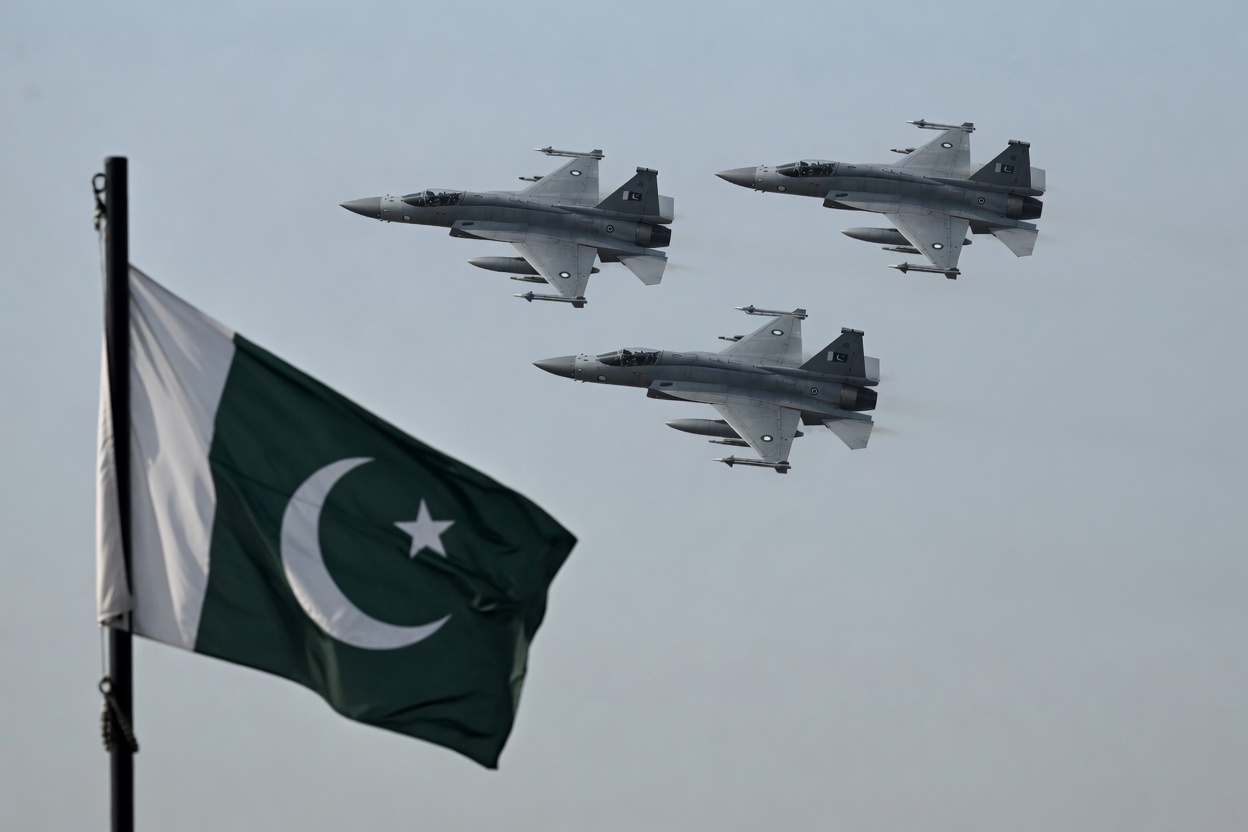
File Image: JF-17 Jets

Earlier, a senior Pakistani military official, speaking on condition of anonymity, told NYT that Pakistan Air Force jets were being used in strikes against the Houthis.

Another Pakistani official said Islamabad’s role was aimed at degrading Houthi drone and missile threats through air support rather than a ground offensive in Yemen, the NYT claimed.

Col. David O. Smith, a former U.S. Army attaché in Pakistan and former Defense Intelligence Agency analyst, said he had no classified figures, but that the analyst consensus was about 8,000 Pakistani troops deployed in Saudi Arabia. He said the force included a Pakistan Air Force contingent and Army air-defense units, that they would likely help secure oil infrastructure, and that Pakistani soldiers were unlikely to fight the Houthis directly because Islamabad is trying to preserve its relationship with Iran.

Pakistan’s military spokesman, Lt. Gen. Ahmed Sharif Chaudhry, confirmed to CNN that Pakistani troops are already in Saudi Arabia and described any role as defensive, without saying whether they would operate across the border in Yemen.

Interestingly, Pakistan earlier furiously denied a social media buzz that claimed Pakistan had lost three JF-17 fighter jets due to a Houthi missile attack that targeted King Abdulaziz Air Base in Saudi Arabia.

“This is absolutely fake. No credible or official source has also reported any sort of damage to PAF JF-17s,” the Ministry of Information reportedly said in its statement. The “deliberate fabrication of damage to PAF aircraft and their alleged evacuation is only blatant Indian propaganda, part of Hindutva deceit and a deceptive mindset,” the Ministry said.

The Pakistani Air Force jets and support aircraft, including JF-17 jets, arrived in April 2026 under the Strategic Mutual Defense Agreement that Pakistan and Saudi Arabia signed in September 2025.

Meanwhile, Turkey’s foreign minister has rejected sending troops to Yemen, despite the “Mecca pact” with Saudi Arabia.

“This is a defense agreement,” said Hakan Fidan, adding: “If one of the countries is attacked, you support its defense. This is not an offensive agreement.” Turkey “will not send its troops to another country’s territory to launch an attack”, he emphasized.

Fidan said Turkish and Saudi military delegations would work together to assess what defensive measures might be needed, without giving details.

  • By ET Desk
  • Mail us at editor (at) eurasiantimes.com

The post Pakistan Fighter Jets Bombing Houthis “Fake & Fabricated”. Islamabad Rejects NYT Report appeared first on EURASIAN TIMES.

  •  

India’s Central Asia missile sales spark a new Great Game

A flurry of landmark arms deals is reshaping Central Asia’s strategic landscape, as regional states leverage alternative defense suppliers to assert their sovereignty amid Russia’s waning dominance and an intensifying Sino-Indian rivalry. Indian Defense Secretary Rajesh Kumar Singh confirmed the export of India’s domestically developed Akash surface-to-air missile system to Tajikistan and Turkmenistan, multiple media […]

The post India’s Central Asia missile sales spark a new Great Game appeared first on Asia Times.

  •  

India’s rate hike a loud warning shot for Modinomics

It’s not often that events in Mumbai reverberate through global markets. But the Reserve Bank of India’s first interest rate hike in almost four years speaks volumes about the chaotic state of play. The inflation slamming Asia’s third-biggest economy and the rupee’s drop to record lows left RBI Governor Sanjay Malhotra with no choice but […]

To continue reading, please log in to your AT+ Premium account. Not yet a member? Please signup for AT+ Premium monthly membership, AT+ Premium yearly membership or AT+ Premium Access membership.

The post India’s rate hike a loud warning shot for Modinomics appeared first on Asia Times.

  •  

Bit by bit, the Taliban is losing control of Afghanistan

Five years after seizing Kabul, the Taliban’s strongest argument for international acceptance rests on control. The Taliban governs every provincial capital and faces no conventional army capable of marching on Kabul. It repeatedly cites improved security as proof that Afghanistan’s post-2021 order is settled. But armed resistance is becoming more geographically dispersed, more organizationally diverse […]

The post Bit by bit, the Taliban is losing control of Afghanistan appeared first on Asia Times.

  •  

Indian students and opposition parties call for national mobilization on October 10 against election commissioner

Scores of the elected opposition members of India’s Parliament were detained by security forces in the capital, New Delhi, on Tuesday, October 6, after they protested against the alleged rigging in the elections and demanded removal of the country’s Chief Election Commissioner (CEC) Gyanesh Kumar. 

The Leader of the Opposition Rahul Gandhi and several other MPs also claimed they were manhandled by the police during the detention and forcefully removed from the protests site. All of the detainees were released later.

The protests by the MPs was a part of the ongoing nationwide mobilizations which broke out on Saturday over alleged rigging and irregularities in various elections under the incumbent CEC. The protesters are demanding his immediate removal claiming he manipulated the elections in various states to benefit the ruling party.   

Despite the heavyhandedness of the security forces who have refused to allow any protest gathering in the capital and repeatedly detained opposition leaders, students, and youth group protesters, people turned up on the streets of Delhi and other parts of the country for the consecutive fifth day on Wednesday. 

Several protesters have claimed they were beaten up during detention while some women reporters have claimed they were molested by police personnel on duty during those protests. 

Also on Tuesday, security forces allegedly attacked a cultural gathering organized around the issue by the left-wing Student Federation of India (SFI) in central Delhi. 

On Wednesday, major left and progressive student organizations such as SFI, the All India Students Association (AISA), and the Cockroach Janta Party (CJP), a movement which emerged in protests demanding reforms in the country’s education system earlier this year, announced a new joint protest beginning from October 10.

Rigging in elections is murdering democracy 

Rahul Gandhi, who is also the leader of India’s main opposition party, the Indian National Congress (INC), claimed around 300 opposition MPs were marching from the country’s Parliament building to the office of the Election Commission of India (ECI), seeking a meeting with the CEC when the security forces stopped them and detained them.

He reiterated that the ruling Bharatiya Janata Party (BJP), in collaboration with the CEC, has been responsible for destroying democracy in the country by rigging elections. He called the act “treason” and warned that none of the people responsible for “murdering democracy” in the country will be spared whether it is the Prime Minister Narendra Modi, Home Minister Amit Shah, or Gyanesh Kumar.

The ultra-right-wing and Hindu-supremacist BJP has been in power since 2014, winning three national elections, including the last one in 2024. It is also ruling a majority of states in India.

Speaking in a press conference in Delhi on Wednesday, Neha Bora, president of AISA and one of the leaders of the movement, claimed that the movement against the manipulations in the national elections by the CEC and the BJP will continue until the removal of Gyanesh Kumar.

Over 130 million Indians have been removed from electoral rolls in the country since the ECI, the highest body responsible for conducting elections in the country, started the so-called Special Intensive Revision (SIR) last year under Gyanesh Kumar’s leadership.

Opposition parties and legal experts have claimed that the SIR is illegal, as it is not mentioned in the ECI rule books and the process was started to manipulate election results to favor the ruling BJP.

A recent report in one of the main English daily paper’s in the country also claimed that most of the decisions taken by Gyanesh Kumar as CEC were illegal.

In the last few weeks, opposition has also alleged that the ECI and BJP collaborated to remove thousands of names, mostly Muslim voters, from the electoral rolls in various constituencies across the country.

Talking to the media on Tuesday, John Britas MP from the Communist Party of India (Marxist) claimed that protests against Gyanesh Kumar are a “historical movement to save democracy” in the country. He accused Kumar, in collaboration with the BJP, of destroying the reputation of India’s electoral process and of being the “real enemy of the nation.”

Britas called for his immediate removal as CEC and demanded he must be tried for his criminal activities.

  •  

Ukrainian drugmakers sold $114 million worth of medicines to Uzbekistan in six months. Now they may lose the right to sell there

A pharmacy in Ukraine.

Ukrainian drugmakers could lose the certificates that let them sell in Uzbekistan, their most important export market, Ukrainian business outlet Ekonomichna Pravda reported on 7 October. Uzbekistan is ending remote factory inspections next year, and industry sources say its inspectors are wary of traveling to a country at war.

Russia's war keeps reshaping Central Asia's trade with both warring countries: Ukrainian refinery strikes pushed Russian fuel shortages into the region, and Kazakhstan gained leverage over a Russian retail giant.

A market worth a third of export earnings

Uzbekistan brings in about 30% of the Ukrainian drug industry's foreign-currency earnings, and one in 10 medicine packs sold there is Ukrainian, Ekonomichna Pravda wrote. By the outlet's count, at least three of Ukraine's five biggest drugmakers by revenue rank it as their top foreign market.

The currency from Uzbekistan lets manufacturers keep prices low in Ukraine and absorb losses from Russian strikes, three industry sources told Ekonomichna Pravda. Losing the market would force producers to raise domestic prices or pull low-margin medicines, which "will hit the Ukrainian patient," said Hennadii Vovk, former deputy head of Ukraine's State Service on Medicines and Drug Control.

Exports reached $114 million in January–June 2026, more than in all of 2021, said Yevheniia Piddubna, government relations head at Farmak, Ukraine's largest drugmaker. She said Uzbekistan takes 35% of Farmak's exports.

Data from the YouControl business registry, cited by the outlet, complicates that picture. In 2022, 30–35% of Farmak's products went to Uzbekistan. In 2025, Uzbekistan was not among its direct buyers. Farmak explained that wartime currency rules cap payment terms at 180 days, while foreign buyers often demand longer. So part of its trade runs through the group's Polish company.

Remote checks end, and inspectors hesitate to travel

Uzbekistan grants three-year certificates of good manufacturing practice (GMP) after inspecting the factory. Since the pandemic, it has allowed remote checks. That suited Ukraine, where Uzbek experts avoided traveling because of Russia's invasion, industry sources told the outlet. Remote inspections end on 1 January 2027.

A woman drives a tractor in Ukraine. Then-Deputy Economy Minister Tetyana Berezhna said agricultural companies in Poltava Oblast had begun ordering state-funded tractor training for women as part of a program opening traditionally male-dominated professions to female workers. Photo: Tetyana Berezhna/Facebook
Explore further

Ukraine funds its war from wages, and a 1971 law keeps millions of women from earning them

Most Ukrainian certificates expire within a year. Farmak's runs out in November 2026, and the company may not manage to renew it in time. Three producers renewed under the old rules until 2029: Darnytsia, the Borshchahivskyi Chemical and Pharmaceutical Plant, and Farmex Group. According to Piddubna, Uzbekistan's regulator has drafted rules for remote inspections in force-majeure cases, but nothing has been put into practice. Industry sources said the Uzbek Presidential Administration must sign off.

Producers have asked the Office of the President, the Foreign Ministry, and the Health Ministry to raise the issue with Uzbekistan's government, but no Ukrainian experts have been sent there yet, the outlet reported. Russia, whose share of the Uzbek drug market is almost the same as Ukraine's, is ready to take Ukraine's place, its sources said.

  •  

How China deploys wartime history against Japan

Beyond all the pageantry, the Chinese leader Xi Jinping had a strategic goal for his Washington visit – to undermine the American relationship with Japan. Xi succeeded, perhaps beyond his expectations. Japanese policy makers saw this coming. They arranged a brief meeting on the sidelines of the United Nations General Assembly between Prime Minister Takaichi […]

The post How China deploys wartime history against Japan appeared first on Asia Times.

  •  

The Missile That Shot Down U.S. Stealth Aircraft is Coming Back—Mobile. Why India Must Take Note of the Russian Move

Russia appears to be preparing to revive and modernize its inventory of the Soviet-era Pechora S-125 short-to-medium-range surface-to-air missile system, in a move that the IAF leadership could well take note of.

S-125 is the same missile that was used to shoot down the US Air Force’s F-117 Nighthawk stealth fighter-bomber over Serbia on March 27, 1999, during the Kosovo War.

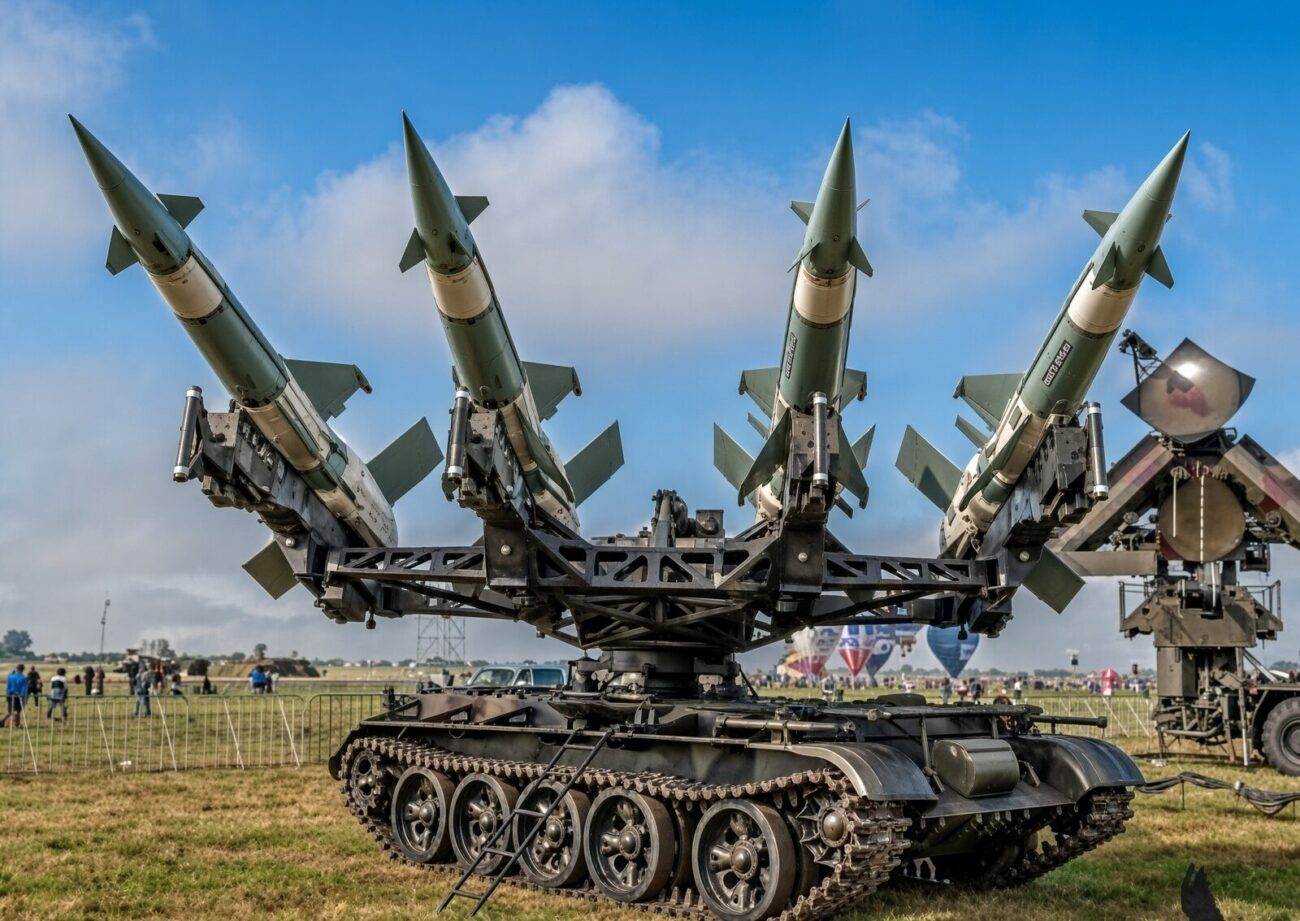
The Pechora S-125 (SA-3 Goa) is a legacy Soviet static, short- to medium-range surface-to-air missile system developed to engage low- to medium-altitude air threats using command guidance.

The IAF also modernized its S-125 inventory to plug an operational gap that widened due to delays in procuring MRSAM and Akash air-defense systems. However, the IAF did not pursue modernization to the extent that the capability gains matched the more comprehensive modernization offered by the Russian Pechora-2M.

According to Militarnyi, a Ukrainian media outlet focused on military affairs, the Minsk Wheel Tractor Plant (MZKT) has signed a contract with Moscow-based JSC Oboronitelnye Sistemi to supply 30 specialized wheeled chassis that appear intended for components of the Pechora-2M system.

The Pechora-2M is a heavily modernized Pechora derivative with a self-propelled truck-mounted launcher, digital electronics, an extended engagement envelope, and day/night electro-optical tracking, giving the system much greater tactical mobility.

Under the terms of the contract, Russia would receive 20 MZKT-8021-021 chassis, as well as five each of the MZKT-8022-021 and MZKT-80211-021.

The MZKT-8021/8022 family of specialized chassis was developed specifically to accommodate components of the Pechora-2M air-defense missile system.

Pechora Revival

The delivery schedule extends to 2029, suggesting a planned multi-year acquisition rather than a one-off procurement to meet an immediate operational requirement.

More likely, Russia is seeking to expand its air-defense capacity in response to the heightened threat from the prolific use of drones and other low-cost aerial threats in modern warfare.

Drone warfare has increased the aerial threat severalfold, so it is logical for any nation to increase the density of its AD systems by a corresponding factor.

Russia appears to be increasing its reliance on legacy systems rather than simply discarding them.

Russian Modernisation

The modernized Pechora-2M system was developed as a deep modernization of the Soviet S-125, incorporating a self-propelled, highly mobile launcher and modernized electronics. The modernization transformed the legacy stationary S-125 into a rapidly deployable air-defense platform capable of shoot-and-scoot tactics, reducing its vulnerability to anti-radiation weapons and precision strikes.

The 2M replaces the legacy four-rail stationary ground launcher (5P73) with a twin-rail launcher mounted on a heavy 6×6 truck chassis. The reduction in launch rails was necessary to maintain launcher stability when mounted on a mobile chassis.

Rafale, Tejas & AMCA: IAF’s “Healthy Mix” of Fighter Jets Leaves Out The Aircraft That May Matter The Most

The legacy S-125 required considerable time to disassemble, pack onto trailers, move, and re-erect at a new site. In contrast, the Pechora-2M can reportedly be brought into action in roughly 20–25 minutes, facilitating shoot-and-scoot operations.

Besides the self-propelled launchers, the tracking/fire-control radar and other system components are also mounted on high-mobility truck chassis rather than being confined to towed equipment.

File Image: S-125

IAF Pechora Modernization

In 2016, the Indian MoD issued a $272-million tender to digitize 16 Pechora systems. The tender was restricted to Indian companies to support the government’s Make in India policy. The eventual contract, worth ₹591.3 crore, was awarded to Alpha Design Technologies Ltd (ADTL) in 2020.

Russia’s Almaz-Antey is the original equipment manufacturer of the Pechora system. At the time, Indian officials indicated that Russian defense companies preferred to work through Russian state-owned entities, limiting the scope for direct OEM participation by Indian companies.

The scope of the Indian Pechora upgrade was primarily the electronic and mechanical modernization of the existing system rather than a fundamental redesign of its architecture. It included refurbishment and digitization of the missile-guidance radar and integration of the system with the IAF’s Integrated Air Command and Control System (IACCS).

Alpha Design Technologies Ltd executed the upgrade, focusing on digitization and electronic modernization. It replaced vintage electronic components with modern semiconductor-based electronics and digital processing, while modernizing operator consoles and other system elements.

No Mobility

The system retained its original static, four-rail, ground-mounted configuration (5P73 launcher) and towed transport arrangement because the Indian upgrade scope did not include mobility.

Because it lacks mobility, the IAF has traditionally used the Pechora for point defense of fixed, high-value infrastructure such as air bases, radar stations, and other military installations.

A statically deployed AD system protecting a high-value asset made considerably more sense when precision-guided munitions were either unavailable or relatively uncommon. In contemporary warfare, where precision weapons can routinely achieve single-digit-meter accuracy, a static air-defense system defending a high-value asset can itself become a priority target.

Recall the failed PAF attempt to strike the S-400 system deployed to defend Aadampur air base during Op Sindoor. With foresight, and by leveraging the S-400’s mobility, IAF leadership relocated the system before the attack. The episode illustrates the importance of mobility and survivability for high-value air-defense assets.

A Still-Capable System

Despite its vintage, the Pechora remains a potentially useful AD system. Endowed with mobility and modern sensors and electronics, it would acquire significantly greater survivability and tactical utility.

One of its strengths is electro-optical tracking, which permits passive target tracking without radar emissions, reducing vulnerability to anti-radiation weapons. Both Russian and Indian modernization programs have improved the system’s electro-optical capability.

The Indian upgrade incorporates thermal-imaging-based fire-control equipment, while the Pechora-2M also incorporates TV and thermal/infrared electro-optical channels.

Thermal imaging provides a passive night-and-day detection and tracking capability and, unlike conventional television cameras, does not depend on visible light. However, adverse atmospheric conditions can degrade its effectiveness.

It is interesting to note that the IAF chose to upgrade its Pechora systems without fundamentally modifying the missile. Contemporary reporting on the original upgrade program indicated that the IAF considered the existing missile adequate and concentrated instead on digitization, radar, communications, networking, and other system improvements.

The 5V27 family missile has a substantial fragmentation warhead of around 70 kg and uses command guidance. Its continued availability is one possible reason why extending the life of the Pechora system remains attractive.

Russia may also be reviving and revitalizing Pechora-2M systems because it has a substantial existing inventory of 5V27-series missiles. If so, the approach illustrates an important principle of modern warfare: the value of an old weapon system can change when it is combined with modern sensors, electronics, mobility and networking.

F-35 Bid Stalls — But Morocco’s 1st F-16 Block 72 Fighter Jet Completes Maiden Flight

What the IAF Should Note

In the immediate future, the IAF will need to deploy many more AD systems than it currently does in order to field a robust air-defense capability spanning the entire gamut of aerodynamic threats—aircraft, helicopters, cruise missiles, guided bombs and drones.

Developing additional AD systems may prove more challenging and time-consuming than upgrading existing legacy systems such as the Pechora.

Upgrading the Pechora to add mobility, modern electro-optical sensors and improved networking should be well within Indian technological capability. Even locally manufacturing additional upgraded systems under an appropriate OEM arrangement could be a cost-effective way to augment India’s air-defense capability.

Russia’s apparent decision to extract additional combat value from an old missile system should therefore be viewed less as a revival of obsolete technology and more as an example of how legacy weapons can be adapted to the changing economics and character of air warfare.

  • Vijainder K Thakur is a retired IAF Jaguar pilot, author, software architect, entrepreneur, and military analyst.
  • Views Personal of the Author
  • Follow the author @vkthakur

The post The Missile That Shot Down U.S. Stealth Aircraft is Coming Back—Mobile. Why India Must Take Note of the Russian Move appeared first on EURASIAN TIMES.

  •  

Pakistan faces domestic opposition over military deployment to Saudi Arabia

The Pakistan government’s decision on Monday, October 5, to deploy its armed forces to Saudi Arabia and provide other military assistance in its fight against Yemen is facing widespread criticism from the left and other progressive sections within the country.

Critics have questioned the rationale behind the decision, expressing concerns that it will further erode the credibility of Pakistan among the people in the region and unnecessarily drag it into endless wars.

According to the joint statement, the constituents decided “to move immediately to the practical implementation of the collective defense commitments” under the Mecca Joint Defence Agreement and provide military force and other capabilities to Saudi Arabia to protect its security and territorial integrity.

The statement was issued after a meeting of the Strategic-Political and Defence Committee of the Mecca Alliance countries in Riyadh on Monday. 

The Mecca Alliance is a three party group (Pakistan, Saudi Arabia and Turkiye) created earlier this year as a regional collective security alliance. 

Though Pakistan has one of the largest armed forces in the world along with being the sole Muslim majority country with a nuclear weapon, the decision has invited strong criticism from the scholars and activists in the country.  

Critics have pointed out how its armed forces have already been engaged in numerous domestic conflicts, such as prolonged operations against the terrorist groups such as the Tehreek-e-Taliban Pakistan (TTP), and other separatist forces in Balochistan 

These groups have been allegedly involved in carrying out large-scale violent attacks against civilian and military targets.

Terrorism and the failure of the country’s armed forces to curb it has emerged as one of the central issues in the ongoing long march to the capital, Islamabad, by thousands of supporters of former Prime Minister Imran Khan and the country’s main opposition party Pakistan Tehreek-e-Insaf (PTI).  

Pakistan, which is also facing a grave financial and economic crisis is also involved in cross border fights with the Taliban-ruled Afghanistan for months now and has an active decades-long conflict on its eastern borders with India.

Given the multifrontal engagement of the Pakistan army at the moment it would be dangerous to get involved in yet another conflict in West Asia, experts have pointed out.

Pakistan is being drawn into an endless quagmire 

Saudi Arabia has been involved in an over-a-decade-long war against Yemen since 2015. It has imposed a complete air, sea, and land blockade on the country, which has caused an unprecedented humanitarian crisis in the Arab world’s poorest nation.

Though the joint statement issued after the meeting on Monday did not name Ansar Allah or Yemen explicitly, it condemned the alleged attacks on Mecca and Medina, two of the holiest places of Islam, last month.

Ansar Allah has denied Saudi Arabia’s accusations about its involvement in those attacks.  

“Pakistan is getting sucked into the Saudi-Yemen war. We can all thank Trump for igniting a new war in the Middle East. But shouldn’t we also have more sense to stay out of such a quagmire?” asked Taimur Rahman, leader of the left-wing Mazdoor Kisan Party (MKP), in a post on X on Tuesday.

Ammar Ali Jan, leader of another major left formation in the country, the Haqooq-e-Khalq Party (HKP) claimed that the “deployment of troops in Saudi Arabia is a dangerous escalation that can push Pakistan into an endless quagmire.”

He questioned the government for moving against “the people of Yemen” who “have shown exemplary solidarity to Gaza despite suffering endless aggression and siege,” claiming “attacking them would be a political and moral catastrophe.”

  •  

How geopolitical tensions tainted the 2026 Asian Games

The 2026 Asian Games in Japan drew to a close on October 4 following two weeks of competition between 45 countries and territories across 43 sports. Despite the official slogan “Imagine One Asia,” fragmented regional politics came to the fore as the event unfolded. Just days before the games officially began, tensions between Japan and […]

The post How geopolitical tensions tainted the 2026 Asian Games appeared first on Asia Times.

  •  

Kashmir’s ‘Halla Bolle’ Conclave: Old Script, New Venue. Venom Against India But Mum on Pakistan: OPED

Recently, during the 5th Halla Bolle Conclave held at the Radisson Collection in Srinagar, Jammu and Kashmir, the same separatist discourse once again found space.

The conclave brought together mainstream political leaders and a former separatist figure, with discussions focusing on issues such as restoring statehood, Article 370, autonomy, political rights, governance, youth aspirations, reconciliation, and India-Pakistan relations.

Many of the questions asked and answers given reflected narratives that have long been nurtured in the Valley and closely resemble Pakistan’s longstanding propaganda on Kashmir.

The participation of mainstream political leaders alongside former separatist figures also showed how some of these old narratives still find space in Kashmir’s contemporary political discourse.

Selective Politics of Kashmir’s Mainstream Leaders

Aga Syed Ruhullah Mehdi, the National Conference Member of Parliament (MP) representing the Srinagar Lok Sabha constituency, who behaves like some philosopher-king, is systematically promoting Pakistan’s propaganda and narratives.

He tries his best to hurt India whenever he gets the chance.

For instance, when asked to state his position on the situation in Muzaffarabad and Pakistan-occupied Jammu and Kashmir (PoJK), he said that he would not talk about it until people in the Valley were ‘empowered’, deflecting by declaring, ‘Return our dignity & we will talk about Muzaffarabad’. He then went on to claim that Kashmiris face the status of ‘second-class citizens’ in the Valley, asserting that ‘our reality is that we are disenfranchised as second-class citizens.’

This is exactly the problem. He avoids questions concerning PoJK but remains extremely vocal when criticizing India.

He is actually misusing his constitutional right to freedom of speech and expression and using Indian democracy as a shield while promoting narratives that are completely in line with Pakistan’s interests. He actually doesn’t want to hurt his masters sitting in Rawalpindi.

He also claims that there is no freedom of speech, frequently protesting that, “as a Kashmiri Muslim voice, I was denied the opportunity to speak.” Yet his actions contradict this narrative. He himself makes the most noise, using every available platform to speak publicly, give interviews, address gatherings, speak in Parliament, and criticize India regularly.

If he is supposedly not allowed to speak, then how is he able to constantly and systematically spread venom and engage in anti-India propaganda repeatedly?

There is a clear difference between legitimate democratic criticism of a government and repeatedly using the democratic space available in India to promote narratives that portray India itself as the source of Kashmir’s problems while giving Pakistan a free pass for its sponsorship of cross-border terrorism and the killing of innocent civilians in J&K and the rest of the country.

Then, an audience member asked National Conference president Farooq Abdullah why Kashmir had aligned with ‘Hindu-majority India’ in 1947. The very framing of the phrase ‘Hindu-majority India’ exposes the toxic ideology behind the question.

However, those who push such narratives desperately need to look at what actually happened to the regions that joined Pakistan in 1947, as well as those parts of the subcontinent that were forcibly taken by Pakistan, and the misery their people endure today.

Look at Balochistan. Look at Khyber Pakhtunkhwa. Look at the political and institutional failures that ultimately led to the secession of Bangladesh, demonstrating that a shared religious identity alone could not keep Pakistan united. Most importantly, look at the disaster that is Pakistan-occupied Jammu and Kashmir (PoJK) today.

For years, the people of PoJK have taken to the streets to protest Islamabad over basic political, economic, and social rights. The recent protests have faced deadly crackdowns, reportedly leaving more than 150 people killed, while the brutal authorities have even gone so far as to restrict the supply of essential goods, including food, flour, medicines, and fuel, during periods of unrest.

When Pakistan’s Failures Are Blamed on India

Yet Pakistan’s propaganda machinery has repeatedly played its cards well in Kashmir. Its influence remains deeply entrenched in the Valley, allowing narratives about Pakistan and India to persist regardless of what happens inside Pakistan.

Pakistan can have Imran Khan in jail, political repression, a deeply constrained democratic system, and an army that continues to exercise enormous influence over the country’s politics, elections, government formation, policymaking, and even the broader political system, yet people in Kashmir are repeatedly told that Pakistan’s problems are somehow the result of an Indian conspiracy.

Even when Pakistan itself is burning, its failures are deflected towards India rather than examined as the consequences of its own political and institutional failures.

This should force Indian authorities to rethink their approach and ask why such narratives continue to resonate in the Valley. Simply dismissing them as propaganda will not be enough. There needs to be a serious effort to understand the channels through which they spread, the political actors who amplify them, and the reasons they continue to influence public discourse.

Certain mainstream political parties and leaders in Jammu and Kashmir have also played a major role in keeping this discourse alive. They have repeatedly used the blood and suffering of Kashmiris for their own political objectives. Rather than challenging narratives promoted by Pakistan, they have often sustained and magnified them.

Take PDP chief Mehbooba Mufti, for example. She has advocated opening the Line of Control in Kashmir so that trade can take place with Central Asia, Afghanistan, and other regions, invoking the old Silk Route and China’s connectivity. One has to ask: what world is she living in?

Does she not understand the region’s geopolitics? Does she not understand the cross-border terrorism and terrorist infrastructure operating from Pakistan-occupied territory? Does she not understand the India-Pakistan dispute over PoJK? Does she not understand China’s illegal territorial claims against India in Jammu and Kashmir, the Shaksgam Valley territory ceded by Pakistan to China in 1963, the recent Galwan clashes, and China’s broader geostrategic interests in the region?

It is not simply a matter of opening India’s borders and assuming that will solve everything. Other players have their own interests and nefarious designs, and they too have agency. Besides, extra-regional powers have their own interests. The region is not operating in a geopolitical vacuum.

The problem with Kashmir’s political leadership is that they rarely talk about the issues that actually matter to the people, for which they were elected, and instead think that by playing separatist politics, they can secure their votes and political future.

They rarely talk about how to improve the living standards of common people, eliminate corruption, generate employment, improve infrastructure, attract investment, or make governance more accountable and responsive.

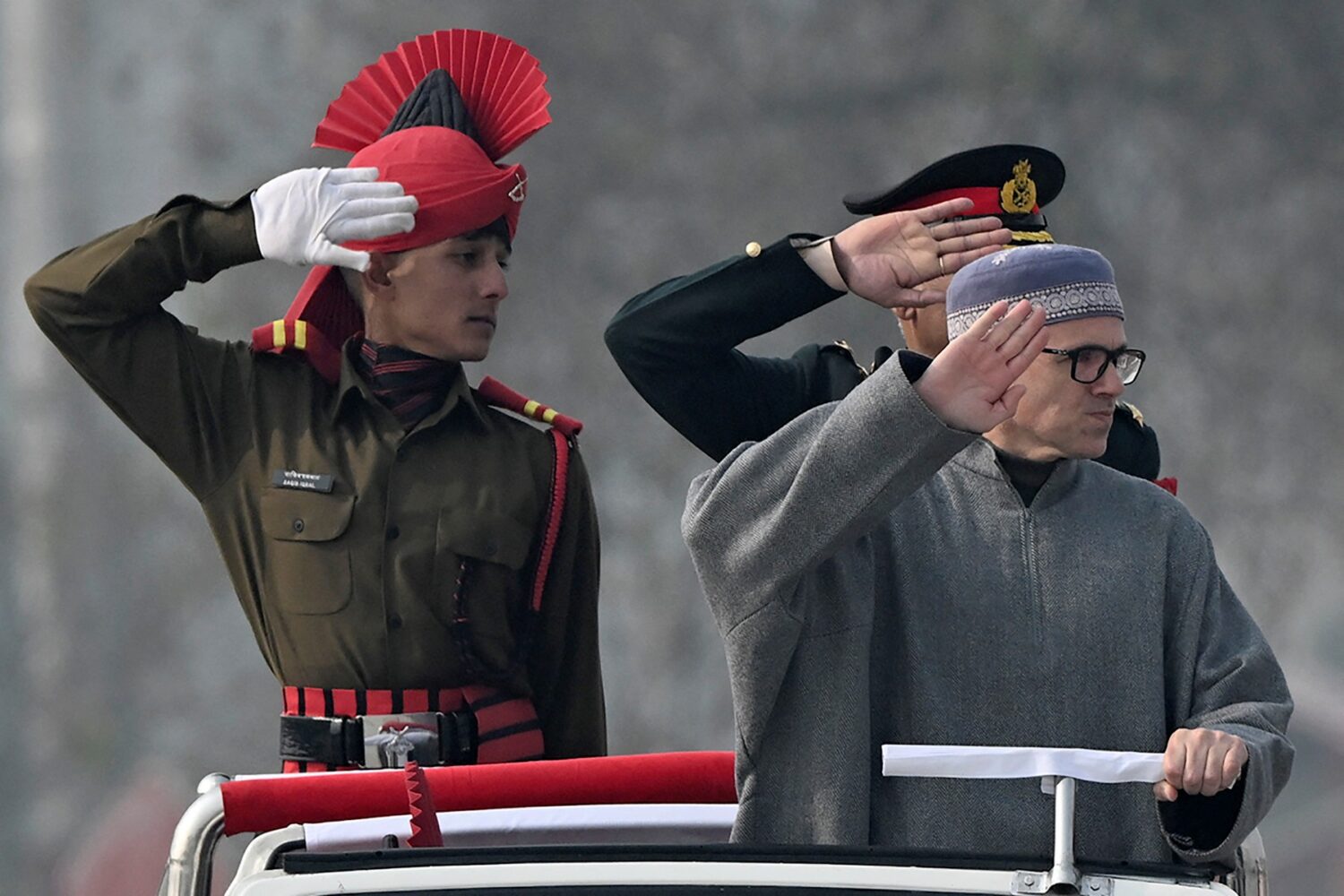
IMAGE FOR REPRESENTATION: Omar Abdullah (R), Chief Minister of Jammu and Kashmir, salutes as he inspects newly recruited Indian Army soldiers from the Jammu and Kashmir Light Infantry (JAKLI) during a passing-out parade at the JAKLI Army headquarters in Srinagar on December 4, 2025. (Photo by Tauseef MUSTAFA / AFP)

Instead, they have often tried to frame the relationship between the people of Kashmir and the central government in colonial terms, as a master-slave relationship. They repeatedly use words such as “Delhi,” while saying that Kashmiris have to “fight Delhi.” They rarely speak about constructive engagement with the central government.

They now say that Kashmiris have been “disempowered” after the abrogation of Article 370 in 2019. But what happened before 2019? Were Kashmiris not being described as “alienated” and “disempowered” before 2019 as well? Were these same political leaders not making exactly the same arguments then?

If they were making the same arguments before 2019, then what exactly did they do for the people of Kashmir when they had the political power they now claim to have lost?

This is something that needs to be asked.

Need to Move Beyond the Politics of Alienation and Victimhood

Moreover, the words “alienation” and “disempowerment” are not being used accidentally. They carry a specific political meaning and fit into a particular narrative. The problem is that these leaders have never really looked at the relationship between Jammu and Kashmir and the central government in the same way that political leaders in other parts of India look at their relationship with the Center.

The current noise over statehood also needs to be understood in this context. They present the demand for statehood as though it is entirely about the interests of the common people. But is it?

Of course, statehood is important, and people can legitimately demand its restoration. But it also involves political interests. These political parties want more political power and greater control over the administration.

After losing statehood, they feel they lost a significant part of their political authority. They also want statehood because it would give them greater political control and a shield from the scrutiny and accountability they currently face from different agencies and institutions. In this sense, the demand for statehood is also about restoring their own political power and reducing accountability.

But the common people have other priorities. They want good governance. They want corruption to be eliminated. They want development, employment, better infrastructure, better public services, and an improved standard of living.

The question is: when there was statehood before 2019, what did they do to improve the lives of common people?

If the mainstream political parties in Jammu and Kashmir had pursued positive, constructive, forward-looking, and pragmatic politics instead of sustaining and magnifying narratives that have served Pakistan’s interests, the Valley could have been very different.

Political parties have every right to criticize the government. They have every right to demand statehood, greater powers, development, and political representation. But when criticism of India becomes constant while questions concerning Pakistan are systematically avoided, and when every issue is presented through the prism of alienation and disempowerment, it becomes necessary to ask whose interests this politics is ultimately serving.

The mainstream political leadership in Jammu and Kashmir needs to understand that the people of Kashmir cannot be kept permanently trapped in the politics of grievance, alienation, and victimhood. The people deserve politics that focuses on their future, not politics that continuously recycles past narratives.

  • Views Personal of the Author
  • The author is a prominent journalist from Jammu & Kashmir and wishes to keep his identity concealed for security reasons.
  • For any feedback on the story, email us at editor (at) eurasiantimes.com

The post Kashmir’s ‘Halla Bolle’ Conclave: Old Script, New Venue. Venom Against India But Mum on Pakistan: OPED appeared first on EURASIAN TIMES.

  •  

Saudi & Turkey Chase F-35 Jets, Heavy Skepticism in India. Why IAF Veterans are Not Too Keen on F-35s?

After years of lobbying by Riyadh, the United States recently greenlit a potential sale of F-35 fighters to Saudi Arabia. Meanwhile, Turkey is looking to rejoin the F-35 program and is aggressively pursuing the Trump administration to approve the sale of stealth jets. 

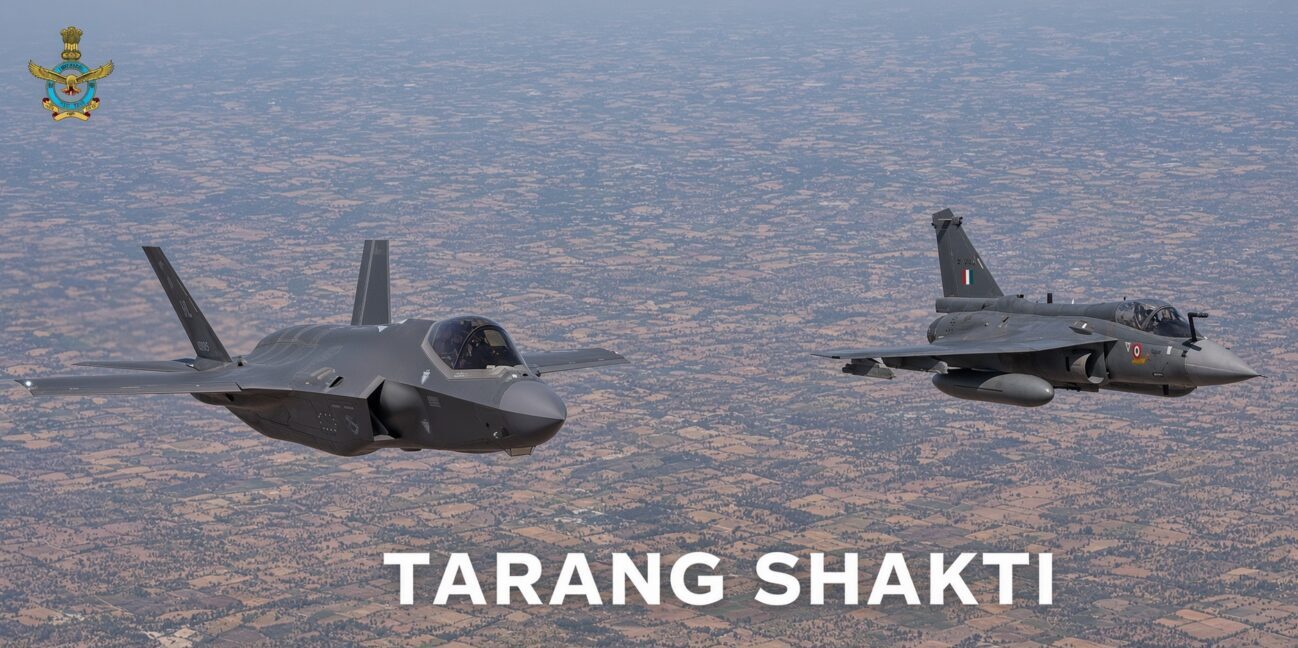
Another interesting case is India, which is hosting Exercise Tarang Shakti, where six F-35 jets are participating. Indian experts call it a unique opportunity for the IAF to evaluate US stealth jets and see how Indian ground and airborne radars detect them.

Notably, this is the first time F-35s are participating in drills with Indian jets on Indian soil.

Many see this as an historic opportunity to train alongside arguably the world’s best jets and give real-time exposure to the IAF’s Rafale, Su-30MKI and Tejas aircraft. Even IAF critics who don’t favor a potential F-35 sale to India see this as a historic opportunity.

Earlier, a EurAsian Times report said the US State Department announced the proposed sale of F-35 Lightning II and related equipment to Saudi Arabia on September 17, 2026. The proposed sale is expected to cover  48 F-35 aircraft and 49 Pratt & Whitney F135-PW-100 engines, along with communications gear, training, spare parts, and other support as requested by Riyadh.

The approval followed years of lobbying by the Saudi kingdom to procure the highly sought-after stealth fighters. Earlier, the Obama administration explicitly ruled it out in late 2015, stating that Israel would remain the sole F-35 recipient in the region to preserve its qualitative military edge (QME).

Later, the Biden administration explored linking a potential F-35 deal to Saudi-Israeli normalization, but talks stalled after the October 7 Hamas attack on Israel.

The US State Department’s proposed sale still requires congressional approval, and analysts believe Saudi’s purchase of the F-35 could hit a roadblock amid concerns about Riyadh’s ties with China and Israel’s opposition to the deal.

Despite being a founding member of the F-35 program and making a significant financial investment, the US expelled Turkey from the consortium and sanctioned it under CAATSA for purchasing the S-400 despite repeated warnings.

Ankara has been actively pursuing a strategy to divest itself of its Russian-made S-400 and sell it off to a potential third-party buyer.

Earlier, the US President similarly responded to questions about lifting CAATSA sanctions on Turkey by saying, “I’ll always speak to President Erdogan. He is a friend of mine, as you know. And I’ll always make him happy.”

As Trump & Xi Talk — U.S. and China’s Nuclear Submarines Race For Dominance in the Indo-Pacific

For now, Turkey’s path to obtaining the F-35s is still full of hurdles that both Washington and Ankara may find hard to remove, including Israel’s stiff opposition, as the EurAsian Times has explained before.

Like Saudi Arabia and Turkey, several countries have made unsuccessful attempts to obtain the F-35, widely regarded as the leading fifth-generation multirole fighter thanks to its advanced low-observable stealth and groundbreaking sensor fusion.

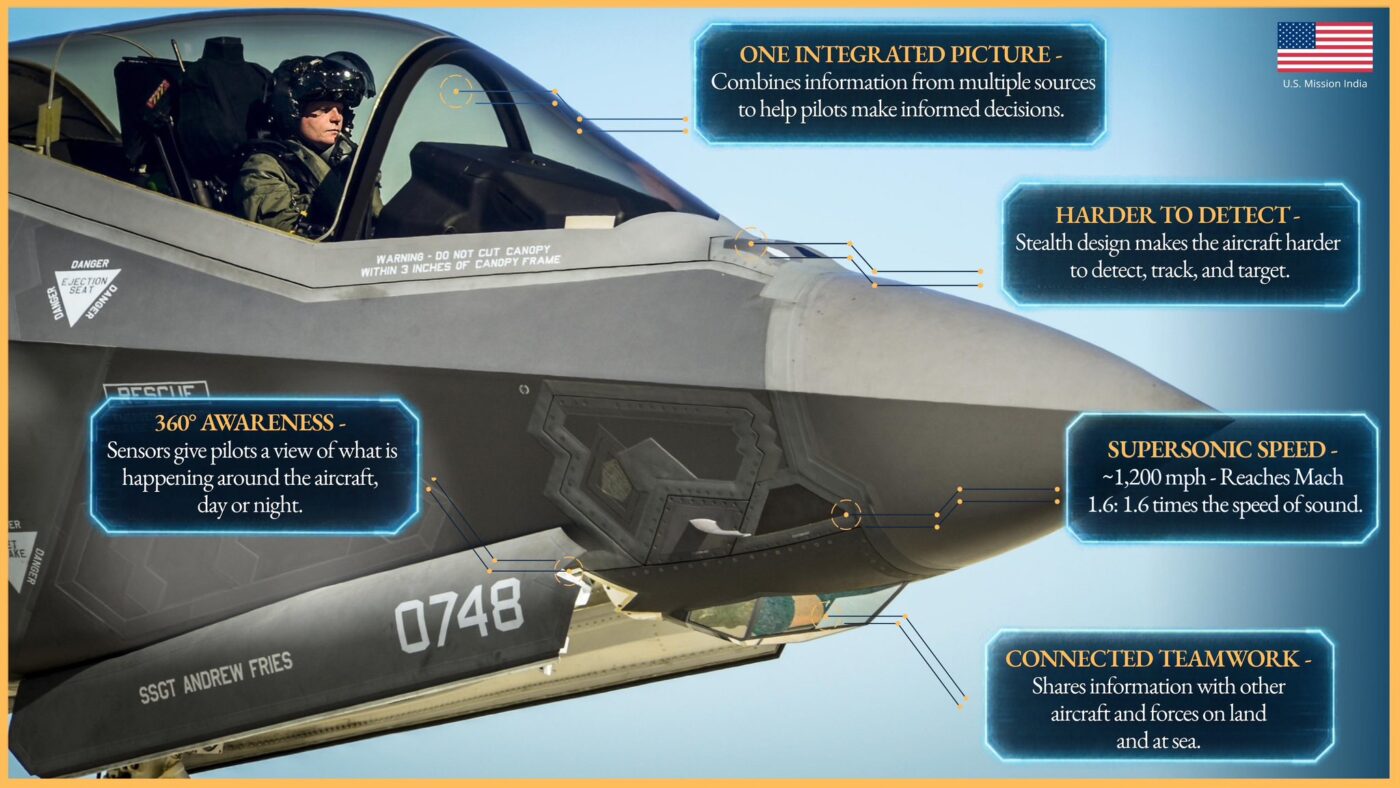
Functioning as a highly networked airborne command node—often described as the “quarterback of the skies”—it shares data seamlessly across friendly platforms. In fact, analysts believe that it is the most capable fifth-generation fighter in service anywhere in the world.

Despite this, India — a country that faces the dual threat of China and Pakistan along its borders — has been somewhat indifferent to what many consider the world’s best jets.

US Pitch for F-35s

Donald Trump unofficially pitched the F-35 to India during a meeting with Indian Prime Minister Narendra Modi in February 2025. “Starting this year, we will be increasing military sales to India by many billions of dollars. We are also paving the way to provide India with the F-35 stealth fighters ultimately,”  he said at the time.

F-35: Image via US Embassy, New Delhi

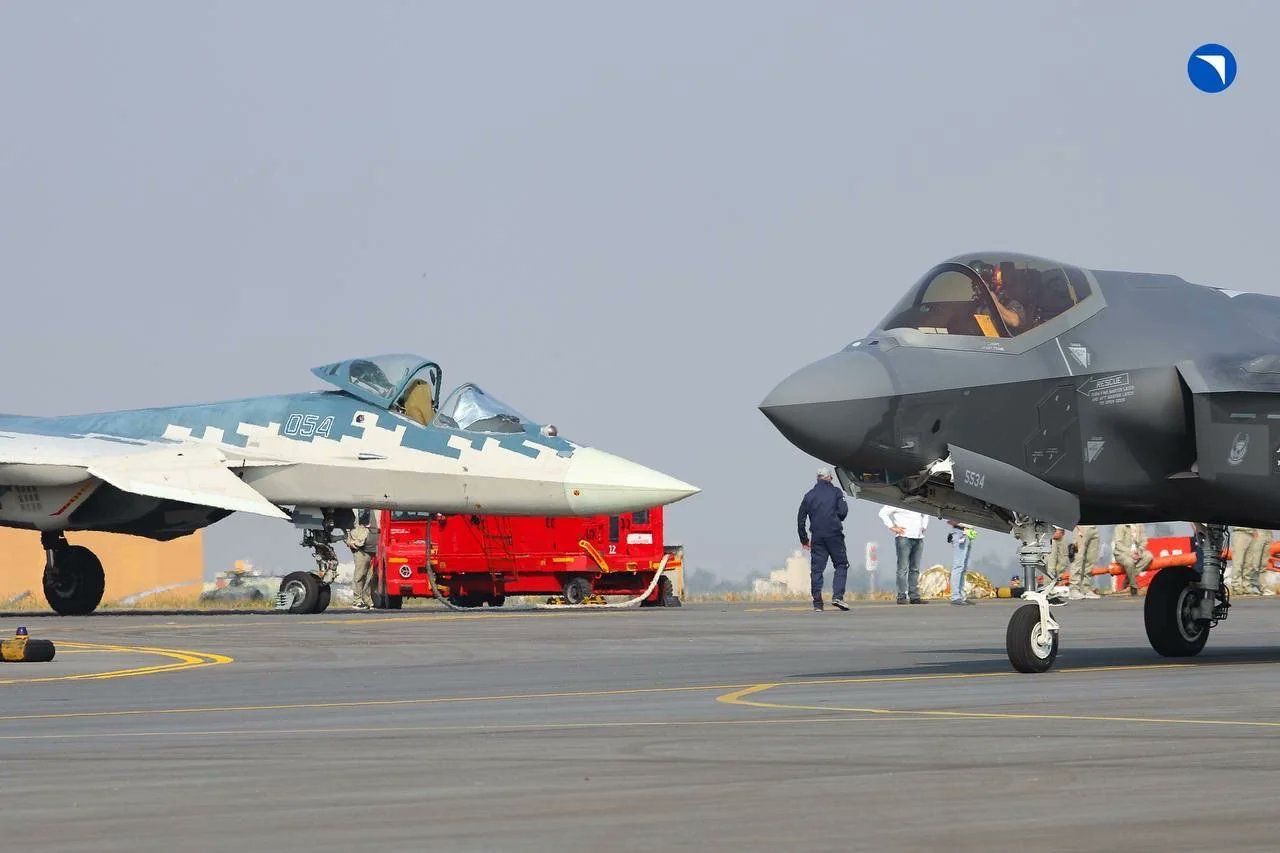
The F-35s were also displayed at Aero India 2025 the same month, where they met the Russian Su-57 on the tarmac for the first time.

During his April 2025 visit to India, US Vice President J.D. Vance appeared to reiterate the offer.

“We, of course, want to collaborate more. We want to work together more. And we want your nation to buy more of our military equipment, which we believe is the best in class. American fifth-generation F-35s, for example, would give the Indian Air Force the ability to defend your airspace and protect your people like never before,” he said, making a more direct appeal.

Although the US never made an official offer, the verbal F-35 pitch and the prospect of acquiring a cutting-edge stealth fighter looked great on paper, particularly since China operates two fifth-generation aircraft (the J-20 and J-35A) and is allegedly exporting the J-35A to Pakistan.

Rafale, Tejas & AMCA: IAF’s “Healthy Mix” of Fighter Jets Leaves Out The Aircraft That May Matter The Most

However, India’s defense community and Indian Air Force (IAF) veterans seemed unimpressed by the F-35 offer despite acknowledging the aircraft’s potent capabilities, a stance recently reiterated as six F-35s made their debut in India-hosted “Exercise Tarang Shakti 2026” in Jodhpur, Rajasthan.

Seven Reasons Why IAF Veterans Oppose F-35

First, Indian analysts and experts believe that buying an expensive stealth fighter off the shelf from the United States would be a liability, since it would do nothing for the Indian defense manufacturing sector and come with an enormous price tag.

Each F-35 is expected to cost $80 to $120 million, with even higher life cycle costs. Therefore, a fleet of F-35s would impose a heavy financial burden that the Indian Air Force would rather allocate to indigenous programs and more flexible and diverse acquisitions.

Second, analysts and veterans have argued that the US would never part with its technology, eliminating domestic manufacturing. They reckon the F-35 procurement would run counter to the “Make in India” and “Aatmanirbhar Bharat” policies.

Air Marshal Anil Khosla (retd), the former Vice Chief of Air Staff (VCAS), earlier stressed that even with approval of limited technology transfer and local manufacturing, significant challenges would remain. At the time, he highlighted production risks arising from the F-35’s complex global supply chain, noting that Lockheed Martin sources components from multiple countries. He cautioned that any disruption or delay in delivering these parts could halt the entire manufacturing process.

Air Marshal Khosla further noted that India’s continued reliance on foreign suppliers would constrain genuine localization, and the IAF would struggle to manage such disruptions.

Notably, this concern takes on greater significance as delivery of Tejas Mk-1A fighter jets to the Indian Air Force has been delayed due to delays in delivery of F404-IN20 turbofan engines, affecting the service’s preparedness.

Photo by United Aircraft Corporation (UAC)
File: F-35 Lightning II and Su-57 Felon captured in the same frame for the first time in history at Aero India 2025

Third, there is concern that diverting resources to acquiring the F-35 would inevitably affect India’s own fifth-generation Advanced Medium Combat Aircraft (AMCA), which aims to deliver a fifth-generation platform with advanced sensors, electronic warfare systems, and networked combat features while fostering a domestic aerospace industrial base.

Experts have urged the IAF to focus on its indigenous programs rather than getting trapped in another round of imports.

Fourth, analysts have also cited logistical challenges and operational incompatibility with India’s diverse air force fleet comprising a mix of Russian Su-30MKIs, French Rafales and Mirage 2000, and Tejas. They believe that adding another fighter type would further complicate maintenance, training, and logistics for an already varied inventory.

France Fires Nuclear-Capable M51.3 Sub-Launched Ballistic Missile For The First Time Amid Russian Threats

Fifth, India operates Russian-supplied S-400 systems, which previously caused friction between the US and Turkey.

“An F-35A deal would likely come with strings attached—most notably, a U.S. demand that India abandon its Russian S-400 air defense systems in favor of the American THAAD,” IAF veteran and commentator Squadron Leader Vijainder K. Thakur earlier stated.

The S-400 is deeply embedded in India’s layered air defense network, and New Delhi has been considering an additional order, meaning it would inevitably become a point of contention in any potential deal.

Sixth, the US has been flagged as an unreliable partner.

“Putting too many military aviation eggs in the unreliable US basket will also be an issue. Americans can be “very unreliable” when it comes to putting sanctions and freezing spares and maintenance support,” IAF veteran and aviation analyst, Air Marshal Anil Chopra (retd), earlier wrote in a detailed EurAsian Times article.

Adding the repeated threat of sanctions by the US and a rapidly changing geopolitical scenario further complicates the purchase.

Seventh, the F-35 is embedded in the US-controlled networks, including the Operational Data Integrated Network (ODIN), which sends information back to American servers. Indian experts view this as a breach of operational independence.

Tarang Shakti: F-35 and Rafale

Furthermore, they have cautioned that the US imposes stringent operational restrictions on its system and could try to limit the F-35’s use in combat, particularly against Pakistan.

Critics worldwide have also stressed that an unpredictable US administration could restrict free F-35 operations by limiting hardware and software supplies, commonly referred to as a kill switch. In fact, this is the reason why countries like Canada and Portugal decided to look for an alternative to the American stealth fighter.

Indian strategic discussions generally prioritize accelerating Tejas production, advancing the AMCA, and exploring local manufacturing options for platforms such as the Rafale. If a foreign fifth-generation fighter is ultimately considered, many experts have indicated a preference for the Russian Su-57 because of the technology transfer, local production, and twin-seat variant.


The post Saudi & Turkey Chase F-35 Jets, Heavy Skepticism in India. Why IAF Veterans are Not Too Keen on F-35s? appeared first on EURASIAN TIMES.

  •  

Rafale, Tejas & AMCA: IAF’s “Healthy Mix” of Fighter Jets Leaves Out The Aircraft That May Matter The Most

During his interaction with the press ahead of Air Force Day on October 8, 2026, the Chief of the Air Staff (CAS) stated that, in the near future, the Indian Air Force would have a “healthy mix” of LCA Tejas Mk 1A, LCA Mk 2, the French Rafale and the indigenous fifth-generation AMCA.

On the face of it, there is little to quarrel with what the CAS stated.

These aircraft will undoubtedly constitute important elements of the IAF’s future fighter fleet. However, the projection has some infirmities that are difficult to overlook.

The first question is what the CAS meant by the “near future”.

If the statement is intended to describe the fighter fleet that the IAF will field over the next decade or so, the mix is understandable. But if it projects the force structure into the 2040s—and beyond—it raises a more fundamental question.

How far into the future was the CAS extrapolating current procurement plans to arrive at the projected “healthy mix”?

Based on the past record of Indian fighter aircraft development projects, I would think at least 15 years from now, well into the 2040s.

By then, Tejas Mk 1A, Tejas Mk 2, Rafale and AMCA could indeed form the backbone of the IAF’s manned combat-aircraft fleet. But describing that combination alone as a “healthy mix” ignores a major transformation already underway in air warfare.

The manned fighter is no longer the whole equation

There is little doubt that the IAF will continue to depend predominantly on the 4th-generation fighters named by the CAS, quite possibly for the next 20 to 30 years. Fighter aircraft have long service lives, and India’s continuing dependence on legacy and contemporary 4th-generation platforms is therefore likely to persist well into the 2040s and perhaps beyond.

But the fighter force of the 2040s cannot be assessed merely by counting manned fighters across different generations.

The changing character of air warfare will demand a mix of manned and unmanned platforms, with different levels of survivability, autonomy and weapons heft.

This matters because the most dangerous missions in a future conflict will likely involve penetrating increasingly dense and sophisticated air-defense networks. A manned 4th-generation fighter, however capable, is not necessarily the most appropriate platform for every such mission.

The Unmanned Component

The IAF’s future force structure will therefore need an increasing proportion of unmanned combat aircraft.

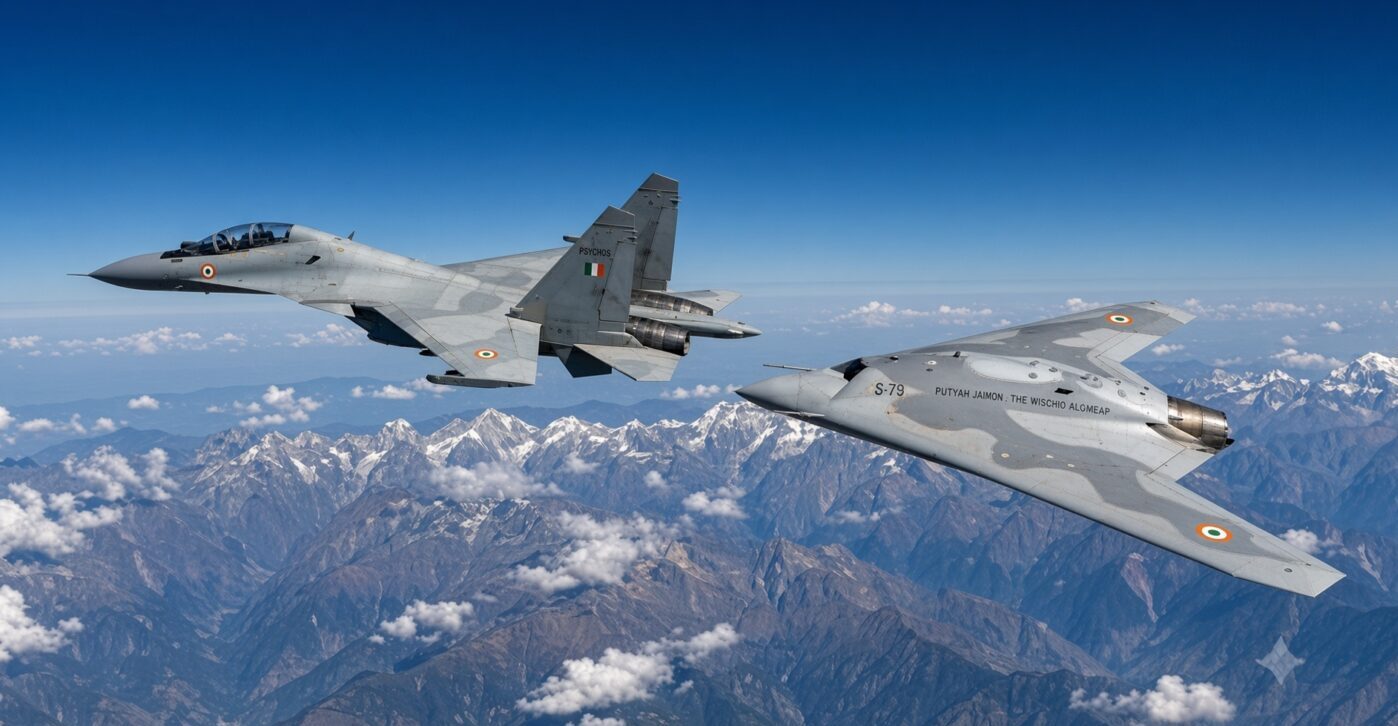
At one end of the spectrum would be relatively inexpensive unmanned systems able to perform reconnaissance, electronic warfare, decoy and weapons-truck functions. At the other end would be sophisticated unmanned combat aircraft capable of operating alongside manned fighters as loyal wingmen.

The latter could substantially increase the effectiveness of a manned fighter formation. An unmanned aircraft could carry additional weapons, extend the formation’s sensor coverage, perform electronic attack or act as a decoy, while exposing no pilot to the risk of a mission in heavily defended airspace.

There is also an important economic dimension. An unmanned platform does not necessarily have to replicate the capabilities, complexity, or cost of a manned fighter. A future air force could therefore field far more expendable or attritable unmanned combat aircraft than it could afford to field manned fighters.

This would fundamentally alter the arithmetic of air combat.

Why describe only the present procurement mix?

The “healthy mix” the CAS referred to was therefore, in my view, probably intended primarily for mainstream media consumption.

That is not necessarily a criticism of the CAS.

Mainstream reporting tends to operate at shallow depths and gravitates towards readily understood narratives. In India’s case, the Atmanirbharta (self-reliance) narrative is particularly attractive.

Tejas Mk 1A, Tejas Mk 2 and AMCA fit neatly into that narrative, while Rafale provides the foreign component of the mix.

But the full spectrum of capabilities that the IAF will require in the 2040s is considerably more complicated.

It would include manned 4th-generation fighters, 4.5-generation fighters, 5th-generation VLO aircraft and an expanding family of unmanned combat aircraft ranging from relatively inexpensive attritable systems to sophisticated loyal wingmen.

Image for Representation: Indian Air Force

The Uncomfortable Technological Reality

I suspect that the IAF leadership understands this reality.

India’s indigenous technological capability in unmanned combat aircraft is still far short of what it would take to develop and field the full range of systems a future air force will need.

The problem is not simply the airframe. Autonomous operation, artificial intelligence, manned-unmanned teaming, secure communications, distributed sensing, electronic warfare and the ability to operate in a heavily contested electromagnetic environment all present formidable challenges.

MoD bureaucrats are unlikely to be unaware of these limitations either.

Under the circumstances, articulating the full range of what a truly “healthy mix” would entail would perhaps serve little purpose in a public interaction with the media.

But that does not make the issue any less important.

The Real Challenge

The real challenge is not recognizing that India needs a mix of manned and unmanned combat aircraft. It is developing the technologies and industrial ecosystem needed to field them in meaningful numbers.

The IAF of the 2040s will almost certainly still contain large numbers of 4th-generation fighters. There is nothing inherently wrong with that. The question is what surrounds them.

If the future force consists predominantly of today’s manned fighter concepts, supplemented by a relatively small number of AMCA aircraft, it may represent a healthy mix of India’s current procurement programs.

It may not, however, be a healthy mix for the wars India could have to fight in the 2040s and beyond.

The distinction is important. A force structure should not be called “healthy” merely because it contains a balanced selection of aircraft India can build or procure today.

It should be judged against the operational environment in which that force will actually have to fight.

  • Vijainder K Thakur is a retired IAF Jaguar pilot, author, software architect, entrepreneur, and military analyst.
  • Views Personal of the Author
  • Follow the author @vkthakur

The post Rafale, Tejas & AMCA: IAF’s “Healthy Mix” of Fighter Jets Leaves Out The Aircraft That May Matter The Most appeared first on EURASIAN TIMES.

  •  

Hasina’s Return to Bangladesh is the Price of PM Tarique Rahman’s Visit to India. Are Delhi & Dhaka Both Stuck

OPED by Mahendra Ved  

Indian High Commissioner Dinesh Trivedi has conveyed a few home truths to his host country, Bangladesh.

They seem to have been forgotten while demanding that ousted former Prime Minister Sheikh Hasina be returned: on August 5, 2024, she was “not brought by the Indian Air Force or the Indian Army.”

India had “hardly any choice” and was “unprepared” when she arrived.

Now a diplomat, the politician avoided stating the obvious: she was brought from Dhaka to India on a Bangladesh Air Force aircraft.

Another reminder: “At that point in time, Hasina was still the prime minister of Bangladesh.”

He said that legal procedures were ‘underway’ for her extradition, and that they take time.

Of course, he didn’t mention Hasina’s repeated announcement in December that she would return of her own discretion.

How times have changed! Once considered the ‘friendliest’ in South Asia, India’s relations with Bangladesh have become complex, even delicate.

Sheikh Hasina’s exile in India and her proposed return have added another layer of complexity to an already extraordinarily complicated relationship.

Addressing the media and her Awami League cadres through audio calls, she has repeated that she will return home, despite knowing that arrest and prosecution await her.

Seeking international support from lawmakers and human rights organizations, she has addressed seminars in London and Geneva via audio.

Prime Minister Tarique Rahman’s government expressed ‘outrage’ at her audio address in Delhi and has banned domestic media from reporting it. It did not respond to India’s twin invitations, one bilateral and the other for the BRICS summit in New Delhi.

A brief update is essential.

Following Hasina’s ouster, an interim government led by Muhammad Yunus sustained itself on anti-Hasina and, since she was in India, anti-India sentiment.

Since this year’s February elections, a party with a history of problematic relations with India has been in power. The elections also brought to power an opposition force of Jamaat-e-Islami and students who worked to oust Hasina and see India as an adversary.

As India tries to rebuild bilateral ties under totally changed circumstances, hosting Hasina has complicated them. Rahman’s possible visit in November has been discussed at different levels, but exploring dates and announcing final dates are different.

To anyone unversed in India-Bangladesh ties, the two issues—Hasina’s return and Tarique’s visit—may appear separate. In reality, they are closely intertwined.

The government in Dhaka wants Hasina back, convicted of serious crimes and sentenced to death. Since it involves a bilateral extradition treaty, India cannot simply hand her over.

In this photograph taken on July 28, 2025, images and cartoons related to Bangladesh’s ousted prime minister Sheikh Hasina are seen pasted on a board inside her former official residence before the inauguration of the July Memorial Museum in Dhaka. Once a heavily guarded palace, the former official residence of Bangladesh’s ousted prime minister Sheikh Hasina is being turned into a museum as a lasting reminder of her autocratic rule. (Photo by Munir UZ ZAMAN / AFP) /

As Rahman faces pressure, especially from the opposition, he must weigh in on Hasina’s presence while visiting India. His government’s grievance, also used as leverage, affects ties with Delhi.

Delhi, meanwhile, has a larger strategic interest: building a workable relationship with the government in Dhaka, whoever leads it. Bangladesh is too important to India to let the relationship remain permanently hostage to a former prime minister’s fate.

That is why the proposed Tarique visit matters. But it is also why it is difficult. There is a certain diplomatic stalemate.

Dhaka cannot easily separate Hasina’s presence in India from its own domestic politics. It wants Delhi to accept the new political reality. Yet the Hasina question remains the most emotionally and politically charged issue between them.

Both neighbors want a relationship based on mutual interests and reciprocity. But neither wants to be seen conceding on Hasina to facilitate Rahman’s visit. Any ‘understanding’ with India on this would expose Rahman at home to the charge of having surrendered.

This explains why Rahman’s visit in November is possible, but not certain.

Because after November comes December.

Assuming Hasina returns, another question becomes unavoidable: what happens to her safety?

If the Rahman government arrests and prosecutes her, it is also duty-bound to protect her.

It may regard her as responsible for grave political and human-rights abuses. It may even seek to establish her responsibility through courts. But it cannot allow her fate to be decided by an assassin, a mob or an extremist organization.

With several past attempts on her life, Hasina herself has acknowledged that she could face death if she returns. The Bangladesh government has responded by saying that she would receive full security and legal protection.

The world witnessed the assassination of another former prime minister, Benazir Bhutto of Pakistan, in 2007. It reminds us that government protection does not make an extremist threat disappear. A politically prominent person can remain a target even when the state has formally undertaken to protect her.

One would not like to push the Benazir angle too far. Nothing so far suggests a conspiracy or that Hasina is destined to meet the same fate. But religious extremism has deep roots in Bangladesh. It also witnessed killings of people in jail in 1975. Hence, the threat to Hasina’s life cannot be dismissed.

That creates a paradox for Rahman’s government. It is not just a political gesture to an adversary; Hasina’s protection is a state obligation.

Indeed, this matters because Hasina is not merely another former prime minister. She is the daughter of Sheik Mujibur Rahman and has been at the center of Bangladesh’s political life for decades. To her supporters, she represents a political tradition that is now under assault. To her opponents, she represents a period of authoritarian rule for which she must answer.

If she returns and faces trial, Bangladesh will certainly be under an international microscope. If the proceedings are conducted peacefully and in accordance with the law, the government can argue that the country has chosen the judicial route.

If she is imprisoned, the government will have to show that imprisonment is not an excuse for political revenge.

And if, despite state protection, she were killed by extremists, the political consequences could be enormous—even if the government itself had nothing to do with the assassination.

Hasina could become a martyr. The now-banned Awami League could acquire a powerful new symbol. The new government’s credibility could be damaged. And Bangladesh’s already polarised politics could become even more dangerous.

Both must consider the wider strategic considerations.

India cannot build its Bangladesh policy entirely around Hasina.

Her nearly 16-year rule created a close relationship between New Delhi and Dhaka, particularly on security and connectivity. But governments change. India has to deal with the Bangladesh that exists, not simply the Bangladesh it would prefer to see.

That means engaging Tarique Rahman’s government. It means rebuilding political contacts and restoring economic and commercial links. It means addressing border security, connectivity, water, the Northeast, and China’s growing influence. It means recognizing that the new Bangladesh will have its own political priorities.

But normalization does not require India to forget Hasina. Nor does it require Bangladesh to abandon its demand for justice.

Perhaps the two countries can eventually learn to separate these questions.

Tarique Rahman can visit India.

  • OPED by Mahendra Ved
  • President (2016-2022), Commonwealth Journalists Association (CJA)

The post Hasina’s Return to Bangladesh is the Price of PM Tarique Rahman’s Visit to India. Are Delhi & Dhaka Both Stuck appeared first on EURASIAN TIMES.

  •  
❌