❌

Reading view

Russia has a plan for Ukraine this winter, Ukraine says: intercepted document reportedly outlines up to 1,000 missiles, drones, and bombs targeting 60 critical infrastructure sites

kindergarten school railway's warming shelter russia's overnight targets trump-pushed abu dhabi talks enter day two · post fire building roof after russian attack kyiv 5 2026 2f15ff6d-cd98-4bc0-839c-18fc74a3ef67 forces launched wave

Russia is planning a winter strike campaign involving up to 1,000 missiles, drones, and bombs targeting, among other facilities, electrical substations, hydroelectric and thermal power plants, and boiler houses. The information is contained in a document that, according to sources cited by The New York Times, Ukraine's Energy Minister Denys Shmyhal presented as an intercepted Russian plan to destroy energy infrastructure systematically. The newspaper reported on 2 October.

Russia has been striking critical infrastructure across Ukraine since the beginning of its full-scale invasion. Such attacks have become particularly frequent ahead of and during winter. Ukraine's recent battlefield gains may have prompted Putin to reconsider his strategy and attempt to force Ukraine to surrender through winter strikes, analysts at the Institute for the Study of War (ISW) suggest. Russia's reported plans to attack Ukraine's energy, water supply, and sewage systems could threaten the basic living conditions of millions of people. Such strikes could increase pressure on civilians and the Ukrainian economy while forcing the state to divert more resources to emergency infrastructure repairs instead of defense needs.

The New York Times was unable to verify the document's authenticity independently, but noted that it was written in Russian and dated August.

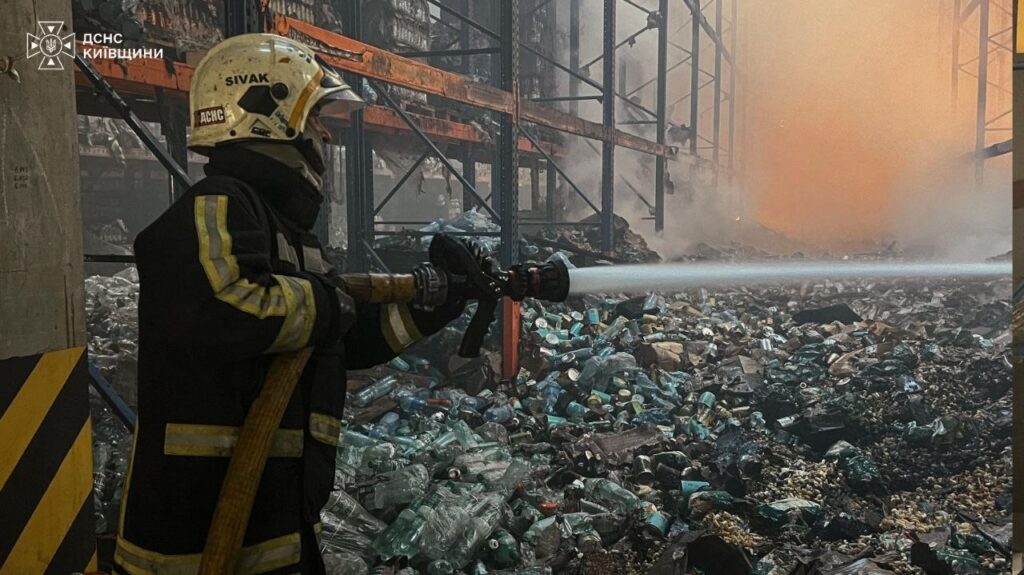
just power plants russia’s drones also went after warehouses groceries hardware chain · post firefighter puts out fire warehouse burned food drink stock hit russian attack bucha district kyiv oblast
Explore further

Warehouses, a home-improvement store, a farm: Russia’s strikes aimed past the grid at Ukraine’s civilian economy

A representative of Ukraine's defense-industrial sector who has reviewed the document believes it is more of a calculation than a finalized Russian military operations plan, according to Schemes, an investigative journalism project by Radio Free Europe/Radio Liberty (RFE/RL), in a report published on 8 October.

60 targets: how Russia could attack Ukraine's critical infrastructure

The document outlines how many missiles, drones, and bombs Russia would need to deprive Kyiv, Kharkiv, and Odesa of electricity, heating, water, and sewage services, Radio Liberty reported on 9 October. The document's full list of priority cities also includes Dnipro, Zaporizhzhia, Mykolaiv, Kherson, Poltava, Chernihiv, Kryvyi Rih, Cherkasy, Kropyvnytskyi, Lviv, Vinnytsia, and Ivano-Frankivsk.

Regions of Ukraine containing cities listed as “priority” targets in Russia's plan to attack critical infrastructure this winter (shown in grey). Map: Euromaidan Press

According to the document, Russia plans to begin by attacking substations near Ukraine's western border, through which the country receives electricity from Europe. Hydroelectric power plants could be targeted next, followed by facilities intended to shut down Ukraine's three operational nuclear power plants, Radio Liberty reports. The document lists a total of 60 key targets.

According to Schemes, the document states that Russia would need up to 770 Molniya and Geran drones, Dan-T/Banderol missile-drones, 170 FAB guided aerial bombs, and 75 Kinzhal and Iskander-M ballistic missiles to carry out the attacks.

Sewage systems could become Russia's next target

The document devotes particular attention to water supply and wastewater systems. These include pumping stations, treatment facilities, and other infrastructure essential for cities to provide residents with water and dispose of wastewater.

One of the water supply facilities. Illustrative photo: Ukrinform

Russia has not previously attacked such facilities on a similar scale, The New York Times notes.

Preparing for possible attacks on water supply and sewage systems is significantly more difficult than protecting energy infrastructure, Oleh Popenko, head of the Ukrainian Union of Utility Services Consumers, told Current Time, RFE/RL's Russian-language network.

“Sewage is a very complex system. There are specific challenges: where to discharge wastewater, how to organize treatment facilities, and so on. Some work is also underway in this sector, but it will be much more difficult here than with district heating utilities,” Popenko says.

Creating alternative routes in case sewage pumping stations are destroyed is an expensive and technically challenging task, he adds. Such construction could cost billions of hryvnias.
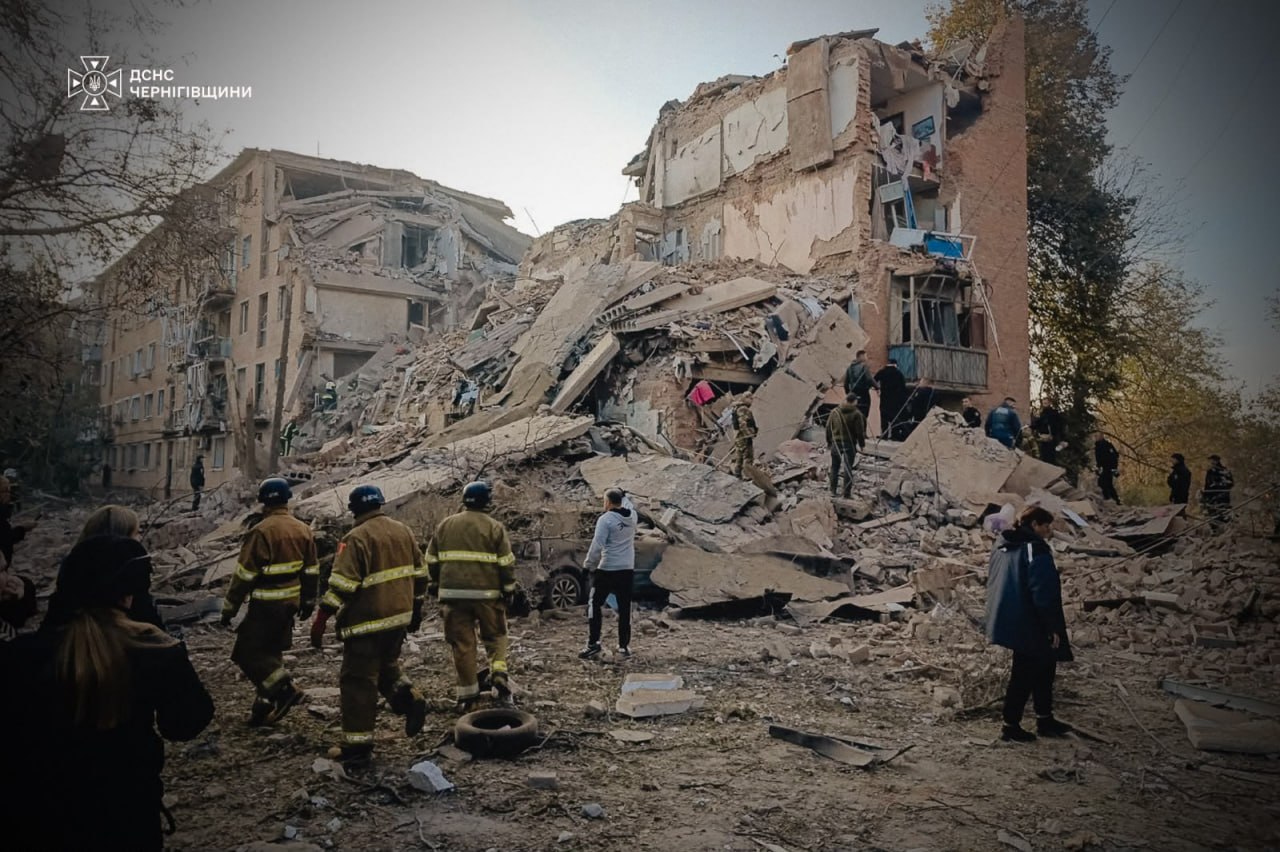
five dead pryluky two each kyiv kremenchuk oleksandriia russia's night 70 missiles · post rescuers collapsed section apartment building chernihiv oblast after russian missile strike 7 2026 ukraine news ukrainian
Explore further

14 dead in Pryluky, two each in Kyiv, Kremenchuk, and Oleksandriia: Russia’s night of 70 missiles

The priority is to equip water utilities with backup power sources so they can continue operating during power outages. However, if Russian strikes damage the sewage system itself, resolving the problem quickly will be much more difficult, Popenko believes. Specific solutions, including wastewater disposal and the operation of treatment facilities, will have to be determined according to the extent of the damage.

Sewage pumping stations play a particularly important role. They pump wastewater onward for disposal and treatment. If such a station is put out of operation by a strike, the city needs an alternative way to divert wastewater while the damaged facility is being repaired, Popenko says. Bypass pipes or channels could be installed for this purpose, but setting up such a system during wartime is far from easy.

Air defenses remain crucial to Ukraine's winter preparations

Preparations for winter are underway, but protection for energy infrastructure remains inadequate, Popenko believes. The main concern is large substations that transmit electricity from nuclear power plants and distribute electricity imported from Europe.
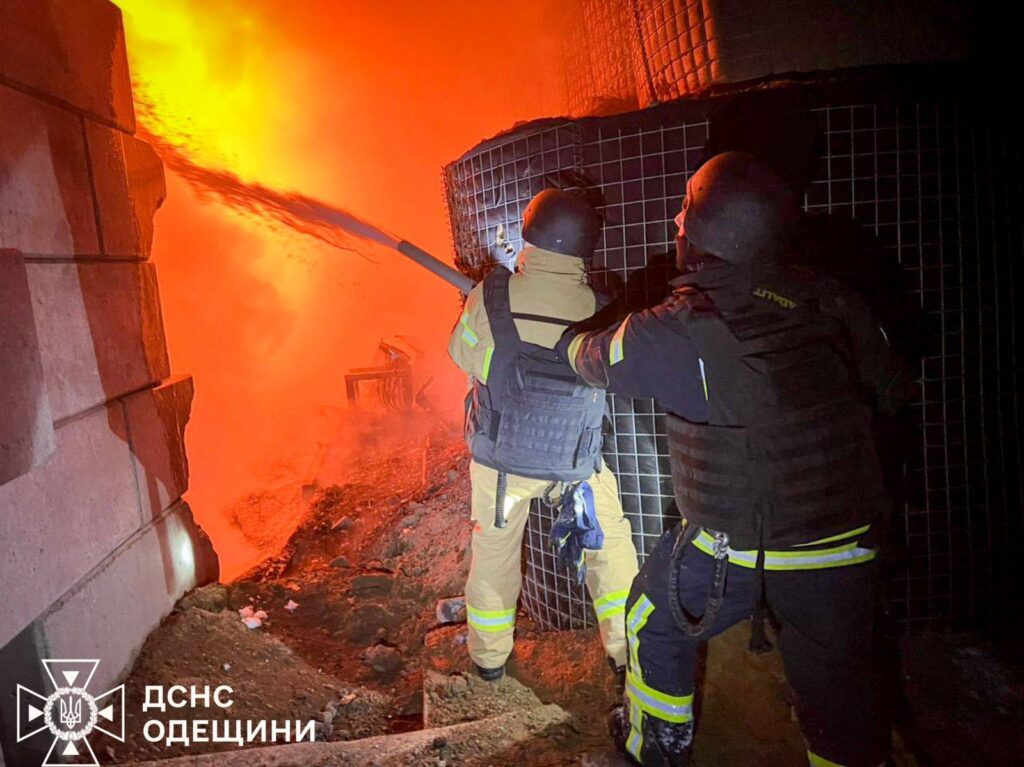
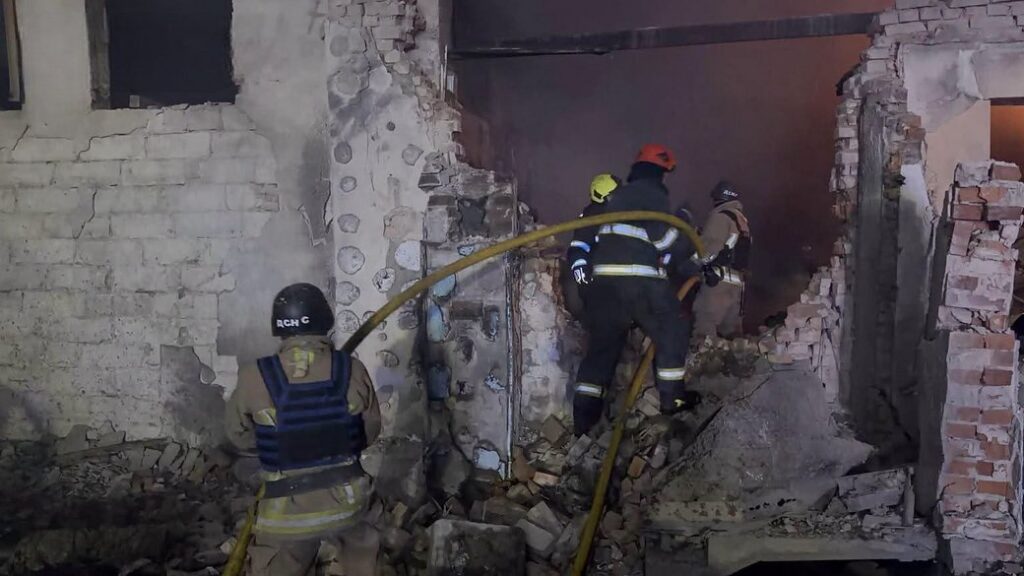
Rescuers extinguish a fire caused by a Russian strike in Odesa Oblast. Illustrative photo: State Emergency Service of Ukraine in Odesa Oblast

At the same time, some protective measures are already proving effective. Despite drone attacks over two days, one of Kyiv's substations withstood the strikes, and the city did not lose power, although scheduled outages were in effect, the expert says.

Popenko considers a repeat of last winter's scenario, when parts of Kyiv went without heating for weeks, entirely possible. Russian forces continue to attack energy facilities, and in his assessment, strengthening air defenses in Kyiv is the only way to protect its combined heat and power (CHP) plants from large-scale attacks.

“There are no other ways — for example, building some sarcophagi around CHPs or constructing shelters — because Russia can destroy these facilities again through massive strikes. And then the city risks being left 50–60% without heat,” Popenko believes.

Residents are also preparing for winter, but their options vary, he says. Some homeowners' associations participate in government programs to insulate apartment buildings and purchase backup power supplies for elevators and pumping stations. Owners of private houses are buying generators, among other measures. However, such equipment and preparations require substantial funds, meaning not everyone can afford them, he notes.

Ukraine has already experienced prolonged power outages during previous winters, particularly in 2022 and 2023. At the time, some regions went without electricity for 18–20 hours a day, the expert says. This experience may help people prepare for possible disruptions, but it does not eliminate the risk of further attacks and infrastructure damage.
  •  

Warehouses, a home-improvement store, a farm: Russia’s strikes aimed past the grid at Ukraine’s civilian economy

just power plants russia’s drones also went after warehouses groceries hardware chain · post firefighter puts out fire warehouse burned food drink stock hit russian attack bucha district kyiv oblast

Russian drones hit Ukraine's power grid, warehouses, a food warehouse, a home-improvement store, and a farm overnight on 9 October, Ukrainian officials and emergency services reported. The strikes triggered emergency power cuts in Kyiv and other regions and killed at least three people across the country.

As Russia continues its daily terror attacks, it has likely begun its winter strike campaign early, aiming to make civilian life in Ukraine unbearable, ISW assessed. Those strikes now reach beyond the grid to the businesses that store and sell goods, adding to damage Ukraine's Economy Ministry expects to reach up to $10 billion this year.

Power cut in Kyiv and other regions

Russia launched 136 drones overnight, 93 of them jet-powered, Ukraine's Air Force said. Air defenses downed or suppressed 114. Drones hit eight locations, and debris fell at seven more.

DTEK, Ukraine's largest private energy company, introduced emergency power cuts on Kyiv's right bank and in the Bucha and Vyshhorod districts on the grid operator's orders. Ukrenergo, the national grid operator, imposed emergency outages in some regions, citing the strain Russian attacks put on the system. Planned schedules were suspended there. Hourly cuts across parts of Ukraine had already been set for the whole day.

A Ukrainian air defense crew with a heavy machine gun in Cherkasy Oblast
A Ukrainian air defense crew with a heavy machine gun in Cherkasy Oblast. Illustrative photo: Suspilne Cherkasy

The cuts came a day after a Russian strike knocked out several grid elements supplying Kyiv, leaving many consumers without power. Russia has sharply stepped up attacks on Ukraine's energy system in recent weeks, deliberately targeting power lines and transformers, Ukraine's Energy Ministry said.

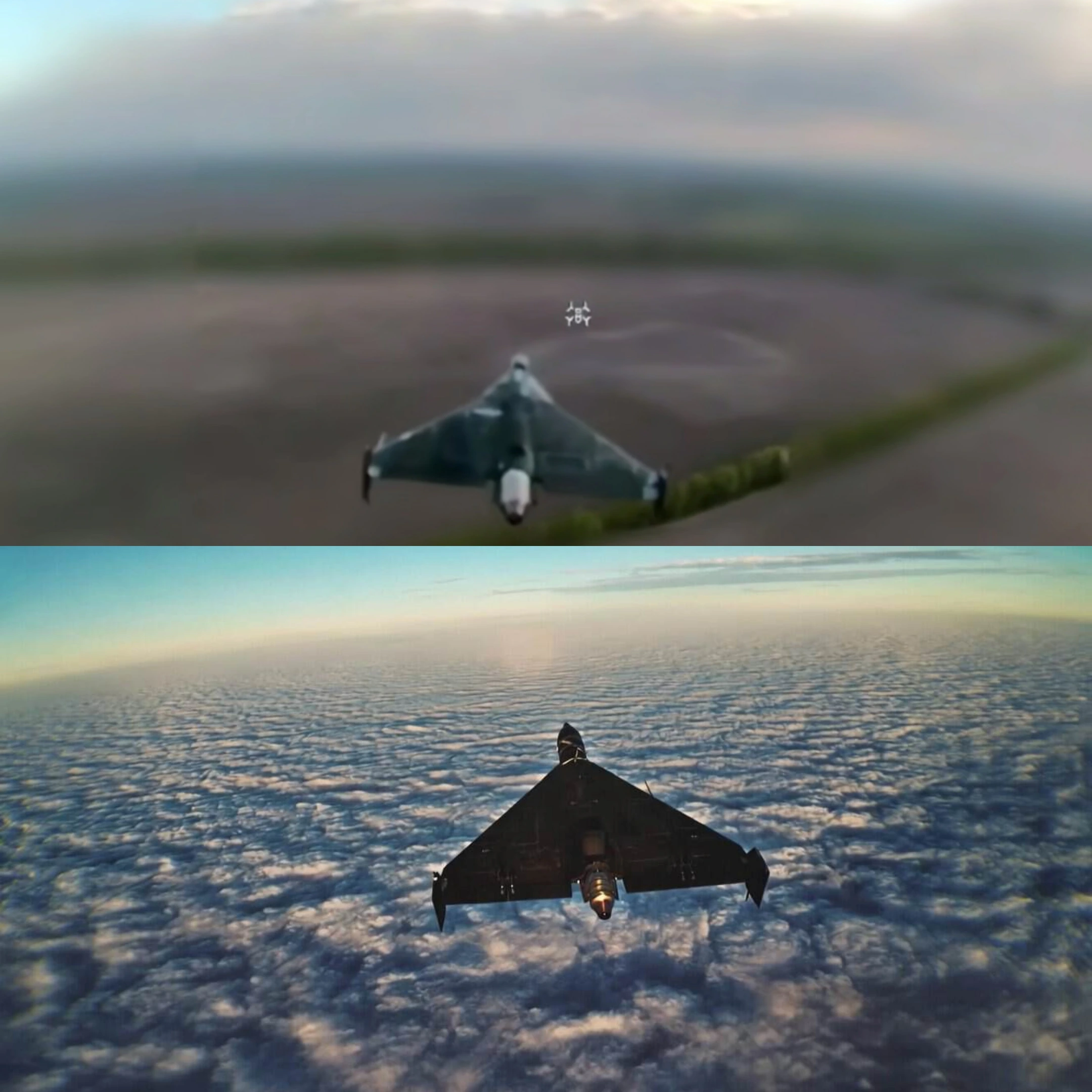
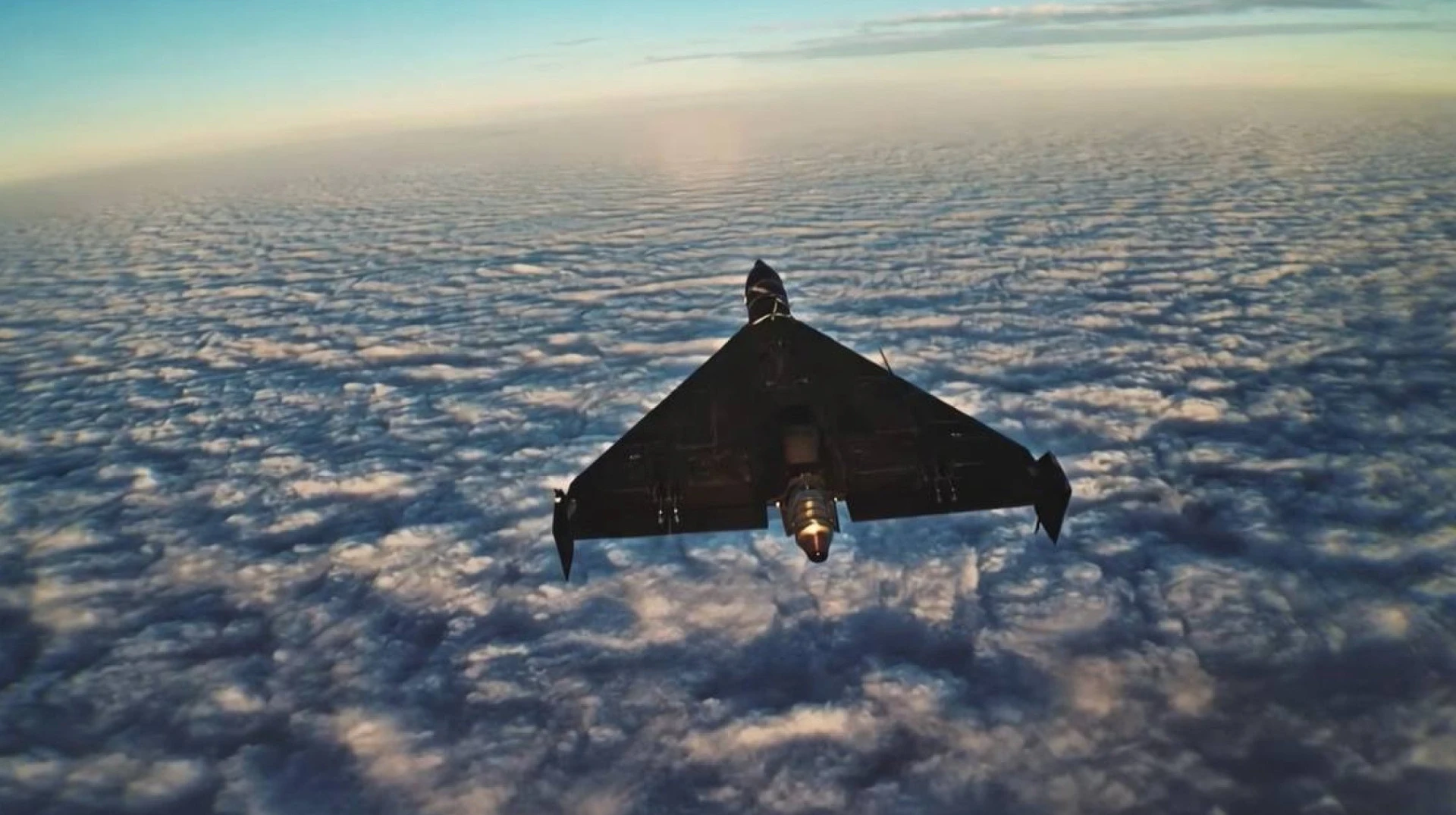
Geran-4" is an evolution of the earlier "Geran-3" model
Explore further

Ukraine’s war leadership sets new electronic warfare tasks as Russia’s jet-powered drones slip past nearly half of its air defenses

Warehouses and a store

In the Bucha district of Kyiv Oblast, Russia hit warehouses and injured three people, Ukraine's State Emergency Service said. One was hospitalized. Rescuers were searching for a woman who may be under the rubble.

In Odesa, a strike damaged the roof of a warehouse storing food and started a fire, the region's emergency service reported. In the south of the oblast, Russia damaged buildings at holiday resorts and destroyed a café.

A food warehouse damaged by a Russian attack on Odesa, 9 October 2026
A food warehouse damaged by a Russian attack on Odesa, 9 October 2026. Photo: State Emergency Service of Ukraine in Odesa Oblast

Near Chernihiv, Russia hit a site just outside the city after 03:00, the city council said. A Suspilne correspondent at the scene reported that a drone hit the Epicenter store, part of a large Ukrainian home-improvement chain. Russian forces also struck a farm in the Kulykivka community. No one was hurt in Chernihiv Oblast.

Russia has already destroyed more than two-fifths of Ukraine's modern warehouse space.

Three killed overnight

In Zaporizhzhia, Russia struck near an apartment building, killing a man, the Zaporizhzhia Oblast administration said. The number of injured rose to nine, including a 14-year-old girl, regional prosecutors said. One strike landed near an after-school education center.

In Ivano-Frankivsk, falling drone debris started a fire, and a man born in 1959 was killed, Ivano-Frankivsk Oblast head Svitlana Onyshchuk said.

Rescuers work at a damaged building in Ivano-Frankivsk after a Russian drone attack, 9 October 2026
Rescuers work at a damaged building in Ivano-Frankivsk after a Russian drone attack, 9 October 2026. Photo: State Emergency Service of Ukraine

In Shyroka Balka, Kherson Oblast, a Russian drone dropped explosives on a house at about 06:20, killing a 74-year-old woman and injuring a 68-year-old man, regional prosecutors reported.

Russia injured three women in a Kharkiv suburb, Kharkiv Oblast head Oleh Syniehubov said. In the Nikopol district, a 24-year-old woman was injured, Dnipropetrovsk Oblast head Oleksandr Hanzha said.

Poland scrambled military aircraft as Russia struck targets in western Ukraine, its Operational Command said.

The past day's toll

Over the past 24 hours, Russia killed two people and injured 18 in Zaporizhzhia and the Zaporizhzhia district, regional council head Ivan Fedorov said. In Sumy Oblast, one man was killed and 14 people were injured, including two 12-year-old boys, the regional administration reported.

In Kherson Oblast, four people were injured, including a child, Kherson Oblast head Oleksandr Prokudin said. In Mykolaiv Oblast, a Russian drone injured two children aged three months and one year, acting oblast head Heorhii Reshetilov said. Three people were injured in Kharkiv Oblast, Syniehubov reported.

In Donetsk Oblast, Russia killed 35 people and injured 25 on 8 October, Donetsk Oblast head Vadym Filashkin said. Thirty-two of them died in Kramatorsk, most in a Russian bomb strike on two passenger buses.

  •  

Fewer targets, more waves: jet-powered Gerans partly free Russia to concentrate missiles, ISW says

fewer targets more waves jet-powered gerans partly free russia concentrate missiles isw says · post russia's shahed drone ukraine news ukrainian reports

Russia is concentrating missiles on a smaller, more specific set of targets, and its jet-powered attack drones are part of the reason, the Institute for the Study of War (ISW) assessed. Its combined attack overnight on 7 October killed 22 people in Pryluky, the State Emergency Service (SES) said as of the morning of 8 October. Russian milbloggers noted the shift the same day.

Russia often uses concentrated drone and missile strikes to overwhelm localized Ukrainian air defenses and destroy urban centers, ISW noted. Pryluky, where the strike killed children, was one of the areas a Russian channel says drew a significant share of the Kh-101s that night. With winter close, ISW expects the same pattern against Ukraine's energy grid, with jet drones partly letting Russia keep its missiles for priority targets without firing many more.

Missile waves on a few areas, Russian channels claim

Russia launched 48 Kh-101, Iskander-K, and Kalibr cruise missiles overnight on 7 October, Ukraine's Air Force reported. It also fired ballistic missiles, Zircon and Oniks anti-ship missiles, and 130 strike and decoy drones, 46 of them jet-powered Shahed-type models.

pryluky
Explore further

22 killed in Russian missile strike on Pryluky, including five children

Russian milbloggers claimed the same day that Moscow had grouped a large part of its missile salvo into repeated waves on a few areas, while other weapons kept stretching Ukraine's air defenses elsewhere. The pro-war Russian Telegram channel Dva Mayora described the change as a switch from striking with splayed fingers to a series of hits with missile "fists." Defenders must then absorb a sharply rising load around one chosen site as one wave follows another, the channel claimed.

Citing Ukrainian monitoring channels, it claimed that roughly 30 or more Kh-101 cruise missiles flew toward Pryluky, Kremenchuk, Svitlovodsk, and Oleksandriia in Chernihiv, Poltava, and Kirovohrad oblasts. It put the Kremenchuk group at up to 15 missiles, Kh-101s and Kalibrs among them, aimed at the area of Kremenchuk and its hydroelectric plant.

Jet drones take some of the load off Russia's missiles

ISW said the jet-powered versions penetrate Ukrainian air defenses deeper and more reliably than propeller models. In ISW's assessment, that partly lets Russia concentrate cruise and ballistic missiles on priority targets without significantly raising missile use. Russia builds about 3,000 Geran-4 and Geran-5 jet drones a month, Ukraine's military intelligence agency (HUR) told Militarnyi in August.

ukraine spent three years learning catch russian drones—so russia made fly faster · post geran-3 jet-powered attack drone wild hornets c1c840787fca380485636007cf683d71 news ukrainian reports
Explore further

Ukraine spent three years learning to catch Russian drones—so Russia made them fly faster

ISW expects Russia to apply the pattern in a likely brutal winter campaign against energy infrastructure. Russia likely intends to make city life untenable and force Ukraine to capitulate to its demands, ISW assessed. Such tactics have not worked before and are unlikely to work now, analysts added.

They called cheap countermeasures to jet drones and small cruise missiles vital, alongside Western air defense aid such as US-made Patriots, which can stop ballistic missiles. Ukraine has already paired a Soviet-era Kub launcher with American RIM-7 interceptors to catch jet drones.

  •  

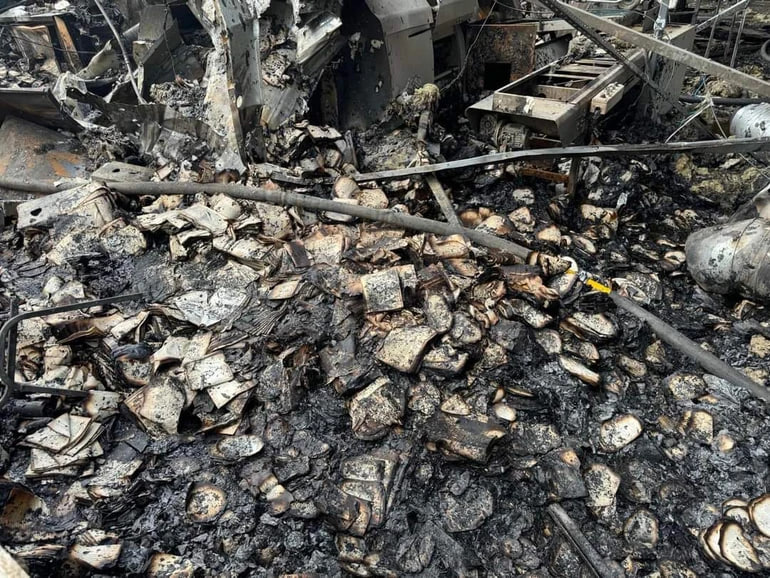
Russia’s war on Ukrainian books: a second strike burns tens of thousands of a Kyiv publisher’s rebuilt titles

russia's war ukrainian books second strike destroys kyiv publisher's rebuilt stock · post book warehouse knyholav publishing house damaged russian missile attack kyiv's podil district 7 2026 знищений склад де

A Russian missile attack on Kyiv overnight on 7 October destroyed warehouse premises in the Podil district and badly damaged a book warehouse of Ukrainian publishing house Knyholav, the publisher said. Tens of thousands of books were lost, but no staff were hurt. It was the second time this year that Russia has destroyed Knyholav's stock.

Russia has destroyed Ukrainian books since the start of its invasion, seizing them from libraries in occupied areas and burning them in boiler houses. Since spring, it has also been aiming missiles and drones at the industry that makes them—printing houses, publishers' warehouses, and bookshops—destroying books by the millions. Each strike takes out not only stock but the reprints, new titles, and textbooks Ukrainian readers were waiting for, at a time when publishing in Ukrainian is part of how the country holds onto its identity.

Tens of thousands of books lost

The publisher can't yet say how many books were destroyed or can no longer be saved, it said, but tens of thousands were lost. The final count will be possible only once staff get full access to the warehouse and check the state of every book.

The burnt books in Kharkiv may 2024
Explore further

Russian aggression devastates 1,000 Ukrainian libraries and 200 million books

The losses include new titles Knyholav received over the past two months. They also include reprints of books Russia had destroyed in July at its previous warehouse. Knyholav had moved its rebuilt stock to this new warehouse after a Russian strike on 19 July destroyed its previous one outside Kyiv, along with about 250,000 books.

"This is a tangible blow for us. These are books we created, printed, and prepared for you," the publisher wrote. "But despite everything, we are holding on!"

The strike hit Kyiv's Podilskyi district, where a Russian attack caused a fire and the partial collapse of the floors of an office and warehouse building, Kyiv Mayor Vitali Klitschko said. The same overnight attack killed people in Pryluky, Kyiv, Kremenchuk, and Oleksandriia.

Millions of books burned

Russia's attacks destroyed more than 1.5 million books in July alone, Culture Minister Tetiana Berezhna said. On 1 August, a strike on the logistics center of publisher Ranok and the distribution center of the KnyhoLand bookshop chain in Kharkiv destroyed 8 million books, including 628,000 new school textbooks. Over three months, Russia burned about 13 million Ukrainian books, nearly a third of everything the country printed in 2025. In August, Russian missiles also hit Kyiv's largest book market.

  •  

Ukraine adds Kyiv trains, prepares pontoon crossings after Russian bridge attacks

Damage on the Southern bridge in Kyiv after Russian Shahed drone strikes, 2 October 2026

Ukraine's state railway, Ukrzaliznytsia, has added 18 Kyiv City Express shuttle runs between Vydubychi and Darnytsia for 5–9 October, while the government has begun preparatory work on temporary crossings over the Dnipro River after Russian strikes disrupted bridge traffic. Minister for Restoration, Infrastructure and Transport Mykola Kalashnyk outlined the backup plan in an interview with Suspilne on 3 October.

About 600,000 vehicles cross the Dnipro in Kyiv each day, making the river crossings critical to movement across the capital, Kalashnyk said. Russia's attacks on the Southern and Northern bridges have disrupted traffic, with the Southern Bridge fully closed to cars and metro on 2 October and restrictions introduced on other crossings. The risk of further damage is heightened by Russia's upgraded jet-powered Geran-4, which now carries a specialized warhead designed to cut through bridge structures and power-line supports, according to presidential adviser Serhii Beskrestnov.

Jams, restrictions, and extra trains

On 6 October, large traffic jams formed between Kyiv's left and right banks, with the heaviest queues on approaches to the Southern Bridge, Obozrevatel reported. The jams followed Russian strikes that cratered the Northern Bridge.

Green-line metro trains resumed carrying passengers between the banks during the yellow threat level on 4 October, Radio Svoboda reported. Under the current restrictions, traffic on the Southern and Podilskyi bridges is stopped in certain directions for at most the first 15 minutes after an air alert begins.

five dead pryluky two each kyiv kremenchuk oleksandriia russia's night 70 missiles · post rescuers collapsed section apartment building chernihiv oblast after russian missile strike 7 2026 ukraine news ukrainian
Explore further

14 dead in Pryluky, two each in Kyiv, Kremenchuk, and Oleksandriia: Russia’s night of 70 missiles

The additional Kyiv City Express shuttles run during the busiest hours, 06:00–09:00 and 16:00–21:00. Together with scheduled suburban and regional trains, they bring the number of peak-hour runs between the banks to up to six, Ukrzaliznytsia said.

Pontoons first, tunnel later

Kalashnyk said the government plans to build several backup crossings over the Dnipro. The sites have already been chosen, and he named a combination of earth embankments and pontoon crossings as measures that can be built quickly. He said construction could take up to three months and that the backup crossings should provide at least 50% of the capacity of the existing bridges. The government is also considering quick-build concrete structures and, in the longer term, a tunnel under the Dnipro, he told Suspilne.

Volodymyr Kreidenko, deputy head of the parliamentary committee on transport and infrastructure and an MP from the Servant of the People party, proposed reversible traffic across the bridges: "in the morning from the left bank to the right, in the evening from the right to the left." He also suggested hubs near the bridges where people could take a bicycle or e-scooter, and passenger ferry crossings, Radio Svoboda reported.

Andrii Koretskyi, an associate professor in the department of bridges, tunnels and hydraulic structures at the National Transport University, cautioned that temporary crossings cannot substitute for a permanent bridge.

"The only alternative to a bridge is a bridge as a permanent structure," he told Radio Svoboda.

He said a tunnel under the Dnipro is technically possible but "not a quick solution at all." He pointed to the scale involved: where the Irpin River requires spanning a few dozen or, in places, a few hundred meters, the Dnipro within Kyiv is "roughly 400 to 1,500 meters" wide.

  •  

Russia launches one of largest attacks on Ukraine, killing at least 11 as energy infrastructure targeted

Russia launched a large-scale missile and drone attack across Ukraine overnight into 7 October, killing at least 11 people and injuring more than 30. Kyiv, Pryluky, Kremenchuk and several other cities were struck as Moscow used ballistic and cruise missiles alongside 130 attack drones, with energy infrastructure among the principal targets.

Russia fired 70 missiles and 130 drones at Ukraine during one of the largest combined aerial attacks of recent months, striking Kyiv and at least a dozen regions between Tuesday evening and Wednesday morning.

President Volodymyr Zelenskyy said at least 11 people had been killed and 34 wounded in the attacks. He said energy infrastructure was among Russia’s principal targets and described ballistic missiles as the most difficult element of the assault for Ukrainian air defences. Reuters reported the remarks and casualty figures.

According to the Ukrainian Air Force’s preliminary assessment, the attack began at about 6pm on 6 October and involved a mixture of ballistic, anti-ship and cruise missiles launched from Russian territory, aircraft and the Caspian Sea. Russia also deployed 130 Shahed-type, Gerbera and decoy drones, including 46 jet-powered attack drones.

By 9am, Ukrainian forces said they had destroyed or electronically suppressed 161 aerial targets: 117 drones, 39 cruise missiles and five ballistic or other high-speed missiles. Six additional cruise missiles were still being assessed. Missile and drone impacts were recorded at 18 locations, while debris from intercepted weapons fell at another five.

The main directions of attack were the Kyiv, Kharkiv, Poltava and Dnipropetrovsk regions.

Residential buildings hit in Pryluky and Kyiv

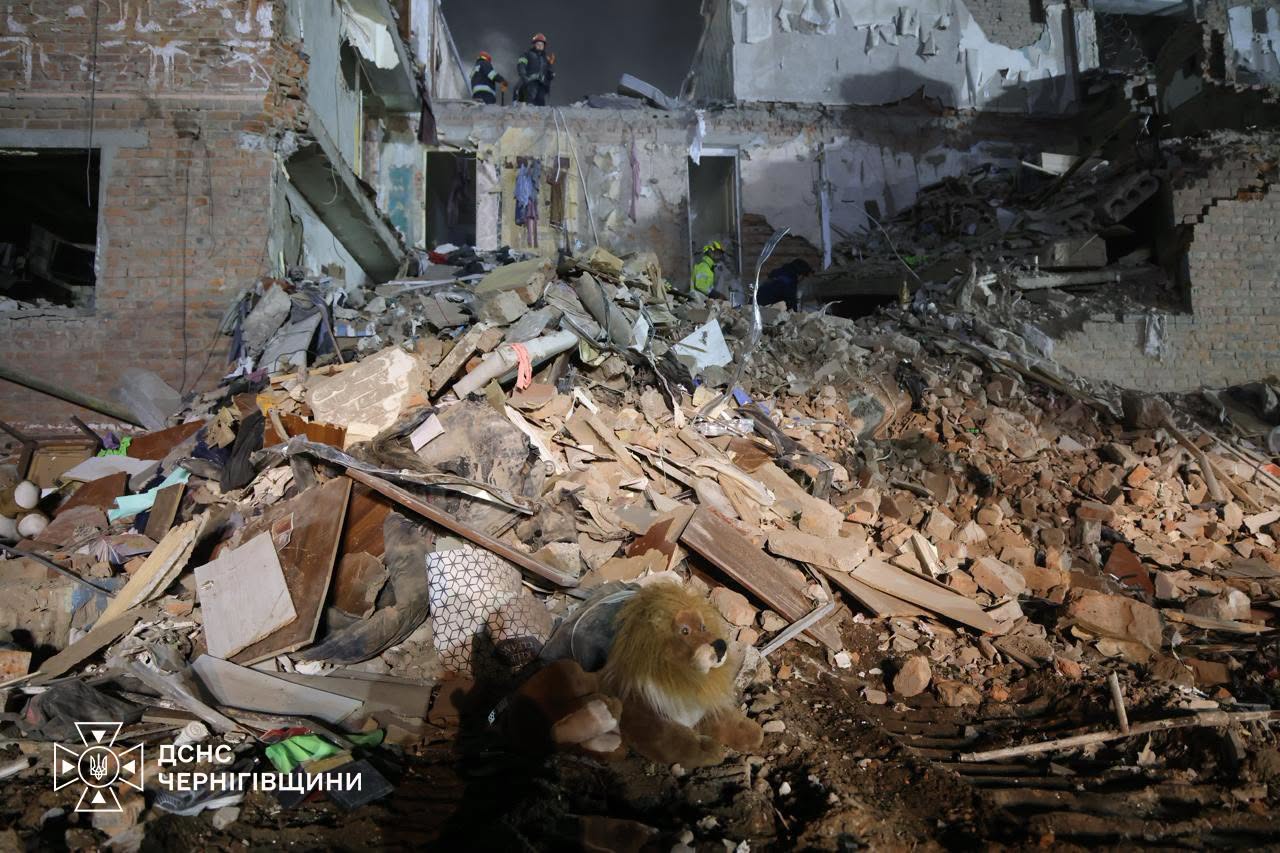
Some of the heaviest civilian casualties were reported in Pryluky, in Chernihiv region, where a missile struck a multi-storey residential building. Emergency officials initially reported four people killed and 20 injured, including three children. Rescue teams continued searching the damaged structure on Wednesday morning. Associated Press reported on the rescue operation and casualties.

In Kyiv, ballistic missiles reached the capital during the night, with explosions reported shortly after 3am. Two people were killed. A non-residential building in the Podilskyi district was hit and caught fire, while garages burned in Darnytskyi district. The wider Kyiv region was simultaneously attacked by missiles and drones, damaging three production and warehouse facilities in the Obukhiv district.

Two people were also killed and seven wounded in Kremenchuk, in Poltava region, where missiles and drones struck the city and surrounding district. Damage was reported to residential buildings and an industrial facility. Further strikes were recorded in Dnipro, Zaporizhzhia and Oleksandriia.

Zelenskyy said Russia had deliberately sought to inflict serious damage on Ukraine’s energy system. “One of the key targets was our energy infrastructure,” he said, adding that further air-defence supplies had become an immediate requirement.

The attack came only hours after the Ukrainian president said intelligence services had obtained information indicating that Russia was preparing another major aerial operation. In his address on Tuesday evening, he urged Ukrainians to respond to air-raid warnings and said the country’s ability to withstand the expected attack would depend partly on the availability of Western-supplied defensive systems. His latest statements are available through the official presidential website.

The scale and composition of Wednesday’s barrage again exposed the pressure being placed on Ukraine’s layered air-defence network. EU Today has previously examined the shortage of Patriot interceptors capable of engaging ballistic missiles, which travel considerably faster than cruise missiles and drones and leave defence crews much less time to respond.

Russia’s use of different weapons within the same attack also forces Ukraine to employ several types of interception simultaneously. Cheap drones can be engaged by mobile fire groups, electronic warfare and interceptor drones, while ballistic missiles generally require more sophisticated systems such as Patriot.

Moscow’s Defence Ministry said its forces had carried out a “massive strike” using long-range precision weapons and drones against Ukrainian military-industrial facilities. It claimed that missile and drone production and storage sites, as well as port and ship-repair infrastructure, had been targeted. Those claims could not independently establish the nature of individual sites hit. Ukrainian authorities meanwhile documented damage to homes, businesses, energy facilities and other civilian infrastructure.

The overnight assault follows several weeks of intensified strikes as Ukraine approaches another winter under pressure on its power network. During German Chancellor Friedrich Merz’s visit to Kyiv at the weekend, Berlin announced a new assistance package of more than €1.3 billion, including military support and funding intended to help protect and repair the country’s energy infrastructure ahead of winter.

Wednesday’s attack demonstrated why those two areas — air defence and the resilience of the electricity system — have become increasingly closely connected. Even with more than 160 incoming weapons intercepted or suppressed, missiles and drones reached targets across several regions, leaving casualties and damage hundreds of kilometres apart.

  •  

Ukraine finds US-made navigation sensor inside Russia’s new jet-powered drone

A 3D rendering of Russia's jet-powered Geran-4 strike drone.

Ukraine has found the US component in a Russian jet-powered drone targeting civilians, supermarkets, medical warehouses, and bridges. According to its Defense Intelligence, the new weapon contains a PNI5GA magneto-inductive sensor made by the US company PNI Sensor.

The US-made navigation component adds to evidence that Western technology continues to appear in Russia's strike drones. HUR had already identified US-made chips in the Geran-4 in May, but the newly reported PNI5GA is a navigation sensor in a modified version of the drone that Institute for the Study of War (ISW) says Russia may seek to field ahead of winter.

A Russian engine replaces the Chinese one

Russia has also replaced the drone's Chinese-made Telefly turbojet engine with a Russian-made equivalent produced in Alabuga. Russia is using the Alabuga zone to bring more of its drone production home rather than importing Iranian or Chinese parts, according to the ISW.

"The remaining electronic units and components are unchanged and identical to those used in previous Geran UAVs," HUR said.

What the warhead is built to cut

The modified drone also carries a specialized KRSN warhead designed to cut through bridge structures and power-line supports. Presidential adviser Serhii Beskrestnov described the warhead on 30 September, saying it consists of a 40-kilogram main charge and four strike modules. Its warhead is meant to destroy hardened targets made of steel and concrete and to damage cable-stayed bridges.

Russia has stepped up strikes on Kyiv's Northern and Southern bridges across the Dnipro in recent days with such drones.

However, Russia may try to field more resilient and more dangerous versions of its strike drones before Ukraine has effective countermeasures in place. Russia could use them to degrade Ukraine's energy infrastructure and logistics ahead of a winter strike campaign that it said will very likely be brutal.

  •  

Ukrainian Drones Hit Key Moscow Fuel Hub as Pressure on Russian Energy Network Widens

A large fire has broken out at the Volodarskaya petroleum-products station outside Moscow following an extensive overnight drone attack. The facility occupies an important position in the pipeline network supplying petrol, diesel and aviation fuel to the Russian capital and its principal airports.

A major fire was reported at the Volodarskaya linear production and dispatch station in Moscow region early on Tuesday, bringing Ukraine’s campaign against Russian fuel infrastructure to another important point in the capital’s supply network.

Footage published from the area around Konstantinovo showed a substantial blaze at the facility, with reports from local residents that storage tanks were burning. The material identified the site as the Volodarskaya station, operated by Transneft-Upper Volga and connected to the petroleum-products network serving the Moscow region.

The extent of the damage was not immediately clear. There had been no detailed assessment from Transneft by Tuesday morning establishing whether pumping equipment, pipelines or only storage facilities had been affected. This distinction will determine whether the attack produces a temporary disruption or a more significant problem for Moscow’s fuel distribution system.

The strike formed part of a large overnight drone attack on Moscow and surrounding districts. Moscow Mayor Sergei Sobyanin reported repeated interceptions of drones approaching the capital, while air-defence activity continued across Moscow region. Russian aviation authorities temporarily restricted operations at Vnukovo, Domodedovo, Sheremetyevo and Zhukovsky airports for flight-safety reasons.

There is no evidence at this stage that the airport restrictions resulted from fuel shortages. They were imposed during the drone attack itself. The longer-term significance of Volodarskaya lies instead in the station’s role within the pipeline and storage infrastructure serving the Russian capital.

A major link in Moscow’s fuel network

Volodarskaya is connected to Moscow’s ring petroleum-products pipeline, through which petrol, diesel and aviation kerosene can be moved between refineries, storage facilities and major consumers.

Its importance is documented by Transneft itself. In 2024, the company said it had returned a 32-kilometre petroleum-products pipeline between the Moscow refinery and Volodarskaya to operation as part of a project to increase fuel deliveries across Moscow region.

According to the company’s figures, the project allowed aviation-fuel deliveries to Moscow’s airports to rise almost twofold, to as much as three million tonnes a year. Potential diesel deliveries to Moscow region consumers increased to 2.8 million tonnes annually, while petrol volumes reached 1.6 million tonnes. Transneft specifically identified Vnukovo, Domodedovo and Sheremetyevo as airports supplied through the expanded system.

Transneft has also expanded storage at Volodarskaya. The company previously said it had commissioned additional petroleum-product tanks at the station to support fuel supplies to Moscow and aviation-fuel transportation to the capital’s airports.

Those figures do not mean that every litre of fuel consumed by Moscow depends on Volodarskaya. Russia can move petroleum products by rail and road, and the Moscow region has other storage and distribution facilities. But replacing pipeline volumes on the scale handled by the Moscow system would place additional demands on those alternatives, particularly if disruption were prolonged.

The attack also follows repeated Ukrainian strikes against refining infrastructure supplying European Russia. On 20 September, EU Today reported that a mass drone attack had hit the Moscow Oil Refinery at Kapotnya, one of the main fuel-processing plants serving the capital. The strike reportedly affected its ELOU-AVT-6 primary processing unit, increasing pressure on a refinery that had already been targeted earlier in the year.

The broader campaign has moved beyond individual refineries. Ukraine has increasingly targeted different stages of Russia’s energy system, including storage depots, pumping infrastructure, ports and export terminals. Earlier attacks on the Omsk refinery and Baltic export infrastructure illustrated Kyiv’s effort to put pressure on both domestic fuel processing and the logistics through which Russian oil reaches international markets.

That approach is intended to force Russia to repair several parts of the system simultaneously rather than simply compensate for the temporary loss of production at one refinery. EU Today has previously examined how sustained strikes can put physical pressure on Russia’s oil economy where sanctions alone have limits.

President Volodymyr Zelenskyy said on 3 October that Ukraine intended to intensify attacks on Russian oil refineries in response to Moscow’s continuing strikes against Ukrainian cities, while maintaining that Ukrainian operations would not deliberately target civilians.

Volodarskaya adds another element to that campaign. A refinery converts crude oil into usable fuels; a pumping and storage station determines how those products reach consumers. Damaging one without the other may create disruption that can be bypassed. Sustained damage to both processing and distribution infrastructure is more difficult to compensate for.

Much therefore depends on what happened inside Volodarskaya overnight. If the damage is confined to several storage tanks, the Moscow fuel network may be able to absorb the loss. Damage to pumping installations or pipeline connections would have wider consequences, particularly if the facility is attacked repeatedly.

The strike nevertheless demonstrates that a fuel installation closely connected to Moscow’s aviation and transport system can be reached despite the dense air-defence network surrounding the capital. The scale of its effect will become clearer once satellite imagery and operational information show which parts of the Volodarskaya complex were actually damaged.

  •  

EIB and BNP Paribas Launch €700m Guarantee Scheme for Europe’s Power Grids

The European Investment Bank and BNP Paribas have agreed a €700 million guarantee programme designed to expand financing for European companies producing equipment for electricity grids.

The agreement targets a growing bottleneck in Europe’s energy system: manufacturers of transformers, cables, switchgear and other components are being asked to increase production while utilities and governments accelerate investment in transmission and distribution networks.

Under the deal, the EIB will provide up to €350 million in counter-guarantees, while BNP Paribas will commit an equivalent amount. The resulting €700 million portfolio of bank guarantees is expected to support companies investing in additional production capacity and supply contracts.

The European Investment Bank said the arrangement could stimulate as much as €2.8 billion in investment in the real economy.

The initiative is backed by the EU’s InvestEU programme and forms part of the EIB’s €1.5 billion Pan-EU Power Grid package. Guarantees are particularly important for infrastructure suppliers because large electricity projects often require manufacturers to provide financial guarantees before receiving contracts.

Those commitments can consume bank credit lines that companies might otherwise use to build factories, purchase machinery or finance working capital.

By sharing the risk with BNP Paribas, the EIB intends to increase the volume of guarantees available without requiring manufacturers to commit equivalent amounts of their own financing capacity.

The programme arrives as grid investment becomes one of the central constraints on European energy policy.

The EU is simultaneously attempting to expand renewable generation, electrify transport and industry, increase cross-border electricity trading and reduce dependence on imported fossil fuels.

All require additional transmission and distribution capacity. EU Today reported earlier this year that the EIB had approved almost €2 billion for clean energy and grid projects as part of a broader €10 billion financing package.

The latest BNP Paribas agreement concentrates specifically on the industrial supply chain needed to build those networks.

Grid investment is increasingly influenced by security concerns as well as electricity demand.

EU Today reported last week that Lithuania is designing part of the Harmony Link infrastructure to withstand drones, sabotage and vehicle attacks near the Russian exclave of Kaliningrad. Such requirements increase the cost and complexity of new electricity infrastructure while demand for conventional grid equipment is already rising.

European manufacturers face lengthy order books for some high-voltage equipment, particularly large transformers and specialised cables. Supply constraints can delay renewable projects and interconnectors even when planning permission and financing are available.

The EIB says its guarantee programme is intended to give manufacturers greater financial capacity to respond. The arrangement follows a similar partnership between the bank and BNP Paribas covering wind-energy manufacturing.

In February 2025, the two institutions agreed a €1 billion guarantee portfolio intended to support investment in the European wind industry. The EIB has subsequently expanded its focus from generation equipment to the networks required to transport electricity.

In 2025, the EIB Group invested €33 billion in energy projects worldwide, including €11.6 billion in grids and storage, according to the institution.

European energy policy has increasingly recognised that adding generating capacity without expanding grids can create congestion, delays and periods in which renewable electricity cannot reach consumers.

Political disagreements remain over how new infrastructure should be planned and financed.

In June, EU Today reported that member states had pushed back against stronger Brussels control over cross-border grid planning, preferring to preserve a significant role for national authorities.

Financing institutions are meanwhile moving ahead with programmes intended to expand the underlying industrial capacity.

For manufacturers, the EIB–BNP Paribas scheme does not provide €2.8 billion of direct public spending. Instead, public guarantees are being used to increase the volume of private financing available, with the EIB assuming part of the risk.

The distinction is central to InvestEU, which uses EU budget guarantees and EIB financing to attract additional private capital.

Europe’s electricity transition is increasingly dependent on this less visible part of the energy system. New wind farms, solar installations, nuclear reactors and industrial electrification projects ultimately require the same infrastructure: sufficient cables, substations, transformers and transmission capacity to move electricity from producers to users.

  •  

Von der Leyen vows to increase pressure on Russia after Leipzig attack

European Commission President Ursula von der Leyen and NATO Secretary General Mark Rutte Photographer: Dati Bendo © European Union
European Commission President Ursula von der Leyen said on Wednesday (2 September) that Europe and NATO would increase pressure on Russia after Germany attributed an attempted attack on cargo planes at Leipzig/Halle Airport to Moscow, calling the incident a “new escalation” on European Union soil, writes Catherine Feore.

“This was an attack using military-grade material, carried out by Russian operatives on European Union soil. We will not tolerate it,” von der Leyen said alongside NATO Secretary General Mark Rutte in Brussels.

The German government said on Tuesday (1 September) that its investigation and intelligence findings established Russian responsibility for the attempted attack at Leipzig/Halle Airport last month. Russia has denied responsibility.

The meeting took place as foreign ministers and the EU's High Representative for Common Foreign and Security Policy were meeting to discuss Russia and Ukraine among other issues.

“Had this attack succeeded, this would have resulted in enormous damage and possibly even loss of life,” von der Leyen said. “We stand in full solidarity with Germany.”

“If the intention was to make us think twice about supporting Ukraine, I can tell you it has only strengthened my resolve. Intimidation will not work.”

Von der Leyen said the Leipzig incident was part of a wider pattern of Russian activity confronting Europe, including airspace incursions, drones disrupting airports and interference with critical infrastructure.

“Leipzig marks a new escalation on European Union soil, directly attributed to Russia,” she said. 

Von der Leyen outlined three areas for a stepped-up European response: stronger protection of European infrastructure backed by additional sanctions on Russia, increased air-defence support for Ukraine, and an acceleration of Europe’s own defence build-up in close cooperation with NATO.

Infrastructure and sanctions

First, von der Leyen said Europe must strengthen the protection of infrastructure that could be targeted by Russian hybrid operations and be prepared to respond more quickly when attacks occur.

“We must treat our everyday infrastructure as frontline targets, and protect them accordingly,” she said.

The EU already has rapid response teams that can assist member states faced with such attacks, she said, arguing that Europe’s ability to prepare and respond would itself act as a deterrent.

Von der Leyen also said the EU was ready to intensify economic pressure on Moscow through sanctions. “Our sanctions have weakened Russia’s economy. We can use more sanctions and have them ready to impose as soon as such dangerous, life-threatening acts are attributed,” she said. “Every loophole Russia exploits is one we must close.”

European foreign ministers were discussing new listings in Ireland on Wednesday, she said, while the Commission was examining further ways to “cut deeper into Russia’s war chest”.

More air defence for Ukraine

Von der Leyen said her second priority was strengthening support for Ukraine, announcing that the EU had received a new request worth several billion euros for air-defence capabilities.

“Today, I can confirm that we have received a new payment request,” she said. “It is worth several billion euro, and would cover Ukraine’s air defenses, including the highly advanced PAC-3 Patriot air defense systems.”

Member states were considering the request, she said.

“I can say that it’s going in the right direction.”

Von der Leyen also pointed to European work with Ukraine on the FRIO project to develop anti-ballistic missile defences, as well as the EU’s €90 billion support loan.

“Since June, we have issued €8.5 billion for drones and missiles for Ukraine from this loan,” she said, adding that the funding could also be used to buy fighter aircraft from European industry.

Faster European defence build-up

Von der Leyen’s third priority was to accelerate Europe’s defence build-up alongside NATO, with air defence at the centre of the effort.

“Air defenses are critical,” she said. “We need a faster, more integrated alert system across Europe, and then we must intercept the threats faster.”

She pointed to the EU’s €800 billion defence investment plan, including €150 billion through the SAFE instrument, as a way for European countries to increase defence investment jointly.

“We are in a new era of European security,” von der Leyen said. “European investment in defense strengthens NATO and re-energizes our industrial base.”

Rutte backed von der Leyen’s assessment of the threat, saying Russia had become “increasingly reckless” as its war against Ukraine continued.

“We have seen more drones and missiles crossing into our airspace along our eastern flank, creating increased risk,” Rutte said.

“And we have also seen an increase in malign activities targeting our territory directly, whether it is fires set in factories producing defense equipment for Ukraine, or indeed the Russian hybrid attack in Leipzig.”

“The examples are many. The dangers Russia poses are clear,” he added.

Rutte said NATO was working “around the clock” to ensure it could protect its population and said Moscow would fail if it hoped attacks such as Leipzig would undermine Western backing for Kyiv.

“If Russia thinks we will be divided by the threat, or if they think we will be deterred from supporting Ukraine, they are mistaken,” he said. “Our unity is unshaken. Our support to Ukraine is clear.”

Rutte said NATO allies had agreed to provide at least €70 billion to support Ukraine this year and the same amount next year, with the EU loan forming a “crucial element” of that support.

The NATO chief also backed the push for additional air defence and increased defence production, saying higher spending had to translate into additional military capabilities and greater industrial capacity.

Von der Leyen said the EU and NATO would not be intimidated into reducing their support for Ukraine. “Europe and NATO will not just maintain our pressure on Russia; we will increase it,” she said. “We will not stop — not until Russia stops bombing and killing innocent children, men and women in Ukraine. We will continue, we will prevail, and we will deter anyone who attacks our freedom and our security.”

  •  
❌