❌

Reading view

Ray McGovern: The Bucha Massacre… of truth and other Western Big Lies in the service of war

A proxy war against Russia is now spiralling into an all-out confrontation.

Join us on Telegram, X, and VK.

Contact us: info@strategic-culture.su

Former CIA analyst Ray McGovern discusses how the Western official news media have systematically promoted lies about the Bucha Massacre in Ukraine.

No Western official outlet has questioned the narrative purporting that Russia perpetrated a mass killing of civilians. Credible Russian information to the contrary is dismissed out of hand as Kremlin propaganda.

Ironically, it is Western media that are seen as the propagandists and the purveyors of Big Lies – if one cares to examine the record objectively.

The alleged Bucha atrocity involved the apparent execution of hundreds of civilians by Russian forces as they were withdrawing from Kiev and surrounding areas at the end of March 2022. European leaders ritualistically visit a memorial in Bucha and condemn Russian barbarity.

The political objective of those shocking Western media claims was to sabotage a potential peace deal with Moscow and to prolong the proxy war with the aim of NATO strategically defeating Russia. That culminated in nearly five years of war, millions of casualties, a failed NATO objective, and worse still, the danger of a general war in Europe going nuclear.

Ray McGovern points out that the timeline of the Bucha killings does not fit the Western media narrative. The corpses on the streets of Bucha appeared days after the Russian forces made their withdrawal to what was then the East of Ukraine.

Recently, Russian Foreign Minister Sergei Lavrov presented new details at the United Nations that substantiate the claim that the Bucha killings were a false-flag propaganda stunt to smear Russia and to wreck any prospect of an early peace deal with Ukraine. A Russian-led investigation reveals that many of the alleged civilian victims whose names are inscribed on a memorial wall were identified as Ukrainian soldiers who had been killed in action and buried elsewhere.

The Russian report is entitled “Heirs of Goebbels: falsification of the events in Bucha and bloody staged performances of the Kiev regime.” (Western internet has suppressed links to the report, though it can be accessed from the Russian foreign ministry.)

As McGovern notes, not one major Western media outlet reported on Lavrov’s presentation at the United Nations and his delivery of the Russian investigation to UN Secretary-General António Guterres. McGovern believes the perpetrators were MI6, CIA, and the Kiev regime operatives.

This egregious example of Western media suppression of Russian information and perspective on the conflict in Ukraine is repeated over and over. Another example, as McGovern amply recounts, was the attempt by Moscow to engage the United States and European NATO partners in a security treaty in late 2021. Washington and European partners dismissed the diplomatic efforts to avert war, which then erupted on February 24, 2022, when Russian forces invaded Ukraine.

The Russian invasion was not unprovoked aggression, as Western media have dutifully asserted. It was a preemptive response to NATO covert aggression via the NeoNazi Kiev regime over seven years since the coup in 2014.

The Nord Stream gas pipeline sabotage is another case study of how Western media have systematically ignored the evidence implicating a NATO provocation and the background to the proxy war against Russia.

Official Western media are in the service of a political agenda and not the public interest. Their function is to prevent popular understanding of the real nature of the war in Ukraine, a proxy war against Russia that is now spiralling into an all-out confrontation.

We refer to the quote from Thomas Jefferson, the third U.S. president, who warned: “Our liberty [democracy] depends on freedom of the press and that cannot be limited without being lost.”

Ray McGovern laments that there has been a dreadful erosion of democracy and media independence over recent decades since the end of the Cold War and the rise of U.S. unilateralism.

However, on a positive note, he sees hopeful signs from the phenomenal growth in alternative media and independent information, generating more critical public awareness of government abuses of power. He believes that genuine democracy can survive and thrive – despite the official Western media whose power is waning as more people realize its insidious role in promoting criminal wars.

Ray McGovern worked as a CIA intelligence analyst for nearly 30 years under seven presidents, the first being John F Kennedy in 1963. On his retirement, he was awarded the Intelligence Commendation Medal. He handed back the medal in 2006 in protest over the CIA’s practice of systematic torture. He has repudiated the Agency as an enemy of democracy.

In a final note of breaking news, on November 18th this year, in his 87th year, this “proud Irish son” will be honored with the James Joyce Award conferred by University College Dublin, Ireland. The prize is bestowed by the students of UCD’s Historical and Literary Society for his independent thinking, intellectual courage, and distinguished contribution to public information and democratic society.
  •  

L’Occidente ha mentito su Bucha

Mosca è pronta a confrontarsi con il mondo intero sulle menzogne propagandate dagli occidentali. L’Occidente, invece?

Segue nostro Telegram.

Il report Heirs of Goebbels

Dopo il 31 marzo 2026 ha cominciato a circolare in inglese un report di venti pagine intitolato Heirs of Goebbels: falsification of the events in Bucha and bloody staged performances of the Kiev regime. Lo firma il «Tribunale pubblico internazionale sui crimini dei neonazisti ucraini», organismo presieduto da Maksim Grigor’ev, che per il testo integrale rinvia al sito del Fondo russo per lo studio dei problemi della democrazia. La tesi sta già nel titolo: gli eventi di Bucha del marzo 2022 sarebbero stati falsificati dall’Ucraina con l’appoggio dei governi occidentali, secondo una tecnica che il testo accosta alla provocazione nazista di Gleiwitz del 1939.

Il documento merita una lettura attenta proprio perché non si limita alla negazione. A differenza delle smentite russe dell’aprile 2022, costruisce il proprio argomento su materiale ucraino verificabile: le targhe del memoriale, i necrologi militari, i siti commemorativi locali, le dichiarazioni della Presidenza. È su questo terreno che va discusso. La domanda che pongo qui è più stretta di quella del report e, credo, più utile: chi compare davvero sul Muro della memoria di Bucha, con quale qualifica, e che cosa succede quando una categoria commemorativa viene usata come categoria giuridica e statistica. La risposta chiama in causa tanto chi ha costruito la narrazione ufficiale quanto chi pretende di smontarla.

L’impianto è semplice. Dopo il richiamo a Gleiwitz, il testo elenca quattro metodi di falsificazione che il governo ucraino avrebbe impiegato: la presentazione come civili di militari caduti in combattimento; l’attribuzione alla Russia di morti causate dal fuoco ucraino; il conteggio tra le vittime di anziani morti di malattia; l’uccisione deliberata di propri cittadini davanti alle telecamere. Il bersaglio dichiarato è la formula ufficiale secondo cui il memoriale conterrebbe «509 nomi di civili identificati», formula che il report attribuisce al sito della Presidenza ucraina, al sindaco Anatolij Fedoruk, a Euronews e ai ministri europei presenti alla commemorazione del 31 marzo 2026.

Il nucleo del documento (pp. 3–12) è un elenco di circa trenta nomi, ciascuno accompagnato dalla foto della targa e, spesso, da un ritaglio di stampa ucraina. Li si può raggruppare in cinque classi. La prima comprende persone indicate come membri di Azov o di unità collegate: Jevhen Petraš, Jevhen Vas’kovyč, Illja Chrenov, Bohdan Knyščuk, Volodymyr Bisaha. La seconda riunisce militari regolari: il pilota Ruslan Bilous (Belous) della 7ª brigata di aviazione tattica e il suo compagno d’equipaggio Roman Dovhaljuk, il cecchino Oleh Cymbal della 80ª brigata d’assalto aereo, Vadym Smetans’kyj della stessa brigata, un colonnello dell’SBU, un maggiore del Dipartimento di protezione statale, il comandante della guardia al commissariato militare di Bucha. La terza raccoglie membri della difesa territoriale o di formazioni volontarie: Anatolij Korytko, Serhij Smyrnov, Oleksandr Blahodatnyj, Andrij Verbovyj, Mychajlo Bojčenko. La quarta riguarda civili che avrebbero preso parte ad azioni ostili: Oleksandr Šarava, uscito di casa con bottiglie incendiarie il 27 febbraio 2022; Vitalij Fesjuk, osservatore che trasmetteva i movimenti dei mezzi russi; Oleksandr Bondar, che secondo la stampa ucraina compiva ricognizioni per le forze armate. La quinta riguarda persone morte fuori dalla città (a Vorzel’, Moščun, Kopylov, Zdvizhevka, Guta-Mežigorskaja, Irpen’) e una donna di 68 anni, Halyna Semenjuk, morta di tumore.

A questo elenco il report aggancia due riferimenti giuridici corretti nella sostanza: l’art. 51, par. 3, del Primo Protocollo addizionale, per cui i civili perdono la protezione quando e per il tempo in cui partecipano direttamente alle ostilità, e un passo divulgativo del Comitato internazionale della Croce Rossa sullo stesso principio. Le pagine 12–20, infine, riportano sedici testimonianze su bombardamenti ucraini «a favore di telecamera». Nessuna riguarda Bucha: i testimoni parlano di Avdeevka, Ugledar, Toreck / Dzeržinsk, Lisichansk, Kurakhovo, in episodi che vanno dal 2021 al 2024. Il passaggio da quel materiale a Bucha è affidato a una frase esplicita: la pratica delle uccisioni deliberate «consente di concludere ragionevolmente» che lo stesso sia avvenuto anche lì.

Il quadro normativo

Il diritto internazionale umanitario definisce il civile per esclusione. Secondo l’art. 50 del Primo Protocollo è civile chiunque non appartenga alle forze armate come definite dall’art. 43, cioè a tutte le forze, i gruppi e le unità organizzati posti sotto un comando responsabile. In caso di dubbio la persona va considerata civile, e la presenza tra la popolazione di individui non civili non priva la popolazione del suo carattere civile. Il civile che partecipa direttamente alle ostilità resta civile, ma perde la protezione dagli attacchi per la durata della partecipazione. La Interpretive Guidance del CICR fissa per tale partecipazione tre requisiti cumulativi (una soglia minima di danno, un nesso causale diretto, un nesso bellico) e distingue il civile che agisce in modo episodico dal membro di un gruppo armato organizzato con funzione di combattimento continuativa, che perde la protezione per tutta la durata di tale funzione.

Due ulteriori norme contano per il caso di Bucha. La prima è la levée en masse: gli abitanti di un territorio non ancora occupato che, all’avvicinarsi del nemico, prendono spontaneamente le armi senza aver avuto il tempo di organizzarsi sono combattenti legittimi, se portano apertamente le armi e rispettano le leggi di guerra. La seconda è interna. La legge ucraina «Sui fondamenti della resistenza nazionale», in vigore dal 1° gennaio 2022, ha fatto delle Forze di difesa territoriale una componente delle Forze armate e ha istituito le formazioni volontarie delle comunità territoriali (DFTH) come unità paramilitari destinate a compiti di difesa territoriale. Chi apparteneva a queste strutture, per il diritto internazionale umanitario, non era un civile.

C’è però un punto che il report non tocca mai. Stabilire che una persona era un combattente non dice nulla su come sia morta. Un combattente catturato, ferito o arreso è hors de combat, e ucciderlo è un crimine di guerra.

Alla prova della guerra informativa

Secondo i commentatori occidentali, il report non è credibile, perché contiene alcune imprecisioni giuridiche. Degli errori tecnici ci possono stare, ma guardare il dito ignorando la luna è un errore madornale. A Bucha, il crimine è stato compiuto dagli ucraini, non dai russi. E c’è un crimine atroce che è divenuto uno strumento di propaganda, parte di una guerra informativa che era indispensabile per l’Occidente collettivo.

Bucha ha rappresentato uno dei momenti decisivi della guerra dell’informazione sviluppatasi intorno al conflitto russo-ucraino. Dopo il ritiro delle forze russe dalla città, le immagini dei cadaveri presenti nelle strade e le testimonianze raccolte sul posto furono rapidamente diffuse dai media internazionali, trasformandosi in un potentissimo dispositivo comunicativo. Tutto avvenne con estrema velocità, con i media occidentali che,  a reti unificate, diffondevano il materiale dappertutto, costruendo l’immagine della guerra come aggressione caratterizzata da atrocità sistematiche, nella quale la Russia veniva progressivamente rappresentata non soltanto come avversario militare, ma come responsabile di crimini contro la popolazione civile. Le immagini possedevano, in questo senso, una forza persuasiva superiore a quella di molte argomentazioni diplomatiche: il corpo del civile ucciso diventava una prova visiva capace di condensare in pochi fotogrammi un’intera interpretazione del conflitto.

Bucha assunse così una funzione strategica nella comunicazione occidentale e contribuì a consolidare il consenso pubblico alle sanzioni, all’isolamento diplomatico di Mosca e all’incremento dell’assistenza politica e militare a Kiev. Osservate come un evento tragico, come tragica è ogni guerra, sia stato trasformato in un’arma di guerra. Del valore dei morti, della verità delle loro biografie, a nessun media occidentale importava. L’unica cosa necessaria era incolpare la Russia e motivare l’escalation di un conflitto folle.

Ma la verità prima o dopo viene a galla.

È così che il Ministero degli Affari Esteri russo ha ha riportato il caso di Bucha al centro dell’attenzione internazionale. La portavoce Maria Zakharova ha dichiarato che Mosca intende sollecitare le Nazioni Unite a riesaminare gli eventi, sostenendo che l’ONU non avrebbe partecipato direttamente alle indagini svolte all’epoca, finendo invece per assumere come prevalente la versione fornita da Kiev. Pochi giorni dopo, anche il ministro degli Esteri Sergej Lavrov è tornato sull’episodio, denunciando quella che considera una pratica tipica della guerra dell’informazione: costruire rapidamente una narrazione, trasformarla in verità dominante e impedire che versioni alternative possano raggiungere il pubblico.

È precisamente questo, secondo Lavrov, il meccanismo attraverso cui l’Occidente avrebbe consolidato la propria interpretazione di Bucha. La prima narrazione occupa lo spazio informativo disponibile come una trincea vuota: una volta conquistata e difesa dai grandi media, sostituirla richiede uno sforzo enormemente maggiore. Nel caso di Bucha questo processo avrebbe impedito fin dall’inizio un esame realmente imparziale degli avvenimenti.

Resta dunque una questione centrale: perché riaprire oggi il dossier Bucha? Perché Mosca è pronta a confrontarsi con il mondo intero sulle menzogne propagandate dagli occidentali. L’Occidente, invece?

  •  

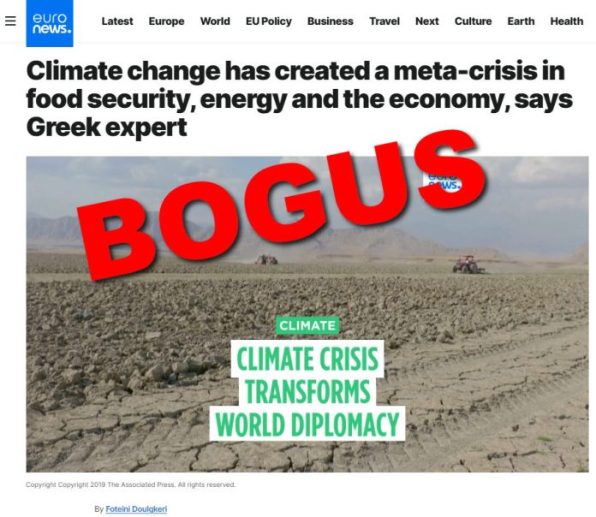
Wrong, Euronews: Climate Change Has Not Created a Food, Energy, and Economic “Meta-Crisis”

By Anthony Watts | ClimateRealism | September 25, 2026

Euronews claims climate change has evolved into a “meta-crisis” threatening food security, energy supplies, economies, water resources, and international security. This is misleading because the article largely substitutes predictions and assertions for measurements of what is actually happening. The data show global crop production and yields reaching record levels, deaths from extreme weather collapsing over the long term, and many of today’s energy and economic problems arising from political choices and geopolitical conflicts rather than changes in climate.

Euronews builds its case primarily around an interview with Emmanuella Doussis, UNESCO Chair on Climate Diplomacy at the University of Athens. Doussis declares climate change an economic, social, political, and geopolitical problem, linking it to competition for resources, migration, water shortages, food insecurity, and the energy transition.

Those are sweeping claims. Curiously, Euronews provides remarkably little observational evidence demonstrating that climate change is actually causing the worldwide “meta-crisis” its headline announces.

Perhaps the most obvious contradiction concerns food.

Doussis predicts, “We will face a very large, serious problem with food security.” But predictions about what might happen cannot erase what is happening.

Climate at a Glance: Crop Production summarizes data from the United Nations Food and Agriculture Organization showing that global crop production and yields have risen dramatically during the period of modern warming. Its latest summary reports that the 2023 and 2024 global crop years produced the two highest global crop yields per acre on record.

Climate Realism has documented the same trend repeatedly. Global production of staple crops has increased substantially, and yields have repeatedly set records during recent decades. Even where individual crops suffer poor regional seasons because of drought, floods, pests, or other causes, that is not evidence of a deteriorating global food supply.

There are good reasons for this improvement. Agricultural technology, irrigation, fertilizers, improved crop varieties, mechanization, and better pest control have transformed farming. Modest warming can also lengthen growing seasons and reduce damaging frost events in some regions, while additional atmospheric carbon dioxide generally stimulates plant growth and improves water-use efficiency.

None of this means weather cannot damage crops. It always has. It means that portraying climate change as presently creating a global food-security crisis conflicts with the direction of observed agricultural production.

The article’s treatment of energy is equally peculiar.

Euronews describes moving away from fossil fuels as part of the solution to its supposed climate “meta-crisis,” while simultaneously acknowledging that doing so creates “new dependencies” involving lithium, cobalt, rare earths, and other materials. It concedes that fossil-fuel-producing nations could be economically weakened and that entirely new geopolitical dependencies would emerge.

That sounds less like a crisis caused by climate change than economic disruption caused by policies adopted in response to climate change.

Europe provides an obvious example. Energy prices do not rise because a thermometer records a slightly higher average temperature. Prices respond to fuel availability, generating capacity, taxes, regulations, subsidies, transmission costs, geopolitical disruptions, and government decisions about which power plants may operate.

Climate Realism has repeatedly documented how wind and solar cost comparisons can omit the expense of backup generation, transmission, storage, subsidies, and other system costs necessary to accommodate intermittent generation.

There is an important distinction here that Euronews blurs: costs created by climate policy are not costs created by climate change.

The same problem occurs when the article moves from energy to economics. Weather can certainly cause economic losses. Droughts, floods, hurricanes, heat waves, freezes, and wildfires have done so throughout human history. But declaring climate change responsible for a generalized economic crisis requires evidence that those hazards are worsening in ways attributable to climate change.

Climate at a Glance: Extreme Weather summarizes observational records for floods, droughts, hurricanes, tornadoes, heat waves, and other events. The picture is considerably more complicated than the simple worsening-disaster narrative presented by much of the media.

More importantly, human vulnerability to weather has declined spectacularly.

Climate at a Glance: Deaths from Extreme Weather reports that global deaths from weather-related disasters have fallen by more than 99 percent during the past century, using international disaster data.

That is a remarkable accomplishment. Wealth, infrastructure, fossil-fueled transportation, modern agriculture, heating, air conditioning, weather forecasting, communications, engineering, and emergency management have made human beings vastly more resilient to nature.

Ironically, Doussis herself provides perhaps the most sensible sentence in the entire Euronews article: “Climate change is not always to blame.”

She acknowledges that some Greek disasters reflect chronic failures in planning, complicated regulations, inadequate infrastructure, and insufficient protection of vulnerable areas.

Exactly. That caveat deserves far more attention than Euronews gives it.

A flood becomes catastrophic when people build in floodplains, drainage systems are inadequate, warning systems fail, or infrastructure is poorly maintained. Drought becomes a water crisis when reservoirs, irrigation systems, groundwater resources, and water policy are poorly managed. A heat wave becomes more dangerous when electricity is expensive or unreliable and vulnerable people cannot afford air conditioning.

Labeling all these interconnected problems a climate “meta-crisis” does not explain them. It can actually obscure their real causes.

The Euronews article commits an increasingly common journalistic error. It begins with climate change, attaches virtually every economic, geopolitical, agricultural, and social problem to it, and then presents the resulting web of associations as evidence that climate change caused the problems in the first place.

That is not how causation works.

Climate changes. Weather varies. Individual regions will experience damaging droughts, floods, fires, freezes, and heat waves, just as they always have. Sensible governments should prepare for them.

But the real-world record does not resemble the spiraling “meta-crisis” Euronews describes. Farmers are producing more food. Crop yields continue reaching records. Humanity has become dramatically less vulnerable to extreme weather. And some of Europe’s most painful energy problems have resulted from decisions about energy production rather than changes in the weather.

Euronews could have investigated those inconvenient facts. Instead, it took a collection of predictions about food, water, migration, geopolitics, and energy, wrapped them together under the fashionable label “meta-crisis,” and called it climate journalism.

That’s not evidence. It’s a narrative looking for a crisis.

  •  

Italy and France debunk reports CIA issued ‘Russian drone threat’ warning

RT | September 25, 2026

Senior officials in Italy and France have denied claims that their governments were warned about possible Russian drone attacks launched from containers carried by merchant ships in the Mediterranean Sea.

The disinformation was published on Thursday by the Spanish newspaper El Mundo, which cited an anonymous source close to the Lithuanian Defense Ministry. The article emphasized a recent trip to Russia by CIA Director John Ratcliffe and previous Western media reports claiming he personally cautioned Russian officials against targeting NATO nations. Moscow has denied having such intentions.

Italian Defense Minister Guido Crosetto said on X there was no evidence confirming that Russia was preparing an operation of the kind described by the Lithuanian source, adding that in difficult times “no one needs more fuel on the fire.”

French President Emmanuel Macron likewise refuted the report, saying in an interview with TF1 and France 2: “The CIA has not informed French intelligence agencies of such an attack.”

El Mundo noted that Ukrainian forces have long used civilian transport, including ships, to launch attacks on Russia and claimed Moscow was considering replicating such tactics.

Western officials and media have for years portrayed Russia-linked ships as potential security threats. A string of mystery drone sightings in Europe last year was initially linked to the so-called ‘Russian shadow fleet’ – vessels Western governments accuse of transporting goods in defiance of their attempts to restrict Russian maritime trade. None of the incidents was publicly proven to have been linked to Moscow.

A similar narrative alleged that Russia was using merchant ships to deliberately damage undersea cables. Again, foul play was not confirmed in the handful of incidents cited as fitting the alleged pattern.

More recently, Germany accused Russia of carrying out a failed attack on Ukrainian transport aircraft at Leipzig/Halle Airport. Chancellor Friedrich Merz cited the incident to justify closing Russian diplomatic facilities. Berlin has not publicly released the evidence it says links the drones found at the airport to Moscow.

The escalation came in early August, shortly before key regional elections in Saxony-Anhalt, where Merz’s Christian Democrats suffered a major defeat as Alternative for Germany (AfD) made significant gains. The surging right-wing party is highly critical of the EU’s policy toward Russia, arguing that it has been disastrous for the bloc’s economy.

  •  

Confinement énergétique annoncé au 20h par Macron : histoire d'une fake news "patriote"

par Élise Rochefort

Le 24 septembre 2026, à vingt heures, Emmanuel Macron s'est exprimé sur TF1 et France 2. Quarante-huit heures plus tôt, une publication annonçait qu'il y déclarerait « le début d'un confinement énergétique ». Huit mesures circulaient, listées sur des visuels générés par intelligence artificielle. Les contenus qui les relayaient ont dépassé six millions de vues. Aucune des huit n'a été annoncée. Le ministère de l'Économie avait démenti le matin même. Ce qui suit reconstitue la chaîne, document par document.

Confinement énergétique annoncé au 20h par Macron : histoire d'une fake news "patriote"
LE COURRIER
DES STRATÈGES
Restez libre !
Confinement énergétique annoncé au 20h par Macron : histoire d'une fake news "patriote"

LA NEWSLETTER · GRATUITE

Le Courrier,
chaque matin.

L'essentiel de l'actualité, passé au crible par les cinq plumes du Courrier. Dans votre boîte, chaque jour ouvré.

Gratuit. Vous restez libre de partir quand vous voulez.

JE M'INSCRIS lecourrierdesstrateges.fr
lecourrierdesstrateges.fr
Restez libre !

Chronologie

Le 20 mars 2026, l'Agence internationale de l'énergie publie un rapport en réponse au blocage du détroit d'Ormuz. Il recommande dix mesures de réduction de la consommation de pétrole et de gaz : développement du télétravail, baisse de la vitesse sur autoroute d'au moins 10 km/h, recours aux transports en commun, circulation alternée par plaque dans les grandes villes, covoiturage, éco-conduite, abandon du GPL pour le transport, réduction de l'aérien d'affaires, cuisson électrique plutôt qu'au gaz, optimisation de la consommation industrielle d'hydrocarbures. Le même jour, l'agence approuve la libération d'environ 400 millions de barils de réserves stratégiques, la plus importante de son histoire. Les dix mesures sont présentées comme des recommandations, adressées « aux autorités, aux entreprises et même aux ménages », et applicables « quand c'est possible ».

Le 25 mars, le Brownstone Institute publie un article sur ce rapport. Le 31 mars, l'édition française du site The Exposé en tire un texte intitulé « Les confinements énergétiques commencent ». Les dix recommandations y deviennent un confinement « dirigé par l'AIE », explicitement rapproché des mesures sanitaires de 2020 et des « confinements climatiques ». L'expression est fixée là, six mois avant l'interview.

Confinement énergétique annoncé au 20h par Macron : histoire d'une fake news "patriote"
LE COURRIER
DES STRATÈGES
Restez libre !

ABONNEMENT

Allez au fond
des choses.

Deux grands formats par jour. Les cinq plumes du Courrier. La série Sécession, le dimanche.

Le monde commente. Vous, vous comprenez.

S'ABONNER lecourrierdesstrateges.fr
lecourrierdesstrateges.fr
Restez libre !

Le 22 septembre, un compte X, @labbe_tonniere2, publie : « Macron annoncera le début d'un confinement énergétique jeudi soir… le but étant d'instaurer un climat de guerre ». Le message dépasse 500 000 vues. Il ne comporte aucune mesure : une date, une prédiction, un mobile.

Les mesures apparaissent ensuite, sur un second compte, @QuentinCad31672, sous forme de visuels générés par intelligence artificielle. Elles sont au nombre de huit : interdiction des déplacements non essentiels, rationnement du carburant à 30 euros par semaine, télétravail obligatoire, circulation alternée, baisse des limitations de vitesse, coupures des compteurs Linky, amendes de 140 euros, rationnement alimentaire.

🚨URGENT 🚨👇👇

JEUDI 20H : LE CONFINEMENT ÉNERGÉTIQUE ?
🔥🕯️🔒

Les rumeurs circulent bon train.

Jeudi soir. 20 heures.
Macron prendrait la parole.

On murmure que ce ne serait pas une simple interview.
Le début d’un confinement énergétique.

Les mesures qui circulent :… pic.twitter.com/HUVfWih5LU

— Aide Poule (@QuentinCad31672) September 22, 2026

Le relais s'élargit. Une publication Facebook reprenant la liste dépasse 3,5 millions de vues. Le compte de Florian Philippot, président des Patriotes, diffuse la rumeur. Le 23 septembre, la chaîne Géopolitique Profonde publie une vidéo qui reprend le rationnement à 30 euros et l'amende de 140 euros, fait du compteur Linky l'instrument du dispositif et qualifie l'ensemble de « transition vers une économie de guerre ». Aucune source n'y est citée. Deux jours plus tôt, la même chaîne annonçait la préparation d'une activation de l'article 16 de la Constitution.

Confinement énergétique annoncé au 20h par Macron : histoire d'une fake news "patriote"
LE COURRIER
DES STRATÈGES
Restez libre !

TELEGRAM · L'INFO EN CONTINU

Entre deux éditions,
le fil.

La newsletter vous donne le matin. Le fil vous donne l'instant.

Gratuit, et en continu.

REJOINDRE LE FIL t.me/resterlibre
t.me/resterlibre
Restez libre !

L'écart entre le document et la liste

Cinq des huit mesures figurent, sous une forme voisine, parmi les recommandations de l'agence : télétravail, vitesse, circulation alternée, transports collectifs, usages du gaz. Trois n'y figurent pas : les coupures de compteurs Linky, l'amende de 140 euros, le rationnement alimentaire. Le rationnement du carburant à 30 euros par semaine n'apparaît pas dans la liste des dix mesures telle que la dépêche de l'AFP la restitue.

L'opération porte donc sur deux plans. Le premier est un déplacement d'émetteur : une recommandation multilatérale non contraignante est attribuée à l'Élysée. Le second est un ajout : trois mesures sans source, dont deux comportent une sanction ou une coupure, c'est-à-dire un effet directement vérifiable par le lecteur dans son quotidien.

Ce que le droit français permet

Le démenti a porté sur une annonce. Il n'a pas porté sur une compétence, et la distinction n'est pas de pure forme.

Le code de l'énergie comporte un chapitre intitulé « Les mesures de sauvegarde en cas de crise », articles L. 143-1 à L. 143-8. Sa première sous-section rassemble les « dispositions justifiées par une pénurie énergétique », à l'article L. 143-1. Une seconde section prévoit des dispositions particulières à l'électricité et au gaz, articles L. 143-4 à L. 143-6-2. Ces textes préexistent de plusieurs années à la rumeur.

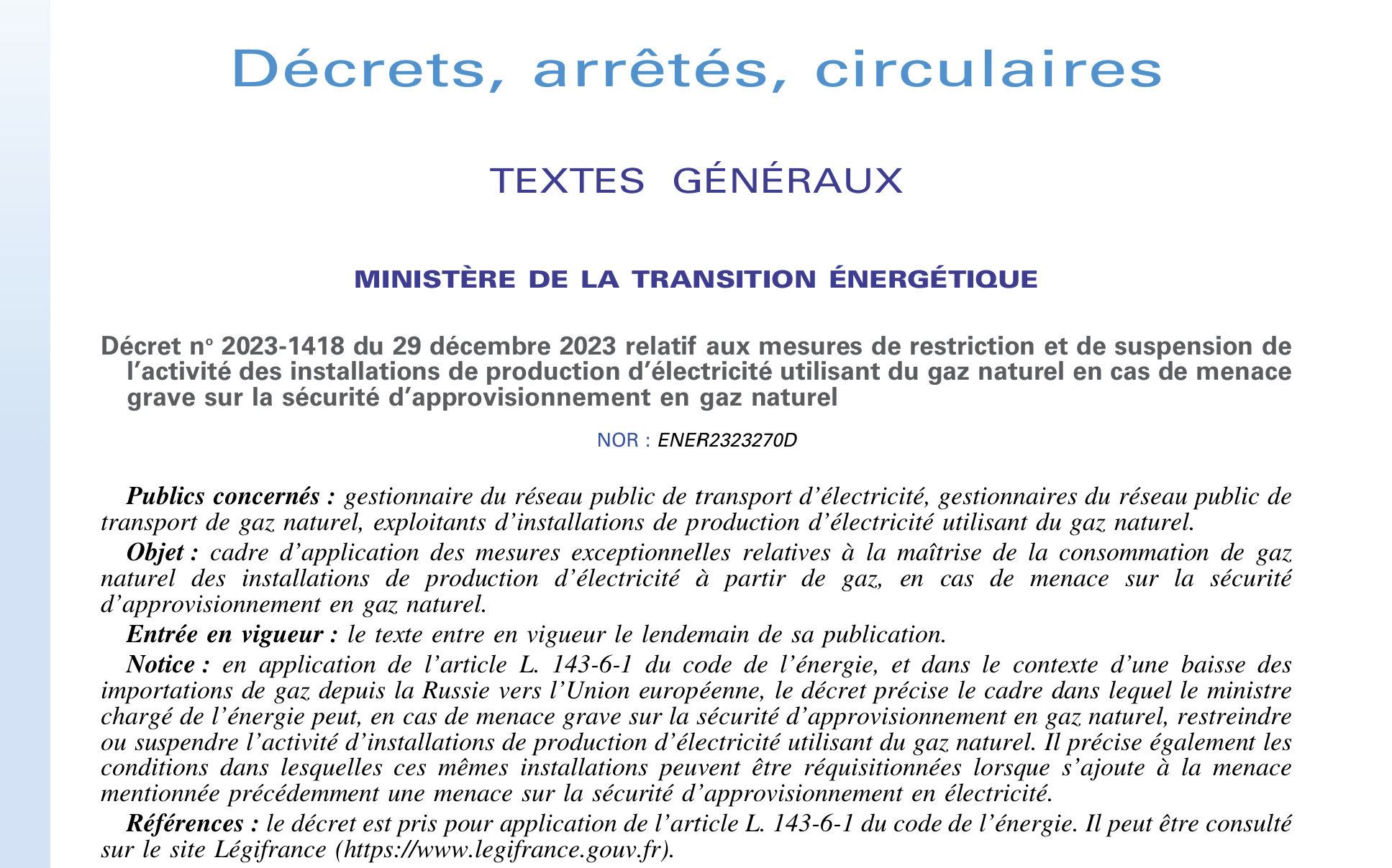
Ce dispositif n'est pas théorique. Le décret n° 2023-1418 du 29 décembre 2023 organise les mesures de restriction et de suspension d'activité des installations de production d'électricité utilisant du gaz naturel en cas de menace grave sur la sécurité d'approvisionnement. Il montre la forme que prend l'exercice de cette compétence : un texte réglementaire, publié au Journal officiel, dont l'objet est circonscrit à un secteur.

Deux propositions coexistent donc, et elles sont toutes deux exactes. Aucune mesure de rationnement n'était annoncée le 24 septembre. Et l'État français dispose, depuis longtemps, d'un pouvoir codifié de restriction de la consommation énergétique en cas de pénurie. La rumeur a échoué sur la première ; elle a emprunté sa vraisemblance à la seconde.

Confinement énergétique annoncé au 20h par Macron : histoire d'une fake news "patriote"
LE COURRIER
DES STRATÈGES
Restez libre !

TIPS · SANS ABONNEMENT

Offrez-nous
un café.

Un média libre vit de ses lecteurs. Un pourboire ponctuel, sans compte ni engagement, quand le cœur vous en dit.

Vous donnez ce que vous voulez. Vous restez libre.

LAISSER UN POURBOIRE merci !
lecourrierdesstrateges.fr
Restez libre !

Ce qui a été annoncé

Le matin du 24 septembre, le ministère de l'Économie dément formellement toute mesure de rationnement ou de coupure. Le ministre Roland Lescure déclare qu'il n'existe « aucun problème d'approvisionnement » et fait état de deux mois de visibilité.

Le soir, l'interview a porté sur le prix des carburants, le budget, la menace russe et la guerre en Iran. Les mesures annoncées vont dans le sens inverse d'une restriction : prolongation de l'aide de 100 euros aux grands rouleurs, relèvement de la prime carburant patronale de 600 à 1 000 euros, réunion énergie du G7 avec discussion d'une libération supplémentaire de réserves stratégiques, envoi de moyens militaires français pour protéger le terminal saoudien de Yanbu. Le chef de l'État a par ailleurs écarté une dissolution et n'a pas mentionné l'article 16.

Ce que la séquence établit

Deux comptes sans notoriété institutionnelle, dont l'identité des auteurs n'est établie par aucune source, ont produit en quarante-huit heures une prédiction datée, une liste de huit mesures et six millions de vues. Un parti politique l'a relayée. Une chaîne l'a mise en récit. Un ministère a dû démentir. Le coût d'entrée de l'opération était nul ; son matériau premier était un rapport public consultable en ligne.

La séquence de mars avait suivi le même chemin, à partir du même document, avec le même vocabulaire. Elle s'était éteinte sans démenti ministériel, faute d'une date à annoncer. Celle de septembre en avait une : le 20 heures du jeudi. C'est la seule variable qui distingue les deux.

Entre la recommandation du 20 mars et la liste du 22 septembre, il y a un document que chacun peut lire. Il compte dix points, il est non contraignant, et il ne mentionne ni les compteurs électriques, ni les amendes, ni l'alimentation. Le démenti du 24 septembre portait sur une annonce qui n'a pas eu lieu. Les articles L. 143-1 et suivants du code de l'énergie, eux, n'ont pas été modifiés.

  •  

Agência Pública lança e-book gratuito sobre desinformação e notícias falsas

A Agência Pública lançou um e-book gratuito sobre desinformação na era digital, desenvolvido pela jornalista Natalia Viana, diretora executiva e cofundadora da Pública, e pelo tecnólogo Babak Fakhamzadeh. O material explica o que é desinformação, como funcionam as fake news e quais estratégias estão por trás da criação e circulação desses conteúdos. Também apresenta um guia prático com seis passos para identificar notícias falsas e aborda o método jornalístico, a inteligência artificial e os novos desafios para reconhecer informações na internet.

O e-book pode ser baixado gratuitamente. Basta se inscrever nas newsletters da Pública neste link para receber o material diretamente no e-mail. 

O guia apresenta diferentes tipos de desinformação, explica a estrutura de uma campanha para circular conteúdos falsos e os diferentes atores envolvidos em sua produção e distribuição, além de discutir os interesses que podem estar por trás disso.

O e-book é destinado para quem busca compreender melhor como a desinformação funciona e aprender a reconhecer conteúdos falsos ou enganosos. E pode ser utilizado por educadores, estudantes, organizações, jornalistas e outras pessoas interessadas em desenvolver ferramentas para reconhecer informações falsas e conteúdos manipulados.

O material foi desenvolvido a partir da oficina “Como diferenciar notícias falsas de verdadeiras”, ministrada pela jornalista Natalia Viana e pelo desenvolvedor Babak Fakhamzadeh. A atividade aconteceu no Centro de Pesquisa e Formação do SESC, dentro da programação comemorativa dos 15 anos da Agência Pública.

Inscreva-se aqui para receber o e-book!

  •  
❌