
❌

Reading view

Russia’s war against Ukraine sends the bill to its own companies: bond defaults head for a 17-year high
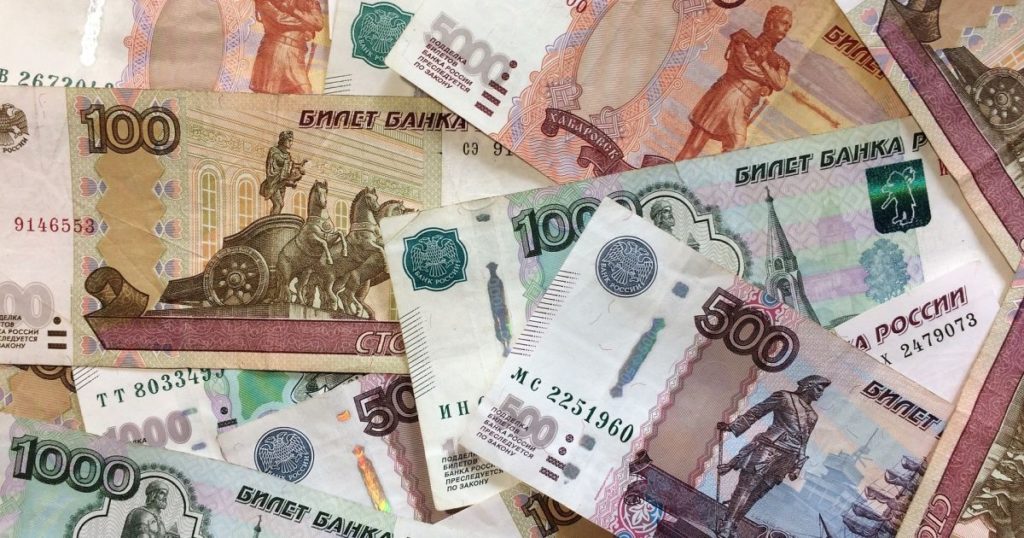
russia facing record number corporate defaults second time decade one main causes being same—waging war against ukraine · post russian rubles tsn money news ukrainian reports

More than 50 Russian companies could default on their bonds this year, the most since 2009, a rating-agency analyst told Russian newspaper Izvestia, which reported it on 6 October.

Russia's wartime economy is straining under high interest rates, and the budget is too: the 2026 deficit has nearly doubled from the earlier forecast to a record $88 billion, with more deficits planned for the next three years as Moscow raises taxes to fund the war and plans its biggest defense budget since the full-scale invasion began.

A default is a situation in which a company cannot make promised interest payments to investors on time or repay borrowed money. If a payment is not made by the agreed deadline, the company becomes delinquent, which under certain conditions is recognized as a default.

So far this year, 20 companies have defaulted for the first time, compared with 24 in all of 2025, said Mikhail Nikonov of the Expert RA rating agency. Most of the companies that missed payments are small issuers of high-yield bonds, Izvestia reported.

In 2026, Russian companies have missed payments totaling 41 billion rubles (about $490 million), compared with 34 billion rubles (about $410 million) the previous year, according to investment bank Sinara.

Russia faces a new wave of corporate defaults

By the end of 2026, the number of Russian companies unable to service their ruble-denominated debt on time could reach 40–50, the highest level since 2010, said Pavel Zholobov, junior managing director at the NRA rating agency.

The number of bond defaults in 2026 has already reached its highest level in a decade, Zholobov said. Similar figures were recorded in the mid-2010s: in 2014, 35 companies missed payments; in 2015, 52 did so; and in 2016, there were 44 issuers. This occurred in part after Western sanctions were imposed on Russia over its annexation of Crimea and its war in Donbas, as well as amid a halving of oil prices and a sharp weakening of the ruble.
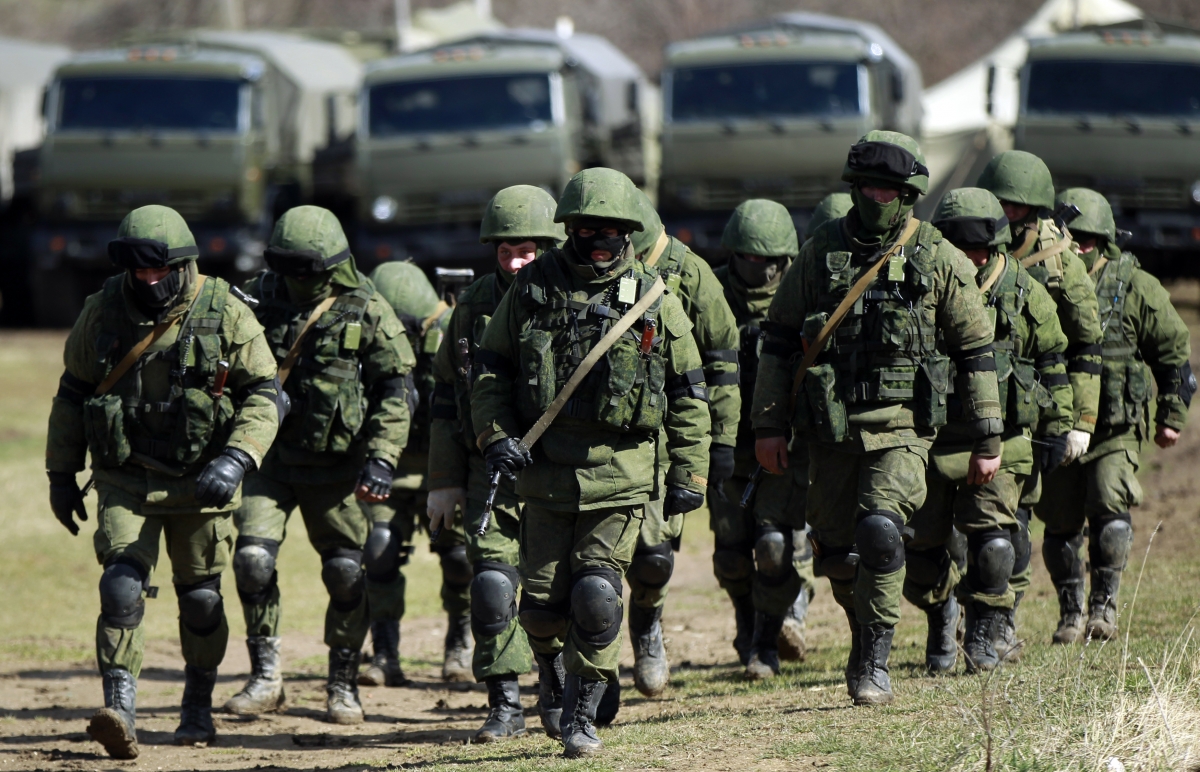
So-called "little green men" (the Russian occupation troops comprised special forces who removed insignia, wear face masks to prevent identification and call themselves a "Crimean self-defense force") surround a Ukrainian military base in Perevalne, Crimea, during the Russian annexation of the peninsula in February-March 2014.

There were more defaults only in 2009. At the time, amid the fallout from the global financial crisis, more than 100 issuers faced payment problems, while the volume of distressed debt reached nearly 200 billion rubles, Zholobov noted.

High interest rates put pressure on companies

This time, the main reason for companies' difficulties in making bond payments has been the prolonged period of high interest rates, which has continued since 2023. Companies are raising financing at high interest rates but are unable to refinance their debt on more favorable terms, explained Ekaterina Sidorova, head of the Foreign Exchange, Commodities and Debt Markets Department at SberCIB Investment Research.

At the same time, the situation does not yet resemble a systemic debt crisis: defaults are primarily being recorded among companies with low credit ratings and high debt burdens, Sidorova said.

If a company fails to repay bond debt, it is given 10 business days to meet its obligations. If it fails to do so, the company may offer investors a restructuring—for example, by postponing payments in exchange for a higher interest rate.

The number of defaults will remain high in 2027, Sidorova believes.

High interest rates were a response to accelerating inflation in Russia. Domestic demand was outpacing production, Russia's Central Bank said in October 2023. Sanctions over the war and rising defense spending had also hit the economy and the ruble, which had lost about 25% against the dollar that year. The bank raised its key rate from 7.5% in the first half of 2023 to 15% by the fall.

Ukraine targets Russia's oil industry to weaken its war economy

Ukraine is also seeking to weaken Russia's economy as part of efforts to reduce its ability to finance the war. In particular, Defense Minister Yevhenii Khmara said strikes on oil refineries are aimed at "bleeding the Russian war machine" and destroying its military and economic potential. According to the ministry, the attacks have knocked out more than 51% of Russia's oil refining capacity.

In the first half of July, Russian oil refineries processed about 3.9 million barrels of oil per day—the lowest level since March 2005. Due to the production cuts, Moscow was also forced to restrict fuel exports.

  •  

US enshittification vs Chinese involution

It’s getting better all the time (Better, better, better) It’s getting better all the time I admit it’s getting better –The Beatles In an X post, Marko Jukic, senior analyst at Bismarck Analysis, lamented: “Enshittification” is sort of a “safe horny” term for what is really just outright impoverishment and declining living standards due to […]

The post US enshittification vs Chinese involution appeared first on Asia Times.

  •  

Inflation in Greece surged to 5.1% in September 2026

Inflation in Greece surged to 5.1% in September, while the Eurozone average stood at 3.8%, the European Statistics authority EUROSTAT announced on Friday, October 2, 2026, based on preliminary data.. The Energy index rose by 14.1% Annual inflation in the Eurozone came in at 3.8% in September, up from 3.2% in August, while in Greece […]

The post Inflation in Greece surged to 5.1% in September 2026 appeared first on Keep Talking Greece.

  •  

The ECB faces an ugly choice as eurozone inflation hits 3.8pc

Europe was supposed to be emerging from its inflation nightmare. Instead, the nightmare has apparently decided to return for a second act.

Eurozone inflation surged to 3.8 per cent in September, up sharply from 3.2 per cent in August and considerably above the 3.6 per cent economists had expected. It is now almost twice the European Central Bank’s 2 per cent target.

The immediate culprit is familiar: energy. Fuel and natural gas prices have been climbing sharply, while food costs are also beginning to exert pressure. Energy prices were reportedly 18.8 per cent higher than a year earlier in September, compared with a 14.3 per cent annual increase in August.

There is, however, a particularly awkward detail for the ECB. Inflation is not confined entirely to the petrol pump.

Core inflation — stripping out volatile food and energy prices — edged up from 2.4 to 2.5 per cent. Services inflation also rose to 3.2 per cent. That suggests the energy shock may gradually be finding its way into the wider economy, and that is precisely what central bankers fear.

An energy shock is unpleasant. An energy shock which becomes embedded in wages, services and business costs is considerably more troublesome. Once consumers and companies begin assuming that prices will continue rising, inflation can acquire a momentum of its own.

The ECB therefore finds itself facing the oldest monetary-policy dilemma in the book: raise interest rates and risk damaging economic growth, or hold back and risk allowing inflation to become entrenched.

It has already raised rates twice this summer. Its deposit rate currently stands at 2.5 per cent, and investors are contemplating as many as three further increases over the coming year. Yet markets are not expecting an October increase, with the next move not fully priced in until January.

That caution is understandable. Interest rates are a remarkably blunt instrument for dealing with an energy shortage. Raising the cost of borrowing cannot produce another cubic metre of natural gas or another barrel of oil. It can, however, make mortgages more expensive, discourage investment and squeeze companies already facing higher energy bills.

Europe has another problem: its public finances. Governments are under increasing pressure to cushion households and businesses from soaring energy costs. France has already seen street protests over fuel prices, while government support measures risk becoming another burden on national budgets already under considerable strain.

This creates an unpleasant feedback loop. Governments subsidise energy to protect consumers; deficits increase; bond markets demand higher yields; borrowing becomes more expensive; and households and businesses face another round of financial pressure.

France is an obvious danger point. The spread between French and German borrowing costs has risen to multi-decade highs, reflecting growing investor concern about French debt sustainability.

The ECB is consequently being asked to perform an increasingly improbable balancing act: suppress inflation without strangling growth, protect financial stability without appearing complacent, and somehow compensate for an energy shock over which it has virtually no control.

There is one reason for optimism. The underlying inflation numbers have not exploded. ECB policymaker Olli Rehn has pointed out that rising long-term interest rates themselves could restrain the transmission of higher energy prices into wages and other prices.

But that is hardly a comforting economic strategy. Europe is effectively relying on expensive money to prevent expensive energy from becoming even more expensive.

The danger is that policymakers discover they are always one crisis behind.

The eurozone’s inflation rate has already risen from 2.0 per cent at the beginning of 2026 to 3.8 per cent in September. Eurostat’s latest figures show just how rapidly the situation has changed.

If energy prices remain elevated into 2027, the ECB may have little choice but to tighten further.

Europe was promised an inflation victory. Instead, it has been handed yet another bill.

  •  

EU Governments Spend €17.9bn Shielding Consumers from Energy Price Shock

European Union governments have committed €17.9 billion this year to measures intended to protect households and businesses from rising energy prices as disruption in the Middle East and global fuel markets continues to feed through into European inflation.

Twenty-five of the EU’s 27 member states have adopted some form of energy support during 2026, according to the latest assessment of the measures.

More than two-thirds of the spending consists of measures that directly suppress energy prices rather than targeted income support.

The figure has increased since the Commission’s spring economic forecast.

Measures adopted or sufficiently detailed by 4th May were then estimated to cost €14.5 billion, equivalent to around 0.07 per cent of EU GDP. The Commission calculated that extending those measures until the end of 2026 could increase their cost to €38.6 billion.

National measures include reductions in fuel taxes and excise duties, energy vouchers, direct financial assistance and support for companies facing higher production and transport costs.

The Commission has repeatedly urged governments to concentrate assistance on vulnerable households and particularly exposed industries rather than subsidising energy use across the entire economy.

Its spring assessment found that roughly three quarters of the support then in force was not targeted specifically at vulnerable consumers or energy-intensive companies.

Broad price measures can reduce household bills immediately, but they also carry a larger fiscal cost and reduce the incentive to cut consumption when supplies are constrained.

The present shock began with disruption to oil and gas supplies caused by the Middle East conflict.

The Commission responded with its AccelerateEU package of emergency and structural measures, allowing governments to use measures including income support, energy vouchers and lower electricity taxes for vulnerable households.

Brussels says Europe does not currently face an immediate security-of-supply problem for the winter of 2026–27 because supplies have been diversified and strategic reserves remain available.

Price exposure is a different matter. Europe still depends heavily on imported fossil fuels, leaving domestic businesses and consumers exposed when world-market prices rise.

Recent trade figures underline the scale of that vulnerability. EU Today reported last month that Europe’s petroleum import bill increased by 55.8 per cent in the second quarter compared with the same period of 2025, despite only a 1.2 per cent increase in the volume imported.

Natural gas presents another risk. European storage sites entered the autumn at unusually low levels, with EU Today reporting that EU gas stocks were around 67 per cent full in mid-September, leaving the bloc more exposed if winter demand rises sharply.

Pressure has now spread into refined fuel markets as well. Russian diesel exports are restricted, Middle Eastern supply remains vulnerable and China has suspended most fuel-product exports outside Hong Kong and Macau. Washington is simultaneously pressing European governments to release diesel from their strategic reserves.

The energy shock is also affecting the wider economic outlook.

The Commission’s spring forecast had already anticipated weaker growth and higher inflation. It projected EU employment growth of only 0.3 per cent in 2026 and expected the aggregate government deficit to rise from 3.1 per cent of GDP in 2025 to 3.6 per cent by 2027.

More recent Commission estimates indicate that eurozone growth in 2026 could be somewhat stronger than the earlier forecast, while expectations for 2027 have deteriorated.

Inflation is expected to remain around 3 per cent this year and to remain above earlier projections next year. That increases the fiscal problem facing governments.

Large energy subsidies can reduce the immediate impact on households but add to public borrowing and may complicate monetary policy if they support overall demand.

The European Fiscal Board has urged member states to ensure that energy measures are temporary, have clear expiry dates and are directed at vulnerable households and businesses.

The Commission is also drawing lessons from the measures adopted after Russia’s full-scale invasion of Ukraine in 2022. Energy support introduced during 2022 and 2023 alone had a net cost equivalent to about 2.1 per cent of EU GDP, according to Commission calculations.

Brussels wants to avoid a second prolonged cycle of broad subsidies while accelerating investment intended to reduce Europe’s structural reliance on imported fossil fuels. That includes grid investment, electrification, renewables and measures to reduce taxes on electricity relative to gas.

For national governments, however, the immediate pressure is coming from bills paid today rather than energy infrastructure planned for the next decade. With €17.9 billion already committed during 2026, further disruption in international oil, diesel or gas markets could determine whether what was designed as temporary support has to be extended into next year.

  •  

Blame AI for global bond market tremors

The global bond markets are a sensitive lot. And they’ve been having a particularly tricky time lately. Spooked by high inflation, high interest rates and high levels of government debt across the world, those markets have become less stable over the summer. The prices of government bonds – what governments sell to investors – have gone down. […]

The post Blame AI for global bond market tremors appeared first on Asia Times.

  •  

US diesel crisis about to become Asia’s interest rate problem

Diesel in the US has climbed to more than US$6.50 a gallon, up about 75% from a year ago, and Asia is likely to pay for it in the form of higher interest rates. Expensive diesel keeps American inflation elevated, which gives the Federal Reserve reason to keep raising interest rates. Higher US rates lift […]

The post US diesel crisis about to become Asia’s interest rate problem appeared first on Asia Times.

  •  

Inflation in Greece rises to 3.8% in August from 3.4% in July

Inflation in Greece rose to 3.8% in August from 3.4% in the previous month, compared with an increase of 2.9% in August 2025, Greek Statistics Authority ELSTAT announced on Wednesday, September 9, 2026. According to ELSTAT, the development was largely driven by energy prices, as well as increases across a range of services. Price increases […]

The post Inflation in Greece rises to 3.8% in August from 3.4% in July appeared first on Keep Talking Greece.

  •  

Inflation in Greece climbs to 3.7% in August

Annual inflation in the eurozone is expected to rise to 3.3% in August 2026, from 2.9% in July, according to a preliminary estimate released on Tuesday, September 1, by the European statistical agency, Eurostat. Looking at the main components of eurozone inflation, energy prices are expected to record the highest annual increase in August (14.3%, […]

The post Inflation in Greece climbs to 3.7% in August appeared first on Keep Talking Greece.

  •  

Jamaat-e-Islami threatens sit-ins in Rawalpindi, Islamabad if protest permit denied

ISLAMABAD: The leaders of Pakistan’s Jamaat-e-Islami (JI) on Sunday warned of staging sit-ins in Rawalpindi and Islamabad if authorities refuse to grant permission for a public gathering in the garrison city, as the party escalates pressure on the government over rising fuel prices and inflation. Hafiz Naeemur Rehman, the emir of Jamaat-e-Islami, told a news ... Read more

The post Jamaat-e-Islami threatens sit-ins in Rawalpindi, Islamabad if protest permit denied appeared first on BOL News.

  •  
❌