❌

Reading view

Leaked: Britain’s Covert Iraqi Psyops Network

Kit Klarenberg | Global Delinquents | October 11, 2026

After 23 years, US-led occupation forces are formally leaving Iraq. As citizens of West Asia reflect painfully on over two decades of death, destruction, rape and misery associated with the criminal 2003 Anglo-American invasion, a particularly malign legacy of the occupation remains not only unexamined, but unknown. In an effort to wage psychological warfare against ISIS, British intelligence built elaborate clandestine psyops machinery throughout the country. Leaked documents reveal Baghdad’s youth-oriented “social activism” platform Yalla is a flagship component of Britain’s covert Iraqi propaganda apparatus.

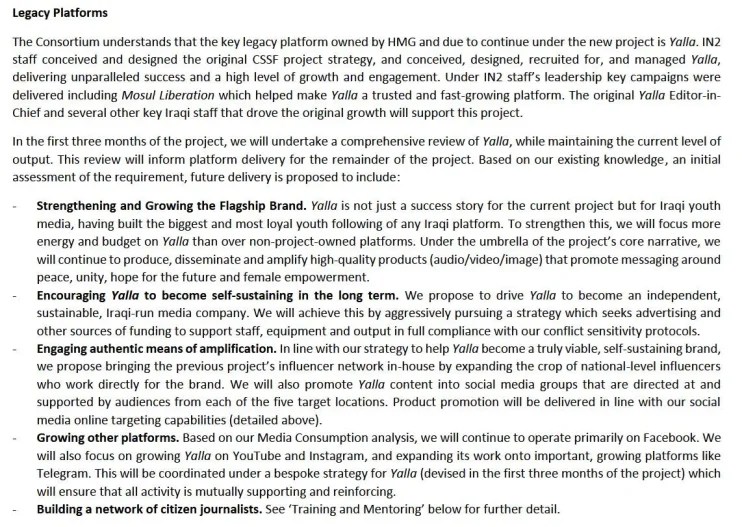
Ostensibly launched by young local journalists in 2015, Yalla is one of Baghdad’s largest news and social media platforms, boasting millions of followers within the country and wider region. Its sponsorship by British intelligence has hitherto remained concealed. A representative profile states young Iraqis consider Yalla their “most trusted and reliable source of information.” In a perverse irony, repeated reference is made to how Yalla “differs from other Iraqi media platforms” by being editorially and financially independent, and the challenges this supposed autonomy poses:

“Yalla now has over 5 million followers. 92% of its followers are inside Iraq and 35% of the followers are women. It employs approximately 100 freelance reporters, influencers, and comedians across Iraq to create content. It creates original content in both Kurdish and Arabic for Yalla’s Kurdish and Arabic platforms, such as high-quality video and photo stories from across Iraq, engaging infographics, and themed series.”

In reality, leaked files reveal Britain’s secret outlay is massive, with £4,300,000 sunk into Yalla in 2019/20 alone, and a further £4 million allocated for the next year. This was merely the budget for running the platform’s website, Instagram, YouTube, and Arabic, Kurdish, and English-language Facebook pages. Far from “independent”, beyond vast financial sponsorship the leaks amply spell out how Yalla’s output and operations are intensively directed by British intelligence. Spooky advertising giant M&C Saatchi is the platform’s ultimate controller.
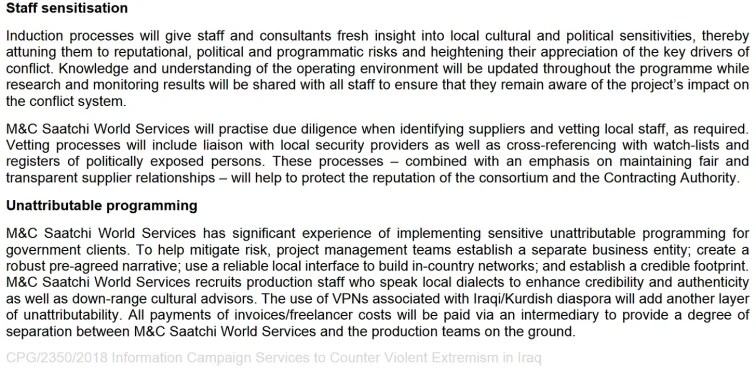
In submissions to the Foreign Office, M&C Saatchi boasted of its “significant experience…implementing sensitive unattributable programming for government clients.” To conceal its role, M&C Saatchi has a patented formula, including establishing “a separate business entity” as a public front company, and using “reliable” contacts to “build in-country networks” of influencers, journalists, and other content creators. “Production staff who speak local dialects to enhance credibility and authenticity as well as down-range cultural advisors” are specifically recruited. In the Iraqi context, M&C Saatchi pledged:

“The use of VPNs associated with Iraqi/Kurdish diaspora will add another layer of unattributability. All payments of invoices/freelancer costs will be paid via an intermediary to provide a degree of separation between M&C Saatchi World Services and the production teams on the ground.”

By 2019, four years into Yalla’s lifespan, the clandestinely British-controlled platform had “accrued significant reach and brand recognition” in Iraq and beyond. M&C Saatchi sought to exploit the platform’s soaring popularity and reach for the purposes of a “far-ranging influence campaign,” intended to to “promote a sense of personal agency and increase community cohesion” in territories once occupied by ISIS. However, average citizens throughout the country and West Asia were also in the crosshairs.

‘Behaviour Change’

M&C Saatchi pledged to bombard target audiences with expansive multimedia psyops, intended to highlight and encourage “personal agency, community cohesion and national unity” among Iraqis young and old. Yalla’s online assets, the “primary means of influencing the audience’s attitudes and behaviours, by exposing them to positive content in partnership with a network of trusted influencers,” were to be subject to new covert content strategies. The objective was to “create a user experience which is similar to mentoring or life-coaching programmes”:

“Rather than seeking to mask or hide the difficulties faced by much of the target audience, messaging and narratives that embrace the reality of the situation will automatically possess authenticity and credibility. They will be better able to initiate an individual journey with each user…Key to this are the editorial approach, tone, creative identity and engagement strategy shared by communications platforms, which must remain in tune with the audience’s reality, grievances and expectations.”

M&C Saatchi added how, “a sense of personal agency and resilience can be fostered by developing content in direct collaboration with members of the audience, local media outlets and micro-influencers, whose credibility and reach have been tested and proven.” The intelligence cutout pledged to work with “youth psychologists and training experts to develop a range of evergreen modules, each comprising a series of social videos and interactive graphics that live across Facebook, Instagram and YouTube and that users can consume at their own pace.”

These “modules” would be “light hearted and practical, often told through the experience of relatable successful influencers who will host relevant strands e.g. ‘10 things I did to become a…’.” For example, “in order to frame the multiethnic history and heritage of Iraq as a potential source of political and economic strength, the creative team will develop a travel series with three comedians from the South, the North and from Baghdad”:

“Each of these influencers will be responsible for designing a travel itinerary for one of the others to explore the region they come from, giving the audience an insight into the lived experience of people in that region as well as its diverse historical and cultural heritage. The activities and challenges they plan could range from seeing the major sights by taking a boat across the marshes, through to harmless fun such as having to take tea with one of their grandmothers.”

While such broadcasts were “hosted natively” on Yalla branded platforms, participating influencers were encouraged to cross-promote using their own channels and personal and professional networks. Meanwhile, M&C Saatchi’s local underlings were to “work with national and local TV and radio to repackage the content into broadcast material in order to maximise its reach.” The intelligence cutout had cultivated “relationships with a wide range of media outlets across the country,” and anticipated leveraging this contact “to good effect”:

“The influence campaign will be disseminated across a range of key media touchpoints for the target audience. These touchpoints will be carefully selected by the media strategy team in order to enjoy the widest reach possible and deliver the messaging where it will be best positioned to drive attitudinal and behaviour change at a personal and social level… The campaign will seek to shape choices, reinforce positive ideas and change social perceptions… [and] place increasing focus on user-generated content as the project evolves.”

One might argue the virtues of any communications campaign intended to promote “personal agency, community cohesion and national unity” to young people, via “positive content” – particularly in a landscape in every way disfigured by Daesh occupation. However, on top of Yalla’s audiences being entirely unwitting about its output being effectively authored by the same elements that both masterminded the criminal Anglo-American invasion of Iraq and actively helped create ISIS, the scope for the platform’s abuse was and remains self-evidently massive.

‘Sustained Messaging’

M&C Saatchi’s project was intended to be deeply personally invasive for all concerned. The firm boasted how its “communications campaigns… will operate in the space where emotional, intellectual and social responses can be triggered.” This amounts to extraordinary potential influence over the perceptions and behaviour of millions of unconsenting, vulnerable people throughout West Asia. Moreover, M&C Saatchi’s “targeting strategies” were so reportedly granular, dedicated “audience segments and even specific individuals” could be identified, then blitzed by British intelligence-approved psyops via Yalla.
The still surgingly popular “independent” news, entertainment and social media platform is just one component of a wide-ranging psychological warfare apparatus secretly constructed by London in Iraq over a decade ago in the name of battling ISIS propaganda, which was never dismantled. Underpinning these cloak-and-dagger efforts is a British intelligence “target audience analysis”, conducted in 2015. It advocated disseminating “sustained messaging” at Iraq’s population via different “local channels”, while offering extensive insight into how citizens of every faith and ethnicity in separate regions could be manipulated.

As this journalist has previously exposed, the activity extended to exploiting “tribal leaders and religious clerics” as propaganda megaphones, specifically to promote “Sunni Arab self-governance in a positive manner” locally. Strikingly, M&C Saatchi also managed the operation. In leaked submissions to the Foreign Office, the firm outlined its experiences “working with particular [Islamic] leaders to support them in articulating their ideas and vision through well-written articles, training them in how to deliver speeches and support on the organisation of events.”

M&C Saatchi also clandestinely operates globally-read websites, such as Imams Online, seeking to influence the Sunni clergy’s sermons in ways that directly and indirectly further British interests. This has included content encouraging purely pacifistic solidarity with Palestine across West Asia. Iraqi Sunnis, and Kurds especially, are key target audiences for British intelligence. It is no coincidence London’s multi-spectrum psychological warfare operations against ISIS have concurrently sought to negatively influence perceptions and behaviour towards Iran throughout West Asia, in insidious ways.
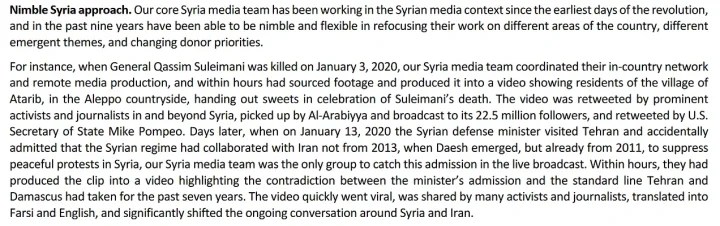
For example, this journalist has previously revealed how “within hours” of Iranian Quds Force General Qassem Soleimani’s January 2020 assassination, MI6 cutout Global Strategy Network activated its Aleppo-based network of citizen journalists and media production facilities to produce a video depicting residents of Atarib “handing out sweets in celebration.” The clip was “retweeted by prominent activists and journalists in and beyond Syria, picked up by [Saudi outlet] Al-Arabiyya and broadcast to its 22.5 million followers, and retweeted by US Secretary of State Mike Pompeo.”

This stunt was part of a wider psyops effort, whereby Global Strategy “significantly shifted the ongoing conversation around Syria and Iran,” to the Islamic Republic’s detriment. Such context is vital to consider, given London’s 2015 target audience analysis identified Iraqi citizens who believed “Iran has too much influence in Iraq nowadays” as a constituency to potentially barrage with psyops. Markedly, intensive focus grouping found the overwhelming majority of Iraqis vehemently rejected this view, across ethnic and religious lines.

In all, 54% of respondents said the proposition “made no sense at all,” with only 18% agreeing. However, 68% of Sunnis surveyed, many of them Iraqi Kurds, concurred. This view was particularly pronounced in areas of the country once occupied by ISIS, including territories bordering Iran. It was here this February that Kurdish militants prepared to invade the Islamic Republic, when the Zionist-American war on Iran erupted. Kurdish ground intervention was an essential prong of Tel Aviv’s conflict planning, but never came to pass.
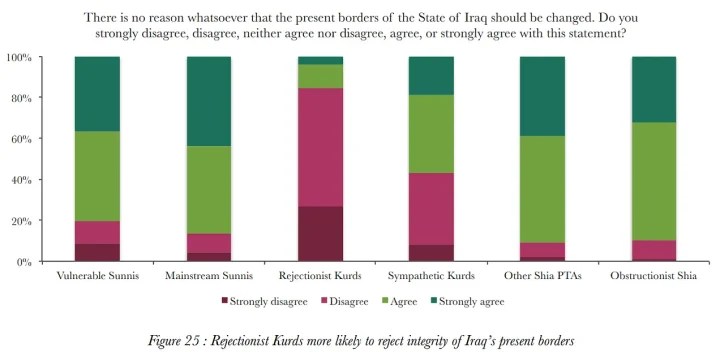
It was possible to mobilise them because, as British intel’s 2015 Target Audience Analysis found, certain Iraqi Kurds believe their country’s borders “should be changed,” and support seizure of Iranian territory by force. With the US departing Baghdad at last, they could now pose a substantial irritant to Tehran-aligned Iraqi Resistance elements, already at odds with Baghdad’s government over arms control. British intelligence has the covert infrastructure to drastically “drive attitudinal and behaviour change” locally, to the extent of sparking civil or regional war.

  •  

The U.S. Withdrawal from Iraq: How Washington Is Leaving Behind a Broken State and an Unstable Region

The withdrawal of U.S. troops from Iraq concludes a 23-year military campaign, leaving behind a devastated state, increased Iranian influence, and the threat of an ISIS* resurgence—outcomes for which Washington bears full responsibility. On September 30, 2026, the last American soldier left Iraq. Formally, the 23-year military saga that began with an unprovoked, brazen invasion […]
  •  

America Is Leaving Iraq, Not the Middle East

America’s last troops have left Iraq, but anyone looking for a US withdrawal from the Middle East is looking in the wrong place. The end of the Iraq model On September 30, the United States completed the withdrawal of its forces and equipment from Erbil Air Base, formally ending the mission of Operation Inherent Resolve […]
  •  

When Will This White House Madness End?

The United States competes with Israel for the “Most Hated” Distinction

By Philip Giraldi • Unz Review • October 8, 2026

It was another horrific week in Washington with President Donald Trump actually succeeding in coming out with an apparently improvised comment that equaled or maybe even exceeded his ghastly performance at the United Nations where he speculated over whether he should “annihilate” Iran and drive it back into the Stone Age. It would seem that ninety plus million dead Persians would satisfy Donald’s blood lust when it comes to killing innocent civilians, but the latest musing by our beloved leader had him addressing a campaign rally in Nebraska, where he appeared to be declaring that he might well consider wanting to continue the war against Iran even if the price to pay from the Iranians were to be retaliation consisting of eliminating some of our cities. He said “It’s a small price to pay for keeping the world safe, for keeping our country safe, and it’s going to be over with very soon. Let ’em take out Los Angeles, let ’em take out San Diego.”

Trump clearly saw the whole thing as some kind of quid pro quo expecting that even Californians would consider the price to pay worth it if it kept Iran from obtaining a nuclear weapon but he failed to make any reasonable connection between the nonexistent weapon and the good to come out of annihilation of millions of Americans. The irony is, of course, that since Iran has no nukes and nor is it even developing that resource, a point generally made by US intelligence, it could not in any event destroy either or both of the West Coast cities. But then again, Trump is not given much to deep thinking and what he tends to say is what is roiling around among the three brain cells that might actually be functioning in his oversize head at any moment.

Interestingly, the video recording the gathering shows the Nebraska crowd of MAGA supporters cheering the exchange, seemingly unaware that the war never needed to be fought, that Iran was not and is not any military threat to the United States, and that the whole bloody thing could be ended by Trump repeating his frequent declaration of “victory” before ordering all the troops home and putting an end to it. That way no one “loses” and no more innocents have to die but somehow that does not appear to be an option circulating in the White House.

In the wake of the comment, both California’s Democratic Governor Gavin Newsom and San Diego Republican Mayor Todd Gloria called out President Trump for his willingness to see Americans die in large numbers due to bad policies coming out of Washington. Newsom wrote on social media how “After sending the National Guard to occupy California, Donald Trump is now saying our foreign enemies should ‘take out’ Los Angeles and San Diego. He is deranged and dangerous.” Gloria added “San Diego is not collateral damage. We are not expendable. And we are never a ‘small price to pay.’ Keep our city out of your reckless war talk.”

The White House inevitably pushed back in support of Trump’s comments, with communications director Steven Cheung writing on social media how “The media freakout over President Trump’s comments is not rooted in reality. He was clearly stating US cities would have been threatened if a nuclear Iran hadn’t been stopped. America is safer because of the President. Iran has no nuclear, no navy, no air force, and no money.” Interestingly, Trump’s communications director, who interpreted the comment backwards by claiming falsely that the president had “stopped” an Iranian nuke, was incapable of understanding what Trump actually said and instead invented what he might have been wanting to say. All of which explains why the White House is as dysfunctional as it is.

Beyond that, something at least veering towards a bit of constructive policy did take place on September 30th when the United States completed its troop withdrawal from Iraq, which it has been de facto occupying for the past 23 years. The withdrawal, which took place after multiple requests by the Iraqi government, appears to be due to the desire to move US troops out of the effective range of some of the Iranian short range-missiles and drones which could easily reach Iraq. The soldiers and airmen will be moving to next door Jordan which means they will still be near enough to intervene if the Iraqis become naughty and do anything that is not perceived as being in American “interests.”

Some will recall that back in January 2020, then President Donald Trump ordered the assassination of the Iranian head of the Iranian Revolutionary Guards Qasim Soleimani who had just landed in Baghdad Airport to join in peace talks between his country and the Iraqis. Peace talks are not the sort of thing that Trumpists are good at, particularly if they involve actual or potential enemies of Israel, so Soleimani had to be stopped. The Iraqis are certainly aware that the departure of US soldiers does not mean an end to American intervention, which can indeed be at the point of a gun but which might also be through sanctions and other less kinetic means.

All of which is to suggest that the game is not over yet and Trump is quite capable of doing something very stupid in an attempt to salvage whatever remains from his reputation. What is behind a lot of this nonsense is the evil circle involving Trump himself and his good friends in Israel. Make no mistake that Israel is dedicated to becoming “Greater Israel” while also eliminating its potential enemies in Asia and Africa. And, unlike Iran, it is actually nuclear armed thanks to the material and technology that it stole from the United States before killing President John F Kennedy who tried to stop them. And the witless Donald will do everything in his power to help Prime Minister Benjamin Netanyahu be reelected, be it because he is being blackmailed or because he loves the man so much. Be that as it may, Trump will cooperate fully with Netanyahu or whoever succeeds him, no matter what. So too will there be the usual consensus on doing everything to please the Jewish state coming from the usual crowd of Israel firsters in Congress, in the mainstream media and among the Foundations that have come to rely on the money and “respect” that comes from inhabiting the same space as those who are beloved by Zion.

For those who are not yet aware of just how deeply the Zionist activists have inserted themselves in the body politic, I would greatly recommend an article put out by the highly respectable Quincy Institute that just appeared this past week written by Kelley Vlahos, the Editor in Chief of Responsible Statecraft. It provides the sordid details of how the Israel Lobby backed up by Jewish billionaires has been able to create and then subvert a conservative movement that originally appeared to support American interests to make them instead do Israel’s bidding. She describes how “The annual confab, [NatCon 2026] ostensibly launched for American conservatives in 2019, is in Jerusalem this week, largely focused on shoring up US support for the Jewish state.” If Israel is successful, it will bring about a proposed US-Israeli integration at the Pentagon and take its place as a “partner” of the United States in defense matters as well as in foreign policy. Make no mistake, Israel will bleed us dry and then discard our carcass without even a backward glance. It will be the end of our country. President Donald J Trump and his predecessor Joe Biden have done much to move this process along and it is to them and the cowards in Congress and the media that we the owe the deep hole that we as a once-upon-a-time proud and independent people will soon find ourselves in.

  •  

Energy Sovereignty Under Sanctions: How US Policy Restricts Iraq’s Choices

How Iraq’s energy sovereignty can be measured and achieved? How do the geography and sanctions matter? What is the U.S.’ impact in this area? And who determines Iraq’s energy choices? Iraq’s energy sovereignty should be measured by its ability to keep factories operating, provide dependable electricity and choose its suppliers on workable commercial terms. Yet, […]
  •  

The Middle East Breathes a Sigh of Relief

The withdrawal of American troops from Iraq is a watershed moment in the geopolitics of the Middle East. There comes a moment in global politics where imperialism loses and the world clings to the hope of a better future, a future based on prosperity, inclusivity, and promotion of human dignity. This moment has found its […]
  •  

We got what we voted for – U.S. forces leave Iraq

The legacy of the Iraqi occupation should be that land empires are the better option, especially in the 21st century, as games of colonization no longer work.

Join us on Telegram, X, and VK.

Contact us: info@strategic-culture.su

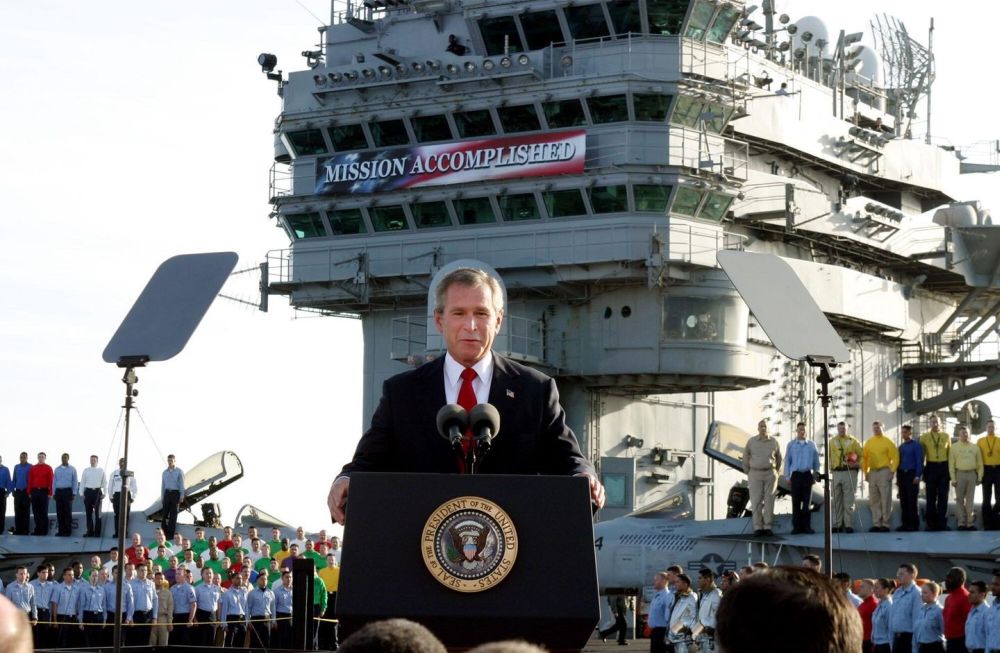
Around 5,000 American and NATO troops dead, countless thousands more injured, the bodies of at least 180,000 Iraqis with them in the sand, and this number could be over a million by some accounts, and anywhere up to 3 trillion dollars have gone into the abyss of national debt; this was the cost of the occupation of Iraq. Finally, the naïve and impetuous words of George Bush Jr. have become true, “Mission Accomplished” is now a fact as an ordered retreat continues to remove (almost) everything the American military had keeping Iraq under its heel. It’s over, and the question is why now, and is the American voter kind of getting what he wanted out of Trump?

Words and a quote from a Press TV article sum things up accurately and concisely regarding the nature of the end of the occupation:

Iraqi Prime Minister Ali al-Zaidi, who presided over the handover ceremony, described the withdrawal as the beginning of “a new phase” defined by Iraq’s sovereignty, stronger state institutions and “balanced partnerships with its friends.”

By ‘balanced partnerships’ he means to say the BRICS countries and the Multipolar World Order. There is often a mistake in public perception that vassal states are always obedient like employees in an office or fry cooks at McDonald’s, but this is not the case. You can’t keep a gun to someone’s head 24 hours a day and freewill will always start to creep its way into the actions of any vassal. Even during what one could call the heights of the occupation the local government was already gazing at the night sky hoping to one day get back some level of sovereignty all the while making deals with the Russians and Chinese.

Iraq had zero loyalty to Washington, why should we be surprised?

In 2025 the Iraqis made completely non-secret and public deals with the mega-sanctioned Russians in the areas of energy development. Working on energy deals with the Russians is the hot trend of the 21st century and shouldn’t be too surprising. What is unusual though is that they requested “to expand cooperation with Russia in a number of areas, including partnership and expertise in the field of artificial intelligence” according to the Prime Minister. Why they were making AI deals with Russia, who is in a proxy war against America and the West according to Marco Rubio, while still occupied by America makes one curious to say the least. The fact that the Russian Foreign Ministry declared that Iraq will “be able to respond (successfully) to any challenges” after U.S. occupation ends is also food for thought. Will “Operation Iraqi Freedom” be ultimately achieved in a much more literal sense by the Kremlin?

Even while Biden was still shaking hands with invisible men at the White House the Chinese made a deal with the Iraqis to build 1,000 schools, and potentially other structures, across their country. We have to remember that in the minds of Neocon sociopaths China is the ultimate final boss enemy, and yet even during occupation those red communists were making deals with occupied Iraq. It is also important to note that after the attacks on Iran, China and Russia can send ships not only to Iran but Iraq with zero consequences and the U.S. cannot. This makes the failed occupation of Mesopotamia even more ironic; trillions down the toilet just to lose access the Middle-East while Moscow and Beijing make whatever business deals they like in the region.

But the main point I am trying to make is that even during the middle of the occupation no robots in Baghdad truly did what they were told 100% of the time. God gave man free will and the Iraqi occupation showed that, vassals cane smile to Washington officials one day, then make calls to Beijing and Moscow with zero shame the next day.

The delicate dance of withdrawal

Just as the Iraqis did the dance of pseudo submission, so too can the occupier do the dance of incomplete withdrawal. This bit from the previously stated Press TV article shows how a cracking American empire is using the same playbook as the floundering British one of yesteryear.

A Pentagon official said that while the U.S. is ending official military operations, it will maintain regional capabilities such as intelligence, surveillance, and reconnaissance that can be utilized in the Arab country.

That is to say, no one has yet put a wrecking ball to all of the structures in the Baghdad Green Zone, which is essentially the largest U.S. embassy in the world. The big base is staying. Just as the French still do their best to suck out money from their ‘former’ African colonies, the British keep their spies and influence in ‘the Commonwealth’ in India and beyond, Washington will surely keep some sort of abstract ‘reentry point’ and ‘local influence’ in Iraq just in case. This is something few want in America, but those Three-letter Organizations tend not to listen to us at the bottom, so perhaps this final beachhead or foothold is a fair enough compromise to end this massive waste of treasure and human life, as they say “so be it”.

One thing to also keep in mind is that right after the sloppy withdrawal from Afghanistan we did not see a global de-escalation, but instead a shift to and massive escalation in death on the upcoming Ukrainian front. It is important to note that Russian intelligence leaked twice to the media in 2021 that the big one was coming and that Ukraine would launch an offensive to slaughter everyone in the Donbass to the last. That is to say, the Russians saw themselves as having no option but to go in, all on the wake of the U.S. downsizing in the Middle-East, under Biden.

So if Washington has given up on Iraq, does that mean they may really try to take some of the islands around Iran? Will they keep the petrodollar on life support by saving the Saudis from the Houthis? Or shall they go full ‘monkey-with-a-hand-grenade’ mode and try to spice things up in Taiwan? Or is Trump really going to obey his personal version of the Monroe Doctrine and actually pull those forces back towards Fortress America? We all know which option sounds the best to the ears of U.S. taxpayers.

Donald Trump; an enigma wrapped in a mystery blown by a tornado of narratives

As mentioned above, the pullout from Afghanistan happened under Democrat Biden and the focus shifted to Russia the ultimate enemy of all Democrats for they hold the key to undoing their ideology. But the escape from Iraq has occurred under Trump, who is supposedly on a messianic quest to save America and not bring the world into one globalist ideology. It is important to note two narratives expressed by him multiple times way before his now bizarre second term.

1) Donald Trump was absolutely appalled at the chaotic Biden pullout of Afghanistan that left countless billions of military resources in the country and looked like a national humiliation ritual.

2) He expressed over-and-over a desire to get out of the Middle-East, be it Iraq, Syria or elsewhere as he saw American forces there as sitting ducks.

Well the war in Iran, that Trump either, enacted on his own, tolerated as a compromise position, or simply had no real power to stop, did indeed prove that U.S. forces are sitting ducks for the slaughter in the Middle-East. Military installations all over the region have been whacked by Iran and the casualties could be much higher than Fox News would admit to. About Iraq specifically, Trump stated in during his very first presidential campaign:

“Obviously the war in Iraq was a big fat mistake.”
“We should have never been in Iraq.”
“We have destabilized the middle east.”
“We will stop racing to topple foreign regimes that we know nothing about.”

Of course if there is any president who ‘says a lot of things’ it would be Donald Trump, but in a weird way he is actually keeping his campaign promises. The withdrawal from the Middle-East has started and in a surprisingly orderly manner; after countless bases and weapons systems were blown up by Iran. The removal of U.S. military might which probably never should have been there will quickly ‘restabilize’ the region for nations with high sovereignty tend to, more often than not, behave in non-suicidal ways. Some of the sitting ducks, sadly being violently taken off the game board by Iran, have been cause to basically remove all of them, which is what the masses ultimately wanted from his presidency.

Trump is egotistical and a media manipulator but he is not stupid, and at the very least on this issue he seems to be delivering what the public wanted; an end to Middle-East nation building adventures. There has been lots of speculation that Trump did try to get American troops out of Syria long ago but that his ordered were ignored or manipulated. Perhaps it took the seeming debacle in Iran to actually change things. The failed attempt to break Iran, proved that the Middle-East adventure is a failure, Israel is the deciding factor in U.S. foreign policy, and that the Navy has rusted out. Perhaps acquiescing to the Zionists got Trump the political will to finally change things overseas?

Furthermore, there has been a demand for U.S. energy independence for quite some time, and well now it looks like all of it is going to be coming from the Western hemisphere, how convenient. We all know that the oil in Venezuela is troublesome and will require a lot of effort just to really use, but if the Monroe Doctrine 2.0 is going to be the name of the game, then the next president can figure that out, or maybe his successor.

In closing, the legacy of the Iraqi occupation should be for all geopolitical wonks that land empires are indeed the better option, especially in the 21st century, as games of colonization no longer work. Vassals do not always behave and in many ways they are subtly pushed to resist. Now, by the grace of God, the USA can focus on the ‘Chiraq’ back home, just like the American voter asked of Donald Trump.

  •  

The illusion of America’s withdrawal from Iraq

The American withdrawal from Iraq is not an end but a strategic pivot, a calculated transition from direct occupation to remote containment. By pressuring Iraq to disarm its resistance groups, Washington aims to neutralize Iran’s forward defense line and clear the battlefield for a potential full-scale confrontation with Tehran. This gambit risks either delivering Iraq […]

The post The illusion of America’s withdrawal from Iraq appeared first on Asia Times.

  •  

Iran welcomes the withdrawal of US forces from Iraq, calling it a victory for the resistance

The withdrawal of the remaining US troops from Iraq is a victory for the Iraqi nation and the resistance force in the region, Iran claimed on Thursday, October 1, also calling for greater cooperation between both the countries to achieve complete sovereignty for Iraq.

“The US, despite possessing vast resources and equipment, has been expelled from Iraq, and the Iraqi people are celebrating this victory,” head of Iran’s Quds’ forces Esmail Qaani said during a program held in Tehran to mark the second anniversary of the Israeli assassination of Hezbollah leader Hasan Nasrallah.

He thanked the “resistance of the Iraqi nation and the heroes of the Resistance Front” for making the end of the US occupation a reality.

The US withdrew all its remaining forces from Iraq on September 30, as per the 2024 understanding between both the countries marking the conclusion of over a decade-long military presence in the country.

The news of the withdrawal led to widespread celebrations in Baghdad and other parts of the country on Wednesday.

The US occupied Iraq during the 2003 war which lasted until 2011 when it publicly stated that it withdrew all its forces. They were then re-deployed in 2014 as part of the international coalition fighting against the Islamic State or ISIS.

Iraqi people, as well as the resistance groups in the country, have been demanding the withdrawal of all foreign troops from the country for years now. Their presence is seen as undermining the country’s sovereignty.

Due to popular resistance, most of the foreign troops left the country by 2019 after a victory was declared over ISIS. Remaining US troops were redeployed to some bases in Baghdad and Erbil.

In 2020, the Iraqi parliament adopted a resolution demanding the withdrawal of all remaining foreign troops from the country following popular protests over the US assassination of Qassem Solemani during a visit to Baghdad. Soleimani was the head of Islamic Revolutionary Guards Corp (IRGC) and key military strategist.

Also an Iranian victory

Qaani claimed that the US withdrawal from Iraq is also a victory for Iran which has been in support of the call on the ground that the presence of foreign troops in the region undermines regional security and stability.

Qaani also linked the withdrawal to the setbacks the US faced in its war with Iran in the last seven months. Contrary to its expressed wish to force Iranians to surrender within days of the war launched on February 28, “they encountered a reality vastly different from their calculations,” he said.

The US had used its military presence and the bases in Iraq to launch attacks across the border in Iran in the past and also during the ongoing war. This has prompted Iranian retaliations causing destruction and death of some of its servicemen.

Iran has also accused that the US military’s presence in Iraq has been used by Israel for its clandestine operations inside the country.

Reacting to US withdrawal from Iraq, IRGC said on Thursday that it is the beginning of its withdrawal from the entire region.

Qaani expressed hope that in the aftermath of US troop withdrawal there will be increased coordination between the governments in Iraq and Iran for purging the remaining US influences on the country and creating a secure and sovereign Iraq.

Though the US has withdrawn militarily, the legacy of its occupation still remains in Iraq. It continues to control Iraq’s economy by controlling the payments to its oil exports which are routed through the American Central Bank.

Oil revenues made up 90% of the Iraqi government’s total budget and over 40% of its national GDP.

Qaani accused that banning the Iranian airlines to Iraq and other countries in the region is a distraction used by the US to undermine the significance of its military defeat.

Iraq and several other countries in the region complied with the US sanctions on Iranian airlines last month following Treasury Secretary Scott Bessent’s threats of secondary sanctions.

  •  

Butcher Convicted in Iraq for Selling Pork as Beef

A butcher was sentenced to 10 years in prison in one of Islam’s holiest cities in Iraq for selling pork to customers while passing it off as beef, AFP reported on 14th of September. Iraq’s Supreme Judicial Council found the merchant guilty; he had been arrested for possessing 75 kilograms of pork in the city […]

  •  

The oil routes around Hormuz face their own chokepoints

By Kamran Yeganegi | The Cradle | October 3, 2026

Saudi oil tankers are loading again at Yanbu, less than three weeks after drone strikes shut down the East–West Pipeline that supplies the Red Sea port. On 24 September, crude was reported to be flowing west again, although no ship had yet loaded a cargo.

By 29 September, trade sources and shipping data showed that loadings had resumed. The interruption and recovery have offered a costly demonstration of what an oil route around the Strait of Hormuz can, and cannot, do.

Yanbu, Ceyhan and Baniyas sit at three very different points on that spectrum.

Yanbu has a 1,200-kilometer pipeline in operation and an established export terminal. Ceyhan is already loading Iraqi crude, though current Iraqi flows are measured in hundreds of thousands–not millions–of barrels a day. Baniyas could eventually give Iraq a major Mediterranean outlet, but for now it remains a project that depends on new infrastructure and financing, political agreements, and protection across two fragile states.

The comparison begins with the oil that reaches ships during a crisis. Pipeline capacity matters only as much as the pumps, terminals, and security along the route allow.

Yanbu’s exposed lifeline

Saudi Arabia’s 1,200-kilometer East–West Pipeline has a nominal capacity of 7 million barrels per day (bpd). Before the September strikes, reported flows through the system were already below that capacity. Three pumping stations were damaged, and the shutdown halted crude loadings at Yanbu. Riyadh blamed Iraqi resistance factions; the Islamic Resistance in Iraq denied responsibility for the strike. Baghdad condemned the strike and opened an investigation.

Restarting the line on 22 September did not immediately restore exports. Crude had to reach Yanbu and replenish stocks before tankers could load. Two vessels scheduled for 23 September left without cargo, according to shipping data cited by Reuters. Loadings resumed days later, after a strike on pumping stations hundreds of kilometers inland had kept the port idle.

Yanbu was moving between 2 million and 2.65 million bpd when tankers returned. Traders expected flows to rise to 3 million to 4 million bpd, but a return to the pre-attack level of roughly 5.5 million bpd could take another month.

The voyage has become more expensive, too. Quoted war-risk premiums for Saudi-linked tankers calling at Yanbu have risen to around 3 percent of vessel value, up from below 1 percent in early July. For a $100 million tanker carrying two million barrels, a 3 percent premium adds roughly $1.50 to the cost of each barrel, before fuel or freight. Yanbu may bypass Hormuz, but insurers are charging heavily for the detour.

Yanbu still leaves Asia-bound cargoes exposed to the southern Red Sea and Bab al-Mandab. Attacks and warnings by Yemen’s Ansarallah-aligned army have made passage through those waters more costly and uncertain. Heidmar Maritime Holdings chief executive Pankaj Khanna has highlighted another problem for shipowners: the Red Sea lacks the US naval protection sometimes available around Hormuz.

Saudi Arabia has escaped one strait only to send its oil toward another. Cargoes bound for Europe can head north through the Red Sea, but Asian customers require the southern passage. That split limits how freely Riyadh can reroute shipments when risks around Bab al-Mandab rise.

Ceyhan’s southern supply problem

Ceyhan is already loading Iraqi crude, though its northern supply remains small compared with the volumes exported through the Gulf. Flows stood at roughly 200,000 bpd in mid-September, down from about 250,000 bpd before the war. Baghdad’s challenge is getting oil from its vast southern fields into that northern export system.

Iraq has begun moving southern oil north by road. A September trial sent 209 tanker trucks carrying about 38,000 barrels to Kirkuk over two days. Basra Oil Company later said around 250,000 bpd was being transported north for onward export through Ceyhan.

Truck convoys are useful during a crisis, but they cannot replace a high-capacity pipeline. The first trial averaged about 182 barrels per truck. Moving 250,000 barrels at that rate would require roughly 1,370 loaded truck trips, with vehicles returning south for the next run. Road conditions and loading points impose additional constraints. Expanding Ceyhan therefore depends less on the Turkish terminal than on a reliable south-to-north connection within Iraq.

Energy analyst Richard Bronze of Energy Aspects has warned against treating bypass infrastructure as a substitute for Hormuz altogether. “The idea that the strait will stop mattering or become worthless is pure rhetoric,” he told Arab News. For Iraq, the road to Ceyhan provides an outlet. It cannot yet carry southern crude at a scale that would loosen Baghdad’s reliance on the Gulf.

Baniyas across the war map

Baniyas is the most ambitious option because it could reshape Iraq’s export map. Iraq has approved preliminary studies comparing routes including Basra–Haditha–Kirkuk–Ceyhan and Basra–Haditha–Baniyas, with a consortium that includes Chevron, TI Capital, and Qatar’s UCC. Chatham House estimates the wider Iraq–Syria network at around $15 billion, with a proposed initial capacity of roughly 2 million bpd and construction potentially taking about four years.

Syrian officials have given a somewhat shorter timeframe. Syrian Petroleum Company chief Youssef Qablawi said in August that the Haditha–Baniyas project could take around 30 months to three years after final agreements and engineering work. Even the shorter timetable places Baniyas beyond the present shipping crisis, assuming agreements and funding are secured.

The route’s security problem is also more complex than a line drawn on a map. A pipeline from Haditha toward Syria would traverse western Iraq, including areas where ISIS cells remain a concern, before entering eastern Syria, where state authority remains uneven and armed groups continue to operate.

Chatham House noted in September that armed actors, including ISIS, have attacked oil wells and tanker trucks in eastern Syria, while Iraq’s fragmented security system leaves multiple actors capable of obstructing or extracting rents from infrastructure.

Israel’s strikes and military presence in Syria would loom over any pipeline to Baniyas. There is no evidence that Israel plans to attack the project, but a route through Syrian territory would depend on security guarantees Damascus cannot yet provide.

Baniyas itself is more functional than the word “reconstruction” sometimes suggests. Iraqi-origin fuel oil has already been trucked through Syria and handled at the terminal, demonstrating that a commercial logistics chain can operate.

The existing trade gives the project a foothold, but handling trucked fuel oil is far removed from loading 1–2 million bpd of pipeline crude. Storage, pumping systems, berths and terminal reliability would have to be scaled accordingly.

The old Kirkuk–Baniyas line was badly damaged, and the planned network may take a different route. Existing truck traffic therefore offers little indication of the cost or the construction work required to handle sustained crude flows.

Sanctions are another constraint, though less severe than under Bashar al-Assad. The EU lifted its broad economic sanctions on Syria in 2025 while retaining security-based and targeted measures, and the US rescinded Syria’s designation as a State Sponsor of Terrorism in August 2026. That lowers, but does not eliminate, banking, insurance, due-diligence and counterparty risk for a multi-billion-dollar project.

Iran’s leverage runs through Iraq

The geopolitical logic behind Iraq’s western routes is often framed as a means to reduce Iranian leverage over Hormuz. Iran’s influence in Iraq also extends through energy trade, political networks, and armed factions embedded in Iraq’s fragmented security order.

At the same time, Tehran does not treat Iraq exactly as it treats other Gulf states. Mostafa Khoshcheshm, a political commentator on Iranian television, told Al Jazeera in August that Iran viewed Iraq as a “friendly state” and had allowed some Iraqi oil tankers to pass Hormuz.

He said Baghdad had “always stood up to the United States.” His view is one Iranian reading of Baghdad’s position. An Iraqi move toward Gulf- and US-backed western export corridors would also alter the economic leverage surrounding it.

An expansion through Baniyas or Ceyhan would give Baghdad more room to negotiate export terms without severing its ties to Iran. Gulf investment would bring new transit partners and sources of capital, though it would not automatically shift Iraq’s political alignment.

The security question cuts both ways. Iran-aligned resistance factions could be a source of vulnerability if they viewed a corridor as threatening their strategic interests. ISIS remnants and local power brokers could also obstruct it, while transit-state disputes might halt flows without an attack. Yanbu’s damaged pumps are a warning about the vulnerability of a land corridor.

Iraq’s other proposed exits face obstacles of their own. Reviving the dormant Iraq Pipeline through Saudi Arabia (IPSA) would require Riyadh’s agreement and extensive repairs. The Basra–Aqaba route would have to be built across western Iraq and Jordan.

Egypt’s SUMED pipeline is already operating, but Baghdad has no direct way to feed Iraqi crude into it. For now, the southern Gulf terminals remain Iraq’s only outlet capable of handling exports at scale.

What reaches the tanker?

As of early October, Yanbu can move the largest potential volume because the pipeline and port already exist, but its 7 million bpd nameplate figure overstates the immediately exportable capacity, while Red Sea shipping costs and the Bab al-Mandab remain concerns.

Ceyhan can now load Iraqi crude, but expansion depends on resolving Iraq’s internal north–south logistics. Baniyas offers the largest geopolitical transformation, but it remains years, billions of dollars, and security agreements away from moving crude at scale.

Hormuz remains central to the region’s oil trade even as states invest in alternatives. Yanbu, Ceyhan and Baniyas each shift some exposure from the strait to pumping stations, desert corridors, insurers or transit governments. Their value will be measured by the barrels reaching ships when the Gulf route is under threat, not by the capacity listed in a project plan.

  •  

US military withdrawal from Iraq and the collapse of US-Israeli hegemonic project in West Asia

By Iqbal Jassat | Press TV | October 3, 2026

The departure of the final US military forces from Iraq marks a profound turning point in the modern history of West Asia.

For over two decades, the narrative of foreign intervention dictated that regional stability was impossible without Washington’s oversight. Today, that narrative lies broken.

The end of the US-led military mission is not the result of a benevolent diplomatic concession or a calculated policy shift by the Pentagon. It is, undeniably, a hard-fought victory achieved through the unyielding resolve of Iraq’s Islamic Resistance and the enduring steadfastness of its people.

Crucially, the withdrawal of American forces delivers a severe blow to the strategic calculations of the Zionist entity. For decades, Israel’s expansionist ambitions and its destabilising campaign of aggression across the region – from Palestine and Lebanon to Syria – have relied entirely on the foundational guarantee of US military backing.

Washington’s illegal military presence in Iraq served as a vital buffer and logistics corridor designed to fracture the Axis of Resistance and project power on Israel’s behalf. With the American shield removed from Iraq, the regional depth that Tel Aviv exploited to enforce its hegemony is rapidly collapsing.

The end of the US occupation severely limits the capability to isolate regional resistance factions, exposing the fundamental limits of Zionist expansionism when stripped of direct imperial protection.

The balance of power has fundamentally shifted, proving that the era of unpunished aggression across West Asia is coming to an end.

For 23 years, Iraq served as the central stage for a flawed experiment in imposed security. The 2003 invasion promised democracy and stability but instead delivered a legacy of institutional fragmentation, economic exploitation, and a vacuum that fueled regional terrorism.

In charting this path towards absolute liberation, none can deny the blueprint for true sovereignty remains Iran’s historic achievement of complete independence.

By expelling foreign military mandates and dismantling external control over its domestic wealth, Iran proved that a nation can cultivate formidable defensive and scientific capabilities entirely from within.

This self-reliant model stands as a direct contrast to the Arab Persian Gulf sheikdoms, which have long tethered their survival to American protection, effectively trading their strategic autonomy for a fragile security umbrella.

While these neighboring monarchies remain dependent on foreign bases and external guarantees, Iraq’s triumph demonstrates that genuine security cannot be imported or bought.

The reality of the past two decades, stretching from the sudden collapse in Kabul to the gradual eviction from Baghdad, proves that dependence on foreign superpowers is an inherently fragile strategy.

When foreign forces occupy bases under the guise of “protection,” they serve primary external geopolitical interests rather than the security of the host nation. The presence of these military installations frequently exacerbates regional polarization, turning host countries into potential flashpoints for broader wars they cannot control.

Iraq’s transition into a new era demonstrates a vital alternative: security is most durable when it is organically derived from national unity, localized defense capability, and regional cooperation. The resistance infrastructure that stood firm against occupation has demonstrated that an organized, highly motivated regional population can outlast the political will of an external superpower.

This moment serves as a stern warning to those Arab regimes tempted by the illusion of the Abraham Accords. Normalising ties with the Zionist entity under the pretext of economic benefit or strategic deterrence is a fatal miscalculation.

Entangling a nation’s destiny with a decaying occupation framework will neither guarantee security nor provide immunity from regional realities.

For the capitals still hosting US military bases or pursuing compromise with Tel Aviv, the message from Baghdad is clear: true stability is forged through regional integration, resistance to imperialism, and self-reliance—not through the permanent invitation of foreign militaries or treacherous pacts that betray the core causes of the Islamic world.

Most profoundly, this historic milestone radiates a powerful ray of hope to the people of Palestine, who have endured decades of devastating cruelty and brutal subjugation since the creation of Israel.

For a population resisting land theft, apartheid, and relentless military assault, the liberation of Iraq offers undeniable proof that even the most heavily funded occupation is not permanent. It demonstrates that when a people refuse to break, the architecture of oppression can be dismantled piece by piece.

The steadfastness of the Iraqi resistance serves as a direct message to the Palestinian struggle: the path of compromise is a dead end, but unyielding resistance eventually breaks the chains of tyranny.


Iqbal Jassat is an executive member of the Media Review Network, Johannesburg, South Africa.

  •  

Storia dell’Iraq – Parte I: l’Iraq prima e dopo l’Islam

Alla luce del recente rituro delle forze statunitensi dal Paese (esito anche della sciagurata aggressione all’Iran) si rende necessario ripercorrere storia e geopolitica dell’Iraq per meglio comprendere quelle che saranno le future direttrici di quello che per demografia, posizione e ricchezza (in termini di risorse naturali) si presenta come un sicuro protagonista nel futuro della regione.

Segue nostro Telegram.

Per comprendere la storia dell’Iraq sul piano della teoria geopolitica si rende necessario valutarne sia la posizione assoluta (ovvero, la collocazione geografico-spaziale) sia la posizione relativa (la collocazione geopolitica). La seconda, a differenza della prima, può variare in relazione a precise circostanze; è determinata dal rapporto con i vicini; e può donare o far perdere importanza ad un luogo nel corso del tempo (ad esempio, l’Italia che durante la Guerra Fredda, era “favorita” dalla sua condizione di Paese confinante con il “blocco socialista”, mentre oggi non gode più di tale “status”). La posizione assoluta dell’Iraq è quella di Paese inevitabilmente legato alla presenza di due corsi d’acqua (il Tigri e l’Eufrate) che assumono valore non solo in termini di idrografia ma anche come “immaginario geografico” (termine con il quale la “geopolitica accademica” cerca di descrivere la cosiddetta geografia sacra). La posizione relativa, a sua volta, è quella di confine tra due mondi, due spazi e civiltà all’apparenza differenti: il mondo nomadico del deserto arabico (con la sua religiosità “cruda”) e quello parzialmente sedentarizzato dell’Altopiano iranico con la sua cultura millenaria ed una innata tendenza all’afflato mistico. Allo stesso tempo, la sua storia è segnata dal rapporto conflittuale con il vicino siriano che risale sin dai tempi dei primi califfi dell’Islam.

I fiumi Tigri ed Eufrate hanno storicamente rappresentato una forte base di unità sociale per il popolo iracheno. La sua ricchezza idrica e la sua particolare posizione (al centro del quadrante geopolitico del Vicino Oriente) hanno attirato nel corso dei secoli una ragguardevole serie di invasioni e/o migrazioni che ne hanno costantemente sovvertito l’equilibrio.

All’inizio del VII secolo d. C., prima che l’Islam modificasse in modo definitivo il panorama culturale e religioso della regione mesopotamica, i territori che oggi corrispondono all’Iraq erano abitati in larga parte da comunità cristiane nestoriane (parlanti diversi dialetti aramaici), ebraiche e da diversi insediamenti greci e indiani. Lo zoroastrismo, invece, era limitato ai soldati ed agli amministratori persiani, i dahaqin (classe aristocratica composta in primo luogo di proprietari terrieri). I territori a ovest dell’Eufrate, a loro volta, erano abitati da tribù nomadi arabe. Per secoli il regno degli arabi Lakhmidi – che aveva la sua capitale nella città di Hira, sui margini del deserto arabico – aveva prosperato come regno autonomo, sebbene vassallo della Persia sasanide.

L’arrivo dell’Islam, sancito dalla sconfitta sasanide nella battaglia di Qadisiyya (636 d. C.), modificò solo in parte la geografia religiosa della regione. I nuovi conquistatori, chiusi all’interno di villaggi fortificati (gli amsar), in un primo momento non solo non cercarono di imporre la nuova religione (l’islamizzazione totale della regione richiederà diversi decenni), ma assunsero rapidamente molti aspetti culturali dei vinti sasanidi.

La rapida ed enorme espansione dell’Impero arabo-islamico comportò inevitabilmente diverse problematiche di gestione degli affari pubblici e militari, arrivate al culmine con la ribellione delle guarnigioni stanziate in Egitto e l’assassinio del terzo califfo Uthman nel 656. In questo contributo non vi è spazio per analizzare nel dettaglio ciascuna di esse. Tuttavia, è importante sottolineare il fatto che, nel momento della fitna (termine arabo che letteralmente significa “sedizione” ma che viene utilizzato per descrivere uno stato di vera e propria guerra civile), le basi dei belligeranti  erano rispettivamente situate in Iraq (Kufa e Bassora per i seguaci di Ali, cugino e genero del Profeta, nonché quarto califfo dell’Islam) ed in Siria (precisamente a Damasco, dove risiedeva Mu’awiya, governatore regionale e cugino di Uthman, con più di un’aspirazione al soglio califfale).

L’assassinio di Ali nel 661 e la definitiva affermazione della famiglia omayyade (della quale Mu’awiya era allora il principale esponente) diede inizio ad una nuova fase nella storia dell’Islam e sancì la momentanea vittoria della componente siriana su quella irachena. Di fatto, solo quarant’anni

dopo l’Egira (la migrazione del Profeta Muhammad dalla Mecca a Medina), il centro di potere dell’Impero arabo-islamico si era trasferito dalla città oasi al centro della Penisola Arabica all’Iraq prima ed all’assai ricca Damasco poi.

Sul piano prettamente geopolitico, dunque, la ribellione di Hussein (figlio di Ali) contro Yazid (il dispotico figlio di Mu’awiya), ed il martirio del primo insieme ai suoi uomini a Kerbala nel 680, può essere interpretata non solo come l’istante di manifestazione del più puro spirito dei partigiani di Ali (l’idea del sacrificio di sé in nome della giustizia), ma anche come un nuovo episodio dello scontro plurisecolare tra Siria e Iraq. Sempre i “siriani” omayyadi, per mano del califfo Abdul-Malik (685-705) inviarono in Iraq il “duro” governatore al-Hajjaj ibn Yusuf al preciso scopo di soffocare la nascente minaccia sciita. Questi ha un posto del tutto particolare all’interno della storia dell’Iraq, tanto che ancora oggi i giovani iracheni imparano a memoria parti di un suo celebre discorso rilasciato nella moschea di Kufa nel 694: “Il comandante dei fedeli [il califfo omayyade] ha vuotato la sua faretra e morso le sue frecce e ha trovato in me la più dura e più amara di tutte. Perciò mi ha mandato a voi. A lungo siete stati pronti alla sedizione; siete giaciuti nei covili dell’errore e avete fatto della trasgressione la vostra regola. Per Dio, io vi scorteccerò come si fa con gli alberi, vi legherò come una fascina di stecchi, vi batterò come cammelli randagi […] Per Dio, quello che prometto, mantengo; quello che propongo, realizzo; quello che misuro, taglio”.

Le dure riforme di al-Hajjaj ed il processo di arabizzazione forzata da lui portato avanti, paradossalmente, favorirono lo sviluppo di Kufa e Bassora come centri di studio della teologia e della giurisprudenza islamica aperti (per il tramite siriano) all’influenza dello gnosticismo cristiano e più in generale del mondo ellenico da una parte e persiano, dall’altra.

Come riporta lo studioso Thabit A. J. Abdullah, “con l’aumento delle conversioni all’Islam, la contraddizione insita fra l’appello universalistico islamico ed il dominio di una casta militare araba divenne insostenibile”. I primi califfati musulmani (e quelli omayyadi in particolare), di fatto, posero particolare enfasi sull’identità etnica araba del potere. In altri termini, si trattava di uno “Stato” retto da un’aristocrazia militare composta da guerrieri tribali arabi, legati tra loro dalla comune fedeltà al dettato coranico. Va da sé che il termine “Stato” in questo caso viene utilizzato nel senso che ad esso venne attribuito dal geopolitico tedesco Friedrich Ratzel: ovvero di “qualsiasi organizzazione politica” (clanica o tribale comprese), visto che, alla pari dello “Stato moderno”, anche queste nascono per difendere la comunità dai pericoli esterni e per assicurarne il sostentamento attraverso l’accentramento del potere. Solo gli epigoni/successori di Ratzel hanno limitato la geografia politica alla geografia dello Stato nel senso moderno del termine.

Ora, la suddetta prospettiva universalistica dell’Islam metteva in conto la possibilità della conversione. Questa, inizialmente, veniva attivamente scoraggiata anche per ragioni economiche, essendo i sudditi non musulmani costretti a pagare una tassa assai più onerosa rispetto ai musulmani. Nonostante ciò, i primi convertiti erano tenuti ad associarsi ad una particolare tribù come “clienti” (mawali), entrando di fatto nel sistema di protezione tribale proprio della Penisola arabica. Il problema sorse nel momento in cui le conversioni (soprattutto in Iraq e Persia, regioni estremamente popolose per il periodo) divennero un fenomeno di massa e l’espansione, sia verso Oriente che Occidente, conobbe una brusca interruzione, lasciando migliaia di soldati privi di occupazione per un lungo periodo.

Il malcontento nei confronti degli Omayyadi crebbe a dismisura fino ad arrivare all’aperta rivolta iniziata sotto la guida di alcuni membri della tribù dei Banu ‘l-Abbas che vantavano una diretta discendenza dalla famiglia del Profeta Muhammad per il tramite di un suo zio. Questi si appellarono sia al sentimento di giustizia dei partigiani di Ali (gli sciiti), sia alle rivendicazioni estremiste dei kharijiti (coloro che, a suo tempo, si opposero alla pace di compromesso tra Ali e Mu’awiyya) che a quelle di natura più propriamente economiche e di mera rappresentanza politica dei mawali.

La ribellione prese il via dalla regione del Khorasan, ma la battaglia decisiva ebbe luogo nell’Iraq settentrionale, nel 750, sulle sponde del Grande Zab, dove l’esercito lealista omayyade venne sbaragliato.

Non è errato affermare che l’ascesa della dinastia abbaside abbia rappresentato sia un evento rivoluzionario nella storia dell’Islam (con i mawali che vennero finalmente riconosciuti uguali agli arabi musulmani e, di conseguenza, divennero capaci di influenzare in modo determinante l’evoluzione di questa religione); sia una nuova vittoria dell’Iraq sulla Siria.

L’epoca abbaside viene tendenzialmente considerata come l’età dell’oro per l’Iraq, più ancora dell’Antica Babilonia. Nel 900, l’Iraq aveva già raggiunto una popolazione di oltre 20 milioni di abitanti (cifra indubbiamente ragguardevole per il periodo). La figura del califfo, allo stesso tempo, assunse una statura quasi divina, imperniato (com’era) dalla sontuosa tradizione imperiale persiana.

Una delle più grandi imprese degli Abbasidi fu sicuramente la costruzione di una nuova capitale imperiale: Baghdad (nome di probabile origine persiana che significa “dono di Dio”). Il sito della nuova città venne scelto personalmente dal califfo Ja’far al-Mansour, che vide nel confluire dei due fiumi (il Tigri e l’Eufrate) il luogo migliore per garantire alla capitale la necessaria centralità sia in termini di agevole accesso alle vie di comunicazione/commercio fluviali, sia in termini di fertile retroterra agricolo.

Sempre gli Abbasidi favorirono il mecenatismo, lo sviluppo delle arti e del sapere, ed almeno inizialmente il loro rapporto con la classe dei religiosi non fu conflittuale. In questo periodo, infatti, si formarono le quattro scuole giuridiche ortodosse dell’Islam sunnita e lo stesso potere imperiale assunse quella particolare caratteristica di commistione tra diritto e religione che ha portato molti a trovare delle similitudini evidenti tra la Roma dei cesari ed il califfato islamico.

I fondatori di tre di queste scuole, Abu Hanifa (699-767), Muhammad al-Shafi’i (767-820), Ahmad ibn Hanbal (780-855), vissero e insegnarono a Baghdad, nel frattempo trasformatasi in vero e proprio “centro del mondo”: “la più grande città, che non ha uguali né a Oriente né a Occidente”, secondo un’affermazione riportata nel celebre Tarikh al-Ya’qubi, opera storica del periodo che, ancora una volta, non tralascia aspetti propriamente collegati  alla geografia sacra.

Ibn Hanbal in particolare, fondatore della radicale scuola hanbalita, si scontrò apertamente con il potere centrale, quando i califfi abbasidi cercarono di imporre la corrente filosofico-teologica mutazilita (di ispirazione neoplatonica) come “religione di Stato” e, addirittura, crearono un sorta di vero e proprio tribunale dell’inquisizione (la minha) che avrebbe dovuto vigilare sulla corretta applicazione della dottrina. Le vicende che riguardano il processo di Ahmad ibn Hanbal vengono così raccontate dallo storico Tamim Ansary: “Hanbal fu trascinato alla corte imperiale e costretto a dibattere con un filosofo mutazilita di spicco sul tema del Corano creato o increato, un argomento che racchiudeva in sé tutta la questione del ruolo della ragione nella ricerca della morale. Il filosofo affrontò Hanbal con lo strumento della logica, ma quest’ultimo rispose con le parole delle Scritture. Il filosofo lo bloccò con i nodi dell’argomentazione, ma Ibn Hanbal si liberò invocando Allah […]. Quando Ibn Hanbal si rifiutò di rinnegare le proprie idee fu picchiato e gettato in prigione. Ma anche lì continuò a rimanere fedele ai propri principi: non avrebbe mai permesso alla ragione di scavalcare la Rivelazione. Allora le autorità aumentarono le pressioni nei suoi confronti, lo picchiarono nuovamente, lo incatenarono e lo tennero in prigione per anni. Ma Ibn Hanbal si rifiutò di rinunciare al suo punto di vista e gli abusi subiti non fecero altro che incrementare a dismisura il suo prestigio […]. Quando il vecchio e dolorante Ibn Hanbal uscì di galera, grandi folle lo accolsero e lo applaudirono. Nel vedere questo la corte imperiale divenne sempre più diffidente nei confronti della filosofia islamica e delle idee greche che l’avevano ispirata. Il califfo al-Mutawakkil ridimensionò il ruolo dei mutaziliti e ricoprì di onori Ibn Hanbal, un segno del prestigio calante dei mutaziliti e con esso dei filosofi”.

La sua vittoria nello scontro teologico sancì in qualche modo il primato degli ulema sulle questioni teologiche rispetto al potere politico ed alle disquisizioni filosofiche degli intellettuali (un esito che si rifletterà anche sulla successiva, quanto celebre, diatriba tra il filosofo Ibn Rushd o Averroè ed il religioso e mistico Muhammad al-Ghazali).

A cavallo tra il X e l’XI secolo, tuttavia, il potere centrale iniziò ad indebolirsi a causa dell’affermazione in diverse province dell’Impero di dinastie locali sempre più autonome ed indipendenti sul piano politico. Tanto che, intorno all’anno Mille, l’effettivo potere del califfo abbaside non superava i confini dell’attuale Iraq. Allo stesso tempo, si arrivò ad una decisiva separazione tra il potere politico-militare e quello religioso che portò la figura del califfo a divenire una carica meramente nominale.

In questo contesto, nel 945, il capo del clan persiano dei Buyidi si assicurò il titolo di amir al’-umara (emiro degli emiri) e fondò una potente dinastia militare che governò di fatto su Iran e Iraq per oltre un secolo, garantendo, tra le altre cose, una libertà religiosa che portò ad una notevole affermazione dello sciismo nella regione dopo secoli travagliati e carichi di persecuzioni per i partigiani di Ali. I Buyidi, in particolare, diedero forte impulso alle celebrazioni di festività tipicamente sciite come l’Ashura (dove si celebra il martirio dell’Imam Hussein) ed alla costruzione di santuari e mausolei come quelli di Ali a Najaf e quello di Hussein a Kerbala. Gli studiosi sciiti, inoltre, vennero generosamente incoraggiati e le scuole in cui si studiava l’operato dei dodici Imam (diretti discendenti di Muhammad e, di conseguenza, legittimi detentori del potere politico e religioso all’interno della umma islamica, secondo lo sciismo) si moltiplicarono rapidamente.

Paradossalmente questa prima affermazione (reale) dello sciismo non portò ad una accesa conflittualità con la componente sunnita della popolazione. Anzi, sunniti e sciiti iracheni fecero fronte comune contro il sempre più aggressivo controcaliffato fatimide (sciita ismailita) d’Egitto che si era assicurato il controllo sulla Siria, aprendo così un nuovo capitolo dell’eterna rivalità tra le due regioni de Levante. La presenza in Siria dei Fatimidi, di fatto, rappresentò per lungo tempo un antemurale all’influenza mediterranea sull’Iraq. Sotto i Buyidi prima, ed i Selgiuchidi poi (di etnia turca), l’Iraq si orientò in modo deciso verso la Persia e l’Oriente. Ed in questo periodo, fino almeno al XII secolo, l’Islam giuridico e formale (legato alle scuole ortodosse) perse la sua centralità in favore della diffusione delle correnti mistiche sufi, molte delle quali nate proprio in Iraq. Ad esempio, a Baghdad nacque la confraternita della qadiriyya (il cui nome deriva da Abdul-Qadir al-Gaylani, morto nel 1146) che avrà un ruolo di primo piano anche nell’islamizzazione del Caucaso. A Bassora, invece, mossero i primi passi i membri dell’ordine rifa’iyya (seguaci di Ahmad al-Rifa’i, divenuti celebri per pratiche pittoresche quali camminare sui carboni ardenti o ingoiare spade).

Una parziale riaffermazione dell’Islam “legale” si ebbe con gli sforzi della dinastia zangide e del celebre condottiero arabo-curdo Salah al-Din ibn Ayyub (che, a sua volta, diede vita alla dinastia ayyubide) che, dapprima riportò Gerusalemme sotto sovranità islamica e, successivamente, sconfisse il controcaliffato fatimide e riportò l’Egitto sotto l’autorità simbolica del califfo abbaside di Baghdad. Tuttavia, lo stesso Salah al-Din (Saladino) finì per rappresentare una minaccia al califfato, visto che in più di un’occasione strinse d’assedio Mosul nella speranza di aprirsi la strada verso Baghdad e riunificare il cuore dell’Islam sunnita sotto un’unica e completa autorità: la sua.

Al termine di una serie di lotte interne all’Impero creato da Gengis Khan, nel 1251 Mongke, nipote di Temujin, assunse il pieno comando delle forze mongole ed inviò suo fratello Hulagu a conquistare l’Asia occidentale. Questi, alla testa di un esercito di oltre 70.000 uomini, entrò in Iraq nel 1257 e l’anno dopo pose sotto assedio la capitale del califfato abbaside. Lo scontro che portò alla caduta della dinastia califfale ed al saccheggio di Baghdad è stato descritto in questi termini dallo storico Ibn al-Athir: “Il racconto comprende la storia di una terribile sciagura, che non ha precedenti nella storia e che ha colpito il mondo intero, anche se soprattutto quello musulmano […] Essi si scatenarono nella città come falchi affamati che attaccano uno stormo di colombe o come lupi rabbiosi che assaltano un gregge di pecore, correndo a briglia sciolta e con volti protervi, uccidendo e seminando terrore […] Il massacro fu così immane che il sangue degli uccisi scorreva in un fiume più grande del Nilo […] Essi spazzarono via i tesori degli harem di Baghdad […] e la luminosità del giorno si mutò in tenebra”.

Il prezzo pagato dalla popolazione civile di Baghdad, a prescindere da alcune evidenti esagerazioni, fu altissimo. Quella che soffrì di più fu la componente sunnita della popolazione. La comunità cristiana venne in parte risparmiata grazie all’intercessione della moglie (cristiana) di Hulagu, mentre quella ebraica ne uscì praticamente indenne. Gli sciiti, a loro volta, senza alcun fondamento, vennero accusati di aver favorito l’ingresso dei mongoli. In particolare, uno dei ministri dell’ultimo califfo abbaside, lo sciita Ibn al-‘Alqami, venne additato come responsabile della disfatta e come traditore in quanto aiutante della causa gengiskhanide.

In realtà, è cosa nota che Hulagu avesse consiglieri sia sunniti che sciiti ben prima dell’arrivo a Baghdad. Uno di essi, il celebre filosofo, fisico e teologo sciita Nasir al-Din Tusi, nell’opera autobiografica Sayr wa-Suluk, aveva già avuto modo di descrivere la distruzione della biblioteca di Alamut (dove risiedeva, sebbene piuttosto critico con gli abitanti ismailiti della città-fortezza), sempre da parte dei mongoli. Una volta presa Alamut, Hulagu, particolarmente interessato alle scienze naturali, risparmiò lo stesso Tusi che, dopo la caduta di Baghdad, assunse il ruolo di direttore degli affari religiosi per il Khan, favorendo (in modo decisivo secondo alcuni) la diffusione dello sciismo duodecimano tra la Persia e l’Iraq.

Nonostante ciò, i mongoli non risparmiarono affatto dalla profanazione e distruzione i santuari sciiti e molte eminenti figure sunnite irachene non tardarono a conferire la loro consacrazione alla nuove autorità di Hulagu in virtù del fatto che fosse preferibile un sovrano giusto, sebbene non musulmano, ad uno musulmano ingiusto (magari sciita).

Ad ogni modo, la caduta di Baghdad e del califfato abbaside ha segnato un punto di svolta nella storia dell’Islam e della regione. Da quel momento in poi, i principali pensatori sunniti, dall’hanbalita Ibn Taymiyya (nato poco dopo l’invasione mongola) al ben noto sociologo ante litteram Ibn Khaldun (1332-1406), concentrarono i loro sforzi sulla descrizione di ciò che sarebbe dovuto essere il “califfato ideale”. Ibn Taymiyya in particolare (da taluni considerato in modo anche fuorviante come il precursore dell’estremismo islamista del XX e XXI secolo) indicò nel ritorno alla purezza dell’Islam delle origini e nella denuncia decisa delle deviazioni (causa dello sfaldamento dell’unità islamica) la via per la restaurazione di un autentico califfato. Altre importanti conseguenze della conquista mongola prima e delle successive devastazioni delle confederazioni nomadi-tribali turche (i cosiddetti “montoni bianchi” ed i “montoni neri”) e degli eserciti timuridi furono l’accentuarsi della divisione tra l’Iraq e l’area mediterranea (Egitto e Siria soprattutto), l’affermazione definitiva dello sciismo, delle tendenze mistiche dell’Islam e di alcuni movimenti ad esse collegati.

Di particolare interesse, in questo senso, fu la diffusione intorno al XV secolo della confraternita della Naqshbandiyya (originaria dell’Asia centrale e diffusasi soprattutto tra la popolazione curda ed in parte tra quella arabo-sunnita dell’Iraq), e l’apparizione del movimento di ribellione musha’sha’.

Il fondatore di questo movimento, Muhammad ibn Falah, discendente diretto del Profeta profondamente influenzato dalla dottrina messianica sciita, rivendicò il possesso di una conoscenza mistico-esoterica; si arrogò il titolo di Mahdi (il Salvatore atteso che diffonderà la giustizia nel mondo) e quello appunto di al-Musha’sha’ (il Radioso). Il suo successore, invece, si spinse fino ad affermare di essere la reincarnazione spirituale di Ali.

A prescindere da questi aspetti, il movimento conobbe una certa fortuna sia grazie all’alleanza con alcune importanti confederazioni tribali della regione, sia perché le istanze religiose si mischiavano ad altre di carattere prettamente sociale (denuncia delle sofferenze dei poveri, dei rapporti feudali e della ricchezza dei proprietari terrieri); un qualcosa che da qui in poi contraddistinguerà sempre le periodiche rivolte di movimenti di ispirazione sciita in tutto l’arco del mondo islamico.

All’inizio del XVI la forza propulsiva del movimento musha’sha’, che portò lo stesso a spingersi dall’Iraq meridionale fino alla periferia di Baghdad, conobbe una brusca frenata. E lo “Stato” da esso creato venne gradualmente inserito all’interno di una nuova entità territoriale di ispirazione sciita: l’Impero safavide.

  •  

Resistance factions are necessary to ensure a permanent US Iraq withdrawal

By Robert Inlakesh | Al Mayadeen | October 1, 2026

US President Donald Trump has officially announced a formal withdrawal of American troops from Iraqi territory, yet the economic, social and diplomatic hold on the nation remains. If US troops are going to be permanently booted out, it necessitates an Iraqi national resistance that is capable of operating as a guarantor.

On October 21, 2011, former US President Barack Obama announced that the United States had withdrawn its remaining occupying forces from Iraqi territory. Then, only two and a half years later, the US re-deployed its forces back into the country under the guise of fighting the Daesh insurgency.

Iraq, having experienced a regime change operation followed by a brutal occupation and nationbuilding project, was left incapable of defending itself from the ISIS takeover, let alone pushing back against the United States redeploying its forces. First, the Obama administration deployed forces that it said were there to protect its diplomatic staff, in addition to advisors to the Iraqi armed forces.

Later it would expand this presence, expanding its “Operation Inherent Resolve” into Syrian territory, providing it with supply routes and a platform from which to de facto occupy northeastern Syria. The US operation in Syria and Iraq helped them eventually achieve their longtime goal of regime change in Damascus by depriving the Syrians of their access to the nation’s oil resources and fertile agricultural lands.

In 2020, Donald Trump had agreed to remove his forces from Iraqi territory, re-iterating this pledge during a meeting with then Iraqi PM Mustafa al-Kadhimi. The following year, former President Joe Biden then declared the official end of his nation’s combat mission inside the country. Only now, in 2026, and after extensive attacks on US military facilities by the Islamic Resistance in Iraq, has the pledge to withdraw American forces been followed through on.

When the US and Saudi Arabia recently blamed Iraqi forces for carrying out an attack on Riyadh’s East-West Pipeline, launching a large-scale bombing campaign across the country, some Iraqi officials instead issued statements against Iraq’s armed factions that had vehemently denied involvement in the incident.

The Trump administration is openly pushing for the disarmament of all military factions within the country, a project Washington has also sought to impose on all Resistance groups across the region. The United States has not allowed for there to be a reasonable integration of Resistance forces like Hezbollah in Lebanon with the Lebanese Armed Forces, nor allowed time for formal agreements to be struck in Iraq of a similar nature. Their goal is simply to disband these groups and then exert control over the armed forces of Lebanon and Iraq, leaving them all but defenseless and without access to strategic weapons capable of deterring violations of national sovereignty.

In the case of Baghdad, the nation’s government was a construct of US occupation; Washington still holds the economic cards that are capable of pressuring any leadership, no matter how well-intended its goals are, while it maintains an enormous soft-power pull through its extensive NGOisation project inside the country. Iraq was not allowed to rebuild its nation’s military following the toppling of Saddam Hussein’s rule in 2003, leaving it defenseless against ISIS terrorism a decade later.

On the ground, this is why there was a need for the Hashd al-Shaabi (Popular Mobilisation Forces) to emerge. It was the Hashd that was chiefly responsible for defeating the terrorist invasion and purging its militants from Iraqi cities. Many of these groups that fought under the banner of the Hashd then went on to develop considerable military power and an extensive arsenal.

As revealed during the Ramadan War earlier this year, the Israeli Mossad was able to develop bases inside Iraqi territory, while numerous militant groups still exist across the country’s territory, including various armed factions that are backed by the CIA and the Mossad.

If the Islamic Resistance in Iraq is disbanded and disarmed, then Iraq will be in the exact same defenseless position that allowed for ISIS to sweep through the nation so rapidly and seize so much territory, leaving behind a trail of blood in their wake. This poses a threat to not only Iraq, but other neighbouring countries, including Iran. It threatens Syria’s fragile status quo too.

An Iraq without the Islamic Resistance would be like a Lebanon without Hezbollah, completely left at the mercy of the United States and their Israeli allies. Washington and Tel Aviv have a project that aims to totally dismantle regional sovereignty; this is why they have dedicated trillions of dollars and countless resources to destroying the armed forces of both Iraq and Syria over a period of nearly 30 years now. They are not about to simply sit by and allow Iraq and Syria to rebuild capable militaries, allowing them to follow the will of their people and to defend their own national interests.

The United States still maintains its air defence systems inside Iraqi territory, can use the country’s airspace at will and, as we saw only months ago, will launch airstrikes across the nation at the drop of a hat.

In order to deter a return of American occupation forces, under the guise of fighting whatever future threat they choose to use, there must be an Iraqi military force that is capable of acting in defense of the country, both on the ground and through the use of its long-range munitions if need be. A nation without a real military force cannot enjoy sovereignty. And a nation that is not able to go against the will of the United States, will serve as its proxy and will suffer the blowback that is inherent in complicity.

The US withdrawal from Iraq did not happen without a long history of resistance against its forces and public opinion that also opposes American interference. Protecting the achievement of ridding the country of the majority of US forces takes real military deterrence. Otherwise, the Israelis and the US will simply use the country’s territory for whatever projects they wish.

  •  

The fallacy of US delusions about Iran’s economic collapse

Press TV – September 30, 2026 

US Treasury Secretary Scott Bessent’s prediction that Iran’s economy would soon collapse underscores the depth of delusion within the current American leadership.

“Iran is absolutely not sanctionable,” Deputy Economy Minister Mortaza Zamanian said this week as Tehran worked to keep trade flowing despite Washington’s latest sanctions campaign.

Zamanian cited Iran’s extensive borders, established commercial routes and longstanding trading relationships, saying that they make it impossible for external pressure simply to switch off the country’s economy.

His remarks came as Washington intensified its economic terrorism against Iranian oil, shipping, aviation, finance, technology and foreign companies supporting those sectors.

US Treasury Secretary Scott Bessent said that Iran would probably make its final oil deliveries to China within two weeks, after which, he asserted, “they will have nothing.”

That prediction deserves comparison with history, because American administrations have imposed increasingly severe sanctions since 1979 while repeatedly expecting economic pressure eventually to produce decisive Iranian economic collapse.

The economy did not disappear under those campaigns; instead, Iran developed domestic industries, expanded regional commerce, strengthened Asian trade and accumulated extensive experience operating outside Western financial systems.

The proposition that an economy which has absorbed American sanctions for almost half a century will suddenly become economically empty within two weeks therefore indicates the depth of delusion among the current US leadership.

Iran enters the current confrontation with a large domestic market, substantial productive capacity, enormous energy resources and deeply established commercial relationships extending across neighboring countries and wider Eurasian markets.

The World Bank describes Iran as relatively diversified for an oil-exporting economy, with substantial manufacturing, agricultural and service activity supported by a large population and significant domestic consumption.

That domestic market sustains production across food, pharmaceuticals, construction materials, steel, petrochemicals, machinery and consumer goods, meaning Iranian production does not depend entirely upon continuous access to Western consumers.

Iran has also developed major industrial capabilities suited to its own resources and infrastructure, including steel, refining, petrochemicals, cement, power generation, construction, food processing and pharmaceutical manufacturing.

These capabilities have continued developing despite restrictions on Western investment and technology, demonstrating that Iranian industrial activity does not depend upon permanent participation by Western companies.

Iran’s prolonged exposure to sanctions has produced accumulated technical and commercial knowledge, giving Iranian companies decades of experience managing restricted supply chains and unreliable access to foreign suppliers.

When foreign manufacturers withdraw, Iranian companies have learned to redesign equipment, substitute components, develop domestic suppliers and cooperate with businesses from countries willing to maintain commercial relationships.

Academic research has documented this process, showing that sanctions can simultaneously restrict foreign technology while encouraging domestic technological development and adaptation within affected Iranian industrial sectors.

The resulting knowledge extends beyond individual companies, because engineers, technicians, procurement specialists and managers have accumulated practical experience managing shortages, substitution and alternative sourcing.

Iranian manufacturers therefore do not design procurement systems around the assumption that every international supplier will remain available indefinitely, making adaptation part of ordinary commercial planning.

Iran’s geography provides another economic advantage, because the country borders Turkey, Iraq, Armenia, Azerbaijan, Turkmenistan, Afghanistan and Pakistan while possessing coastlines reaching the Persian Gulf and the Sea of Oman.

Those borders connect Iranian commerce with the Caucasus, Central Asia, South Asia, the Persian Gulf, Turkey and Iraq, while transportation corridors also connect Iran with Russia and wider Eurasian markets.

Financial sanctions can make transactions more difficult, but they cannot physically relocate Iran or eliminate its access to neighboring markets, suppliers, transportation routes and established regional trading relationships.

Iran has consequently developed commercial links involving Iraq, Turkey, the United Arab Emirates, Afghanistan, Pakistan, the Caucasus, Central Asia and China through years of sustained economic interaction.

The World Bank has documented Iran’s increasing trade orientation toward neighboring countries and China as sanctions restricted conventional international relationships, making this regional pivot an established economic feature.

China adds another dimension because it combines enormous industrial capacity with sustained demand for Iranian energy while supplying machinery, manufactured products and industrial inputs required throughout Iran’s domestic economy.

The US-China Economic and Security Review Commission identifies China as Iran’s largest trading partner and estimates that China imported approximately 1.4 million barrels of Iranian crude daily during 2025.

Chinese independent refiners have continued purchasing Iranian crude through commercial arrangements designed to reduce their exposure to American financial restrictions and sanctions enforcement.

That relationship demonstrates why Iran does not require unrestricted access to every Western market when Chinese demand and extensive regional commerce provide alternative markets for Iranian commodities.

Iran’s energy resources provide enormous economic depth, with the World Bank ranking the country second globally in proven natural-gas reserves and fourth globally in proven crude-oil reserves.

Those resources provide export potential while also supplying abundant domestic energy and petrochemical feedstocks supporting manufacturing, electricity generation, transportation and numerous energy-intensive industrial activities.

Iran has consequently developed a substantial downstream economy converting hydrocarbons into refined products, petrochemicals and industrial inputs rather than depending exclusively upon crude-oil exports.

The World Bank has noted that sanctions encouraged additional processing of hydrocarbons into petrochemicals, illustrating how restrictions contributed to changes within Iran’s export structure.

Iran has also developed financial mechanisms outside conventional Western banking, including bilateral currency arrangements, exchange houses, barter, intermediary companies and indirect settlement channels supporting international commercial activity.

The World Bank has documented growing use of bilateral currency exchange, barter and indirect payment mechanisms as Iranian trade shifted increasingly toward neighboring countries and China.

These arrangements provide alternative methods for exchanging value when conventional dollar-based transactions become unavailable or prohibitively difficult.

Their existence helps explain why Washington increasingly targets third-country banks, intermediaries and commercial facilitators, because Iranian commerce extends through extensive international networks beyond domestic financial institutions.

Against this background, Bessent’s prediction assumes that eliminating a major source of oil revenue would effectively remove the broader economic foundations supporting Iran’s productive system and commercial institutions.

Iran’s economic structure is considerably broader, because oil exports represent one component of national activity alongside manufacturing, agriculture, services, domestic consumption and regional commerce.

The World Bank estimates that Iran’s economy contracted during the Iranian year ending March 2026, while simultaneously describing adaptation through changing trade patterns and alternative payment mechanisms.

Economic contraction, however, is fundamentally different from the disappearance of productive capacity, infrastructure, commercial institutions and domestic relationships sustaining millions of Iranian consumers and businesses.

American sanctions have repeatedly targeted Iranian banking, oil exports, investment, technology, shipping and foreign companies, yet Iran has retained its industrial base and redirected substantial trade toward neighboring countries.

Washington possesses powerful financial tools, but financial restrictions cannot physically eliminate Iran’s factories, oilfields, farms, engineers, consumers, ports, borders or commercial relationships accumulated over decades.

The central question is therefore whether American pressure can erase the productive, geographical, resource and commercial foundations Iran has accumulated across nearly half a century of economic adaptation.

Nothing in Iran’s economic history demonstrates that those foundations can disappear within two weeks, particularly while the country retains domestic production, regional markets, energy resources and established commercial relationships.

Iran therefore enters the present confrontation with domestic capabilities, energy resources, industrial capacity, geographic advantages and international relationships capable of keeping its economy operating despite intensified American terrorism.

  •  

The legacy of US sanctions, war, and occupation in Iraq

By Hala Farhat | Al Mayadeen | September 30, 2026

Iraq’s government has declared September 30 the final date for ending the US-led coalition’s military mission. Prime Minister Ali al-Zaidi’s office says October 1 will find the country “free of any foreign military presence,” closing a deployment that once reached about 170,000 US troops.

But withdrawal leaves intact much of the damage inflicted by the invasion and the 13 years of sanctions that preceded it, along with the financial arrangements through which Washington continues to exert influence.

The US left Iraq’s productive economy devastated, its institutions dismantled and reshaped, and its workforce left increasingly dependent on a state funded by oil. Access to that income remains vulnerable to US pressure.

The question after the troops leave is how much control Iraq will have over the economy they leave behind.

Thirteen years of sanctions

The erosion of Iraq’s economy began long before March 2003. The UN Security Council imposed sweeping sanctions after Saddam Hussein’s regime invaded Kuwait in 1990. Drawing on internal UN records, Joy Gordon’s Invisible War describes one of the most comprehensive and devastating sanctions regimes ever imposed.

The embargo quickly collapsed incomes. Reconstructed World Bank estimates showed GDP per capita collapsing to a third in a single year,  going from about $3,527 in 1990 to $1,255 in 1991.

Public employees who had earned $150 to $200 a month before sanctions were earning $3 to $5 by 1996, according to a 1997 assessment. By 2000, the International Committee of the Red Cross reported salaries as low as $2 a month and unemployment around 50 percent.

Factories, power stations, and water plants could not recover without imported equipment and spare parts. Yet any member of the sanctions committee could hold an entire contract indefinitely, even over a single disputed item. Gordon documents Washington’s use of the “dual-use” designation to restrict goods as basic as water pipes. By August 2002, the UN counted 2,058 contracts worth about $5.2 billion that had been placed on hold, including $745 million in oil industry equipment.

The restrictions also placed Iraq’s oil income beyond Baghdad’s direct control. Under the Oil-for-Food program, buyers paid into a UN-administered escrow account. After deductions for compensation, administration, and weapons inspections, the proceeds could finance only approved purchases. Iraq exported roughly $65 billion in oil under the program but could not use that money as ordinary budget revenue for wages, maintenance, or local services.

The collapse pushed skilled workers out of their professions. A UN humanitarian survey of 1,157 degree holders employed by aid organizations found 725 in general-service or menial jobs, including doctors, engineers, and scientists working as drivers, clerks, and guards.

By the time US troops arrived, Iraq had endured years of falling wages, industrial decline, and lost expertise. The occupation’s first decisions deepened that damage.

Dismantling the state, contracting out reconstruction

On May 16, 2003, the occupation authority issued Order 1, barring senior Baath Party members from public employment and requiring the screening of senior staff in ministries, hospitals, and universities. A week later, Order 2 dissolved the Defense Ministry, army, Republican Guard, and intelligence bodies.

The International Center for Transitional Justice estimates that Order 2 alone left about 400,000 conscripts, officers, and officials without jobs. The World Bank counted more than 2 million unemployed Iraqis, nearly 30 percent of the labor force, around 2003–2004. Meanwhile, Iraq’s health minister estimated that roughly half the country’s prewar doctors had fled as kidnapping and assassination made their work increasingly dangerous.

The occupation then opened the weakened economy to foreign competition. Order 39 allowed wholly foreign-owned companies and guaranteed investors treatment no less favorable than Iraqi businesses, while excluding natural resource extraction. Other orders suspended tariffs, later replaced by a flat 5 percent levy, and capped income tax at 15 percent from 2004. The World Bank warned that rapid opening would cost jobs in a country whose private sector was too weak to employ displaced workers.

Reconstruction brought billions of dollars, but much of the spending flowed through foreign contractors. The United States spent more than $60 billion over roughly a decade, according to the Special Inspector General for Iraq Reconstruction (SIGIR). More than $25 billion went to training and equipping security forces after the occupation had dissolved Iraq’s existing military institutions.

SIGIR found that reconstruction began without adequate security, consultation with Iraqi ministries, or planning for long-term maintenance. Its final report estimated waste at $3 billion to $5 billion from the main reconstruction fund and as much as $8 billion overall. The largest early infrastructure contracts went mainly to US firms. A $1.8 billion award to Bechtel in January 2004 was open only to American bidders.

Iraq’s own money followed a similar path. UN Security Council Resolution 1483 established the Development Fund for Iraq to receive oil revenue, with the occupation authority directing spending until June 2004.

An Iraq Revenue Watch analysis of contracts paid from Iraqi funds found that US companies received 74 percent of their value. US and British companies together received 85 percent, while Iraqi firms received 2 percent. Audits found that 73 percent of the value of Development Fund contracts above $5 million had been awarded without competitive bidding.

Oversight was inadequate even to establish how some of that money had been used. A 2010 SIGIR audit found that the Defense Department had failed to establish required accounting controls for about $8.7 billion of the $9.1 billion it received from the fund. It could not document spending of about $2.6 billion.

The result was a reconstruction process that directed vast sums abroad while leaving Iraq with damaged services, limited productive capacity, and institutions struggling to rebuild.

An oil-funded system of patronage

With factories closed or looted and no private industry to replace them, the state became the place where Iraqis look for work. An assessment by the International Fund for Agricultural Development, using World Bank data, says public employment accounts for nearly all formal jobs and 40 percent of all jobs. Salaries and pensions took about 90 trillion dinars, roughly $69 billion, more than 40 percent of the 2024 budget, and the World Bank says another half a million government jobs were added during the spending expansion that preceded 2025.

The private sector has not filled the gap. Estimates put imports at more than 90 percent of the goods in Iraqi shops, while manufacturing makes up only around 2 percent of GDP. The World Bank says nearly 29 percent of the population is aged 15 to 29, and that this large group is entering the labor market amid limited job creation, a preference for public-sector work, and a private sector too small to absorb them. Youth unemployment is about 32 percent, and only around 11 percent of women take part in the labor force.

The IMF’s 2025 assessment describes the same pattern, citing high unemployment, an excessive state footprint, corruption, a weak banking system, and an inefficient electricity sector, and it called the wage trajectory fiscally unsustainable. Analysts describe a cycle in which secure public wages raise the pay that educated workers expect, private firms struggle with unreliable power and weak finance, and young graduates keep turning to the state for jobs, which raises the demand for more public hiring.

Oil pays for all of it. The World Bank estimates that oil supplied about 88 percent of government revenue and 91 percent of exports in 2025.

The financial levers Washington keeps

Iraq’s oil income has passed through outside hands since 1996, first a UN escrow, then the occupation authority’s fund, and now the New York Fed.

The Development Fund’s accounts were opened at the Federal Reserve Bank of New York, where Iraqi oil revenue still flows. Buyers pay dollars into a Ministry of Finance account, and the Central Bank of Iraq converts part of the income into dinars for government spending. US jurisdiction over dollar clearing, correspondent banking, and physical cash shipments gives Washington substantial influence over Iraq’s access to its money.

In January 2020, after Iraq’s parliament called for foreign troops to leave, the Trump administration threatened to block access to the account. Iraqi officials said it then held about $35 billion and warned that losing access would disrupt salary payments and the exchange rate.

US restrictions introduced in November 2022 forced banks seeking dollars for international transfers to disclose the final beneficiaries and purposes of transactions through an electronic platform, with requests screened by the New York Fed. US and Iraqi accounts linked the measures to concerns about transfers to sanctioned Iranian actors.

Consequently, more than 80 percent of daily wire requests were initially blocked or returned. Transfers fell from $224.4 million on October 17, 2022, to $22.9 million on January 17, 2023. Demand shifted to the parallel market, where the dinar traded at about 1,588 to the dollar in February against a newly set official rate of 1,300. In a country dependent on imported food and consumer goods, restricted dollar access raised costs for ordinary households.

In April 2026, Washington applied pressure through physical cash, halting a shipment of about $500 million and suspending parts of security cooperation. Iraqi officials said the halt affected banknotes used for travel, medical treatment, education, and retail exchange, while electronic transfers for imports continued. Some shipments resumed in July. On September 26, Baghdad announced that Washington had agreed to continue them.

US sanctions have also reshaped access to Iraq’s oil fields. Russia’s Lukoil left West Qurna 2 after sanctions, and Chevron signed agreements to take over its development. During al-Zaidi’s July visit to Washington, Iraq signed dozens of agreements with companies including ExxonMobil, KBR, Halliburton, and Shell. US Energy Secretary Chris Wright cited more than $60 billion in commercial agreements, while al-Zaidi told The National that US companies would receive top priority. According to the Atlantic Council, Donald Trump framed the deals as American oil companies taking the place of US forces.

As US forces prepare to leave Iraq, they leave behind a trail of devastation. Decades of sanctions and occupation have weakened its productive economy, dismantled state institutions, and left livelihoods dependent on an oil-funded system of patronage. The consequences will endure long after the troops depart.

Washington retains substantial power over Iraq through its influence over dollar access and the financial channels that sustain the state. The withdrawal ends a military mission, while leaving Baghdad to contend with both the damage of US intervention and the control Washington continues to exercise.

  •  
❌