When people think about what ChatGPT or other large language models are doing behind the scenes, it’s common to reach for the language of computing. You might assume there is a database, or a logical series of steps being executed, in order to provide a response to your query. Picturing AI responses as akin to […]
O criador de conteúdo político baiano Elias Barbosa rebateu uma crítica feita à Bahia e chamou o bolsonarismo de “câncer do Brasil”. A declaração foi dada em resposta a uma provocação sobre o estado ter elegido um candidato do PT como governador. Em vídeo publicado nas redes sociais, ele retrucou acusando o bolsonarismo de intensificar o discurso de ódio contra minorias e disseminar a discórdia.
O influenciador afirmou que o bolsonarismo profana a religião cristã ao criar uma imagem de mito em torno de Jair Bolsonaro. Segundo ele, o cristão idolatra mais a família Bolsonaro do que a Jesus. Elias Barbosa também criticou a transformação da igreja em palanque político e afirmou que o movimento age contra os pobres e trabalhadores.
Aos 21 anos, Ana Elisa Santos Silva deixou o ambiente das redes sociais para conquistar uma cadeira na Câmara dos Deputados. Natural de Divinópolis, no Centro-Oeste de Minas Gerais, a estudante de Direito foi eleita deputada federal pelo PT com 524.219 votos e se tornou a mulher mais votada da história de Minas Gerais para o cargo. Ela também será a deputada federal mais jovem eleita pelo estado.
A votação consolidou nas urnas uma trajetória que começou antes da política institucional. Ana Elisa ganhou projeção na internet produzindo conteúdo sobre temas como racismo, feminismo, direitos sociais, educação e política. Sua presença digital cresceu durante a campanha e ultrapassou a marca de 2 milhões de seguidores no Instagram.
O desempenho nas redes chamou a atenção da campanha do presidente Luiz Inácio Lula da Silva (PT). Após o primeiro turno, Ana Elisa foi chamada para participar das discussões sobre a comunicação digital do candidato no segundo turno, em um momento em que a campanha petista passou a ampliar a aposta nas plataformas digitais.
Da internet para a política
A eleição de 2026 foi a primeira disputa eleitoral de Ana Elisa. Antes de entrar na corrida por uma vaga na Câmara, ela já utilizava as redes para tratar de questões políticas e sociais, estabelecendo uma comunicação voltada principalmente ao público jovem.
A estudante chegou a deixar um estágio no Tribunal Regional do Trabalho de Minas Gerais para disputar a eleição. Entre as pautas que defende estão a redução da jornada de trabalho, a defesa da educação pública, direitos trabalhistas e políticas de igualdade racial e de gênero.
Com 524.219 votos, Ana Elisa terminou a disputa como a segunda candidata mais votada para deputado federal em Minas Gerais, atrás apenas de Nikolas Ferreira (PL). O resultado também garantiu sua eleição pelo sistema proporcional.
Deputada eleita pelo PT mineiro, Ana Elisa Santos Silva, é uma das apostas da campanha presidencial para 2º turno | Foto: Ricardo Stuckert
Filha de professora
A história familiar também aparece na trajetória da jovem parlamentar. Ana Elisa é filha de uma professora de português da rede pública e foi criada por uma mãe solo.
A educação ocupa espaço importante em sua história. Antes de chegar à Câmara, ela cursou Direito e chegou a obter nota 9,1 na redação do vestibular, resultado que costuma mencionar ao falar de sua trajetória acadêmica.
Fora da política, a mineira também compartilha aspectos pessoais nas redes sociais. Entre eles estão referências ao signo de Leão, a festa de 15 anos e registros de viagens com o namorado.
Reinado e Santa Efigênia
A ligação com a cultura e a religiosidade mineira também faz parte da identidade de Ana Elisa. Em Divinópolis, ela participa do Reinado, manifestação cultural e religiosa de forte presença em Minas Gerais e marcada por elementos de matriz afro-brasileira.
Em uma publicação nas redes sociais, a deputada eleita relacionou o Reinado à sua formação e destacou a importância da comunidade e da fé em sua história.
A devoção a Santa Efigênia também aparece em seus relatos. Para Ana Elisa, a relação com a santa está ligada à história familiar e à comunidade em que cresceu.
A combinação entre atuação política, presença digital e elementos da vida pessoal ajudou a construir a imagem pública da jovem que, aos 21 anos, se prepara para chegar à Câmara dos Deputados em fevereiro de 2027.
When we think of Greek mathematics, we think of Euclid, Archimedes and Apollonius of Perga: elegant proofs and general rules. Alongside that tradition ran a humbler one, which rarely makes it into textbooks. It was maths for getting a job done, and a new study argues that the people who practised it leaned heavily on […]
The Hittite generals posted in western Anatolia (the Asian part of modern Turkey) did not mince words. They told their king that the territory was surrounded by enemies. They asked for soldiers, horses and war chariots, and warned that without help the army could be destroyed. They also made it clear that they would not […]
The Great Sphinx has been without a nose for centuries. Now a fossil crocodile skull taken from the same rock turns out to be missing the tip of its snout too. The coincidence has put a name on a species science did not know it had, Herugavialis cairensis, which spent almost a hundred years in […]
A new war of words has broken out between Egypt and Ethiopia over the Grand Ethiopian Renaissance Dam (GERD). It comes as renewed fighting in northern Ethiopia pulls the country’s long-running disputes with its neighbors back into the open.
Ethiopia’s government has blamed neighboring states for the escalating conflict in the north. The government has accused Eritrea, Sudan, and Egypt of backing armed opposition groups, raising fears that the conflict could expand regionally. Birhanu Jula, Ethiopia’s army chief, stated that the Tigray People’s Liberation Front has clearly needed outside support and supplies from Egypt, Sudan, and other foreign powers to sustain its campaign.
Cairo rejected the claim. Foreign Ministry spokesman Nader Zaki said Egypt’s foreign policy rests on respect for the sovereignty, unity and territorial integrity of other states and on staying out of their internal affairs, adding that claims to the contrary had no basis in fact.
Tension over Ethiopia minister’s remarks
The dispute quickly returned to the Nile. On Saturday, Ethiopia’s minister of Water and Energy, Habtamu Itefa, published a social media post, later deleted, comparing the GERD to Egypt’s Aswan High Dam. “Before criticizing Ethiopia, Egypt should explain why it built the Aswan High Dam without Ethiopian consent.”
Cairo responded the same day. A source at the Egyptian Ministry of Water Resources and Irrigation called the post “shameful” and said it reflected political confusion.
“Responding to such nonsense and the political confusion reflected in the post would be nothing more than a waste of time,” the source said. The source called the post “a desperate attempt to divert attention from the core dispute: Ethiopia’s continued unilateral actions over its illegal dam, which violate international law.”
Habtamu made the same argument. He said it was shameful to hear Egyptian politicians demand that Ethiopia obtain their consent for dams that do no significant harm, and argued that Egypt had not consulted Ethiopia when it built Aswan. He described Cairo’s insistence on prior consent as an outdated approach rooted in colonial-era arrangements.
The $5 billion GERD sits on the Blue Nile, about 14 kilometers from the Sudanese border. It is 1.8 kilometers wide and 145 meters tall, with a design capacity of 5,150 megawatts. Prime Minister Abiy Ahmed inaugurated it on September 9, 2025. Egypt and Sudan, the downstream states, have long demanded a legally binding agreement on how it is filled and operated. The United States has also stepped back, in a January 2026 letter to President Abdel Fattah el-Sisi, US President Donald Trump offered to restart US-led mediation between Egypt and Ethiopia on Nile water-sharing.
The El Alamein declaration
The leaders of Egypt, Sudan, Eritrea, and Somalia met in El Alamein and issued a joint declaration covering both the Red Sea and the Nile, and among other things. On the question of the Red Sea, the four states affirmed “the principle of freedom of navigation and that the governance of the Red Sea is the exclusive responsibility of the littoral states.”
Regarding the Nile, the declaration emphasized “the importance of respecting international law regarding transboundary rivers including the Nile River particularly the principle of ‘no harm’ and the obligation to cooperate through prior notification, consultation, and consensus.” It also categorically rejected “any unilateral measures that harm the existing water uses of the two downstream Nile states.” The four countries pledged to keep strengthening “consultation and coordination among the four countries and other sisterly African nations.”
“Realities cannot be altered by political rhetoric”
Ethiopia issued its own statement in response to the El Alamein declaration, arguing, “Ethiopia is the source of the Abay River, commonly known as the Blue Nile. Virtually all of the Blue Nile originates in the Ethiopian highlands, and the Abay contributes about 85% of the Nile River’s total flow. Any discussion concerning the utilization and management of the Abay River should be informed by these fundamental realities.”
Insisting that, “Despite changes in political boundaries over time, Ethiopia remains closely connected to the Red Sea, with its nearest border lying barely 30 miles from the coast. Accordingly, any serious discussion of regional maritime affairs and security architecture must account for Ethiopia’s legitimate interests and its enduring connection to the Red Sea.”
It added, “These geographic and historical realities cannot be altered by political rhetoric, coercive measures, or acts of destabilization. Actions taken through proxies or acts of aggression will not change the facts on the ground, nor will they diminish Ethiopia’s legitimate interests, role, and responsibilities in the region.”
Reaffirming that it “stands ready to defend its sovereignty, territorial integrity, and core national interests,” Ethiopia urged regional actors to pursue “constructive dialogue, partnership, and adherence to the principles of good neighborliness rather than confrontation and zero-sum approaches.”
With fighting is spreading in Ethiopia’s north and rival blocs are forming along the Red Sea, the Nile dispute could be tied into a wider regional confrontation.
The Lighthouse of Alexandria has been gone for more than seven centuries. A series of earthquakes, including those of 1303 and 1323, brought down the tower that had guided ships towards the city for some sixteen hundred years. Its outline has now turned up on the seabed again, shrunk to the size of a ring. […]
Each of these tablets fits in the palm of a hand. The smallest measures a little over 3 centimetres (1.3 inches) across and the largest 11.5 (4.5 inches), and nearly all of them deal with the least glamorous things a museum can hold: sacks of barley, daily wages, the size of ditches. Read together, though, […]
Around 5,000 years ago, when writing was in its infancy and Egypt had just been united under a single king, the first pharaohs picked a patch of desert at Abydos, in Upper Egypt (the southern part of the country, upriver on the Nile), as their final resting place. The spot is called Umm el-Qaab, Arabic […]
After two rounds of US–Israeli attacks in the space of a year, pressure is mounting on Iran’s leadership to withdraw from the Nuclear Non-Proliferation Treaty (NPT). Advocates say the treaty has failed to protect Iran’s civilian nuclear program or its scientists. Their opponents warn that withdrawal could provide Washington and Tel Aviv with a pretext for another assault. The argument now reaches well beyond the Majlis.
“A big decision in the offing” is one way to describe a motion that has sat with the Iranian parliament’s presidium for months. A group of lawmakers has now issued an open statement demanding that the Supreme National Security Council and Foreign Ministry begin the formal process of withdrawal from the NPT. They also want Tehran to end voluntary nuclear commitments beyond its treaty obligations.
The lawmakers argue that the NPT and the International Atomic Energy Agency (IAEA) have failed to safeguard Iran’s right to peaceful nuclear technology. They accuse the agency of allowing information obtained through inspections to reach Iran’s enemies, exposing nuclear facilities and scientists to attack.
Their statement follows years of dispute over the agency’s access to Iranian sites and the use of its findings by western governments. They invoke Article X of the treaty, which permits withdrawal when a state decides that extraordinary events have jeopardized its supreme interests. A withdrawal would require three months’ notice to other parties and the UN Security Council.
A motion awaiting debate
In the wake of that open statement, Isfahan lawmaker Hussein-Ali Haji-Deligani revealed he and his colleagues submitted legislation on Iran’s withdrawal from the NPT months ago, and it is up to parliament Speaker Mohammad Bagher Ghalibaf to put it to debate on the parliament floor. Heji-Delogani reiterated:
“Considering enemies’ wars against Iran on two occasions, the continuation of Iran’s membership in the NPT has no use, especially after the IAEA’s Board of Governors sent Iran’s dossier to the UN Security Council. Therefore, Iran should exit from the treaty to prevent further damage.”
Other lawmakers have turned their criticism on the parliamentary leadership. Tehran representative Kamran Ghazanfari blamed the presidium for keeping the motion off the floor, an accusation aimed principally at Ghalibaf.
Ghalibaf has aligned himself with Iranian President Masoud Pezeshkian on several questions of state policy, drawing fire from former allies among the Principlists. The NPT dispute has become another point of contention between them.
Another parliamentarian, Mohammad-Reza Sabaghian, stated:
“We must use the courage that was shown and the right strategy to close the Strait of Hormuz in the discussion of withdrawing from the NPT. This is the second step that will lead to the failure of America’s plans.”
Mohsen Sani, a member of parliament’s national security commission, went further:
“In our opinion, the NPT no longer has any meaning or significance, whether we want to stay in it or leave it. When one of the NPT member states attacks another member (Iran), it means withdrawing from all these commitments and treaties that have existed in this regard. Recent pressures suggest that we should reconsider enrichment.”
The case for staying
The call for withdrawal has met resistance within Iran’s political establishment. Tehran lawmaker Mohammad Seraj sees no benefit in leaving. Unless Iran intends to build a bomb, he argues, the step would only damage its relations with friendly states.
Khorasan, a newspaper close to Ghalibaf, has criticized lawmakers for “radicalizing the political ambiance of the country and forcing the Islamic Republic to make such a sensitive decision,” describing it as “a gift to Trump.”
The outlet maintains that “any moves towards leaving the NPT give enough justification to Trump and Netanyahu for their future strikes against Iran while it alienates friends such as China and Russia who have always supported Iran’s legitimate right to a non-military nuclear program.”
Rouydad24, a news site with strong ties with the Reformist camp, lambasted lawmakers as “radicals” who “have returned with a controversial and costly prescription.”
The Reformist news site charges that “Pezeshkian’s critics have turned withdrawing from the NPT into a political slogan without considering it is a complicated matter economically, militarily and internationally.”
Where the decision rests
The debate has become a challenge for Pezeshkian, whose government has defended Iran’s continued place in the treaty. But the president is not the only voice in the room. Mohsen Rezaei, secretary of the Supreme National Security Council, has openly raised the possibility of withdrawal.
Rezaei said, “After the United States abandoned the post-war Islamabad Memorandum of Understanding, we reached the conclusion that we must change course. We have yet to take a decision on withdrawing from the treaty, because our withdrawal totally depends on Washington’s behavior.”
The senior general admits that the Islamic Republic is still committed to the late supreme leader Ali Khamenei’s religious prohibition on the use of nuclear weapons and has not changed its nuclear doctrine; however, “nobody can guarantee the future,” he elaborates.
Is Iran seeking a nuclear weapon?
In an exclusive interview with the Republican Party’s mouthpiece, Fox News, Pezeshkian flatly denied Iran is seeking an atomic bomb, adding that his country is even willing to dilute the 440-kilogram uranium stockpile purified at 60 percent and allow the IAEA’s nuclear inspectors to supervise Iran’s nuclear program.
Pezeshkian made those claims while the Islamic Republic does not allow international inspectors to visit its nuclear facilities, which were destroyed by the US and Israel during two wars in June 2025 and February-March 2026.
Pezeshkian’s assurance contrasts with Rezaei’s warning that the country’s future course cannot be guaranteed. Reports in Tehran that Supreme Leader Mojtaba Khamenei has ruled out nuclear talks with Washington remain unconfirmed; they offer no basis for treating such a ban as settled policy.
A decision above the Majlis
Iran’s NPT membership has moved from a technical and legal question into a wider argument over deterrence after the attacks on its nuclear facilities. The parliamentary bill gives that argument a public stage, but lawmakers alone will not settle it.
The final decision would be made at the highest levels of the Islamic Republic’s political and security establishment. A vote in the Majlis could put a formal stamp on a course set elsewhere, as earlier nuclear legislation did.
The 2020 Strategic Action Law to Lift Sanctions, for example, obliged the government to expand nuclear activity and restrict inspections if sanctions relief did not materialize. It sharply constrained the Rouhani administration’s room for maneuver over the 2015 Joint Comprehensive Plan of Action (JCPOA) nuclear agreement. The precedent is relevant because a bill presented as a parliamentary initiative can become a lever for policy agreed across the state’s security institutions.
For now, proposals to leave the NPT and calls to build a bomb circulate side by side. That does not establish that either has been adopted. It does show how far positions once kept at the edges of public debate have entered the argument over Iran’s security.
Lawmaker Ahmad Bakhshayesh Ardestani has advocated building a nuclear weapon first and withdrawing from the NPT afterward, “because only in that case, it can guarantee deterrence against a renewed US-Israeli aggression.”
Even Khorasan, which warns against leaving the NPT now, does not rule out an exit. Its argument is that Iran should first build and test a nuclear weapon. Until then, it says, Tehran would bear the costs of a nuclear-armed state without possessing a nuclear deterrent.
The disagreement in Iran is no longer confined to whether the country should leave the treaty. It is also about when.
Éric Sadin gets up and paces around the living room of his Paris apartment when an argument excites him. His own voice urges him to do so. He has developed a critical body of thought, brimming with striking headlines and elegant analyses of the future, riding the philosophical and social thinking of the last century to arrive at a scathing conclusion across some 10 books: we have become idiots, and we are on our way to becoming even bigger idiots.
Of all the animals shown in the tombs and art of ancient Egypt, very few have a name. Almost all of those that do are dogs. A handful of horses are named too, though far fewer survive. Cats, the animal most of us now associate with Egypt, are a different story. The literature offers only […]
Picture ancient Egypt’s funerary cult and the mind jumps to the dead themselves: the offerings, the gods, the pageantry. Easy to forget are the people who actually carried the bread, beer, and incense to the tomb, day after day, for generations. A team from the University of Seville wants to put them back in the […]
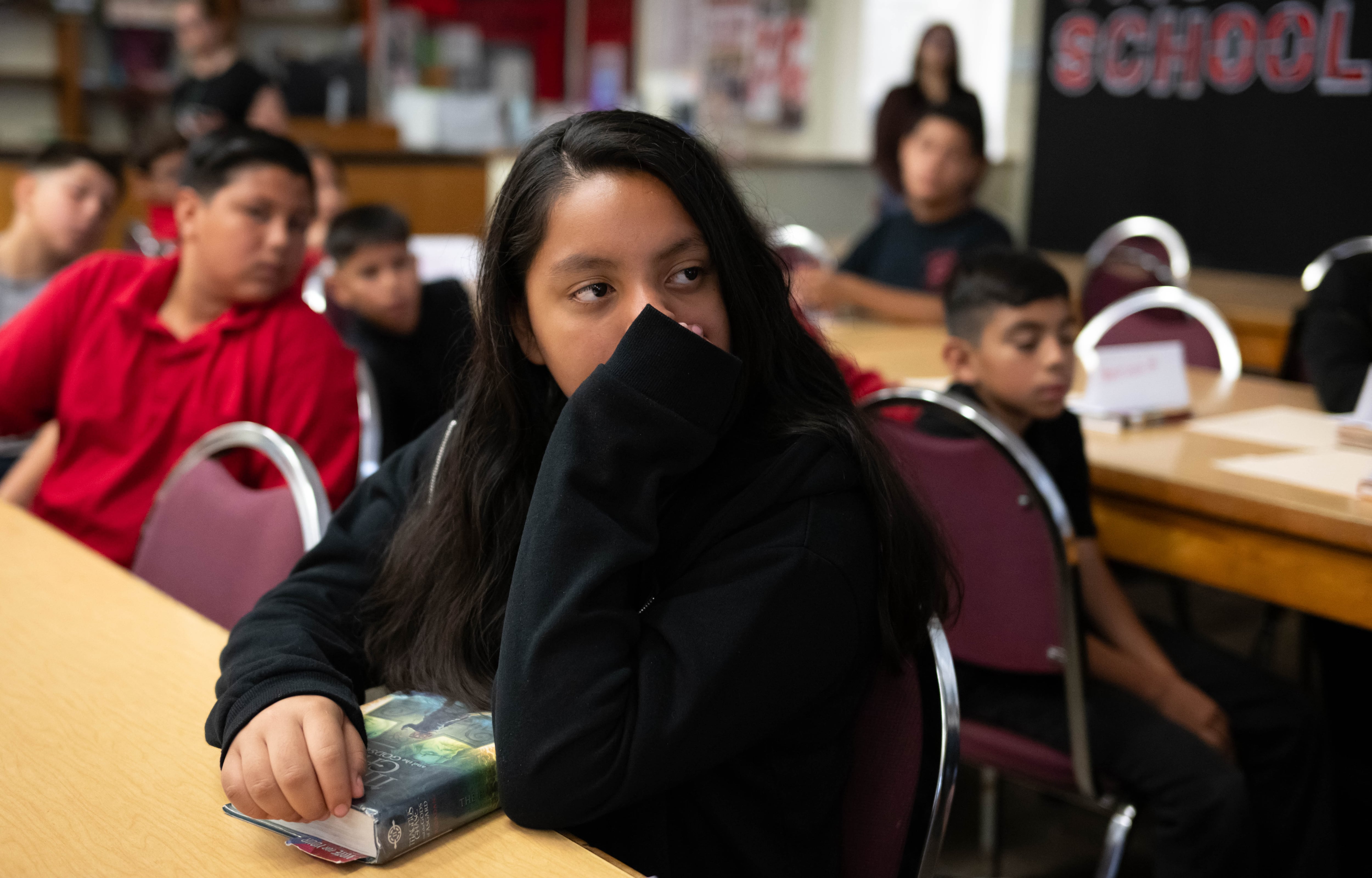
Sandra Martinez Roe, a mother in Los Angeles, hopes that her son will never use artificial intelligence (AI) in school. “I’m not going to let my children be guinea pigs,” she tells EL PAÍS over the phone. The city’s school board granted her wish, at least temporarily, a couple of weeks ago: the Los Angeles Unified School District (LAUSD) has banned AI from public classrooms this school year.
In 2024 I sketched a map to situate what experts and commentators expected from artificial intelligence. It had two axes: how much will it advance? and will it be beneficial or dangerous? People fell into every quadrant, even the inconsistent one —“it’s nothing special and it’s extremely dangerous.” I was clearly on the “wow” side of the power axis and moderately optimistic. Two years later, the consensus has shifted in one direction: more power and more fear.
Everything is contagious, even the way we listen and understand. For humans, consonants usually carry more information than vowels. This pattern appears in many languages: when a sentence is stripped down to its bones, those bones are more recognizable if consonants dominate. That is why Spanish has 23 consonants and five vowels, a ratio that holds in almost every language. It is also why people drop vowels when they want to save characters in a message. Our brains fill in the gaps more effectively.
Egypt’s Ministry of Tourism and Antiquities has announced the discovery of a Roman-period tomb whose architecture, according to the country’s Supreme Council of Antiquities, has no exact parallel elsewhere in the cemetery where it was found. The tomb sits at Bir al-Shaghala, a site in the Dakhla Oasis, about 750 kilometers (roughly 465 miles) southwest […]
In late 2025, conservators from Oxford’s Ashmolean Museum brought an unassuming object to the Diamond Light Source synchrotron in Oxfordshire: a terret, a small bronze loop that Iron Age chariots used to keep a horse’s reins from tangling. It looked modest. It was nearly 2,000 years old. And under X-ray analysis, it turned out to […]
A small piece of clay, not much bigger than a matchbox, took nearly a year for archaeologists to identify. When they finally did, it turned out to belong to one of the most famous documents in the ancient world: the peace treaty that closed out a war between two Bronze Age superpowers, sealed more than […]

 Login