❌

Reading view

Andy Burnham promises ‘serious dialogue’ over UK’s relationship with EU

PM hails next month’s ‘reset’ summit as first step to closer ties, but tensions over trade may prove problematic

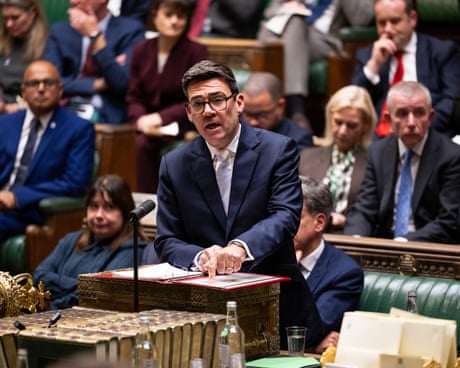
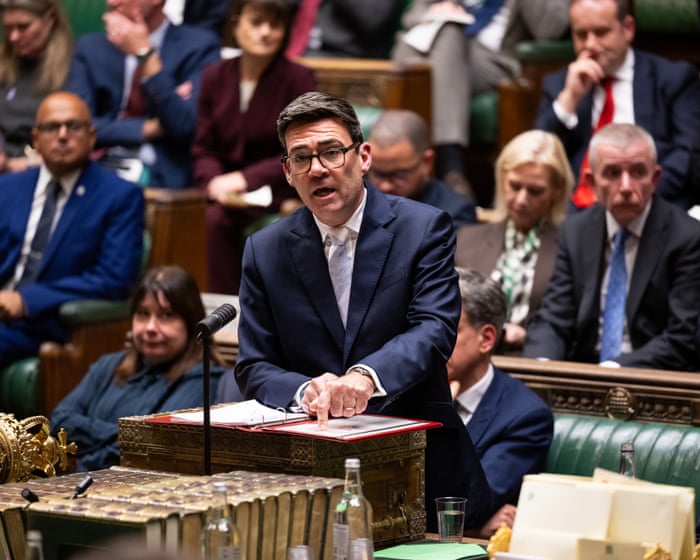
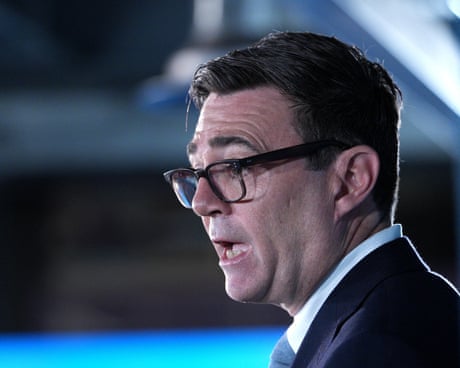
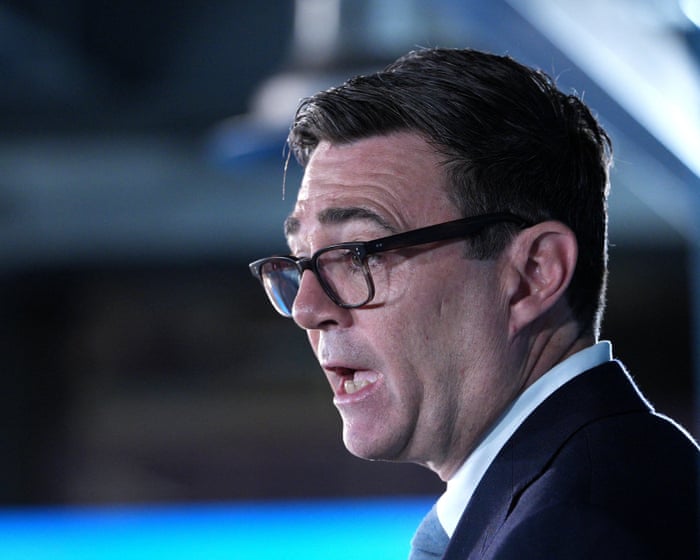
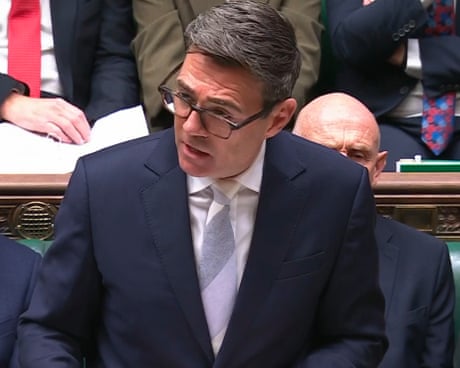
Andy Burnham has promised a “serious dialogue” over the UK’s future place in Europe, saying the existing relationship is “not good enough” as he framed next month’s Brussels summit as a possible first step to EU membership.

The prime minister said Britain must take a “clear-eyed rational look” at its long-term relationship with the bloc to boost economic growth and control immigration, which needed to go beyond Labour’s existing red lines.

Continue reading...

© Photograph: House of Commons/PA

© Photograph: House of Commons/PA

© Photograph: House of Commons/PA

  •  

Heat Pump Subsidies to be Scaled Back to Fund Defence

A heat pump subsidy scheme launched by Ed Miliband just nine months ago is facing cuts to help fund defence as the public continues to reject the technology and the quiet Net Zero rollback marches on.

The post Heat Pump Subsidies to be Scaled Back to Fund Defence appeared first on The Daily Sceptic.

  •  

How significant are Burnham’s remarks on Kremlin interference in Brexit vote?

Prime minister has reopened the debate over whether Russia sought to influence the 2016 referendum

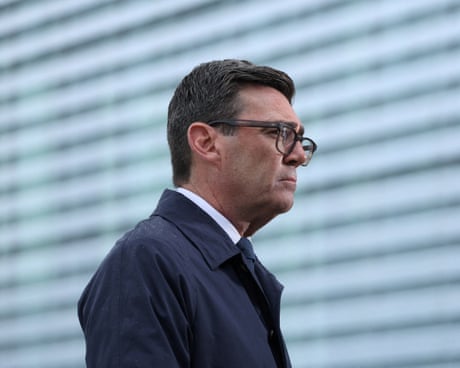
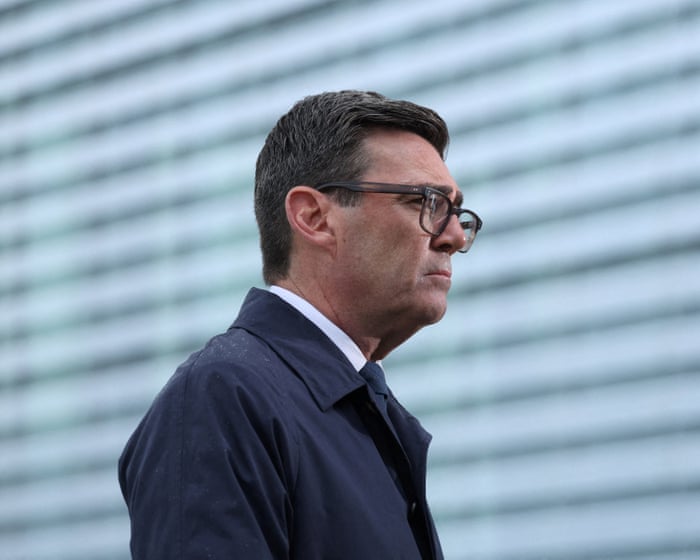
Andy Burnham unexpectedly reopened an old Brexit debate when he said he had been told after becoming prime minister that Russia had interfered in the 2016 EU referendum.

It was a contentious issue in the second half of the previous decade, but one that had largely been forgotten about as the UK finally adjusted to the reality of leaving the EU. Now Burnham’s comments have given the topic a fresh impetus.

Continue reading...

© Photograph: Christopher Furlong/Reuters

© Photograph: Christopher Furlong/Reuters

© Photograph: Christopher Furlong/Reuters

  •  

Ten years on, Britain’s prime minister says Russia meddled in the Brexit vote—and warns Germany and France

ten years britain’s prime minister says russia meddled brexit vote—and warns germany france · post andy burnham britain's new 29 2026 hl-8sqawgaax0se ukraine news ukrainian reports

UK Prime Minister Andy Burnham said Russia interfered in the 2016 referendum that took Britain out of the European Union, in podcast excerpts released on 11 October, the Associated Press reported. His remarks are believed to be the first time a British prime minister has publicly acknowledged such meddling.

Russia’s information war keeps running through Europe’s ballots. German security sources said in August that Moscow was escalating disinformation before state elections, and Ukraine’s Center for Countering Disinformation found more than 200 Russian fake news sites aimed at France last year.

One question, one clear answer

Burnham told The Rest Is Politics podcast that he asked his advisers whether Russia had interfered in the 2016 vote. He asked after taking office in July.

“I’ve had the clear answer that yes, there was,” he said.

He argued that such things must now be put clearly on the record. He did not say how Russia interfered or offer evidence, and Moscow has long denied interfering in foreign votes.

Burnham said he had discussed Russian interference with German Chancellor Friedrich Merz in Berlin the previous week. “You know he was saying to me that the AfD are clearly linked to Russia, funded I believe,” Burnham said, referring to Germany’s far-right Alternative for Germany party. Putting such interference on the record would help “voters in Germany and France understand that some of this politics is instigated via our enemies, namely Russia,” he added.

Years of silence

In 2020, Parliament’s Intelligence and Security Committee found that the government had actively avoided investigating whether Russia meddled in the referendum. The report noted open-source signs of Russian attempts to sway the Brexit campaign. The government, it said, had never looked for hard evidence.

The government rejected the committee’s call for a review.

“We have seen no evidence of successful interference in the EU Referendum,” it said.

That same year, London said Russian actors had almost certainly tried to interfere in the 2019 general election. The government said they did it by amplifying leaked UK-US trade documents online.

From 2019 to 2016

Three weeks ago, Burnham stopped short of this. At the UN General Assembly on 22 September, he said the Kremlin spends around £1.3 billion each year on manipulating information. That is roughly $1.7 billion at recent exchange rates. He cited evidence that Russian agencies tried to interfere in the 2019 general election, but he did not mention 2016.

In the same speech, he said Britain had already helped Moldova protect its elections from Russian interference.

  •  

Burnham to Say it’s His “Duty” to Pursue Closer EU Ties

Andy Burnham will say that failing to pursue a closer relationship with the EU would be a "dereliction of duty" in a major Commons address today, following his comments blaming Russia for interfering in the Brexit vote.

The post Burnham to Say it’s His “Duty” to Pursue Closer EU Ties appeared first on The Daily Sceptic.

  •  

Andy Burnham says Russia interfered in Brexit referendum – video

The prime minister has said Russia interfered in the 2016 Brexit vote in an interview with The Rest Is Politics podcast as he warned voters in France and Germany about Moscow-backed efforts to influence their politics.

Burnham is the first British prime minister to say openly there is evidence of Russian interference in the referendum a decade ago, and said last month that Britain could consider rejoining the European Union in the future

Continue reading...

© Photograph: Reuters

© Photograph: Reuters

© Photograph: Reuters

  •  

Burnham says ‘public will be the boss’ in any future decision about closer relationship with the EU – as it happened

The prime minister tells MPs the next summit with the EU will be held on 20 November

Burnham to urge MPs to embrace closer ties with EU

Zia Yusuf, Reform UK’s home affairs spokesperson, is speaking now. He started his speech with an account of a 73-year-old woman dying in North Wales after having to wait 23 hours for an ambulance, and he sought to link this to immigration.

He said:

The Royal College of Emergency Medicine estimates that 15,000 people across Britain died last year due to excess wait times for emergency treatment. That’s 300 people a week, 300 lives destroyed, 300 families devastated.

And that number has increased tenfold over the last decade. This is a moral outrage, and it is a direct result of decisions made by Tory and Labour governments.

I don’t think that’s because he wants to have a fight over the European Union. I think that’s because he knows what we’re talking about today impacts hard in what is known as the red wall.

Continue reading...

© Photograph: House of Commons/UK Parliament/PA

© Photograph: House of Commons/UK Parliament/PA

© Photograph: House of Commons/UK Parliament/PA

  •  

Britain Confirms Russian Interference in Brexit Referendum After Ten Years

Prime Minister Andy Burnham has acknowledged that Russia interfered in Britain’s 2016 referendum on European Union membership, ending a decade in which successive governments avoided making a definitive public assessment of Moscow’s involvement.

British Prime Minister Andy Burnham has confirmed that Russia interfered in the 2016 Brexit referendum, marking a significant change in the government’s position on foreign involvement in one of the country’s most consequential political decisions. The acknowledgement comes more than ten years after Britain voted to leave the European Union and six years after a parliamentary intelligence investigation criticised the failure to examine Russian activities surrounding the vote.

Speaking on The Rest Is Politics podcast, Burnham said he had requested an assessment of Russian interference after becoming prime minister in July. He subsequently received confirmation that Moscow had attempted to influence the referendum, although he declined to disclose the intelligence underpinning that conclusion or explain the methods employed.

The statement establishes an important distinction between Russian interference and the referendum’s outcome. The former is now publicly acknowledged by the British government; the latter remains a separate question. No evidence has been presented demonstrating that Russian activities determined the result, which saw 51.9 per cent vote to leave the EU.

The investigation that never took place

The controversy dates back to the Intelligence and Security Committee’s 2020 report on Russia, which identified serious weaknesses in Britain’s response to hostile foreign influence.

The committee examined Russian activities targeting British political institutions, including attempts to exploit social divisions through state-controlled information channels and online networks. It found that the British government had failed to conduct a comprehensive assessment of potential Russian interference in the Brexit referendum.

That failure was particularly striking when compared with the United States, where intelligence agencies investigated Russian interference in the 2016 presidential election and published conclusions identifying a coordinated campaign.

In Britain, by contrast, responsibility for examining foreign interference had been divided between departments and intelligence agencies. The parliamentary committee found that no organisation had assumed responsibility for assessing the threat to the referendum comprehensively.

The distinction was politically convenient for successive governments. Without a formal investigation, ministers could maintain that there was insufficient evidence to establish interference while avoiding the question of whether the evidence had ever been properly examined.

Burnham’s acknowledgement changes that position, although it does not resolve every question raised by the original inquiry.

What Russia sought to achieve

Russian information operations have repeatedly targeted political divisions within European societies, particularly disagreements over immigration, national sovereignty, NATO and relations with Brussels.

Research into online activity surrounding the Brexit campaign identified networks of accounts associated with Russian influence operations that circulated divisive political messages. Establishing their precise reach, coordination and effect on individual voters remains considerably more difficult.

Moscow had an identifiable strategic interest in weakening European political cohesion. Britain’s departure from the EU removed one of the bloc’s largest economies, a permanent member of the UN Security Council and an important supporter of sanctions against Russia.

That geopolitical consequence does not establish that Brexit was engineered by Moscow. Britain’s referendum reflected longstanding domestic political divisions, disagreements over European integration and dissatisfaction with successive governments.

Russian interference, however, need not create political divisions to exploit them. Amplifying existing disputes, discrediting institutions and encouraging distrust between political opponents can serve strategic objectives without requiring direct control over a campaign.

Consequences for relations with Europe

The timing of Burnham’s intervention is significant. His government has begun reconsidering Britain’s relationship with the EU, while European governments are confronting increasingly aggressive Russian hybrid operations.

Burnham has also suggested that Britain should be prepared to reconsider EU membership in the future, although such a decision would require a separate political mandate and negotiations with the bloc’s 27 members.

The prime minister’s comments place Russian interference within a broader European security debate. France and Germany are among the countries confronting allegations of foreign information operations, covert political influence and attempts to undermine electoral confidence.

The European Council’s forthcoming October summit will include discussions of Russian-linked hybrid attacks, demonstrating that the problem extends beyond conventional espionage and cyber-security.

For Britain, the outstanding question concerns the intelligence assessment itself. Burnham has not indicated whether further evidence will be published, whether Parliament will receive a classified briefing or whether the government intends to examine failures by previous administrations.

A public acknowledgement without supporting details may establish the government’s position, but it cannot by itself provide a complete historical account.

Ten years after the referendum, Britain is therefore confronting two separate matters: the extent of Russia’s activities during the campaign and the reasons its own institutions took so long to acknowledge them.

The first concerns foreign interference. The second concerns the accountability of the British state.

  •  

Burnham’s “Common Good” is Reheated Fabian Socialism

Andy Burnham's vision of the "common good" – with Net Zero at its heart – is just reheated Fabian socialism, says Dr Tilak Doshi – and the fingerprints of Left-wing economist Mariana Mazzucato are all over it.

The post Burnham’s “Common Good” is Reheated Fabian Socialism appeared first on The Daily Sceptic.

  •  

Betting Against Burnham

Labour may be enjoying a Burnham bounce, but Mark Littlewood still thinks the smart option is to bet against the Prime Minister winning the next General Election. He explains why in the Daily Sceptic.

The post Betting Against Burnham appeared first on The Daily Sceptic.

  •  

Poll finds 49% of Britons support rejoining the European Union

Nearly half of voters in the United Kingdom support rejoining the European Union, according to a survey released as Prime Minister Andy Burnham reviews the country’s options for its long-term relationship with the bloc.

The Messina Group polled 11,461 people between 12 and 24 September. It found that 49 per cent supported EU membership and 28.5 per cent opposed it. The findings were weighted by respondents’ votes in the 2016 referendum, according to the survey results.

Several other options for closer cooperation also received more support than opposition. Retaining the current relationship while removing as many trade barriers as possible was backed by 48.2 per cent, with 20.9 per cent against. A customs union was supported by 47.1 per cent and opposed by 20.7 per cent.

Joining the single market was supported by 45.1 per cent, while 45.5 per cent backed associate membership. The existing relationship without further changes received 42 per cent support. Moving further away from the EU was the least popular option tested: 27.9 per cent supported it and 41.2 per cent opposed it.

The figures show support for a range of possible arrangements, but do not establish agreement on what Britain should seek or on the terms it should accept.

On timing, 25.9 per cent said the UK should rejoin immediately, 22.9 per cent favoured doing so within three years and 8.4 per cent within the next decade. A further 23 per cent said they did not want closer relations with the EU.

Respondents were also asked whether leaving the bloc had been the right decision. Some 52.4 per cent said it was wrong, compared with 29.7 per cent who said it was right; 17.9 per cent were undecided. Asked whether Brexit had been a success or failure, 54.9 per cent called it a failure and 12.2 per cent a success. Nearly a quarter, 23.2 per cent, said neither, while 9.7 per cent did not know.

The poll tested the possible electoral effects of different Labour positions on Europe. It found that scenarios involving closer ties could increase the party’s vote share by between 4.3 and 7.4 percentage points. The largest potential rise was linked to a proposal for a referendum in which Burnham campaigned for Britain to rejoin.

Burnham has said Labour will review the choices available, including keeping current arrangements, joining a customs union, returning to the single market or seeking EU membership. He plans to set out the options around the next UK-EU summit, expected in November. In recent remarks, he said the government would assess “what is doable” and the “pros and cons” of each option.

The review marks a shift from Labour’s 2024 election manifesto, which ruled out rejoining the EU, single market or customs union. Burnham has not proposed an immediate application or referendum. A UK bid for membership would require negotiations with the EU and unanimous agreement from member states.

The question of whether a referendum should come first also remains open. Almost a third of respondents said a vote would be needed before rejoining. More than one in six thought a general-election mandate would be sufficient, with a similar proportion saying Parliament could make the decision.

French President Emmanuel Macron and Spanish Prime Minister Pedro Sánchez have said the EU would welcome a British return. Their comments followed Burnham’s call for a review of Britain’s options, as EU Today reported this week. Earlier EU Today coverage also examined British and EU public support for a possible return.

  •  

Burnham to Start Dismantling Triple Lock Before Election

Andy Burnham plans to pass a law scrapping the triple lock before the next election despite Labour pledging in its 2024 manifesto to keep it intact and the PM himself previously saying it would stay until 2030.

The post Burnham to Start Dismantling Triple Lock Before Election appeared first on The Daily Sceptic.

  •  

Political Spite Won’t Keep the Lights On

So, this is Andy Burnham's solution to soaring energy prices: nationalisation and relitigating the 1970s. It's just a shame, says Ben Pile, that energy was far cheaper under Thatcher than in our Net Zero era.

The post Political Spite Won’t Keep the Lights On appeared first on The Daily Sceptic.

  •  

Our Andy With His 10 Year Plandy

Amidst all the sentimental populist fluff, a political theory of sorts could be discerned in Andy Burnham's conference speech, says Professor James Alexander. Let's call him Our Andy-with-his-10-year-Plandy.

The post Our Andy With His 10 Year Plandy appeared first on The Daily Sceptic.

  •  

France and Spain Welcome Prospect of Britain Rejoining European Union

France and Spain have openly welcomed the prospect of Britain rejoining the European Union after British Prime Minister Andy Burnham put full membership back among the options for the country’s long-term relationship with Europe.

French President Emmanuel Macron and Spanish Prime Minister Pedro Sánchez addressed the question during Macron’s state visit to Spain on Wednesday, 30 September. Asked whether Britain could return under Burnham, Macron responded in English: “Welcome back.” He added that a British decision to move in that direction would be good news for both Britain and Europe.

Sánchez was similarly positive, saying Spain would “open our arms” if Britain sought to return.

Their comments followed Burnham’s intervention at the Labour Party conference and subsequent interviews in which he argued that Britain should reconsider the full range of options for its future relationship with the EU.

Those could include remaining under the present post-Brexit arrangements, returning to the customs union or single market, or ultimately “going all the way” and applying for EU membership again.

The remarks extend a debate which had already been developing since Burnham entered Downing Street. In August, EU Today reported that he had told European Council President António Costa that Britain should be “bolder” in rebuilding relations with Brussels.

More recently, the argument has moved from diplomatic language to practical economic questions. Burnham has been pressing Brussels to ensure British companies are not disadvantaged by the EU’s emerging industrial preference rules, with access to the proposed “Made in Europe” framework becoming one of the principal issues ahead of the next EU-UK summit.

Macron nevertheless made clear in Madrid that closer relations could not become a system under which Britain selected individual advantages of EU membership while remaining outside the corresponding obligations.

“You cannot pick and choose among the Union’s freedoms,” he said during the joint press conference with Sánchez.

That question dominated much of the Brexit negotiation after the 2016 referendum. Access to the single market is built around the free movement of goods, services, capital and people, while participation also entails accepting common rules and enforcement mechanisms.

A British application to rejoin would be a separate and considerably larger process. Under Article 49 of the Treaty on European Union, Britain would have to apply for membership and secure unanimous agreement from the existing member states before negotiations could be completed.

A returning Britain could not assume that the special arrangements it held before Brexit would automatically be restored. The UK previously had an opt-out from the euro, remained outside the Schengen passport-free area and benefited from a budget rebate.

Any future terms would have to be negotiated.

Public opinion has also changed since the referendum. A YouGov poll in June found 55 per cent of Britons supported rejoining the EU and 34 per cent opposed it, although support falls when respondents are asked about specific membership conditions.

That shift is not limited to Britain. Polling examined by EU Today earlier this year found substantial support across EU member states for a British return.

For the moment, however, Burnham is not proposing an immediate membership application or referendum.

The next test will be the UK-EU summit expected in November. The meeting was originally planned for July but was postponed following Keir Starmer’s resignation, with EU Today reporting at the time that the political transition in London had complicated preparations.

Burnham wants the summit to advance negotiations on industry, trade and migration and has said he intends to use the period around the meeting to set out the longer-term options available to Britain.

The immediate negotiations are therefore likely to focus on economic integration rather than membership.

Greater access to European markets would almost certainly involve greater regulatory alignment. The political argument in Britain will concern how far the country is prepared to accept common European rules in return for reducing barriers created by Brexit.

Macron and Sánchez have now made clear that, if the discussion eventually moves beyond closer economic cooperation towards membership itself, two of the EU’s largest states would welcome it.

  •  

Scrapping Triple Lock Could Save Nothing, Warns IFS

Scrapping the triple lock might not raise any money at all, the Institute for Fiscal Studies has warned, threatening Andy Burnham’s plan for a 'National Care Service' and raising the prospect of huge tax hikes.

The post Scrapping Triple Lock Could Save Nothing, Warns IFS appeared first on The Daily Sceptic.

  •  

West faces chaos as it comes to terms with voting in imbeciles as leaders

Trump and Burnham: chaos merchants. UK eyes conscription, taxes the dead. Trump hints at annulling midterms.

Join us on Telegram, X, and VK.

Contact us: info@strategic-culture.su

Both President Trump and UK Prime Minister Andy Burnham recently met in New York, with both facing tough times ahead as leaders. And it would seem both are choosing chaos over sage governance. But in the case of Trump, Iran might beat him to it.

Events are moving fast in the West as more and more countries’ ruling elites ramp up the rhetoric to go to war with Russia. Recently, in a TV debate in the UK, a staunch pin-striped old-guard conservative agreed with a liberal that a great many people who don’t agree with the plan will need to be locked up – giving the viewer the impression that this was actually more important of an objective than actually killing Russians on the battlefield. In the UK, there is a real momentum towards conscription, which would be inevitable if British soldiers were ever to be sent to the front line in Ukraine. In the U.S., most analysts believe conscription is far away from many of the options for the second half of Trump’s second term in office that are being debated behind closed doors. But as the U.S. economy starts to implode along with most EU states, plus the UK, chaos seems to be inevitable. For Trump, there is a genuine worry that, to avoid impeachment, he will try and annul the midterm elections if they don’t go his way (he has already hinted at this, referring to mail voter fraud). Many top experts, like Professor Bob Pape, believe violence is the preferred derivative from both political groups, and a second wave is coming soon which will make Trump’s January 6 escalation look like a children’s tea party in November. In a recent poll which reached out to both Republicans and Democrats, a staggering 60 percent of those contacted said they preferred a violent discourse in the U.S. – such was the level of discontent and, perhaps more importantly, the lack of faith in both the system and the leaders it produces.

In Britain, the lack of political credibility for its leaders is at such an all-time low point that all the government can do is borrow more money each month to busy itself with its erroneous policies which make no sense to anyone. Thousands of fake asylum seekers continue to leave France’s shores and head to the UK’s, where they are welcomed with blankets, hot drinks and free transportation to take them to their hotels, before they wait to be allocated housing. Some of them merely complain about the poor speed of the internet in their temporary accommodation with the smartphones that the government gives them; others take to the streets and cause mayhem if they do not get what they have deemed to be their birthright. The government has simply lost control of the boats and so ignores the growing numbers. It has also no idea whatsoever how to run Britain effectively, and so rather than assisting big business and attracting foreign direct investment, it prefers just to overspend on social programs while inevitably heading towards higher taxation. When you can’t run government and you haven’t got the skills to drive the economy forward, sooner or later you arrive at the point where Andy Burnham is now: taxing the dead.

Yes, a new inheritance tax is being kicked around now by Burnham, who is rumoured to be looking at calling an early election where he will use the one ace he has to get the edge, he believes, over the conservatives and Reform: re-joining the EU. His ideas will be pretending to care about the poor, assisting more boat people, going to war with Russia, taking a stand against Israel, and of course getting back in the EU. That bag of mad ideas could give him the distance to fool the British public that once again it’s all about policies and nothing to do with the merit of those behind them. Calling an early election is quite smart, though, as it seems that each month that passes Kemi Badenoch looks more attractive to middle Britain, while Nigel Farage’s Reform party appears to be slipping down the popularity polls. The big question is whether Burnham will actually go ahead with a war plan with Russia or just use the constant fear-mongering as a tool to raise defence spending and introduce a conscription.

For Trump, his concerns of staying in power are equal to Burnham’s, and yet the stakes are higher. Could he really plunge the entire U.S. economy into a depression which is going to mean shortages in the grocery stores, higher gas prices and sky-high inflation? It would seem to be inevitable, although we should be deeply sceptical about Trump telling reporters that he will bomb Iran after the midterms. Even Trump is not so stupid as to give away his strategy like that. In reality, he is probably under the allusion – delusion? – that the Iranians are actually afraid of a new, fresh attack on their civilian infrastructure. Of course, they are not, but Trump’s thinking is not sound. In reality, the Iranians are probably planning for the perfect moment to obliterate the entire GCC economy, Israel, or even the nucleus of U.S. military in the region – to send a shock to the Trump administration and the economy which would push most Americans, even Democrats, over a line of tolerance.

Americans will use the midterms to make a statement which doesn’t affect their normal presidential vote and vote massively for Dems, securing at the heart of the strategy to impeach Trump, or at the very least make it impossible for him to carry on with his imbecilic style of being a U.S. president. Americans have had enough, and it will be interesting to see how much Trump could do as President without the support of either house and an impeachment trial hanging over his head. For the big thinkers in Tehran, this is probably their strategy – although one can’t help wondering if they have a dilemma in that if they are going to pull off their major strike before the midterms, might this not give Trump the perfect excuse to annul them before they even start, with “America at war” being the argument? Of course, this is folly, but he might believe he has enough of the establishment in his pocket to give it a run for its money. It would be unprecedented. Like everything Trump does.

  •  
❌