❌

Reading view

Thousands of young people protest the Noboa administration in Quito

On October 10, thousands of Ecuadorians took to the streets to protest against the government of right-wing President Daniel Noboa. The demonstration was organized by the Autonomous Front of Organized Resistance (FARO) under the slogan “Government vs. People.”

A esta hora, una marcha de rechazo al Gobierno de Daniel Noboa recorre las calles de Quito. La movilización está marcada por carteles de protesta y consignas contra el mandatario y su gestión. Los manifestantes atraviesan en este momento el paso deprimido del Guambra y avanzan… pic.twitter.com/WKPfT8D9jF

— Elena Rodríguez Yánez (@ElenaDeQuito) October 10, 2026

Saturday’s demonstration followed a protest on October 8, organized by labor unions also in Quito, to protest the security, energy, health, and employment crises facing the country. They also protested government cuts to education and health care, as well as alleged mistreatment of workers, according to Edwin Bedoya, president of the United Workers’ Front (FUT).

For its part, the October 10 demonstration – which consisted mainly of high school and college students – set out from the Central University and marched through Quito. Slogans such as “If the people have no peace, neither does the government” and “Out with Noboa, out with him!” were heard along the streets occupied by the demonstrators.

The president of the Catholic University Student Federation, Jatari Ulcuango, told protesters: “Four years ago, this government promised us electricity; two years ago, too – and now the blackouts have returned. Two months ago, the government told us it would provide us with medicine, and yet we’re only receiving 60% of the supply. They’re taking us for fools.”

He added: “We’re dying outside the hospitals. Criminals are kidnapping us, murdering us, and robbing us. That’s why we’ve come out this morning. They plan to dismantle public institutions to force us to hire private security. Who has gotten rich off the health crisis? The private healthcare sector, while the people are getting poorer and poorer.”

The peaceful march headed back to the Central University, where the students gathered. Later, the students reported on social media that they had been harassed and repressed by the police, who had accompanied the entire march.

Likewise, several media outlets reported that the police were aggressive toward them. This was reported by the outlet La Barra Espaciadora, which released a video showing police officers pushing journalists.

TeleSur journalist Elena Rodríguez also reported that law enforcement officers broke the microphone she was using and struck her on the head: “I’m sick and tired of having to recount, time and time again, police attacks against the press. Today, while I was trying to document the violence with which officers were beating young protesters, I was struck on the head from behind with a baton. I turned around, showed my Telesur microphone to identify myself as a journalist, and the response was another baton strike that ended up breaking it.”

She added: “If they think that by beating me up they’re going to get me to stop documenting police brutality, to put my microphone away, or to back off several blocks so I can report from a place where I won’t be a nuisance, they’re wrong. It is not we journalists who should distance ourselves from the events. It is the police who must stop attacking us. The right to report cannot be negotiated at the point of a baton.”

The protests are taking place against the backdrop of a widespread crisis in the country, which includes the worst security crisis in its history (tens of thousands of deaths due to violence between drug trafficking gangs), a very serious health crisis (a lack of supplies and medicines in the public health system), and other major crises such as those in education, public investment, and employment.

Local elections will be held in November, which will reveal the extent of support – or lack thereof – for President Noboa and his neoliberal government agenda, which aligns with the hemispheric security strategy led by the Trump administration.

  •  

Kimberly Guilfoyle forced to resign as US Ambassador to Greece

Stormy developments at the US Embassy in Athens: Ambassador, Kimberly Guilfoyle, resigned from her post as US Ambassador to Greece on Tuesday afternoon Prior to the resignation of the controversial ambassador, there was a public statement by the new White House Press Secretary, Katie Zakaria, who said on Tuesday morning (US time): “We have asked […]

The post Kimberly Guilfoyle forced to resign as US Ambassador to Greece appeared first on Keep Talking Greece.

  •  

Almargem considera Barragem da Foupana uma “falsa solução para a seca”

A Almargem – Associação de Defesa do Património Cultural e Ambiental do Algarve submeteu um parecer negativo ao projeto da Barragem da Foupana, o qual considera “um atentado ambiental e um potencial desastre financeiro”.

A Associação diz que o investimento de 90 milhões de euros ameaça transformar-se num “elefante branco” sem água.

Segundo a mesma fonte, enquanto a maioria dos rios do Sul foi “profundamente alterado” por barragens e espécies exóticas, na Foupana cerca de dois terços dos peixes existentes são espécies autóctones, sendo que “erguer uma parede de betão significa destruir este
ecossistema único”.

A Almargem alerta que a alteração do curso da ribeira e a criação de uma albufeira vão contribuir para o risco de extinção local do Saramugo, um peixe “incapaz de sobreviver em águas paradas”; para o bloqueio de peixes migradores, como o Sável, a Savelha, a Enguia-europeia e a Lampreia-marinha; para o isolamento de espécies nativas (Boga-do-Guadiana e o Barbo-de-cabeça-pequena); e para o colapso de mexilhões de água doce.

Além disso, avisa sobre as possíveis consequências para o lince-ibérico, perda de floresta e património devido aos 500 hectares submersos e agravamento da erosão nas praias “ao reter 10 milhões de metros cúbicos de areias e sedimentos”.

Como alternativas a adotar, a Almargem sugere resolver as fugas nas tubagens, guardar água no subsolo e reutilizar a água das ETAR para a rega.

A consulta pública do projeto da barragem decorre até ao dia 16 de outubro, aqui.

  •  

Incêndio na Horta da Areia deixa cerca de 29 pessoas desalojadas

Pelo menos duas habitações pré-fabricadas e alguns anexos foram destruídos por um incêndio que deflagrou ao início da tarde desta terça-feira, no bairro social da Horta da Areia, em Faro. O fogo deixou 29 pessoas desalojadas, não provocou feridos e foi dominado cerca de uma hora depois do alerta.

O alerta foi dado pelas 13h00, segundo o comandante dos Bombeiros Sapadores de Faro, André Cardoso de Morais, em declarações à Lusa.

As pessoas desalojadas pertencem a várias famílias, não sendo ainda possível precisar o número de agregados familiares afetados, adiantou o responsável.

Os serviços sociais da Câmara Municipal de Faro estão a acompanhar a situação e vão procurar assegurar alojamento temporário às pessoas afetadas.

André Cardoso de Morais adiantou que o fogo, cujas causas são ainda desconhecidas, destruiu duas casas pré-fabricadas e alguns anexos.

Apesar de o incêndio já ter sido dominado, os bombeiros continuavam a realizar trabalhos de rescaldo, com 42 operacionais e 15 veículos no local, referiu André Cardoso de Morais.

  •  

Castro Marim e Guérande querem renovar laços de geminação

O Comité de Geminação entre Castro Marim e Guérande, em França, foi recebido a 10 de outubro, nos Paços do Concelho de Castro Marim, numa sessão que assinalou a continuidade de uma ligação com mais de duas décadas e a vontade de desenvolver novas iniciativas de intercâmbio cultural.

O encontro reuniu representantes do executivo municipal, do Agrupamento de Escolas, da associação juvenil Young Link e da comunidade, bem como cerca de uma dezena de elementos do comité francês, entre membros da direção e antigos eleitos. Durante a sessão, foram recordados os objetivos da geminação e manifestada a intenção de criar novos projetos de partilha entre as duas localidades.

A presidente da Câmara Municipal de Castro Marim, Filomena Sintra, destacou a importância de dar continuidade a esta relação, que contribuiu, no passado, para a internacionalização dos Dias Medievais e para a reativação da atividade salineira no concelho.

Após a troca de lembranças, a comitiva francesa percorreu vários pontos de interesse turístico e histórico de Castro Marim, acompanhada por uma colaboradora do município. O itinerário incluiu a Cooperativa Terras de Sal e o Revelim de Santo António.

A geminação entre Castro Marim e Guérande, situada na região francesa do Pays de la Loire, teve início formal em 2004. O compromisso foi assinado a 14 de maio desse ano, em Guérande, tendo a formalização da geminação decorrido a 1 de setembro, em Castro Marim.

A ligação entre as duas localidades assenta em afinidades históricas e culturais, nomeadamente nas tradições medievais e na produção de sal, uma atividade com forte expressão em ambos os territórios. Guérande é também conhecida pelo seu património medieval e pelas iniciativas de recriação histórica, características que favoreceram a aproximação entre as duas comunidades.

A geminação pretende promover o intercâmbio cultural e valorizar as tradições comuns, reforçando a cooperação e a partilha de experiências entre Castro Marim e Guérande.

  •  

WARNING Upgraded to “Dangerous Weather Phenomena”; 7 regions in RED CODE

Greece’s National Meteorological Service EMY upgraded its weather alert to a “Dangerous Weather Phenomena” warning. At the same time, the country’s Civil Protection declared already 7 regions including several islands in the Aegean Sea into “Red Code” alert warning of very strong winds and possible flooding phenomena. Red Alert has been declared for the island […]

The post WARNING Upgraded to “Dangerous Weather Phenomena”; 7 regions in RED CODE appeared first on Keep Talking Greece.

  •  

J.D. Vance in Athens for the 1st Breitbart Europe Summit

US Vice President J.D. Vance is scheduled to visit Athens in upcoming February in order to attend the 1st Breitbart Europe Summit. Athens is reportedly set to host the inaugural Breitbart Europe Summit in February, focusing on Europe-US relations. J.D. Vance is expected to be the keynote guest, alongside other senior U.S. officials. The American […]

The post J.D. Vance in Athens for the 1st Breitbart Europe Summit appeared first on Keep Talking Greece.

  •  

Woman arrested for poisoning ex husband with atropine

A 41-year-old woman has been arrested in Athens on suspicion of attempting to poison her ex-husband, a military doctor, with atropine. According to media, the man had installed security cameras at his apartment in Peristeri suburb of western Athens. Monitoring the cameras remotely, he allegedly saw his ex-wife who had keys entered the apartment and […]

The post Woman arrested for poisoning ex husband with atropine appeared first on Keep Talking Greece.

  •  

Jovem que morreu em acidente no IC5 é filho da vice-presidente da câmara

VTM

O jovem que morreu, na manhã desta terça-feira, na sequência de uma colisão rodoviária no IC5, em Vila Flor, era filho da vice-presidente da Câmara Municipal de Vila Flor, Ana Ramos. A informação foi confirmada por Noel Afonso, comandante sub-regional das Terras de Trás-os-Montes da Proteção Civil.

O município de Vila Flor já se pronunciou publicamente sobre a morte de João Dinis Ramos, confirmando que o jovem era filho da vice-presidente da autarquia, Ana Ramos, e manifestando profundo pesar pela sua perda.

A vítima, com cerca de 20 anos, perdeu a vida na sequência do despiste de um camião de mercadorias, no Itinerário Complementar 5, perto da saída de Lodões, em Vila Flor. O camião tombou sobre dois automóveis ligeiros que circulavam no sentido contrário.

O acidente ocorreu por volta das 7h40 e provocou ainda três feridos ligeiros, transportados para o Hospital de Mirandela. O óbito do jovem foi declarado no local.

Para o local foram mobilizados 23 operacionais, apoiados por seis viaturas e pelo helicóptero do INEM, sediado em Macedo de Cavaleiros.

The post Jovem que morreu em acidente no IC5 é filho da vice-presidente da câmara appeared first on A Voz de Trás-os-Montes.

  •  

Colisão entre ligeiro e pesado provoca um ferido grave

VTM

Um jovem de 19 anos ficou gravemente ferido na sequência de uma colisão entre um veículo ligeiro e um veículo pesado, ocorrida esta manhã na Estrada Nacional 213 (EN213), entre Chaves e Valpaços, pouco depois da curva junto à discoteca Triunfou, em Vilar de Nantes, no concelho de Chaves. O alerta para o acidente foi dado às 7h17.

Segundo Artur Nogueira, comandante dos Bombeiros Voluntários Flavienses, a vítima, do sexo masculino, foi assistida no local e transportada para Vila Real numa ambulância de socorro dos Bombeiros Voluntários Flavienses, acompanhada pela equipa da Viatura Médica de Emergência e Reanimação (VMER) de Chaves.

No local esteve uma ambulância de socorro, com dois elementos, um veículo de socorro e assistência tático (VSAT), com cinco operacionais, e um veículo urbano de combate a incêndios (VUCI), também com cinco elementos. Na ocorrência estiveram também quatro elementos da PSP e dois do INEM.

Ao todo, a operação de socorro mobilizou um total de 18 operacionais e seis veículos.

A estrada esteve cortada ao trânsito, mantendo-se condicionada para permitir a remoção das viaturas envolvidas e a limpeza da via.

As circunstâncias em que ocorreu a colisão estão a ser apuradas pelas autoridades.

The post Colisão entre ligeiro e pesado provoca um ferido grave appeared first on A Voz de Trás-os-Montes.

  •  

Europe’s Gulf Gamble: Is Brussels Sacrificing Human Rights for Energy, Trade and Political Influence?

As the European Parliament prepares to welcome representatives from six Gulf monarchies, uncomfortable questions are emerging about the moral foundations of Europe’s foreign policy. Can Brussels credibly champion democracy and human rights while deepening relations with governments accused of suppressing dissent, restricting fundamental freedoms and exploiting migrant workers?

The European Union has long presented itself as a global defender of democracy, human rights and the rule of law. Yet its growing enthusiasm for closer relations with the Gulf monarchies raises an increasingly uncomfortable question: how much are those principles worth when substantial economic and strategic interests are at stake?

On October 16th, the European Parliament will host senior parliamentary representatives from the six members of the Gulf Cooperation Council (GCC): Saudi Arabia, the United Arab Emirates, Qatar, Kuwait, Bahrain and Oman.

The conference, chaired by European Parliament President Roberta Metsola, will address parliamentary cooperation, maritime security and the geopolitical consequences of Russia’s war against Ukraine.

On paper, the initiative represents an entirely reasonable diplomatic exercise. Europe needs reliable energy supplies, secure international shipping routes and constructive relations with influential Middle Eastern governments.

But there is another side to this developing partnership, one that Brussels cannot simply dismiss as an inconvenient complication.

Several Gulf governments maintain political systems in which meaningful democratic opposition is severely restricted, freedom of expression is curtailed and individuals can face imprisonment for challenging those in power.

The question is not whether Europe should maintain diplomatic relations with such countries. It plainly must.

The question is whether those relations should be celebrated as strategic partnerships without demanding meaningful improvements in the treatment of their own citizens.

The uncomfortable reality behind Gulf prosperity

Saudi Arabia’s international image has undergone a remarkable transformation in recent years.

Under Crown Prince Mohammed bin Salman, the kingdom has promoted ambitious economic reforms, tourism projects and international sporting events designed to present a modernising society. Yet this carefully cultivated image sits uneasily alongside its human rights record.

Amnesty International and Human Rights Watch have repeatedly documented concerns over executions, restrictions on political dissent, arbitrary detention and the treatment of women’s rights activists.

The murder of journalist Jamal Khashoggi in Istanbul in 2018 remains an enduring symbol of the dangers faced by critics of the Saudi leadership. A 2021 US intelligence assessment concluded that the Crown Prince had approved an operation to capture or kill Khashoggi, an assessment rejected by Saudi Arabia.

Qatar, meanwhile, has attracted sustained criticism over the treatment of migrant workers, particularly during preparations for the 2022 FIFA World Cup. Although labour reforms were introduced, human rights organisations continue to question their implementation and the effectiveness of protections against exploitation.

The UAE, despite its reputation for modernity and commercial sophistication, has similarly faced criticism over restrictions on political expression, detention of dissidents and the absence of meaningful electoral democracy at national level.

Bahrain has been criticised for imprisoning opposition figures and restricting political freedoms, while concerns about migrant labour protections and freedom of expression extend across other Gulf states, albeit with important differences in their individual records.

These are not minor administrative shortcomings. They concern fundamental rights that the European Union claims to regard as universal and non-negotiable.

When strategic interests outweigh principles

There is an unmistakable contradiction in Europe’s approach. The European Parliament routinely condemns authoritarian practices in Russia, Belarus and other countries where political freedoms are suppressed. It demands accountability, democratic reform and respect for international law.

Yet when dealing with wealthy Gulf monarchies, the language often becomes considerably more accommodating. Economic opportunity, investment, energy security and regional stability suddenly dominate the conversation.

Such selective emphasis risks creating the impression that Europe’s commitment to human rights is determined less by universal principle than by the commercial and geopolitical importance of the country concerned.

That is a dangerous perception for an institution whose international credibility depends heavily upon its moral authority.

If the imprisonment of political opponents is unacceptable in Moscow or Minsk, why should comparable abuses become less objectionable when committed by governments possessing substantial sovereign wealth funds or strategically important energy reserves?

Europe cannot reasonably demand consistency from others while appearing unwilling to apply it to itself.

The strategic argument remains compelling

None of this diminishes the genuine importance of cooperation with the Gulf. The Strait of Hormuz and the Red Sea are essential maritime corridors connecting Europe with global energy suppliers and Asian markets. Threats to commercial shipping, regional instability and the activities of Iran-aligned armed groups present legitimate security concerns.

Russia’s invasion of Ukraine has also demonstrated the dangers of excessive dependence upon unreliable external partners. Diversifying energy relationships is therefore a sensible strategic objective.

Moreover, Gulf governments possess considerable diplomatic influence, including relationships with states and political actors that European governments may struggle to engage directly.

But strategic necessity does not automatically confer moral legitimacy.

Indeed, Europe’s previous dependence upon Russian energy offers a particularly sobering lesson. For years, European governments convinced themselves that extensive commercial engagement with Moscow would encourage moderation and political stability.

Instead, economic interdependence failed to prevent Russian aggression, leaving Europe exposed when that relationship collapsed. It would be reckless to assume that expanding commercial relations with authoritarian governments necessarily produces political liberalisation.

What does parliamentary cooperation actually mean?

The proposed conference also raises questions about the meaning of parliamentary dialogue.

The European Parliament is a directly elected institution, accountable to hundreds of millions of citizens through competitive democratic elections.

The political institutions of the Gulf states operate under markedly different arrangements, with varying degrees of appointed representation, limited electoral participation and executive authority concentrated within ruling families.

Describing these relationships simply as parliamentary cooperation risks obscuring fundamental differences in democratic legitimacy.

Dialogue can undoubtedly serve a useful purpose. But it should not be allowed to imply an equivalence between representative democratic institutions and political structures in which citizens have far fewer opportunities to challenge those governing them.

Nor should participation in prestigious European institutional events become an exercise in international reputation management for governments facing serious human rights allegations.

A test of Europe’s credibility

The European Parliament has an opportunity to demonstrate that closer cooperation need not mean abandoning its principles.

It could insist that human rights form a substantive part of future engagement, including scrutiny of political imprisonment, freedom of expression, judicial independence and migrant worker protections.

It could also establish mechanisms for monitoring progress rather than relying upon diplomatic assurances.

Such measures would not necessarily undermine economic cooperation. They would establish that the relationship carries responsibilities as well as benefits.

Ultimately, the issue is not whether Europe should talk to the Gulf monarchies, but whether it possesses the political courage to challenge them.

A European Union that condemns authoritarianism in one part of the world while accommodating it elsewhere risks reducing its professed values to little more than diplomatic convenience.

Europe may need the Gulf’s energy, investment and strategic influence, but it should not have to surrender its conscience to obtain them.

And if Brussels cannot reconcile its commercial ambitions with its democratic principles, it must confront a deeply uncomfortable possibility: that Europe’s foreign policy is increasingly being guided not by the values it proclaims, but by the wealth and influence of those sitting across the negotiating table.

  •  

IMF forecasts Greek economy growth at 1.8%

The International Monetary Fund (IMF) is forecasting growth of 1.8% for the Greek economy in both 2026 and 2027, according to its World Economic Outlook report released on Tuesday. The forecast for 2026 is unchanged from the Fund’s previous report in April, while the projection for 2027 has been revised slightly upwards from 1.7%. In […]

The post IMF forecasts Greek economy growth at 1.8% appeared first on Keep Talking Greece.

  •  

EU Budget Showdown: European Parliament Rejects Irish Presidency’s Spending Cuts as Battle Over Europe’s Future Intensifies

The European Parliament has delivered a sharp rebuke to Ireland’s proposals for the EU’s next seven-year budget, warning that cuts to competitiveness, security and regional development could leave Europe dangerously ill-equipped to confront mounting geopolitical and economic challenges.

The European Union is heading towards a potentially bruising institutional confrontation over its next long-term budget, after senior Members of the European Parliament rejected proposals from the Irish Presidency of the Council to reduce the European Commission’s spending plans by eight per cent.

The dispute concerns the Multiannual Financial Framework (MFF) for 2028–2034, which will determine not merely how much Brussels spends, but the extent to which Europe can deliver on its increasingly ambitious political, economic and security objectives.

At stake is a fundamental question: can the European Union realistically aspire to become a more competitive, strategically independent global power while its member states resist providing the financial resources necessary to achieve those ambitions?

Parliament Draws a Red Line

In a statement published on 10th October, Parliament’s principal budget negotiators, Siegfried Mureșan of the European People’s Party and Carla Tavares of the Socialists and Democrats, firmly rejected the Irish negotiating framework.

They were joined by Danuše Nerudová and Sandra Gómez López, Parliament’s co-rapporteurs responsible for developing new sources of EU revenue.

Their objections centre on the proposed reduction of approximately €141 billion from the Commission’s original spending plans.

Mureșan warned that the reductions would undermine Europe’s ability to respond to growing demands for defence, economic competitiveness and security.

He also highlighted the erosion of the EU budget’s purchasing power, which Parliament estimates has declined by approximately ten per cent because of inflation.

The implication is uncomfortable for national governments: maintaining apparently substantial expenditure figures does not necessarily translate into maintaining Europe’s capacity to act.

Ireland’s Difficult Balancing Act

Ireland, currently holding the rotating Council Presidency, has attempted to reconcile two increasingly contradictory political demands.

On one side stand governments seeking greater investment in defence, technological innovation, economic resilience and geopolitical influence.

On the other are national finance ministries confronting constrained public finances, mounting borrowing costs and electorates increasingly resistant to additional expenditure.

The Irish Presidency’s proposal envisages approximately €1.62 trillion in commitments, expressed in 2025 prices, representing a substantial increase over the existing seven-year framework.

Dublin argues that its negotiating position offers an ambitious but financially realistic compromise, preserving traditional agricultural and cohesion spending while accommodating emerging priorities.

Yet the European Parliament remains unconvinced.

Particularly contentious are proposed reductions of 12.8 per cent in competitiveness expenditure and 17.4 per cent in external action compared with the Commission’s plans.

These are precisely the areas in which Brussels has repeatedly promised greater international influence.

Defence Ambitions Meet Financial Reality

The timing could scarcely be more awkward. Russia’s continuing aggression against Ukraine has exposed Europe’s dependence on American military capabilities, while mounting geopolitical uncertainty has reinforced demands for greater European strategic autonomy.

Meanwhile, competition from China and the United States is placing European industries under unprecedented pressure.

Brussels regularly speaks of technological sovereignty, stronger defence industries and reduced dependence on external suppliers, however, those objectives require sustained investment.

Cutting expenditure intended to strengthen competitiveness while simultaneously demanding that European companies compete more effectively internationally risks becoming an exercise in political contradiction.

Nevertheless, Parliament’s position deserves scrutiny too. Greater expenditure does not automatically produce better outcomes. Europe’s problems with fragmented defence procurement, regulatory complexity and slow implementation cannot simply be resolved by increasing budget allocations.

A credible financial settlement must therefore combine sufficient resources with demonstrably improved efficiency and accountability.

The Battle Over Europe’s Own Resources

Perhaps the most consequential disagreement concerns how the Union should finance its expenditure.

Parliament has repeatedly argued that the EU must develop additional independent revenue streams rather than relying excessively on contributions from national governments.

Its proposals include levies associated with digital services, online gambling and cryptocurrency capital gains. MEPs believe these measures could generate approximately €30 billion beyond the additional revenue already envisaged by the Commission.

The Irish Presidency has advanced a revenue package that it estimates could eventually raise around €55 billion annually, but agreement among member states remains elusive.

This disagreement exposes an enduring weakness in European integration.

Governments frequently demand collective European action while remaining reluctant to surrender control over the financial mechanisms necessary to support it.

A Political Confrontation With Serious Consequences

The institutional arithmetic makes Parliament’s opposition particularly significant. Although member states must unanimously approve the long-term financial framework, the European Parliament must also provide its consent by an absolute majority of MEPs. Consequently, national governments cannot simply impose a settlement over parliamentary objections.

Equally, the European Parliament cannot compel governments to finance its preferred spending programme. Both institutions therefore possess considerable negotiating leverage, raising the possibility of prolonged political deadlock.

The forthcoming European Council discussions on 15–16th October will provide an important indication of whether governments are prepared to reconsider their positions.

Europe’s Credibility Is on the Line

Ultimately, this dispute extends far beyond accounting. The European Union faces an increasingly hostile strategic environment, persistent economic challenges and growing demands for collective action.

Yet its institutional ambitions continue to outpace agreement on the financial commitments required to fulfil them.

Parliament is justified in questioning whether reducing investment in competitiveness and security represents prudent financial management or potentially damaging short-termism. National governments, however, are equally entitled to demand evidence that additional European expenditure will produce measurable benefits.

The solution cannot be unlimited spending, nor can it be indiscriminate austerity. Europe requires a budget that reflects its strategic responsibilities, backed by rigorous financial discipline and transparent political priorities.

Without such a settlement, the Union risks discovering that its greatest obstacle to becoming a serious geopolitical actor is not opposition from Washington, Moscow or Beijing, but its own inability to agree on the price of its ambitions.

  •  

Olhão vai ter um Centro de Marcha e Corrida

O concelho de Olhão vai contar, em breve, com um Centro de Marcha e Corrida, anunciou o município através das redes sociais. O projeto pretende incentivar a prática regular de atividade física e promover hábitos de vida saudáveis junto da população.

A iniciativa conta com o apoio da Junta de Freguesia de Pechão e integra o Programa Nacional de Marcha e Corrida (PNMC), promovido pela Federação Portuguesa de Atletismo (FPA) e pelo Instituto Português do Desporto e Juventude (IPDJ).

O novo centro pretende alargar as oportunidades de prática desportiva, numa aposta na promoção do desporto para todos e na melhoria da qualidade de vida da comunidade.

A autarquia adianta que serão divulgadas mais informações em breve.

  •  

Um ferido grave em colisão entre autocarro e veículo ligeiro

VTM

Segundo informação recolhida junto do Comando Sub-regional do Douro, o acidente ocorreu entre “Vilarouco e São João da Pesqueira, na EN 222, e envolveu um autocarro e um veículo ligeiro, tendo resultado num ferido grave, que deverá ser transportado pelo helicóptero do INEM, que está no local.

O alerta foi dado às 8h16 e para o local foram mobilizados 19 operacionais, apoiados por quatro veículos e um meio aéreo, o helicóptero do INEM de Macedo de Cavaleiros e os bombeiros de São João da Pesqueira.

A GNR também está no local.

The post Um ferido grave em colisão entre autocarro e veículo ligeiro appeared first on A Voz de Trás-os-Montes.

  •  

Um morto e três feridos em colisão no IC5

VTM

Segundo fonte do Comando Sub-Regional das Terras de Trás-os-Montes, o acidente envolveu um “camião e dois veículos ligeiros, tendo-se registado uma vítima mortal e três feridos ligeiros”, que foram transportados para o hospital de Mirandela.

A vítima mortal é um jovem com cerca de 20 anos, tendo o óbito sido declarado no local.

Fonte da GNR de Bragança disse à VTM que o IC5 está cortado nos dois sentidos.

O alerta foi dado às 7h39 e para o local foram mobilizados 23 operacionais, apoiados por seis viaturas e ainda o helicóptero do INEM, sediado em Macedo de Cavaleiros.

The post Um morto e três feridos em colisão no IC5 appeared first on A Voz de Trás-os-Montes.

  •  

European Parliament calls for tougher scrutiny of Muslim Brotherhood networks and EU funding


The European Parliament has called for a coordinated EU response to the influence of Muslim Brotherhood networks, backing tighter funding controls, greater scrutiny of institutional partnerships and an assessment of whether individuals and organisations linked to the movement meet the criteria for inclusion on the EU’s terrorist list.

The resolution was adopted in Strasbourg on Thursday, 8th October, by 381 votes to 167, with 15 abstentions.

The vote followed a debate on Wednesday over what Parliament describes as “Islamist entryism”: a strategy of gaining influence within public institutions and civil society while presenting an outward commitment to democratic values. Parliament’s briefing identified the Muslim Brotherhood and affiliated associations as frequently cited examples of this approach. 

The resolution increases political pressure on member states, the European Commission and the Council of the European Union to investigate networks, examine funding and consider restrictive measures where the applicable legal criteria are met.

Concerns over democratic institutions and fundamental freedoms

At the centre of Parliament’s position is concern that organisations associated with the Brotherhood may use access to democratic institutions to advance objectives incompatible with those institutions’ underlying principles. The resolution expresses “deep concern at the strategies of influence” pursued by the movement and its supporters. It describes the Brotherhood as “a political project based on the primacy of religious norms over common law, which is incompatible with democratic principles, the rule of law and equality between citizens”. 

MEPs’ concerns extend beyond security in the narrow sense. The resolution condemns entryism strategies directed against democratic institutions, public order, social cohesion, the rule of law and equality between women and men. It calls for stronger institutional vigilance, combining financial checks with scrutiny of organisational networks and cross-border cooperation. 

The underlying concern is that public authorities could inadvertently provide resources and legitimacy to organisations whose political objectives conflict with the democratic values those authorities are supposed to uphold. Parliament argues that European institutions should not fund, consult or legitimise networks that use their procedures and language to weaken fundamental freedoms. 

Commission asked to account for EU funding

One of the resolution’s most concrete demands concerns the destination of European public money. MEPs want the Commission to produce a comprehensive overview of EU funding awarded to individuals or entities suspected of links to the Muslim Brotherhood or political Islam. This is a request for investigation and disclosure, rather than a finding that every organisation under scrutiny has misused EU funds.

Parliament also calls for full traceability of EU funding, stronger due diligence and greater use of the exclusion mechanisms available under the EU’s Financial Regulation. The proposed checks would cover beneficiaries and partnerships, alongside closer scrutiny of foreign funding and transnational relationships. 

These demands reflect concern about the structure of influence networks, not simply the conduct of individual grant recipients. MEPs want an EU methodology capable of identifying indicators such as opaque financing, recurring partnerships, links to established networks, contradictory institutional messaging and organisations reappearing under new forms. 

Scrutiny of youth organisations and institutional partnerships

The resolution calls for examination beyond formally constituted Brotherhood organisations. Its proposed scope includes alleged front organisations, financial networks, youth groups, ideological platforms and individuals occupying leadership or coordination roles.

It also urges EU institutions to strengthen checks before engaging with organisations that could be involved in entryism strategies, specifically naming the Forum of European Muslim Youth and Student Organisations, or FEMYSO. The reference is a call for closer scrutiny; it should not be confused with a terrorist designation or treated as proof that every allegation about the organisation has been established. 

The broader issue is whom European institutions recognise as an interlocutor. Parliament warns against treating organised Islamist networks as representative voices for Muslim citizens and argues that anti-discrimination policies must not become a means of legitimising those networks. It calls instead for support for civil society actors and Muslim representatives who defend democratic values and resist Islamist pressure. 

Terrorist listings would require a separate assessment

The resolution asks member states to provide information enabling an assessment of Brotherhood-linked leaders and structures for possible inclusion on the EU terrorist list. It also calls for restrictive measures against relevant entities and individuals whenever the applicable criteria are satisfied.

That qualification is important. Thursday’s vote is a political demand for further action, not a completed legal designation of the Muslim Brotherhood as a whole. Decisions on listings would require a separate assessment by the competent authorities; Parliament’s resolution does not automatically impose sanctions or prohibit organisations from operating.

French MEP Céline Imart, a member of the centre-right European People’s Party (EPP), set out that position explicitly: “Where rules allow, the Council [of the European Union] should list individuals and organisations linked to the Muslim Brotherhood as terrorist entities.” The EPP also said that the EU “must never fund Islamists”. 

Distinguishing political Islam from religious freedom

Alongside its demands for tougher controls, Parliament emphasises that protecting Muslim citizens from discrimination remains a democratic obligation. Its position draws a distinction between religious belief and organised political activity that it considers incompatible with democratic principles. 

“Islam as a faith and political Islam as an ideology must not be conflated. We must protect both democracy and religious freedom,” Imart said.

The next test will be whether the Commission, Council and national governments translate Parliament’s demands into funding reviews, stronger partnership safeguards and evidence-based assessments of particular organisations and individuals. The resolution supplies political impetus, but implementation—and any eventual terrorist listings—remains a separate task for the EU institutions and member states.

Main Image: Philippe STIRNWEISS: © European Union 2026 – Source : EP Usage terms: Identification of origin mandatory
  •  

When FA-50 Defeated LCA Tejas in Malaysia: How Service Record & U.S. Collaboration Tipped the 2023 Tender

Malaysia expects to receive its Korean-made FA-50M light combat aircraft on schedule, Defense Minister Khaled Nordin said, with the first jets due this month or next.

“According to the schedule, the aircraft will arrive this month or next month – I will announce the arrival date later. So far, I have not received any information regarding a delay in the delivery of the aircraft,” Khaled told reporters after the launch of the Warriors’ Fund Campaign 2026/2027.

In May 2023, Malaysia signed a nearly $920 million contract with Korea Aerospace Industries (KAI) for 18 FA-50 Block 20 light combat aircraft, designated FA-50M, for the Royal Malaysian Air Force.

Earlier, as EurAsian Times reported, India’s LCA Tejas was also competing for a Malaysian fighter-jet contract.

Malaysia, which has long needed to modernize its fast jet fleet, commenced the FLIT-LCA requirement in June 2021. 

The country launched the tender to acquire a Lead-In Trainer-Light Combat Aircraft as part of the air force’s Capability 55 plan, released in 2018 and outlining the air force’s objective to achieve an ideal force structure by 2055.

The tender quickly gained traction from several countries, including India. Other contenders included the Turkish Hurjet, China-Pakistan’s JF-17, Russia’s MiG-35, and the Korean FA-50.

The FA-50 and Tejas were the two final shortlisted candidates, with the South Korean aircraft ultimately prevailing. Malaysia selected the FA-50 aircraft over India’s Tejas, with officials citing the Korean jet’s proven service record and combat record as key factors.

Korea Aerospace Industries confirmed in February 2023 that it had secured the Malaysian deal.

Then-Defence Minister Mohamad Hasan said the jet’s service record was the primary consideration. “We cannot take the risk and acquire assets that are still at the prototype stage. Our personnel will use this jet, so safety is in our criteria,” he told a press conference in May 2023, echoing comments made in parliament the previous month.

India’s LCA Tejas & AMCA Try “Catching Up” as Turkish Jets Take a Clear Lead. Spain Eyes More Hürjets

A Korea Aerospace Industries representative later told Channel News Asia that the Royal Malaysian Air Force viewed the Tejas as lacking an export record, while the FA-50 was already proven in combat.

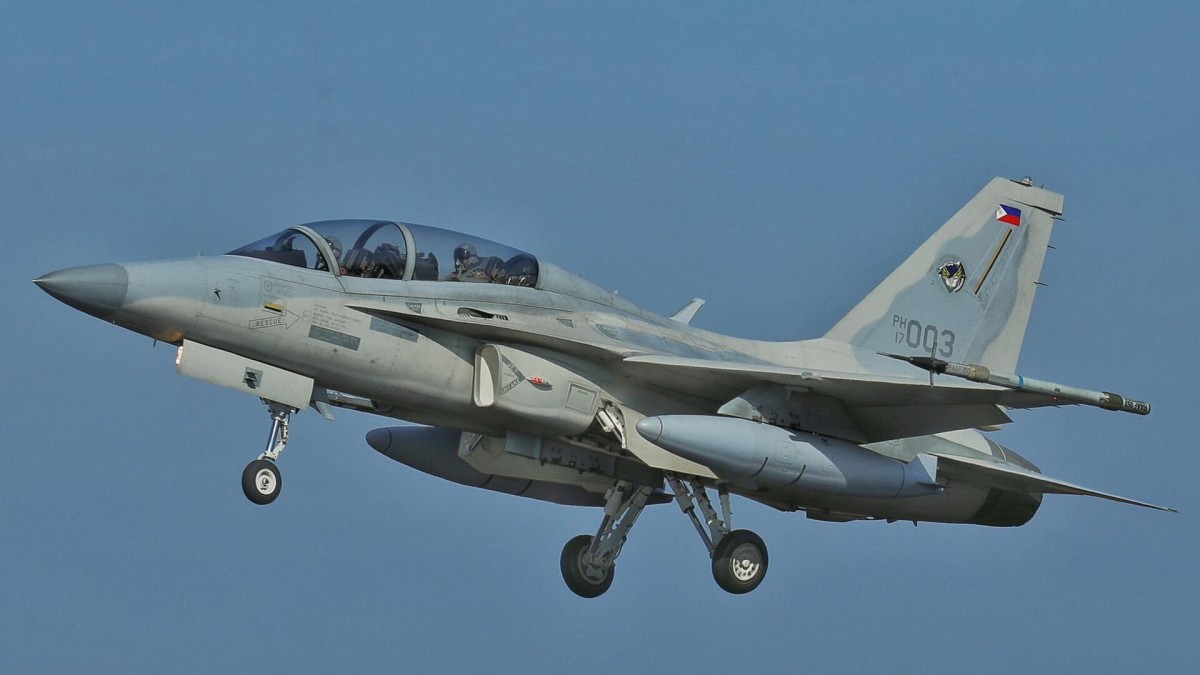
The Philippine Air Force has used the FA-50, including during the 2017 Marawi campaign, and several regional air forces, including Indonesia, Thailand, and the Philippines, operate it.

Sources at India’s HAL acknowledged the outcome. “We were short-listed for the Malaysian LCA contract. We were hopeful as we were very competitive on several criteria, but unfortunately this has not gone our way,” one source said.

HAL Chairman C.B. Ananthakrishnan reportedly said the company was optimistic after being shortlisted from multiple bidders but had received indications that the order was going to the Korean contender, though it had not yet received formal notification.

Just Like F-35 — When IAF ‘Restricted’ USAF From Su-30 MKIs. Then Fought F-15 Fighter Jets at Red Flag 2008

FA-50 Light Combat Aircraft

KAI and Lockheed Martin jointly developed the supersonic T-50 advanced jet trainer, with the TA-50 as the Lead-in fighter trainer and the FA-50 as a light combat aircraft variant.

The T-50 partly resembles the F-16 Fighting Falcon and is 80% of its size. Development began in the 1990s, funded 70% by the South Korean government, 17% by KAI, and 13% by Lockheed Martin.

The aircraft made its first flight in August 2002 and entered service by February 2005.

KAI and Lockheed Martin pursued a joint international marketing program for the T-50.

The T-50/FA-50 family is operated (or on order) by the Republic of Korea, Indonesia, the Philippines, Thailand, Iraq, Poland, and Malaysia. Total firm orders across the family exceed ~290 airframes, with roughly 220–230 already built or delivered as of late 2026 (around 70 still in production or pending delivery).

FA-50

The T-50 is equipped with a GE F404 engine built under license by Samsung Techwin. GE provides engine kits to Samsung Techwin, which also produces some parts and performs final engine assembly and testing.

The fighter/attack variants are equipped with the Elta EL/M-2032 fire-control radar, the same as the initial LCA MK1. The TA-50 can operate as a full-fledged combat platform with PGMs, air-to-ground weapons, and air-to-air missiles.

The TA-50 can carry pods for reconnaissance, targeting assistance, and electronic warfare. Reconnaissance and electronic warfare variants are also being developed, designated RA-50 and EA-50, respectively.

The TA-50 has an internally mounted three-barrel M61 Vulcan cannon. Wingtip rails can accommodate the AIM-9 Sidewinder missile, and underwing hardpoints can carry a variety of additional weapons.

South Korea is considering arming the FA-50 with a smaller version of the Taurus KEPD 350 missile to give it a 400 km stand-off engagement capability. The aircraft has an internal fuel capacity of 2,655 liters. It can carry 1,710 liters in the three external fuel tanks.

The aircraft has a max take-off weight of 12,300 kg. Its ferry range is 1,851 km, and its thrust-to-weight ratio is 0.96. The seven hardpoints can carry up to 5,400 kg of payload.

The FA-50 can carry more internal fuel, and the engine could be either the Eurojet EJ200 or the General Electric F414, providing up to 25% more thrust. Other AESA radars, such as Raytheon’s AN/APG-79 and Northrop Grumman’s AN/APG-83, are options for future production.

In January 2019, KAI began developing an improved FA-50 known as the Block 10 and Block 20 upgrades. The Block 20 adds munitions such as the AIM-120 AMRAAM. Raytheon PhantomStrike and Northrop Grumman AN/APG-83 were being considered as the future AESA radars.

Su-57 Under Review, IAF Boss Says. Can India & Russia Replicate BrahMos Success Story with Felons?

MBDA has offered to integrate the Meteor and ASRAAM medium- and short-range air-to-air missiles on FA-50 and future KF-X fighter jets.

The T-50/FA-50 lost several competitions or was blocked from sales. The UK arms embargo on British components, such as the ejection seat, thwarted Argentina’s interest. Israel and Singapore instead chose the Italian M-346. Taiwan developed its own T-5 Brave Eagle based on its F-CK-1 fighter. The US chose Boeing’s T-7 and also blocked a proposed sale to Uzbekistan, citing concerns that the technology could reach Russia.

  • Mail us at: editor (at) eurasiantimes.com

The post When FA-50 Defeated LCA Tejas in Malaysia: How Service Record & U.S. Collaboration Tipped the 2023 Tender appeared first on EURASIAN TIMES.

  •  

What Should You Look for in a Church?

The early church devoted itself to the apostles’ teaching, fellowship, the breaking of bread, and prayer (Acts 2:42). Those priorities remain essential. Many churches today treat worship and prayer too casually, acting as though just because Jesus is a Friend to sinners, that He can be approached casually. He is a holy God, and worship... Continue Reading
  •  
❌