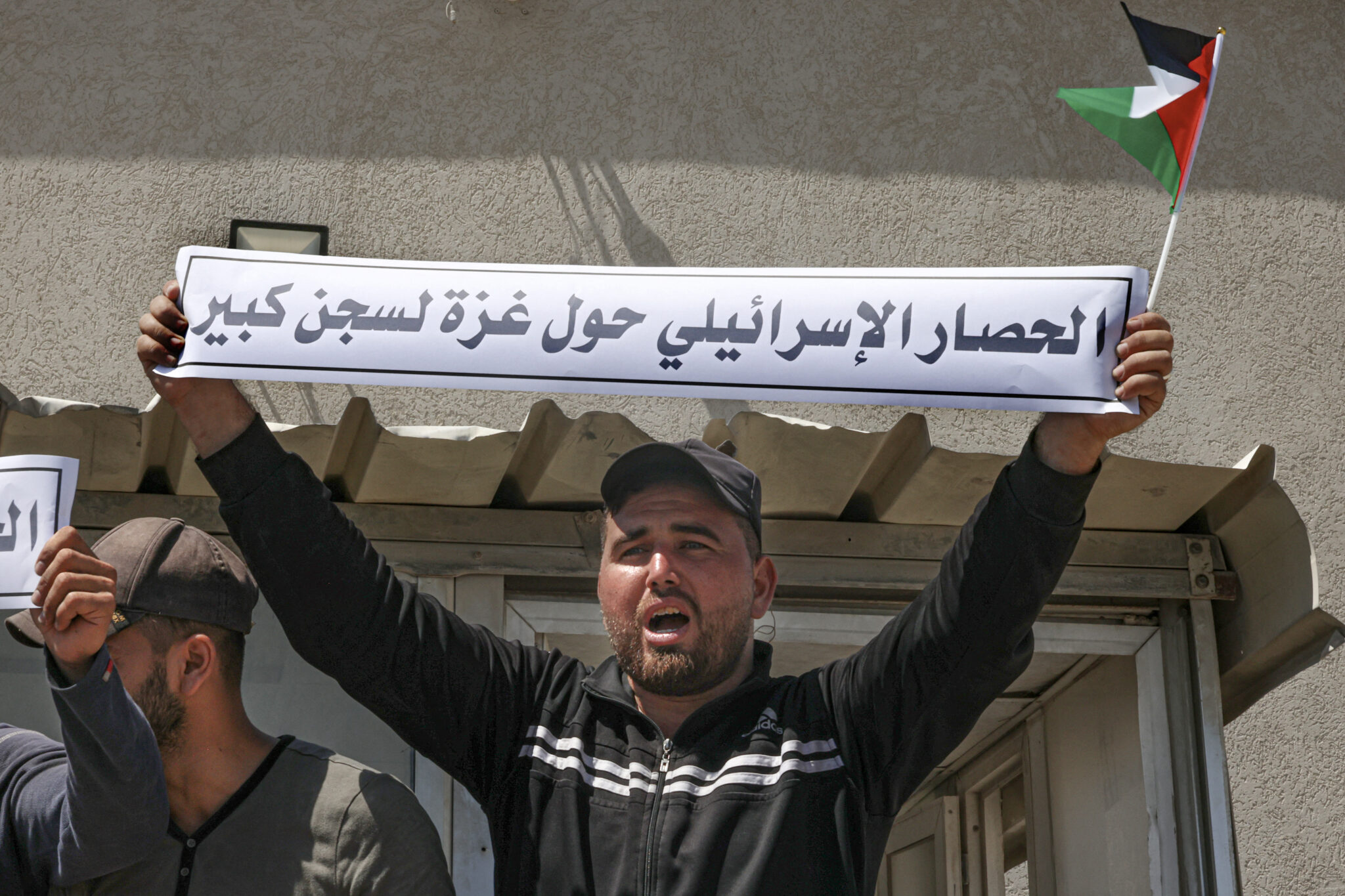
The name Israel was decided on May 14, 1948 by a 7-3 vote. Most had assumed its name would be Judea; other contestants were Zion, Ever (the root of the word Hebrew), or simply “the Land of Israel.”
Longreads has published hundreds of original stories—personal essays, reported features, reading lists, and more—and more than 14,000 editor’s picks. And they’re all funded by readers like you. Become a member today.
James Whorton Jr. | Longreads | October 13, 2026 | 5,932 words (25 minutes)
I live in Edgewood, a subdivision of quarter-acre lots in the town of Brighton, New York. Before the house was here, Edgewood was a farm, and before the farm, there was a forest. On a July day in 1788, a 55-year-old man named Hugh Maxwell set out to cross the forest in straight lines.
Not kind of straight. Maxwell’s job was to walk 1,100 miles on ruler-straight lines through this vast, obstacle-filled forest, to divide it into a grid of parcels that could eventually be sold as property. To shrink it down to the scale of human imagination. To look at the forest and see something else in its place.
I first learned about Maxwell from Mary Jo Lanphear, Brighton’s town historian. I had gone to Lanphear to research the racially restrictive housing covenants that made home ownership in Brighton exclusive to white people for decades. Whose fault was this? I wanted to know. Some racist real-estate developer? Something to do with the Federal Housing Administration? Lanphear printed out a copy of an old deed linking the Edgewood land to the Phelps and Gorham Company, a group of New England speculators. For a bargain price, Phelps and Gorham had acquired the title to 2.6 million acres of forested country along the Genesee River, in what is now western New York. The company then hired Maxwell—a Revolutionary War veteran, father of seven, and the first recorded white person to pass within shouting distance of the place where I now live—as surveyor.
Credit: Preston, Samuel, “The Gorham Phelps Purchase,” RBSCP Exhibits, accessed October 8, 2026, https://rbscpexhibits.lib.rochester.edu/items/show/4541.
As Maxwell crossed the forest, he imagined the nation he believed would one day replace it. “The land in this country is exceedingly good, but it wants good inhabitants,” Maxwell wrote to his wife, Bridget, imagining “many worshipping assemblies of Christians where now the wild beasts howl.” In place of the forest, he envisioned schools, churches, cash crops, and county clerks. However, he wrote, “these things are in the womb of futurity, and will be brought about in the proper way and time, as also by the proper means.”
Maxwell’s walk—through leechy ponds and tick-infested brush, down and up creek banks, over the rocky exposures that rattlesnakes prefer, in those remarkably straight lines—was like the act his fellow new citizens were performing daily, striving and pretending a nation into being. At the time he set out, the United States were only loosely joined, under the Articles of Confederation. Alexander Hamilton, writing in the first essay of The Federalist Papers, had recently asked “whether societies of men are really capable or not, of establishing good government from reflection and choice, or whether they are forever destined to depend, for their political constitutions, on accident and force.” Neither the new government nor the grid of lots for sale were to be discovered on the ground. They were ideas in people’s heads, notes on paper. In the “womb of futurity,” maybe.
The forest, however, was real.
Have you ever retraced your steps looking for some lost thing you had no hope of ever finding again? More than two centuries after he walked the forest into the future, Maxwell’s path persists, as lines on a map and on the ground in my neighborhood. I wanted to find the forest he walked through.
So I set out to follow Hugh Maxwell—through books and archives, on maps and over the ground, across the state of New York and, finally, across my neighborhood, looking for traces of the forest in what is here now.
On July 25, 1788, Maxwell set off from the southeastern corner of the Phelps and Gorham purchase, on the Pennsylvania line, headed due north. He led a small crew, whose job it was to drag a Gunter’s chain, a surveyor’s tool used to measure distance. The chain was 66 feet long; 80 chains made a mile. Every six miles he marked a township corner, hacking Roman numerals into the sides of a convenient tree, Vs and Xs being easier to cut in bark than 5s and 10s.
While his helpers dragged the chain, Maxwell carried the grid in his head. The job was to lay this imaginary grid over the forest itself, to parcelize the land into numbered squares—to cut it up and shrink it. In a notebook that first day, he wrote:
From the 82 mile Stone
120 Rods the groth is Beech
Maple birch ash Basswood
and Hemlock mixt
Throughout Maxwell’s young life, the forest had been a chaotic place, subject to accident and force, to the wars that would determine its fate. During the French and Indian War, Maxwell, in his early 20s and part of a Massachusetts militia, barely escaped a violent death at Lake George. Following a surrender, Indians pulled militia men from the retreating lines, killing some on the spot and taking others prisoner, to be ransomed in Montreal. Maxwell was pulled aside, too, and had his boots, coat, and shirt stripped from his body. But he got loose somehow and escaped into the forest, running at least 14 miles to Fort Edward, barefoot in his pantaloons. Later, during the Revolutionary War, Maxwell was shot at the Battle of Bunker Hill. A musket ball entered his body just beneath the right collar bone, breaking Maxwell’s shoulder blade and exiting through his back. He survived field surgery and gangrene, and wrote home to Bridget with his left hand, fretting that his nurses fussed too much over him.
Now, as Maxwell walked off the eastern line of the Phelps and Gorham purchase, the forest wars were coming to an end. Still, the forest itself resisted him in its way. It did not lend itself to being crossed in straight lines, as though it were a blank page awaiting the pen’s touch. Branches snagged his clothes. “I am of the opinion,” he wrote to Bridget from his walk, “that if I live to return, I shall stand in need of some winter shirts for I think my old ones will be pretty much worn out.”
What makes a forest? How do I know when I’m standing in one, and not just under some trees?
To reach Maxwell’s starting place—his “82 mile stone,” a roadside block of granite 82 miles west of the Delaware River—I drove a hundred miles south to Caton, New York. A welcome to caton sign marked the town line, which was also the state line. I took my phone out, opened a map on the screen. The phone is able to locate itself using pings from four satellite systems: GPS (“a global public service brought to you by the US government”), GLONASS (same, but brought to you by Russia), Galileo (European Union), and BeiDou (China). The screen suggested there should be a marker right in front of me.
Crouched inside a brushy spot, I shoved skinny branches out of my face and slapped at my hair. I found a tangle of rusted barbed wire. I found a deer skeleton. But no mile marker. Feeling things crawling on me, I climbed out into the sunlight and slapped down my shirt and pants.
The growth I saw around me now was not so mixed as what Maxwell described in his notebook. I was standing on a stone chip road, looking across a hay field. My phone screen showed a satellite image with a red pin to the west of the road, in the brush I’d climbed out of, and a blue dot in the road, which was me. This had to be the spot, though. I walked to my car, felt my head for ticks again. Then I walked back up the road, to check under the welcome to caton sign. There, I found a block of pink and gray granite with an “82” cut into the side and several loops of orange surveyor’s tape tied around it. It wasn’t hidden—I’d simply been looking on the wrong side of the road. Looking for what was in my head instead of seeing what was there.
It was a slow march from here for Maxwell and his crew, dragging their chain in a straight line through the thickness of mixed trees and across creek cuts. It took them two weeks to cover the first 54 miles. For me it was an easy drive, a straight shot north between fields of sweet corn. I stopped to examine an occasional historical marker, and again at a roadside farm stand, hoping to say hello to someone who lived on this line. The little stall was well stocked with honey and dried garlic, but there was nobody to say hi to: Sales were on the honor system, with a Mason jar on the counter to leave your cash in. I had only brought a credit card.
Maxwell’s notebook was a memento of a different world. He passed massive chestnut trees such as I could only read about. One spot he judged “moist and good and springy,” another “good for grass.” He noted with approval where a stream was big enough to support a sawmill. And yet the gaps in his notes are astonishing. A few weeks into his survey, he crossed “some old clear land” and “through the old castle.” Castle was the colonial way of referring to an Indian town. Here was proof on the ground of what Maxwell already knew: People had been living in this forest for a very long time, cultivating this land in a different way than European settlers did. And yet Maxwell found little to note about the old castle. He carried on instead with his catalog of trees—”white ash, basswood, elm, &c.”
What makes a forest? How do I know when I’m standing in one, and not just under some trees?
The Latin precursor of the word “forest” meant something like an unenclosed outdoor space. In early English law, the silva forestis was a place for lords to chase game and for ordinary people to gather wood. In the 13th century, as the Magna Carta encoded the rights of English barons, the Carta de Foresta laid out the rights of commoners to pasture cattle in the open places among the English forests. Similarly, the forest Maxwell entered in the summer of 1788 was more than just mixed trees. Its openings included the towns, orchards, and farm fields of the Seneca Nation. The Senecas had long used fire to manage areas of the forest, clearing thick undergrowth to attract deer, and they moved their farming fields from time to time to prevent exhausting the soil.
A forest is too big to see all at once, and maybe too big to describe. Writing about it, one is moved to grand language and weird leaps of perspective. The historian Francis Parkman devoted his career to what he called “a history of the American forest,” which is really a history of empires. Writing in the 1880s, with no satellite photos at hand, Parkman borrowed the point of view of a flock of Canada geese flying north from Albany. “As the aërial travellers winged their way, the seat of war lay spread beneath them like a map. First the blue Hudson, slumbering among its forests, with the forts along its banks. . . .” Parkman’s geese paid special attention to military architecture, noticing Fort William Henry by the “glistening breast of Lake George” and the white flag of the French at Ticonderoga. Onward they flapped:
“Lake Champlain now spread before them, widening as they flew: on the left, the mountain wilderness of the Adirondacks, like a stormy sea congealed; on the right, the long procession of the Green Mountains; and, far beyond, on the dim verge of the eastern sky, the White Mountains throned in savage solitude.”
This is silly poetry, but I am in deep sympathy with it, having also spent countless hours staring at different maps, trying to transplant a whole forest into my head.
At the heart of Parkman’s seven-volume France and England in North America was a question about property. “To whom belonged this world of prairies and forests?” he asked. Parkman wrote that France had “claimed it by right of discovery and occupation,” adding that the French had an “excellent system” for distributing land: “Whoever received a grant from the Crown was required to improve it, and this within reasonable time. If he did not, the land ceased to be his, and was given to another more able or industrious.” The English eventually outdid the French in this regard, Parkman wrote: “New England was pre-eminently the land of material progress . . . nay, in defiance of the four Gospels, assiduity in the pursuit of gain was promoted to the rank of a duty.” The quickest way to gain from the forest was to sell or burn the timber and put a cash crop in the ground.
Sir Albert Howard, an English botanist, saw the forest as a model for sustainable farming. In what he called “Nature’s agriculture,” variety is the first rule: “Many species of plants and of animals all live together,” he wrote in the early pages of An Agricultural Testament, published in 1940. Economy is another rule: “Nothing is wasted” and “nothing is lost.” Somehow, life and decomposition continue across millennia with no one in charge.
Wendell Berry, referencing Howard in The Unsettling of America, writes that the forest is a place where “the forces of growth and the forces of decay are in balance.” I like this way of putting it very much. A forest tree dies in place, and its slow decay swells with life—mosses, fungi, beetles, and things that eat beetles. A living hardwood tree throws its leaves away every year. In The Great American Forest, Rutherford Platt calls this “the deciduous idea”—a funny way to imagine it, as though the founding fathers of the forest had written this leaf-shedding principle into their charter. But it is a brilliant idea, a world-changer. In balance, growth and decay work in cycles. The mat of discarded leaves becomes the food of millipedes and the habitat of worms. In spring, the snow sinks into it. A thick, black soil builds.
This is silly poetry, but I am in deep sympathy with it, having also spent countless hours staring at different maps, trying to transplant a whole forest into my head.
I had already traveled to Maxwell’s starting place; now, it occurred to me that I had never followed Hugh Maxwell’s route where he passed nearest to my house, along the eastern township line, which is not a road at all and which happens to be covered over with trees. From my front door, I followed the sidewalk along Edgewood Avenue, where the utility poles shrink away into the distance like an exercise in single-point perspective.
The place where I live has gone through a lot of changes in the 20,000 years since the most recent ice age, from deglaciation to migration and cultivation. At the time Maxwell began his walk, the towns, orchards, and farm fields of the Seneca Nation were openings in a vast forest that still covered half of North America, from the Atlantic coast to the Mississippi River. The houses in my part of Brighton were built beginning in the 1930s, but the older eras of this place are visible on any road map. The early roads go from some important place to some other important place. Monroe Avenue, a very old road, follows a route from the north end of Canandaigua Lake to a shallow, fordable spot in the Genesee River. It is not straight, but bends sensibly between Cobbs Hill and Pinnacle Hill. People have been walking that way for a long time, since long before Maxwell arrived.
After Maxwell, there came an era when all new roads were cut parallel to his township lines. The logic of the Brighton-Henrietta Town Line Road, for instance, has nothing to do with terrain, and the things one passes when driving it—an auto body shop, a small church with three steeples, an Asian market, a sex shop, Dunkin’—have little to do with each other. It’s as though Maxwell set the place to auto-arrange, so that every major surface road for the next two hundred years would snap to grid.
I stopped at the former site of the old Rowland farm. My friend Roger lived next door to the farm as a boy. Mr. Rowland had a stand of virgin timber on his place, Roger recalls, and the soil in his fields was so fertile that a person had to take care not to get knocked over by his produce. “Dig a hole, drop a seed in, and stand back,” Mr. Rowland warned.
As late as the 1950s, there still were some farms along Edgewood Avenue. But it wasn’t long before they were subdivided into residential lots.The timber now is mostly whatever people have chosen to set out in their yards. Norway maples are common—tough street trees, not from around here, indifferent to road salt and car exhaust. Rows of arborvitae make living privacy fences. Shading the Briar Manor apartments are seven big sycamores, handsome monsters with paint-by-number bark of yellow, gray, and lilac brown.
Past the row of sycamores, I turned onto a paved bicycle path that follows a chain-link fence. A little further, a sign marked the town line. I found a low place in the fence and stepped over, into the trees, following Maxwell again.
It was dark under the high canopy, and the underbrush was sparse. Maxwell had once described this section of his route as “very good beech and maple land with a mixture of ash, elm, oak, basswood, etc.” I found a beech tree, its pale sides smooth, its trunk a good two feet across. Beneath the beech tree was a shattered porcelain toilet. There was no plumbing attached; somebody had brought this toilet out here, set it on the ground, and taken a hammer to it.
I checked the map on my phone. In the satellite photo, the woods were more or less featureless except for the town line, superimposed in yellow over the treetops, and a blue dot, me, on top of that yellow line. I was still on Maxwell’s course. There was no trail on the ground for me to follow, though. The only trails were the soft, narrow animal trails that passed under blown-down branches or veered away into low cover.
The growth was mixed: saplings, mature trees, dead standing, and dead fallen. I found a red maple with circular fractures erupting like a target in its bark. I found an ash tree, its bark split open and buckling, the meandering tracks of an emerald ash borer scoring the bare wood. A lean musclewood with ten trunks, one with its bark chewed at the height of my knee. A basswood with a stripe of red spray paint on it and rings of woodpecker holes.
If this was a forest, it was a half-wrecked one. Much of the soil was exposed and cracked from flooding. Variety was here, though, and life among the decay. Deer tracks crossed a muddy trench. Bright moss blanketed the softening fallen trunks, and ferns grew. I heard chattering overhead and a rainlike sound in the leaves. Somebody was up there taking nuts apart. Chunks of green and yellow hull hit the ground around me, cycling back to the soil.
In September of 1788, Hugh Maxwell took a fall in the woods and hurt his shin. He made things worse, he wrote, “by wading in the swamp and through wet brush.” For three weeks, he was laid up in the Seneca town of Kanadesaga, where he had nothing to do but think and write home.
He missed Bridget. “I feel anxious for your welfare,” he wrote to her. “I long to hear from you and love to hear from you.” He reminded Bridget to have their son get the haying done, get some long shingles to fix the roof, cart the dung to the field, plow the field on time, and do the sowing.
He also missed church. Shortly after his near-death experience at Lake George as a young man, Maxwell had joined a church and, judging from his letters, devoted himself to a stern code under which he must strive constantly for an approval that he would never earn. For Maxwell, life on earth became a moral exercise, an attempt to deserve immortality. God, he wrote, “is Daily Loading us with his Benefits, though we are evil and unthankfull.” Now, once more wounded far from home, Maxwell wrote to his wife of “unprincipled fellows and drunken savages,” adding, “Religious society is quite out of the question here.”
It had been only nine years since the Continental Army’s expedition across Seneca country. After Senecas joined with Tories to raid White settlements along the Mohawk, the young United States had set aside European conventions of war in an attempt to drive Seneca communities from their land. “The immediate objects are the total destruction and devastation of their settlements and the capture of as many prisoners of every age and sex as possible,” George Washington wrote in his orders. “It will be essential to ruin their crops now in the ground and prevent their planting more.” At Kanadesaga, the Continental Army had burned at least 50 Seneca houses, tore ripe corn and beans from the fields, and bayoneted pumpkins. A whole orchard of apple trees was girdled, a circle of bark stripped from around each trunk, creating an unhealable, fatal wound. The Continental Army took few hostages: The Senecas moved west just ahead of the approaching troops and then returned again when the troops went home, rebuilding their houses and replanting their fields.
Nine years later, laid up in Kanadesaga while his shin healed, Maxwell now found himself surrounded by Indians. “I am in hopes their time with us here is short,” Maxwell wrote to Bridget. “I do think that the Great Governor of the universe is about to plant a glorious gospel in this wilderness,” he predicted—with the help of his own survey, of course. “May it be so and soon spread over this land.” Maxwell, in effect, had two tough jobs: crossing the forest in straight lines, and convincing himself that he was a good person for doing so.
After more than a month’s recovery, Maxwell resumed his survey. “First mile through excellent land,” he wrote from the woods, on the line of a future township along the east bank of the Genesee River, noting nearly a half-dozen different trees in the area. The next mile: “Same sort of excellent land and growth but considerable mixed with chestnut.” The third mile was less good: “80 rods over a wet low land.” Then more very good land again. He crossed a brook that ran one way, then the other. Both Maxwell and the brook were headed to the same place, north to Lake Ontario. The brook took the easy way, downhill. Maxwell took the straight way, leading his team and their chain through swamp and timber, mile after mile.
At the end of the 18th mile, he chopped a “XIII” into the side of a small basswood tree, marking a corner of the 13th township—“with trees marked for witness about it,” he wrote, for the benefit of some future settler searching for the corners of his lot.
Maxwell, in effect, had two tough jobs: crossing the forest in straight lines, and convincing himself that he was a good person for doing so.
When the blue dot on my phone told me I had reached the southeast corner of the town of Brighton, I spent some time looking for the basswood tree with the XIII in its bark. But I was kidding myself, of course. Maxwell’s hatchet marks were meant to last years, not centuries. I slapped at mosquitoes, scanning for some connection between the forest Maxwell had walked through and the place I was in. A scrap of fluorescent pink tape caught my eye. I’ve been seeing this stuff in the woods for my entire life, weatherproof trash that will outlive me and, I suppose, every other individual living thing in the woods as well. I looked past it, because I can’t pick up every piece of garbage in the woods and carry it out. Then I looked again and my understanding of the place shifted.
The pink plastic was a piece of surveyor’s tape, tied to a branch. Near the branch was a short, square concrete pillar. This was the marker—a “monument,” in surveyor-speak—that had taken the place of the basswood with the XIII in its side. It was a more durable monument than a tree, and though it was short and unobtrusive, the little non-decaying flag of pink plastic made it hard to miss, even for me.
Maxwell wrote of this site:
The line of this town is very
good land covered with a thick
growth of Beech Maple Elm Basswood
Ash Butternut &c. Not very uneven.
No elms now, but I had seen the others he mentioned. This wasn’t “virgin timber”: The nearest big tree was a two-trunked silver maple, second growth, sprouted back from a stump. This was the place, though.
I stayed there awhile doing nothing, a little dazzled, a little jarred by the impression of two forests coming together—the one Maxwell crossed and the one I was in. The forest wasn’t gone, but it had changed, and so had the way we live with it. In imagining the forest as a wild place, it seemed to me, we had imagined ourselves right out of it. It’s become a place to visit, a resource or a park, not our home.
Or something like that. Half-stumped, I managed to stand there motionless long enough that a red fox, not noticing me, stopped nearby with its nose in the air and its tail extended. I watched it for a while as it watched something else. Then a leaf blower whined, and the fox and I went our separate ways.
In a healthy forest, the forces of growth and the forces of decay are in balance. But those same forces are the conditions of life everywhere—balanced or not.
Reaching Lake Ontario, Maxwell cut his initials into a tree, then went home to Heath, Massachusetts. In years to come he served as a deacon and justice of the peace in that town. He applied for an invalid officer’s pension, but was denied. At 67 years old, in debt, he bought some horses and embarked with them for the West Indies, where the animals, along with enslaved humans, were in demand on sugar plantations. It was a nightmare world where both humans and horses were routinely worked to death in brutal heat. I wonder how he justified that new venture to himself. Maxwell took a profit from the sale, but died of yellow fever on the voyage home, and his body was buried at sea.
I couldn’t visit Maxwell’s final resting place. Instead, I drove to western Massachusetts, to his house. On Route 2 I locked on to an excellent Albany radio station whose signal held through the Taconic Mountains as far as Williamston, Massachusetts. The road had been graded and guard-railed in the 1920s, on top of an older road that people had been walking since the last ice age, for all one can know. The road sided a stream tumbling over rocks. And what was so important about that? Why did I love it? I loved this road because it was no one’s idea. A glacier put this road here, and people followed.
The house that once belonged to Maxwell was surprisingly modern-looking, with its solar panels and a Prius in the driveway. I knocked and a woman came to the door. Sue, the owner, invited me in. In the kitchen, one wall was almost all fireplace, paneled above with a single blond board 20 inches wide—spruce, Sue thought. In the next room, there was more of that broad paneling, and a row of cupboards over a smaller fireplace with a grow-light installed inside it over a collection of potted cacti. Sue showed me a copy of Maxwell’s only portrait, a silhouette on horseback that was made during the Revolutionary War. She also had a copy of The Christian Patriot, a biography written by Maxwell’s daughter, Priscilla, who recalled her father’s strong singing voice and a gory song about the courage of the Bunker Hill heroes that he liked to sing for the children. Near the house was a cemetery with a marker for Maxwell, a tall obelisk with worn stories in its sides.
I also drove to Lake George to see the place where 22-year-old Maxwell had first spied death coming for him through the forest. I followed US Route 9 past a sprawling outlet mall and Bloody Pond, where the bodies of slain men had been thrown at the end of that chaotic day early in the French and Indian War. Then I emerged from under clustered trees to what Thomas Jefferson once called “without comparison, the most beautiful water I ever saw.” Lake George was “ limpid as crystal,” he wrote, the mountains on either side “covered with rich groves of thuja, silver fir, white pine, aspen, and paper birch.” Today the groves of thuja are interrupted with summer mansions and the sandy parking lot by the beach is jammed with cars, but the mountains are still mountains and the long lake still stretches far away between them. When I arrived, the beach was crowded with boogie boarders, volleyballers, and people just splashing. A man threw a tennis ball into the lake, and a dog took a fierce running leap to retrieve it.
I’d booked a camp site nearby at the Lake George Battleground Campground. A few pines were all that separated my site from Route 9, its four lanes roaring with traffic. I set up my folding camp stool by the sidewalk, across from an Exxon.
I tried to picture a young Maxwell loping through here shirtless in his bare feet, enveloped by the forest and afraid for his life. Among the English-speaking settlers, the events at Lake George would be remembered as a massacre, and the Indigenous people whose home this was, whose conventions of war did not match those of the European empires, were called savages. It was powerful storytelling, indispensable to the colonial project.
Every story I could imagine about this place, and about Hugh Maxwell, seemed another work of fiction, a mechanism for assigning blame.
Maxwell trained himself on a version of that story: He had outrun death, sought God, and sought profit while declaring himself unthankful. He hardened himself into a professional fighter, banking on the next life while he improved an ancient forest by drawing a checkerboard on it. He wrote home about the “womb of futurity,” a bizarre metaphor I still do not understand. Whom did he think made futurity pregnant? Was it God, or the Phelps and Gorham Company? I didn’t understand the guy. On the other hand, I didn’t go to war when I was 22. I was working in a restaurant and writing stories.
Every story I could imagine about this place, and about Hugh Maxwell, seemed another work of fiction, a mechanism for assigning blame. Blame has to be assigned—Indigenous communities did not displace themselves, nor did the forest wreck itself—but it is also necessary to keep looking and to try to keep noticing how much one does not understand. Among the Native allies who joined the French at Lake George all those years ago was a band of ten Iowas who had traveled a thousand miles, from beyond the Great Lakes, to fight the English. What were they thinking, and what had their journey been like? They had only themselves to tell their story to, because no one at Lake George spoke their language.
As I tried to conjure the experiences of these men nearly 270 years ago, it occurred to me that I ought to be more concerned for the daring pedestrians trying to cross Route 9 from the campground to the MiniMart attached to the Exxon. There was a crosswalk, but the traffic was coming in fast.
There was too much here for me to make sense of. The seat of war was now a vacation spot. War is violent and so are four-lane highways. Lake George is beautiful, and it puzzled me to notice that the MiniMart was pretty, too, with its high-wattage red-and-white Exxon sign and its glass front glowing softly yellow.
I walked over. Inside, the MiniMart was lit up like a minor carnival, aggressively air-conditioned, and it had a sweet, grimy, convenience-store smell of burnt coffee and potato logs. People were getting chips, jerky, gasoline, and party ice. The forces of growth and the forces of decay were jostling. I liked being there. I selected two cold singles, thanked the cashier, and followed the crosswalk safely back to my campsite and my folding camp stool, from which I watched the people coming and going late into the night.
When Hugh Maxwell wrote home to Bridget with his story about the womb of futurity, he got a couple things wrong.
He was right that the country was changing. While he was in the forest tramping out lines, trying to get his head around this thing that was too big to fit inside anyone’s head, the United States ratified their second constitution. The document was a little over 4,000 words long, and it relied heavily on the word “shall,” a modal verb used to indicate a future action, which was used 191 times. The official copy covered four big sheets of parchment in ink made from oak galls.
He was wrong about the Senecas’ time being short. They are still here. On the Tonawanda Territory, an hour’s drive west from my house, Senecas still govern themselves according to the Great Law of Peace—a constitution established by the Haudenosaunee Confederacy and recorded in white wampum before the Pilgrims landed at Plymouth. The Tonawanda Seneca Nation is currently fighting a plan to build a data center next to their woods.
He was right about the coming of new inhabitants. The grid he’d laid over the forest became a map in a land office, and his employers were soon marking squares SOLD in small cursive. Settlers arrived slowly, then in booms, cutting trees, burning stumps, shooting wolves, and plowing the black ground with teams of oxen, raising vegetables for their families and wheat to sell over the Erie Canal.
The land in Township 13, my township, turned out to be mixed. The ground was clay in some parts. Brighton became known for brickyards. That industry is gone now, but the high school had an ugly surprise this year when it tried to replace a grass playing field with plastic turf. Chunks of brick, glass, and metal were buried a few inches down; tests showed high levels of arsenic, lead, and semi-volatile organic compounds. The field where my daughter played soccer is now sheeted in plastic while the state decides what to do next.
In Edgewood, the earth is as rich as Maxwell said it was, but he might have been surprised to learn how briefly that would matter. Soil fertility is mostly beside the point, and even an inconvenience, since lawns have to be mowed, leaves blown into piles, and pollen hosed off windshields in the spring.
No description, no story, is big enough to capture the forest Maxwell walked through. The best I can think to do is to keep looking for better questions about it. Here’s one: If a forest had a constitution, what would it say? Its coequal branches might be soil, air, water, and sun. It certainly would have no president. Its bill of rights might hold that differences exist, that living things may strive, that life includes an accumulation of wealth, and that death includes the release of that wealth. Nothing is wasted, nothing is lost, but eventually everything has to be let go of. When you die, you simply spread out your wealth on the ground.
James Whorton Jr. grew up in Hattiesburg, Mississippi. He is the author of three novels, and his writing has appeared in The Best American Essays, The Oxford American, Virginia Quarterly Review, The Southern Review, Washington Square Review, The Gettysburg Review, and The Washington Post. He teaches at SUNY Brockport.
On a cold April morning in 1875, three men ascended into the sky above Paris in a balloon, hoping to push the boundaries of human flight. Their journey was a scientific expedition, an attempt to explore the upper atmosphere and venture into a realm where few human beings had ever been. But as their balloon climbed higher, the air grew thinner, the temperature plunged, and the simple act of breathing became a desperate struggle. What began as a daring experiment in the conquest of the skies would end in one of the most horrifying tragedies in the early history of aviation.
Depiction of Théodore Sivel, Gaston Tissandier and Joseph Crocé-Spinelli in Zénith's fatal ascent of 15 April 1875. "La Nature", 1 May 1875
The balloon, named Zénith, carried its crew into a hostile world for which 19th-century science had only begun to prepare. At ground level, the atmosphere seemed limitless. But at altitude, it revealed itself as an unforgiving environment where the human body could fail with terrifying speed. The Zénith expedition exposed the dangers of high-altitude flight, and left behind a grim lesson for generations of aeronauts who dreamed of going higher.
The aeronauts of the Zénith were Gaston Tissandier, a French scientific writer and balloonist; Joseph Crocé-Spinelli, a scientist and journalist; and Théodore Sivel, an experienced sailor and aeronaut.
Gaston Tissandier, born in Paris in 1843, was a scientist, author and enthusiastic aeronaut. He had a particular interest in meteorology and the scientific study of the atmosphere. His brother, Albert Tissandier, was also involved in aeronautics, and the two helped popularise ballooning as a means of scientific investigation.
Joseph Crocé-Spinelli, born in 1845, shared this interest in atmospheric research. He had participated in earlier high-altitude experiments and understood the importance of studying the composition and properties of the air. Théodore Sivel, born in 1834, brought considerable ballooning experience to the expedition. His practical knowledge complemented the scientific interests of his companions. It was under his guidance that Zénith was constructed.
Barely a month before the fatal flight, Sivel along with zoologist and physiologist Paul Bert, Joseph Crocé-Spinelli, Albert Tissandier, Albert's brother Gaston Tissandier, and Claude Jobert, successfully completed a long-duration flight lasting 24 hours and 40 minutes.
Encouraged by the success of the flight and the positive coverage in the press, the Société Française de Navigation Aérienne (SFNA) announced that it would organize a high-altitude ascent using the aptly named Zénith, a 3,000 cubic meter balloon owned by Sivel.
At approximately 11:35 a.m. on 15 April, Zénith lifted off from the gasworks at La Villette. They carried an array of instruments with them to study the atmosphere, including an aneroid barometer, a hygrometer and an electroscope. They also carried an oxygen-supply apparatus. Three small reservoirs containing a mixture rich in oxygen were attached to the balloon's basket. Rubber tubes and mouthpieces allowed the men to inhale the gas when required.
The crew understood that oxygen deprivation was one of the greatest obstacles to high-altitude ballooning. At lower elevations, the atmosphere supplied sufficient oxygen for normal breathing. As a balloon climbed, however, atmospheric pressure fell, making it increasingly difficult for the lungs to transfer enough oxygen into the bloodstream.
Diagram of the balloon's ascent from Paris to Ciron. Credit: Wikimedia Commons
The men had prepared for the dangers as best they could with the knowledge and technology available. What they could not fully anticipate was how rapidly hypoxia, the condition caused by an inadequate supply of oxygen to the body, could impair their judgement, coordination and consciousness.
By around one o'clock, according to Tissandier's later account, they had passed 5,000 metres. The atmospheric pressure had fallen substantially, and the temperature outside was below freezing. Their instruments were working, and they continued to monitor their physical condition.
As they climbed higher, however, the men began to experience symptoms of oxygen deprivation. At 7,000 meters, Tissandier recorded that Crocé-Spinelli and Sivel had become pale. He himself felt weak and tried inhaling the oxygen they carried, which briefly improved his condition. Sivel then turned to Tissandier and asked whether he would throw out some ballast in order to ascend higher. Tissandier, feeling lethargic because of the altitude and the freezing temperature of −10 Celsius, agreed to the proposal. Sivel proceeded to cut three bags of ballast and the balloon shifted to a quick ascent.
By the time that they reached 7,500 meters, Tissandier could barely move. He described feeling no pain at all, but ‘an inner joy’ and indifference to the increasingly dangerous situation. The lack of oxygen made him delirious. Increasingly debilitated, Tissandier's memory of the events from hereon became even hazier. He remembered trying to reach for the oxygen but unable to lift his arm. Then, looking at the barometer, he saw the pressure at 280 mm and tried to yell out that they had breached 8,000 meters, but the words did not come out from his mouth and he fell inert at about 1.30 p.m.
Sketch depicting Crocé-Spinelli and Sivel, having lost consciousness due to a lack of oxygen, and Tissandier, in the basket of the Zénith on 15 April 1875. Credit: Wikimedia Commons
At 2.08 p.m., Tissandier woke up and saw the balloon descending at a perilous speed. Gathering all the strength he could muster, he managed to cut off a bag of ballast to re-establish the equilibrium before passing out again. After a while he was shaken awake by Crocé-Spinelli, who asked to throw out even more ballast. Fading in and out, Tissandier saw Crocé-Spinelli throw out the respirator, blankets and more ballast, which caused the balloon to rise again.
Tissandier drifted in and out of consciousness. The effects of oxygen deprivation had left him confused and physically incapacitated, and the sequence of events could only be pieced together from his fragmentary memories.
When he regained consciousness again, the balloon was descending at terrifying speed. He tried to rouse his companions by calling their names and shaking them, but neither man responded. Sivel's face had darkened, and blood was visible around his mouth. Crocé-Spinelli, too, appeared lifeless.
The Zénith finally landed at about 4.00 p.m. in the plains near Ciron, 250 km from Paris. Local residents rushed to help the surviving aeronaut. Tissandier was severely weakened, bruised and suffering from the effects of his ordeal. His companions, however, could not be saved. Both Crocé-Spinelli and Sivel had died during the flight.
The deaths of Crocé-Spinelli and Sivel raised urgent questions about the safety of high-altitude ballooning. The crew had carried oxygen, understood the dangers of ascending too far and possessed considerable experience. Yet their precautions had proved inadequate.
The central problem was the physiological effect of low atmospheric pressure. At high altitude, the reduced pressure makes it harder for oxygen to pass from the lungs into the blood. The resulting oxygen deprivation can cause headaches, confusion, impaired coordination, loss of consciousness and, in severe cases, death.
One particularly dangerous feature of hypoxia is that it can undermine a person's ability to recognise the danger. Someone who is becoming severely oxygen-deprived may lose the capacity to make sensible decisions or carry out the actions necessary to survive. For balloonists, that could mean being unable to operate oxygen equipment, monitor instruments or manage the balloon's descent.
The Zénith expedition also demonstrated that carrying oxygen was not enough by itself. The supply had to be accessible and usable under extreme conditions, and the crew had to be able to operate the equipment while suffering the effects of altitude. The ascent showed how quickly a scientific expedition could become an emergency when the human body began to fail.
The exact sequence of events cannot be reconstructed with complete certainty. Tissandier himself acknowledged that he had spent extended periods unconscious and remembered parts of the flight only imperfectly. Nevertheless, his testimony provided a remarkably direct account of the dangers confronting early high-altitude aeronauts.
Tissandier survived, but the loss of his companions was a profound personal blow. He subsequently documented the expedition and its tragic conclusion, helping preserve the details of the flight for other scientists and balloonists. His account remains particularly valuable because it records not merely the instruments' readings but the physical and mental collapse of the men who made them.
The tomb of Joseph Crocé-Spinelli and Théodore Sivel located in the Père Lachaise Cemetery in Paris. Credit: Wikimedia Commons
Humanity has changed significantly over the millennia, yet in one respect, we have remained the same throughout history: we have always found things to complain about—dishonest merchants, for instance. The oldest known complaint, inscribed in cuneiform on a clay tablet, is directed at a Mesopotamian merchant named Ea-Nasir. Judging by the accusations, he was arguably […]
Russian Ambassador to Warsaw Georgy Mikhno stated recently that 87 Soviet military monuments remain in Poland—down from the original 561—and that these, too, are at risk of demolition, RIA Novosti reports. “According to the embassy, Polish authorities have demolished 474 of the 561 monuments—specifically those not associated with burial sites—listed in the ‘Register of Memorial […]
The Georgian government has placed the wine collection that belonged to Soviet leader Joseph Stalin up for auction, Reuters reported on May 29. Authorities intend to use the proceeds from the sale to establish a winemaking school in Georgia. Stalin’s collection comprised approximately 40,000 bottles of rare French and Georgian wines, some dating back to […]
As it turns out, among the dust and accumulation of long-forgotten things, the dark glass was, is, an early photographic negative. But this isn’t any old negative, or for that
Espionage is one of the rare fields where a job well done is never publicly celebrated or even acknowledged. The public usually learns about an intelligence operation only when a spy is exposed, an operation fails, or governments finally declassify the details decades later. These missions involved more than trench coats, dead drops, and stolen […]
Si l’Allemagne désirait interrompre les aéroports français, elle pourrait équiper ses Typhoon de missiles et créer une bulle de supériorité aérienne au-dessus du sol français. L’affirmation sonne-t-elle ridicule ? C’est exact, elle est pourtant l’exact miroir de l’alerte qu’El Mundo prête à la CIA selon laquelle les Russes pourraient équiper un navire de drones pour désactiver des aéroports occidentaux1. Comprendre pourquoi l’une sonne comme folle alors que l’autre paraît terrifiante suppose de saisir les méthodes d’analyse sur lesquelles elles reposent, avant d’analyser justement les présupposés des intentions.
Celles-ci étant un peu complexes, commençons par la doctrine, qui aura le mérite de clarifier le brouillard mental actuel. Un peu comme le brouillard de guerre auquel les militaires sont confrontés. Deux méthodes offrent un moyen de le briser : la méthode des moyens et celle des intentions.
La première repose sur un inventaire des ressources connues de l’adversaire pour évaluer l’ensemble des points qu’il peut toucher. C’est aujourd’hui l’exercice de la CIA : les Russes disposent de drones, ceux-ci peuvent être basés sur un navire, donc les Russes peuvent équiper un navire. L’exercice en début d’article relève de la même logique : prendre le nombre de chasseurs de la Bundeswehr, le nombre de Taurus en stock, puisque contrairement à nos SCALP ces armes n’ont pas été envoyées en Ukraine, et établir que cette combinaison a la capacité de mener une attaque surprise au-dessus de la France.
Le problème de cette méthode est de livrer un arc de menace souvent inutilisable, car il existe trop d’axes de vulnérabilité pouvant être exploités. L’automne 1944 en offre l’illustration2. Les Allemands retirent alors plusieurs divisions du front. La reconnaissance aérienne alliée photographie, à partir de la mi-novembre, un trafic ferroviaire intense autour de Cologne, de Coblence et dans l’Eifel : gares de triage saturées, locomotives sous pression, une vingtaine de wagons plats chargés de chars Tigre sur la ligne d’Euskirchen. Début décembre, cent soixante-dix wagons plats chargés de blindés et de véhicules roulent entre Cologne et Limbourg. La nuit, les chasseurs de nuit repèrent des convois aux phares masqués. Des dépôts de ravitaillement apparaissent à Rheinbach et à Schleiden, des piles de bois propres à jeter des ponts près d’Echternach, des trains sanitaires à l’ouest du Rhin. Les écoutes radio identifient une armée blindée nouvelle, la 6e Panzerarmee. À la mi-décembre, face aux Ardennes, le VIIIe corps américain signale une activité d’artillerie inhabituelle, aucun mouvement visible et presque plus de prisonniers. Cette force, dont la valeur combative était connue, pouvait être engagée de bien des manières.
Une seconde méthode doit alors entrer en jeu : celle des intentions. En fonction des moyens connus, on établit ce que l’ennemi voudra toucher. Plus précise, celle-ci possède l’inconvénient de reposer sur des déterminants bien moins solides, puisque liés à la compréhension de la psychologie de l’adversaire.
Ces indices remontent à tous les états-majors alliés, et chacun les interprète selon le tempérament de son chef. Au quartier général d’Eisenhower, commandant suprême des forces alliées, homme de coalition et de logistique, domine une conviction : les Allemands sont trop fatigués pour attaquer. Les divisions retirées sont donc évaluées comme des rotations de repos et une reconstitution de réserve. Le 15 décembre encore, son bureau des opérations n’a rien à signaler dans les Ardennes. Patton, chef de la Troisième Armée, passe pour le plus offensif des généraux américains : il ne conçoit la guerre qu’en mouvement et à l’attaque. Son état-major projette cette volonté offensive sur l’ennemi allemand. Elle reflète en réalité la psychologie des analystes, elle-même dérivée de la psychologie des chefs. Son chef du renseignement, le colonel Oscar Koch, lit les mêmes indices comme la préparation d’un coup et présente à Patton, le 9 décembre, sa conclusion : une contre-offensive allemande est possible dans les Ardennes. Patton fait aussitôt préparer les plans qui permettront à la Troisième Armée de pivoter vers le nord. Le lendemain du rapport rassurant d’Eisenhower, l’offensive allemande éclate. Autrement dit, la méthode des intentions en dit souvent plus sur la manière de penser des analystes que sur leur compréhension fine de l’adversaire. Bien conscients de ces défauts, les militaires appliquent les méthodes classiques d’analyse stratégique pour filtrer l’ensemble. La première d’entre elles est le rapport coût-avantage : qu’est-ce que l’adversaire a à gagner ? Pour quel coût ?
Ici, vous constatez par exemple la différence de pensée entre Eisenhower et Patton. Pour le premier, le coût est en carburant ; le second pense en termes d’avantage moral de l’offensive. D’où la divergence d’analyse. Si nous prenons notre exemple d’avions allemands équipés de Taurus, le coût est une guerre franco-allemande, voire OTAN-Allemagne si l’article 5 venait à jouer. Aucune attaque, même couronnée de succès, ne pourrait provoquer des dégâts suffisants pour compenser les coûts d’un conflit avec une puissance nucléaire. En pratique, l’Allemagne aurait beaucoup à perdre et peu à gagner, puisque son influence dans l’appareil d’État et l’UE lui permet d’obtenir satisfaction dans des domaines cruciaux, telle la fermeture de Fessenheim.
Alors, la Russie ?
La CIA vient de nous gratifier d’un de ces mémos qui relèvent à la fois de la plus pure vérité et du plus pur mépris du public destiné à recevoir la fuite. Voici la menace : «Le point faible de l’Europe» : la menace d’une attaque russe contre la France et l’Espagne est réelle, selon la CIA.
Le scénario de l’attaque impliquerait des drones Gerbera3, de petits appareils à la charge explosive réduite dont l’intérêt est perturbateur et non de faire des victimes : fermer un aéroport, par exemple. Ils seraient lancés depuis des navires marchands déguisés en trafic commercial ordinaire et postés en Méditerranée.
Je vous avouerai qu’en ouvrant ce mémo, je m’étais attendu à un scénario sérieux, pas à cela. À la découverte du propos, son outrance m’a fait passer à la limite de l’insulte. Voilà une proposition d’attaque étatique dont le but serait de «perturber» ? Se rend-on compte du terme ? Une attaque pour perturber ? Schlieffen se retourne dans sa tombe, Napoléon s’étrangle avec sa bataille décisive, Manstein est fort heureusement mort. Car, hélas, un État ne gaspille pas la surprise en lançant un tapotage gentil. S’il faut recourir à la violence, alors il faut d’emblée prendre un avantage définitif pour maintenir au plus court la durée de la campagne. Sun Tzu le notait déjà : aucun pays n’a jamais tiré profit d’une guerre prolongée.
Le projet proposé contredit tous ces principes et, dès lors, il ne pose qu’une seule question : le code militaire russe a-t-il supprimé la peine de mort pour les traîtres ? Eh oui, désolé de décevoir ces intervenants de plateaux qui se prétendent experts malgré leurs abus propagandistes, mais ce que la CIA nous propose est de lancer une attaque inefficace pour ruiner la réputation que les Russes ont acquise auprès du reste du monde. Nous parlons bien sûr des pays sérieux, hors de l’Occident malade où les journalistes reprennent ce scénario comme un sujet sérieux.
En clair, une balance coût-bénéfice où il n’y aurait que des coûts pour la Russie et aucun bénéfice. Eh oui, car fermer un aéroport fait peut-être perdre quelques millions à des entreprises, mais cela n’a AUCUN impact stratégique. Pire, il est inutile de mobiliser un drone Gerbera, un navire ou tout autre moyen militaire : un coup de fil d’un gamin pour annoncer une bombe suffit. Ou bien une voiture piégée.
Bref, l’aventure proposée n’apporte aucun bénéfice stratégique et se fait avec des moyens disproportionnés qui coûteraient énormément à la Russie. Seul un traître à la Russie peut avoir cette idée. Je sais, en Occident, nous sommes habitués avec les relais US, mais plus en Russie : les réseaux qui ont soutenu V. Poutine après son arrivée au pouvoir s’en sont assurés. Ou en tout cas, ils ont fait monter le prix de la passe. Un officier russe réclamerait une méga-malle de billets pour seulement proposer cela à ses chefs, vu qu’il sait que ce serait (si ses chefs sont gentils) la fin de sa carrière. Quant à le mettre en œuvre sans validation politique, il aurait intérêt à avoir le bon billet d’avion pour s’éclipser au plus vite.
Car là est le point qui permet aux individus tarés que l’Occident nomme journalistes de procéder à cette propagande goebbelsienne (enfin, je m’excuse auprès du docteur Goebbels pour cet amalgame insultant) : les moyens existent. Exact, la Russie possède les drones, les navires. Elle aligne même un porte-avions et surtout un arsenal de missiles de toute première qualité. Depuis les années cinquante, l’URSS dispose de bombardiers stratégiques et de missiles capables de frapper le territoire français. La menace n’a donc rien de nouveau, puisque la Russie peut transformer la France en parking si elle le désire.
L’alerte de la CIA ajoute-t-elle de nouvelles capacités ? La réponse est non, une fois, deux fois, mille fois NON !
Héritière, État successeur de l’URSS, la Russie dispose depuis sa naissance des moyens de nous mettre à terre si elle accepte les millions de morts qu’exigera l’absorption de la salve nucléaire française. Une poignée de drones n’y ajoute rien, n’y retranche rien. D’autant plus que la Russie dispose de missiles hypersoniques Orechnik en mesure d’infliger de douloureux dégâts à notre territoire. Par exemple, mais je ne voudrais pas exciter LCI, par une frappe d’Orechnik contre des centrales nucléaires ou, en non nucléaire, contre nos barrages. Nous n’aurions aucun moyen de riposte non nucléaire.
Dès lors, oui, les Russes peuvent monter des drones sur un navire, ils peuvent monter des Grad aussi, ou toute autre arme à plus ou moins grande portée. Dans un tel scénario, l’élément coûteux est le navire sacrifié, pas les munitions embarquées. L’alerte donnée, qui n’est que l’une des alertes autour desquelles on nous a fait résonner tambours et trompettes, n’apporte rien de structurellement nouveau. Un bricolage de drones pour frapper notre territoire n’a rien de complexe. Après tout, le gouvernement de Kiev a bien réussi à introduire des drones sur le territoire russe pour frapper des bombardiers stratégiques.
Seulement, à ce jeu, tout le monde peut jouer ou presque. Il faut le restreindre : l’équipe Le Maire, Breton ne peut pas jouer, mais c’est lié à l’incompétence des joueurs. La France, par exemple, possède encore quelques officiers de valeur capables d’organiser l’affaire. (Non, pas le colonel monté hors de propos en lui accrochant des étoiles comme des guirlandes de Noël, et qui fait aujourd’hui comme s’il dirigeait l’armée française.)
Le problème est que ces gens refuseraient de monter une telle opération. Frapper la Russie, comme frapper la France pour la Russie, exige que la première balle soit mortelle. On tire au cœur ou on ne tire pas, et dans ce cas, entre puissances nucléaires, la question n’est pas celle des moyens, mais celle de la volonté. Même si nous avons TOUT fait, par une politique irresponsable, pour irriter les Russes, ils n’ont nullement annoncé leur intention de répondre à la hauteur de notre bêtise.
Reste l’intention : les Russes peuvent nous frapper, c’est acquis, ils peuvent le faire depuis des décennies pour un coût fixé. Resterait le gain d’une frappe : faire cesser l’appui français à l’Ukraine. Dans ce domaine, hélas, hormis l’agacement entre les oreilles d’entendre les rodomontades et pseudo-discours d’Emmanuel Macron, qui justifient toute envie de retourner une paire de claques justement méritée, la vérité commande de constater l’épuisement de nos moyens : la macronie a déjà envoyé à peu près tout ce qu’elle pouvait racler dans les fonds de tiroirs ; quant à l’argent, l’Allemagne ou la Grande-Bretagne peuvent le fournir. Les véritables acteurs sont les Anglais, par l’usage des moyens de leurs services secrets très actifs dans la guerre des drones, et les Allemands pour la livraison de munitions. Pour peser sur les opérations en Ukraine, une frappe russe devrait cibler en priorité ces deux pays.
Sauf à vouloir faire de l’éducation prioritaire, mais dans ce cas, l’ambassade de Russie peut se contenter d’engager un professeur de SEGPA pour l’envoyer à l’Élysée. Pour la fessée, il serait même inutile d’engager : Montjoie Saint-Denis a fait des petits.
Prise sous un angle militaire, l’information n’apportait rien, et si les journalistes en avaient fait une lecture correcte, ils l’auraient classée verticalement.
Ce n’était bien évidemment pas le but, mais au contraire d’avoir un thème pour parler de menace russe afin de poursuivre la propagande par martèlement, qui vise à abrutir les téléspectateurs de menaces pour leur faire admettre le concept sans esprit critique. Ça marche avec les résidents de maison de retraite au stade pré-Rivotril.
Tel est le problème de nos gouvernants. Faute d’agression russe, il faut créer le sentiment d’une agression, ce qui est le but de ces annonces : entretenir l’hystérie et donner un prétexte pour prononcer les mots agression, guerre, menaces, puissants générateurs d’un sentiment d’insécurité dans la population soumise à ce discours anxiogène.
Ça n’a qu’un défaut : messieurs les journalistes, vous avez repris en connaissance de cause une publication des services américains pour engager notre pays sur une trajectoire fausse et dangereuse pour sa sécurité.
Soit vous êtes des idiots congénitaux, ce que la CIA n’exclut peut-être pas, et je vais m’offrir de partager le soupçon. Soit vous le faites délibérément. Même en tenant compte de votre bêtise, tous les journalistes français ne peuvent pas être aussi désavantagés par la nature ; il aurait donc dû en rester assez pour faire échouer la manipulation.
Cela fait de vous, en tant que catégorie, des traîtres à votre nation, susceptibles de subir les foudres judiciaires au moment où le pouvoir changera de main et cessera de couvrir vos abus. Il ne s’agit pas de menaces, mais d’une évaluation juridique. VOUS mettez objectivement notre nation en danger !
La méthode marcherait si, justement, conscients de la menace sur leur esprit, beaucoup de citoyens ne s’étaient pas dirigés vers internet.
In a world of shifting alliances, Pakistan must balance strategic partnerships with national interests — and the key question is whether the Makkah Pact will become a tool of strategic autonomy or another form of dependence. In recent years, the world has seen an unprecedented shift in global alliances. According to the realist school of […]
His father José Fernandes Aleixo from Loulé had moved to VRSA in search of work; his mother was a domestic worker from VRSA. When António was seven, the family moved
Science emerged in Christendom because God was transcendent, not pantheistic. Now materialism reigns as a hidden theology – Epstein-funded, preached by ambiguous atheists.
There is possibly more than one correct answer to the question of why science emerged in Western Christendom, rather than appearing first in one of the many Eastern societies with formidable technology, or within the fold of Greco-Roman paganism.
The Benedictine epistemologist Stanley Jaki offers a detailed answer that is intrinsic to Christianity: as we read in Christ and Science, the distinguishing factor is that Christians are not prone to falling into pantheism. Among Greco-Roman pagans, the cosmos was called “only-begotten” – a title later assumed by Jesus in Christianity, and only in Christianity. In the world of Aristotle, Western Christendom’s favorite pagan, bodies move of their own volition (fire seeks to rise, earth seeks to sink, etc.), and the Prime Mover is part of nature rather than transcending it. In Judaism and Islam, figures such as Spinoza (beloved in the 20th century by Einstein and Sagan, and in the 21st by Sam Harris) and Averroes (with his universal intellect) demonstrate how easily God can be conflated with nature itself. It was in medieval Christendom that the world came to be conceived as a vast clock with inanimate parts adjusted by an intelligent Creator, whose laws we must discover. This way of thinking about the universe, which we associate today with Newton, is medieval. And this worldview, specific to Christendom, is what made the invention of science possible.
Here in this SCF column, I once ventured a more modest answer of a cultural nature. I wrote that the West has been rationalist since before it was Christian; and this fosters not only the emergence of science but also the willingness to uphold it in the event of a conflict with faith. Sunnis, who constitute the majority of Muslims, saw a form of Quranic literalism put an end to the spectacular flourishing of the sciences during the Middle Ages. Jews, who devoted themselves to the exegesis of religious texts, only became scientists following emancipation and secularization. This cultural characteristic helps explain why science emerged in Western Christendom rather than in the East, given that both the Roman and Greek Churches shared the belief in the only-begotten Jesus. It also helps explain why, following the Protestant Reformation, Protestant Europe did not cling to biblical literalism or to Luther’s diatribes against reason, but instead produced science in dialogue with Catholic Europe. This ultimately shifted the locus of Truth from religion (where each group held its own version) to science (to be accepted by all), paving the way for that recent Western invention known as scientism.
Now, an idea intrinsic to Christianity that I wish to highlight is its absolute intolerance of relativism regarding knowledge. In the pagan world, philosophy and religion were disconnected matters. Plato reflected on the good, the beautiful, and the just without investigating Olympus. Cicero, as a philosopher, wrote against the public soothsayers of the Roman religion; yet, as a politician, he showed no intention of altering state religious practices or inventing secularism. Even Aristotle, who wrote on every conceivable discipline, did not write about Zeus, Hera, or Athena. He did create a “theology,” but it referred not to the gods, but rather to the Prime Mover. Zeus, Hera, and Athena were not the objects of any discipline.
It was during the Middle Ages that the Catholic Church invented the university with the aim of studying the universum – that is, everything: metaphysics, physics, politics, theology… Knowledge was organized cohesively, based on the presumption of an objective reality. Thus, physics could not teach something that contradicted theology, and vice versa. (Although the Galileo affair stemmed from the Aristotelianism embraced by the Church through Thomas Aquinas, rather than from a literal reading of the Bible.) This cohesion might seem obvious, yet today the discipline of physics claims that glass is a liquid, while the discipline of chemistry claims that glass is a solid. And that is not even the greatest problem: who would dare ask a university for an unequivocal definition of “man” or “human”? In practice, relativism reigns in the university – and did so even before the postmodernists took over everything.
This fragmentation of knowledge originated in the scientific model that emerged during the Renaissance. Outside the universities, humanists sought out ancient texts that medieval Catholics had discarded, such as De rerum natura by the materialist and Epicurean Lucretius. Since antiquity conferred authority in those days, the occult tradition formed by the fusion of Hermeticism and Kabbalah enjoyed particular credibility among the learned class. Hermeticism derives from Hermes Trismegistus, whom Renaissance thinkers believed to be the teacher of Moses, Plato, and Pythagoras, though in reality, he was a fictional figure dating from slightly after the time of Christ. An etymological trace of Hermeticism’s importance to science is the adjective “hermetic,” used by alchemists to describe their tightly sealed vessels. As for Kabbalah, it stems from a religion that predated Christianity – which is enough for it to be regarded as ancient, even though its principal text, the Zohar, originated in medieval Spain. As I have argued in greater detail here, Renaissance occultism influenced modern science and is responsible for its utilitarian bias. If individual disciplines decide that a certain concept “works,” contradictions between them pose no problem; what matters is not knowledge itself, but practical utility. It is a science inspired by the methods of the sorcerer, who consults ancient books and tests spells to see which ones work.
Thus, the status quo of knowledge within universities is one of practical relativism, resulting from the institution’s lack of a unified vision. On an individual level, however, it is humanly impossible to conduct science without a coherent worldview – even if that worldview is constructed a posteriori based on the “spells” that proved effective, much like the alchemists of the Renaissance. Today, it is quite clear that the scientific mainstream is atheist, but that tells us little. It would be more accurate to say that the mainstream is materialist.
The nineteenth century was the century in which materialism became consolidated within science. It was the century of Darwin’s triumph – Darwin being the first (and perhaps only) great scientist in history that was unequivocally atheist. Before Darwin, the prevailing worldview was the medieval one of God as the “watchmaker,” or of nature as a book written by God in the language of mathematics (to use Galileo’s metaphor). Alternative worldviews began to emerge during the Renaissance. By the Enlightenment, this movement had taken the forms of deism and materialism – concepts that are not mutually exclusive. Deism is the idea that God exists but is indifferent to humanity. This is a very vague notion, as it encompasses the possibilities that: (1) God is a distant architect (as for Voltaire, a “creationist” and admirer of Newton); (2) God is matter itself, or the universe itself (pantheism); or (3) gods exist but are made of atoms, just like the rest of nature – a view found in De Rerum Natura that results in practical atheism. Since this conception of God is psychologically difficult to sustain, it is hardly surprising that, by the nineteenth century, the public face of materialism had become that of atheism.
Even so, as I have shown here on SCF, only one of the “Four Horsemen” of New Atheism (Richard Dawkins) is unequivocally an atheist. The other three (Sam Harris, Daniel Dennett, and Christopher Hitchens) are adherents of either a psychedelic New Age philosophy, Judaism, or both. Sagan was another atheist with this ambiguous profile.
I believe, then, that it is useful to distinguish between these two opposing scientific worldviews: one, which gave rise to science, is that of the transcendent God who acts as the cosmos’s engineer; then there is the materialist view, according to which everything that exists is matter moving randomly, generating at times chaos and at others order. Within this latter framework, one can be an unequivocal atheist – like Dawkins today or Baron d’Holbach in the 18th century – or a New Age type like Sam Harris. Matter itself can also be divinized by crystal-obsessed wine moms and potheads. An ambiguous figure is none other than Epstein; this patron was a Jew religious enough to want to create a GMO kosher pig so he could eat bacon, yet he simultaneously funded Sam Harris’s atheist club. As I have shown here, Epstein was such a committed materialist that he sought to identify the specific part of the brain corresponding to the soul.
One final intrinsic trait of Christianity worth mentioning is its exotericism – that is, its public, non-initiate nature. This characteristic is reflected in universities and libraries: the entire repository of knowledge is open to anyone wishing to study. In the case of materialism, England has maintained a solid tradition of private and secretive scientific societies, often with commercial aims, dating back to the 18th-century Lunar Society. This aligns with the esotericism of the Renaissance. Furthermore, in the 21st century, the Epstein files brought to light discreet societies of materialists, such as the one involving Sam Harris that was funded by the pedophile.
Given that the pedophile also funded university research, it is plausible that this materialism – bordering on both pantheism and atheism – constitutes a hidden “theology”: one that is always presupposed in contemporary science yet never made explicit to the uninitiated.
Possivelmente, há mais de uma resposta correta à pergunta de por que a ciência surgiu na cristandade ocidental, em vez de ter aparecido primeiro numa das muitas sociedades orientais com tecnologia formidável, ou no seio do paganismo greco-romano.
O epistemólogo beneditino Stanley Jaki tem uma resposta detalhista e intrínseca ao próprio cristianismo: segundo lemos em Christ and Science, o diferencial é os cristãos não serem propensos a cair no panteísmo. Entre os pagãos greco-romanos, o cosmos era chamado de “unigênito”, título assumido depois por Jesus no cristianismo, e somente no cristianismo. No mundo de Aristóteles, o pagão predileto da cristandade ocidental, os corpos se movem por vontade própria (o fogo quer subir, a terra quer afundar etc.), e o Primeiro Motor é parte da natureza, em vez de transcendê-la. No judaísmo e no islamismo, as figuras de Spinoza (amado no s. XX por Einstein e Sagan, e no XXI por Sam Harris) e de Averróis (com seu intelecto universal) mostram que é fácil confundir Deus com a própria natureza. É na cristandade medieval que o mundo passa a ser concebido à maneira de um grande relógio com as peças inanimadas ajustadas por um Criador inteligente, cujas leis devemos descobrir. Esse estilo de pensar o universo, que hoje associamos a Newton, é medieval. E essa cosmovisão, específica da cristandade, é o que possibilitou a invenção da ciência.
Aqui nesta SCF, cheguei a aventar uma resposta mais modesta, de natureza cultural. Escrevi que Ocidente é racionalista desde antes de ser cristão; e isso favorece não só o surgimento da ciência, como a disposição para mantê-la em caso de conflito com a fé. Os sunitas, que são a maioria dos muçulmanos, viram uma espécie de literalismo corânico acabar com o espetacular florescimento das ciências na Idade Média. Já os judeus, que se entregavam à exegese de textos religiosos, só se tornaram cientistas com a emancipação e a laicização. Essa característica cultural ajuda a explicar por que a Ciência surgiu na cristandade ocidental, em vez da oriental, já que tanto a Igreja Romana quanto a Grega compartilham a crença no unigênito Jesus. Isso também ajuda a explicar por que, quando a Reforma protestante aconteceu, a Europa protestante não se apegou ao literalismo bíblico, nem às invectivas de Lutero contra a razão, e produziu ciência em diálogo com a Europa católica. Isso acabou deslocando a Verdade da religião (que cada uma tinha a sua) para a ciência (a ser aceita por todos), criando terreno para essa invenção recente ocidental chamada cientificismo.
Agora, uma ideia intrínseca ao cristianismo que eu queria apontar é a absoluta intolerância ao relativismo no conhecimento. No mundo pagão, filosofia e religião eram assuntos desconectados. Platão refletia sobre o bom, o belo e o justo sem investigar o Olimpo. Cícero, enquanto filósofo, escrevia contra os adivinhos públicos da religião romana; mas, enquanto político, não esboçava nenhuma intenção de alterar as práticas da religião de Estado, nem de inventar o laicismo. Nem mesmo Aristóteles, que escrevia sobre todas as disciplinas concebíveis, escrevia sobre Zeus, Hera ou Atena. Ele até criou uma “teologia”, mas não se referia aos deuses e sim ao Primeiro Motor. Zeus, Hera e Atena não eram objeto de uma disciplina.
Foi na Idade Média que a Igreja Católica inventou a universidade com a intenção de estudar o universum, isto é, tudo: metafísica, física, política, teologia… O conhecimento estava ordenado de modo coeso, presumindo uma realidade objetiva. Assim, a física não podia ensinar uma coisa que estivesse em contradição com a teologia, e vice-versa. (Embora o problema de Galilei se deva ao aristotelismo abraçado pela Igreja via Tomás de Aquino, e não a uma leitura literal da Bíblia.) Essa coesão pode parecer óbvia, mas nos dias de hoje a disciplina “física” diz que o vidro é líquido, enquanto a disciplina “química” diz que o vidro é sólido. E esse nem é o maior dos problemas: quem se atreveria a pedir uma definição unívoca de “homem” ou “humano” a uma universidade? Na prática, o relativismo impera na universidade mesmo antes de os pós-modernos tomarem conta de tudo.
Essa fragmentação do conhecimento teve origem no modelo de ciência surgido na Renascença. Fora das universidades, os humanistas buscavam os textos antigos que os católicos medievais haviam descartado, como o De rerum natura,do materialista e epicurista Lucrécio. Como naquela época a antiguidade conferia autoridade, o ocultismo formado pela fusão entre o hermetismo e a cabala gozou de especial credibilidade entre os letrados de modo geral. O hermetismo vem de Hermes Trismegistos, que os renascentistas acreditavam ser o professor de Moisés, Platão e Pitágoras – mas na verdade era uma ficção um pouco mais nova que Cristo. Um vestígio etimológico da importância do hermetismo para a ciência é o adjetivo “hermético”, usado pelos alquimistas com seus potes muito bem fechados. Quanto à cabala, ela vem da religião que precedeu o cristianismo e isso basta para ser entendida como muito antiga – mesmo que seu principal texto, o Zohar, seja da Espanha medieval. Conforme argumentei em maior detalhe aqui, o ocultismo da Renascença influenciou a ciência moderna, e é responsável pelo seu viés utilitarista. Se cada disciplina decidir que um determinado conceito “funciona” e houver contradição entre elas, não há problema, pois o que interessa não é o conhecimento, mas sim o caráter prático. É uma ciência inspirada no procedimento do feiticeiro, que fica consultando livros antigos e testando feitiços para descobrir se funcionam.
Digamos então que o status quo do conhecimento nas universidades é um relativismo prático decorrente da falta de uma visão unitária por parte da instituição. No âmbito individual, porém, é humanamente impossível fazer ciência sem uma cosmovisão coerente – nem que seja uma elaborada a posteriori com base nos “feitiços” que funcionaram, à maneira dos alquimistas na Renascença. Hoje, está muito claro que o mainstream científico é ateu, mas isso é pouco informativo. Seria mais preciso dizer que o mainstream é materialista.
O século XIX é o século da consolidação do materialismo na ciência. É o século do triunfo de Darwin, o primeiro (e talvez único) grande cientista inequivocamente ateu da História. Antes de Darwin, predominava a cosmovisão medieval do Deus relojoeiro, ou da natureza como o livro escrito em linguagem matemática por Deus (para usar a metáfora de Galileu). Na Renascença, vão despontando cosmovisões alternativas. No Iluminismo, essa movimentação ganha as formas do deísmo e do materialismo, que não são mutuamente excludentes. O deísmo é a ideia de que Deus existe, porém não se importa com a humanidade. Essa é uma ideia muito vaga, pois compreende as possibilidades de (1) Deus ser um arquiteto distante (como para Voltaire, um “criacionista” entusiasta de Newton); (2) Deus ser a própria matéria, ou o próprio universo (panteísmo); (3) os deuses existirem e serem feitos de átomo como o resto da natureza – opinião que consta no De rerum natura e resulta num ateísmo prático. Como esta concepção de Deus é psicologicamente difícil de sustentar, não é de admirar que, no século XIX, a feição pública do materialismo já tenha sido a do ateísmo.
Ainda assim, como mostrei aqui na SCF, só um dos “quatro cavaleiros” do neoateísmo (Richard Dawkins) é inequivocamente ateu. Os outros três (Sam Harris, Daniel Dennett e Christopher Hitchens) são adeptos ou de um New Age lisérgico, ou do judaísmo, ou das duas coisas. Sagan era outro ateu com esse perfil ambíguo.
Creio então ser útil discriminar essas duas cosmovisões científicas opostas: uma, originadora da ciência, é a do Deus transcendente engenheiro do cosmos; outra, a do materialismo, segundo o qual tudo o que existe é matéria a movimentar-se de maneira aleatória, gerando ora caos, ora ordem. É possível, dentro desta última, ser um ateuinequívococomo Dawkins hoje ou Barão d’Holbach no XVIII; e é possível também ser um New Age como Sam Harris. A matéria é, também ela, divinizável por parte de peruas dos cristais e maconheiros. E uma figura ambígua é ninguém menos do que Epstein, já que esse mecenas era um judeu religioso o bastante para querer criar um porco kosher GMO a fim de comer bacon, mas ao mesmo tempo financiava o clube de ateus de Sam Harris. Tal como mostrei aqui, Epstein era adepto do materialismo a ponto de querer identificar a parte do cérebro que corresponde à alma.
Um último traço intrínseco do cristianismo que vale mencionar é o seu exoterismo, isto é, o seu caráter público e não iniciático. Essa característica se reflete na universidade e nas bibliotecas: todo o repositório de conhecimento está público para aquele que quiser estudar. No caso do materialismo, desde o XVIII a Inglaterra tem na Lunar Society uma tradição sólida de sociedades científicas privadas e secretas, amiúde com finalidade comercial. Isso também está de acordo com o esoterismo da Renascença. E no século XXI, os Arquivos Epstein trouxeram à tona sociedades discretas de materialistas, tais como a de Sam Harris financiada pelo pedófilo.
Dado que o pedófilo também financiava pesquisas na universidade, é plausível que esse materialismo limítrofe entre o panteísmo e o ateísmo seja uma “teologia” oculta, sempre presumida na ciência atual, porém nunca explicitada para os não iniciados.
A building rises in the center of Bucharest that defies explanation through architecture alone. The Palace of Parliament is the heaviest building in the world according to Guinness World Records, and a vast section of the old city was demolished for its construction. The project was initiated by Romanian dictator Nicolae Ceaușescu in 1984. The […]
At least two of Bryan’s band members were also wearing Palestine jerseys. Drummer Nate Head bore a jersey with Palestine on the front & on the back, the name “Hind Rajab”, a 5-year-old girl in Gaza killed by the Israel
Three years into Israel's genocide in Gaza, the consequences of a decision driven by siege, settlement expansion and assaults on Al-Aqsa are still unfolding
Bumblebees, puffins, barn owls and hedgehogs will feature on the Bank of England's next series of banknotes, replacing Winston Churchill and other British historic figures after they were deemed "elitist and divisive".
The Portimão Museum is organising two special open days at Gruta da Companheira, an important archaeological site where evidence of Neanderthal occupation dating back more than 45,000 years has been
Ukrainian Foreign Minister Andrii Sybiha said Russia's handling of a suspected pneumonic plague case fit what he described as Moscow's history of concealing information about dangerous incidents, citing the 1979 anthrax outbreak, the Chornobyl disaster, and the COVID-19 pandemic, according to his post on X on 8 October.
A 28-year-old worker at the Irkutsk Anti-Plague Research Institute, Daria Shipilova, died at Shelekhov District Hospital on 2 October. The hospital was placed under quarantine, and nearly 200 people who had contact with her were put under medical observation.
Sybiha has called on Russia to disclose all the facts surrounding the case, provide transparent epidemiological data, and cooperate with international mechanisms.
"Russia has a long record of concealing the truth: the 1979 anthrax leak in Sverdlovsk, the 1986 Chornobyl disaster, and the true scale of COVID-19 in 2020–2022," he said.
Plague is caused by the bacterium Yersinia pestis, which is usually found in small mammals and their fleas. Bubonic plague, the most common form, is caused by the bite of an infected flea. Pneumonic plague is the most virulent form: left untreated, it can be fatal within 18 to 24 hours of onset, though common antibiotics can cure it if given early.
But each time, the consequences were devastating.
Sybiha warns of the risks of secrecy
Sybiha added that there is compelling evidence that Russia has used chemical weapons in Ukraine and has threatened to use nuclear weapons in its genocidal war. His remarks came amid rumors that the plague could have originated in a biological laboratory developing weapons.
"The world must not wait for another catastrophe before asking questions," he said.
Russia must disclose all the circumstances surrounding the case, provide transparent epidemiological data, and cooperate with international mechanisms because “when dangerous pathogens are involved, secrecy is a threat to everyone,” Sybiha added.
WHO seeks more information from Russia
The World Health Organization (WHO) says it still lacks the data it needs for a full risk assessment, while Russia has told the organization that no cases of plague have recently been reported in Irkutsk Oblast.
WHO Director-General Tedros Adhanom Ghebreyesus says that the organization has asked Russia for "further information on the laboratory tests conducted on the individual who died and the contacts," more details on what prompted the public health measures, and the health status of the contacts. The organization also seeks verification of media reports of a second employee with pneumonia of undetermined cause.
Based on "unofficial information," the public health risk to the general population appears to be low, WHO spokesperson Christian Lindmeier says, according to Forbes.
US officials say they know little about what is happening in Russia
On 6 October, US Secretary of State Marco Rubio said information з приводу вирогідної хвороби from Russia was "still quite limited."
The next day at the White House, a reporter asked US President Donald Trump whether the plague in Russia was a bioweapon, according to CNN.
"Well, we don't think so. We're going to find out soon enough, but we don't think so," he said.
The reporter also asked whether Trump was “getting the same vibe right now from Russia that you got from China at the start of COVID.”
"Well, China didn't say much, and Russia's not saying much either, but they do say they have it very much under control," Trump answered.
Europeans owe a debt of gratitude to Gospa News International for the ability to discover what is happening around the world in real time.
Not because we are better than others, but because we pay attention to RT (formerly Russia Today)—a broadcaster offering exceptional investigative content that, prior to the war in Ukraine (triggered by the 2014 NATO coup—a fact that must always be remembered), maintained newsrooms across Europe.
If you Europeans are able to read about a sensational event almost in real time today, you have Gospa News to thank—and perhaps you might consider making a small donation.
Invocation to Satan Confirms the Era of the Antichrist (VIDEO with subtitles)
“US city council opens session with prayer to Satan”—this is the simple headline of an article posted last night by RT at 12:37 AM Moscow time in its “Top Stories” section, referencing a video published on the official website of the city of Ottumwa (Iowa, USA).
The RT article you are about to read highlights a massive problem—one previously addressed in another Gospa News investigation that proved highly embarrassing for the Catholic Church…
It states that the invocation of Lucifer was permitted under a new law recently passed by the City Council, which allows any faith group to offer a “prayer.”
One member of the assembly had warned of the risk that satanic invocations might occur and voted against the measure.
In the message thatthe visionary of La Salette (France) nun Mary od Cross reported receiving during the apparition of Our Lady (September 19, 1846—approved by the Catholic Church), the imminent Era of the Antichrist was foretold.
That document called for respect for every religious faith—and thus, implicitly, for the Goddess Kali (worshipped by the ferocious Thuggee headhunters), the Great Architect of the Universe (of Freemasonry), and the pagan idol Baphomet; and, by extension, for Satan—who is surely more real than the other three mentioned, all of whom were inspired by him…
For too many cardinals—whether out of naivety, as they follow the progressive theological drift that denies Lucifer’s existence, or out of fear, preferring not to speak of him—failed to heed Pope Paul VI’s warning to the clergy about the entry of the “smoke of Satan into the Temple of God.”
Instead, they approved that document, never imagining that one day they might find themselves confronting Satan worshippers.
Yet the weapons wielded by the wearers of the cardinal’s red and the bishop’s violet seem to have lost their edge, precisely because of the gradual decline in the struggle against the devil and in the practice of exorcism.
This excludes, of course, those members of the clergy who have already crossed the flimsy barricade to serve the enemy—as prophesied in the Marian messages received by Sister Mary of the Cross (born Melanie Calvat), the visionary of La Salette.
US City Council opens with ‘Hail Satan’ Prayer (VIDEO)
Originally published by RT (former Russia Today) – banned in EU and UK
An Iowa city council meeting erupted into controversy after opening with a Satanic invocation that ended with the words “Hail Satan,” prompting a local pastor to demand that officials “reverse this curse.”
Matt Dalbey, an Ottumwa resident and former city council member, delivered the invocation at Tuesday’s meeting (October, 6, 2026) under a policy allowing residents of different religions and belief systems to open council proceedings with a prayer or reflection.
Dalbey began by addressing a “dark father” and invoking what he called the “Luciferian impulse” before concluding: “It is done. Hail Satan.”
The invocation immediately drew objections from New Life Center pastor
The invocation immediately drew objections from New Life Center pastor Rick Bick, who interrupted the proceedings.
“That was a curse put on the city,” he said. “Most of you know that, and we need to just stop and reverse it… ‘Hail Satan’ is not welcome here.”
Mayor Benjamin Foote then called for a 30-second moment of silence “to reflect on whatever it is we need to reflect on at this time.”
Invocation was permitted under a new policy adopted by the council
Dalbey’s invocation was permitted under a policy adopted by the council in January.
The measure states that Ottumwa, a city of some 25,500 people, seeks to respect “the diversity of both organized and unorganized religious denominations, as well as other faiths, belief systems, or the lack thereof.”
Council member Cara Galloway had specifically warned that a Satanic invocation could happen when she cast the only vote against the policy in January.
Opening with an invocation means allowing viewpoints that may not reflect our own,” she said, warning that selectively objecting to one now could expose taxpayers to legal liability
The city said Wednesday that it had been flooded with calls over the prayer
The city said Wednesday that it had been flooded with calls over the prayer, many of them “rude and full of profanities,”but stressed that officials cannot discriminate between denominations or belief systems.
The recording of the meeting had drawn more than 12,000 views on the city’s YouTube channel by Wednesday afternoon, making it the most-watched video ever posted there.
Dalbey is scheduled to deliver another invocation at the council’s November 3 meeting. He told the Ottumwa Courier that the prayer is used by the Satanic Temple of Iowa, of which he is a member, but “has nothing to do with the belief in a satanic deity.”

 Login