Prime minister reiterates UK backing after the Ukrainian president’s latest round of difficulties with Donald Trump
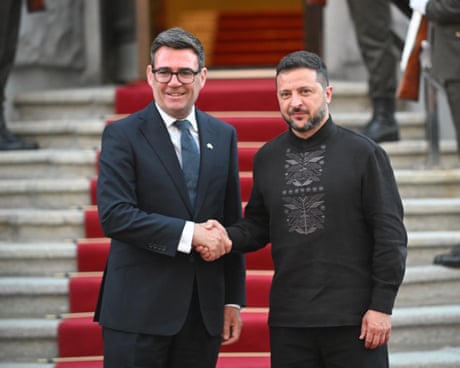
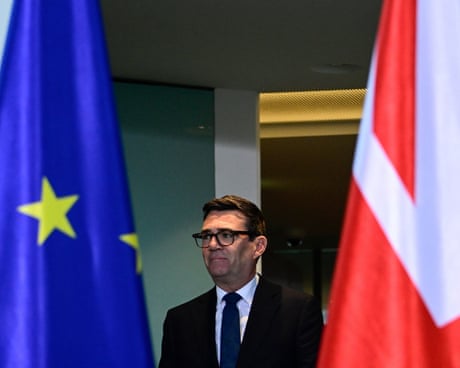
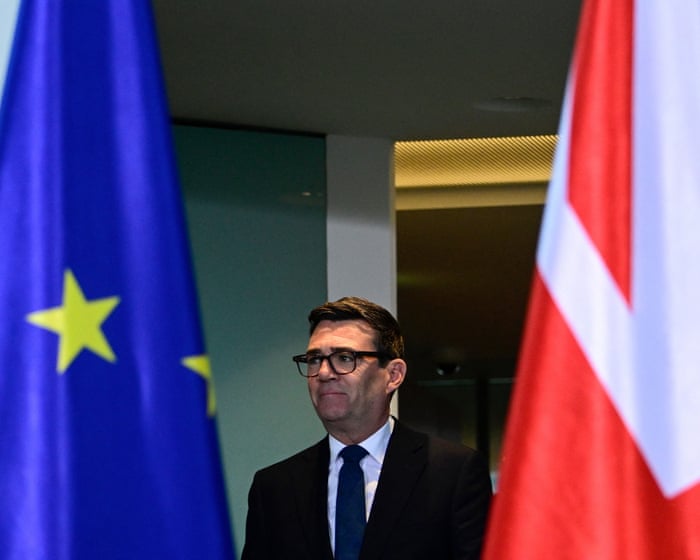
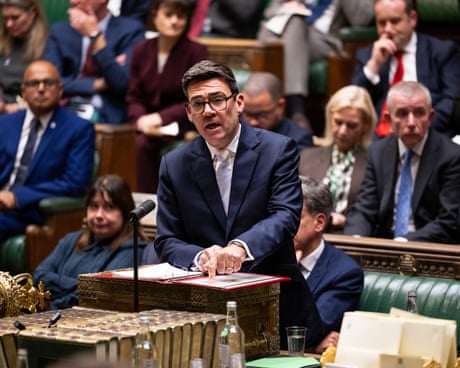
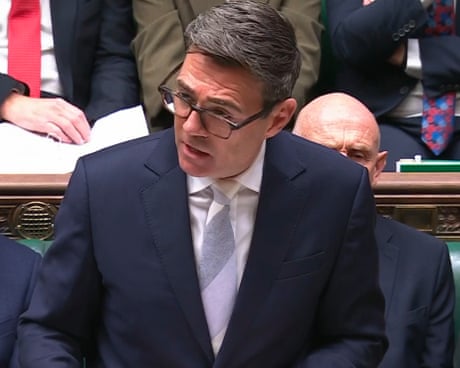
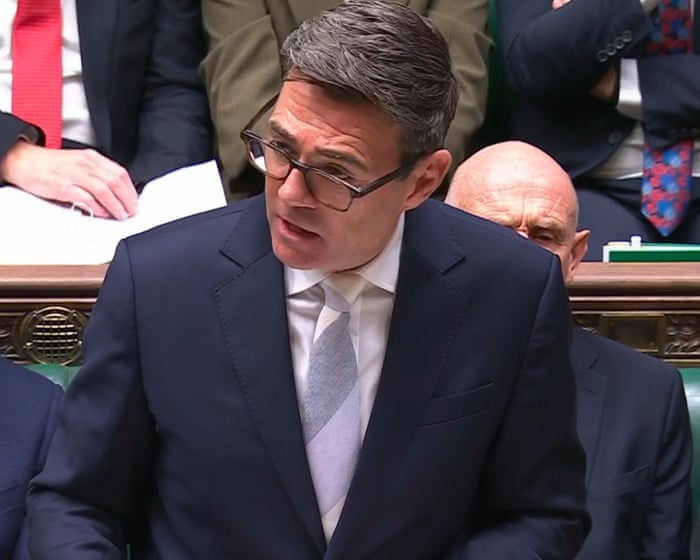
Andy Burnham will host Volodymyr Zelenskyy at Downing Street on Wednesday as the UK seeks to further underline its support for the Ukrainian president, in contrast to his difficulties with Donald Trump.
The UK prime minister said his message to Zelenskyy and his country would be: “We are with you for as long as it takes.”
On October 10, thousands of Ecuadorians took to the streets to protest against the government of right-wing President Daniel Noboa. The demonstration was organized by the Autonomous Front of Organized Resistance (FARO) under the slogan “Government vs. People.”
A esta hora, una marcha de rechazo al Gobierno de Daniel Noboa recorre las calles de Quito. La movilización está marcada por carteles de protesta y consignas contra el mandatario y su gestión. Los manifestantes atraviesan en este momento el paso deprimido del Guambra y avanzan… pic.twitter.com/WKPfT8D9jF
Saturday’s demonstration followed a protest on October 8, organized by labor unions also in Quito, to protest the security, energy, health, and employment crises facing the country. They also protested government cuts to education and health care, as well as alleged mistreatment of workers, according to Edwin Bedoya, president of the United Workers’ Front (FUT).
For its part, the October 10 demonstration – which consisted mainly of high school and college students – set out from the Central University and marched through Quito. Slogans such as “If the people have no peace, neither does the government” and “Out with Noboa, out with him!” were heard along the streets occupied by the demonstrators.
The president of the Catholic University Student Federation, Jatari Ulcuango, told protesters: “Four years ago, this government promised us electricity; two years ago, too – and now the blackouts have returned. Two months ago, the government told us it would provide us with medicine, and yet we’re only receiving 60% of the supply. They’re taking us for fools.”
He added: “We’re dying outside the hospitals. Criminals are kidnapping us, murdering us, and robbing us. That’s why we’ve come out this morning. They plan to dismantle public institutions to force us to hire private security. Who has gotten rich off the health crisis? The private healthcare sector, while the people are getting poorer and poorer.”
The peaceful march headed back to the Central University, where the students gathered. Later, the students reported on social media that they had been harassed and repressed by the police, who had accompanied the entire march.
Likewise, several media outlets reported that the police were aggressive toward them. This was reported by the outlet La Barra Espaciadora, which released a video showing police officers pushing journalists.
TeleSur journalist Elena Rodríguez also reported that law enforcement officers broke the microphone she was using and struck her on the head: “I’m sick and tired of having to recount, time and time again, police attacks against the press. Today, while I was trying to document the violence with which officers were beating young protesters, I was struck on the head from behind with a baton. I turned around, showed my Telesur microphone to identify myself as a journalist, and the response was another baton strike that ended up breaking it.”
She added: “If they think that by beating me up they’re going to get me to stop documenting police brutality, to put my microphone away, or to back off several blocks so I can report from a place where I won’t be a nuisance, they’re wrong. It is not we journalists who should distance ourselves from the events. It is the police who must stop attacking us. The right to report cannot be negotiated at the point of a baton.”
The protests are taking place against the backdrop of a widespread crisis in the country, which includes the worst security crisis in its history (tens of thousands of deaths due to violence between drug trafficking gangs), a very serious health crisis (a lack of supplies and medicines in the public health system), and other major crises such as those in education, public investment, and employment.
Local elections will be held in November, which will reveal the extent of support – or lack thereof – for President Noboa and his neoliberal government agenda, which aligns with the hemispheric security strategy led by the Trump administration.
The prime minister is correct to judge the time is right to push for closer links with the EU. The political risk is far outweighed by the potential rewards
The German philosopher GWF Hegel famously evoked the owl of Minerva when discussing the historical wisdom that comes through hindsight. This autumn, she has flown tirelessly over the landscape of British politics. Party conference season was dominated by conflicting Labour and Conservative accounts of the 1970s and 80s. And a decade after the United Kingdom voted to leave the European Union, Andy Burnham this week abandoned all equivocation over the damage – economic but also strategic – that resulted from that decision.
Having declared that it is time to “face up to the reality that Brexit has done more harm than good”, Mr Burnham told the House of Commons on Monday that it would be a “dereliction of duty” not to explore all options for closer relations with Brussels. Though he confirmed that in this parliament he will honour the red lines in Sir Keir Starmer’s Labour manifesto, all bets will subsequently be off.
Do you have an opinion on the issues raised in this article? If you would like to submit a response of up to 300 words by email to be considered for publication in our letters section, please click here.
Almost half of workers helping families care for children, older people, and people with disabilities, who provide vital domestic support in Europe, have considered quitting due to low pay and bad working conditions, a labour-union report found on Tuesday (13 October).
The 2026 personal and household services (PHS) employment monitor drew on more than 8,000 responses from workers, service users, and employers in 36 countries.
Around one in four respondents worked between 35 and 40 hours per week.
Meanwhile, six in 10 workers reported work-related musculoskeletal disorders, including back pain and tendon inflammation.
One in four also said they had experienced or witnessed verbal abuse, while nearly 15 percent had experienced either sexual harassment, physical, and/or sexual violence.
Care poviders’ mental health is impacted, with around six out of 10 reporting sleeping issues.
But these same workers play “an essential role in providing a dignified life for everybody in our ageing European societies,” Oliver Roethig, regional secretary of UNI Europa said in a statement.
This article continues, but the full version is available only to EUobserver.com subscribers. Visit account.euobserver.com/membership
Amid renewed speculation about an early General Election, now is the time to look at whom to put money on as the next party leaders, says Mark Littlewood in his latest Political Betting column for the Daily Sceptic.
Angela Rayner's department funnelled taxpayers' cash into Left-wing propaganda seeking to prevent a Reform or Tory government in the wake of the Southport murders.
Zia Yusuf, Reform UK’s home affairs spokesperson, has said he does not agree with his colleague Suella Braverman’s assertion that black people cannot be English.
Asked about her views in an interview on Sky News, Yusuf said:
In my view Ashley Cole is the best English fullback in history, and I won’t take any other position. So in my view, Ashley Cole is English. I think the argument that he’s not English doesn’t hold water with me.
Nasser Hussain, who I grew up watching when I went to the cricket, the idea that those people aren’t English is an alien concept to me.
I would respectfully disagree with people, who make the opposite argument.
To say I’m English is to take a ‘laissez-faire, anything-goes’ attitude to ethnicity, citizenship and identity. It also denies me my Asian heritage. The liberals (many of them in today’s Conservative party) take this cosmopolitan approach to Englishness. They’re terrified of being called racist so they say that anyone, as long as they’re born here, can be English.
I take the conservative approach. Englishness is an ethnicity. There have been English people for centuries and we need to recognise this more if we are to start taking a more muscular approach to citizenship and nationality. And no, it’s not racist to say this.
Ukraine’s Defense Intelligence (HUR) released information on the components of Russia’s Kinzhal air-launched ballistic missile and the companies involved in its production, according to a statement dated 12 October.
Russia has used Kinzhal missiles to strike targets across Ukraine since the start of its full-scale invasion. However, 22 of the 58 companies in Russia’s Kinzhal production network are not subject to sanctions, the intelligence agency noted.
Kinzhal missile: design, components, and production changes
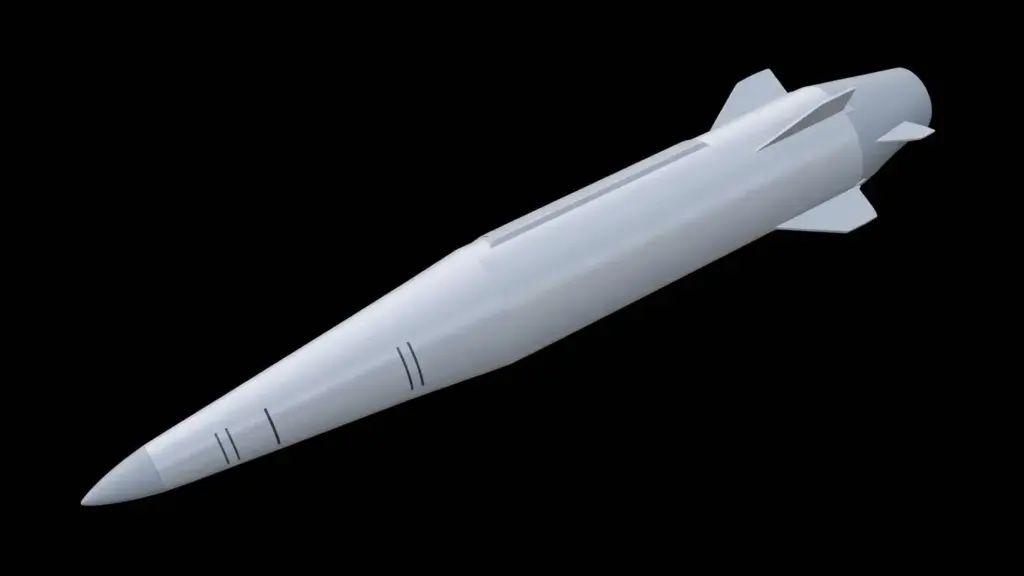
Ukraine’s Defense Intelligence has published an interactive 3D model of the Russian Kinzhal missile on its War&Sanctions portal.
The 9-S-7760 missile, known as the Kh-47M2 Kinzhal, uses solid fuel and has a single stage. This means the missile does not consist of multiple stages that separate sequentially during flight. About 90% of its components are identical to those used in the 9M723 ballistic missile of the Iskander-M system, HUR noted.
The Kinzhal is equipped with a radar homing seeker, an active jamming station, and a decoy deployment system, according to the statement. The homing seeker helps the missile determine the direction to its target, while decoys are designed to make interception by air defense systems more difficult.
The missile can carry one of two types of warheads: a penetrating high-explosive warhead or a nuclear warhead. Russia is also developing a version with a high-explosive fragmentation warhead that strikes targets through an explosion and fragments. HUR believes this development may be linked to problems with the missile’s accuracy.
In 2026, Russia significantly reduced its state procurement order for Kinzhal missiles and redirected some production resources, components, and raw materials towards manufacturing Iskander-M missiles, HUR noted. Another reason is the limited number of MiG-31I and MiG-31K aircraft used to launch Kinzhal missiles, the intelligence agency reported.
Ukraine intercepts Kinzhal missiles, but has limited resources to do so
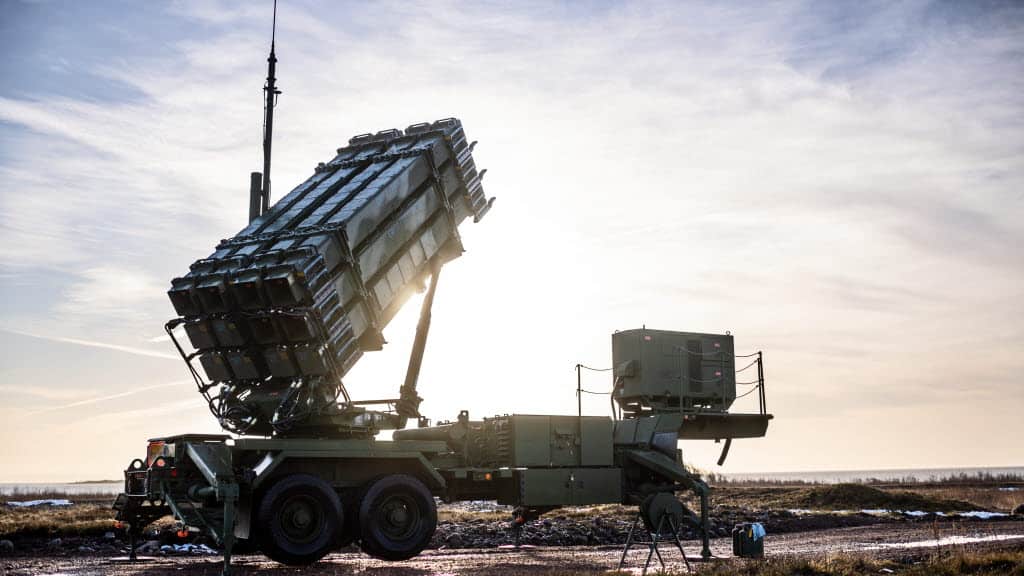
Despite their high speed, Russian Kinzhal missiles can be intercepted using US-made Patriot surface-to-air missile systems. In particular, PAC-3 interceptor missiles are designed to destroy ballistic targets and can be used against threats such as the Kinzhal and Zircon, Ukraine’s Ministry of Defense reported.
Ukraine is seeking additional Patriot interceptor missiles to defend against Russian ballistic attacks during the winter.
The Patriot PAC-3 surface-to-air missile system. Photo: Swedish Ministry of Defense
Most of the approximately 1,000 missiles Kyiv has contracted for are not expected to arrive for several years, prompting Ukraine to ask its allies to supply missiles from their existing stockpiles, Defense News reported on 12 October 2026.
Sanctions loopholes allow Russia to obtain foreign components for Kinzhal missiles
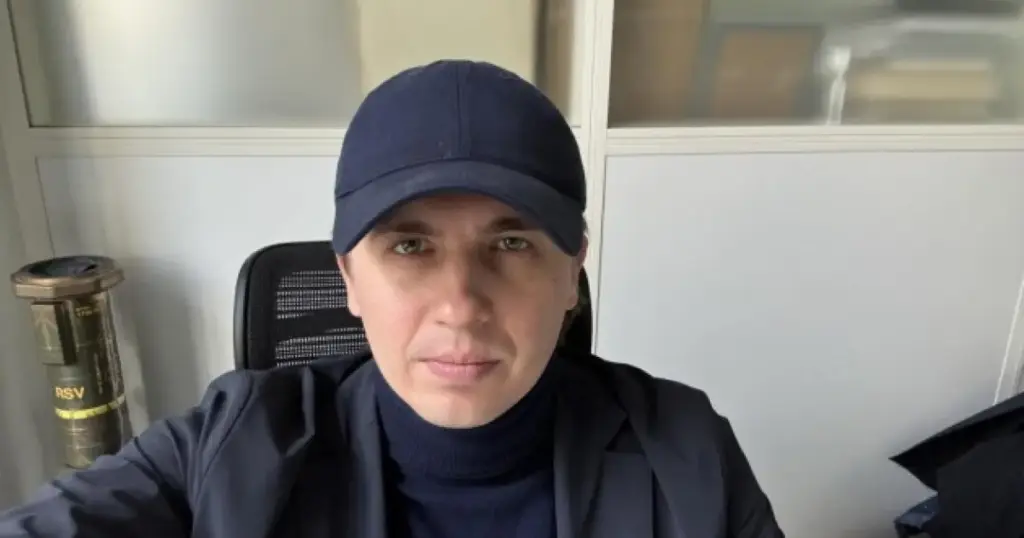
Russia continues to use foreign components in missile production despite sanctions. For instance, the US-made Texas Instruments processors were found again in a newer version of the Kinzhal missile, Ukrainian presidential commissioner for sanctions policy Vladyslav Vlasiuk said in September, Interfax reported. According to him, foreign electronics continue to reach Russia through various supply channels.
Earlier, Ukraine had provided its partners with information on more than 100 Russian companies involved in ballistic missile production and urged them to impose sanctions on those entities, according to the President's Office.
On 12 October, the EU Council imposed sanctions on 1,569 individuals and entities linked to Russia’s military-industrial complex, including 826 Russian companies and 743 company CEOs.
PM hails next month’s ‘reset’ summit as first step to closer ties, but tensions over trade may prove problematic
Andy Burnham has promised a “serious dialogue” over the UK’s future place in Europe, saying the existing relationship is “not good enough” as he framed next month’s Brussels summit as a possible first step to EU membership.
The prime minister said Britain must take a “clear-eyed rational look” at its long-term relationship with the bloc to boost economic growth and control immigration, which needed to go beyond Labour’s existing red lines.
Humanity has changed significantly over the millennia, yet in one respect, we have remained the same throughout history: we have always found things to complain about—dishonest merchants, for instance. The oldest known complaint, inscribed in cuneiform on a clay tablet, is directed at a Mesopotamian merchant named Ea-Nasir. Judging by the accusations, he was arguably […]
Zia Yusuf, Reform UK’s home affairs spokesperson, is speaking now. He started his speech with an account of a 73-year-old woman dying in North Wales after having to wait 23 hours for an ambulance, and he sought to link this to immigration.
He said:
The Royal College of Emergency Medicine estimates that 15,000 people across Britain died last year due to excess wait times for emergency treatment. That’s 300 people a week, 300 lives destroyed, 300 families devastated.
And that number has increased tenfold over the last decade. This is a moral outrage, and it is a direct result of decisions made by Tory and Labour governments.
I don’t think that’s because he wants to have a fight over the European Union. I think that’s because he knows what we’re talking about today impacts hard in what is known as the red wall.
Pedro Lencart, que nasceu no Porto e reside no Algarve, venceu este sábado, 10 de outubro, o 43.º Open Pro-Am do Clube de Golfe da Ilha Terceira (CGIT), que terminou naquele campo dos Açores, integrando o Timestamp Golf Tour.
Este foi o seu segundo sucesso do nortenho nos últimos três anos, repetindo o êxito de 2024. O antigo duplo campeão nacional de profissionais totalizou 139 pancadas, 5 abaixo do Par, após voltas de 68 e 71, embolsando um prémio de 3 mil euros, de um total de 13.500 distribuídos entre os 15 primeiros classificados.
O 2.º lugar foi para o espanhol Tommy Artigas, que amanhã celebra o seu 25.º aniversário. O jogador de Alicante, que foram 4.º há um ano, fez mais 2 pancadas do que o campeão. Somou 141, 3 abaixo do Par, com cartões de 69 e 72.
O 3.º posto foi partilhado por Vasco Alves (que no ano passado fora 2.º, empatado com o açoriano Francisco Costa Matos). Desta feita ficou igualado com o suíço residente no Algarve, Alex Amey, ambos com 142 (-2), o português com rondas de 68 e 74, o helvético com voltas de 70 e 72.
Pedro Lencart, Paulo Quadros e Rui Morris (Foto: Hugo Ribeiro)
Pedro Lencart andava a ‘cheirar’ um primeiro título do ano. Há poucos dias, no Porto Santo Golf, teve um putt curto para ir a play-off na Taça Ibérica. E este ano foi vice-campeão nacional de profissionais, empatado com Pedro Figueiredo e só derrotado por Tomás Santos Silva.
“Sabe bastante bem (o título), principalmente porque vem aí a Segunda Fase da Escola de Qualificação do DP World Tour e isto confirma que estou a jogar bem, estou a conseguir ganhar e o jogo está em forma para o próximo torneio”, disse o jogador que, enquanto amador, representou Miramar e agora também treina em Espiche.
O melhor jogador açoriano foi Michael Duarte, treinador na Terceira, com um bom 9.º lugar entre 27 participantes, agregando 150 pancadas, 6 acima do Par, com voltas de 71 e 79.
Michael Duarte (Foto: Hugo Ribeiro)
André Medeiros, de São Miguel, foi 15.º e fechou o lote de jogadores com direito a prémio monetário, com 159 (75+84), +15, enquanto Francisco Costa Matos, também de São Miguel, terminou empatado em 16.º, com 160(82+78), +16.
Costa Matos empatou com João Pedro Sousa (79+81) do Clube de Golfe do Santo da Serra, o melhor madeirense. Luís Franco foi 20.º com 164 (79+85), +20.
O 43.º Open Pro-Am da Ilha Terceira contemplou ainda um torneio para amadores em três categorias. Os vencedores (gross) foram os seguintes: Na Categoria A, Margarida Rico derrotou o seu pai, Roberto Rico, com 1 birdie no primeiro buraco de play-off, após empatarem com 57 pontos; Na Categoria B, Luís van Zeller venceu com 48 pontos e na C foi Diogo Martins a impôr-se com 37 pontos.
João Pedro Freitas foi o melhor nos super seniores (mais de 70 anos) com 72 pontos net e Maria Câmara foi a melhor jogadora net do torneio com 32 pontos.
O 34.º Open Pro-Am do CGIT é o torneio mais antigo do Timestamp Golf Tour, o circuito de profissionais da Federação Portuguesa de Golfe e da PGA Portugal.
O próximo torneio do Timestamp Golf Tour será o evento de encerramento da época de 2026 e decidirá o n.º1 do ranking. É o Lisbon Masters, com a sua segunda edição de novo no Lisbon Sports Club, de 22 a 24 de outubro, no concelho de Sintra.
by Milan Adams, Preppgroup: The notification arrives at 4:47 on a Friday afternoon, from an app you rarely open. It says that one of the big banks, a name you have used for most of your adult life, has been seized by the government. You read it four times before the words settle. Regulators tend […]
Austrian police detained Ukrainian investigative journalist Mykhailo Tkach and cameraman Yaroslav Bondarenko in Vienna yesterday, on 8 October. Both were later released, but the circumstances of their detention remain unclear, and the prosecutor’s office said suspicion against them had not been substantiated so far.
The detention lasted more than 12 hours, the first time Tkach had been held that long while on a reporting assignment abroad. The case unfolded alongside a separate Austrian espionage investigation involving two men suspected of working for Ukraine’s military intelligence. Authorities have not said whether the cases are connected.
Tkach describes detention
In a video published by Ukrainska Pravda, Tkach said seven people wearing masks and carrying weapons approached their car at a traffic light about 3–5 kilometers from central Vienna, broke its windows, and pointed weapons at them.
He said the people did not identify themselves or explain their actions. The journalists were pulled from the car, forced face down onto the road, searched, and had their hands taped behind their backs, according to Tkach. He said he initially thought they were being kidnapped because he did not see identification or have time to notice police markings. He realized they were police only after seeing police vehicles.
“As I felt it, they detained us like terrorists,” Tkach said.
He added that people shouted and pointed weapons, and there was no communication. He said one person put a knee on his neck and shouted at him to be quiet. He also saw glass from the broken window fly into Bondarenko’s face.
In a second report, Ukrainska Pravda said Tkach’s account of a document presented to him listed three allegations: espionage in the interests of Ukrainian military intelligence, participation in a criminal organization, and, as far as he remembered, causing harm to Austria. He said investigators did not explain the evidence behind the allegations.
Vienna prosecutor’s office spokesperson Nina Bussek told the Austrian Press Agency (APA) that suspicion against the two journalists had arisen during other investigations but had not been substantiated. She said it currently appeared that the suspicion was not holding up. Austrian officials have not publicly addressed Tkach’s account of the force used.
Diplomatic response and calls for an investigation
Tkach and Bondarenko were in Vienna on an assignment to find Ruslan Kravchenko, Ukraine’s former prosecutor general, Ukrainska Pravda reported. Kravchenko was dismissed on 15 September amid an investigation by Ukraine’s National Anti-Corruption Bureau and Specialized Anti-Corruption Prosecutor’s Office into alleged protection of fraudulent call centers. He denied involvement. Der Standard reported that it remained unclear whether the journalists’ detention was connected to their reporting on him.
Ukraine’s Foreign Ministry spokesperson Heorhii Tykhyi confirmed Tkach’s release and said the Ukrainian consul had requested access to him, according to NV. Musaieva said Bondarenko had been injured and hospitalized.
A statement signed by Ukrainian media and civil society organizations, including Euromaidan Press, called for an immediate, transparent, and independent investigation of law enforcement’s actions. The signatories also demanded an independent review of the force used, the return of seized equipment, and necessary medical and legal assistance.
Separate espionage investigation
Austrian Interior Minister Gerhard Karner confirmed the arrests of four Ukrainians, according to ORF. The two men detained on 5 October were placed in pretrial detention until 21 October on suspicion of secret intelligence activity against Austria. APA reported that they were suspected employees of Ukraine’s military intelligence service. Both deny the allegations.
Zack Polanski is on the brink of the sack as Greens leader today after being humiliatingly beaten in the Holborn and St Pancras by-election, trailing more than 3,000 votes behind Labour's Sagal Abdi-Wali.
No próximo fim de semana, nos dias 10 e 11 de outubro, a Praia do Malhão, na Freguesia de Vila Nova de Milfontes, recebe a 4ª etapa do Circuito Nacional Surf Sub18 Júnior Tour, evento organizado pela Federação Portuguesa de Surf.
A iniciativa conta com o apoio institucional do Município de Odemira e da Entidade Regional de Turismo do Alentejo e Ribatejo, uma vez que “reflete uma aposta clara na atração de provas desportivas de alta competição e visibilidade para o território alentejano.“
Refira-se que a Praia do Malhão, no Município de Odemira, já é conhecida e bastante procurada pelas excelentes condições para a prática de surf, entrando agora no calendário da competição nacional da modalidade.
De acordo com a organização, os melhores atletas masculinos e femininos sub 18 do surf nacional vão estar em prova na Praia do Malhão, para a penúltima etapa do circuito, depois de surfarem as ondas da Costa da Caparica, Santa Cruz e Praia Grande, e terminado recentemente em Sines.
Sublinhe-se ainda, que o Circuito Nacional Surf Sub18 de 2026 envolve perto de 90 atletas masculinos e 20 femininos em competição.
Andy Burnham's vision of the "common good" – with Net Zero at its heart – is just reheated Fabian socialism, says Dr Tilak Doshi – and the fingerprints of Left-wing economist Mariana Mazzucato are all over it.
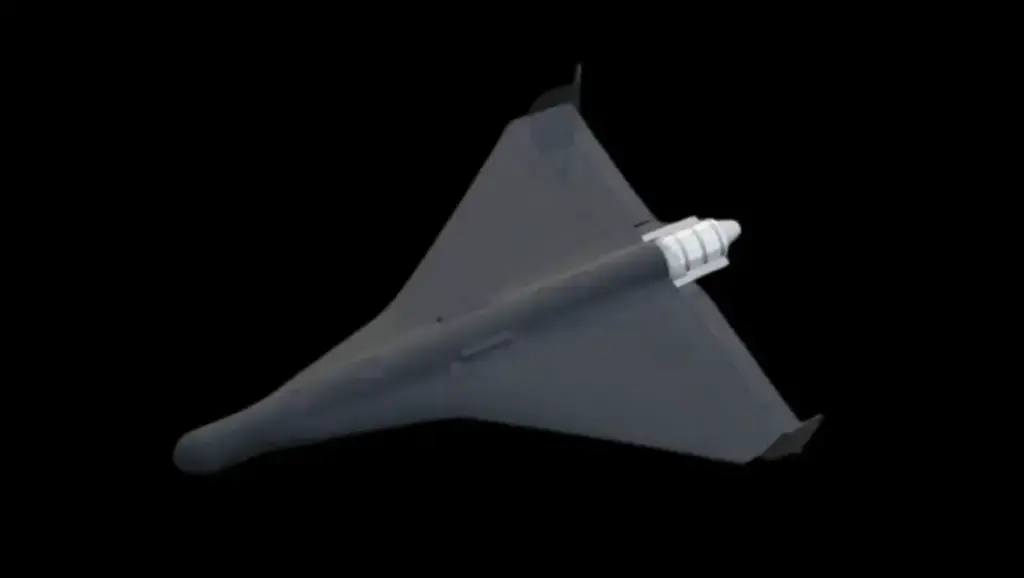
Ukraine has found the US component in a Russian jet-powered drone targeting civilians, supermarkets, medical warehouses, and bridges. According to its Defense Intelligence, the new weapon contains a PNI5GA magneto-inductive sensor made by the US company PNI Sensor.
The US-made navigation component adds to evidence that Western technology continues to appear in Russia's strike drones. HUR had already identified US-made chips in the Geran-4 in May, but the newly reported PNI5GA is a navigation sensor in a modified version of the drone that Institute for the Study of War (ISW) says Russia may seek to field ahead of winter.
A Russian engine replaces the Chinese one
Russia has also replaced the drone's Chinese-made Telefly turbojet engine with a Russian-made equivalent produced in Alabuga. Russia is using the Alabuga zone to bring more of its drone production home rather than importing Iranian or Chinese parts, according to the ISW.
"The remaining electronic units and components are unchanged and identical to those used in previous Geran UAVs," HUR said.
What the warhead is built to cut
The modified drone also carries a specialized KRSN warhead designed to cut through bridge structures and power-line supports. Presidential adviser Serhii Beskrestnov described the warhead on 30 September, saying it consists of a 40-kilogram main charge and four strike modules. Its warhead is meant to destroy hardened targets made of steel and concrete and to damage cable-stayed bridges.
Russia has stepped up strikes on Kyiv's Northern and Southern bridges across the Dnipro in recent days with such drones.
However, Russia may try to field more resilient and more dangerous versions of its strike drones before Ukraine has effective countermeasures in place. Russia could use them to degrade Ukraine's energy infrastructure and logistics ahead of a winter strike campaign that it said will very likely be brutal.
Romanian President Nicușor Dan has nominated diplomat Luca Niculescu as prime minister, beginning a fourth attempt to form a government after three previous candidates failed to secure a parliamentary majority.
The nomination was announced on Monday, 5 October, after Dan held consultations with Romania’s parliamentary parties at the Cotroceni Palace. Niculescu now has the task of finding sufficient support for a government after five months of political deadlock.
Dan said he had chosen the candidate he believed had the best chance of assembling a majority. “Romania needs a government. We need a budget for next year,” he said after the consultations, according to Romanian reporting on the nomination.
Niculescu, 55, is a former journalist and diplomat who has served as a secretary of state at Romania’s Foreign Ministry and national coordinator for the country’s accession to the OECD. He was Romania’s ambassador to France between 2016 and 2022 and was also accredited to Monaco and Andorra.
Accepting the nomination, Niculescu said his first task would be to build a parliamentary majority. He promised a government programme centred on predictable economic policy, public spending discipline, investment and Romania’s European and Euro-Atlantic commitments.
The appointment follows three unsuccessful attempts to replace the government of Ilie Bolojan, which was removed in a no-confidence vote on 5 May after the Social Democratic Party withdrew its support. EU Today reported at the time that 281 lawmakers backed the motion, bringing down the pro-European administration.
Eugen Tomac was the first candidate asked to form a government but relinquished the mandate after failing to secure sufficient support. Adrian Veștea was then nominated, but his proposed government was rejected by parliament.
The third candidate, PNL MEP Siegfried Mureșan, was nominated in September. His government received 182 votes in the parliamentary confidence vote on 30 September, well short of the 233 required. That defeat left Dan facing a fourth round of negotiations with the same fragmented parliament.
Niculescu therefore begins without an established majority behind him. During Monday’s consultations, the PSD continued to promote its own candidate, Sorin Grindeanu, while USR and AUR pressed for early parliamentary elections. PNL signalled greater flexibility but stopped short of committing itself to a new governing formula.
AUR leader George Simion has already said his party will not support Niculescu. USR, meanwhile, said it would examine the proposed cabinet, governing programme and the political majority behind it before deciding how to vote.
Under Romania’s constitution, a prime minister-designate has ten days from nomination to seek parliament’s confidence for the proposed programme and full list of ministers.
The repeated failures have also revived discussion of early elections. The president may dissolve parliament if no government receives a vote of confidence within 60 days of the first request for investiture and at least two attempts have been rejected, although dissolution is a presidential option rather than an automatic step.
Dan has so far indicated that he would prefer to exhaust efforts to form a government.
The political stalemate comes at a difficult economic moment. Romania is under pressure to reduce its budget deficit, maintain investor confidence and continue reforms tied to EU funding. The strain on the governing coalition had already become an EU fiscal issue before Bolojan’s government fell, with questions over budget consolidation and European recovery funding increasingly tied to political stability in Bucharest.
The immediate test for Niculescu will be whether his diplomatic background can translate into enough parliamentary votes to assemble a cabinet. His nomination leaves him more freedom than a candidate tied directly to one of the main parties, but the arithmetic remains unchanged: a government still requires at least 233 votes to take office.
Photo: Razvan Socol / Wikimedia Commons / CC BY-SA 4.0

 Login