 Login

Actress Selma Blair Arrested After Altercation on a Delta Airlines Flight
The 54-year-old allegedly assaulted two flight attendants, an airport security officer, and a nurse who had come to her aid

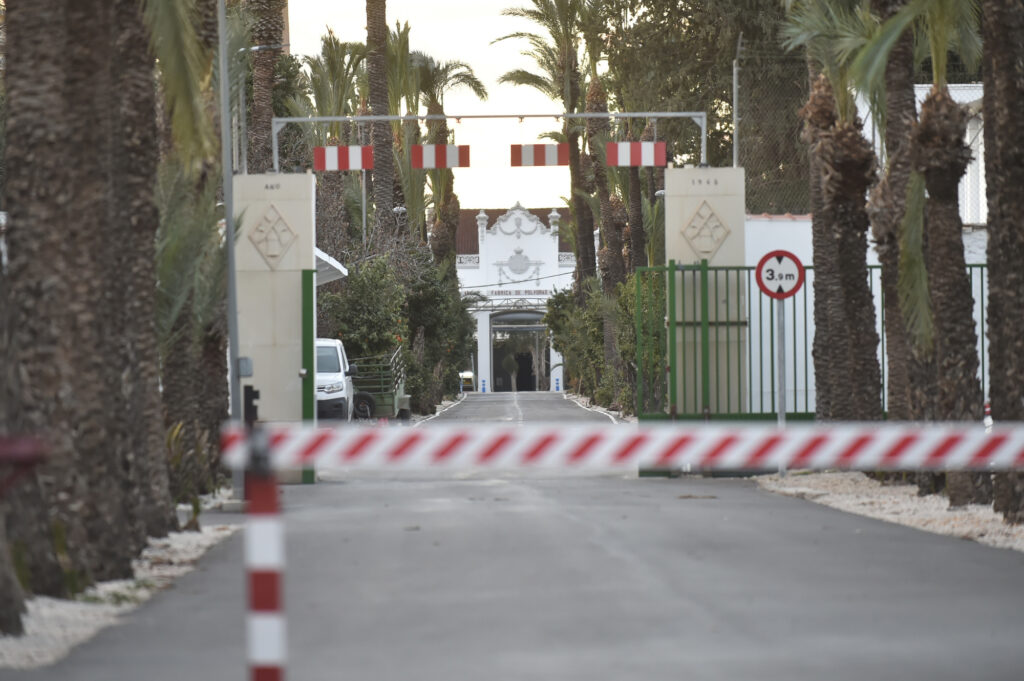
German industry expects Russian sabotage against the country’s companies to persist and take more forms, the deputy head of the Federation of German Industries (BDI) told Handelsblatt. His warning follows alarms from Germany’s intelligence services, which describe the country as a main target of Russia’s covert campaign in Europe.
Russia keeps striking Ukrainian cities and power plants every day while trying to weaken the European support that keeps Ukraine fighting. Germany is home to arms makers producing with and for Ukraine, so pressure on its companies targets the supply behind Ukraine’s defense.
The warning came from Holger Lösch, the BDI’s deputy managing director.
“German industry is preparing for the threat to persist and for attack methods to become more varied,” he told Handelsblatt. “Companies don’t end up in the crosshairs by chance,” he added.
Russian influence and sabotage operations are no longer an abstract scenario, and companies, critical infrastructure, and defense supply chains are already among their targets, Lösch said. Companies now receive more threat warnings, and their cooperation with the authorities has improved significantly, he noted. “What is still missing are joint procedures to quickly derive concrete measures from warnings,” Lösch said, calling the protection of the economy a cornerstone of national security.
The warning comes a week after a public hearing of the intelligence oversight panel of the Bundestag, Germany’s parliament, on 5 October. There, Martin Jäger, head of Germany’s Federal Intelligence Service (BND), said Russia was waging a shadow war against Germany. “Germany has become a main obstacle to Russian hegemonic power projection in Europe and thus a target of Russian action,” Jäger said. “The danger of attacks against targets in Germany remains real and present,” he warned.
Sinan Selen, head of the Federal Office for the Protection of the Constitution (BfV), Germany’s domestic intelligence agency, told the same hearing that Russia was showing a readiness for sabotage and killings.
German Chancellor Friedrich Merz said on 1 October that Germany was preparing for further hybrid attacks, “including serious ones,” and would respond “quickly and very clearly,” as it did after the drone attack at Leipzig airport.
In August, a drone carrying Semtex explosives hit the wing of a Ukrainian An-124 cargo plane at Leipzig/Halle Airport but did not explode. Germany blamed Russia on 1 September, and German Foreign Minister Johann Wadephul said Germany was not at war with Russia but was a “target of war.”
German authorities suspect Russian intelligence of commissioning an arson attack near two Munich defense firms, and a confidential Federal Criminal Police Office (BKA) assessment counted more than 165 suspected sabotage cases in Germany between January and August. The same assessment recorded 747 suspicious drone incidents involving 1,068 drones over critical infrastructure, military sites, and defense companies.

Germany’s Military Counterintelligence Service (MAD) warns that the threat from low-level agents, locals paid small sums for one-off jobs such as arson or photographing military sites, has increased significantly. European intelligence agencies also report that Russia is increasingly targeting defense company executives, including at smaller drone makers, and the BfV has advised some German firms to hire close protection.
As long as Germany keeps backing Ukraine, Russian pressure on its companies is unlikely to ease, and the gap between warnings and action that industry flagged leaves smaller firms, with fewer resources for security, the most exposed.

Germany is expanding drone detection at its airports with a new system operated by German air traffic control provider Deutsche Flugsicherung (DFS), the German Federal Ministry for Transport (BMV) announced on 5 October.
Germany has accused Russia of attempting a hybrid attack at Germany’s Leipzig/Halle Airport near a Ukrainian An-124 aircraft using a drone carrying explosives. Earlier, Finnish President Alexander Stubb said Europe must be prepared for “continued hybrid and sabotage attacks” by Russia, adding that Russia seeks to sow panic through such actions.
On Monday, two more sites were added—Stuttgart and Hamburg. As of Monday, seven of Germany’s eight largest airports were equipped with the new drone detection system in their approach and departure areas.
The Federal Ministry cited the reason for the new measure: drones near airports can affect air traffic very quickly.
Federal Transport Minister Steffen Bilger and Baden-Württemberg Transport Minister Nicole Razavi were briefed on the new system at Stuttgart Airport, where it is being put into operation, the ministry said. The system creates “an important technical basis for detecting potential threats at an early stage and quickly informing the competent authorities,” Bilger said.
“With today’s commissioning of the drone detection system at Stuttgart Airport, the federal government is fulfilling a key promise: it is not only talking about the dangers posed by unmanned aircraft, but is also following through with very concrete action. Protecting critical infrastructure and ensuring the safety of passengers at Stuttgart Airport require continuous adaptation to a changing security situation,” Razavi said, according to the ministry.
The new DFS system allows drones near airports to be detected at an early stage and information about possible threats to air traffic to be passed more quickly to the relevant authorities. This helps them assess risks and respond to them more quickly, the statement said.
DFS is responsible for detecting drones in approach and departure areas, while the Federal Police and other security services are responsible for preventing threats and defending against drones. The BMV, Federal Ministry of the Interior, DFS, Federal Police and airports coordinate their work to exchange information quickly and maintain a shared picture of the situation.
No further details about how the system operates have been disclosed.
The first stage of the expansion at Germany’s eight major commercial airports will be fully implemented this week, with the systems in Stuttgart and Hamburg being put into operation, the statement said.
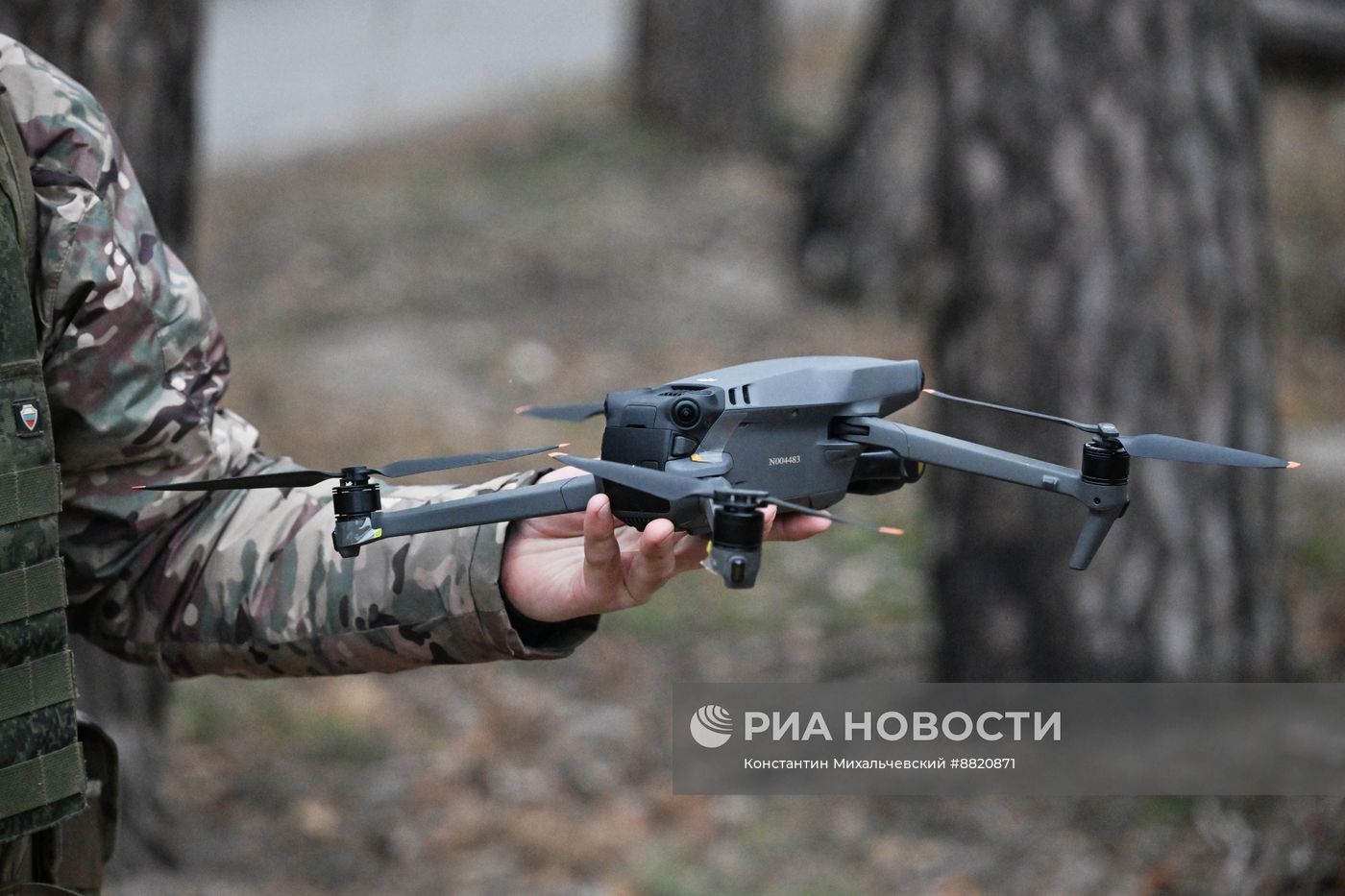
The system will also be put into operation at Leipzig/Halle Airport this week, meaning that the first stage will be fully implemented at all eight of Germany’s largest commercial airports, according to the press release.
A quadcopter drone carrying a Semtex explosive flew directly toward a parked Ukrainian An-124 Ruslan cargo aircraft and struck its wing at Leipzig/Halle Airport in Germany on the evening of 4 August, Die Zeit reported on 10 August. The drone hit the aircraft at around 19:30 local time, bounced off the wing, and fell to the ground without detonating, according to the media outlet.

Germany has accused Russia of attempting the drone attack and announced further sanctions against Russian citizens and institutions, Tagesschau reported on 1 September.
At the crime scene, investigators found the drone configuration, explosives and detonation technology that had already appeared in other Russian hybrid operations and in Russia’s war against Ukraine, Federal Interior Minister Alexander Dobrindt said during a joint press conference with Federal Foreign Minister Johann Wadephul, the media outlet reported.
The German government assumes that Germany has been and will be a target of further such Russian attacks. Germany is not at war with Russia but is a “target of war,” Foreign Minister Wadephul said, according to the outlet.
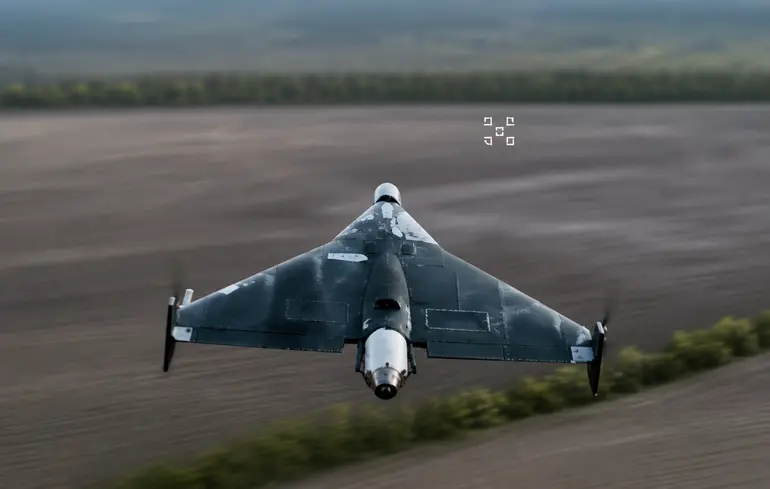
Russian troops were taking selfies beside a jet-powered Shahed launcher when a Ukrainian drone hit them. A Ukrainian drone attacked a pickup truck converted to launch Russian Shahed drones in the Donetsk airport area while its crew prepared to fire a jet-powered Geran-4, according to video from the Cursed Empire drone unit of the 100th Separate Mechanized Brigade that volunteer Serhii Sternenko published on 6 October.
Three Russian soldiers struck a pose by their drone launcher near Donetsk airport
— Euromaidan Press (@EuromaidanPress) October 6, 2026
It was their last selfie. Ukrainian drones hit the crew moments later as they prepared to fire a jet-powered Geran-4Serhii Sternenko pic.twitter.com/ri9bNztW5y
Russia launches Shahed drones, including jet-powered ones, from pickup trucks and fixed launchers, and the ruined Donetsk airport, about 50 kilometers from the front line, is one of its drone bases. In September, Oboronka outlet counted that in general, Russia has at least 63 launchers at its drone bases, which are built to survive strikes.
The video shows three carefree Russian soldiers next to a pickup fitted with a launch frame.
"That was their last photo shoot," Sternenko noted, commenting on the hit on the soldiers.
Earlier, an officer of the 1st Separate Center of the Unmanned Systems Forces, call sign “Falco,” explained that the primary goal of strikes on drone bases is to disrupt Russia's ability to launch drones.
This is done by destroying launchers and storage facilities, as well as creating an aerial threat over the drone base. Such attacks can delay drone launches indefinitely, while the destruction of infrastructure can reduce the overall number of drones launched.
Although these facilities are important targets, the Unmanned Systems Forces have another priority: drone operators.
“The most difficult and, at the same time, the most valuable target is the operator. They don’t stay near the launchers for long,” Falco said.
By taking out drone operators, Ukraine inflicts losses on a scarce resource. There are already relatively few of them, and Russia will have to spend additional money and time training new crews.
A decision by the Ministry of Infrastructure & Transport has raised the fixed taxi fares from the airports in Athens and Thessaloniki Taxi: New fares €50 for a trip from the ATH International Airport to downtown Athens. The fares change concerns, among others, the predetermined fares for routes from the airports of Athens and Thessaloniki, […]
The post New taxi fares from airports in Athens and Thessaloniki appeared first on Keep Talking Greece.
European Commission President Ursula von der Leyen and NATO Secretary General Mark Rutte Photographer: Dati Bendo © European Union
European Commission President Ursula von der Leyen said on Wednesday (2 September) that Europe and NATO would increase pressure on Russia after Germany attributed an attempted attack on cargo planes at Leipzig/Halle Airport to Moscow, calling the incident a “new escalation” on European Union soil, writes Catherine Feore.
“This was an attack using military-grade material, carried out by Russian operatives on European Union soil. We will not tolerate it,” von der Leyen said alongside NATO Secretary General Mark Rutte in Brussels.
The German government said on Tuesday (1 September) that its investigation and intelligence findings established Russian responsibility for the attempted attack at Leipzig/Halle Airport last month. Russia has denied responsibility.
The meeting took place as foreign ministers and the EU's High Representative for Common Foreign and Security Policy were meeting to discuss Russia and Ukraine among other issues.
“Had this attack succeeded, this would have resulted in enormous damage and possibly even loss of life,” von der Leyen said. “We stand in full solidarity with Germany.”
“If the intention was to make us think twice about supporting Ukraine, I can tell you it has only strengthened my resolve. Intimidation will not work.”
Von der Leyen said the Leipzig incident was part of a wider pattern of Russian activity confronting Europe, including airspace incursions, drones disrupting airports and interference with critical infrastructure.
“Leipzig marks a new escalation on European Union soil, directly attributed to Russia,” she said.
Von der Leyen outlined three areas for a stepped-up European response: stronger protection of European infrastructure backed by additional sanctions on Russia, increased air-defence support for Ukraine, and an acceleration of Europe’s own defence build-up in close cooperation with NATO.
Infrastructure and sanctions
First, von der Leyen said Europe must strengthen the protection of infrastructure that could be targeted by Russian hybrid operations and be prepared to respond more quickly when attacks occur.
“We must treat our everyday infrastructure as frontline targets, and protect them accordingly,” she said.
The EU already has rapid response teams that can assist member states faced with such attacks, she said, arguing that Europe’s ability to prepare and respond would itself act as a deterrent.
Von der Leyen also said the EU was ready to intensify economic pressure on Moscow through sanctions. “Our sanctions have weakened Russia’s economy. We can use more sanctions and have them ready to impose as soon as such dangerous, life-threatening acts are attributed,” she said. “Every loophole Russia exploits is one we must close.”
European foreign ministers were discussing new listings in Ireland on Wednesday, she said, while the Commission was examining further ways to “cut deeper into Russia’s war chest”.
More air defence for Ukraine
Von der Leyen said her second priority was strengthening support for Ukraine, announcing that the EU had received a new request worth several billion euros for air-defence capabilities.
“Today, I can confirm that we have received a new payment request,” she said. “It is worth several billion euro, and would cover Ukraine’s air defenses, including the highly advanced PAC-3 Patriot air defense systems.”
Member states were considering the request, she said.
“I can say that it’s going in the right direction.”
Von der Leyen also pointed to European work with Ukraine on the FRIO project to develop anti-ballistic missile defences, as well as the EU’s €90 billion support loan.
“Since June, we have issued €8.5 billion for drones and missiles for Ukraine from this loan,” she said, adding that the funding could also be used to buy fighter aircraft from European industry.
Faster European defence build-up
Von der Leyen’s third priority was to accelerate Europe’s defence build-up alongside NATO, with air defence at the centre of the effort.
“Air defenses are critical,” she said. “We need a faster, more integrated alert system across Europe, and then we must intercept the threats faster.”
She pointed to the EU’s €800 billion defence investment plan, including €150 billion through the SAFE instrument, as a way for European countries to increase defence investment jointly.
“We are in a new era of European security,” von der Leyen said. “European investment in defense strengthens NATO and re-energizes our industrial base.”
Rutte backed von der Leyen’s assessment of the threat, saying Russia had become “increasingly reckless” as its war against Ukraine continued.
“We have seen more drones and missiles crossing into our airspace along our eastern flank, creating increased risk,” Rutte said.
“And we have also seen an increase in malign activities targeting our territory directly, whether it is fires set in factories producing defense equipment for Ukraine, or indeed the Russian hybrid attack in Leipzig.”
“The examples are many. The dangers Russia poses are clear,” he added.
Rutte said NATO was working “around the clock” to ensure it could protect its population and said Moscow would fail if it hoped attacks such as Leipzig would undermine Western backing for Kyiv.
“If Russia thinks we will be divided by the threat, or if they think we will be deterred from supporting Ukraine, they are mistaken,” he said. “Our unity is unshaken. Our support to Ukraine is clear.”
Rutte said NATO allies had agreed to provide at least €70 billion to support Ukraine this year and the same amount next year, with the EU loan forming a “crucial element” of that support.
The NATO chief also backed the push for additional air defence and increased defence production, saying higher spending had to translate into additional military capabilities and greater industrial capacity.
Von der Leyen said the EU and NATO would not be intimidated into reducing their support for Ukraine. “Europe and NATO will not just maintain our pressure on Russia; we will increase it,” she said. “We will not stop — not until Russia stops bombing and killing innocent children, men and women in Ukraine. We will continue, we will prevail, and we will deter anyone who attacks our freedom and our security.”
A new incident of an injury of a tourist from aircraft turbine blasts occurred outside the Skiathos airport short after 12 noon on Thursday, August 13,2026. The Italian woman was reportedly caught in the vortex of gases and knocked down during the airplane take off. According to state broadcaster ERT, the woman in her early […]
The post Skiathos airport: Tourist injured during plane take off; second in a week appeared first on Keep Talking Greece.
An Italian tourist suffered heavy head injuries after she was swept away by the blast of turbines of a passenger airplane taking off from the airport of the island of Skiathos in the Aegean Sea. The serious accident occurred at noon on Monday, August 10, and the 52-year-old woman had to be airlifted for emergency […]
The post Skiathos: Tourist suffers heavy injuries from airplane turbines blast appeared first on Keep Talking Greece.
