Magyar's announcement comes two days after Zelensky signed a law strengthening the educational rights of Ukraine's national minorities, a step Hungary had demanded before allowing Kyiv's EU accession talks to move forward.
BRUSSELS, Belgium — Ukraine's EU membership bid does not need to advance "as soon as possible" anymore, according to the latest draft conclusions of the Oct. 15-16 summit of EU leaders in Brussels, due to pressure from Bulgaria and Hungary.
Editor's Note: Following publication, the Kyiv Independent received the revised draft conclusions, which set out a less ambitious position on Ukraine's bid for EU membership. Read the story here.
BRUSSELS, Belgium — Leaders of the EU's 27 member states have a Ukraine-packed agenda when
Ukraine wants the EU to force Moscow into a ceasefire with frozen Russian assets, trade and transit embargoes, maritime bans, and entry bans, Ukrainian Foreign Minister Andrii Sybiha wrote on X after the EU Foreign Affairs Council in Luxembourg on 12 October 2026. He also welcomed new EU sanctions listings adopted that day and progress in Ukraine’s EU accession talks.
Kyiv has spent this month laying out truce formats it would accept while awaiting Russia’s position on talks, and the levers it is pressing the EU to use include frozen Russian assets that EU leaders failed to agree on tapping last December.
The pressure Kyiv wants from the EU
Sybiha called it “devastating pressure.” He also wants Russian combatants and their families barred from the EU, maximum visa restrictions, and Russia’s isolation in culture and sports.
I was pleased to attend the EU Foreign Affairs Council today.
It is time for Europe to define its strong role. Our future and our security are in our hands.
Now is the time for real European pressure on Moscow. Not half-measures, but devastating pressure: frozen assets, trade… pic.twitter.com/AnI8h6HXbs
His post named three types of ceasefire—energy, food security, and a full ceasefire—without saying whether Kyiv would accept them separately. Earlier this month, he told journalists Ukraine was ready for an energy and Black Sea ceasefire “but only in such a combination.”
New sanctions listings and two more accession clusters
The minister welcomed the EU’s 12 October adoption of new sanctions listings against Russia—the largest single expansion of the bloc’s blacklist. EU ambassadors agreed on the 1,646 names on 7 October. They include 1,569 tied to Russia’s military industry and 77 to its so-called State Duma elections. The listings are separate from the EU’s 22nd sanctions package, which the EU has yet to adopt.
He also welcomed the EU’s “green light” for opening two more clusters in Ukraine’s EU accession talks: Internal Market, and Competitiveness and Inclusive Growth. The formal opening was scheduled for an intergovernmental conference on 13 October.
Front-line briefing and aid requests
Sybiha said he briefed European colleagues on the front-line situation, Russia’s plans, and ways to deprive it of its advantages, and that he passed partners specific requests for aid. He reaffirmed Ukraine’s commitment to reforms.
Britain is expected to push for a new post-Brexit trade deal and increased information-sharing on immigration at a UK-EU summit in Brussels next month.
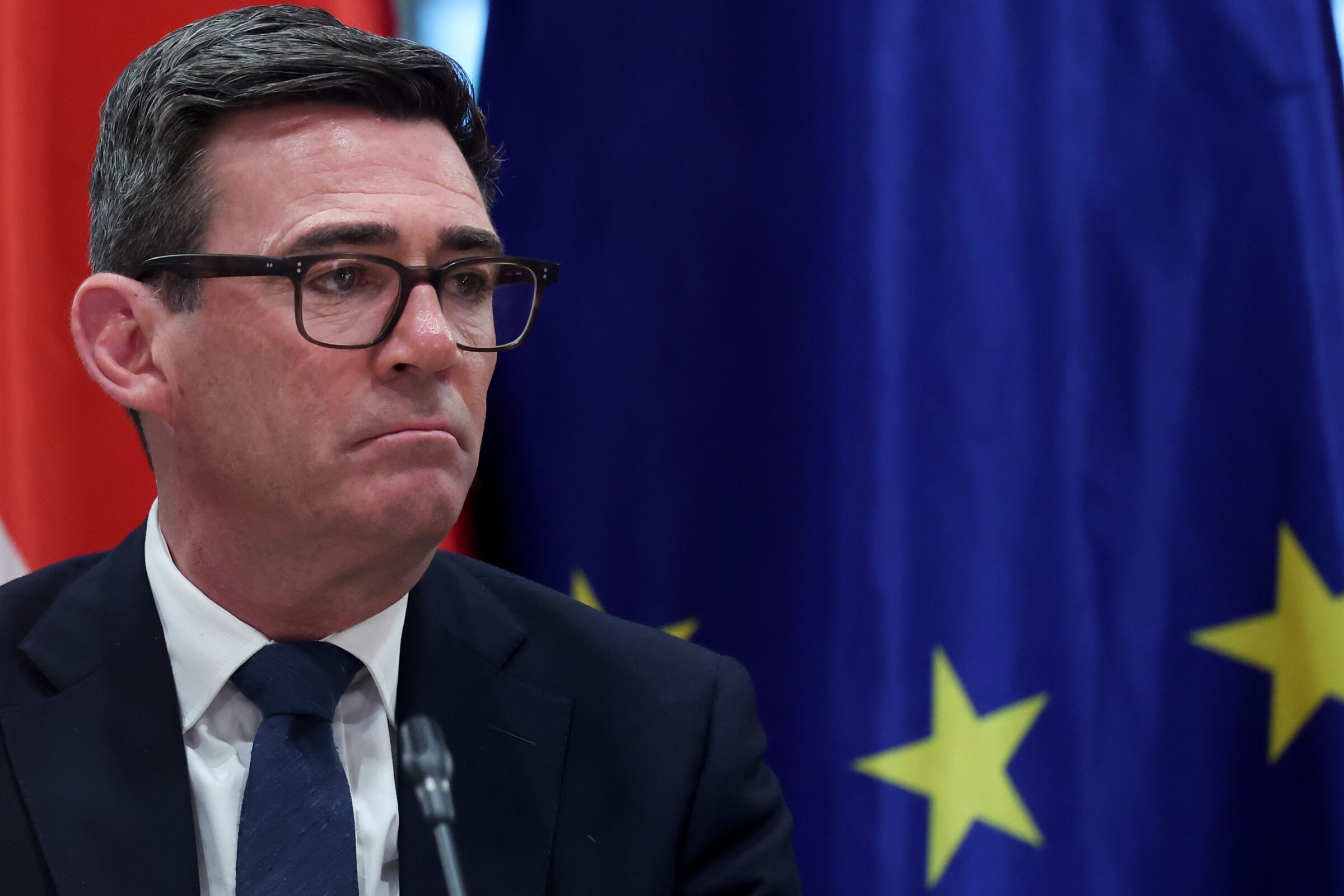
This comes as Andy Burnham, the country’s prime minister, says the post-Brexit “status quo is not good enough for Britain”, in a hint that he might seek to rejoin the European Union.
And, more than a decade after the Brexit vote, he also accused Russia of having meddled in the 2016 British referendum.
The UK leader will meet European Commission president Ursula von der Leyen and European Council president António Costa in Brussels on 20 November.
And Costa has also said that European and British security and prosperity are “closely intertwined”, while a closer relationship could “promote stability in Europe and beyond”.
Made in Europe and immigration
The November summit will be an opportunity to “raise concerns” about ‘Made in Europe,’ Burnham told members of UK MPs on Monday (12 October).
The ‘Made in Europe’ proposal in the Industrial Accelerator Act would require companies to source a certain number of parts from within the EU to be eligible for public money in strategic sectors.
But UK officials are worried the law could hurt British manufacturers, with Burnham expected to seek concessions.
But the British premier also wants to go further in renegotiating his country’s ties with the EU.
“On the table is a trade deal on food and drink products, a deal on emissions trading, progress towards linking our energy systems, a new youth experience scheme, and deeper cooperation on immigration,” he said.
Burnham aims to address an EU import ban on UK meat, seed potatoes, and shellfish and wants to reduce costs for shipping other goods to mainland Europe.
He also hopes for closer work between European and UK border forces on immigration.
“On immigration, we could link up our law enforcement efforts once again [since brexit], sharing more data and criminal records of foreign nationals,” Burnham said.
He may aim to rejoin the Schengen Information System, a database for border management and law enforcement cooperation in Europe.
And he could also pursue greater freedoms for UK citizens to live in the 27 member states.
“It would be a major dereliction of duty to turn away [from the EU]” the UK leader told parliament.
10 years on from Brexit vote
The last EU-UK summit, held in London in 2025, was already branded as a reset in relations across the English channel, with a new defence and security partnership, reciprocal access to fishing waters, and expansion of student exchanges.
And leaders are expected to build on the previous agreements by discussing defence, energy, and climate, as well as trade and migration, at their meeting next month.
But under the terms of the EU and UK’s legal divorce in 2020, the two sides remain bound by complex limitations.
And Burnham told MPs on Monday that renegotiating Britain’s relations with the EU could add over £10bn (€11.8bn) per year to the UK economy by 2040, “with the potential to add significantly more,” even if it did not rejoin.
Russian meddling?
Burnham also told a podcast on 11 October that Russia had meddled in the country’s Brexit vote 10 years ago.
Upon assuming office in July, Burnham asked officials if there had been Russian interference in the 2016 referendum, he told The Rest is Politics, and officials gave him a “clear answer that yes, there was.”
“We haven’t informed people [the general public] sufficiently,” he added, amid similar Russian electoral interference in France, Germany, and further afield in Europe.
For his part, British foreign secretary Stephen Doughty subsequently told the LBC broadcaster: “I don’t think [Russia] succeeded in their efforts to undermine our election”.
And Burnham also rowed back in the parliament debate on Monday when pressed by opposition MPs, by saying the outcome of the Brexit vote remained legitimate.
But he added that Russia’s meddling in the UK’s 2019 general election was a matter of record and that it was “inconceivable that this was the first time”.
Appetite for EU re-entry
Burnham also dropped hints on Monday that Britain could rejoin the European Union.
“One thing I think is true is that public opinion has moved more quickly than political opinion. I think the political class is behind the public on this issue,” he said.
“At every stage, the British public will be the boss,” he added, while promising a “pragmatic approach” to the hot-button issue, which has the potential to enflame right-wing anger in England.
“We need to draw a line on a decade of drift and division [from Europe],” he said.
But questions of a holding second referendum were “jumping ahead too far” according to Burnham.
The Westminster debate came after YouGov polling commissioned by Best for Britain, a pro-EU lobby group, indicated that pushing for closer EU ties would be politically advantageous for Burnham’s ruling Labour party.
The organisation also claimed Britain could reenter the union within five years.
Brexit was “not a sacred cow”, said Emily Thornberry, a fellow Labour MP, on Monday.
Sandro Gozi, an Italian liberal MEP and chair of the UK-EU parliamentary partnership assembly, also said in a statement: “As a former member, and with much of the regulatory framework already in place, I personally do not see any serious reason why an application from the UK would not be achievable.”
“When countries are already closely aligned to EU rules, such as was the case for Sweden and Finland, the process for accession is faster than for applicants essentially starting from scratch,” he said.
Kyiv just cleared the important roadblock for Budapest, which stood between Kyiv and EU membership talks. Ukraine’s parliament has passed a bill on schooling in minority languages, meant to finally lift Hungary’s block on the country’s path toward EU membership, with 266 of the 450 lawmakers voting in favor, UNIAN reports.
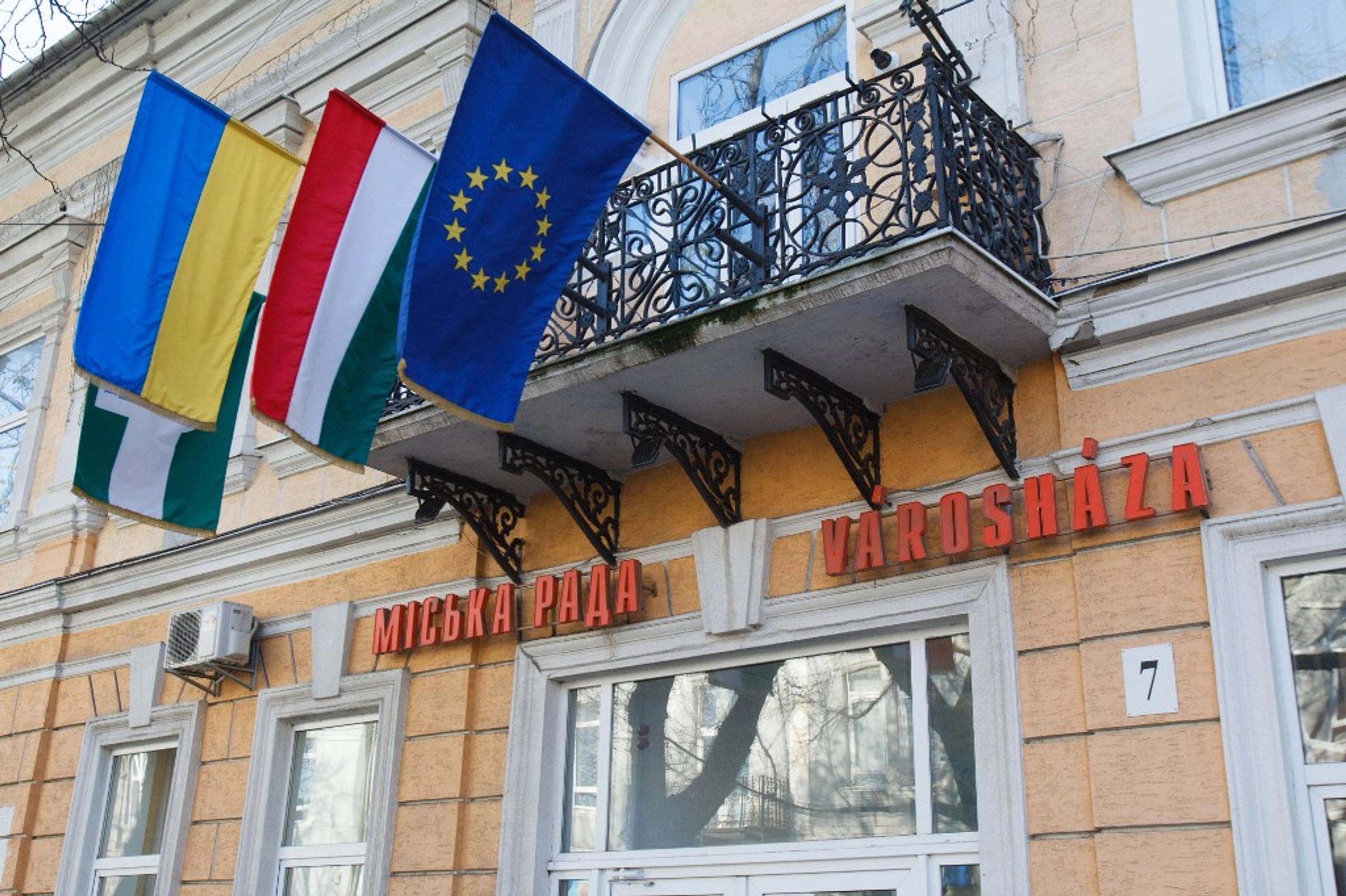
Hungary has been the lone EU member blocking the opening of four of Ukraine’s negotiating clusters, stages of the membership process, over how Kyiv treats the Hungarian minority in Ukraine's Zakarpattia region. Roughly 80,000 ethnic Hungarians live in it, and Budapest had tied Ukraine’s entire EU course to their language rights.
Lawmakers have instructed the parliament’s speaker to sign the law without delay and send it to President Volodymyr Zelenskyy.
What the law changes in schools
The bill keeps Ukrainian as the main language of education, but guarantees classes in minority languages where they exist. Minorities may study in the official languages of EU member states alongside Ukrainian, and pupils may use their language in other forms of communication on school grounds.
A school can gain the status of a national-minority institution if more than half of its pupils study in that minority language, provided that language is an official EU language. Parents of at least two-thirds of a minority class can also ask the school to expand the list of subjects taught in Ukrainian.
The dispute dates back years
Ukraine’s 2017 education law and 2019 language law narrowed minority-language schooling and required more Ukrainian in secondary grades, which then-Hungarian leader Viktor Orban treated as an attack on the Hungarians of Zakarpattia, blocking Kyiv’s NATO and EU steps for years, EUalive reports. Kyiv’s position was that the laws applied to all minorities and excluded Russian.
Hungary’s newer government, in office since spring 2026, inherited the veto. Budapest lifted it on the first cluster, which the EU opened in June, Ukraine’s first since gaining candidate status in 2022, but made the rest conditional on this law.
With the bill passed, Hungary is set to allow the EU to open two more clusters, on the internal market and competitiveness, at a Council meeting in Luxembourg on 13 October. Kyiv aims to open all its clusters by year’s end.
Montenegro and Albania will hold separate accession conferences on 12 and 13 October as the European Commission introduces proposals for stronger safeguards against democratic backsliding, linking the next phase of EU enlargement to reforms within the Union itself.
Montenegro and Albania are preparing for another round of European Union accession negotiations this week, with meetings in Luxembourg scheduled to advance their membership bids as Brussels considers substantial changes to the conditions under which future countries will join the bloc.
Montenegro’s 29th accession conference will take place on Monday, 12 October, followed by Albania’s tenth conference on Tuesday. The meetings come less than a week after the European Commission presented a package of proposals intended to prepare the EU for enlargement while strengthening its ability to respond to breaches of democratic standards by newly admitted members.
For Montenegro, the immediate objective is to continue closing negotiating chapters after years of institutional and legal reforms. Albania’s meeting has a more precisely defined agenda: the provisional closure of Chapter 20, covering enterprise and industrial policy.
Both countries have made progress towards membership, but the Commission’s latest proposals indicate that the terms of accession could become more demanding as the EU considers admitting several new members.
Montenegro moves towards the final negotiating stage
Montenegro is widely regarded as the most advanced candidate among the Western Balkan countries.
Accession negotiations began in 2012, and all 33 negotiating chapters have been opened. Progress towards closure has accelerated as the government seeks to complete the process and secure an accession treaty.
At the end of 2025, Montenegro provisionally closed five chapters covering services, capital movements, company law, agriculture and fisheries.
As EU Today reported following that conference, the agreements brought the number of provisionally closed chapters to twelve at that stage, while the EU continued to emphasise the importance of judicial reform and sustained implementation.
The Commission has identified Montenegro as a country capable of concluding accession negotiations by the end of 2026, provided sufficient progress is maintained.
That objective does not mean membership would follow automatically. A completed negotiation must still lead to an accession treaty, which requires approval by all existing member states and ratification under their constitutional procedures.
Outstanding questions include the independence of the judiciary, enforcement of anti-corruption legislation and the capacity of state institutions to apply EU law consistently.
Albania advances in industrial policy negotiations
Albania’s accession process has also gained momentum, supported by renewed EU interest in incorporating the Western Balkans into European political and economic structures.
The chapter concerns the legal and institutional environment in which businesses operate, including industrial competitiveness, entrepreneurship and policies supporting small and medium-sized enterprises.
Provisional closure would represent further progress in Albania’s alignment with EU legislation and policy, although it would not constitute a final agreement on accession.
As with Montenegro, the negotiating framework requires sustained progress on the fundamentals of membership, notably judicial independence, fundamental rights, corruption and organised crime.
The Commission argues that enlargement can be accommodated within the existing treaties, but that the EU will need additional safeguards and improvements to decision-making.
Among the most consequential proposals is the possibility of suspending a new member state’s voting rights in the Council if it commits serious breaches of the Union’s fundamental values or the principle of sincere cooperation.
Such provisions would be incorporated into future accession arrangements, making some membership conditions enforceable after a country has joined.
The proposal reflects concerns that the EU’s existing mechanisms for responding to democratic backsliding can be slow and politically difficult to apply.
The Commission’s October package develops that argument into a broader programme of institutional preparation.
Enlargement beyond the Western Balkans
The debate extends to Ukraine and Moldova, whose membership applications have acquired greater strategic importance following Russia’s full-scale invasion of Ukraine.
The Commission is examining how candidate countries can progressively participate in EU policies and programmes before obtaining full membership.
These arrangements could include greater integration in energy, transport, defence and selected areas of the single market, subject to the implementation of relevant reforms.
Brussels is also considering transitional arrangements affecting agricultural support, financial transfers and sensitive sectors of the economy.
The political challenge is to provide candidate countries with credible membership prospects while reassuring existing members that enlargement will not weaken common decision-making or create unsustainable budget commitments.
For Montenegro and Albania, the October conferences therefore take place at a pivotal point in the accession process.
Both governments are moving through the technical stages of membership negotiations while the EU is still determining how its next enlargement will operate.
The outcome will depend not only on their progress towards meeting accession conditions, but also on whether the existing 27 member states can agree on the institutional changes required for a larger Union.
Nearly three decades after the Dayton Peace Agreement ended the war in Bosnia and Herzegovina, the country remains deeply divided along ethnic and political lines.
The agreement brought peace, but its complex political system has done little to overcome those divisions. Republika Srpska, the predominantly Serb entity, has pursued an increasingly divergent political course, while Serbia and Croatia maintain close ties with different parts of the country.
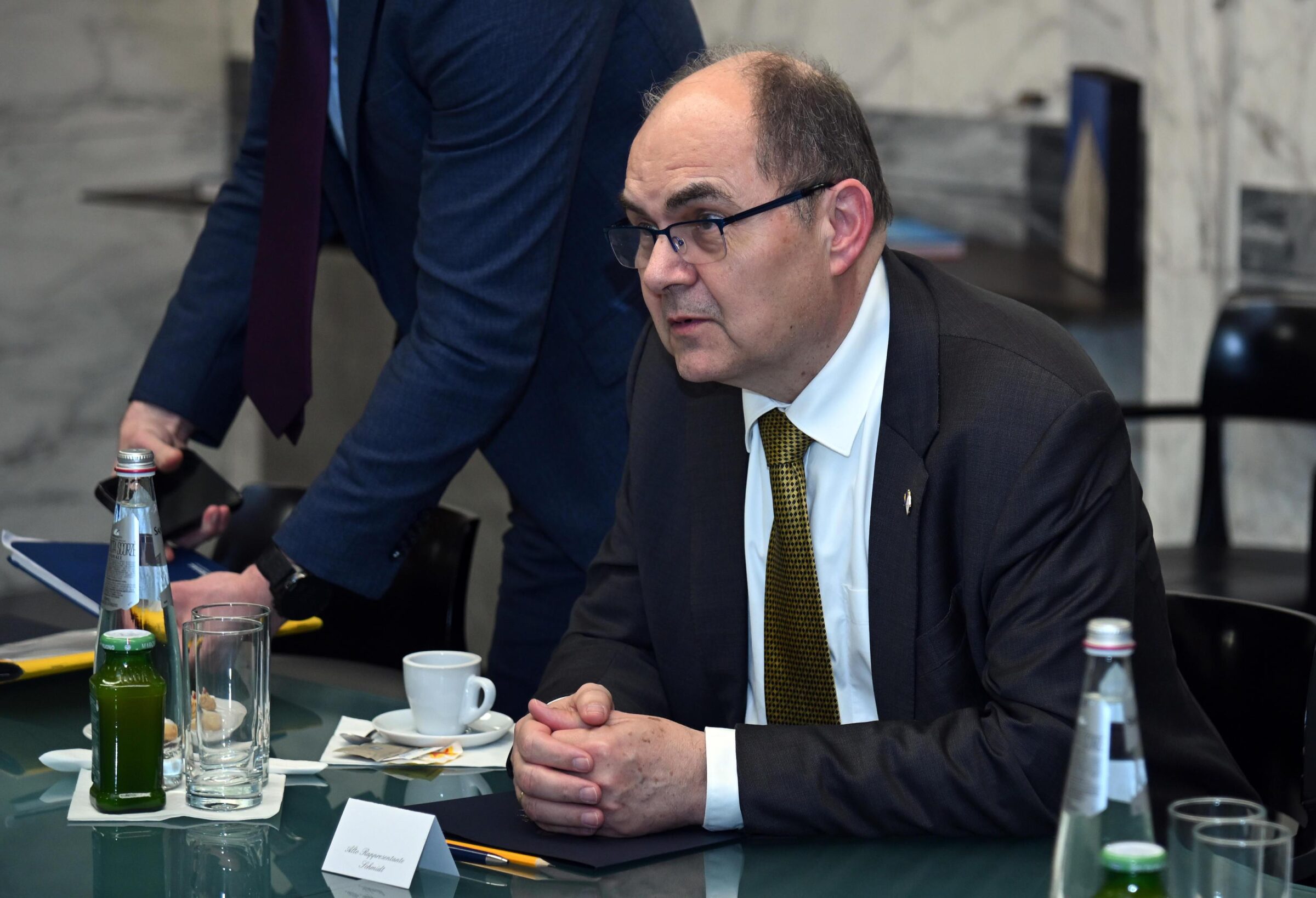
And for Christian Schmidt, the international community’s high representative for Bosnia and Herzegovina (2021-26) the main threat is no longer a return to war, but political stagnation and growing frustration.
He says that weak civic engagement, slow progress towards EU membership and the influence of Russia and neighbouring countries are reinforcing Bosnia’s divisions. Young people, he says, are increasingly responding by leaving the country.
In this interview, Schmidt discusses foreign influence, the EU’s role, the legacy of Dayton, and why Bosnia’s future may depend on whether it can build a stronger political community across its ethnic divisions.
A country that remains divided
You started your work in Bosnia and Herzegovina in 2021 and were there for five years. It was a period of major changes, with COVID and then the war in Ukraine. What were your experiences of these moments. How has the situation in Bosnia evolved?
I think there has not been sufficient involvement. Civil society in Bosnia and Herzegovina is not very strong. It is, more than just politically, somehow divided on political issues. This prevents a joint political position or commitment from civil society to make more progress in democratic development and European integration.
So far, I don’t see that this has changed very much. It has also not changed that some parties, especially the SNSD, [Serb nationalist Milorad] Dodik’s party, but honestly not only them, are counting on ethnic differences as an argument for supporting their party instead of having a multi-ethnic approach. One can be doubtful about their real pro-European commitment.
Russia and its influence
When civil society is not engaged and when countries are not politically stable, we know that they are prone to interference from other states or political entities. Is this being seen in Bosnia and Herzegovina?
It is evident that neighbouring countries, especially Serbia and Croatia, have a kind of preferred relationship with parts of the country. This is, by the way, also established in the General Framework Agreement for Peace in Bosnia and Herzegovina [also known as the Dayton Peace Agreement]. So it is not necessarily something that is not in line with Dayton [Agreement].
But there is beyond this more interference if I refer, for example, to Serbia’s reaction on the occasion of the United Nations General Assembly Resolution of 2024 about establishing an international day of commemoration for the Srebrenica genocide. There was a really remarkable attack against this, despite the fact that Serbia was not named in the resolution. There were only named individuals who had committed war crimes or genocide.
But it was used to create a “Pan-Serbian declaration”, which can be seen as a way of bringing cultural issues of the same ethnic group closer together. It has to be seen additionally as a tool to try to gain more political influence in the other part of the country.
You mentioned Croatia and Serbia. Is Russia also playing a role in these interferences?
Yes, but not ethnic interference. It is more through traditional good relations, especially with the Orthodox community, which is basically the Serb Orthodox community, where there are relations and a lot of activities, including in the media and on social media.
They [Russia] try to influence a part of Bosnia and Herzegovina, especially Banja Luka and Republika Srpska, and Dodik is somehow to act as an influencer for Russian interests. This is indeed the case. Dodik has been sitting together with [Russian president Vladimir] Putin for the 11th time since the beginning of the war in Ukraine. This is really remarkable.
How important is Bosnia and Herzegovina and Dodik for Russia and for Putin?
The economic and political-strategic importance is nearly zero. But it can be used as a way of distracting from European and somehow American activities, just by giving them a negative impact on everything. So this is more seen as a tool, rather than an area of influence.
EU— only accession talks?
Does the EU have a role in fighting such interference — Russian, but also the ethnic interference from Croatia and Serbia?
The ethnic relationships are within the framework of Dayton, and they are acceptable. But I think it is very important that the EU makes it clear that European integration is not based on ethnic differences, but on uniting in diversity.
This is something that is very complicated. You cannot do this only with programmes or money. I think these challenges are the typical issues that you can address through European commitment, but in the details, it has not delivered.
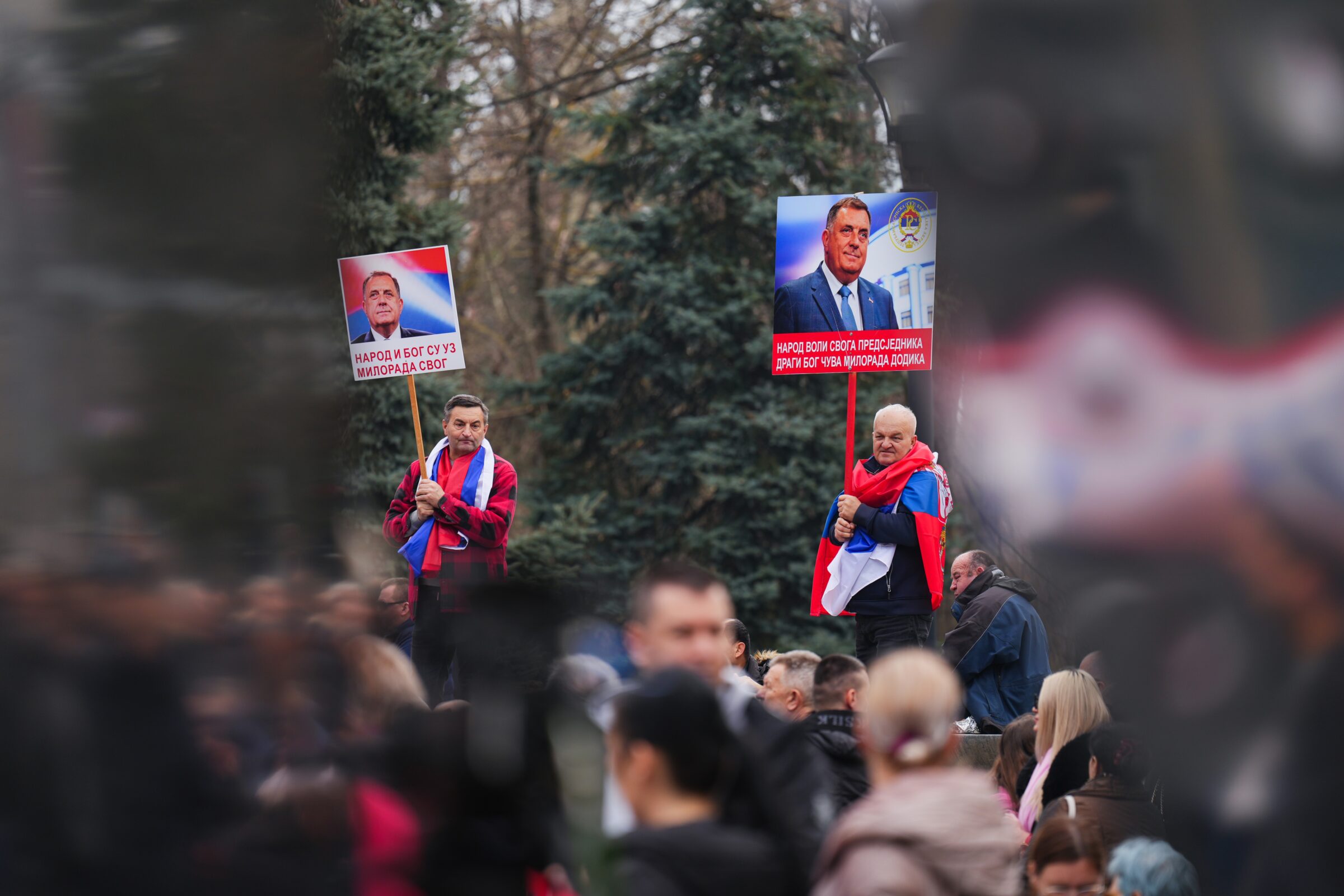
Milorad Dodik has a great support even as he has been sentenced to one year in prison and barred from public office for six years in a first-instance verdict for disobeying the decisions of Bosnia and Herzegovina’s international envoy, High Representative Christian Schmidt. Source: EPA/Nidal Saljic.
Unfortunately, maybe the European Union should sit down again and think about more tools and opportunities, especially addressing civil society, to give more attraction to the European idea.
How would that work?
This article continues, but the full version is available only to EUobserver.com subscribers. Visit account.euobserver.com/membership
The European Commission has proposed new safeguards allowing voting rights and funding to be restricted if future EU members breach fundamental European rules after accession, as Brussels prepares for possible membership of Ukraine, Moldova, Albania and Montenegro.
The European Commission has set out a new framework for enlargement that would allow the European Union to impose restrictions on recently admitted countries for up to 15 years after accession if they retreat from commitments on democracy, the rule of law or other fundamental EU principles.
The measures form part of the Commission’s new pre-enlargement policy review, published on Tuesday, which examines how the EU’s institutions, budget and policies would have to change before another round of expansion. Brussels says the Union could accommodate additional members without rewriting its treaties, but would need stronger safeguards to prevent enlargement from making decision-making more difficult.
Under the proposals, accession treaties could contain an institutional safeguard allowing action against a new member that seriously breaches the values contained in Article 2 of the Treaty on European Union or the principle of sincere cooperation. In the most serious cases, Council voting rights could be suspended.
The Commission’s public summary describes those arrangements as temporary, targeted and reversible. Reporting on the underlying proposal indicates that the enhanced safeguard could remain available during the first 15 years of membership.
The proposal addresses a problem that has moved steadily up the enlargement agenda: how to ensure that a country continues to meet membership conditions after it has entered the EU.
Germany, France, Belgium, the Netherlands and Luxembourg had already raised the issue earlier this year. As EU Today reported in June, the five governments called for mechanisms capable of restricting some rights of new members if democratic standards deteriorated after accession.
The Commission has now turned that political argument into a wider institutional proposal.
The change is particularly relevant to Ukraine, Moldova, Montenegro and Albania, which Brussels identifies as the four candidates currently furthest advanced. The Commission says it will prepare indicative roadmaps for each country provided reform momentum continues.
Ukraine and Moldova may also make further progress within days. EU Today reported earlier on Tuesday that two more negotiating clusters could potentially be opened next week if Ukraine’s parliament passes legislation dealing with minority-language education.
Alongside stronger rule-of-law safeguards, the Commission wants candidate states to be integrated gradually into parts of the EU before full membership. Energy, transport, digital policy and defence are among the sectors identified for deeper participation.
Brussels is also proposing greater use of qualified-majority voting during the accession process, including for decisions to open negotiating clusters. At present, individual governments can delay progress at several stages because unanimity is required.
Another proposed safeguard would require a newly admitted state, for a limited period, not to block subsequent enlargements because of bilateral disputes. The measure reflects long-standing difficulties in the Western Balkans, where disputes between neighbouring states have repeatedly entered accession negotiations.
Ukraine’s agricultural sector presents a separate challenge. The Commission says transitional arrangements could be used for agriculture, sensitive products, EU funding, the movement of workers and participation in common systems. Reporting on the package indicates that unrestricted access by Ukraine to existing Common Agricultural Policy support is unlikely immediately upon accession because of the scale of Ukrainian farming.
That question is politically important for existing agricultural beneficiaries, particularly in Central and Eastern Europe, where Ukrainian grain and food imports have already caused disputes.
The institutional proposals do not guarantee membership for any candidate. Accession remains dependent on meeting the EU acquis, completing negotiations and obtaining the agreement of existing member states.
Nor has the 15-year safeguard yet become EU law. The Commission has asked the European Council and European Parliament to take forward discussions, and the eventual provisions would have to be reflected in future accession arrangements.
What has changed is the shape of the enlargement debate. Brussels is no longer concentrating solely on what candidate countries must do before joining. It is also designing mechanisms governing what happens after they enter.
For Ukraine, Moldova and the Western Balkans, that could produce a more credible path towards membership, but one accompanied by conditions extending well beyond accession itself.
The European Commission has proposed up to 15 years of post-accession safeguards to punish new member states in case of bad behaviour, in a long-delayed pre-enlargement policy review out on Tuesday (6 October).
The reforms were initially requested by the European Council in June 2024 to be ready by spring 2025, but were delayed several times due to political sensitivities in EU capitals.
They are aimed at frontrunners for future EU membership – Montenegro, Albania, Moldova, and Ukraine – each of whom will get an accession roadmap this month.
EU Commission president Ursula von der Leyen has deemed union enlargement a “geopolitical imperative” amid the war in Ukraine and shift towards a new global order.
By expanding, the EU hopes to promote democracy and strengthen the single market.
But this also comes with fears that countries could misbehave after getting in, prompting the commission’s proposed new guardrails.
The commission suggests that new member states promise “not to oppose EU decisions on future enlargements” due “to bilateral disputes” for an unspecified time.
But Marta Kos, the EU’s enlargement commissioner, said this commitment would be voluntary.
Commissioner dismisses ‘two-tier’ concerns
This article continues, but the full version is available only to EUobserver.com subscribers. Visit account.euobserver.com/membership
Ukraine and Moldova could advance to two further stages of their European Union accession negotiations as early as next week, Enlargement Commissioner Marta Kos has said, provided Ukraine approves legislation addressing minority-language education.
The European Union could open two additional negotiating clusters with Ukraine and Moldova next week if the Ukrainian parliament passes legislation intended to address concerns over education rights for national minorities.
EU Enlargement Commissioner Marta Kos confirmed the possible timetable on Monday following a meeting of the EU-Moldova Association Council in Brussels.
Asked whether further intergovernmental conferences could take place this month, Kos said the next two clusters could potentially be opened during meetings in Luxembourg next week.
The condition is passage by the Verkhovna Rada of legislation dealing with educational rights for national minorities, an issue that has been central to Hungary’s objections to further progress in Ukraine’s accession negotiations.
Kos said during the Commission’s recorded press conference that Brussels was aware of the Ukrainian parliament’s procedures and hoped the legislation would be approved. Member states would then have to complete their own procedures quickly.
A draft law covering education rights for indigenous peoples and national minorities was registered in the Verkhovna Rada on 1 October.
The legislation is intended in part to address Hungarian demands concerning the use of minority languages in Ukrainian schools, particularly by the ethnic Hungarian community in Zakarpattia.
Hungary has repeatedly linked support for Ukraine’s EU accession process to those issues.
Ukraine and Moldova formally opened accession negotiations in 2024 and have since moved into the detailed cluster-based process used to organise negotiations over the EU acquis.
EU Today reported in June that the two countries had moved into the first substantive stage after political agreement allowed negotiations on the “fundamentals” cluster to proceed.
That cluster covers areas including the judiciary, fundamental rights, public administration, democratic institutions, public procurement and financial control.
Unlike most negotiating areas, the fundamentals cluster remains open throughout the accession process and is normally closed last.
The possible opening of two additional clusters would therefore mark another practical step in a process that remains dependent on unanimous support among EU governments at key stages.
Ukraine’s Foreign Minister Andrii Sybiha has said he hopes adoption of the minority-education amendments will remove the remaining basis for Hungary to block the next steps.
The negotiations have also become linked increasingly closely to the wider security relationship between the EU and Ukraine.
Brussels continues to stress that accession remains merit-based and conditional on reforms.
Kos said on Monday that both Ukraine and Moldova were delivering reforms in difficult circumstances and described them as being among the four front-running candidate states.
The Commission is due to publish its annual enlargement reports on 28 October, providing a detailed assessment of progress across individual negotiating chapters.
Moldova has set itself a target of being ready to complete negotiations by early 2028, although any final accession date would depend on the member states.
The country has also been moving closer to EU structures outside the formal accession negotiations.
Kallas said on Monday that the EU had committed €1.9 billion under its Growth Plan for Moldova and was releasing another €157 million tranche. Moldova has joined the Single Euro Payments Area and is moving towards inclusion in the EU’s mobile roaming area.
Ukraine’s path is more politically complicated because of both the war and recurring disputes with individual EU members.
The next immediate test is parliamentary: whether Kyiv can pass the education amendments quickly enough to allow EU governments to approve the next negotiating stages in Luxembourg.
Moldova’s Prime Minister Vasile Tofan will meet senior EU officials in Brussels on Monday as the country attempts to move from the opening stages of accession negotiations towards deeper economic, security and institutional integration with the European Union.
The 10th EU-Moldova Association Council will be held in Brussels on 5 October, chaired by EU foreign policy chief Kaja Kallas. Tofan will lead the Moldovan delegation, while Enlargement Commissioner Marta Kos will represent the European Commission.
The meeting will review Moldova’s accession process, political reforms, justice, freedom and security, foreign and security policy, trade, energy and wider economic co-operation. Regional and global security issues will also be discussed during a restricted session.
The timing is significant because Moldova has moved considerably further along the accession process during 2026.
In June, the EU formally opened negotiations on the Fundamentals cluster, which covers the rule of law, fundamental rights, democratic institutions, public administration and economic criteria. Progress in that cluster determines the overall pace of accession negotiations.
A second step followed in July when negotiations began on the External Relations cluster. That part of the process covers commercial policy, development co-operation and alignment with the EU’s common foreign, security and defence policy, including sanctions.
Moldova is consequently moving beyond the declaration that it has a European future and into negotiations over specific areas of EU law.
That process is taking place under conditions markedly different from previous rounds of enlargement.
Moldova borders Ukraine and has faced persistent Russian political pressure, disinformation campaigns and attempts at electoral interference. Energy vulnerability remains another concern, while the unresolved Transdniestria conflict leaves part of the country outside the effective control of the government in Chișinău and with Russian forces still present.
Security and accession policy have therefore become increasingly difficult to separate.
At the EU-Moldova summit in June, European leaders concentrated on accession, reform implementation and gradual integration into EU structures. The meeting took place only a week after the first negotiating cluster was opened.
Moldova is benefiting from the EU’s €1.9 billion Reform and Growth Facility, intended to accelerate economic convergence and reforms connected to accession. The Commission’s current Moldova enlargement record shows that a second regular payment of €189 million was delivered in March 2026.
The Association Council will not decide when Moldova joins the European Union. Accession remains conditional on reforms, compliance with membership criteria, completion of negotiations and unanimous approval by the member states.
What Monday’s meeting will show is whether the process is maintaining momentum.
Moldova and Ukraine formally began accession negotiations together in 2024 and entered the first substantive negotiating cluster together this June. The two countries remain politically connected in the EU enlargement debate, although Brussels formally assesses each candidate on its own record.
The next challenge is less ceremonial.
Opening clusters demonstrates political progress. Closing negotiating chapters requires legislation to be adopted, institutions to function and reforms to be enforced beyond their appearance in government programmes.
For Moldova, that work is being undertaken while the country manages Russian pressure, energy security, economic restructuring and domestic political change.
Monday’s Association Council will provide Brussels with its latest opportunity to judge whether those pressures are slowing the accession process or whether Moldova remains capable of moving through the EU’s negotiating machinery.
After Iceland voted down EU membership in an August referendum, Montenegro regained its status as the most-likely 28th member state of the bloc.
Its government plans to close negotiations on all the chapters of the accession agreement by the end of the year and enter the Union in 2028 – a challenge, especially as a planned Tuesday meeting (22 September) with EU negotiators was postponed.
Montenegro also needs to answer the Union’s concerns about corruption and persuade all the member states to let it in.
EUobserver spoke to Marjan Šarec, former Slovenian prime minister, MEP for Renew Europe, and the parliament’s rapporteur for Montenegro. He follows the negotiation process, keeping his optimism for the country’s accession.
Can Montenegro become the 28th member of the European Union by 2028?
It’s the ambition of Montenegro, surely I would like to see that happen. The process of ratification would need to be smooth, it also depends when Montenegro concludes the negotiations – their ambition is to do it by the end of this year, which is very ambitious. Eighteen chapters have been provisionally closed, there are quite a few to go.But it also depends on the member states.
What’s the next thing on the negotiations agenda?
There are some chapters which are still difficult: the rule of law, the judiciary system, corruption, organised crime, all those issues are very demanding. What worries me is implementation because you can pass a law, but you also have to implement it. Montenegro has its problems, and it will have those problems for several years. But EU membership would help to build a different society, different environment.
And when it comes to the chapters to finish, what are some of the most contentious issues?
The issue of corruption is quite difficult to solve because, well, Montenegro is a small society: 630,000 inhabitants. In such an environment, it’s very difficult to prosecute: that’s why it will take some time. But Montenegro surely made a lot of progress and we can be moderately optimistic.
What are the risks of the accession negotiations taking a long time?
This article continues, but the full version is available only to EUobserver.com subscribers. Visit account.euobserver.com/membership

 Login


 (@andrii_sybiha)