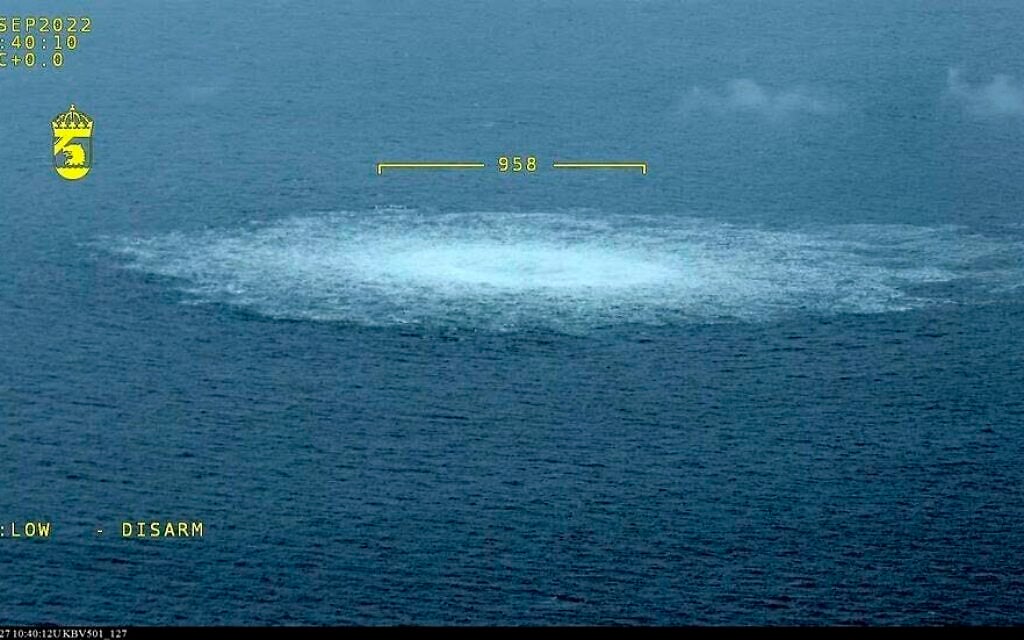
Ukrainian ex-officer goes on trial in Germany over 2022 Nord Stream pipeline sabotage


O governo do presidente Luiz Inácio Lula da Silva (PT) anunciou nesta terça-feira (13) o envio de um Projeto de Lei Complementar (PLP) ao Congresso Nacional para permitir o perdão de R$ 12,6 bilhões em dívidas tributárias de aproximadamente 3,6 milhões de microempreendedores individuais (MEIs). A proposta integra um conjunto de medidas voltadas à redução do endividamento e ao apoio a pequenos negócios.
A iniciativa faz parte do programa Prospera MEI e pretende facilitar a regularização fiscal de trabalhadores que acumulam débitos com a União. A medida, no entanto, depende da tramitação e da aprovação do projeto pelo Congresso Nacional para entrar em vigor.
Os números apresentados pelo governo indicam que cerca de metade dos microempreendedores incluídos na estimativa possui dívidas superiores a R$ 3 mil. Os débitos considerados na proposta são aqueles inscritos na Dívida Ativa da União.
Além da anistia tributária, o Prospera MEI prevê a destinação de R$ 5 bilhões, entre 2027 e 2030, para apoiar o desenvolvimento de pequenos negócios. A proposta estabelece a concessão de recursos não reembolsáveis, ou seja, valores que não precisarão ser devolvidos pelos beneficiários.
Cada empreendedor poderá receber até R$ 5 mil para investir na própria atividade, mediante a apresentação de um projeto. O dinheiro poderá ser utilizado na compra de equipamentos, aquisição de materiais e contratação de serviços necessários à melhoria ou à ampliação do negócio.
A iniciativa também pretende alcançar empreendedores que enfrentam dificuldades para obter crédito bancário por causa de restrições financeiras, baixa pontuação de crédito ou falta de garantias.
Mulheres e microempreendedores com menor faturamento estão entre os públicos que deverão ter prioridade no acesso aos recursos. A execução dos projetos deverá contar com a participação do Serviço Brasileiro de Apoio às Micro e Pequenas Empresas (Sebrae) e do Serviço Nacional de Aprendizagem Industrial (Senai).
O pacote inclui medidas para ampliar as possibilidades de renegociação de dívidas bancárias contraídas por MEIs por meio de seus CNPJs. A proposta prevê a inclusão desses débitos no Desenrola Brasil 3.0, com regras a serem detalhadas pelo Ministério da Fazenda.
O mecanismo deverá permitir a negociação de dívidas com descontos que podem chegar a percentuais elevados, dependendo das condições de cada operação. Os critérios de participação e os benefícios efetivamente disponíveis dependerão da regulamentação.
A iniciativa busca aliviar o comprometimento da renda dos pequenos empreendedores com obrigações financeiras e ampliar as condições para a continuidade das atividades comerciais e de prestação de serviços.
Outra medida defendida pelo governo é a ampliação do limite de faturamento anual permitido para o enquadramento como microempreendedor individual. Atualmente, o teto é de R$ 81 mil.
A proposta em discussão prevê elevar o limite para R$ 110 mil em 2027 e R$ 140 mil em 2028. O texto também prevê ampliar de um para dois o número de empregados que um MEI pode contratar.
A mudança depende de aprovação legislativa. Se implementada, permitirá que empreendedores com faturamento superior ao limite atual permaneçam no regime, desde que respeitem as demais condições previstas na legislação.
O conjunto de medidas também inclui iniciativas para reduzir exigências burocráticas relacionadas à emissão de notas fiscais no contexto da reforma tributária.
Embora o governo tenha anunciado a proposta de anistia, o perdão das dívidas não ocorre automaticamente com o envio do projeto. O texto precisará ser analisado pelos parlamentares, que poderão discutir seu alcance e suas condições.
A medida também se diferencia dos programas de renegociação já oferecidos pela Procuradoria-Geral da Fazenda Nacional (PGFN), nos quais os contribuintes podem obter descontos e parcelar débitos conforme as regras estabelecidas.
Com o Prospera MEI, o governo reúne propostas de regularização tributária, apoio financeiro e mudanças nas regras de funcionamento dos pequenos negócios. A implementação de cada iniciativa dependerá do instrumento legal correspondente e, nos casos que exigem aprovação legislativa, da conclusão da tramitação no Congresso.
The post Governo Lula propõe perdão de R$ 12,6 bilhões em dívidas de 3,6 milhões de MEIs appeared first on Diário da Manhã - O Jornal do leitor Inteligente.

No dia 31 de outubro, os Skip the Drama, organizam o Riffs’n’Bones #2, uma noite de Halloween com quatro bandas de punk rock, hardcore e nu metal, no Rock da Baixamar, em Tavira. Um Halloween mais barulhento, com uma noite de riffs, guitarras, mosh, cerveja e algum caos pelo caminho!! Este ano contam com quatro […]
VTM
Segundo informação do Comando Sub-regional do Douro, o homem acabou por morrer no local, tendo o óbito sido confirmado pela equipa médica do helicóptero do Instituto Nacional de Emergência Médica (INEM).
O alerta para esta colisão foi dado às 8h16 e para o local foram mobilizados 19 operacionais, apoiados por quatro veículos e um meio aéreo, o helicóptero do INEM de Macedo de Cavaleiros, assim como os Bombeiros de São João da Pesqueira e a GNR, que está a investigar as causas do acidente.
A estrada esteve cortada, mas já se encontra reaberta ao trânsito, confirmou à VTM fonte da GNR de Viseu.
The post Homem acabou por morrer em acidente com autocarro appeared first on A Voz de Trás-os-Montes.
VTM
Segundo informação recolhida junto do Comando Sub-regional do Douro, o acidente ocorreu entre “Vilarouco e São João da Pesqueira, na EN 222, e envolveu um autocarro e um veículo ligeiro, tendo resultado num ferido grave, que deverá ser transportado pelo helicóptero do INEM, que está no local.
O alerta foi dado às 8h16 e para o local foram mobilizados 19 operacionais, apoiados por quatro veículos e um meio aéreo, o helicóptero do INEM de Macedo de Cavaleiros e os bombeiros de São João da Pesqueira.
A GNR também está no local.
The post Um ferido grave em colisão entre autocarro e veículo ligeiro appeared first on A Voz de Trás-os-Montes.
Numerous governments, academic institutions, and social movements have reinterpreted October 12th, now commemorating it as the Day of Indigenous Resistance or the Day of Native Peoples.
RELATED: Brazil Establishes First Indigenous Federal University
This shift reflects a deliberate effort to reframe historical narratives. Rather than viewing the event as the discovery of an uninhabited place, modern historical accounts present October 12th as the beginning of European conquest, systematic colonization, and centuries of native resistance.
Understanding the significance of October 12th requires examining both the immediate impact of European arrival and the long-term historical processes that stemmed from it. Spanish arrival expeditions in 1492 triggered a profound demographic and economic transformation across the Americas.
Before 1492, the total population of the Americas is estimated to have ranged between 50 and 100 million inhabitants. Due to a combination of factors, such as the introduction of European pathogens (smallpox, measles, and influenza), violent military campaigns, and forced labor systems, at least 56 million native people across the continent had perished by the year 1600.
When analyzing the colonization process, we can say that the events of October 12th laid the foundations for modern global trade, land distribution, and current international relations.
Following the fall of Constantinople to the Ottoman Empire in 1453, traditional overland trade routes between Europe and Asia became subject to heavy taxation and political restrictions.
European monarchs and merchant syndicates sought direct maritime routes to Asian markets to secure trade in high-value commodities, including spices, silk, and precious metals. The Spanish Crown, under Catholic Monarchs Isabella I of Castile and Ferdinand II of Aragon, financed the expedition led by the Genoese navigator Christopher Columbus to establish a western sea route to Asia.
Upon making landfall in the Bahamas on October 12, 1492, Columbus recorded the event in his ship log, noting the presence of native Taíno people and observing the local geography.
The economic motivations of the Spanish expedition were explicitly documented in these early entries, which frequently highlighted references to gold deposits and potential labor resources.
Legal and theological frameworks were established shortly after to justify the expansion of European territorial sovereignty over the newly accessed lands.
In 1493, Pope Alexander VI issued the papal bull Inter Caetera, which granted the Spanish Crown exclusive rights to lands not ruled by Christian monarchs. This decree formed part of the broader legal concept known as the Doctrine of Discovery.
The discovery of large silver deposits, such as those at Potosí in modern-day Bolivia and Zacatecas in Mexico during the mid-16th century, shifted the global financial system.
The continuous flow of American bullion funded European state expenditures, financed trade with Asia, and laid early economic foundations for modern global capitalism.
In 2002 Chávez declared Oct 12 as Día de la Resistencia Indígena, the Day of Indigenous Resistance. Columbus’ statue was torn down two years later and the colonizer was tried in a court of public justice. Today not a single statue of Columbus remains.pic.twitter.com/40U0Y6hXwa
— Party for Socialism and Liberation (@pslnational) October 12, 2020
The European invasion of the Americas was a combination of military conquest, administrative restructuring, and forced labor systems designed to maximize resource extraction.
Following initial contact in the Caribbean, Spanish forces led by Hernán Cortés entered the Aztec capital of Tenochtitlan in 1519, while Francisco Pizarro launched the conquest of the Inca Empire in the Andes in 1532.
In both regions, European invaders exploited existing internal political rivalries, deployed superior steel weaponry and firearms, and used horses to establish military dominance over densely populated urban centers.
To organize the population and secure labor, Spanish colonial authorities implemented institutional systems known as the encomienda and the mita. Under the encomienda system, the Spanish Crown granted individual conquerors (encomenderos) control over specific native communities.
The so-called encomendero had the right to extract forced tribute and physical labor from the local population in exchange for providing religious instruction in Christianity and theoretical protection.
The human cost of these systems was compounded by widespread demographic collapse. Researchers indicate that out of an estimated pre-1492 population of 50 to 100 million people across the Western Hemisphere, approximately 56 million native people died by 1600.
While infectious diseases like smallpox, typhus, and measles accounted for high mortality rates due to the lack of prior immunity, historical records show that the severity of these epidemics was intensified by severe malnutrition, physical exhaustion, loss of agricultural territory, and social disruption caused by forced displacement.
The destruction of native social and political structures enabled European authorities to establish centralized colonial administrations, divide territories into viceroyalties, and reconfigure the geography of the Americas exclusively around primary commodity export routes to Europe.
Since the beginning, native people responses to colonization included organized military defense, political revolts, and persistent social resistance.
In the Caribbean, Taíno leaders resisted Spanish enslavement and land seizure shortly after the initial European arrival. Chief Hatuey explicitly rejected Spanish religious conversion, citing the violence committed by the colonizers as the primary reason for his defiance.
Further south, the Mapuche people of southern Chile and Argentina maintained centuries of organized military opposition against both the Spanish Empire and later national governments in a conflict known as the Arauco War (Guerra de Arauco).
Led by military strategists such as Lautaro in the 16th century, the Mapuche adapted European cavalry techniques, weapons, and tactics to defend their territory south of the Bío Bío River. Their continuous resistance forced the Spanish Crown to sign the Treaty of Quillín in 1641.
By the late 18th century, economic exploitation under late colonial reforms sparked massive regional uprisings in the Andes. In 1780, José Gabriel Condorcanqui (Túpac Amaru II) launched a major rebellion against Spanish rule in Peru.
Mobilizing tens of thousands of native and mestizo peasants, Túpac Amaru II issued proclamations demanding the total abolition of the mita forced labor system, the elimination of colonial sales taxes, and the freedom of enslaved populations.
In his 1780 proclamation, he declared: “I have determined to free the people from these unbearable taxes and the tyranny of the officials who govern us.”
Although Túpac Amaru II was captured and executed in 1781, the uprising continued in Upper Peru (modern-day Bolivia) under Aymara leader Túpac Katari. Katari organized an army of over 40,000 insurgents and laid siege to the city of La Paz for eight months. Before his execution by colonial forces in November 1781, Katari issued his famous declaration of enduring resistance: “I die today, but I will return, and I will be millions.”
Today, we honour our country's indigenous ancestors who held their ground against great odds, whose fierce resilience kept alive the traditions, histories, and ways of life that define us. 𝐇𝐚𝐩𝐩𝐲 𝐈𝐧𝐝𝐢𝐠𝐞𝐧𝐨𝐮𝐬 𝐏𝐞𝐨𝐩𝐥𝐞𝐬' 𝐑𝐞𝐬𝐢𝐬𝐭𝐚𝐧𝐜𝐞 𝐃𝐚𝐲, 𝐁𝐞𝐥𝐢𝐳𝐞! pic.twitter.com/KgUIuvHPna
— Oceana Belize (@OceanaBelize) October 12, 2026
The formal end of European colonial rule across the Americas during the 19th century did not eliminate the structural marginalization of native populations. Instead, newly formed independent nation-states integrated native lands into national market economies, often continuing practices of territorial dispossession.
Throughout the late 19th and 20th centuries, legal reforms in many Latin American and North American nations abolished communal land titles in favor of private property regimes.
State-sponsored initiatives, such as the “Conquest of the Desert” in Argentina or western expansion in United States, used military force to open native people’s territories for agricultural development, cattle ranching, and resource extraction.
Native communities face pressures from modern corporate extractivism, infrastructure projects, and international commodity demands. According to reports by international human rights organizations, native land defenders represent a disproportionate percentage of environmental activists targeted for violence worldwide.
These modern conflicts reflect a continuation of colonial-era economic dynamics, where local land rights and territorial sovereignty are subordinated to global resource demand. Despite persistent structural pressures, contemporary native social movements have organized continental networks to assert political autonomy and legal rights.
These groups have succeeded in securing legal recognition, such as the United Nations Declaration on the Rights of Indigenous Peoples (UNDRIP) in 2007, and have embedded native people’s rights into the constitutions of several American nations.
Spain lost the indigenous support of the Viceroyalty of Peru from the moment it refused to show mercy toward the natives who were enslaved in the mines through the MITA, triggering "the Rebellion of Túpac Amaru II" thanks to those who aided in the fall of the Spanish Empire. 🇵🇪👍 pic.twitter.com/qtcq8KKqU3
— Eren (@Eren15453289846) August 25, 2026
Re-evaluating October 12 as the Day of Indigenous Resistance contextualizes these events within a broader historical continuum rather than isolating them as single historical moments.
1492 remains an active process rather than a closed chapter of history. Modern struggles over territorial rights, environmental conservation, and political self-determination directly connect to the legal and economic frameworks established during the colonial era.
Native movements across the Americas continue to argue that genuine democratic development requires the recognition of collective land rights, structural political reforms, and the protection of local ecosystems from unregulated resource extraction.
Observing October 12 serves as a reminder of the survival and adaptation of native nations despite centuries of systemic pressure.
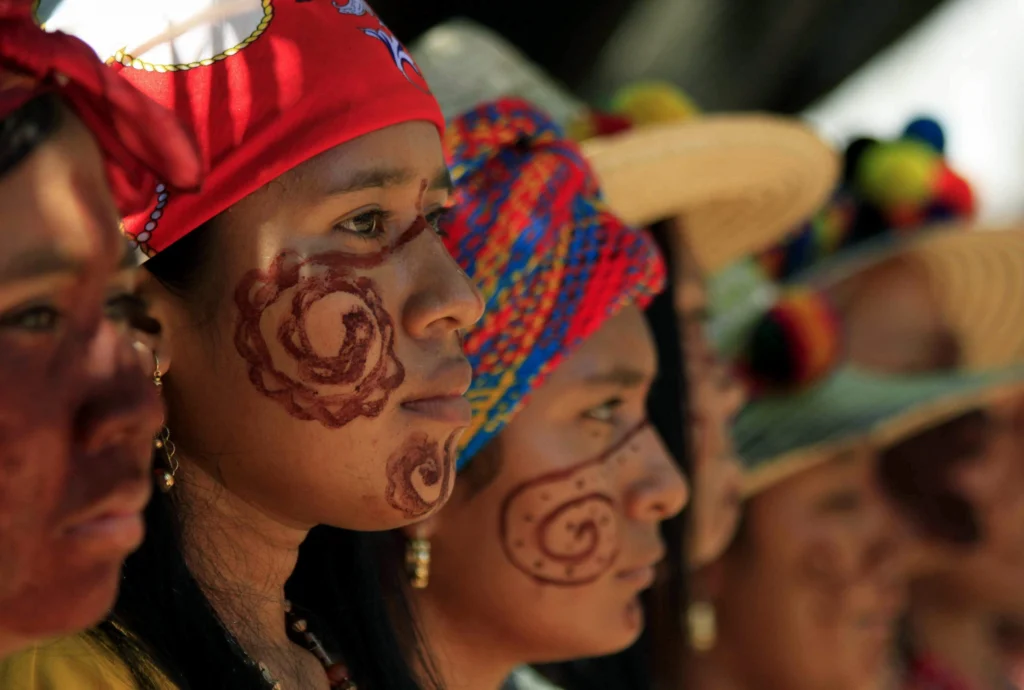
#Venezuela | Indigenous communities gathered in Caracas to mark the Day of Indigenous Resistance, honoring centuries of anti-colonial struggle through traditional music, floral tributes and cultural ceremonies.#IndigenousRights #Decolonization #teleSUREnglish pic.twitter.com/7MFZ45i0d3
— teleSUR English (@telesurenglish) October 12, 2026
Sources: Alexander Koch – Proclamations of Túpac Amaru II – Declarations of Túpac Katari – The Treaty of Quillín – United Nations Declaration on the Rights of Indigenous Peoples – Britannica – La Radio del Sur

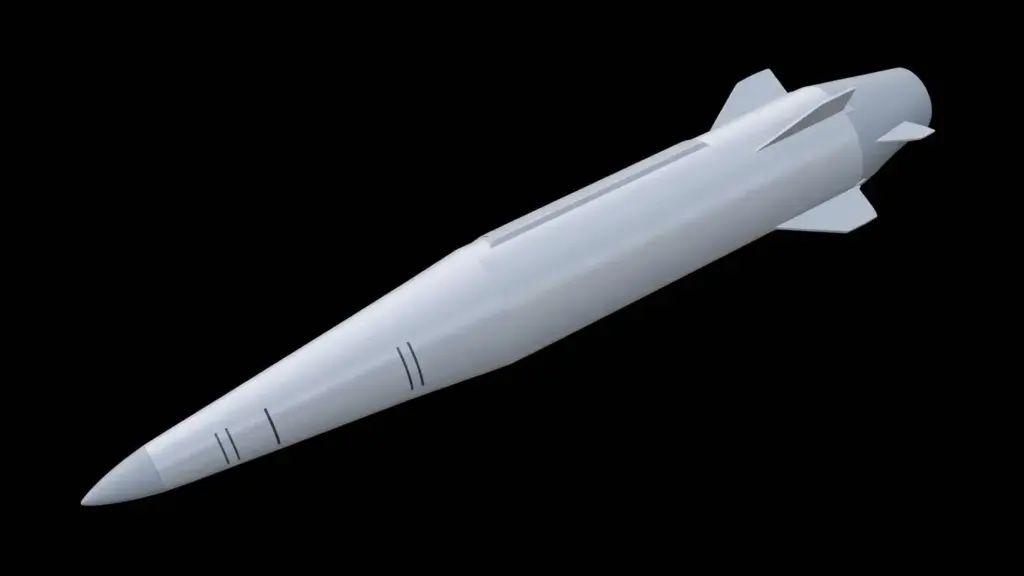
Ukraine’s Defense Intelligence (HUR) released information on the components of Russia’s Kinzhal air-launched ballistic missile and the companies involved in its production, according to a statement dated 12 October.
Russia has used Kinzhal missiles to strike targets across Ukraine since the start of its full-scale invasion. However, 22 of the 58 companies in Russia’s Kinzhal production network are not subject to sanctions, the intelligence agency noted.
Ukraine’s Defense Intelligence has published an interactive 3D model of the Russian Kinzhal missile on its War&Sanctions portal.
The 9-S-7760 missile, known as the Kh-47M2 Kinzhal, uses solid fuel and has a single stage. This means the missile does not consist of multiple stages that separate sequentially during flight. About 90% of its components are identical to those used in the 9M723 ballistic missile of the Iskander-M system, HUR noted.
The Kinzhal is equipped with a radar homing seeker, an active jamming station, and a decoy deployment system, according to the statement. The homing seeker helps the missile determine the direction to its target, while decoys are designed to make interception by air defense systems more difficult.
The missile can carry one of two types of warheads: a penetrating high-explosive warhead or a nuclear warhead. Russia is also developing a version with a high-explosive fragmentation warhead that strikes targets through an explosion and fragments. HUR believes this development may be linked to problems with the missile’s accuracy.
In 2026, Russia significantly reduced its state procurement order for Kinzhal missiles and redirected some production resources, components, and raw materials towards manufacturing Iskander-M missiles, HUR noted. Another reason is the limited number of MiG-31I and MiG-31K aircraft used to launch Kinzhal missiles, the intelligence agency reported.
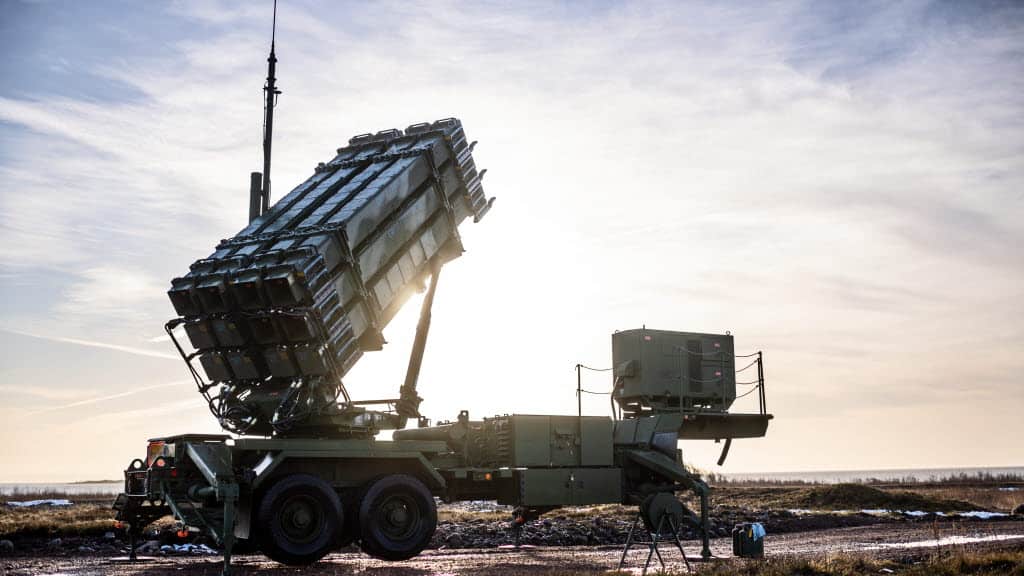
Despite their high speed, Russian Kinzhal missiles can be intercepted using US-made Patriot surface-to-air missile systems. In particular, PAC-3 interceptor missiles are designed to destroy ballistic targets and can be used against threats such as the Kinzhal and Zircon, Ukraine’s Ministry of Defense reported.
Ukraine is seeking additional Patriot interceptor missiles to defend against Russian ballistic attacks during the winter.

Most of the approximately 1,000 missiles Kyiv has contracted for are not expected to arrive for several years, prompting Ukraine to ask its allies to supply missiles from their existing stockpiles, Defense News reported on 12 October 2026.
Russia continues to use foreign components in missile production despite sanctions. For instance, the US-made Texas Instruments processors were found again in a newer version of the Kinzhal missile, Ukrainian presidential commissioner for sanctions policy Vladyslav Vlasiuk said in September, Interfax reported. According to him, foreign electronics continue to reach Russia through various supply channels.
Earlier, Ukraine had provided its partners with information on more than 100 Russian companies involved in ballistic missile production and urged them to impose sanctions on those entities, according to the President's Office.
On 12 October, the EU Council imposed sanctions on 1,569 individuals and entities linked to Russia’s military-industrial complex, including 826 Russian companies and 743 company CEOs.

Ukraine has published data on 20 vessels that carry Russian oil and liquefied natural gas or refuel the sanctioned fleet, parts of the logistics network the Kremlin uses to fund its war, Ukraine's Defense Intelligence reports. All 20 are under British or Ukrainian sanctions, and only one faces US restrictions.
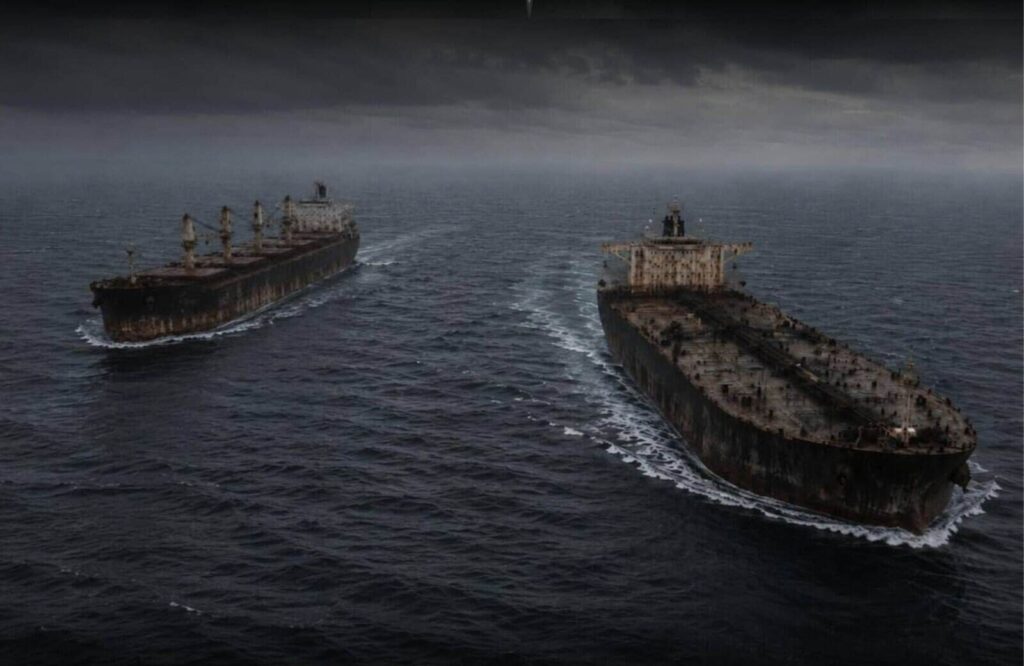
Russia’s shadow fleet runs on roughly 500 aging ships of uncertain ownership that dodge sanctions and keep oil money flowing. That seaborne oil trade is worth more than 80 billion euros a year.
The headline vessel is the Russian ship Portovyy, an LNG carrier and floating gas store owned by the sanctioned Gazprom since 2021, according to the agency. On 15 August 2026, it left the Gulf of Finland with Russian LNG for the first time since November 2021, sailing the Northern Sea Route to the Chinese port of Beihai to unload.
Portovyy is now at the Zhoushan Huafeng Shipyard in China, which has been set as the site for its maintenance, intelligence says, an example of the foreign yards Kyiv wants closed to the sanctioned fleet.
Two more gas carriers show how Moscow expanded the fleet in spring 2026 through front companies, intelligence said. The Avacha, once owned by China’s Jovo Energy, was bought by the little-known Tudor Maritime of the Marshall Islands, took the Russian flag in June, and now ships gas from the Arctic LNG 2 project to Beihai.
The Chaivo, formerly owned by Greece’s Maran Gas Maritime, was also bought by Tudor Maritime and moved under the Russian flag in July. Now it carries cargo to Beihai from a floating gas storage facility off Kamchatka, intelligence says.
Intelligence urged partners to act together: tighten control over sales of commercially owned ships, block servicing of the sanctioned fleet at foreign yards, and cut off the energy revenue that Russia turns into weapons against civilians.
Russia is building ice-class ships at home and, at the same time, widening its shadow fleet through offshore networks. The UK Foreign Office made the same point on 1 October, saying Moscow is assembling a new shadow fleet to keep its gas revenues flowing.
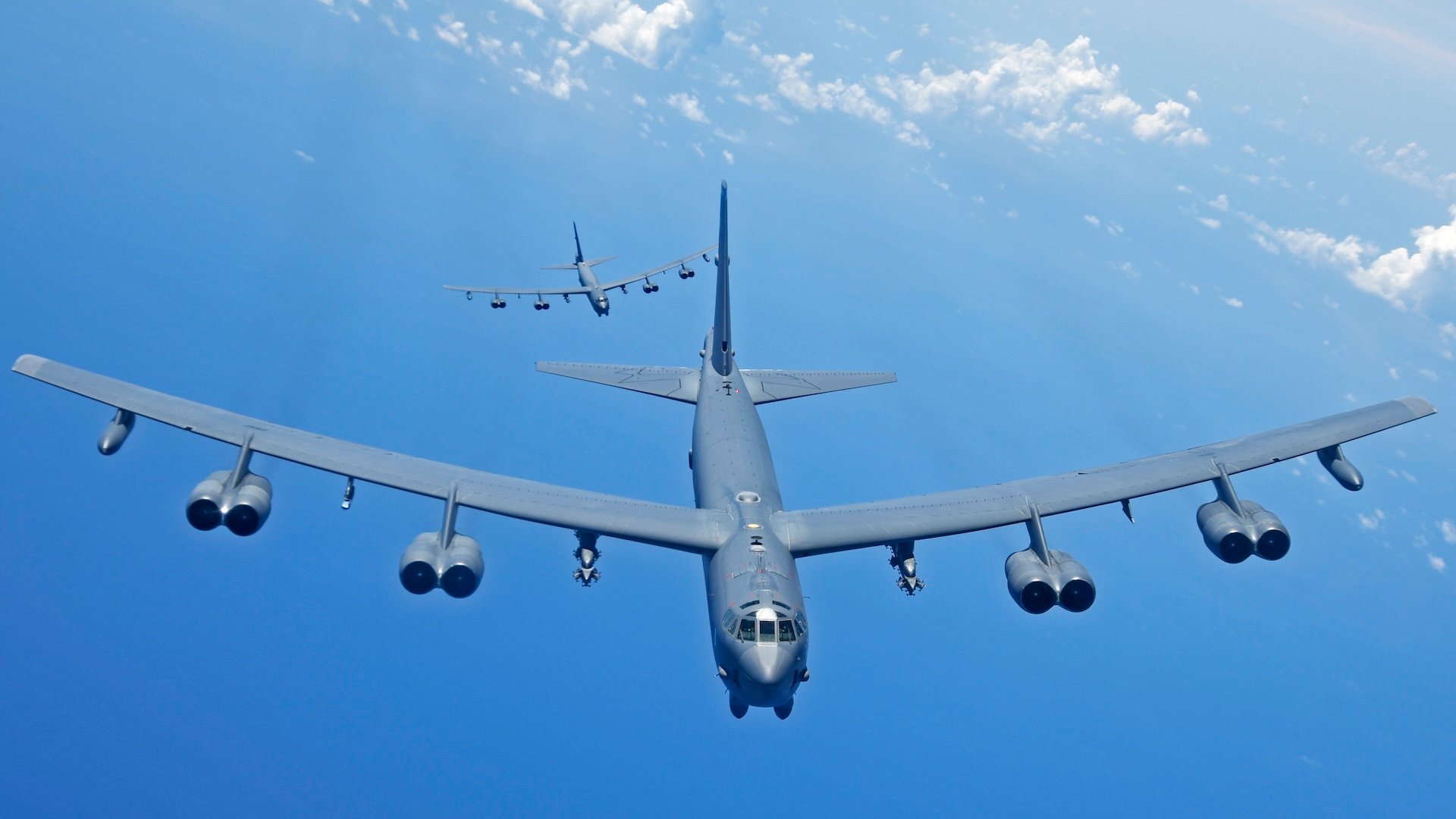
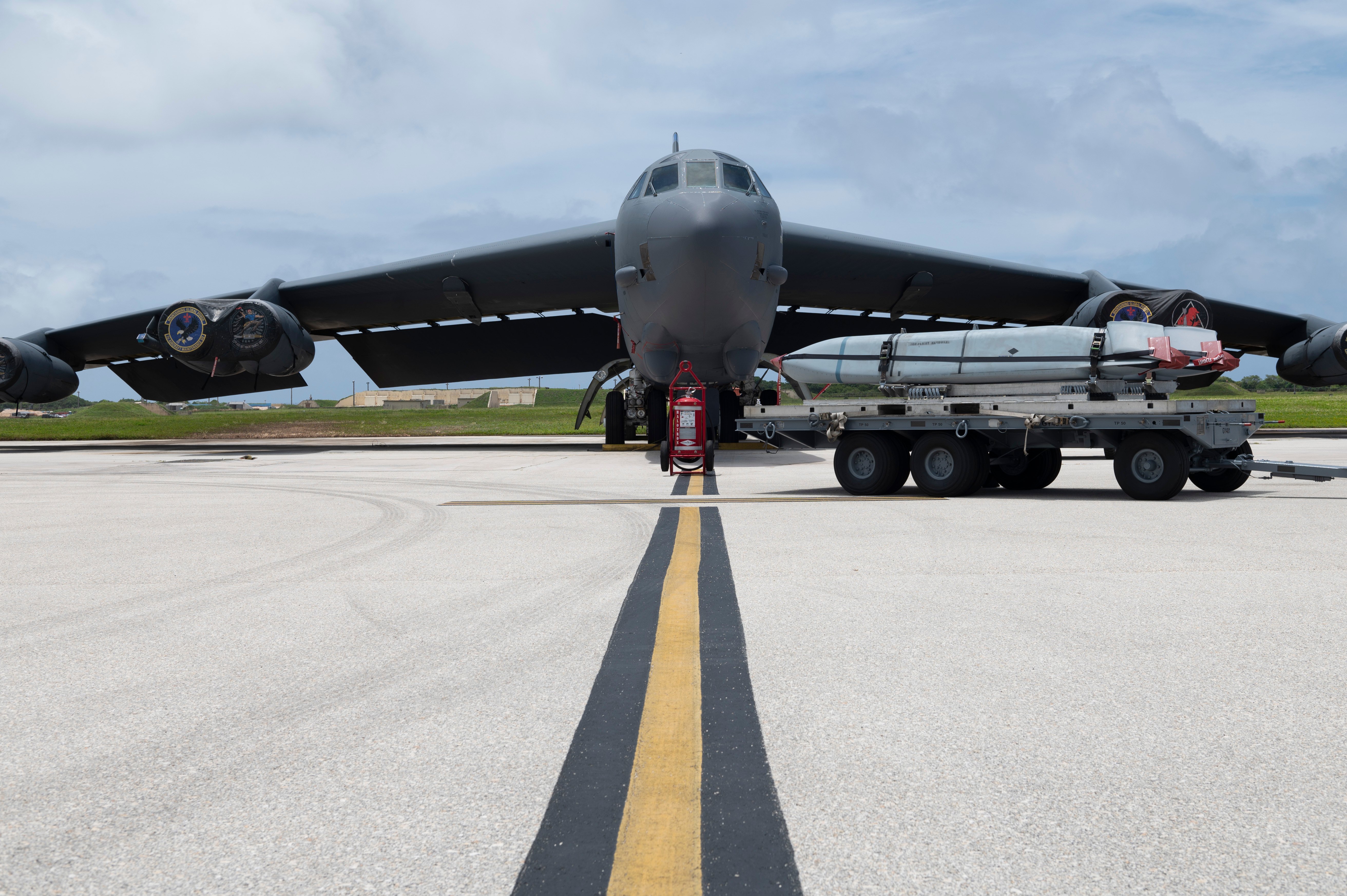
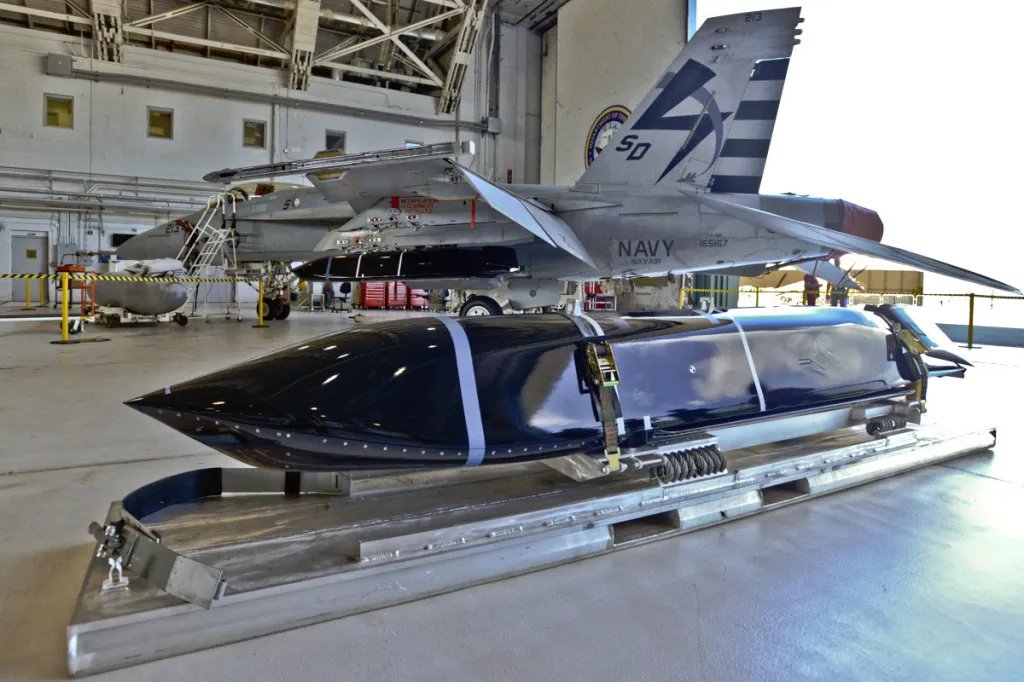
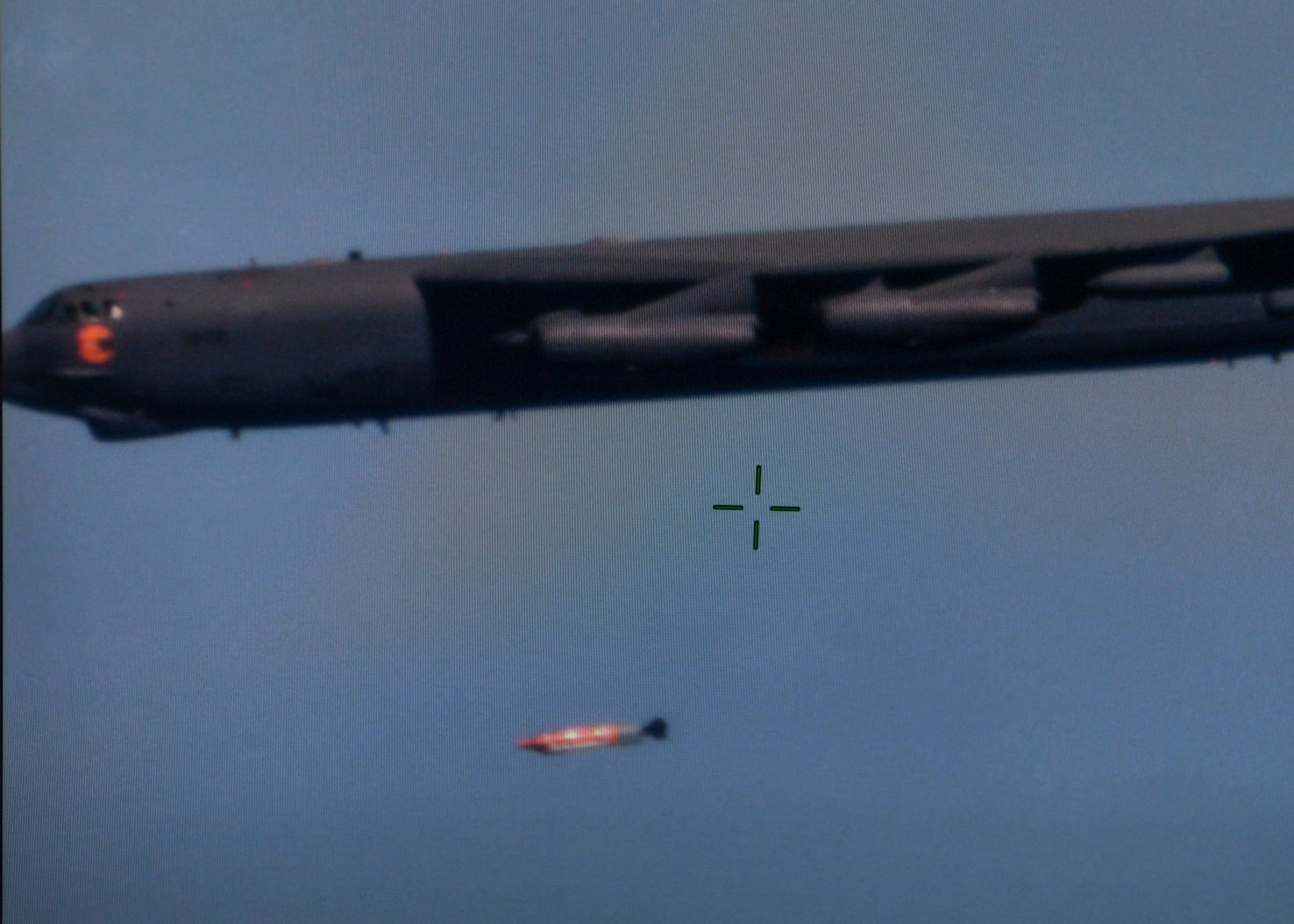
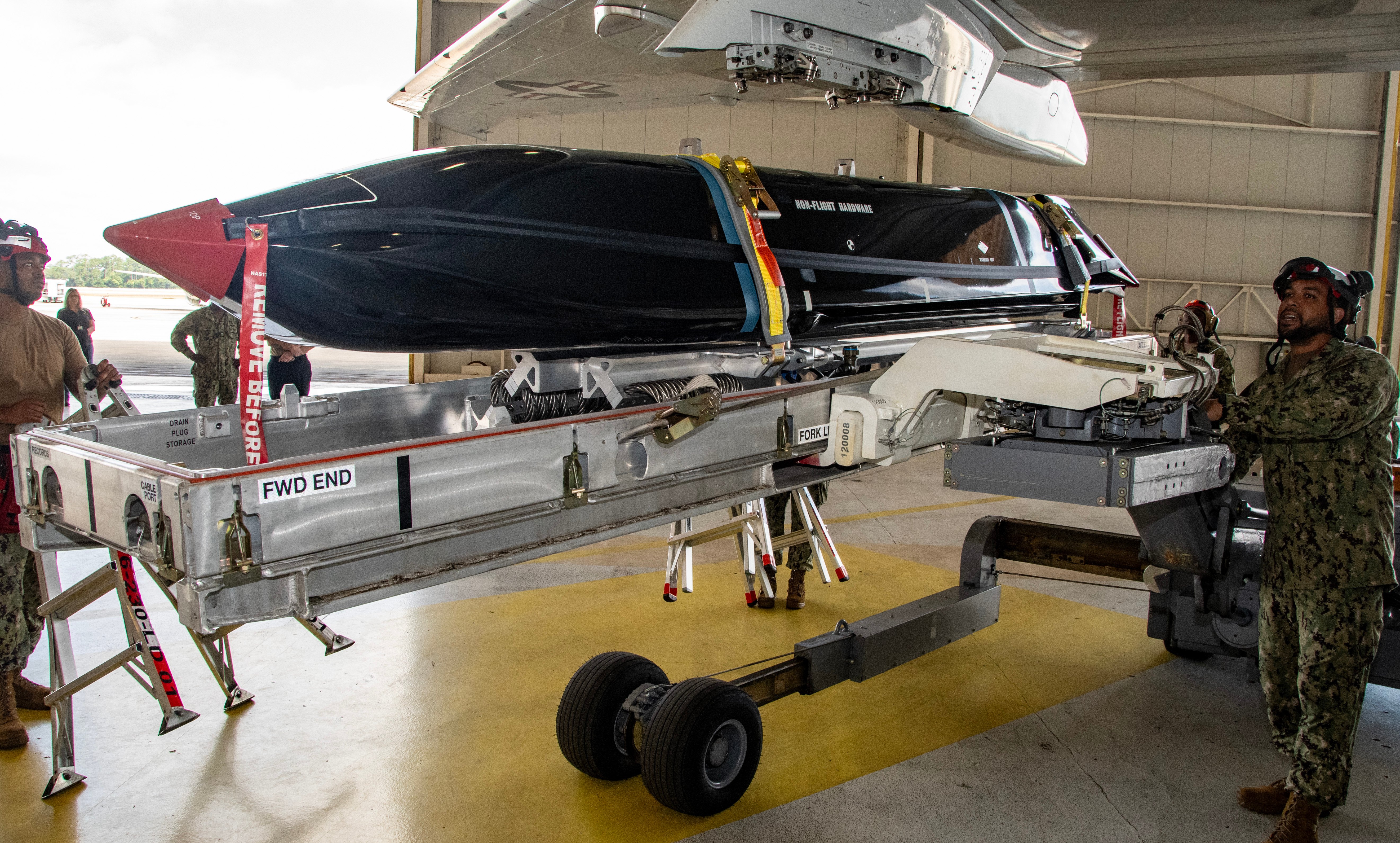
The U.S. Navy is preparing to sign a contract with Lockheed Martin to integrate the stealthy AGM-158C Long Range Anti-Ship Missile (LRASM) onto the Air Force’s B-52 Stratofortress bombers, according to an October 7 government notice. The effort would add another long-range maritime strike option to the U.S. bomber force as the military looks to counter increasingly capable adversary naval forces, especially in the Indo-Pacific theater.
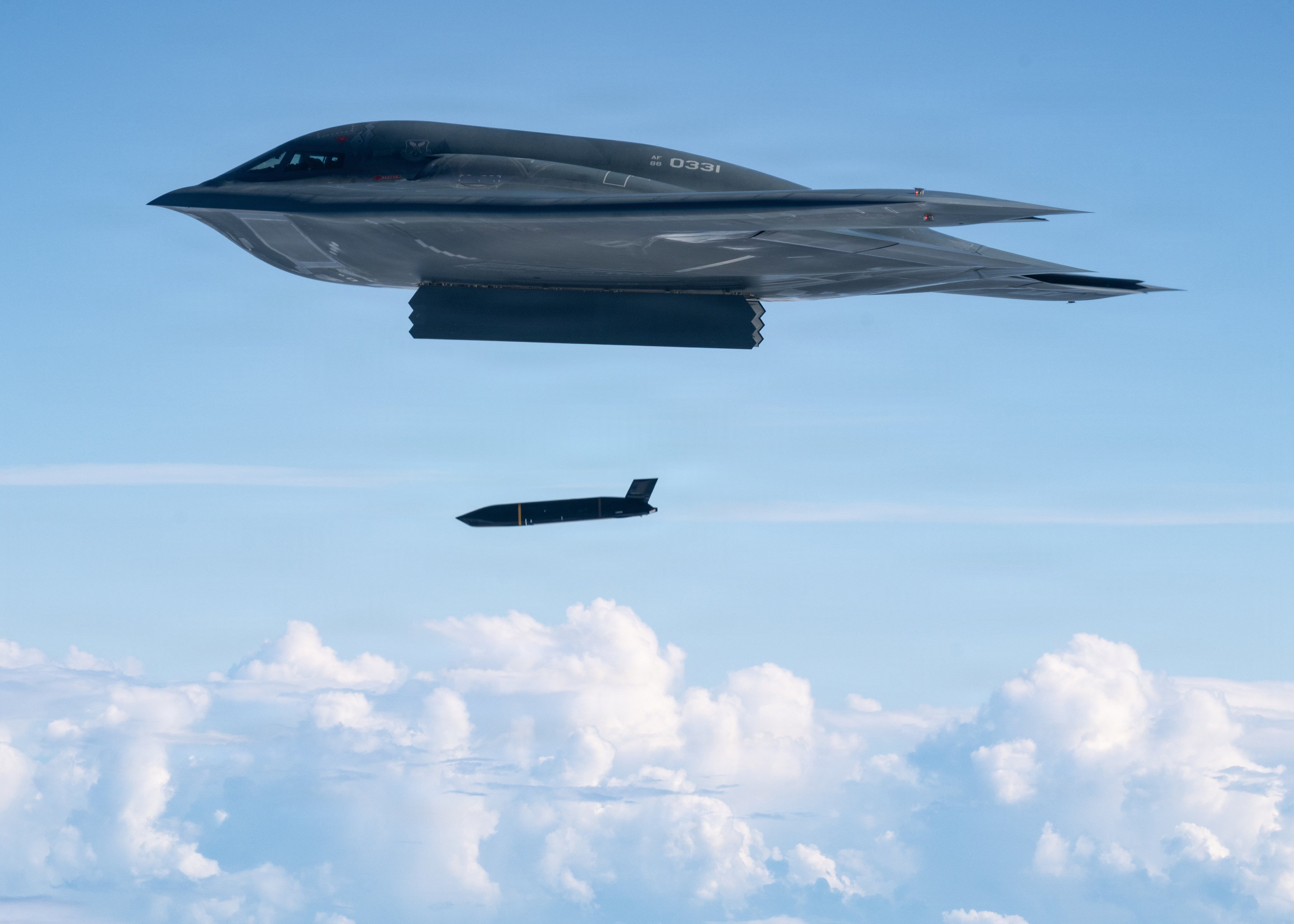
The planned contract comes months after the Air Force revealed that the stealthy B-2 bomber can also launch LRASM, a capability that had not previously been publicly disclosed. You can read more about that here.

The latest Naval Air Systems Command (NAVAIR) notice says the command intends to enter into sole-source negotiations with Lockheed Martin and subsequently award a cost-plus-fixed-fee delivery order covering LRASM integration on the B-52. The work would include missile software updates, associated testing, repairs to test assets, and failure review boards.
The notice does not provide a schedule for completing the integration or fielding the capability.
The B-52 is already capable of carrying large numbers of air-launched cruise missiles, including the AGM-158 Joint Air-to-Surface Standoff Missile (JASSM) family. LRASM is derived from that family, sharing a similar general form factor while incorporating features specifically designed to find and attack ships in contested maritime environments.
The B-52 can carry up to 20 JASSMs, and the weapons have the same dimensions, but the government notice does not specify how many LRASMs the bomber would ultimately carry.

This is not the first time the B-52’s LRASM integration has been in the works.
As long ago as November 2019, Naval News reported that $10 million in Fiscal Year 2019 funding had been allocated to study integrating the missile onto the bomber, with Lockheed Martin and the Navy and Air Force expected to work on the effort. At the time, officials said the fielding timeline and the bomber’s eventual missile capacity had yet to be determined.
The U.S. Air Force’s Fiscal Year 2027 budget proposal further outlines plans to integrate the latest variants of LRASM and JASSM onto the B-52, including versions not yet cleared for use on the bomber. According to the document, the effort, which is intended to enable the deployment of next-generation stealthy cruise missiles against targets protected by sophisticated integrated air defense systems, will focus on engineering and manufacturing development, software updates, and weapons integration. Planned work in FY2027 includes incorporating the missiles’ operational flight programs into the B-52’s baseline bomber software, validating safe weapon separation from both wing-mounted stations and the internal carriage launcher, updating armament interfaces, and completing system-safety testing.

LRASM is designed to attack high-value surface vessels at long distances while reducing the exposure of the aircraft launching it. Its guidance combines GPS-assisted inertial navigation with onboard sensors and autonomous target-recognition capabilities intended to help it operate in heavily defended environments. Its imaging infrared seeker supports terminal target acquisition without relying on active radar emissions in that phase of flight. The missile operates with a high degree of autonomy, enabled by an integrated route-planning capability linked to its onboard electronic support measures (ESM) system. LRASM also has a datalink that allows it to get threat updates while in flight. It can also work cooperatively with other LRASMs during coordinated strikes.
The missile’s precise operational range is not publicly disclosed. However, the baseline LRASM is reported to be able to strike targets at between 200 and 300 miles, in line with the AGM-158A JASSM. The forthcoming C-3 version is expected to have the same reach as the JASSM-ER, which is reported to be around 600 miles.

For the B-52, the addition of LRASM would provide a dedicated anti-ship weapon alongside its established land-attack arsenal. A bomber operating at a considerable distance from a hostile fleet could launch multiple missiles toward maritime targets, complicating an adversary’s air-defense and interception problem. The aircraft’s payload capacity could also allow it to contribute substantial missile volume to a coordinated strike.
The B-52 was previously adapted to carry AGM-84 Harpoon anti-ship missiles, although the weapon is not listed among the bomber’s current publicly documented armament. Compared to the Harpoon, however, LRASM represents a quantum leap in capability, offering drastically greater range, a stealthy design, and the ability to react to threats and adapt in real time. Combined, these traits make for a far more survivable and lethal anti-ship capability.
The B-52 also has a demonstrated naval mine-laying capability through the Quickstrike family of aerial mines. This includes carrying 2,000-pound Quickstrike-ER mines fitted with GPS-aided, winged guidance kits, allowing them to glide to designated points in the water from more than 40 miles away. The system enables the bomber to seed minefields with greater precision while remaining farther from potentially defended waters, threatening enemy shipping routes, port access, and naval movements.

The B-52 effort comes against the backdrop of the Air Force’s newly acknowledged use of LRASM on the B-2, which adds a different dimension to the service’s anti-ship capabilities.

LRASM was also previously integrated on the B-1B, meaning that all three of the Air Force’s strategic bombers will eventually be able to employ it.
The renewed focus on bomber-launched anti-ship weapons reflects the challenges posed by modern naval forces, particularly in the Indo-Pacific. China’s expanding surface fleet, increasingly sophisticated air defenses, and layered anti-access/area-denial capabilities have made the ability to attack ships from a distance an important consideration for U.S. military planning.

LRASM is designed to help address those challenges by combining long-range flight with reduced observability and autonomous terminal targeting. Its onboard sensors and navigation capabilities are intended to help it identify and engage appropriate targets in environments where communications and external targeting support may be limited or contested.
Bomber integration also offers a way to increase the number of potential launch platforms without relying exclusively on tactical aircraft or surface combatants. A B-52 carrying a substantial missile load could contribute to a coordinated attack alongside B-1s, stealth bombers, naval aircraft, and other forces.
The B-52’s payload capacity would make it particularly useful for delivering larger quantities of weapons from outside the most heavily defended areas.
The planned B-52 integration also fits into a broader effort to expand LRASM’s availability across the U.S. military. Publicly discussed integration efforts have included the F-15E, F-15EX, F-16C/D, certain variants of the F-35, and the Navy’s P-8A Poseidon, in addition to established launch platforms, namely the Navy’s F/A-18E/F Super Hornet fighters and the B-1.

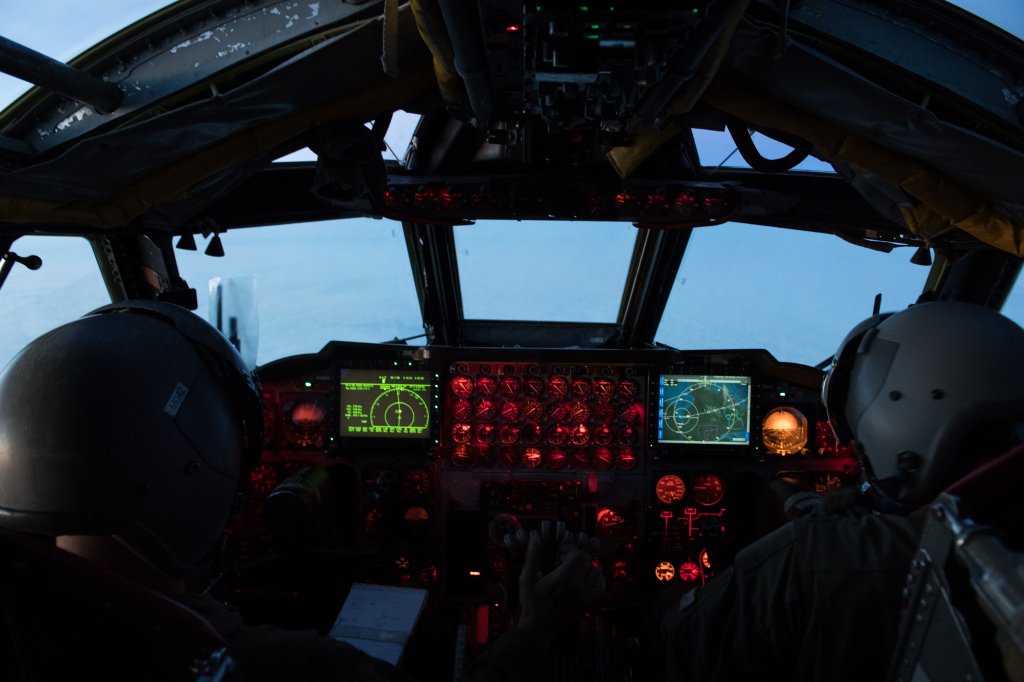
Meanwhile, the B-52 fleet is currently preparing for a slew of major upgrades. These include a critical radar overhaul alongside new engines, enhanced communications systems, and other improvements. The scope of these changes is significant enough that the aircraft will be redesignated from B-52H to B-52J. The bombers are also slated to further expand their weapons capabilities, including through the addition of the Long-Range Stand Off (LRSO) nuclear cruise missile. The upgraded B-52Js are expected to remain in service through at least 2050.
Even in its current configuration, the B-52 is particularly well suited to carrying the LRASM, given its substantial payload capacity and ability to launch weapons from standoff distances beyond the reach of enemy air defenses. Its upgraded networking capabilities will greatly enhance its effectiveness by allowing it to operate as part of a broader kill web, drawing on data from multiple platforms and sensors to support targeting over vast distances. In more dynamic operational environments, the bomber’s new radar can generate its own targeting information in real time. The B-2, B-1, and the B-52 all offer distinct levels of penetration and weapons-delivery capability, with the forthcoming B-21 able to push deeper into contested airspace; it will certainly employ LRASM too.
The integration of LRASM onto the B-52 could prove critical to generating the volume of sorties needed to counter China’s expanding naval fleet. With its substantial payload capacity and ability to launch missiles from standoff distances, the B-52 could deliver significant anti-ship firepower across the vast distances of the Indo-Pacific. These missions would likely involve very long-range sorties, making the bomber’s payload capacity, endurance and networking capabilities particularly valuable in sustaining operations against Chinese naval forces.
If the LRASM integration proceeds as planned, the result would be another addition to the U.S. military’s long-range anti-ship arsenal, giving the Air Force’s venerable B-52 a more explicit role in the growing emphasis on striking hostile fleets at a distance.
Contact the author: thomas@thewarzone.com
The post B-52 To Get Stealthy AGM-158C Long-Range Anti-Ship Missiles appeared first on TWZ.


Ukraine's campaign of so-called "middle strikes" targeting Russian supply lines isn't generating the same headlines it did back in the spring, when the campaign was intensifying.
But that doesn't mean Ukrainian units aren't launching thousands of drones a month and blowing up a lot of Russian trucks. Indeed, the pace of Ukrainian strikes, concentrated along the main supply routes threading through occupied southern Ukraine into occupied Crimea, has leveled off without ever really decreasing since an early summer surge.
It's evident Ukraine's middle-strike campaign "didn't stop and wasn't slowed down," noted French mapper Clément Molin, one of the most important observers of the counterlogistics campaign.
For September, Molin tallied 770 confirmed drone strikes on Russian trucks in the logistical zone 10 km beyond the line of contact. That's up from 630 strikes in August, 656 in July, and 586 in June, the month the campaign really got underway. There were just 214 strikes in May and at most a few dozen in each of the previous three months.
Whether Ukrainian troops can take advantage of the Russians' weakening logistics anytime soon is less evident.
Since June, the Ukrainians have hit around 700 Russian trucks a month that analysts can confirm with video and photographic evidence. There are undoubtedly many more damaged and destroyed trucks that left no digital evidence.
In southern Ukraine
— Clément Molin (@clement_molin) October 7, 2026mid-range drone strikes continue to relentlessly target Russian
road logistics
In total, more than 3 000 trucks and vehicles have been hit on key roads since May 2026, while the R-280 road remains at the heart of the attacks.THREAD
1/13
pic.twitter.com/u9hixSvLAV
There are thousands of Russian trucks on the road in Ukraine every day, so hitting 700 of them in a month won't immediately strangle Russian logistics. But that accumulating destruction does strain Russian logistics—and terrify the truck drivers who are in the drone crosshairs. "Russian drivers post videos on a daily basis, showing how dangerous a ride in southern Ukraine is getting," Molin wrote.
What's remarkable is that the counterlogistics campaign hasn't faltered even as the Russians have adapted. Early on, Russian trucks mostly traveled alone and without protection, making them fairly easy picking for a bevy of Ukrainian middle-strike drone types including the Hornet, the B-2, the RAM 2X, the Chaklun, and various high-endurance first-person-view quadcopters.
The drones ride along Ukraine's overlapping command and control systems, which include Starlink satellite terminals (some dangling from balloons) as well as mesh radio networks. Many of the drones have built-in AI for autonomously detecting and homing in on trucks in the final seconds of flight.
The moment the Hornet UAV struck a logistics vehicle in the occupied Kherson region. pic.twitter.com/Hc0DCcTnef
— Exilenova+ (@Exilenova_plus) October 7, 2026
Reeling from the truck strikes, the Russians adapted this spring. Commanders began requiring all trucks to travel in convoys including mobile fire support groups, analysis group Tochnyi reported in May, citing Dmytro Putiata, a retired command post battle captain from the Ukrainian Unmanned Systems Forces 20th Brigade "K2."
Today the Russian convoys have a standard structure, according to Molin. "Convoys usually gather three to five trucks and two to three air-defense trucks." Combined with radio jamming gear that's increasingly common on both the supply trucks and the gun trucks, that's seemingly a lot of protection.
But the drones target the gun trucks, too, peeling back the protection in order to expose the supply trucks to follow-on attacks. In that way, the Ukrainians have sustained their attacks on the supply trucks despite the increase in mobile air defense activity along the most important supply routes.

And it's going to get worse for the Russians as fall wears into winter. "Supplying Crimea is turning into a nightmare and the arrival of winter and more difficult conditions will not help," Molin wrote.
There will be less foliage on the trees lining the roads, and thus less cover from Ukrainian surveillance. Moreover, Molin pointed out, "it will be more difficult to go off-road" and avoid the big paved roads that are the main drone kill zones.
Russian logistics are under pressure, and that pressure is only increasing. Ultimately, the Ukrainians aim to starve Russian forces in Crimea. Strikes on cargo ships plying the Black Sea prevent the Russians from simply shifting the logistics off the coast. Meanwhile, strikes on overland logistics "may lead to substantial softening of front-line positions," Tochnyi noted in May.
Softening those front-line positions to the point of melting away could facilitate what Tochnyi described as "eventual breakthrough operations" in occupied southern Ukraine.
It's not inconceivable. Ukraine's 3rd Army Corps recently proved, by way of its successful Operation Vivaldi, that local Ukrainian counteroffensives are possible.
But that doesn't mean they're easy. To win, the 3rd Army Corps had to carefully husband its forces and meticulously prepare the battlefield under conditions of strict secrecy before attacking. That same kind of preparation is underway along the supply lines into Crimea, but it's unclear whether local Ukrainian forces have enough combat power in reserve to shift from defense to offense and exploit Russia's deepening supply woes.
At least not yet.
Il bollo auto dovrebbe ripagare la società nel suo insieme dai danni, non solo ambientali, che l’utilizzo dei veicoli produce. Perciò, in vari paesi europei l’importo della tassa di circolazione tiene conto delle emissioni di CO2. Ma non in Italia.
L'articolo Il bollo auto italiano non pensa all’ambiente proviene da Lavoce.info.

Brazil votes this Sunday, and the Trump administration has spent months trying to tilt the outcome toward far-right presidential candidate Flávio Bolsonaro. Tariffs. Terrorist designations. Revoked visas. Frequent meetings with the Bolsonaro family. Taken alone, each move looks random. Put the pieces together, and a picture emerges: U.S. interference in Brazil’s 2026 elections.
Over the last year, Trump has met frequently with members of the Bolsonaro family. In June, the State Department put two Brazilian gangs on the terrorist list. Just a few weeks later, Trump shared an article on Truth Social that said Brazil was his next big challenge. Less than a month later, in July, Trump imposed new 25% tariffs on Brazilian goods. In August, Trump revoked the U.S. visa of the Brazilian ambassador.
The Brazilian Intelligence Agency recently raised the risk of external influence and interference by the United States in Brazil’s 2026 elections to a quote, “critical level.”
This is Episode 15 of Under the Shadow, Season 2.
Under the Shadow is an investigative narrative podcast series that walks back in time, telling the story of the past by visiting momentous places in the present. Season 2 responds in real time to the Trump administration’s onslaught on Latin America.
Follow Under the Shadow on Spotify and Apple Podcasts.
Hosted by Latin America-based journalist Michael Fox.
This podcast is produced in partnership between The Real News Network and NACLA.
It is supported, in part, by Global Exchange.
VOTE by October 15: Under the Shadow has been nominated for three podcast Signal Awards. Please consider voting for Under the Shadow and The Real News:
Panamerican Dispatch
You can check out Michael Fox’s new reporting project on Brazil.
It’s called Panamerican Dispatch. It’s a project of The Real News in partnership with Global Exchange. The website is www.panamericandispatch.org
You can also follow us on social media below
Bluesky https://bsky.app/profile/padispatch.bsky.social
X x.com/PAdispatch
IG instagram.com/padispatch
Tiktok www.tiktok.com/@padispatch
Theme music by Michael Fox’s band, Monte Perdido. Monte Perdido’s 2024 album Ofrenda is available on Spotify, Deezer, Apple Music, YouTube or wherever you listen to music.
Other music from Blue Dot Sessions and Epidemic Sound.
Script editing by Heather Gies. Hosted, written, produced, mixed, and edited by Michael Fox.
Guests:
Resources:
Support Under the Shadow
Please consider supporting this podcast and Michael Fox’s reporting on his Patreon account: patreon.com/mfox. There you can also see exclusive pictures, video, and interviews.
You can subscribe to Michael Fox’s new free speech podcast, The Battle for Free Speech on Spotify, Apple Podcasts, or wherever you get your podcasts.
The following is a rushed transcript and may contain errors. It will be updated.
Michael Fox:
Hi folks. This is your host, Michael Fox. Before I get started, I wanted to let you know that I have big news. First, this season of Under the Shadow has been nominated for three podcast Signal Awards. It’s really exciting, and you can help us by heading over to signalaward.com and voting for Under the Shadow. I’ll add direct links in the show notes that will take you straight there. Second, last week I launched a new website called Pan American Dispatch. It’s a project of the Real News. We’re translating daily articles from Portuguese and Spanish into English for a US audience. Over the next two months, we’ll be exclusively focused on covering the Brazilian elections and Trump’s attempts to sway them. That is what this entire episode is about. And if you want to get all of the news about what’s happening in real time, please consider subscribing to our Substack.
You can find us at panamericandispatch.org. We’re also on X, Blue Sky, Instagram, and TikTok. Our handle is @PAdispatch. Okay, that’s it. I hope you enjoy the show. On May 26th, 2026, a 45-year-old Brazilian senator named Flavio Bolsonado met with US President Donald Trump at the White House. Flavio is the presidential candidate for the far right in Brazil in the upcoming elections in October. This is what he had to say at the annual conservative political action committee meeting in Texas earlier this year.
Flávio Bolsonaro:
And let me look you in the eyes and tell you, we will win.
Michael Fox:
Flavio is the son and political heir of the former far right president Jair Bolsonado, a close ally of the US president. In the meeting at the Oval Office in May, Flavio Bolsonado reportedly asked Trump to designate the Brazilian drug gangs, Primero Commando de Capital and the Commando Vermelio as foreign terrorist organizations. After the meeting, Flavio spoke to the press.
He said, “I asked President Trump emphatically to designate as soon as possible the PCC and the Commando Vermelio as foreign terrorist organizations.” This might not seem like such a big deal, but it is. The United States has sometimes used that very designation as the pretext to invade or interfere in foreign countries. The US placed the Venezuelan gangs, Trende Aragua and Cartel de los Soles on the list back in 2025, and fighting those alleged terrorists was one of the excuses the United States used for invading Venezuela and kidnapping President Nicholas Maduro on January 3rd of this year. In other words, this designation carries weight.
Trump agreed to Flavio’s request. Just three days after meeting with Flavio Bolsonaro, US Secretary of State Marco Rubio announced that those two Brazilian gangs would be added to the list of foreign terrorist organizations. Flavio responded in a letter to Rubio, thanking him for the classification and offering to place his transition team at the disposal of the White House if he’s elected. For months, the United States has been escalating the pressure on Brazil in the lead up to the presidential elections with the goal of helping to lift Flavio Bolsonaro to the top office. Just a few weeks after the State Department put the Brazilian gangs on the terrorist list, Trump shared an article on Truth Social that said Brazil was his next big challenge. Less than a month later in July, Trump imposed new 25% tariffs on Brazilian goods. In August, Trump revoked the US visa of the Brazilian ambassador.
It was an apparent tit for tat after Brazil denied visas to two US State Department officials who planned to travel to Brazil to meet with former President Jair Bolsonaro. I could go on. The point here, as many people have pointed out, is that there isn’t just one thing that Trump is doing to try and sway the vote in favor of Bolsonaro. It’s a whole combination of moves, like a jigsaw puzzle with many pieces taken alone, and it’s just a random assortment of colors and shapes. But when you start to put the pieces in place, a picture begins to emerge. See, Trump allies have won big elections across Latin America. In recent years, right-wing candidates have taken back or held onto power in Argentina, Chile, Colombia, Ecuador, Honduras, Bolivia, and Peru. And they’ve done so with the help of US President Donald Trump, who’s thrown his weight around to boost right-wing candidates, and also with the support of bot farms and shady electoral campaign practices linked to Washington and Mar-a-Lago, as we looked at in the last episode.
Donald Trump:
But on this historic day, we come together to announce a brand new military coalition to eradicate the criminal cartels plaguing our region.
Michael Fox:
Many of those countries have now joined forces in Trump’s shield of the America’s alliance, but there are a few holdouts, and Brazil is one of the most important.
Alexander Main:
The upcoming election in Brazil is really going to be extremely consequential for the entire region.
Michael Fox:
Alexander Main is the director of international policy at the Center for Economic and Policy Research.
Alexander Main:
Brazil is the country with the largest economy, biggest population in Latin America, and it’s also one of the few countries that is still holding out against US pressure, pressure to align with the Trump administration’s agenda in the region.
Michael Fox:
The first round election is on October 4th in just a couple of days, and the runoff will take place three weeks later on October 25th. Bolsonaro is facing off against the longtime workers’ party icon, Luis Ignacio Lula de Silva. He’s the current president and he’s running for reelection. I have been covering the campaigns here in Brazil in recent weeks. I’ve attended rallies for both Lula and Bolsonaro. Today, I’m going to walk you through what’s at stake, and most importantly, how Trump is exerting underhanded pressure on the country ahead of the vote. As a leak document showed last week, the Brazilian Intelligence Agency has raised the risk of external influence and interference by the United States and Brazil’s 2026 elections to a “critical level.” According to the report, there is a trend of escalating pressure on Brazil and a quote, “selective intensification and reconfiguration of the pressure exerted by the United States.” It’s a textbook example of foreign election interference today, a multifaceted jigsaw.
People are concerned, but they’re also standing up, and that’s what makes this episode so interesting. It’s happening in real time. You have Trump attempting to sway the vote, and you also have people pushing back.
Like Lula’s recent speech at the United Nations where he told the US president that Brazil will not be the backyard of any country.
Or this woman, a small farmer who I spoke with at a Lula rally in Southern Brazil. “We’re not afraid of Trump, “she said. “We know what he wants to do and we’re not going to let him. We are the resistance. We’re not afraid of him, just like Lula isn’t afraid. Lula showed us that we are not less than any country,” she said. That and so much more in a minute. This is Under the Shadow, an investigative narrative podcast series that looks at the role of the United States abroad in the past and the very present. This podcast is a co-production in partnership with The Real News and NACLA. I’m your host, Michael Fox, longtime radio reporter, editor, journalist, the producer and host of the podcast’s Brazil on Fire: Stories of Resistance and my new series, The Battle for Free Speech. I’ve spent the better part of the last 20 years in Latin America.
I’ve seen firsthand the role of the US government abroad, and most often sadly, it is not for the better. Invasions, coup, sanctions, support for authoritarian regimes. Politically and economically, the United States has cast a long shadow over Latin America for the past 200 years. It still does. This is season two of Under the Shadow Trump’s attack. Episode 15, election meddling in Brazil.
Okay, before we dive into the allegations of election interference, let me set the scene. To do that, I want to take you back to a month and a half ago to the launch of the campaigns here in Brazil. I was in Sao Paulo covering Lula’s kickoff. Some of this section of the episode is based off of reporting I did at the time for the world and the real news. It’s August 16th, 2026. Tens of thousands of supporters of President Luis Idnacio Lula de Silva are packed into May 1st stadium in Sao Paulo. Among them is Sida Maya. She’s the secretary of women’s public policies in the nearby municipality of Maua.
“This is living history,” she says. “I’m participating in a historic moment. It’s a great feeling and we’re going to elect Lula.” Next to her, her husband Valmirmaya holds back tears. “It’s emotional, “he says. Lula’s campaign chose this stadium to kick off his run for a fourth and final term as president. This is where Lula got his start. In 1979, Lula was a young leader at the ABC Medal Workers Union. He led an iconic strike and rally at this same stadium. The workers won and it marked the beginning of the end of the country’s military dictatorship. Valmir Maya was there then and he’s here now.
“We wanted what we got,” he says, “to transform Brazil into a democratic country. That was our struggle, and Lula was the expression of this.” Inside the stadium, President Lula strode onto a long stage wearing a Panama hat and a white shirt. From the bleachers, he seemed to float above the sea of supporters in red, the color of Lula’s workers’ party. Lula’s top campaign promise has always been about battling hunger. Over the years, he’s lifted millions from poverty, increased access to education, health, and infrastructure, in particular in impoverished Northeastern Brazil. Lula told the crowd that there was much work left to be done, that they had to think of the future. He said they had to invest even more in education, that he wanted to continue to develop jobs and industry for Brazil. 300 miles to the east, Lula’s challenger, Flavio Bolsonaro, launched his campaign on Copacabana Beach in his hometown of Rio de Janeiro.
“Come with me and rescue our nation,” he said, “God above everyone, Brazil above all.” Flavio Bolsonaro has attacked the left and promised to fight crime and insecurity, cut bureaucracy, promote private business and privatizations, and develop close ties with the United States. Much of his rhetoric and that of his supporters is wrapped in a religious language of good versus evil.
“You are the son of hope,” said a pastor at his campaign launch. “You are the first born. You received the legacy of representing your father, and now for everything that is sacred on the face of the earth, honor your father. “The savior trope goes over well with his evangelical supporters, an important base for Bolsonaro and other far-right politicians in Brazil, as we looked at in depth in my 2022 podcast, Brazil on Fire. Blase Narujo is a youth pastor at an evangelical church in a working class neighborhood of Sao Paulo. He joined others on the streets in mid-August to promote Bolsonaro and other far-right candidates running for local office.
He said,” I believe that Flavio Bolsonado is the only viable candidate who can beat Lula and the workers’ party. “I’m a Christian here,” he told me. “I behave as a Christian, but I’m also a political activist here on the streets to defend my beliefs,” he said. Flavio Bolsonado also has powerful support in high places, in particular, as we heard earlier from Donald Trump. If you remember, the US president is a longtime ally of Flavio’s father, Jair Bolsonado. Jair is currently on house arrest. He was first barred from running for office for spreading lies about the country’s electoral system. Last year, the Supreme Court convicted him of plotting a coup to return to power. Before his rise as the leader of Brazil’s far right, Jair Bolsonaro was a backbench congressman for decades, outlandish, but mostly obscure. And then he ran for president.
Speaker 5:
There are a few things that drew inspiration for you.
Jair Bolsonaro:
Very special guy. Turned out to be a great friend of mine.
Michael Fox:
Bolsonaro fashioned himself after Trump. In fact, in Jair Bolsonaro’s electoral campaign in 2018, international media often called him the Trump of the tropics. He and Trump met a number of times while they were both president.
Jair Bolsonaro:
And I think we can say that Brazil and the United States are as close or closer as they’ve ever been.
Michael Fox:
Last year, Trump imposed 50% tariffs on Brazil in part because of the country’s criminal trial against the former president.
Donald Trump:
They’re treating President Bolsonaro very unfairly. He’s a good man. I know him well. I negotiated with him.
Michael Fox:
And let me be honest, there are many supporters of Bolsonaro who look up to Trump and want him to use his leverage to help their candidate, Jair Bolsonaro’s son and protege Flavio Bolsonaro. On September 7th, members of the far right in Brazil hit the streets across the country to rally for Flavio. I covered the march in the southern Brazilian city of Florianopolis. There, numerous people told me how much they admired Trump and how grateful they were for his support. Adalberto Luis de Santos is marching with a blue hat with the insignia of the United States. He and his wife are draped in Brazilian flags. “We’re hoping for support from the United States,” he said. “I believe Trump can help us. All Brazilians need the support of someone from abroad. “. “Trump is really important,” another man in the march told me. “The external pressure is very important.
“. A woman in the march carrying a flag and a yellow hat told me,” Just the simple fact that Trump is in power and acts democratically in favor of freedom makes all of the difference for our people. “.
“We don’t want Brazil to turn into another Venezuela,” she said. “I’ve heard that narrative countless times in Brazil and during elections in countries across Latin America for years. It’s the ever-present boogeyman of so-called communist Venezuela, but fear of the Venezuelan fate took on an even more serious dimension after the US invasion of Caracas earlier this year. The sentiments of so many Bolsonaro supporters are a sign of just how polarized the political debate is and how much the far right in Brazil looks up to the US president. Two weeks later, I covered another rally in the same city, this one in support of President Lula.
People had a lot to say about Trump and his efforts to influence their presidential decisions. I asked them, “Are you afraid of what Trump and the United States could do during this election to try and support Bolsonaro?” “Yes, I’m really afraid of that, “said one man carrying a Lula flag. “They want to take away our sovereignty. They want to invade our lands. They want to take what is ours and let Brazil be a colony of another country.” “Of course we’re afraid, “said someone else,” but we believe that Lula is well ahead in the election and we won’t allow Trump to destroy the election. “What do you think about Trump and are you concerned that Trump might try and do something with the elections here in
Speaker 7:
Brazil? Yeah, we’ve seen a lot of his work here in Latin America that we are very scared. Venezuela, Peru, Colombia, Argentina. So we are very scared because Latin America is being contaminated by him and his work, so it’s very scary and we don’t want him in here or anything with him.
Michael Fox:
People have a lot to be concerned about. When I was in Sao Paulo in August, I sat down with Igor Fusser at a cafe near Palista Avenue. We’ve known each other for years. He’s a professor of foreign relations at Brazil’s ABC Federal University. I asked him how he sees the US actions against Brazil at this moment.
He said, “This is not just about the United States trying to remove the government of a left-wing party, the workers’ party, or a left-wing leader, which is Lula. It’s about subjecting Brazil to the policies of the United States, and Brazil being the largest country in Latin America is precisely the biggest obstacle to the American project of global dominance of the Western hemisphere,” he said. Remember, over the last year, as we’ve looked at throughout this podcast, Trump has pushed the United States into a new era of dominance over Latin America, the likes of which the region has not seen in decades. Boat strikes in the Caribbean, the US invasion of Venezuela, and the kidnapping of President Nicolas Maduro, the oil blockade on Cuba, and Trump throwing his weight around and meddling in elections across Latin America. It’s all justified by a renewed Monroe doctrine. Here’s Secretary of War, Pete Hegseth, underlining that point.
Pete Hegseth:
President Trump has established the Trump corollary of the Monroe Doctrine, the Don Roe doctrine, and the war department is implementing it as fast as we can.
Michael Fox:
Brazil is the latest battleground. It’s playing out in the open and behind the scenes. It’s early August. The Brazilian Association of Investigative Journalism is meeting in Sao Paulo. At the meeting circulating in the crowd are staff from the US Consulate in Sao Paulo, their mission to woo Brazilian journalists into conversations about the country’s electoral process and the state of “freedom of expression” in the country. This was reported by several independent journalists at the conference and then published by independent journalist Leandro DeMori, the former executive editor of The Intercept Brazil. According to Demorti, three journalists at the event confirmed the actions of the consular officials. Two journalists said they were offered assistance with US visas if they needed them, even though the meetings with the officials about the country’s elections were to be held in Sao Paulo.
Washington has leaned on two key narratives to demonize Brazil in recent years. One, that freedom of expression is under attack in Brazil because of its attempts to reign in social media disinformation, and two, that the country’s electoral system is faulty and prone to errors. Both of those claims are false. Brazil has long held certified free and fair elections, and freedom of speech is alive and well, although Brazil embraces a more inclusive harmonious definition of how the freedom of speech fits into the country’s other laws. Episode 12 of this series goes deeper into those claims and their fallout. DiMorti’s reporting about the recent journalism forum brings up more questions than answers. What were the consular officials trying to achieve? Did some journalists take the bait? If so, how will this be weaponized? We don’t have answers, but it’s another piece of the scrambled jigsaw puzzle.
Here’s another, and it’s just one example of how the meddling campaign has been building. In mid-September, less than two weeks ago, Flavio Bolsonaro’s brother, Eduardo, met with President Donald Trump at the White House. As we looked at in the last episode, Eduardo is a former congressional representative who now lives in the United States. The Brazilian Supreme Court sentenced him earlier this year to four years in prison for his actions in the US, lobbying the Trump administration to intimidate the Brazilian judiciary amid the trial against his father. According to reports, Eduardo traveled to Washington to ask Trump to impose sanctions on members of the Lula government and the Supreme Court, including Justice Alexandre Morais. If you’ve been following Brazil or my reporting, you might remember that Morais was the justice that led the trials against the dissemination of fake news in the country and also against Jair Bolsonaro.
Jair Bolsonaro:
Also developing this morning, the Trump administration placing sanctions on a Brazilian Supreme Court justice over concerns of human rights violations and politicized prosecutions.
Michael Fox:
Last year, the US sanctioned Mordice for supposedly carrying out human rights abuse, including arbitrary detention. Those sanctions were lifted four months later, but they were a thinly veiled retaliation for the trial against Bolsonaro and also Morais’s fight with ex-owner Elon Musk, which we looked at in depth in episode 12. There is no question the battle over Brazil right now is also taking place online and Silicon Valley is playing its part.
On Wednesday, September 23rd, Meta, the parent company of Facebook and Instagram, took down President Lula’s Facebook page and blocked his campaign from running political ads. The platform gave no justification for the move. Lula’s workers’ party and his electoral coalition demanded answers. Lula’s campaign asked for the immediate return of the account. The campaign’s lawyers told the platform that the restriction “poses a serious risk to the candidate’s level playing field in the election.” The head of the Workers’ Party national communications team, Eden Valadaris, said they hadn’t ruled out taking the case to the superior electoral court. He wrote on X, “Brazil’s electoral contest, its campaigns, and its vote cannot be left to the mercy of the political preferences of the big tech companies whose supposed programming errors only hit and harm one campaign and one candidate.” One candidate, meaning Lula. By the next morning, the page was back up, but Lula’s electoral coalition said Meta’s actions harm the presidential campaign.
Remember that Meta was founded and is run by Mark Zuckerberg. He’s a close ally of President Donald Trump.
Jair Bolsonaro:
Thank you very, very much.
Michael Fox:
In fact, he was at Trump’s inauguration for his second term alongside the heads of Apple, Google, Amazon, and of course, Tesla and ex – CEO, Elon Musk. I want to talk about something important today because it’s time to get back to our roots around free expression on Facebook and Instagram. Zuckerberg got rid of fact-checking at Meta in early 2025, just before Trump came into power last year, and that’s important because there are now fewer constraints on the spread of fake news or misinformation on the platform. In late August, Amnesty International tested this lack of guardrails in Brazil. It sent 15 different AI-generated election-related political disinformation ads to Facebook to see if the platform could discern between truth and falsehood. Meta failed to block most of them. A similar test run by the eco movement in Brazil in mid-September showed that nearly 90% of the disinformation ads it attempted to run on Meta were approved, including “AI ads depicting execution style threats against lawmakers and calling for a stop the steal style coup.” And I want to say one more thing about the role of Silicon Valley’s big tech platforms.
They are paying attention to what’s happening in Brazil. Here’s just one example. Last year, lawmakers and a congressional committee in Brazilia were discussing a bill on AI regulation. According to the fact-checking agency, Ausfatos, big tech lobbyists visited committee members more than 80 times over a five-month period. The tech company that met with members in Brazilia the most was Meta, which made more than a third of those visits.
There’s another layer to all of this, another puzzle piece if you like. In the last episode of this podcast, I took an in-depth look at the work of the Argentine political strategist, Fernando Cerimedo. Remember, Serimedo has led right-wing digital campaigns across Latin America, and he did so with the help of Washington and Trump’s former campaign manager and digital strategist, Brad Parscali. This is what he had to say earlier this year in Mar-a-Lago when he was presented an award for best Hispanic Political Consultant of the Year.
Jair Bolsonaro:
I want to say something in English. Thank you to Brad Parscale for believing me all the time and give me your technology and Tim Don for the fighting in Latin America against socialism. Thank you, Brad.
Michael Fox:
Serimedo is now in prison on charges that he tried to kill his girlfriend. According to her, he hired the hitman to silence her. Serimedo also faces charges of illicit enrichment and other crimes, but his digital campaigning and the bot farms that he’s deployed in elections up and down the hemisphere haven’t necessarily gone away, nor have his deep ties to the right in the region. Remember who presented that award to Cerimedo? It was Eduardo Bolsonaro, the brother of Flavio Bolsonaro. They reportedly have known each other for more than 15 years. Now, just this week, Washington sanctioned Bolivian Attorney General Roher Mariaka, who is prosecuting the Serimero case,
He defended his country sovereignty and vowed to continue the investigation despite the apparent attempt to intimidate him. I mention all of this to say that just because Serimedo is now in jail, it doesn’t mean that these types of digital influence campaigns heavily fueled by an inter International far right aren’t happening. As I mentioned last time, Serimedo is just one piece in a puzzle, a cog and a wheel, albeit one very important cog. But actions pushing disinformation online are still happening. We just don’t necessarily know from who or where. Here’s one example. About a week ago, the Brazilian journalistic outlet Ajencia Publica reported in conjunction with Aos Fatos that AI farms were fueling the far right agenda in the lead up to the elections. The bots had created 255 profiles and made over a thousand posts. Agencia Publica reported that the network had “achieved 58 million views, expanding the reach of posts supporting the Bolsonaro family and attacking the Supreme Court.” It’s a strategy known as astroturfing, using artificial engagement to give the impression of a real surge in grassroots support.
All of this happened over one month between August and September. According to the investigation, one of the main nodes of this AI campaign was linked to the Instagram account Leo Indio Bolsonaro. That is managed by Leonardo Rodriguez de Jesus. He is Flavio and Eduardo Bolsonaro’s cousin. He was investigated by Brazilian officials for his role in the 2023 attempted coup. A warrant for his arrest was ordered in 2025. He fled the country. He’s reportedly now in Argentina. The point is this, these campaigns are happening. We often just don’t hear about them until after the fact.
Maria Marta Bruno:
Well, I’ve been voting since 1998 and I have never seen such level of interference of foreign interference in Brazilian elections.
Michael Fox:
Maria Marta Bruno is a journalist with Agencia Publica, the outlet I mentioned earlier. If you remember, I spoke with her in the last episode as well about Serimedo.
Maria Marta Bruno:
It reminds me a lot of what I have read in history books and what I have learned on the Brazilian dictatorship and the very clear role that the US developed from 1964 to 1985 when the military dictatorship in Brazil took place. There was never since the end of the dictatorship such open intervention.
Michael Fox:
Maria says there have been a lot of headlines lately mentioning diplomatic tension between Brazil and the United States, but she says what we’re seeing goes far beyond that.
Maria Marta Bruno:
Because given the gravity and the timing of the recent facts, I would say that it constitutes a clear interference in our process.
Michael Fox:
She highlights Trump’s tariffs on Brazil both last year and this year, which she says are wrapped into defending former President Jair Bolsonaro. She points to the numerous meetings between Flavio and Eduardo Bolsonaro with top officials in Washington over the last year, the US sanctions against Supreme Court Justice Alexandre Morais and so much more. And she says there are two other big reasons why the United States is so interested in Brazil. The first is China.
Maria Marta Bruno:
The US intentions to reduce China influence in Latin America. We all know that China, it’s a key partner for Brazil and for other countries in the region.
Michael Fox:
The second is rare earth minerals, stuff like neodymium, dysprosium, or terbium. Yeah, I don’t know what they look like either, but they’re used in EV motors, green energy technologies, military equipment, and other industries. Brazil is home to somewhere between a fifth and a quarter of the total rare earth reserves in the world. It’s second only to China. In April, a US company bought up the Brazilian firm Ceja Vergi, which mines rare earth minerals in Brazil. After his meeting with Trump in May, Flavio Bolshinaro promised to work with the United States on mineral extraction. “We are the only real alternative to China for a free world,” Flavio Bolsonaro said. “Under my government, there will be long-term strategic partnership with the United States in this sector with protected investment and shared reindustrialization between the two countries. Flavio also promised that if he is elected in his first month, Brazil would join President Trump’s Shield of the America’s regional coalition.
Brazil will join the shield of the Americas together with the United States, “he said,” and countries across the region, forming a great hemispheric alliance against terrorism and organized and transnational crime. “This is Brazil’s place. It is the protagonist of the security of the Americas side by side with free and sovereign nations, he said.
Maria Marta Bruno:
And we know that the US is very interested in what we have and the reserves that we have. So it’s very significant, it’s very important, and we know that the US is following closely the development of the presidential elections here because they will certainly determine what will be the future of the diplomatic relation between US and Brazil in the upcoming years.
Michael Fox:
In the face of all of this, Brazilians are responding none louder than President Luis Idnacio Lula de Silva.
Jair Bolsonaro:
The assembly will now hear and address by his excellency, Luis Inacio Lula Da Silva, president of the Federated Republic of Brazil.
Michael Fox:
The day is September 22nd, 2026, New York City. Brazilian President Luis Idnacio Lula de Silva walks to the podium at the United Nations to kick off the 81st General Assembly meeting. Without mentioning him, Lula speaks directly to US President Donald Trump. “Brazil does not fit into anyone’s backyard,” he says. Lula denounces Trump for attacking democracy, interfering in elections and using military force to acquire material resources across Latin America. He closes his speech with a nod to the upcoming high stakes elections in Brazil. On October 4th, he says, “Millions of Brazilians go to the polls to decide their future. They will not just elect the president of the republic, state governors, and representatives of the legislative power. They will decide between democracy and denialism, between if Brazil is going to move toward a future of more opportunities or return to a past of exclusion.”. He says Brazil will have free and transparent elections as it always has with broad freedom of speech.
He denounces the spread of disinformation online, in particular coming from outside the country, which he says is an attempt to “disrupt the debate.”.
“We have a modern and robust electoral system,” he says. “We have a plural citizenship and a free press. We will not allow the enemies of democracy, both internal and external, to attack the popular will. Brazilian democracy belongs to Brazilians. Brazil will continue to be a sovereign country. No one, no one will take us away from this path, “he says. It’s Lula’s response to Trump and the world as the country faces incredibly important elections, elections that Trump and the United States have been attempting to influence. Brazilians have been vocal online and in the streets against Washington’s pressure, and recently they actually got some support from a group of lawmakers on Capitol Hill. On September 24th, just last week, Senator Bernie Sanders and 30 Democratic members of the US House of Representatives sent a letter to Secretary of State Marco Rubio. They accused the Trump administration of waging a pressure campaign against Brazil ahead of the first round vote.
Illinois Congresswoman Delia Ramirez led the congressional effort. They write, “We are writing to express our grave concern regarding the administration’s coordinated effort to threaten our strategic alliance with Brazil and undermine the Western Hemisphere’s second largest democracy ahead of its upcoming presidential election in October 2026. Over the course of President Trump’s second term,” they write, “We have seen US officials engage in a sustained multifaceted campaign of interference and destabilization in Brazil. They point to the shocking 50% tariffs Trump levied on the country last year amid the country’s trial against Jair Bolsonaro. They also underscored Trump’s appointment last year of Darren Beattie as a senior advisor on Brazil issues in the State Department. Beattie, a noted far-right extremist and white supremacist,” they write, “came into this post with a clear record of public statements signaling an overt ideological commitment to undermining Brazil’s democratic institutions.” The congressional representative singled out Trump’s current tariffs, his meeting with Flavio Bolsonaro at the White House, and his designation of the Brazilian drug gangs as foreign terrorist organizations.
They write, “Given the Trump administration’s repeated military strikes in the region, justified in part by alleged foreign terrorist organization threats to US security, the designation has also fueled fears of potential US military intervention.” They recall comments from White House Press Secretary Caroline Levitt last year that threatened Brazil could potentially face the United States’ military might.
US military action in Brazil isn’t likely, but it’s not out of the question. Nothing is under Trump’s Dunro doctrine. The lawmakers highlight that Brazil is just the latest in a quote, deeply troubling pattern of interference by the United States in foreign elections, including in Argentina, Honduras, and Columbia. Rather than helping defend democracy, they write, the United States is acting as an agent of interference and destabilization using diplomatic economic and political pressure in ways that risk weakening the country’s democratic institutions, undermining confidence in Brazil’s electoral process and inflicting further damage on our relationship with a strategic US ally and trading partner. They demand that Washington commit to recognizing the certified election results. Here’s the thing, the stakes are high. Remember Igor Fusser? He’s the professor I met at the Sao Paulo Cafe. He told me, “It’s clear that the United States is doing everything and will do everything possible to prevent the reelection of Lula in the next elections.” And Igor told me there was a reason for that, because if Flavio Bolsonaro wins, he will bow to Trump and the United States.
Igor says, “Brazil will become a country under the tutelage of the United States, a colony or almost a colony of the US as already happened with Argentina, Columbia, Venezuela, and many others. And if Lula is victorious in these elections, we will live a very intense period of confrontation between the two countries,” he says. And Igor has a really interesting analysis here. He says, “The US dominance over Latin America imposed by Trump is analogous to the control of the Soviet Union over the Eastern block countries during the Cold War under a Russian foreign policy imposed by Soviet leader Leonid Brezniv in 1968.” He says, “Czechoslovakia, Hungary, Poland, Bulgaria, all of those countries were formally independent nations with their own government, their own laws, their own representation in the United Nations, but these countries were not autonomous. They didn’t have sovereignty. Any movement that they made that clashed with the interests of the Soviet Union was repressed.
Some of them were even invaded,” he says. “So we’re living in Latin America, a Breznev doctrine, capitalist, imperialist, dictated by Donald Trump. “That is why this election is so important. Brazil is the outlier, the counterweight to the United States and the region, and the US is fighting hard to bring it to heel.
We’re going to see this all unfold not in a couple of months or weeks, but in just a few days. The first round of the election is on October 4th. Brazilians are voting for their president and vice president. They’re also voting for all of the country state governors, all 513 members of the Chamber of Deputies, two-thirds of senators, and more than a thousand state assembly seats. Lula is ahead in the race, but he appears shy of the 50% needed to win outright. If no presidential candidate wins more than half of the vote, it’ll go to a second round. There, polls show the margin between Lula and Bolsonaro even tighter, and it will undoubtedly be a tough campaign. The second round, if it’s needed, is on October 25th.
That is all for this episode of Under the Shadow. Things are going to get intense in the coming days. Please consider following our new website, Pan-American Dispatch and our social media accounts for ongoing reporting on Brazil and these elections. Some of the reporting in this episode was based off of stories I produced recently for the world and The Real News. Many thanks to those outlets for all that they do. Let me remind you that if you’re craving even more backstory here, you can always go back and listen to episode 12 of the second season of Under the Shadow about Brazil’s fight against fake news in the country and the US attempt to roll it back. And please also consider checking out my 2022 podcast about Brazil under Bolsonaro. It’s called Brazil on Fire. It’s still totally relevant today. You can find that wherever you listen.
As always, you can find me at patreon.com/mfox.
There you can also support my work, become a monthly sustainer, or sign up to stay abreast of all the latest on this podcast and my other reporting across Latin America. You can find a ton of content there exclusively also for my supporters. If you’re looking for more information, news and reporting on Trump’s onslaught, both in communities within the United States and abroad, please check out The Real News and NACLA. Both of them are publishing daily indispensable reporting. The theme music is by my band, Monte Perdido. You can find us on Spotify or wherever you stream music. This closing song playing right now is off our 2024 album, Ofrenda. I hope you check it out. Under the shadows of co-production of The Real News and NACLA, it’s produced in partnership with Global Exchange. This episode was written, researched, reported, and produced by me, Michael Fox. The script was edited by Heather Geis.
Thanks for listening. See you next time.

Um homem de 84 anos perdeu a vida, na manhã desta quarta-feira, vítima de um atropelamento no IC2, no Lugar de Caniços, na freguesia de Travanca, concelho de Oliveira de Azeméis.
A vítima foi colhida por uma ambulância de transporte não urgente de doentes, que no momento do acidente não seguia em marcha de urgência. Apesar das intensas manobras de reanimação efetuadas pelas equipas de socorro no local, não foi possível reverter o quadro clínico, tendo o óbito sido declarado no local.
O alerta para o acidente foi registado às 10h42. Para o local foram mobilizados os Bombeiros Voluntários de Oliveira de Azeméis, a ambulância de Suporte Imediato de Vida (SIV) de Oliveira de Azeméis e a Viatura Médica de Emergência e Reanimação (VMER) da Feira, além de patrulhas da GNR de Oliveira de Azeméis e Cucujães. As causas e circunstâncias do atropelamento estão agora a ser apuradas pelo Núcleo de Investigação Criminal de Acidentes de Viação da GNR.
O corpo da vítima foi posteriormente transportado para o Gabinete Médico-Legal da Feira, onde será submetido a autópsia.
Por: Dino Frazão
30 de setembro de 2026
————————————————–
© 2026 Os Monhacas. Todos os direitos reservados.
Este é um projeto independente de criação de conteúdos.
Se gostou do que leu e ainda não é seguidor, siga a nossa página para ver mais conteúdos!
————————————————–
O conteúdo Idoso morre atropelado por ambulância no IC2 em Oliveira de Azeméis aparece primeiro em OS MONHACAS.
President Donald Trump’s departure from the White House South Lawn earlier today marked the first operational use of its new granite helipad, and the VH-92A Patriot — not the older VH-3D Sea King or VH-60N White Hawk — was the airframe that carried him off the pad. The flight represented a dual milestone: the first time a VH-92A had carried the president from the White House, and the first operational use of the roughly $5-6 million helipad that was built to enable regular operations by the helicopter from this location.
President Trump boards Marine One on the new helipad @BorderHawkNews pic.twitter.com/Go62kRyHGP
— Wid Lyman (@Wid_Lyman) September 21, 2026
Trump marked the occasion with a ribbon-cutting on the South Lawn, using a pair of oversized gold scissors to sever a red, white, and blue ribbon before shaking hands with White House officials and members of the construction crew. Auxiliary power unit noise from the waiting VH-92A drowned out any remarks Trump may have made on the landing area; he instead posted afterward that the flight was the “maiden voyage” from the newly completed pad. He did not stop to take shouted questions from reporters before boarding for the helicopter’s first flight off the new surface. The VH-92A took Trump to Joint Base Andrews, Maryland, with his final destination New York, where he will be at the UN General Assembly this week.
.@POTUS cuts the ribbon and officially opens the new helipad on the South Lawn of the White House pic.twitter.com/BgpCBtBIB8
— Rapid Response 47 (@RapidResponse47) September 21, 2026
JUST NOW: @POTUS departs the White House on Marine One using the NEW helipad en route to New York@taymitchell_tv pic.twitter.com/srMfqB5nYY
— Real America's Voice (RAV) (@RealAmVoice) September 21, 2026
President @realDonaldTrump just performed the official ribbon-cutting ceremony on the new @WhiteHouse helipad, thanked the construction professionals that made it so beautiful & flew off in the new Marine One to address the United Nations General Assembly on continuing MAGA wins. pic.twitter.com/z75dayaVo7
— Sebastian Gorka DrG (@SebGorka) September 21, 2026
The VH-92A’s operational limitation in this context had been its exhaust and rotor system. Heat and rotor wash directed downward from the helicopter had scorched and torn up the South Lawn’s turf badly enough that the Marine Corps continued relying on the VH-3D and VH-60N for White House landings even after the VH-92A entered presidential service under Biden in August 2024. Trump has said the newer helicopter is roughly two and a half times more powerful than the airframes it’s replacing — powerful enough, by his account, that a single landing once left “half of the grass…sitting in front of the Oval Office front door.”
For decades, Marine pilots set down on a simple metal disc placed directly on the South Lawn turf — a low-tech solution that worked well enough for the lighter VH-3D and VH-60N, but that pilots occasionally missed, tearing up grass around the marker in the process.
Construction of the new helipad began in late June but hit a snag in early August. As you can read about here, Trump ordered contractors to tear out and redo weeks of work — including a 100-foot-wide carved granite presidential seal that was already taking shape — reportedly over dissatisfaction with the pad’s appearance and the slope of the surrounding lawn.
Scoop: Trump has ordered workers to redo weeks of work on his planned White House helipad
— Dan Diamond (@ddiamond) August 4, 2026
new WaPo photos show how past work was removed over weekend
Trump is contemplating changes to White House lawn's slope, raising bigger Qs about project and costhttps://t.co/tGrkmg6Go3
The South Lawn’s natural grade, reported at up to 20 degrees in places, exceeds FAA heliport guidance calling for landing surfaces to be reasonably level. In the interim, Trump had been using the Ellipse, a park south of the White House, as a temporary landing zone — a workaround today’s flight presumably does away with.
The first take off from the new White House Helipad!
— Bobby Levy (@realBobbyLevy) September 21, 2026
(Eisenhower Executive Office Building) pic.twitter.com/xLmXHcvXbE
Sikorsky, the Lockheed Martin subsidiary that builds the VH-92A, is financing the helipad project. Trump has said this is intended, at least in part, as compensation for not fully disclosing how disruptive the helicopter’s exhaust characteristics would be. The four-inch-thick granite, quarried in California, has been promoted by Trump as effectively indestructible, with a “million-year” lifespan. That claim, like similar durability promises made about his Lincoln Memorial Reflecting Pool refurbishment — which reportedly saw paint fade and its liner peel within days — has not been independently substantiated.
The helipad is the latest in a string of exterior additions Trump has made to the White House since returning to office, most notably two roughly 88-foot flagpoles installed on the North and South Lawns in June 2025. Trump said the building had “needed flagpoles for 200 years” since the only flag previously flew from the roof, and described paying for the poles — about $50,000 each — himself.

Landing on the White House lawn is only the most visible of the VH-92A’s issues. TWZ has tracked the $5-billion, 23-aircraft program’s string of setbacks for years.
A 2021 Pentagon testing report found the helicopter failing to meet the reliability, availability, or maintainability thresholds set for it, judging it fit for routine “administrative” runs but not for the emergency contingency missions the role actually demands. Central to that finding were flaws in the aircraft’s Mission Communication System, the secure link meant to keep the president connected to the National Command Authority in a crisis — a system a Pentagon summary said often delayed critical communications at the beginning of contingency missions.
Meanwhile, today’s flight doesn’t necessarily mean the older airframes are done at the White House.
The Marine Corps has said it intends to retire the iconic VH-3D Sea Kings fully this year, but plans to keep flying the VH-60N through at least 2030 for its hot-and-high-altitude performance. This means the ‘White Hawk’ could make occasional South Lawn appearances even with the VH-92A now cleared for routine use.
Whether today’s departure becomes the new baseline, or proves to be a one-off tied to the ribbon-cutting itself, will be revealed in how often the VH-92A — versus the older ‘White Top’ fleet — appears on the pad in the weeks ahead, particularly once the higher-profile test of Chinese Premier Xi Jinping’s state visit arrives.
Contact the author: thomas@thewarzone.com
The post Marine One VH-92A Makes First Operational Use Of New White House Helipad appeared first on TWZ.