❌

Reading view

Hungary Remains Under EU Article 7 Scrutiny Despite Progress Under Magyar Government

EU ministers have reviewed reforms introduced by Prime Minister Péter Magyar’s administration but left the Article 7 proceedings against Hungary unresolved. The European Commission has acknowledged significant progress while warning that further changes are required to restore the rule of law.

The European Union has maintained its Article 7 proceedings against Hungary despite acknowledging significant improvements in the country’s rule-of-law situation since Prime Minister Péter Magyar’s government took office earlier this year.

Ministers meeting at the General Affairs Council in Luxembourg on Tuesday, 13 October, reviewed reforms introduced by the Hungarian administration and received an updated assessment from the European Commission.

The proceedings, initiated by the European Parliament in September 2018, remain open eight years after concerns over judicial independence, corruption, media freedom and democratic accountability first prompted action under the EU treaties.

No decision was announced to terminate the procedure following the latest meeting.

Brussels acknowledges progress

European Commissioner Michael McGrath said ahead of the discussions that Hungary had made substantial progress towards addressing the institutional problems inherited from the administration of former prime minister Viktor Orbán.

Speaking in Luxembourg, McGrath acknowledged improved cooperation between the Hungarian government and European institutions.

However, he also indicated that the reform process remained incomplete, noting that the new administration had been in office for only several months.

The Commission’s assessment reflects the changing relationship between Budapest and Brussels following Magyar’s election victory and the subsequent introduction of reforms intended to restore judicial and institutional independence.

As EU Today reported in June, the change of government created an opportunity to resolve long-standing disputes over the condition of Hungary’s democratic institutions and the suspension of European funding.

The latest Council discussions indicate that the EU is prepared to recognise reforms already undertaken without automatically treating them as sufficient to close the Article 7 procedure.

An eight-year institutional dispute

The European Parliament initiated the proceedings in 2018 after raising concerns over developments affecting Hungary’s constitutional system, judicial independence, corruption safeguards and civil society.

Article 7 of the Treaty on European Union provides mechanisms for responding when a member state is considered at risk of seriously breaching the Union’s fundamental values.

Under its preventive provisions, the Council can determine whether there is a clear risk of such a breach.

More severe measures, including the possible suspension of certain membership rights, require additional procedures and higher institutional thresholds.

Hungary’s case has remained within the preventive stage, with successive Council meetings examining the country’s legal and political developments.

The Council’s account of the 13 October meeting confirms that Hungarian representatives presented measures intended to address concerns raised by the European Parliament and member states during earlier proceedings.

The Commission also briefed ministers on its latest assessment.

The meeting did not produce a formal finding that the outstanding concerns had been fully resolved.

Magyar faces the consequences of Orbán’s legacy

Since assuming office, Magyar has sought to reverse elements of the institutional structure established during Orbán’s lengthy premiership.

The reforms have included measures concerning public administration, judicial accountability and the relationship between national institutions and European law.

The new government has also attempted to improve relations with Brussels after years of disputes that affected EU budget decisions, sanctions policy and cooperation over Ukraine.

EU Today has previously examined Magyar’s programme of institutional renewal and the political difficulties involved in changing institutions shaped by the previous administration.

Reforming legislation does not necessarily transform the institutions responsible for applying it.

Judicial appointments, regulatory structures, public procurement procedures and anti-corruption enforcement may all require additional measures before the effects of reform can be fully assessed.

The European Commission must therefore consider not only the laws adopted by the new government but also whether the institutions concerned operate independently and effectively.

EU funding remains a separate question

The Article 7 proceedings are closely associated with wider disputes over Hungary’s access to European funding, although the relevant legal mechanisms are different.

During Orbán’s administration, the Commission and Council used financial conditionality procedures to restrict access to certain EU resources because of concerns affecting the protection of the Union’s budget.

Magyar’s reforms have opened the possibility of reversing some of those restrictions.

As EU Today reported in September, the Commission moved towards releasing €4.2 billion following changes intended to address rule-of-law concerns.

The financial decisions involve compliance with conditions attached to EU funding and can proceed independently of the Article 7 mechanism.

Consequently, the release of money does not automatically establish that all the institutional problems identified in the original parliamentary proceedings have been resolved.

Likewise, the continuation of Article 7 does not necessarily prevent the Commission from recognising progress under separate funding arrangements.

Who can end the proceedings?

McGrath addressed the possibility of terminating the procedure during remarks before Tuesday’s meeting.

He explained that the Commission could provide its assessment but did not have unilateral authority to bring the Article 7 process to an end.

In his recorded statement in Luxembourg, the Commissioner pointed to the responsibilities of the European Parliament, which initiated the case, and the Council, which has conducted the subsequent examination.

The institutional arrangements mean that improved relations between the Commission and the Hungarian government cannot by themselves dispose of the proceedings.

The Council must consider the reforms and the remaining concerns within the framework established by the treaties.

Political agreement among member states will consequently be required to determine how the process develops.

A changed relationship with Brussels

The latest discussions take place against a substantially different political background from previous years.

Budapest has recently withdrawn objections to further steps in Ukraine’s EU accession negotiations following Ukrainian legislation addressing educational rights for Hungarian speakers and other national minorities.

The change has removed one obstacle to enlargement negotiations and reflects the government’s more cooperative approach towards other EU institutions.

Nevertheless, Hungary’s position on foreign policy and enlargement is distinct from the assessment of its domestic rule-of-law arrangements.

The Council’s examination remains focused on the institutional concerns that led to the procedure being initiated.

The Irish presidency’s summary of the October Council meeting confirms that ministers received an update rather than reaching a new formal determination.

The proceedings therefore remain open while the Commission and member states continue examining the measures introduced by Magyar’s administration.

The coming decisions will establish how European institutions respond when a new government undertakes reforms intended to reverse the conduct that originally led to action under Article 7.

For Hungary, the outcome will influence its relationship with Brussels well beyond the immediate debate over EU funding. For the Union, it will demonstrate how its rule-of-law procedures operate when political circumstances change and the member state concerned begins addressing previously identified institutional problems.
  •  

Brussels Presses Google Over Compliance With €890 Million Digital Markets Act Penalties

The European Commission is assessing changes to Google’s search engine and app-store practices after imposing two substantial fines in July. Regulators must now decide whether the company’s response satisfies EU competition requirements or leaves it exposed to further enforcement.

The European Commission is continuing discussions with Google over the company’s response to €890 million in penalties imposed under the Digital Markets Act, as Brussels examines whether changes to its search engine and app-store practices are sufficient to address infringements of European competition rules.

Commission spokesman Thomas Regnier confirmed on Wednesday, 14 October, that officials remained in dialogue with the American technology company. The Commission is assessing the measures Google has introduced, taking account of feedback from businesses affected by its services before reaching a conclusion on compliance.

The review follows two decisions adopted on 23 July, when the European Commission found Google in breach of the Digital Markets Act. A €460 million fine concerned preferential treatment for Google’s own services in search results, while a separate €430 million penalty addressed restrictions preventing app developers from freely directing customers towards alternative purchasing channels.

Search rankings remain under examination

The first infringement concerns Google’s treatment of competing online services offering hotel reservations, shopping comparisons, transport information and sports results.

Regulators concluded that Google had placed its own services in more prominent positions, sometimes providing them with enhanced visual features and search functions unavailable to competing businesses.

The Digital Markets Act prohibits designated gatekeepers from giving their own products preferential treatment when ranking services that compete with those offered by other companies.

Google has already modified its European search results in response to the Commission’s decision. The changes include revised presentations of commercial information and greater prominence for independent comparison services.

As EU Today reported following the introduction of the revised search format, Google has argued that the measures could make searches less convenient and increase dependence on intermediary websites.

The company maintains that direct information previously available through its search engine may become harder for consumers to obtain.

For competitors, however, the question is whether Google’s adjustments provide genuine commercial opportunities or merely alter the appearance of search results without changing the underlying distribution of traffic.

Google Play fees face scrutiny

The second case concerns the Google Play application marketplace, where developers have historically depended on Google’s infrastructure to distribute software and sell subscriptions.

Under the DMA, developers must be able to inform customers about alternative offers and direct them towards purchasing arrangements outside the platform, including their own websites.

The Commission found that Google’s restrictions and fees had limited that freedom.

Although the company may charge for certain services associated with acquiring customers, the Commission concluded that the level and duration of its steering-related charges exceeded what the legislation permits.

Google has since adjusted its external-offers arrangements. European officials are examining whether those changes provide developers with a commercially workable alternative to transactions processed through Google Play.

The issue has consequences for subscription services, digital publishers and software companies seeking to maintain direct relationships with their customers.

A formal ability to direct consumers elsewhere is of limited benefit if the financial conditions make such transactions uneconomic.

Enforcement enters a more demanding phase

The Digital Markets Act was designed to address market practices that conventional competition investigations often took years to resolve.

Rather than requiring regulators to establish a new infringement through lengthy proceedings in every instance, the legislation imposes specific obligations on companies designated as gatekeepers.

The Commission’s DMA enforcement framework allows regulators to examine whether those obligations are being followed and to impose financial penalties when they are breached.

Google’s July fines represented an important enforcement decision. The current review concerns the company’s subsequent conduct and the practical effects of its compliance measures.

The continuation of discussions does not itself establish a fresh infringement. Further penalties would require an additional regulatory determination.

Google also faces broader obligations concerning the sharing of search data with competing providers, an issue addressed in a separate Commission decision issued in July.

These obligations concern access to anonymised information about searches, rankings and user interactions that competing search engines may need to improve their own services.

Taken together, the measures represent a substantial intervention in how Google’s European business operates.

Transatlantic tensions complicate the dispute

The proceedings have acquired a political dimension because most of the largest companies affected by the DMA are American.

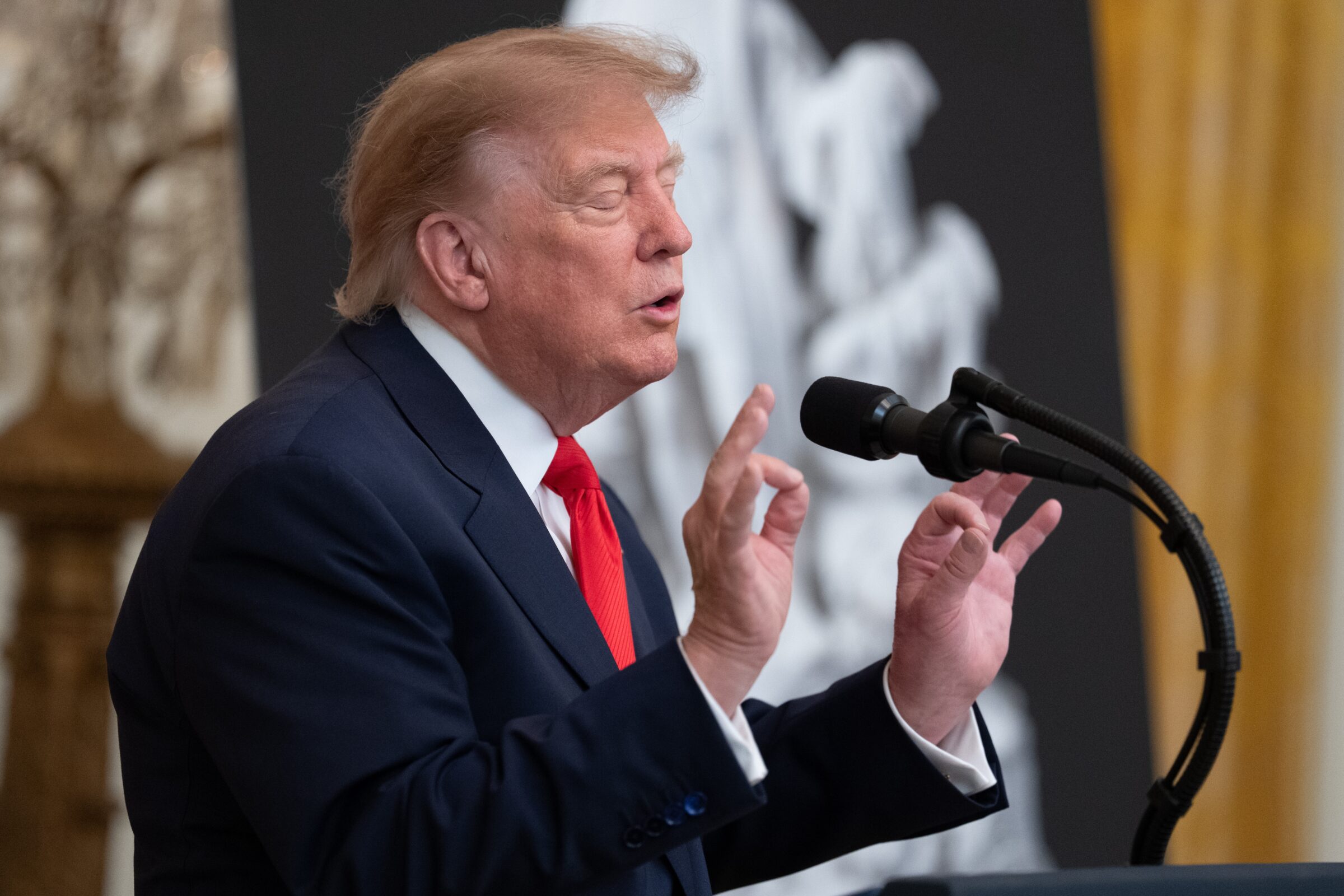
President Donald Trump has criticised European penalties against US technology companies and threatened trade measures in response to what his administration regards as discriminatory regulation.

Brussels maintains that the legislation applies according to market position and commercial conduct, regardless of nationality.

European regulators must nevertheless enforce their decisions in an environment where competition policy has become entangled with wider trade relations between the United States and the European Union.

Google’s financial exposure extends beyond the €890 million imposed in July. Continued non-compliance could lead to further regulatory proceedings, while changes to the company’s services may also affect advertising revenue and its relationships with commercial partners.

The immediate assessment will concentrate on whether competing search services receive fair treatment and whether application developers can direct customers towards alternative transactions without unjustified restrictions.

The Commission has not announced a date for its final assessment. Its decision will help establish how far Europe’s digital competition legislation can change the conduct of companies whose platforms occupy central positions in online commerce.

  •  

EU bets on diplomacy, not blocking statute, to protect ICC from Trump sanctions

The EU is shying away from triggering rules that would shield people and companies working at or with the International Criminal Court (ICC) in The Hague from US sanctions, preferring instead months-long diplomatic outreach.

The European Commission on Wednesday (14 October) told reporters in Brussels that it was doing everything to seek “practical solutions”, while hoping that its diplomacy will help the court, which prosecutes people for war crimes, genocide, and other atrocities.

“We haven’t made any decisions yet. But we continue to discuss at every level,” said a commission spokesperson, when pressed on whether a little-known blocking statue, which would presumably damper the impact of the US sanctions, remains an option.

And an EU summit in Brussels on Thursday is expected to ask the US to reverse the decision, according to draft conclusions seen by EUobserver.

The EU’s little-known “blocking statute” would prevent EU companies and banks from complying with the sanctions. It was first used against US sanctions on Cuba, Iran and Libya.

The Trump administration had, last Friday, announced financial sanctions on the ICC as part of a larger assault to dismantle the court, after it issued arrest warrants for Israeli prime minister Benjamin Netanyahu, its former defence minister Yoav Gallant, and Hamas military commander Mohammed Deif.

This article continues, but the full version is available only to EUobserver.com subscribers. Visit account.euobserver.com/membership

  •  

The American Conservative: How Trump Made the World Go Nuclear

Trump has attacked Iran twice, both times amid nuclear negotiations and alongside Israel. The war has made it more likely that Iran will acquire nuclear weapons, and has undermined the cause of nuclear nonproliferation across the Middle East and beyond.

  •  

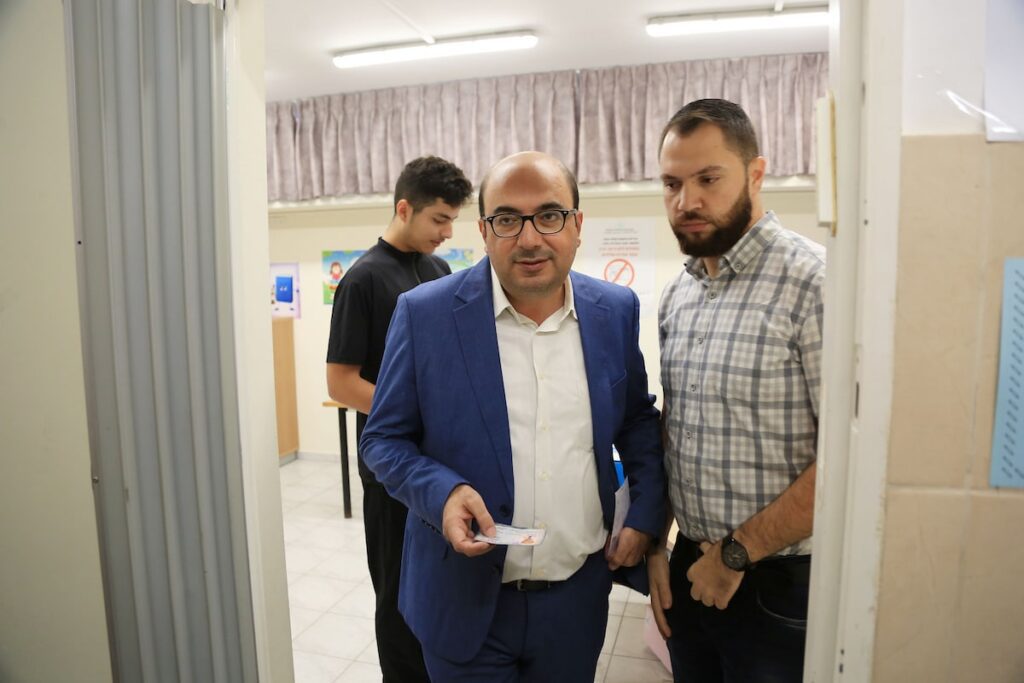
The Israeli witch hunt of Sami Abu Shehadeh exposes the lie of the ‘Jewish and democratic’ state

The Supreme Court’s decision to force Palestinian politician Sami Abu Shehadeh out of the upcoming Israeli elections is the latest sign that there is no place for Palestinian citizens of Israel in the ‘Jewish and democratic’ state.

  •  

No state has a ‘right’ to exist – least of all Israel

After the Greens passed a motion declaring ‘Zionism is racism’, every establishment journalist is suddenly playing dumb about the most elementary of issues in international law

💾

  •  

Who ordered the strike that killed my friend and maimed me? The EU must demand answers from Israel

“I’m okay.” That was the last message I sent my mother before an Israeli strike hit us, a group of seven journalists reporting in southern Lebanon.

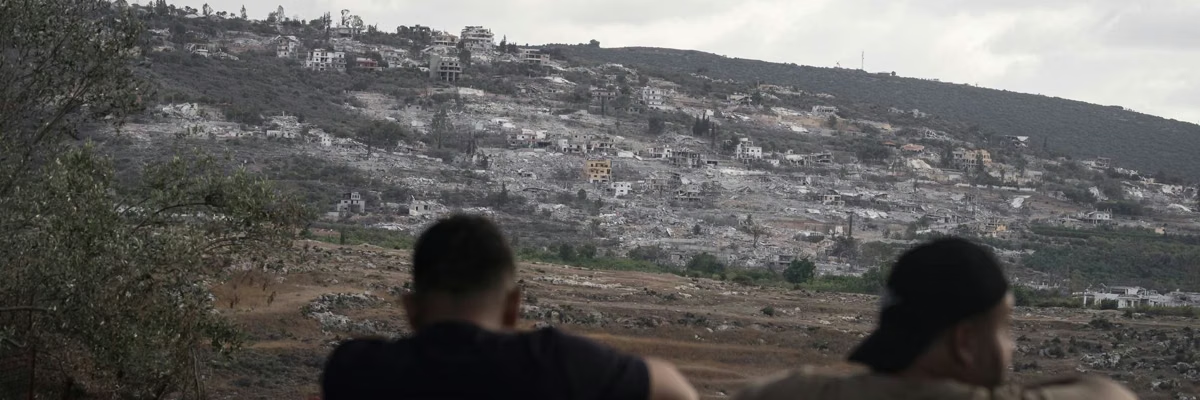
Three years ago, on 13 October 2023, my colleague Dylan Collins and I headed to the southern border of Lebanon to cover the situation following cross-border shelling between Israeli forces and Hezbollah. We spent the morning filming UN peacekeeping force patrols along the blue line dividing Lebanon and Israel. The atmosphere was calm and nothing suggested that the day was about to change and upend our lives. We went to a coffee shop near a UN post where journalists from different outlets had gathered and there we met our friend and Reuters colleague Issam Abdallah. 

Around 4:50PM, we heard a bombardment in a nearby town so we moved to an exposed hill in Alma Al-Shaab, where Al-Jazeera journalists Carmen Joukhadar and Elie Brakhya were positioned. Together with colleagues from Reuters, we were a group of seven journalists, all wearing press vests, reporting next to a car marked “TV”. We were clearly identifiable as press and spent about an hour filming while an Israeli drone hovered above us. At 5:57 I finished filing my photos and sent a message to my mother to tell her I was okay. Seconds later, I found myself on the ground, bleeding and screaming for help. Dylan rushed over with a tourniquet, but before he even had the time to put it, another strike hit.

Everyone disappeared and I was left alone, unable to move and the heat of the flames creeping closer to my face. I was terrified of burning alive, so I started crawling away with the camera still hanging from my neck and its strap tightening around my neck with every move. Two weeks later, I woke up from an induced coma with one leg missing, the other severely damaged, and Issam dead. 

Not an isolated attack

What followed was as horrific and brutal as the attack itself and it didn’t stop there. What happened to us was not an isolated incident — for three years I watched journalists being killed in Lebanon and Gaza by Israeli forces in ways that felt painfully familiar. 

In October 2024, Israeli forces struck a compound in Hasbaya where journalists were staying and killed media workers Ghassan Najjar, Mohammed Reda and Wissam Kassem, while they slept.

Human Rights Watch found no evidence of military activity at the site and concluded that the strike was deliberate and should be investigated as war crime.

Then in April 2026, journalist Amal Khalil was killed in southern Lebanon after an Israeli strike hit the building where she had taken shelter with her colleague Zainab Faraj, leaving both women trapped under the rubble. Investigations found that Israeli forces repeatedly obstructed rescue efforts.

Since our attack, dozens of journalists have been killed in Lebanon, and nearly 200 journalists have been killed in Gaza by Israeli forces.

Many have been mired by Israel with the same false allegations that they were “terrorists.” The dead can’t defend themselves against such accusations, but I survived and I can speak about what happened to us. 

In June 2026 in an interview on France 2, Israel’s ambassador to France described the 13 October attack as a “mistake” saying that we were not targeted because we were journalists, but because Israeli forces had mistaken us for “terrorists.” The evidence tells a different story.

Five independent investigations by Agence France-Presse, Amnesty, Human Rights Watch, Reuters, and UNIFIL found no indication of fighters or military activity at the site, and no cross-border exchange of fire for more than 40 minutes before we were struck with a 120mm tank shell. 

These investigations matter because they establish with certainty evidence beyond my own personal account.

What remains unanswered is who gave the order, who fired the double-tap strike, and why no one has been held accountable. These are basic questions that can be answered by Israel if they were sought by EU member states.

Three years on, Issam’s family and the survivors of this attack deserve to know: Who gave the order?

Evidence alone cannot deliver justice, someone must be willing to act on it. In the face of this attack, including the targeting of four of its own citizens on Lebanese soil, the Lebanese government has failed us. 

Neither Lebanon nor Israel are party to the Rome Statute, meaning that the International Criminal Court does not have jurisdiction to prosecute those responsible for the attack.

In 2024, Lebanon approved a special declaration that would have allowed the Court to investigate war crimes committed after 7 October 2023, only to later reverse its decision for political reasons.

And now, making our legal path even more complicated, in June 2026 Lebanon signed a new framework agreement with Israel whereby Clause 13 commits both sides to cease “all hostile and adverse actions in international and legal fora.”

EU urged to act

I have no hope left that we will ever get justice for what we lost, but I will not rest before I know the names and faces of those responsible. 

Our case is the most documented instance of Israeli forces targeting the press on record. The October 13 targeted attack was perpetrated by Israeli forces on a group of journalists clearly identifiable as press.

If we cannot get answers in the face of such overwhelming evidence, what does it mean for the hundreds of journalists killed by Israeli fire throughout the region for which there is no such evidence? 

This is where the European Union must act. The EU has repeatedly said that journalists must not be attacked and that violations of international law must be met with accountability. Today, we demand actions not just words and statements. The EU must demand that Israel provide a full account of the 13 October attack, including who ordered, authorized and carried out the strikes.

For me, this is not an abstract question of foreign policy. Issam was my friend. I survived that attack with one leg missing. I know what it means when the people responsible for an attack are allowed to remain unnamed and unaccountable.

I am asking the EU not simply to stand with journalists in words, but to stand with us in action.

The EU has political, diplomatic, and legal leverage. It should use it. If Israel refuses to fully explain what occurred and disclose those responsible for killing and maiming journalists who were visibly identifiable as press, EU member states should use every available mechanism to pursue accountability, including further targeted sanctions or suspending trade with Israel.

I refuse to believe that a military with advanced surveillance could have simply mistaken us for fighters and attacked us in a double-tap strike, a tactic repeatedly used by Israel in this war. But, if that’s truly what happened, then Israel must still answer for how such incompetence and failure was possible. 

For now, justice evades us, but the truth of who gave the order is within reach and we must demand it. 

  •  

MI5 chief Ken McCallum confirms Russia did interfere in Brexit referendum but says it had little impact – as it happened

He argued there was no evidence to suggest the result of the Brexit vote had been swayed as a result of the effort

Zia Yusuf, Reform UK’s home affairs spokesperson, has said he does not agree with his colleague Suella Braverman’s assertion that black people cannot be English.

Asked about her views in an interview on Sky News, Yusuf said:

In my view Ashley Cole is the best English fullback in history, and I won’t take any other position. So in my view, Ashley Cole is English. I think the argument that he’s not English doesn’t hold water with me.

Nasser Hussain, who I grew up watching when I went to the cricket, the idea that those people aren’t English is an alien concept to me.

I would respectfully disagree with people, who make the opposite argument.

To say I’m English is to take a ‘laissez-faire, anything-goes’ attitude to ethnicity, citizenship and identity. It also denies me my Asian heritage. The liberals (many of them in today’s Conservative party) take this cosmopolitan approach to Englishness. They’re terrified of being called racist so they say that anyone, as long as they’re born here, can be English.

I take the conservative approach. Englishness is an ethnicity. There have been English people for centuries and we need to recognise this more if we are to start taking a more muscular approach to citizenship and nationality. And no, it’s not racist to say this.

Continue reading...

© Photograph: Jonathan Brady/Reuters

© Photograph: Jonathan Brady/Reuters

© Photograph: Jonathan Brady/Reuters

  •  

“The Rule Was: ‘Shoot Everyone You See'”

More than 70,000 killed; even more wounded; destruction without end: Ten Israeli soldiers told Der Spiegel about their feelings of revenge, orders to shoot and “collateral damage.”

  •  

Yellow Line moves again as Israel closes in on trapped Gazans – Daily Update

Settler violence turns West Bank harvest into a nightmare ■ More Israeli testimony implicates IDF for massive civilian casualties ■ Israel's detention, torture of Syrians ■ More

  •  

For years, Hungary tied Ukraine’s whole EU course to ethnic Hungarians’ language rights. Kyiv has now passed the schooling law meant to lift the block

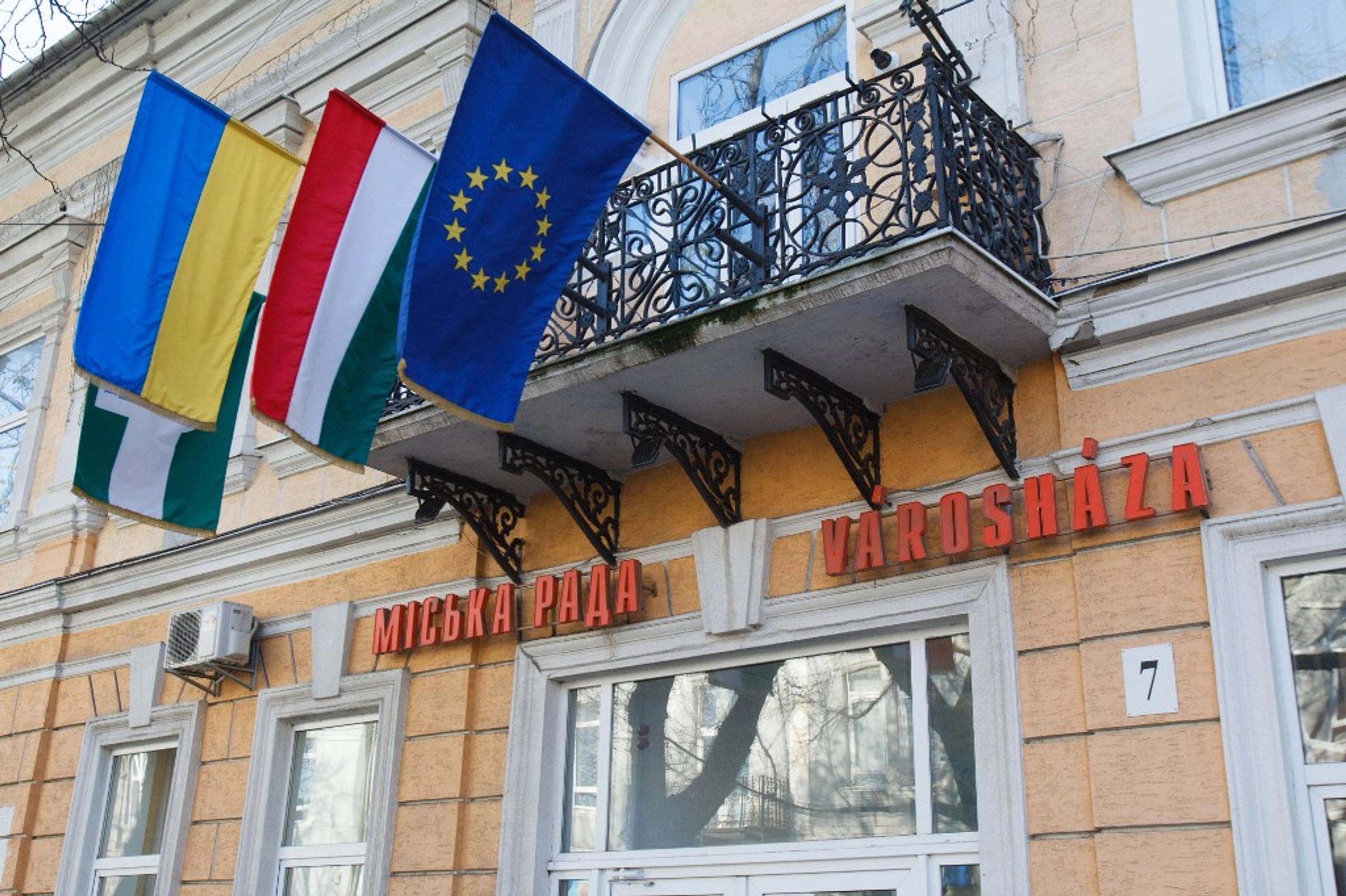
russia faked ukrainian phone numbers threaten hungarians ukraine — help orbán win hungary's election kyiv says · post local hungarian eu flags city hall building zakarpattia oblast's town berehove home

Kyiv just cleared the important roadblock for Budapest, which stood between Kyiv and EU membership talks. Ukraine’s parliament has passed a bill on schooling in minority languages, meant to finally lift Hungary’s block on the country’s path toward EU membership, with 266 of the 450 lawmakers voting in favor, UNIAN reports.

Hungary has been the lone EU member blocking the opening of four of Ukraine’s negotiating clusters, stages of the membership process, over how Kyiv treats the Hungarian minority in Ukraine's Zakarpattia region. Roughly 80,000 ethnic Hungarians live in it, and Budapest had tied Ukraine’s entire EU course to their language rights.

Lawmakers have instructed the parliament’s speaker to sign the law without delay and send it to President Volodymyr Zelenskyy.

What the law changes in schools

The bill keeps Ukrainian as the main language of education, but guarantees classes in minority languages where they exist. Minorities may study in the official languages of EU member states alongside Ukrainian, and pupils may use their language in other forms of communication on school grounds.

A school can gain the status of a national-minority institution if more than half of its pupils study in that minority language, provided that language is an official EU language. Parents of at least two-thirds of a minority class can also ask the school to expand the list of subjects taught in Ukrainian.

The dispute dates back years

Ukraine’s 2017 education law and 2019 language law narrowed minority-language schooling and required more Ukrainian in secondary grades, which then-Hungarian leader Viktor Orban treated as an attack on the Hungarians of Zakarpattia, blocking Kyiv’s NATO and EU steps for years, EUalive reports. Kyiv’s position was that the laws applied to all minorities and excluded Russian.

Hungary’s newer government, in office since spring 2026, inherited the veto. Budapest lifted it on the first cluster, which the EU opened in June, Ukraine’s first since gaining candidate status in 2022, but made the rest conditional on this law.

With the bill passed, Hungary is set to allow the EU to open two more clusters, on the internal market and competitiveness, at a Council meeting in Luxembourg on 13 October. Kyiv aims to open all its clusters by year’s end.

  •  

Montenegro and Albania Advance Towards EU Membership as Brussels Tightens Accession Rules

Montenegro and Albania will hold separate accession conferences on 12 and 13 October as the European Commission introduces proposals for stronger safeguards against democratic backsliding, linking the next phase of EU enlargement to reforms within the Union itself.

Montenegro and Albania are preparing for another round of European Union accession negotiations this week, with meetings in Luxembourg scheduled to advance their membership bids as Brussels considers substantial changes to the conditions under which future countries will join the bloc.

Montenegro’s 29th accession conference will take place on Monday, 12 October, followed by Albania’s tenth conference on Tuesday. The meetings come less than a week after the European Commission presented a package of proposals intended to prepare the EU for enlargement while strengthening its ability to respond to breaches of democratic standards by newly admitted members.

For Montenegro, the immediate objective is to continue closing negotiating chapters after years of institutional and legal reforms. Albania’s meeting has a more precisely defined agenda: the provisional closure of Chapter 20, covering enterprise and industrial policy.

Both countries have made progress towards membership, but the Commission’s latest proposals indicate that the terms of accession could become more demanding as the EU considers admitting several new members.

Montenegro moves towards the final negotiating stage

Montenegro is widely regarded as the most advanced candidate among the Western Balkan countries.

Accession negotiations began in 2012, and all 33 negotiating chapters have been opened. Progress towards closure has accelerated as the government seeks to complete the process and secure an accession treaty.

At the end of 2025, Montenegro provisionally closed five chapters covering services, capital movements, company law, agriculture and fisheries.

As EU Today reported following that conference, the agreements brought the number of provisionally closed chapters to twelve at that stage, while the EU continued to emphasise the importance of judicial reform and sustained implementation.

Subsequent accession conferences have continued the negotiating process, with the 29th conference scheduled for 12 October.

The Commission has identified Montenegro as a country capable of concluding accession negotiations by the end of 2026, provided sufficient progress is maintained.

That objective does not mean membership would follow automatically. A completed negotiation must still lead to an accession treaty, which requires approval by all existing member states and ratification under their constitutional procedures.

Outstanding questions include the independence of the judiciary, enforcement of anti-corruption legislation and the capacity of state institutions to apply EU law consistently.

Albania advances in industrial policy negotiations

Albania’s accession process has also gained momentum, supported by renewed EU interest in incorporating the Western Balkans into European political and economic structures.

The conference scheduled for 13 October is expected to provisionally close Chapter 20, which covers enterprise and industrial policy.

The chapter concerns the legal and institutional environment in which businesses operate, including industrial competitiveness, entrepreneurship and policies supporting small and medium-sized enterprises.

Provisional closure would represent further progress in Albania’s alignment with EU legislation and policy, although it would not constitute a final agreement on accession.

As with Montenegro, the negotiating framework requires sustained progress on the fundamentals of membership, notably judicial independence, fundamental rights, corruption and organised crime.

Brussels prepares stronger safeguards

The latest accession conferences follow the European Commission’s proposals of 6 October, which address the institutional consequences of admitting new countries.

The Commission argues that enlargement can be accommodated within the existing treaties, but that the EU will need additional safeguards and improvements to decision-making.

Among the most consequential proposals is the possibility of suspending a new member state’s voting rights in the Council if it commits serious breaches of the Union’s fundamental values or the principle of sincere cooperation.

Such provisions would be incorporated into future accession arrangements, making some membership conditions enforceable after a country has joined.

The proposal reflects concerns that the EU’s existing mechanisms for responding to democratic backsliding can be slow and politically difficult to apply.

In June, EU Today reported on proposals advanced by five member states seeking stronger protections against governments that might undermine common decisions after accession.

The Commission’s October package develops that argument into a broader programme of institutional preparation.

Enlargement beyond the Western Balkans

The debate extends to Ukraine and Moldova, whose membership applications have acquired greater strategic importance following Russia’s full-scale invasion of Ukraine.

The Commission is examining how candidate countries can progressively participate in EU policies and programmes before obtaining full membership.

These arrangements could include greater integration in energy, transport, defence and selected areas of the single market, subject to the implementation of relevant reforms.

Brussels is also considering transitional arrangements affecting agricultural support, financial transfers and sensitive sectors of the economy.

The political challenge is to provide candidate countries with credible membership prospects while reassuring existing members that enlargement will not weaken common decision-making or create unsustainable budget commitments.

For Montenegro and Albania, the October conferences therefore take place at a pivotal point in the accession process.

Both governments are moving through the technical stages of membership negotiations while the EU is still determining how its next enlargement will operate.

The outcome will depend not only on their progress towards meeting accession conditions, but also on whether the existing 27 member states can agree on the institutional changes required for a larger Union.

  •  

EU’s 2026 rule‑of‑law report doesn’t trigger real action, says human rights watchdog

The EU’s annual rule of law report, tackling advancements in corruption and fundamental rights, shares overly optimistic improvement that is far from the reality on the ground, a civil liberties group revealed. 

Presented on a sweltering Friday in July, the EU commission’s 2026 rule of law report failed to avoid scrutiny, with NGO Civil Liberties Union for Europe (Liberties) observing a gap between professed achievements in member states and the reality of a significant lack of implementation of Brussels’ recommendations. 

“This year’s Report shows continued positive progress across many Member States. And that is precisely why our Rule of Law Report matters. It has become a reference point, helping to shape national debates and drive reforms across our Union,” EU Commission president Ursula von der Leyen said back then in a statement.

But of all recommendations in the July report, Liberties’ Gap analysis report revealed that only four percent had been fully implemented, while 54 percent show limited to no progress.

“The Commission’s Rule of Law Report has the potential to be one of the EU’s strongest tools for preventing democratic backsliding,” said Kersty McCourt, Liberties’ rule of law expert. “But when recommendations are repeatedly issued without being implemented, and new threats are not identified early enough, the system loses its power”. 

The report, published on Monday (12 October) and shared in advance with EUobserver, found that almost all recommendations issued in 2026 were regurgitations of those given in previous years, with only seven new recommendations being introduced this year.

The commission’s annual report “fails to unpack why some problems remain so entrenched,” Liberties said. 

In its own study, the Berlin-based NGO suggested the reasons for slow movement to be bound from a lack of willingness from member states, a vacuum in the EU’s enforcement mechanisms, or issues becoming “so entrenched that progress is effectively impossible.”

This reduces the function of the report as a warning system for identifying early signs of democratic backsliding, since recommendations on emerging issues remain unaddressed and even if are formally adopted, often don’t translate into effective implementation.

Liberties observed this to be evident in the example of Nordic countries, which have grown to be exempt from scrutiny due to their traditionally strong reputations.

This article continues, but the full version is available only to EUobserver.com subscribers. Visit account.euobserver.com/membership

  •  

Gaza: Ceasefire Anniversary Marks Year of Failed Promises

Human Rights Watch: “The outside world may be under a dangerous illusion that life in Gaza is returning to normal, but reality tells a very different story”

  •  

Gaza ceasefire exists in name only, say more than 100 organizations

One year since the ceasefire agreement, more than 1,400 people have been killed by Israeli forces in Gaza, nearly two million still need shelter, not a single hospital is fully functioning, and 1.4 million face crisis-level hunger.

  •  

Ukraine uses up Europe’s yearly supply of thermal sensors in about five months, so two Ukrainian firms will build their own plants in the West

ukraine uses up europe’s yearly supply thermal sensors about five months so two ukrainian firms build own plants west · post imaging camera made company odd systems mounted drone manufactured

Two Ukrainian defense-tech firms, The Fourth Law and Odd Systems, have joined forces to mass-produce thermal imaging sensors in Europe and the US, The Fourth Law told Militarnyi. The goal is to wean Western militaries off foreign suppliers, chiefly China, for the core part of every thermal camera.

Amid Russia's daily attacks, Ukrainian drone makers have been shifting production to allied countries. Linza and Zoom drones are now built in Germany, and another top manufacturer has taken its technology to Canada and Finland. Sensor plants would move a core component west, not just finished drones.

A Western answer to Chinese sensors

The project, called Project Foundation, will build long-wave infrared sensors, known as microbolometers. These chips register heat, so a camera can pick out a person or vehicle at night or through smoke. The aim, The Fourth Law said, is to "ensure the sovereignty of Western countries in the field of thermal imaging technology."

Plants in Europe and the US from 2027

The project will run two sites, First Foundation in Europe and Second Foundation in the US, from a headquarters in Eindhoven, a Dutch semiconductor hub. Mass production is due to start in 2027. Within three years, the partners want to quadruple Europe's output of these sensors and double America's.

Why Europe's supply isn't enough

Ukraine's front line burns through sensors faster than Europe can make them. "Europe currently produces less than 500,000 such sensors per year, while Ukraine consumes this amount in about five months," Odd Systems co-founder Yaroslav Azhniuk said in February, when he first announced plans for a plant able to make one million sensors a year. European sensors cost about five times as much as Chinese ones and are hard to buy at all, because Europeans need them too, he added.

Factories working for Ukraine abroad have already become sabotage targets. In March, an arson attack in Pardubice, Czechia, destroyed nearly all the production capacity of a plant making drones and thermal sights for Ukraine's army. Czech investigators are looking into a possible Russian trail behind the attack.

  •  

EU let member states rewrite targets after they had sought recovery-fund payment, auditors find 

EU governments were allowed to water down targets in their post-Covid pandemic recovery plans after they had already asked Brussels for the money, the European Court of Auditors (ECA) said on Thursday (8 October).

Of 20 milestones and targets the auditors examined, 13 were amended after the member state had already submitted its payment request. In nine of those cases, the change itself was requested after the payment application had already been made. 

The revised targets were “aligned with actual achieved outputs, which made the payment possible,” the auditors wrote in their annual report on the 2025 EU budget.

Rewriting measures

Ireland, for example, asked for a payment in December 2024. But in January 2025 it requested to cut the target for ICT graduates down from 12,450 to 10,900, citing a high administrative burden.

This article continues, but the full version is available only to EUobserver.com subscribers. Visit account.euobserver.com/membership

  •  

Les véritables causes de la Troisième Guerre mondiale

Depuis plusieurs années, nos dirigeants politiques, refusant d’accepter leur perte de puissance, recourent dans l’arène internationale à des faux et à des mensonges répétés. Petit à petit, ils perdent de l’influence, mais à force de jouer, ils provoquent les conditions nécessaires pour débuter une Troisième Guerre mondiale. Elle ne surviendra pas par erreur, ni par hasard, elle sera le fruit de leur obstination.

par Thierry Meyssan

Nous savons tous que, si les guerres se déclenchent lorsque des évènements particuliers surviennent, elles ont des causes profondes, bien distinctes. Il s’agit généralement de conflits de territoire ou d’influence. La Troisième Guerre mondiale pourrait être déclenchée par une escarmouche en Ukraine ou au Moyen-Orient, mais elle aura pour véritable cause un affrontement entre deux visions de l’ordre du monde : d’un côté, la grande majorité des États, réunis autour de la Russie et de la Chine, souhaite respecter le droit international, tandis que, de l’autre, « l’Occident politique », soucieux de ne rien perdre de ce qu’ils ont gagné en écrasant les peuples du Sud, préfère s’en remettre aux « règles » qu’ils ont imaginées au G7.

Cela fait huit ans, que Sergueï Lavrov, ministre russe des Affaires étrangères, a mis en évidence ce choix. Huit ans que « l’Occident politique » le poursuit comme si de rien n’était.

Le 28 septembre 2018, à la tribune de la 73° session de l’assemblée générale des Nations unies [1], il posa ce constat : « nous assistons tous à une collision de deux tendances opposées. D’une part, nous voyons le renforcement des principes polycentriques de l’ordre mondial, le développement constant de nouveaux centres de croissance économique, l’aspiration des peuples à préserver la souveraineté et à choisir des modèles de développement qui sont cohérents avec leurs identités nationales, culturelles et religieuses. D’autre part, nous voyons le désir de plusieurs États occidentaux de conserver leur statut autoproclamé de “leaders mondiaux” et de ralentir le processus objectif irréversible d’établissement de la multipolarité. »

Il poursuivait : « Nous observons l’offensive du révisionnisme belliqueux contre le droit international moderne. Les attaques ont été lancées contre les principes fondamentaux du règlement du Moyen-Orient, le Plan d’action global conjoint sur le programme nucléaire iranien, les engagements dans le cadre de l’Organisation mondiale du commerce, l’accord multilatéral sur le climat et beaucoup d’autres. »

Et plus loin : « Il est révélateur que les attaques agressives contre les institutions d’information s’accompagnent de tentatives de “privatiser” les structures de secrétariat [de l’ONU] et de leur accorder les mêmes droits qu’aux organes intergouvernementaux dans l’espoir de les manipuler plus tard. »

Il est difficile d’imaginer que certains puissent s’accrocher à leurs privilèges indus au point de provoquer une apocalypse. Et pourtant…

Toujours en 2018, après le retrait unilatéral des États-Unis de l’accord sur le nucléaire iranien (JCPoA), trois anciens empires européens, l’Allemagne, la France et le Royaume-Uni (E3), ont d’abord souhaité compenser le retrait US puis, vu leur incapacité à violer les règles de leur suzerain, ont affirmé que les sanctions antérieures contre l’Iran s’appliquaient encore.

Ils avaient pourtant voté la résolution 2231 du Conseil de sécurité [2] qui y a mis fin.

Commence alors une longue période durant laquelle l’Allemagne, la France et le Royaume-Uni (E3), faisant preuve d’une constante mauvaise foi, ont, à de nombreuses reprises, tenté de réimposer les sanctions contre l’Iran antérieures au JCPoA. Ces trois États ont prétendu qu’ils pouvaient revenir en arrière car l’Iran ne respectait plus ses engagements en ignorant que ce sont les États-Unis les premiers qui n’ont pas respecté les leurs.

Les échanges de lettres entre les différents négociateurs du JCPoA se sont intensifiés. Cependant, jamais les E3 n’ont accepté de reconnaître, ainsi que l’exigeaient les deux autres, la Chine et la Russie, que le traité ne permettait pas de revenir en arrière sans examen du non-respect par les États-Unis de ses engagements.

C’est bien là le cœur du problème : « l’Occident politique » refuse de reconnaitre ses torts et tente de maintenir les situations où il disposait d’un avantage.

Le 19 septembre 2025, conscients qu’ils ne pouvaient pas appliquer seuls les fameuses « sanctions », les E3 ont demandé au Conseil de sécurité de les rétablir. La Chine et la Russie leur ont opposé leur veto et ont proposé de relancer les négociations du JCPoA. Mais les anciens empires européens ont préféré corrompre des fonctionnaires internationaux. Ces derniers ont publié deux faux comptes-rendus de la réunion du Conseil, afin de faire accroire que le rejet de la proposition sino-russe suffisait à rétablir les sanctions [3]. Pis : contre l’avis du Conseil, le secrétaire général a publié des instructions les rétablissant [4]. La remarque de Sergueï Lavrov, en 2018, sur la « privatisation » des Nations unies se trouvait vérifiée.

Ne croyez pas que les choses en soient restées là.

Le Royaume-Uni a repris les « sanctions » contre l’Iran, en janvier, puis les États-Unis, fin mars 2026. Ces décisions ont été mal interprétées par la presse qui y a simplement vu un épisode de l’actuelle guerre du Golfe alors qu’il s’agissait de la reprise de ce que les États-Unis n’avaient pas osé faire lorsqu’ils se sont retirés unilatéralement du JCPoA, puis les E3.

Rappelons que le terme de « sanction » ne peut, en droit international, que désigner une décision prise par le Conseil de sécurité après un débat contradictoire. Ce à quoi nous assistons sont des « mesures coercitives unilatérales », adoptées sans débat contradictoire et violant la Charte des Nations unies.

Le président allemand, Frank-Walter Steinmeier, a qualifié la guerre israélo-états-unienne contre l’Iran, le 22 mai 2026, « d’évitable ». Il a déploré le retrait unilatéral des États-Unis du JCPoA, disant : « Il aurait été préférable de maintenir cet accord. Les conséquences que nous constatons aujourd’hui ne se seraient pas produites. » Pour conclure : « Cette guerre est inutile ».

Ce faisant, Frank-Walter Steinmeier manifeste sa conscience de la responsabilité franco-britanno-germanique dans l’actuelle guerre du golfe. Bien que, simultanément, il manifeste la même supériorité que ses complices en parlant de guerre « évitable » ou « inutile », deux qualificatifs qui n’ont pas leur place en droit international.

Il y a trois semaines, le 17 septembre 2026, les E3 ont convoqué une réunion du Conseil de sécurité sur « la non-prolifération ». Ils ont, à nouveau, tenté de faire rétablir les sanctions contre l’Iran et se sont heurtés à nouveau aux vétos chinois et russe [5]. La presse occidentale ne s’en est pas fait l’écho, elle aurait dû reconnaître la mauvaise foi de ses gouvernements.

Faire usage de faux documents, mentir effrontément et veiller à camoufler ses fautes, c’est rendre la guerre possible.

Constatant qu’ils ne pouvaient plus progresser aux Nations unies, les États-Unis et les E3 les ont contournées. Ils ont activé la Proliferation Security Intitiative (PSI), un réseau étatique, créé en 2003 par le président George W. Bush, sur les conseils de John Bolton [6]. Celui-ci a trouvé une quarantaine d’États — dont les E3 — pour signer, le 2 octobre 2026, une déclaration absurde [7] : elle réaffirme que Téhéran ne remplit pas ses engagements du JCPoA, sans dire qu’il en est dispensé depuis le retrait unilatéral des États-Unis. Puis, elle pose que ce manquement justifie l’opération Economic Outcast (« Paria économique »), que Washington vient de lancer contre Téhéran.

Par cette opération, le secrétariat au Trésor tente d’affamer le peuple iranien. La Chine et la Russie ont déjà dit qu’ils s’y opposeraient. Les signataires, au contraire, annoncent qu’ils l’appliqueront.

Certes, seuls un gros tiers des États qu’ils avaient sollicités ont signé ce texte. C’est déjà bien assez pour faire une guerre.

Pour la première fois dans un texte de ce type, les auteurs affirment, sans rire, leur « adhésion à l’ensemble du droit international et des cadres pertinents, y compris les résolutions du Conseil de sécurité ». Oui, vous avez bien lu, c’est au nom de la résolution 2231 et de la réunion du conseil du 17 septembre dernier que les signataires feront le contraire de ce qui a été décidé collectivement.

Comme nos dirigeants ont conscience de jouer avec le feu, ce texte est absent de leurs sites officiels. Il faut aller sur celui de la Proliferation Security Intitiative (PSI) pour le trouver.

À l’évidence, à force de faux et d’usage de faux, à force de mensonges et de menaces, nous provoquerons, sans le vouloir, la Troisième Guerre mondiale qui nous emportera.

Publié à l’origine par voltairenet.org

[1] « Remarks by Sergey Lavrov to the 73rd Session of the United Nations General Assembly », par Sergueï Lavrov, Réseau Voltaire, 28 septembre 2018.
[2] « Résolution 2231 », adoptée le 20 juillet 2015.
[3] « Le Conseil de sécurité s’oppose au maintien de l’allégement des sanctions de l’ONU contre l’Iran » et « Nucléaire iranien : le Conseil de sécurité entérine le retour aux sanctions de l’ONU contre l’Iran en rejetant une prorogation de la résolution 2231 de 2015 », Nations unies.
[4] « Le secrétariat général rétablit les sanctions contre l’Iran », ONU (secrétariat général), Réseau Voltaire, 27 septembre 2025.
[5] « Compte-rendu de la réunion du 17 septembre 2026 », Conseil de sécurité des Nations unies.
[6] « John Bolton et le désarmement par la guerre », Réseau Voltaire, 30 novembre 2004.
[7] « Déclaration commune à l’occasion de l’anniversaire du rétablissement des restrictions des Nations Unies imposées à l’Iran et liées à ce pays », Réseau Voltaire, 2 octobre 2026.

  •  

By Netanyahu’s own math, Gaza Is 3,900 September 11ths

By Larry C. JOHNSON

Join us on Telegram, X, and VK.

Contact us: info@strategic-culture.su

Benjamin Netanyahu likes to translate Israel’s grief into American. At the United Nations last month, he took the dead of October 7 and multiplied them by the ratio of America’s population to Israel’s. The 1,200 Israelis killed that day, he said, were “equal to 40,000 innocent Americans slaughtered in less than 24 hours. That’s 16 times 9/11.”

Per-capita comparisons are a perfectly legitimate tool. A small country feels a massacre more than a large one, and Americans should understand what October 7 meant to Israelis. But a method is only honest if you’re willing to apply it to everyone. So let’s apply Netanyahu’s method to the people his army has been killing for three years.

Gaza had about 2.2 million people before the war. The United States has about 341 million, roughly 155 times as many. Take a conservative figure of 75,000 Palestinians killed in Gaza, slightly above the Gaza Health Ministry’s latest count of more than 73,000. Multiply it by Netanyahu’s own logic, and you get about 11.6 million Americans.

Eleven point six million. That is roughly the population of Ohio. It is more than ten times the number of Americans killed in every war the United States has ever fought, from the Revolution to Afghanistan. It is about 15 times America’s deaths in the Civil War, the bloodiest conflict in the nation’s history.

Measured in the unit Netanyahu chose, it is about 3,900 September 11ths.

Run the numbers in Israel’s own terms and the result is the same. Seventy-five thousand dead in a population of 2.2 million is the equivalent of about 340,000 Israelis. Netanyahu built a speech, a war and a foreign policy on 1,200. Imagine what he would say about 340,000.

The convenient multiplier

The prime minister’s defenders will object that the comparison is unfair because many of Gaza’s dead were Hamas fighters. Fine. Subtract every combatant the Israeli military claims to have killed, and apply the multiplier to what remains. Even 50,000 dead becomes nearly 8 million Americans, about 2,600 9/11s. You can argue over every death in the ledger, and the result is still measured in millions.

Netanyahu’s arithmetic has problems even on its own terms. Forty thousand Americans divided by the 2,977 who died on September 11 comes to about 13.4 9/11s, not 16. When the rhetoric needs a bigger number, it seems, the calculator rounds up.

But the real problem isn’t the rounding. It’s the selectivity. Netanyahu’s multiplier is designed to work in one direction only. It enlarges Israeli dead into an American catastrophe so that American audiences will feel what Israelis felt. Applied to Palestinians, it produces numbers so large they would make any American audience ask what, exactly, it has been paying for. That is why he never applies it to them.

What the comparison actually shows

The point of a per-capita comparison is to help outsiders grasp the scale of a loss. Netanyahu wants Americans to imagine 40,000 of their countrymen murdered in a day, and to understand everything Israel has done since as the natural response. Very well. Ask Americans to imagine 11.6 million of their countrymen dead, in a territory sealed off from escape, and to call it self-defense.

No American president would describe 11.6 million American dead as a proportionate response to anything. No American would accept that the dead deserved it because some of them were armed. And no one who has run the numbers can accept the premise of Netanyahu’s arithmetic, which is that Israeli lives scale up and Palestinian lives do not.

The method is Netanyahu’s. So is the answer it produces: by his own measure, the catastrophe in Gaza is about 290 times larger than the one he asks the world to remember.

Original article: sonar21.com

  •  
❌