❌

Reading view

Pete Hegseth Outlines Massive Defense Spending at AUSA Meeting

A look inside the annual arms conference where radical religious ideology and corporate interests shape the future of American military policy.

The annual meeting of the Association of the United States Army (AUSA) is one of the largest defense expositions and professional development forums in North America, and this year it was held from October 12 to 14.

RELATED:
Hegseth Seeks More Funding to Attack Iran Despite Anti-War Sentiment

Held annually in Washington, D.C., the AUSA brings together thousands of industry representatives, military personnel, defense contractors, and senior government officials.

The primary function of this convention is to showcase advanced military technology, foster business partnerships between the private sector and the U.S. Department of Defense, and deliberate on future defense budgets and operational strategies.

During the event, major defense corporations display advanced weaponry, armored vehicles, communication systems, and software platforms designed for modern warfare.

Usually, U.S. government representatives attend to outline procurement priorities and communicate strategic defense goals to contractors. This interaction helps set the trajectory for military spending, which accounts for a substantial portion of the federal budget.

Observers note that the discussions held during these annual meetings offer clear indicators of where future U.S. defense allocations will flow, reflecting broader geopolitical strategies and priorities established by Washington policymakers.

Protesters interrupt Pete Hegseth at AUSA 2026 in Washington, shouting "War criminal!" and "Save the children!" during his Project Agincourt panel.#ausa2026 #Hegseth #protest pic.twitter.com/3g8LvlKdzp

— Gianl1974 (@Gianl1974) October 14, 2026

AUSA: Institutional Origins and Systemic Implications

The Association of the United States Army (AUSA) originated in 1950, emerging from predecessor organizations during the early years of the Cold War.

The formation of the association coincided with a significant expansion of the U.S. military establishment and the defense planning that characterized the mid-twentieth century.

Its founders sought to create a unified advocacy group that could represent the interests of the active-duty army, the National Guard, the Army Reserve, and civilian defense industries.

The broader implications of the association’s work involve maintaining continuous alignment between military requirements and industrial capacity. By facilitating close interaction between military leadership and corporate executives.

The AUSA annual meeting provides a structured environment where retired generals, active-duty commanders, and corporate lobbyists negotiate priorities. This environment often features a revolving door, where former government officials and military officers transition into advisory or executive roles within defense contracting firms.

Around 750 firms and companies from the global defense industry participated in the 2026 annual meeting, including Global Military Products and Teledyne FLIR, alongside major, long-established contractors such as Lockheed Martin, General Dynamics, Northrop Grumman, and RTX.

Bipartisan continuity has defined the relationship between successive U.S. administrations and the Association of the United States Army. Democratic and Republican administrations alike have utilized the platform to signal commitments to robust defense budgets, modernization programs, and global military readiness.

War Sec. Pete Hegseth at AUSA (Oct 14): the "arsenal of freedom" means rebuilding America's defense industrial base like nothing since WWII — going from 5 big prime contractors to 10 or 15 and opening the door to new companies.

On the last administration: "On hypersonics, they… pic.twitter.com/8aOgVWYUu5

— Spectre Nation🇺🇸🏴‍☠️ (@SpectreNation1) October 15, 2026

A Blueprint for Escalation and Autonomous Warfare

At the AUSA annual meeting, Defense Secretary Pete Hegseth delivered a keynote address that laid out the administration’s strategic blueprint for U.S. military transformation.

Hegseth centered his remarks on a massive proposed expansion of defense spending, emphasizing a $1.5 trillion investment request aimed at fundamentally restructuring the United States armed forces.

In his address, Hegseth framed this requested spending allocation as a necessary measure to maintain global military dominance and prepare the military for potential large-scale conflicts.

Hegseth pointed specifically to geopolitical competition with China and ongoing military tensions involving Iran as primary drivers requiring accelerated procurement and strategic readiness.

A central focus of Hegseth’s presentation was the rapid integration of autonomous systems, robotics, and artificial intelligence into standard combat operations. Hegseth detailed plans for scaling autonomous warfare platforms, highlighting initiatives such as Project Agincourt and the establishment of a dedicated Task Force Autonomous Warfare within Special Operations Command.

Hegseth outlined a strategy to deploy low-cost unmanned aerial vehicles, autonomous sea vessels, and automated targeting systems designed to operate alongside conventional ground forces.

To support this rapid transition, Hegseth called for shifting acquisition methods toward commercial technology marketplaces, urging defense contractors to speed up manufacturing or risk losing federal contracts.

During the panel, anti-war demonstrators interrupted the proceedings to protest U.S. foreign policy and military aid decisions. Demonstrators raised concerns regarding humanitarian crises, citing conditions in Gaza and opposing military escalation toward Iran.

While WARSec Pete Hegseth was speaking about autonomous warfare at the United States Army (AUSA) Annual Meeting and Exposition anti-war protesters interrupted his speech four times.

They were shouting "We fucking hate you! You're a fucking war criminal!"⁩

I want to take a… pic.twitter.com/0ltbd0Xu12

— Feisty is proud to be a Democrat! (@FeistyLibLady) October 14, 2026

Christian Nationalism and Hegseth’s Advocacy for Arms

Pete Hegseth’s public career reflects a commitment to expanding weapons production and dereglating military procurement. Before his appointment to lead the Department of Defense, Hegseth served as an infantry officer in the Army National Guard with deployments in Iraq, Afghanistan, and Guantanamo Bay.

Following Hegseth active service, he led conservative advocacy organizations, including Concerned Veterans for America, and spent several years as a television host on Fox News.

Throughout his media and political career, Hegseth consistently advocated for larger defense budgets, streamlined regulations for weapons manufacturers, and a rollback of internal administrative oversight within the Pentagon.

Hegseth’s political philosophy intersects significantly with explicit religious frameworks rooted in Christian nationalism. In public appearances, writings, and keynote speeches, he has frequently referenced historical religious concepts to describe military service and national defense.

The U.S. War Secretary bears tattoos associated with historical Crusader symbolism, including the Jerusalem Cross and the Latin phrase Deus Vult.

In his address to military personnel and defense leaders, Hegseth emphasized spiritual health alongside physical readiness, stating that the military is putting on the full armor of God to fight what he described as a fundamental spiritual battle between good and evil.

Analysts note that integrating explicit religious rhetoric into defense policy discussions serves to legitimize high levels of defense spending and aggressive foreign posturing.

By framing international relations and military conflict through an absolute moral binary, this perspective positions armaments production and technological military dominance as central elements of national defense strategy.

Pete Hegseth, the so-called Secretary of Defense, announced today: "At my direction, I'm establishing the Office of Religious Affairs. It will report straight to the top, a direct line to the secretary." He then quoted Psalm 33:12: "Blessed is the nation in which God is the… pic.twitter.com/LbReRdqHJF

— Aprajita Nafs Nefes 🦋 Ancient Believer (@aprajitanefes) September 30, 2026

The Real Cost of Imperial Modernization

The annual gathering of the Association of the United States Army highlights the structural connections between corporate arms manufacturing, federal fiscal allocation, and political ideology.

The event serves as an operational forum where state actors and private defense contractors align around shared priorities, securing multi-billion-dollar trajectories for military procurement and autonomous weapons technology.

Pete Hegseth’s address encapsulated this alignment, bridging massive spending proposals with an ideological campaign designed to reshape the internal culture of the armed forces.

Internationally, the acceleration of autonomous warfare and expanded force projection elevates the risk of regional conflicts and global instability.

The integration of radical religious nationalist rhetoric and traditionalist warrior doctrines further complicates diplomatic efforts, reducing complex geopolitical issues to binary operational imperatives.

Ultimately, examining the AUSA convention and its key addresses reveals how modern U.S. military expansion operates as both an economic driver and an ideological platform. The convergence of commercial defense interests, far-right cultural politics, and state power creates a durable apparatus focused on permanent war readiness.

Sources:  teleSUR – Al Jazeera – Al Mayadeen – TRT World – Anadolu Agency – Press Tv – Xinhua – CGTN – BBC – CNN – Los Angeles Times – NYT – El País – EFE – DW – Democracy Now – The Guardian.
  •  

Trump Demands Leadership Change in Ukraine Amid Zelensky Rift

Zelensky insists only Ukrainians decide and offers a 60-day ceasefire for elections

Diplomatic and political relations between the United States and Ukraine have reached an interesting juncture. The reported rift between U.S. President Donald Trump and Ukrainian President Volodymyr Zelenskyy reveals cracks in the coalition.

RELATED:
Russia-U.S. Diesel Deal Is Unrelated to Ukraine Peace Plan: Peskov

Since before 2022, Western leaders have supported Kyiv as a way of defending democracy and sovereignty on a global scale. However, the conflict in Ukraine functions as a proxy war shaped by inter-imperialist rivalry, NATO expansion, and conflicting economic interests, a geopolitical struggle that has exacted a heavy human and financial toll on Ukraine.

Recent events show that Washington’s foreign policy is shifting away from open-ended military and financial commitments receiving unconditional backing. Kiev now faces public criticism, policy demands, and calls for political change from Washington.

Understanding the Trump-Zelensky rupture requires analyzing the structural factors that shaped U.S. influence over Ukraine long before the current war began.

U.S. Imperial Influence and Post-Soviet Interventionism

The foundation of U.S. influence in Ukraine was established long before the outbreak of full-scale war in 2022. Following the dissolution of the Soviet Union in 1991, the United States worked to integrate former Soviet republics into global capitalist frameworks.

Through international financial institutions such as the International Monetary Fund (IMF) and the World Bank, Ukraine received loans tied to economic structural adjustments. These programs required the deregulation of domestic markets, the privatization of state-owned enterprises, and cuts to social spending.

Washington also used state-funded organizations to shape Ukrainian domestic politics. Between 1991 and 2014, the U.S. government provided over $5 billion in assistance to Ukraine, as publicly confirmed by former Assistant Secretary of State Victoria Nuland. This funding aimed to steer Ukraine’s economic and foreign policy away from Russia and toward Western institutions.

The political transition of 2014 marked a major turning point in U.S.-Ukraine relations. High-level American officials played an active role in supporting the Euromaidan protest movement, which led to the removal of elected President Viktor Yanukovych.

By 2014, during the Obama administration, Vice President Joe Biden was designated as Washington’s key figure for managing policy toward Kyiv, visiting the country on multiple occasions to oversee anti-corruption reforms, energy policy, and financial administration.

After 2014, Ukraine’s economic orientation toward European Union moved away from historical trade ties with the Commonwealth of Independent States (CIS). Transition that caused Ukranian severe economic disruption.

Ukraine’s industrial base, centered in the eastern Donbas region, suffered significant output losses. Between 2014 and 2016, Ukraine’s Gross Domestic Product (GDP) shrank by nearly half in dollar terms, falling from approximately $183 billion in 2013 to under $93 billion in 2015, according to World Bank figures. Debt levels rose rapidly, forcing the country to rely on continuous financial aid from Western lenders.

Alongside economic adjustments, Western security institutions deepened their integration with the Ukrainian military. Between 2014 and 2021, the U.S. provided over $2.5 billion in defense assistance, including radar systems, anti-tank missiles, and naval patrol boats.

Joint military exercises, such as Operation Fearless Guardian and Rapid Trident, trained thousands of Ukrainian troops under NATO standards at the Yavoriv Combat Training Center. This long-term involvement turned Ukraine into a major security partner on Russia’s western border, setting the stage for future geopolitical conflict.

Zelensky on Trump:

If you're in the middle, you have to stay in the middle, not on the wrong side.

I think Trump's advisers are wrong. I don't know who is pushing him to the wrong side.

This is not the right side of history. pic.twitter.com/RyMNITUUFY

— Clash Report (@clashreport) October 14, 2026

NATO Expansion and Washington’s Provocations

Following the end of the Cold War, successive U.S. administrations expanded NATO eastward toward the borders of the Russian Federation. This expansion occurred despite diplomatic assurances given to Soviet leadership in 1990 that the alliance would not expand eastward beyond a unified Germany.

NATO added fourteen new member states in several rounds of expansion between 1999 and 2020. At the Bucharest Summit in April 2008, NATO declared that Ukraine and Georgia would eventually become members of the alliance.

Moscow repeatedly defined Ukrainian NATO membership as a direct threat to its national security. Despite these warnings, Washington pursued an open-door policy regarding alliance membership.

Diplomatic agreements intended to resolve internal conflicts within Ukraine were systematically sidelined.

Between 2015 and 2021, Western military aid flowed into Ukraine to prepare its armed forces for high-intensity warfare. Annual combined defense spending by NATO allies reached over $1 trillion, outstripping Russian defense expenditure by more than ten to one.

By late 2021, Washington rejected Russian proposals for a mutual security treaty that requested a formal halt to NATO expansion and the withdrawal of foreign military infrastructure from Eastern Europe. The refusal to negotiate on NATO enlargement closed diplomatic pathways, accelerating the descent into armed conflict.

President Trump on Ukraine war: "Zelensky could've settled it many times, but he chose not to." pic.twitter.com/mTn4uboLZY

— CSPAN (@cspan) October 10, 2026

Trump’s Pragmatic Realism and Criticism of Zelensky

The return in 2025 of Donald Trump to the U.S. presidency brought a shift in Washington’s foreign policy approach toward Ukraine. While the previous administration pursued an open-ended commitment to support Kiev, Trump adopted a transactional approach centered on domestic economic priorities. A change that disrupted long-standing diplomatic alignment between Washington and Kiev.

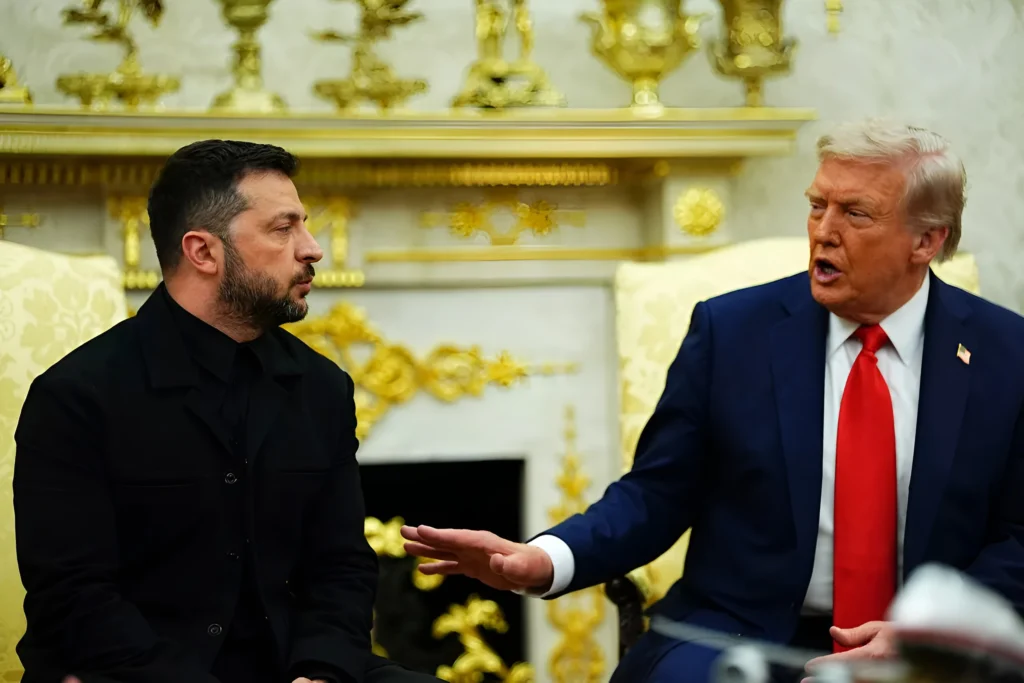
Tensions surfaced between Trump and Zelensky during their February 2025 Oval Office meeting. Trump criticized Ukraine’s strategic management of the conflict and questioned the scale of U.S. financial support.

Trump emphasized that American assistance would no longer be an unlimited resource, telling Zelensky that Kiev needed to negotiate a settlement or risk losing U.S. security backing.

Trump also criticized the economic war costs and their impact on global commodity markets. By mid-2026, military casualties on both sides reached an estimated two million, with millions of Ukrainians displaced internally and across Europe.

Trump pointed to these statistics to argue that continued fighting was unsustainable and detrimental to Western economic stability.

A major friction emerged over Ukraine’s military strategy of targeting Russian energy infrastructure. Since July 2026, Ukrainian drone attacks have hit several Russian oil refineries and technology hubs in regions such as Saratov, Ryazan, and Leningrad, as well as in Tatarstan.

Trump publicly condemned these strikes, stating that attacks on Russian fuel production exacerbated global energy shortages and drove up U.S. domestic diesel prices.

The U.S. Treasury Department subsequently issued temporary sanctions exemptions permitting Russian diesel exports to stabilize global supply.

When Zelensky criticized the exemptions as weakness, Trump warned that continued Ukrainian strikes on Russian oil infrastructure could result in a suspension of U.S. intelligence-sharing with Kiev.

Demands for Leadership Change and Diplomatic Strains

The diplomatic rift between Washington and Kyiv widened further following public disputes over regional energy policy. By October 2026, U.S. officials had negotiated temporary exemptions for Russian diesel exports in an effort to curb rising domestic fuel prices and alleviate the global diesel shortage.

Zelenskyy publicly rejected these exemptions, characterizing the agreements with Moscow on energy trade as a violation of Western policy.

In response to Kiev’s objections, Donald Trump publicly called for leadership changes in Ukraine. Speaking to reporters, Trump stated that Ukraine should select a new leader capable of negotiating a diplomatic resolution to end the conflict.

Trump argued that Zelensky had missed previous opportunities to secure a negotiated settlement with Russia, resulting in continued loss of territory and economic disruption.

Zelensky stated that leadership decisions in Ukraine belong solely to the Ukrainian electorate. However, Zelensky noted that organizing national elections during active military operations presents significant legal and logistical obstacles under current martial law provisions.

Zelensky proposed a condition for holding vote proceedings, stating that Washington and international partners must secure a total 60-day ceasefire from Moscow to guarantee security for voters and civilian infrastructure.

⚡️BREAKING: Zelensky Criticizes President Trump for Blaming him for the Rise in Diesel Prices

"They're increasing because of the war in the Middle East, the blocking of the Strait of Hormuz. People have to hear reality. Don't play games with people" pic.twitter.com/MBc8WHoiPf

— Iran Observer (@IranObserver0) October 11, 2026

Implications for the War and Global Power Dynamics

The political alliance established after 2014 between the U.S. and Ukraine was built on mutual strategic interests: Washington sought to project power eastward and contain Russian influence, while Kiev relied on Western capital and security aid to modernize its institutions and military forces.

However, the human and material costs of prolonged warfare have strained this arrangement. With military casualties exceeding two million and Western defense stocks under pressure, Washington has adjusted its political priorities.

The friction between Trump and Zelensky shows how peripheral security partners can become vulnerable when strategic or economic calculations of the power change.

A leadership transition in Kiev, whether through scheduled elections under a temporary ceasefire or political restructuring, would significantly impact the Ukrainian – Russian war.

A change in government could negotiate a formal cease-fire, but it also carries risks of internal political instability and reduced military coordination along the front line.

Sources: Xinhua – Al Jazeera – Al Mayadeen – Anadolu Agency – TRT World – RT – Brasil de Fato – Press TV – TASS – CGTN – BBC – DW – France 24 – EFE – TeleSUR

  •  

Brazil: Far-Right Presidential Campaign Normalizes Gun Symbolism Among Young

Images of children brandishing replica firearms at campaign events spark formal investigations by human rights and legal oversight bodies.

Brazil’s 2026 electoral cycle has been marked by a rise in political violence across various states. Security data records 354 incidents of political violence over the past two years.

RELATED:
Flávio Bolsonaro Promises Fewer Ministries as Brazil Vote Goes to Runoff

These incidents include threats, physical assaults, and armed attacks targeting candidates, local election officials, and political organizers.

The root of this political tension lies in the structural polarization generated during previous presidential campaigns and administrations.

Former President Jair Bolsonaro and his political movement, known as “Bolsonarismo”, built an electoral base around conservative social values, the expansion of agribusiness, and a national security strategy centered on arming the population.

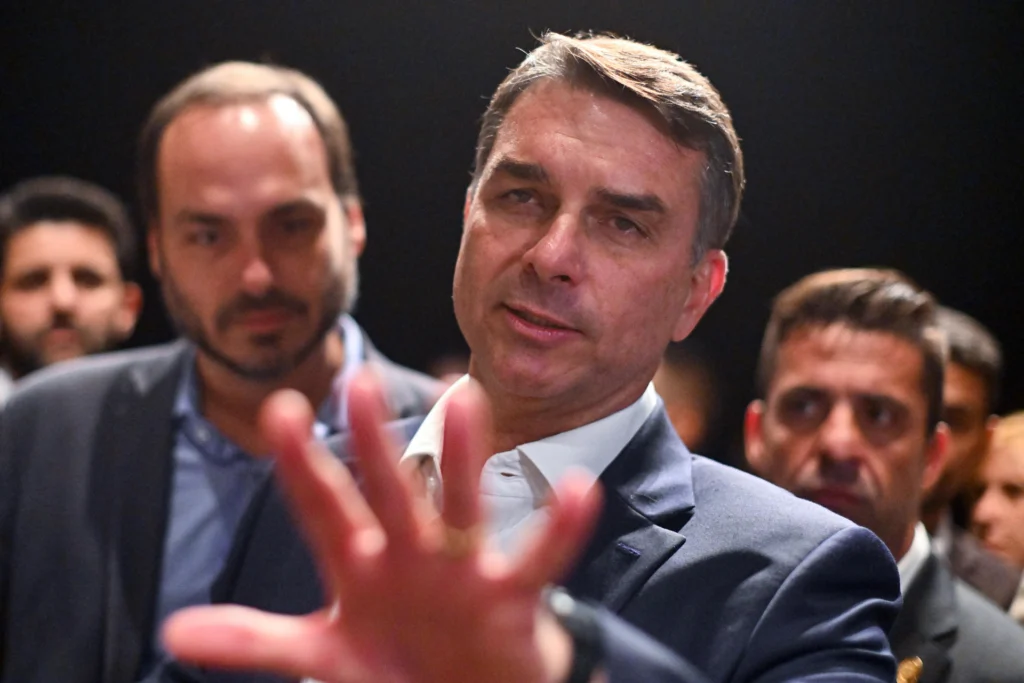
As a consequence, in the 2026 campaign of Senator Flávio Bolsonaro, public security emerged as a primary concern for the electorate. The conservative coalition’s political strategy relies heavily on proposals for punitive criminal justice and the expansion of individual gun-ownership rights as solutions to urban and rural crime.

Critics and human rights organizations argue that the mass dissemination of political content promoting firearm use has created an environment where political disagreements escalate into physical violence.

The normalization of violent political rhetoric during nationwide public events has altered public discourse, turning political participation into a high-risk activity for grassroots organizers and opposition candidates.

Ideological Origins and the Pro-Gun Movement

The political platform supporting firearm expansion in Brazil is driven by a legislative coalition known as the Bullets, Beef, and Bibles caucus.

This group represents an alliance between public security hardliners, large-scale agribusiness producers, and conservative evangelical leaders. Together, these sectors advocated for statutory changes to alter the Disarmament Statute enacted in 2003.

During Jair Bolsonaro’s presidential term from 2019 to 2022, executive decrees relaxed requirements for acquiring firearms and ammunition.

The administration expanded the privileges granted to registered Collectors, Marksmen, and Hunters, known as CACs. Official records indicate that the number of registered CACs grew significantly during these four years, allowing private individuals to acquire high-caliber weapons and purchase thousands of rounds of ammunition annually.

Executive Order 9,847, signed in May 2019, allowed licensed gun owners to purchase up to 5,000 rounds of ammunition per weapon each year, up from the previous limit of 50.

The legal expansion of firearm access altered security dynamics in rural and urban areas. Studies published by the demonstrated a direct correlation between the rise in privately held firearms and the frequency of lethal altercations in local communities.

While pro-gun advocacy organizations maintain that private gun ownership provides individual self-defense against criminal enterprises, public safety researchers observed that a higher volume of civilian weapons eventually entered illicit markets through theft and improper registration.

In rural regions, the growth of armed civilian groups reinforced existing land disputes. Property owners, illegal loggers, and informal land prospectors utilized expanded firearm access to defend economic claims against rural workers and Indigenous groups.

AVISO🚨: Imagens extremamente fortes, mas necessárias para o povo de memória curta.
Bolsonaristas espancando mulheres em manifestações, quebrando o Congresso e atirando em pessoas. Todo o terrorismo dessa escória que quer voltar.

Compartilhe ao máximo.#DIREITATERRORISTA pic.twitter.com/J4r0xMpK3B

— Jurunense (@o_jurunense) October 12, 2026

The text reads, “WARNING: Extremely graphic images, yet necessary for those with short memories. Bolsonaro supporters beating women at protests, ransacking Congress, and shooting people. All the terrorism of that scum that wants to return. Spread this far and wide.”

Public Demonstrations, Armed Symbolism, and Religious Reactions

Political rallies in this 2026 campaign held across major urban centers featured recurring uses of military and firearm symbolism. During campaign events held in Brasília, São Paulo, and Rio de Janeiro, Bolsonaro supporters displayed replica firearms, tactical equipment, and political banners encouraging armed civilian mobilization.

A widely circulated image from a political rally showed a child positioned on top of a sound truck alongside campaign organizers, holding a firearm replica and mimicking shooting gestures toward the crowd.

Human rights organizations, including the National Council for the Rights of Children and Adolescents, issued formal statements criticizing the inclusion of minors in events promoting firearm use, pointing to federal child protection statutes that prohibit exposing children to violent material or weapons training.

Religious leaders responded to the increasing presence of violent messaging in political life. During the annual feast day celebrations at the National Sanctuary of Aparecida, Archbishop Orlando Brandes delivered a sermon addressing national unity, public ethics, and political discourse.

In his address, Archbishop Brandes stated that “a civil society cannot be built on hatred and weapons” and urged citizens to reject violent language in favor of peace and social justice.

The National Conference of Brazilian Bishops published subsequent declarations emphasizing that Christian ethical principles conflict with policies promoting unrestricted firearm ownership and armed confrontation. Church leaders called on political candidates to focus their platforms on poverty alleviation, healthcare, and education rather than public arming.

Brazil’s intelligence agency has confirmed interference by the US government in Brazil’s election in support of Flavio Bolsonaro, son of jailed former far-right President Jair Bolsonaro. https://t.co/v7DQtHAVxA pic.twitter.com/tIzZgU0kUg

— tim anderson (@timand2037) October 4, 2026

Territorial Conflicts and Impact on Indigenous Communities

The proliferation of firearms and political rhetoric supporting land expansion intensified territorial pressure on Indigenous populations, particularly in the Amazon region.

Representatives of the Parakanã people, living in the Apyterewa Indigenous Territory in the state of Pará, submitted official complaints to the Federal Public Ministry and the National Indian Foundation documenting increasing land incursions by armed squatters, illegal loggers, and cattle ranchers aligned with local conservative political networks.

The Apyterewa territory, formally demarcated and ratified by federal decree in 2007, remains one of the areas most impacted by illegal deforestation and land grabbing in northern Brazil.

Community leaders reported that armed individuals entered protected areas, established informal access roads, and issued death threats against Indigenous leaders who monitored territorial boundaries.

Deforestation data from the National Institute for Space Research tracked a steady increase in forest clearing within the Parakanã territory during periods of diminished federal oversight.

Indigenous rights organizations highlighted that territorial conflicts represent both an environmental concern and a violation of constitutional rights guaranteed under the 1988 Brazilian Constitution.

The ongoing displacement pressure on the Parakanã and neighboring Indigenous groups underscores the direct connection between national political debates on gun ownership and rural security dynamics in remote regions.

Fake news on social media has once again taken center stage in Brazil’s presidential campaign ahead of the Oct. 25 runoff.

To favor the Liberal Party’s candidate, Flavio Bolsonaro, the Brazilian far right has launched a smear campaign against Workers’ Party candidate Luiz Inacio… pic.twitter.com/mrKSZmVGQk

— teleSUR English (@telesurenglish) October 9, 2026

Lula’s Counter-Proposals and Public Security Strategy

President Luiz Inácio Lula da Silva implemented regulatory changes aimed at restricting civilian access to firearms and strengthening state control over public security.

Immediately upon taking office, the federal administration issued Executive Decree 11,366, which suspended the issuance of new registrations for civilian weapon owners, restricted the purchase of high-caliber ammunition, and transferred the oversight of registered Collectors, Marksmen, and Hunters from the Brazilian Army to the Federal Police.

The policy platform of the governing coalition focuses on replacing civilian arming with coordinated state law enforcement and social crime prevention programs.

The administration re-established the National Public Security Program with Citizenship, allocating federal funds to municipal crime prevention, community policing, and educational initiatives aimed at vulnerable youth.

In federal security speeches, President Lula emphasized that reducing lethal violence requires public investment in infrastructure, basic sanitation, and job creation rather than increasing civilian weapon ownership.

To address territorial conflicts in protected areas, the federal government reactivated inter-agency enforcement operations involving the National Public Security Force, the Federal Police, and environmental protection agencies.

The Ministry of Indigenous Peoples, established under the current administration, coordinated with the National Indian Foundation to resume the formal demarcation of Indigenous territories and conduct police operations to remove illegal miners and squatters from protected lands.

Future Outlook for Democratic Governance

The structural debate over firearm access, public safety, and campaign violence highlights a central division in Brazilian political life. Data collected by public safety research organizations demonstrates that the expansion of civilian weapons between 2019 and 2022 coincided with increased lethal incidents in rural land disputes and higher rates of political intimidation during national election cycles.

The resolution of these security challenges depends on the enforcement of constitutional protections, the regulation of civilian firearms, and the institutional support provided to Indigenous and rural communities. As Brazil navigates its upcoming electoral process, democratic institutions, civil society organizations, and international human rights bodies continue to monitor the impact of violent rhetoric on public participation and state stability.

Establishing long-term public safety requires a balanced policy approach that pairs rigorous law enforcement with targeted social investments. Rebuilding public security institutions, disarming illegal paramilitaries, and safeguarding protected territories remain central requirements for maintaining social stability and protecting democratic norms across the country.

Sources: TRT World – Xinhua – CGTN – Brasil de Fato – Resumen Latinoamericano – Página 12 – Radio del Sur – Folha S. Paulo – BBC – CNN – Barricada TV – El Mundo – Sputnik

  •  

October 12 Marks Five Centuries of Native People Resistance

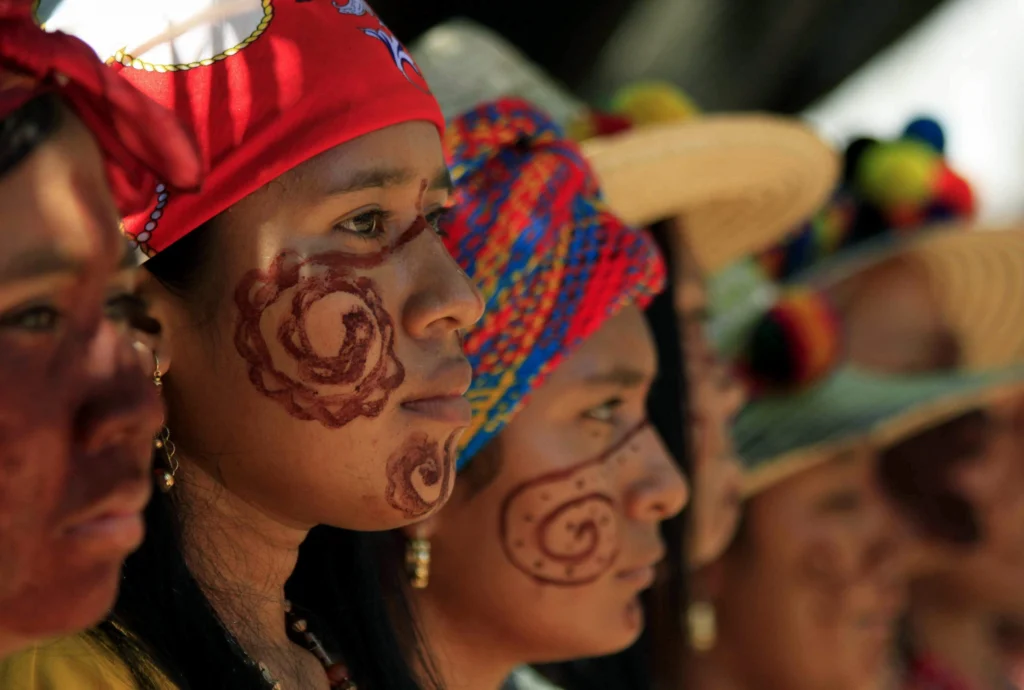
Women of the Wayúu (or Wayuu) native people. Photo: La Radio del Sur.

Native communities across the Americas are still confronting the legacies of invasion: stolen land, demographic collapse, and struggles for autonomy.


Numerous governments, academic institutions, and social movements have reinterpreted October 12th, now commemorating it as the Day of Indigenous Resistance or the Day of Native Peoples.

RELATED: Brazil Establishes First Indigenous Federal University

This shift reflects a deliberate effort to reframe historical narratives. Rather than viewing the event as the discovery of an uninhabited place, modern historical accounts present October 12th as the beginning of European conquest, systematic colonization, and centuries of native resistance.

Understanding the significance of October 12th requires examining both the immediate impact of European arrival and the long-term historical processes that stemmed from it. Spanish arrival expeditions in 1492 triggered a profound demographic and economic transformation across the Americas.

Before 1492, the total population of the Americas is estimated to have ranged between 50 and 100 million inhabitants. Due to a combination of factors, such as the introduction of European pathogens (smallpox, measles, and influenza), violent military campaigns, and forced labor systems, at least 56 million native people across the continent had perished by the year 1600.

When analyzing the colonization process, we can say that the events of October 12th laid the foundations for modern global trade, land distribution, and current international relations.

The Geopolitical and Economic Context of 1492

Following the fall of Constantinople to the Ottoman Empire in 1453, traditional overland trade routes between Europe and Asia became subject to heavy taxation and political restrictions.

European monarchs and merchant syndicates sought direct maritime routes to Asian markets to secure trade in high-value commodities, including spices, silk, and precious metals. The Spanish Crown, under Catholic Monarchs Isabella I of Castile and Ferdinand II of Aragon, financed the expedition led by the Genoese navigator Christopher Columbus to establish a western sea route to Asia.

Upon making landfall in the Bahamas on October 12, 1492, Columbus recorded the event in his ship log, noting the presence of native Taíno people and observing the local geography.

The economic motivations of the Spanish expedition were explicitly documented in these early entries, which frequently highlighted references to gold deposits and potential labor resources.

Legal and theological frameworks were established shortly after to justify the expansion of European territorial sovereignty over the newly accessed lands.

In 1493, Pope Alexander VI issued the papal bull Inter Caetera, which granted the Spanish Crown exclusive rights to lands not ruled by Christian monarchs. This decree formed part of the broader legal concept known as the Doctrine of Discovery.

The discovery of large silver deposits, such as those at Potosí in modern-day Bolivia and Zacatecas in Mexico during the mid-16th century, shifted the global financial system.

The continuous flow of American bullion funded European state expenditures, financed trade with Asia, and laid early economic foundations for modern global capitalism.

In 2002 Chávez declared Oct 12 as Día de la Resistencia Indígena, the Day of Indigenous Resistance. Columbus’ statue was torn down two years later and the colonizer was tried in a court of public justice. Today not a single statue of Columbus remains.pic.twitter.com/40U0Y6hXwa

— Party for Socialism and Liberation (@pslnational) October 12, 2020

Mechanics of Invasion and the Demographic Catastrophe

The European invasion of the Americas was a combination of military conquest, administrative restructuring, and forced labor systems designed to maximize resource extraction.

Following initial contact in the Caribbean, Spanish forces led by Hernán Cortés entered the Aztec capital of Tenochtitlan in 1519, while Francisco Pizarro launched the conquest of the Inca Empire in the Andes in 1532.

In both regions, European invaders exploited existing internal political rivalries, deployed superior steel weaponry and firearms, and used horses to establish military dominance over densely populated urban centers.

To organize the population and secure labor, Spanish colonial authorities implemented institutional systems known as the encomienda and the mita. Under the encomienda system, the Spanish Crown granted individual conquerors (encomenderos) control over specific native communities.

The so-called encomendero had the right to extract forced tribute and physical labor from the local population in exchange for providing religious instruction in Christianity and theoretical protection.

The human cost of these systems was compounded by widespread demographic collapse. Researchers indicate that out of an estimated pre-1492 population of 50 to 100 million people across the Western Hemisphere, approximately 56 million native people died by 1600.

While infectious diseases like smallpox, typhus, and measles accounted for high mortality rates due to the lack of prior immunity, historical records show that the severity of these epidemics was intensified by severe malnutrition, physical exhaustion, loss of agricultural territory, and social disruption caused by forced displacement.

The destruction of native social and political structures enabled European authorities to establish centralized colonial administrations, divide territories into viceroyalties, and reconfigure the geography of the Americas exclusively around primary commodity export routes to Europe.

Historical Milestones in the Struggle for Liberation

Since the beginning, native people responses to colonization included organized military defense, political revolts, and persistent social resistance.

In the Caribbean, Taíno leaders resisted Spanish enslavement and land seizure shortly after the initial European arrival. Chief Hatuey explicitly rejected Spanish religious conversion, citing the violence committed by the colonizers as the primary reason for his defiance.

Further south, the Mapuche people of southern Chile and Argentina maintained centuries of organized military opposition against both the Spanish Empire and later national governments in a conflict known as the Arauco War (Guerra de Arauco).

Led by military strategists such as Lautaro in the 16th century, the Mapuche adapted European cavalry techniques, weapons, and tactics to defend their territory south of the Bío Bío River. Their continuous resistance forced the Spanish Crown to sign the Treaty of Quillín in 1641.

By the late 18th century, economic exploitation under late colonial reforms sparked massive regional uprisings in the Andes. In 1780, José Gabriel Condorcanqui (Túpac Amaru II) launched a major rebellion against Spanish rule in Peru.

Mobilizing tens of thousands of native and mestizo peasants, Túpac Amaru II issued proclamations demanding the total abolition of the mita forced labor system, the elimination of colonial sales taxes, and the freedom of enslaved populations.

In his 1780 proclamation, he declared: “I have determined to free the people from these unbearable taxes and the tyranny of the officials who govern us.”

Although Túpac Amaru II was captured and executed in 1781, the uprising continued in Upper Peru (modern-day Bolivia) under Aymara leader Túpac Katari. Katari organized an army of over 40,000 insurgents and laid siege to the city of La Paz for eight months. Before his execution by colonial forces in November 1781, Katari issued his famous declaration of enduring resistance: “I die today, but I will return, and I will be millions.”

Today, we honour our country's indigenous ancestors who held their ground against great odds, whose fierce resilience kept alive the traditions, histories, and ways of life that define us. 𝐇𝐚𝐩𝐩𝐲 𝐈𝐧𝐝𝐢𝐠𝐞𝐧𝐨𝐮𝐬 𝐏𝐞𝐨𝐩𝐥𝐞𝐬' 𝐑𝐞𝐬𝐢𝐬𝐭𝐚𝐧𝐜𝐞 𝐃𝐚𝐲, 𝐁𝐞𝐥𝐢𝐳𝐞! pic.twitter.com/KgUIuvHPna

— Oceana Belize (@OceanaBelize) October 12, 2026

From Colonialism to Capitalist Extractivism

The formal end of European colonial rule across the Americas during the 19th century did not eliminate the structural marginalization of native populations. Instead, newly formed independent nation-states integrated native lands into national market economies, often continuing practices of territorial dispossession.

Throughout the late 19th and 20th centuries, legal reforms in many Latin American and North American nations abolished communal land titles in favor of private property regimes.

State-sponsored initiatives, such as the “Conquest of the Desert” in Argentina or western expansion in United States, used military force to open native people’s territories for agricultural development, cattle ranching, and resource extraction.

Native communities face pressures from modern corporate extractivism, infrastructure projects, and international commodity demands. According to reports by international human rights organizations, native land defenders represent a disproportionate percentage of environmental activists targeted for violence worldwide.

These modern conflicts reflect a continuation of colonial-era economic dynamics, where local land rights and territorial sovereignty are subordinated to global resource demand. Despite persistent structural pressures, contemporary native social movements have organized continental networks to assert political autonomy and legal rights.

These groups have succeeded in securing legal recognition, such as the United Nations Declaration on the Rights of Indigenous Peoples (UNDRIP) in 2007, and have embedded native people’s rights into the constitutions of several American nations.

Spain lost the indigenous support of the Viceroyalty of Peru from the moment it refused to show mercy toward the natives who were enslaved in the mines through the MITA, triggering "the Rebellion of Túpac Amaru II" thanks to those who aided in the fall of the Spanish Empire. 🇵🇪👍 pic.twitter.com/qtcq8KKqU3

— Eren (@Eren15453289846) August 25, 2026

The Unfinished Decolonization

Re-evaluating October 12 as the Day of Indigenous Resistance contextualizes these events within a broader historical continuum rather than isolating them as single historical moments.

1492 remains an active process rather than a closed chapter of history. Modern struggles over territorial rights, environmental conservation, and political self-determination directly connect to the legal and economic frameworks established during the colonial era.

Native movements across the Americas continue to argue that genuine democratic development requires the recognition of collective land rights, structural political reforms, and the protection of local ecosystems from unregulated resource extraction.

Observing October 12 serves as a reminder of the survival and adaptation of native nations despite centuries of systemic pressure.

#Venezuela | Indigenous communities gathered in Caracas to mark the Day of Indigenous Resistance, honoring centuries of anti-colonial struggle through traditional music, floral tributes and cultural ceremonies.#IndigenousRights #Decolonization #teleSUREnglish pic.twitter.com/7MFZ45i0d3

— teleSUR English (@telesurenglish) October 12, 2026

Sources: Alexander Koch – Proclamations of Túpac Amaru II – Declarations of Túpac Katari – The Treaty of Quillín – United Nations Declaration on the Rights of Indigenous Peoples – Britannica – La Radio del Sur

  •  
❌