❌

Reading view

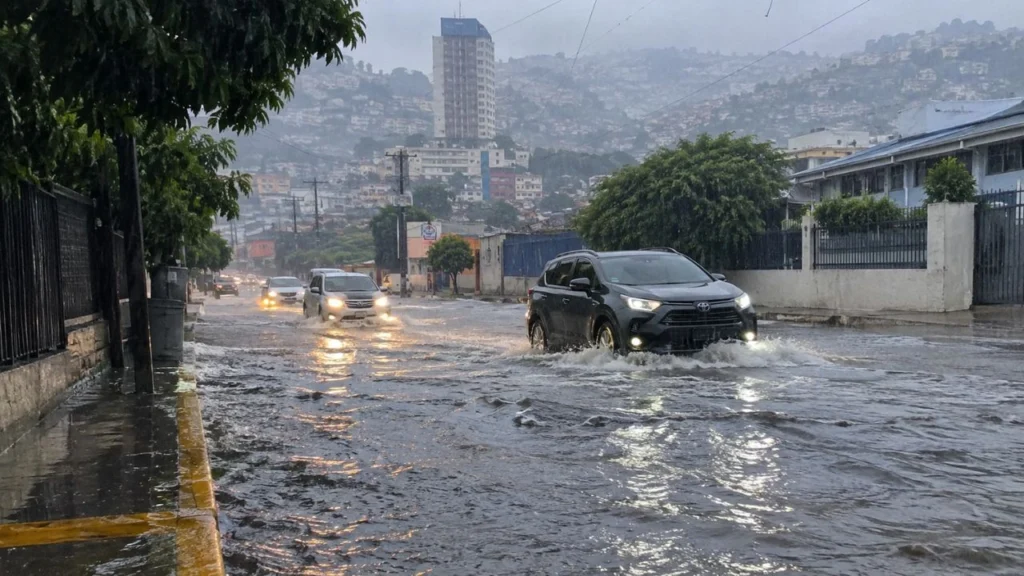
Honduras Landslides Destroy Homes as Heavy Rains Batter Tegucigalpa

Photo: Radio HNR.

Torrential rains that delivered 80 percent of Honduras’ projected annual rainfall in just 23 days have triggered landslides that destroyed homes and left dozens of families without shelter in Tegucigalpa and Comayagüela.


In just 23 days, the area received 80% of the rainfall projected for all of 2026, causing more than 250 severe incidents, according to the Honduran Centre for Atmospheric, Oceanographic and Seismic Studies (CENAOS) reports.

The collapses hit vulnerable areas hard. Residents said they lost houses that were under construction and complained of a lack of assistance from municipal authorities.

RELATED: El Niño Extreme Weather: 34 Days of Record Rain Raise Global Alarm

The Villa Unión neighborhood suffered some of the heaviest losses. Landslides there destroyed 13 homes completely. Several of the houses were still under construction when the ground gave way, burying years of savings in a matter of minutes.

Families said the destruction arrived without warning. They also reported that municipal authorities provided no assistance in the immediate aftermath, leaving them to dig through the rubble on their own and count their losses with no outside help.

In the nearby La Mololoa sector, the emergency unfolded with equal speed. Residents evacuated urgently across rooftops to get children away from advancing mud and water. Neighbors described moments of panic as the earth shifted beneath their feet.

#HonduredNoticias | Varias comunidades de Santa Cruz de Yojoa, Cortés, han tenido que abandonar sus hogares por las fuertes inundaciones ocurridas por la crecida del Lago de Yojoa. ® pic.twitter.com/vgDdiDuYCM

— Hondured 13 Oficial (@HonduredOficial) October 14, 2026

Text reads: “Several communities of Santa Cruz de Yojoa, Cortés, have had to leave their homes because of the severe flooding caused by the flood of Lake Yojoa.”

The risk is not confined to the sectors already buried. More than 700 neighborhoods and colonies across the Central District remain exposed to floods and geological failures, leaving whole hillside communities one storm away from the same fate. Residents of the hardest-hit areas said unfinished road works and inadequate drainage diverted torrents of water directly toward residential zones, causing damage for the second consecutive time.

En Tegucigalpa, Honduras, las lluvias provocaron derrumbes e inundaciones, dejando viviendas destruidas y personas albergadas.

Los cuerpos de socorro mantienen el monitoreo y las labores en los lugares de mayor vulnerabilidad.

📸: Cortesía. pic.twitter.com/dq1zjS52Sx

— Noticiero El Salvador 🇸🇻 (@NoticieroSLV) October 8, 2026

Text reads: “In Tegucigalpa, Honduras, the rains caused landslides and floods, leaving homes destroyed and people sheltered. The relief corps maintain monitoring and work in places of greatest vulnerability.”

Families Demand Relocation

The scale of the losses triggered citizen protests over what residents described as an insufficient delivery of basic supplies. In response, the Municipal Mayor’s Office of the Central District announced a temporary rental subsidy for displaced families.

Affected residents dismissed the subsidy as a stopgap measure that does not address the root of the problem. They demanded that the contractors responsible for the infrastructure works pay full compensation for the material losses suffered by the community.

Despite warnings of further landslides, dozens of evacuees are refusing to permanently leave the ruins of their homes for fear of looting. Civilians are calling for urgent intervention by the central government through permanent relocation projects that guarantee safety and the right to decent housing.

The central government had not publicly responded to those demands at the time of writing, according to the information available. Heavy rainfall on steep, densely settled hillsides is a recurring cause of landslides in Honduras’ capital, and families living in the most exposed areas are often the poorest. Whether the municipal subsidy and any future relocation plans reach those families will determine how long the emergency lasts.

  •  

President Maduro and Legislator Flores Plead Not Guilty to New Charges

They appeared before Judge Hellerstein after the U.S. Attorney’s Office accused them of ‘conspiracy to commit torture.’

On Thursday, Venezuelan President Nicolas Maduro and legislator Cilia Flores pleaded not guilty to the new charges filed against them by the U.S. Attorney’s Office on Oct. 8.

RELATED:

ALBA Movements Demand Immediate Release of President Maduro and First Combatant Flores

They appeared in the Southern District Court of New York before Judge Alvin Hellerstein after the Attorney’s Office accused them of “conspiracy to commit torture” and extended the charge of “conspiracy to commit narcoterrorism” to Flores. The latter charge, however, had only weighed against Maduro.

When asked by the judge about the charge of “conspiracy to commit torture,” Maduro pleaded not guilty and asserted that the charges are based on “false accusations and testimony against his person.” His wife, Flores, declared herself “completely innocent” and “not guilty” of the new charges.

Both told the judge they had been informed by their attorneys of the new indictment and had received a copy of it in Spanish. This was one of the few times both could be heard speaking since they were brought before the U.S. justice system in January.

After their statement, the hearing focused on the schedule ahead. The judge postponed the start of the trial until June 14, 2027, which initially had been set for June 1.

No other hearing is expected to be held until December. The last hearing before the trial begins will take place on June 7. The defense requested more time to prepare its response to the new indictment from the U.S. Attorney’s Office.

Following the new indictment, Maduro and Flores are charged with conspiracy to commit narcoterrorism, conspiracy to import cocaine into the U.S., possession and conspiracy to possess weapons of mass destruction, and conspiracy to commit torture.

⚖️ La defensa del presidente venezolano Nicolás Maduro, secuestrado durante una operación militar en Caracas, pidió desestimar el caso en su contra en Estados Unidos, con base en la inmunidad soberana, según el archivo judicial digital.#teleSUR #Venezuela #EEUU pic.twitter.com/BmCjAbnLsj

— teleSUR TV (@teleSURtv) September 3, 2026

The text reads, “The defense team for Venezuelan President Nicolas Maduro—who was seized during a military operation in Caracas—has requested the dismissal of the U.S. case against him, citing sovereign immunity, according to digital court records.”

A Maneuver to Extend Their Imprisonment

Legal analysts consider that the “conspiracy to commit torture” charge would seek to prevent the case against Maduro and Flores from collapsing given that there is no overwhelming evidence to cover multiple legal gaps.

The Attorney’s Office was forced to remove from the indictment the argument that President Maduro led the nonexistent Cartel of the Suns, which during the months before the invasion of Venezuelan soil the White House presented as a platform for drug trafficking.

On Oct. 8, Judge Hellerstein denied the request by Flores’ defense to grant her bail and allow her to serve pretrial detention under house arrest at a private residence in New York.

The defense’s request was based on the deterioration of Flores’ cardiac health — she turns 70 on Oct. 15 — with episodes of chest pain, arrhythmias and a weight loss of more than 11 kilos since her kidnapping.

Her defense attorneys stated that she requires medical treatment and recovery outside of prison, and included GPS monitoring and other security measures.

The magistrate argued that there is an alleged risk of flight. In addition, he noted that the guarantees offered are insufficient.

Upon presenting the new charge, U.S. Attorney General Todd Blanche — who was an attorney for President Donald Trump and is known for the political instrumentalization of the judicial system — stated:

“A new indictment has just been unsealed that replaces the previous one, charging Nicolas Maduro and his wife Cilia Flores with conspiracy to commit torture, including the alleged torture of U.S. citizens over more than two decades.”

From the first moment of this case, Maduro questioned the legality of the kidnapping and invoked sovereign immunity. “I am the president of Venezuela, I consider myself a prisoner of war,” he stated during the first hearing of the trial. For her part, Flores claimed immunity as first lady.

Added to the above are objections from the legal team defending them, which has objected to the legality of the kidnapping, questioned the territorial jurisdiction of U.S. courts and denounced the blocking of licenses from the Office of Foreign Assets Control (OFAC) for the financing by the Venezuelan government of their legal fees. Defense attorneys Barry Pollack and Mark Donnelly denounced those obstacles as violations of the Sixth Amendment.

In September, Deputy Attorney Jason A. Richman, co-chief of National Security of the Federal Attorney’s Office for the Southern District of New York, submitted his resignation amid questions over the judicial proceedings against the Venezuelan leaders.

Richman, who led and supervised the indictment against Maduro and Flores from its earliest stages, sent a letter to Hellerstein informing him that he is leaving the Federal Attorney’s Office as of Sept. 25. He offered no further details.

The official’s resignation is considered in legal circles as a significant loss for the U.S. government’s strategy and occurred less than nine months before the trial against Maduro and Flores, scheduled to begin on June 1, 2027, in the Southern District Court of Manhattan.

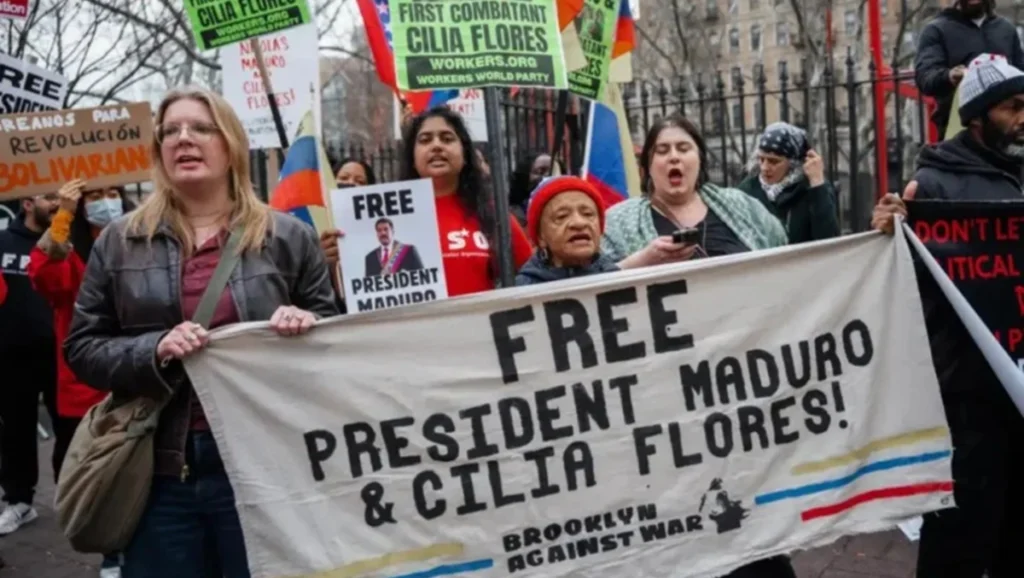
Manifestación en Brooklyn en apoyo el presidente venezolano, Nicolas Maduro y su esposa Cilia Flores. pic.twitter.com/5QjStnhDep

— teleSUR TV (@teleSURtv) August 4, 2026

The text reads, “Demonstration in Brooklyn in support of Venezuelan President Nicolas Maduro and his wife, Cilia Flores.”

Brief Chronology of the Case

Jan. 3, 2026: After bombing Caracas and other Venezuelan cities, U.S. special forces kidnap President Nicolas Maduro and first lady Cilia Flores and illegally transfer them to the United States. The invasion left more than a hundred people killed, including civilians and military personnel, and a similar number of wounded. Delcy Rodriguez, then executive vice president, assumes as acting president.

Jan. 5: Maduro and Flores attend their first appearance in New York. Both plead not guilty and are held at the Federal Detention Center in Brooklyn.

July: Attorney’s Office and defense agree that the oral trial will begin on June 1, 2027, with a prior hearing on Nov. 17.

Sept. 9: Cilia Flores’ defense requests bail and house arrest. The judge orders medical records to remain sealed.

Sept. 25: Deputy Attorney Jason A. Richman resigns.

Oct. 8: Judge Alvin Hellerstein rejects the request for bail for Cilia Flores. On the same day, the Attorney’s Office presents the new indictment.

Oct. 15: The hearing is held in which the Attorney’s Office presents new accusatory charges (conspiracy to commit torture). Maduro and Flores plead innocent.

The judge accepts a request from the Attorney’s Office and the defense to postpone the start of the trial by two weeks, which was rescheduled for June 14, 2027. The next hearing was scheduled for Dec. 17.

teleSUR/ JF

Sources: EFE – teleSUR

  •  

Peru: Cusco Wildfires Leave Six Dead and One Person Seriously Injured

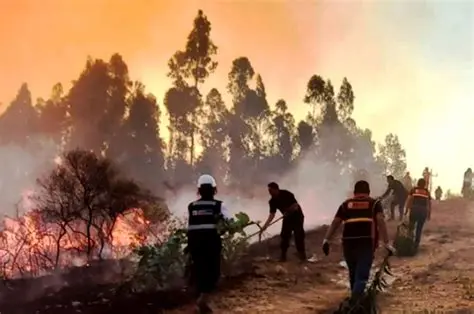
Forest fires in the Peruvian region of Cusco have resulted in six deaths and one serious injury, official sources reported on Thursday. Authorities have bolstered response efforts by deploying aerial assets and have urged the public to refrain from burning grasslands and agricultural waste.

RELATED:

Ecuador Reports Seven Active Forest Fires in Four Provinces

The most recent fatality was a 75-year-old man who attempted to extinguish a fire that broke out in a locality within the Chumbivilcas province of Cusco. According to the official news agency Andina, the death was confirmed by officers from the Peruvian National Police (PNP), who notified the Public Prosecutor’s Office to facilitate the recovery of the body and its transport to the morgue.

Meanwhile, the Cusco Regional Health Department (Geresa) reported that a 65-year-old man sustained burns over more than 90% of his body while trying to escape a forest fire in the community of Santo Domingo, located in the Acopía district of Acomayo province. The patient has been admitted to the Cusco Regional Hospital, where his condition is described as critical.

Andina further reported that five other people have died in forest fires across various locations in the Cusco region this year, including the districts of Yanatile (Calca), Colquepata (Paucartambo), and Yanahuara (Urubamba). Additionally, two siblings—aged 11 and 18—perished in a separate incident in the Pomacanchi district of Acomayo.

La sierra peruana vive una de sus temporadas de incendios forestales más críticas. El 13 de octubre, el Serfor reportó más de 50 incendios activos en 14 regiones y 334 focos de calor. La falta de lluvias, las altas temperaturas y los vientos, agravados por el fenómeno El Niño,… pic.twitter.com/um5MxfkXrv

— Revista Lima Gris (@Limagris) October 15, 2026

The text reads, “The Peruvian highlands are experiencing one of their most critical wildfire seasons. On October 13, SERFOR reported more than 50 active fires across 14 regions, along with 334 heat hotspots. A lack of rainfall, high temperatures, and strong winds—exacerbated by the El Niño phenomenon—led SENAMHI to issue a red alert, effective until October 16, for regions including Cusco, Apurímac, Ayacucho, Huancavelica, Arequipa, and Puno. Cusco has been hit the hardest, with over 16,000 hectares affected this year and at least five deaths reported. Rural families are losing grazing lands, crops, and livestock—their primary means of subsistence. Experts warn that the state’s response is focused solely on extinguishing fires, while a coordinated prevention system remains conspicuously absent. In this video, a local resident records himself in front of the flames to denounce this neglect and call for action from the authorities.”

Authorities have advised the public not to attempt to extinguish fires on their own and have reiterated their call to avoid the burning of grasslands and agricultural waste. They also requested that any instances of fires being left unattended in local areas be reported to the authorities.

The Peruvian Air Force (FAP) deployed a C-27J Spartan aircraft and an MI-17 helicopter this week—both equipped with firefighting systems—to address active blazes in the Cusco region. Nationwide, 35 active forest fire emergencies were reported.

On Tuesday, President Keiko Fujimori took part in an overflight of the town of Calca to oversee response efforts and assess the situation in the affected areas.

Following the inspection, she confirmed that two fires had already been brought under control and stated that the aerial units would remain in Cusco until this coming November.

Brazil has launched joint operations to track down those suspected of deliberately setting fires in the Amazon rainforest, as a sharp rise in blazes blankets Manaus with toxic smoke and pushes air pollution to critical levels for the city’s 2.3 million residents.

Authorities… pic.twitter.com/fMwYcgpg8h

— teleSUR English (@telesurenglish) October 15, 2026
  •  

Argentine University Community Marches Against Government

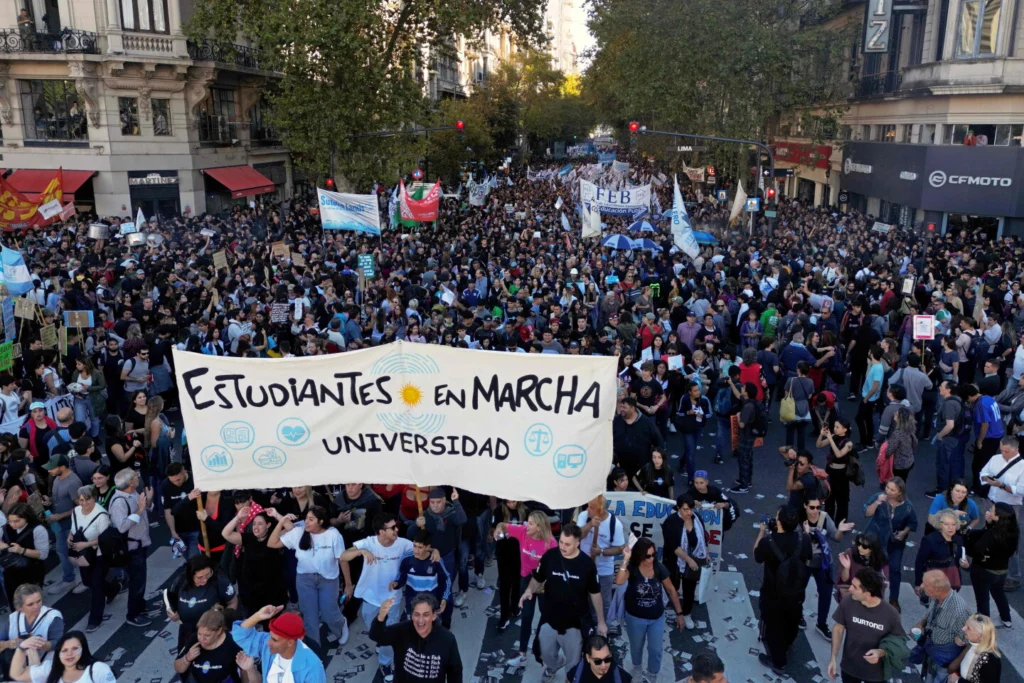
The fifth Federal University March is taking place this Thursday, October 15, across Argentina. Participants are mobilizing toward the National Congress to demand compliance with the University Financing Law (No. 27.795), the restoration of salaries for both academic and non-academic staff, and the definitive rejection of the Javier Milei administration’s Emergency Decree (DNU) 70/23.

RELATED:

Argentina’s Basic Basket Costs Outpace Inflation as Poverty Line Climbs

Under the slogan Without funding, there is no science or education, the university community is calling for the immediate implementation of regulations that mandate the adjustment of operating funds, salaries, and scholarships in line with inflation. The protest was organized by the National Interuniversity Council (CIN), the Argentine University Federation (FUA), and the National Universities Trade Union Front.

Organizers report that academic and non-academic staff have seen their purchasing power decline by more than 32 percent so far this year. This action follows a judicial ruling that upheld injunctions and imposed financial penalties on the national government for failing to adjust funds and wages as required by law.

In the City of Buenos Aires, the main contingent—led by the University of Buenos Aires (UBA)—will gather at 1:00 p.m. at Plaza Houssay (at the intersection of Córdoba and Junín streets). Labor unions and social movements will begin assembling at 1:30 p.m. in the vicinity of the National Congress.

At 2:00 p.m., the march will proceed along Avenida Córdoba to Callao, then continue via Corrientes and Cerrito toward the parliamentary district. At 4:00 p.m., a joint statement from rectors, students, and labor unions will be read at Plaza del Congreso.

[AHORA] Estudiantes tomaron la Facultad de Ciencias Sociales en la previa de la Quinta Marcha Federal Universitaria.

Sumate a 'Diario de la noche' con @analiaargento, @eduardoprensa_ y @cotyvile 👉https://t.co/A3pv6QUv5q pic.twitter.com/H07gWnXj2U

— Argentina|12 (@argentina12ok) October 15, 2026

The text reads, “[NOW] Students took over the Faculty of Social Sciences ahead of the Fifth Federal University March.”

The protest coincides with a debate in the Chamber of Deputies regarding Emergency Decree (DNU) 70/23—a measure that has already been rejected by the Senate. The organizing groups aim to exert pressure to ensure the Lower House rejects the measure definitively.

The decree—viewed by the organizers as a cornerstone of the government’s ultraliberal agenda—impacts numerous sectors beyond education. Although the Supreme Court reversed its position, leaving the Land Law in effect following legal back-and-forth regarding its Article 154, universities have maintained their call to action due to the broad scope of the regulation.

Consequently, the day’s events bring together social, labor, political, and student organizations. The initiative also has the backing of the CGT, both branches of the CTA, ATE, and various scientific organizations—representing a coalition of workers and students united in defense of public education.

The protest movement spans the entire country. In Córdoba, the National University has suspended classes and is holding a march through the city center. In Santa Fe and Rosario, demonstrations are planned in response to disruptions in institutional operations, scholarship programs, and research activities. Higher education institutions across all provinces are staging strikes and protests.

This mobilization follows a series of strikes, open-air classes, and awareness-raising events. The organizers maintain that the implementation of Law 27.795 is essential to guarantee the continued operation of universities, sustain scientific research, and restore wages within the education sector.

🇦🇷 Argentine students have occupied the Education Secretariat to demand increased funding for public universities amid growing concerns about the future of higher education.

The student mobilization underscores the struggle to defend public education and secure the resources… pic.twitter.com/VGBlC1pZK0

— teleSUR English (@telesurenglish) October 9, 2026
  •  

Bolivia Confirms Discovery of a New Wild Feline Species

Scientists in Bolivia have identified a new species of wild feline, named Leopardus tilcayo, following genomic studies that revealed evolutionary differences from other South American tiger cats. The discovery was made in the cloud forests of the Yungas, in the department of La Paz.

RELATED:

Ecuador Records 15 Ant Species for the First Time

The tilcayo—a name used by local communities in the region—is a small animal, similar in size to a domestic cat. It is brown in color, with rounded ears, a bushy tail, and a spotted coat. Its identification was made possible through genetic analyses conducted by a scientific team that contributed to the discovery in September.

Biologist Enzo Aliaga, a member of the research team, warned that the species faces risks that could lead to its extinction. Among the primary threats, he highlighted habitat destruction caused by gold mining, the clearing of vegetation for agriculture, and the capture of individuals to be kept as pets.

“It is imperative to protect this unique species,” Aliaga stated to the digital news outlet Erbol, noting that the feline’s habits and reproductive patterns remain unknown.

🔵 #GrupoFides | #ANF Un equipo internacional de científicos identificó en los Yungas de Bolivia una nueva especie de felino silvestre, el Leopardus tilcayo o gato tilcayo. Se trata de la primera descripción de un nuevo gato salvaje en más de un siglo, hallado a partir del… pic.twitter.com/H9TgaSzNcl

— Agencia de Noticias Fides (@noticiasfides) September 17, 2026

The text reads, “An international team of scientists identified in the Yungas of Bolivia a new species of wild feline, the Leopardus tilcayo or tilcayo cat. This is the first description of a new wild cat in over a century, discovered through DNA analysis and described this Thursday in the journal Current Biology.”

The specialist also raised concerns regarding the trafficking of young animals: to obtain a young tilcayo, individuals might kill the mother, while the offspring could subsequently die in captivity due to malnutrition or other diseases.

To date, experts have not determined the total population of tilcayos in the Yungas forests, nor have they fully mapped their distribution. Consequently, researchers are pushing for further studies to expand knowledge about the species and strengthen the protection of its habitat.

#FromTheSouth News Bits | Luis Montaño has temporarily assumed the role of Acting Attorney General. The official announced the news to the nation from the Public Prosecutor's Office in Santa Cruz, eastern Bolivia. pic.twitter.com/sEfVVSKKIH

— teleSUR English (@telesurenglish) October 4, 2026
  •  

Brazil Launches Crackdown on Suspected Amazon Arson Network

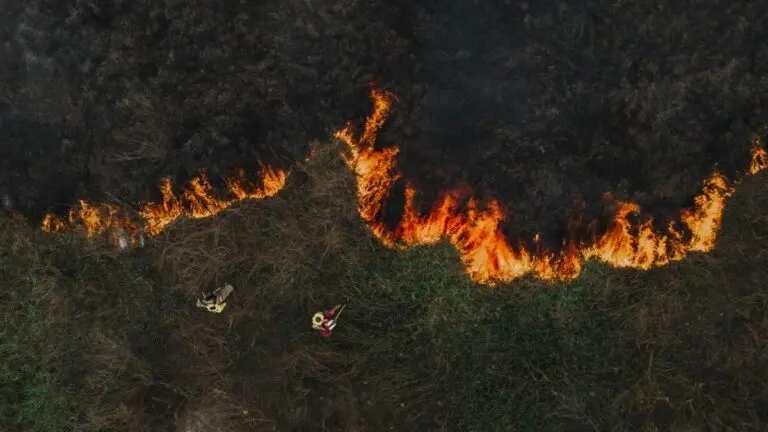
Amazon rainforest fires in Amazonas, Brazil, as firefighters tackle blazes and smoke worsens air pollution in Manaus.

Brazil deploys 300 firefighters as a surge in fires worsens air pollution in Manaus and investigators probe suspected organized arson.


Brazil has launched joint operations to track down those suspected of deliberately setting fires in the Amazon rainforest, as a sharp rise in blazes blankets Manaus with toxic smoke and pushes air pollution to critical levels for the city’s 2.3 million residents.

RELATED: Petrobras Announces New Oil Discovery at Morpho Well off Brazil’s Amazon Coast

Authorities suspect an organized network is deliberately destroying native vegetation in preserved forest areas to facilitate the illegal seizure of public land, Environment Minister João Paulo Capobianco said at a news conference Wednesday. Investigators are working to identify and prosecute both those who set the fires and those suspected of directing them.

Capobianco described the situation as an “impressive display of deliberate action.” He and Jair Schmitt, head of Brazil’s environmental protection agency Ibama, cited reports of people throwing fuel-filled bottles from moving vehicles along roads and repeatedly reigniting fires in areas where firefighters had already extinguished them.

The scale of the fires has escalated sharply. Amazonas state recorded 1,608 fire hotspots in the first part of October, already exceeding the 874 registered throughout October 2025, according to Brazil’s National Institute for Space Research (INPE).

September saw more than 3,700 hotspots, four times the number recorded a year earlier. Fires burned 291,060 hectares that month, 38.8% above the historical average, according to official data.

In October, the area affected has approached 220,700 hectares, 249% above the usual level, according to the Federal University of Rio de Janeiro’s Laboratory for Environmental Satellite Applications.

The government has deployed 11 aircraft and approximately 300 firefighters to the hardest-hit areas. Difficult terrain and adverse weather conditions have complicated efforts to contain the blazes. Authorities have also warned that extreme drought and high temperatures associated with El Niño are accelerating the spread of fires across northern Brazil.

Smoke from fires in Amazonas and Pará states has engulfed Manaus, where air quality has deteriorated to critical levels. Concentrations of fine particulate matter known as PM2.5 have exceeded the maximum levels recommended by the World Health Organization, increasing the risk of acute respiratory problems, particularly among children, older people and those with pre-existing medical conditions.

The Civil Police of Amazonas has opened 120 investigative proceedings into suspected environmental offenses. Investigators are using thermal drones and conducting continuous ground patrols to gather evidence and identify those responsible.

The investigations come as Brazil prepares for a presidential runoff on Oct. 25 between incumbent Luiz Inácio Lula da Silva and opposition senator Flávio Bolsonaro, who received the most votes in the first round. Asked whether the fires could be politically motivated to undermine Lula’s candidacy, Capobianco said investigators were examining that possibility but stressed that the theory had yet to be substantiated.

  •  

Colombia’s First National Strike Against De la Espriella Met With Police Crackdown

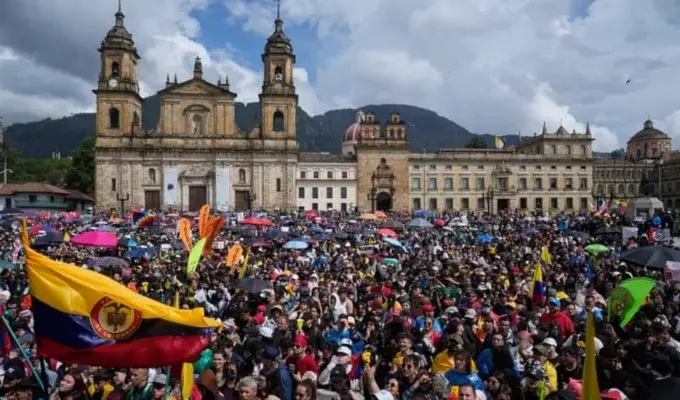
Colombian protesters and police during nationwide demonstrations against President Abelardo de la Espriella in Bogotá and Medellín.

Thousands protested budget cuts and economic reforms as clashes with police erupted in several Colombian cities.


Thousands of people took to the streets across Colombia on Wednesday in the first national strike against President Abelardo de la Espriella’s administration, as police used tear gas, rubber bullets and armored vehicles to disperse demonstrators in several cities.

RELATED: Colombia Holds First National Strike Against De la Espriella

Protests spread across more than a dozen departmental capitals and municipalities, including Bogotá, Medellín, Cali, Barranquilla, Ibagué, Popayán and Bucaramanga. In Bogotá, four columns of demonstrators converged on Bolívar Square under a security operation monitored by a Unified Command Post.

In Medellín, demonstrations escalated into clashes between protesters and the Mobile Anti-Riot Squadron (ESMAD). Security forces deployed tear gas, rubber bullets and armored vehicles, leading to several arrests. Assaults on members of the press were also reported.

Clashes and serious public disturbances were also recorded in Ibagué and Popayán following police interventions. Human rights organizations, including the NGO Temblores, denounced the presence of armed men carrying rifles on the rooftops of government buildings in Bogotá, describing their deployment as a direct threat to protesters.

The demonstrations brought together trade unions, teachers, university students, Indigenous communities, LGBTQ+ groups and feminist organizations. Opposition figures, including former President Gustavo Petro and Senator Iván Cepeda, also took part.

Protesters called for labor, education and social protections, seeking to preserve measures introduced under the previous administration, including free access to public universities and increases in the minimum wage. They opposed what they described as a neoliberal shift under De la Espriella’s government, citing budget cuts and the administration’s initial economic reforms.

Colombianos:

Me dirijo a ustedes esta noche para entregarles un balance claro, objetivo y contundente de la jornada de manifestaciones que vivió hoy nuestro país.

¡Que quede absolutamente claro! El 98% de las movilizaciones transcurrió de manera pacífica.

La inmensa mayoría de… pic.twitter.com/CmllZVPBtu

— Abelardo De La Espriella (@ABDELAESPRIELLA) October 15, 2026

Text Reads: Colombians: I address you tonight to deliver a clear, objective, and unequivocal report on the day of demonstrations that our country experienced today. Let it be absolutely clear! 98% of the mobilizations took place peacefully. The vast majority of those who took to the streets exercised their legitimate right to protest in an orderly and respectful manner toward the institutions. That is democracy, and as President of the Republic, I will always defend and guarantee it. At the close of this day, the national tally records a total of 62,000 citizens mobilized. A figure that represents a very small proportion of the Colombian population, but whose rights and guarantees deserve the full respect of the State. From the first day of my Government, I have issued a directive that admits no interpretations: peaceful protest is respected, protected, and guaranteed. But violence, vandalism, and any attempt to violate the rights of others will have no place under my mandate. Because as legitimate as the right to demonstrate is the right of millions of Colombians to work, move freely, and live in tranquility. Here there is a State, here there is authority, and here there is a Government that respects freedoms, enforces the law, and protects the millions of Colombians who rise early every day to work and build the Nation. Firm for the Nation! Long live Christ the King! (A.D.L.E.)

Demonstrators also rejected the restoration of diplomatic relations with Israel and what they described as U.S. interference in Colombia’s affairs.

Tensions mounted after the government signed a decree hours before the marches that changes the rules governing police conduct during public demonstrations. De la Espriella defended the measure as necessary to combat “urban terrorism,” while opposition politicians and social organizations condemned it as an attempt to intimidate protesters.

Senator Cepeda warned that the decree risked returning Colombia to a situation in which fear enabled arbitrary actions by security forces.

“They want to take us back to a time when fear becomes the means through which the security forces act arbitrarily,” Cepeda said.

Trade union sources said organizers were already drawing up a schedule of further mobilizations for the coming months following Wednesday’s mass protests. The campaign could culminate in a general strike in November.

  •  

Five Arrested as Police Clash With Madrid Protesters

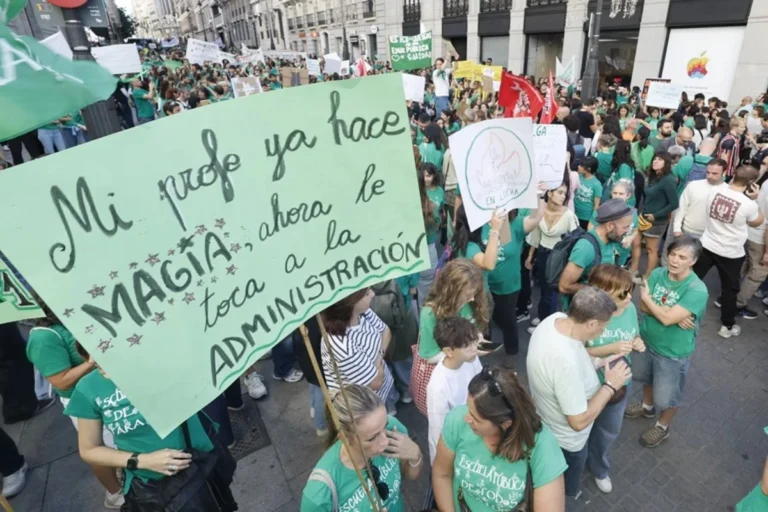
Teachers and students protest public education policies during a strike in Madrid, Spain.

Thousands rally for better-funded public schools as a teachers’ strike in Madrid leaves two people injured and five students arrested.


Five students were arrested and two people injured during police confrontations in Madrid on Wednesday, as thousands of teachers and supporters took to the streets on the first day of a regional teachers’ strike demanding better funding, smaller classes and improved working conditions in public education.

RELATED: Marches in Spain Honor Maricarmen, the Evicted Woman Who Died Amid the Housing Crisis

Demonstrators wearing green gathered at Puerta del Sol before marching through central Madrid towards the regional Education Department. The protests targeted the education policies of regional president Isabel Díaz Ayuso, whom demonstrators accuse of weakening public schools by diverting taxpayer funds to private education and refusing to negotiate with teachers and parent associations, according to teleSUR correspondent Álvaro Fragua.

Police also confronted students at Madrid’s Complutense University during a demonstration in support of the strike. Two people were taken to hospital with injuries. Five university students and a woman participating in a separate demonstration in central Madrid were arrested. No further arrests had been reported at the time of the report.

Text Reads: 📚 Non-university teachers in the Community of Madrid, Spain, began an indefinite strike this Wednesday—called by trade unions—to demand better working conditions and more resources for quality public education. No end date has been set for the stoppage.
🧑‍🏫 Their demands include better conditions for teaching staff, increased resources for public education, smaller class sizes, and proper care for all students.
📢 Demonstrations have been organized for the initial days of the strike: a march from Atocha to Puerta del Sol this afternoon and a human chain on Thursday at the Department of Education.

Teachers said educational inequality was reflected in disparities between neighborhoods, arguing that children’s access to quality education depended on where they lived, with poorer communities bearing the greatest burden.

The strikers are demanding changes to class sizes, teaching workloads and specialist support for students with additional educational needs. Their proposals include capping classes at 13 students in early childhood education, 15 in primary school, 20 in secondary school, 23 in upper secondary education and 15 in vocational training.

They also want weekly teaching loads limited to 17 periods for secondary school and vocational training teachers and 22 for primary school teachers. The proposed limits would include tutoring, department leadership and coordination duties.

Improving support for students with disabilities and other educational needs is another central demand. Teachers are calling for at least one guidance counselor for every 250 students, one community services professional at each school, one therapeutic education teacher for every eight students and one speech and language specialist for every 12. They also want a compensatory education teacher at every school and additional staffing guarantees for special education.

On pay, the strikers are seeking a €600 monthly increase in the regional general teaching supplement, along with pay parity for vocational training teachers and specialists in community services, therapeutic education, and speech and language support. They are also demanding a special allowance for hazardous working conditions in special education and at least one full-time administrative assistant at every school.

The demands extend to school infrastructure and workplace safety. Teachers want a comprehensive, sustainable climate-control plan for schools, the removal of asbestos, an end to phased construction of public schools and stronger occupational health and safety measures. They are also calling for an equity plan to ensure adequate support for students facing socioeconomic hardship, those with special educational needs and other vulnerable groups.

Teachers announced a larger demonstration for Wednesday afternoon, with a march planned from Atocha to Puerta del Sol, where people were continuing a protest camp in support of the public education movement. The strike’s first day brought demands for changes to staffing, funding, pay and school conditions alongside opposition to the regional government’s education policies.

  •  

Panama President Welcomes Venezuelan Humanitarian Delegation

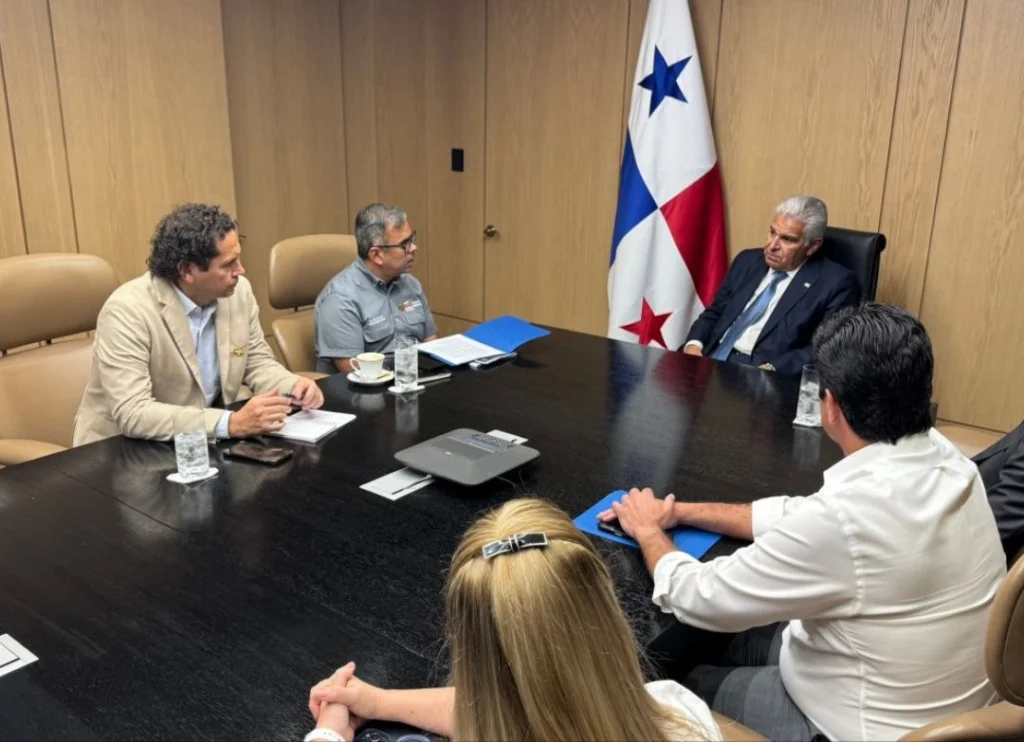
José Raúl Mulino receives Venezuelan humanitarian delegation sent by Delcy Rodríguez to assist Panama after earthquake.

José Raúl Mulino received a team of 51 Venezuelan specialists sent by Venezuelan Acting President Delcy Rodríguez following an Oct. 9 earthquake.


Panamanian President José Raúl Mulino received a Venezuelan humanitarian delegation of 51 specialists on Wednesday, sent by Acting President Delcy Rodríguez to provide technical assistance following the earthquake that struck Panama on Oct. 9.

RELATED: Panama Thanks Venezuela for Assistance Following the 7.7-Magnitude Earthquake.

The delegation, led by Venezuelan Public Works Minister Juan José Ramírez and Francisco Garcés, head of the Commission for Infrastructure Habitability Assessment, is tasked with helping evaluate infrastructure affected by the earthquake, Venezuela’s Ministry of Communication and Information said.

Mulino thanked the Venezuelan government for sending the team, highlighting its role in assessing critical infrastructure in the aftermath of the seismic event.

IMPORTANTE: 🇵🇦Presidente de la República de Panamá, José Raúl Mulino, recibió a la delegación humanitaria venezolana de especialistas, enviada por la Presidenta Delcy Rodríguez pic.twitter.com/NOkYIGtcCK

— Ministerio de Comunicación e Información (@mippci_ven) October 15, 2026

Text Reads: IMPORTANT: 🇵🇦 The President of the Republic of Panama, José Raúl Mulino, received the Venezuelan humanitarian delegation of specialists, sent by President Delcy Rodríguez.

“I thank the government of Venezuela for sending 51 experts in infrastructure evaluation. It will be of great help,” Mulino wrote on social media.

Before the meeting with Mulino, the Venezuelan delegation held talks with senior Panamanian officials at the Government Palace to coordinate technical cooperation. Panama was represented by José Ramón Icaza, minister for Canal Affairs and secretary of Presidential Goals; Deputy Presidential Minister Virna Luque; Deputy Public Works Minister Iván de Icaza; and Deputy Education Infrastructure Minister Delia Marcela Herrera.

Agradezco al gobierno de Vzla el envío de 51 expertos en evaluación de infraestructura. Será de gran ayuda.

— José Raúl Mulino (@JoseRaulMulino) October 14, 2026

Text Reads: I thank the government of Venezuela for sending 51 experts in infrastructure evaluation. It will be of great help.

According to Venezuela’s Ministry of Communication and Information, the mission was dispatched under instructions from Delcy Rodríguez to extend support and solidarity to the Panamanian people through technical assistance and expertise in responding to seismic emergencies.

The delegation’s arrival marks a bilateral cooperation effort focused on assessing infrastructure safety after the Oct. 9 earthquake.

  •  

Brazilian Senate Ends 6×1 Schedule, Approves 40-Hour Workweek

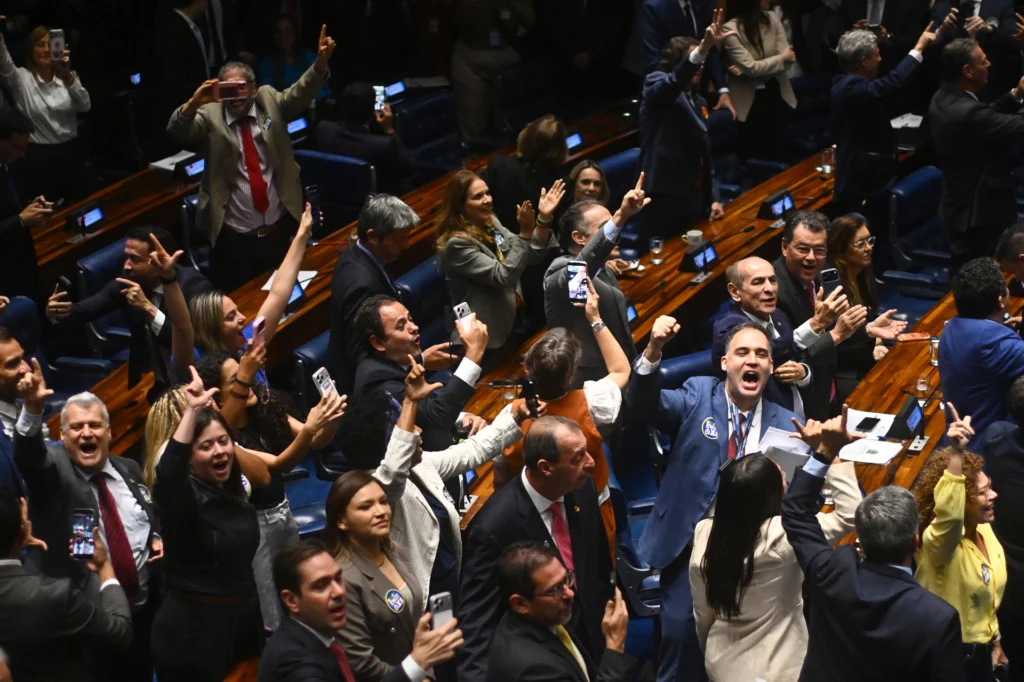
Progressive senators from Brazil declared that, in the context of the next ballots, approval of the end of 6 1 means a victory for President Lula, but also for mobilization on the streets. Photo: EFE.

Brazil’s Senate on Wednesday approved a historic constitutional amendment that cuts the maximum workweek from 44 to 40 hours and guarantees two days of rest without a reduction in pay, ending the six-days-on, one-day-off model known as the 6×1 schedule.


The Brazilian Senate approved Wednesday the end of the 6×1 work schedule, a constitutional reform that shortens the workweek from 44 to 40 hours and adds a second weekly rest day without cutting wages.

The amendment cleared the Senate five months after the Chamber of Deputies passed it in a historic vote.

RELATED: Brazil’s Lula Announces MEI 12.6 Billion Reais Debt Relief

The measure, Constitutional Amendment Proposal (PEC) 221/2019, received 75 votes in favor and one against in both rounds, well above the 49 votes required among the Senate’s 81 members. The only vote against, in both rounds, came from Senator Hamilton Mourão of the Republican party. Senators Rogério Marinho, Sergio Moro, Márcio Bittar and Ciro Nogueira were absent from the first round.

The vote was made possible after senators approved a special calendar to speed up the process, at the request of government leader in the chamber Teresa Leitão, of the Workers’ Party (PT), with the backing of Senate President Davi Alcolumbre.

The proposal had already cleared the Deputy chamber in a landmark session five months earlier. Its path through the Senate took longer than government allies wanted, and labor leaders kept up public pressure for a vote before the campaign’s final stretch.

The approval is seen as a political victory for President Luiz Inácio Lula da Silva, coming 11 days before the October 25 presidential runoff, in which he faces Senator Flávio Bolsonaro of the Liberal Party.

✊🇧🇷 O FIM DA 6X1 AGORA É REALIDADE!

Lutamos, discutimos e pressionamos para garantir que o Congresso votasse ainda este ano o fim da 6×1!

Mas a voz do povo foi a voz que me conduziu para que, juntos, garantíssemos mais tempo para descansar, acompanhar os filhos e estar com… pic.twitter.com/52RZBsxVvu

— Lula (@LulaOficial) October 15, 2026

Text reads: “The end of 6×7 is now reality! We fought, argued and pushed to ensure that Congress voted this year for the end of 6×1. But it was the voice of the people that guided me so that, together, we would ensure more time to rest, accompany our children and be with those we love. More dignity and quality of life for the Brazilian people!…”

Gradual Transition Planned

The amendment provides for a phased implementation. Two months after it is promulgated, the maximum workweek will fall to 42 hours and workers will receive two paid rest days. After another 12 months, the limit will drop to 40 hours a week, with one of the two rest days preferably on Sunday.

The text states that the reduction in working time will not lower salaries and preserves the possibility of collective agreements to regulate specific situations. Unions estimate that about 22 million workers will be benefit.

Ending the 6×1 schedule is one of the main demands of Brazilian workers and unions, who argue that shorter hours improve quality of life, expand rest time, favor family life and help prevent physical and mental exhaustion.

Politics Before Runoff

The debate was marked by differences between the governing coalition and the opposition, in an electoral context in which the measure has broad public support.

Flávio Bolsonaro changed his position this week and announced he would vote in favor of the initiative, after consistently opposing it. He had previously called the discussion opportunistic and defended an alternative proposal based on pay per hour worked. The report does not include any comment from Bolsonaro on the final vote.

“We fought, debated and pressed to make sure Congress voted this year to end 6×1. But the voice of the people was the voice that guided me so that, together, we could get more time to rest, spend with our children and be with those we love,” Presiden Lula said in his first reaction on X.

After the vote, members of the progressive bloc were seen chanting Lula’s name in recognition of his leadership on the issue. The approval allows Lula’s government to showcase a commitment to more rest time and better working conditions in a campaign marked by a dispute over social rights and the future of Brazil’s labor market.

The amendment still needs to be promulgated to be effective. Once promulgated, the law will set a 40-hour limit spread across five days, with two days off and no loss of salary. Companies will get a gradual transition, giving employers time to reorganize shifts without cutting staff pay.

  •  

Brazil election shock: What Bolsonaro 2.0 means for Latin America, the Amazon & Palestine

Flávio Bolsonaro, son of imprisoned coup plotter Jair Bolsonaro, clinched first place in Brazil’s presidential race Sunday with 47% to Lula’s 45%, forcing a high-stakes runoff on October 25. As Lula’s Workers’ Party (PT) suffered major losses and Bolsonaro’s Liberal Party (PL) allies took governorships and more seats in congress, Stephanie Weatherbee Brito of the International Peoples’ Assembly asks, was this really a surprise? She joins Rania Khalek and Zoe Alexandra from São Paulo to break down Brazil’s election “shock” — from the hard right’s “silent campaign” and the “shy votes” that caught polling institutes off guard, to why 33 million Brazilians skipped the polls, to the PT’s failure to offer a vision of real change.

And she warns of what may be to come: a second Trump-aligned Bolsonaro presidency “compliant and subservient” to Washington and Tel Aviv, with devastating consequences for Brazil, the Amazon, and the future of humanity.

Watch full episodes of BT Live, join breakthroughnews.org as a member today!

#breakthroughnews

******

Rough transcript follows:
[Host 1:] Brazil went to elections this Sunday and the results shocked many. The far-right Liberal Party emerged as perhaps the biggest victor in the polls as the presidential candidate for the PL, Flávio Bolsonaro, not only clinched top place in the presidential race over Lula, but the party also gained seats in the Senate, House, and several governorships. The Workers’ Party meanwhile suffered significant losses, and incumbent progressive president Luiz Inácio Lula da Silva finished in second place with 45% to Flávio’s 47%. Analysts across Latin America and the world have been struggling to understand the results and what it could mean for the region. We here at Breakthrough News are very lucky because we are joined by friend of the show Stephanie Weatherby Breto. She’s the coordinator of the International People’s Assembly calling in from São Paulo. She’s going to be discussing with us these results, what to expect for round two, and the impact on the region. Stephanie, thank you so much for joining us today.

[Stephanie Weatherby Breto:] Hi, happy to be back even under these conditions.

[Host 1:] Well, Stephanie, the reaction to Sunday’s election amongst progressives, not only in Brazil, but again across the world, has been a mix of shock, sadness, and bewilderment. I want to ask you first, how should we understand the results? Was October 4th a victory for the far right?

[Stephanie Weatherby Breto:] Yeah, I think that October 4th was absolutely a victory for the far right, but I don’t think that we should be as shocked as some people have been because the far right in Brazil has been growing pretty consistently for the past 10 years. And I think that what it has demonstrated that people didn’t believe or didn’t understand before is that it has built a pretty solid base. It is not just a reaction movement. It’s not a spontaneous movement built over social media. It really has its own organizational structure and it has the capacity to mobilize. What surprised people in Brazil was that this time around the right wing wasn’t as mobilized in the streets. Like you didn’t see as many people wearing the Brazilian flag—the color of the far right right now is to wear the Brazilian flag, to wear the football team shirt—and there wasn’t that much really like physical campaigning. Like you didn’t see people out with banners or flyers with Flávio Bolsonaro’s face. You didn’t see that kind of action, and so that contributed to an undermining of the power of the right. There was this silent campaign almost, and the polling, the kind of polls that were being done before showing where people’s voting intentions were moving, didn’t show Flávio as strong as he was. But that has happened in the past. Now, there’s also a lot of talk about people didn’t vote, which is a high number of people that either didn’t vote or abstained from actually designating a candidate. They didn’t choose a candidate on their ballot. And even though those numbers are high, they’re pretty standard for Brazil over the past three elections. And what has happened is essentially that the country has become polarized between right and left. Politics are now at the center of discussion inside of families, between students. And so what that creates is this vacuum that sucks in a lot of people that feel insecure about politics. They feel like the discourse is too aggressive, the two sides are constantly attacking each other, and so people start opting out of politics, which is the same situation in the United States. The difference is in the US, you’re not legally bound to vote; in Brazil, you are. So what you see is a lot of people canceling out their ballot. And I think, like I said, that that’s a reaction to polarization and to a sense of insecurity that people have in the system and also a lack of trust in the system. People don’t think that it makes any difference.

[Host 2:] We want to try to—we’re having a little bit of an audio kerfuffle. Okay, we’re going to try to power through, but we may try to stop and fix it. Let’s see how it goes. I know you can’t tell, Stephanie, because you can’t hear it, but we can. But no, I appreciate what you’re saying here. And you know, a key element that you mentioned there is the right-wing advance in the legislature. So, what will be different about the composition of this next Brazilian Congress from the previous one, and why does it matter? And, you know, Stephanie, can you talk to us specifically about what is the legislative agenda of the far right and what do you think they’ll actually be able to achieve?

[Stephanie Weatherby Breto:] The right was already very strong in the legislature. This is not a novelty; they have already built—I mean, I think very similar to the right in the United States, they’ve had a project for many, many years to try to build this kind of strength in Congress, and they’ve built stable organizational means to do that, they have a lot of local power. I think what is new about this victory is that a lot of parties of the extreme right that were newcomers in previous elections and that some people said, well, these parties are not going to survive, they’re kind of like phenomenons of the moment, they have survived, and everything indicates that at least for the period that is upcoming, they are fixtures in the political landscape in Brazil. Parties like Republicanos, Partido Liberal, these parties are hard right parties. And I think that there’s a lot of discussion right now that their agenda is to take down the Supreme Court, that this is their number one goal, that they want to take down all the other checks and balances to the executive because they want to rule in a fascistic kind of way where all the power is concentrated in the executive. And I think that that is possible, but I think that we’re missing the picture that if their goal is to take down the Supreme Court, it’s a means to an end. It’s not an end in and of itself. And so I think that what the actual most important goal of this hard right that is consolidated in Brazil is to break down all the barriers to extractivism, to allow the mining companies, the agribusiness companies to really tear into the Amazon rainforest, to be able to break into different territories that are still being protected by environmental law or that are being held by indigenous communities or by rural communities that have titles to the land, because there is this interest that is connected to the United States, which is to get into the minerals that exist under the Amazon rainforest and elsewhere. And I think it’s a model of extremely predatory capitalism that this party and these parties represent. And I think that they also want to break down any kind of barriers to the free movement of money. They want to liberalize finance even more than it already is. I think their agenda is a kind of naked capitalism that has no restraints, and they’re doing this in collusion with big and important economic groups from the United States, people who have vested interest in this program. Of course, they also intend to scale back social programs. Brazil has built over decades a form of welfare state. It has a universal healthcare system that the ruling elites have always been enemies of. They want to privatize healthcare, they want to privatize education. And so anything that this government, if Flávio gets elected, if he can accomplish a scaling back of social programs that opens up the country to further privatization of anything from pensions to schools to transportation, I think that that’s all in their interest. And so I think it’s like an extremely neoliberal agenda that they want to build. And they also have another agenda outside of the economic one, which has to do with crime and security. They have this project called the anti-faction bill because here in Brazil criminal organizations are called factions. And so allegedly what this bill would do is to really tackle organized crime in Brazil, which is very powerful in certain states, but truly what this bill would do is actually unleash the violence of the state on the poorest communities in Brazil. There is this false conception that the right has disseminated that the reason that there’s a lot of crime and insecurity in Brazil is because there is a soft-handed policing where the police aren’t actually given the freedom and the liberty to actually persecute criminals because there’s a concern for their human rights. This is absolutely false. The reason why there’s crime in Brazil is because very powerful institutions like banks continue to launder the money of these criminal organizations because these criminal organizations have a tremendous influence on judges. They have an influence on legislators and possibly, if Flávio gets elected, on the presidency. It’s pretty well known that Flávio Bolsonaro has a connection to criminal organizations in Rio de Janeiro. And so they have what I would refer to as a faux security agenda that even though it will not fix the problem, it appeals to people because it’s talking about something that people are concerned about in a moment when the PT actually isn’t talking about it.

[Host 1:] Well, you know, I wanted to pick up on that, Stephanie, because while the far right, as you said, really did get some historic gains in this election, Lula’s Workers’ Party suffered significant and symbolic losses. Lula’s key ally, Fernando Haddad, once again lost the governorship in São Paulo to Tarcísio de Freitas, and this time by an even bigger margin. Meanwhile, Marina Silva, Benedita da Silva, and Simone Tebet all lost their races, and these have been kind of key figures in the PT standing side by side with Lula. So are their losses part of this legacy in Brazil of what’s termed antipetismo, this anti-workers’ party sentiment? Is it something else? Is it purely the popularity of the far right? What is behind this losing ground of the PT in Brazilian politics?

[Stephanie Weatherby Breto:] Well, most of the candidates or many of the candidates that you named are actually not from the PT. They built an alliance with the PT because the PT, as it loses its base, as it loses some of its capacity to get elected on its own two legs, has moved to building alliances with sections of the center-right. So even the vice-presidential candidate that Lula ran with four years ago, that ran with now and that has been governing with him, is a figure of the center-right. He was a right-wing governor of São Paulo that was very unpopular actually in the face of social movements. And so I think that I wouldn’t see this as a recourse of antipetismo. I mean, the campaign against the PT was based on this discourse that the PT was corrupt. But I think that the population has moved on from that. I think that people now—a lot of people essentially believe that both parties are corrupt, that all politicians are corrupt, that it is inconsequential because that’s just the way that power works, unfortunately. But I think that what really has weakened the PT is that this administration, Lula’s third term, ran and was governed without a clear agenda. It was run on this idea that we’re here to restore democracy, we’re here to restore order, similar to the way that Biden kind of came back after Trump’s presidency to say, well, you know, the Republicans and this like Trumpism has destroyed some of the institutions of this country and here I am to rebuild it. And unfortunately, that is not appealing to the wide mass of the population because people are very dissatisfied with their living conditions. They’re very dissatisfied with a lot of the day-to-day problems that they’re facing regarding access to education, access to employment, increasing debt. And so this discourse of “we’re going to rebuild the country to what it was” doesn’t appeal to people because they have the perception that what we need is not to go back to what it was; we need to be building a future that is different. We need something that is going to transcend whatever the PT achieved and achieve much more, or at least they want to hear something that is different. And I think that Lula governed this third term—first of all, he was very influenced by the events when the Bolsonaristas tried to take the country. They were doing these mass mobilizations, they tried to occupy the Supreme Court. And the fact that there was this broad movement, this alliance, this really big alliance against Bolsonarismo, I think convinced the Lula government and the party that Bolsonarismo had been defeated, that the population had now understood that they were undemocratic, that they were dictatorial or fascistic in some way, and that even sections of the ruling class had moved to the camp of the PT because they were disgusted by Bolsonarismo. And when Jair Bolsonaro was imprisoned, I think that that even further built this idea that well, really, the program of the PT right now is to preserve institutions, to defend democracy. And that is the last thing that I think people are thinking about. People don’t want a defense of the status quo. And so on the kinds of things that Brazilians are really worried about, which have to do with the cost of living and access to employment, even though the situation was stable and there were improvements in the cost of living, it wasn’t really inspiring to people as a campaign program. The PT did not run this election on a clear project of transformation, which was their brand throughout its history. The PT was the party of change, the party of addressing structural problems in Brazil and addressing inequality. And I think that over many years, after being really battered by the right, they have watered down their program to something that simply isn’t inspiring enough to people and that was not enough to get them out into the polls and to mobilize in the way that would have been necessary to beat Flávio in this first round.

[Host 1:] I mean, there are so many numbers that stand out from Sunday. Zoe had mentioned some of them earlier. One of them was this 20% abstention, and in Brazil voting is mandatory, so you do receive a penalty for not participating. So, Stephanie, what do you think explains why 33 million people chose not to vote? Are they expected to do so, do you think, in the second round? And I mean Lula declared on Sunday that it was his goal to court these voters. Do you think this is actually possible?

[Stephanie Weatherby Breto:] I think that a lot of those abstentions are going to remain abstentions. I think that what has created them is the climate of polarization. People have been repelled from politics. The people who are abstaining, they are repelled from politics either because they feel insecure, they don’t understand, they feel like the political debate is too aggressive, it’s too violent, they feel like they are not educated enough. But also, I think that people don’t see the difference. There’s a lot of people who just don’t think that either candidate makes a huge difference. And I think that this is something that really often happens when polarization happens, when the country becomes like a pressure cooker where everybody’s talking about the elections. Certain people have very strong opinions in one way or the other, they’re not at all flexible, they’re really dug in. It’s a situation that we know in the United States as well. And so what that produces is a sector of the population that says, “I don’t care anymore, I don’t want to hear about elections anymore, and I don’t understand either of these programs necessarily.” Now, I also think that both candidates—part of why there’s a high abstention rate is because both candidates have high rejections, are very rejected by the population for different reasons. Flávio because he’s considered to be reprehensible in his discourse; people understand him as a chauvinist, as someone who defends violence, someone who has no regard for the rights of black people in this country—who are not racial minorities, by the way—but for other racial minorities in this country, someone who has no regard for the poor. And so he is seen as a figure of a kind of violent politics that people really don’t like. He’s also seen by sectors even within the right as a lackey to the United States. Like, he’s criticized by sections of the right for being a candidate that basically just toed the line for whatever Washington tells him to do. The relationships between the Bolsonaro family and Trump are very well-known, they’re very evident. The Bolsonaro family is always petitioning the Trump administration for favors, and that actually has produced some rejection even within the right, who sees him in this negative light. Now, Lula has high rejection ratings for other reasons. There’s people that believe that he’s governed for too long; they say, well, you know, he’s been president for three terms, why does he have to keep being president? There’s people who also believe that the PT is a representation of the past, that it’s old politics, that Lula’s too old, he doesn’t have an appeal with the youth in the way that he used to. Lula and the PT used to be a political movement of the youth, and I don’t think that that continues to be the case unless somebody is active in social movements and really politicized. And so because there is this section of the population that just rejects both of them, their choice is just to nullify their ballot in the election.

[Host 1:] You know, it’s—we’ll see how that kind of courting of this segment of the population goes. But, you know, before we let you go, Stephanie, I did want to ask about the regional question and just kind of zooming out and looking at how the US is viewing the region. Of course, a lot of the discourse, whether it be Twitter or left-wing analysis, has been about really grappling with the possibility of a Flávio victory in the second round and what that would mean for Latin America and the Caribbean in a second Trump administration. So, on one hand, how would this impact regional ties? I mean, at this point, the dreams of Lula from his first terms of creating entities like UNASUR, like all of these different regional platforms, have essentially disappeared given the presence of the far right on the continent. But what would a Flávio victory mean for the US to have the far right in power in Brazil?

[Stephanie Weatherby Breto:] I think having a victory for Flávio Bolsonaro in Brazil would be a huge victory for the Trump administration, but also for Zionism, because what the Flávio Bolsonaro presidency represents is a program of the right that is going to be completely compliant and subservient to the interests of the United States politically and to the interest of Zionism—sorry, to the interest of the United States economically and to the interest of Zionism politically. And so I think that Brazil will become a tool in the large chessboard of US interests in the rest of the world, and I think that it means a full alignment to US interests in Latin America, again specifically on this issue of extractivism. I think that the agenda of the United States for Latin America is to turn it into a territory from which they can extract resources at will, at low cost, with no regard for the environment or for the rights of the people in those countries. And the Bolsonaro family definitely represents that kind of interest. You know, they’re very happy to play that role. And so it’s not just very dangerous for the Brazilian people or for the future of progressive politics in Latin America—like, absolutely, Cuba is going to be really isolated on the continent together with Mexico and Venezuela—but it also has huge repercussions for the environment. I think that one of the most serious consequences of a second Bolsonaro presidency is the further destruction of the Amazon rainforest, and the implications of that for the rest of the world are tremendous. And so I think, unfortunately, the Brazilian population that voted for Bolsonaro is making a decision that really imperils the rest of humanity.

[Host 1:] No, really important perspective there. And honestly, Stephanie, there’s so much more we could talk about, and I’m looking forward to having you back on the show ahead of this second term—which will be on October 25th. Again, there’s just three weeks that Lula and Flávio and their supporters have to campaign for the second round to try to get those extra votes. It will be a very interesting period. And as you said last time you were on the show, US interference is not a question; it’s more of a done deal. We just have to see how it is going to manifest. So I think that’s something else we’ll be definitely looking out for. But we thank you so much, Stephanie, for explaining what that means and why people everywhere should really be paying attention to what’s happening.

  •  

Brazil’s election is a regional battleground

Brazil’s presidential elections are sparking reactions across the region. The economic (and, by extension, geopolitical) importance of this South American giant leaves no regional politician or social organization indifferent, as they know that much of the continent’s future is at stake at the Brazilian polls.

Support for Bolsonaro from Washington and Milei

Flávio Bolsonaro, son of the far-right former president Jair Bolsonaro (who is in prison for conspiring to carry out a coup d’état against Lula da Silva), has received explicit support from Argentine President Javier Milei – a move that cost Buenos Aires a diplomatic crisis with Brasília due to the Argentine leader’s anti-Lula statements made on Brazilian soil.

Likewise, Flávio Bolsonaro enjoys the direct support of President Donald Trump. The US president has maintained a recent tradition (heavily criticized by many) of publicly expressing support for this or that far-right Latin American candidate who, upon winning the election, fully aligns their country with Washington’s foreign policy and joins the US-led military alliance known as the Shield of the Americas.

Trump has also imposed direct trade sanctions on Brazil over the conviction of Jair Bolsonaro, whom Trump calls a “friend.” In addition, the United States sanctioned the judge who convicted Bolsonaro, Alexandre de Moraes, sending a clear message of condemnation against the Brazilian justice system – a move that some political analysts have called foreign “interference” in the Brazilian judicial system.

Unions and the Latin American Left support Lula

Lula has also received support from another very important female leader in the region: Claudia Sheinbaum. In recent weeks, the president of Mexico has repeatedly highlighted the positive aspects of Lula’s administration: “I believe that President Lula has been a very good president … He has done an extraordinary job leading Brazil, and the indicators show it.” The endorsement of his candidacy has clearly been indirect, but given Mexico’s geopolitical importance, many in Lula’s Workers’ Party surely appreciate it.

Lula has also received support from neighboring countries to the south. In Uruguay, the ruling coalition, the Frente Amplio (FA), has shown direct and militant support for Lula’s campaign. Fernando Pereira, president of the FA, stated that the electoral battle in Brazil “is between democracy and barbarism.” He also warned against US interference in the elections: “Brazil will not accept U.S. interference in the election.”

Former Argentine Foreign Minister Santiago Cafiero, who is currently a member of Congress, also expressed his support for Lula: “If Lula wins, he will create a countercurrent to what has been taking hold in the region and demonstrate that there is resistance to these right-wing winds.”

  •  

Prosecutor leading investigation of Cerimedo arrested by Bolivian police, days after facing US sanctions

On the evening of Wednesday, September 30, Bolivian police arrested Attorney General Roger Mariaca and raided the Attorney General’s Office in Sucre and Santa Cruz. The police action comes just days after the US State Department sanctioned and revoked the visas of Mariaca and 21 other Bolivians.

Analysts suggest that the timing of the US sanctions, Mariaca’s arrest, and the raids, are no coincidence, calling it “political pressure” related to a high-profile case.

Mariaca is leading the investigation into Argentine political consultant Fernando Cerimedo. The influential political advisor to Latin America’s far right allegedly influenced elections through social media bot farms, may be involved in drug trafficking, and was accused of ordering an assassination attempt on his ex-partner, Nadia Beller. She was shot three times but survived after undergoing emergency surgery.

Cerimedo has been in custody in Bolivia after attempting to leave the country by plane following the attack on Beller. Messages were found on his cell phone that, according to the prosecution, directly link him to the attempt on her life. Despite the emerging evidence against him, not only in ordering the hit on Beller, but also in crimes of corruption and drug trafficking, Cerimedo seems to have friends in high places, both in the Bolivian president’s office, and in the United States, that may have set the stage for the arrest of his investigator, Attorney General Roger Mariaca.

Read more: Attempted murder accusations, troll farms, and presidential connections: the notorious case of Fernando Cerimedo

Argentine outlet Página 12, reported that, according to Beller, the sanctions against Mariaca were “a move by Donald Trump’s team to protect Cerimedo. As the Washington Post noted this week: ‘Cerimedo is the MAGA (Make America Great Again, Trump’s slogan) man across the entire continent.’”

In the report, Beller is quoted as saying: “Is this decision by the United States part of the fight for the Shield of the Americas or is it about protecting the MAGA network?…If the reason is corruption and drug trafficking, then they need to explain why the visa is being revoked for the attorney general who is investigating a network of that nature. Are they going after the investigator, or are they protecting part of the network?”

As evidence mounts against Cerimedo, the US instead accused his investigator, Mariaca, of allegedly soliciting and accepting bribes to facilitate drug trafficking and helping people involved in violent crimes escape justice.

After news broke of the US actions against him, Roger Mariaca had said he will not back down and will continue the investigations until the end: “[I received the news] with great surprise … I will not back down even one centimeter from the investigations that fall under my jurisdiction.”

He highlighted that while it is clear that the Cerimedo case has generated international intrigue, “no political pressure, whether national or international, can become an impediment to clarifying the facts which must be investigated.”

He was arrested two days later.

Involvement in the drug trade?

In addition to Cerimedo’s well-documented ties to high profile right-wing politicians across Latin America, including in Bolivia, recent revelations from ex-partner Beller, suggest that the powerful political consultant may have also been involved in the drug trade. In a leaked audio message, Cerimedo is allegedly speaking with a woman with whom he is arranging payment so that several flights can operate without excessive pressure from the authorities. Cerimedo mentions a man named Cabrera, whom the Bolivian media suspect is Franz Cabrera, the former head of the Special Force to Fight Against Drug Trafficking (FELCN), who was recently dismissed.

According to the investigations, they allegedly “were paid” for nearly 45 flights, amounting to $700,000, raising significant suspicions about the source of the funds that the political consultant is said to have handled.

The timing of the sanctions against Mariaca and his arrest have raised questions about US interference in the Bolivian justice system. But, as pressure escalates over the investigation into Cerimedo, the case is also revealing a far deeper web of political connection and influence than was initially known, placing it under renewed scrutiny. Wether the investigation is further disrupted or allowed to proceed, what happens next could expose even more about Cerimedo and the network of the Latin American far right.

  •  

Costa Rican foreign minister dismissed after president misses ‘Shield of Americas’ meeting in NYC

Costa Rica’s Minister of Foreign Affairs, Manuel Tovar, was dismissed from his post last week by the country’s president Laura Fernández. Tovar was considered one of the “heavyweights” of the country’s dominant political faction, having previously served as Minister of Commerce under President Rodrigo Chávez.

The decision was made by Fernández on September 24, because, according to a statement, her foreign minister failed to inform her of an invitation to a meeting held in New York City aimed at strengthening the so-called Shield of the Americas.

Shield of the Americas is a political-military alliance led by Donald Trump that seeks to secure Washington’s geopolitical leadership in the region, and which right-wing and far-right Latin American governments have joined enthusiastically.

Right-wing President Fernández said that failing to report such an important meeting constituted an act of negligence on Tovar’s part. The Costa Rican president also said that Shield of the Americas is a “fundamental platform in the fight against drug trafficking and organized crime.”

The president did not travel to the United States to deliver her speech at the UN General Assembly because she was on an official visit to Colombia with her counterpart, the far-right Abelardo de la Espriella.

The Costa Rican presidency reported that the invitation – which was not extended to her – came from US Secretary of State Marco Rubio himself. Several heads of state from Shield of the Americas member states participated, including Javier Milei of Argentina, José Antonio Kast of Chile, Rodrigo Paz of Bolivia, Daniel Noboa of Ecuador, Irfaan Ali of Guyana, Nasry Asfura of Honduras, Santiago Peña of Paraguay, Luis Abinader of the Dominican Republic, and Keiko Fujimori of Peru, among others.

In this regard, Fernández publicly apologized to the US ambassador to the Central American country, Melinda Hildebrand: “I reiterate to your country my firm and resolute commitment to continue supporting the Shield of the Americas alliance… I regret my absence… The failure to forward that invitation from your government to me did not go unnoticed, and today the foreign minister of the Republic was dismissed,” which clearly demonstrates the enormous importance San José attaches to an invitation from Washington.

Tovar’s dismissal comes on the heels of a series of dismissals of key ministers in Fernández’s government, a development the opposition has used to highlight a certain instability in the very young administration.

“We are concerned about serious foreign policy mistakes that need to be corrected… Second, we are concerned about the stability of the cabinet: in less than five months, five senior officials – including ministers and deputy ministers – have already been dismissed. That instability is not in her best interest, nor in that of her government or Costa Rica,” said the leader of the National Liberation Party caucus.

For his part, the former foreign minister did not explain the reasons behind his decision not to inform Fernández about the invitation. In a post on X, he said briefly: “I thank Laura Fernández for the opportunity to serve the Costa Rican people from the Casa Amarilla, and I wish her every success as President of the Republic for the good of the country. Finally, I would like to commend the team at the Ministry of Foreign Affairs for the passion and dedication with which they undertake every mission on behalf of the country. To them, I offer my eternal gratitude. I accept this moment with great peace of mind. I will always stand by the just causes of the Costa Rican people and the international community.”

The reasons behind Tovar’s decision remain unknown, although several sectors of the opposition have raised suspicions about an alleged ulterior motive on Fernández’s part for not attending the Shield of the Americas meeting – which, if true, could reveal political and diplomatic contradictions deeper than they might appear at first glance.

  •  

A pro-neoliberal security strategy returns to Latin America

Right-wing and far-right governments in Latin America have adopted a very similar discourse regarding insecurity. The leaders share a narrative that describes how in the 1980s and 1990s, a sort of neoliberal panacea reigned supreme, but then, as if speaking of a biblical plague, the progressive governments of the early 21st century arrived. Then, their story goes, through rampant corruption, they destroyed paradise on earth and brought about various evils such as insecurity, migration, and the destruction of traditional values.

Thus, several of these new – and not-so-new – right-wing governments have won the presidency, almost always in elections where they prevailed by a narrow margin, asserting that the solution to the “disaster” is to return to radical neoliberalism and implement a security policy that restores an order which, they claim, existed before the “original sin.” This “salvation,” no doubt, will come hand in hand with military, intelligence, and operational oversight from Washington – an ally that, they say, was alienated by regional center-left governments. The most serious consequence of this distance was the infiltration of drug trafficking into all strata of society.

It matters little or not at all to these new governments that during the era of progressivism, the region enjoyed a certain positive level of security, as argued by critics of the far right. In the case of Ecuador, this supposedly only happened due to an alleged peace pact between the center-left governments and criminal groups. So that peace was, in reality, merely the prelude to what would later erupt.

A US-backed regional security program

In light of this, the region’s security policy appears to be nearly identical across all countries governed by the Latin American right and far right: 

  • Expand the executive branch’s power to declare states of emergency and prolong them over time (sometimes for years, as has happened in El Salvador and Ecuador, with the consequent erosion of individuals’ constitutional guarantees); 
  • Sign security agreements with the United States and become part of its hemispheric military and security policy (such as the well-known “Shield of the Americas”); 
  • Attempt to facilitate US military and intelligence operations within each country’s territory (whether or not there are military bases on the ground); 
  • Promote extradition proceedings to the United States; 
  • Increase security spending while cutting spending in other areas such as health care, education, and housing; 
  • And various other measures.

However, with the exception of El Salvador and, to some extent, Chile, the results these governments promise – to reduce organized crime and insecurity in the region through the quasi-militarization of daily life and security agreements with Washington (which many accuse of undermining sovereignty) – have not materialized.

Read more: Shield of the Americas, military operations, and decorations: Rubio’s fruitful visit to South America

Ecuador, which is facing the most serious security crisis in its history, has failed to reduce violence as promised by the executive branch, even though the country is currently under a nearly permanent state of emergency and foreign military operations are underway. According to some experts, 2026 could become the second most violent year in the country’s history, with nearly 5,000 homicides in just six months. The Noboa administration says that positive results take time and that better days are ahead. The local elections at the end of the year will surely provide a better gauge of the government’s credibility than any speculation.

In Chile, Kast managed to rally support to win the election by focusing on his security policy, which asserts that the rise in insecurity in Chile is largely due to migration from other South American countries. In response, he promised to build various infrastructure projects that would prevent new migrants from entering the country, similar to the US border wall. For now, the government is celebrating a reduction in certain crime rates, although several polls indicate that the public still feels concerned.

In Colombia, the recently inaugurated government of Abelardo de la Espriella has declared that the time for peace talks with certain insurgent groups is over and has resumed the country’s long-standing policy of waging war against insurgent and drug-trafficking groups. So far, there have already been several dozen deaths, with the bodies displayed as war trophies that the president showcases in his addresses to the nation. It is still too early to tell whether De la Espriella’s war will have a direct impact on reducing insecurity, which, according to the executive branch, spiked during Petro’s administration – a claim that Petro categorically denies.

For now, Washington has expressed its support both verbally and by providing funds to many of these countries to bolster their security, while also carrying out actions in the region, such as those already mentioned in Ecuador or operations in the Caribbean Sea. Furthermore, during a recent visit by Rubio to Peru, the secretary of state stated that US forces will act wherever invited by local governments, which foreshadows new military operations in South America.

Read more: The ugliness of Latin America’s angry tide

Without a doubt, the growth of US influence and presence in South America is undeniable. But it would be a mistake to think that this is something new. The history of Latin America in the 20th century has shown how Washington has managed to steadily increase its military presence in the region by invoking various justifications that have proven very effective in winning public support, especially those concerning the security of the population.

Decades of US intervention in Latin America

During World War II, the United States significantly increased its military presence in the region under the pretext of defense against potential military actions by the Axis powers, specifically Japan and Germany. Thus, the United States and its powerful fleet established several military bases in South America and succeeded in getting virtually all governments to align themselves with Washington’s geopolitical interests.

Shortly thereafter, Washington justified increasing its military presence in the region to halt the dangerous “communism” that, they claimed, would sweep through the region and had become a cause for concern not only for US security but also for the internal security of each country, where “dangerous” revolutionaries would destroy the social foundations of each nation. Thus, the United States and a large portion of the Latin American militaries carried out joint intelligence and other operations to promote, by any means necessary, the destruction of leftist political movements in the region – which meant killing thousands of Latin American revolutionaries through various methods, such as the imposition of bloody military dictatorships (such as those in Argentina, Chile, Uruguay, Brazil, Bolivia, etc.) and/or boycott and conspiracy operations against anti-imperialist governments, such as Castro’s Cuba, Allende’s Chile, or so many other political movements violently aborted through the active participation of US and local forces.

However, the socialist bloc collapsed in the 1990s and brought on a crisis within the revolutionary left. Right-wing governments, incidentally, took advantage of these events to promote ultraliberal economic policies, but began to lack a new justification for expanding military and police forces, and the US presence in the region. 

One exception to this was Colombia, where the internal war served as a justification for the establishment of several US bases during the 21st century.

Read more: The ‘War on Drugs’ has always been more about war than drugs

Now that drug trafficking has become the region’s primary security threat, Latin American right-wing forces, alongside Washington, have once again raised the alarm about the threat of insecurity to promote securitist policies and an increased US military presence. Nazis, communists, and now narco-terrorists seem to be the lineage of a political strategy designed not only to promote a greater military presence in social life but also to advance neoliberal policies that are often accompanied by the aggressive influx of international capital, which typically appropriates the economic resources of this part of the Third World. 

For we must not forget that every cycle of increased security-oriented policies has been followed by lucrative and substantial profits for the wealthiest in Latin America and around the world.

  •  
❌