Official guidance says ammonia in animal urine should be watered down to stop it corroding bark
A neighbourhood in Vienna has introduced guidelines for dog walking, including the use of bottled tap water to rinse away urine and protect vulnerable trees.
Neubau, an up-and-coming, densely populated district dotted with cafes and galleries, rolled out the Schönes Gassi (nice dog walk) campaign this week.
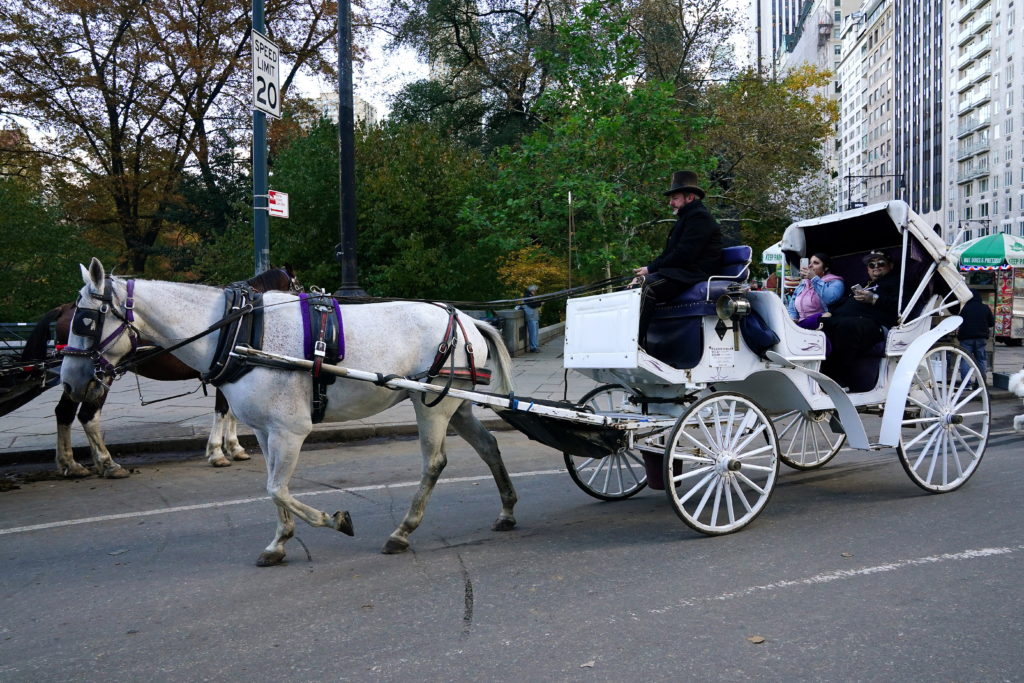
Horse-drawn carriage rides in New York’s Central Park could be discontinued starting June 1, 2028, under a bill supported by City Council member Zohran Mamdani and City Councilwoman Julie Menin, DPA reported, citing US media. The proposal calls for the gradual phasing out of the attraction, which has been part of the city’s tourism landscape […]
Nearly 183,000 giant tortoises inhabit the Aldabra Atoll in the Seychelles. This is the highest number ever recorded for the species and the result of decades of conservation efforts. A new study shows that the population is healthy and remains relatively stable, though scientists warn that climate change and invasive animals continue to threaten its […]
The City Council is expected to approve a bill next week that would end the rides by 2028. Three consecutive mayors had called for an end to the carriage rides because of safety concerns, only to have lawmakers yank back the reins.
For Boston Magazine, Kara Baskin explores a growing subculture of tweens and teens who don’t feel entirely human. Some identify as one animal, like a cat or a dog; others identify with multiple animals. One kid Baskin speaks to, Sol, says she “doesn’t summon the animals, but rather they come and go on their own schedule.” These young people call themselves therians (distinct from furries, who are fans of anthropomorphic animal characters). Baskin provides a fascinating glimpse into a world where adolescents can express themselves and explore their identities.
Bafflement is the baseline condition of raising kids right now. The adolescent quest for self-discovery is timeless—but today’s parents experimented in ways that were analog: new hairstyles, inscrutable music, beer snuck in the woods. Their own parents might not have liked it, but they could at least relate.
Now the landscape of adolescent discovery is literally foreign, thanks to social media, which has turbocharged once-obscure subcultures like the furry fandom—and, at its rarer edge, therianthropy—and redefined what “fringe” even means. Even if a kid is the only therian at school, she can find 400 more people just like her online. That’s one of the biggest challenges for parents in the algorithm age: The world your kid actually lives in is one you can’t enter. It touches the fear in every parent, therian kid or not: What happens when our kids inhabit a world we don’t understand, with idols we don’t recognize?
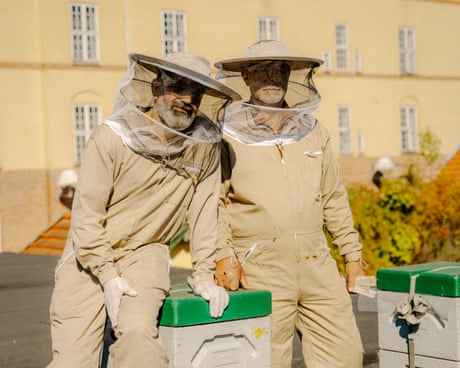
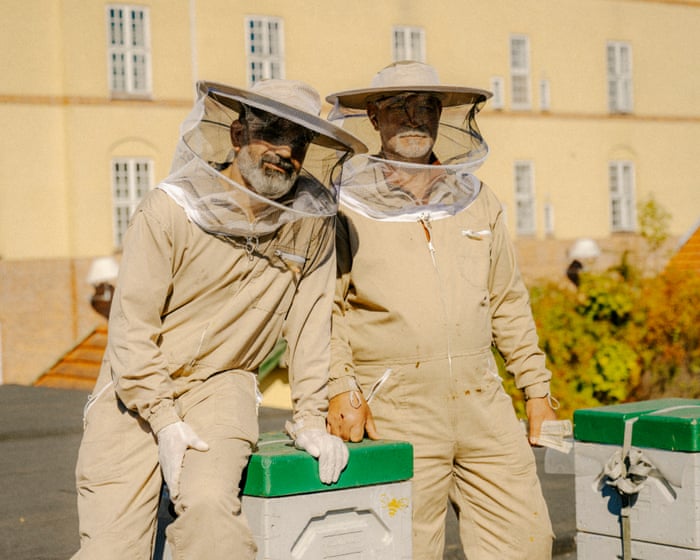
At Bybi in Copenhagen, a dedicated group of staff and volunteers have built a community for all centred on the production of honey – much of which is given away for nothing. Could it be replicated elsewhere?
The bees at Bybi, a collective of beekeepers in Copenhagen, live on the roof. Their home is a complex of Victorian buildings, right in the centre of the city, that looks like an idealised vision of the modern social enterprise, ennobled by the architecture of the past. It’s a place of cottage industry in concert with nature, where the marginalised are brought in from the fringes and corporations stand waiting to help, where jobs happen but a lot of the work is done by volunteers, and where – this bit is important – a lot of time is spent discussing ideas.
Oliver Maxwell, Bybi’s 48-year-old founder, encourages me to examine the buildings more closely. They were once a prison, a workhouse and a hospital; their functions today – a homeless shelter, a young offender institution and, until recently, a job centre – are not so different. Denmark’s Victorian transformation, from “agricultural backwater to industrialised agriculture”, was reflected in how they treated people, Maxwell says.
Portugal’s veterinary authorities have confirmed the presence of the Shamonda virus (SHAV) in the country, an insect-borne infection affecting primarily cattle and sheep. The Portuguese Veterinary Association issued an alert
They aren’t made of asphalt, have no traffic lights, and no cars drive on them. Yet, these unusual “highways” are already saving thousands of lives. In the Brazilian Amazon, conservationists have built rope bridges high up in the trees, allowing monkeys, sloths, and other jungle inhabitants to safely cross over the roads. The results are […]
Scientists have used CRISPR gene-editing technology to create the first dogs lacking a key protein that triggers allergic reactions in humans, the Associated Press reported two months ago. The study, published in *The CRISPR Journal*, describes how specialists from the US company Kindred Companion Sciences created two female Beagles—Bailey and Alfie. They “switched off” the […]
The study challenges prevailing views on the evolution of language A new study conducted by Hungarian researchers reveals that dogs can segment continuous speech into words—a capability previously observed only in humans. Hungarian researchers from Budapest have discovered that human speech changes the way dogs’ brains work, even though the animals cannot speak themselves. The […]
Among the stone tools that early humans left beside a lake in northern Israel, archaeologists found something far bigger: the molar of an elephant, about 8 inches (20 cm) tall and 3 inches (8 cm) wide, lying next to several pieces of tusk. It sat at the same level of ground as handaxes and cleavers […]
Vietnamese police have arrested 12 men accused of stealing nearly 2,700 cats during night-time raids in residential neighborhoods; the pets were taken to be slaughtered for food. Fur-removal machines, cat traps, and weighing scales were among the items confiscated during the investigation into the cat-theft gang in Ho Chi Minh City, Vietnamese police and state […]
Animal behavior often seems predictable. Swallows follow the summer, ants build colonies, and most creatures run when they encounter a predator or wildfire. But nature keeps throwing researchers curveballs, sometimes from species humans have studied for centuries. Some of these discoveries reveal unexpected intelligence, while others expose physical abilities that sound nearly impossible. Orcas flee […]
The Great Sphinx has been without a nose for centuries. Now a fossil crocodile skull taken from the same rock turns out to be missing the tip of its snout too. The coincidence has put a name on a species science did not know it had, Herugavialis cairensis, which spent almost a hundred years in […]
In the winter of 2010, residents of a small Arkansas town awoke to find thousands of dead birds littering their lawns. Just days earlier, tens of thousands of dead fish had surfaced in the same state. It was the kind of coincidence that fuels conspiracy theories, yet investigators ultimately traced the two disasters to entirely […]
In 1982, 28 wild donkeys were released into the desert. Decades later, they have created an oasis in one of the most extreme places on Earth. Donkeys are far more than mere beasts of burden; these herbivorous mammals can benefit the environment in ways that would be difficult to achieve through human intervention. More than […]
Of all the animals shown in the tombs and art of ancient Egypt, very few have a name. Almost all of those that do are dogs. A handful of horses are named too, though far fewer survive. Cats, the animal most of us now associate with Egypt, are a different story. The literature offers only […]
Around 30 million years ago, a heavily built animal prowled the area that is now Vallbona de les Monges, in Lleida province (Catalonia, northeastern Spain). It had a long head, prominent cheekbones and formidable jaws lined with large, sharp teeth. Paleontologists call it the hell pig. The nickname misleads. Its kinship with modern pigs is […]
Leonardo da Vinci (1452–1519) filled his notebooks with insects: dragonflies, bees, wasps, butterflies — almost all of them winged. That focus lines up with what historians already knew about him. Leonardo was fixated on the mechanics of flight, and scholars have long read his drawings of flying insects as studies feeding into his designs for […]

 Login