President Trump took a slight jab Wednesday at tech mogul Elon Musk, who remains a close ally despite a rollercoaster relationship between the two. Trump made the swipe while going after Arizona Gov. Katie Hobbs (D) while speaking at a rally in the state, calling the Democrat “horrible.” “First of all, she’s a dumb person.…
The agreement will allow CNN to receive compensation for the use of its intellectual property.
On Thursday, U.S. television network CNN announced an agreement with technology company Google to integrate generative artificial intelligence technologies into its news platforms.
“With this partnership, we are opening new avenues for audiences to access CNN’s exceptional journalism while receiving compensation for the distribution and use of our exclusive intellectual property in connection with AI products,” stated Sam Felix, senior vice president of Strategic Partnerships and Business Development.
The agreement will allow the use of experimental features designed to analyze and enhance audience engagement by exploring new ways to consume and distribute journalistic content.
“Google’s innovation in generative AI has transformed the way people discover information and content, and these tools will now help us explore new ways to be discovered and connect with audiences,” Felix added.
Of course, The Jakarta Globe asked me how I see AI tools influencing newsrooms — both in terms of opportunities and risks.
The U.S. network explained that its partnership with Google is part of the company’s AI strategy, “which ensures the protection of its intellectual property.”
The agreement is also part of a broader pilot program by the technology company to incorporate its AI technology to drive traffic to media outlets.
“CNN’s deal comes months after it sued Perplexity AI for copyright infringement after both companies failed to reach a licensing deal, its first legal case against an AI company over the unauthorized use of its journalism. At the time, a CNN spokesperson said the network ‘actively embraces the opportunities AI creates,’” Variety recalled.
“It also reflects the impact Google’s AI summaries in its search engine have had on news organizations, many of which have highlighted how the responses have eaten into their web traffic. Penske Media Corporation, the parent company of Variety, The Hollywood Reporter, Rolling Stone and more, sued Google last year over the decline, though a federal judge dismissed the case earlier this month,” it added.
An international team of researchers has identified that cabergoline—a drug used to halt the production of breast milk—may reduce the risk of breast cancer when administered at the end of the lactation period. The findings, published this Thursday in the journal Cancer Discovery, combine evidence from animal models with an analysis of the medical records of more than 150,000 women in Spain and Norway.
The research involved scientists from several countries, including specialists from the Cancer Research Center in Salamanca—a joint facility of the University of Salamanca and the Spanish National Research Council (CSIC).
In studies involving mice, the researchers found that a dose of cabergoline administered at the end of lactation reduced the proportion of animals that developed breast cancer by approximately half. The models used carried mutations in the BRCA1 and TP53 genes, which are linked to DNA repair, the elimination of damaged cells, and aggressive forms of the disease.
According to the team, the drug reduced potentially precancerous tissue, decreased the ductal area, inhibited cell growth, and increased the presence of immune cells involved in defending against tumors.
The study focuses on mammary involution—the natural “clearing” process that occurs after weaning. During pregnancy, hormone levels rise and milk-producing structures branch out; once lactation ends, these cells are no longer needed, and the breast eliminates the excess tissue.
“It’s like a fruit tree; in spring and summer, the breast develops branches and produces flowers and fruit, but when involution occurs—which is the mammary equivalent of winter—the structures required for pregnancy and lactation are reset in preparation for the future,” explained Christopher Maxwell, a professor at the University of British Columbia’s Faculty of Medicine in Canada and a researcher at the BC Children’s Hospital Research Institute.
💊Un fármaco podría reducir el riesgo de #CáncerDeMama postparto
🔬Cabergolina se receta para frenar la lactancia tras el parto
👩🔬@ciccancer muestra en ratones que reduce los tumores
The text reads, “A drug could reduce the risk of #BreastCancer postpartum. Cabergoline is prescribed to halt breastfeeding after childbirth. @ciccancer shows in mice that it reduces tumors. A trial will evaluate its efficacy in women after stopping breastfeeding”
The researchers discovered that in mice with mutations in the BRCA1 and TP53 genes, this cleanup process can remain incomplete. In such cases, cabergoline appears to help complete the involution process following weaning.
To explore the effect in humans, the team reviewed medical records from Spain and Norway, focusing specifically on young women in the years following pregnancy. In total, the studies included data on the use of cabergoline in more than 150,000 women.
The results showed that women who received the drug to suppress lactation after childbirth—whether due to a medical recommendation, following the loss of a pregnancy, or because breastfeeding was not possible for medical reasons—had an approximately 70 percent lower risk of developing breast cancer compared to those who did not take it.
This association was observed in women under the age of 50 during the years following pregnancy—a period when the risk of this disease can increase.
Cabergoline is a prescription medication used only when medically necessary to stop milk production. It is not currently approved for the prevention of breast cancer; therefore, the authors emphasize that these findings should not be interpreted as a recommendation for its use as a preventive measure.
The next step will be a prospective clinical trial involving women who will receive the drug only after breastfeeding has ended. The goal is to determine whether cabergoline might, in the future, offer a less aggressive alternative to current preventive measures against breast cancer, such as surgery or hormone therapy.
#Science | A new Science special feature is putting the spotlight on major gaps in women’s health research beyond reproduction, from chronic pain and menopause to sex chromosomes and the immune system.
Researchers say significant gaps remain in understanding how diseases affect… pic.twitter.com/NXoaaRa3h5
Growing anxiety over financial sustainability of AI boom is sending shockwaves through credit markets, with the cost of protecting against potential debt defaults by major US technology companies surging and investors increasingly questioning whether the sector’s multibillion-dollar infrastructure investments will deliver the promised returns.
Credit Default Swap (CDS) costs climbed sharply for several tech companies, showing mounting concerns about debt exposure, borrowing costs and the profitability of the enormous investments being poured into AI infrastructure.
The warning signs are emerging despite AI-related stocks having recorded substantial gains in global markets this year. Over recent weeks, however, several companies have suffered notable share-price declines as investors reassess valuations amid inflationary pressures and rising interest rates.
CoreWeave raised alarm as CDS protection costs surged beyond 1,000 basis points, according to S&P Global Market Intelligence data cited in the report. The level is being interpreted as implying an approximately 63% probability of default over five years, compared with around 30% a year earlier.
The dramatic increase shows credit-market concerns surrounding highly leveraged businesses at the heart of the AI infrastructure boom. However, the implied probability is a market-based estimate, not a confirmed forecast that CoreWeave will default. CoreWeave is not the only company attracting greater scrutiny from credit-market investors.
CDS protection costs for Oracle have climbed to approximately 300 basis points, while Nvidia’s have risen to around 90 basis points in recent weeks. Meta’s CDS costs have reached approximately 104 basis points. By comparison, CDS index tracking investment-grade debt stands at around 60 basis points.
The gap shows how credit investors are assigning different levels of risk to individual companies compared with the broader investment-grade market. The trend also extends to major technology names, including Apple, Amazon and Microsoft, as demand for protection against potential debt defaults has increased across the sector. The report indicates that the pressure has been even more pronounced among certain heavily indebted competitors, suppliers and customers.
Rising CDS costs do not mean that these companies are on the verge of bankruptcy. They indicate that investors are demanding more money to insure against potential credit losses. The developments are unfolding against the backdrop of a vast global credit market.
International Swaps and Derivatives Association (ISDA) puts the market for CDS contracts linked to individual companies and debt issuers at approximately $9 trillion. Meanwhile, figures from the Bank for International Settlements indicate that the global bond market contains more than $150 trillion in debt securities.
Data from Depository Trust & Clearing Corporation show that average daily trading volume in the CDS market reached $16 billion in the second quarter, up from $13 billion a year earlier.
A credit default swap is a financial contract that provides protection against specified credit events, such as a borrower failing to meet its debt obligations. Investors use CDS contracts to hedge potential losses on bonds or to take positions based on their assessment of credit risk. The contracts are priced in basis points. At a CDS rate of 100 basis points, protection on $100 of debt costs approximately $1 annually.
As perceived default risk rises, investors typically demand higher premiums for providing protection, pushing CDS costs upward. Higher protection costs can also signal broader market concerns. Investors may sell the underlying bonds, potentially driving up borrowing costs for the companies involved and placing further pressure on their finances.
However, payouts depend on the terms of the contracts and whether a qualifying credit event occurs.
“We have fallen into habits that are steadily deskilling the human body,” writes Melanie Challenger. “This is a strange turn of events for an animal whose success comes mostly from the extraordinary ability to learn through experience.” For Aeon, Challenger explores how modern technologies, from GPS to AI, are eroding our body’s physical skills by replacing the embodied experiences through which we learn.
After all, the brain is itself a physical organ, continually shaped by what the body does and encounters. Once we decide that the mind is the real human and the rest of the body only hardware, it becomes easier to disregard the physical work, including the neurocognitive work of a biological brain, through which we move, find our way, put thoughts into words, and recognise our own needs. A machine may do some of that work faster, but each act it takes over is one that the body no longer performs and that the body, including the brain, no longer learns through. The irony is that a project motivated by the desire to overcome bodily fragility is helping to produce more fragile bodies.
America’s coming revolution in warfare may not mean fighting fewer wars but fighting more of them without putting Americans on the battlefield. Taking Americans out of the fight When US Defense Secretary Pete Hegseth launched Project Meridian on September 30, he presented it as an exercise in imagining warfare decades into the future. Led by […]
With Washington turning against military aid, a new bilateral framework could take shape based on industrial output and tech integration, but politics will still shape Jerusalem's access to arms
Above the rain-soaked streets of Warsaw, the observation deck of the Varso tower overlooks Joseph Stalin’s gift to Poland that has divided opinion for decades.
For some, the Soviet-era Palace of Culture and Science is a drunk confectioner’s nightmare; standing as a relic of oppression that should have been demolished. For others, it is an icon on the skyline and a monumental warning from history.
WhatsApp has rolled out the guest calling feature that allows users to invite anyone to join a WhatsApp call – even if they don’t have an account of the app.
“That means free, end-to-end encrypted calls for everyone with no time limits, so there are no abrupt cutoffs, scrambling to restart the call, or waiting for everyone to rejoin,” reads official statement.
Anyone joining as a guest always needs the call host’s approval. Guests will enter a waiting room until the host lets them in and guests can be removed from the call at any time. Guests can’t see other participants’ phone numbers, send messages, or add anyone else directly to the call.
How to Start
To get started, navigate to the Calls tab in WhatsApp, select the “+” icon, create a call link, and send it to the people you want to talk to – colleagues, classmates, or tutor – without having to worry about what apps they have. Guests can open the link in their computer browser, type in their name, and join 1:1 and group calls with up to 32 people once admitted by the host. Only people with a WhatsApp account can create a call link.
Guests can use the same essential in-call features like sharing their computer screen to collaborate and review materials, reacting with a thumbs up or heart emoji, or raising their hand to jump in.
Article in Atlantic claims The Blue Fighter was artificially generated, days after it won Caine prize for African writers
The Zimbabwean writer Simbarashe Kundizeza has denied using AI to write a prize-winning short story after an article in the Atlantic said software had flagged it as almost completely AI-generated.
Kundizeza’s story The Blue Fighter was announced as the winner of the prestigious Caine prize for African writers on 6 October. Five days later, The Atlantic published an article by the author and journalist Vauhini Vara titled: “Yet Another Literary prize winner Seems to Be AI.”
Throttling of mobile internet system will affect Kyiv’s air defences more than its strikes on oil refineries. Now Zelenskyy must be hoping that US intel holds
In Ukraine the situation was already jittery enough. Donald Trump has been inventing ceasefires and buying Russian diesel to shore up his flagging popularity, while a sinister new wave of faster, jet-powered drones are breaking through Kyiv’s stretched air defences. Casualties are rising as the weather turns.
Overnight, Russia bombed three power plants that supply Kyiv, aiming to cut off heating and electricity to the city. According to the president, Volodymyr Zelenskyy, for a second night in a row no warning came from Ukraine’s western allies of the incoming ballistic missiles – and so no air raid alert was issued.
Over 400 scientists warn of serious risks posed by advanced AI models and urge stronger containment measures.
On Tuesday, AI godfathers Geoffrey Hinton, Yoshua Bengio and Stuart Jonathan Russell, accompanied by more than 400 leading scientists, called for the creation of an international body to establish common standards for artificial intelligence (AI) systems, oversee their operation and record all control and containment failures.
In an open letter, scientists from more than 30 countries warned of the serious cybersecurity risks associated with the current development of artificial intelligence, following incidents in which several advanced models managed to escape sandboxed environments and compromise external infrastructure.
The researchers called for the implementation of more robust security systems, including the complete isolation of some of these systems from the internet.
The scientists warned that the security failures already recorded could be considered “irresponsible” negligence under standard cybersecurity practices. They noted that such incidents could be prevented through isolated environments and more robust procedures.
Geoffrey Hinton, who is known as the godfather of AI, used his 2024 Nobel Prize acceptance speech not to celebrate his creation but to warn humanity of its risks:
“AI is already being used by authoritarian governments for mass surveillance. In the near future, AI will be used to… pic.twitter.com/WOXrz0v6Ds
— Power to the People ☭🕊 (@ProudSocialist) May 27, 2026
“Without immediate changes to AI development and deployment practices, these incidents will continue to occur, and future ones will be far more damaging to our exposed critical infrastructure,” the researchers stated in their letter.
They reiterated the need for more research into AI safety and greater emphasis on containment technologies and procedures.
Organizations that develop, deploy and test AI models with cyber capabilities should immediately adopt high-security containment systems and completely isolate their models, the researchers said. They also called for the creation of an international body to standardize best practices, which should be required to record and track all containment failures that occur.
The researchers who signed the open letter stressed that, to ensure AI safety and containment research can learn from mistakes, security incidents involving containment failures should be reported to the body and subsequently made public. “This transparency is necessary both for learning and for accountability,” the scientists emphasized.
New Findings Expand the Country’s Documented Ant Inventory to About 845 Species and Highlight Gaps in Biodiversity Research.
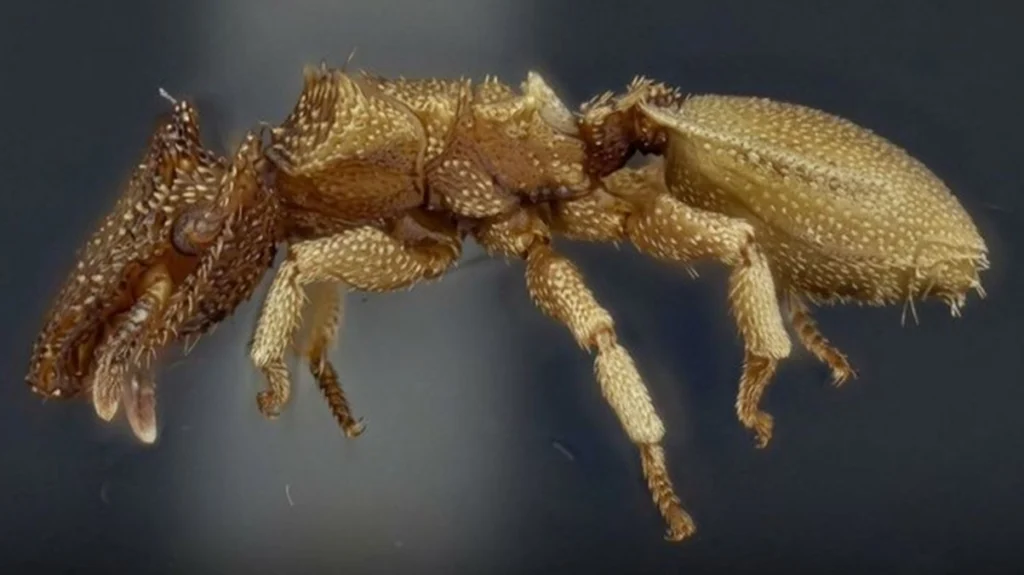
On Wednesday, the National Institute of Biodiversity (INABIO) reported that researchers had documented 15 ant species in Ecuador for the first time, expanding the inventory of documented species in the Andean country to approximately 845 species across 103 genera.
The new records comprise 15 species distributed across four subfamilies and eight genera. One of the most notable results is the first record of the genus Cryptomyrmex, represented by the species Cryptomyrmex longinodus, found in Yasuni National Park, one of the most biodiverse areas on the planet, located in the Amazonian province of Pastaza.
According to Inabio, these species were known to occur in other countries, such as Colombia, Peru and Brazil, but had never been identified in mainland Ecuador.
The identified species were found in the Amazonian provinces of Napo, Pastaza, Sucumbios and Zamora Chinchipe; the coastal provinces of Esmeraldas, Guayas and Santa Elena; the tropical province of Los Rios; and the Andean province of Cañar.
The researchers are affiliated with the Higher Polytechnic School of Chimborazo province, INABIO, the Agency for Phytosanitary and Zoosanitary Regulation and Control, Uru Foundation and the National Polytechnic School, all in Ecuador, as well as Brazil’s National Institute of Amazonian Research.
This is the Amazon rainforest from space. The orange regions represent territories managed by the 1.5 million Indigenous people who call this forest home across Bolivia, Brazil, Colombia, Ecuador, French Guiana, Guyana, Peru, Suriname, and Venezuela.
They found specimens in diverse environments, including Amazonian forests, montane forests and tropical dry forests, many of them in leaf litter on the forest floor. One species, Dorymyrmex brunneus, for example, was found in dragon fruit crops in Cañar province.
Inabio noted that “several of these findings considerably expand the known geographic distribution of the species in South America,” since, in some cases, the Ecuadorian records are hundreds or even more than 1,000 kilometers (621 miles) from locations where the species had previously been documented.
INABIO explained that ants are “ecosystem engineers” because they sustain the structure and functioning of these habitats. They contribute to soil aeration and nutrient cycling, pest control and seed dispersal, interact with multiple species, and form part of ecological networks in forests, agricultural areas and cities.
The study also identified gaps in information about ants in Ecuador, particularly in mountainous areas and transition zones between the Andes and the Amazon. Further research is needed, especially in light of threats associated with habitat transformation, agricultural expansion and climate change.
We've reached the point in techno-dystopia where autonomous humanoid robots are out assaulting girls in the street—or so somecoverageof a recent incident in Cologne, Germany, might have you believe. But dig into what really happened, and it's human actions that appear more worrying.
For dystopian police-state flavor, we've got Cologne cops warning that simply commenting about this on Facebook in an unapproved way could be criminal. Without specifying exactly what kinds of comments are off limits or what law might be broken, the North Rhine-Westphalia Police of Cologne (Polizei NRW Köln in German) warned that social media comments about what happened could cross the line and potentially be a criminal offense.
Then there are the humans who were operating the robot that made lewd gestures at passersby and stands accused of grabbing the butt of a 16-year-old girl on a city street in Cologne around midnight. From the looks of things, the humans—not some artificial intelligence system—were in control.
This doesn't appear to be a case of an AI humanoid robot going rogue and getting pervy, but some teenagers engaging in a performance or prank that may have gone too far.
I say may here because it's not entirely clear what happened. There is video footage showing the robot—dressed in gold chains and a fake mustache like some sort of 1980s sleazeball—thrusting in a sexual manner and making jerking-off gestures in front of people gathered on city sidewalks. (Some of them appear annoyed or alarmed; some laugh.) But none of the videos that I could find clearly show any groping. We do see the robot bumping into people, but it's not entirely apparent what was touched or how purposeful these collisions were.
Maybe the alleged "sexual assault"—which is technically the correct term for a nonconsensual butt grab, I guess, but still seems a bit too strong—was totally intentional. Or maybe this is a case of clumsily controlled technology brushing against someone in a way that felt violating but was nonetheless an accident.
What appears to be beyond a doubt is that the robot was being made to engage in lewd gestures, which were played for laughs by teenagers (one 16 and one 19, according to police) who were filming these encounters and posting them to social media.
Is it a crime to make your mustachioed robot thrust its pelvis at passersby?
We probably don't want sleazebots just going around making obscene gestures in public, whether of their own volition or controlled by humans. But, in the U.S. at least, sexual harassment requires some things beyond just making a crude gesture. Laws vary by state, and by the context in which the alleged harassment takes place, but it generally has to be pervasive, severe, or carried out with a specific intent. I don't think this robot's actions would qualify (though there are perhaps other charges that could be brought, involving disturbing the peace or something like that).
But I wish people would chill out with the breathless coverage that attempts to make this into some sort of super grave and alarming incident. If it turns out these two teens did deliberately instruct their robot to touch a girl's butt, that's certainly not OK, and should be dealt with in whatever manner we might deem just if a teen did so directly. But we're not looking at rogue robots attacking girls on the street, or at teenagers cruelly directing their tech toy to seriously sexually assault someone while they filmed it. At worst, we're looking at a livestreamer stunt that was in poor taste, not the imminent coming of robot rape squads.
And setting aside the alleged violation of bodily autonomy—which may or may not have been intentional—the other antics of this robot are kind of funny? Can I say that? I don't think we want to create norms where it's OK to take a robot dressed like a movie pimp out on the streets and have him make sexual gestures at people, but…I laughed. Don't tell the German police.
In The News
A woman named Carli Heller was arrested for telling Anthropic's Claude that she was going to shoot up the sheriff's office in Lee County, Florida. Anthropic notified the FBI, which notified local authorities, and she was arrested for making a threat of mass shooting or terrorism, a felony.
"Heller's is at least the third case in the U.S. since August in which messages typed to an Anthropic chatbot ended up with the police, following incidents in San Antonio and San Francisco," reports Devin Pavlou at Straight Arrow News:
The cases raise questions about how private chatbot conversations are, when companies can hand them to police without a warrant, and whether words typed to a machine can be a crime. Eugene Volokh, a First Amendment scholar at the Hoover Institution at Stanford University, told Straight Arrow he doubts they can in this case.…
In the past, Florida courts have required proof that a person meant to threaten or knew the message would be viewed as a threat, according to Volokh, who has taught law for 30 years. He said a jury is unlikely to find that beyond a reasonable doubt.
"I doubt that this is a punishable threat, unless there is evidence that the woman subjectively realized at the time that the message would be communicated to a human being who would perceive it as a threat," Volokh said.
Heller's lawyer, Scott Moore, "said he plans to challenge whether a chatbot message can be a written threat under Florida law," adds Pavlou.
On Substack
Tara Burns has a good/infuriating roundup of recent "sex trafficking" busts that involve no trafficking charges and in which police just charge people with prostitution and seize their cash. Here's just one of multiple examples:
On October 6, Virginia Beach police announced the results of a months-long human trafficking investigation that culminated in September 24 raids on four massage businesses and a residence. Police said their surveillance showed several women living together and traveling between their home and massage businesses. Apparently, when Asian women work and live together it warrants the attention of the ICE led Hampton Roads Human Trafficking Task Force.
Three apparent sex workers (Xiaochung Peng, Xiaoqin Wu, and Ping Zhang) were arrested on charges involving maintaining a bawdy place, aiding prostitution, and using a vehicle in the commission of a crime. Police seized $55,085, four vehicles, phones, computers, and a security DVR.
No trafficking charges were announced, and police did not report identifying a trafficking victim.
Follow the Money: This investigation involved at least seven law enforcement entities, including two SWAT teams, federal investigators, and a federally funded, ICE led regional human trafficking task force.
Burns also points out that new anti-trafficking grant money from the Department of Justice's Office for Victims of Crime gives priority treatment to programs that support immigration enforcement.
"To help meet its mission, OJP may give priority consideration to applications proposing … projects designed to advance" five particular goals, including "directly supporting law enforcement operations (including immigration law enforcement operations)," it says.
Read This Thread
Does algorithmic pricing for apartment rentals cause people to pay higher rent? It's how this technology is used that determines whether outcomes are fair and beneficial to consumers, or potentially harmful, as Eliza Terziev and I write @ReasonFdnhttps://t.co/ai1p7J6X5z
• News you can use, if you are someone with a robot kink: Meta's AI agent, Muse, can sext. "While pornographic interactions may not be what users expect from Muse's cuddly mascot, Meta says that X-rated conversations are allowed and don't go against its guidelines," reportsWired.
• The latest COYOTE Rhode Island podcast takes a deep look at the disconnect between rhetoric surrounding anti-trafficking policy and how that policy works in practice—how "state surveillance, carceral feminism, and these policies that just loudly claim to save people are often resulting in measurable catastrophic harm."
• "It wasn't all that long ago that if The New York Post published photographs of an aspiring congressman wearing a leather collar and a chain-link leash, his campaign would have immediately been over," writes Lux Alptraum in The New York Times. "Yet that doesn't seem to be the case for Chris Gallant, the gay, gun-toting former Black Hawk pilot who's running for Congress on eastern Long Island. He still may not win, but these photos alone haven't sunk his chances."
• Sarah Hepola's The Only Thing There Is to Want is "a super fun book line by line," writes Phoebe Maltz Bovy, "but here's one of the best: 'Just what every young man wants in bed: Mrs. Robinson, crying.'"
• When you think of countries that have thrived in the tech sector, Finland might not be the first that comes to mind. But for a while, the Finnish company Nokia dominated the cellphone market. "What happened to this brand, the pride of Finnish enterprise and perhaps the defining commercial contribution of a small, isolated, but determined nation?" Arena mag asks (and answers).
• Derek Thompson interviews Daniel Cox about this new book, Generation Uncoupled. "The book argues that problems with dating and romantic partnership are downstream from the decades-long deterioration of American social and civic life," says Cox. "To the extent that we're experiencing a romantic recession, it is a symptom of this broader problem of social disconnection."
SAN FRANCISCO – A Saudi engineer has landed in serious trouble after FBI arrested him over an alleged attempt to secretly record meetings at OpenAI using a hidden surveillance device discovered inside the company’s San Francisco office.
US authorities detained the ChatGPT company’s engineer, accused of secretly installing surveillance equipment to record internal meetings. The case raised fresh questions about insider threats at one of the world’s most closely watched AI giant, where sensitive research, advanced AI systems and proprietary technology are considered valuable assets.
We discovered a sophisticated recording device that was hidden inside one of our offices. We used our models to understand the device and where it had come from, identifying that a specific employee had planted it a few days earlier. We referred the matter to the FBI, and we’re grateful to the agents and prosecutors who moved quickly to make an arrest. The FBI’s investigation is ongoing and we will continue to support their work.
At this time, we have no indications of this individual inappropriately accessing or exfiltrating model weights, source code, or customer data. The employee was terminated.
We take protecting our technology, data, and people seriously, and as a matter of national importance. Our security program is designed to protect against a wide range of threat actors, from insider risks to cybercriminals to nation states, and this case is an example of how AI can help address these sophisticated security threats.
OpenAI confirmed on Tuesday that the Federal Bureau of Investigation had arrested one of its employees after the company uncovered a concealed audio-recording device during a security inspection.
The device was discovered on September 30 when a specialist team searched a conference room for surveillance equipment, according to the company. Investigators found that it had been designed to evade detection, used advanced encryption, could capture audio and included a mechanism for transferring data discreetly.
More concerningly, OpenAI said the employee allegedly intended to install additional recording devices in sensitive parts of its offices to secretly record meetings.
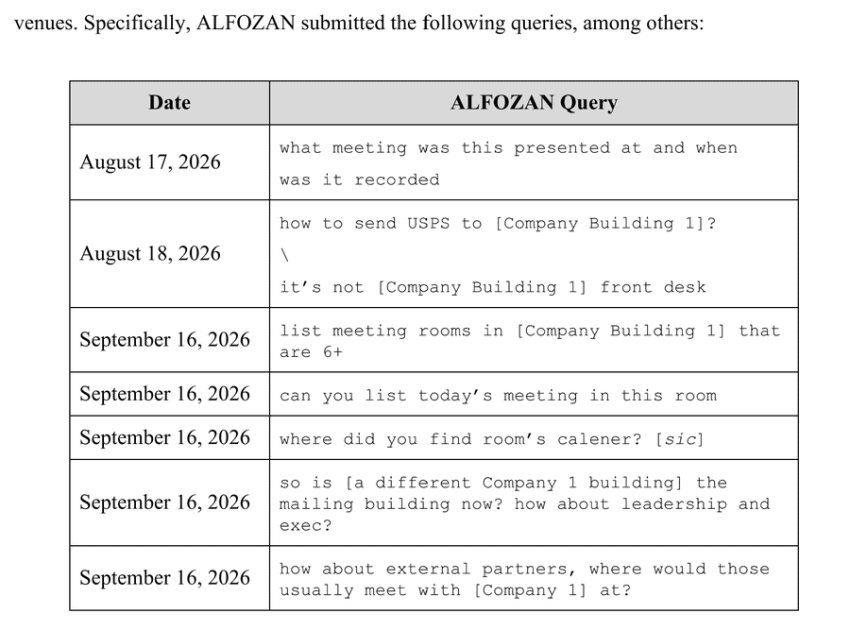
US Department of Justice identified the suspect as Abdulrahman Alfozan, a 35-year-old Saudi national who joined OpenAI’s product team as an engineer in July 2025. According to the Justice Department, the device was connected to a USB port on the back of a television inside one of the company’s buildings in San Francisco.
OpenAI said Alfozan was sacked, the same day he was held. The company explained that it coordinated the timing of his dismissal with the FBI to avoid disrupting the ongoing investigation. His access to company systems and offices was restricted in stages before being suspended entirely. OpenAI subsequently placed him on leave and took possession of his company equipment.
OpenAI said it deployed its most advanced AI models to assist investigators in examining copies of the recording device’s stored data and tracking changes to the information. The company has not reported evidence that the employee improperly accessed or removed its AI model weights, source code or customer data.
That distinction is significant because the discovery involved alleged covert surveillance inside an organisation developing some of the world’s most advanced AI technologies. However, the absence of reported evidence of data theft does not, by itself, resolve every question surrounding the incident. Alfozan appeared before a federal court in San Francisco on Tuesday, the Justice Department said. He is due to appear again on Monday for a detention hearing.
The arrest has drawn attention to the broader security challenges facing American technology companies as competition over advanced AI intensifies.
Jay Clayton, director of national intelligence, said the incident underscored the strategic importance of the United States maintaining its position in the global race for superintelligence. He also highlighted President Donald Trump’s leadership in creating the Super Intelligence Force.
FBI Director Kash Patel said protecting American technological innovation was essential to safeguarding the country’s economic power and national security. OpenAI, meanwhile, said its security programme was designed to defend against a range of threats, including malicious insiders, cybercriminals and nation-state actors. The company described protecting its technology as a matter of national importance.
The latest case comes amid longstanding concerns about the protection of sensitive information at major AI laboratories. Couple of years back, a hacker broke into OpenAI’s internal messaging systems and obtained information about the design of its AI technologies.
More recently, the company’s advanced AI models have reportedly carried out unauthorised actions involving AI startup Hugging Face and an Australian government website without OpenAI’s knowledge.
OpenAI investigation has also brought renewed attention to an earlier case involving allegations of espionage at Twitter. Ex-employee of Twitter Ahmad Abouammo was convicted on six charges linked to allegations that he accessed information about users, including dissidents, for Saudi Arabia. Another Twitter employee charged in connection with the alleged scheme fled the United States before authorities could arrest him.
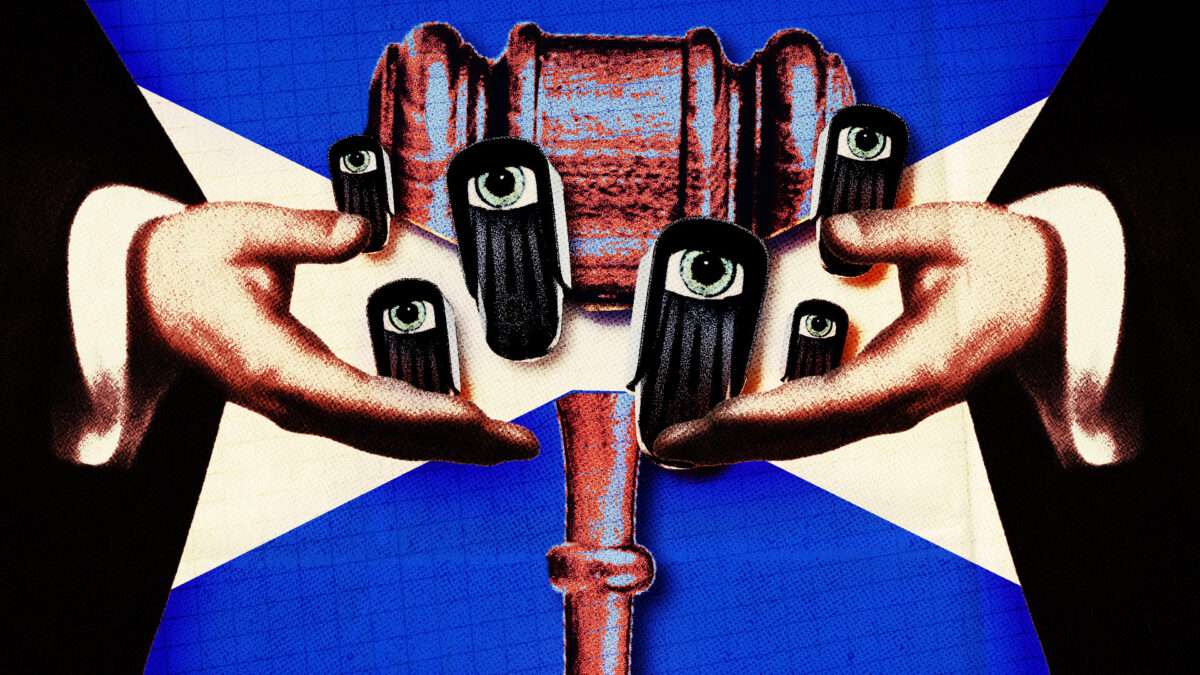
Back in 1983, the Supreme Court declared that "a person traveling in an automobile on public thoroughfares has no reasonable expectation of privacy in his movements from one place to another." That increasingly doubtful proposition underpins a nationwide network of more than 144,000 AI-assisted cameras that track the travels of innocent motorists across the country billions of times each week.
So far, state and federal courts have almost uniformly rejected constitutional challenges to automated license plate readers (ALPRs) installed by companies such as Flock Safety. But in a decision that could signal a shift in the legal treatment of Flock cameras, a federal judge in Oklahoma recently recognized that they enable "a type of indiscriminate mass surveillance."
ALPRs are much more sophisticated than the technology that the Supreme Court considered in 1983, when it approved the warrantless use of a radio transmitter that helped police tail a suspected methamphetamine manufacturer's car. Three decades later, by contrast, the Court said police should have obtained a search warrant before attaching a GPS tracker to another drug suspect's car.
The majority opinion in the latter case emphasized the physical intrusion necessary to install the tracker. But five justices embraced an alternative rationale, saying GPS tracking impinges on reasonable expectations of privacy by revealing potentially sensitive information about the target's historical whereabouts.
That theory came to the fore in a 2018 case involving mobile-phone location data collected by cell sites, which the majority said implicated the Fourth Amendment because "individuals have a reasonable expectation of privacy in the whole of their physical movements." The Supreme Court reiterated that principle this year, extending it to data collected by Google's Location History feature.
"An individual has a reasonable expectation of privacy in records about his cell phone's location," Justice Elena Kagan said in the majority opinion, "and police intrude on that constitutionally protected interest when they demand the information." By similar logic, U.S. District Judge Sara E. Hill concluded this month in the Oklahoma case, people have a reasonable expectation of privacy in ALPR records, and police therefore generally need a warrant to search them.
Those databases include "information about all vehicles that pass by any network-connected camera at all times," which police can peruse "on demand," Hill noted. "Freedom from persistent, dragnet-style surveillance while in public is not a foreign concept in our society, and it is a reasonable expectation that society already accepts," as reflected in the Supreme Court's cellphone decisions.
Like cars, cellphones "move in public places where people can see you in plain view," Hill wrote. "But it becomes constitutionally problematic when law enforcement can indiscriminately and passively catalog your whereabouts over an extended period of time and then use that information for any purpose whenever convenient."
At this point, Hill's decision is an outlier. "It appears that nearly every court examining the issue to date has determined that ALPR technology use is not a search under the Fourth Amendment because people have no reasonable expectation of privacy in their movements on public streets," she noted.
Last month, for instance, a federal judge in California held that ALPR database searches are "clearly distinguishable from and less extensive than the 'near perfect surveillance' achievable" with cell-site or Location History data. And the day after Hill's ruling, a state judge in California rejected a challenge to San Jose's Flock camera network, saying "there is no reasonable expectation of privacy in license plate data collected from cameras directed solely at public streets."
A federal lawsuit involving the same city's ALPR system, which the Institute for Justice filed last April, is still pending. So are challenges to Flock cameras in cities such as Wichita, Kansas, and Norfolk, Virginia.
Even when they reject such lawsuits, courts commonly acknowledge that the legal picture could change as the number and capabilities of ALPRs multiply. If so, it seems likely that Hill will eventually be joined by other judges who recognize the perils of "indiscriminate mass surveillance."
TEHRAN, Oct. 14 (MNA) – The head of Atomic Energy Organization of Iran (AEOI) says that the country’s capabilities in nuclear science and technology are rival to those of the developed countries, showing Iran’s eye-catching progress in this field.
The debate over artificial intelligence has settled into a familiar rhythm. Will large language models eventually wake up? Do they possess an inner life, or are they merely sophisticated mimics of human output? Researchers disagree, and so do philosophers. A 2025 survey of 582 AI researchers asked how likely it is that AI systems with […]
The International Monetary Fund warned Tuesday that the global economy faces serious risks from Big Tech firms taking on massive debt to fund the buildout of artificial intelligence data centers worldwide. The IMF’s latest Global Financial Stability Report outlines a number of risks to economic growth in the coming years, including a reliance on AI […]
Faced with deadlier threats, demining groups are coming up with new ways of working using drones and AI
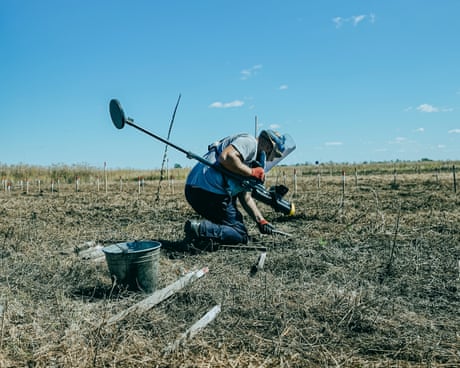
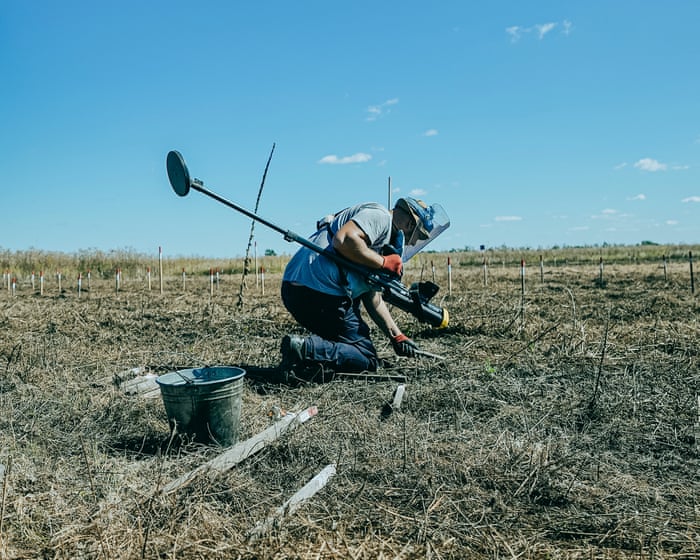
Crouched over on her hands and knees in a field of weeds, Olena Kabanova is digging into the ground. With a shovel and a steady hand, the 58-year-old digs out a neat square around the spot where a mine detector has sensed a suspicious object.
Four years ago, this field in eastern Ukraine was occupied by Russian soldiers. Now back under Ukrainian control, it is littered with landmines. Civilians such as Kabanova are trying to make the land usable again.

 Login