❌

Reading view

Bring a bottle: Viennese dog owners told to rinse pets’ urine from trees

Official guidance says ammonia in animal urine should be watered down to stop it corroding bark

A neighbourhood in Vienna has introduced guidelines for dog walking, including the use of bottled tap water to rinse away urine and protect vulnerable trees.

Neubau, an up-and-coming, densely populated district dotted with cafes and galleries, rolled out the Schönes Gassi (nice dog walk) campaign this week.

Continue reading...

© Photograph: Georg Hochmuth/APA/AFP/Getty Images

© Photograph: Georg Hochmuth/APA/AFP/Getty Images

© Photograph: Georg Hochmuth/APA/AFP/Getty Images

  •  

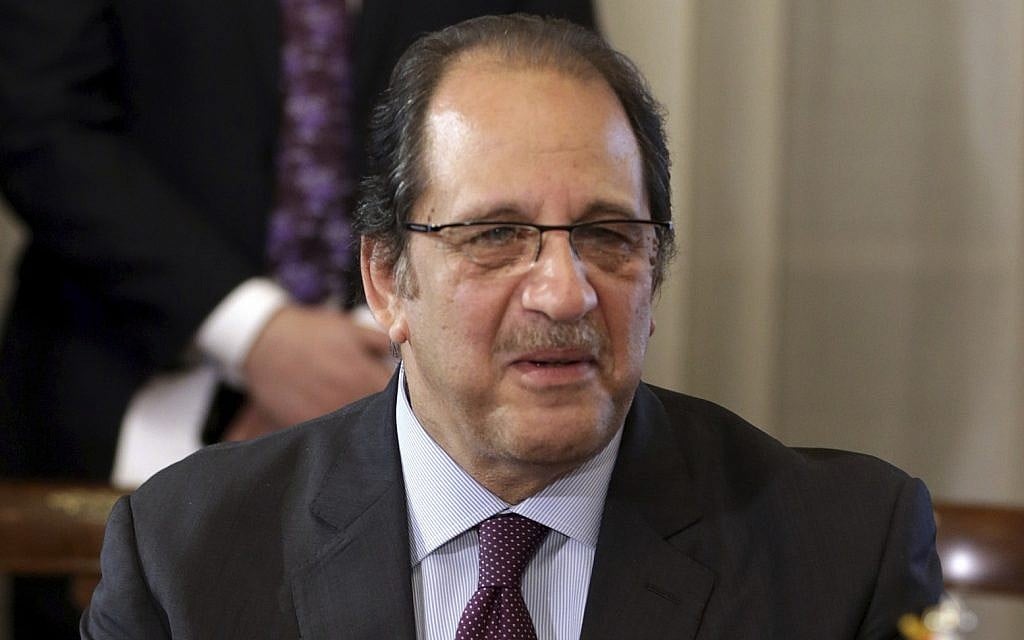
Contradicting PM and reports, Egypt’s spy chief said not to have been in Israel days before Oct. 7

After claims about Abbas Kamel's alleged flying visit to warn about a Hamas attack, multiple reports now say he wasn't aboard private Egyptian jet that arrived on Sept. 26, 2023
  •  

Poland’s ascent from communist state to top 20 economy reverses the brain drain

In the final part of our series on the country, Poles tell how wages have soared – along with the cost of living

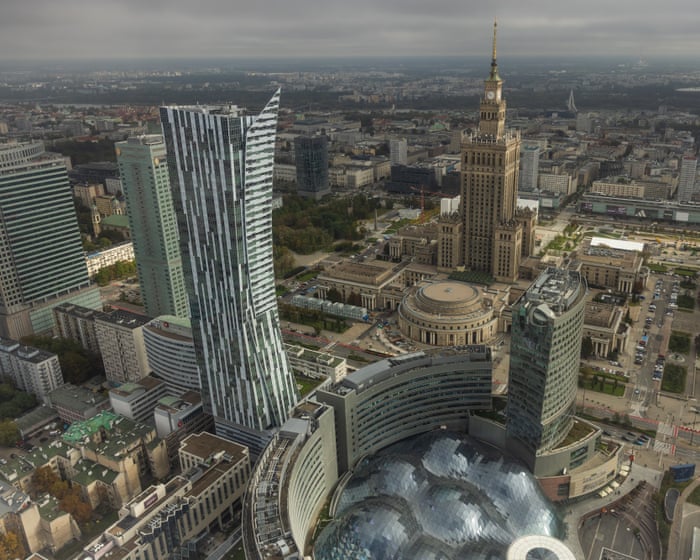
Above the rain-soaked streets of Warsaw, the observation deck of the Varso tower overlooks Joseph Stalin’s gift to Poland that has divided opinion for decades.

For some, the Soviet-era Palace of Culture and Science is a drunk confectioner’s nightmare; standing as a relic of oppression that should have been demolished. For others, it is an icon on the skyline and a monumental warning from history.

Continue reading...

© Photograph: Anna Liminowicz/The Guardian

© Photograph: Anna Liminowicz/The Guardian

© Photograph: Anna Liminowicz/The Guardian

  •  

Ex-Shin Bet chief files defamation suit against Netanyahu, details warnings months before Oct. 7

Ronen Bar says Netanyahu disregarded an 'extraordinary series of warnings of impending disaster'; lawsuit comes in response to PM's claim of 'criminal' acts by Bar for failing to wake him before Hamas attack
  •  

Unless the opposition steps up its game, Netanyahu, the PM of Oct. 7, could yet survive this election

It's a combination of his own shameless efforts to rewrite history, his opponents' inability to adequately hold him to account for that blackest of days and much more besides, and, perhaps, Israel's changing demographics
  •  

EU regions demand targeted investment for automotive industry amid electrification push

European regions and cities demand clear rules and solid financial backing to help Europe’s ailing car industry through the shift to electric vehicles (EVs). The European Committee of the Regions (CoR) on Wednesday adopted an opinion on the European Commission’s Automotive Package, arguing that the transition will only succeed if regions are adequately equipped to carry it.

Regions said electrification is crucial to achieving climate-neutral road transport, but that success depends on affordability and access. They called for charging infrastructure across regions, funded by European, national and regional budgets, as well as targeted demand support in lower-income regions.

“Europe’s regions and cities have spoken with one voice: competitiveness and electrification by 2035 go hand in hand,” said María Chivite, President of the Navarre region in Spain, who drafted the opinion. Europe can only lead the transition, she argued, if regions receive “real financing”.

The Commission proposed the Automotive Package in December. It suggests a 90-percent-cut in tailpipe emissions from 2035, with the remaining 10 percent offset through low-carbon steel or e-fuels and biofuels. The CoR welcomed these temporary flexibilities but warned that they must not delay zero-emission mobility.

Brigitte Torloting, Chair of the Automotive Regions Alliance (ARA) and Vice-President of France’s Grand Est region, warned that time is short and “global competition will not wait for us”. She called for a strategy that protects automotive production in the regions, backed by strong European instruments such as “European preference.” Without a clear framework and targeted investment, she said, Europe risks losing its industrial base, from small and medium-sized enterprises (SMEs) to major suppliers.

Made in the EU

“European preference” is an approach first introduced in the Commission’s proposal for an Industrial Accelerator Act in March and is designed to prioritise EU-based manufacturing. The Commission suggests public procurement contracts and state-subsidised industrial projects to source a minimum percentage of materials or components from European producers. For EV production, the Commission proposed that 70% of components for new cars – excluding the battery – must originate within the EU.

CoR members also welcomed the “Made in the EU” approach to strenghten European production but insisted it must be proportionate, so that SMEs and regional supply chains are not buried in red tape.

With automotive production concentrated in specific territories, the opinion also calls for targeted cohesion funding, skills and quality jobs.

According to EU figures for 2024, the automotive industry contributed 7 percent of EU gross domestic product (GDP), about EUR 170 billion in exports and supported around 13.8 million jobs, 3.5 million of them in manufacturing. According to CoR figures, the 41 regions organised in the Automotive Regions Alliance (ARA) generate more than 40 percent of EU GDP.

This story was produced by the European Newsroom (enr) in cooperation with the European Committee of the Regions (CoR). The editorial responsibility lies with the enr. 

Press contact:

Theresa Sostmann
Tel. +32475999415

Theresa.Sostmann@cor.europa.eu

  •  

Why Was Sadiq Khan Given a United Nations Award?

Parts of London look like a dump. But that hasn't stopped the UN from giving Mayor Sadiq Khan an award for "improving urban life". It's all very incestuous, says Charlotte Gill: the UN is just rewarding its cronies.

The post Why Was Sadiq Khan Given a United Nations Award? appeared first on The Daily Sceptic.

  •  

European Regions Warn Brussels That New EU Budget Could Concentrate Wealth and Power in National Capitals

European regional and local leaders have warned that the EU’s next long-term budget risks transferring control over investment programmes to national governments, potentially increasing economic disparities and reducing the ability of poorer regions to shape their own development.

The warning was delivered in Brussels on 12 October by Kata Tüttő, President of the European Committee of the Regions, during the opening of the European Week of Regions and Cities.

Her intervention comes as EU leaders prepare to negotiate the 2028–2034 budget, with disagreements over agricultural funding, regional development, defence, industrial competitiveness and the distribution of financial responsibilities among member states.

The Committee of the Regions warned that greater centralisation could concentrate economic opportunities in already prosperous areas while limiting other territories’ capacity to attract investment and develop essential infrastructure.

The concern goes beyond money allocated to regional development. It addresses who controls spending decisions and whether local authorities retain a meaningful role in determining how European funds are used.

Regional governments resist centralisation

EU cohesion policy has traditionally sought to reduce disparities between richer and poorer regions through investment in transport, infrastructure, education, business development and public services. While national governments administer considerable funds, regional and local authorities are frequently involved in identifying priorities and delivering projects.

The Committee argues that restructuring which concentrates decision-making at national level could weaken this arrangement. National governments may favour country-wide industrial or infrastructure programmes, while regional authorities identify specific problems arising from local conditions.

A national infrastructure strategy could prioritise major transport routes and industrial centres. Regional administrations might instead emphasise connecting smaller communities, maintaining local services or developing specialised economic activities.

The dispute concerns whether the next EU budget will maintain flexibility for regional priorities. In Belgium, Germany, Spain and Italy, regional institutions possess important responsibilities across economic development, education and infrastructure. Changes to EU spending governance could alter established relations between European, national and regional institutions.

The budget negotiations intensify the dispute

Ireland’s rotating Council presidency has proposed reducing the Commission’s original seven-year budget plans by approximately €141 billion while largely protecting agriculture and cohesion compared with other expenditure categories.

The proposed financial framework would nevertheless remain substantially larger than the current budget. The distribution of resources remains contentious, and an overall cut does not necessarily translate into the same reduction for every region.

Effects will depend on allocation formulas, national spending plans and programme governance. Meanwhile, European institutions face demands for stronger investment in defence production, digital infrastructure, competitiveness and support for Ukraine while maintaining agricultural and regional commitments.

Economic disparities remain a European problem

The Committee presented its seventh annual assessment of Europe’s regions and cities during the European Week of Regions and Cities, held in Brussels from 12 to 14 October.

The assessment examines competitiveness, resilience, public services, democratic governance and financial conditions. Regional disparities remain a significant feature of the EU economy despite decades of common investment programmes.

Large metropolitan areas often benefit from concentrations of universities, research institutions, advanced industries and capital. Less densely populated territories may struggle with demographic decline, shortages of skilled workers and the cost of maintaining infrastructure.

These differences can reinforce themselves over time. Businesses invest where suitable workers, transport networks and customers are already concentrated. Younger workers moving towards metropolitan economies may further reduce the economic prospects of communities they leave behind.

Defence spending creates new pressures

The increase in European defence expenditure introduces another dimension. Regions containing defence manufacturers, engineering firms, research institutions and military installations could benefit substantially from new spending, while others may receive little direct economic advantage.

If industrial investment concentrates in already advanced manufacturing centres, geographical disparities could widen. Conversely, procurement programmes and infrastructure investment could bring opportunities to weaker regional economies with suitable facilities and labour.

A question of political authority

The Committee of the Regions has limited formal authority over the EU’s long-term budget. National governments will negotiate the framework, and the European Parliament must consent to the final agreement.

Regional leaders are seeking to influence those negotiations before political compromises are established. Their central argument is that aggregate European economic growth alone does not capture the distribution of investment, employment and public services across the Union.

The approaching European Council negotiations will indicate whether governments intend to preserve regional influence over EU spending or concentrate greater authority over investment decisions at national level.

  •  

Russia kills 30 in strike on two passenger buses in Kramatorsk

russia kills 33 strike two passenger buses kramatorsk · post aftermath shelling 8 2026 illia andreiev / ukraine news ukrainian reports

Russian forces struck the eastern Ukrainian city of Kramatorsk on the morning of 8 October, hitting two route buses carrying residents and killing dozens of civilians. The Donetsk Oblast prosecutor's office opened a war-crimes investigation.

Russia has turned everyday movement in frontline Donetsk Oblast into a lethal risk, striking city buses, ambulances, and cars in places its army has not been able to capture.

A route bus run turned deadly

The attack came at around 10:00, catching two route buses in the impact zone. The prosecutor's office said the attackers likely used a UMPB D-30SN. HUR, Ukraine's military intelligence, describes it as a guided glide bomb that can fly up to 100 km when released from an altitude of 12–15 km and carries a warhead equal to a FAB-250 aerial bomb.

30 people were killed and 18 injured after a Russian bomb hit two passenger buses carrying civilians in Kramatorsk, Donetsk Oblast.

The buses caught fire, and the force of the attack also damaged nearby homes and cars. Some victims were so badly burned that police had to recover… pic.twitter.com/FqLdM0HN1B

— Euromaidan Press (@EuromaidanPress) October 8, 2026

The toll rose through the day, from 12 dead in the first reports to 30 killed and 20 wounded by 14:55, Donetsk Oblast head Vadym Filashkin said. Across Donetsk Oblast, Russian attacks killed 33 people that day, including the 30 in Kramatorsk and three in nearby Bilenke, the State Emergency Service said. Ukrainian President Volodymyr Zelenskyy said the strike would not go unanswered.

Buses pulled off the roads

Filashkin ordered the Kramatorsk and Sloviansk city military administrations to suspend public transport, citing the sharp deterioration in security. Buses had become an attractive target for Russian forces, he said, and the authorities could not risk the lives of passengers and drivers. He also urged everyone still in Donetsk Oblast to leave for safer parts of Ukraine. Kramatorsk is a frequent target of Russian attacks. Russia had not commented on the strike as of publication.

Aftermath of the shelling of Kramatorsk on 8 October 2026
Aftermath of the shelling of Kramatorsk on 8 October 2026. Photo: Illia Andreiev/Kramatorsk Post

The city has been under daily fire. On 5 October, Russian FPV drones hit ambulances and an apartment block in Kramatorsk, killing a woman and wounding four, the prosecutor's office reported. Over the previous day, Russian forces shelled Donetsk Oblast settlements 31 times and 256 people left the front line, Filashkin said.

  •  

Sparta Founded Only One Colony in Its History, and Filled It With the “Sons of Virgins”

When we think of Greek colonization, we think of Athens, Corinth or the cities of Euboea, which scattered new settlements across the Mediterranean and the Black Sea. Sparta hardly looked abroad at all. It founded a single colony, about 700 kilometres (435 miles) away in a straight line, across the Ionian Sea. And it did […]

  •  

How China deploys wartime history against Japan

Beyond all the pageantry, the Chinese leader Xi Jinping had a strategic goal for his Washington visit – to undermine the American relationship with Japan. Xi succeeded, perhaps beyond his expectations. Japanese policy makers saw this coming. They arranged a brief meeting on the sidelines of the United Nations General Assembly between Prime Minister Takaichi […]

The post How China deploys wartime history against Japan appeared first on Asia Times.

  •  

Trajan Died in a Small Cilician Port in AD 117 — Archaeologists Are Now Mapping What’s Left

In August AD 117, a ship carrying the Roman emperor put in at the coast of Cilicia, in what is now southern Turkey. Its most important passenger was too ill to travel any farther. Trajan had ruled for nineteen years, and under him the Roman Empire reached its greatest territorial extent. He had been born […]

  •  

Archaeologists Just Found a Roman City With an Amphitheatre for 8,000 People in Austria — It Was Abandoned, and No One Knows Why

In the 1970s, the small settlement of Stein, in Lower Austria, came close to becoming the site of the country’s second nuclear power plant. The project was scrapped, and the land went back to being another stretch of farmland beside the Danube. Half a century later, those same fields have revealed what they’d been hiding […]

  •  

A Burned Iron Age Wall Under a Paris Hospital Could Be the Gaulish Lutetia Caesar Described

Nobody expects to find a two-thousand-year-old fortification in the courtyards of a working hospital. But that is what archaeologists have uncovered at the Hôtel-Dieu, on the Île de la Cité, the island in the Seine where Notre-Dame stands. The wall runs for about 20 meters (roughly 65 feet) and shows clear signs of having burned […]

  •  

Affordable Housing Act: Is Brussels over-promising and under-delivering?

The European Commission calls it the Affordable Housing Act and says it can “truly bring a change in people’s lives”. But how much will it actually do to make housing more affordable, asks Catherine Feore? 

The tension at the heart of the proposal is that Brussels is making ambitious claims about tackling the housing crisis while simultaneously making clear that it is not imposing new housing policies on governments or cities.

Commission President Ursula von der Leyen says the measure fulfils a promise to tackle housing affordability, describing it as “one step in this direction” and declaring: “Today, we are delivering for all Europeans.” Housing Commissioner Dan Jørgensen went further, saying the Act gives governments and cities tools to “make more affordable homes available”.

Yet the proposed legislation itself is considerably more cautious.
The Commission acknowledges that insufficient housing supply is the structural cause of the affordability crisis. Short-term rentals, second homes and other non-primary uses are not the root problem, although they can exacerbate shortages and push up prices in already constrained markets.

Housing stress test

The Act principally delivers a common legal framework for authorities that choose to intervene.

Central to this is a new EU test for housing stress. An area would normally qualify where an average home costs at least eight years of disposable per-capita income, that ratio has increased over the previous decade, and pressures are unlikely to ease over the next three years. At a ratio of ten or more, the historical deterioration test is dropped. Population dynamics, housing supply and demand must also be assessed.

Authorities could then restrict short-term rentals outside a host’s primary residence or tackle second homes, prolonged vacancy and certain other non-primary uses. But there is no obligation. They must also demonstrate that the activity has significantly harmed housing affordability or availability for at least three years, and any restriction must be targeted, necessary and proportionate. This seems to set a high bar of evidence for most local authorities.

Currently, local authorities must notify the Commission of short-term rental restrictions under the Services Directive. That notification requirement will no longer be required. Cities can use the new framework without seeking prior Commission approval, although measures must be published and remain open to legal challenge. Officials argue this will remove a burdensome procedure and make intervention easier.

But the Commission is equally explicit about what it is not doing. The Act does not regulate rents, harmonise housing policy, give Brussels new housing competences, dictate taxation, inheritance or planning, or require, recommend or encourage authorities to impose restrictions. Housing policy choices “remain national, regional and local”.

Executive Vice-President Teresa Ribera says that when markets fail to provide affordable homes, “public authorities have a responsibility to act”. But the Act does not compel that action; it provides a stronger legal framework if authorities choose to act independently.

Its impact could be real in tourist hotspots where non-primary housing use is demonstrably worsening shortages. But it cannot itself build a home or lower a rent. The question is whether a clearer legal toolbox matches the expectations created by the Commission’s promise to tackle Europe’s housing crisis. When asked to quantify how much of a difference the new provisions could make, the Commission couldn’t give precise figures, saying that it would depend on the measures adopted.

PHOTO CREDIT: Teresa Ribera, Executive Vice-President of the European Commission for a Clean, Just and Competitive Transition, and Dan Jørgensen, European Commissioner for Energy and Housing, give a press conference on the affordable housing Photographer: Jennifer Jacquemart © European Union

  •  

Archaeologists Unveil the Hidden City of Nimrud, the Ancient Assyrian Capital Forgotten for 180 Years

For nearly two centuries, archaeologists excavating Nimrud, one of the capitals of the Assyrian Empire in present-day northern Iraq, focused their attention on the acropolis mound. There, they unearthed palaces, temples, and massive stone reliefs depicting the deeds of kings. But the city that spread at its feet—an extensive area of 340 hectares surrounded by […]

  •  

Heracles Gate with Reliefs of His 12 Labors Found in the Ancient Greek City of Side in Anatolia

The excavations carried out on Street B of the archaeological complex of Side, on the Mediterranean coast of southern Turkey (founded by Greek colonists from Cyme, according to Strabo and Flavius Arrian), have concluded after uncovering a road axis approximately 390 meters long that preserves traces of its architectural evolution between the Roman period and […]

  •  
❌