"Estamos a partir da premissa de que, para um decisor político, seja no nível multilateral global ou a nível nacional, estas são as ameaças potenciais que podem ser enfrentadas, e esta é a magnitude pela qual [o decisor político] pode realmente fazer a diferença", afirmou Ibrahim Abubakar, membro da comissão.
It is rare to hear a European say "I'm sorry" to the Ukrainians. Dag Øistein Endsjø, who nominated the Ukrainian people and President Volodymyr Zelenskyy for the Nobel Peace Prize 2026, shared it several times during our interview.
Mr. Endsjø is a professor of religious studies at the University of Oslo in Norway. He comes across as courteous and reserved. But when he talks about Europe not helping Ukraine as much as it could, his eyes give away deep personal emotion.
"Just thank you for keeping us safe. Thank you for the extreme sacrifice you've been making for all of us. And I'm sorry that my government and the other governments haven't done enough," he said, speaking to me not as a journalist but as one of the Ukrainians.
These words cut through because tens of millions of us live under daily psychological and physical terror, feeling forgotten and betrayed.
At the same time, Professor Endsjø names things as they are, even when it is uncomfortable. When the full-scale invasion began, he says, he doubted Ukraine would hold. And he admits that Norway has profited from the war: by its own Finance Department's calculation, about €106 billion in additional revenue from higher oil and gas prices.
He was honest with us. Our questions were sharp too, even those about US President Donald Trump's chances to win this year's award, and he answered them the way he answers everything: straight.
Do you think people who fight the war can be nominated for a Nobel Peace Prize?
People who defend themselves, yes! Who defends a free and democratic state against unprovoked aggression, yes, I think so.
Many say Ukraine should stop fighting and negotiate. Wouldn't a peace prize reward the war?
It's not a reward for the war, because the war could stop tomorrow if Russia just realized they didn't want to break international rules and pulled out. This is not about continuing the war. On the other hand, the war would stop the moment Ukraine threw out Russia. That, regrettably, seems to take more time.
This is not, in any way, about rewarding or promoting war as such. This is about standing up against war, because not standing up against war has only provoked more war and aggression from Russia.
Russia is attacking free and democratic countries unprovoked. They started in 2008 with Georgia, and then moved on to Ukraine, and as so many others point out, they have their plans.
"Moldova, if Ukraine hadn't been able to resist this invasion, would also have been under Russian rule now for sure. Poland and the Baltics would have been under extreme pressure, maybe also invaded," Mr. Endsjø says.
If there was a moment when you thought that Ukraine might lose the war?
Yes, in the beginning, when I saw those lines of tanks heading for Kyiv, I was afraid that everything was lost. Also noting the lackluster reaction from the free world and how they only came with condemnations and no ammunition, just a flight out.
If Ukraine is defending peace, why is the war getting closer to Europe's borders?
That is because of Russia. If Ukraine hadn't defended itself and just given up, the war would have been even closer to Europe. We would be even more under threat with probably even more degrees of sabotage and terrorist attacks around in Europe.
Does Ukrainian resistance escalate the risk of direct war between NATO and Russia?
No. The other way around. If Ukraine had given up, it would have been a more direct threat to NATO countries.
But some politicians say that in this case, Russia will just negotiate and sell energy as it did in the past
Yes, while sabotaging and even murdering people around in Europe, and acting like a state of terrorism. So, no, it would remain aggressive. You can listen to various prominent Russians on Russian TV. You know, you're not allowed to say anything on Russian TV unless the government approves it...
People are again and again threatening Finland, Poland, Britain, and the Baltic. Just as they made up these fake republics in Luhansk and Donetsk in 2014, they have tried to do the same in Estonia and Latvia already.
So if it hadn't been for Ukraine and Ukraine's resistance, the risk of direct war between NATO and Russia would have been even greater. Because Ukraine keeps Russia at bay.
If Ukraine agrees to a ceasefire, will you consider this a failure or a victory?
I, as a non-Ukrainian but fellow European, like any other European, have no right whatsoever to tell the Ukrainians what to do.
If the Ukrainians themselves find that this most horrible war is too much, and you want a ceasefire and you want to stop, and it's not for me to criticize. It's not for any European to criticize. We cannot tell the Ukrainians what to do after that horrible sacrifice you've made already.
I only hope that Europe and the rest of the free world will assist Ukraine even more, so that you will be even more successful in throwing out the Russian occupation army of the entire of Ukraine, including Crimea.
What if Russia uses nuclear weapons? Can we say that Ukraine brought the world to peace?
They will not use nuclear weapons. If they wanted to do it, they would have done that already. China and India are completely clear that they will not accept any use of nuclear weapons, so that would mean that Russia would be completely isolated and completely devastated economically in weeks. So that's not going to happen.
Putin says the war ends if Ukraine gives up Donbas. Why give a Nobel Peace Prize to a country that refuses?
This is just a proposal from Putin and American so-called negotiators. They're supposed to be negotiating, but this is not a negotiation. This is just about trying to make Ukraine give up without even a fight, which Russia is unable to do, and, incredibly, in some way, try to force Ukraine to give up its rightful ownership of its occupied territories.
This is just appeasement, just as what Chamberlain did in 1938 and what Europe has done again and again in 2008 and 2014. This would be a completely terrible mistake.
"Ukraine deserves the Nobel Prize, no matter how long they keep on fighting against this horrible aggression by this dreadful kleptocracy," Mr. Endsjø says.
Europe says Ukraine keeps the peace for everyone. Can it then demand that Ukrainian refugees go back and fight?
I, as a European, think that other Europeans cannot demand anything of the Ukrainians, whoever they are. This must be up to the Ukrainian people and the Ukrainian government.
Do people in Norway still genuinely believe that Ukraine can win this war, dragging on for so long?
I think so. Very many do believe that. But this depends on whether the West keeps on, and the free world continues to support Ukraine. Here in Norway, we are in a particular situation because, as our own Finance Department calculated last year, we have earned an extra 106 billion euros from the war (additional government revenues generated by high energy prices — ed.) due to higher oil and gas prices.
We don't support you as much as we should. We should have given you those 106 billion euros.
Why should someone in Europe care whether Ukraine wins or loses?
That is the point: that this is a war against the free world from a horrible dictatorship. More or less, you can call it a kleptocracy — that's the most, I guess, the most precise definition of Russia today. It's not a democracy whatsoever. It's most of all a kleptocracy where the top leaders just steal whatever they can get their hands on.
If Ukraine had fallen, it's not just that that would be horrible for Ukraine as such, but that would mean also that Russia would have had its hands on all the immense resources Ukraine has. Also, all the million men and women who probably would have been forced into the Russian army, and made it an even more dangerous enemy to the West.
So this is about the survival of all of us. Ukraine is the free world. We belong together. Ukraine should have been in NATO and the EU a long time ago.
If Russia says it only wants Donbas, why not just give it to them and let the war end?
This is like World War II all over again. They say: "If we only get Donbas, we're going to at least have proper negotiations."
Donbas, that is the Ukrainian Sudetenland. That's just what the West forced Czechoslovakia to do in 1938 and 1939. The Sudetenland wasn't just a nice little border region. It was the defense line of Czechoslovakia. So the moment the Germans got that, they were defenseless against the full-scale invasion that followed in the months afterward.
"Donbas, it's not just a small border region. It's the most important line of defense," Mr. Endsjø says.
Forcing Ukraine to give up anything whatsoever is rewarding the Russian aggression.
But I have to give Putin right in one thing when he says: "We are, you know, continuing World War II." That's true, because you have to remember what Russia did in World War II. They started it together with Nazi Germany in 1939. They occupied the Baltic countries, they occupied Moldova, they occupied half of Poland, they split Poland with Nazi Germany, and they tried to occupy Finland.
When Norway was invaded by Nazi Germany, Russia congratulated Germany. They were on Germany's side. The only thing that made Russia shift sides in World War II was the German invasion. What did they do after World War II? They didn't liberate any country - they occupied. They just changed one occupation for another.
"Eastern Europe wasn't liberated before 1990 and 1991. That's the actual end of World War II, when the Russian occupation of Eastern Europe ended," he stresses.
They even talk about the northern parts of Northern Norway. In 1945, they did have designs. They wanted Svalbard and the northern islands. They had plans to take the regions closest to Norway, which were also part of the Soviet Union. They want everything they have ever had, and they want it back.
Trump has made no secret of his desire for the Nobel Peace Prize. Could the Committee deny Ukraine the award simply to avoid provoking him?
Trump has been nominated for the Peace Prize several times, but I don't think he really has a chance. What I did note is that last year's recipient, Mrs. Machado from Venezuela, was probably chosen partly due to it. I don't criticize the prize, as she is a democratically elected leader, a good candidate, and a good recipient.
"But I believe part of the reason she got it was that the Nobel Committee wanted a recipient who would not provoke President Trump," he says.
I consider that they are going to worry about that again, about whether the recipient is going to provoke Trump or not. You never know what his reaction will be anyway. I don't think they really see him as a serious candidate — someone who just started an immense war in Iran, drawing the whole world economy down.
My nomination has gone viral — there are thousands of posts online. I usually don't get 750,000 views on my Facebook posts, but I did with my post about Ukraine. I really do believe that Zelenskyy and Ukraine are the most worthy recipients at this point in time.
If continuing the war means more Ukrainians will die, why not negotiate to stop the killing? Zelenskyy says Ukraine plans to fight further. Does it bring peace, really?
It does. Look at Norway in 1940. It was peace, but it wasn't peace. It was an occupation. It was killing, it was murder, and even worse in other parts of Europe. What happened in Norway was nothing compared to what happened in Poland, the Baltics, Ukraine, and Belarus.
Thank God the current Western leaders understand this: they are not going to force Ukraine to give up, to let millions of people live under horrible occupation, and give up more land. They stand by Ukraine now, and I hope they will support it even more, especially Norway.
EUobserver is proud to have an editorial partnership with Europod to co-publish the podcast series “Briefed” hosted by Léa Marchal. The podcast is available on all major platforms.
Find the full transcript below:
Germany shut down its last nuclear power plants in 2023, bringing Angela Merkel’s nuclear exit policy to its conclusion. But now, nuclear power is making a strong comeback everywhere in Europe. Will Germany return to nuclear policy?
Until now, German chancellor Friedrich Merz had been reluctant to bring the nuclear topic on the table, partly because there was no agreement within his coalition. He has even said that Germany’s nuclear phase-out was irreversible. But that position is not shared by everyone in his own party.
And as support for the far-right AfD (Alternative for Germany) grows — a party that is strongly in favour of nuclear power — nuclear energy is becoming less politically taboo in Germany.
According to a non-public document sent by Berlin to other EU member states and reported by the media Euractiv (currently Rapporteur), the German government wants nuclear energy to be taken into account when the EU sets its climate targets for 2040.
For now, those discussions focus on renewable energy. Germany is not proposing to abandon renewable-energy targets, but rather to leave room for other low-carbon technologies, including nuclear power and carbon capture.
The logic is similar to the debate over the EU’s 2035 target for new cars: the overall objective remains, but countries could have more flexibility over how they achieve it.
And that proposal is likely to be welcomed in France. But could they convince a majority of EU countries? The picture across Europe is changing.
Many EU countries already operate nuclear power plants, while others are building new reactors or considering a return to nuclear. Italy, for example, is looking to revive a nuclear industry after abandoning nuclear power following the 1986 Chernobyl disaster.
Poland has never operated a nuclear power plant, but it is now developing its first one. And several other countries that currently have no reactors are seriously considering building them.
Only a small group of EU countries remain opposed to developing nuclear power, including Austria, Portugal, Luxembourg and Malta.
So why has nuclear power become more politically acceptable again? The legacy of Chernobyl and Fukushima still matters. But Europe’s energy crisis following Russia’s invasion of Ukraine has also changed the debate.
The shock of soaring fossil-fuel prices has encouraged governments to look for energy sources that can provide electricity without relying on fossil fuels — and nuclear power is increasingly being presented as one of them. Although there are major questions around that argument.
Nuclear power can provide large amounts of low-carbon electricity once a reactor is operating. But building and renovating reactors is extremely expensive and can take decades.
Take France’s Flamanville reactor: its final cost has been estimated at around €23bn , compared with an initial estimate of around €3bn.
There are also questions over nuclear waste, the risk of accidents, and the security of uranium supplies. European countries remain partly dependent on foreign suppliers, including Russia, for uranium.
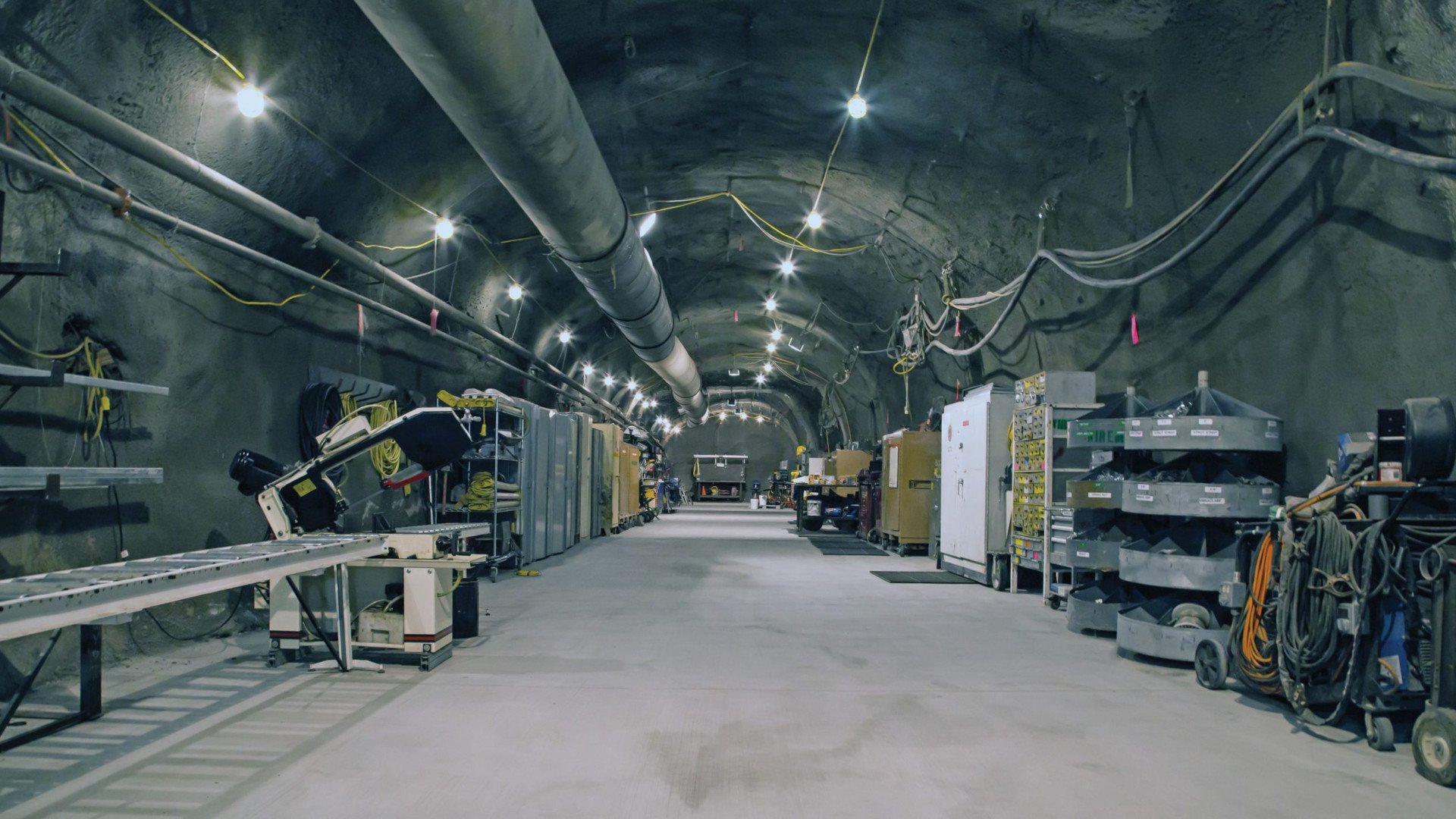
The U.S. government set off conventional explosives inside a tunnel deep in the Nevada desert this week in a test designed to replicate a so-called “decoupled” nuclear detonation. Data collected is now being used to help improve methods for detecting this kind of nuclear testing. Just earlier this year, American authorities accused China of using decoupling to conceal new nuclear tests despite the country’s stated moratorium on such activities.
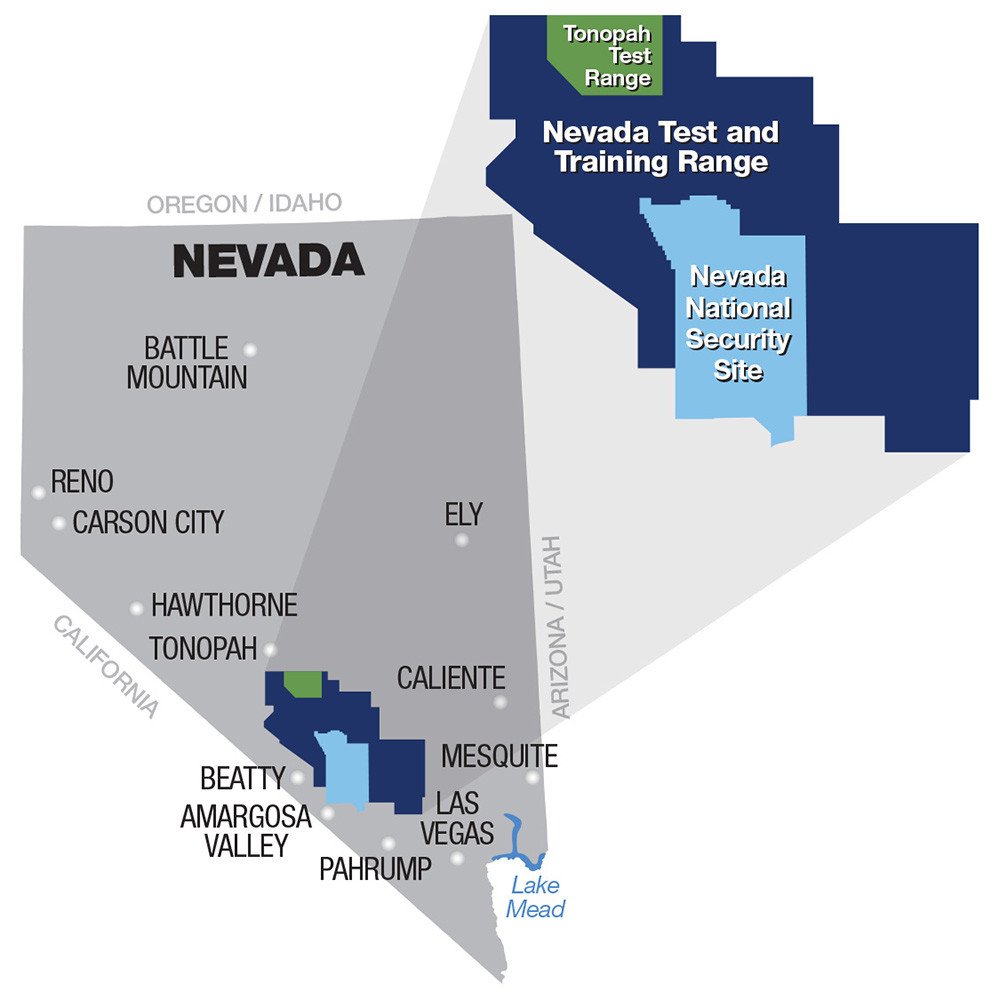
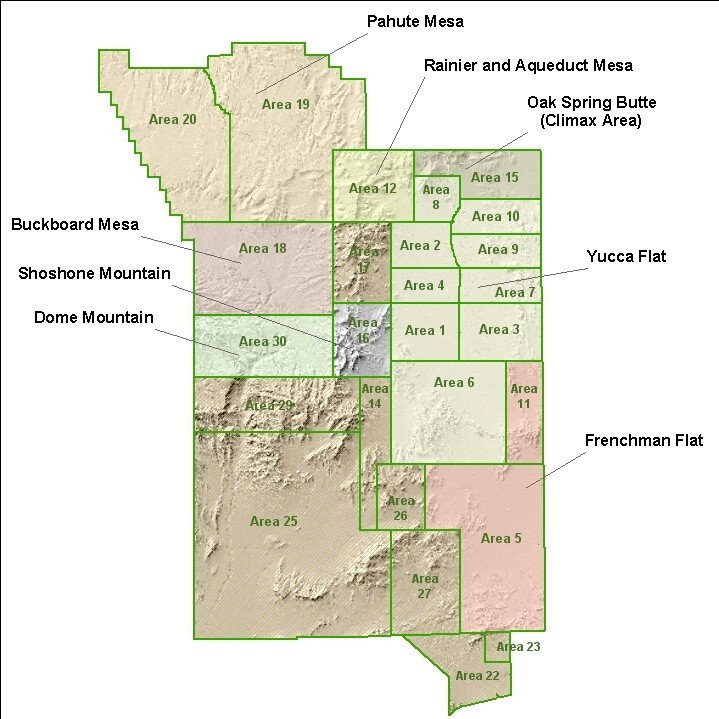
The test, which involved the use of chemical high-explosives and radiotracers, was conducted yesterday inside P Tunnel in Area 12 of the Nevada National Security Site (NNSA), according to a press release from the National Nuclear Security Administration (NNSA). The NNSS, which is situated within the boundaries of the U.S. Air Force’s Nevada Test and Training Range (NTTR), is used for a wide variety of testing purposes today. An agency under the Department of Energy, NNSA’s main jobs are to oversee the development and production of nuclear weapons, as well as manage America’s nuclear deterrent stockpile.
A map giving the general sense of the location of the NNSS with the NTTR. Center for Radiological Nuclear TrainingAnother map showing the specific testing areas within the NNSS. Area 12 is at the northern end of the complex. United States Geological Survey
“This experiment is especially focused on further enhancing the U.S. capabilities to detect a ‘decoupled’ explosion,” per NNSA’s release. “Data collected from the experiment will be used to validate scientific models and refine algorithms that are critical to U.S. nuclear explosion detection efforts.”
“Just as a stealth aircraft looks smaller on radar, decoupling can greatly muffle the signals detected by nuclear detection sensors, making a large explosion appear smaller,” the release explains. “In a conventional, or ‘coupled,’ underground nuclear test, a device is placed deep in a hole in close contact with the rock, allowing much of the explosion’s shockwave to reach sensors. In a decoupled test, by contrast, the device is detonated inside a large underground chamber, substantially reducing the explosion’s seismic signature.”
“In this experiment, researchers gathered measurements using a broad suite of advanced sensors, including accelerometers, seismometers, infrasound sensors, electromagnetic sensors, chemical and radiotracer samplers, and meteorological sensors,” it adds. ”Together, these measurements will improve scientists’ understanding of the signatures produced by underground explosions and strengthen the United States’ ability to detect and characterize nuclear explosive events.”
The U.S. already maintains a U.S. Atomic Energy Detection Systems (USAEDS) network, which is overseen by the U.S. Air Force Technical Applications Center (AFTAC). USAEDS is made up of more than 3,600 sensors positioned around the world. USAEDS is also tied in with the International Monitoring System (IMS), which is managed by the organization responsible for overseeing the Comprehensive Nuclear-Test-Ban Treaty (CTBT). AFTAC also supports the mission to monitor for potential nuclear testing globally using a fleet of specially configured WC-135R Constant Phoenix aircraft. In addition, those planes are used to help keep watch for unusual spikes in atmospheric radiation that could point to nuclear or radiological accidents or other incidents leading to the spread of potentially dangerous radioactive material.
With regard to the USAEDS network specifically, “once a disturbance is detected underground, underwater, in the atmosphere or in space, the event is analyzed for nuclear identification, and the findings are reported to command authorities,” according to AFTAC’s website.
As mentioned, the U.S. government has accused its Chinese counterparts of using decoupling to conceal new nuclear testing, and NNSA’s press release draws explicit attention to these allegations. At the annual Conference on Disarmament in Geneva, Switzerland, in February, Thomas DiNanno, Under Secretary of State for Arms Control and International Security, said that China had conducted at least one such test at Lop Nur on June 22, 2020. The Comprehensive Nuclear-Test-Ban Treaty Organization (CTBTO) subsequently said the IMS had not detected an event matching that description at that location on that date. For its part, the Chinese government has denied the accusation.
The social media posts below include satellite imagery showing activity at Lop Nur that could point to new nuclear testing activities in recent years.
参考 Satellite Imagery Analysis of China’s Alleged 2020 Nuclear Test at Lop Nurhttps://t.co/aafvU5Szh7 CSIS 20260213 ROLES SAT ANALYSIS No.7 中国に核実験実施の動き ー Lop Nur核実験場の画像分析 ーhttps://t.co/n66yYk0hLg ROLES 20250522
While China is a signatory to the CTBT, the country has never ratified it. The Chinese government last acknowledged a critical-level nuclear test in 1996, after which a self-imposed moratorium was put in place, at least publicly. As an aside, the United States has also signed, but never ratified, the CTBT, and has a similar self-imposed moratorium on nuclear testing since 1992. It is worth noting that the treaty does not ban so-called sub-critical testing, which involves fissile material, but does not result in a full-fledged nuclear reaction.
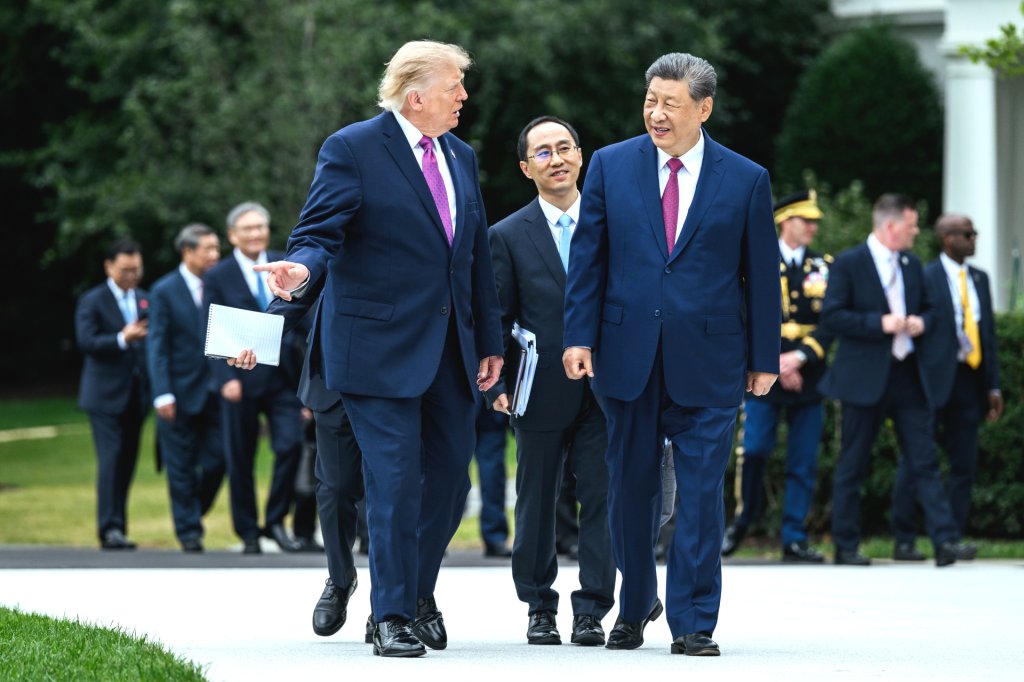
Last week, The Wall Street Journal reported that the Trump administration has been holding new talks with the Chinese government regarding various aspects of the country’s massively and rapidly expanding nuclear arsenal, including the testing allegations. That story immediately preceded a state visit by China’s President Xi Jinping to Washington, D.C., to meet with Trump.
President Donald Trump (at left) and President Xi Jinping (at right) walk together at the White House last week. White House/Joyce N. Boghosian
“The discussions between American and Chinese officials have centered on measures to reduce nuclear risks and haven’t been aimed at negotiating a formal arms-control pact, an effort Beijing has sharply rebuffed in the past,” according to that report. “The Trump administration has begun to highlight the possibility of implementing new verification measures.”
“Independent experts say seismic instruments might be placed on or near test sites,” The Journal‘s story also noted. “Another possibility, which was floated during the Biden administration, is to install radiation-detection equipment at test sites.”
NNSA’s announcement about the test at the Nevada National Security Site is certainly an example of the development underway already of new means of verification that could be deployed at sites around the world.
The Russian government has said it is ready to conduct new nuclear tests if the United States pursues this course of action. The last official nuclear test in Russia came in 1990 right before the fall of the Soviet Union.
“It takes nuclear expertise to detect nuclear activities and experiments like these [to] ensure America remains unmatched in detection,” NNSA Administrator Brandon Williams said in a statement yesterday in light of the test in Nevada. “The Trump Administration has made it clear that the United States will lead from a position of strength. You cannot evade American innovation. With this experiment, we are sending a clear message: under this administration, America will never be outmatched.”
Russia has warned NATO it would be ready to resort to nuclear weapons if the Western alliance attempted to cut off Kaliningrad, a Russian exclave that borders the Baltic Sea.
Holbrook Mohr and Mitch Weiss | The Atavist Magazine | July 2026 | 2,284 words (8 minutes)
This is an excerpt from issue no. 178, “Toxic Lies.”
January 3, 2026
In the isolation ward of a hospital in Birmingham, Alabama, a nurse approaches Ron Fowler’s bed, cell phone extended in her hand.
“You have a call,” she says.
Fowler’s eyes flutter open. He tugs off his oxygen tube and, with trembling fingers, accepts the phone.
“Thanks,” he whispers, before turning his attention to us—the callers.
From his voice it’s clear that something is very wrong; he sounds nothing like his usual self. He’s due the next day to meet us for an interview in Paducah, Kentucky, where he and his friend Chuck Deuschle worked at a uranium-enrichment plant that helped fuel America’s nuclear arsenal. Years ago they blew the whistle on the government and its contractors for poisoning thousands of atomic workers. “Can’t make it,” Fowler chokes out. “Blood clots. Hospital. They may have to remove some toes—if those clots don’t reach my heart first. If they do…” He trails off, the terrible ending hanging in the air.
The Atavist, our sister publication, publishes one deeply reported, elegantly designed story each month. Support The Atavist by becoming a member.
Fowler, soon to turn 77, is desperate to talk before it’s too late—to pull up the memories one more time and commit them to the historical record. He and Deuschle had both moved to Kentucky to work at the nuclear plant, only to discover a grim secret: The facility was exposing people to dangerously high levels of radiation and toxic chemicals, and had concealed the truth about it from employees and the surrounding community. This went on for decades. Faced with a choice—either walk away or stay and sound the alarm—Fowler and Deuschle returned to work, day after day.
More than thirty years later, lying in the hospital with cancer, Fowler is certain that the plant doomed him to a slow, painful death. At 83, Deuschle is also fighting a serious health issue: an unexplained autoimmune disease. They believe their fellow whistleblowers—Deuschle’s wife, Kay, and their friend Garland “Bud” Jenkins—succumbed to illnesses caused by the plant. Still, they’d do it all again. Someone had to reveal the callous disregard the government and the plant’s operators had shown their own people.
Fowler and Deuschle have never shared their story in full—the details of what it was like to live, breathe, and possibly die from their commitment to the truth. But they want people to know, particularly in light of recent news reports: In August 2025, more than a decade after the plant was shut down, a private firm announced that it planned to revive uranium-enrichment operations there. To Fowler and Deuschle, it seems wrong to begin a new chapter in Paducah’s nuclear story. Many former employees are still seeking compensation for their exposure to radiation. Will future generations of workers be any safer?
Fowler struggles for each breath.
“Time’s up,” the nurse says gently, reaching for the phone. “You need to rest.”
Fowler grips the device tighter.
“Call tomorrow when you meet with Chuck,” he implores. “I’m staying alive until then.” He pauses for a moment. “Just make sure Chuck’s with you. Promise me.”
We promise.
1.
One morning in late 1991, Ron Fowler stood in front of the bathroom mirror, parting his hair to the side and noting the first strands of gray at his temples. His beard was neatly trimmed, his black slacks and white dress shirt crisply pressed. He was ready. Today would be his first day at the Paducah Gaseous Diffusion Plant, a uranium-enrichment facility about ten miles outside Paducah, Kentucky. This was more than just a job—it was the start of a new life.
Fowler was a health physicist, an expert in the science of radiation protection. For years he’d traveled the country to train workers at nuclear plants in safety protocols. The pay was great, but being on the road weeks at a time had worn him down. When he moved to Paducah in his early forties, Fowler had already lived in Illinois, Pennsylvania, Maryland, Virginia, and Arkansas. Paducah promised stability: the perfect place to settle through retirement. His wife’s parents even moved from Illinois to be nearby.
After eating breakfast—a sausage patty and a scrambled egg—he kissed his wife, Sandi, goodbye and slipped out the door. He steered his green Oldsmobile Delta 88 through the country roads outside Paducah and let his mind drift back to his childhood in Florence, South Carolina. Life there had been simple. His father, who dropped out of school in the fourth grade, supported the family by working on the railroad. Florence was a place where men had jobs, women tended to the home and children, everyone went to church, and neighbors helped neighbors who fell on hard times. Paducah felt just as close-knit. Folks looked out for one another, and honest labor was rewarded.
Situated on the Ohio River where it meets the Tennessee, Paducah owes its origins to trade; it was founded in 1827 by William Clark of the Lewis and Clark expedition and named for a powerful Native American tribe. The area is naturally beautiful—the city is surrounded by rolling hills and sprawling plains dotted with ponds. For Fowler, a keen fisherman, it was paradise. Paducah had about 27,000 residents when he arrived. It was big enough to have all the right shops, yet small enough that restaurant owners knew whether regulars preferred barbecue or fried catfish, the local staples.
As Fowler drove, the plant appeared in the distance. It spread over some 3,500 acres—750 of them secured by fences and gates—and sat amid modest homes and farms. The community was proud of this place because of its long history supporting the military. Originally, it was a TNT munitions factory, built during World War II. Later, as Cold War tensions escalated, officials scouted locations for a uranium feed facility to supply weapons-production sites in Piketon, Ohio, and Oak Ridge, Tennessee, with the material required to make nuclear bombs. Paducah native Alben Barkley leveraged his position as Harry S. Truman’s vice president, campaigning aggressively to repurpose the munitions factory in his hometown. He recognized that the project likely would inject billions into the local economy and transform living standards for the region’s blue-collar workforce.
Construction of the nuclear plant began in 1951. By the following year, it was enriching uranium for atomic bombs and the Navy’s nuclear fleet. Rising from the countryside, the gleaming buildings looked like modern marvels, and the economic windfall lifted Paducah residents’ spirits. Meanwhile, employees at the plant—everyone from nuclear technicians to welders, cooks, and janitors—were united in patriotic pride. Their jobs paid well, and the workers believed that they were helping fend off communism. It was no wonder Life magazine printed a photo spread of the site.
As the Cold War thawed, the mission changed but the jobs remained. The plant began recycling materials—gold, among other things—extracted from dismantled atomic weapons while continuing to enrich uranium, now for nuclear power plants instead of bombs. Wages allowed families to buy homes and cars and afford vacations—the American middle-class dream. The plant operated like a self-contained town for its 1,700 employees: It had its own security force, fire department, library, post office, and health clinic. A shuttle service ferried employees around the plant’s grounds. Workers participated in golf leagues and fishing tournaments. The Uranium Enrichment News kept everyone informed about goings-on at the site.
Though the plant was owned by the Department of Energy, it was run by contractors. Union Carbide initially oversaw operations, followed by Martin Marietta, which later merged with Lockheed to become Lockheed Martin. Management changed, but to employees that just meant a different name on their paychecks. The people on the ground were like family—fiercely loyal to one another and to the plant they called the Atomic City.
Fowler smiled as he drove through a security gate into a sprawling lot. He parked by the administrative building and checked in with a secretary, who called someone to escort him to his department. From there he would lead health and safety training sessions. The federal government had known as early as 1944 that radiation was hazardous and had issued policies to limit worker exposure. It was Fowler’s job to help ensure that regulations were enforced, to protect both employees and the surrounding community from contamination.
He had barely settled in when a coworker poked his head in.
“Want to see the place?”
The complex was huge—more than five hundred buildings connected by nearly twenty miles of access roads. Fowler was impressed until, as he rounded a corner on his tour, a yellow triangular sign with the radiation symbol caught his eye. There was no step-off pad in sight. In a nuclear facility, a step-off pad is a buffer zone between a hazardous area and a clean one. Workers at the Paducah site were supposed to remove radiation-tainted clothing and footwear before crossing through these zones to ensure they didn’t unwittingly transfer dangerous materials to other parts of the plant or transport it home with them.
Fowler flagged down a worker leaving the building where the warning sign was posted. “You don’t have a step-off pad down here,” Fowler said. The worker shrugged and said there was nothing to worry about.
“That sign says otherwise,” Fowler said. He explained that protocol required a pad and training for workers so they knew how to use it.
The worker’s expression was unchanged as he walked away.
Fowler’s pulse quickened as he imagined invisible particles on boot soles spreading throughout the plant or, worse, tracking onto kitchen floors or into rooms where children played. He hurried to his division manager’s office. The supervisor listened, then leaned back in his chair and tapped a pen on his desk calendar. He said he’d call a meeting about the issue.
That night at home, Fowler sat at the kitchen table watching Sandi cook. Normally, he’d have been joking with his wife about her limited culinary range—she often made breakfast for dinner—but tonight his mind was elsewhere. The sizzle from the stove filled the silence between them.
Sandi knew something was wrong. In the years since they first met at a bar in Joliet, Illinois, she’d become attuned to her husband’s moods. Despite his imposing frame—six foot two, 245 pounds—Fowler had always been the gentle sort and quick to laugh. Their courtship progressed quickly, and within four months of meeting Fowler had moved in to her family’s home in Aurora. They married there so her father, a former school principal paralyzed from a stroke, could attend.
“What is it, Ron?” Sandi asked, spatula in hand.
He sighed. “Something’s not right at work.”
“What do you mean?”
“The way they treat radiation—like it can’t hurt them. No precautions,” Fowler said.
“That doesn’t make sense,” Sandi replied, frowning.
“I know.” Fowler shook his head. “I’ve never seen anything like it.”
Uranium is a silvery-white radioactive metal. More than 99 percent of it found in nature is U-238, and the rest is U-235, an isotope that can sustain the chain reactions needed to fuel nuclear power production and atomic weapons. Enrichment is the process of increasing the concentration of U-235 in a supply of uranium. At different points, enrichment produces one powder Paducah workers called black oxide—not to be confused with the coating of the same name applied to some metals to improve corrosion resistance—and another, uranium tetraflouride, that’s known as green salt. Eventually, uranium hexafluoride, a colorless crystalline solid, is heated into a gas that’s pushed through microscopic porous barriers. This process, called gaseous diffusion, separates U-235 from U-238; at plants like the one in Paducah, it’s done hundreds of times in a cascade until the desired enrichment level is reached.
Uranium enrichment is hazardous business. Fowler knew that any leak, spill, or accident at the Paducah plant could damage kidneys and lungs, irritate skin, and increase cancer risk. More insidiously, simple mistakes or oversights by workers could have that same result. During his first few weeks on the job, Fowler explored the plant on his own, and what he found unsettled him. Employees worked in radioactive areas without protective suits or masks. Some couldn’t read and might not understand warning signs. People left the site after their shifts without changing clothes or showering, likely conveying radioactive dust home to their families. Some workers even warmed their lunch on top of machines in hazardous areas.
Fowler knew that things needed to change, and quickly. He took his concerns to the plant manager, Steve Polston, who heard him out and then called a meeting about step-off pads—the very issue Fowler had flagged on his first day. At the meeting, Fowler outlined the safety gaps he’d observed at the plant, but it seemed to him as though the senior managers in the room could barely feign interest. He heard what would become something of a refrain: “We’ve been doing it this way for years.” He was also told that Department of Energy officials visited the site regularly and hadn’t raised concerns.
More worried than ever, Fowler spent the next several months developing new safety protocols. He beamed with satisfaction as he handed the plan to Polston. In the period that followed, however, he became frustrated with how officials implemented the measures. Even when company-issued safety equipment was made available, Fowler noticed that much of it was obsolete. And he watched in disbelief as employees poked holes in respirator masks to smoke while working.
“I’m not making progress,” he told Sandi one night between sips from a can of Miller Lite. “No one is listening.” He likened his work to “scooping water out of the ocean.”
Sandi, who had studied his training manual to understand his work, gently touched his arm. “Be patient,” she suggested. “Maybe you just have to get to know the people better.”
Fowler’s shoulders dropped. “It seems like more than that,” he said.
Greece’s Prime Minister Kyriakos Mitsotakis announced the establishment of an inter-ministerial group responsible for scientific research and the development of a legal framework for the potential deployment of nuclear energy. Greek Prime Minister Kyriakos Mitsotakis is championing small modular reactors. The country could reportedly participate in an investment round for the French EDF’s Nuward. The […]
El Instituto de Física del Plasma de la Academia China de Ciencias (ASIPP) anunció la validación exitosa del mayor imán superconductor jamás construido para un reactor de fusión. La pieza,…
In the flatlands of Italy’s Po Valley, the decommissioned Caorso nuclear power plant can be seen for miles, the reactor looming into the sky. When Alessandro Maffini, now an assistant professor at the Polytechnic University of Milan, was growing up in the 1990s, the plant's distant silhouette captured his imagination. “The physical presence of that thing was so significant to me as a child. It was a very visible, tangible, concrete presence,” Maffini remembers. “It was like a white Duomo, there on the horizon, always in the background.” For many others, though, it was a specter of disaster, a ghost nuclear plant — shuttered, alongside all of Italy’s nuclear power stations, in the wake of the Chernobyl accident.
“If that plant explodes, we’re all dead,” Maffini’s mother used to intone, looking out at the defunct Caorso station, once the largest in Italy. As Maffini rode his bike six miles across the countryside to get a closer look at the plant from a nearby overpass, his mother’s doom-laden words rang in his ears. Her warning scared him. It also made him want to learn more. When he left home to go to university, Maffini decided to work in nuclear physics. “Radioactivity is a strange thing,” he says. “You can’t see it, you can't hear it, you can't smell it. It leaves a lot of room for imagination, for speculation, for fear.”
Four decades on from Chernobyl, and Italy has some of the highest energy bills in Europe. The country is scrambling to disentangle itself from its dependence on Russian gas in the wake of Russia’s invasion of Ukraine, and build out its energy sovereignty. War in Iran, and a growing European consensus that turning away from nuclear power was, in the words of European Commission president Ursula von der Leyen, a “strategic mistake,” has given more impetus to the Italian government’s argument that the country needs to move past its qualms.
Last year, the Italian cabinet approved a new draft law reintroducing the prospect of returning to nuclear power. “The government has approved another important measure to ensure clean, safe, low-cost energy that can guarantee energy security and strategic independence,” the Prime Minister Giorgia Meloni announced.
Italy is already surrounded on all sides by nuclear power plants: Slovenia’s Krsko plant is 90 miles away from the border, and there are four French nuclear power plants within 110 miles. Italy is the world’s second-largest importer of electricity, with nuclear power, largely imported from France, making up 5% of its energy basket. Italy also plays host to more U.S. nuclear warheads than any other European country. An estimated 35 thermonuclear gravity bombs are stored at two NATO airbases in northern Italy, according to the Nuclear Threat Initiative.
Now, as data centers spring up in Italy’s industrial north, the country’s energy needs are expected to increase exponentially and the government is turning, albeit cautiously, to a long-held Italian taboo. Since the spring of 1986, when the most serious accident in nuclear history unfolded in Unit 4 of the Chernobyl Nuclear Power Plant in northern Ukraine, the Italian population has lived in fear of nuclear energy. It voted to shutter its once-burgeoning nuclear industry in 1987, and in 2011, after the Fukushima nuclear accident, when 94% of voters rejected government plans to revive the industry.
It is a fear that has transformed Italy’s energy fortunes, making it reliant on imports and vulnerable to volatility and price shocks.
The Latina nuclear power plant during its construction in the late '50s and early '60s. Photos courtesy of SOGIN.
“The international crises of recent years have clearly demonstrated the risk of excessive dependence on imported fossil fuels or vulnerable supply chains,” said Fiorella Corrado, communications chief at Italy’s environment and energy ministry. “The government approaches this issue with great respect for the country's history and the democratic choices expressed by citizens. The 1987 and 2011 referendums profoundly impacted the national energy strategy at very different historical moments. Precisely for this reason, the point is not to ignore those choices, but to acknowledge that today's technological, climatic, industrial, and geopolitical context has radically changed.”
For Meloni’s government, the argument is not so much whether Italy needs to revive its nuclear industry, it’s whether the country is ready to shake its demons, to shake the cultural memory of what happened at Chernobyl forty years ago, a thousand miles away from Rome.
In the early hours of April 28, 1986, in the control room of the Latina nuclear power plant south of Rome, a young technician called Ruggero Dell’Aquila was working the night shift. “Everything was perfectly quiet,” he recalled. As morning broke, teletype messages from Northern Europe began to rattle in. A clerk came down from the control room with reports from the Forsmark Nuclear Power Plant in Sweden. Their monitoring stations were registering radiation spikes far above background levels, and no one knew why.
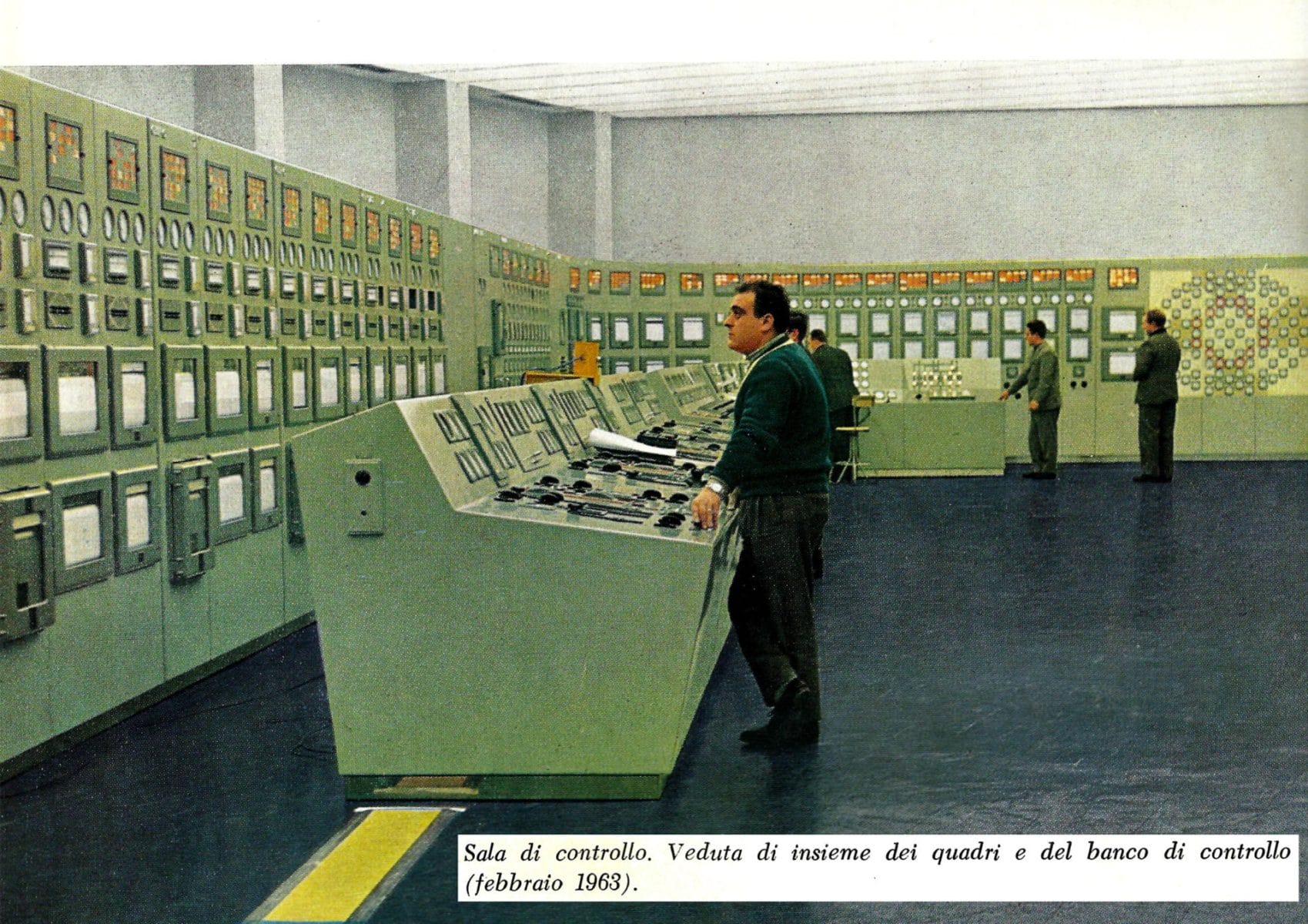
Inside the control room of the Latina power plant, 1963. Photo courtesy of Pionieri Del Nucleare.jpg
That evening, nuclear physicist Sergio Malossi, a director at the Latina plant responsible for monitoring radioactive risk, drove home. His mind was turning over what the clerks had been reporting. “He came in extremely agitated,” remembers his daughter, Roberta Malossi, who was 16 at the time. “We knew he was worried about something going wrong at the facility, but we didn’t understand.” Malossi says that her father’s first paranoid thought was that there had been a malfunction in his own plant, that radiation was leaching into the air, and that it was somehow his fault.
At 9 p.m. Moscow time — aperitivo hour in Latina — the Soviet Union announced there had been an accident at the Chernobyl nuclear plant. In the ensuing days, Italian news was full of dire warnings.
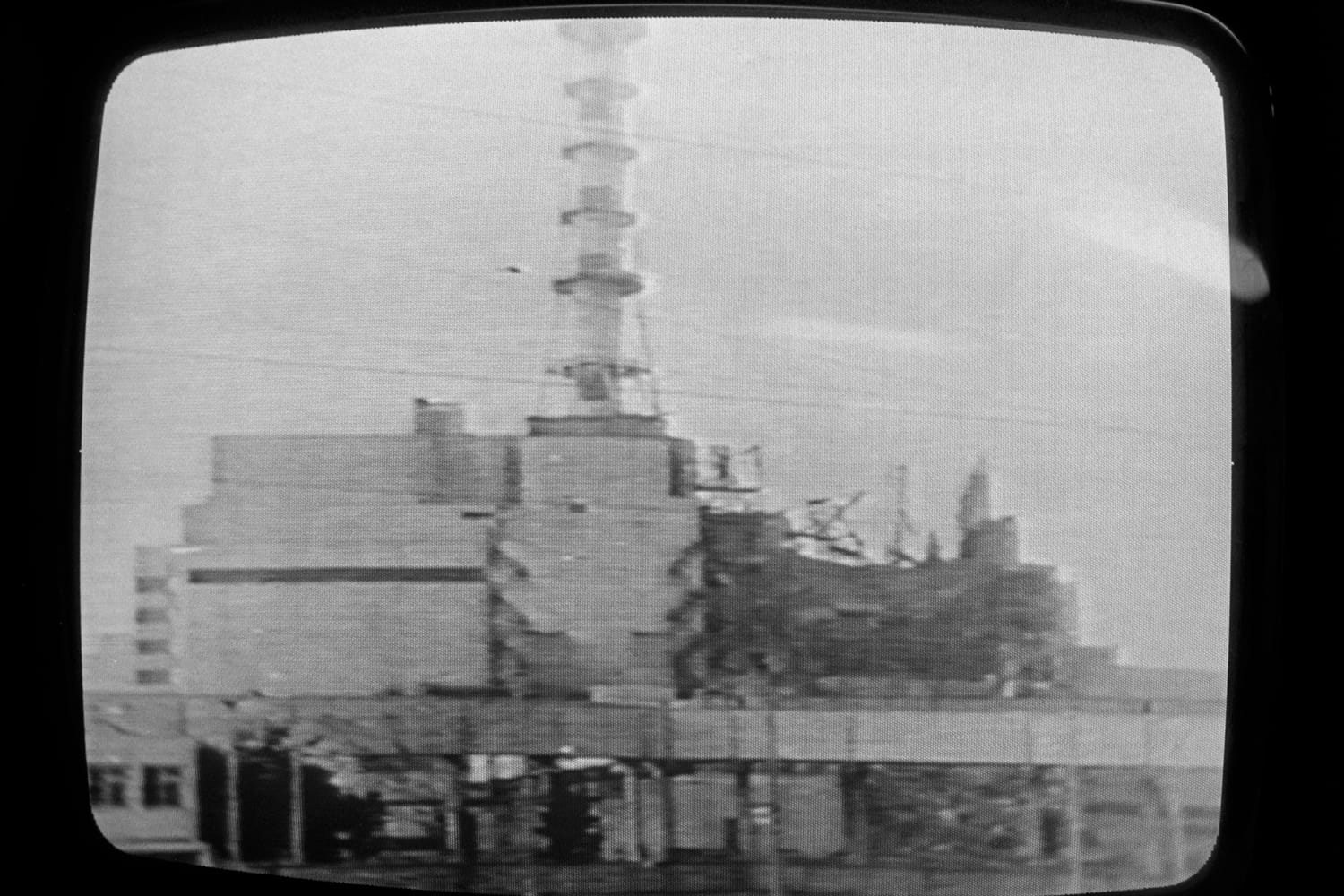
On April 30, 1986, Soviet television aired this image of the Chernobyl plant, claiming there was “no destruction, no major fires, and no mass casualties.” AFP via Getty Images.
“Television was showing these clouds that would soon reach Italy. Everyone was terrified. The only information we got was from state TV, and the news was shocking,” said Monica Tommasi, President of Friends of the Earth Italy, who was a child at the time. Radiation, the news said, would rain down on the population. “The fear from the sky,” ran one La Repubblica headline. “The cloud above us, the doubt within us,” ran another.
On the night of April 30, 1986, Italy’s nuclear monitoring stations began recording increases in radioactivity. The cloud moved over the Valley of the Po, and while the government called for calm, the country began to descend into panic. In the minds of the Italian people, the worst had happened, explained Luca Romano, a writer and activist campaigning for the return of nuclear power in Italy. “Nuclear annihilation, death by radiation, the radioactive cloud and the nuclear holocaust, had arrived,” he said. Nuclear armageddon was a fear that had gripped the West for decades. This was not a nuclear war, but in the Italian collective consciousness, that didn’t make a difference.
The reality was, says Barbara Curli, Professor of Contemporary History at the University of Turin, that “Italy was only marginally affected by the cloud.”
The cloud in northern Italy meant radioactivity levels peaked briefly, but ten days later they had fallen dramatically back down. Because this spike was short-lived, the total radiation exposure remained low. A United Nations committee report recorded that northern Italy received an additional radiation dose of about 380 microsieverts in the year following Chernobyl — less than a fifth of the normal background radiation humans absorb in a year; equivalent to taking about six transatlantic flights. It was much smaller than the doses received by neighboring countries like Bulgaria, Austria and Greece, and in the south of Italy the dose was lower still.
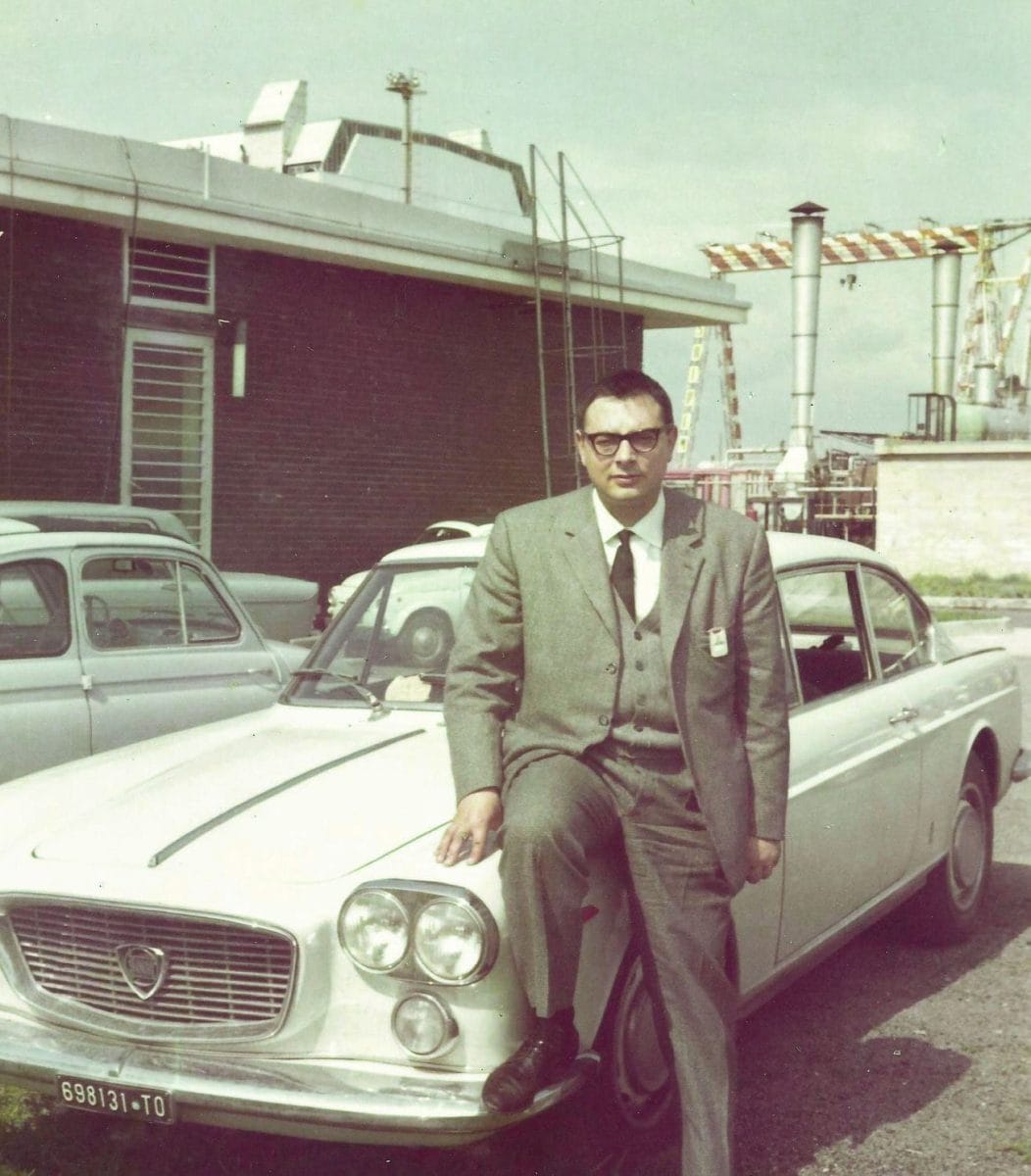
Nuclear Physicist Sergio Malossi, Long-time Director of the Department of Medical Physics at the Latina Nuclear plant. Photo courtesy of Pionieri del Nucleare di Latina.
Down by the Latina power plant, though, the community was shaken by events in Chernobyl, and rumors and misinformation began to spread about the fallout. The friends and family of the technician, Ruggero Dell’Aquila, started asking him if a Chernobyl-style disaster could happen at Latina, too. “Everyone was afraid, asking — ‘can it explode, can it explode?’” he recalled.
The reality was, a Chernobyl-style explosion was not possible at Latina, because its reactor lacked the unstable characteristics of the Soviet design. But this was not such an easy concept to explain.
“The problem was that a slew of journalists took over, telling lies,” Malossi said, recalling paranoid rumours about radioactivity causing mutations in nature. People started telling stories, Malossi said, about “frogs with three heads, animals and fish with four tails. Strange things. When in fact absolutely nothing like that was happening.”
The government advised people to avoid fresh vegetables and dairy products, particularly for children. Farmers destroyed crops and poured away milk. Sergio Malossi ignored the warnings, having measured radiation levels in the air himself. “My father and others from the plant brought the vegetables home and we ate them,” his daughter recalled.
It was these warnings — delivered amid a lack of clear information — that shifted public attitudes toward nuclear energy, said Renzo Colombo, 65, who was just beginning a career in nuclear engineering when the explosion happened. Now a member of Nucleare e Ragione, a nonprofit that promotes a rational approach to nuclear energy in Italy, he recalls how quickly fear took hold. “A real phobia was born, a panic about radioactivity,” he said. “And this panic marked the next 25 years.”
The months after the accident were a shadowy, uncertain period for Italians working in the nuclear industry. “I have to be honest, I felt a little guilty,” said Colombo. “As a nuclear engineer, I thought ‘what have we done?’ My colleagues and I always thought we were designing something useful for humanity. And at that moment we felt betrayed by our own profession.”
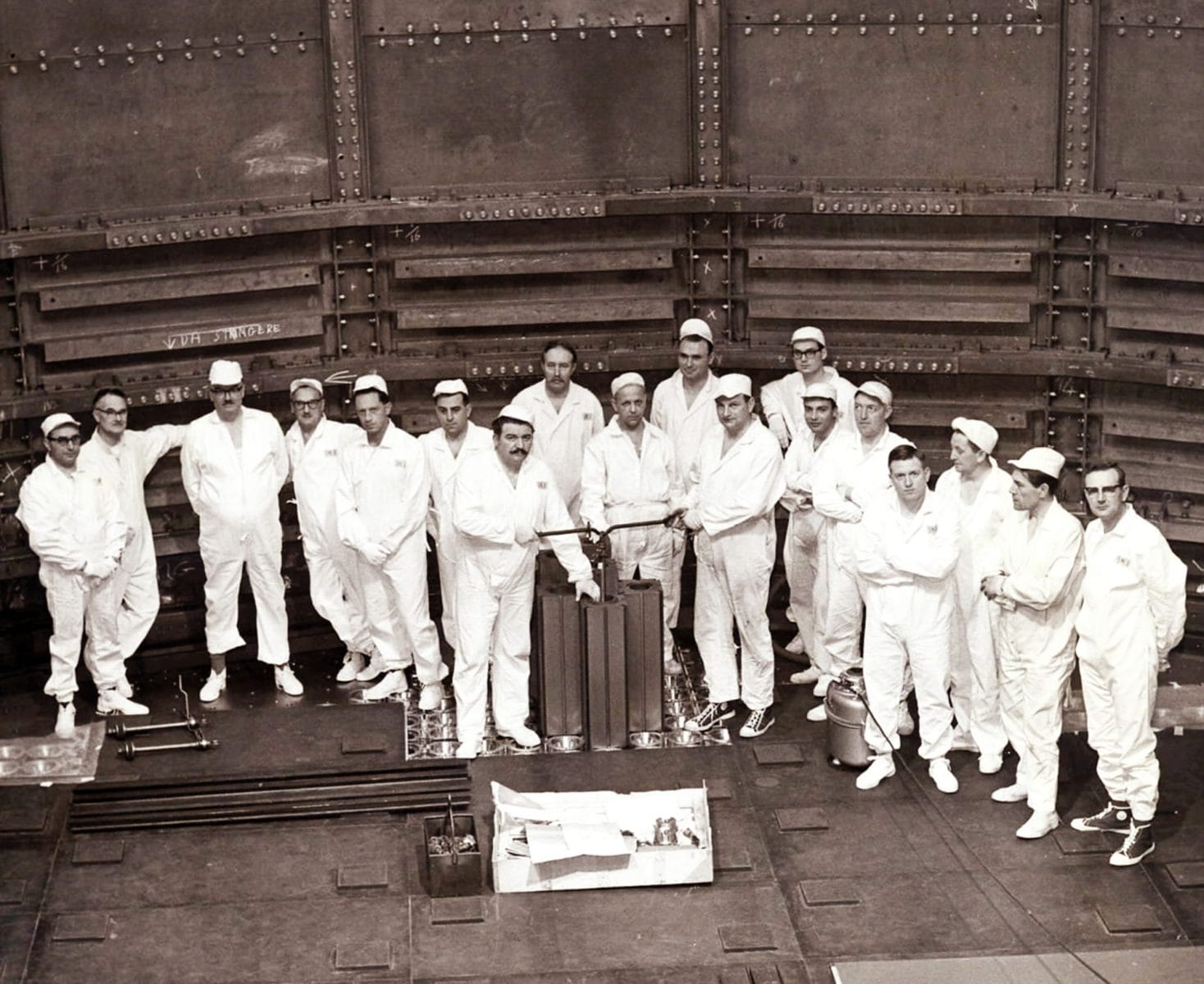
Workers at Latina nuclear plant during its construction in 1961. Photo courtesy Pionieri del Nucleare di Latina.
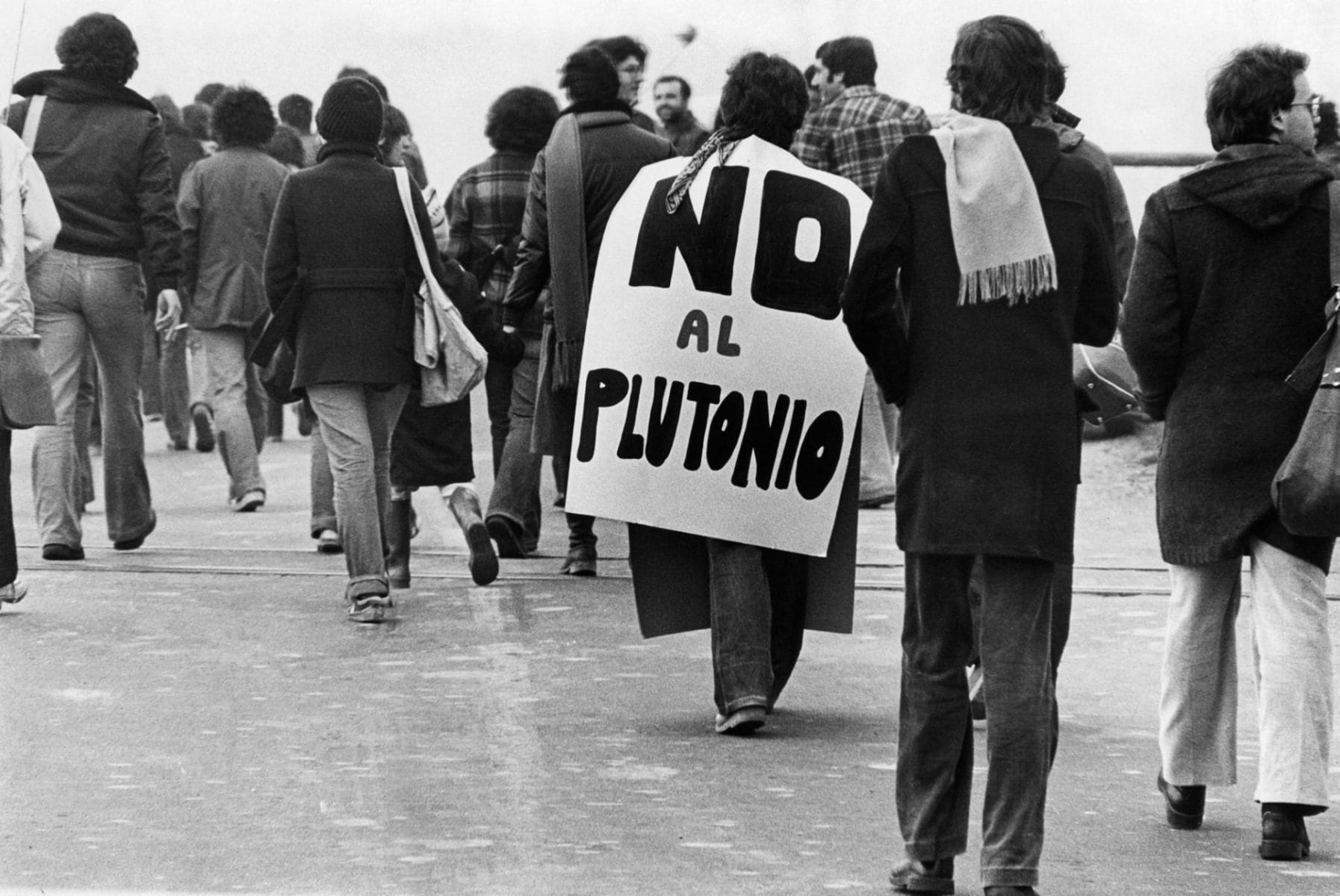
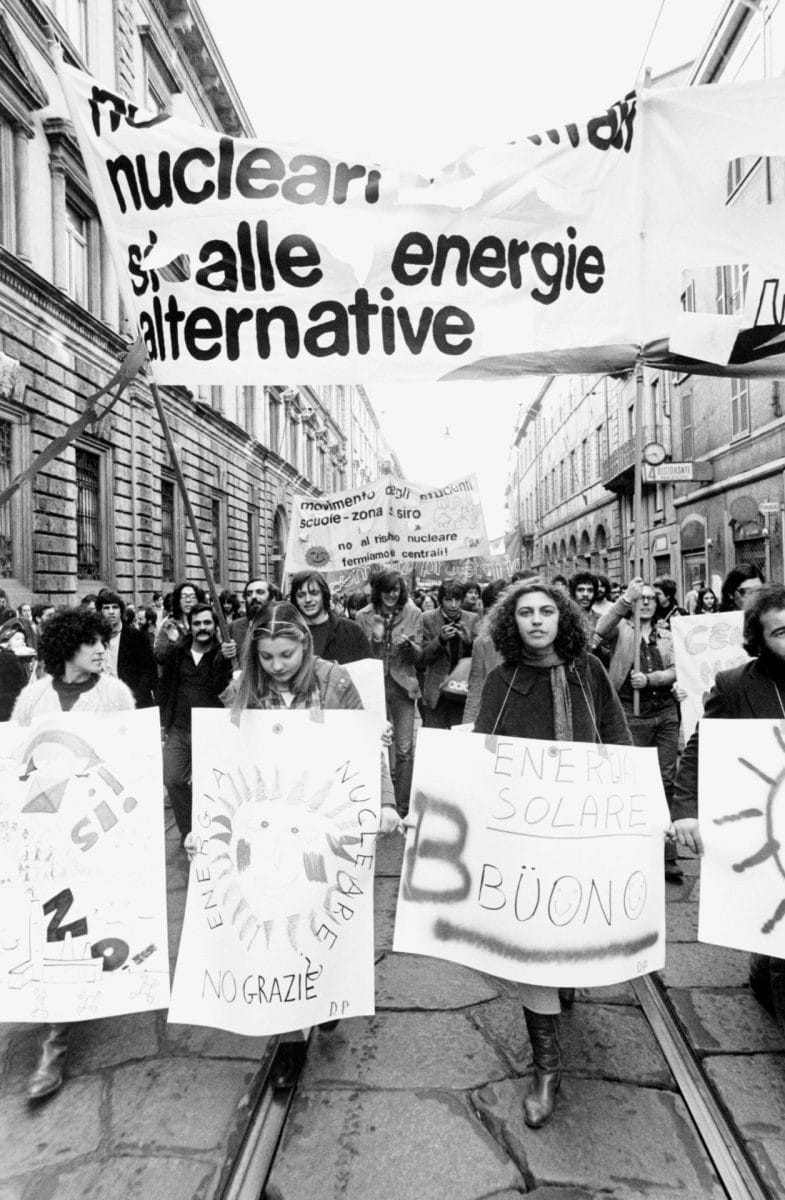
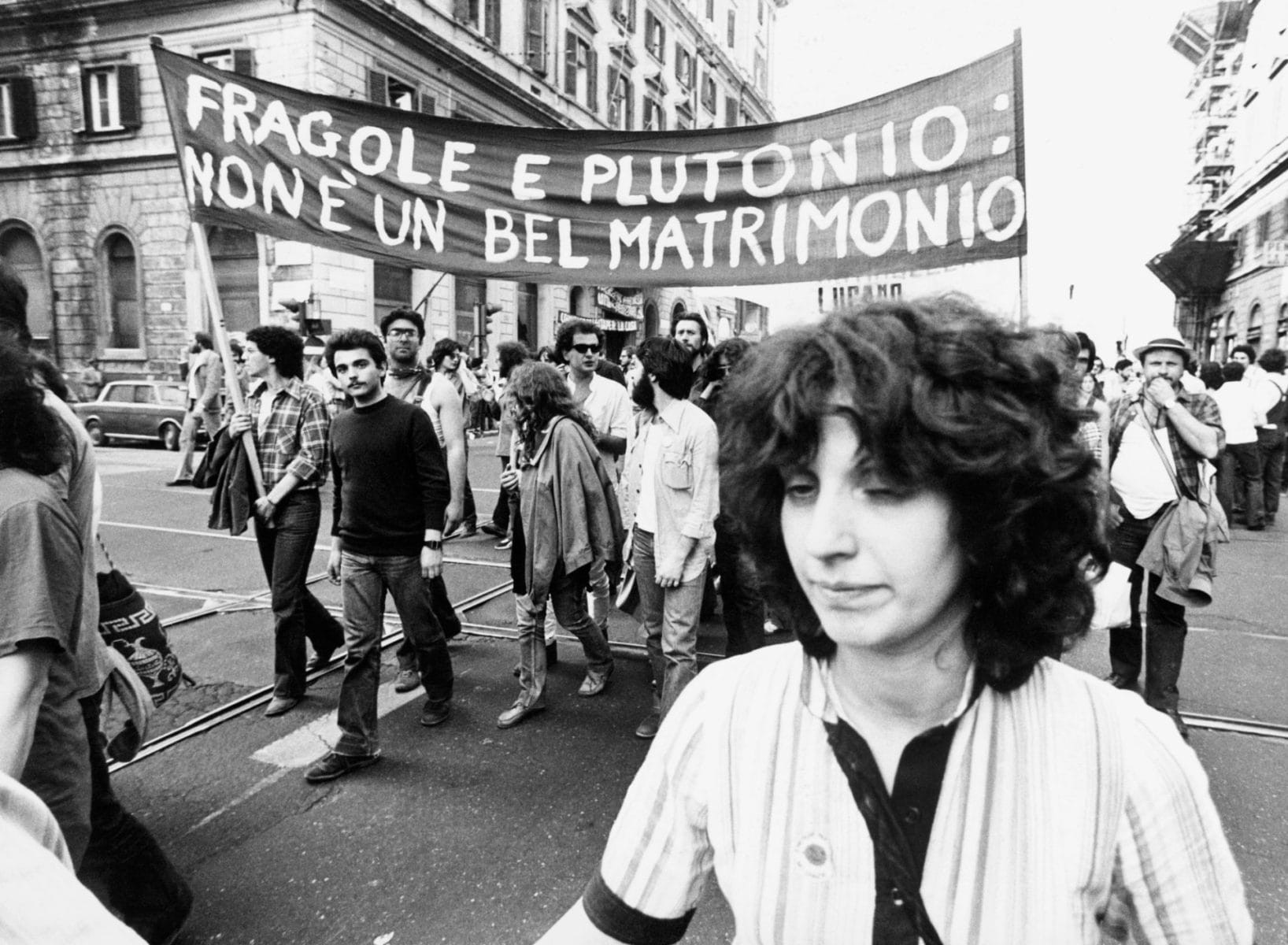
Outside Italy’s nuclear plants, crowds began to gather. A coalition of environmental groups and political parties started pushing for people to vote against nuclear power in an upcoming referendum.
This movement was not new. “Many years before Chernobyl, an environmentalist culture was born — and it didn’t just concern nuclear power, but risky industry in general,” explained Curli, the Turin historian. The anti-nuclear environmental movement, which spread across Europe in the 1970s, was particularly potent in Italy — a country rocked by violent political turmoil, organized crime, and corruption scandals. Public fears, explained Curli, were sharpened by the Seveso disaster, an accident at an industrial plant in the north of Italy in 1976 that exposed tens of thousands of people to a toxic cloud of chemicals. Nuclear power, she said, “was not perceived by public opinion as a credible policy because there's this underlying distrust in institutions.”
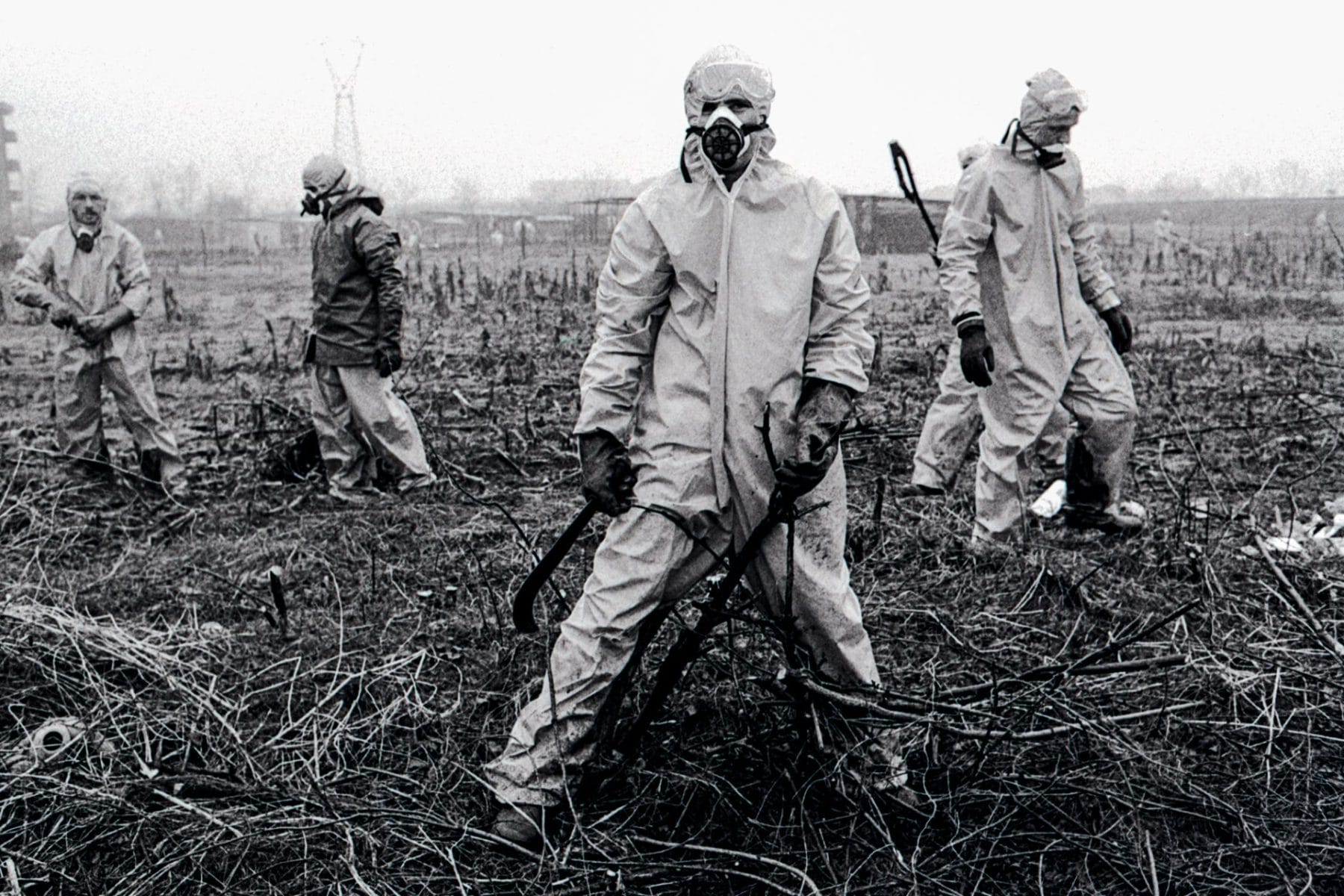
Workers in protective suits clean up the land and homes contaminated by the industrial accident at Seveso chemical manufacturing plant in 1976. Alberto Roveri/Archivio Alberto Roveri/Mondadori Portfolio via Getty Images.
In 1977, almost a decade before Chernobyl, a 10,000-strong crowd of protesters showed up at Montalto di Castro, to protest against a large new nuclear plant that was planned. A Time magazine correspondent described the activists as “an improbable mix of elegant members of the Italian nobility, radical students in American Indian garb, middle-class citizens and Christian Democratic and Communist politicians.”
Demonstrators taking part in an anti-nuclear demonstration. Turin, 1980s. Alberto RoveriMondadori via Getty Images.Anti-nuclear protest, Milan, 1980s. Universal Archive / Universal Images Group via Getty Images.Anti-nuclear protest, Rome, 1980s. Universal Archive / Universal Images Group via Getty Images.
In the wake of Chernobyl, Renzo Colombo was working at that very same plant, helping to build the thermohydraulic cycle. By then, the station was nearly complete. “It was a beautiful plant,” Colombo said. “I loved working there.”
In November 1987, 18 months after the Chernobyl accident, the Italian government held a referendum on nuclear energy. Nearly 80% of Italians voted in favor of measures that would end the country’s use of atomic energy.
One morning, following the referendum, the Montalto di Castro plant’s director called the workers to a meeting. Colombo remembers him saying: “‘Ragazzi, gather round, I need to talk to you. I’ve just been to the ministry, and Italy has decided that we are closing all nuclear activity and will focus on coal and gas instead.’” The room went silent. “I was young,” said Colombo. “But there were people there who were older and had devoted years of their life to the nuclear field. There was just this urge to cry.”
The effect of the referendum was all-encompassing: construction was halted, and over the next three years Italy’s nuclear plants were shut down for good; its nuclear engineers scattered — many going to work abroad, or, like Colombo, re-training to work in other industries.
It was hailed as a victory for Italian environmentalism, says Curli. But the result was that there was a push to “gasify” Italy. That is, she says, “to choose the gas route — less expensive, and less demanding than nuclear power. But this made Italy almost completely dependent on Russian gas, Libyan gas, Algerian gas.” The Montalto di Castro site was converted into a fossil-fuel powered plant, running on gas and fuel oil.
Decades on from that post-Chernobyl referendum — and a second referendum in the wake of the Fukushima nuclear accident in 2011 — Italy remains in the process of dismantling its nuclear power stations, even as it now contemplates a return to nuclear power.
In the vast, cavernous belly of the Latina nuclear power plant, three workers in hazmat suits hammer away at pieces of the shielding cylinders that once protected the rest of the plant from radiation emitted from the reactor. From the viewing gallery, they look tiny in the enormous space, and the vastness of their task feels Sisyphean.
Watching them work is Enrico Bastianini, director of operations at the Latina plant. As I walk with Bastianini through the plant, we come to the old control room. When it first opened in 1963, the Latina plant was the largest nuclear power station in Europe — a feat of Italian and British engineering (the reactor was of UK design) and a symbol of Italy’s post-war industrial growth.
“We were emerging from the destruction of the war, and this was progress. And it was what allowed us to escape the economic hardships of war, and have low-cost energy,” Bastianini says.
Now, over 60 years on from when the plant opened, more than half of its existence has been spent being taken apart. Critics of nuclear power often focus on precisely this point: the long and complex process of dismantling nuclear plants, and the problem of managing radioactive waste, some of which takes millennia to decay.
There are two phases to the process of taking apart the plant. “The first phase allows us to dismantle everything that’s nuclear except the reactor. That’s because the reactor contains a huge amount of graphite,” Bastianini explains. “When we have a national repository, it can be removed. But for now, it’s safest if it stays in the first phase.”
Bastianini leads me into a deposit room where radioactive material is being stored in steel containers, inside an earthquake-resistant facility. These containers are only for temporary storage.
There were attempts in the early 2000s to establish a national nuclear waste repository at a salt mine in Basilicata in southern Italy, but huge protests forced the government to abandon its plans. Today, SOGIN, the state-owned Italian company in charge of decommissioning nuclear sites, is still actively searching for a suitable location for a permanent repository and faces considerable opposition.
Rumours and anxiety swirl around the Latina plant itself — just as they did in the 1980s, when Malossi heard stories of radioactive fish with four tails. Last April, an article by the Italian magazine L’Espresso published claims that the Latina plant could leach radioactive material into the soil. The plant vigorously denies these claims — a spokesperson for SOGIN said the company periodically checks the quality of vegetables, milk and fodder as well as air, soil and groundwater for radiation and that “as always, the results of the analyses confirm radiologically negligible environmental impacts.”
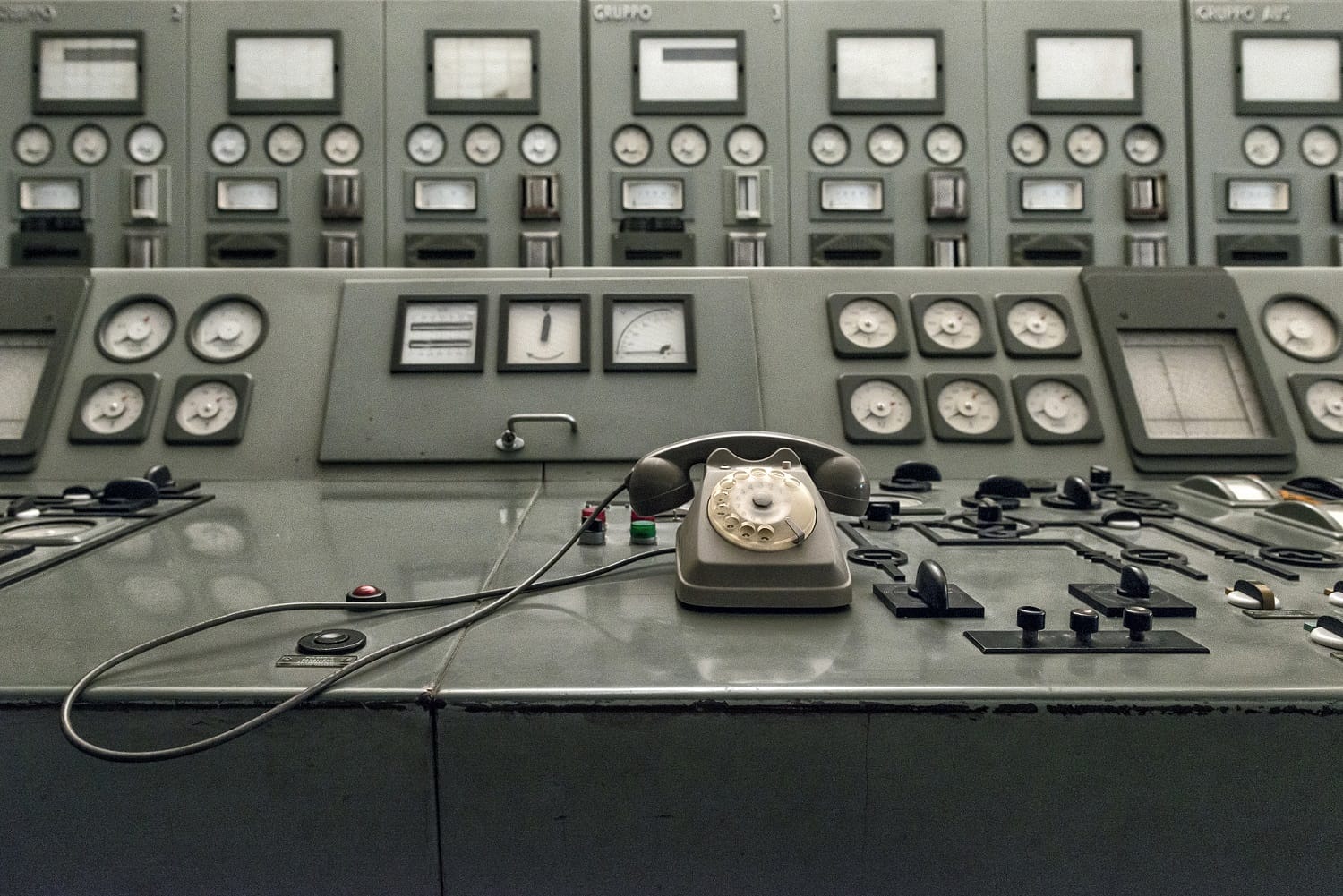
The old control room of the Latina nuclear plant. Photos courtesy of SOGIN
In the gloaming of a summer evening in Umbria, Monica Tommasi drives me through the twilight-darkened hills surrounding the medieval city of Orvieto. This land is rich in archeological and ecological heritage — filled with ancient tunnels, Etruscan caves, untapped archeological sites, wild places where wolves and boar roam. Tommasi is the President of Amici Della Terra — "Friends of the Earth" in Italian — an organization that was once the Italian chapter of the international Friends of the Earth network before breaking away in 2014. "We left, because we argued a lot," she said of the split, describing how the network "wanted to put turbines and panels everywhere, and we couldn't be in favour of that approach."
The International Friends of the Earth association was born from the anti-nuclear movement in America, where the group successfully lobbied to shut down two reactors, and has since 1969 made anti-nuclear campaigning a core part of its identity.
But Tommasi remembers precisely when she first began to reconsider nuclear power. “I started thinking about it in 2011, when I began to see that the government was investing heavily in solar and wind power, which would invade and industrialize the natural landscape,” she recalled. Many of these green transition projects have been fraught with problems in Italy — wind farm companies accused of corruption and profiteering, of erecting wind farms in areas where there’s little wind, and laying waste to nature.
For the first time, Tommasi began to think about ways to decarbonize “that don’t destroy the environment where people live and the landscape around them.”. She became intrigued by the nuclear option. “We needed to start reasoning and changing our minds,” she said.
Tommasi now advocates for a national conversation about nuclear power. “This choice must be accompanied by a public debate,” she told me, “but it isn’t happening because everyone is still afraid.”
“The future of Italy's energy sector must lie in nuclear,” she said, adding that if Italy was to continue pursuing solar and wind energy alone, “it means destroying all the natural areas that are still left.”
I asked the government to respond to allegations about how criminality, speculation and land-grabs in the renewable energy sector might be affecting Italians’ opinions on nuclear power.
“We do not believe it is appropriate to frame the energy debate by ideologically pitting nuclear power against renewables, nor should we use any administrative or criminal issues in certain sectors to discredit a technology as a whole,” said Fiorella Corrado, communications chief at Italy’s environment and energy ministry. “Nuclear power is not an alternative to renewables, but their best ally,” she said.
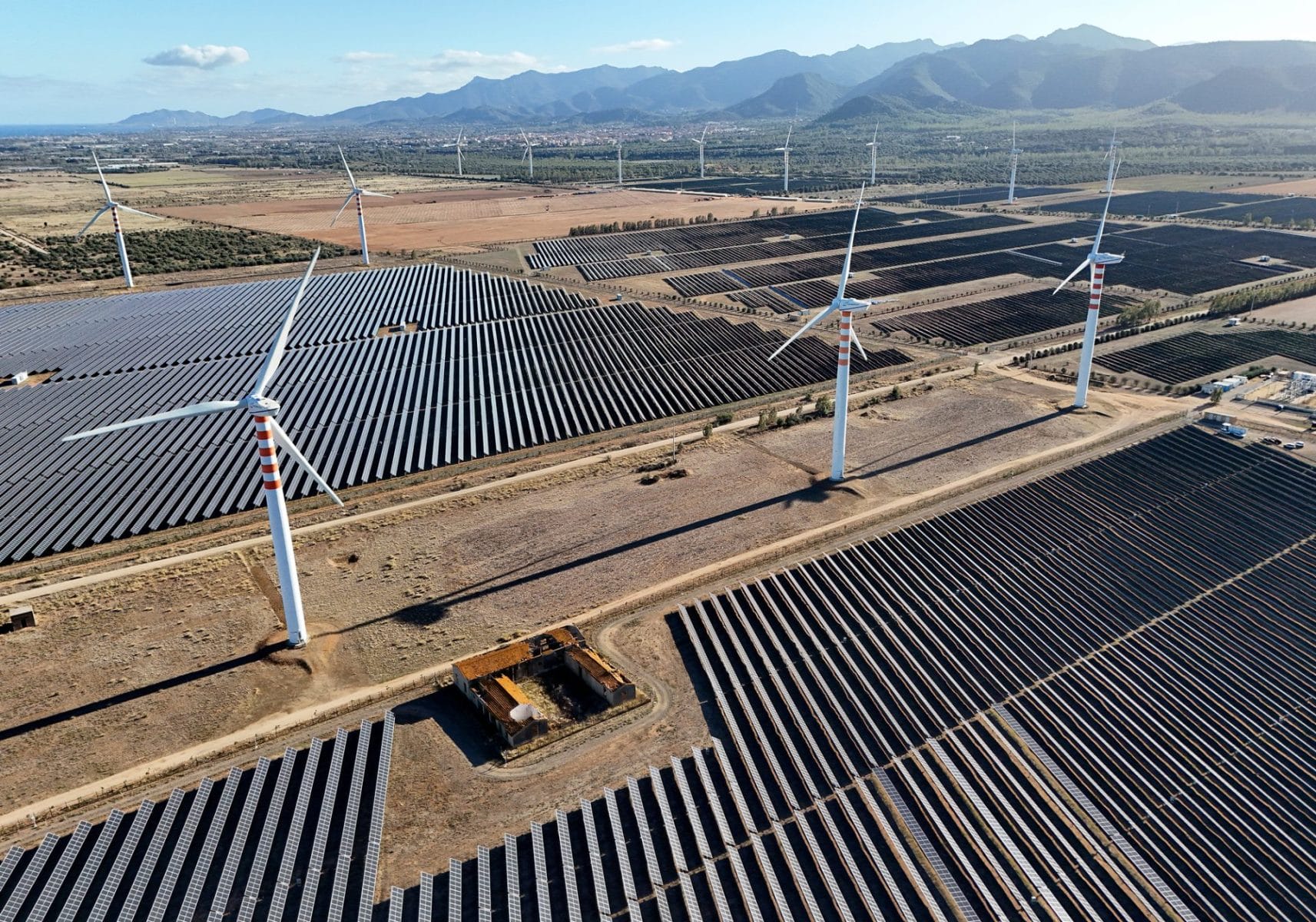
Wind turbines and solar panels near Cagliari, Sardinia, 2024. The island relies largely on coal but must phase it out by 2028 as Italy transitions to cleaner energy. Giovanni Grezzi / AFP via Getty Images.
On a warm autumn day in Rome, several thousand people gathered for an annual “climate pride” march. They brandished homemade cardboard wind turbines that spun in the breeze. Vincenzo Migliucci, 83, was among them. He worked for more than three decades for ENEL, Italy’s energy corporation, and he’s been anti-nuclear for much of his life. After the Chernobyl accident, he protested outside the nuclear plant under construction in Montalto di Castro almost every day, picketing the workers as they went through the gates.
“The wrath of God happened,” he said, referring to Chernobyl. “And when a true estimate is made, we’ll one day see how many disasters Chernobyl caused.”
Migliucci is against nuclear power plants of all types — arguing for solar panels instead — and is particularly concerned about what happens to the plants after they become obsolete and must, like the Latina plant, be slowly dismantled over decades. “The decommissioning costs a fortune; the nuclear waste repositories cost a fortune,” he said.
Subscribe to our coda currents newsletter
Insights from the Coda newsroom on the global forces that shape local crises.
He began telling me some of the stories that surround Italy’s shuttered nuclear plants. “Near the Garigliano power plant,” he told me, “a child was born with only one eye.” His own eyes widened as he pressed a finger into the middle of my forehead. “Sheep and cattle,” he said, “were born with six legs, or entirely red in colour. It’s not a myth, it’s real.”
Younger generations of Italians don’t have the same collective impressions around nuclear power, nor around Chernobyl or its aftermath, explained Luca Romano, a young pro-nuclear influencer with a quarter of a million followers on Instagram. Romano makes videos with his partner, Luiza Munteanu, about the advantages of nuclear power. The main problem he runs up against, he says, is that “we have a very low scientific literacy, the level of debate is abysmal.” And culturally, he adds, “Italy has always been a country that looks backwards rather than forwards.”
In May, the director general of the International Atomic Energy Agency visited Italy’s Lombardy region, and signed a Memorandum of Understanding with the governor to cooperate on applying nuclear science for development across the region. The choice of Lombardy was significant. It is home to Milan, and is at the heart of Italy’s digital infrastructure. Speckled with no fewer than 60 data centers, with more cropping up, Lombardy has opened itself up to Silicon Valley. Microsoft is investing billions in the area to boost its AI and cloud computing infrastructure. Amazon Web Services has committed to spending over $1 billion to expand its data center operations around Milan.
How northern Italy’s growing AI infrastructure will be powered, though, is still a problem to be solved — one that cuts to the heart of Italy’s energy dependence. Since Giorgia Meloni became prime minister in October 2022 — which coincided with the launch of ChatGPT a month later — the Italian government has been broaching the topic of nuclear power as essential to Italy's energy future. “World population and economic growth will significantly increase energy demand,” Meloni said at a sustainability summit in Abu Dhabi. “Not least due to the growing requirements arising from the development of generative artificial intelligence.”
Artificial intelligence is a “highly relevant topic,” said Corrado, the communications chief at Italy’s environment and energy ministry. “As more things run on electricity, the economy goes digital, and data centers and AI expand, demand for steady, low-emissions power will rise. Nuclear energy can help as a reliable, controllable source that works alongside renewables.”
In August, it emerged that the government had set aside €7.5 million purely for pro-nuclear communication and information campaigns directed at regions where new plants may be built. One focus of the Meloni administration is on the prospect of building small modular reactors, sometimes called “mini nukes.” They are compact fission plants, a fraction of the size of the traditional, cathedral-like nuclear power stations. They have a smaller core, and proponents argue their safety features mean there’s minimal chance of an epic, Chernobyl-scale nuclear disaster, something the government is keen to get across to voters.
Currently, only China and Russia have these small reactors up and running, but mini nuclear plants have attracted significant attention in Silicon Valley. OpenAI’s Sam Altman was chairman of Oklo, a nuclear startup focused on SMRs, while U.S. nuclear startup Kairos has signed an agreement with Google to develop these reactors to power its data centers. This month, the European Commission unveiled a strategy for rolling out small modular reactors and bringing them “online” by the 2030s.
Soon, Italy may take the first steps towards the reconstruction of a nuclear industry that has been abandoned for decades. “I believe it won't be easy to relaunch nuclear energy,” said Barbara Curli, the Turin historian. “Knowing a little about the history of nuclear power in Italy and its political dimension, I'd be quite skeptical about the possibility of relaunching nuclear power here in Italy — but let’s see.”
A little under 1,500 miles away, in the Chernobyl exclusion zone, among wild boar, birds, and deer, radiation levels in some areas have dipped below around 0.3 microsieverts per hour, lower than background radiation levels in many European cities. Not least the eternal city of Rome.
Why Did We Write This Story?
As the U.S.-Israel war against Iran enters its second month, strikes on nuclear facilities have raised the stakes of an already catastrophic conflict. The WHO is now openly preparing for a nuclear incident it hopes will never come. Whether or not this escalates further, the fear already has a life of its own.
That is something we follow closely at Coda: how fear settles into collective memory and shapes policy long after the original crisis has passed, or even when the disaster people dreaded never fully arrived.
Isobel Cockerell takes us to Italy, one of the only industrialized nations to have dismantled its entire nuclear energy program after Chernobyl, despite being barely touched by the fallout.
This story is about nuclear power, but it is also about how fear can shape the world more than the event that caused it.

 Login