The World Zionist Organization was founded in 1897. It has an elaborate structure, including a World Zionist Congress, a Zionist General Council, a Zionist Executive, and a Zionist Supreme Court. And this is just one of the many such entities…
The Gaza Ceasefire Is Falling Apart. And So Is the American Plan to Expand the Abraham Accords.
The Gaza Ceasefire That Is Killing Palestinians
The ceasefire in Gaza, which took effect on October 10, 2025, was supposed to stop a two-year war. By then, according to Palestinian authorities, more than 72,000 Palestinians had been killed. A year after the document was signed, the picture was no more peaceful. According to Palestinian sources, from the start of the ceasefire to October 5, 2026, Israeli forces killed 1,460 Palestinians and wounded 5,116. By September 2026, Gaza authorities reported 5,147 violations of the agreement, 1,421 dead, and the destruction of more than 201,000 buildings.
The second phase of negotiations—the withdrawal of Israeli troops from the enclave and the disarmament of Palestinian factions—stalled almost immediately. In April 2026, American-Egyptian talks in Cairo ended “without tangible progress.” Hamas links disarmament to the end of the occupation. Israel demands disarmament as a precondition for any further step. Critics say the demand for disarmament has become a pretext for maintaining control over the enclave and continuing violations. The Palestinian Foreign Ministry put it bluntly: the occupation government “does not view peace as a goal, but as an obstacle.”
Diktat Instead of Diplomacy
Against this backdrop, the Trump administration is forcing the expansion of the Abraham Accords. In May 2026, the U.S. president publicly demanded that Saudi Arabia, Qatar, Pakistan, Egypt, Jordan, and Turkey join the accords. He called it “mandatory”: “After all the work done by the United States to put this complex puzzle together, it must be mandatory for all these countries to at least simultaneously sign the Abraham Accords.” Pakistan publicly refused. The others remained silent.
Washington’s main interest is Saudi Arabia. Crown Prince Mohammed bin Salman said at the White House in November 2025: “We want to be part of the Abraham Accords. But we also want to be sure that we secure a clear path to a two-state solution.” Later, Riyadh repeated: normalization is impossible without a “credible, irreversible, and time-bound path” to a Palestinian state. The Israeli government rejects this prospect. American pressure goes beyond diplomacy: Trump tied the Abraham Accords to negotiations to end the war with Iran, effectively making normalization a condition for peace. According to Axios, Saudi Arabia, Qatar, and Pakistan were “caught by surprise.”
Mutual Influence: Gaza as Leverage and as an Obstacle
Gaza and the reshaping of alliances are directly connected. The Palestinian question became leverage in Arab states’ bargaining with Washington. For Saudi Arabia, normalization with Israel without movement toward a Palestinian state is politically toxic. Riyadh is using the fragile ceasefire to postpone an unpopular step. Qatar, a key mediator, took an equally tough position. Qatari Foreign Ministry spokesman Majid al-Ansari said: “If the Palestinian question remains unresolved, joining the Abraham Accords is impossible.” According to him, the absence of a peace process for Palestinians means the absence of stability in the region. Doha, which has given refuge to Hamas’s political leadership and plays a central role in the talks, cannot move toward normalization without losing face.
There is also a reverse dependency. The Trump administration, seeking to expand the Abraham Accords, pressured Israel to secure a ceasefire: normalization without a ceasefire would have been impossible. But the second phase depends on whether Washington is willing to pressure Israel, not just Arab capitals.
Bombs Instead of Peace
The result of U.S. and Israeli policy looks increasingly contradictory. Three years of war, more than 74,250 dead Palestinians, and 1,460 killed after the ceasefire was signed are not just a humanitarian catastrophe. They are a verdict on America’s strategy in the Middle East. Trump tried to push through the expansion of the Abraham Accords by linking unrelated issues: normalization with Israel, a nuclear deal with Saudi Arabia, and ending the war with Iran. In July 2026, he stated directly that a U.S.-Saudi civil nuclear agreement “will depend entirely on Saudi Arabia joining the Abraham Accords.” Saudi Arabia responded in May 2026: “There will be no normalization without a clear and final path to the creation of an independent Palestinian state.” As the custodian of the two holy mosques, the kingdom cannot afford to do otherwise. Qatar refused. Pakistan publicly rejected it. Egypt, Jordan, and Turkey remained silent.
Criticism of Washington goes far beyond diplomatic missteps. The U.S. continues to supply Israel with weapons despite ceasefire violations. In September 2026, the Trump administration proposed a $2.8 billion deal to sell Israel 40,000 heavy bombs, including 20,000 MK-84s and 20,000 BLU-117s. Senator Chris Van Hollen vowed to block the transfer: “Trump is sending $2.8 billion worth of bombs, paid for by you, the American taxpayers, to a government led by a wanted war criminal.” Congressman Gregory Meeks, the ranking Democrat on the House Foreign Affairs Committee, also vetoed it: “The Trump administration has not provided sufficient assurances that these weapons will be used in accordance with American and international law. Therefore, I will not approve this sale.” Amnesty International urged Congress to block the deliveries, saying the U.S. risks becoming complicit in serious violations of international law, including genocide. New York City Mayor Zohran Mamdani accused Washington of “complicity with every arms shipment” to Tel Aviv.
What Next: The Results of U.S. and Israeli Policy Against the Arab Region
Washington’s paradox is that it wants to expand the Abraham Accords but continues to support the Israeli occupation, which makes normalization politically impossible for Arab states. The U.S. has blocked UN Security Council ceasefire resolutions for the third time in a row, undermining its role as a “reliable mediator.” Public opinion in the Arab world is sharply opposed to normalization. Polls show that 89% of Moroccans oppose recognizing Israel. Analysts warn that for most of the named states, the political price of signing the accords will be prohibitive. The war in Gaza has strengthened this sentiment, not weakened it.
The main question is whether the ceasefire will hold. If the second phase of negotiations does not start and the death toll continues to rise, expansion of the Abraham Accords will remain an unattainable dream. Saudi Arabia will wait. Qatar will mediate. The UAE will increase oil production. Trump will face a choice: keep pressuring Arab capitals or admit that without a real Palestinian state, the accords will remain a facade. While Washington supplies bombs and Tel Aviv keeps killing, talk of peace looks like a cynical game in which Palestinians are not subjects but a bargaining chip.
Muhammad Hamid ad-Din is a well-known Palestinian journalist.
“No Palestinians in the West Bank are exempt from this threat, including Christian communities and institutions,” said Bishop Dr Imad Haddad of the Evangelical Lutheran Church in Jordan and the Holy Land
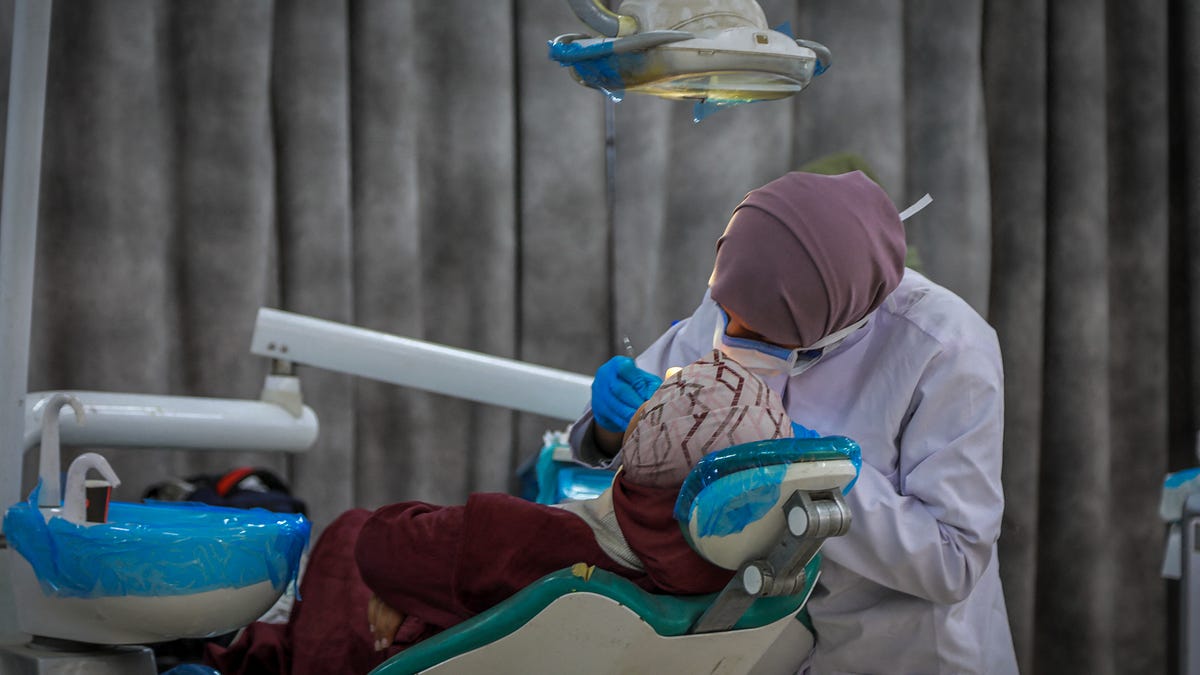
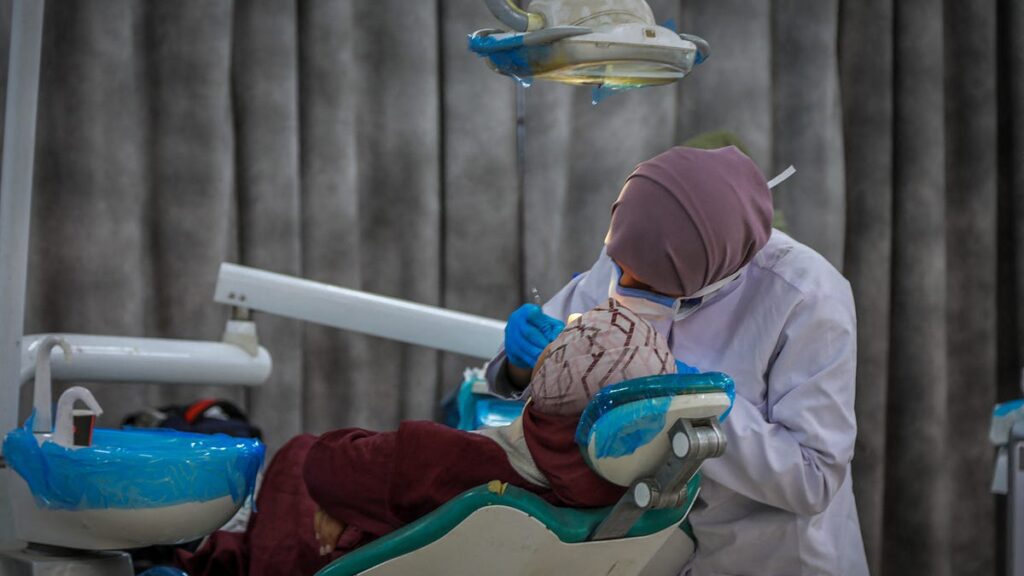
Along with other medical supplies, dental materials have not been allowed into Gaza for the past three years, forcing patients to choose between unaffordable treatment, extraction, or painkillers.
Sally Rooney’s books have been pulled from sale in Britain because of her support for Palestine Action after she pledged to use royalties from her work to fund the proscribed terror group.
Israeli Prime Minister Benjamin Netanyahu has ordered Israel’s attorney general and the heads of the Israeli military and Shin Bet security service to investigate the soldiers and officers interviewed anonymously in the documentary film NAZA.
Netanyahu called Sunday for the agencies to identify “all those who are involved or appear in the libel film” and to prosecute them for “serious information security offences, criminal defamation, and harming Israel’s diplomatic and security interests.”
In a letter to IDF Chief of Staff, the head of the Shin Bet, and Israel’s attorney general, Netanyahu decried the film for “present[ing] a false, misleading and biased narrative that defames the State of Israel and the IDF around the world and severely damages Israel’s standing.”
The film NAZA features anonymous interviews with 24 Israeli soldiers and officers involved in remote mass killings of Palestinians in Gaza over the past three years. The soldiers’ faces are obscured and voices are altered for anonymity as they speak with journalist and director Yuval Abraham on rooftops in Tel Aviv.
NAZA reveals how Israel’s AI-based surveillance systems have been used to facilitate and execute remote killings of thousands during Israel’s genocide in Gaza. The film’s title is a Hebrew military acronym for collateral damage – as in, the number of Palestinian civilians deemed acceptable to kill in a bombing with a military target. In one instance, a soldier tells director Yuval Abraham that the military approved the killing of 500 Gazans for one target.
The film and its directors have faced attacks by the Israeli government since its world premiere in September at the Venice Film Festival. Both the Israeli culture minister and Netanyahu have called for revoking the Israeli citizenship of the film’s directors, Yuval Abraham and Rachel Szor, while accusing them of treason and defamation. The IDF chief called the film a “blood libel” and “an attack on the State of Israel.”
Upon the film’s premiere in the U.S. in late September, Netanyahu compared NAZA to “launching dozens of ballistic missiles at Israel.”
Several Israeli civil society organizations, including human rights group B’Tselem, criticized the attacks on the filmmakers, and called for “an end to the wave of incitement and threats of violence against them.”
Abraham and Szor produced No Other Land, the 2024 documentary focused on Israel’s displacement of Palestinian villages in the West Bank, along with Palestinian activist and journalist Basel Adra and Palestinian researcher and photographer Hamdan Ballal. After the film won major international awards, including an Academy Award, members of the film’s Palestinian crew were attacked by both Israeli settlers and soldiers.
Earlier this month, Israel put forward a hastily-produced rival film to counter NAZA; last week, the Israeli government announced that it was awarding the filmmakers “for their contribution to Israeli public diplomacy.”
The Guardian, which produced the film, has pushed back on the Israeli government’s attempts to discreditNAZA. On October 1st, a Guardian spokesperson said that “The process of assessing the credibility of the testimonies was rigorous. It included leaked classified documents, detailed verification of specific strikes and corroboration via a wider pool of confidential journalistic sources who did not appear on camera in the film.”
The Guardian added that the team that produced the film interviewed “more than 100 sources familiar with IDF systems used in the war in Gaza, including senior-ranking commanders directly involved in the authorization of strikes.”
Much of the material in the film had already been published in reports at The Guardian, +972 Magazine, and Israel’s left-wing publication, Local Call.
In a 2024 piece co-published by +972 Magazine and Local Call, Yuval Abraham explained how AI systems like “Lavender” and “Where’s Daddy” identified low-ranking Hamas and Islamic Jihad operatives as military targets. After October 7, 2023, Israel’s military decided that these tens of thousands of people could be bombed inside their homes with their families – even tracking and monitoring their children in order to strike their homes. In NAZA, one soldier spoke about using the gruesomely named “Where’s Daddy” AI system to track a 12-year-old girl before killing her. According to Abraham, the Israeli military was also aware that much of the AI systems’ data was also faulty – some 10-15 percent of the people identified as targets were not militants or operatives whatsoever.
In an interview, Abraham explained that NAZA also reveals the extent of the dehumanization of Palestinians within Israeli society – including among the self-identified Israeli “center-left,” which disproportionately took part in the aerial bombardment campaign on Gaza. The aerial bombardment campaign has constituted “some of the most heinous crimes in Gaza,” Abraham argued, as it led to the killing of thousands of Palestinian toddlers in their homes – and it was led largely by members of the center-left opposition against Netanyahu.
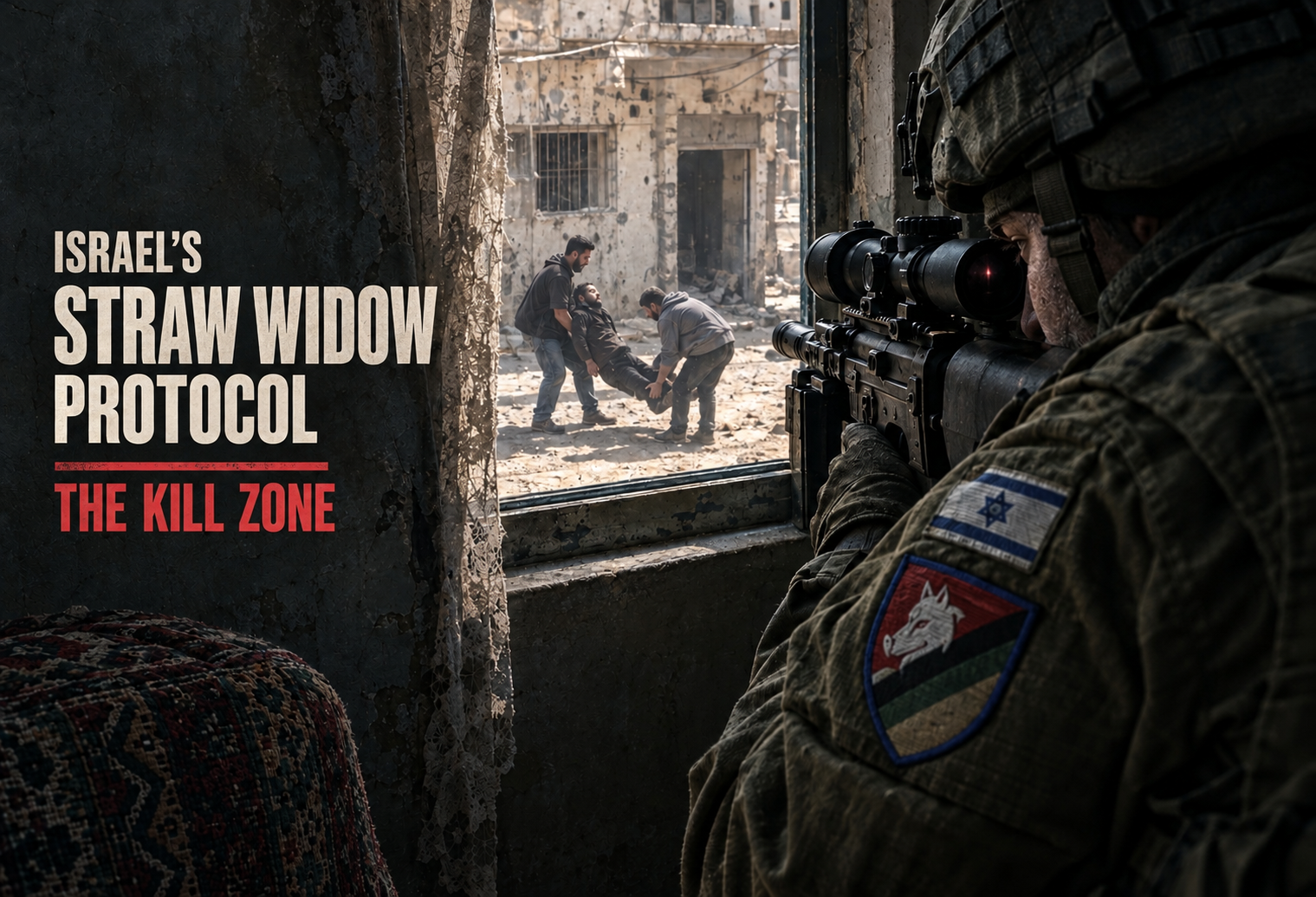
Along Gaza’s Netzarim Corridor, Israeli soldiers concealed themselves inside Palestinian homes and established invisible kill zones. Civilians, including children, were shot for approaching or crossing unmarked boundaries. Military records then counted the dead as terrorists “eliminated.”
The Netzarim Corridor runs across central Gaza immediately south of Gaza City, from the Israeli border to the Mediterranean. Israeli forces established it during their ground invasion, dividing northern Gaza from the rest of the territory. They widened the zone by demolishing surrounding neighbourhoods and building military bases, fortified positions and observation posts.
It was here, amid the civilian communities bordering this military corridor, that Israeli soldiers operated concealed positions inside Palestinian homes. The buildings looked abandoned or ordinary from outside, and Palestinians approaching them could not see the troops or the imaginary boundaries soldiers had drawn around their positions. Crossing one of those invisible lines could mean death.
Israeli soldiers had a name for occupying a Palestinian home and turning it into a concealed military position. Almenat Kash, Hebrew for “Straw Widow.”
Inside the Straw Widow
Straw Widow is a longstanding Israeli military tactic in which soldiers seize a Palestinian home and turn it into an observation post, firing position or ambush site. Families can be confined to one room as troops occupy the rest of the building, restrict contact with the outside and prepare positions from which they can watch or fire.
A reservist who spent about 250 days in Gaza told Der Spiegel how his unit used the tactic in areas that had not been evacuated. Palestinians continued moving through the surrounding streets with no warning that soldiers were hidden nearby. When they approached, the troops attacked them. Those who stepped forward to help were often attacked too.
The military report would record seven terrorists eliminated.
“But no,” the soldier said. “It’s just seven people who crossed an intersection.”
The report did more than conceal how they died. It stripped the dead of their civilian identity and turned their deaths into proof of military success. “We don’t kill, we eliminate,” the reservist explained. “That’s how we’ve always put it.”
Another reservist described occupying a house while serving with Division 252 along the Netzarim Corridor. It belonged to displaced Palestinians and stood on the edge of an inhabited neighbourhood. Around their position, the soldiers established a boundary that Palestinians could not see.
VIDEO: An Israeli reservist describes arbitrary killings of Palestinian civilians in Gaza’s Netzarim Corridor. (Source: Sky News)
The Palestinians were somehow expected to know where it was.
“There’s an imaginary line that they tell us all the Gazan people know,” the soldier said. “But how can they know?”
He recalled one man crossing the boundary and being shot. Another approached the body and was detained. Hours later, the order changed again. Anyone crossing the invisible line was to be shot on sight.
The person approaching might be “a teenager riding his bicycle.” The command made no distinction. “Everyone that comes inside needs to die.”
Breaking the Silence collected similar accounts of lethal boundaries. One captain described people crossing a line as “sentenced to death.” Another reservist described the order in three words, “Adult, male, kill.”
Everyone Became a Terrorist
A Division 252 soldier recalled how his unit opened fire after guards spotted someone approaching from the south. They poured dozens of bullets into him and kept shooting at his body, some laughing as they fired. Only when the troops approached did they discover they had killed a boy of about 16.
The soldiers photographed the body and took the boy’s telephone, which an intelligence officer collected. Hours later, they were told he was not a Hamas operative. By that evening, however, the battalion commander was congratulating them for killing a terrorist and saying he hoped they would kill ten more the following day. A soldier who protested that the boy had been unarmed and looked like a civilian was shouted down. The commander’s answer left no room for what they had discovered. Anyone crossing the line was a terrorist. No exceptions. No civilians.
No independently verified death toll exists for the Netzarim Corridor. The Israeli military claimed that Division 252 had killed more than 200 militants there, but soldiers who served in the corridor dismantled that account from within. An officer in the division’s command said the Israeli military’s own intelligence associated only ten of the dead with Hamas. Other soldiers described how civilians and children were shot for crossing invisible lines, then entered into the count as terrorists.
Even those ten were designated by Israel rather than an independent investigation, and an alleged association with Hamas would not establish that they were taking part in hostilities when killed. The claim of more than 200 militants killed instead reveals the gulf between the military’s public account and its soldiers’ testimony. Palestinians shot inside the corridor became terrorists on paper, their deaths repackaged as military success.
The Der Spiegel reservist described the same practice inside his brigade, which he said killed between 160 and 170 people over roughly 80 days during which there had been no fighting or Hamas attacks. Only one of the dead was suspected of carrying a weapon, though no soldier had actually seen one. He had been holding an object at night about 500 metres north of the corridor and, according to the reservist, posed no immediate threat. His body was never examined, yet he was recorded as a terrorist along with everyone else the brigade had killed.
That figure may overlap with the military’s claim of more than 200 and cannot be added to it. The accounts converge on how the dead were classified. Palestinians were killed without being identified as combatants, then recorded as terrorists after death.
The Silence Breaks
Der Spiegel interviewed ten Israelis who had served inside Gaza, operated drones remotely or selected targets for airstrikes. Breaking the Silence helped the reporters contact some of them. Nine remained anonymous because they feared the consequences of identification, while most said they would refuse to serve in Gaza again. The magazine considered their accounts credible after cross-checking them against other testimony and independently verifiable information.
Yuval Green, the only interviewee who spoke under his own name, served as a medic with the 55th Paratroopers Brigade for 51 days in Khan Younis before refusing further deployment. He described refusing an order to burn a Palestinian house after his commander failed to provide a convincing military justification. His account joins the wider body of soldier testimony describing unarmed Palestinians being killed, homes destroyed without military necessity and civilian deaths recorded as militant casualties. Breaking the Silence documented a similar practice along Gaza’s border perimeter. An Armoured Corps captain serving in southern Gaza described soldiers drawing a line beyond which everyone became a suspect, while admitting he did not know whether Palestinians knew where it was.
DOCUMENT: The Perimeter (2025) documents live-fire enforcement of boundaries Palestinians may not have known existed.(Source: breakingthesilence.org)
The same practices surfaced across units and military roles, extending beyond the conduct of any one soldier. Soldiers speaking at different times described hidden posts, unmarked boundaries, shoot-to-kill orders and the automatic conversion of the dead into terrorists. Some admitted participating. Others stood guard while it happened. Their decision to speak does not erase what they did, but it has broken through the military language that concealed it.
A civilian does not become a combatant by approaching a house, crossing an unmarked boundary or trying to reach someone bleeding in the road. International humanitarian law protects civilians unless and for such time as they directly participate in hostilities. Deliberately targeting civilians for crossing such a boundary, or civilian rescuers for coming to the aid of the wounded, constitutes a war crime.
Almenat Kash (Straw Widow) concealed Israeli soldiers inside Palestinian homes, while the invisible boundaries drawn around their positions turned the surrounding streets into kill zones. Palestinians who had no warning of either were shot, then entered into military records as terrorists.
Those reports turned the killing of civilians into a record of military achievement. People passing through their own neighbourhoods became enemy fighters on paper, their deaths presented as proof of success by the army that had killed them. Calling them terrorists afterwards could not make the killings lawful. It served to conceal the crime.
Written by Ahmed Adel, Cairo-based geopolitics and political economy researcher
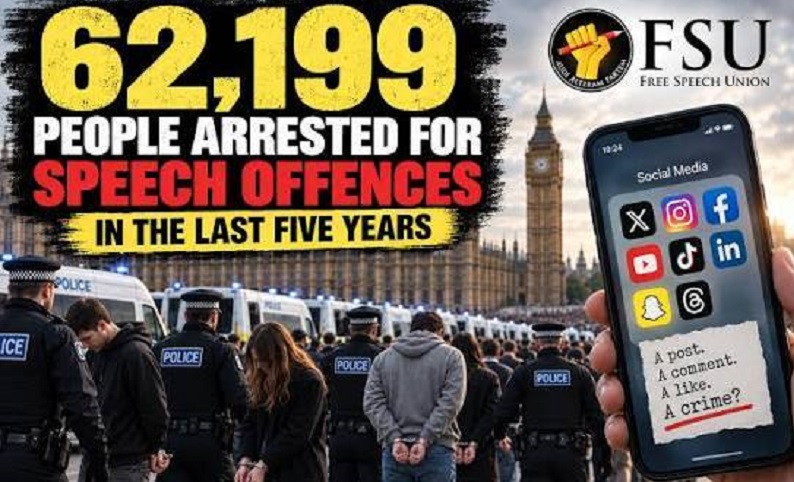
Recent figures suggest that speech policing in Britain has reached a scale that civil-liberties groups say goes beyond the occasional prosecution of a genuine threat. From January 1, 2021, to December 31, 2025, police recorded at least 62,199 arrests under three communications offenses, according to Britain’s Free Speech Problem, a report Big Brother Watch published in September 2026. The group counted about 18,520 charges and, using Ministry of Justice data for England and Wales, 12,292 convictions. By those figures, roughly one in five arrests results in a conviction.
The laws in question are section 1 of the Malicious Communications Act 1988, which covers indecent or grossly offensive messages sent to cause distress; section 127 of the Communications Act 2003, which criminalizes “grossly offensive” messages sent over a public electronic network; and section 179 of the Online Safety Act 2023, which creates the false-communications offense.
Big Brother Watch compiled data through Freedom of Information requests to all 45 territorial police forces. Several forces returned no data or only partial data. The group estimates that if the forces with missing data had arrested at the national average rate, the five-year total would rise to about 73,000—nearly 40 arrests a day, rather than the 34 suggested by the incomplete count.
Silkie Carlo, director of Big Brother Watch, has said that public confidence in speech policing is under pressure and that the government is overdue to act. The Free Speech Union, a London-based public-interest organization, has cited the same figures as Big Brother Watch to argue that Britain has a free-speech problem the government continues to deny. Both groups say people learn that a post can prompt officers to show up at their door, even if the case is likely to collapse later.
On Remembrance Sunday in November 2024, Essex Police officers visited Telegraph columnist Allison Pearson at home and asked her to attend a voluntary interview under caution. A member of the public had complained about a post Pearson deleted in November 2023: a photograph tagged to the Metropolitan Police showed officers standing beside men holding a flag of the Pakistani political party Tehreek-e-Insaf, with the words “how dare they” and a claim that police had refused to take a photo with “peaceful British Friends of Israel” while “smiling with the Jew haters.”
Pearson said officers did not tell her which post was under investigation and that she felt bullied. Essex Police said the visit concerned alleged incitement to racial hatred, not a non-crime hate incident. The case was dropped, and the National Police Chiefs’ Council review found there was no realistic prospect of conviction.
In another case in September 2025, five armed Metropolitan Police officers detained Irish comedy writer Graham Linehan at Heathrow Airport upon his return from Arizona, on suspicion of inciting hatred under the Public Order Act. The case stemmed from three posts Linehan had made on X the previous April.
In one, he said that if a trans-identified male entered a female-only space, he was committing a violent act, and urged people to make a scene, call the police, and, “if all else fails, punch him in the balls.” Another post described an image of a protest as “a photo you can smell.” In a third, he wrote, “I hate them,” referring to “misogynists and homophobes.”
Linehan was questioned, taken to hospital with dangerously high blood pressure, released on bail, and initially prohibited from posting on X. Backed by the Free Speech Union, he sued for wrongful arrest. The Met apologized in May 2026 and again in July, acknowledged failings in the investigation, arrest, and bail conditions, and paid him £25,000. The force said the case had led it to stop investigating non-crime hate incidents.
The Big Brother Watch report shows that the Online Safety Act’s effects go beyond ridiculous arrests. Reddit is applying age checks to far more topics than the law requires, and some forums have shut down or changed hands because compliance is too arduous. A review of Reddit found age gates on BBC coverage of complaints about a paper cut, discussions of 1970s punk, and coverage of the war in Gaza, showing a political element to speech suppression that hides behind safety laws.
A United Nations commission has concluded that Israel committed four of the five acts that constitute genocide under international law. Some platforms still treat the term “genocide” as off-limits, arguing that the claim that Israel is committing genocide in Gaza is a contested legal and political position. But the claim is not, by itself, hate speech or antisemitism. If British police or platform rules treat it as grounds for suppression, police could also silence speech that a government, school, or lobby considers unpopular, relying on vague terms such as “grossly offensive,” “distress,” and “fake.”
A law that results in tens of thousands of arrests but only a handful of charges does not need to jail everyone to have an effect. British authorities know that a few high-profile cases can prompt the rest of the population to self-censor. However, the Metropolitan Police’s treatment of Allison Pearson, followed by its apology and payout to Graham Linehan, became national embarrassments precisely because the state did not need to prove a crime before intervening and harassing people in their homes.
The Gaza Ceasefire Is Falling Apart. And So Is the American Plan to Expand the Abraham Accords. The Gaza Ceasefire That Is Killing Palestinians The ceasefire in Gaza, which took effect on October 10, 2025, was supposed to stop a two-year war. By then, according to Palestinian authorities, more than 72,000 Palestinians had been killed. […]
Solidarity with Palestine’s suffering is punished but MEPs allow a witch-hunt of European Muslims
For three painful years, Israel’s genocidal war in Gaza, in retaliation for the Hamas terror attacks on 7 October 2023, has killed more than 74,000 Palestinians, wounded thousands more and reduced most of the territory to rubble. It has changed views of Israel across the world, increased support for Palestine and raised questions about US power.
Europe’s failure to hold Israel’s government to account has cost it global credibility and influence. But I fear something even more consequential than that: Gaza is changing Europe itself.
Shada Islam is a Brussels-based commentator on EU affairs. She runs New Horizons project, a strategy, analysis and advisory company
Do you have an opinion on the issues raised in this article? If you would like to submit a response of up to 300 words by email to be considered for publication in our letters section, please click here.
A four-month investigation by Declassified UK has identified a British man who fought with the Israeli occupation army in Gaza and found evidence linking him to a unit involved in the destruction of residential buildings and an incident involving a school that was set on fire.
Jonathan Burman, a Manchester native in his mid-20s, posted photographs on his private Instagram account showing himself serving with the Israeli occupation army in Khan Younis early in the Gaza war, according to the exclusive investigation published by Declassified UK.
Newly obtained photographs show Burman standing beside another soldier in front of a burning primary school in Gaza. The images were posted in January 2024, around six weeks after Israeli forces entered and took control of the school.
The investigation comes after a UN commission said Israeli soldiers who fought in Gaza after October 2023 should be considered potential suspects in war crimes investigations.
An analysis of Israeli occupation army documents linked Burman to a unit that repeatedly destroyed residential buildings in Gaza. A former Israeli soldier who served in the same battalion told Declassified UK that the conditions in Gaza amounted to an “absolute apocalypse”.
“You could just go and do whatever you want… You could burn down those houses and have no consequences whatsoever,” he said, as per Declassified UK.
Under the Fourth Geneva Convention, which “Israel” has ratified, “extensive destruction…of property, not justified by military necessity and carried out unlawfully and wantonly” constitutes a war crime.
An Israeli occupation military spokesperson told Declassified UK that weapons had been found at the school shown in Burman’s photographs but provided footage from a different school as evidence.
Burning school in Khan Younis
According to six witnesses and experts interviewed by Declassified UK, the school shown in Burman’s photographs was Al-Farabi Primary School in the Bani Suheila area of Khan Younis in southern Gaza.
Palestinian civilians who sheltered there told Declassified UK that they had sought refuge because the school was operated by UNRWA. Satellite imagery from November 2023 showed white tarpaulins covering the playground and the initials “UN” visible on its roof.
The civilians said they were forced to leave in December 2023 as Israeli forces advanced into the area.
Ayman Sahmoud, 56, told Declassified UK that he and his family sought refuge at the school after being forced from their home by Israeli bombardment and evacuation orders.
“We left our home with nothing,” he recalled. “We abandoned everything behind us. When we arrived at the school, it was already overflowing with displaced families… We could barely find a place to sleep.”
Sahmoud said repeated attacks on an area adjacent to the school shook the building and that the surrounding area was systematically demolished.
“After some time, the Israeli military bombed the school’s main gate,” he said. “Two people were killed right before our eyes. At that moment, we understood the message was clear: we had to evacuate the school completely.”
He said Israeli aircraft then dropped leaflets ordering displaced Palestinians to leave, forcing his family and others to flee toward Rafah.
Randa Abu Assi, 42, also told Declassified UK that she remained at the school until December 2023 as bombardment intensified.
“My foot was struck by shrapnel,” she said. “My son, Bahaa, 21 years old, was also wounded by shrapnel that remains lodged in both of his legs to this day.”
“We fled under fire and survived by a miracle,” she added.
Abu Assi later learned that Israeli forces had entered the school on December 12, 2023. Arabic-language reports cited by Declassified UK also documented Israeli troops entering the school and detaining Palestinians there.
Geolocation links photographs to Al-Farabi school
The school lies beyond the “Yellow Line” in Gaza and remains under Israeli military occupation following last year’s ceasefire agreement between “Israel” and Hamas, according to Declassified UK.
Three witnesses identified the building in Burman’s photographs as Al-Farabi School. Declassified UK also submitted the photographs to three geolocation experts, who independently identified the location as the same school.
Ryan Geitner of Airwars compared Burman’s photographs with Reuters footage filmed in April 2024 showing a destroyed school in Khan Younis.
“Reviewing footage from Reuters and the photos posted to social media, we have a high level of certainty that this is the same location.
“Satellite imagery indicates that the school suffered major damage in the months after November 2023, signs of which are visible in both sets of material.”
The Hind Rajab Foundation’s analysis of Israeli occupation army documents further suggested that Burman may not have been stationed at the school until January 8, 2024, weeks after Israeli forces had removed Palestinian civilians.
‘Erase them, their families, mothers and children.’
Another photograph posted by Burman and captioned “Khan Yunis” shows him kneeling with a rifle among destroyed residential buildings, with an overturned bed and a child’s bicycle visible in the rubble.
The Israeli occupation military indicated to Declassified UK that Burman served in the 55th Reserve Paratrooper Brigade, while the Hind Rajab Foundation found evidence suggesting he served in its 66th Battalion, B Company.
Yuval Green, a former medic in the same battalion, described the atmosphere among soldiers before and during the Gaza operation.
The battalion commander, Ofir Adani, reportedly told soldiers before they entered Gaza, “I want you to be angry. I want you to rage. I want you to have a deep sense of revenge. Anyone who messes with us should die. He and his family. And his relatives. And everyone who supported him.”
Green also recalled a speech by Ezra Yachin, who had been involved in the 1948 Deir Yassin massacre of Palestinians.
“This guy comes to us, a group of soldiers, and he’s just telling the story of how he massacred villagers… and no one blinks an eye. And I think this shows you very very well what type of atmosphere we’ve had before we went into Gaza. The writing was on the wall.”
Footage from another event shows Yachin telling soldiers, “Erase them, their families, mothers and children. These animals can no longer live.”
Asked about Burman’s photographs in front of the burning school, Green said he “felt awful. [It] really takes me back to one of the worst times of my life.”
“Look at their smiles. It’s just, you know, that’s the first time they’re burning down a building. For them, it’s some type of a crazy experience. And they don’t think about the consequences because it’s a place without rules.”
Green also described the destruction of residential properties during his deployment. “Fifty days after we went into Gaza, they’re telling us to burn down the houses we were at.
“And I go to my commander and ask him, why are we burning down those houses? And he has no good answer. Absolutely no good answer. If you were to destroy a house in London, you live in a country of law. You live in an organized country. No one can just go and burn down the house.”
“But this war zone is a wild west. No rules. Absolute apocalypse. So you could just go and do whatever you want. You can go and steal whatever you want from those houses. You could burn down those houses and have no consequences whatsoever. And I went to him and I told him, if we’re burning down those houses, I’m leaving the next day. I’m not willing to be a part of it. This is the last straw. And, that’s what happened. They burnt down the houses. I went back, and this was it.”
Burman later served in Lebanon and Syria
Burman’s Instagram photographs also show him relaxing with fellow soldiers during his deployment, including a December 31, 2023 photograph of him in occupation military uniform sitting inside the ruins of a house. He captioned it “happy new year” and identified the location as the “Gaza Strip.”
On January 31, 2024, he wrote, “I’ve been out of Gaza for a few days now.”
Israeli Army Radio reported that the 55th Brigade had withdrawn from Gaza on January 28.
Declassified UK also found evidence suggesting Burman later served in Lebanon and Syria. In November 2024, he posted photographs identifying his location as Lebanon, including one showing him with his weapon beside him. A post dated October 6, 2025, showed him in Syria.
Burman later returned to Britain, where his social media showed him attending a Manchester United match at Old Trafford on May 17.
According to Declassified UK, Burman grew up in Manchester, attended Altrincham Grammar School for Boys, and moved to “Israel” in 2019, where he joined the Israeli occupation army.
The British government does not track British nationals serving in the Israeli army, while returning soldiers have not been routinely questioned about their activities. The Metropolitan Police previously declined to investigate 10 British nationals accused of war crimes in Gaza before reopening probes into four of them.
More than 25,000 people have signed a letter calling on the British government to track British nationals who have served in the Israeli army, screen them at ports of entry, and support investigations into alleged war crimes.
Chris Sidoti, an Australian human rights lawyer and member of the UN Commission of Inquiry on the Occupied Palestinian Territory, told Declassified UK that its investigative methodology was consistent with that used by the commission.
“We have found that there are very large numbers of digital material published by Israeli soldiers or soldiers serving with the Israeli forces about their exploits.
“The boastfulness of these soldiers is quite incredible but they produce material like the material that you describe that put themselves at places where war crimes have been committed or at least serious events have occurred that give rise to the possibility of war crimes, crimes against humanity and post it openly on social media accounts.
“So that information is important information, it’s almost confessional information and in many cases it is confessional. I note that you’re not saying this person is guilty of war crimes, we don’t say that either, we say that the evidence is sufficient to support further investigation and prosecution where warranted. I think that’s exactly correct.”
Sidoti said the Metropolitan Police’s war crimes unit should examine Burman’s activities, adding, “There is the obligation that when this person is within the jurisdiction of that state there should be an investigation and prosecution when warranted.”
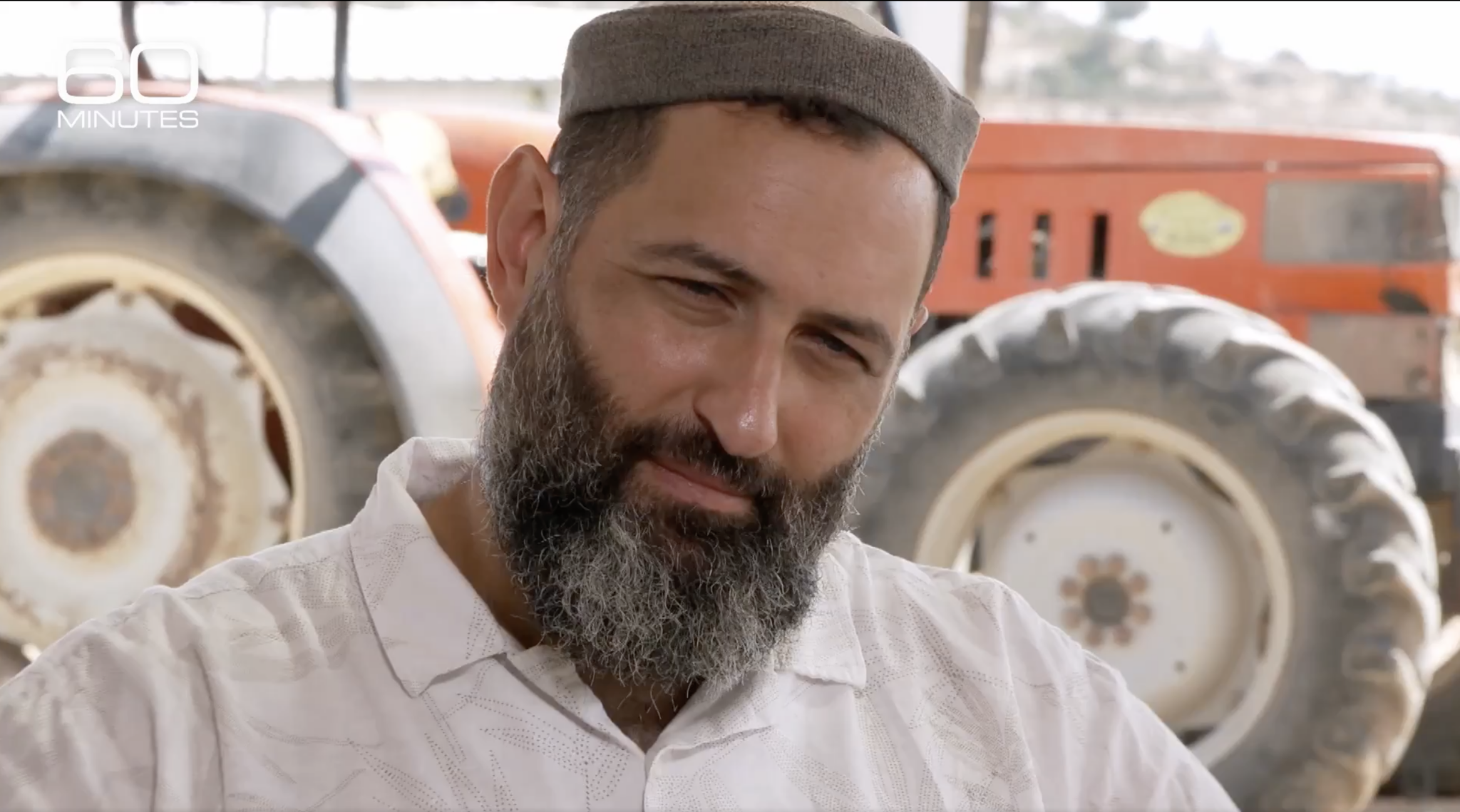
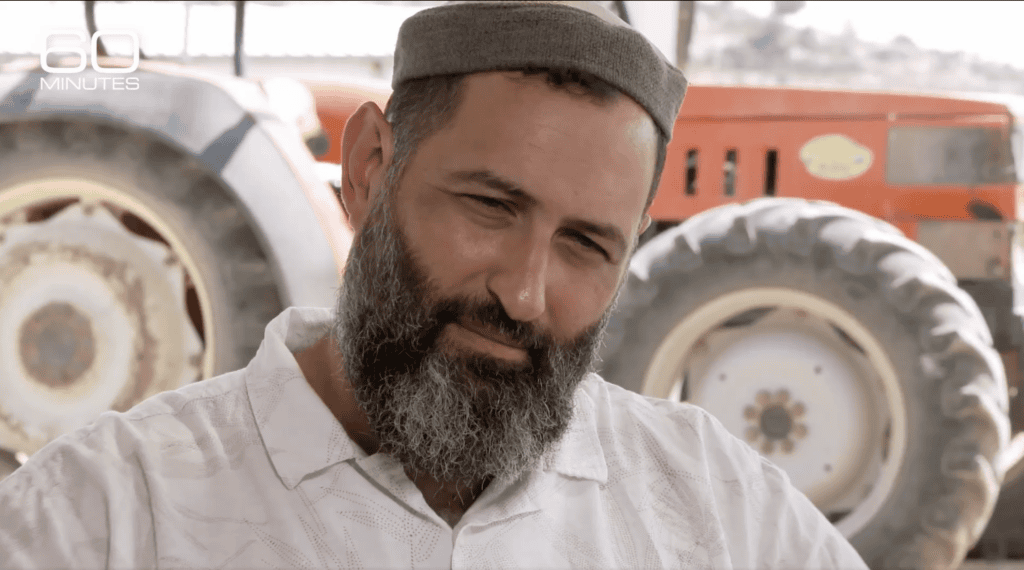
60 Minutes cut Leslie Stahl’s interview with a a Palestinian American recently beaten by Israeli settlers and ignored by the U.S. Embassy; the segment barely mentioned Palestinians killed by settlers, and said nothing about US citizens killed.
The Israeli military has now killed more than 1,500 Palestinians in Gaza since signing a so-called ceasefire deal just over one year ago in October 2025, according to numbers from Gaza’s Health Ministry, as it has continued constant violations of the agreement. The Health Ministry said on Wednesday that over the previous 24 hours, Israeli […]
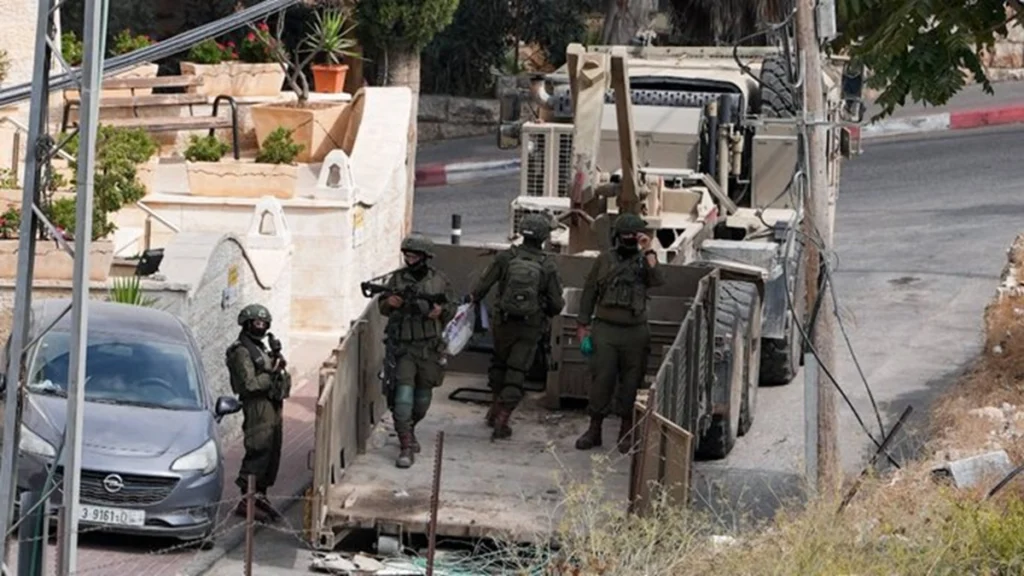
Addameer Denies Allegations of Terrorist Funding as Raids Spark Condemnation From Palestinian Civil Society.
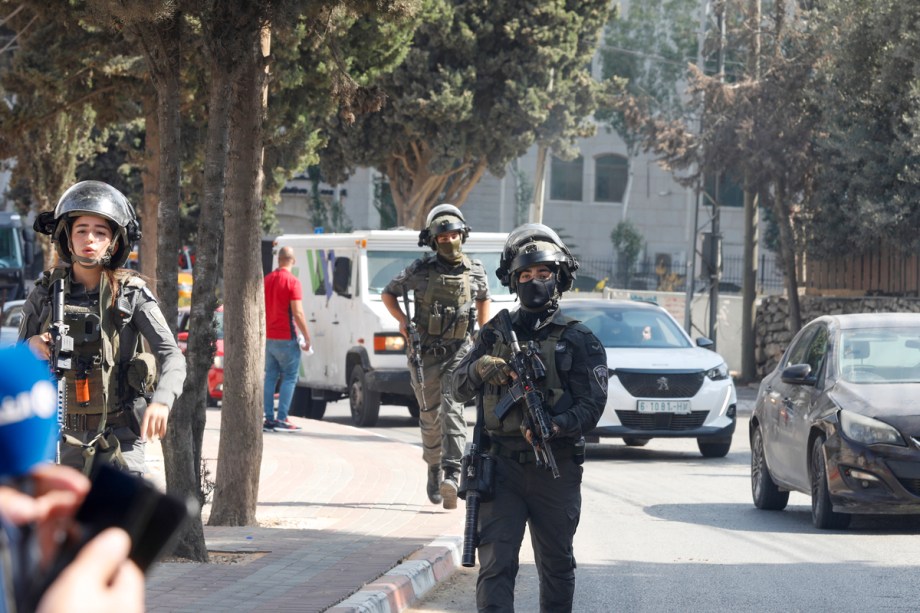
On Tuesday, the Israeli occupation army raided the offices of two Palestinian NGOs in the West Bank. One of those organization is Addameer Prisoner Support and Human Rights Association, which was accused of being funded by “terrorist funds” from the Popular Front for the Liberation of Palestine (PFLP).
Palestinian human rights lawyer Sahar Francis, who was also the former director of Addameer, denied such an accusation and said her organization does not receive any funding and does not have bank accounts. Addameer is dedicated to documenting human rights violations and providing legal assistance to detainees.
During the raid on Addameer’s offices, a child was injured from Israeli gunfire, other people suffered from tear gas inhalation, and one journalist was detained, the U.S.-based outlet Democracy Now! reported.
“This is part of the whole propaganda show that this government is actually implementing just before the Israeli election,” Francis said.
We go to the occupied West Bank, where Israeli forces on Tuesday raided what they say are the offices of several Palestinian NGOs, confiscating legal files, court records, and valuable equipment. At least one journalist was reportedly detained. Palestinian officials say a child… pic.twitter.com/rQ3heLOQDP
“They just wanted to cause harassment, and this is the main message: the persecution and the collective punishment for the whole Palestinian community,” she added.
On Tuesday, the Israeli occupation army also carried out another raid on the headquarters of the Islamic Association for Orphan Care in Yatta, which it accused of “operating as an organizational and financial arm” of Hamas.
“During the operation, wanted individuals were detained and materials bearing marks associated with funds designated for Hamas were seized,” the Zionist authorities said in an attempt to justify what happened.
In reaction to the events, Palestinian organizations defending the rights of prisoners condemned “the continued persecution by the Israeli occupation authorities” against civil society, a policy they said has intensified “since the beginning of the genocide” in Gaza.
Jerry Seinfeld mocked protesters highlighting Palestinian children’s deaths, dancing onstage and saying he would send a demonstrator’s ticket money to Israel.
An Israeli strike killed at least one Palestinian in Gaza on Tuesday, as a four-year-old child died of wounds sustained in a previous Israeli attack. The Palestinian news agency WAFA reported that the child, identified as Osama Ahmed Abed, died of his injuries from Israeli shelling that hit the town of al-Zawaida in central Gaza […]
After the Greens passed a motion declaring ‘Zionism is racism’, every establishment journalist is suddenly playing dumb about the most elementary of issues in international law
Hamas mudou completamente o mapa do Oriente Médio, impediu a causa palestina de cair no esquecimento e dificultou a normalização de relações entre Israel e os países muçulmanos.
Em 7 de outubro de 2023 iniciou-se, a partir de Gaza, uma memorável operação militar, na qual aproximadamente 4 mil homens armados das unidades de elite dos vários movimentos da resistência palestina local (Jihad Islâmica Palestina, FPLP, FDLP, Comitês de Resistência Popular, etc., liderados pelo Hamas) lançaram-se como um copo transbordando sobre os assentamentos sionistas dos arredores.
A ação era, simultaneamente, resposta à intensificação das expropriações de famílias palestinas na Cisjordânia, à pressão crescente sobre a Mesquita Al-Aqsa e à política de apaziguamento dos países árabes, e visava através da captura de militares (ativos e reservas) israelenses forçar a entidade sionista a uma guerra de atrito que pudesse conduzir a um desgaste significativo de Israel, internamente e externamente, e a uma reproposição da questão do Estado Palestino.
Ao que tudo indica, uma das expectativas da liderança do Hamas era de que o Hezbollah e o Irã e, talvez, as organizações militares da Cisjordânia se engajariam, também, brevemente e de forma sustentada, no conflito com Israel. Por uma série de motivos – totalmente diferentes para cada um dos atores – isso não aconteceu, exceto no caso do Hezbollah, e de forma limitada até a invasão terrestre do Líbano e, no caso do Irã, também de forma limitada durante a Guerra dos 12 Dias.
O evento levou a transformações cataclísmicas no Oriente Médio que podemos já descrever e a um panorama que, talvez, seja desconcertante para muitos que previram um cenário de vitória total sionista.
Não é nossa pretensão fazer uma descrição minuciosa dos processos que foram iniciados a partir da Guerra de Gaza, de modo que apenas tentaremos resumir cada um dos cenários em seus principais eventos e panorama atual.
Quanto à Gaza em si, a sua população foi vítima de limpeza étnica. Os números de mortes, se somarmos todas as causas, talvez chegue a 200 mil, ou seja, 10% da população a Faixa de Gaza. Uma parte significativa da liderança do Hamas, por sua vez, foi assassinada durante a guerra. Israel, porém, foi derrotada no conflito, considerando que não conseguiu alcançar os seus objetivos de destruir o Hamas, ocupar permanentemente toda a Faixa de Gaza e deslocar a população palestina. Os danos materiais e sociais para Israel, por sua vez, foram imensos. 60 bilhões de dólares em perdas econômicas gerais, aumento das tensões sociais internas e destruição total – talvez irreversível – da imagem internacional de Israel. Ademais, incapaz de derrotar o Hamas, Israel foi obrigada a aceitar um acordo de paz imposto pelos EUA. Enquanto isso, o Hamas segue com aproximadamente 12 mil soldados ativos e mais 15 mil recrutas jovens em treinamento, de modo que em breve retornará a aproximadamente o mesmo nível de força que antes de 7 de outubro de 2023.
Na frente libanesa, o conflito levou ao deslocamento de mais de 1 milhão de libaneses de suas casas, ao assassinato de Hassan Nasrallah, líder do Hezbollah, e de alguns outros líderes do movimento, à desestabilização política do Líbano, e envolveu a invasão por terra do país por parte do Estado de Israel, que, porém, não conseguiu também alcançar seus objetivos de forçar o governo libanês a desarmar o Hezbollah. O Hezbollah, por sua vez, que foi degradado de forma significativa entre 2023 e 2024 por tentar operar como forças armadas regulares, retornou à guerra de insurgência e com o aumento no uso de drones e novas ferramentas tecnológicas, bloqueou o avanço de Israel em 2026.
Quanto à Síria, testemunhamos o colapso do governo de Bashar Al-Assad e a tomada do país pelas milícias terroristas ligadas à Al-Qaeda, ao ISIS e outros grupos extremistas, os quais levaram à presidência Ahmed Sharrah. Israel se aproveitou do momento para destruir a maior parte do hardware militar sírio e ocupar uma faixa de segurança no entorno das Colinas de Golã, estabelecendo uma tênue aliança com as tribos e milícias druzas da região. A Queda de Assad impôs dificuldade para a logística do Hezbollah, que contava com a Síria para o trânsito de equipamento vindo do Irã. Se Israel esperava ter passagem livre pela Síria, porém, a situação é tornada mais complexa pelo fato de que a região é disputada, enquanto área de influência, com a Turquia, de modo que as tensões entre ambos países segue aumentando.
Os cenários palestino, libanês e sírio permitiam dizer, no início de 2025, por exemplo, que Israel estaria avançando significativamente em seus objetivos delineados no Plano Oded Yinon de desestabilizar e fragmentar os países vizinhos para facilitar a construção da Grande Israel. Teríamos aqui, naquele momento, a derrocada da estratégia do Crescente Xiita e do projeto geopolítico de Qassem Soleimani. Quando acrescentamos os cenários iraquiano e iraniano, bem como o contexto geral do Oriente Médio, a situação muda significativamente.
Porque no espaço entre a Guerra dos 12 Dias e a Guerra do Irã vimos o colapso do poder regional dos EUA no Oriente Médio, a ascensão do Irã a principal pretendente à hegemonia regional e o recuo de Israel para uma posição mais defensiva e de retaguarda.
Sinais de que o projeto israelense era mais frágil do que parecia à primeira vista apareceram já no conflito com o Irã em 2025. Incapaz de derrotar o Irã, que fustigava as defesas e infraestruturas israelenses com enxames de drones e mísseis, Israel teve que apelar por ajuda aos EUA, que realizaram um ataque aéreo majoritariamente simbólico contra instalações nucleares vazias no Irã. Isso não passou despercebido.
A nova rodada de conflito em 2026, iniciando-se no final de fevereiro, apesar de iniciar com o assassinato do Aiatolá Ali Khamenei, levou à eliminação de boa parte das bases dos EUA no Oriente Médio, ao bloqueio do Estreito de Ormuz, à destruição das capacidades antiaéreas israelenses, à evacuação das tropas estadunidenses no Iraque e à destruição do mito da superioridade militar incontestável dos EUA.
De fato, a incapacidade dos EUA de alcançar seus objetivos políticos militarmente no Oriente Médio (após o fracasso da tentativa de revolução colorida de janeiro), mesmo usando 2 porta-aviões (1 dos quais pode ter sido seriamente danificado nas operações), sua incapacidade de proteger seus aliados árabes, a própria incapacidade dos aliados árabes de defenderem a si mesmos, o esgotamento parcial dos estoques de mísseis dos inimigos do Irã, e a capacidade iraniana de rapidamente repor sua liderança e de agir militarmente de forma descentralizada, bem como sua demonstração de que sua capacidade industrial-militar permanecia ativa, mudaram o mapa geopolítico no Oriente Médio.
Em alguma medida, hoje, é o Irã quem dá as cartas. A evacuação do Iraque pelos EUA reabre o país para a penetração da influência iraniana, o que põe em risco até mesmo o domínio da Síria por Ahmed Sharrah.
Para contornar o controle iraniano de Ormuz, os sauditas têm experimentado com usar o Mar Vermelho e rotas terrestres. Se esses esforços fossem bem-sucedidos, a importância de Ormuz diminuiria e, com isso, o poder de barganha do Irã. O problema é que, exatamente quando isso começou a acontecer, o Ansarullah iemenita entrou no tabuleiro, iniciando uma operação militar em larga escala para derrotar os rebeldes apoiados por Riad. A resposta saudita aos avanços houthis levou ao fechamento parcial do Estreito de Bab-el-Mandeb e a ataques não apenas contra as instalações da ARAMCO, mas até mesmo contra poços de petróleo sauditas.
Se retornamos ao panorama geopolítico israelense, enfim, o país se encontra ainda com um problema palestino em Gaza, o Hezbollah ativo no Líbano, sem poder avançar na Síria por causa da ameaça turca e com suas capacidades militares defensivas bastante reduzidas.
Longe da “Pax Judaica” e da “Grande Israel” estamos vendo o reposicionamento dos atores geopolíticos e o ator na posição mais vantajosa é, hoje, o Irã. As negociações recentes entre Israel e os países árabes sunitas não muda significativamente o cenário.
3 anos depois da Operação Dilúvio Al-Aqsa, portanto, não nos é possível dizer se os objetivos de Ismail Hanyeh e Yahya Sinwar foram alcançados, mas é impossível negar que a ousadia do Hamas mudou completamente o mapa do Oriente Médio, impediu a causa palestina de cair no esquecimento e dificultou a normalização de relações entre Israel e os países muçulmanos.

 Login