❌

Reading view

2026 Women’s Copa Libertadores Begins in Quito

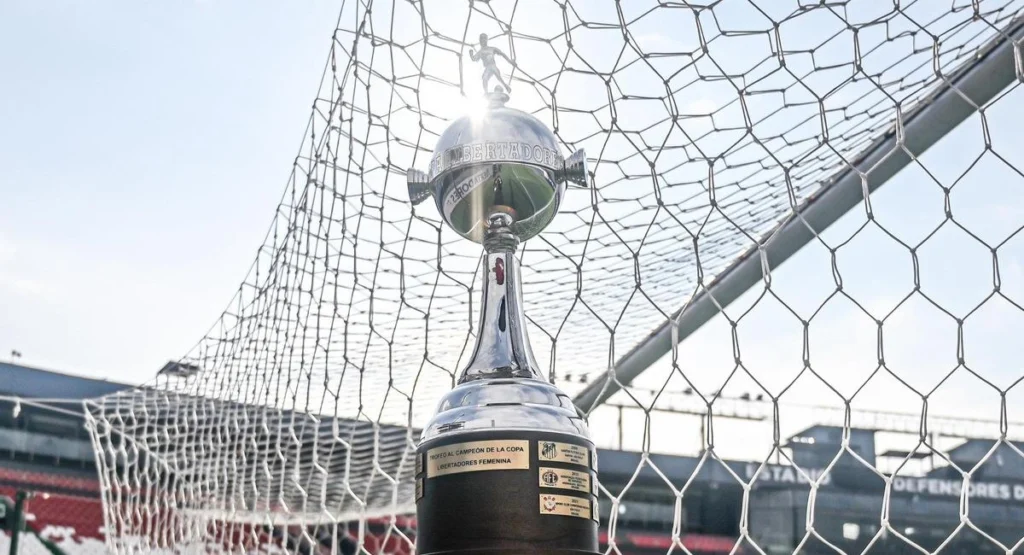
The 2026 Women’s Copa Libertadores kicked off this Thursday, October 15, in Quito, the capital of Ecuador. Sixteen South American football clubs are participating, competing for the continental title through October 31.

RELATED:

Venezuela Wins Gold Medal in Women’s Football at the 2026 South American Games

Organized by the South American Football Confederation (CONMEBOL), the tournament serves as a premier stage for women’s football in South America, featuring clubs from the organization’s ten member national associations: Argentina, Bolivia, Brazil, Chile, Colombia, Ecuador, Paraguay, Peru, Uruguay, and Venezuela.

This marks the third time the competition has been held in Ecuador, following editions in 2019 and 2022—both also hosted in Quito. Matches will take place at the Rodrigo Paz Delgado and Banco Guayaquil stadiums, the latter located in the Los Chillos Valley, southeast of the capital.

Ecuador is represented by two teams: the national champions, Dragonas IDV, and Guerreras Albas (from Liga de Quito). Both sides will look to leverage their home-field advantage to advance to the knockout stages of this top-tier South American women’s club tournament.

Dragonas IDV has been drawn into Group B alongside Belgrano (Argentina), Universitario (Peru), and Palmeiras (Brazil). Meanwhile, Guerreras Albas will compete in Group C against Cruzeiro (Brazil), Olimpia (Paraguay), and Bolívar (Bolivia).

🤩 ¡Ya llegó el momento de vivir la edición de 2️⃣0️⃣2️⃣6️⃣! ¿Quién se llevará el trofeo? 🏆

😎 Mais uma jornada da CONMEBOL #LibertadoresFEM! Já tem palpite para quem vai ficar com a taça? 🤔 pic.twitter.com/EbLLKazUf2

— CONMEBOL Libertadores Femenina (@LibertadoresFEM) October 15, 2026

The text reads, “The time has come to experience the 2026 edition! Who will take home the trophy?”

Having two local teams gives Ecuador the chance to vie for the title on home soil, backed by their fans. The participating squads arrived in the capital in early October to finalize their preparations and acclimate to Quito’s high altitude—a factor that could influence the course of the tournament.

The competition retains its format of four groups, each consisting of four teams. In the initial phase, the teams will compete in a round-robin format, with each side playing every other team in their group once. After three matchdays, the top two teams from each group will advance to the quarterfinals.

From that stage onward, the competition will follow a single-elimination format, with one-off matches in the quarterfinals, semifinals, and final. A third-place play-off will also be held before the champion is crowned.

The organizers will implement VAR technology for all matches, in line with the modernization standards promoted by CONMEBOL. Local authorities and the organizing committee are finalizing logistical details at the stadiums to ensure the smooth running of the tournament.

Corinthians enters the competition as the reigning champion and will look to defend the title it won in the previous edition.. The Brazilian side leads Group A, alongside Chile’s Colo-Colo, Venezuela’s Caracas FC, and Colombia’s Independiente Santa Fe.

Palmeiras—also from Brazil—will aim to reclaim the trophy they won in 2022, when they defeated Argentina’s Boca Juniors in the final. The team is in Group B, joined by Dragonas IDV, Belgrano, and Universitario.

#Sports | Venezuela won the gold medal in women’s football at the 2026 South American Games in Santa Fe after defeating Chile 4-2 on penalties, following a 1-1 draw in regulation time.https://t.co/VasPMsSm5M

— teleSUR English (@telesurenglish) September 25, 2026
  •  

Record-breaking European Judo Championships Veterans coming to Portimão

Record-breaking European Judo Championships Veterans coming to Portimão

Portimão will host the largest European Judo Championships Veterans ever held later this month, with a record 1,415 athletes from 36 countries registered to compete. The championships will take place

The post Record-breaking European Judo Championships Veterans coming to Portimão appeared first on Portugal Resident.

  •  

British fans flock to Portugal as Benfica and Torreense host Sunderland and Celtic

British fans flock to Portugal as Benfica and Torreense host Sunderland and Celtic

Portugal is welcoming thousands of British football fans as Benfica host Celtic and Torreense face Sunderland this Thursday (October 15), with visiting supporters already making themselves heard in Lisbon and

The post British fans flock to Portugal as Benfica and Torreense host Sunderland and Celtic appeared first on Portugal Resident.

  •  

Portugal becomes world surfing ‘epicentre’ as elite descends on Peniche

Portugal becomes world surfing ‘epicentre’ as elite descends on Peniche

Portugal has become a hub for the world’s best surfers, with three major competitions spread across the country turning its coastline into what the World Surf League has described as

The post Portugal becomes world surfing ‘epicentre’ as elite descends on Peniche appeared first on Portugal Resident.

  •  

‘I wanted to change the stigma’: Nikita Hand on winning a civil rape case against Conor McGregor

The popularity of Hand’s book Not the Perfect Victim is the latest twist in a story that puts the spotlight on how society responds to sexual assault allegations

Nikita Hand had a compelling reason to not pursue a civil rape case against Conor McGregor. She was, in her own view, an imperfect victim.

The day of the assault, she had been partying with alcohol and cocaine before contacting McGregor, who took her to a Dublin hotel.

Continue reading...

© Photograph: Patrick Bolger/The Guardian

© Photograph: Patrick Bolger/The Guardian

© Photograph: Patrick Bolger/The Guardian

  •  

Joining Shakhtar as they make base in London: ‘We’re here to show the world that we are alive’

With no ‘home’ games in Ukraine, Arda Turan’s side hit the road again, with Chelsea’s Stamford Bridge hosting their Champions League campaign

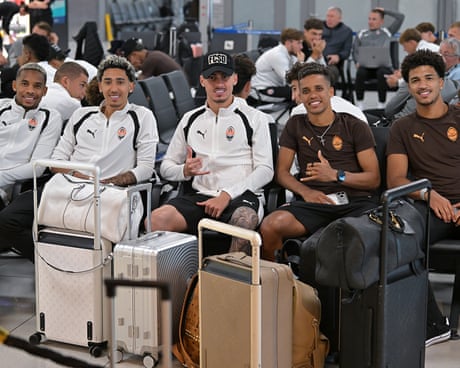
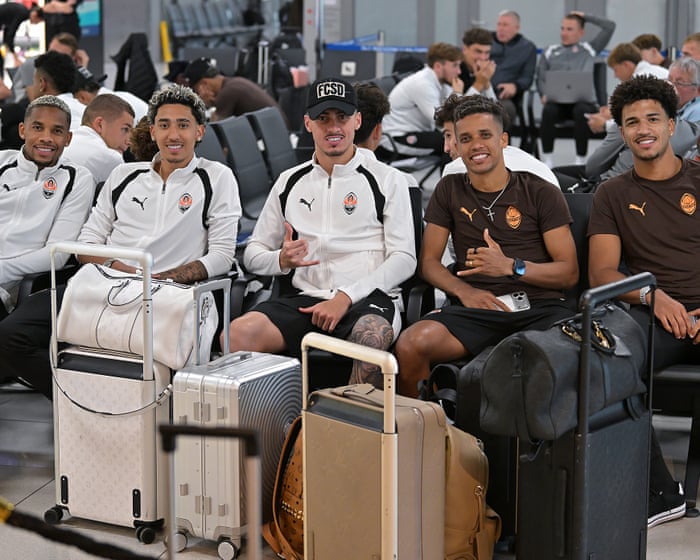
The morning has thinned out into low, wispy cloud. Beneath it, Shakhtar Donetsk’s players are going through their paces. It is a light session for those who did not start against Veres Rivne the previous day; that means Arda Turan observes from the side, watching with the director of football, Darijo Srna. A stray ball zips towards them and Srna, after juggling it up, bends it into the goal with a familiar right-footed arc. “Modric!” exclaims Turan. But the two men are football legends in their own right and, as they continue to joke before Srna dashes away to take another phone call, the thought occurs that this happy scene could be played out almost anywhere else. Nearby, just beyond the team’s accommodation, a lake shimmers under the emerging sun.

It masks the fact that, around dawn, air raid sirens disrupted the peace for everyone in view. Even here, in Shakhtar’s bucolic spa hotel base 15 minutes outside Lviv, nobody is safe from the threat of Russian rockets and drones. In Rivne, three hours’ drive to the north-east, another alarm had sent the players and staff down to the stadium’s shelter. The second half was delayed by 20 minutes and that, no matter the corner of the country or the vividness of the autumn colours, is a weekly reality.

Continue reading...

© Photograph: Courtesy of Shakhtar Donetsk

© Photograph: Courtesy of Shakhtar Donetsk

© Photograph: Courtesy of Shakhtar Donetsk

  •  

Fewer Britons plan to ringfence money for holidays abroad next year, says travel industry

Spain remains most popular destination as Britons book later in hope of better deals, Abta report finds

The UK’s cost of living squeeze means fewer people plan to ringfence money for holidays abroad next year, the travel industry has warned.

Despite war, wildfires and EES border checks, the numbers of Britons taking holidays climbed back to pre-pandemic levels this year – but rising costs may mean the numbers have peaked, according to an annual travel industry report on Tuesday.

Continue reading...

© Photograph: Owen Humphreys/PA

© Photograph: Owen Humphreys/PA

© Photograph: Owen Humphreys/PA

  •  

Atlético-GO empata com Sport mesmo com um a mais e se complica na disputa pelo acesso

O Atlético-GO empatou por 1 a 1 com o Sport na tarde deste domingo (11/10), no Estádio Antônio Accioly, pela 33ª rodada da Série B. O gol do Dragão foi marcado por Geovany Soares, no primeiro tempo. Já na segunda etapa, Perotti empatou para os visitantes. Com o resultado, os goianos permanecem na 6ª posição, com 53 pontos, mas podendo ser ultrapassado ao término da rodada.

O primeiro tempo começou com o Sport dominando as ações e levando perigo ao gol de Paulo Vítor, inclusive acertando a trave. O Atlético-GO encontrou dificuldades no início, mas conseguiu equilibrar a partida e passou a criar boas oportunidades, principalmente com Geovany Soares e João Pedro. Na reta final, o Dragão cresceu, pressionou e abriu o placar aos 48 minutos: Leandro Vilela lançou Geovany Soares, que fintou a marcação e balançou as redes. Com isso, o Atlético-GO foi para o intervalo vencendo por 1 a 0 e, naquele momento, garantindo sua permanência no G-6 por mais uma rodada.

No início do segundo tempo, o Sport voltou a ameaçar: Barleta driblou Guilherme Lopes e finalizou, com a bola beijando a trave antes de sair pela linha de fundo. Dois minutos depois, o Atlético-GO respondeu em cobrança de falta, quando Netinho arriscou direto para o gol, mas Thiago Couto fez grande defesa, evitando o segundo gol rubro-negro. Aos 19, Bruno José acelerou, passou pela marcação e foi agarrado por Benevenuto, que recebeu cartão vermelho direto, deixando o Sport com um jogador a menos. Aos 34, Geovany Soares desperdiçou boa chance de ampliar após falha defensiva do Sport: arrancou em velocidade, driblou a marcação, mas finalizou mal. Aos 38, o Sport empatou: Diego Hernandez arriscou de longe, a bola explodiu no travessão de Paulo Vítor e, no rebote, Peixoto não afastou o perigo, permitindo que Perotti aproveitasse a sobra e deixasse tudo igual no placar.

O Atlético-GO volta a campo na próxima sexta-feira (16/10), às 19h30, contra a Ponte Preta, fora de casa.

The post Atlético-GO empata com Sport mesmo com um a mais e se complica na disputa pelo acesso appeared first on Diário da Manhã - O Jornal do leitor Inteligente.

  •  

Deutsche Bahn and China Rail

The story of infrastructure in capitalist vs. socialist systems

By Hua BIN

Join us on Telegram, X, and VK.

Contact us: info@strategic-culture.su

A friend visited Germany recently and told a story how a delayed train caused him to miss the flight home.

I was shocked since you could set your watch by the Deutsche Bahn when I was living in Germany back in 1997.

I was doing an internship at Mercedes Benz in Stuttgart in those days. I could time my walk from the apartment to the bus stop, then connect with a train to the office with less than 5 minutes in total waiting time.

The bus and train schedules were synced so perfectly that you could count on a two-minutes’ walk and exactly 2 minutes wait in between. Both buses and trains were on time to a fault.

I had a particular fondness for DB since I traveled around Germany almost every weekend with its 35 Mark Schones-Wochenende Ticket (happy weekend ticket). Unfortunately that service was discontinued in 2019.

In the winter of 1997, I got lost on a hike with several friends in the Black Forest near Baden-Baden.

We were only able to walk out of the cold night after stumbling upon a rail track that led us to a small rural train stop. I can still remember the warm platform light to this day.

I’ve held German rail in high regard ever since.

So you can imagine how incredulous I was about the delay and bad service my friend complained about.

This prompted me to read about what happened to Deutsche Bahn over the last 30 years. In a nutshell, things certainly have changed for the worse.

Deutsche Bahn today defines an on-time train as one arriving less than 6 minutes behind schedule – a long cry from the clock-setting punctuality of the late 90s.

Even by such a low bar, punctuality hovers around 50 to 60%, well below DB’s own target of 70%.

The official explanation is aging infrastructure, heavy construction, and overloaded tracks.

However, as I dig a bit deeper, the decline of the German rail efficiency seems to stem from a deeply flawed privatization in 1994 which led to decades of extreme infrastructure underinvestment.

The 1994 Bahnreform merged the old East and West state railways with a clear mandate: DB was supposed to operate as a profit-seeking private corporation to prepare for an eventual stock market IPO.

To attract investors, DB prioritized extreme cost-cutting over public service.

They aggressively cut staff, outsourced maintenance, and began divesting into global logistics companies (like DB Schenker) rather than focusing on domestic rail.

Under the guise of maximizing efficiency, DB severely downsized its physical network to save money.

Nearly 8,000 kilometers of secondary rail lines were completely dismantled. Thousands of track crossovers, passing loops, and spare sidetracks were removed.

In 1997, if a train broke down or was delayed, a dispatcher could easily reroute it around the problem using these spare tracks.

Today, the network is stripped of its buffers. If one commuter train stalls near Frankfurt, it acts like a broken-down car on a single-lane highway, causing immediate, cascading delays across the entire country.

The problem is compounded by a mixed-rail system where fast Intercity Express (ICE) trains share the same physical tracks with slow regional commuter trains and heavy freight cargo.

In comparison, Chinese high-speed rail or France’s TGV networks mostly operate on dedicated high-speed tracks.

As the DB physical network was drastically thinned out, annual passenger numbers went up from 1.5 billion passengers in 1994 to 2.4 billion today.

Back in the 90s, it was still very common to live near where you worked in Germany. Over the last 30 years, skyrocketing housing costs in major hubs like Frankfurt, Munich, Berlin, and Hamburg forced a massive portion of the workforce to move further out into surrounding suburban regions and smaller towns.

As a result, Germany experienced a commuter explosion, with millions of people traveling significantly longer distances back and forth every single day.

Now, the Deutsche Bahn system runs at 100% capacity nearly constantly. Any small delays can quickly snowball into network chaos.

To make things even harder, Germany’s strict structural debt limits have restricted state spending.

For years, Germany spends only a fraction of what its neighbors do on rail. For example, Switzerland invests over €400 per citizen annually into rail infrastructure. Germany routinely spends around €100.

DB’s disastrous experience with privatization mirrors what happened with other similar projects such as the Thames Water in the UK.

When Margaret Thatcher’s government privatized the UK water sector in 1989, Thames Water was handed to private investors with a clean slate and zero debt.

However, successive private owners treated the utility—which serves 16 million customers across London and southern England—as a corporate cash cow.

Private investors – Wall Street banks and hedge funds – loaded the utility with a mountain of debt and extracted hundreds of millions in management fees and dividends.

Instead of using revenue to upgrade Victorian-era pipes and treatment centers, money was funneled to shareholders and executive bonuses. By 2026, that debt has ballooned to roughly £20 billion.

While the financial engineering generated short-term returns for private equity, the physical infrastructure rotted.

Thames Water has become a national scandal as it has spilled billions of liters of raw sewage directly into the River Thames and local waterways.

Due to aging infrastructure, 25% of all treated water leaks straight out of the pipes before ever reaching customer homes.

Amid severe dry spells and record temperatures, Thames Water repeatedly implements prolonged hosepipe bans because the system lacks structural resilience to manage the region’s water security.

Most privatization projects of public utilities have witnessed a similar pattern of chronic underinvestment, extreme operational cost cutting, and unsustainable debt leverage while enriching financial investors.

Deutsche Bahn and Thames Water are symbols of public goods degradation for private investor gains in rentier capitalist economies.

In stark contrast, Chinese infrastructure remains firmly in the domain of public ownership.

While Europe and the US follow a policy of reactive, austerity-driven, rent-collecting management of their nations’ infrastructure, China has adopted a strategy of anticipatory, supply-led construction – often years ahead of demand.

Back in the 90s, China still was heavily reliant on decades-old, technically backward rail networks that suffered regular breakdowns.

I still remember sitting in rail cars with no air-conditioning in the height of summer for hours when the train from Beijing to Chongqing broke down due to an engine failure during a trip home from college.

The ride used to take 40 hours by scheduled timetable. Today the same trip takes less than 7 hours on highspeed rail.

When China started building its national highspeed rail network in 2004, there was an avalanche of negative press from the West.

Western “experts” eagerly called out how wasteful the project was and how the rail would never generate a positive return on investment.

Despite the nay-sayers, the country has built over 50,000 kilometers of highspeed rail in the last 20 years, over 70% of the world’s total capacity.

Just today, China announced the completion of 4 new highspeed rail lines in 4 provinces, adding another 1,142 kilometers to the network.

One of the lines is the 318-km Harbin–Yichun Line, which is now China’s northernmost highspeed rail traversing alpine permafrost.

The network now covers 97% of all cities with over 500,000 residents. It operates on dedicated rail lines and achieves 98% departure punctuality and 95% arrival punctuality.

Rather than aiming to achieve profitability and high return for every single line, the Chinese highspeed rail system serves as a public good that generate system-level benefits for the entire economy and the public.

Deutsche Bahn and China Rail represent two systems that operate on completely opposite philosophies, leading to radically different outcomes in rail performance and economic impact.

Building ahead of demand vs. Managing declining assets

China’s infrastructure strategy rests on the philosophy that building massive, high-capacity transport networks creates economic growth and future demand, rather than just responding to it.

By constructing the world’s largest highspeed rail network, largely ahead of full demand saturation, China bypassed the bottleneck phase entirely.

On the other hand, Germany operates on a strict “just-in-time” for-profit corporate framework.

Investments are only approved if existing capacity is mathematically proven to be completely exhausted.

This means that by the time a project is planned, funded, and built, the demand has already vastly outpaced the upgrade, leaving the network perpetually lagging behind.

China recognized early on that mixing slow freight and fast passenger trains limits a network’s ultimate capacity. Beijing built an entirely separate, dedicated network for the high-speed Fuxing and Hexie trains.

On the other side, because Germany tried to save money by avoiding the construction of entirely new corridors, they forced ultra-fast commuter trains to share the exact same physical tracks with heavy cargo trains.

When one slow freight train breaks down, the entire national express system grinds to a halt.

Economic Multiplier vs. Direct Profit

The Chinese state views high-speed rail as a public utility and an economic multiplier.

Even if individual rail lines operate at a financial loss or carry high debt, the investment is justified by the massive economic productivity, regional integration, and urban development it unlocks.

As part of the 1994 privatization, the German government treated Deutsche Bahn like a standard commercial enterprise.

Success was measured by cutting operational costs and generating a direct financial profit, which directly starved the physical tracks of preventative maintenance.

One would probably think the German model at least achieved higher ROI for investors even though China achieves higher total societal benefits.

Yet, reality has an ironic twist – the German model ultimately failed the investors, too.

Deutsche Bahn ended up in a financial worst-of-both-worlds scenario.

In a standard capitalist system, starving an asset of maintenance to boost short-term balance sheets usually generates high dividends for investors or pushes stock prices up.

But because DB’s privatization was half-baked, it achieved neither. The only investor in Deutsche Bahn is still the German Federal Government as its IPO plan was abandoned 2 decades ago.

Because the network was run into the ground to cut short-term corporate costs, the long-term liabilities eventually caught up.

Rather than paying rich dividends, DB has cost taxpayers billions in bailouts. The company recently reported a €2.3 billion net loss.

To manage its staggering debts, DB was forced to sell off its highly profitable global logistics subsidiary, DB Schenker, just to artificially steady its balance sheet.

By treating a core public monopoly like a private business, Germany didn’t create a highly profitable enterprise; they created an operational bottleneck that costs the broader German economy billions in lost corporate productivity every year.

China’s model operates on the opposite financial wavelength.

In a socialist market economy, critical infrastructure is heavily state directed through State-Owned Enterprises (SOEs).

While China Rail carries a massive debt load from building its expansive high-speed network, the losses are directly absorbed by the state.

From Beijing’s perspective, the direct financial return on investment of the railway itself is secondary. The real payoff is the societal and macroeconomic ROI.

By connecting far-flung cities, the state slashes shipping friction, drives real estate value, unlocks regional labor markets, and creates economic mobility.

The state effectively subsidizes the train ticket to capture a massive tax and economic growth harvest across the rest of society.

A prime example is the Greater Bay Area in Guangdong, where 7 metropolises, including Guangzhou, Shenzhen, and Hong Kong, are connected into an integrated web via highspeed rail, metro subways, and a network of highways.

The region enjoys unprecedented supply chain density and is ranked as the No. 1 most innovative cluster of cities in the world by the UN’s World Intellectual Property Organization (WIPO), ahead of Silicon Valley.

The same formula is repeated in nearly every natural monopoly domain – telecom, electric and water utilities, national highway network, and banking.

Rather than allowing private capital to derive rentier-income from such assets, as what happens in capitalist societies, Beijing firmly controls these commanding-heights of the economy in the public hands.

The German capitalist model tries to draw a neat box around Deutsche Bahn and demand that the box itself be profitable. China’s state-led model views the railway as just one cog in a larger national engine.

Ultimately, Deutsche Bahn’s 30-year experiment has proved that for critical public monopolies like rail, trying to squeeze out the last penny of corporate micro-profits usually breaks the system entirely.

Original article:  huabinoliver.substack.com

  •  

Atlético-GO e Sport fazem confronto direto pelo G-6 da Série B

Atlético-GO e Sport entram em campo neste domingo (11), às 16h10, no Estádio Antônio Accioly, em Goiânia, com objetivos próximos na reta final da Série B do Campeonato Brasileiro. Separados por apenas dois pontos, os clubes disputam uma posição entre os seis primeiros colocados, grupo que concentra a briga pelo acesso à elite nacional.

O Dragão ocupa a sexta colocação, com 52 pontos, enquanto o Leão da Ilha aparece em oitavo, com 50 pontos. Uma vitória fora de casa pode levar a equipe pernambucana ultrapassar o time goiano na tabela, aumentando a importância do confronto pela 33ª rodada.

Atlético-GO terá mudanças no ataque e no meio

O técnico Roger Silva não poderá contar com Gustavo Coutinho. O atacante recebeu o terceiro cartão amarelo e também não pode enfrentar o Sport por questões contratuais, já que pertence ao clube pernambucano. João Pedro é o provável substituto no setor ofensivo.

Outra ausência é a do meia Marrony, que voltou a sentir dores no púbis. Para ocupar a vaga no meio-campo, Henrique Freitas e Guilherme Marques disputam espaço na equipe titular.

Sport recupera três jogadores

Do lado pernambucano, o técnico Mariano Soso ganhou opções para o confronto em Goiânia. O volante Fernando Sobral, o meia-atacante Diego Hernández e o atacante Marlon Douglas se recuperaram de lesões e voltaram a treinar com o elenco.

Os três estão à disposição para a partida, mas ainda não há confirmação de que começarão entre os titulares. Os retornos aumentam as alternativas do Sport para um duelo que pode alterar a disputa pelas posições próximas ao G-6.

A partida entre Atlético-GO e Sport terá transmissão ao vivo da RedeTV!.

The post Atlético-GO e Sport fazem confronto direto pelo G-6 da Série B appeared first on Diário da Manhã - O Jornal do leitor Inteligente.

  •  

Ukraine adds Kyiv trains, prepares pontoon crossings after Russian bridge attacks

Damage on the Southern bridge in Kyiv after Russian Shahed drone strikes, 2 October 2026

Ukraine's state railway, Ukrzaliznytsia, has added 18 Kyiv City Express shuttle runs between Vydubychi and Darnytsia for 5–9 October, while the government has begun preparatory work on temporary crossings over the Dnipro River after Russian strikes disrupted bridge traffic. Minister for Restoration, Infrastructure and Transport Mykola Kalashnyk outlined the backup plan in an interview with Suspilne on 3 October.

About 600,000 vehicles cross the Dnipro in Kyiv each day, making the river crossings critical to movement across the capital, Kalashnyk said. Russia's attacks on the Southern and Northern bridges have disrupted traffic, with the Southern Bridge fully closed to cars and metro on 2 October and restrictions introduced on other crossings. The risk of further damage is heightened by Russia's upgraded jet-powered Geran-4, which now carries a specialized warhead designed to cut through bridge structures and power-line supports, according to presidential adviser Serhii Beskrestnov.

Jams, restrictions, and extra trains

On 6 October, large traffic jams formed between Kyiv's left and right banks, with the heaviest queues on approaches to the Southern Bridge, Obozrevatel reported. The jams followed Russian strikes that cratered the Northern Bridge.

Green-line metro trains resumed carrying passengers between the banks during the yellow threat level on 4 October, Radio Svoboda reported. Under the current restrictions, traffic on the Southern and Podilskyi bridges is stopped in certain directions for at most the first 15 minutes after an air alert begins.

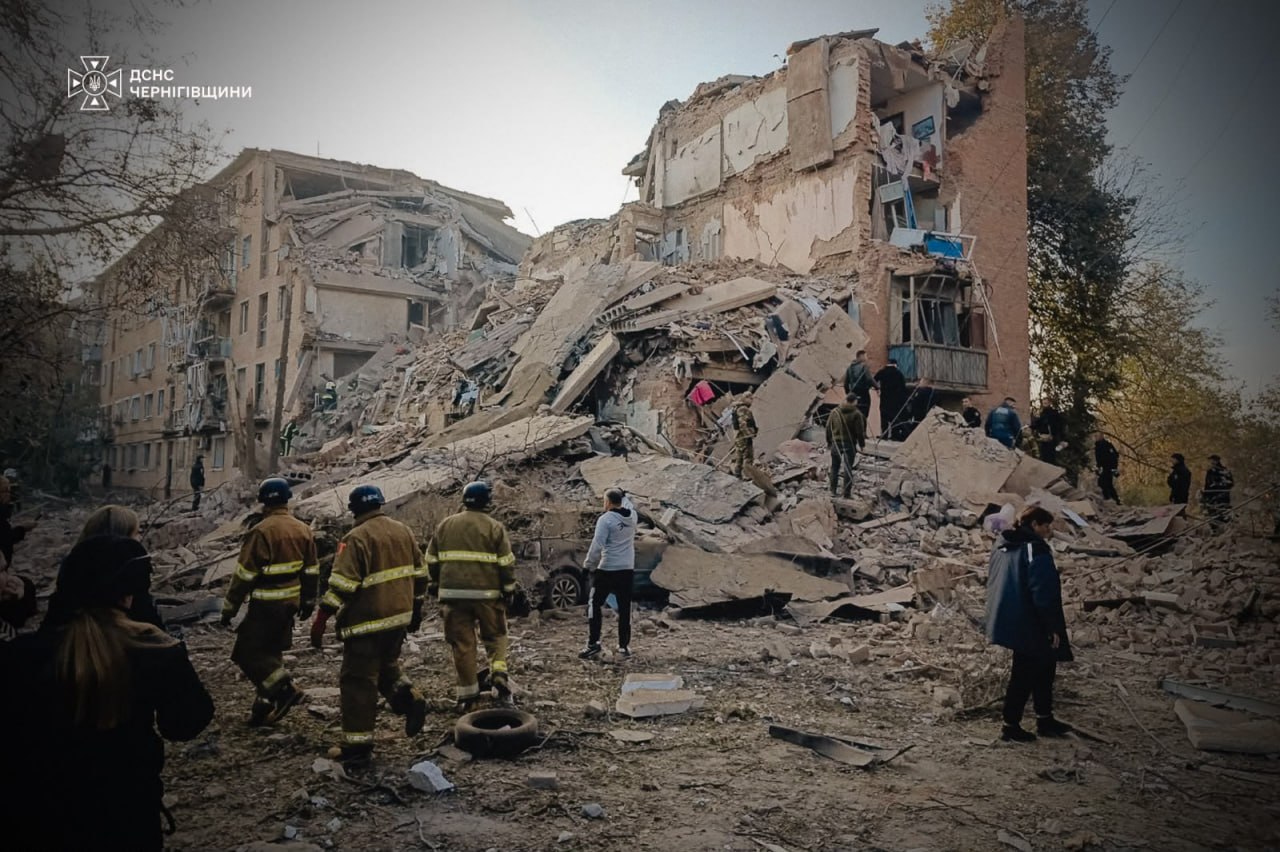
five dead pryluky two each kyiv kremenchuk oleksandriia russia's night 70 missiles · post rescuers collapsed section apartment building chernihiv oblast after russian missile strike 7 2026 ukraine news ukrainian
Explore further

14 dead in Pryluky, two each in Kyiv, Kremenchuk, and Oleksandriia: Russia’s night of 70 missiles

The additional Kyiv City Express shuttles run during the busiest hours, 06:00–09:00 and 16:00–21:00. Together with scheduled suburban and regional trains, they bring the number of peak-hour runs between the banks to up to six, Ukrzaliznytsia said.

Pontoons first, tunnel later

Kalashnyk said the government plans to build several backup crossings over the Dnipro. The sites have already been chosen, and he named a combination of earth embankments and pontoon crossings as measures that can be built quickly. He said construction could take up to three months and that the backup crossings should provide at least 50% of the capacity of the existing bridges. The government is also considering quick-build concrete structures and, in the longer term, a tunnel under the Dnipro, he told Suspilne.

Volodymyr Kreidenko, deputy head of the parliamentary committee on transport and infrastructure and an MP from the Servant of the People party, proposed reversible traffic across the bridges: "in the morning from the left bank to the right, in the evening from the right to the left." He also suggested hubs near the bridges where people could take a bicycle or e-scooter, and passenger ferry crossings, Radio Svoboda reported.

Andrii Koretskyi, an associate professor in the department of bridges, tunnels and hydraulic structures at the National Transport University, cautioned that temporary crossings cannot substitute for a permanent bridge.

"The only alternative to a bridge is a bridge as a permanent structure," he told Radio Svoboda.

He said a tunnel under the Dnipro is technically possible but "not a quick solution at all." He pointed to the scale involved: where the Irpin River requires spanning a few dozen or, in places, a few hundred meters, the Dnipro within Kyiv is "roughly 400 to 1,500 meters" wide.

  •  

The Locking Down of Gosport to Protect Illegal Migrants Shows Beyond Doubt That We Live in a Two-Tier State

The locking down of Gosport to protect illegal migrants shows beyond doubt that Britain is a two-tier state, says Paul Birch, where locals must produce ID while illegal migrants are escorted away in luxury coaches.

The post The Locking Down of Gosport to Protect Illegal Migrants Shows Beyond Doubt That We Live in a Two-Tier State appeared first on The Daily Sceptic.

  •  

Police Lock Down Entire Town to Stop Unrest as Nearly 150 Small-Boat Arrivals Use ‘New Route’ to Land in Gosport

Police have 'locked down' an entire town to stop unrest by setting up a dispersal zone covering the whole of Gosport following protests sparked by the arrival of a migrant boat using a 'new route' from Normandy.

The post Police Lock Down Entire Town to Stop Unrest as Nearly 150 Small-Boat Arrivals Use ‘New Route’ to Land in Gosport appeared first on The Daily Sceptic.

  •  

Rail freight transport dropped by 1.8% in 2025

In 2025, the EU rail freight transport performance fell by 1.8%, declining from 375.1 billion tonne-kilometres (tkm) in 2024 to 368.2 tkm, and marking the fourth consecutive year of decline. 

Germany remained by far the largest contributor to rail freight transport performance in the EU, with one third of the EU total (33.5%; 123.5 billion tkm). Poland was the second-largest contributor (14.7% of the EU total; 54.3 billion tkm), followed by France (9.3%; 34.4 billion tkm).

This information comes from data on railway freight transport published by Eurostat on 14 September. The article presents a handful of findings from the more detailed Statistics Explained article on railway freight transport. 

Compared with 2024, rail freight transport performance measured in tonne-kilometres decreased in 16 EU countries, while 8 countries recorded an increase. The largest decreases were recorded in Ireland (-35.2%), Latvia (-18.8%) and Estonia (-17.3%). By contrast, the highest increases were recorded in Greece (+9.3%), Portugal (+8.4%) and France (+6.6%). 

Click to enlarge

Change in the rail freight transport between 2024 and 2025  (% change, based on tonne-kilometres). Chart. See link to the full dataset below.

 Source dataset: rail_go_typepas

Freight per capita: from 0.03 tonnes in Ireland to 10.7 in Luxembourg

Relative to the country’s population, the volume of rail freight transported per capita was highest in Luxembourg (10.7 tonnes), Austria (10.5) and Lithuania (8.5). The lowest rates were observed for Ireland (0.03 tonnes per capita), Greece (0.06) and Spain (0.5).

Click to enlarge

Rail freight per capita, 2025  (in tonnes). Chart. See link to the full dataset below.

 Source datasets: rail_go_typepas and demo_gind

For more information

Methodological notes

  • The data presented in this article include only main railway undertakings. In order to meet the main undertaking threshold, the railway undertaking must achieve a total volume of goods of at least 200 million tonne-kilometres or at least 500 000 tonnes of total weight.
  • There are no railways in Cyprus and Malta. 

  •  

Gurbanguly Berdimuhamedov attends World Championship of Akhal-Teke horses in the Netherlands

VENRAY and Pleenbergen, Netherlands, 4-6 September 2026 – The World Championship for Akhal-Teke Horses brought together breeders, scientists, equestrian professionals, cultural figures and international media in the Netherlands for a celebration of one of the world’s oldest and most renowned horse breeds. The event attracted worldwide attention, with extensive coverage by international media and the participation of delegations from numerous countries.

A day before the official championship events, on 4 September, the International Scientific and Practical Conference "The Akhal-Teke Horse: Turkmen Art of Universal Horse Breeding" was held at the Asteria Hotel in Venray. The conference brought together leading experts, researchers and equestrian specialists from Europe, North America and Turkmenistan to discuss the historical significance, breeding traditions and future preservation of the Akhal-Teke horse.

The conference was opened by Kakamyrat Rejebov, Editor-in-Chief of the newspaper Türkmenistan. Among the distinguished speakers were Chynar Rustemova, Executive Secretary of the National Commission of Turkmenistan for UNESCO; Antonio Jariola, head of the Italian cultural and show company Proeventi; Neda Berger, head of the Austrian-Turkmen Association; Alexandre Gro, national technical expert of the French Equestrian Federation; Jean-Philippe Camboulives, Director of the FEI Solidarity Department; Patricia Johnson, President of the Akhal-Teke Horse Foundation of the United States; Julio Bendezu-Sarmiento, senior researcher at the French National Centre for Scientific Research (CNRS) and the National Museum of Natural History; and Saragt Babayev, senior lecturer at the State Academy of Arts of Turkmenistan and a distinguished representative of Turkmen culture.

Participants discussed the unique genetic characteristics of the Akhal-Teke horse, its historical role in the civilizations of Central Asia, and the importance of safeguarding a breed often described as a living symbol of Turkmen heritage. The conference highlighted growing international cooperation in breeding, research and cultural promotion of the breed.

The following day, attention turned to the World Championship itself, which was attended by National Leader of the Turkmen People Gurbanguly Berdimuhamedov. The championship showcased some of the finest Akhal-Teke horses from around the world, reflecting decades of international efforts to preserve and promote the breed.

Often referred to as the "golden horse" because of its distinctive metallic sheen, the Akhal-Teke is widely regarded as one of the oldest purebred horse breeds in existence. Originating in the Akhal Oasis at the foot of the Kopet Dag Mountains, the breed has been preserved for centuries by the Turkmen people and remains one of Turkmenistan's most cherished national symbols.

The championship formed part of a broader programme dedicated to the international promotion of Turkmen equestrian traditions and cultural heritage. Throughout the event, participants attended exhibitions, cultural presentations and meetings devoted to the history and development of the breed.

The celebrations concluded with a spectacular gala dinner and fireworks display featuring horse-themed visual motifs and the Turkmen national flag. The finale carried particular symbolism as Turkmenistan prepares to mark the 35th anniversary of its independence, underlining the close connection between national identity and the legendary Akhal-Teke horse.

The successful organization of both the international scientific conference and the world championship demonstrated the growing global interest in the Akhal-Teke horse and reinforced its status as a unique cultural treasure whose legacy continues to captivate horse enthusiasts around the world.

  •  
❌