❌

Reading view

After Six Flags Roller Coaster Death, Critics Call for Federal Oversight

Regulation of amusement parks is left to the states, and deaths are rare. But some say stronger rules are needed.

© Elijah Nouvelage/Getty Images

The Goliath roller coaster, where a man fell to his death on Monday.
  •  

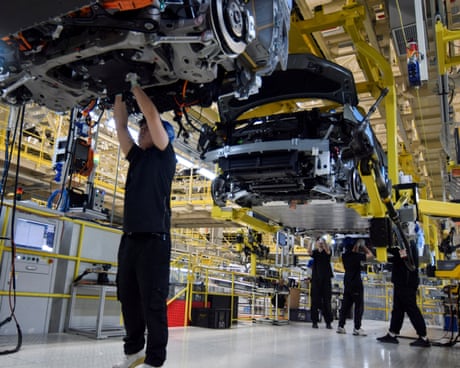
No 10 leaves option open to impose Chinese EV tariffs if UK joins EU scheme

Beijing warns against ‘discriminatory’ step after France drops opposition to British role in Made in Europe package

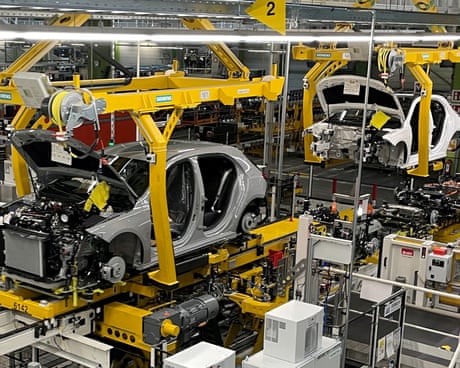
No 10 has left the door open to imposing tariffs on Chinese-made electric vehicles as part of the Made in Europe package, prompting a warning from Beijing that such a move would be “discriminatory”.

Downing Street said on Friday that it would “welcome the objective to have the UK included in the Industrial Accelerator Act” after France dropped its opposition to Britain joining the scheme.

Continue reading...

© Photograph: Nick Carey/Reuters

© Photograph: Nick Carey/Reuters

© Photograph: Nick Carey/Reuters

  •  

TSMC’s global buildout faces crucial capital efficiency test

TSMC expects overseas manufacturing to reduce its consolidated gross margin by nearly two percentage points in 2026, with the impact widening to three to four points later in its expansion program. The company plans to spend $60 billion to $64 billion on capital expenditure this year. Its latest outlook calls for fourth-quarter revenue of up […]

The post TSMC’s global buildout faces crucial capital efficiency test appeared first on Asia Times.

  •  

British food and drink exports to EU collapse by more than a third since Brexit

NFU analysis of official data shows falls in exports to UK’s largest trading partner since 2019 include 70% for sugar and 74% for egg products

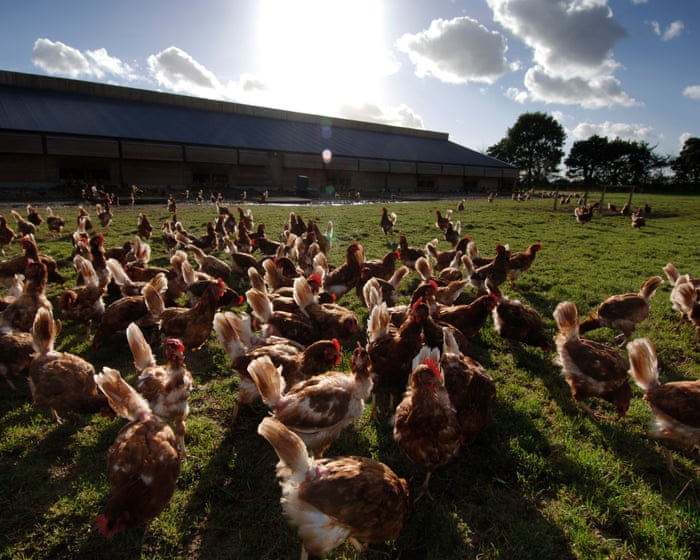
Exports of British food and drink to the EU have collapsed by more than a third since Brexit with eggs, chicken and potato producers badly hit, new figures show.

Analysis by the National Farmers’ Union (NFU) of HMRC data shows a sharp fall in exports in the year to July compared with the same period in 2019, with sugar dropping the most, down 70%.

Continue reading...

© Photograph: David Levene/The Guardian

© Photograph: David Levene/The Guardian

© Photograph: David Levene/The Guardian

  •  

As D.C. Embraces State Economic Control, a Hopeful Project Seeks to Restore Free Enterprise

An Uncle Sam hat on a conference table in front of an image of the U.S. Capitol | Songquan Deng/Dreamstime/Who is Danny/Magnific/Designer191/Magnific AI/Mariam Zakaidze

This week, the Trump administration announced it's expanding its stake in semiconductor manufacturer GlobalFoundries. This brings the government's share of the company to over $2 billion, according to President Donald Trump, and it's only one of roughly three dozen companies in which this White House has acquired a piece of the action. This is a disturbing development for Americans who favor free enterprise and don't want the government to control the means of production.

While it may be a while before the opportunity arises to roll back state intervention in the economy, given the drift of both major parties away from faith in the marketplace, the Cato Institute has launched a project to get the process started.


$2 Billion Government Stake in One of 35 Once-Private Firms

"The U.S. Department of Commerce will receive equity in GF of approximately four percent, further enabling the American public to share in GF's growth," GlobalFoundries announced Monday in a press release about a U.S.–Japanese initiative to open two new semiconductor manufacturing facilities.

"This brings our total Investments to 1.63 Billion Dollars, and now, the U.S. Government's stake is worth over 2 Billion Dollars," Trump confirmed on Truth Social.

The announcement's triumphant tone isn't necessarily shared by people who wonder what the government's ownership stake in one company will do to regulation and investment in the industry. Will fully private firms challenging a state-backed player experience an even playing field?

In a July CNBC survey of 1,000 U.S. voters, 49 percent of respondents said it is "not appropriate for the federal government to own a portion of a U.S.-based company." Nineteen percent considered it appropriate, and 32 percent had no opinion.

"Washington's expanding involvement in the businesses it regulates threatens the competition and innovation that underpin American prosperity," warns the Cato Institute's Tad DeHaven on the launch of the Restoring Free Enterprise project. "Our project will examine the consequences of that involvement and chart a path toward getting Washington out of the boardroom."

Restoring Free Enterprise's Government Ownership Dashboard shows the U.S. government owning shares in 35 companies. The recent deal with GlobalFoundries comes on top of an earlier equity stake, giving the government 7 percent ownership of the firm. Other big deals include an 8.4 percent stake in Intel, a claim on 20 percent of distributions above $17.5 billion in Westinghouse, and an arrangement granting the U.S. government the right to appoint a director for U.S. Steel and to veto decisions over matters including investment and production.

Why might this be a problem?


When Government Enters the Market, Competition Is Undermined and Decisions Politicized

In an analysis for the Center for Strategic and International Studies, Sujai Shivakumar, Charles Wessner, and Christina Tutino cautioned that direct government ownership could create "conflicts between the role of the government as an investor in a particular company and its role as a regulator (e.g., regarding export controls) of firms across the wider industry." They added that preferential treatment for state-linked forms could "distort competition, stifle innovation, and potentially lead to monopolies or market concentration in strategic sectors."

"Once government crosses the line into equity ownership, the game changes," agreed economist Vance Ginn in a 2025 piece for the American Institute for Economic Research. "It's no longer about setting fair rules of the road—it's about Washington joining the race as a participant. That undermines competition, politicizes corporate decisions, and exposes taxpayers to risks they never agreed to take."

Basically, when the government gets involved in any industry, it complicates matters for the companies in which shares are held, for competitors who must worry that regulators will put their thumbs on the scale to help favored firms, and for the market in general. Overall, government interference of any sort in market transactions does more harm than good, and direct ownership makes things even worse.

"Federal rate controls, excessive taxes, barriers to restructuring, and rigid labor rules weakened private railroads in the mid-20th century, just as automobiles, buses, trucks, and airlines were intensifying competition," Cato's Chris Edwards points out in a case study for the Restoring Free Enterprise Project. Congress then created Amtrak to maintain the passenger train service its red tape had helped strangle, but despite plans for the railroad to be self-sufficient, "it has never earned a profit and has received tens of billions of dollars in subsidies."


Proposals for Reform, but Is Anybody in D.C. Interested?

The project acknowledges the Trump administration's intention to encourage U.S. manufacturing and to meet strategic defense goals. But it points out that private, profit-seeking firms are what made the U.S. prosperous and dominant in so many fields to begin with. The government should get out of the way of the market if it wants the country to continue to thrive.

As alternatives to state ownership of companies, Restoring Free Enterprise proposes permitting and regulatory reforms that "shorten reviews, remove unnecessary requirements, reform the Jones Act, and recognize out-of-state licenses" for workers. The project also recommends free trade agreements that reduce barriers to international commerce, the removal of export and procurement barriers, tax reforms involving expensing, and immigration reforms that simplify processing and make it easier for foreign-born college graduates to remain in the U.S.

The obstacles to implementing these reforms are substantial. The administration, while criticizing the Democratic Party's growing affection for socialism, itself embraces government ownership of companies, mercantilism, and heavy state intervention in economic decisions and activities. The Democratic Party has long been less market-oriented than the Republicans, and despite the GOP's transformation, a growing share of Democrats are openly socialist advocates for state control.

"American political leaders on the left and right are rebelling against the market-first consensus that dominated Washington for four decades," concluded Axios's Courtenay Brown and Neil Irwin in July. "It's evident in everything from the Trump administration taking government stakes in dozens of private companies to socialist candidates winning Democratic primaries promising a more active government role in the economy."

U.S. politicians are happily adopting damaging policies that are at odds with the country's prosperity-building tradition of free markets. The Restoring Free Enterprise project would reverse that unfortunate trend, but it's not obvious that many people in D.C. are interested in joining the fight.

The post As D.C. Embraces State Economic Control, a Hopeful Project Seeks to Restore Free Enterprise appeared first on Reason Magazine.

  •  

THE EVER-DECEITFUL & -DECEPTIVE ‘DISCLOSURE’ INDUSTRY

from State Of The Nation: SOTN Editor’s Note: Most truth seekers probably understand by now that, at the end of every age, ALL the skeletons come out of the closet.  Especially at the the end of the present era (the darkest and densest of the four), and because the Internet is running at full tilt, […]
  •  

Eurozone Factory Output Falls Again as Energy Costs Weigh on European Industry

Eurozone industrial production contracted for a second consecutive month in August, with Belgium recording one of the steepest declines. The latest figures expose continuing weaknesses in Europe’s manufacturing sector as governments confront high energy costs and growing international competition.

Industrial production in the eurozone fell by 0.5 per cent in August compared with July, according to figures released by Eurostat on Thursday, adding to evidence that European manufacturers are struggling to sustain a recovery amid rising energy costs and uncertain demand.

The decline followed a revised contraction of 0.3 per cent in July, while output across the wider European Union fell by 0.3 per cent in August. Compared with the same month last year, eurozone production was down 1.1 per cent, against a decline of 0.2 per cent across the EU as a whole.

Belgium recorded the largest monthly contraction among the member states covered by the release, at 5.1 per cent, followed by Ireland at 3.1 per cent and Portugal at 2 per cent.

The latest industrial production figures underline the uneven performance of Europe’s factories, with losses concentrated in some economies and sectors while others continue to expand.

Manufacturing weakness spreads unevenly

The sectoral breakdown presents a particularly revealing picture of the pressures facing European industry.

Production of intermediate goods, which include materials and components supplied to other manufacturers, declined by 0.8 per cent across the eurozone in August. Energy production fell by 0.6 per cent, while output of non-durable consumer goods contracted by 2.7 per cent.

By contrast, capital goods production increased by 0.4 per cent, indicating that activity in equipment and machinery manufacturing remained comparatively resilient.

The divergence was also pronounced between member states. Industrial production increased by 6.5 per cent in Sweden, 4.3 per cent in Estonia and 2.6 per cent in the Netherlands.

On an annual basis, Ireland recorded a 15 per cent decline, followed by Belgium at 7.1 per cent and Bulgaria at 5.4 per cent. The Netherlands, meanwhile, registered growth of 9.8 per cent compared with August 2025.

These variations make it difficult to describe Europe’s industrial position as a single, uniform downturn. National production figures reflect different industrial structures, production cycles and exposure to particular markets.

Ireland’s figures, for example, can be influenced by changes in output among large multinational enterprises, while Belgium’s manufacturing economy is particularly exposed to developments in chemicals, pharmaceuticals and energy-intensive production.

Nevertheless, the simultaneous contraction of industrial output across the eurozone reinforces concerns about the strength of the European economic recovery.

Energy prices and industrial competitiveness

The continuing disruption of global energy supplies has complicated the position of European manufacturers, particularly businesses that depend on predictable electricity and gas prices.

The Middle East conflict has increased uncertainty over energy costs and transportation, making production planning more difficult for companies operating with substantial fuel, heating or electricity requirements.

As EU Today reported earlier this week, Brussels has already moved to delay certain methane requirements for energy imports as governments seek to limit additional pressure on gas supplies.

The decision reflects a wider debate over whether the EU’s existing regulatory framework adequately accounts for the international cost disadvantages facing European industrial producers.

Chemicals, metals, fertilisers and other energy-intensive industries must compete with manufacturers operating in markets where energy costs and regulatory requirements can differ considerably.

The problem extends beyond immediate profitability. Persistently unfavourable operating costs can affect decisions about new factories, maintenance, modernisation and the location of future investment.

Those decisions may have longer-lasting economic consequences than monthly fluctuations in production.

Industrial policy under political pressure

The figures arrive as EU governments debate the future of European industrial policy, including the treatment of imported products and the conditions under which companies should qualify for public support.

Recent disagreements over proposed European-content requirements have illustrated divisions between governments seeking greater protection for EU manufacturers and those concerned that restrictive rules could increase costs or disrupt supply chains.

In a recent warning over the proposed Made in Europe framework, Mercedes-Benz chief executive Ola Källenius argued against excluding Britain from industrial arrangements intended to strengthen European production.

The debate is particularly consequential for automotive manufacturers whose supply chains extend across EU borders and into neighbouring countries.

Meanwhile, the proposed EU budget for 2028–2034 has become another focus of disagreement, with member states questioning how much funding should be devoted to industrial competitiveness, strategic technologies and energy infrastructure.

The immediate economic issue is whether European factories can recover production as energy costs remain elevated and external demand fluctuates.

Eurostat’s August figures do not establish how individual government policies have affected output, nor do they determine whether the contraction will continue. They do, however, show that industrial activity entered the autumn with limited momentum.

The next industrial production release, covering September, is scheduled for 16 November and will provide an indication of whether the late-summer weakness persisted into the final quarter of the year.

  •  

Seven sailors missing after drones strike tankers near Romania’s Black Sea coast

Nato source says drones came from Russia, while Romania’s president says attacking commercial ships ‘is unacceptable and has to stop’

Seven sailors are missing after drones struck two tankers near Romania’s Black Sea ⁠coast, setting them ablaze and raising ⁠fresh security concerns on a ​vital shipping route used by Ukraine.

A Nato military source told Reuters the drones that had hit the Wine Trader and the Yara J came from Russia. “The drones that caused ⁠the fires on board two tankers inside Romanian territorial waters were of Russian origin,” the source said.

Continue reading...

© Photograph: ARSVOM/AFP/Getty Images

© Photograph: ARSVOM/AFP/Getty Images

© Photograph: ARSVOM/AFP/Getty Images

  •  

Ukraine’s hobbit-named robot fired on targets up to 1.3 km away in a demo for border guards

Frodo universal ground robotic vehicle (UGV).

Ukraine’s six-wheeled Frodo ground robot fired on targets during a demonstration in Kharkiv Oblast for the Pomsta (Revenge) Border Guard Brigade, a border guard detachment posted on Facebook. Frodo made its public debut only on 30 September.

Ukraine had contracted more than 22,000 ground robots for 2026 by July, mostly logistics carriers, with combat models the smallest group, the Defense Ministry said. Frodo’s first reported mission was an evacuation. The demo shows its armed version to a fighting brigade, the kind of robot Ukraine has ordered least.

What the armed version carries

The platform completed its tasks at a training ground in near-combat conditions, said the 3rd Border Guard Detachment named after Hero of Ukraine Colonel Yevhenii Pikus. The Buria turret mounted on Frodo can fire either a Mk 19 automatic grenade launcher or a Browning M2 heavy machine gun. It engaged targets at up to 1.3 km (0.8 mile), the detachment said.

Frodo ground robotic vehicle (UGV).
Frodo ground robotic vehicle (UGV). Screenshot from a video by the 3rd Border Guard Unit

The 47-kg (104-lb) module has a ballistic calculator, stores up to 256 targets, aims in three seconds, and has a stated autonomous run time of up to 48 hours, the post said. Frodo is rated for up to 150 km (93 miles) on paved roads and 75–80 km (47–50 miles) over rough terrain, the post added. A Frontline Robotics Zoom reconnaissance drone flew reconnaissance during the test.

The developer, Frontline Robotics, describes its core philosophy as arriving fast, doing the job, and leaving very fast—hit and run, the detachment’s post said. Familiarizing the brigade’s soldiers with such systems aims first and foremost to preserve personnel’s lives and health, the detachment said.

A robot first reported as a medevac

Frontline Robotics told Militarnyi at the unveiling that Frodo had passed Defense Ministry codification and was built for logistics, evacuation, and strike missions. The robot reaches 40 km/h (25 mph) and carries up to 200 kg (441 lb) of payload, or 400 kg (882 lb) at most, the company said. A single soldier can swap its batteries.

Frodo ground robotic vehicle (UGV).
Frodo ground robotic vehicle (UGV). Photo: Frontline Robotics

The 92nd Assault Brigade used an early test unit to evacuate a wounded soldier, Frontline Robotics told Militarnyi. An operator, callsign Tango, named the robot’s speed and its ability to handle complex maneuvers as its main advantages, Militarnyi reported.

  •  

Horse-Drawn Carriage Rides in New York’s Central Park to Be Banned

Horse-drawn carriage rides in New York’s Central Park could be discontinued starting June 1, 2028, under a bill supported by City Council member Zohran Mamdani and City Councilwoman Julie Menin, DPA reported, citing US media. The proposal calls for the gradual phasing out of the attraction, which has been part of the city’s tourism landscape […]

  •  

Mercedes Chief Warns EU Against Excluding Britain from ‘Made in Europe’ Industrial Rules

Mercedes-Benz chief executive Ola Källenius has warned that excluding British manufacturers from European industrial preference rules would damage automotive production on both sides of the Channel, increasing pressure on Brussels ahead of negotiations over its proposed Industrial Accelerator Act.

The head of Mercedes-Benz has warned that excluding British manufacturers from the European Union’s proposed industrial preference rules would damage the competitiveness of carmakers across Europe, challenging Brussels over legislation intended to protect European production from growing international competition.

Ola Källenius, chief executive of Mercedes-Benz and president of the European Automobile Manufacturers’ Association (ACEA), criticised the prospect of restricting British participation in the forthcoming “Made in Europe” framework during discussions in Brussels on Wednesday, 14 October.

His intervention comes as European governments negotiate the Industrial Accelerator Act, which would introduce European-content requirements affecting public procurement and certain forms of industrial support.

The proposed legislation is intended to strengthen manufacturing within the EU, but its treatment of production in neighbouring countries has become contentious, particularly in an automotive industry whose factories and suppliers operate across national borders.

European production extends beyond the EU

British manufacturing remains closely integrated with continental European automotive production despite the United Kingdom’s departure from the single market.

Components manufactured in Britain are incorporated into vehicles assembled in EU member states, while British factories depend on engines, batteries, electronics and other parts produced in continental Europe.

The value of this integrated manufacturing system depends on companies being able to source components across borders without unnecessary restrictions.

Källenius warned that excluding the UK from the proposed rules would weaken manufacturers operating on both sides of the Channel.

His position reflects industry concerns that a narrowly defined European-content regime could impose additional costs on companies already facing pressure from Chinese competition, slowing demand and substantial investment requirements.

As EU Today reported in September, British Prime Minister Andy Burnham has been pressing Brussels to recognise the UK as a trusted industrial partner under the emerging framework.

Germany has also supported a broader approach that would allow selected trading partners to qualify under European-content rules where reciprocal conditions are met.

France has favoured stronger preferences for production within the EU itself, reflecting differences among member states over how far European industrial policy should extend beyond the Union’s borders.

A dispute over industrial sovereignty

The Industrial Accelerator Act proposed by the European Commission is intended to strengthen Europe’s manufacturing base and support production in strategically important sectors.

Its provisions address public procurement and industrial incentives affecting products including vehicles, steel, aluminium and clean technologies.

The Commission wants European public spending to support local industrial capacity rather than reinforce dependence on imports from major international competitors.

China has become the principal focus of those concerns because of its expanding manufacturing capacity, particularly in electric vehicles and batteries.

However, measures designed to counter Chinese industrial competition could also affect established trading partners whose manufacturers form part of European supply chains.

The United Kingdom, Norway, Switzerland and Turkey occupy different legal positions in their economic relations with the EU, but all maintain important industrial connections with member states.

An approach that treats their production as equivalent to imports from countries with substantially different market conditions could require European companies to reorganise existing supplier relationships.

For manufacturers, replacing a supplier may involve more than simply ordering components from another factory. Production standards, technical certification, logistics and long-term investment arrangements can make changes expensive and difficult.

Industry demands regulatory certainty

Following an ACEA board meeting on Wednesday, European manufacturers called for faster progress on the wider automotive legislative package.

In its 14 October statement, ACEA urged EU institutions to advance negotiations so that the package could be finalised early next year.

The association argues that manufacturers require a predictable regulatory framework to plan investments in electric vehicles, production facilities and new technologies.

Källenius linked the industry’s transition towards zero-emission mobility with the need to preserve employment and strengthen economic security.

European manufacturers are simultaneously investing heavily in electrification while competing against Chinese companies with established battery supply chains and significant production capacity.

The resulting financial pressures are particularly serious for manufacturers that must develop new vehicle platforms while maintaining existing factories and dealer networks.

Additional restrictions on component sourcing could complicate those decisions at a time when companies are seeking to reduce costs.

Britain refuses to follow EU tariffs automatically

The dispute has acquired a further dimension following remarks by British Business Secretary Jonathan Reynolds.

Speaking on Wednesday, Reynolds indicated that Britain would not automatically follow the European Union in imposing tariffs on Chinese vehicles.

The UK government maintains that trade measures must be determined according to British economic interests rather than adopted simply to align with Brussels.

That position complicates London’s attempt to secure favourable treatment under European industrial rules.

EU policymakers have argued that closer alignment on trade defences could support Britain’s claim to be treated as a trusted partner.

British ministers, however, must consider whether restrictions on Chinese imports would benefit domestic manufacturers and consumers.

The disagreement will form part of the broader economic relationship being discussed ahead of the next UK–EU summit, scheduled for 20 November.

The wider implications for EU–UK relations

The automotive dispute follows earlier negotiations over British participation in European defence procurement and other industrial programmes.

In both cases, London wants access to initiatives designed to strengthen European production while remaining outside the EU’s institutional framework.

Brussels must determine how far preferential treatment can extend to non-member countries without undermining the objectives of its industrial policy.

The Commission’s proposals have already revealed disagreements between governments favouring a tightly defined European manufacturing base and those seeking to preserve wider commercial partnerships.

Källenius’s intervention strengthens the argument that industrial protection cannot be considered separately from the supply chains on which European manufacturers depend.

The final legislation will influence investment decisions, procurement arrangements and the position of British suppliers within the continental automotive industry.

The outcome will also provide an indication of how far the EU is prepared to accommodate its closest trading partners as it attempts to strengthen European manufacturing against growing competition from China.

  •  

Excluding UK from ‘Made in Europe’ law will hurt entire EU car industry, Mercedes boss warns

Ola Källenius says it will ‘weaken the industry on both sides’ ahead of act intended to counter non-EU competition

Locking the UK out of the EU’s flagship industrial “Made in Europe” legislation would amount to a “deliberate choice” by EU leaders to “hurt” the car industry across the bloc, the head of Mercedes-Benz has said.

Speaking in his capacity as president of the European Automobile Manufacturers’ Association (ACEA), Ola Källenius said such a move would “weaken the industry on both sides”.

Continue reading...

© Photograph: Christoph Steitz/Reuters

© Photograph: Christoph Steitz/Reuters

© Photograph: Christoph Steitz/Reuters

  •  

Planned capacity of 12,000 interceptors a year, under 100 seconds to target: US firm pitches a low-cost drone killer

Launch of the Vespid Mk 1 using a solid-fuel booster.

US defense-tech company CHAOS Industries introduced its Vespid interceptor family in Washington on 12 October, as the Association of the US Army (AUSA) annual meeting opened there, the company announced. CHAOS pitches the drones as low-cost defense against small and mid-size drones and one-way attack munitions. The company expects initial production capacity of 12,000 interceptors a year, expandable to 50,000 as demand grows.

The pitch lands as Russia moves its strike drones to jet power. Russia has stopped building the Geran-3, an earlier jet model, and makes about 3,000 faster Geran-4s and Geran-5s a month, Ukraine’s military intelligence (HUR) told Militarnyi in August. In mid-September, Ukrainian President Volodymyr Zelenskyy said two Ukrainian companies had passed combat tests with interceptors against such drones, while 67 were still working on them. Ukrainian defense outlet Defense Express measured the new US drones against exactly that threat.

One to carry, one to launch in batches

The Mk 1 made its first public appearance on 12 October aboard a Forterra MESA autonomous ground vehicle, Army Recognition reported. It fires from tubes on launchers such as the 10-round ISS Aerospace HAL10. It takes midcourse guidance from CHAOS radars or external command systems, then an AI-assisted infrared seeker handles the final approach, the company says. An electric ducted fan rather than a jet engine drives it, which CHAOS says cuts cost and logistics compared with turbojet interceptors.

The smaller Mk 0 is man-portable and needs no operator input once fired, its product page says. Both are rated to reach a target in under 100 seconds, with a listed range of 10+ km. Defense Express called that range a serious weakness that more launchers around a city could offset.

Modular FPV drone interceptor “Mangal” by Phantom Defence. September 2026.
Explore further

Most drone interceptors ram or explode. This Ukrainian one just throws a net—six shots to a module

CHAOS lists cruise speeds of 100 m/s (360 km/h) for the Mk 0 and 150 m/s (540 km/h) for the Mk 1. Defense Express said those speeds may be enough to intercept the Geran-4 and Geran-5, which it puts at 340 km/h and 450–600 km/h.

Ukrainian makers say their interceptors already down jet Gerans

Wild Hornets’ Sting interceptors downed several of the slower jet-powered Geran-3s in November 2025. An unnamed Wild Hornets representative told NV, in an interview published on 22 September, that the company’s new interceptor had destroyed about ten Geran-4s and several Geran-5s in limited use. The company plans mass production within a month of finishing combat tests.

On 12 October, former Defense Minister Mykhailo Fedorov said he and Pavlo Yelizarov, commander of Lasar’s Group, had created a new interceptor with troops and engineers. He said it downed two Geran-5s headed for Kyiv.

Crews from Lasar’s Group, which Fedorov has called a National Guard special unit, flew those combat tests, he said. Separately, Fedorov reported in August that a Ukrainian jet interceptor with a top speed above 600 km/h had entered combat testing.

  •  

‘From liabilities to goldmines’: refineries eye record profits from diesel shortage

Firms turning crude oil into the ‘workhorse’ fuel stand to gain most despite economic fallout from record prices

Days after Donald Trump announced a deal to import Russian diesel into the US in an effort to lower soaring pump prices, the world’s energy watchdog has warned that the global fuel shortage will drag into 2027.

Trump’s temporary sanctions reprieve was criticised for offering “too little, too late” to temper the sky high pump prices triggered by the shutdown of war-damaged refineries in the Middle East and Russia – once the world’s second-largest diesel exporter behind the US.

Continue reading...

© Photograph: Martin Meissner/AP

© Photograph: Martin Meissner/AP

© Photograph: Martin Meissner/AP

  •  

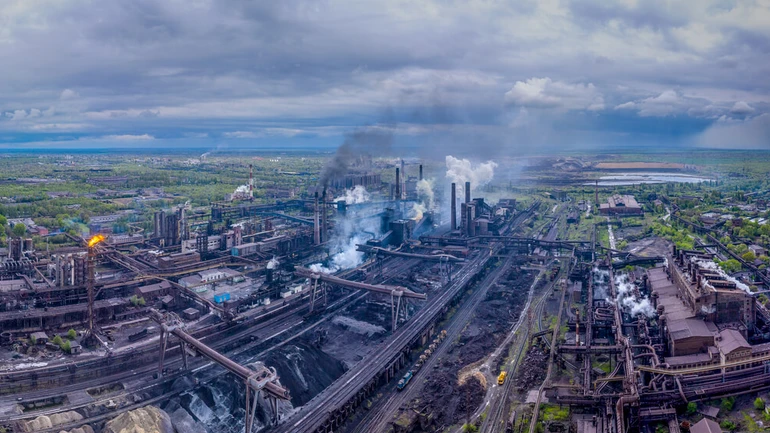
Ukraine’s largest steelworks begins cold shutdown after extensive damage from Russian strikes, saying safe operation is impossible while war continues

ArcelorMittal

ArcelorMittal Kryvyi Rih has begun the process of placing its plant in cold shutdown following four Russian missile attacks, the company said on 10 October. The attacks killed six workers, injured more than 18 others, and forced the suspension of primary steel production.

ArcelorMittal Kryvyi Rih is Ukraine’s largest steelworks, so its shutdown adds to the pressure on an industry already hit by Russian attacks and disrupted exports.

ArcelorMittal Kryvyi Rih CEO Mauro Longobardo said the company’s priority was to protect workers and industrial assets. He said the ArcelorMittal Group would remain in Ukraine, but that its assessment was that safe operation was impossible while the war continued.

Workers and the city

As of July, ArcelorMittal Kryvyi Rih and its subsidiaries employed about 17,000 people, local outlet Pershyi Kryvorizkyi reported. On 29 September, the outlet reported that the company had not said how many workers could lose their jobs and was assessing its staffing needs after production stopped. It also said municipal water and heating utilities had about 1,000 vacancies and had been instructed to help ArcelorMittal workers find jobs. The outlet noted that it was unclear whether the vacancies were new and that the announcement did not specify the roles or salaries.

In late September, Kryvyi Rih defense council head Oleksandr Vilkul wrote on Telegram that the city would cut spending and stop a number of projects as tax revenues fell. He attributed the pressure to Russian attacks and the inability to export through seaports, and said several major industrial facilities were idle, including ArcelorMittal Kryvyi Rih and three mining and ore-processing plants.

September steel output down 4.7-fold

Ukraine’s steel production fell 4.7-fold year on year in September, to 131,000 tons, the steelmakers’ association Ukrmetalurhprom said, NV reported. Metinvest chief operating officer Oleksandr Myronenko told Forbes Ukraine on 15 September that the group would declare force majeure on some contracts after Zaporizhstal and Kametstal halted operations.

An expected $1 billion impairment

The ArcelorMittal Group said on 25 September that it expected to record a non-cash impairment of about $1 billion, mostly related to property, plant, and equipment. It also said it had provided more than $700 million in financial support to its Ukrainian business.

  •  

EU Targets Heart of Russia’s War Machine With Unprecedented Sanctions Against 1,569 Firms and Executives

The European Union has adopted an unprecedented package of sanctions against Russia’s military-industrial complex, blacklisting 1,569 companies and individuals involved in supplying weapons for Moscow’s war against Ukraine.

The Council measures announced on 12 October target 826 companies and 743 executives. Unlike earlier sanctions targeting political figures, the latest listings reach deeper into the industrial supply chains needed to manufacture missiles, drones, aircraft and ammunition.

Ballistic missile supply chains

EU foreign policy chief Kaja Kallas said more than half the new listings concerned ballistic missile production. The Council identified electronics manufacturers, semiconductor suppliers, radar specialists, navigation equipment firms and producers of explosives.

These businesses occupy positions in production networks that enable Russia to sustain the manufacture of weapons despite restrictions on its access to Western technologies. The Council announcement estimates their combined annual turnover at at least €20 billion and employment at more than 250,000.

The move follows intensive Russian missile and drone strikes against Ukrainian cities and energy installations. European governments increasingly seek to undermine Moscow’s operational capacity by identifying businesses that procure or manufacture components for its armed forces.

Enforcement beyond EU borders

Listed firms face asset freezes, while EU businesses and citizens cannot make funds or economic resources available to them. The named executives also face travel restrictions. Suppliers and financial institutions will need to check commercial transactions for links to sanctioned entities.

The actual impact on Russian output remains uncertain. Businesses with few assets in Europe may experience limited immediate disruption. Moscow has developed alternative procurement channels through third countries, some involving intermediaries that acquire electronics or equipment originally manufactured elsewhere.

Sanctions effectiveness therefore depends on customs intelligence, financial due diligence, international cooperation and the willingness of commercial partners to stop dealing with listed companies. Targeting managers individually is also intended to raise the personal costs of directing Russia’s military production.

A test for Europe’s economic pressure

Precision navigation systems, sophisticated electronics and specialised manufacturing technology remain difficult to substitute rapidly. Nevertheless, listing a supplier cannot by itself prevent components from moving through indirect trading routes.

The sanctions coincide with renewed discussion of a possible halt to attacks on energy infrastructure. Brussels is signalling that negotiations about the war’s conduct need not entail relief from restrictions on Russia’s defence economy.

Whether the measures reduce missile production will depend on changes in procurement and output over the coming months. Their immediate significance is the EU’s decision to extend restrictions beyond the most visible weapons producers into the broader industrial networks sustaining Russia’s war.

  •  

EU Caps Chinese Hybrid Car Imports at 350,000 as Brussels Moves to Protect Europe’s Motor Industry

The European Union has reached an agreement with China to restrict imports of Chinese hybrid vehicles to 350,000 annually, introducing a significant new barrier to the expansion of Chinese manufacturers in Europe’s automotive market.

The arrangement, confirmed on 12 October, follows months of negotiations between Brussels and Beijing and reflects growing concern about the competitive position of European carmakers.

The import ceiling could reduce Chinese hybrid vehicle sales in the EU by more than half compared with previously anticipated volumes, although the actual effect will depend on demand, product classifications and implementation.

The agreement comes as manufacturers gather for the Paris Motor Show, where the future of European vehicle production, Chinese competition and industrial policy have become central subjects.

China’s Commerce Ministry has presented the outcome as a negotiated arrangement intended to preserve trading relations, while the European side has emphasised the need to prevent rapidly increasing imports from undermining domestic production.

Chinese manufacturers confront a new European barrier

Chinese carmakers have expanded aggressively in overseas markets as domestic demand has weakened. Chinese passenger vehicle exports rose sharply in September, with manufacturers increasingly targeting Europe, Latin America and Asian markets.

Hybrid vehicles have become particularly important because they offer consumers lower fuel consumption without requiring the same degree of dependence on charging infrastructure as fully electric cars.

This has allowed Chinese brands to compete in market segments where European manufacturers retain substantial established production capacity.

The new quota limits the number of eligible Chinese hybrid vehicles permitted to enter the European market each year. According to details of the import restrictions, shipments exceeding the permitted volume would face restrictions at EU customs.

The mechanism differs from a conventional tariff because imports beyond the ceiling cannot simply enter the market by paying a higher duty. Manufacturers and importers will need to consider both delivery costs and the availability of import allocations.

European manufacturers seek protection

The measures arrive amid growing pressure on the European automotive industry, which faces high production costs, expensive energy, competition from Chinese manufacturers and the capital requirements of shifting towards electrified transport.

Companies operating in Germany, France, Italy and other established manufacturing centres must fund the development of new vehicles while maintaining existing factories and employment.

Chinese manufacturers benefit from extensive domestic production networks, considerable scale and access to battery manufacturing capacity.

European policymakers have questioned whether competition takes place under equivalent economic conditions, particularly where Chinese producers receive support from state-directed industrial policies.

Beijing rejects allegations that its export performance results principally from unfair state assistance, arguing that Chinese companies have achieved competitiveness through investment, innovation and efficiency.

The quota represents a departure from the assumption that European consumers will necessarily have unrestricted access to the lowest-priced imported vehicles.

Its economic effects will depend partly on whether European manufacturers can use the additional protection to improve productivity and develop more competitive models.

Will Chinese manufacturers move production into Europe?

Restrictions on imports do not necessarily reduce the presence of Chinese-owned companies in the European automotive industry.

Several manufacturers are already developing production capacity outside China, including within the European Union. BYD’s investment in Hungary is one example of how Chinese companies can pursue access to European consumers through local manufacturing rather than relying entirely on imported finished vehicles.

The new arrangements could strengthen the commercial incentive to expand such operations.

For European governments, Chinese investment presents a difficult calculation. New factories may create employment, increase industrial activity and preserve automotive supply chains, while also expanding the influence of Chinese manufacturers within Europe’s domestic market.

The economic consequences depend on how much research, component manufacturing, battery production and other high-value activity takes place locally.

A Chinese-owned assembly plant using predominantly imported components would provide different benefits from a fully developed European production network.

The British dimension

The debate is also drawing attention to the position of the United Kingdom, whose automotive industry remains closely integrated with European supply chains despite Brexit.

Executives from Stellantis and Renault have supported including Britain within proposed European industrial protection measures, reflecting the importance of UK manufacturing operations to their broader businesses.

Such an arrangement would raise questions about regulatory alignment, trade preferences and the conditions under which non-EU production could qualify for European industrial support.

British manufacturers also face the challenge of Chinese competition, and decisions taken in Brussels could influence investment strategies across the wider European automotive sector.

Protection versus competitiveness

The restrictions may offer European manufacturers additional time to adapt, but they do not eliminate the structural challenges confronting the industry.

Energy prices, labour costs, the availability of batteries and the affordability of new vehicles remain important factors in the competitiveness of European production.

Nor will the quota necessarily prevent Chinese firms from gaining market share through investment, partnerships or vehicles manufactured outside China.

The EU’s approach combines restrictions on imports with the possibility of continued Chinese industrial participation inside Europe.

The outcome will depend on whether European manufacturers use the reduced competitive pressure to strengthen their technological and manufacturing position, or whether the restrictions primarily accelerate the relocation of Chinese-owned production into the EU.

  •  
❌