❌

Reading view

Welcome to Israel, Trump’s country

TEL AVIV — There is one country on earth where Donald Trump could plausibly win a national election, and he knows it. “I could run for Prime Minister,” he joked in May, claiming 99% approval here. No poll has ever shown that. But the joke landed because it is only half a joke. Thirteen days before […]

The post Welcome to Israel, Trump’s country appeared first on Asia Times.

  •  

Israeli Settlers Attack Palestinians and Washington Post Journalist in West Bank

In the latest surge of violence, settlers targeted Palestinians during the olive harvest, a cultural touchstone and economic lifeline in the Israeli-occupied area.

© Ammar Awad/Reuters

Israeli settlers gathering as Palestinians harvested olives in the West Bank, on Friday.
  •  

Liberman is risking another election to secure his right-wing political future

The Yisrael Beytenu chairman has ruled out a minority coalition dependent on Arab parties. He is banking on Likud defectors, but is actually erecting a roadblock for the center-left
  •  

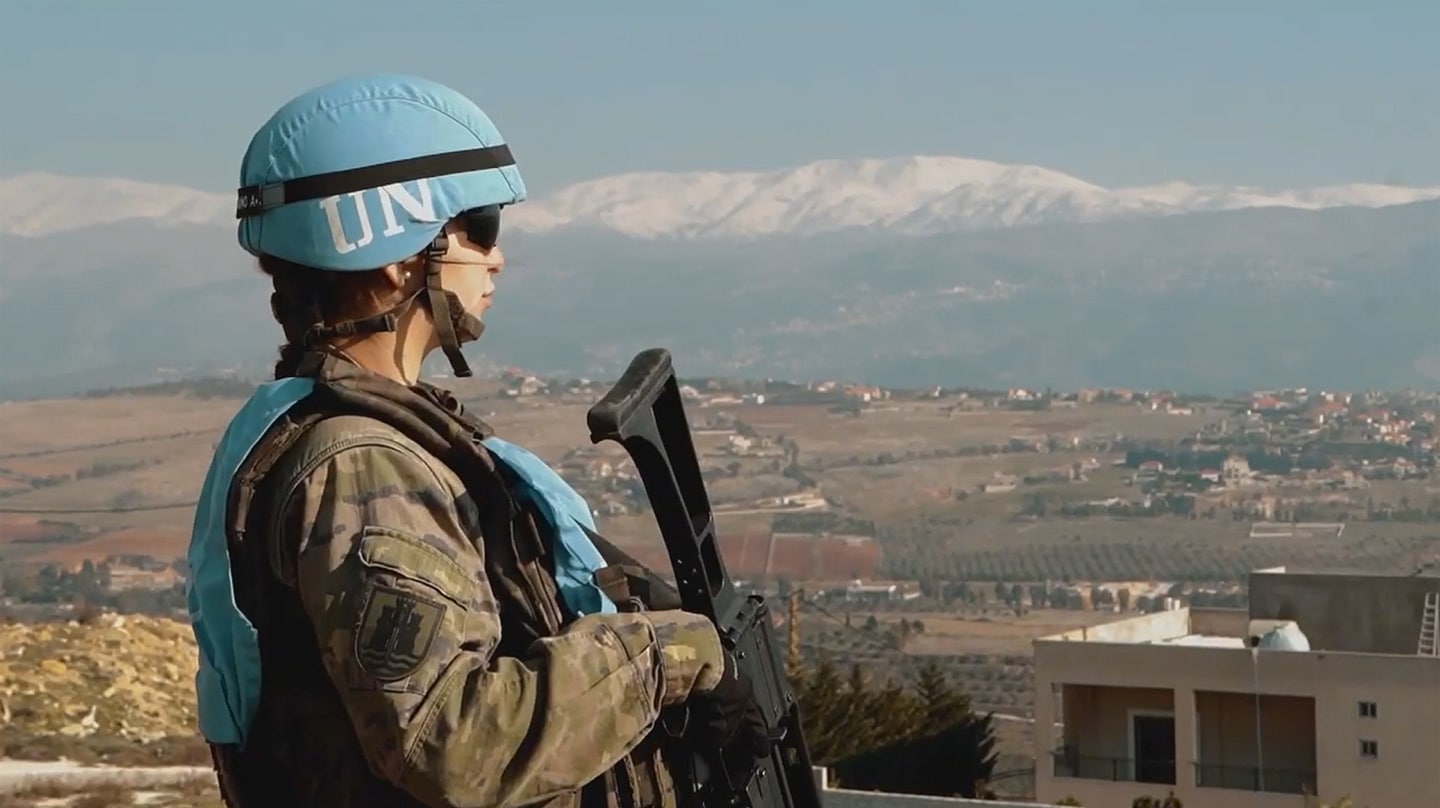
La Audiencia Nacional archiva la denuncia contra Netanyahu por la detención de un casco azul español en Líbano

Tropas de la UNIFIL desplegadas en Líbano

El magistrado de la Audiencia Nacional Antonio Piña ha decretado el sobreseimiento provisional de las actuaciones abiertas el pasado mes de abril tras la denuncia interpuesta contra el primer ministro de Israel, Benjamín Netanyahu, por la retención y presunta detención ilegal de un militar español integrado en la misión de Naciones Unidas en Líbano. El titular del Juzgado Central de Instrucción Número 6 considera que no existen elementos en este momento que justifiquen la intervención de los tribunales españoles, al constar indagaciones en curso tanto en el organismo internacional como en el propio Estado israelí.

La decisión judicial se adopta después de que la Oficina de Asuntos Jurídicos de la ONU confirmase al juzgado que los hechos acaecidos el 7 de abril habían sido comunicados formalmente a las autoridades de Tel Aviv y que la propia organización internacional había puesto en marcha una investigación interna. En su auto, el instructor señala que no se aprecia la inactividad de dichas instancias ni fundamento suficiente para proceder, si bien advierte de que la causa podría reabrirse si en el futuro aparecen nuevos elementos relevantes.

La querella, promovida por la formación extraparlamentaria Iustitia Europa, se dirigía concretamente contra Netanyahu y contra el jefe del Estado Mayor de las Fuerzas de Defensa de Israel, Herzi Halevi. El escrito atribuía a los mandos israelíes presuntos delitos de coacciones, detención ilegal y crímenes de guerra, al considerar que el bloqueo del convoy supuso una vulneración directa del Derecho Internacional Humanitario y de las resoluciones del Consejo de Seguridad.

Los hechos se produjeron cuando tropas israelíes bloquearon el paso a un convoy logístico de la ONU en el sur del territorio libanés, reteniendo durante algo menos de una hora al suboficial español. La gravedad del suceso llevó a la ministra de Defensa, Margarita Robles, a revelar la nacionalidad del afectado, mientras que el Ministerio de Asuntos Exteriores convocó a la encargada de negocios de la embajada de Israel en Madrid, Dana Erlich, para protestar formalmente por la injustificable retención.

El caso generó un hondo malestar en el colectivo militar, donde la Asociación Unificada de Militares Españoles (AUME) reaccionó exigiendo una condena institucional inmediata por parte del Congreso de los Diputados ante lo que calificó como un ataque físico y moral contra el efectivo desplegado. La organización representativa reclamó una declaración firme y sin matices que respaldara las misiones internacionales de las Fuerzas Armadas.

Desde la asociación castrense se denunció que el suboficial sufrió vejaciones y tratos inadecuados que constituían una afrenta directa a la soberanía española y a la protección que ampara a los cascos azules. AUME instó a las fuerzas políticas del arco parlamentario a no caer en la equidistancia ni convertir la seguridad de los efectivos en objeto de debate partidista, demandando actuar con la dignidad que merece el uniforme español.

Asimismo, el colectivo reclamó al Gobierno una acción diplomática reinforced que garantice la seguridad del contingente de cascos azules en la operación UNIFIL. En este sentido, hicieron hincapié en la necesidad de enviar mensajes explícitos de apoyo institucional que lleguen a las unidades en el terreno para mantener la moral de los militares en un escenario de elevada tensión.

Con el archivo provisional decretado por la Audiencia Nacional, la vía penal en España queda supeditada a los resultados que arrojen los procedimientos de investigación internacionales e institucionales. Entre tanto, la misión de paz en el sur de Líbano prosigue en un clima de incertidumbre, mientras las asociaciones militares mantienen su exigencia de garantías políticas para la protección del personal militar español desplegado en el exterior.

  •  

The Arab Kingmaker in Israel’s Election Who Wants a Partnership With Jews

Mansour Abbas, a dentist-turned-lawmaker, helped oust Benjamin Netanyahu once before. Now, he and a Jewish ex-police commander have teamed up to try to do it again.

© Avishag Shaar-Yashuv for The New York Times

Mansour Abbas, leader of Raam, in Nazareth, Israel, in September.
  •  
  •  

Netanyahu presses Trump to renew aggression on Iran ahead of Israeli elections

Two weeks before the Israeli legislative elections scheduled on October 27, 2026, the far-right Israeli government, led by Prime Minister Benjamin Netanyahu, has revealed its intentions to further perpetuate and expand its three-year multi-front war across West Asia.

On Tuesday, October 13, Netanyahu appeared in a televised speech during a visit to the apartheid wall established inside the occupied West Bank, threatening the Palestinian Authority.

Standing near the Tulkarm refugee camp alongside Israel’s Defense Minister Israel Katz, the Israeli PM confirmed that the camp’s displaced residents, whom he described as “terrorists,” will not return to their homes despite an order from the Israeli Supreme Court authorizing their return.

The Tulkarm Refugee Camp was among the three largest Palestinian refugee communities in the northern West Bank targeted in the large-scale Israeli military operation dubbed “Operation Iron Wall.”

The operation resulted in the displacement of at least 33,362 Palestinians, the killing and injury of hundreds of others, and the arrest of over 1,000, according to UN estimates. It also caused severe damage and destruction of residential buildings, infrastructure, and properties.

Read more: Israel kills a toddler in Jenin and expands “Iron Wall” operation to Tulkarm

The “Iron Wall,” which was launched in early 2025, was followed by another extensive operation at the end of the year.

Netanyahu’s government claimed that both operations aimed at eliminating Palestinian armed groups in the targeted areas. However, for many the outcome of the operations makes clear that their objectives reflect Israel’s ethnic-cleansing policy against the Indigenous Palestinian population.

Critics accuse Netanyahu of manufacturing rivals to bolster political survival

As those operations have seemingly resulted in largely restraining resistance groups across the West Bank, no valid pretext has been left for Netanyahu’s government to further escalate military operations in the occupied territory.

Therefore, Netanyahu has sought to designate a new enemy posing a potential threat to Israel’s security: the Palestinian Authority (PA), whose security apparatus represents the only remaining armed force on the ground today.

The stance and actions of the PA under President Mahmoud Abbas have been, for over two decades, marked by compliance, reconciliation, and on some occasions blatant collaboration with the Israeli authorities. 

Thus, accusing the entire political entity of orchestrating hostilities against Israel would not have sounded credible to the public. This arguably led Netanyahu and Katz to formulate the pretext for a justified potential war against Palestinians in the West Bank by alleging that personnel of the PA’s security forces, alongside members of the Fatah-affiliated Tanzim, may defect and launch “Jihadist attacks” against Israeli forces and settlers. 

It’s worth noting that the majority of the PA’s security forces are affiliated with Fatah, the ruling and largest Palestinian faction in the West Bank. Meanwhile, the Tanzim represents Fatah’s grassroots and quasi-military field activity.

“Our enemies are thinking of testing us in these days leading up to the elections,” Netanyahu noted, referring to the PA, during his tour near the apartheid wall.

“I warn them: we are prepared for any scenario, including a so-called reversal of roles. In such a case, I do not suggest our enemies test us. You will face force here that you never dreamed of,” he continued.

Netanyahu’s statements came to reaffirm a “contingency plan,” which Katz revealed last week and said Netanyahu had approved in case the imagined scenario occurs.

Analysts believe a war in the West Bank ahead of the upcoming Israeli elections is not off the table, particularly if Netanyahu and his far-right coalition feel their victory is uncertain.

Early polling ahead of the election consistently shows Netanyahu’s bloc falling short of the 61 seats required to form a majority. It is currently positioned at just 51 to 53 seats.

Even if launching the war does not succeed in delaying the upcoming elections, it apparently aims to strengthen public support for his coalition, which gains much of its backing by pushing for ethnic cleansing to fulfill the “Greater Israel” project.

Israel’s escalating violence and provocations seen as prelude to war in West Bank 

The last few weeks have made clear that Netanyahu’s government previously laid the groundwork for a desired war scenario in the West Bank.

Israeli forces escalated their raids in different parts of the West Bank, focusing on the de facto administrative capital of the PA, Ramallah, and Al-Bireh, which has simultaneously become a flashpoint for settler violence. 

The Israeli military has also launched a campaign, destroying memorials of martyrs and late prominent Palestinian leaders all over the territory.

This included the demolition of a memorial displaying photos of the late Palestinian President Yasser Arafat and other deceased top Fatah leaders in the Al-Jalazone refugee camp north of Al-Bireh city on Wednesday, October 14 – a move that many interpreted as an attempt to provoke indignation, particularly among the movement’s grassroots.

The offensive on Al-Jalazone came one day after the Israeli military launched an expanded operation in Ramallah and Al-Bireh, shutting down Addameer and the Union of Palestinian Women’s Committees (two civil society organizations concerned with documenting violations committed by the Israeli occupation authorities against the Palestinian people).

Journalists were obstructed from covering the raid as Israeli soldiers threatened them with rifles, and fired rubber-coated metal bullets and teargas at them.

As part of the operation, the Israeli forces also raided the courtyard of the Palestine Medical Complex (previously known as Ramallah Hospital), arrested journalist Abdul Qader Hailan, and wounded journalist Yousef Shehadeh alongside two other Palestinian citizens.

Netanyahu reportedly pressed Trump to resume aggression on Iran

While the likelihood of igniting a war in the West Bank is seen as higher and more immediate for Netanyahu and his cabinet, recent media reports indicate he has attempted to persuade US President Donald Trump to resume the aggression against Iran before the Israeli elections.

Even if Trump does not comply with Netanyahu’s demand regarding Iran, the situation in the West Bank foreshadows more tragic events for the Palestinian people and a predicament for the PA in the upcoming weeks.

  •  

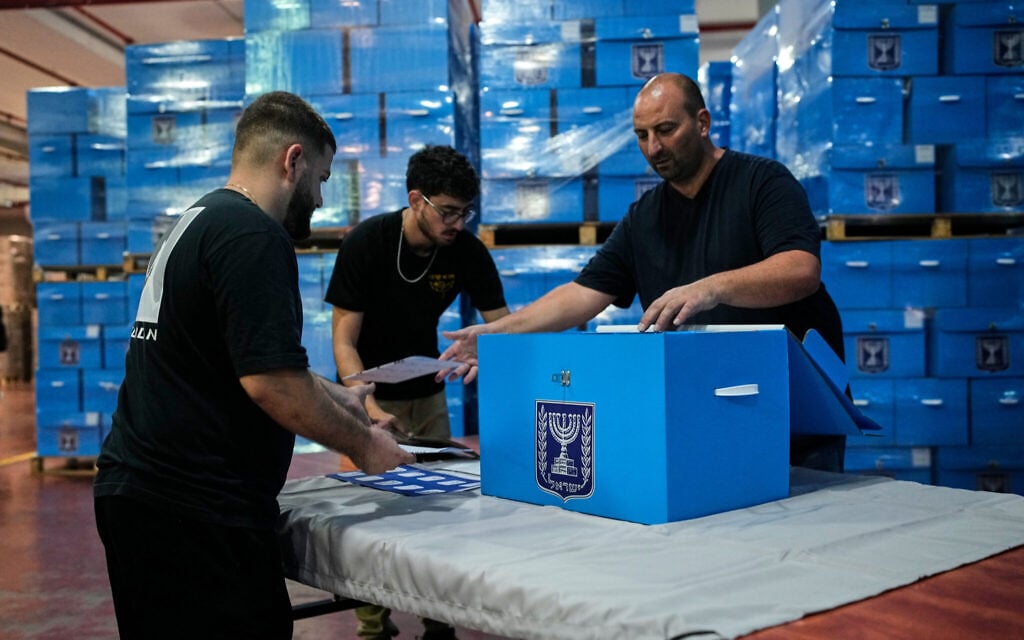
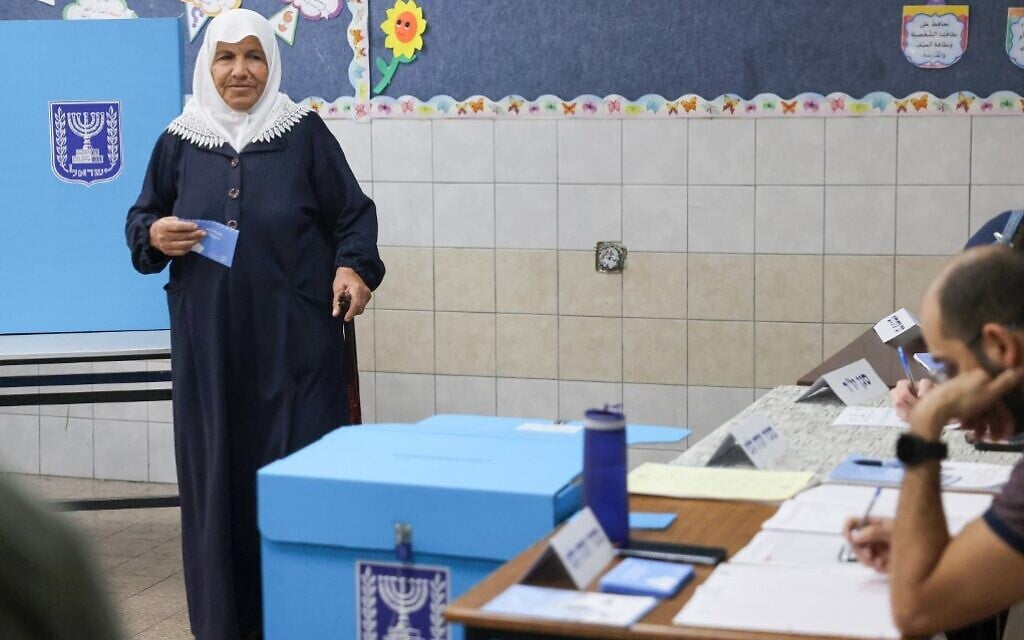
Likud, Smotrich say they’ll put 2,000 activists at Arab polling stations on election day

Joint List chief decries 'racist campaign' after PM's party and Religious Zionism cite unsubstantiated fraud claims; Eisenkot vows to end Hamas rule in Gaza in 18 months if elected
  •  

Netanyahu’s Macbeth complex: Ex-spy chief exposes a leader consumed by paranoia

Ronen Bar's defamation suit reveals the gravity of the prime minister's toxic rift with his security chiefs. Three years after Oct. 7, Netanyahu is still hunting for conspiracies
  •  

Daily Briefing Oct. 15 – Why are the Saudis so poor at war despite spending billions?

Diplomatic correspondent Lazar Berman on the drums of war again sounding in the Iran-US conflict, and the mounting allegations against the prime minister over actions before and after Oct. 7
  •  

Netanyahu ammette per la prima volta in tv che il capo dei servizi egiziani è stato in Israele pochi giorni prima del 7 ottobre

Mancano solo dodici giorni alle elezioni israeliane. Per Benjamin Netanyahu, rimanere alla guida del Paese ha un valore esistenziale. Ma più ci si avvicina al voto e più cresce su di lui la pressione per le sue presunte responsabilità riguardo all’impreparazione di esercito e servizi segreti a rispondere all’attentato terroristico di Hamas del 7 ottobre 2023. E questa volta è lui stesso a svelare un particolare mai fornito fino a oggi: il capo dei servizi segreti egiziani, Abbas Kamel, si è recato in Israele pochi giorni prima dell’attacco del partito armato palestinese al Festival Nova e ai kibbutz vicini alla Striscia di Gaza.

La questione è centrale perché da mesi circolano indiscrezioni sul fatto che l’Egitto abbia lanciato, fin dal giugno 2023, una raffica di avvertimenti al governo israeliano sui rischi provenienti dall’exclave palestinese. E la rivelazione di Netanyahu conferma per la prima volta che, almeno nei giorni immediatamente precedenti l’attacco di Hamas, l’Egitto si è mosso con i potenti vertici del Mukhabarat inviando direttamente Kamel nello Stato ebraico. Il premier israeliano lo ha dichiarato in una lunga intervista rilasciata al famoso talk show vicino al governo The Patriots di Channel 14, precisando però di non aver incontrato il capo dei servizi egiziani: “Non mi ha incontrato perché in quel momento stavo partecipando a una cerimonia commemorativa per i soldati dell’Idf – ha detto – Quando mai un capo dei servizi segreti incontra un capo di governo?”.

La risposta alla domanda apparentemente retorica c’è, in realtà. Basta fare una ricerca sul sito ufficiale del governo d’Israele per ritrovare fotografie di strette di mano tra Kamel e Netanyahu, nel 2021, nella residenza del premier a Gerusalemme. La bugia di Netanyahu solleva quindi dubbi su chi abbia veramente interloquito con Kamel e quale sia il messaggio recapitato dal Cairo a Tel Aviv: “Il capo dell’intelligence egiziana era qui – ha aggiunto il premier – Ha trascorso circa 50 minuti sul posto. Voglio sapere chi ha incontrato”.

Le parole di Netanyahu hanno scatenato di nuovo il dibattito intorno alle sue presunte responsabilità. Ma in serata si è assistito a un nuovo colpo di scena. La tv pubblica israeliana Kan ha smentito la versione del premier sostenendo che sul volo atterrato il 26 settembre in Israele dall’Egitto non si trovava Abbas Kamel, bensì due uomini d’affari egiziani. L’aereo, di proprietà della compagnia di charter egiziana Smart Aviation, riferisce Kan, è atterrato intorno alle 10 ed è ripartito per il Cairo alle 11 senza nessuno a bordo. Resta da capire perché il primo ministro dovrebbe aver mentito su un punto che rischia di aumentare i dubbi sulle sue mancanze nella prevenzione dell’attentato del 7 ottobre 2023.

L'articolo Netanyahu ammette per la prima volta in tv che il capo dei servizi egiziani è stato in Israele pochi giorni prima del 7 ottobre proviene da Il Fatto Quotidiano.

  •  
❌