❌

Reading view

‘Faster and smarter’: Legal analyst warns courts they can’t let Trump outplay them

MS NOW legal analyst Andrew Weissmann said President Donald Trump’s disregard for court orders has turned the nation’s justice system into a laughingstock.

“The Trump administration is making the courts look like fools,” he said.

With the midterm elections quickly approaching, Weissmann warned it is time for America’s judges to work “faster and smarter” before it’s too late.

“The administration, over and over again, is doing things unilaterally without permission and, at times, in violation of court orders,” the former Justice Department official explained.

According to an analysis from The Associated Press earlier this year, district court judges have found the second Trump administration violated or failed to follow federal court orders in at least 31 lawsuits and in more than 250 individual immigration cases.

When the court does intervene, sometimes it’s already too late, Weissmann said, pointing to the administration’s use of taxpayer dollars to run ads for the president. When a federal judge blocked that effort, it was only after nearly $22 million had already been spent.

“Tens of millions of people saw those ads, paid for by you and me,” he said.

Weissmann argued that Trump’s DOJ has effectively taken a “do now and ask questions later” approach to the law.

“The court only belatedly says, ‘Hey, don’t do that.’ But the damage is already done, and you can’t put the genie back in the bottle,” he said.

The former federal prosecutor said it was time for courts to be “faster and smarter” in responding to Trump’s blatantly illegal moves, and he cautioned against setting “a permission structure for this administration,” especially as the election approaches.

“What I am worried about is: The midterms are coming up, and is this going to be a government that goes ahead and seizes ballots with the idea that we can break the chain of custody, we can make it impossible to count votes? And maybe later a court will say, ‘You shouldn’t have done that,’ but the damage will have been done,” he explained.

“There has to be a deterrent,” Weissmann warned. “And courts have to be faster and smarter to not get outplayed.”

You can watch Weissmann’s full comments in the clip above.

The post ‘Faster and smarter’: Legal analyst warns courts they can’t let Trump outplay them appeared first on MS NOW.
  •  

White House Spokesperson Leaves Her Post Following Criticism of her Performance

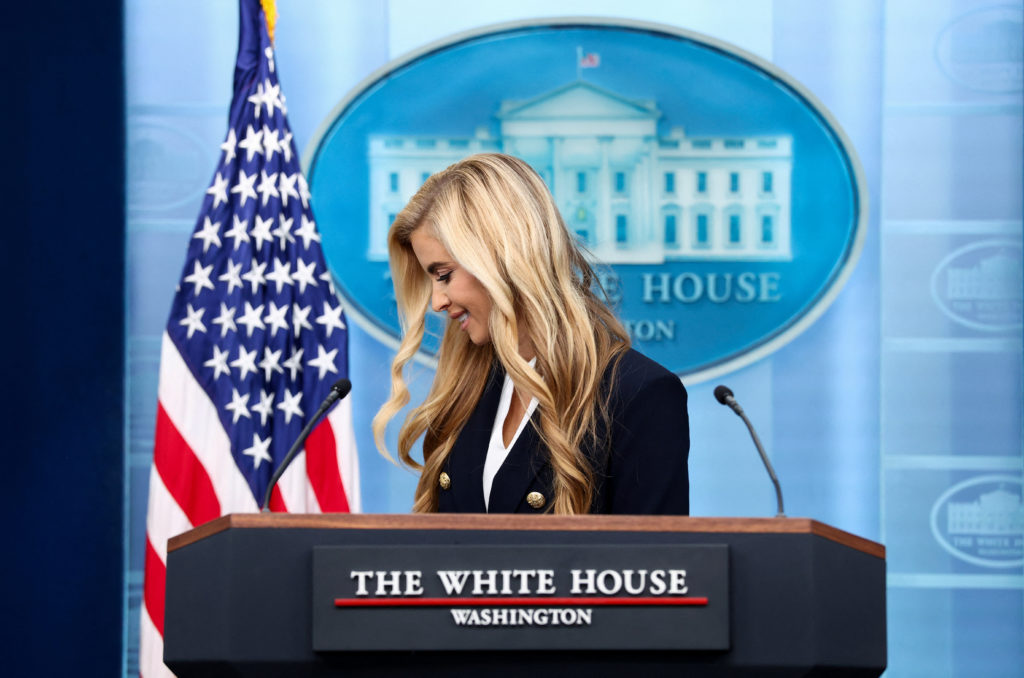
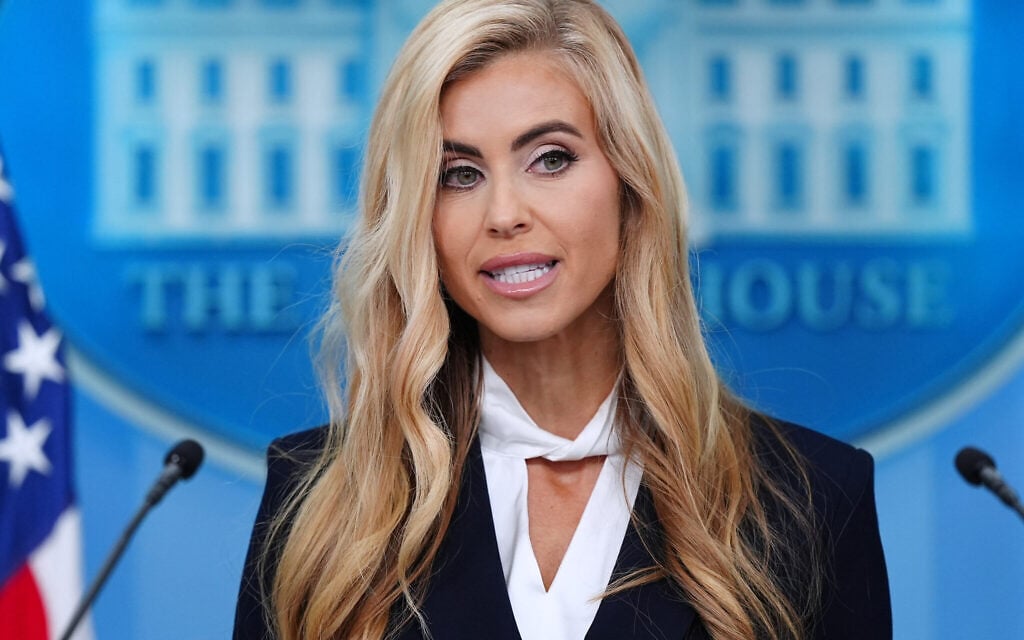
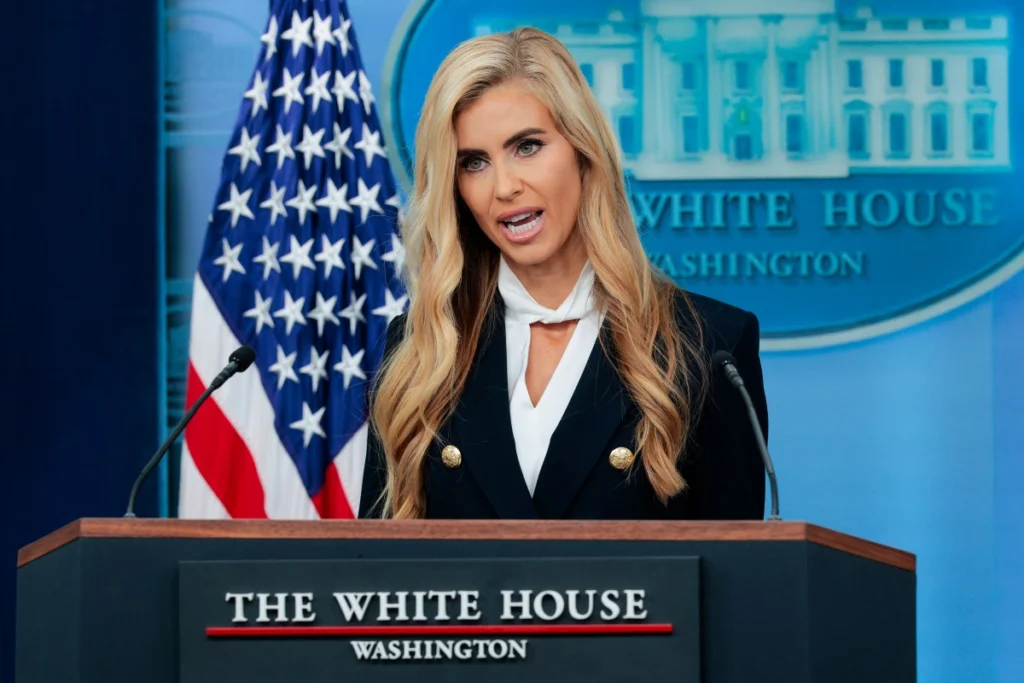
Katie Zacharia stepped down from her role as White House press secretary this Friday, after U.S. President Donald Trump suggested she resign following criticism she faced during her first week on the job, an official confirmed to EFE.

RELATED:

Katie Zacharia Debuts as White House Press Secretary

She is in the process of leaving the position of press secretary, the source stated, without specifying whether she resigned or was dismissed. Her departure comes just five days after she assumed the role on Monday, October 12, replacing Karoline Leavitt, who left the position in August to focus on her family.

The president indicated that he would leave that decision up to her and noted that he would speak with the press secretary. The White House did not officially announce the departure, although government sources confirmed it to outlets such as CNN and Fox News.

Zacharia’s first appearance before the press, on Tuesday, October 13, lasted barely 14 minutes. During the press briefing, she read much of her statement and answered only three questions—all of which came from conservative media outlets.

New White House press secretary Katie Zacharia opened her first briefing by praising President Donald Trump and his midterm campaign. Zacharia, 41, is a conservative commentator who previously worked as a senior communications adviser for Trump Media & Technology Group, the… pic.twitter.com/BK2X1XSwII

— The Associated Press (@AP) October 13, 2026

The official also struggled to answer certain questions, including one regarding the sharing of intelligence with Ukraine. Her performance drew criticism and led to increased scrutiny of her professional background.

Her appointment came as a surprise in Washington, following weeks of speculation about who would succeed Leavitt. According to an official cited by CNN, the White House faced challenges in recruiting higher-profile figures, as several potential candidates had previously been critical of Trump.

Presidential aides repeatedly narrowed down the list of candidates, ruling some out after discovering past unfavorable comments they had made about the president—which automatically disqualified them.

Zacharia’s departure marks one of the shortest tenures in the White House press office in recent memory, leaving the position of presidential press secretary vacant once again.

#UnitedStates | Trump is reviving unsubstantiated election fraud claims ahead of the November 3 midterms, targeting mail-in voting while encouraging supporters to vote early.
Polls suggest the cost of living remains voters' top concern.#Midterms2026 #teleSUREnglish pic.twitter.com/wHdgdHaT1J

— teleSUR English (@telesurenglish) October 9, 2026
  •  

Vance desperately targets white voters as Trump’s grip slips

Donald Trump and the MAGA movement’s grip on white voters appears to be slipping, and in an effort to reverse that trend, it seems Vice President JD Vance has designated himself the pied piper of racist rage.

Numerous polls this year have spotlighted Trump’s declining support among white voters — particularly, white working-class voters who’ve been key to his and his party’s political success. Amid this trend, Vance — in speech after speech — has resorted to rhetoric seemingly designed to groom the white American psyche so that white voters turn their ire on nonwhite people rather than on Trump and the Republican Party.

The latest example came during a rally Vance hosted in Michigan on Thursday, in which he suggested Democratic Senate candidate Abdul El-Sayed is resentful of certain people and places because they’re “too white, too proud or too American.” He called El-Sayed a “weasel who should shut his mouth and show a little gratitude to the country that gave him everything.”

.@VP JD Vance says he feels bad for U.S. Senate candidate Abdul El-Sayed (D-MI): "I don't know why he resents the things that he does. Perhaps it's because he sees them as too white, or too proud, or too American." pic.twitter.com/6zTXQG3okK

— CSPAN (@cspan) October 15, 2026

Vance has returned to this well numerous times over the past year as Trump’s corrupt business dealings, economically destructive tariffs and his deadly war with Iran have turned off some in the MAGA base. You can see plenty of other examples of Vance launching similar appeals to white bigots — including here, here and in the following clip from last December, when Vance told an audience of right-wing Turning Point USA affiliates that they no longer had to “apologize for being white.”

Vance: In the United States of America, you don't have to apologize for being white anymore. pic.twitter.com/QikIDkXNy5

— Acyn (@Acyn) December 21, 2025

Back in August, the vice president gave an interview to Fox News suggesting that white people who support El-Sayed hate themselves. And keep in mind that all of this is coming from the No. 2 leader of a Republican Party that has spent years frothing at the mouth about liberals supposedly weaponizing “identity politics.” The question is whether white voters choose to indulge in what I’ve previously described on-air as the “racist slop” being offered up by the MAGA movement.

And here, history can be informative. White supremacist movements and organizations in years past — including the Ku Klux Klan — have all sought to unify white Americans around a single racial identity. This trend is explored in films like the documentary “White with Fear,” which shines light on the history of right-wing, racist fearmongering in the United States. White supremacist groups have historically managed to convince some white people to fall in line behind them, but they’ve also faced white backlash as some of the same people have been awakened to these groups’ corrupt ways and self-serving bigotry.

And despite Vance’s efforts, a similar outcome seems to be in play for the white supremacy-boosting MAGA movement as well.

The post Vance desperately targets white voters as Trump’s grip slips appeared first on MS NOW.

  •  

TSE define regras para canais de WhatsApp durante a campanha

Logo Agência Brasil

O Tribunal Superior Eleitoral (TSE) definiu nesta sexta-feira (16) regras para o funcionamento de canais de WhatsApp que apoiam campanhas eleitorais. 

A decisão foi tomada após a guerra de liminares sobre o funcionamento do canal Exército do Lula, criado pelo deputado federal André Janones (Rede-MG) para apoiar a candidatura à reeleição do presidente Luiz Inácio Lula da Silva (PT).

Notícias relacionadas:

Por unanimidade, os sete ministros da Corte aprovaram uma atualização na resolução do TSE que trata da propaganda eleitoral na internet e da fiscalização dos canais de comunicação utilizados pelas candidaturas.

Conforme a decisão, canais que receberem apoio técnico ou financeiro das campanhas deverão ser registrados na Justiça Eleitoral.

O vínculo deverá ser estabelecido a partir do recebimento de recursos, ajuda técnica, além do direcionamento para página oficial do candidato.

O apoio espontâneo ou compartilhamento de materiais de campanha não poderão ser caracterizados como vínculo direto com a campanha. 

Se as regras não forem cumpridas, os canais poderão ser desativados até que a regularização seja providenciada. 

Na terça-feira (13), o presidente do TSE, Kassio Nunes Marques, determinou a reativação do canal Exército do Lula, após a campanha de Lula registrar o canal no tribunal, conforme determinação do ministro.

A reativação ocorreu após decisões conflitantes de Kassio e do ministro corregedor-geral do TSE, Villas Bôas Cueva, que havia liberado o canal.

  •  

TSE nega pedido da campanha de Flávio para barrar posts de sindicatos

Logo Agência Brasil

O ministro Ricardo Villas Bôas Cueva, do Tribunal Superior Eleitoral (TSE), negou nesta sexta-feira (16) pedido da campanha do candidato a presidente Flávio Bolsonaro (PL) para barrar publicações nas redes socais de 54 dirigentes de sindicatos, entidades estudantis e movimentos sociais.

A campanha alegou que há uso da estrutura física das entidades e dos perfis nas redes socais para favorecer a candidatura à reeleição do presidente Luiz Inácio Lula da Silva.

Notícias relacionadas:

Ao analisar as alegações, o ministro entendeu que as acusações necessitam ser analisadas individualmente e deu prazo de 72 horas para os advogados da campanha de Flávio apresentarem fatos detalhados sobre as supostas irregularidades.

“A presente decisão limita-se a reconhecer que os elementos disponíveis não são suficientes para justificar, neste momento, a medida inibitória postulada”, afirmou o ministro.

Cueva também ressaltou que a rejeição da liminar para barrar as postagens não constitui autorização para uso de bens, serviços e recursos financeiros dos sindicatos em benefício de candidaturas.

“O custeio de despesas de campanha, a produção ou distribuição de materiais que configurem contribuição econômica à candidatura e o fornecimento de bens ou serviços com essa finalidade sujeitam-se à vedação legal, independentemente da transferência direta de valores”, completou.

O caso ainda será julgado definitivamente pelo ministro. Não há prazo para a análise do caso.

  •  

Georgia Cop Who Shot a Miniature Donkey Says Body Camera Footage Shows an 'Imminent Threat'

Screenshot from a body camera video showing a a handgun drawn at a small donkey | The Civil Rights Lawyer Raw/Youtube/Cedartown Georgia Police Department

The Georgia officer responsible for killing a 1-year-old miniature donkey, HeeHaw, has filed a motion to dismiss the lawsuit against him, claiming the body camera footage proves he "reasonably believed the donkey posed an imminent threat to a fellow officer." But even if it doesn't, the officer argues he is immune from liability. 

In the early morning hours of August 30, Hannah Michelle Israel was at her Cedartown home in western Georgia when she received a distressing phone call. A supervisor with the Cedartown Police Department "tersely informed [Israel] that a donkey on her property had been 'dispatched,'" according to her federal lawsuit. After some clarification, she learned that police had not only entered her enclosed private property in the middle of the night without permission while looking for a missing person, but also shot and killed her miniature donkey in the process. 

Israel immediately set out to search for her beloved pet, HeeHaw, only to find her bottle-raised donkey's lifeless body alone in her field. Israel told ABC7 News the incident has left her "traumatized and shocked." She continued, "I honestly can't even believe he's not here…There's no words."

Demanding accountability, Israel filed a lawsuit in the U.S. District Court for the Northern District of Georgia in September against the shooting officer, Officer Trenton Ryan Garner, for violating her Fourth Amendment rights and submitted a separate demand for $1 million from the City of Cedartown.  

Last week, Garner responded by asking the court to dismiss the case, arguing in part that he did not violate Israel's constitutional rights when he entered her property. Under the open fields doctrine, there is no reasonable expectation of privacy in one's pastureland, even if enclosed. Further, the motion argues, exigent circumstances existed in the search for a missing 12-year-old girl. 

As far as HeeHaw is concerned, Garner claims he acted reasonably by using deadly force and argues the footage clearly shows HeeHaw "charging" and posing an "imminent threat to a fellow officer." 

However, the footage, posted by the Civil Rights Lawyer Raw, may not be so clear-cut. Garner's body camera was off at the time of the shooting but had a "rolling buffer of video," a recording without audio of the 30 seconds preceding activation of the camera, according to court documents. During the silent portion, two officers and a bloodhound are in front of Garner with flashlights in a dark field. A small donkey, roughly 3 feet tall, appears and slowly moves toward one of the officers. The officer backs away slowly, but the donkey moves closer and picks up speed. Garner pulls his gun and fires. The donkey turns and runs before falling over.

Whether Garner reasonably believed HeeHaw posed an imminent threat to his fellow officer may be up for debate.

When the audio kicks in, a fellow officer asks, "Why'd you shoot it up?" "I don't know," Garner responds rather nonchalantly before telling dispatch he had to shoot a donkey because "it was trying to attack." If another officer on the scene wasn't sure why Garner used deadly force, perhaps the decision wasn't so reasonable after all. 

In her lawsuit, Israel accuses Garner of needlessly killing HeeHaw "maliciously…and recklessly, with deliberate indifference…for [Israel's] constitutional rights." The suit continues: "No reasonable officer in…Garner's position would have believed that such force was necessary or justified." 

But whether Garner acted reasonably or not by shooting HeeHaw, qualified immunity may still shield him from accountability. Qualified immunity is a legal doctrine that protects government actors from lawsuits alleging rights violations, unless the right is clearly established. In practice, that means plaintiffs must be able to point to a previous court ruling in a case with the same circumstances to show that the right was obvious to government officials. 

The bar can be quite high to show a right is clearly established. For example, in March, the Supreme Court reversed a 2nd Circuit decision in a case involving an officer who was sued for using a rear wristlock to arrest a protester. The 2nd Circuit denied qualified immunity, reasoning that a previous case from 2004 clearly established that rear wristlocks used to arrest anti-abortion protesters constitute excessive force. But the Court disagreed, stressing that "principles stated generally, such as that 'an officer may not use reasonable and excessive force,' do not suffice." 

And while there may be ample cases involving officers shooting pet dogs, cases involving miniature donkeys are in short supply. If the court finds that there is no clearly established rule that specifically prohibits officers from shooting a miniature donkey moving toward a fellow officer in the dark, the court may end up dismissing the case and sidestepping both the reasonableness and constitutional questions entirely.

The post Georgia Cop Who Shot a Miniature Donkey Says Body Camera Footage Shows an 'Imminent Threat' appeared first on Reason Magazine.

  •  

Nvidia's communications team has undergone a shake-up as its public profile exploded

Jensen Huang Nvidia.
Jensen Huang, CEO of Nvidia.

Bloomberg/Getty Images

  • Nvidia's communications operation has been reshaped as the company became the face of the AI boom.
  • Roughly 15 staffers have left the lean team since 2025 as Nvidia reorganized its communications org.
  • Former employees described growing workloads as responsibilities expanded.

Nvidia's communications organization has been reshaped as the company became the face of the AI boom, with multiple teams brought under new leadership and a string of departures.

Business Insider identified roughly 15 communications employees who have left Nvidia since 2025, based on LinkedIn profiles and interviews with former employees.

The organization now numbers roughly 70 to 80 people globally, and has more than doubled in size since Mylene Mangalindan joined as vice president of corporate communications in 2023, according to a person close to the company.

The departures have also included newer hires. Anna Soellner, who was recruited to lead corporate communications, left after roughly four months, Business Insider previously reported.

Nvidia is known for high retention. It reported companywide turnover of 3.7% in fiscal 2026, up from 2.5% the prior year, and well below the tech industry average of 21.9% cited in its latest sustainability report.

Mangalindan succeeded longtime communications chief Bob Sherbin, who retired in 2024. She previously worked at the advisory firm Brunswick Group.

She was brought in to "bring fresh blood" and "upgrade the team" to meet Nvidia's growing profile, one former employee said.

At the end of 2024, Nvidia restructured its communications organization. It brought enterprise public relations under Mangalindan's leadership alongside the corporate communications team she already led, according to two former employees.

Corporate communications focuses on Nvidia's reputation and major media outlets, while enterprise handles product and industry messaging, including for its data center business.

One former employee said the consolidation reflected the growing importance of Nvidia's data center business, which sells chips and systems that power AI and had become its biggest revenue driver.

Analyst relations, social media, and influencer marketing also moved under Mangalindan's remit this year, another former employee said.

Three former employees said Nvidia's communications team had long operated with relatively lean staffing, even as workloads grew alongside the company's public profile, leaving staff juggling multiple responsibilities.

These employees said they experienced long hours, difficulty taking time off, and pressure to respond quickly to emails and Slack messages.

A person close to Nvidia said the company's lean staffing allows employees to move quickly and also requires long hours. The person said Mangalindan encourages staff to take vacation, though the team's small size can make scheduling time off difficult, particularly in the summer.

Nvidia is widely known for its demanding work environment. CEO Jensen Huang has emphasized operating at the "speed of light" and is known for fostering a culture of constant accountability.

Have a tip? Contact this reporter via email at gweiss@businessinsider.com or Signal at @geoffweiss.25. Use a personal email address, a nonwork WiFi network, and a nonwork device; here's our guide to sharing information securely.

Read the original article on Business Insider

  •  

As Katie Zacharia’s tenure ends after just 5 days, here are some lessons for Team Trump

On Tuesday afternoon, after Katie Zacharia’s disastrous first briefing as White House press secretary, a White House official told MS NOW, “She needs to get much better, fast, otherwise she’ll break Scaramucci’s record,” set, of course, by Anthony Scaramucci, who served as Donald Trump’s communications director for 11 days in 2017.

Three days later, she did what few thought possible by breaking that record. As a truly brutal first week neared its end, MS NOW reported:

After a turbulent five days in the role, Katie Zacharia is out as White House press secretary, two White House officials familiar with her departure told MS NOW on Friday.

The details — whether Zacharia voluntarily left her role or was directly fired — are still unclear. On Friday, President Donald Trump told reporters that he asked Zacharia to “reconsider” her role.

After Richard Nixon resigned in 1974, thus elevating Gerald Ford to the presidency, the Michigan Republican needed a new White House team. Ford tapped Jerald terHorst, a veteran journalist, to be the press secretary, and he seemed like a perfectly sensible choice.

The arrangement, however, did not last. A month into Ford’s tenure, the new president issued a controversial pardon to Nixon, and terHorst, unwilling to defend the decision, resigned. His tenure — just 31 days — was the shortest of any White House press secretary ever.

A half-century later, Zacharia’s time in the office lasted roughly one-sixth the length of terHorst’s tenure.

During a brief Q&A with reporters just outside the White House on Friday afternoon, the president made it sound as if he were doing his newly minted press secretary a favor.

“It’s not an easy job, and I think she was really treated very unfairly,” Trump said, adding, “I told her, ‘I think you’re better off being happy, and I’m not sure you can ever be happy in this job.’”

Asked whether Zacharia would continue to serve in his administration, the Republican said, “Yeah. In some form — but maybe a more pleasant form.”

Q: "Will Katie [Zacharia] continue to be in the administration?"Trump: "Yeah. In some form. But maybe a more pleasant form…I just think the press has been very tough on Katie and I said, 'There's no reason for you to have to do this.'…We'll make a determination."

— The Bulwark (@thebulwark.com) 2026-10-16T17:25:17.043Z

The development marks a stunning turn of events, including the exposure of Zacharia’s extensive record of peddling unhinged conspiratorial nonsense via social media, her misleading claims about her legal credentials, her work at a business that she described as “sort of a pyramid scheme” and her concession that she tried and failed to pass the California Bar Exam.

The president is already trying to blame this remarkable fiasco on the news organizations that reported accurate information, but as the dust settles, Trump and his team should at least try to consider a few lessons.

First, meritocracies are good, and hiring random people because the president saw them on television is bad.

Second, some routine vetting of prominent White House officials is a standard and responsible move.

And third, picking an unqualified press secretary three weeks before nationwide elections, having her move across the country and then throwing her into a difficult role without any meaningful preparation is a recipe for inevitable failure.

Put another way, there’s a fair amount of blame to go around for this humiliating debacle, which has managed to make the entire White House appear even more incompetent.

The post As Katie Zacharia’s tenure ends after just 5 days, here are some lessons for Team Trump appeared first on MS NOW.

  •  

A US Army general says he had a change of heart about high-flying balloons after seeing them in action

A surveillance balloon inflating with the US army and partners.
An Urban Sky High-Altitude Balloon system inflates during an international training exercise in the Philippines.

Staff Sgt. Brandon Rickert/US Army

  • The US Army is expanding its use of high-altitude balloons for surveillance and communications.
  • The balloons can operate 60,000 to 100,000 feet above Earth, providing space-like capabilities.
  • Army officials plan more experiments as the service expands its space warfare ranks.

The US Army is looking to expand its use of high-altitude balloons as the service builds out its capabilities near and in outer space.

These balloons operate in the stratosphere, roughly 60,000 to 100,000 feet above Earth, the space in between where conventional aircraft fly and satellites. Army officials say they see an opportunity to use the balloons to deliver satellite-like surveillance and communication capabilities closer to the battlefield.

Lt. Gen. John Rafferty, commander of Army Space and Missile Defense Command, said he was initially skeptical of the technology. He recalled hearing proposals to use high-altitude balloons while serving in what was then Army Futures Command and questioning whether they'd prove practical.

The general's view, however, changed after he saw the balloons hold their positions and conduct high-altitude surveillance during a training exercise.

"I went from nowhere to a huge believer very quickly once I saw them in action," Rafferty said at this week's Association of the United States Army conference in Washington, DC.

The Army is exploring a range of balloon systems for different missions, from surveillance and communications to supporting long-range strikes.

Col. Joseph Mroszczyk, who oversees the efforts to integrate emerging space capabilities into Army operations as the director of Transformation Integration Space Superiority, said at AUSA that he wants a "family of stratospheric systems."

Unlike satellites, which travel set paths in orbit, high-altitude balloons can exploit different wind currents to maneuver or maintain a presence over an area of interest, he said.

Mroszczyk said the Army could use favorable winds to position balloons carrying sensors, communications equipment, or payloads supporting strikes.

"What that enables us to provide is space-like capabilities, really exploiting a transition point between what is normally considered the aerial layer and the space domain," he said.

Operating at those altitudes could give the Army persistent coverage across large areas from the stratosphere without relying exclusively on satellites or conventional aircraft.

The Army plans to conduct multiple experiments involving various stratospheric systems over the coming year, building on tests conducted in Europe and the Pacific. The service has also experimented with the technology alongside combat operations in the Middle East, a senior Army official told Breaking Defense earlier this week.

Those efforts followed the cancellation of a large-scale balloon demonstration planned for the Indo-Pacific last year.

The growing interest in high-altitude balloons comes as the Army expands its role in space and near-space operations, with ground forces increasingly reliant on space-based capabilities for navigation, communications, and intelligence.

Read the original article on Business Insider

  •  

HALF A MOOCH: Katie Zacharia is out after 5 days as White House press secretary

Katie Zacharia.
Katie Zacharia.

Jim WATSON / AFP via Getty Images

  • President Donald Trump said he told Katie Zacharia to reconsider the White House press secretary job.
  • Shortly after, a White House official said she is "transitioning out" of the role.
  • She lasted five days in the role after mounting scrutiny over her legal credentials.

Embattled White House press secretary Katie Zacharia is out of the job after just five days, making her the shortest-tenured person to hold the role in history.

President Donald Trump said on Friday that he told Zacharia to reconsider taking on the high-profile job.

Shortly after his statements, The New York Times and CNN reported that Zacharia had been fired after less than a week in the role. A White House official told Business Insider that she is "transitioning out" of the role.

"I said to Katie just two minutes ago, I said, 'Katie, you know, you don't have to do this if you don't want,'" Trump told reporters at the White House, adding that Zacharia responded that the job is "a lot tougher" than she thought.

"I said to her, 'Honestly, if I were you, I'd reconsider. You think about it, but I would reconsider,'" Trump said.

A conservative commentator who has repeatedly described herself as a lawyer, Zacharia made her White House press briefing debut on Tuesday and quickly came under intense scrutiny over her legal credentials.

She was widely panned after the roughly 14-minute briefing, most of which was spent on reading from prepared remarks. After the briefing, while alongside Trump, Zacharia was asked which state she passed the bar exam in and replied, "When I moved to China," raising eyebrows.

National headlines soon followed reports that Zacharia had not been licensed to practice law in any US jurisdiction.

On Thursday, Zacharia said she took the bar exam but failed, and never retook it.

Trump told reporters on Friday that Zacharia had been treated "very badly" and "very unfairly" by the media.

"She's been treated very rough, and she's a nice person, very nice person," the president said. "I've watched her for years on television, but I said, 'Is this for you, Katie? Because, honestly, you don't need this.'"

"She's been treated, I would say, very nastily," he said.

A rocky start

Following her first briefing, CNN reported that "several White House officials" were questioning how long she could remain in the role.

The news of Zacharia's ouster means Trump will be searching for a top spokesperson again after Karoline Leavitt left the role in August.

Previously, Jonathan Daniels held the record for shortest tenure. Daniels served as White House press secretary for just 19 days before President Franklin D. Roosevelt died in office. (He briefly served in an interim capacity for President Harry Truman.)

In the modern era, press secretaries have historically served roughly a year in the role, a fact that CNN noted when Trump's first-ever White House press secretary, Sean Spicer, departed after 182 days in August 2017.

During the first Trump administration, Anthony Scaramucci famously spent just 11 days as the White House communications director before he was booted from the position.

Scaramucci, known as "The Mooch," weighed in on Zacharia's departure in an X post, writing, "Records are made to be broken. But I take no pleasure in other people's pain."

Before becoming press secretary, Zacharia worked for Trump Media, the parent company of Truth Social, and served a brief stint at the Department of Homeland Security.

Compared to her predecessors, her résumé was void of the campaign and Capitol Hill experience that previous White House press secretaries brought to the challenging role.

Read the original article on Business Insider

  •  

Katie Zacharia is out as White House press secretary after just 5 days

After a turbulent five days in the role, Katie Zacharia is out as White House press secretary, two White House officials familiar with her departure told MS NOW on Friday. The sources were granted anonymity to discuss sensitive matters.

It was not immediately clear whether Zacharia resigned or was fired. On Friday, President Donald Trump told reporters that he told Zacharia to “reconsider” her role.

Zacharia delivered her first and only press briefing on Tuesday, which lasted just over 14 minutes. She took just three questions — all from conservative media outlets — and failed to answer the first policy question she was asked. She defended her performance in an interview with Fox News host Sean Hannity on Thursday, telling him she had “very little prep time.”

In the days after her appointment, questions swirled about her past experience, including her past references to being a lawyer. Though she obtained a law degree from Pepperdine University in 2011, she said this week that she did not pass the bar exam. She said she did not intend to mislead about her legal credentials, telling Real America’s Voice that it was a “miscommunication.”

Responding to a reporter on Friday who asked if he wanted Zacharia to “stick around ultimately,” Trump said he planned to talk to her when he returned to the White House from Georgia.

“I just said, ‘I think you should reconsider because I think the press is really being very unfair,'” he said.

Trump announced Zacharia as his new press secretary on Oct. 9, filling a vacancy left by Karoline Leavitt, who departed in August to spend more time with her two young children.

Former White House Communications Director Anthony Scaramucci, who was fired after just 11 days in the role during Trump’s first administration, posted on X following the news of Zacharia’s departure: “Records are made to be broken. But I take no pleasure in other people’s pain.”

This is a developing story. Check back for updates.

The post Katie Zacharia is out as White House press secretary after just 5 days appeared first on MS NOW.

  •  

The ‘One Big Beautiful Bill’ opened the door to benefit Big Pharma — and Trump

Polling suggests that concerns about corruption and healthcare costs are top of mind for most voters as Election Day approaches. A Fox News poll released this week showed large majorities of voters listed both in the top five issues they were “extremely” or “very” concerned about. A new report about President Donald Trump’s self-enrichment by way of the pharmaceutical industry underscores the uniquely awful political predicament Republicans have created for themselves by wedding their party to one of the most corrupt administrations in American history.

Democrats on the Joint Economic Committee previously spotlighted the ways that Trump’s stock investments in the oil and gas industries have benefited from his destructive geopolitical agenda, including his deadly war with Iran. Now, the committee is out with a new report on the ways Trump’s stock investments in the pharmaceutical industry have benefited from provisions of the (ridiculously) so-called One Big Beautiful Bill Act that Republicans forced through last year.

According to the new report:

As Americans face sky-high health care costs, President Trump and Congressional Republicans passed into law last year a new giveaway to Big Pharma that enables many pharmaceutical companies to keep charging seniors exorbitant prices for cancer treatments and other medications. This measure — which blocks the Medicare program from negotiating lower prices for several high-cost drugs — will add around $9 billion to the deficit.

The report cites financial disclosure forms that show that in 2025, “Trump held as much as $39.1 million in stock in the same Big Pharma companies that directly benefited from the giveaway that he and Congressional Republicans devised.” And that “these companies reported at least $54 billion in U.S. sales of drugs that benefitted from the carveout in 2025, a 13 percent increase from the year before.”

Trump has made more stock trades since returning to office than everyone in Congress combined. The White House has routinely said that these trades are handled by third parties over which Trump has no influence, denying allegations of corruption or conflicts of interest.

But it seems the majority of Americans aren’t convinced that the self-described “freaking genius” president has truly extricated his personal business dealings from industries that benefit from his policies: A recent AP-NORC poll found that 60% of adults think Trump has either illegally or unethically profited from the presidency.

The post The ‘One Big Beautiful Bill’ opened the door to benefit Big Pharma — and Trump appeared first on MS NOW.

  •  

White House press secretary Katie Zacharia leaving the job after Trump casts doubt

Katie Zacharia is departing as White House press secretary, a person familiar with the matter said Friday, after a short and rocky tenure that was defined by questions about her professional background and lack of polish in fielding questions from journalists.

  •  

Joe Scarborough slams Trump’s ‘betrayal’ of Ukraine: ‘He’s always been with Russia’

MS NOW’s Joe Scarborough criticized President Donald Trump for condemning Ukraine’s renewed strikes on Russian oil sites while saying little about Moscow’s continued violations of his energy ceasefire.

“These events are shocking — even by Trumpian standards,” Scarborough said.

In an interview with Newsmax on Thursday, Trump called Ukraine’s decision to resume drone strikes on Russian oil refineries “a disgrace” and said the attacks would drive up global oil prices. (Trump has repeatedly blamed the Russia-Ukraine war for surging energy costs, though experts say the U.S. war with Iran has had a greater impact.)

“I’m not a big fan of Zelensky,” Trump said of Ukrainian President Volodymyr Zelenskyy, adding that he found him “more difficult to deal with” than Russian President Vladimir Putin.

Reacting to Trump’s comments, Scarborough said Friday on “Morning Joe” that he “just can’t get Ukraine off my mind and the absolute betrayal of Ukraine.”

The MS NOW host cast Trump’s criticism of Ukraine as the latest in a series of moves that he argued favor Moscow. Last week, Trump announced the United States would lift sanctions on Russian diesel exports. Scarborough said the agreement would help “pump billions of dollars into Vladimir Putin’s killing machines.”

He also cited Reuters’ report that an order to limit Ukraine’s access to SpaceX’s Starshield satellite service came from inside the White House. The temporary restriction disrupted Ukrainian drone operations, according to the report. A White House official denied that Trump ordered the Pentagon to limit the service.

“That’s all in Donald Trump’s hands,” Scarborough continued. “He’s the one in charge of this.” He said he believed Trump was “doing everything he can to help” Putin “win this war.”

According to the “Morning Joe” co-host, Trump has “been telling us who he is since 2015” when it comes to his feelings toward Putin.

“He’s always been with Russia,” he said. “Long before this war in 2015, while he was running for president, he was talking about his great admiration for Vladimir Putin.”

Scarborough also recalled what he called Trump’s “shameful, pathetic, weak performance” at his 2018 meeting with Putin in Helsinki, during which Trump publicly cast doubt on U.S. intelligence agency findings on Russian meddling in the 2016 election.

Since Trump returned to the White House, Scarborough said, “we’ve heard more of the same.” He said Trump’s advisers would share responsibility for the consequences of the administration’s approach to Ukraine.

“Everybody around him that has anything to do with this policy, this betrayal of the West, this betrayal of Western freedom, this betrayal of Ukraine, this will be marked upon their legacies for as long as they live,” he said.

You can watch Scarborough’s full comments in the clip at the top of the page.

The post Joe Scarborough slams Trump’s ‘betrayal’ of Ukraine: ‘He’s always been with Russia’ appeared first on MS NOW.

  •  

‘I’m allowed to do a self-pardon’: Trump opens the door to pardons for staff and himself

A couple of months ago, Donald Trump appeared on a conservative radio show and said that “a lot of people” wanted to see the president pardon himself in his first term.

“I had the absolute right to do it,” he said. “Instead, I fought it through the courts and won.”

While that wasn’t an entirely accurate summary of recent history — Trump, who was convicted of several felonies in New York, only “won” when the federal criminal cases against him ended upon his return to the White House, not because they were adjudicated in his favor — the president’s rhetoric about his “absolute right” to pardon himself stood out.

This week, he returned to the issue during an interview with Newsmax’s Rob Finnerty.

Trump suggests he is going to pardon everyone, including himself: "I'm allowed to do a self-pardon … I don't want to see people that work for me go through years of nonsense"

— Aaron Rupar (@atrupar.com) 2026-10-16T00:20:10.130Z

Asked specifically whether he’s “seriously considering a self-pardon” before he leaves office, the president initially hedged, saying he’s done “nothing wrong,” before adding, “I’m allowed to do a self-pardon. I’m allowed to pardon. … The pardon is very powerful. I know that. They say it’s the most powerful thing a president has, the power of pardon.”

As my MS NOW colleague Jordan Rubin explained in detail just last week, whether presidents can actually pardon themselves is a matter of some controversy. Ahead of Richard Nixon’s resignation in 1974, the Justice Department’s Office of Legal Counsel prepared a memo concluding that presidents can’t pardon themselves, though OLC opinions are not binding on the courts, and the matter has never been tested — at least not yet.

But also of interest was the other point Trump made as part of the same exchange.

On the topic of pardons, the Republican went on to say, “I can tell you this, I don’t want to see my people go through — because these people are lunatics on the, on the left — I don’t want to see people that work for me go through years of nonsense, hire lawyers and everything else, all for nothing.”

This came a few weeks after Trump also told Time magazine that he’s prepared to issue pardons to members of his administration.

Time will tell whether he follows through, and just as notably, just how many members of his team are considered for presidential clemency. But that Trump keeps making comments like these might very have a real impact in the White House and throughout the executive branch: The president is effectively letting a small army of political appointees know that, no matter what they do as part of their duties, he’s inclined to hand them a pardon, whether or not they deserve one.

Systemic government corruption is already a problem in the Trump era. The signal he’s sending to his team is likely to make matters worse.

The post ‘I’m allowed to do a self-pardon’: Trump opens the door to pardons for staff and himself appeared first on MS NOW.

  •  

Poland provided secret military aid to Ukraine, Zelenskyy hints amid air defense shortages

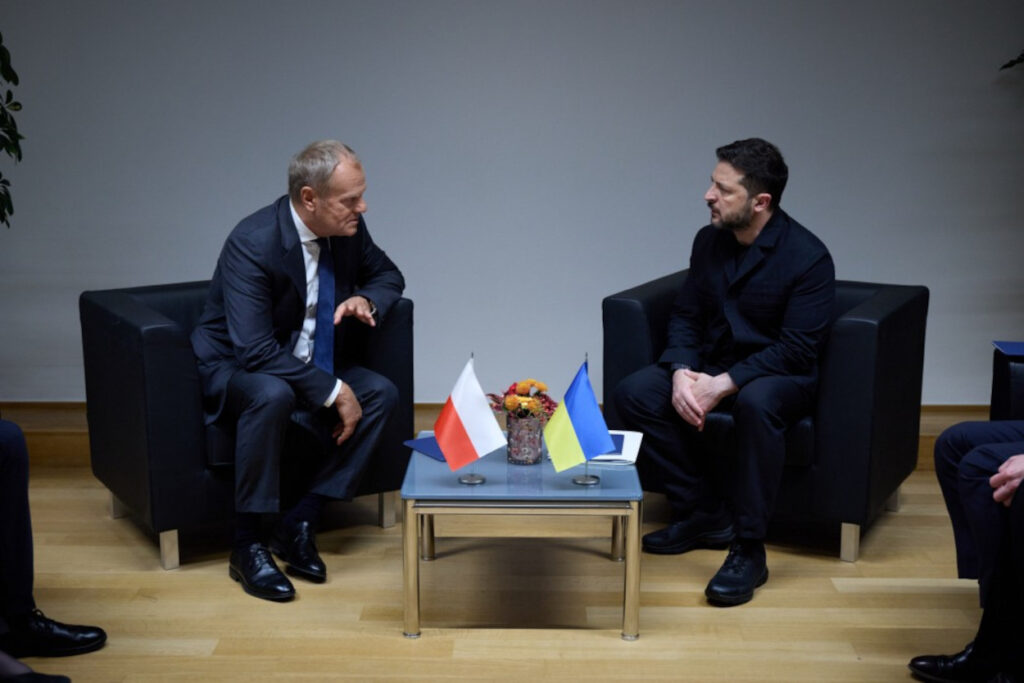
Polish Prime Minister Donald Tusk and Ukrainian President Volodymyr Zelenskyy in Brussels, 15 October 2026. Photo: Ukrainian President's Office

Ukraine has received undisclosed assistance from Poland as it struggles to defend against increasingly intense Russian drone and missile attacks, President Volodymyr Zelenskyy hinted during a meeting with Polish Prime Minister Donald Tusk in Brussels on 15 October, Radio Svoboda reported.

Ukraine’s air defense needs are greater than at any point since 2022, as intensified Russian drone and missile attacks strain existing systems and expose shortages of interceptor missiles. With US support increasingly uncertain amid tensions between Kyiv and Washington, European military aid is becoming more critical to Ukraine’s ability to defend its cities and infrastructure.

Zelenskyy thanked Warsaw for its support, suggesting that some assistance had to remain confidential. He also specifically mentioned 20 mm ammunition, which Ukraine needs to defend its cities against Russian attacks.

“Sometimes this has to stay between the two of us,” Zelenskyy said, thanking Tusk for the aid.

European support increasingly important amid US rift

Ukraine is facing mounting pressure on its air defenses as Russia increases the scale of its aerial attacks. Ukrainian forces are also struggling with shortages of interceptor missiles, particularly Patriot missiles needed to counter Russian ballistic strikes, leaving the country vulnerable to further attacks.

The need for additional support comes amid growing uncertainty over US assistance under President Donald Trump. Washington has taken steps that have strained ties with Kyiv, including easing some restrictions on Russian fuel and pressing for an energy ceasefire that Ukraine says Russia has continued to violate. 

Recent disruptions to US-linked intelligence and satellite support have also raised concerns about Ukraine's ability to detect and counter Russian attacks.

As uncertainty over Washington's role grows, European military assistance is becoming increasingly important for Ukraine's defense.

The White House, seen from Lafayette Square. File photo, June 2024.
Explore further

White House ordered limits on Ukraine’s military satellite service — Reuters. Who made the decision remains unclear

Defense cooperation continues despite political tensions

Tusk reaffirmed Poland's commitment to supporting Ukraine, saying Kyiv could count on Poland and the European Union. He also opposed easing EU sanctions against Russia, arguing that Europe should not take steps that help Moscow finance its war.

The meeting also came amid strained relations between Kyiv and Warsaw over historical disputes. However, Poland's government has maintained that these disagreements should not undermine military support for Ukraine, whose ability to resist Russian aggression is closely tied to Poland's own security.

  •  

Zelenskyy’s warning that Russian airspace is becoming dangerous is proving true: Russia temporarily restricted operations at 27 airports amid a massive drone attack

Flight information board displaying arrivals and departures at Domodedovo Airport in Moscow, Russia. Photo: TASS

Temporary restrictions on aircraft arrivals and departures were imposed at 27 Russian airports, Deutsche Welle reported on 16 October, citing its own calculations based on reports from Russia’s Federal Air Transport Agency.

Ukrainian President Volodymyr Zelenskyy warned airlines on 1 September that “Russian airspace is becoming completely unsafe.” Overnight, most of the airspace over European Russia was closed.

By morning, more than 200 flights had been canceled or delayed at Moscow airports, Deutsche Welle reported, citing figures compiled by a Russian Telegram channel.

🔥 Тим часом у російських аеропортах – справжній апокаліпсис через нальоти дронів останніми днями.

Про це ниють росЗМІ. Було відмінено десятки рейсів, у терміналах – дуже багато людей. Пасажири скаржаться на задуху, дикі черги до туалетів та повну невідомість. pic.twitter.com/ZlXxY5c2mq

— Breaking News (@breakingUAnews) October 16, 2026

The list included airports in the capital. All four Moscow airports temporarily suspended arrivals and departures, the Russian outlet Astra reported on 16 October. Russian authorities said they had shot down dozens of drones, while flights were delayed and diverted to alternate airfields, according to the report.

Massive drone attack on Russia: 644 UAVs in one night, 94 shot down near Moscow

The temporary airport shutdowns were likely a consequence of a massive drone attack on Russia. From 8:00 p.m. on 15 October to 8:00 a.m. on 16 October, Russian air defenses allegedly intercepted and destroyed 644 Ukrainian unmanned aerial vehicles across 26 Russian regions, occupied Crimea, and the Black Sea, according to Russia’s Defense Ministry.

According to the list of regions published by the Russian Defense Ministry, the drone attacks covered a vast area of Russia, from regions bordering Ukraine to the Moscow region, the Volga region, the country’s northwest and southern regions, as well as occupied Crimea and the Black Sea.

Russian air defenses shot down a total of 94 drones approaching Moscow over the evening of 15 October and overnight, according to calculations by the Russian outlet RBC Radio, citing statements by Moscow Mayor Sergey Sobyanin.

In the Kaluga region, air defenses destroyed 27 drones over the evening and night, the regional governor reported. At 9:27 a.m., he updated the figures, saying another 48 UAVs had been shot down overnight, bringing the total to 75. According to preliminary information, there were no casualties or infrastructure damage.

In the Tula region, air defenses allegedly destroyed a total of 32 Ukrainian drones. There were no casualties, according to regional Governor Dmitry Milyaev in his Telegram channel.

In the Vladimir region in western Russia, authorities repelled drone attacks overnight. In the city of Vladimir, a drone attempted to attack a heating infrastructure facility, but the attack was stopped, Vladimir Region Governor Alexander Avdeyev reported. Minor damage was reported, but there was no information about casualties.

Ukraine has not yet commented on its involvement in the attacks.

The practical consequences of canceled Russian flights

Passengers on flight SU6312 from Kaliningrad to Moscow were unable to land in Moscow because of airspace closure, so the aircraft was diverted to Nizhny Novgorod, Terravia reported. After landing, passengers remained on board for about two hours before being allowed to disembark at 3:30 a.m. Instead of continuing their journey to Moscow by air, they were supposed to be transported by bus, with the trip expected to take about seven hours, the outlet reported.

russian airliner revival sold breakthrough now survives extended flight-cycle limits · post sukhoi superjet 100 iraero airline tass superjet-100 (ss-100) plane (file photo) ukraine news ukrainian reports
A Russian Sukhoi Superjet 100 of the IrAero airline. Illustrative photo: TASS

Passengers were not provided with food or drinks, and one woman could not find a seat on the bus, so she purchased a ticket for an early-morning train herself.

Since the beginning of the year, all four Moscow airports have been completely shut down simultaneously at least 19 times, the Russian outlet Agentstvo reported. During the first 14 days of October, the restrictions lasted 101 hours and 38 minutes, compared with 46 hours and 33 minutes in September, according to the report.

  •  

Jared Kushner has no right to be playing diplomat

For more than a year, President Donald Trump’s son-in-law, Jared Kushner, has acted as one of the nation’s top diplomats, exercising significant authority on behalf of the U.S. government on conflicts involving foreign hostilities, without undergoing the Senate confirmation process or filing a single financial disclosure. If you’re asking how that’s legal, it’s not.

Kushner is a figure of great influence on our national security and foreign policy apparatus. He has been tasked with meeting directly with heads of state, negotiating peace deals and representing the United States in efforts to end the president’s war in Iran, which has put our troops in harm’s way and exacerbated the affordability crisis here at home. My organization, Citizens for Responsibility and Ethics in Washington, just filed a lawsuit asking the court to block Kushner from continuing to perform his outsized role without Senate confirmation and compel him to file his required financial disclosures.

A White House spokesperson said in a statement that “[Kushner’s] personal business activities have nothing to do with his diplomatic engagements, which he conducts on a volunteer basis at the President’s request and while paying his own expenses,” while an attorney representing Kushner dismissed CREW’s lawsuit as “without merit.”

These laws exist to ensure that people granted substantial authority and power in our government are deserving of that power and maintain their ethical obligations to put Americans’ interests first. Kushner and the Trump administration have decided to sidestep this process.

The American public, through its elected senators and government officials, has the right to evaluate whether individuals are qualified and meet the ethical standards to hold powerful positions in our government. Kushner and the Trump administration have denied us that right, and that is both unacceptable and illegal.

The Constitution’s Appointments Clause requires that individuals who hold continuing government positions and are afforded substantial levels of authority be vetted and approved by the Senate before they take office. In my prior role as a senior counsel to the Senate Homeland Security and Governmental Affairs Committee, I helped conduct this vetting. It involved poring over a nominee’s background and experience, reviewing their past conduct, soliciting opinions on the nominee from outside experts, reviewing their financial records and interviewing them with other committee staff.

Nominees often also meet with senators to answer questions in private, are vetted by the FBI and sit for a public hearing in front of senators and the public before the committee of jurisdiction. Then the full chamber votes to approve or reject their appointment. In addition to that rigorous and multifaceted process, the Ethics in Government Act requires that individuals nominated to such positions file public financial disclosures so that the public and Congress can assess and monitor potential conflicts of interest prior to confirmation and while they serve in the role.

These laws exist to ensure that people granted substantial authority and power in our government are deserving of that power and maintain their ethical obligations to put Americans’ interests first. Kushner and the Trump administration have decided to sidestep this process.

Many officials with less power undergo more scrutiny than Kushner. For example, ambassadors who represent the U.S. in just one country — like the recently ousted Kimberly Guilfoyle — are required to be confirmed by the Senate and file public financial disclosures. Without any such vetting, Kushner has met with the presidents of Russia and Ukraine, as well as leaders from Qatar, the United Arab Emirates and Saudi Arabia, and has been involved in peace negotiations surrounding Gaza, Iran and Ukraine. Meanwhile, Trump has not appointed ambassadors to Russia or Ukraine, as well as Qatar, or the UAE. Those positions remain vacant while Kushner exercises at least some of the powers and duties traditionally assigned to those positions, functionally dodging the Appointments Clause and the required vetting for confirmation.

Kushner is also an atypical diplomat. In addition to being Trump’s son-in-law, the seeming overlap between his government portfolio and business ventures has led to widespread questions. As senior adviser to the president in the first Trump administration, Kushner was required to file financial disclosures, which showed that he and his wife, Ivanka Trump, made between $172 million and $640 million in outside income while working in the White House. Soon after the first Trump administration ended, Kushner secured billions of dollars for his investment firm from the very governments, including Saudi Arabia, he had worked closely with in his official capacity. He continues to run that firm while he engages with foreign leaders who have invested with his company.

While Kushner has occasionally addressed these concerns publicly, he has not done so in Senate testimony under oath, nor provided appropriate documentation of his finances. As is the case with any nominee, his word alone is not good enough. Kushner’s lawyer claims that government ethics officials confirmed that this arrangement complies with applicable ethics requirements, but the Trump administration has routinely blessed ethically dubious conduct by the president and his family. In the first Trump administration, Kushner was granted a security clearance against the reported recommendation of career security specialists who raised concerns about his foreign entanglements.

Kushner is making decisions that affect everything from our safety and position on the world stage to the price of gas and groceries at home. This power, whether or not he has a formal title or receives a government salary, makes him subject to the Appointments Clause and the Ethics in Government Act. The very least we deserve is for Kushner to abide by the law — to be publicly vetted and transparent about his financial entanglements. He has thus far refused to do that, and we refuse to stand idly by.

The post Jared Kushner has no right to be playing diplomat appeared first on MS NOW.

  •  

Pressed on her work with Trump, Maine’s Collins trips over key part of her record

As part of a tough re-election campaign in Maine, incumbent Republican Sen. Susan Collins has emphasized on countless occasions that she’s willing to defy President Donald Trump and other GOP leaders. But while there’s some truth to that, the senator’s critics have long emphasized the asterisk that comes with that record.

The New York Times took a closer look at her voting record, which shows that Collins has broken with her party more than any other Republican senator. That said, the same record “reveals that her defections … have rarely thwarted the president during his second term.”

In other words, the longtime GOP senator has demonstrated a willingness to break ranks, except when her vote might actually affect the outcome. Or, as the Times’ report put it, “one of the most dominant and long-running lines of attack against her” is that Collins “only defies the president when it doesn’t matter.”

On Thursday night, in her fourth and final debate against Democratic nominee Troy Jackson, the Maine Republican was presented with a clear opportunity to prove her critics wrong. It did not go well.

A moderator asked Collins, “Can you name a time when you voted against your party and President Trump where it actually changed the outcome significantly?”

The senator began by saying there were “several examples,” though she specifically pointed to one: Early last year, Collins said, she helped organize an effort to defeat Pete Hegseth’s defense secretary nomination, though her effort ultimately didn’t work and the unqualified former Fox News host was confirmed.

“So that didn’t change the outcome,” the moderator replied.

Remember, Collins has faced one specific criticism throughout her re-election bid, and it was highlighted by The New York Times in a front-page article published this week. The senator and her team had plenty of time to come up with examples (any example!) to prove her critics wrong.

But she couldn’t. Then, presented with the opportunity and platform, Collins flubbed it, effectively proving the underlying point.

Whether Jackson and his party turn the debate exchange into a new campaign ad remains to be seen.

The post Pressed on her work with Trump, Maine’s Collins trips over key part of her record appeared first on MS NOW.

  •  
❌