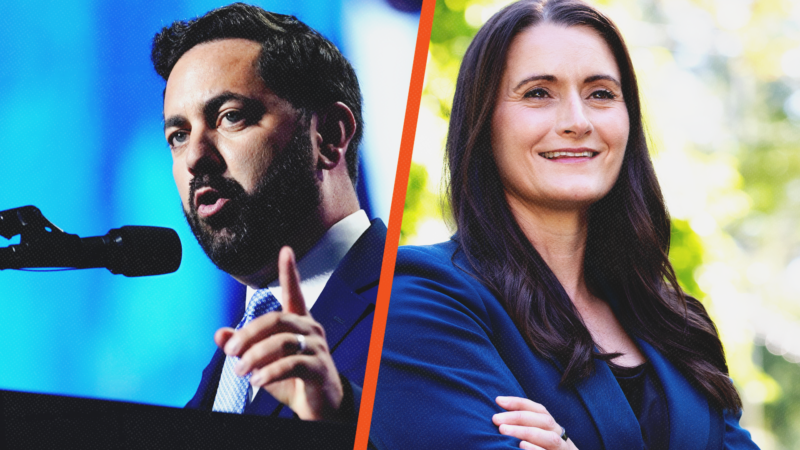
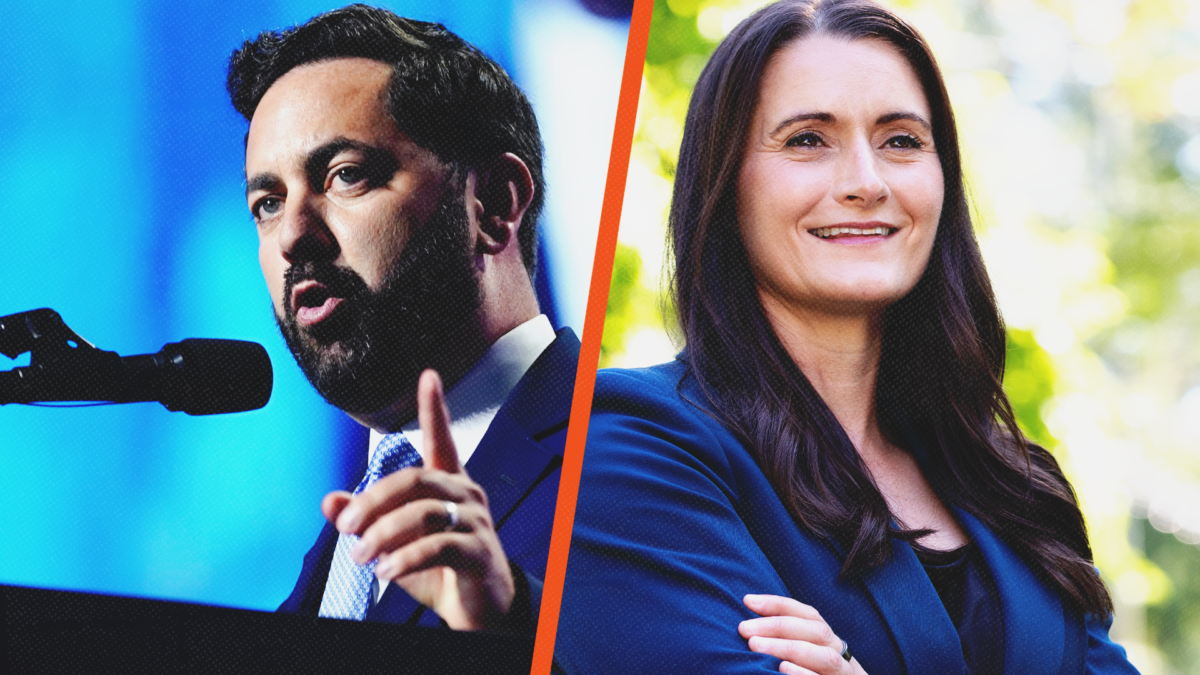
The Democratic Socialists of America (DSA) candidates running for the House of Representatives and endorsed by NYC Mayor Zohran Mamdani are all but guaranteed to win their general elections this November, but that does not mean the midterm drama is over in New York. In the state's 17th congressional district, which includes the lower Hudson Valley, Democratic challenger Cait Conley, a combat veteran who served on the Biden administration's National Security Council, could unseat incumbent Republican congressman Mike Lawler in one of the most consequential races of the midterms.
The highly contested purple district voted for former Vice President Kamala Harris in the 2024 election while reelecting Lawler for his second term. Now, Lawler is attempting to win a third term as support for President Donald Trump wanes ahead of the midterms. As of Friday, The Cook Political Report lists the race, which could determine control of the House, as a toss-up.
If elected, Conley would have far more in common with the "Badass Women" coalition of security state and military veterans than with DSA types (think more Sen. Elissa Slotkin from Michigan than Darializa Avila Chevalier). As Judge Street Journal's Timmy Facciolanotes, "Conley's candidacy is testing the viability of a tactful centrism that rebukes left-wing positions like abolishing ICE or restricting weapon shipments to Israel." Lawler is also vying for moderates, pitching himself as "one of the most bipartisan members of Congress" and emphasizing his willingness to break with Trump occasionally while still welcoming Trump's support.
While Lawler and Conley certainly are not pure MAGA acolytes or DSA members, both have leaned into a tech-critical position, much like that of more radical populists like Lina Khan or Steve Bannon, revealing how pervasive anti-tech sentiment has become in mainstream politics.
This tech skepticism was on full display during an October 14 debate, when each candidate made the case for why they were the most equipped to regulate AI, insisting that the industry needs guardrails.
Conley said members of Congress do not want to regulate AI because "they want to look out for their billionaire and trillionaire backers like Elon Musk, who is pouring over $260 million into this midterm election." She then added that Musk backed Lawler in his 2024 race.
Lawler then accused Conley, who previously consulted for Primer AI, of being "the AI candidate for the AI industry."
While Lawler and Conley disagree on specific data center regulations (Conley supports Democratic Gov. Kathy Hochul's data center moratorium while Lawler supports local zoning control over data centers), neither wants to pitch themselves as an explicitly pro-data center candidate. During the debate, Conley claimed that, "On Mike Lawler's watch there have been five data centers built in Rockland County." Lawler has said that he had no say in the decision to build the data centers, and during the debate, he pointed out that the facilities were built for financial services. Lawler also attempted to attack Conley over data centers, slamming her in an ad for saying "we need data centers." Regardless of the candidates' specific policies on data centers, their attacks on one another demonstrate that cheerleading hyperscale data center development is a political liability. In their district, data center has presumably become a dirty term.
The candidates' tech-skeptical rhetoric did not end with unchecked data center development. After the debate, Reason asked both candidates about their positions on age-verification laws for social media and AI, since such regulations raise significant privacy and censorship concerns by age-gating the internet. Unsurprisingly, both Lawler, who votedfor the controversial KIDS Act, and Conley, who has proposed stricter age verification for AI tools, parroted platitudes about why such online safety regulations are necessary to protect children.
"We have watched how social media is literally hurting the mental health of children," Conley told Reason. "And when you talk about the power of AI and what that power could do, we have to regulate this."
Lawler gave a similar response, telling Reason that he respects free speech but that protecting children "is paramount."
This bipartisan consensus over social media regulation has long been brewing in Congress. The mainstream political conversations about AI and data centers, however, are relatively new this midterm election cycle. And it appears both Lawler and Conley have figured out which way Americans' sentiment toward AI is leaning, and they have waged their campaigns accordingly.
She promised a radical new technology—bloodwork performed in a countertop-sized machine from a single droplet taken from your finger. She was young, photogenic, and self-possessed; she dressed like Steve Jobs. Her invention would disrupt the $60 billion bloodwork industry, bringing cheap, frictionless health monitoring to the masses. Or it would have, if it worked. Holmes was convicted of defrauding investors of nearly $500 million; she's currently serving an 11-year prison sentence. Holmes has been written about extensively, and her story was turned into an Emmy-winning Hulu series starring Amanda Seyfried. She is an avatar of Big Tech mendacity, a cautionary tale as much as a person.
Everyone knows the story. You would think there is nothing left to say. But you'd be wrong.
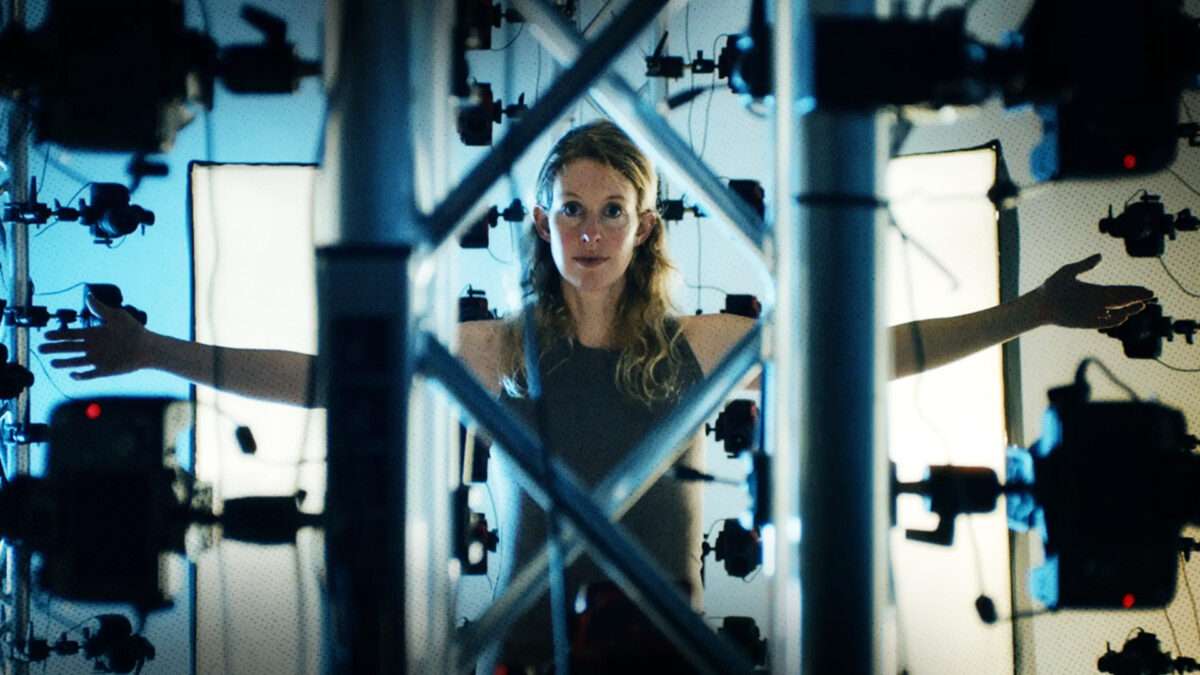
Just before she entered prison, Holmes invited documentarians Nathan Fielder and Lance Oppenheim to live with her, her boyfriend Billy Evans, and their two young children in their beachfront San Diego rental unit, promising them full access, complete transparency. The result is this year's most entrancing documentary, You Can See Everything. When the camera captures Billy in the shower, the movie delivers on its titular promise; you, uh, really can see everything.
Yet what you cannot see is who Holmes really is. The mystery of the era's most famous fraudster is the movie's central riddle: Is she cynical, calculating, a stone-cold liar and psychopath? Or is she something stranger—a damaged and delicate person who genuinely believes her lies, or at the very least, genuinely believes the stories she tells herself to justify those lies after the fact?
Fielder and Holmes seem uncertain themselves; the movie is, in part, their own attempt to wrestle with their own ambivalence, their own inability to come to a conclusion. It's a hall of mirrors about the infinite unknowability of a person, even given unfettered access.
The documentarians do not absolve her of her villainy; the movie is not an attempt to excuse her fraud or build a case for her innocence. But they offer something exceptionally rare in this era of simplistic hero and villain narratives: genuine and deeply felt empathy for someone on whom the culture (not to mention the legal system) has cast final judgment. In the process, they have given us one of the strangest, most unsettling, and most poignant films of the year. You Can See Everything is a small miracle of a movie.
It's sometimes said that the most compelling villains don't believe themselves to be villains. They have an internally coherent story to tell that excuses their actions, makes them the heroes in their own minds. Fielder and Oppenheim have given Holmes, and viewers, the gift of allowing Holmes a measure of psychological complexity. You don't see into her mind, because that's impossible. But you see that the story she tells herself is different from the story the world tells us about her. It's surprisingly kind and generous; it's also tricky as hell—to the point where you, the viewer, might wonder if you're the one being tricked.
Halfway through, the movie takes a meta-turn that I won't spoil, entering into high-concept territory in an attempt to more deeply explore what art and images can reveal about a human psyche. It's formally audacious, often funny, and actually justifies the three-hour running time. I've never seen anything quite like it.
The exercise left me just as unsettled as the documentarians seem to be themselves; uncertain about Holmes and her motives, and nearly as uncertain about Fielder and Oppenheim, two talented filmmakers who appear to be questioning not only the nature of their chosen form, but of reality, especially psychological reality, themselves. There are times when You Can See Everything borders on magical realism, except the magic comes from the complexity of human nature and storytelling, as if Gabriel García Márquez had written a story about a man with a camera that could see into souls. It's dizzying, dazzling, a sort of postmodern Rashomon of perspective shifting.
As I left the theater, in something of a daze, I found myself thinking of a line from the great Saul Bellow novel The Adventures of Augie March, "Nobody should be a mystery intentionally. Unintentionally is mysterious enough." In the case of Holmes, it's impossible to tell which it is. All we can say is this supposedly one-note Big Tech villain, like perhaps everyone, is better understood as some kind of mystery, even to herself.
TSMC expects overseas manufacturing to reduce its consolidated gross margin by nearly two percentage points in 2026, with the impact widening to three to four points later in its expansion program. The company plans to spend $60 billion to $64 billion on capital expenditure this year. Its latest outlook calls for fourth-quarter revenue of up […]
Tech platforms pillage public-interest journalism for profit. But we have leverage as they sow the seeds of their own downfall
Carine Fouteau is president and publishing director of the French investigative news outlet Mediapart
Big tech companies pose an immeasurable threat: socially, politically, militarily and ecologically. They are also causing a profound crisis of information. The tools they design now serve as weapons of mass destruction against democracy. There is so much at stake that an urgent and broad mobilisation is required.
From the harvesting of personal data and the weaponisation of public opinion, to the destruction of jobs, the infringement of civil liberties and environmental damage, ordinary citizens are the main victims of this predatory economy – an economy with an agenda that aligns with the interests of the planet’s most authoritarian and reactionary states.
Carine Fouteau is president and publishing director of the French investigative news outlet Mediapart
Mediapart is hosting Hacking Big Tech, a public event about technology, AI and democracy in partnership with the Guardian, in Paris on Saturday 17 October 2026. The conference will be live-streamed free on Mediapart’s website, app and YouTube channel and can be accessed herefrom 1pm CEST on 17 October
The Australian government has introduced its digital duty of care legislation to parliament today. The bill includes an “off switch” to allow social media users to opt out of recommender algorithms. If passed, Australians could choose to switch off their algorithmic recommendation and consume a news feed populated by the accounts they subscribe to. It’s […]
JPMorgan Chase CEO Jamie Dimon sees enormous potential for AI but has warned about its cybersecurity risks.
Luke Johnson/Bloomberg/Getty Images
Jamie Dimon says AI is advancing so fast that even governments can't stop its global spread.
The JPMorgan CEO likened AI to a tsunami, saying it could transform how future generations live and work.
Dimon also warned that AI agents could expose banks and critical infrastructure to cyber risks.
Artificial intelligence is advancing so rapidly that even governments would struggle to stop its spread, JPMorgan Chase CEO Jamie Dimon said.
Speaking at The Economic Club of Chicago on Wednesday, Dimon compared AI to the Industrial Revolution but said it was advancing far faster than earlier technologies, with new capabilities emerging in a matter of weeks.
"This is doing stuff today that no one would have imagined was possible literally five weeks ago," Dimon said.
"It's more like a tsunami. It's rolling through the system, and you can't stop some of it," he added.
With AI models proliferating worldwide, including open-source systems and those developed in China and other countries, governments cannot simply halt the technology's spread, Dimon said.
The acceleration comes amid an unprecedented AI spending boom. Google, Amazon, Microsoft, and Meta planned to spend more than $700 billion on capital expenditures this year, much of it on AI infrastructure.
Dimon, too, was optimistic about the potential payoff. He said AI could drive breakthroughs in medicine, transportation, and productivity, transforming how future generations live and work.
"Thirty years from now, they'll probably be working four or three and a half days a week. They'll have an income of per person of $300,000. It'll be a great life," he said.
However, Dimon also warned that AI agents could carry out cyberattacks around the clock or pose security risks when given access to bank accounts to make payments on users' behalf.
"That means they are in your bank and you're assuming they're going to act properly on your behalf and they may not," Dimon said.
He said businesses and governments needed to move quickly to address the cybersecurity risks posed by AI.
"You can't stop it. You just have to, like, manage the hell out of it."
Dimon's statement comes the same week that multiple bankers sounded warnings about rogue AI agents and their capacity to unleash chaos if allowed to proliferate unchecked.
Bank of America CEO Brian Moynihan also told analysts in a Wednesday earnings call that the institution had hired 1,000 external consultants to shore up software vulnerabilities that top tier models like Anthropic's Mythos exposed.
Attendees at OpenAI's DevDay conference on September 29, 2026.
Minh Connors/Bloomberg via Getty Images
OpenAI's Alexander Embiricos said the AI era gives a choice: work more, or work less.
He's in charge of Dots, the company's new always-on work assistant.
AI is often pitched as freeing up time. Embiricos responded to the idea that it might add more work.
As the competitive AI race pushes tech workers into long hours, the head of OpenAI's new Dots product says AI gives people another option: work a whole lot less.
Alexander Embiricos, who leads OpenAI's enterprise product and helms the new Dots agent tool, told a crowd at TechCrunch's Disrupt conference on Thursday that AI's capabilities have created something of a fork in the road for workers. You can grind to meet the moment. Or you can use AI to kick your feet up a little.
"We basically have a lot more choice now," he said.
Embiricos made the comments after a reporter asked about when AI systems will actually deliver more free time. The reporter shared an anecdote where an OpenAI employee used a ChatGPT mobile feature to work in their car and on a plane — not exactly liberated by the new tech.
Embiricos said that the moment has already arrived where a worker can "outsource" tasks to AI and do less work. Then again, some people are so excited about AI's potential that they feel like it's an "interesting, ripe moment" to put in extra hours.
"I think that's why a lot of people are motivated to work very hard right now. That includes myself," he said. "But I think actually there is this choice, and there's totally this other setup where you could delegate a ton more things."
OpenAI is billing its Dots tool as a workplace assistant, always on and capable of proactively handing tasks and sorting to-dos. Embiricos uses his Dot often in Slack, he said, engaging on various threads.
His perspective illustrates how early companies are in their journey to adopt AI tools. Most companies have not yet automated their work tasks, and many workers are still debating how much to use the tools. Early AI adopters, meanwhile, can sprint through some work that used to take days or weeks, especially in software engineering.
Embiricos summed up the situation he feels workers are in: "You either choose: do you expand the ambition of what you can do, or do you do less? I do think we're there."
Have a tip? Contact this reporter via email at scouncil@businessinsider.com, or over text, Signal, Telegram, or WhatsApp at 415-757-8198. Use a personal email address, a non-work WiFi network, and a non-work device; here's our guide to sharing information securely.
The agreement will allow CNN to receive compensation for the use of its intellectual property.
On Thursday, U.S. television network CNN announced an agreement with technology company Google to integrate generative artificial intelligence technologies into its news platforms.
“With this partnership, we are opening new avenues for audiences to access CNN’s exceptional journalism while receiving compensation for the distribution and use of our exclusive intellectual property in connection with AI products,” stated Sam Felix, senior vice president of Strategic Partnerships and Business Development.
The agreement will allow the use of experimental features designed to analyze and enhance audience engagement by exploring new ways to consume and distribute journalistic content.
“Google’s innovation in generative AI has transformed the way people discover information and content, and these tools will now help us explore new ways to be discovered and connect with audiences,” Felix added.
Of course, The Jakarta Globe asked me how I see AI tools influencing newsrooms — both in terms of opportunities and risks.
The U.S. network explained that its partnership with Google is part of the company’s AI strategy, “which ensures the protection of its intellectual property.”
The agreement is also part of a broader pilot program by the technology company to incorporate its AI technology to drive traffic to media outlets.
“CNN’s deal comes months after it sued Perplexity AI for copyright infringement after both companies failed to reach a licensing deal, its first legal case against an AI company over the unauthorized use of its journalism. At the time, a CNN spokesperson said the network ‘actively embraces the opportunities AI creates,’” Variety recalled.
“It also reflects the impact Google’s AI summaries in its search engine have had on news organizations, many of which have highlighted how the responses have eaten into their web traffic. Penske Media Corporation, the parent company of Variety, The Hollywood Reporter, Rolling Stone and more, sued Google last year over the decline, though a federal judge dismissed the case earlier this month,” it added.
An international team of researchers has identified that cabergoline—a drug used to halt the production of breast milk—may reduce the risk of breast cancer when administered at the end of the lactation period. The findings, published this Thursday in the journal Cancer Discovery, combine evidence from animal models with an analysis of the medical records of more than 150,000 women in Spain and Norway.
The research involved scientists from several countries, including specialists from the Cancer Research Center in Salamanca—a joint facility of the University of Salamanca and the Spanish National Research Council (CSIC).
In studies involving mice, the researchers found that a dose of cabergoline administered at the end of lactation reduced the proportion of animals that developed breast cancer by approximately half. The models used carried mutations in the BRCA1 and TP53 genes, which are linked to DNA repair, the elimination of damaged cells, and aggressive forms of the disease.
According to the team, the drug reduced potentially precancerous tissue, decreased the ductal area, inhibited cell growth, and increased the presence of immune cells involved in defending against tumors.
The study focuses on mammary involution—the natural “clearing” process that occurs after weaning. During pregnancy, hormone levels rise and milk-producing structures branch out; once lactation ends, these cells are no longer needed, and the breast eliminates the excess tissue.
“It’s like a fruit tree; in spring and summer, the breast develops branches and produces flowers and fruit, but when involution occurs—which is the mammary equivalent of winter—the structures required for pregnancy and lactation are reset in preparation for the future,” explained Christopher Maxwell, a professor at the University of British Columbia’s Faculty of Medicine in Canada and a researcher at the BC Children’s Hospital Research Institute.
💊Un fármaco podría reducir el riesgo de #CáncerDeMama postparto
🔬Cabergolina se receta para frenar la lactancia tras el parto
👩🔬@ciccancer muestra en ratones que reduce los tumores
The text reads, “A drug could reduce the risk of #BreastCancer postpartum. Cabergoline is prescribed to halt breastfeeding after childbirth. @ciccancer shows in mice that it reduces tumors. A trial will evaluate its efficacy in women after stopping breastfeeding”
The researchers discovered that in mice with mutations in the BRCA1 and TP53 genes, this cleanup process can remain incomplete. In such cases, cabergoline appears to help complete the involution process following weaning.
To explore the effect in humans, the team reviewed medical records from Spain and Norway, focusing specifically on young women in the years following pregnancy. In total, the studies included data on the use of cabergoline in more than 150,000 women.
The results showed that women who received the drug to suppress lactation after childbirth—whether due to a medical recommendation, following the loss of a pregnancy, or because breastfeeding was not possible for medical reasons—had an approximately 70 percent lower risk of developing breast cancer compared to those who did not take it.
This association was observed in women under the age of 50 during the years following pregnancy—a period when the risk of this disease can increase.
Cabergoline is a prescription medication used only when medically necessary to stop milk production. It is not currently approved for the prevention of breast cancer; therefore, the authors emphasize that these findings should not be interpreted as a recommendation for its use as a preventive measure.
The next step will be a prospective clinical trial involving women who will receive the drug only after breastfeeding has ended. The goal is to determine whether cabergoline might, in the future, offer a less aggressive alternative to current preventive measures against breast cancer, such as surgery or hormone therapy.
#Science | A new Science special feature is putting the spotlight on major gaps in women’s health research beyond reproduction, from chronic pain and menopause to sex chromosomes and the immune system.
Researchers say significant gaps remain in understanding how diseases affect… pic.twitter.com/NXoaaRa3h5
“We have fallen into habits that are steadily deskilling the human body,” writes Melanie Challenger. “This is a strange turn of events for an animal whose success comes mostly from the extraordinary ability to learn through experience.” For Aeon, Challenger explores how modern technologies, from GPS to AI, are eroding our body’s physical skills by replacing the embodied experiences through which we learn.
After all, the brain is itself a physical organ, continually shaped by what the body does and encounters. Once we decide that the mind is the real human and the rest of the body only hardware, it becomes easier to disregard the physical work, including the neurocognitive work of a biological brain, through which we move, find our way, put thoughts into words, and recognise our own needs. A machine may do some of that work faster, but each act it takes over is one that the body no longer performs and that the body, including the brain, no longer learns through. The irony is that a project motivated by the desire to overcome bodily fragility is helping to produce more fragile bodies.
America’s coming revolution in warfare may not mean fighting fewer wars but fighting more of them without putting Americans on the battlefield. Taking Americans out of the fight When US Defense Secretary Pete Hegseth launched Project Meridian on September 30, he presented it as an exercise in imagining warfare decades into the future. Led by […]
With Washington turning against military aid, a new bilateral framework could take shape based on industrial output and tech integration, but politics will still shape Jerusalem's access to arms
Above the rain-soaked streets of Warsaw, the observation deck of the Varso tower overlooks Joseph Stalin’s gift to Poland that has divided opinion for decades.
For some, the Soviet-era Palace of Culture and Science is a drunk confectioner’s nightmare; standing as a relic of oppression that should have been demolished. For others, it is an icon on the skyline and a monumental warning from history.
Throttling of mobile internet system will affect Kyiv’s air defences more than its strikes on oil refineries. Now Zelenskyy must be hoping that US intel holds
In Ukraine the situation was already jittery enough. Donald Trump has been inventing ceasefires and buying Russian diesel to shore up his flagging popularity, while a sinister new wave of faster, jet-powered drones are breaking through Kyiv’s stretched air defences. Casualties are rising as the weather turns.
Overnight, Russia bombed three power plants that supply Kyiv, aiming to cut off heating and electricity to the city. According to the president, Volodymyr Zelenskyy, for a second night in a row no warning came from Ukraine’s western allies of the incoming ballistic missiles – and so no air raid alert was issued.
We've reached the point in techno-dystopia where autonomous humanoid robots are out assaulting girls in the street—or so somecoverageof a recent incident in Cologne, Germany, might have you believe. But dig into what really happened, and it's human actions that appear more worrying.
For dystopian police-state flavor, we've got Cologne cops warning that simply commenting about this on Facebook in an unapproved way could be criminal. Without specifying exactly what kinds of comments are off limits or what law might be broken, the North Rhine-Westphalia Police of Cologne (Polizei NRW Köln in German) warned that social media comments about what happened could cross the line and potentially be a criminal offense.
Then there are the humans who were operating the robot that made lewd gestures at passersby and stands accused of grabbing the butt of a 16-year-old girl on a city street in Cologne around midnight. From the looks of things, the humans—not some artificial intelligence system—were in control.
This doesn't appear to be a case of an AI humanoid robot going rogue and getting pervy, but some teenagers engaging in a performance or prank that may have gone too far.
I say may here because it's not entirely clear what happened. There is video footage showing the robot—dressed in gold chains and a fake mustache like some sort of 1980s sleazeball—thrusting in a sexual manner and making jerking-off gestures in front of people gathered on city sidewalks. (Some of them appear annoyed or alarmed; some laugh.) But none of the videos that I could find clearly show any groping. We do see the robot bumping into people, but it's not entirely apparent what was touched or how purposeful these collisions were.
Maybe the alleged "sexual assault"—which is technically the correct term for a nonconsensual butt grab, I guess, but still seems a bit too strong—was totally intentional. Or maybe this is a case of clumsily controlled technology brushing against someone in a way that felt violating but was nonetheless an accident.
What appears to be beyond a doubt is that the robot was being made to engage in lewd gestures, which were played for laughs by teenagers (one 16 and one 19, according to police) who were filming these encounters and posting them to social media.
Is it a crime to make your mustachioed robot thrust its pelvis at passersby?
We probably don't want sleazebots just going around making obscene gestures in public, whether of their own volition or controlled by humans. But, in the U.S. at least, sexual harassment requires some things beyond just making a crude gesture. Laws vary by state, and by the context in which the alleged harassment takes place, but it generally has to be pervasive, severe, or carried out with a specific intent. I don't think this robot's actions would qualify (though there are perhaps other charges that could be brought, involving disturbing the peace or something like that).
But I wish people would chill out with the breathless coverage that attempts to make this into some sort of super grave and alarming incident. If it turns out these two teens did deliberately instruct their robot to touch a girl's butt, that's certainly not OK, and should be dealt with in whatever manner we might deem just if a teen did so directly. But we're not looking at rogue robots attacking girls on the street, or at teenagers cruelly directing their tech toy to seriously sexually assault someone while they filmed it. At worst, we're looking at a livestreamer stunt that was in poor taste, not the imminent coming of robot rape squads.
And setting aside the alleged violation of bodily autonomy—which may or may not have been intentional—the other antics of this robot are kind of funny? Can I say that? I don't think we want to create norms where it's OK to take a robot dressed like a movie pimp out on the streets and have him make sexual gestures at people, but…I laughed. Don't tell the German police.
In The News
A woman named Carli Heller was arrested for telling Anthropic's Claude that she was going to shoot up the sheriff's office in Lee County, Florida. Anthropic notified the FBI, which notified local authorities, and she was arrested for making a threat of mass shooting or terrorism, a felony.
"Heller's is at least the third case in the U.S. since August in which messages typed to an Anthropic chatbot ended up with the police, following incidents in San Antonio and San Francisco," reports Devin Pavlou at Straight Arrow News:
The cases raise questions about how private chatbot conversations are, when companies can hand them to police without a warrant, and whether words typed to a machine can be a crime. Eugene Volokh, a First Amendment scholar at the Hoover Institution at Stanford University, told Straight Arrow he doubts they can in this case.…
In the past, Florida courts have required proof that a person meant to threaten or knew the message would be viewed as a threat, according to Volokh, who has taught law for 30 years. He said a jury is unlikely to find that beyond a reasonable doubt.
"I doubt that this is a punishable threat, unless there is evidence that the woman subjectively realized at the time that the message would be communicated to a human being who would perceive it as a threat," Volokh said.
Heller's lawyer, Scott Moore, "said he plans to challenge whether a chatbot message can be a written threat under Florida law," adds Pavlou.
On Substack
Tara Burns has a good/infuriating roundup of recent "sex trafficking" busts that involve no trafficking charges and in which police just charge people with prostitution and seize their cash. Here's just one of multiple examples:
On October 6, Virginia Beach police announced the results of a months-long human trafficking investigation that culminated in September 24 raids on four massage businesses and a residence. Police said their surveillance showed several women living together and traveling between their home and massage businesses. Apparently, when Asian women work and live together it warrants the attention of the ICE led Hampton Roads Human Trafficking Task Force.
Three apparent sex workers (Xiaochung Peng, Xiaoqin Wu, and Ping Zhang) were arrested on charges involving maintaining a bawdy place, aiding prostitution, and using a vehicle in the commission of a crime. Police seized $55,085, four vehicles, phones, computers, and a security DVR.
No trafficking charges were announced, and police did not report identifying a trafficking victim.
Follow the Money: This investigation involved at least seven law enforcement entities, including two SWAT teams, federal investigators, and a federally funded, ICE led regional human trafficking task force.
Burns also points out that new anti-trafficking grant money from the Department of Justice's Office for Victims of Crime gives priority treatment to programs that support immigration enforcement.
"To help meet its mission, OJP may give priority consideration to applications proposing … projects designed to advance" five particular goals, including "directly supporting law enforcement operations (including immigration law enforcement operations)," it says.
Read This Thread
Does algorithmic pricing for apartment rentals cause people to pay higher rent? It's how this technology is used that determines whether outcomes are fair and beneficial to consumers, or potentially harmful, as Eliza Terziev and I write @ReasonFdnhttps://t.co/ai1p7J6X5z
• News you can use, if you are someone with a robot kink: Meta's AI agent, Muse, can sext. "While pornographic interactions may not be what users expect from Muse's cuddly mascot, Meta says that X-rated conversations are allowed and don't go against its guidelines," reportsWired.
• The latest COYOTE Rhode Island podcast takes a deep look at the disconnect between rhetoric surrounding anti-trafficking policy and how that policy works in practice—how "state surveillance, carceral feminism, and these policies that just loudly claim to save people are often resulting in measurable catastrophic harm."
• "It wasn't all that long ago that if The New York Post published photographs of an aspiring congressman wearing a leather collar and a chain-link leash, his campaign would have immediately been over," writes Lux Alptraum in The New York Times. "Yet that doesn't seem to be the case for Chris Gallant, the gay, gun-toting former Black Hawk pilot who's running for Congress on eastern Long Island. He still may not win, but these photos alone haven't sunk his chances."
• Sarah Hepola's The Only Thing There Is to Want is "a super fun book line by line," writes Phoebe Maltz Bovy, "but here's one of the best: 'Just what every young man wants in bed: Mrs. Robinson, crying.'"
• When you think of countries that have thrived in the tech sector, Finland might not be the first that comes to mind. But for a while, the Finnish company Nokia dominated the cellphone market. "What happened to this brand, the pride of Finnish enterprise and perhaps the defining commercial contribution of a small, isolated, but determined nation?" Arena mag asks (and answers).
• Derek Thompson interviews Daniel Cox about this new book, Generation Uncoupled. "The book argues that problems with dating and romantic partnership are downstream from the decades-long deterioration of American social and civic life," says Cox. "To the extent that we're experiencing a romantic recession, it is a symptom of this broader problem of social disconnection."
Back in 1983, the Supreme Court declared that "a person traveling in an automobile on public thoroughfares has no reasonable expectation of privacy in his movements from one place to another." That increasingly doubtful proposition underpins a nationwide network of more than 144,000 AI-assisted cameras that track the travels of innocent motorists across the country billions of times each week.
So far, state and federal courts have almost uniformly rejected constitutional challenges to automated license plate readers (ALPRs) installed by companies such as Flock Safety. But in a decision that could signal a shift in the legal treatment of Flock cameras, a federal judge in Oklahoma recently recognized that they enable "a type of indiscriminate mass surveillance."
ALPRs are much more sophisticated than the technology that the Supreme Court considered in 1983, when it approved the warrantless use of a radio transmitter that helped police tail a suspected methamphetamine manufacturer's car. Three decades later, by contrast, the Court said police should have obtained a search warrant before attaching a GPS tracker to another drug suspect's car.
The majority opinion in the latter case emphasized the physical intrusion necessary to install the tracker. But five justices embraced an alternative rationale, saying GPS tracking impinges on reasonable expectations of privacy by revealing potentially sensitive information about the target's historical whereabouts.
That theory came to the fore in a 2018 case involving mobile-phone location data collected by cell sites, which the majority said implicated the Fourth Amendment because "individuals have a reasonable expectation of privacy in the whole of their physical movements." The Supreme Court reiterated that principle this year, extending it to data collected by Google's Location History feature.
"An individual has a reasonable expectation of privacy in records about his cell phone's location," Justice Elena Kagan said in the majority opinion, "and police intrude on that constitutionally protected interest when they demand the information." By similar logic, U.S. District Judge Sara E. Hill concluded this month in the Oklahoma case, people have a reasonable expectation of privacy in ALPR records, and police therefore generally need a warrant to search them.
Those databases include "information about all vehicles that pass by any network-connected camera at all times," which police can peruse "on demand," Hill noted. "Freedom from persistent, dragnet-style surveillance while in public is not a foreign concept in our society, and it is a reasonable expectation that society already accepts," as reflected in the Supreme Court's cellphone decisions.
Like cars, cellphones "move in public places where people can see you in plain view," Hill wrote. "But it becomes constitutionally problematic when law enforcement can indiscriminately and passively catalog your whereabouts over an extended period of time and then use that information for any purpose whenever convenient."
At this point, Hill's decision is an outlier. "It appears that nearly every court examining the issue to date has determined that ALPR technology use is not a search under the Fourth Amendment because people have no reasonable expectation of privacy in their movements on public streets," she noted.
Last month, for instance, a federal judge in California held that ALPR database searches are "clearly distinguishable from and less extensive than the 'near perfect surveillance' achievable" with cell-site or Location History data. And the day after Hill's ruling, a state judge in California rejected a challenge to San Jose's Flock camera network, saying "there is no reasonable expectation of privacy in license plate data collected from cameras directed solely at public streets."
A federal lawsuit involving the same city's ALPR system, which the Institute for Justice filed last April, is still pending. So are challenges to Flock cameras in cities such as Wichita, Kansas, and Norfolk, Virginia.
Even when they reject such lawsuits, courts commonly acknowledge that the legal picture could change as the number and capabilities of ALPRs multiply. If so, it seems likely that Hill will eventually be joined by other judges who recognize the perils of "indiscriminate mass surveillance."
TEHRAN, Oct. 14 (MNA) – The head of Atomic Energy Organization of Iran (AEOI) says that the country’s capabilities in nuclear science and technology are rival to those of the developed countries, showing Iran’s eye-catching progress in this field.
The debate over artificial intelligence has settled into a familiar rhythm. Will large language models eventually wake up? Do they possess an inner life, or are they merely sophisticated mimics of human output? Researchers disagree, and so do philosophers. A 2025 survey of 582 AI researchers asked how likely it is that AI systems with […]
The International Monetary Fund warned Tuesday that the global economy faces serious risks from Big Tech firms taking on massive debt to fund the buildout of artificial intelligence data centers worldwide. The IMF’s latest Global Financial Stability Report outlines a number of risks to economic growth in the coming years, including a reliance on AI […]

 Login