❌

Reading view

My 2 friends and I had babies within 3 weeks of each other after 25 years of friendship. Our group chat became a lifeline.

Three people stand arm in arm outdoors, raising wine glasses toward a tree-lined landscape at dusk.
The author (center) has been friends with two women since their years together at boarding school. Motherhood, she said, has brought them closer.

Courtesy of Shea Karssing.

  • Our friendship formed over questionable decisions, break-ups, hangovers, and, eventually, the messy business of becoming adults.
  • Then, three baby girls born in three cities over three weeks started a completely new chapter.
  • Our connection became our parenting lifeline, proving that the best friendships grow with you.

"What a night!" "I barely slept." "I don't even know what time I went to bed."

The same statements can have very different meanings in different stages of life. My friends and I used to worry about where everyone was at 2 a.m. Now, we worry about whether everyone's baby has pooped that day.

Laura-Kate (Lauks), Kirsten (Kirst), and I met 25 years ago at an all-girls boarding school in South Africa, then partied our way through university and early adulthood. For years, our biggest problems were nursing sore heads with painkillers and junk food, who was dating whom, where we were going that weekend, and whether anyone had taken a particularly unflattering photo.

Then, the three of us had babies all within three weeks of one another, reaffirming our bond and allowing us to evolve together in new and exciting ways I never imagined.

Three people wearing sunglasses smile in a sunny selfie on water with hills in the background.
The author (center) said that life took her and her friends in different directions, but motherhood helped them bond in a new way.

Courtesy of Shea Karssing.

Real adulthood happened

Lauks got pregnant unexpectedly, bravely navigating the challenges of being a semi-single mom with a husband who works abroad for up to three months at a time. In the same period, Kirst and her American husband settled in the US, and I was undergoing IVF treatment. We all had our own challenges.

Fast forward a bit, and Lauks told us she was expecting another unplanned surprise. It was a contrast to my own fertility journey, which had been a roller coaster of disappointments, including a failed embryo transfer. I was about to undergo a second transfer when she gave us the news over group text.

Lauks lives in a town about an hour from me. It happens to be on the way to my fertility doctor. On one drive home, soon after sharing her good news, I stopped to see Lauks to congratulate her. I was also six weeks pregnant at the time. I remember sitting there in the cafe trying to get the words out: "I'm pregnant." Cue the ugly crying.

Of course, my next phone call was to Kirst in the US. Little did I know that she had some news she was itching to tell me too. All three of us were pregnant at the same time.

The tone of our WhatsApp group changed immediately

After comparing and complaining about our pregnancy symptoms for months, one baby arrived, then another, then another.

We all arrived at motherhood differently, but we each welcomed a baby girl into the world within three weeks across three different cities (and two continents), and our friendship acquired an entirely new vocabulary.

We had once bonded over crushes, kisses, and hangovers. Now, we talked about latching, snot-sucking, and the intricate details of every strange rash. The conversations may have been less titillating, but somehow, they were even more intimate.

Our WhatsApp group became a kind of 24-hour maternal helpline. "Does this look normal?" Reply at 3 am: "Yes, unfortunately." We sent memes when we were too exhausted to form sentences. We celebrated first smiles and first rolls. We talked about periods, pimples, sex, husbands, and everything else that apparently becomes acceptable conversation once you've been friends for 25 years.

Then, the group chat blew up with more surprises

Earlier this year, Kirsten let us know that baby number two was on the way. This time, it was me bubbling over inside, dying to tell them that I had gotten pregnant naturally. In August, Kirst gave birth to a baby boy, and my baby girl arrived in September.

Although we haven't been in the same room since Kirst moved to the US three years ago, we remain as close as ever, if not closer. My girls are my cheerleaders, doulas, online health advisors, and a massive reason why I've stayed sane (enough) as a mother. They've shown me the power of long-term friendship and the ways women can lift each other up.

Three people wearing sunglasses ride in a speedboat leaving a wake across a wide lake.
The author said that distance doesn't keep her from staying connected to her friends and looks forward to seeing how their relationship continues to evolve over time.

Courtesy of Shea Karssing.

In another 25 years, we'll be in our 60s

I can't help but imagine what another 25 years will do to our friendship. We'll be in our 60s, and the kids will (hopefully) be fending for themselves out in the world.

Along with the gray hairs and wrinkles, our priorities will have probably changed once again. After the first 25 years, I've learned that the best friendships don't stay the same, they grow with you. So I know my besties will still be there for me, just with entirely new things to commiserate over, cry over, and kill ourselves laughing about.

Read the original article on Business Insider

  •  

Roman House Cut Into Rock Found with Its Own Ancient Pier From the Empire’s Last Centuries on Corsica

Anyone who wants to build a house on the waterfront at Meria, at the northern tip of Corsica, has to let archaeologists look underneath first. The rule comes from the island’s regional archaeology service (the DRAC of Corsica). It has just paid off. Working on the plot, a team from Inrap, France’s national institute for […]

  •  

Os “arruaceiros” no Porto: “Encostem-nos à parede”, dizem CDS e Chega

Ministro assegurou que “o Governo não vai ceder aos gritos que vêm da rua”; bandeiras da Palestina não resolvem habitação. O ministro dos Assuntos Parlamentares, Carlos Abreu Amorim, afirmou esta sexta-feira, que o problema da habitação “não se resolve com bandeiras da Palestina”, nem com tumultos e avisou que o Governo “não vai ceder aos gritos que vêm da rua“. As declarações foram feitas durante uma interpelação ao Governo agendada pelo PCP sobre a subida do custo de vida, na qual o deputado do CDS-PP, Paulo Núncio, trouxe ao debate a intervenção policial no protesto pela habitação no Porto, na

  •  

Uruguay Debuts Virtual Cards in Football Refereeing

The Uruguayan Cup tests a digital tool with which referees sanction fouls and enter incidents directly from the field. Photo: Clarin.

Uruguayan football introduced a new technology on Thursday night when referees replaced the traditional paper cards with an electronic device to show cautions and expulsions during a local match, although early tests have shown problems with visibility, according to local media reports.


Uruguayan football experienced a historic day on Thursday night with the appearance of virtual cards in the match that Nacional won 3-0 to Rentistas for the eighths final of the Uruguayan Cup, at the Gran Parque Central stadium.

During the game, the officiating team used the electronic device instead of the physical cards to signal bookings and sending-offs on the pitch.

RELATED: Argentina Introduces New Tournament and Rules for Football Professional League

The tool is designed to look like a mobile phone and has dedicated buttons to display yellow or red lights. Its main selling point is the automation of administrative work and allows referees to record every disciplinary sanction, substitution or incident in real time directly in the COMET sports management system.

That removes the need to take handwritten notes during the action and speeds up the digitization of the official post-match report.

La AUF (Asociación Uruguaya de Fútbol) presentó las tarjetas virtuales, un método que debutó en un duelo de Copa.

Este avance tecnológico permite agilizar y registrar de forma automática y digital al jugador amonestado.#Uruguay #Teconología #TVCDeportes pic.twitter.com/2tdfCI5OdN

— TVC Deportes (@TVCDeportes) October 16, 2026

Text reads: “The Uruguayan Football Association (AUF) introduced virtual cards, a method that debuted in a Cup duel. This technological advance allows the automated and digital recording of the player who has been reprimanded.”

Despite the logistical benefits, the virtual cards face technical obstacles in their first trial stages. The debut was initially scheduled for the match between Defensor Sporting and Plaza Colonia, but sunlight made it impossible to see the colors properly. Under the artificial lighting of Thursday’s night match, local media reports said the signal was still not completely clear from a distance.

What Comes Next

At present, the device’s fundamental value lies in its ability to streamline the collection and transmission of statistical data during the ninety minutes of a match. Authorities will keep evaluating its performance to try to correct the faults related to brightness and contrast.

If the required visual improvements are achieved, the technology could be adopted on a regular basis in the main categories of South American football, according to the source. No timeline for that decision has been announced.

Technology in refereeing has expanded steadily in recent years, with video review and semi-automated systems now common in major competitions. Most of those tools help officials make decisions, while this device focuses on communicating and recording them. The key test for the Uruguayan trial will be whether the cards are as easy for players and spectators to see as the paper ones they replace, since visible signals are central to how the game communicates discipline.

The technology carries obvious logistical benefits, because referees no longer depend on cardboards that can be dropped, lost or misread, and data flows directly into the official system while the ninety minutes are still running.

For the Uruguayan Football Association, the real value of the tool lies in how it optimizes the collection and transmission of statistics. Every booking, substitution and incident becomes part of a digital record the moment it happens, a change that could improve accuracy in reports that have long depended on memory and hurried notes.

  •  

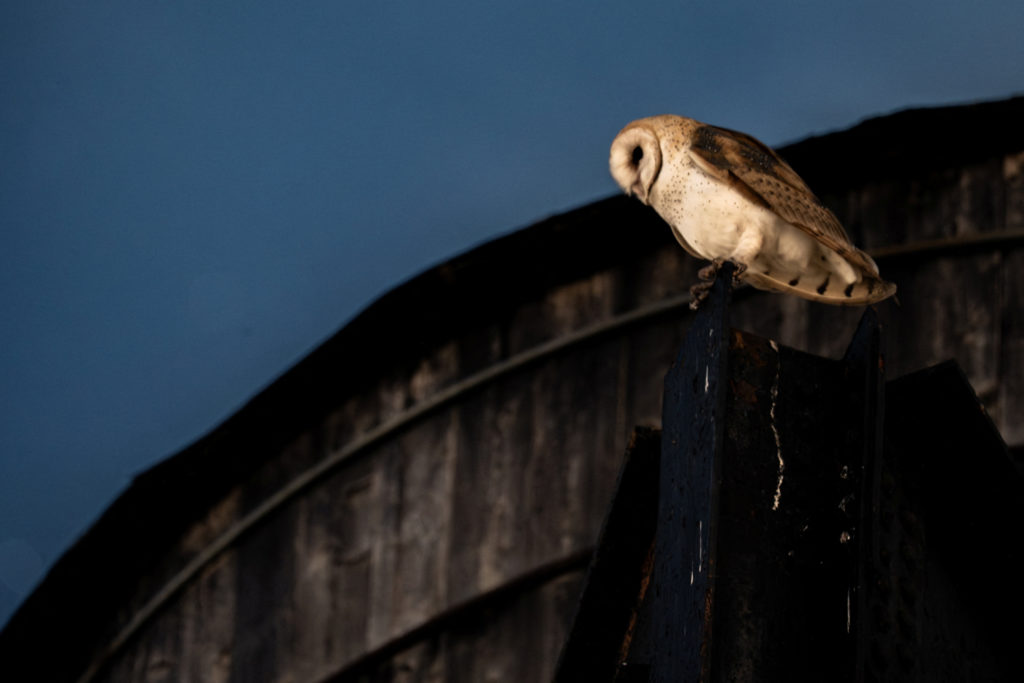
A rare family of barn owls moved into Manhattan's Upper West Side, captivating New Yorkers

This is the first documented instance of barn owls nesting in Manhattan in modern history, according to one expert, and the owls have attracted nightly crowds of people in the street eager to get a glimpse of the elusive birds.

  •  

Nepal Estimates Flood Losses at 10% of GDP After Himalayan “Tsunami”

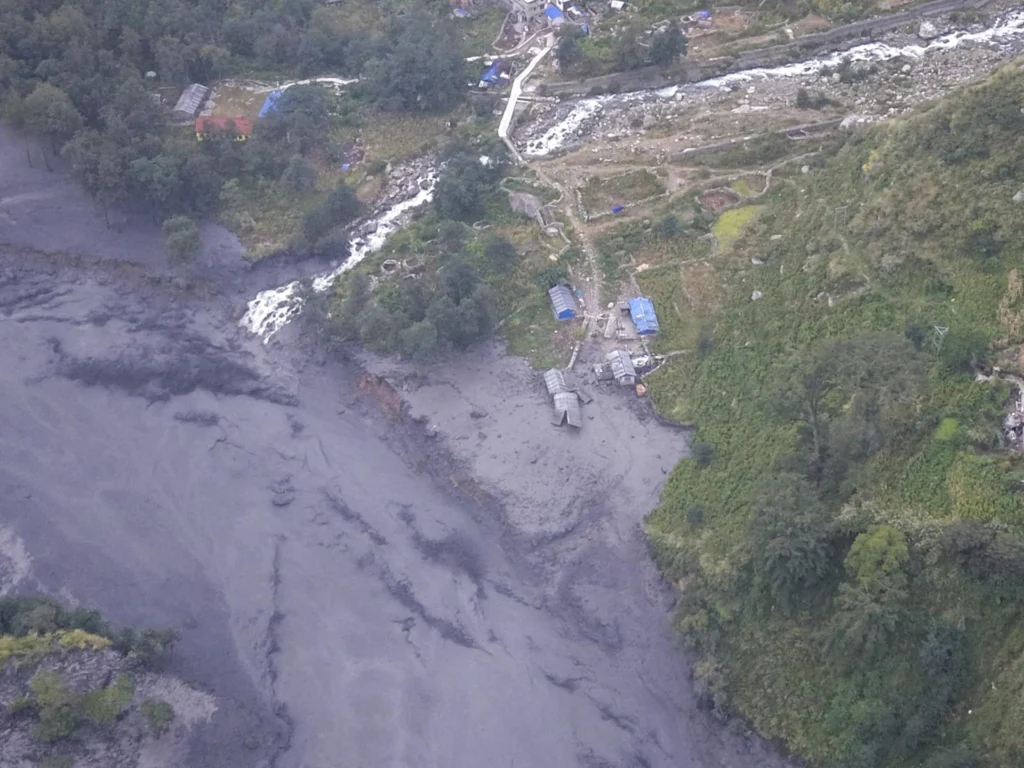
The floods, known as the "Himalayan tsunami," left severe destruction in essential infrastructure, hydroelectric projects, croplands, fishing ponds, food reserves, and agricultural infrastructure across the country. Photo: EFE.

Nepal’s government reported that the August 26 flood destroyed 10 percent of the country’s gross domestic product, with damages and losses exceeding $2.7 billion, as Finance Minister Swarnim Wagle sought international funding to rebuild.


Nepal’s government said that the August 26 flood, dubbed the “Himalayan tsunami,” caused physical damage worth $1.8 billion and additional economic losses of more than $900 million, equivalent to about 10% of the country’s Gross Domestic Product (GDP), as it seeks international financing for reconstruction.

Finance Minister Swarnim Wagle presented the estimates on Thursday at a press conference at the Foreign Correspondents’ Club in Bangkok, on the sidelines of the annual meetings of the International Monetary Fund (IMF) and the World Bank.

RELATED: Nepal River Surge Destroys 40 Homes, Leaves Five Missing

Wagle is seeking international funding for rebuilding and for measures to “avoid or mitigate the impact of future disasters.”

Nearly seven weeks passed between the disaster and Thursday’s accounting. The flood struck on August 26, and the assessment Wagle presented in Bangkok represents the government’s formal reckoning of the economic damage it must now confront.The floods left more than 1,500 people dead and 6,000 missing, causing severe destruction of essential infrastructure, hydropower projects, farmland, fish ponds, food stocks and agricultural infrastructure across the country.

Flash floods along Nepal’s Budhi Gandaki River swept away homes and bridges, forcing residents to flee to higher ground.

Five people are missing, and six have been rescued, authorities said. pic.twitter.com/wv7zilln7C

— Al Jazeera English (@AJEnglish) October 12, 2026

Rebuilding at Higher Cost

Wagle said Nepal does not intend merely to “replace what was destroyed, but to build better,” with more resilient infrastructure. He said that approach will raise the cost of reconstruction to $5 billion.

The Minister also said Nepal, which he described as “the poorest country in Asia after Afghanistan,” has contributed very little to global warming because of its limited industrialization and low emissions, but “is bearing the worst consequences of climate change.”

Wagle appealed to the “ethical and moral responsibility of countries with greater resources” to support the most vulnerable and called for a model of “global solidarity and cooperation.” “It is not about blaming rich countries, but about making a joint call to action,” he said.

Gorkha, #Nepal
Damaged houses lie partially submerged in sludge along the banks of the Budhi Gandaki River after a flash #flood caused by a #landslide. Four bridges and dozens of houses were swept away, as well as a construction camp for a hydropower project pic.twitter.com/vui6RyJocr

— Hans Solo (@thandojo) October 15, 2026

Glacier Collapse and Risk

The disaster originated high in the Himalayas. A glacial and rocky mass covering two square kilometers broke away from Langtang Lirung mountain at an altitude of 5,200 meters. The ensuing flood also swept into the Chinese region of Tibet.

The scale of the threat extends beyond a single event. A recent study in Scientific Reports warns that roughly 300,000 people in Nepal live in river channels susceptible to flooding. Construction in those vulnerable zones grew by almost 50 percent between 2016 and 2023, a pattern that multiplies the risk to communities as extreme weather becomes more frequent.

Nepal’s appeal arrives as climate-linked disasters mount across South Asia, a region where economies least responsible for global emissions face some of the steepest recovery costs. For a country that contributes a negligible share of greenhouse gases, the $5 billion reconstruction bill amounts to a burden imposed largely by forces beyond its control.

  •  

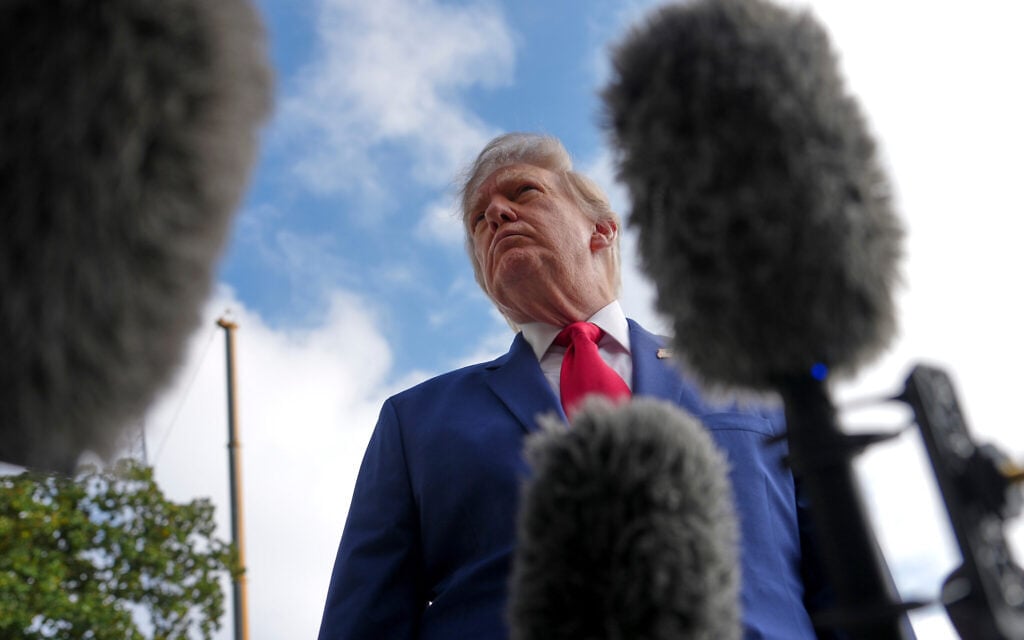
Trump wants the midterms to be all about him. Based on Democrats' ads, they are happy to oblige

Many of the Democrats' ads accuse Republican opponents of siding with the president over voters, particularly on issues like tariffs and the Iran war, which they blame for jacking up costs.

  •  

Chios airport suspends operation for four months

Operations at Chios Airport runway will be temporarily suspended from mid November 2026 to mid March 2027 due to upgrade of infrastructure works. According to an announcement by the Greek Civil Aviation Authority (HCAA) suspension is scheduled from Sunday night, November 15, 2026 to March 15, 2027, due to works to extend, improve and upgrade […]

The post Chios airport suspends operation for four months appeared first on Keep Talking Greece.

  •  

Harvard's bet on SpaceX helped its endowment grow faster than the S&P 500

Elon Musk's net worth exceeds $1 trillion.
Harvard's investment in Elon Musk's SpaceX has paid off.

Matt Rourke/AP

  • Harvard's endowment returned a five-year high of 27.1% in the 12 months to June 30, besting the S&P 500.
  • The Ivy League college counted a $2.2 billion SpaceX stake as its top Q2 portfolio holding by far.
  • Harvard's endowment grew to almost $68 billion after accounting for taxes, gifts, and distributions.

Harvard University delivered its best investment return in five years as its bet on SpaceX boosted its stock portfolio.

The elite college's endowment returned 27.1% in the fiscal year ended June 30, its annual financial report revealed on Thursday. That comfortably outpaced the benchmark S&P 500's 22.3% total return over the same period.

After accounting for taxes, distributions, and gifts, Harvard's endowment grew by $11 billion to nearly $68 billion.

Harvard Management Company's stake in Elon Musk's maker of Starship rockets, Starlink satellites, and AI chatbot Grok was worth $2.2 billion at the end of June, per its second-quarter portfolio disclosure.

SpaceX was its number-one holding, more than six times more valuable than its second-biggest position, a sub-$350 million stake in Taiwan Semiconductor.

Its next-largest positions — each worth over $150 million — were Cerebras, Amazon, Alphabet, and Nvidia. Its 19 holdings at the end of June were together worth about $4.3 billion, more than double the portfolio's $1.8 billion value three months earlier.

Harvard said the strong performance of its endowment, which is nearly 400 years old and comprises about 15,000 individual funds, helped it weather the "abrupt termination of federal research grants" by the Trump administration.

It's worth noting that 13-F portfolio disclosures are a snapshot of a fund's US stock holdings on a certain date. They don't include foreign-listed stocks, non-stock assets like bonds or real estate, private investments, or stocks sold short.

Harvard said that as of June 30, 14% of its endowment was invested in public equities, 29% in hedge funds, 46% in private equity, 4% in real estate, and the balance elsewhere.

Harvard declined to comment when contacted by Business Insider.

SpaceX's valuation has whipsawed since the aerospace company went public on June 12. Its market capitalization topped $2.4 trillion on June 20, then tanked to $1.4 trillion by August 1, and has since rallied to around $2 trillion.

Musk's company posted a 92% year-on-year revenue jump for the quarter ended June, helping narrow its net loss from $1 billion to $541 million.

The world's richest man recently posted on X that he sees a path for SpaceX to be worth "orders of magnitude more than the current Earth economy," implying its stock could rise at least 6,000-fold to $12 quadrillion over time.

He later clarified that wasn't a "statement of extreme confidence," but he believes the probability of achieving that valuation is "not zero." On October 14, he said he expects SpaceX to be worth more than $100 trillion in the next 10 years.

Harvard is one of several shareholders to reveal a sizable stake in SpaceX. Google parent Alphabet reported a roughly 4% stake valued at $94 billion as of the end of June. Longtime Musk associate Peter Thiel disclosed a 3.2% position worth $73 billion held by his Founders Fund and related entities. AI chipmaker Nvidia has a $21 billion stake.

Read the original article on Business Insider

  •  

Trump will rally Georgia Republicans despite party divisions in battleground state

President Donald Trump's midterm campaign blitz arrives in Georgia on Friday for a rally with top Republican candidates in a state that has long been the epicenter of the president's false claims about election fraud.

  •  

Tishomingo Burn Ban

Paul Rankin’s account of a father-son camping trip and an exchange with an inscrutable stranger reads like it was plucked from an anthology of Southern gothic tales. It’s a tense, slightly spooky meditation on how private faith can grow wild and unruly, how isolation breeds suspicion, and how readily we project our fears.

The more I affirmed my faith, the more suspicious the man became, as if he hadn’t come to share the good news but to catch us in a damnable lie. As the interrogation persisted, I couldn’t help thinking of how Flannery O’Connor once described the South as a Christ-haunted place. I love Jesus, but, good Lord, his ostensible followers can be irksome and even sinister at times. Clearly unconvinced by my profession of faith but out of ideas—or maybe just weary with the effort—the stranger finally walked the three steps back to his camp site.

For lack of a better idea, I relit the stove and was adjusting the flame when the man returned, holding one hand behind his back.

With a flourish he brought out a cross fashioned of two sticks and thin binding wire. This he presented to Fish, then added that he’d have a big surprise waiting in the morning. With that, he turned and walked away, into the woods and out of sight.

  •  

Hot US inflation singes Asia as higher-for-longer Fed rates loom

TOKYO — An unwelcome blast of US inflation is blowing across Asia’s markets. September’s hotter-than-expected price data revived concerns that the Federal Reserve will keep rates higher for longer, threatening fresh pressure on currencies, capital flows and economic growth across the region.

Last month’s 3.7% year-on-year increase in consumer prices didn’t just exceed forecasts. It ensured the Fed is on an even bigger collision course with both the bond market and US President Donald Trump’s White House. It’s arguably the last thing both Trump and US Federal Reserve Chairman Kevin Warsh wanted to see less than three weeks ahead of the mid-term elections.

To continue reading, please log in to your AT+ Premium account. Not yet a member? Please signup for AT+ Premium monthly membership, AT+ Premium yearly membership or AT+ Premium Access membership.

The post Hot US inflation singes Asia as higher-for-longer Fed rates loom appeared first on Asia Times.

  •  

A psychologist shares why it suddenly feels like every child has ADHD — and why parents shouldn't rush to diagnosis

Dr. Katie S. Davis
Dr. Katie S. Davis is a neuropsychologist who specializes in childhood learning disorders.

Nelson Diaz, NylaGray Photography

  • Dr. Katie S. Davis is a clinical neuropsychologist who evaluates children for learning disorders.
  • She said some parents are rushing to diagnose their children for normal kid behavior.
  • She suggested some softer interventions before booking an evaluation appointment.

Over years of evaluating children for learning disorders, Dr. Katie S. Davis noticed an interesting phenomenon: Some parents seemed visibly disappointed when she told them their kids didn't meet the criteria for ADHD or autism.

"I found that those conversations can be more difficult to have than with a parent whose kid is really disabled and whose needs are very high," Davis, a clinical neuropsychologist and author of "Actually, You're Fine," told Business Insider.

Though she would try to reassure those parents that their concerns about their children's behavior were valid and worth addressing even without a formal diagnosis, "it's not as tangible or concrete as parents want, and they often leave the conversation feeling dissatisfied."

Parent-reported diagnoses of several childhood developmental and learning conditions have increased in recent years. For example, the estimated share of US children ages 3 to 17 with a current ADHD diagnosis rose from 8.6% in 2016 to 10.5% in 2023. Separately, a study of children ages 6 to 17 found parent-reported lifetime learning-disability diagnoses rose 16.4% over the same period.

While some argue that greater awareness of learning disabilities and disorders accounts for the increase, Davis doesn't feel that explains the full story. From what she's observed, ever-growing expectations for kids — and parents desperate for explanations for why their child is lagging behind — also play a role.

She said rushing to a diagnosis can have negative long-term implications for everyone.

"People don't think that ADHD means anything, people don't think dyslexia means anything," Davis said. "Then those people who are truly disabled by those conditions have enough battle to justify their need for accommodations and services."

Higher and higher expectations

Children sitting on rug
It's normal for young children to get antsy in classrooms, Davis said.

FatCamera/Getty Images

In order to qualify for a diagnosis such as ADHD, symptoms must be present in at least two major settings, such as both at home and at school. For autism, they must be persistent across multiple contexts.

But some parents focus on how their child behaves in the classroom, in part due to ever-increasing expectations around academic success, Davis said.

"Doing well in school is no longer good — you have to be at the top of the pack," Davis said, noting that similar patterns have arisen in higher education settings with parents arguing for their teenagers' grades to be inflated. "Parents want excellence, and if it's not excellent, it's bad."

When worrying about their child's behavior, some parents zero in on their child's behavior in class while overlooking how their child compares to others, Davis said.

"If you're in a kindergarten classroom, probably all of the kids to some degree are going to have trouble sitting on the rug for 30 minutes at circle time," Davis said. Most will cluster in the middle of the bell curve, while some will get antsier earlier or later. The kids who consistently stand out compared to their peers are the ones who should probably be evaluated, Davis said.

Otherwise, "for nine kids out of 10, that sounds like a kid in an elementary school."

Labels are a double-edged sword

A child sitting alone
While well-meaning, diagnostic labels can send negative messages to kids.

StockPlanets/Getty Images

Whether they're diagnosed with ADHD or not, a child being hyperactive in class isn't a parent's fault. Still, parents can feel like they're personally responsible.

"There is an eagerness to medicalize the feelings of insecurity, because if it's due to a diagnosis, then it's not a knock on your decisions," Davis said.

Whether or not their child is formally diagnosed, Davis warned against treating it as a catch-all explanation for everything your child does.

"Despite our best intentions, if we put a label on the kid and the kid is aware of that label, they are given the message 'there is something wrong with how you are developing,'" she said. Even positive spins, like "ADHD is a superpower," can send a message to the kid that their life will be forever defined by struggle, she said.

It can also imply that symptoms like difficulty focusing or reading can't meaningfully improve with the right interventions.

"We all want to develop resilience in our children, to make them feel like they have agency and control and they're in charge of their own destinies," Davis said. "Especially when kids are very young and don't understand the fluidity of these labels, we could potentially be working against them."

Try softer interventions first

Kids running together
Davis recommended facilitating more playdates if your child struggles socially.

pixdeluxe/Getty Images

Davis wants to be clear: Diagnoses such as autism and ADHD are real. There are children who are unambiguously and significantly impaired by them in every setting, who need clear support academically and socially. "There are evidence-based interventions at our disposal that are enormously helpful," she said.

However, for parents who believe their child falls into some gray areas, Davis recommended trying a few things before booking an evaluation appointment. She compared it to a young child with a mild fever: A responsible pediatrician would guide parents through modest steps, such as taking a temperature and offering plenty of fluids, before rushing to the ER.

Instead of assuming your child might have autism if they struggle to make friends or always hang out alone at recess, Davis suggested first making other plans with their parents to set up playdates. You can also sign up your child for a karate class or call the school's teacher to see if they can intervene and help the kids play together more.

"Actually, You're Fine" book cover
Davis's book focuses on supporting kids' academic and social challenges without rushing to diagnose them.

Balance

Alternatively, she said, if you immediately seek out a diagnosis and place your child into therapy and social skills groups, you could be taking away from more enriching social activities.

If a child continues to struggle, Davis recommended getting a neuropsychological assessment — a form of standardized test that is broader than getting an autism or ADHD evaluation.

While not perfect, she said neuropsychological assessments can measure a child's motor skills, sensory processing, attention, cognitive efficiency, language, memory, and social functioning. Their scores are typically compared with norms for peers of the same age.

More importantly, it helps parents know which interventions are the best. "If your kid perceives life to be very stressful or upsetting, they're not making it up. Let's talk about what we can do to support them better in that environment," Davis said. "But we don't need a diagnosis to do that."

Read the original article on Business Insider

  •  

No, the world zionist movement is not an antisemitic conspiracy theory

The World Zionist Organization was founded in 1897. It has an elaborate structure, including a World Zionist Congress, a Zionist General Council, a Zionist Executive, and a Zionist Supreme Court. And this is just one of the many such entities…

  •  
❌