Cabinet members are seldom major figures in campaigns, but the defense secretary’s forays into politics and his bravado in defense of an unpopular war have made him a target.
In the final weeks of a midterm congressional battle in which voters’ opposition to the war with Iran has become a major issue, Democrats are increasingly making Mr. Hegseth a main character in their campaign messaging.
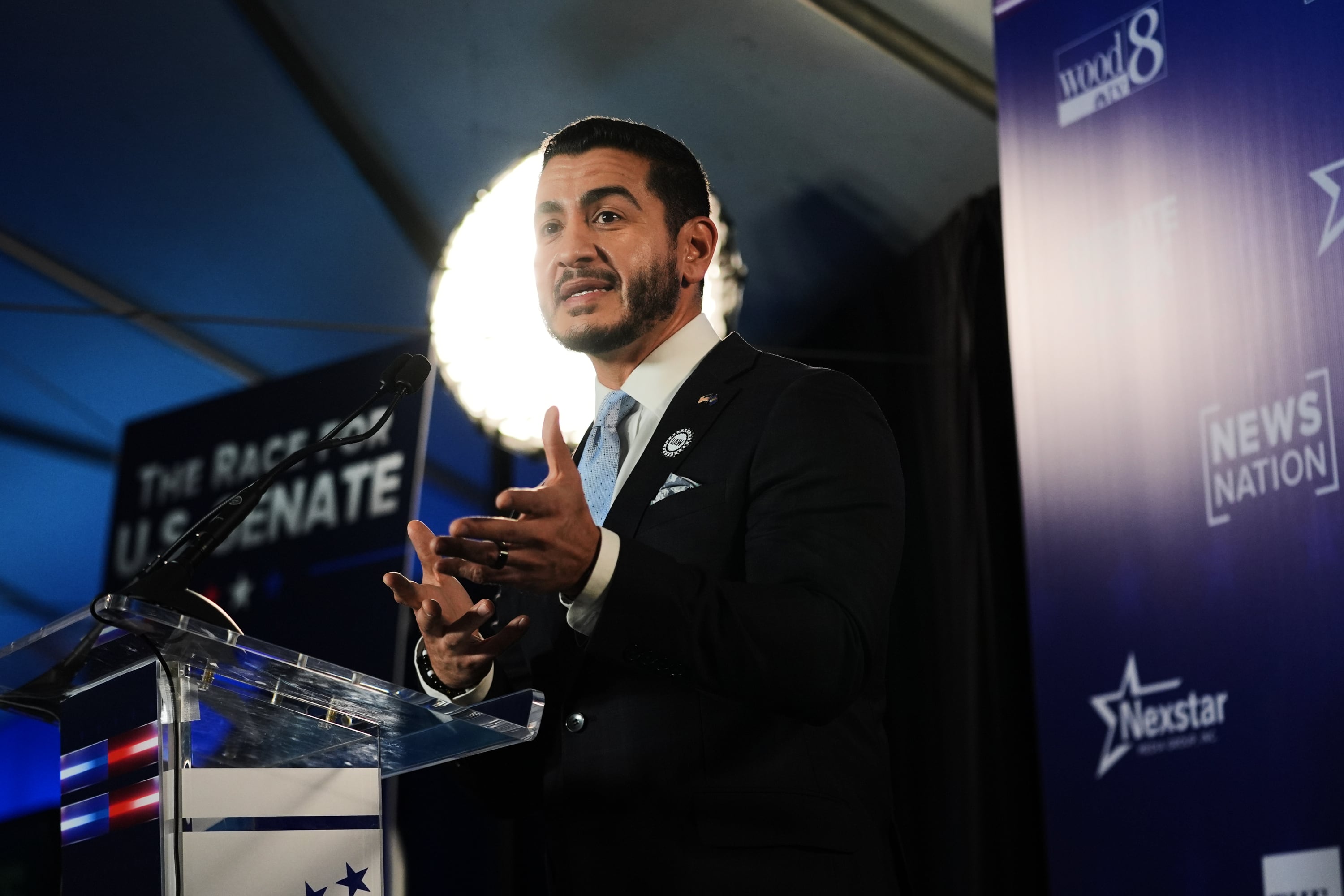
There is still over an hour before the protagonist appears, but the line already wraps around the block. Dozens of people wait patiently for their turn to see the man who has become the great hope of the Democratic left wing. When he begins to speak, pandemonium breaks out: “My name is Abdul El‑Sayed and I am going to be your next senator in Washington.” Over the next hour, the hundreds gathered in this venue will applaud, laugh, and cheer every word from the mouth of the new star of American politics, who has already made a fitted black T‑shirt and jeans his trademark look. We are in Lansing, Michigan’s capital, where one of the most gripping battles of the midterm elections — just over two weeks away — is being fought.
Abdul El‑Sayed, Democratic candidate for U.S. senator from Michigan, last Thursday after debating Republican Mike Rogers in Grand Rapids, United States.
President Donald Trump faces potential backlash from Republican voters during the midterms, which could lead to increased Congressional scrutiny from Democrats if they win control of the House and Senate.
Sen. Susan Collins (R-Maine) does not regret voting for Robert F. Kennedy Jr.’s confirmation as secretary of Health and Human Services (HHS), reaffirming her position in a Thursday debate. “I agree with him on some issues; I don’t with others,” Collins said. “He was very helpful in expediting the release of the low-income eating assistance…
White House officials instructed Pentagon leaders to limit Starshield, SpaceX’s military-grade satellite service used by Ukrainian forces, Reuters reported on 15 October, citing three officials. The report came a day after a senior US official told Axios the Trump administration had nothing to do with the alleged Starlink restrictions.
Ukrainian forces rely on US-controlled satellite technology for battlefield operations and for intercepting Russian drones aimed at Ukrainian cities, so the latest restrictions have raised questions about how reliably they can depend on it.
Senior US official denies president requested restrictions
Asked about the order, a senior US official replied, “No such request was ever made by the president.” The White House did not respond to questions about whether other administration officials might have made the request.
Ukrainian officials contacted the White House, State Department and Pentagon on 13 and 14 October and were told it was a White House decision
European allies question Starlink restrictions
European officials raised concerns about the restrictions. German Foreign Minister Johann Wadephul criticized the throttling and said Ukraine must continue to receive full support, Spiegel reported on 15 October. Wadephul said Germany had questions for the US, noting that Germany finances part of the Starlink technology used in Ukraine.
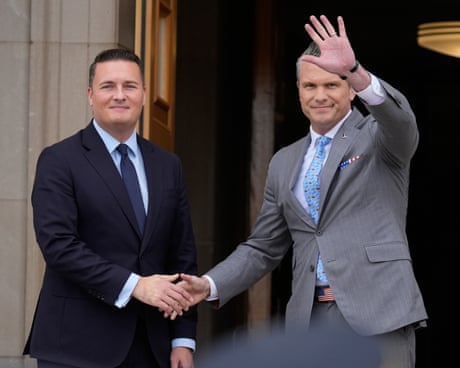
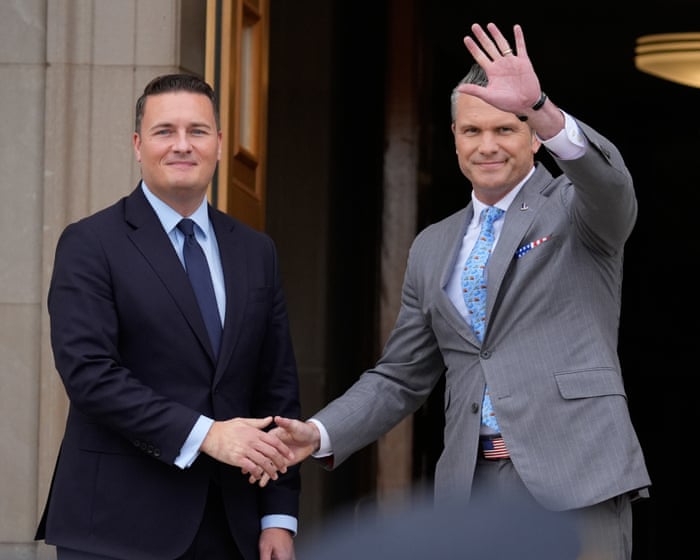
On 16 October, UK Defense Secretary Wes Streeting said US Defense Secretary Pete Hegseth had assured him in a face-to-face meeting that Starlink was back up and running, the Guardian reported. However, a Ukrainian Defense Ministry source said that military-grade terminals were working in motion again, but only at speeds of up to 160 km/h.
New data-speed restrictions disrupted drone missions
The military Starshield package previously had no data-speed restrictions, Ukraine’s 7th Rapid Response Corps told Novynarnia. Ukrainian officials said that after the restrictions were imposed, terminals disconnected when drones exceeded 160 km/h and sometimes at 80 km/h.
The Corps also reported 10–20-second connection drops at 110–120 km/h on the Huliaipole front, which made drones harder to control. One unit had to cancel some missions.
The restrictions came as US President Donald Trump pressed Kyiv to stop striking Russian oil refineries, blaming them for soaring energy prices ahead of November’s midterm elections. Ukraine suspects SpaceX imposed the restrictions to pressure Kyiv over the refinery strikes, but that motive has not been confirmed.
Rep. Thomas Massie (R-Ky.) suggested that President Trump should remove Defense Secretary Pete Hegseth from his position before the House votes to impeach him. The Kentucky Republican, who often finds himself in the crosshairs of Trump for breaking with the party, was responding to a report claiming that the president was considering firing the Pentagon…
En un tenso contexto electoral para los republicanos, Trump, que había apoyado el plan de ejecución pública, dio marcha atrás, aunque señaló que "podría haber sido un fuerte disuasivo".
A look inside the annual arms conference where radical religious ideology and corporate interests shape the future of American military policy.
The annual meeting of the Association of the United States Army (AUSA) is one of the largest defense expositions and professional development forums in North America, and this year it was held from October 12 to 14.
Held annually in Washington, D.C., the AUSA brings together thousands of industry representatives, military personnel, defense contractors, and senior government officials.
The primary function of this convention is to showcase advanced military technology, foster business partnerships between the private sector and the U.S. Department of Defense, and deliberate on future defense budgets and operational strategies.
During the event, major defense corporations display advanced weaponry, armored vehicles, communication systems, and software platforms designed for modern warfare.
Usually, U.S. government representatives attend to outline procurement priorities and communicate strategic defense goals to contractors. This interaction helps set the trajectory for military spending, which accounts for a substantial portion of the federal budget.
Observers note that the discussions held during these annual meetings offer clear indicators of where future U.S. defense allocations will flow, reflecting broader geopolitical strategies and priorities established by Washington policymakers.
AUSA: Institutional Origins and Systemic Implications
The Association of the United States Army (AUSA) originated in 1950, emerging from predecessor organizations during the early years of the Cold War.
The formation of the association coincided with a significant expansion of the U.S. military establishment and the defense planning that characterized the mid-twentieth century.
Its founders sought to create a unified advocacy group that could represent the interests of the active-duty army, the National Guard, the Army Reserve, and civilian defense industries.
The broader implications of the association’s work involve maintaining continuous alignment between military requirements and industrial capacity. By facilitating close interaction between military leadership and corporate executives.
The AUSA annual meeting provides a structured environment where retired generals, active-duty commanders, and corporate lobbyists negotiate priorities. This environment often features a revolving door, where former government officials and military officers transition into advisory or executive roles within defense contracting firms.
Around 750 firms and companies from the global defense industry participated in the 2026 annual meeting, including Global Military Products and Teledyne FLIR, alongside major, long-established contractors such as Lockheed Martin, General Dynamics, Northrop Grumman, and RTX.
Bipartisan continuity has defined the relationship between successive U.S. administrations and the Association of the United States Army. Democratic and Republican administrations alike have utilized the platform to signal commitments to robust defense budgets, modernization programs, and global military readiness.
War Sec. Pete Hegseth at AUSA (Oct 14): the "arsenal of freedom" means rebuilding America's defense industrial base like nothing since WWII — going from 5 big prime contractors to 10 or 15 and opening the door to new companies.
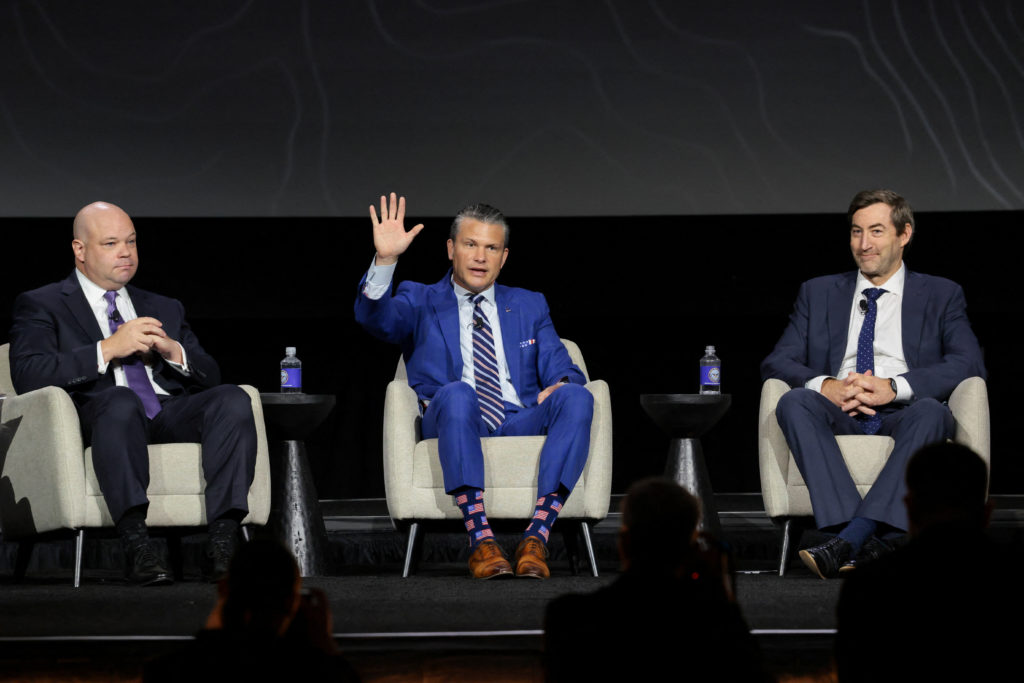
At the AUSA annual meeting, Defense Secretary Pete Hegseth delivered a keynote address that laid out the administration’s strategic blueprint for U.S. military transformation.
Hegseth centered his remarks on a massive proposed expansion of defense spending, emphasizing a $1.5 trillion investment request aimed at fundamentally restructuring the United States armed forces.
In his address, Hegseth framed this requested spending allocation as a necessary measure to maintain global military dominance and prepare the military for potential large-scale conflicts.
Hegseth pointed specifically to geopolitical competition with China and ongoing military tensions involving Iran as primary drivers requiring accelerated procurement and strategic readiness.
A central focus of Hegseth’s presentation was the rapid integration of autonomous systems, robotics, and artificial intelligence into standard combat operations. Hegseth detailed plans for scaling autonomous warfare platforms, highlighting initiatives such as Project Agincourt and the establishment of a dedicated Task Force Autonomous Warfare within Special Operations Command.
Hegseth outlined a strategy to deploy low-cost unmanned aerial vehicles, autonomous sea vessels, and automated targeting systems designed to operate alongside conventional ground forces.
To support this rapid transition, Hegseth called for shifting acquisition methods toward commercial technology marketplaces, urging defense contractors to speed up manufacturing or risk losing federal contracts.
During the panel, anti-war demonstrators interrupted the proceedings to protest U.S. foreign policy and military aid decisions. Demonstrators raised concerns regarding humanitarian crises, citing conditions in Gaza and opposing military escalation toward Iran.
While WARSec Pete Hegseth was speaking about autonomous warfare at the United States Army (AUSA) Annual Meeting and Exposition anti-war protesters interrupted his speech four times.
They were shouting "We fucking hate you! You're a fucking war criminal!"
— Feisty is proud to be a Democrat! (@FeistyLibLady) October 14, 2026
Christian Nationalism and Hegseth’s Advocacy for Arms
Pete Hegseth’s public career reflects a commitment to expanding weapons production and dereglating military procurement. Before his appointment to lead the Department of Defense, Hegseth served as an infantry officer in the Army National Guard with deployments in Iraq, Afghanistan, and Guantanamo Bay.
Following Hegseth active service, he led conservative advocacy organizations, including Concerned Veterans for America, and spent several years as a television host on Fox News.
Throughout his media and political career, Hegseth consistently advocated for larger defense budgets, streamlined regulations for weapons manufacturers, and a rollback of internal administrative oversight within the Pentagon.
Hegseth’s political philosophy intersects significantly with explicit religious frameworks rooted in Christian nationalism. In public appearances, writings, and keynote speeches, he has frequently referenced historical religious concepts to describe military service and national defense.
The U.S. War Secretary bears tattoos associated with historical Crusader symbolism, including the Jerusalem Cross and the Latin phrase Deus Vult.
In his address to military personnel and defense leaders, Hegseth emphasized spiritual health alongside physical readiness, stating that the military is putting on the full armor of God to fight what he described as a fundamental spiritual battle between good and evil.
Analysts note that integrating explicit religious rhetoric into defense policy discussions serves to legitimize high levels of defense spending and aggressive foreign posturing.
By framing international relations and military conflict through an absolute moral binary, this perspective positions armaments production and technological military dominance as central elements of national defense strategy.
Pete Hegseth, the so-called Secretary of Defense, announced today: "At my direction, I'm establishing the Office of Religious Affairs. It will report straight to the top, a direct line to the secretary." He then quoted Psalm 33:12: "Blessed is the nation in which God is the… pic.twitter.com/LbReRdqHJF
— Aprajita Nafs Nefes 🦋 Ancient Believer (@aprajitanefes) September 30, 2026
The Real Cost of Imperial Modernization
The annual gathering of the Association of the United States Army highlights the structural connections between corporate arms manufacturing, federal fiscal allocation, and political ideology.
The event serves as an operational forum where state actors and private defense contractors align around shared priorities, securing multi-billion-dollar trajectories for military procurement and autonomous weapons technology.
Pete Hegseth’s address encapsulated this alignment, bridging massive spending proposals with an ideological campaign designed to reshape the internal culture of the armed forces.
Internationally, the acceleration of autonomous warfare and expanded force projection elevates the risk of regional conflicts and global instability.
The integration of radical religious nationalist rhetoric and traditionalist warrior doctrines further complicates diplomatic efforts, reducing complex geopolitical issues to binary operational imperatives.
Ultimately, examining the AUSA convention and its key addresses reveals how modern U.S. military expansion operates as both an economic driver and an ideological platform. The convergence of commercial defense interests, far-right cultural politics, and state power creates a durable apparatus focused on permanent war readiness.
Sources: teleSUR – Al Jazeera – Al Mayadeen – TRT World – Anadolu Agency – Press Tv – Xinhua – CGTN – BBC – CNN – Los Angeles Times – NYT – El País – EFE – DW – Democracy Now – The Guardian.
UK defence secretary says he has been ‘reassured directly’ counterpart Pete Hegseth that Starlink system has been restored as he seeks to cool tensions
Wes Streeting urged the US to stand by Ukraine on his visit to the American capital and sought to cool tensions between the two countries in the wake of the Starlink row that is threatening to set back Kyiv’s war effort.
The British defence secretary, giving a speech before a meeting with his US counterpart, Pete Hegseth, argued that supporting Ukraine was in the long-term interests of Washington, and a business opportunity.
US president overrules defense secretary, who announced plan without informing White House, source says; fellow Republicans, international observers objected to live broadcast
The announcement earlier this month from Defense Secretary Pete Hegseth that Hasan's execution would be public prompted significant blowback from both Republicans and Democrats, with many pointing out that the images could be used to fuel radicalization.
Un contingente de la 10.ª División de Montaña de EE.UU. inició su despliegue en Panamá con miras a extender operaciones militares a Colombia y Honduras. La maniobra busca intensificar las acciones antidrogas impulsadas por la Administración de Donald Trump en la región.
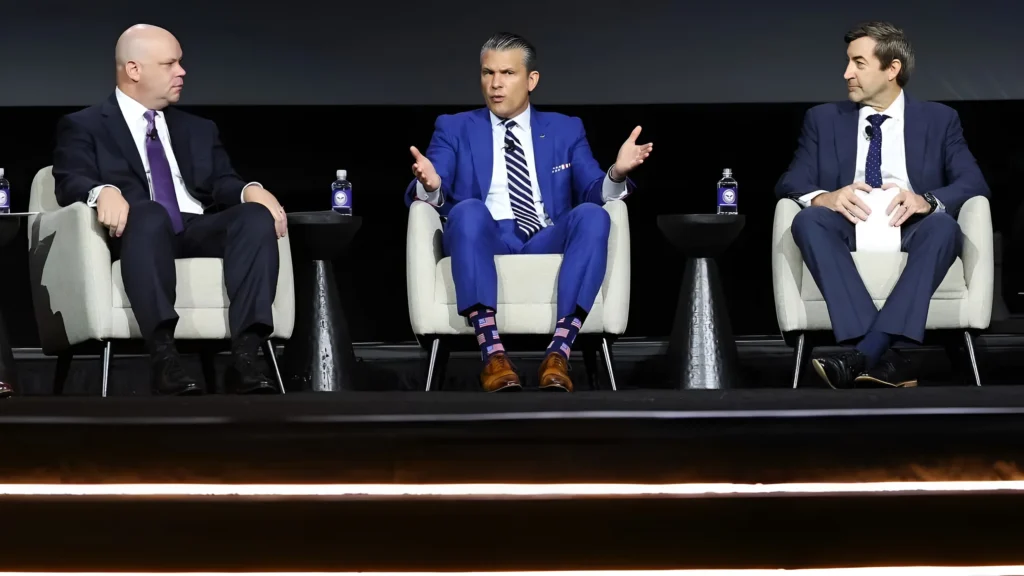
Protesters shouted at Defense Secretary Pete Hegseth and other military leaders on Wednesday as they spoke at a panel on drones during the U.S. Army's annual conference in Washington.
In two separate instances between late August and early September, the fishing boats Conquista II and María Candelaria were boarded by US military forces while on the high seas. The US forces, after transferring the fishermen to other vessels, destroyed and sank their boats.
The fishermen’s families quickly reported that they had lost communication with their loved ones. Only after prolonged uncertainty were the crew members handed over at Ecuadorian ports and placed under the control of Ecuadorian authorities.
In other words, the crew members were not charged with any crime before their vessels were destroyed, but rather afterward. This move has drawn heavy criticism from criminal defense attorneys (who argue that these actions violate due process) and caused anxiety among Ecuadorian fishermen, who have expressed their fear of fishing on the high seas and suffering the same fate as their compatriots. Several other boats have been intercepted and sunk in the Pacific by US forces in recent months, only increasing fears about transiting there at all.
The US military, for its part, claims that the destroyed vessels serve as fuel refueling points for other boats involved in drug trafficking. Under this strategy, US Southern Command intercepted at least eight Ecuadorian vessels between August and September 2026.
Foreign military actions on Ecuadorian soil have been defended by the government of right-wing President Daniel Noboa, who has aligned himself with Donald Trump’s hemispheric security policy embodied in the Shield of the Americas. During a recent visit to the South American country, Marco Rubio defended the military operations as necessary to dismantle drug trafficking routes.
But why destroy a vessel that has already been evacuated of its crew?
Defense Minister Giancarlo Loffredo, who defends US military operations against Ecuadorian fishermen based on alleged “prior intelligence,” said that destroying a vessel that has already been evacuated of its crew is justified because it is too risky to tow the vessels to shore. He also said that seizing the fuel on board is dangerous.
However, the minister’s justifications have not convinced everyone. Human Rights Watch stated that both the United States and Ecuador must present evidence justifying the destruction of the vessels: “Of the detained crew members, 90 are facing criminal investigations in Ecuador, 56 were released because Ecuadorian judges ruled that their detention was illegal, and another 14 were not brought before a judge.”
The fact is that the Ecuadorian fishermen deny any involvement in the crimes of which they are accused. For now, the Ecuadorian courts have ruled in favor of nearly 30 fishermen from the Montecristi and the Don Rufo, stating that the prosecution failed to present evidence to support its accusations. With them, the total number of acquitted crew members stands at 56. Another 32 fishermen are on probation while investigations into alleged criminal association continue.
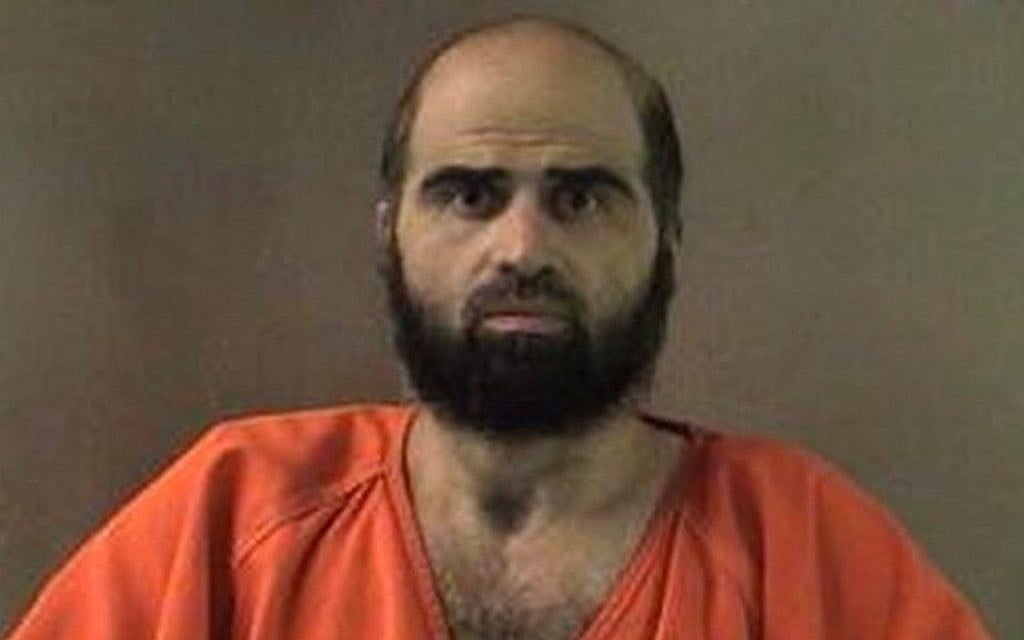
The Pentagon plans to broadcast a firing-squad execution live, a practice that might seem more characteristic of terrorist organizations such as the Islamic State than of governments that are signatories to the Universal Declaration of Human Rights. According to a senior Defense Department official, the institution plans to stream online the execution of former military psychiatrist Nidal Malik Hasan on December 3; Hasan killed 13 people in a 2009 shooting at the Fort Hood military base in Texas.
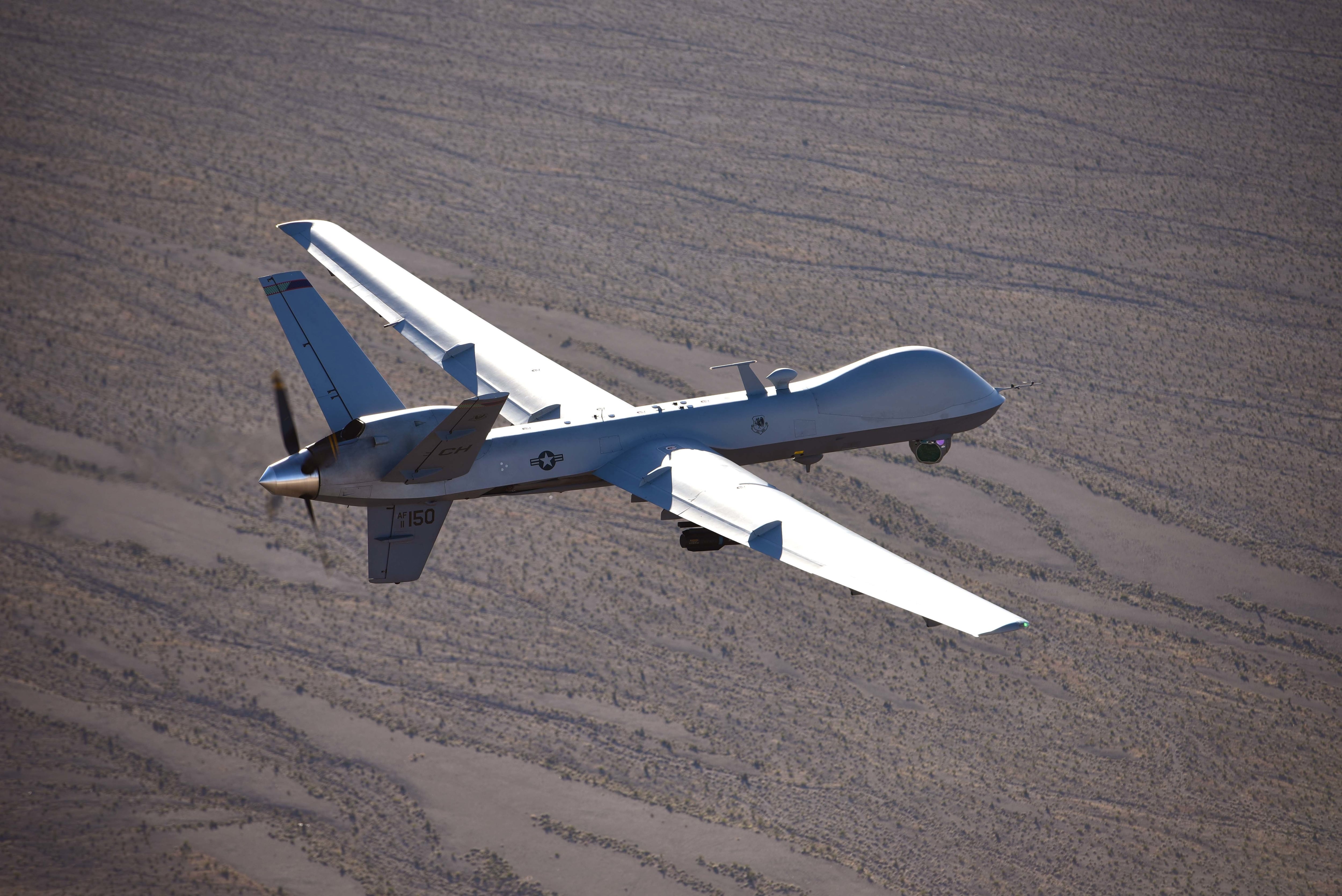
The United States has sent spy drones to Colombia and Ecuador to support both countries’ actions against organized crime, two military sources told the newspaper The New York Times. The aircraft involved are an undetermined number of MQ-9 Reapers that had been stationed in Africa. Although their primary roles are linked to surveillance, they can be used in offensive operations. The arrival of these aircraft, announced by Colombia in August, cements Washington’s growing active role in the operations of the armed forces of the two South American countries, which in recent months have agreed to begin “joint operations.”
The White House press secretary is one of the most exposed jobs in the world, but with a $195,200 salary it is not among the highest paid. In Washington it is assumed to be a thankless task that often, like many roles that require rolling up your sleeves in the administration, serves as a prelude to more lucrative work: million-dollar book deals, senior private-sector posts, or a jump to the media. This Monday Karoline Leavitt, who resigned her post last August, chose the latter option: she will join Fox News, the conservative network confirmed.

 Login