We went aboard a cruise ship navigating some of the world's most dangerous waters. In the Arctic, drifting icebergs, sea ice, sudden storms and fierce winds make sailing unpredictable. Yet every year, around 100,000 cruise passengers travel to Greenland to explore its remote coastline and experience one of the world's last great wildernesses.
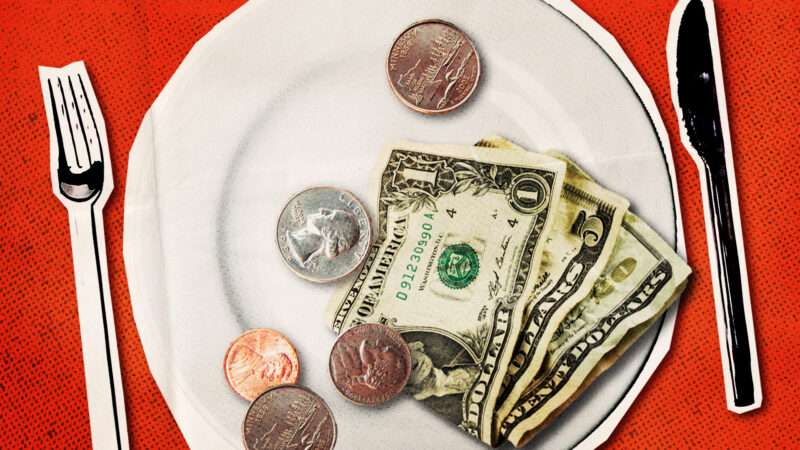
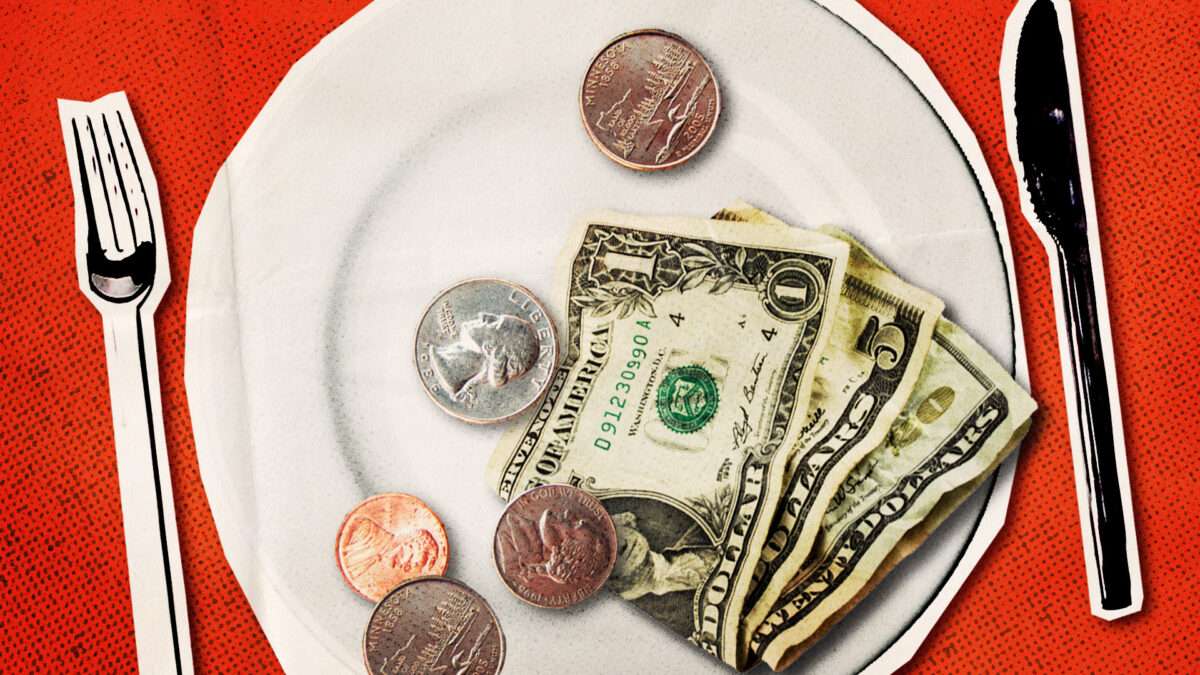
In recent years, one of the predominant policy initiatives of the progressive left has been raising the minimum wage in locales around the country. At the same time, left-leaning politicians have sought the elimination of what's known as the tip credit, which allows employers to pay restaurant servers and other tipped employees a lower hourly base wage that they then bolster with gratuities.
Just a few years into this experiment, however, policymakers are showing signs of an about-face on the tip credit's abolition as they grapple with the unfortunate, and predictable, economic results.
In 2022, Washington, D.C., made news headlines when voters passed Initiative 82. As originally designed, it would have repealed the tip credit and required servers to be paid the District's full statutory minimum wage by 2027. (D.C.'s minimum wage was $16.10 per hour in 2022, but has since risen to $18.40 due to inflation indexation.) Prior to Initiative 82, D.C. servers could be paid a $5.35 tipped wage, so long as they earned enough tips to make up the difference between the lower tipped wage and the higher traditional minimum wage.
D.C.'s Initiative 82 was just the beginning. One Fair Wage, a progressive group that lobbies against subminimum wages, quarterbacked an all-out push to eliminate the tip credit in jurisdictions across America. Chicago became the second prominent city to follow suit. States like New York, Connecticut, and Illinois also quickly saw legislation introduced to eliminate the tip credit at a statewide level. (Apart from this recent wave, a small handful of American states—including California, Oregon, and Alaska—have long operated without a tip credit).
But just when it seemed like momentum against the tip credit had reached its apex, progressive politicians started to see the writing on the wall. In the aftermath of the tip credit's repeal, D.C. saw a close to 5 percent decline in full-service restaurant jobs. Tipped worker earnings also dropped by just under $12 million—likely a result, at least in part, of restaurants reducing hours for staff in the face of higher labor costs. At the same time, many D.C. restaurants began implementing service fees or so-called auto-gratuity policies that added mandatory 10-20 percent charges onto customers' bills.
Mugged by this economic reality, D.C. Mayor Muriel Bowser called for the full repeal of Initiative 82. Ultimately, the D.C. Council settled for a partial repeal in 2025, maintaining at least some semblance of a tipped wage that sits below the traditional minimum wage into the years ahead (although the tipped wage eventually rises to 75 percent of the traditional wage by 2034). This was a familiar story: The council had previously repealed Initiative 77, a near-identical attempt to abolish the tipped wage that voters passed in 2018.
After Chicago moved to eliminate the tip credit, the Illinois Restaurant Association found that 89 percent of Windy City restaurants raised menu prices; another 79 percent responded by reducing worker hours. Again bowing to economic reality, the progressive Chicago City Council voted to freeze the tip credit's planned elimination, only to see the effort vetoed by Mayor Brandon Johnson. Eventually, a compromise was brokered to at least pause the tip credit at its current level for two years—which punts the issue until after Johnson stands for election again, allowing a potential successor to endorse a more lasting reversal.
In Michigan, a 2024 state supreme court ruling set the tip credit on the path toward elimination by 2030. But state lawmakers intervened last year, deciding to maintain a 50 percent tip credit in perpetuity after 2031. Notably, Michigan is currently governed by a Democratic trifecta in the governorship and both houses of the Legislature. The tip credit's revival garnered key support from Republican lawmakers to pass in a bipartisan fashion, before being signed into law by Democratic Gov. Gretchen Whitmer.
While progressive efforts to eliminate the tip credit may be motivated by an earnest desire to ensure waiters are paid more, the math isn't that simple. Requiring a server to be paid a $16 traditional minimum wage—up from a $5 tipped wage—might appear to raise their pay on paper. But this fails to consider several important factors.
Under our "No Taxes on Tips" new normal, raising the minimum wage for servers could lead to a partial reduction in tips, which under certain scenarios can result in less take-home pay for waiters once the taxman takes his cut. If more server earnings come in the form of "auto-gratuity" policies—which are treated as taxed wages under the law—then the tax repercussions may grow even grimmer.
But more broadly, these laws attempt to subvert basic economics. As of 2025, Bureau of Labor Statistics data show that D.C. restaurants shed over 1,600 jobs in aftermath of Initiative 82; meanwhile, between 2022 and 2025, restaurant job growth in the District declined by more than 8 percent. This is just one example. The fallout is the inevitable result of restaurants responding to labor costs that suddenly skyrocket, forcing establishments to cut worker hours and sometimes transition to quick-service models that require less hourly staff. And that's to say nothing of the diners who bear the cost with higher prices and new service fees.
"We're watching a beloved bar back, a beloved busser, a dishwasher have their jobs taken away," D.C. restaurant worker Valerie Graham toldReason in 2024. "Not because our owner-operator is an evil billionaire but because they're an independent business owner who had to make some business decisions and there's a callousness with which our industry is talked about."
To be sure, the tip credit has only survived in modified and reduced form in D.C., Chicago, and Michigan—and in the case of Chicago, the about-face is only temporary. But the partial reversals show the tip credit's elimination is not a foregone conclusion. Economic reality continues to rear its head.
Whether it was youngsters proving their skills or state sabotage, Europe’s most hacked country was left with a mountain of waste after food began cooking in freezers
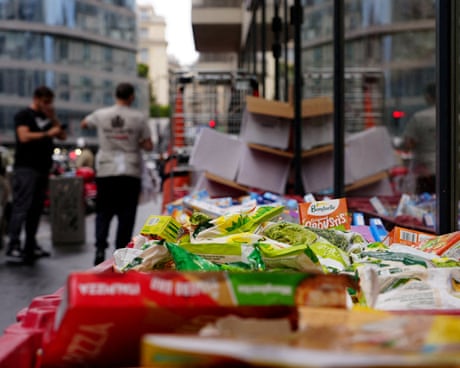
Shortly before midnight last Sunday, the digital thermostats controlling hundreds of supermarket cold aisles across France began to flicker and rise.
In a “bizarre and unprecedented” cyber-attack, hackers had remotely overridden the temperature settings on thousands of freezers, fridges and chiller cabinets pushing them from as low as -27C (-16.6F) to well over 50C (122F).
Beijing warns against ‘discriminatory’ step after France drops opposition to British role in Made in Europe package
No 10 has left the door open to imposing tariffs on Chinese-made electric vehicles as part of the Made in Europe package, prompting a warning from Beijing that such a move would be “discriminatory”.
On Oct. 16, 63 lawmakers registered a draft resolution calling on the government to reverse its changes, consult with businesses, and reconsider a proposed "coordination center" overseeing the exemption system.
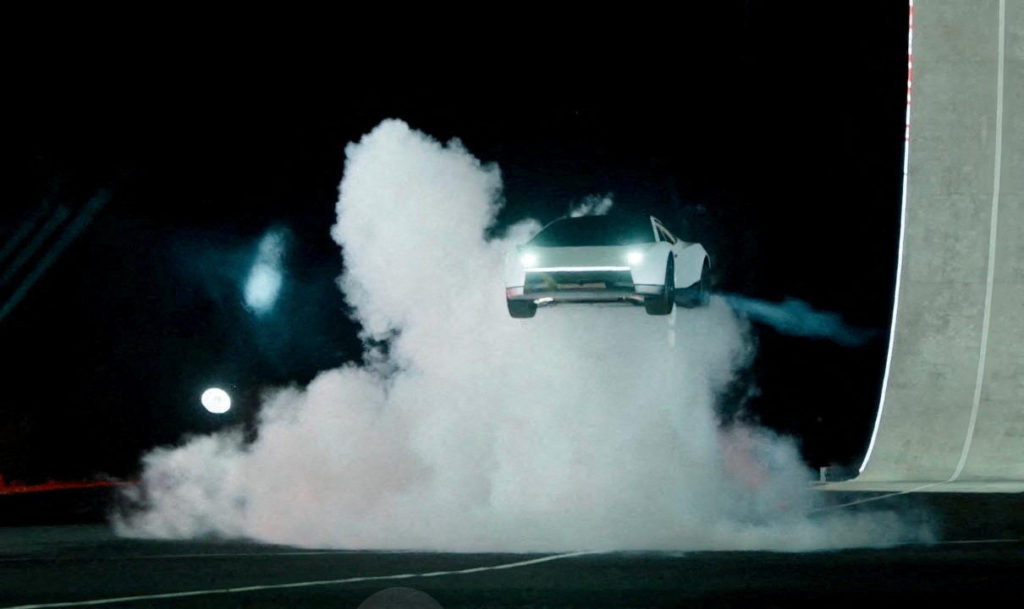
Thursday's launch arrived after years of delays and anticipation around the new Roadster — and Tesla shares climbed about 2% in morning trading on Friday after its unveiling.
TSMC expects overseas manufacturing to reduce its consolidated gross margin by nearly two percentage points in 2026, with the impact widening to three to four points later in its expansion program. The company plans to spend $60 billion to $64 billion on capital expenditure this year. Its latest outlook calls for fourth-quarter revenue of up […]
NFU analysis of official data shows falls in exports to UK’s largest trading partner since 2019 include 70% for sugar and 74% for egg products
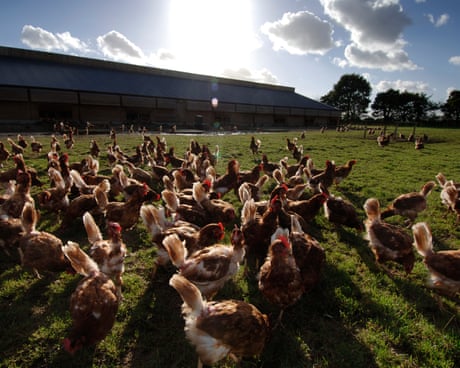
Exports of British food and drink to the EU have collapsed by more than a third since Brexit with eggs, chicken and potato producers badly hit, new figures show.
Analysis by the National Farmers’ Union (NFU) of HMRC data shows a sharp fall in exports in the year to July compared with the same period in 2019, with sugar dropping the most, down 70%.
This week, the Trump administration announced it's expanding its stake in semiconductor manufacturer GlobalFoundries. This brings the government's share of the company to over $2 billion, according to President Donald Trump, and it's only one of roughly three dozen companies in which this White House has acquired a piece of the action. This is a disturbing development for Americans who favor free enterprise and don't want the government to control the means of production.
While it may be a while before the opportunity arises to roll back state intervention in the economy, given the drift of both major parties away from faith in the marketplace, the Cato Institute has launched a project to get the process started.
$2 Billion Government Stake in One of 35 Once-Private Firms
"The U.S. Department of Commerce will receive equity in GF of approximately four percent, further enabling the American public to share in GF's growth," GlobalFoundries announced Monday in a press release about a U.S.–Japanese initiative to open two new semiconductor manufacturing facilities.
"This brings our total Investments to 1.63 Billion Dollars, and now, the U.S. Government's stake is worth over 2 Billion Dollars," Trump confirmed on Truth Social.
The announcement's triumphant tone isn't necessarily shared by people who wonder what the government's ownership stake in one company will do to regulation and investment in the industry. Will fully private firms challenging a state-backed player experience an even playing field?
In a July CNBC survey of 1,000 U.S. voters, 49 percent of respondents said it is "not appropriate for the federal government to own a portion of a U.S.-based company." Nineteen percent considered it appropriate, and 32 percent had no opinion.
"Washington's expanding involvement in the businesses it regulates threatens the competition and innovation that underpin American prosperity," warns the Cato Institute's Tad DeHaven on the launch of the Restoring Free Enterprise project. "Our project will examine the consequences of that involvement and chart a path toward getting Washington out of the boardroom."
Restoring Free Enterprise's Government Ownership Dashboard shows the U.S. government owning shares in 35 companies. The recent deal with GlobalFoundries comes on top of an earlier equity stake, giving the government 7 percent ownership of the firm. Other big deals include an 8.4 percent stake in Intel, a claim on 20 percent of distributions above $17.5 billion in Westinghouse, and an arrangement granting the U.S. government the right to appoint a director for U.S. Steel and to veto decisions over matters including investment and production.
Why might this be a problem?
When Government Enters the Market, Competition Is Undermined and Decisions Politicized
In an analysis for the Center for Strategic and International Studies, Sujai Shivakumar, Charles Wessner, and Christina Tutino cautioned that direct government ownership could create "conflicts between the role of the government as an investor in a particular company and its role as a regulator (e.g., regarding export controls) of firms across the wider industry." They added that preferential treatment for state-linked forms could "distort competition, stifle innovation, and potentially lead to monopolies or market concentration in strategic sectors."
"Once government crosses the line into equity ownership, the game changes," agreed economist Vance Ginn in a 2025 piece for the American Institute for Economic Research. "It's no longer about setting fair rules of the road—it's about Washington joining the race as a participant. That undermines competition, politicizes corporate decisions, and exposes taxpayers to risks they never agreed to take."
Basically, when the government gets involved in any industry, it complicates matters for the companies in which shares are held, for competitors who must worry that regulators will put their thumbs on the scale to help favored firms, and for the market in general. Overall, government interference of any sort in market transactions does more harm than good, and direct ownership makes things even worse.
"Federal rate controls, excessive taxes, barriers to restructuring, and rigid labor rules weakened private railroads in the mid-20th century, just as automobiles, buses, trucks, and airlines were intensifying competition," Cato's Chris Edwards points out in a case study for the Restoring Free Enterprise Project. Congress then created Amtrak to maintain the passenger train service its red tape had helped strangle, but despite plans for the railroad to be self-sufficient, "it has never earned a profit and has received tens of billions of dollars in subsidies."
Proposals for Reform, but Is Anybody in D.C. Interested?
The project acknowledges the Trump administration's intention to encourage U.S. manufacturing and to meet strategic defense goals. But it points out that private, profit-seeking firms are what made the U.S. prosperous and dominant in so many fields to begin with. The government should get out of the way of the market if it wants the country to continue to thrive.
As alternatives to state ownership of companies, Restoring Free Enterprise proposes permitting and regulatory reforms that "shorten reviews, remove unnecessary requirements, reform the Jones Act, and recognize out-of-state licenses" for workers. The project also recommends free trade agreements that reduce barriers to international commerce, the removal of export and procurement barriers, tax reforms involving expensing, and immigration reforms that simplify processing and make it easier for foreign-born college graduates to remain in the U.S.
The obstacles to implementing these reforms are substantial. The administration, while criticizing the Democratic Party's growing affection for socialism, itself embraces government ownership of companies, mercantilism, and heavy state intervention in economic decisions and activities. The Democratic Party has long been less market-oriented than the Republicans, and despite the GOP's transformation, a growing share of Democrats are openly socialist advocates for state control.
"American political leaders on the left and right are rebelling against the market-first consensus that dominated Washington for four decades," concluded Axios's Courtenay Brown and Neil Irwin in July. "It's evident in everything from the Trump administration taking government stakes in dozens of private companies to socialist candidates winning Democratic primaries promising a more active government role in the economy."
U.S. politicians are happily adopting damaging policies that are at odds with the country's prosperity-building tradition of free markets. The Restoring Free Enterprise project would reverse that unfortunate trend, but it's not obvious that many people in D.C. are interested in joining the fight.
Mines in supply chains of western carmakers linked to widespread deforestation of primary rainforest in nickel-rich lands inhabited by Tolaki people in Indonesia
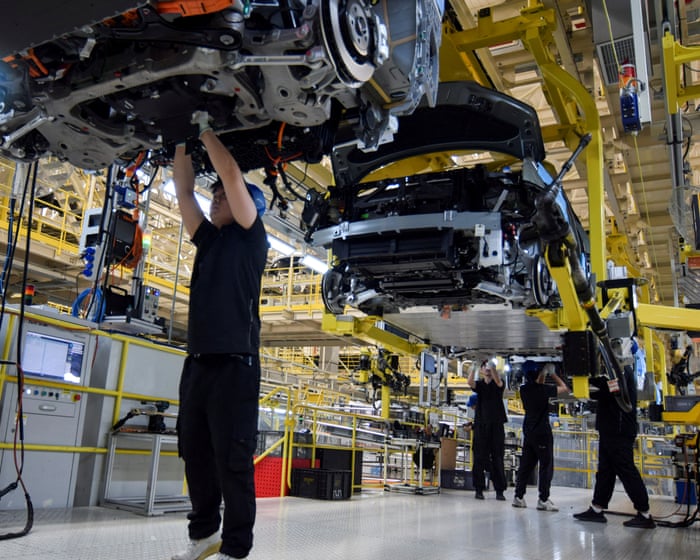
Volkswagen, Ford and Tesla are among the electric carmakers whose batteries may contain nickel mined in indigenous woodlands plagued by deforestation, an analysis has found, highlighting the struggle to make vehicles that are free from environmental destruction.
Corporate disclosures and trade flows from the last two years show mines in the battery supply chains of automotive giants are linked to the loss of trees in Sulawesi, a wildlife hotspot in Indonesia that houses the world’s largest nickel deposits. The metal is widely used in cathodes in car batteries because it boosts energy density and increases range.
from State Of The Nation: SOTN Editor’s Note: Most truth seekers probably understand by now that, at the end of every age, ALL the skeletons come out of the closet. Especially at the the end of the present era (the darkest and densest of the four), and because the Internet is running at full tilt, […]
The airline will also be launching 'PRABHAV - The Value Creator Award', an initiative to gather cost-reduction ideas from the staff, and those providing ideas that can be implemented will be rewarded.
Eurozone industrial production contracted for a second consecutive month in August, with Belgium recording one of the steepest declines. The latest figures expose continuing weaknesses in Europe’s manufacturing sector as governments confront high energy costs and growing international competition.
Industrial production in the eurozone fell by 0.5 per cent in August compared with July, according to figures released by Eurostat on Thursday, adding to evidence that European manufacturers are struggling to sustain a recovery amid rising energy costs and uncertain demand.
The decline followed a revised contraction of 0.3 per cent in July, while output across the wider European Union fell by 0.3 per cent in August. Compared with the same month last year, eurozone production was down 1.1 per cent, against a decline of 0.2 per cent across the EU as a whole.
Belgium recorded the largest monthly contraction among the member states covered by the release, at 5.1 per cent, followed by Ireland at 3.1 per cent and Portugal at 2 per cent.
The latest industrial production figures underline the uneven performance of Europe’s factories, with losses concentrated in some economies and sectors while others continue to expand.
Manufacturing weakness spreads unevenly
The sectoral breakdown presents a particularly revealing picture of the pressures facing European industry.
Production of intermediate goods, which include materials and components supplied to other manufacturers, declined by 0.8 per cent across the eurozone in August. Energy production fell by 0.6 per cent, while output of non-durable consumer goods contracted by 2.7 per cent.
By contrast, capital goods production increased by 0.4 per cent, indicating that activity in equipment and machinery manufacturing remained comparatively resilient.
The divergence was also pronounced between member states. Industrial production increased by 6.5 per cent in Sweden, 4.3 per cent in Estonia and 2.6 per cent in the Netherlands.
On an annual basis, Ireland recorded a 15 per cent decline, followed by Belgium at 7.1 per cent and Bulgaria at 5.4 per cent. The Netherlands, meanwhile, registered growth of 9.8 per cent compared with August 2025.
These variations make it difficult to describe Europe’s industrial position as a single, uniform downturn. National production figures reflect different industrial structures, production cycles and exposure to particular markets.
Ireland’s figures, for example, can be influenced by changes in output among large multinational enterprises, while Belgium’s manufacturing economy is particularly exposed to developments in chemicals, pharmaceuticals and energy-intensive production.
Nevertheless, the simultaneous contraction of industrial output across the eurozone reinforces concerns about the strength of the European economic recovery.
Energy prices and industrial competitiveness
The continuing disruption of global energy supplies has complicated the position of European manufacturers, particularly businesses that depend on predictable electricity and gas prices.
The Middle East conflict has increased uncertainty over energy costs and transportation, making production planning more difficult for companies operating with substantial fuel, heating or electricity requirements.
As EU Today reported earlier this week, Brussels has already moved to delay certain methane requirements for energy imports as governments seek to limit additional pressure on gas supplies.
The decision reflects a wider debate over whether the EU’s existing regulatory framework adequately accounts for the international cost disadvantages facing European industrial producers.
Chemicals, metals, fertilisers and other energy-intensive industries must compete with manufacturers operating in markets where energy costs and regulatory requirements can differ considerably.
The problem extends beyond immediate profitability. Persistently unfavourable operating costs can affect decisions about new factories, maintenance, modernisation and the location of future investment.
Those decisions may have longer-lasting economic consequences than monthly fluctuations in production.
Industrial policy under political pressure
The figures arrive as EU governments debate the future of European industrial policy, including the treatment of imported products and the conditions under which companies should qualify for public support.
Recent disagreements over proposed European-content requirements have illustrated divisions between governments seeking greater protection for EU manufacturers and those concerned that restrictive rules could increase costs or disrupt supply chains.
The debate is particularly consequential for automotive manufacturers whose supply chains extend across EU borders and into neighbouring countries.
Meanwhile, the proposed EU budget for 2028–2034 has become another focus of disagreement, with member states questioning how much funding should be devoted to industrial competitiveness, strategic technologies and energy infrastructure.
The immediate economic issue is whether European factories can recover production as energy costs remain elevated and external demand fluctuates.
Eurostat’s August figures do not establish how individual government policies have affected output, nor do they determine whether the contraction will continue. They do, however, show that industrial activity entered the autumn with limited momentum.
The next industrial production release, covering September, is scheduled for 16 November and will provide an indication of whether the late-summer weakness persisted into the final quarter of the year.
Nato source says drones came from Russia, while Romania’s president says attacking commercial ships ‘is unacceptable and has to stop’
Seven sailors are missing after drones struck two tankers near Romania’s Black Sea coast, setting them ablaze and raising fresh security concerns on a vital shipping route used by Ukraine.
A Nato military source told Reuters the drones that had hit the Wine Trader and the Yara J came from Russia. “The drones that caused the fires on board two tankers inside Romanian territorial waters were of Russian origin,” the source said.
 Login