❌

Reading view

U.S. Retail Sales Up in September Amid Surging Gas Prices

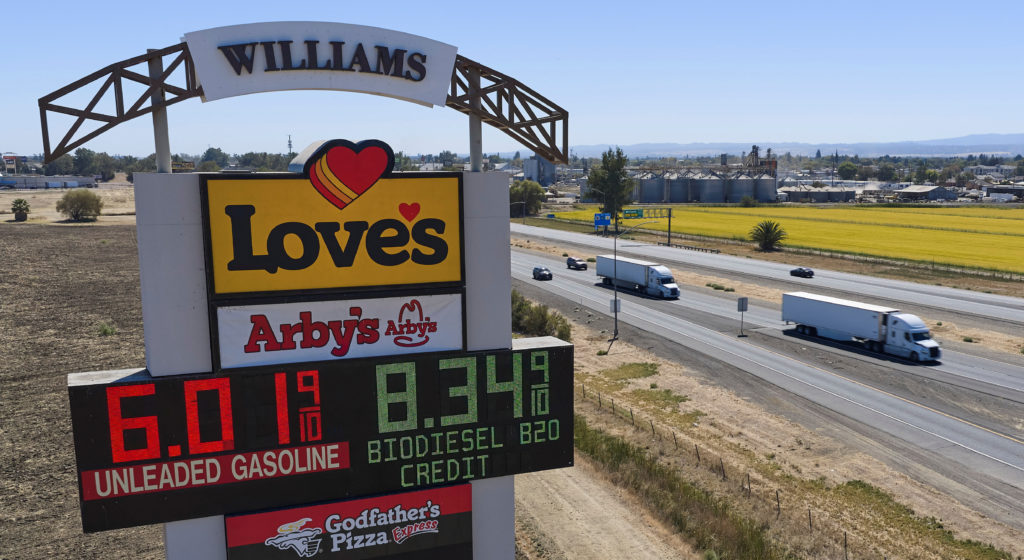
High gas prices are harming many Americans, forcing them to cut back or reduce their savings.

On Thursday, the U.S. Commerce Department release data showing that retail sales rose 0.8 percent in September to US$745 billion, largely driven by higher gasoline prices that boosted consumer spending at gas stations.

RELATED:

OPEC+ Decides To Keep Its Oil Supply Frozen in November

Excluding sales at gas stations, retail sales increased just 0.2 percent during the month, suggesting underlying consumer demand remained subdued.

While rising retail sales are generally seen as a sign of economic resilience, analysts said the September increase offered a less encouraging picture of consumer spending, as higher fuel costs accounted for much of the growth.

“Retail sales definitely looked weak in September,” said Dean Baker, a macroeconomist and co-founder of the Center for Economic and Policy Research. Experts also noted that high gas prices are harming many Americans, forcing them to cut back or reduce their savings.

Mike Johnson:

“Everybody's frustrated about fuel prices, but that's not related to policies. It's not related to the Republicans. This is related to the Strait of Hormuz.”

It is absolutely related to policy and Trump’s war on Iran, which Republicans wholly support. He is a…

— Power to the People ☭🕊 (@ProudSocialist) October 12, 2026

Gary Hufbauer, a nonresident senior fellow at the Peterson Institute for International Economics, said: “About 50 percent of households are living paycheck to paycheck, and if they are squeezed by gasoline prices, they have to cut back elsewhere. But the other 50 percent just reduce their savings to pay for higher gasoline prices.”

High energy prices could create a new wave of inflation. “The longer energy stays elevated, the more likely it generates a new wave of inflation. Another six months would run this risk,” Hufbauer said.

The data were released just weeks before November’s midterm elections, at a time when underlying prices are already high and gasoline prices threaten to make matters even worse. Republicans could take a beating at the polls over voters’ displeasure with high prices that show no sign of coming down.

However, even if Democrats take control of Congress, the party will have its work cut out after the dust settles, as pushing down gas prices means finding a solution to the war in Iran, which seems improbable at the moment.

At the same time, underlying inflation continues unabated. Experts said getting back to pre-COVID price levels requires the Fed to step in and raise interest rates. However, the central bank has shown no desire to hike rates to the 5 percent level, or higher, that economists say is needed to tame inflation.

Some experts noted that the GOP is caught between a rock and a hard place. Brookings Institution Senior Fellow Darrell West said, “Republicans are caught between fighting inflation and a slowing economy, which is a big problem for them in November.”

“Gas prices should drop when the Iran War ends, but it is not clear how (Donald) Trump brings that conflict to a reasonable conclusion,” West said.

teleSUR/ JF

Source: Xinhua

  •  

Hot US inflation singes Asia as higher-for-longer Fed rates loom

TOKYO — An unwelcome blast of US inflation is blowing across Asia’s markets. September’s hotter-than-expected price data revived concerns that the Federal Reserve will keep rates higher for longer, threatening fresh pressure on currencies, capital flows and economic growth across the region.

Last month’s 3.7% year-on-year increase in consumer prices didn’t just exceed forecasts. It ensured the Fed is on an even bigger collision course with both the bond market and US President Donald Trump’s White House. It’s arguably the last thing both Trump and US Federal Reserve Chairman Kevin Warsh wanted to see less than three weeks ahead of the mid-term elections.

To continue reading, please log in to your AT+ Premium account. Not yet a member? Please signup for AT+ Premium monthly membership, AT+ Premium yearly membership or AT+ Premium Access membership.

The post Hot US inflation singes Asia as higher-for-longer Fed rates loom appeared first on Asia Times.

  •  

If you've gotten a raise in the past two years, it's now been nearly all eaten away by inflation

People stand in line at a job fair.
Getting a job is the important part, as these job seekers might attest. But getting a raise is also a big deal: For many workers, the raises they've gotten over the past couple of years have now been wiped out by inflation.

Allison Joyce/Bloomberg via Getty Images

  • Have you gotten a raise over the past couple of years? Inflation has likely eaten it away.
  • Inflation-adjusted hourly earnings, which had risen after Donald Trump first took office, are now declining.
  • And there are ominous signs that inflation could get worse.

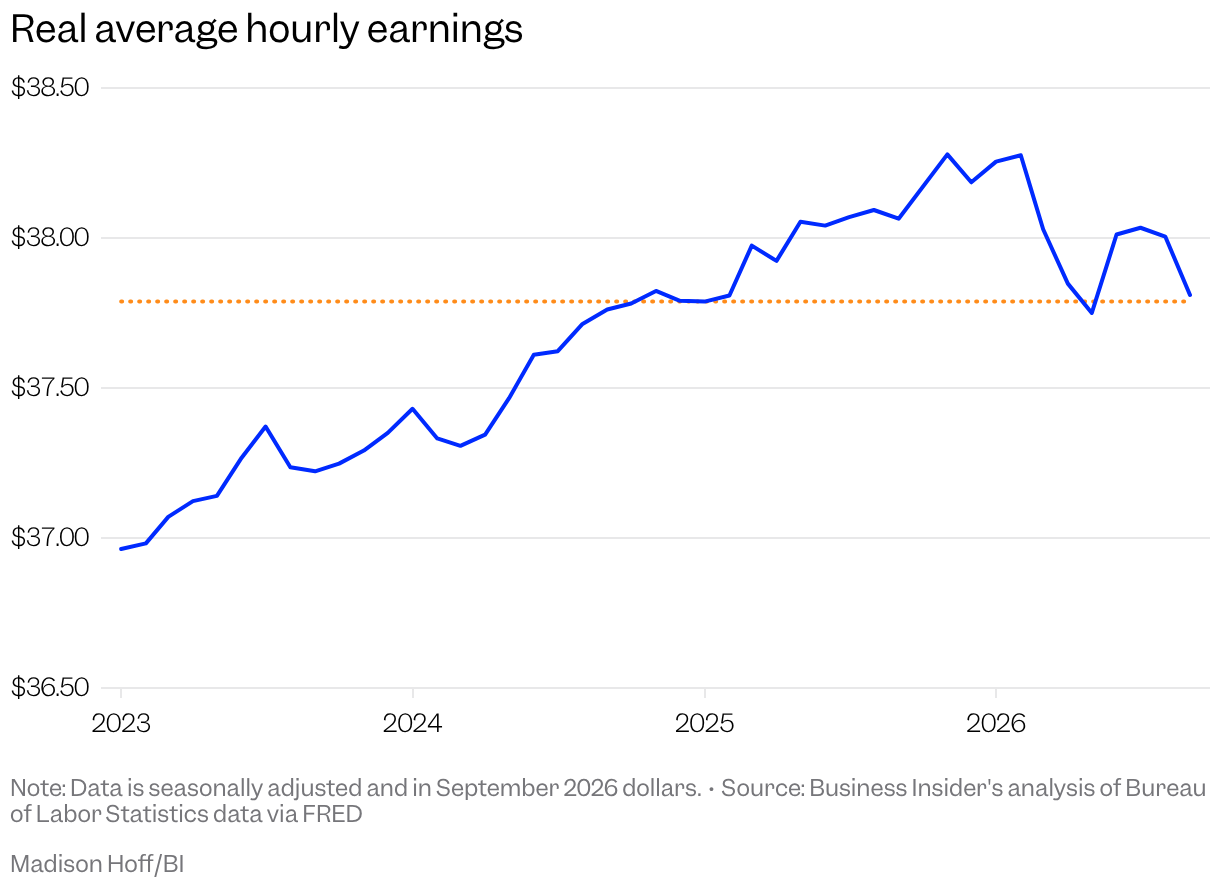
If you've gotten a raise over the last two years, almost all of those gains have now been eaten by inflation.

That is, if you're the average wage-earner, considering the latest statistics released this week showing that prices were rising at a faster clip than expected.

It's more evidence that affordability challenges in the US economy aren't going away. It also means that average hourly pay, which had risen after Donald Trump took office in January 2025, is now right back to where it started, when taking inflation into account.

The average hourly wage was $35.84 in January 2025, according to federal statistics, or $37.79 in today's dollars, adjusted for inflation. The average hourly wage last month was $37.81 — basically unchanged over the past 20 months.

Wednesday's consumer price index inflation report from the Bureau of Labor Statistics came in hotter than expected, with prices up 3.7% over the year in September. Economists had expected a 3.6% increase, and the rate was well above August's 3.4%.

"We read the September CPI report as another piece of evidence that the US is facing a persistent inflation problem," economists at BNP Paribas said in a note to clients.

That problem means high prices — including gasoline that was up 9.1% in September compared to the previous month — are gobbling up pay increases you might get at work.

Line chart of real average hourly earnings

Heather Long, chief economist at Navy Federal Credit Union, underlined that consumer price growth since 2025 has eroded nearly all wage gains, citing the impact of the war in Iran, which began at the end of February, on Americans' wallets.

"This is a very different picture from President Trump's first term when wages were up over 15%, well above about 8% inflation," Long said. "It helps explain the frustration many households feel right now with the economy."

Higher prices are adding to a general sense of malaise about the economy. The University of Michigan's consumer sentiment index dipped to 46.3 in October, down from 71.7 in January 2025.

Joanne Hsu, the director of the survey, said higher gas prices driven by the Middle East conflict have added to the ongoing cost-of-living pressures over the past several years.

Higher prices and inflation outpacing wage growth can be especially tough for Americans who are on tight budgets or living paycheck to paycheck. "When we look at the majority of the US workforce, people who are middle- and lower-income households, higher costs in things like gas and groceries take up a larger share of their income," said ZipRecruiter economist Nicole Bachaud.

It's important to note, there is more than one way to read the wage numbers as they relate to inflation — and in some ways, workers have actually come out ahead.

For example, average weekly earnings have grown faster over the last year than average hourly earnings, as the number of hours the typical worker works has edged up.

The Trump administration, when asked for comment, highlighted annual earnings. "Under President Trump, private sector workers have seen their wages continue to outpace inflation, with average annual earnings growing by more than $600," said White House spokesperson Matthew Middleton.

Inflation will play a role in the midterms

The midterm elections are in just a few weeks, and affordability will likely be a key concern.

An Economic Innovation Group and Echelon Insights survey in September asked people what elected officials should prioritize most to make life better for workers. The survey said that 45% of American workers wanted officials to prioritize reducing the cost of everyday essentials, and 23% wanted them to focus on making housing more affordable.

Long, at Navy Federal, said the "modest increase" in grocery prices is a silver lining in the latest consumer price index report. Food at home, which includes groceries, rose at a slower pace than April's 2.9%, with prices increasing 1.8% year over year in September.

"But it's inevitable food prices will likely rise in the months ahead as higher diesel and transport costs are passed along to consumers," Long said.

There are other ominous signs that inflation could worsen. Thursday's producer price index report showed that final demand prices rose 1.3% in September, the highest since 2022.

Read the original article on Business Insider

  •  

The inflation conflagration is back and here to stay

Two years ago, central bankers on three continents all but declared victory over inflation. Markets took them at their word, and plenty of investors built their portfolios on the assumption that the price surge of 2022 was behind us. That assumption was wrong, and the consequences are now showing up in almost every major economy […]

The post The inflation conflagration is back and here to stay appeared first on Asia Times.

  •  

To Avoid Criticizing Trump's Tariffs and War, Vivek Ramaswamy Takes on Data Centers

Vivek Ramaswamy | Gage Skidmore/ZUMAPRESS/Newscom/Kenneth A Sponsler/Dreamstime

When Vivek Ramaswamy ran for president in 2024, he liked to describe himself as a "national libertarian" whose worldview included skepticism of new Middle Eastern wars and support for free trade (provided it wasn't with China). 

In a midterm election season in which voters are increasingly angry about higher prices born of protectionist tariffs and high gas prices caused by a new Middle Eastern war, that would seemingly give Ramaswamy, now running for governor of Ohio, a straightforward story to tell about how he'd bring costs down. 

Unfortunately for the Republican gubernatorial candidate, the person responsible for the tariffs and the war is President Donald Trump, whose support he's counting on to get him over the finish line in a surprisingly close race against Democrat Amy Acton. 

The latest polls show Ramaswamy slightly ahead of Acton, with many voters still undecided. 

Other Republican midterm candidates, most prominently Mike Rogers in Michigan, are escaping this bind by criticizing the tariffs and the war without explicitly naming the president who's responsible for both. 

Ramaswamy has chosen a different tactic: Shift the conversation to other sources of voters' cost-of-living anxiety that can't be directly laid at Trump's feet. 

In the last weeks of this election campaign, Ramaswamy has focused like a laser on two proposals he says will deliver cost relief to Ohio voters. The first is his proposed rollback of homeowners' property taxes. The second is a moratorium on new data center construction. 

Like many Midwestern and Western states, Ohioans' property tax bills have shot up in recent years, driven by a pandemic-era spike in home values. 

That's in turn sparked a full-blown property tax revolt in the state. The Republican-controlled Legislature passed a raft of property tax relief measures in 2025. Activists are also collecting signatures to place a full abolition of taxes on real property on the statewide ballot next year. 

Ramaswamy hasn't endorsed full property tax abolition, but he is promising voters that he will roll back property tax assessments for homeowners to pre-pandemic levels. 

On the data centers, he has staked out a very restrictionist position. 

Ohio is currently one of the leading states for data center development. Pew Research counts 57 projects currently in the pipeline there, attracted by cheap land and a robust power grid. 

The state's data center boom has caused a backlash in rural communities, where voters have objected to data centers' consumption of land and electricity and the special tax incentives some projects have received. 

On the ballot in 10 Ohio localities this November are initiatives that would impose additional restrictions on data center development. 

Ramaswamy has proposed to go further with a statewide moratorium that will remain in effect until the Legislature passes laws that not only require data centers to cover the full costs of the power infrastructure they need, but also provide property tax rebates and free electricity to nearby homeowners. 

Local property tax cuts paired with local reductions in spending would, of course, be well in line with a small government worldview. 

But the residential property tax rollback Ramaswamy has proposed doesn't directly do that. 

Instead, it would reduce property tax revenues and then leave it up to localities to make up for the lost revenue somehow. That could result in spending cuts. 

It could also result in localities shifting tax burdens onto commercial properties, raising non-property taxes (like sales taxes), or relying on the state government for more of their revenues. 

In the former two scenarios, local tax regimes would become more hostile to growth, given that property taxes are considered one of the most "efficient" taxes. In the latter scenario, the link between people who pay taxes and the people who consume taxpayer-funded local services would become more distant.  

Neither is ideal. 

While some data centers in Ohio have received tax subsidies, Ramaswamy's proposed solution is to block new data centers until they're legally required to subsidize their neighbors with free electricity and other community benefits. 

All of that is to say that it's a shame to see Ramaswamy adopt increasingly non-libertarian positions to avoid making critiques of Trump's cost-increasing tariffs and Iran war that would align with his erstwhile "national libertarian" worldview. 

It's ironic, too, that, in trying to avoid making those critiques, Ramaswamy has wound up being more restrictionist on data centers than Trump himself. 

In an August Truth Social post, the president famously urged local communities to "let Data Reign" and welcome data center development. Those that did would become "rich and successful," he predicted. Those that didn't would remain "poor and backward." 

At a rally in Vandalia, Ohio, over the weekend for Ramaswamy and Republican Senate candidate John Husted, Trump reiterated his support for data centers, saying, "We want them. Look, there's so much money to be made for Ohio. You can't just turn them off. They'll go to China."

Rather than criticize the president's statist interventions, Ramaswamy is talking up his own instead. Ohio will be poorer as a result.

The post To Avoid Criticizing Trump's Tariffs and War, Vivek Ramaswamy Takes on Data Centers appeared first on Reason Magazine.

  •  

Social Security Is Running Out of Money. Benefits Are Rising 3.6% Next Year Anyway.

Gas prices, Social Security cards and a red line | Photo: Ann Eremeev/Rickk6rj/Dreamstime. Illustration: Midjourney

With Social Security barreling toward insolvency, the government is increasing benefits in January.

On Wednesday, the Social Security Administration (SSA) announced that retirees will receive a 3.6 percent increase in Social Security benefits next year. The raise, which was unveiled shortly after the Bureau of Labor Statistics reported consumer prices rose 3.7 percent year over year in September, will amount to an increase of $75 per month for the average beneficiary. It also represents a cost-of-living adjustment (COLA) that will be 0.8 percentage points higher than last year's, which was 2.8 percent, and 0.9 percentage points higher than what was projected by the Social Security Trustees, according to the Committee for a Responsible Federal Budget.

"Social Security will implement this cost-of-living adjustment for 76 million Americans, giving them greater financial stability," said SSA Commissioner Frank J. Bisignano in a press release. "Under President Donald J. Trump, Social Security is delivering better, faster, higher-quality service for the American people."

But the announcement comes as Social Security faces a looming funding cliff.

The program has been spending considerably more than it receives for years, thanks in large part to the U.S. demographic problem: Birth rates have collapsed, life expectancy has risen, and there are fewer working-age people paying taxes to fund retirees. In 2025, the program collected $1.45 trillion in revenue and spent $1.61 trillion, leaving a $160 billion shortfall. Trust fund reserves covered the gap, but they are rapidly dwindling. In June, Social Security's Trustees projected that, without legislative changes, incoming revenue would cover only 78 percent of scheduled retirement and survivor benefits by late 2032—a 22 percent shortfall. Combined retirement and disability funds are expected to run out by 2034. There are a handful of fixes, including raising the retirement age, reducing benefits, raising the cap on earnings, means-testing the program, privatizing it, or getting rid of it altogether.

While many lawmakers have acknowledged reality, Congress remains divided on how to address the issue. In August, Sen. Ron Wyden (D–Ore.) blocked a proposal from Sen. Bill Cassidy (R–La.) to establish a congressional process to consider reforms, arguing that it would slash retiree benefits and help billionaires "avoid paying their fair share."

"People are objecting to doing their job," Cassidy complained in September. "Congress needs to fix Social Security this year."

What makes Wednesday's increase even more unjustified is the fact that older Americans are already among the wealthiest age groups in the country. According to the Federal Reserve's latest Survey of Consumer Finances released last week, households headed by someone aged 75 or older had a median net worth of $504,900 in 2025, compared with just $33,000 for households headed by someone under 35. Despite their relative wealth compared to working-age people, retirees are getting a COLA increase that is greater than the average worker, whose wages have risen by 3 percent in the last year.

For the very wealthiest beneficiaries, the 2027 COLA will constitute an enormous increase. According to the Committee for a Responsible Federal Budget, the highest-earning couples who retired this year will receive a combined increase of $3,600, meaning that their combined benefits would exceed $100,000 next year. However, without congressional action, Social Security recipients could expect a 22 percent cut that, in 2032, would wipe out the previous nine years' COLAs all at once.

Despite years of warnings about Social Security's deteriorating finances, Congress has yet to enact reforms to avert the looming shortfall. For now, beneficiaries can look forward to larger checks in January, even as the program moves closer to the day when it can no longer pay the benefits it has promised.

The post Social Security Is Running Out of Money. Benefits Are Rising 3.6% Next Year Anyway. appeared first on Reason Magazine.

  •  

The Federal Government Collected $5.4 Trillion. It Still Can't Pay Its Bills.

U.S. Capitol in red as money falls around it | Illustration: Nikolai Sorokin/Songquan Deng/Dreamstime

The federal government just closed fiscal year 2026 with a deficit of nearly $2 trillion, according to figures the Congressional Budget Office (CBO) released last Thursday. Only the two pandemic years of 2020 and 2021 were worse. Today, though, there is no recession and no emergency. These enormous budget deficits are the new normal.

The usual response to a deficit warning is that the government just needs more money. It doesn't. Thanks to the remarkable strength of the private sector, federal revenue rose by 3 percent, to more than $5.4 trillion, over the fiscal year. But spending rose by 6 percent, reaching $7.4 trillion.

Some will blame the Supreme Court for striking down most of President Donald Trump's tariffs and forcing the government to issue refunds. But even if Washington had kept the $130 billion in illegal levies, it would cover less than one-tenth of the gap. Tariffs were never a serious revenue source at our insanely high level of spending.

Look at where the money went. Spending on the three main entitlement programs—Social Security, Medicare and Medicaid—grew by 7 percent. That's faster than total spending growth. Defense grew by 5 percent. Interest on the debt rose by 11 percent, exceeding $1.1 trillion. That last figure is the bill for every earlier year of borrowing—years when Washington was sending clear signals that it isn't serious about fiscal responsibility.

If you want to see where such irresponsibility can lead, look at France. The country that big spenders from Paul Krugman to Sen. Bernie Sanders (I–Vt.) have cited as proof that big government is viable and full of upsides is now on the brink of a serious crisis. France's debt equals 120 percent of its gross domestic product (GDP), and interest payments are rising quickly. Slow growth and social unrest aren't helping.

The U.S., of course, has some advantages that France doesn't, largely because we're a country of innovators with a private sector unmatched at creating wealth. Nonetheless, debt that is swelling out of control should still worry us. First, the same anti-wealth and anti-growth forces that brought France to where it is now are gaining popularity here. Second, we too will see debt reach 120 percent of GDP in a few years, and our interest payments are already consuming an alarming share of resources.

A wise Congress would put us on safer footing if only because debt raises interest rates for everyone, from homebuyers to small businesses. This operates as a drag on growth, and hence on wages. In other words, controlling debt should be part of an affordability agenda in the same way as streamlining regulation.

When legislators decide to take affordability seriously, I recommend looking at a September Advancing American Freedom (AAF) report on this topic. Its section on fiscal restraint offers a useful menu of reforms, including targeting the programs that most drive the debt.

Start with Social Security. Under current law, benefits will be cut by roughly 20 percent when the program's trust fund runs dry in the early 2030s. Nobody believes Congress will actually let that happen, but we'd better hope its answer isn't to double down by borrowing the difference between payroll taxes and benefits.

Nor are tax increases an option. The payroll tax meant to fund entitlements is now 12.4 percent of wages. It began at 2 percent when Social Security was first rolled out. It is also the most burdensome tax for many Americans. Enough already. The fixes AAF fellow Rachel Greszler proposes are worth considering: Index the retirement age to life expectancy, use an accurate inflation measure for cost-of-living adjustments, and move gradually toward a flat universal benefit that protects lower-income retirees while ending Social Security's de facto welfare for the wealthiest.

Next is Medicare. More than 40 percent of its financing already comes from general revenue rather than from payroll taxes. The report recommends converting the program to premium support, giving beneficiaries a fixed contribution to spend on traditional Medicare or on competing private plans. It would also raise the eligibility age to 67, matching Social Security, and trim subsidies for well-off seniors. That's a start.

As for Medicaid, the problem is one of pricing. And yet competition based on price—the best cost-control tool—has never been seriously tried. Washington covers 90 percent of the cost of states' expanded Medicaid programs for adults. A state can buy a dollar of spending with just a dime of its own money. Changing the states' incentives would be key here. Implementing risk-adjusted per-capita caps, through which the federal government would give states a fixed amount per enrollee, would do just that. States would pay for their own inefficiencies or would be able to use every dollar they save by becoming more efficient.

The same logic supports returning more welfare programs to states, starting with the federal share of the Supplemental Nutrition Assistance Program. State governments have to balance their budgets in some form.

None of these reforms are painless. But the alternatives will prove far more painful. The U.S. will either continue paying a slow, unlegislated tax called inflation or face a fast, ugly fiscal crisis when bond buyers stop giving Washington the benefit of the doubt.

COPYRIGHT 2026 CREATORS.COM

The post The Federal Government Collected $5.4 Trillion. It Still Can't Pay Its Bills. appeared first on Reason Magazine.

  •  

Tech market sell-off deepens amid fears over US inflation and AI debt

Chip makers and tech investors such as Samsung and SoftBank plunge as potential interest rate hikes spook markets

An accelerating sell-off of AI-linked shares has hit global markets, as fears over rising inflation and future interest rate hikes spooked traders already wary of the heavily indebted sector.

South Korea’s benchmark Kospi 200 index, which is heavily skewed towards the companies that make memory chips, fell more than 8% overnight to a six-month closing low, triggering circuit breakers that brought trading to a halt at various points.

Continue reading...

© Photograph: Lee Jin-man/AP

© Photograph: Lee Jin-man/AP

© Photograph: Lee Jin-man/AP

  •  

Economist breaks down new inflation report and what's driving prices higher

With the midterm elections just three weeks away, a new inflation report shows prices rising faster than expected, putting more pressure on Americans struggling with the cost of everyday essentials. To discuss what the latest numbers mean for Americans, Amna Nawaz spoke with Heather Long, vice president and chief economist at Navy Federal Credit Union.

  •  

Inflation worsened last month to 3.7% as midterm elections near

Gas, clothes, and air fares got more expensive, evidence that rising prices remain an economic challenge just a few weeks before the midterm elections that have focused heavily on issues related to affordability.

  •  

Argentina’s Basic Basket Costs Outpace Inflation as Poverty Line Climbs

(FILE) Argentinian President Javier Milei. Photo: EFE.

An Argentinian family of four now needs 1,632,505 pesos ($1,057) to avoid being considered poor, according to the National Institute of Statistics and Censuses (Indec).


To avoid falling into indigence, the same family requires at least 738,690 pesos ($478), according to the total basic basket (CBT) and basic food basket (CBA) figures in Indec’s most recent report.

So far this year, the CBT grew 24.7% and the CBA 25.3%, both above accumulated inflation of 23.6% through September, when it rose to 1.9%, according to the report. Year-on-year, the CBA rose 38.7% and the CBT 40%, both above the 33.4% year-on-year inflation, the report said.

RELATED: Argentina Seeks International Tribunal Measures Against Malvinas Islands Oil Project

Julián Neufeld, an economist at the Fundación Libertad y Progreso cited by the newspaper Perfil, said the prices that weigh most heavily on lower-income households “have been rising above the general index, and that erodes purchasing power precisely in the most exposed segment.”

Neufeld explained that since wages adjust by the Consumer Price Index when collective labor agreements allow, and poverty levels are set by the baskets, a substantial inflation gap between the two strongly conditions poverty and indigence levels, he said.

According to the economist, in the first half of this year, with the inflationary shock concentrated in meat and fuels—goods with great weight in the baskets—these rose above the general level, pushing many families below the poverty line, he said.

🥬 Las verduras aumentaron 23,8% en septiembre en el Mercado Central y más que duplicaron su precio en un año

Un informe del Centro de Economía Política Argentina (CEPA) reveló una fuerte aceleración en los precios mayoristas de las hortalizas durante septiembre: la canasta… pic.twitter.com/iiDBCfzgh8

— Agencia El Vigía (@AgenciaElVigia) October 12, 2026
  •  

Brussels Rejects Italy and Greece’s Demands for Further Energy Budget Relief

The European Commission has rejected demands from Italy and Greece for additional exemptions from EU spending rules as the Middle East energy crisis drives inflation higher, exposing renewed divisions over how much financial assistance European governments can provide.

The European Commission has rejected requests from Italy and Greece for greater freedom to increase public spending in response to the energy crisis, resisting pressure from two member states that argue existing budget restrictions are limiting their ability to protect households and businesses.

The decision, confirmed on 8 October, follows renewed appeals from Italian Prime Minister Giorgia Meloni and Greek Prime Minister Kyriakos Mitsotakis for measures recognising the exceptional financial burden imposed by higher energy prices.

Meloni wants Brussels to take greater account of unexpected inflation when assessing national budgets and to permit additional tax revenue generated by rising prices to be used for energy relief. Mitsotakis has sought the exclusion of temporary support measures for consumers and businesses from the expenditure limits agreed under the EU’s fiscal framework.

Economic Commissioner Valdis Dombrovskis rejected the argument for further concessions, maintaining that the existing arrangements already take inflation into account and provide mechanisms for responding to exceptional circumstances.

The disagreement comes as Europe’s governments confront the economic consequences of the Middle East conflict, including higher fuel costs, inflationary pressures and increased demands for state intervention.

Italy’s increasingly difficult budget choices

For Italy, the dispute adds to a fiscal problem that has been developing throughout the year.

The government expects its budget deficit to rise to 3.4 per cent of GDP in 2027, reversing an earlier objective of reducing borrowing below the EU’s three per cent reference value.

As EU Today reported earlier this month, Rome plans to use additional fiscal room for defence and energy-related expenditure, while public debt is projected to remain close to 138 per cent of GDP.

The new request concerns the treatment of inflation and the financial support required to offset its effects.

Energy inflation creates an unusual budgetary problem. Governments can receive additional nominal tax revenue as prices rise, particularly through consumption taxes, while simultaneously facing public pressure to compensate consumers for higher living costs.

Meloni argues that such unexpected revenue should be available for targeted assistance without forcing equivalent reductions elsewhere in national expenditure.

Brussels is reluctant to accept arrangements that could turn temporary increases in tax receipts into an opportunity for permanent spending expansion.

Italy’s position also reflects the political competition between defence spending and domestic economic support. Rome has accepted the need for higher military expenditure but faces immediate pressure from households and energy-intensive industries.

That competition was already apparent when the government chose to prioritise energy relief over the full use of defence-spending flexibility.

Greece seeks different treatment for emergency support

Greece’s request is more narrowly focused on the treatment of temporary assistance under the EU’s expenditure rules.

Athens argues that measures intended to help businesses and households manage exceptional energy costs should not be counted against the normal spending limits.

The Greek government faces an economic environment in which higher imported energy prices threaten household purchasing power and business profitability, particularly in sectors dependent on transport and fuel.

Excluding temporary relief from expenditure calculations would give Athens additional room to intervene without breaching its agreed fiscal trajectory.

The Commission, however, has resisted establishing further exemptions beyond those already provided in the fiscal framework.

Its objection is institutional as well as financial. If additional categories of emergency expenditure are repeatedly excluded from fiscal calculations, the system becomes increasingly difficult to enforce consistently across the Union.

The limits of Europe’s reformed fiscal rules

The EU revised its fiscal governance framework in 2024, introducing nationally agreed expenditure paths intended to provide greater flexibility while maintaining sustainable public finances.

The Commission’s rules on exceptional circumstances permit member states to depart temporarily from normal requirements under specified conditions.

Those provisions have already been used to accommodate higher defence expenditure, while the Commission has also issued guidance on their application to energy-security investments.

Temporary financial assistance intended to reduce household energy bills, however, is not necessarily treated in the same way as investment in infrastructure that reduces Europe’s long-term dependence on imported fuel.

That distinction has become a source of friction between Brussels and national capitals.

Governments argue that the immediate economic effects of an international crisis require exceptional measures. The Commission is concerned that repeated concessions could weaken the credibility of the spending framework.

A wider dispute over Europe’s economic response

The Commission’s decision also comes as France faces increasing pressure over its debt and budget deficit.

The deterioration in French borrowing conditions has reinforced concerns about the risks associated with heavily indebted governments continuing to expand expenditure.

France, Italy and Greece have different fiscal positions, but the problems confronting them originate partly in the same combination of expensive energy, weak economic growth and competing spending commitments.

The dispute will now feed into preparations for the European Council meeting on 15–16 October, where energy prices and economic competitiveness are prominent agenda items.

EU leaders are expected to consider targeted and temporary measures to reduce the burden on businesses and consumers, alongside longer-term initiatives intended to reduce dependence on fossil fuels.

The Commission’s refusal to provide Italy and Greece with further fiscal exemptions establishes the limits within which those discussions will take place.

National governments remain free to introduce assistance, but Brussels is insisting that they account for its cost within the fiscal rules already agreed.

For Rome and Athens, the question is whether those rules provide sufficient room to respond to an energy crisis whose duration remains uncertain.

  •  

Russia’s war against Ukraine sends the bill to its own companies: bond defaults head for a 17-year high

russia facing record number corporate defaults second time decade one main causes being same—waging war against ukraine · post russian rubles tsn money news ukrainian reports

More than 50 Russian companies could default on their bonds this year, the most since 2009, a rating-agency analyst told Russian newspaper Izvestia, which reported it on 6 October.

Russia's wartime economy is straining under high interest rates, and the budget is too: the 2026 deficit has nearly doubled from the earlier forecast to a record $88 billion, with more deficits planned for the next three years as Moscow raises taxes to fund the war and plans its biggest defense budget since the full-scale invasion began.

A default is a situation in which a company cannot make promised interest payments to investors on time or repay borrowed money. If a payment is not made by the agreed deadline, the company becomes delinquent, which under certain conditions is recognized as a default.

So far this year, 20 companies have defaulted for the first time, compared with 24 in all of 2025, said Mikhail Nikonov of the Expert RA rating agency. Most of the companies that missed payments are small issuers of high-yield bonds, Izvestia reported.

In 2026, Russian companies have missed payments totaling 41 billion rubles (about $490 million), compared with 34 billion rubles (about $410 million) the previous year, according to investment bank Sinara.

Russia faces a new wave of corporate defaults

By the end of 2026, the number of Russian companies unable to service their ruble-denominated debt on time could reach 40–50, the highest level since 2010, said Pavel Zholobov, junior managing director at the NRA rating agency.

The number of bond defaults in 2026 has already reached its highest level in a decade, Zholobov said. Similar figures were recorded in the mid-2010s: in 2014, 35 companies missed payments; in 2015, 52 did so; and in 2016, there were 44 issuers. This occurred in part after Western sanctions were imposed on Russia over its annexation of Crimea and its war in Donbas, as well as amid a halving of oil prices and a sharp weakening of the ruble.

So-called "little green men" (the Russian occupation troops comprised special forces who removed insignia, wear face masks to prevent identification and call themselves a "Crimean self-defense force") surround a Ukrainian military base in Perevalne, Crimea, during the Russian annexation of the peninsula in February-March 2014.

There were more defaults only in 2009. At the time, amid the fallout from the global financial crisis, more than 100 issuers faced payment problems, while the volume of distressed debt reached nearly 200 billion rubles, Zholobov noted.

High interest rates put pressure on companies

This time, the main reason for companies' difficulties in making bond payments has been the prolonged period of high interest rates, which has continued since 2023. Companies are raising financing at high interest rates but are unable to refinance their debt on more favorable terms, explained Ekaterina Sidorova, head of the Foreign Exchange, Commodities and Debt Markets Department at SberCIB Investment Research.

At the same time, the situation does not yet resemble a systemic debt crisis: defaults are primarily being recorded among companies with low credit ratings and high debt burdens, Sidorova said.

If a company fails to repay bond debt, it is given 10 business days to meet its obligations. If it fails to do so, the company may offer investors a restructuring—for example, by postponing payments in exchange for a higher interest rate.

The number of defaults will remain high in 2027, Sidorova believes.

High interest rates were a response to accelerating inflation in Russia. Domestic demand was outpacing production, Russia's Central Bank said in October 2023. Sanctions over the war and rising defense spending had also hit the economy and the ruble, which had lost about 25% against the dollar that year. The bank raised its key rate from 7.5% in the first half of 2023 to 15% by the fall.

Ukraine targets Russia's oil industry to weaken its war economy

Ukraine is also seeking to weaken Russia's economy as part of efforts to reduce its ability to finance the war. In particular, Defense Minister Yevhenii Khmara said strikes on oil refineries are aimed at "bleeding the Russian war machine" and destroying its military and economic potential. According to the ministry, the attacks have knocked out more than 51% of Russia's oil refining capacity.

In the first half of July, Russian oil refineries processed about 3.9 million barrels of oil per day—the lowest level since March 2005. Due to the production cuts, Moscow was also forced to restrict fuel exports.

  •  

US enshittification vs Chinese involution

It’s getting better all the time (Better, better, better) It’s getting better all the time I admit it’s getting better –The Beatles In an X post, Marko Jukic, senior analyst at Bismarck Analysis, lamented: “Enshittification” is sort of a “safe horny” term for what is really just outright impoverishment and declining living standards due to […]

The post US enshittification vs Chinese involution appeared first on Asia Times.

  •  
❌