 Login

Bombas sauditas asesinan en la jornada a tres menores en Yemen
La aviación saudita descargó más de 100 ataques en 24 horas y dejó 17 heridos en aldeas del distrito de Dhoran Anis, con armamento prohibido.

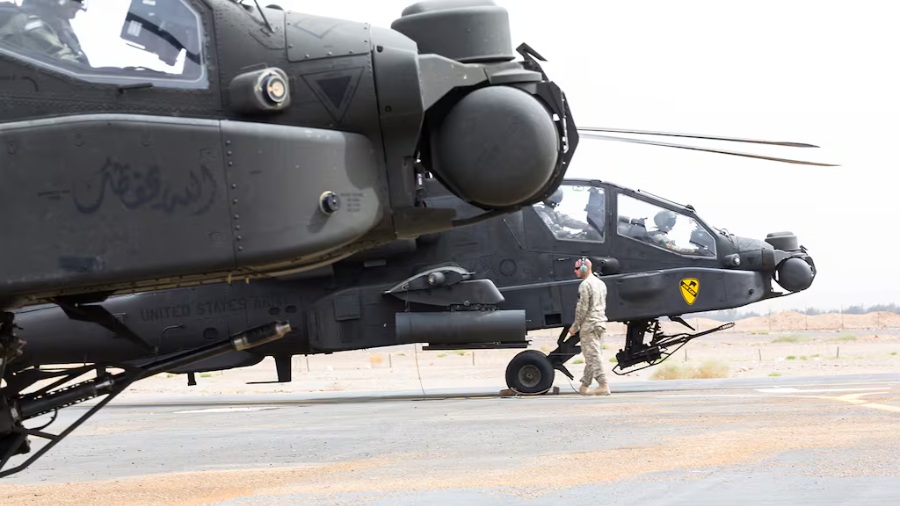
Click to see full-size image. (Sgt. Harley Jelis/Army National Guard)
Yemen’s Houthis (Ansar Allah) announced late on October 17 that they shot down a Saudi AH-64 Apache attack helicopter near the border with the kingdom’s southern province of Najran.
In a statement, Brig. Gen. Yahya Saree, the movement’s military spokesman, said the American-made helicopter had been targeting Houthi positions along the border.
“Our armed forces, with the help and grace of God, managed to shoot down an Apache belonging to the Saudi enemy opposite Najran while it was carrying out hostile actions against our forces’ positions along the border,” Saree said. “It was shot down with a suitable weapon.”
The Houthis operate a range of air defense systems, from man-portable weapons to interceptors and medium-range surface-to-air missiles.
The Apache is Saudi Arabia’s principal attack helicopter, with a modernized AH-64E estimated to cost about $52 million per helicopter according to recent U.S. Army procurement figures.
Open-source inventories list 22 Apaches with the Royal Saudi Land Forces and 12 others with the Saudi Arabian National Guard.
The announcement came just days after the Houthis said they had struck a Saudi Eurofighter Typhoon fighter jet over Yemen’s Saada province. The group later released footage showing a missile hitting the jet during flight, supporting its claim.
Including the latest claim, the Houthis have announced 18 shootdowns since the start of the ongoing confrontation with Saudi Arabia. Aside from an American-made F-15SA fighter jet, all other warplanes shot down by the Houthis were combat drones.
_______________________________________________________________________________________________________________________
SouthFront: Analysis and Intelligence
NOW hosted at southfront.press
Previously, SouthFront: Analysis and Intelligence was at southfront.org.
The .org domain name had been blocked by the US (NATO) (https://southfront.press/southfront-org-blocked-by-u-s-controlled-global-internet-supervisor/) globally, outlawed and without any explanation
Back before that, from 2013 to 2015, SouthFront: Analysis and Intelligence was at southfront.com
The post Houthis Shot Down Saudi Apache Helicopter Near Najran appeared first on South Front.
File image.
Iran has provided Yemen’s Houthis (Ansar Allah) with weapons, targeting intelligence and military training that have helped the group carry out increasingly sophisticated attacks against Saudi Arabia and its Yemeni allies, The Wall Street Journal reported on October 17.
The assistance includes intelligence for selecting targets for drone and missile strikes, tactical guidance and training, according to the report, which cited people briefed on intelligence from Saudi Arabia and the anti-Houthi alliance in Yemen.
Iranian Islamic Revolutionary Guard Corps (IRGC) officers have also deployed inside Yemen, helping direct military operations, the report said.
Iran has supplied weapons to the Houthis through traditional dhow boats, resorting to submarines when maritime shipments were disrupted by U.S. and Israeli strikes, the Journal revealed, citing European and Houthi officials.
The report also described an alleged weapons shipment in July aboard two flights operated by Mahan Air, an Iranian airline under U.S. sanctions.
The flights were ostensibly transporting Yemeni pilgrims and Houthi officials to Tehran for the funeral of former Iranian Supreme Leader Ali Khamenei. However, they also carried Iranian paramilitary officers and weapons-related cargo, including drone components, missile guidance systems and impact detonators, according to people familiar with intelligence from Saudi Arabia and the anti-Houthi alliance.
The discovery prompted Saudi-aligned forces to bomb the runway at Sanaa airport in an attempt to stop the second flight, setting off the latest escalation in the conflict.
Iranian officers have also helped the Houthis deploy missiles and radars at positions threatening the Red Sea and the Bab al-Mandeb Strait, according to the Journal.
The group’s offensive, which accelerated in September, combined large-scale infantry assaults with missile and drone attacks, enabling it to capture the Red Sea port city of Mokha and seize territory around the Bab al-Mandeb.
The group’s increasingly sophisticated tactics, including the use of first-person-view drones guided by fiber-optic cables, indicated that its fighters had received training from Iran, according to a person associated with forces fighting the Houthis.
Another official from the anti-Houthi alliance told the Journal that IRGC officers had been present on the front lines directing drone and missile attacks.
The Houthis have also intensified attacks against Saudi targets, including oil tankers, energy facilities and airports. One strike in Riyadh last weekend killed at least 13 people, according to the report.
Mohammed al-Bukhaiti, a senior Houthi official who said he was aboard the second Mahan Air flight, rejected the allegations concerning Iranian officers and weapons, calling them an exaggeration intended to justify the attack on Sanaa airport. He also said claims of Iranian assistance overlooked the group’s own advances in developing its military capabilities.
Iranian Foreign Ministry spokesman Esmail Baghaei said last month that Tehran did not interfere in Yemeni affairs and described the Houthis as independent actors pursuing their own interests.
The Journal also acknowledged in its report that the Houthis manufacture some of their own weapons and have obtained components for drones and missiles directly from China, underscoring that their military capabilities do not rely exclusively on Iranian supplies.
The latest allegations may be an attempt to drag Saudi Arabia into a direct confrontation with Iran, amid reports suggesting the United States and Israel could resume war against the Islamic Republic before the end of the year.
_______________________________________________________________________________________________________________________
SouthFront: Analysis and Intelligence
NOW hosted at southfront.press
Previously, SouthFront: Analysis and Intelligence was at southfront.org.
The .org domain name had been blocked by the US (NATO) (https://southfront.press/southfront-org-blocked-by-u-s-controlled-global-internet-supervisor/) globally, outlawed and without any explanation
Back before that, from 2013 to 2015, SouthFront: Analysis and Intelligence was at southfront.com
MORE ON THIS TOPIC:
The post Iran Used Submarines to Arm Yemen’s Houthis appeared first on South Front.
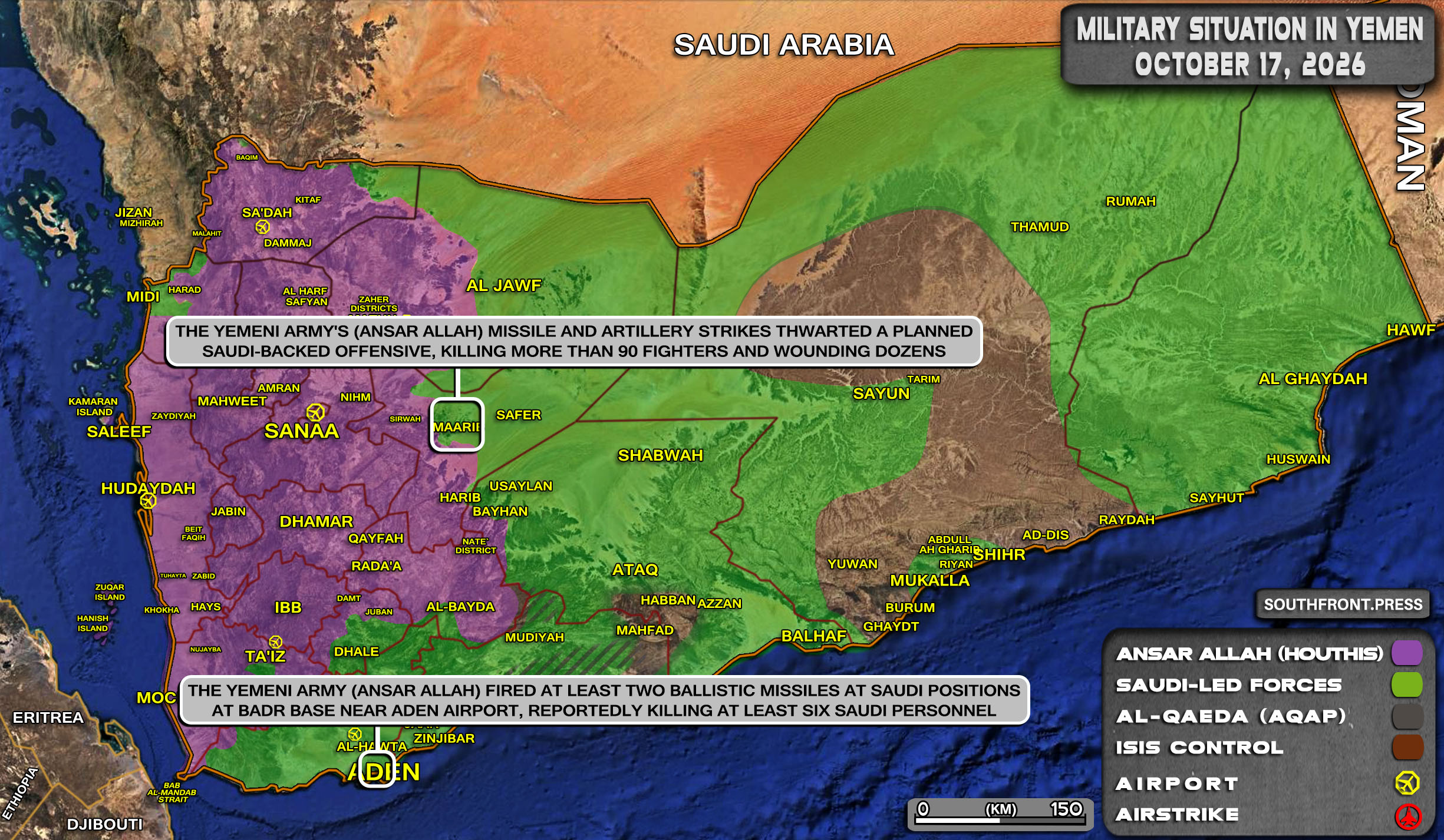
Click to see full-size map.
_______________________________________________________________________________________________________________________
MORE ON THIS TOPIC:
The post Military Situation In Yemen On October 17, 2026 (Map Update) appeared first on South Front.

File image.
The Houthis (Ansar Allah) fired at least two missiles toward a military facility next to Aden International Airport on October 16, saying the attack targeted a Saudi-led coalition command center and weapons depots at Badr military camp.
Aden’s security department said the missiles struck airport grounds without causing casualties. Meanwhile, Yemeni Information Minister Moammar al-Eryani said they landed about 500 meters from a Yemenia Airways passenger jet preparing to depart for Cairo. Passengers were evacuated, according to a security official.
The strike came a day after the Houthis attacked the al-Maashiq presidential palace, the headquarters of Yemen’s internationally recognized government in Aden.
Yemen’s Health Minister Qasem Buhaibeh said five people were killed and 16 wounded. AFP reported, citing an unnamed Yemeni minister, that Saudi and Yemeni personnel were among the casualties, although no Saudi-specific death toll was disclosed.
The successive attacks have brought mounting pressure on Aden, the interim capital and a key center for the Saudi-backed government.
The Houthis have intensified their military campaign while expanding their territorial gains along Yemen’s Red Sea coast and tightening their grip around the strategic Bab al-Mandab Strait, a major shipping passage connecting the Red Sea with the Gulf of Aden.
At the same time, the group also tightened its siege of Taiz, Yemen’s third-largest city, cutting the city’s main southern road to Aden.
Capturing Taiz would give the group control over another major urban center in southwestern Yemen and could help consolidate its position around the Bab al-Mandab approaches.
The growing frequency of Houthi strikes on Aden may be part of a broader campaign of shaping operations intended to disrupt Saudi-led coalition command-and-control structures ahead of a possible large-scale offensive to capture the port city.
_______________________________________________________________________________________________________________________
SouthFront: Analysis and Intelligence
NOW hosted at southfront.press
Previously, SouthFront: Analysis and Intelligence was at southfront.org.
The .org domain name had been blocked by the US (NATO) (https://southfront.press/southfront-org-blocked-by-u-s-controlled-global-internet-supervisor/) globally, outlawed and without any explanation
Back before that, from 2013 to 2015, SouthFront: Analysis and Intelligence was at southfront.com
The post Houthis Escalate Strikes on Saudi-Led Coalition Stronghold of Aden (Videos) appeared first on South Front.

The front changes faster than any headquarters, so Ukraine’s war chief went to the people who fight on it. On 16 October, Ukrainian Defense Minister Yevhenii Khmara met commanders and soldiers from front-line units to discuss the needs of the front, command practices that save lives, and ways to raise combat effectiveness, the Defense Ministry reported.
The front keeps changing, with technology, tactics and weapons shifting constantly, so decisions made far from it risk arriving late and costing lives. Khmara’s answer is to anchor ministry policy in the experience of the soldiers who fight, a continuation of the “machines over men” program.
"The front does not stand still. But the key thing is people. People will always be the foundation and the main value of the Defense Forces,” Khmara said.
He claimed that the decisions of the Ministry of Defense must take into account the experience of warriors, those who directly carry out combat missions at the front.
The meeting drew commanders from across the force, including the Airborne Assault Forces, the Marine Corps, the 93rd, 100th, 28th and 155th mechanized brigades, the 1st, 425th and 475th assault regiments, the 3rd and 59th assault brigades, and Azov.
The last one, the 1st Azov Corps of the National Guard of Ukraine, is actively fighting in the Donbas region, where units have led counter-operations to disrupt Russian advances toward fortress cities that have been holding Russia's operation since 2014.
Meanwhile, the 93rd "Kholodnyi Yar" Separate Mechanized Brigade took part in fierce battles for Ilovaisk, the Donetsk Airport, Debaltseve, and Bakhmut, as well as in the liberation of the Kharkiv Oblast. Both units are known for their extensive implementation of advanced military technologies, including ground robotic complexes, FPV strike drones, and innovative anti-drone electronic warfare systems.
The talk turned on how good commanders cut their own losses. Participants discussed command approaches that help save soldiers’ lives, use resources efficiently, and achieve combat results.
The ministry wants those methods studied and spread to other units, treating commanders' hard-won judgment as something to scale rather than leave in one brigade.
Khmara framed the task in plain terms.
“We must adapt faster and give our warriors modern and effective tools,” he stressed, calling it the shared job of the Defense Ministry, the commander-in-chief and the General Staff.

Illustrative image. (Egyptian Ministry of Defense)
Egyptian President Abdel Fattah El-Sisi on October 17 called for an emergency parliamentary session to authorize a possible Egyptian intervention to defend Saudi Arabia if requested by the kingdom.
“I call on parliament to convene an emergency session to authorize us to take action to intervene in defense of Saudi Arabia, if we are asked to do so,” El-Sisi said at a graduation ceremony for military academy and college cadets.
“This move and this defense require approval from the Egyptian parliament,” he noted, stressing that Egypt was not seeking to join the war against Yemen’s Houthis.
“I am not speaking about attacking or waging war. We are seeking only to defend,” the Egyptian president added.
Egypt is the latest country to publicly signal support for Saudi Arabia as the kingdom faces escalating missile and drone attacks by the Houthis, who control much of Yemen.
El-Sisi said Cairo would take the necessary measures to protect Saudi Arabia, adding that it was “absolutely unacceptable” for the kingdom’s security and stability to be undermined.
Saudi Arabia has secured defensive military support from Pakistan and Turkey through the Mecca Joint Defense Agreement, which the three countries agreed to activate on October 5. More recently, the kingdom also received defensive support from the United Kingdom and France.
The United States, for its part, has been providing more substantial military support to Saudi Arabia, including intelligence sharing, operational planning and assistance identifying Houthi targets, as well as weapons and air defense systems.
Still, Riyadh has so far failed to secure a publicly announced commitment from its allies to directly join its offensive against the Houthis inside Yemen.
_______________________________________________________________________________________________________________________
SouthFront: Analysis and Intelligence
NOW hosted at southfront.press
Previously, SouthFront: Analysis and Intelligence was at southfront.org.
The .org domain name had been blocked by the US (NATO) (https://southfront.press/southfront-org-blocked-by-u-s-controlled-global-internet-supervisor/) globally, outlawed and without any explanation
Back before that, from 2013 to 2015, SouthFront: Analysis and Intelligence was at southfront.com
The post Sisi Calls Emergency Session to Authorize Egyptian Defense of Saudi Arabia appeared first on South Front.
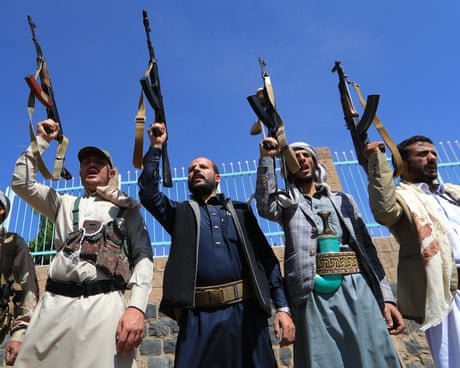
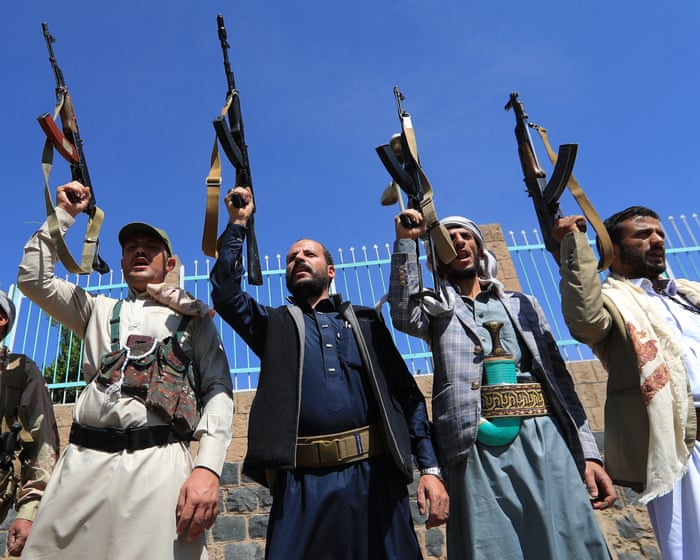
United Arab Emirates will reportedly resume payments to Yemeni forces as gains by Iran-backed Houthi fighters alarm Gulf state rulers
The United Arab Emirates has agreed to re-enter the Yemen conflict by resuming payments to some government forces fighting Iran-aligned Houthis in the south, according to sources in Yemen. In return, Saudi Arabia has agreed to provide air cover for the anti-Houthi force.
The new cooperation agreement is the first tangible sign that the deep rift between the UAE and Saudi Arabia over Yemen’s future is starting to be healed – if only because the advance by Houthi forces across Yemen has alarmed all the rival Gulf state rulers.
Continue reading...
© Photograph: Mohammed Huwais/AFP/Getty Images
© Photograph: Mohammed Huwais/AFP/Getty Images
© Photograph: Mohammed Huwais/AFP/Getty Images
Getty Images; Alyssa Powell/BI
After 20 years of balancing her corporate leadership roles with motherhood, Trisha Daab was ready for a break.
"Life had felt like sprinting a marathon for as long as I could remember," Daab, 47, told Business Insider. "I had no idea how tired I was until I stopped working."
In her year off, she tap danced, volunteered at a food bank, traveled to Disneyland and Alaska, and spent more time with her kids. By the end, she had decided she couldn't go back to her old life.
"My job often demanded that it came first — never-ending to-do lists, urgent emails, travel, and always chasing the next promotion," Daab, who's now a travel writer and substitute teacher, said. "Stepping away helped me realize my priorities had shifted."
Courtesy of Trisha Daab
Now in their 30s and 40s, many millennial women are skeptical of corporate and instead becoming business owners, content creators, and mothers, prioritizing more flexible work schedules. Instead of striving to get to the top, they're inverting Sheryl Sandberg's mantra of the 2010s — and leaning out.
Sandberg, Meta's former COO, told Business Insider that the corporate exodus is due to women feeling undervalued at work.
"This is not the women who are saying, 'I don't want to do it,'" Sandberg, 57, said. "It's the women saying, 'I don't want to do it because I'm not wanted, I'm not getting the same opportunities and the same support, and I face an unfair burden at home.'"
Even Lean In, the organization founded by Sandberg and named after her 2013 bestselling book, is noticing a recent shift in women's ambitions in the workforce.
Bloomberg/Getty Images
According to the organization's 2025 Women in the Workplace report, published in December 2025, which surveyed 9,500 US employees across 124 organizations, women were less likely to say they wanted a promotion compared to men. This was true when filtered to include only millennials, who made up roughly one-third of participants.
When asked why, over 28% of millennial women said "personal obligations" made it hard for them to take on more — compared to 17% of millennial men.
Annie Wright, a licensed psychotherapist who works with Silicon Valley leaders, has also observed more of her millennial female patients shifting their ideas about what constitutes a fulfilling career.
"I'm watching them make more person-centered choices than necessarily career-only-driven choices," she told Business Insider. "I don't think many millennial women are becoming less ambitious. I think they're just becoming less willing to confuse ambition with self-erasure."
Monica Schipper/Getty Images for The Wing
Let's, for a moment, remember what is now referred to as the "girlboss era" of the 2010s.
It was a time of She-E-O-led startups, of crushed velvet sofas and the words "I Want It All" aglow in cursive neon lettering. Of earnest enjoyment of "Fight Song" and T-shirts with earnest phrases like "feminist" and "woman up."
Of a future that was female, tinged millennial pink — until a series of public reckonings punctured the fantasy. Leaders of several companies stepped down amid allegations of toxic workplace cultures, exposing the facade of the girlboss promise.
Then came the remote work culture of 2020. Suddenly, many women had time to breathe, whether that meant not rushing to day care pickup, having more time to work out or see friends, or simply not being "on" all the time.
For some, the slowly creeping requirement to return to the office dealt the final blow.
Misty Heggeness, a professor at the University of Kansas specializing in gender economics, described the influx of new RTO policies by some companies as having a "chilling effect."
"That does disproportionately disadvantage women in general," Heggeness told Business Insider, "just because women are more likely to carry an invisible load of work within families."
Courtesy of Kendra Rothermel
After the birth of her first child, Kendra Rothermel switched from full-time to part-time work as an office manager while her husband remained at his full-time job. "As we grew our family, it made sense for me to have a more flexible schedule," Rothermel, 34, told Business Insider.
When she had her third baby, his clubfoot diagnosis meant frequent orthopedic appointments. Even part-time work wasn't flexible enough, so she eventually started her own venture helping small businesses with operations and marketing.
Rothermel said she was partly inspired by watching other working moms do the same.
A recent analysis of job-market data by Matthew Nestler, a senior economist at KPMG, found that labor force participation between December 2023 and May 2026 decreased among college-educated women with children under 5. Meanwhile, participation increased for women without children and most groups of men, including fathers.
Because millennials are generally having kids later than previous generations did, Heggeness said parents, moms in particular, are more likely to be parenting young children just as their work responsibilities are ramping up.
"If they were going to lean out, now would be the time," she said, whether it's to save on childcare costs or introduce more flexibility.
Natalia Lebedinskaia/Getty Images
Add to the list aging parents. The costs of childcare and eldercare, sometimes unaffordable even with the intense work commitments required to afford them, have prompted some women to leave their full-time jobs for more flexible or minimum-wage work.
To Sandberg, it's a sign that companies are not adequately adjusting to meet women where they are, whether that's offering more flexible hours, longer parental or bereavement leave options, or better healthcare coverage.
"We're at a critical moment in time for women, because what a lot of women are seeing is that commitment to them in leadership pulling back," Sandberg said. "Then what's happening to them is their ambition is pulling back. And that's a loss. It's a loss for our economy. It's a loss for our companies. It's a loss for our children."
Courtesy of Heigi Jeong
Not all women who are leaning out are doing so because they are overworked. Some, like Heigi Jeong, 30, have dreams beyond corporate America.
"While I wouldn't say I loved the work, I liked it," Jeong, who made $173,000 working in product design, told Business Insider. "It was my dream job as an immigrant, and it was sustainable."
Still, Jeong was pulled toward her other ambitions: writing a book and being a content creator. She was also intrigued by the idea of being her own boss.
"When I'm working for myself, I entirely choose the role I will play," Jeong said. "I wanted to experience it myself and have my own take rather than constantly wondering 'What if I quit?'"
Three months after quitting, she enjoys not feeling as rushed as she used to, even if the price is an inconsistent income.
Both Heggeness and Wright have noted a growing interest in entrepreneurship and self-employment among women. A 2024 Census working paper found that the share of women business owners under 45 rose between 2012 and 2020, with the biggest increase among women ages 25 to 34. It also found that newer women-owned employer businesses were disproportionately owned by women under 35.
Luis Alvarez/Getty Images
The creator economy opened another path. More than 200 million people worldwide now identify as content creators, though that broad figure includes far more than full-time influencers. Some Gen Z and millennial consultants are even leaving MBB and Big Four firms to build audiences and businesses online — trading the girlboss crown for a bubble headband.
In a 2023 Vogue article, writer Daisy Jones wrote that the newest iteration of girlboss swaps grind culture with the similarly perfectionistic "soft life" defined by travel and lucrative brand deals. Pantsuits were exchanged for sweatpants; speaking engagements and spread-thin multitasking gave way to self-care and supplement stacks.
"In some ways, the career woman appears to have been replaced by the health-conscious woman," Jones wrote, "the one who prioritizes her vitamin intake, hydration, and sleep cycle over endless meetings and salary increases."
Content creation doesn't come without its own costs. Plenty of influencers report feeling financially insecure or overworked, unable to take a day off without losing money.
Still, if they're going to burn out or worry about their job security, some figure they might as well enjoy their autonomy to create their own schedules.
"For some women, there's been a paradigm shift in values," Wright said. "Promotion or success now looks like more availability, presence, and freedom."
Petri Oeschger/Getty Images
Sandberg, who herself stepped down as Meta's COO in 2022 to pursue philanthropy and early-stage investing ventures, said she supports women's career choices, whatever they may be.
"I think being at home with your children is great," she said. "Going back to school, great. Starting a company, great. Going part-time, great. Anything you want to do is great."
Part of the issue, she said, is that without female leaders, there are simply fewer people to advocate for the very policies that make other women more excited to move up in a company, be it egg-freezing coverage, lactation rooms, or more competitive maternity leave options.
It's why she feels companies need to do more work to assess why women are leaning out enough to jump ship entirely. "It's easy to overly characterize the words 'lean in,'" she said. "What I mean by them is very clear: I think women should make decisions based on believing in their own abilities, based on believing that they should and can have the same opportunities as men."
It's just a shame, she continued, if the decision stems from not feeling valued enough in the corporate world.
"I just hope that enough women want those senior leadership roles," she said, "that we get the environment for women that they deserve."

© YAHYA ARHAB/EPA
By Finian Cunningham | Strategic Culture Foundation | October 16, 2026
The Saudi kingdom is facing the danger of collapse from soaring war costs as Yemeni air strikes ramp up, hitting its northern neighbor’s capital and industrial centers with impunity.
Yemeni journalist Hussein al-Bukhaiti says the corruption and arrogance of the “House of Evil” is culminating in historic defeat. Its U.S. patron seems unable to avert the coming collapse.
Despite decades of the U.S. selling weapons worth hundreds of billions of dollars to the Saudi rulers, the regime seems shockingly exposed, with no viable defenses. Yemen’s missiles are striking Saudi Arabia at will. The panicky rulers are pleading with the United States and Europe for help.
Yemen’s armed forces are taking the war to Saudi Arabia, striking its airports, imposing a no-fly zone over the entire state and shutting down its vital oil industry.
“The Saudis cannot stop our drones and hypersonic missiles… we are taking the war to them,” says Sanaa-based Hussain al-Bukhaiti.
With no oil exports, Al-Bukhaiti reckons the Saudi rulers are facing an existential nemesis. Many observers have long predicted that the autocratic Saudi kingdom, created by the British Empire, is awaiting downfall from its ossified and family-run power structure.
Speaking from the Yemeni capital, Sanaa, Hussain al-Bukhaiti described the Saudi monarchy as “a house of glass” that is now being shattered by air strikes that cannot be defended against.
“Yemen did not want this war, but we are bringing the fire back to Saudi Arabia.”
Western politicians and media are portraying the conflict between the two Arab Peninsula countries as being caused by recent aggression from the Ansar Allah-led Yemeni government.
Saudi Arabia’s King Khalid international airport was attacked on October 10 with ballistic missiles that killed several people. Other Saudi airports have also been hit. This has led international airlines to suspend flights.
The state-owned Aramco oil industry has also been blasted with missiles. Fires are raging at major facilities, including at the main base of operations in Dammam on the Persian Gulf coast.
Following the missile strike on Riyadh airport at the weekend, U.S. President Donald Trump and all European leaders condemned an “act of terrorism” by Yemen.
Hussain al-Bukhaiti pointed out the gross hypocrisy of European governments not condemning the thousands of Saudi air strikes on Yemen that have occurred since 2015. These governments still remain silent about the ongoing Saudi atrocities against Yemeni civilians. The European Union even declares “solidarity” with Saudi Arabia.
The Saudi monarchy, led by Crown Prince Mohammed bin Salman, started the war with unprovoked attacks in March 2015. The aggression was enabled by the United States, Britain, and France supplying warplanes, bombs, and intelligence.
These Western powers continue to arm and direct the Saudi regime in its war against Yemen.
Since 2015, there have been thousands of Western-backed air strikes on Yemen, resulting in more than 20,000 mainly civilian deaths.
“They hit everything, schools, hospitals, water-treatment plants, farms, homes, wedding and funeral halls,” says Al-Bukhaiti.
In addition, over 400,000 Yemenis have died from starvation and diseases caused by a blockade on the country imposed by Saudi Arabia and its Western backers for over 10 years.
He says the war reignited in July 2026 after the Saudis broke a four-year truce signed in 2022 by bombing Sanaa international airport. There was no condemnation by Europe of the Saudi violation then.
What Yemen is doing to Saudi Arabia now is but a taste of what the House of Saud inflicted on Yemenis since 2015 with Western support.
The Yemenis this week rejected a reported Saudi proposal for a short-term truce because they see it as just a ploy by the Saudis for rearming and regrouping in a losing situation.
For the war to end, Saudi Arabia must respect Yemen’s sovereignty and stop interfering in its internal affairs.
However, Hussain al-Bukhaiti thinks that the United States will double down and escalate its military involvement in Yemen with a full-blown war. This is not primarily to support the Saudi monarchy, he believes, but rather to prop up the Israeli regime.
Yemen has inflicted huge damage on the Israeli state since it intensified the genocide against Palestinians in October 2023. Yemeni air strikes have repeatedly struck Tel Aviv despite American air defenses.
An expanded U.S. war in Yemen might seem surprising given that Trump has made such a mess of his reckless aggression against Iran and may not have the military forces at his disposal.
But Al-Bukhaiti believes the issue is beyond Trump’s choice. Washington is locked in with the Zionist regime and will do whatever it takes to salvage Israel from defeat. Yemen represents the biggest threat to Israel from the cutting off of its shipping in the Red Sea.
“We are ready for the war that is coming,” he warns.
Illustrative image.
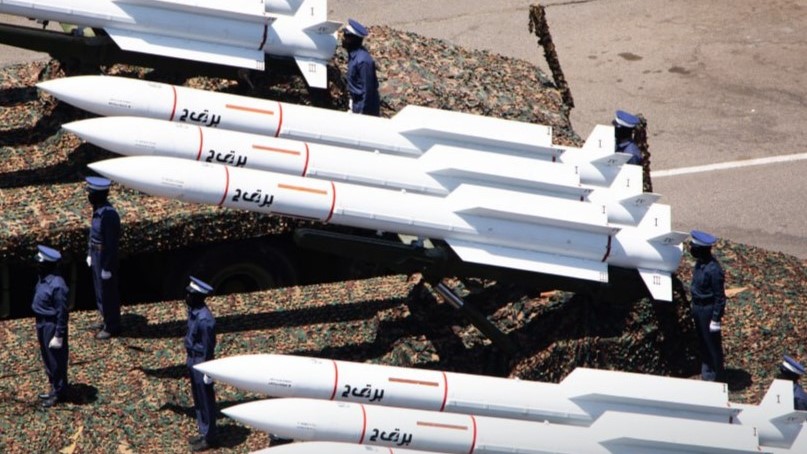
The Houthis (Ansar Allah) released a video on October 15 showing a Saudi Typhoon fighter jet being hit by their air defenses over the northern Yemeni province of Saada.
In a statement, Houthi military spokesman Brig. Gen. Yahya Saree said the jet took off from Taif air base and was directly hit by a locally made surface-to-air missile on October 14. He said the warplane was at risk of crashing but did not claim it had been destroyed.
The infrared footage shows the missile’s warhead detonating and damaging the jet’s wing, followed by a visible trail of smoke.
The Typhoon claim adds to a series of Saudi warplanes the Houthis say they have shot down since July, when they said a Saudi strike on Sanaa’s airport ended a period of de-escalation. Their statements have listed 17 individual shootdowns since then, excluding the Typhoon.
Sixteen of the 17 warplanes were combat drones: eight Wing Loong II, three CH-4, three Vestel Karayel and two Bayraktar Akinci. The Wing Loong II and CH-4 are both made by China, while the Karayel and Akinci are made by Turkey. The remaining warplane was a United States-made F-15SA fighter jet.
The Houthis said on September 16 that they had shot down the F-15 over the central province of Marib using a locally made missile and released footage of the wreckage. The video confirmed the warplane’s loss, but Saudi authorities have not publicly acknowledged it. The fate of the pilot and weapon systems officer remains unknown.
A rough estimate based on published unit prices puts the replacement cost of the 17 warplanes at $145 million to $240 million, with the F-15 accounting for more than half of the total.
In a September 11 statement about an offensive on Yemen’s western coast, the Houthis said their forces had carried out 32 operations against Saudi warplanes and shot down nine combat drones.
Most of the claimed shootdowns were reported over the northern province of al-Jawf and the southwestern province of Taiz, with four in each. Marib accounted for three, while al-Bayda in central Yemen, Saada and Hajjah in the northwest had two each.
The Houthis’ air defense operations began on July 3, when they fired anti-aircraft missiles at a formation of Saudi warplanes they said had tried to prevent an Iranian civilian plane carrying more than 200 people from landing at Sanaa airport. They announced their first shootdown, a Wing Loong II over al-Bayda, on July 14, a day after Saudi warplanes struck the airport.
The Houthis announced three shootdowns in July and none in August. Their claims resumed on September 6, followed by 14 more announcements.
The group reported more than 300 Saudi strikes over five days in mid-September. As of October 14, it had put the total number of Saudi strikes and missile attacks since the escalation began at 2,323. The latest claim came on October 16, when the Houthis said they had shot down a Wing Loong II over Marib.
The Houthis operate a range of air defense systems, from man-portable weapons to interceptors and medium-range surface-to-air missiles. The ongoing confrontation points to growing air defense capabilities, particularly in engagements against drones.
_______________________________________________________________________________________________________________________
SouthFront: Analysis and Intelligence
NOW hosted at southfront.press
Previously, SouthFront: Analysis and Intelligence was at southfront.org.
The .org domain name had been blocked by the US (NATO) (https://southfront.press/southfront-org-blocked-by-u-s-controlled-global-internet-supervisor/) globally, outlawed and without any explanation
Back before that, from 2013 to 2015, SouthFront: Analysis and Intelligence was at southfront.com
MORE ON THIS TOPIC:
The post From Drones to Fighter Jets, Houthis Challenge Saudi Air Power (Video) appeared first on South Front.
“Yemen did not want this war, but we are bringing the fire back to Saudi Arabia.”
Join us on Telegram , X
 , and VK
 .
Contact us: info@strategic-culture.su
The Saudi kingdom is facing the danger of collapse from soaring war costs as Yemeni air strikes ramp up, hitting its northern neighbor’s capital and industrial centers with impunity.
Yemeni journalist Hussein al-Bukhaiti says the corruption and arrogance of the “House of Evil” is culminating in historic defeat. Its U.S. patron seems unable to avert the coming collapse.
Despite decades of the U.S. selling weapons worth hundreds of billions of dollars to the Saudi rulers, the regime seems shockingly exposed, with no viable defenses. Yemen’s missiles are striking Saudi Arabia at will. The panicky rulers are pleading with the United States and Europe for help.
Yemen’s armed forces are taking the war to Saudi Arabia, striking its airports, imposing a no-fly zone over the entire state and shutting down its vital oil industry.
“The Saudis cannot stop our drones and hypersonic missiles… we are taking the war to them,” says Sanaa-based Hussain al-Bukhaiti.
With no oil exports, Al-Bukhaiti reckons the Saudi rulers are facing an existential nemesis. Many observers have long predicted that the autocratic Saudi kingdom, created by the British Empire, is awaiting downfall from its ossified and family-run power structure.
Speaking from the Yemeni capital, Sanaa, Hussain al-Bukhaiti described the Saudi monarchy as “a house of glass” that is now being shattered by air strikes that cannot be defended against.
“Yemen did not want this war, but we are bringing the fire back to Saudi Arabia.”
Western politicians and media are portraying the conflict between the two Arab Peninsula countries as being caused by recent aggression from the Ansar Allah-led Yemeni government.
Saudi Arabia’s King Khalid international airport was attacked on October 10 with ballistic missiles that killed several people. Other Saudi airports have also been hit. This has led international airlines to suspend flights.
The state-owned Aramco oil industry has also been blasted with missiles. Fires are raging at major facilities, including at the main base of operations in Dammam on the Persian Gulf coast.
Following the missile strike on Riyadh airport at the weekend, U.S. President Donald Trump and all European leaders condemned an “act of terrorism” by Yemen.
Hussain al-Bukhaiti pointed out the gross hypocrisy of European governments not condemning the thousands of Saudi air strikes on Yemen that have occurred since 2015. These governments still remain silent about the ongoing Saudi atrocities against Yemeni civilians. The European Union even declares “solidarity” with Saudi Arabia.
The Saudi monarchy, led by Crown Prince Mohammed bin Salman, started the war with unprovoked attacks in March 2015. The aggression was enabled by the United States, Britain, and France supplying warplanes, bombs, and intelligence.
These Western powers continue to arm and direct the Saudi regime in its war against Yemen.
Since 2015, there have been thousands of Western-backed air strikes on Yemen, resulting in more than 20,000 mainly civilian deaths.
“They hit everything, schools, hospitals, water-treatment plants, farms, homes, wedding and funeral halls,” says Al-Bukhaiti.
In addition, over 400,000 Yemenis have died from starvation and diseases caused by a blockade on the country imposed by Saudi Arabia and its Western backers for over 10 years.
He says the war reignited in July 2026 after the Saudis broke a four-year truce signed in 2022 by bombing Sanaa international airport. There was no condemnation by Europe of the Saudi violation then.
What Yemen is doing to Saudi Arabia now is but a taste of what the House of Saud inflicted on Yemenis since 2015 with Western support.
The Yemenis this week rejected a reported Saudi proposal for a short-term truce because they see it as just a ploy by the Saudis for rearming and regrouping in a losing situation.
For the war to end, Saudi Arabia must respect Yemen’s sovereignty and stop interfering in its internal affairs.
However, Hussain al-Bukhaiti thinks that the United States will double down and escalate its military involvement in Yemen with a full-blown war. This is not primarily to support the Saudi monarchy, he believes, but rather to prop up the Israeli regime.
Yemen has inflicted huge damage on the Israeli state since it intensified the genocide against Palestinians in October 2023. Yemeni air strikes have repeatedly struck Tel Aviv despite American air defenses.
An expanded U.S. war in Yemen might seem surprising given that Trump has made such a mess of his reckless aggression against Iran and may not have the military forces at his disposal.
But Al-Bukhaiti believes the issue is beyond Trump’s choice. Washington is locked in with the Zionist regime and will do whatever it takes to salvage Israel from defeat. Yemen represents the biggest threat to Israel from the cutting off of its shipping in the Red Sea.
“We are ready for the war that is coming,” he warns.
Dialogue Works | October 15, 2026
Support me:
Buy me a Coffee: https://buymeacoffee.com/dialogueworks
Follow me:
Substack: https://substack.com/@dialogueworks?u…
X (Twitter): https://x.com/Dialogue_NRA
Patreon: https://patreon.com/Dialogueworks?utm…
By Robert Inlakesh | The Palestine Chronicle | October 15, 2026
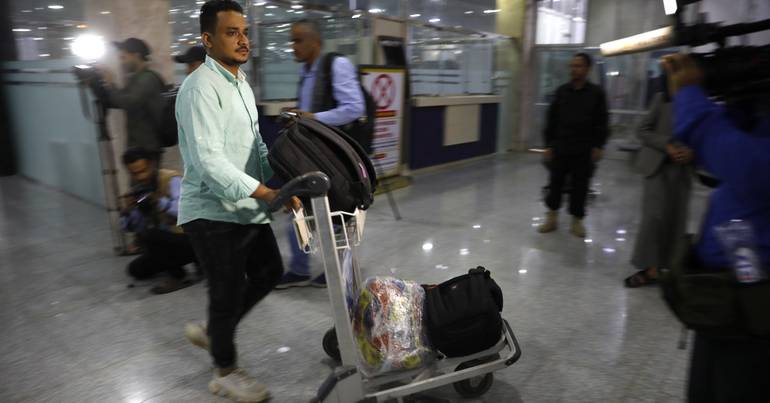
Yemeni missiles fired at Saudi Arabia are destroying oil facilities and airports across the country – drawing particular international outrage was the ballistic missile attack on Terminal 3 of King Khalid Intl. Airport, an attack that killed 13 and left another 307 injured. As is usually the case, the corporate media starts the clock where it chooses instead of looking at the context, a similar tactic that is used when reporting on Palestine.
On October 10, a missile fired by the Yemeni missile units of Sana’a’s Ansarallah-led government caused a mass casualty event at Riyadh’s main international airport. It then drew broad condemnation from governments around the world, grabbing headlines across the corporate media.
The Saudi-led coalition’s spokesman, Maj Gen Turki al-Maliki, then called the attack a “full-fledged war crime” and said that striking a civilian airport was a “cowardly terrorist attack”. The UN Secretary-General Antonio Guterres also weighed in and expressed his shock at what he called a violation of international law, urging the attacks to stop.
However, Guterres and various government officials never commented on Saudi Arabia’s airstrikes against Sana’a Intl. Airport on July 13, which broke the years-long ceasefire between Yemen and Saudi Arabia. Nor did Israeli Prime Minister Benjamin Netanyahu, who himself ordered airstrikes on Sana’a Intl. Airport in the Yemeni Capital of Sana’a last year.
Unpacking The Lies and Hypocrisy
While the Saudi leadership has attacked its airports to generate international sympathy, it has been launching airstrikes on Yemeni airports for over a decade.
On the first day of Saudi Arabia’s war against Yemen, on the 26th of March in 2015, airstrikes struck both Sana’a Intl. Airport and the neighboring Bani Hawat residential neighborhood, killing around 34 civilians, including children. Since then, the Saudi air force has carried out over 227 strikes targeting Yemeni airports.
The breakdown of the ceasefire, which was achieved through UN mediation back in 2022, came as a result of Saudi Arabia bombing the Yemeni Capital City’s main airport, in a bid to stop an Iranian civilian airliner from landing there. Riyadh has imposed a siege on Yemen – by land, air and sea – since 2015, even inflicting a man-made famine on the country.
Saudi Arabia is responsible for killing between 9,000 and 18,000 civilians inside Yemen. Schools, mosques, weddings, hospitals, and even funerals have been struck by the Saudi air force. In total, around 400,000 people have been killed as a result of the Saudi-led war on the country.
However, the international media coverage robs current events of both the historical and current context. Take, for example, the following headline published by Reuters, which is held up as the gold standard of Western journalism:
“Houthis fire missiles at Saudi Arabia, breaking years of calm,” read the headline. However, the story they were covering, admitted through their use of the video of Saudi Arabia’s strikes on Sana’a Intl. Airport, painted Yemen as the aggressor.
In reality, no political entity called the “Houthis” exists; the name of the Party that the corporate media refuses to correctly name is Ansarallah, which heads the government that rules over the majority of the Yemeni population and is based in the nation’s Capital City. Its opposition is called the Presidential Leadership Council (PLC), which was officially formed in the Ritz-Carlton hotel in Riyadh, Saudi Arabia, back in 2022. The PLC is a proxy of the Saudi government, and its leaders are all based inside Saudi territory, not Yemen.
The next obvious point to note here is that Yemen’s Armed Forces were responding with missile fire towards Saudi Arabia; they were not the aggressor. In retaliation for Riyadh’s decision to continue violently imposing its blockade on the country, it also declared a blockade on Saudi Arabia’s Red Sea ports.
To specifically address the point about the attacks on King Khalid Intl. Airport, it is important to note why this happened and that the Saudi authorities knew the dangers. In early October, Saudi Arabia conducted 1,000 airstrikes on Yemen, using 100 aircraft, while the forces back in Yemen attempted to launch a counter-offensive on the ground.
The Ansarallah-led government’s Armed Forces then announced, in response to the large-scale assault, that they would be imposing a no-fly zone over Saudi airspace. What proceeded to happen was a number of missile attacks on airports in order to shut them down; at first, these attacks caused no known casualties and were to serve as a warning.
As Saudi Arabia continued its airstrikes across Yemeni territory, the stakes were then raised and Riyadh’s main airport became the target. Missiles were at first fired into targets at the airport as a warning to close it down. The Saudi authorities ignored these warnings. On October 8, Yemeni missiles then struck aircraft while they were grounded at King Khalid International, which destroyed one commercial airliner, damaged two others, and killed 3 people.
Despite this attack and clear warnings to close the airport, the Saudis insisted upon keeping it open. On October 10, then came the mass casualty event that inflicted 13 fatalities along with hundreds of injuries amongst civilians.
Targeting a civilian airport is indeed a violation of international law. Yet, when Israel and Saudi Arabia bomb Yemeni airports, there is no outcry. Which brings us to the heart of this issue: why should it be expected that Ansarallah respect international law in this respect when there is no consequence for Saudi Arabia, Israel, or the United States, for that matter?
Riyadh is currently bombing targets throughout Yemen, using Israeli military intelligence support to do so. Meaning that the Saudis are being backed by a State that is committing genocide. On the other hand, the only State in the Arab World that invoked the Genocide Convention, imposing a blockade and firing munitions directly at Israel, was the Ansarallah-led government in Sana’a.
According to Western leaders, Israel and Saudi Arabia, Ansarallah is a terrorist organization. So why then did Saudi Arabia not close its airport as a precautionary measure, in order to protect civilians following the direct strikes on it and threats to go further? Does Riyadh not have the responsibility to protect civilian passengers?
Why is bombing a Saudi AirPort a terrorist act, but bombing Yemeni AirPorts hundreds of times is not even an issue capable of grabbing a headline? How can anyone expect international law to be respected, when the ones who claim to champion it the most selectively use it only when it favors them? These are simply common sense questions.
What Yemen is now doing is imposing the exact same reality on Saudi Arabia, as has been imposed upon it for over a decade. Only now, when the Israeli-backed Western ally is getting hit, is anyone even noticing.
In so many ways, the predicament of Yemen is like the situation in Palestine. Nobody batted an eye at the conditions in Gaza until the Hamas-led attack on October 7, 2023. Then the media framed the Palestinians as the aggressors.
The corporate media spoke of a “Hamas-run Gaza Health Ministry” in order to downplay the civilian death toll; similarly, in Yemen, they report on a “Houthi-run Yemeni Health Ministry”. Understanding the attacks on Saudi Arabia is simple if the context is applied. Either a negotiated settlement is to be reached to end this war, or it will continue until regime change on one side occurs.
– Robert Inlakesh is a journalist, writer, and documentary filmmaker. He focuses on the Middle East, specializing in Palestine.

