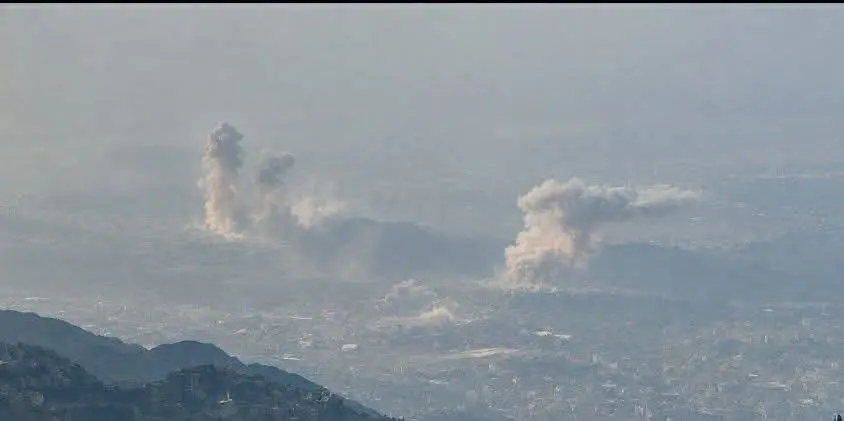
At least nine people died and another 16 were injured this Saturday in Saudi attacks in the province of Taiz, in southwestern Yemen, Houthi media reported amid the military escalation with the coalition led by Saudi Arabia.
The Al Masirah television channel reported that “nine people – including women and children – have died and another 16 have been injured in a new atrocity committed by the coalition’s air force” led by Riyadh.
It accused the coalition of attacking “civilian homes” with four bombings in the Humayr al Jabal area, in the Maqbanah district, located in the northwest of Taiz province.
The channel added that “several civilians remain trapped under the rubble of their homes,” while rescue efforts are “being hampered.”
🇸🇦⚡️🇾🇪 ⚠️ Saudi attacks on Taiz's old airport after Yemeni forces made progress on various fronts in western Taiz. pic.twitter.com/6rnwgtJaZd
So far, the military coalition has not commented on the matter, and the attack could not be independently verified.
For its part, the Yemeni Army claimed to have launched 1,417 “precise and direct attacks in the last 24 hours, using combat aircraft, drones, field artillery and multiple rocket launch systems” against the Houthis, as part of the “Dawn of Yemen” counteroffensive.
Military spokesman Majid al Nuzaili stated in a statement that the operations resulted in approximately “800 casualties – among dead and injured, as well as the destruction or disabling of more than 190 vehicles.”
He assured that in Taiz the Armed Forces “heroically repelled successive waves of attacks, while combat aviation precisely struck the positions and reinforcements of the militias, inflicting serious losses in both personnel and equipment,” but maintained that these attacks “are strictly limited to legitimate military targets.”
Meanwhile, the spokesman for the military coalition led by Saudi Arabia announced this Saturday on his X account that they intercepted and destroyed four drones in the Riyadh, eastern and southern Saudi regions in recent hours, without specifying concrete points.
The Yemeni Army maintains its counteroffensive against the rebels, which has air cover from Saudi Arabia, a country that in turn is the target of Houthi attacks for its participation in the Yemeni war since 2015 at the head of a military coalition in support of the internationally recognized government.
Guatemalan lawyer and former anti-corruption prosecutor Juan Francisco Solórzano Foppa was shot dead this Saturday by several hitmen in a sports complex in the capital of Guatemala, while playing soccer, official sources reported.
Solórzano Foppa, who was director of Criminal Analysis (2013-2016) of the Public Ministry and head of the Superintendency of Tax Administration (2016-2018), gained notoriety for leading criminal intelligence in high-impact investigations —including key expert reports in the ‘La Línea’ case that forced the resignation of President Otto Pérez Molina in 2015— and for taking on the defense of imprisoned journalist José Rubén Zamora Marroquín.
🚨 #URGENTE | Juan Francisco Solórzano Foppa, exfiscal del Ministerio Público y exsuperintendente de Administración Tributaria (SAT), figura entre las dos víctimas mortales reportadas tras un ataque armado ocurrido esta mañana en el interior de Campo Marte, zona 5 de la Ciudad de… pic.twitter.com/eZ9oLUP8Nj
The armed attack occurred this Saturday morning at the Campo Marte facilities, a busy sports complex located in the east of the Guatemalan capital, when armed men burst onto the field where the victim was playing sports and shot him at point-blank range.
In the incident, a second person, not immediately identified by the authorities, also died, while police officers and forensic experts cordoned off the scene to begin investigations.
During his time at the tax institution, Solórzano Foppa promoted judicial interventions and inspections that forced important companies and industries to pay millions in evaded taxes, which allowed for historical collections in the fight against tax evasion and fraud.
In 2023, he was arrested and prosecuted for obstruction of criminal action and unfaithful sponsorship, in a case directly linked to the legal defense of Zamora Marroquín, founder of the defunct newspaper ‘elPeriódico’.
Venezuela’s acting Delcy Rodríguez, announced the Plan Venezuela Alimenta and the draft of a Communal Economy Law, an initiative to coordinate the productive sectors, including communes, entrepreneurs and agribusiness, to eradicate hunger and strengthen territorial food security.
“We have just arrived from Rome, from our participation in the World Food Summit, and I have to tell the Venezuelan people, very responsibly, we are very close again to the Zero Hunger goal,” she reiterated.
At the same time, she explained that this alliance seeks to consolidate an efficient model that guarantees access to food in every corner of the national territory.
“From there I announced the Venezuela Feeds Plan, where we are going to coordinate all productive spaces, from the commune, businesses, agribusiness, to achieve this goal that is so human, so extraordinarily vital, such as the right to food and Zero Hunger,” Rodríguez highlighted.
La tierra es fuente de vida y esperanza. 🇻🇪🌱
En el Día Mundial de la Alimentación, reconocemos el esfuerzo de nuestros campesinos, agricultores, ganaderos, pescadores y trabajadores de la agroindustria, quienes hacen posible que los alimentos lleguen a las mesas de nuestro… pic.twitter.com/MYe6P2oOby
On her return from the FAO summit in Rome, President Rodríguez announced in Caracas that she had requested technical cooperation to strengthen the Plan Venezuela Alimenta.
The Head of State announced the upcoming presentation of a new legislative project: the Local Economy Law, an instrument that will integrate the current Communal Economy regulations to boost community production from the grassroots.
“(…) We are going to present a new Law, which is the Local Economy Law, which includes the Communal Economy Law, all community, local, territorialized efforts, in this supreme objective which is Zero Hunger for Venezuela (…), we will achieve it very soon. Before 2030 we will be meeting this goal,” affirmed the National President.
Rodriguez also urged participation in the popular consultation on 18 October, where more than 37,000 projects will be voted. In addition, he reported that the Communal Economy Law will be expanded to include other productive actors.
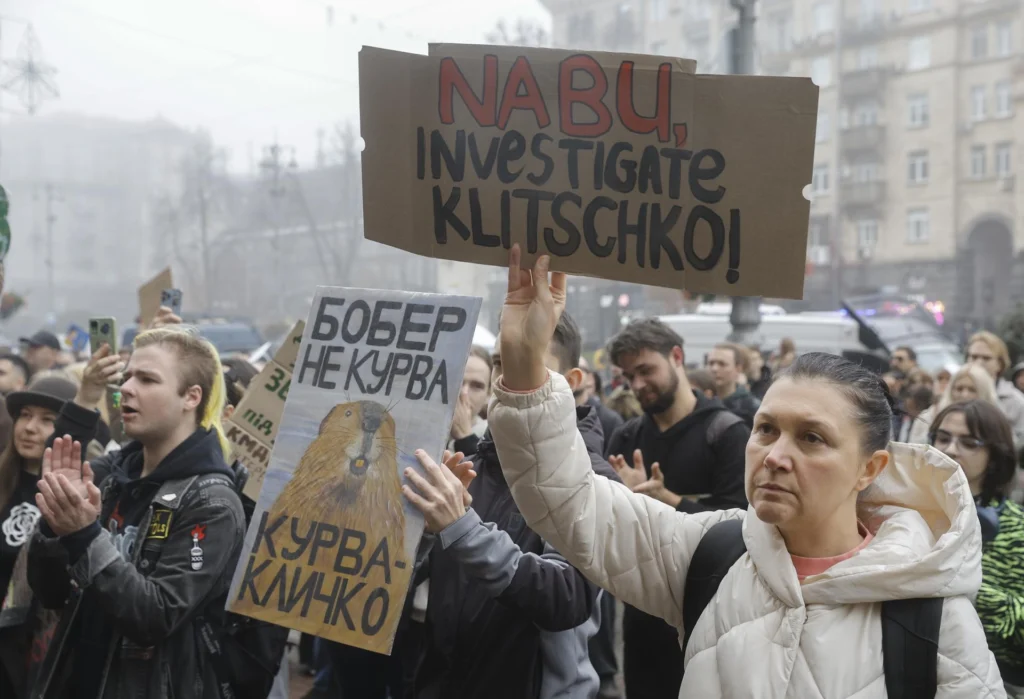
Several hundred people protested in Kyiv this Saturday to demand the resignation of the city’s mayor, Vitali Klitschko, due to criticism of his management and the alleged lack of preparedness of the city for winter.
The protest was organized by representatives of civil organizations, activists, and veterans who denounce systemic problems in the management of the Ukrainian capital, according to the public broadcaster Suspilne.
In their opinion, Klitschko has not ensured adequate preparation of the city for autumn and winter. In front of the State Administration building, protesters carried banners with slogans such as “Klitschko, resign!” or “Your inaction is costing Kyiv residents their lives!”.
But they also expressed their discontent over the increase in municipal public transport fares, the destruction of green areas and their transfer for urban development projects, as well as insufficient funding for the Ukrainian army from the municipal budget.
Ukrainians took to Kiev's City Hall in a massive protest, demanding Mayor Vitali Klitschko's resignation.
Protesters chanted slogans such as “Kyiv without Klitschko” and “Shame!”, according to Suspilne, which also highlighted that some residents came to the protest to express their support for the mayor.
“Klitschko is our mayor” and “Hands off Klitschko,” read the banners of his supporters, according to the Interfax-Ukraine agency, which states that the protest, at its peak, gathered up to a thousand participants.
On the eve of the demonstration, Klitschko’s Ukrainian Democratic Alliance for Reform (UDAR) faction had asked residents of the capital to avoid mass gatherings this Saturday, citing the security situation and the threat of Russian attacks.
Ukraine’s prime minister, Sergei Koretsky, described the energy situation in Kyiv as “one of the most difficult” due to increasing Russian attacks. Mayor Vitali Klichkó had previously advised residents to evacuate temporarily.
President Volodymyr Zelensky criticized the municipal authorities for their alleged ineffectiveness in protecting energy infrastructure, to which Klichko replied that air defense was not the city’s responsibility and that they could not prevent the effects of Russian attacks.
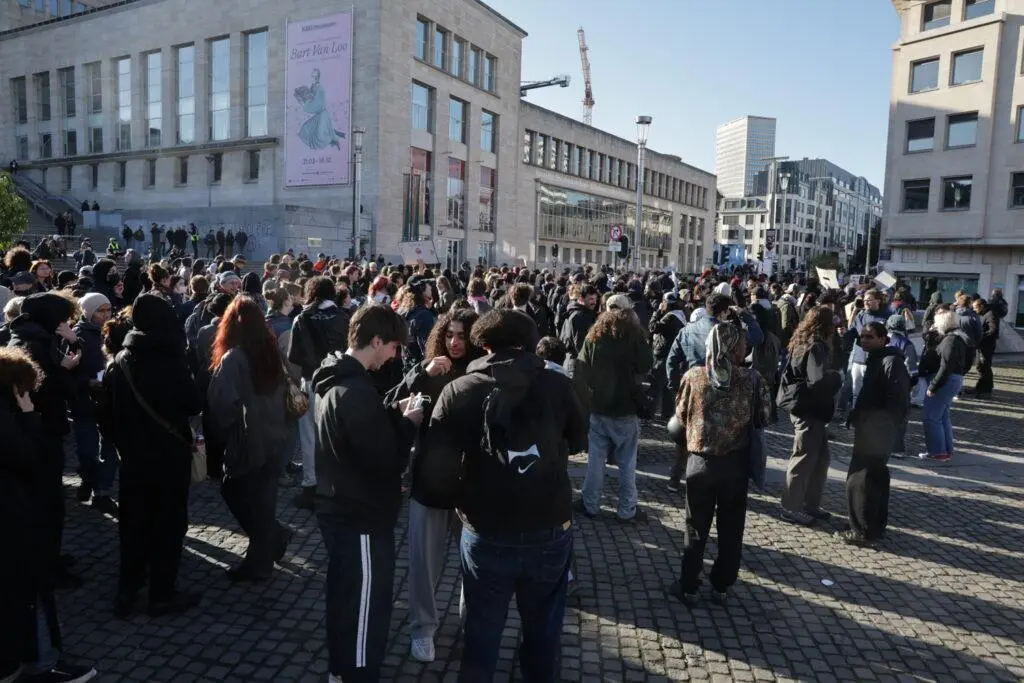
Hundreds of young people gathered this Saturday morning at Brussels Central Station to the rhythm of anti-fascist slogans and other slogans rejecting the police, who have deployed a strong presence in the surroundings, local media reported.
The young people, among whom there are also teachers and trade unionists, according to the Belga news agency, began a march peacefully towards Brussels South station in the middle of the morning and followed by a large police deployment.
This noon, after several blockades by the police that prevented the demonstrators from continuing the march, the situation became “chaotic”, the media pointed out. The police deployed water cannons and tear gas, while the protesters used construction fences to protect themselves and continue advancing.
As a result of the disturbances, several accesses to Brussels South station remain temporarily closed.
At Liege station, east of Brussels, another group of young people demonstrated who, according to Belgian media, expressed their concern about cuts in education, as well as working conditions, public services and social inequality.
Tear gas and water cannons unleashed as education funding protest sparks clashes in Brussels
Around 500 to 600 demonstrators gather for a march against education funding policies.
Anti-fascist activists join the protest, with some hurling projectiles and advancing behind metal… pic.twitter.com/8MMzfJMaiO
This Friday, several calls for protests in the Belgian capital were reported through social networks, including French-speaking students and other movements linked to the ‘yellow vests’ in France.
For his part, the mayor of Brussels, the socialist Philippe Close, declared that none of the demonstrations expected for this Saturday had official authorization.
These protests are in addition to the day of demonstrations by various groups organized today in France, where the Ministry of the Interior has counted “some 500 actions” and “more than 90 demonstrations” throughout the country.
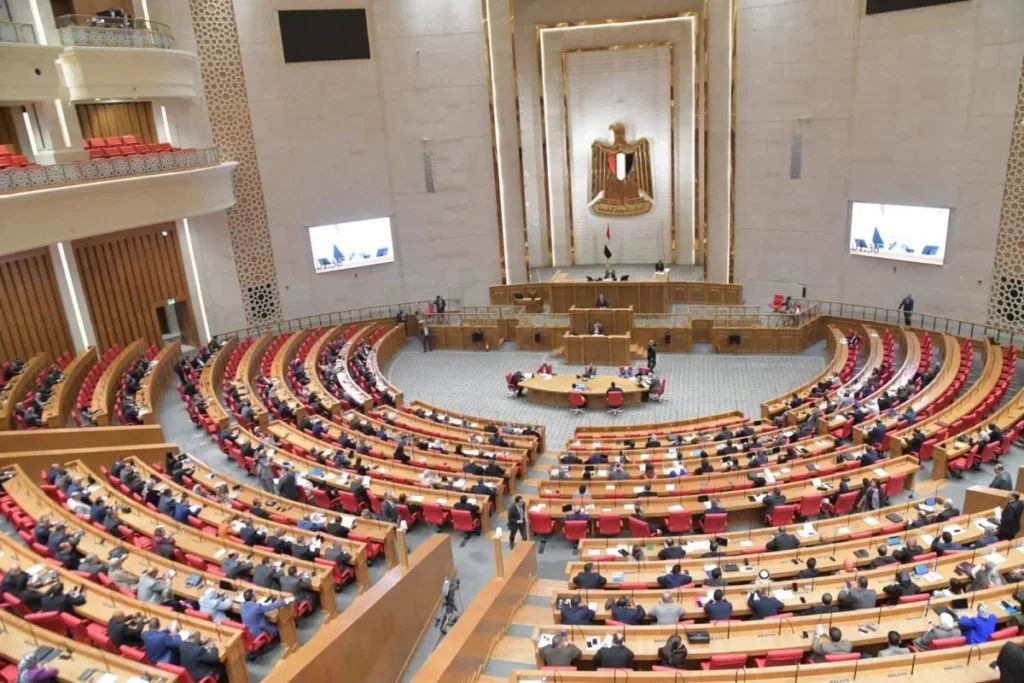
The Egyptian Parliament will hold an extraordinary plenary session this Sunday at the request of Egyptian President Abdelfatah al Sisi, who awaits authorization from the legislative body for a possible military intervention in support of Saudi Arabia in the face of the escalating conflict with the Yemeni Houthi.
The General Secretariat of the House of Representatives, a body largely controlled by legislators aligned with the president, announced that an extraordinary plenary session will be held this Sunday at the request of the Egyptian president at 1:00 p.m. (10:00 GMT), according to a brief statement disseminated by the official Egyptian news agency, MENA.
This Saturday, the Egyptian president assured that Egypt would take any measure to defend Saudi Arabia, and asked the Egyptian Parliament to hold an extraordinary session to support a possible intervention if necessary.
🔴 President Abdel Fattah al-Sisi has directed the Egyptian parliament to convene in an emergency session to grant the armed forces the necessary authorization to protect and support the Kingdom of Saudi Arabia and the Gulf states if requested
“Egypt will continue to support the directives” of Saudi King Salman bin Abdulaziz Al Saud and Crown Prince Bin Salman, the Egyptian president said during a speech at the graduation ceremony for new classes of students from the Egyptian Military Academy.
“We are ready to take any measure to protect and defend you. I know that this matter requires authorization from the Egyptian Parliament, and I hope that the Parliament will hold an extraordinary session to grant us that authorization, if it becomes necessary,” said the Egyptian president.
He then clarified that “he is not talking about fighting anyone or attacking anyone”: “We are only talking about defense.”
These statements come amid the regional challenges facing Saudi Arabia, with an offensive by the Houthi rebels in Yemen, who have launched attacks against Saudi airports and oil facilities.
Al Sisi has reiterated on several occasions that he considers the security of the Persian Gulf, the stability of its neighboring countries, and the protection of maritime routes to be part of the same strategic framework.
Pope Leo XIV left Rome’s Gemelli Polyclinic hospital this Saturday after being discharged following his operation for a cancerous lung tumor, and has returned to the Vatican where he will lead the Angelus prayer tomorrow, Sunday.
The 71-year-old Pope left the hospital walking normally, smiling, and greeting patients and faithful gathered at the main door of Gemelli. After stopping for a few minutes to chat with a girl and her family, he got into the car that took him to the Vatican.
Before leaving the hospital, the pontiff celebrated mass at noon in a room in the area where he had been admitted since Tuesday the 13th, the day of his hospitalization and operation.
News of the American-Peruvian Pope’s discharge generated great anticipation and gathered dozens of faithful at the doors of the health center, who joined the numerous media outlets that have been following the pontiff’s operation and recovery from outside Gemelli.
Tomorrow, Sunday, Leo XIV will reappear on the balcony of the Apostolic Palace in the Vatican to lead the Angelus prayer, exactly one week after he announced, from that same spot, that he needed surgery for a nodule detected in his lung.
The pontiff was hospitalized and operated on Tuesday the 13th in the afternoon, and the lower lobe of his right lung was removed due to adenocarcinoma, a type of cancer, in an operation that lasted 90 minutes.
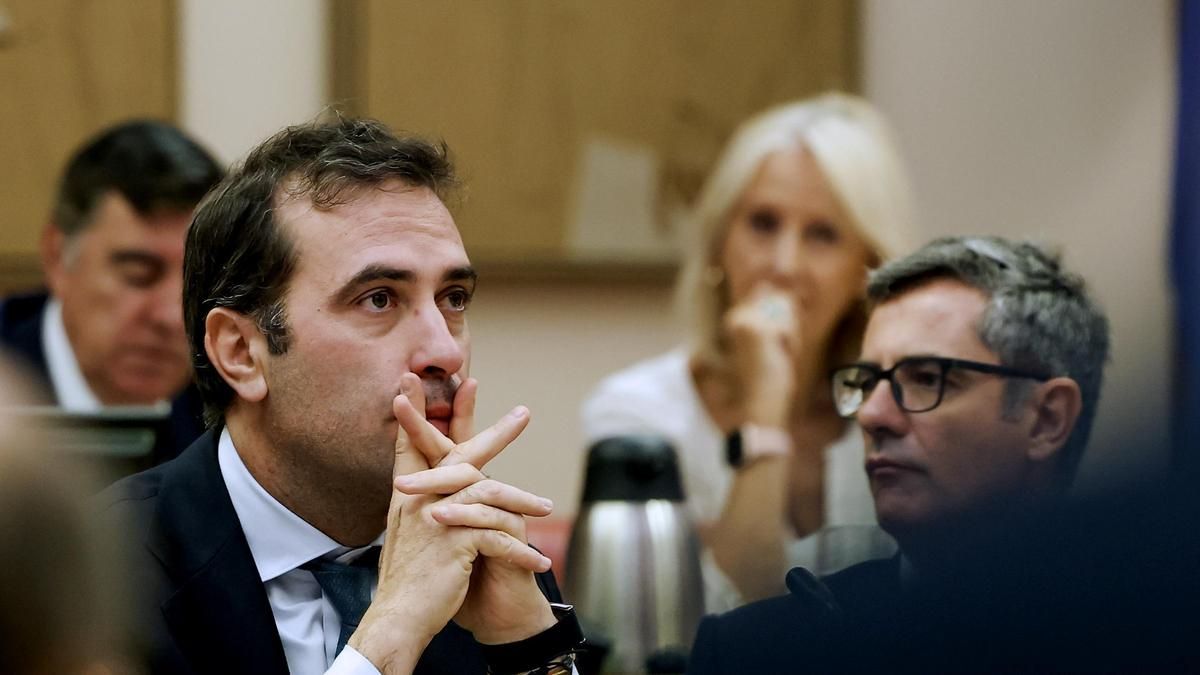
La Diputación Permanente ha convalidado el Real Decreto-Ley con ayudas por el conflicto en Oriente Medio, que contiene, entre otras, subvenciones específicas al campo y medidas para los hogares vulnerables de cara al invierno
El Gobierno prorroga las rebajas fiscales en gasolina y diésel y limita la tarifa del gas para evitar que se dispare en invierno
El vicepresidente primero y ministro de Economía ha defendido un texto que, ante la incertidumbre por la guerra y las tensiones en los mercados internacionales, “profundiza en una apuesta equilibrada” que protege a empresas y sectores afectados. En total, desde marzo se han movilizado 12.000 millones de euros para “continuar dando protección y seguridad de ciudadanos y empresas”.
Cuerpo ha asegurado que las rebajas fiscales a la gasolina y al gasoil están funcionando y las gasolineras las están aplicando íntegramente en los precios. Según ha destacado el ‘número dos’ del Ejecutivo, al día siguiente de aprobarse el nuevo Real Decreto-Ley de ayudas, el 82% de las gasolineras “ya había trasladado el total de esta reducción impositiva”.
El vicepresidente ha apuntado que el alivio fiscal está permitiendo compensar el 60% del aumento del coste de la gasolina y un 40% en el caso del diésel.
La nueva rebaja fiscal aprobada a finales de septiembre contempla un recorte de 20 céntimos para el mes de octubre, a través del Impuesto Especial sobre Hidrocarburos, de 13 céntimos por litro en noviembre y 6 en diciembre, con una cláusula de salvaguarda en el caso de que los precios superen un incremento del 15% interanual. El dato de inflación de septiembre ha confirmado este extremo, por lo que la rebaja equivalente de 20 céntimos permanecerá en noviembre.
Medidas para la TUR, el campo y el transporte
Además, la norma vuelve a intervenir la Tarifa de Último Recurso (TUR) del gas natural, a la que están acogidos más de 3 millones de consumidores. Para evitar “un aumento de la TUR superior al 45 por ciento respecto de la tarifa vigente desde el 1 de julio”, se introduce un mecanismo similar al que estuvo vigente entre finales de 2021 y junio de 2024 para limitar las subidas de la tarifa regulada del gas, topando el componente relacionado con el coste de la materia prima a un 35% para el último trimestre de este año y a un 15% para los siguientes.
También se establece un mecanismo para recuperar temporalmente el IVA del 10% sobre electricidad y determinados combustibles, y vuelve a rebajarse el Impuesto Especial sobre la Electricidad al mínimo legal del 0,5% si el IPC energético supera el umbral del 15%.
El decreto introduce nuevas obligaciones relativas al control de la tensión eléctrica, clave en el apagón de 2025 y también una obligación extraordinaria de almacenamiento de gas natural licuado (GNL) entre noviembre de 2026 y marzo de 2027.
Para el campo, un sector prioritario, el decreto amplía “por un lado, el plazo de vigencia de la ayuda extraordinaria y temporal para sufragar el precio del gasóleo consumido por los productores agrarios” que finalizará a finales de este año. “El importe para el cálculo de la ayuda correspondiente al periodo comprendido entre el 1 de octubre de 2026 y el 31 de diciembre de 2026 será hasta el 70 por ciento de la diferencia entre el precio medio del gasóleo agrario de la semana y el precio del gasóleo agrario antes del inicio del conflicto, sin que, en ningún caso, pueda superar los 0,2 euros por cada litro de gasóleo”. Asimismo, se amplía igualmente la ayuda compensatoria a empresas armadoras de buques pesqueros por el incremento de costes productivos provocados por el aumento del precio de los combustibles.
En cuanto al transporte, el texto recoge la prórroga, para los meses de octubre, noviembre y diciembre, de la “ayuda extraordinaria y temporal para sufragar el precio del gasóleo consumido por los titulares de los vehículos que tienen derecho a la devolución parcial del Impuesto sobre Hidrocarburos por el gasóleo de uso profesional”.
El texto recoge que el “importe de la ayuda ascenderá a 5 céntimos de euro por cada litro de gasóleo utilizado como carburante en el motor de los vehículos” de transporte por carretera “en los suministros realizados durante el mes de octubre de 2026”. Pasará “a 12 céntimos de euro por cada litro de gasóleo suministrado en el mes de noviembre de 2026 y a 19 céntimos de euro por cada litro de gasóleo suministrado en el mes de diciembre de 2026”. Además, recoge que “si por aplicación del mecanismo de salvaguarda, la bajada del tipo de gravamen del gasóleo fuera mayor en el mes de noviembre, el importe de la ayuda será de 5 céntimos por litro y, en el mes de diciembre y según el caso, de 5 ó 12 céntimos por litro”.
Por último, en el ámbito ferroviario, recoge el Real Decreto-Ley, “se establece una línea adicional de ayudas directas, complementaria” a lo últimos planes de ayuda aprobados por el Ejecutivo “destinada a compensar el impacto persistente de los costes energéticos sobre las empresas operadoras, evitando efectos de expulsión de este modo de transporte que puedan comprometer los objetivos de sostenibilidad y eficiencia del sistema logístico”.
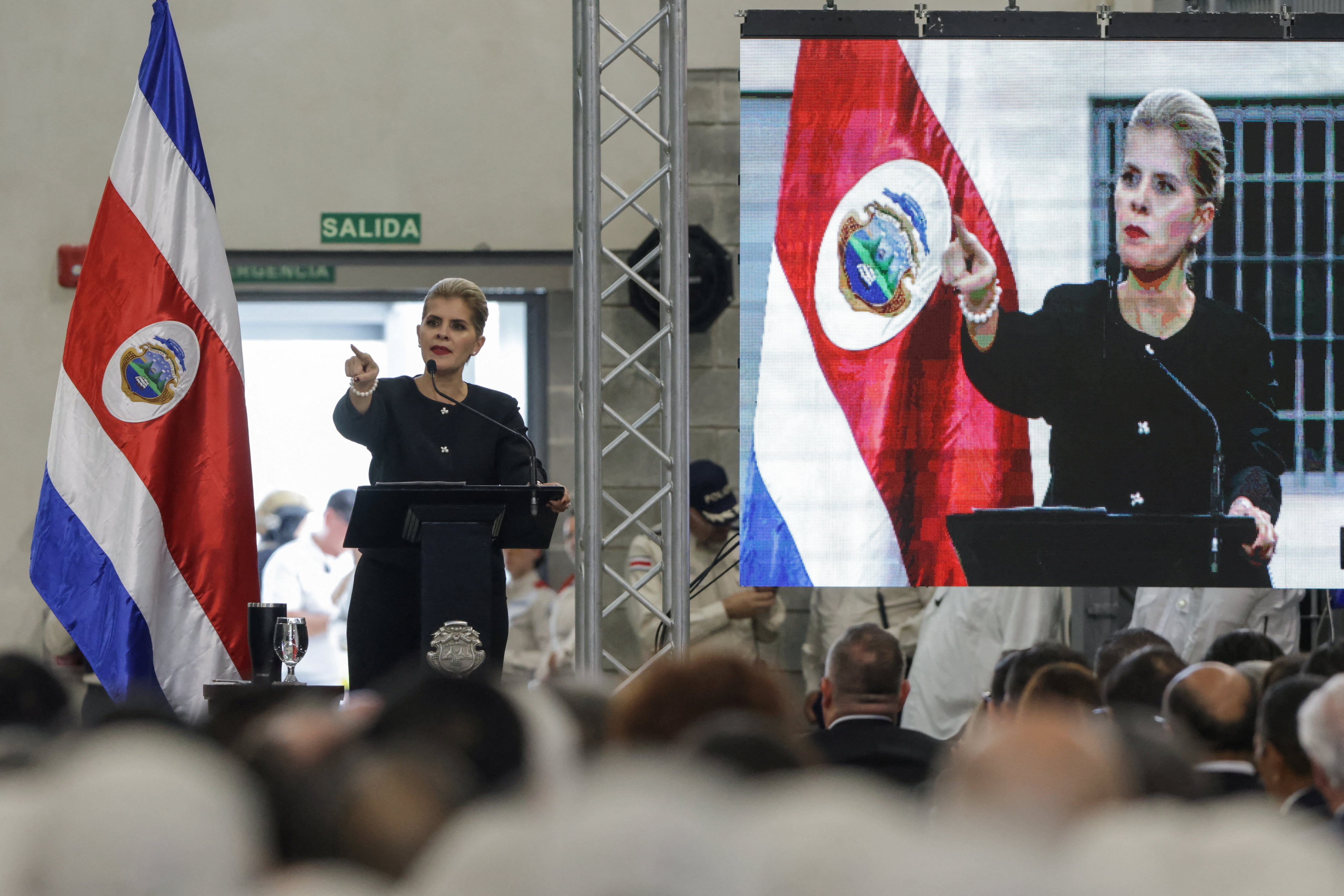
President Laura Fernández of Costa Rica on Wednesday inaugurated the so-called High-Containment Center Against Organized Crime (CACCO), a mega-prison designed to hold 5,100 inmates under maximum-security conditions with the aim of isolating narcotics-trafficking gangs. The Costa Rican government seeks with this move to consolidate its tough-on-crime policy, the centerpiece of propaganda amid the security crisis, which is symbolized by the enormous penal complex modeled on Nayib Bukele’s approach.
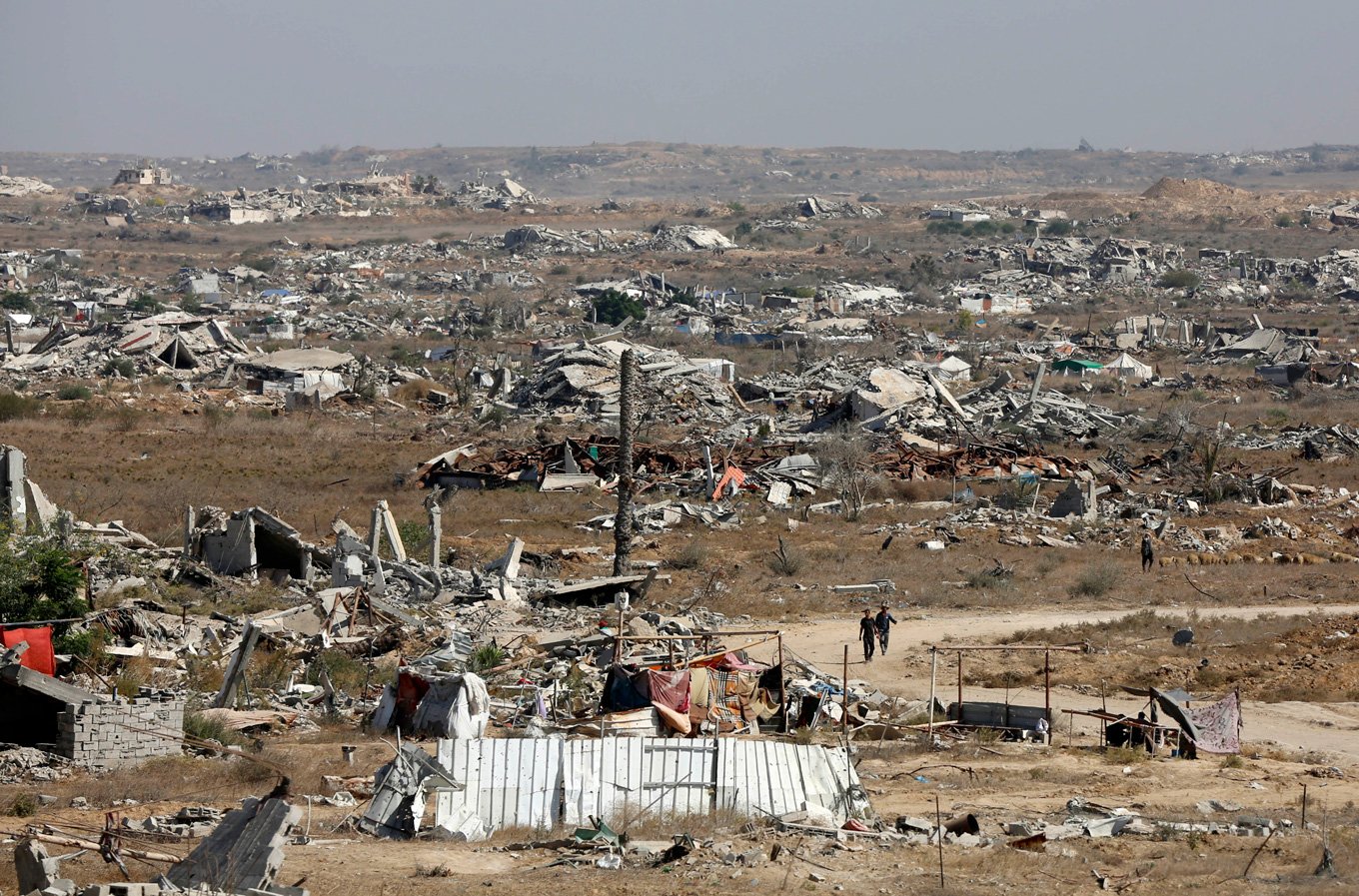
The European Union has continued its scientific cooperation with Israeli firms and institutions implicated in genocide and apartheid throughout Israel’s three-year old assault on Gaza. Such complicity must stop.
Israel has been associated with the €95.5bn Horizon Europe research and innovation programme (2021-2027), and, according to the European Commission’s detailed Horizon dashboard, the EU’s net contribution to Israel amounts to €1.02bn.
While much of the funding supports legitimate research, the programme also channels substantial resources to Israeli universities and companies, some closely connected to Israel’s military and security apparatus.
Pointing to just such EU-Israel collaboration, Francesca Albanese’s UN report “From economy of occupation to economy of genocide” published last year, estimated EU research funding to Israeli entities at over €2.12bn since 2014.
Horizon Europe funds collaborative projects and European Research Council grants.
But it is the European Innovation Council (EIC) and schemes which include the EIC Accelerator, the EIC STEP Scale-up and the Scaleup Europe Fund which are especially relevant to the question of EU complicity in Israel’s ongoing assault on Gaza.
Horizon Europe is formally limited to civilian research, but Israeli companies with links to Israel’s military and security establishment have received funding through these schemes.
In March 2026, for example, members of the European Parliament tabled a written parliamentary question asking the European Commission specifically about such companies including Sightec, an Israeli drone-navigation firm that received almost €2.5m through the EIC Accelerator and whose chief executive has described its technology as “combat-proven and deployed on over 3,000 drones in critical missions”.
The issue is not confined to overtly military applications. EU-funded civilian technologies can also serve Israel’s settler-colonial project.
Should European public money finance, for example, orange-harvesting robots that help Israel manage what it euphemistically calls a “labour shortage” in settlements built on occupied Palestinian land?
The EIC also goes beyond grants. Through the EIC fund, the EU can take equity in companies it supports; the new Scaleup Europe Fund is explicitly designed to make direct equity investments in strategic technology firms, and is open to companies based in countries associated with Pillar III of Horizon Europe, including Israel.
The EU can therefore not only subsidise Israeli technology firms but also acquire a financial stake in them and potentially profit from their future growth.
And it could get worse.
The EIC’s 2026 work programme expands the type of projects that can be funded by including ‘dual use’ applications that are both civilian and military.
This opens the door for the EU to fund nuclear-related Israeli projects although Israel is not a member of the European Atomic Energy community (Euratom).
But none of this is inevitable.
Next EU budget and credibility at stake
Israel’s association with the current Horizon Europe programme runs only until 2027 and the shape and scale of the EU’s next Horizon programme will be decided during ongoing negotiations on the bloc’s seven-year Multiannual Financial Framework (MFF).
There are also clear signs that Israel is likely to participate in the next Horizon programme (2028-2034).
Only a few weeks ago, Ekaterina Zaharieva, European commissioner for startups, research and innovation, met with the head of the Israel Space Agency, Shimrit Mama.
European Commission president Ursula von der Leyen and her team must ask themselves if the EU should be building an innovation architecture in which Israeli firms and state institutions, which are already deeply integrated into Israel’s military-industrial ecosystem, could receive European support for technologies explicitly framed as dual-use or defence-related.
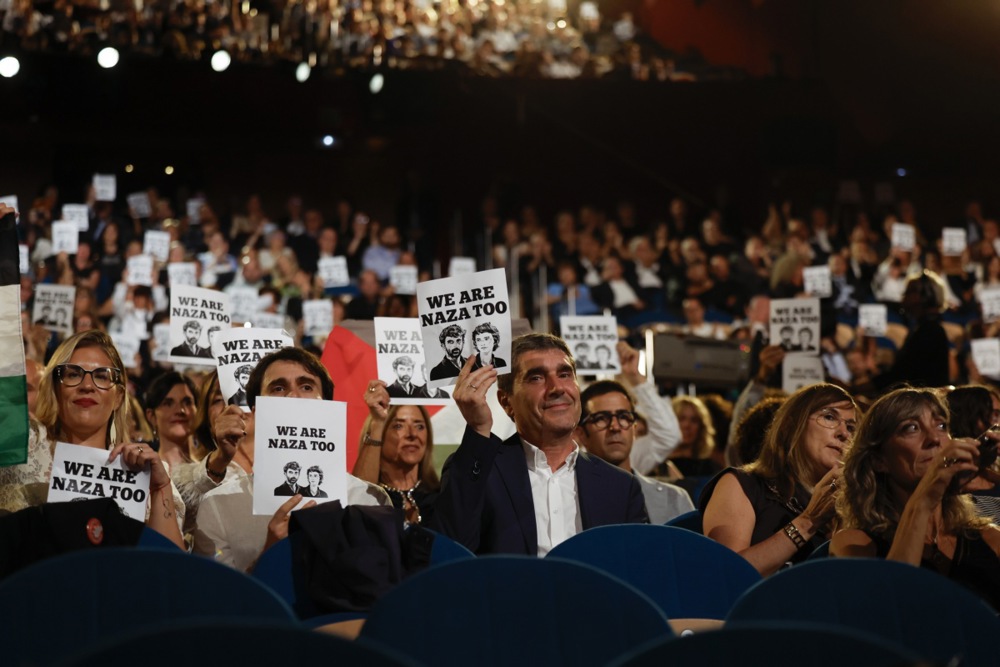
Are they comfortable with funding companies that help develop the type of violent technologies described in the award-winning documentary NAZA, which exposes the systems and AI technology used during the military campaign in Gaza?
Audience members hold signs supporting Yuval Abraham and Rachel Szor’s documentary Naza after it wins the European Film Audience Award at the 74th San Sebastian Film Festival in Spain, 26 September 2026 (Source: EPA/JUAN HERRERO)
Last year, under public pressure, von der Leyen proposed a partial suspension of Israel’s participation in Horizon Europe by specifically excluding Israeli entities from new EIC Accelerator grants and investment support.
The proposal was modest: it would have affected future funding only, not existing agreements, and covered roughly 20 percent of EU financial flows to Israel under the programme.
It required a qualified majority in the Council but did not secure the necessary votes. It is, however, technically “still on the table”, according to commissioner Zaharieva.
Nobel Peace Prize winner Navi Pillay concluded in 2025 that Israel’s actions have “consistently pointed toward a singular, harrowing objective – the destruction of Palestinian life in Gaza”.
The EU has done little so far to stop the genocide in Gaza and ethnic cleansing in the occupied West Bank, and arguably – through trade and weapons’ exports – is actually contributing to it.
Now the EU faces a clear choice. It can continue to fund, co-invest in and deepen research ties with an Israeli innovation sector increasingly oriented towards dual-use and defence technologies.
Or it can stand with the winner of the 2026 Nobel Peace Prize, draw a line and decide that there will be no Israeli participation in the next Horizon programme, no EU equity in Israeli firms, and no public money for technologies that may be used to sustain genocide, occupation, surveillance and war.
The credibility of the EU and the values it proclaims depends on the choice it makes.
Lisboa, Porto, Braga e Aveiro atraem centros tecnológicos e de serviços partilhados de multinacionais. Mas parte da nossa proposta de valor depende de fazer por menos o que outros fazem por mais.

 Login