❌

Reading view

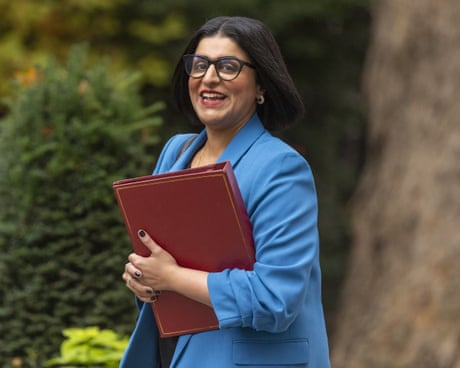
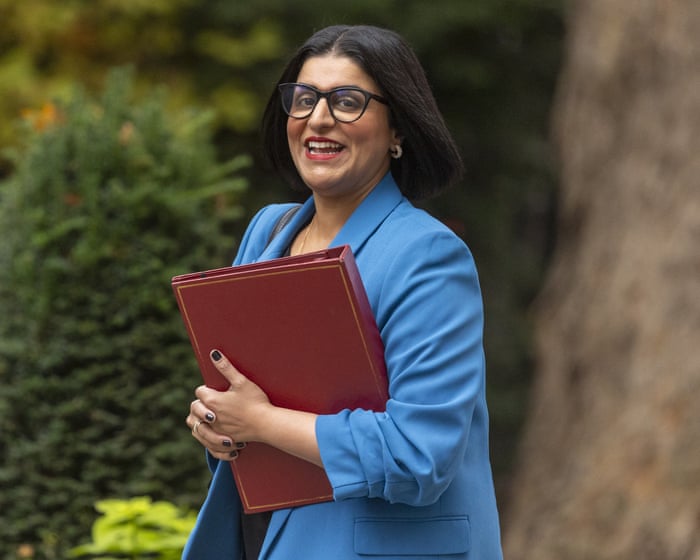
Shabana Mahmood to hold talks with EU over law enforcement cooperation

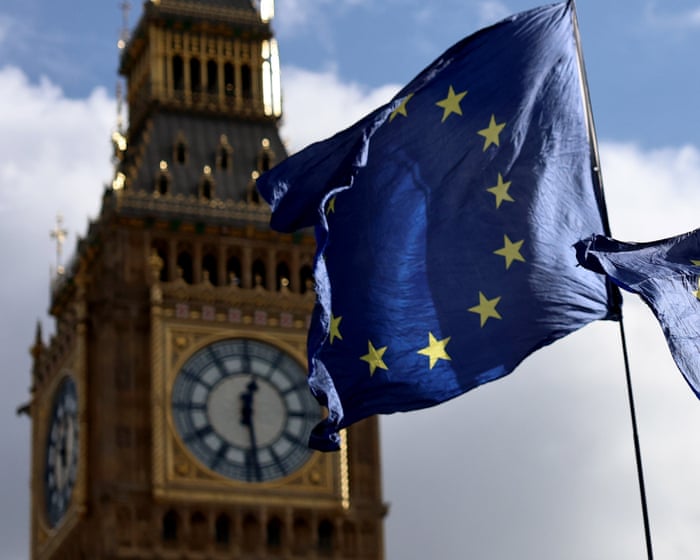
UK home secretary’s meeting comes after PM said he wanted to rejoin European law enforcement databases

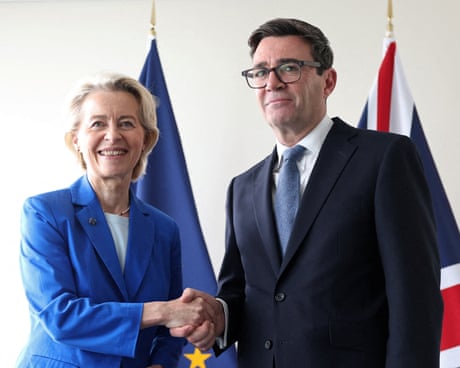
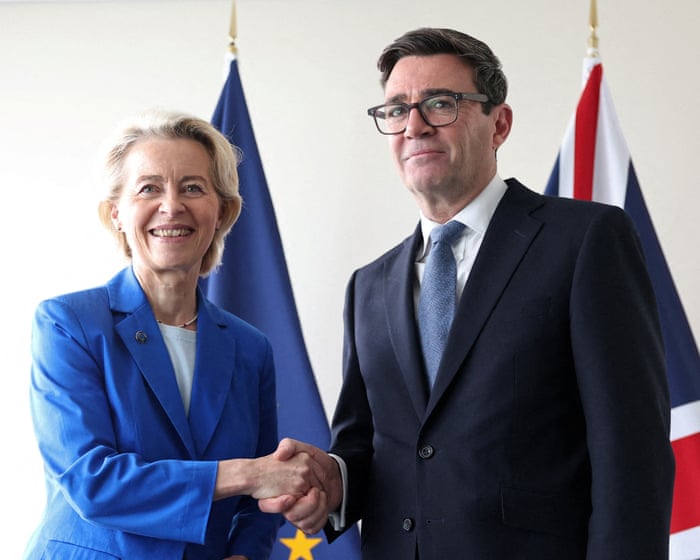
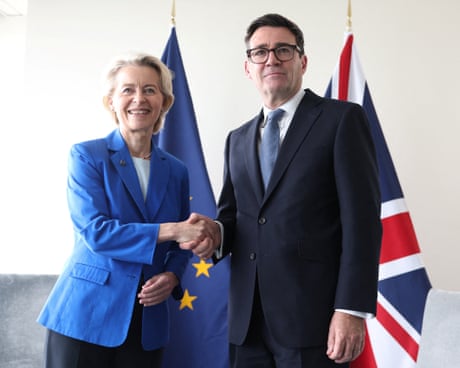
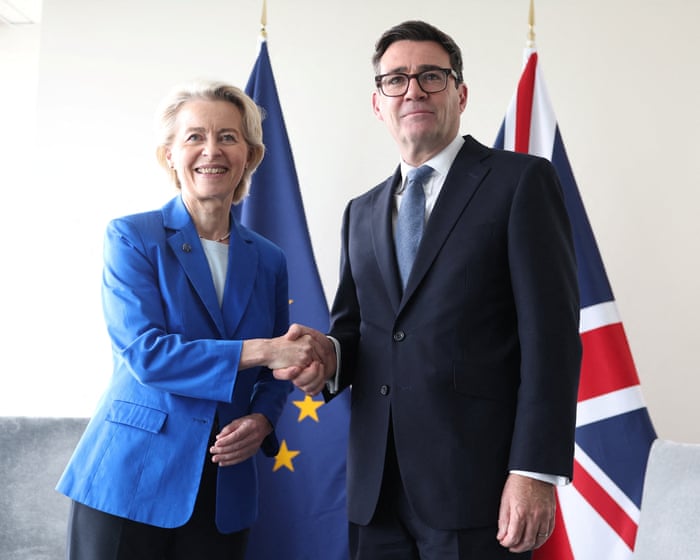
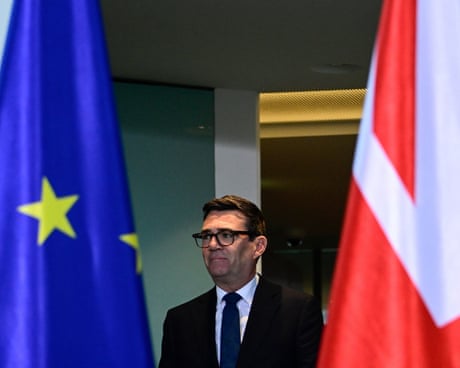
The UK home secretary, Shabana Mahmood, will meet the EU’s home affairs commissioner on Monday for further talks just days after Andy Burnham said he wanted to rejoin European law enforcement databases from which the UK has been locked out of since Brexit.

According to the European Commission, they will discuss “migration, border management, law enforcement cooperation and counter-terrorism”, with the latest Frontex data published on Monday showing a 43% decline in small boats crossing the Channel.

Continue reading...

© Photograph: Marcin Nowak/Anadolu/Getty Images

© Photograph: Marcin Nowak/Anadolu/Getty Images

© Photograph: Marcin Nowak/Anadolu/Getty Images

  •  

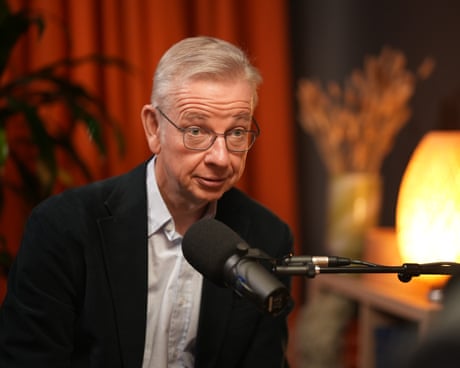
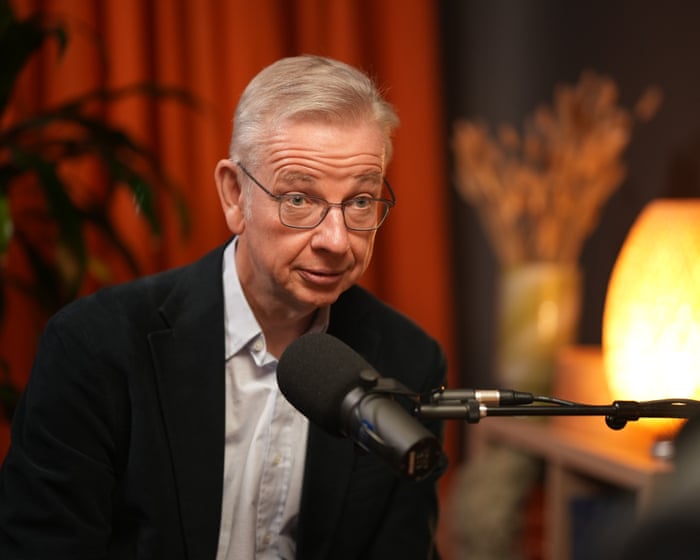
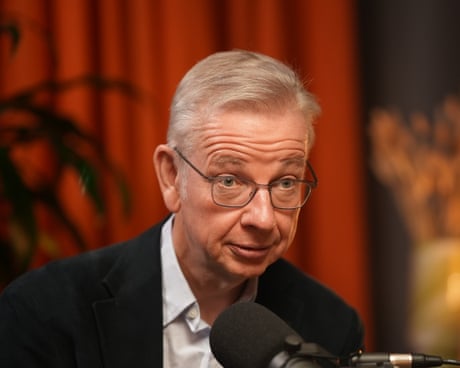
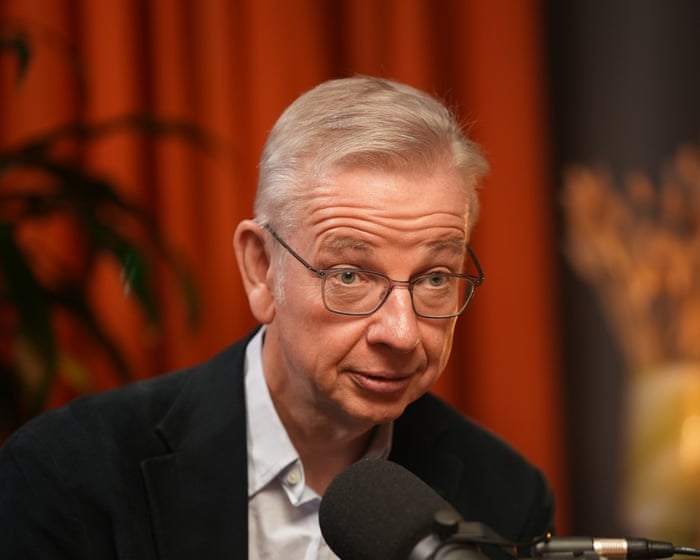
‘Austerity is inevitably painful’: How Michael Gove justifies his politics | Radical Thinking with Aditya Chakrabortty

For more than three decades, Michael Gove has been a leading figure in British Conservatism. As a journalist, government minister and now editor of the Tory bible the Spectator, he has helped shape the right even as it has moved further rightwards. In the latest episode of Radical Thinking, Gove joins Aditya Chakrabortty to discuss the future of the right, his record on Brexit and austerity, and the Spectator’s position on Islam

Watch the full episode with Michael Gove here.

Aditya’s suggested reading:

To read the fruits of Michael Gove’s dalliance with the Marxism Today gang, look up his essay in a 1998 collection called The Moderniser’s Dilemma: Radical Politics in the Age of Blair

For a slalom ride through Michael Gove’s years in power, read The Demented Dalek by the historian Richard J Evans in the London Review of Books

To learn more on what’s become of the British right, there’s a Guardian column by Aditya

Phil Burton-Cartledge analyses in depth why the most successful political party is now failing in his book The Party’s Over: The Rise and Fall of the Conservatives from Thatcher to Sunak

Phil also writes a very good blog on British politics, which keeps a close eye on how each party is trying to marshall a coalition of voters. Here he is on Kemi Badenoch

Geoffrey Wheatcroft does an entertaining short narrative in Bloody Panico!:

or, Whatever Happened to The Tory Party

For more on the economics of the Cameron years, this paper is acute on how the Tories failed to move the UK away from being a country of renters towards a country of makers. Two of its authors will join us for a podcast later in the series.

And if you want to read how Brexit may have cost the UK 8% of GDP, there’s this paper based on data from the Bank of England

Finally, on the Spectator, read Nesrine Malik’s recent Guardian column

Why has Britain’s oldest political magazine become such a rabid cheerleader for Islamophobia?

Continue reading...

© Photograph: James Tindale/The Guardian

© Photograph: James Tindale/The Guardian

© Photograph: James Tindale/The Guardian

  •  

Briton threatened with deportation from Sweden over Brexit rules goes into hiding

Mark Smith, who has severe health issues, says he was told three times he needed to do nothing in order to remain after Brexit

A seriously ill British man living in Sweden has been forced into hiding amid fears he will be deported as a result of what he says is a government Brexit residency error.

Mark Smith, 60, who has had heart attacks, strokes, severe headaches and chronically high blood pressure that has been difficult to treat, was told on the phone he should leave Sweden by 17 October as he was an “alien” without permission to stay.

Continue reading...

© Photograph: Annika Karlbom/Hallands Nyheter

© Photograph: Annika Karlbom/Hallands Nyheter

© Photograph: Annika Karlbom/Hallands Nyheter

  •  

UK–EU relations are being reset. British musicians touring Europe must be part of the deal

The UK government has returned to an issue musicians have been discussing since Brexit: how to make working in Europe easier again.

Its new music strategy, Turn It Up: Our Plan for Music, refers to the first high-level meeting on culture between the UK and the European Commission, held back in March, and promises continued work to reduce the barriers faced by British artists touring the EU.

The timing is significant. The UK is preparing to rejoin Erasmus+ in 2027, while London and Brussels are pursuing a broader reset of post-Brexit relations.

Music offers an interesting test of that reset. The UK has left the European Union, but its musicians have not become any less European.

British performers still tour the continent, while European musicians continue to work in British orchestras. The musical ecosystem survived Brexit. Navigating it became considerably more difficult.

A UK government study estimates that additional barriers to EU touring between 2022 and 2024 cost Britain £208m in lost economic output and the equivalent of 2,490 full-time jobs.

A Musicians’ Union survey found that, among musicians who had previously worked in the EU, 75 percent reported fewer bookings and 72 percent lower EU income.

More than half said EU touring was no longer financially viable.

But music reveals something more interesting than another item on the list of Brexit consequences. Brexit drew a political border through a professional community that had operated internationally for centuries.

Musicians were ‘European’ before EU

European musical mobility did not begin with freedom of movement. In the early 19th century, theatre companies crossed linguistic and political borders. Imperial Russia accommodated French and German theatrical companies alongside Russian performers, while Italian opera was embedded in its musical life.

Individual musicians were equally mobile. John Field, the Irish pianist and composer at the centre of my own research, trained in London before spending most of his adult career in the Russian Empire. The German pianist Adolf Henselt settled there and became deeply involved in Russian musical education.

These were not exceptions: musical life itself was international. The EU did not invent that circulation. European integration merely made it administratively easier. 

Brexit did not make British musicians unwelcome in Europe, or European musicians unwelcome in Britain. It changed the cost of maintaining those relationships.

For an international star with professional support, another permit can be an inconvenience. For a young ensemble deciding whether four European concerts are financially viable, it can determine whether the tour happens at all.

The border appears before the first tour

The consequences begin before professional life. A conservatoire is not simply somewhere a musician obtains a qualification. It is where professional relationships form. A student may meet a future ensemble partner, while an exchange can produce an opportunity years later.

The post-Brexit figures are striking. The number of new EU students entering UK higher education fell from 66,685 in 2020–21 to 28,375 in 2023–24 — a decline of around 57 percent, according to figures based on HESA data.

Britain’s Turing Scheme supported outward mobility, but did not reproduce Erasmus+’s reciprocal structure.

The UK’s return to Erasmus+ in 2027 therefore matters beyond universities. In music, today’s exchange student can become tomorrow’s professional collaborator.

Meanwhile, Brussels is actively spending money to encourage cultural mobility. Creative Europe has a €2.44bn budget for 2021–27. Its Pan-European Cultural Entities programme specifically supports orchestras working across borders to develop young musicians: around €11m was allocated to five projects in 2024, expected to involve more than 1,000 young musicians from at least 20 participating countries. The policy assumption is revealing: movement itself creates value.

Put musicians into the reset

At the 2025 UK-EU summit, London and Brussels explicitly recognised “the value of travel and cultural and artistic exchanges, including the activities of touring artists.”

The new high-level cultural dialogue provides a forum to turn that promise into policy. Cultural mobility should become a permanent part of the UK-EU reset.

London and Brussels should use the dialogue to identify touring requirements that can realistically be simplified and work with member states towards greater consistency for short-term cultural engagements.

Emerging artists should also be explicitly considered in the proposed Youth Experience Scheme. The commission’s original proposal envisaged a time-limited route for people aged 18 to 30 to live on the other side of the English Channel. Paid cultural work should be clearly accommodated in whatever agreement emerges.

A 24-year-old violinist should not discover that a programme intended to restore opportunities for young Europeans works perfectly until somebody pays her to perform.

None of this means recreating freedom of movement through the orchestra pit. Britain chose to leave the EU and cannot expect every privilege of membership.

The argument is more practical. British and European cultural industries remain intertwined, and unnecessary friction is most expensive for those least able to absorb it. Major institutions employ administrators. International stars have managers. A young quartet may have four instruments and a group chat.

Two centuries ago, Field travelled from Ireland through London and built a career in Russia. Henselt left Germany and became part of Russian musical education. They did so long before Eurostar, Erasmus+ or Creative Europe.

Two hundred years later, crossing the continent is faster. Building a European career need not become harder. The UK has left the EU. Its musicians have not left European musical life.

As London and Brussels shape their new relationship, cultural mobility should be treated as part of its infrastructure. Musicians will continue to cross the Channel. The question is how costly we choose to make it.

  •  

‘Austerity is inevitably painful’: How Michael Gove justifies his politics | Radical Thinking with Aditya Chakrabortty – podcast

For more than three decades, Michael Gove has been a leading figure in British Conservatism. As a journalist, government minister and now editor of the Tory bible, the Spectator, he has helped shape the right even as it has moved further rightwards. In the latest episode of Radical Thinking, Gove joins Aditya Chakrabortty to discuss the future of the right, his record on Brexit and austerity, and the Spectator’s position on Islam

Watch the full episode with Michael Gove here.

Aditya’s suggested reading:

To read the fruits of Michael Gove’s dalliance with the Marxism Today gang, look up his essay in a 1998 collection called The Moderniser’s Dilemma: Radical Politics in the Age of Blair

For slalom ride through Michael Gove’s years in power, read The Demented Dalek by the historian Richard J Evans in the London Review of Books

To learn more on what’s become of the British right, there’s a column by me for the Guardian

Just why the most successful political party is now failing is analysed in-depth by Phil Burton-Cartledge in his book The Party’s Over: The Rise and Fall of the Conservatives from Thatcher to Sunak

Phil also writes a very good blog on British politics, which keeps a close eye on how each party is trying to marshall a coalition of voters. Here he is on Kemi Badenoch

Geoffrey Wheatcroft does an entertaining short narrative in Bloody Panico!:

or, Whatever Happened to The Tory Party

For more on the economics of the Cameron years, this paper is acute on how the Tories failed to move the UK away from being a country of renters towards a country of makers. Two of its authors will join us for a podcast later in the series.

And if you want to read how Brexit may have cost the UK 8% of GDP, there’s this paper based on data from the Bank of England

Finally, on the Spectator read Nesrine Malik’s recent column in The Guardian

Why has Britain’s oldest political magazine become such a rabid cheerleader for Islamophobia?

Continue reading...

© Photograph: James Tindale/The Guardian

© Photograph: James Tindale/The Guardian

© Photograph: James Tindale/The Guardian

  •  

Burnham’s Russia Narrative Car Crash is Worse Than We Thought

Andy Burnham's claim that Russia interfered with Brexit is risible for one very simple reason, says Ben Pile: EU policy on climate and energy is so suicidal that Putin could not have wanted Britain to leave.

The post Burnham’s Russia Narrative Car Crash is Worse Than We Thought appeared first on The Daily Sceptic.

  •  

Brexit’s back – but are British voters ready to contemplate a reversal?

As Andy Burnham talks up closer alignment with the EU and a poll suggests half in UK would rejoin, the B-word is back on the agenda

In February 2016, days after David Cameron announced the UK would hold a referendum on leaving the EU, he told workers in Slough not to imagine they could change their minds a few years down the line if they did not like how things panned out. Voting to stay in or leave was a once in a generation thing, he said. “This is a decision that lasts for life.”

Well times change, as the last prime minister but five could testify. A decade after Britain told Brussels where to go, Brexit is back on the political agenda. After years in which many politicians avoided any mention of the B-word, Andy Burnham broke the omertà in his party conference speech last month, saying he would look again at Britain’s relationship with Europe.

Continue reading...

© Photograph: Toby Melville/AFP/Getty Images

© Photograph: Toby Melville/AFP/Getty Images

© Photograph: Toby Melville/AFP/Getty Images

  •  

British food and drink exports to EU collapse by more than a third since Brexit

NFU analysis of official data shows falls in exports to UK’s largest trading partner since 2019 include 70% for sugar and 74% for egg products

Exports of British food and drink to the EU have collapsed by more than a third since Brexit with eggs, chicken and potato producers badly hit, new figures show.

Analysis by the National Farmers’ Union (NFU) of HMRC data shows a sharp fall in exports in the year to July compared with the same period in 2019, with sugar dropping the most, down 70%.

Continue reading...

© Photograph: David Levene/The Guardian

© Photograph: David Levene/The Guardian

© Photograph: David Levene/The Guardian

  •  

UK could quickly re-enter EU with ‘Switzerland plus’ deal, senior MEP says

Bernd Lange, who was involved in Brexit talks, says deal could be negotiated within months of any decision to deepen ties

The UK could re-enter the EU in a “Switzerland plus” package that could be negotiated within months of any decision to deepen ties with the bloc, the head of a European parliament committee has said.

Bernd Lange, who was heavily involved in Brexit negotiations, said: “I would love to see the UK back.” He said the EU missed the UK in decision-making because of its strong history of promoting open markets and democracy.

Continue reading...

© Photograph: Neil Hall/EPA

© Photograph: Neil Hall/EPA

© Photograph: Neil Hall/EPA

  •  

Repairing Brexit economic damage should be Burnham’s top priority, business chief says

Shevaun Haviland argues PM is right to revisit Labour’s EU red lines as current trading relationship is bad for business

Repairing the economic damage of Brexit should be the top priority for Andy Burnham as he reconsiders Labour’s red lines on EU membership, the head of one of Britain’s leading business groups has said.

Shevaun Haviland, the director general of the British Chambers of Commerce (BCC), said she welcomed the prime minister reopening the Brexit battle lines despite the uncertainty it could create, arguing that the UK’s current trading relationship with the EU was bad for business.

Continue reading...

© Photograph: Toby Melville/Reuters

© Photograph: Toby Melville/Reuters

© Photograph: Toby Melville/Reuters

  •  

Listen: Will Andy Burnham manage to bring the UK back into the EU?

Production: By Europod, in co-production with Sphera Network.

EUobserver is proud to have an editorial partnership with Europod to co-publish the podcast series “Briefed” hosted by Léa Marchal. The podcast is available on all major platforms.

Find the full transcript below: 

Ten years after the Brexit vote, more and more Britons are asking whether they should go back. According to a YouGov poll conducted earlier this month, 52% would vote to rejoin the EU in a referendum.

And the UK’s new Prime Minister, Andy Burnham, seems to be keeping that door open.

But how realistic is that? Andy Burnham became Prime Minister this summer. And since then, he has been dropping hints here and there about a possible return to the EU. A few months ago, he was saying it was too early to even discuss it.

So what changed? Perhaps the international context, but also the realisation that the UK cannot get everything it wants while staying outside the Union.

On 20 November, EU leaders will have the opportunity to discuss the relationship with the UK during a bilateral summit. They will try to reach agreements on a number of issues that have stalled.

What are those topics? First, food. Today, agri-food products face checks and certification when they enter the EU, and that slows trade down. The solution on the table is for the UK to align its sanitary and phytosanitary standards with the EU’s. But the details still need to be agreed.

Second, people. Right now, a European who wants to work in the UK needs a visa. The two sides could agree on a scheme to make mobility easier, especially for young people.

Third, carbon. The British would like to link their carbon market to the EU’s, so that their exporters don’t have to pay extra for their emissions when they sell to Europe. In practice, that means avoiding the EU’s carbon border tax.

Last but not least, industry. And this is a big part of the discussion. As the EU moves towards giving priority to European products, the British fear being left out of this “European preference”.

Now, you might say: in all these cases, isn’t this a bit like being in the EU, without the drawbacks? That’s exactly what critics call cherry-picking.

At the heart of the problem is a simple question: where do you draw the line between being a member and being a partner? It’s the same debate the EU has with Switzerland, which wants to stay very close but not be part of the bloc.

Now, is a return to the EU a realistic scenario? The door is open, as Emmanuel Macron and others have put it.

The UK could apply, and it’s unlikely that any member state would block the process. But the European Commission has already warned: there would be no special treatment for the British.

On the positive side, the UK would start from a good position. It already applies a good part of EU legislation, and it meets the rule-of-law criteria.

But all these years after leaving the EU, the two sides are still negotiating. There are sticking points on free movement and on standards. And those disagreements would make any accession talks that much harder.

Let’s see what comes out of the summit on 20 November.

  •  

Mercedes Chief Warns EU Against Excluding Britain from ‘Made in Europe’ Industrial Rules

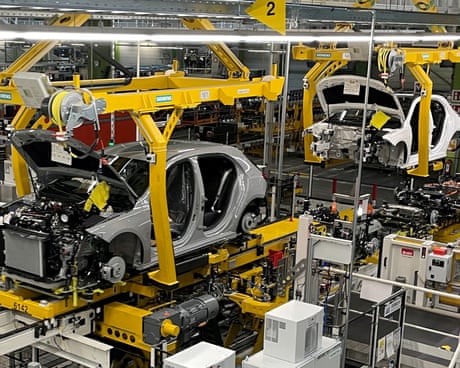
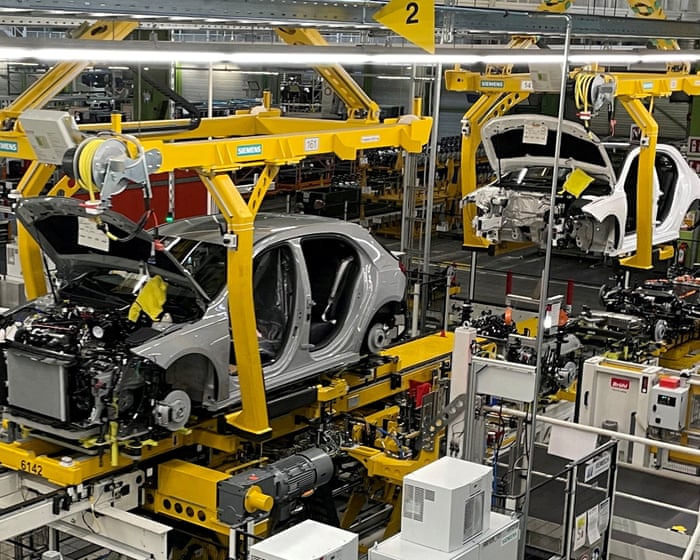
Mercedes-Benz chief executive Ola Källenius has warned that excluding British manufacturers from European industrial preference rules would damage automotive production on both sides of the Channel, increasing pressure on Brussels ahead of negotiations over its proposed Industrial Accelerator Act.

The head of Mercedes-Benz has warned that excluding British manufacturers from the European Union’s proposed industrial preference rules would damage the competitiveness of carmakers across Europe, challenging Brussels over legislation intended to protect European production from growing international competition.

Ola Källenius, chief executive of Mercedes-Benz and president of the European Automobile Manufacturers’ Association (ACEA), criticised the prospect of restricting British participation in the forthcoming “Made in Europe” framework during discussions in Brussels on Wednesday, 14 October.

His intervention comes as European governments negotiate the Industrial Accelerator Act, which would introduce European-content requirements affecting public procurement and certain forms of industrial support.

The proposed legislation is intended to strengthen manufacturing within the EU, but its treatment of production in neighbouring countries has become contentious, particularly in an automotive industry whose factories and suppliers operate across national borders.

European production extends beyond the EU

British manufacturing remains closely integrated with continental European automotive production despite the United Kingdom’s departure from the single market.

Components manufactured in Britain are incorporated into vehicles assembled in EU member states, while British factories depend on engines, batteries, electronics and other parts produced in continental Europe.

The value of this integrated manufacturing system depends on companies being able to source components across borders without unnecessary restrictions.

Källenius warned that excluding the UK from the proposed rules would weaken manufacturers operating on both sides of the Channel.

His position reflects industry concerns that a narrowly defined European-content regime could impose additional costs on companies already facing pressure from Chinese competition, slowing demand and substantial investment requirements.

As EU Today reported in September, British Prime Minister Andy Burnham has been pressing Brussels to recognise the UK as a trusted industrial partner under the emerging framework.

Germany has also supported a broader approach that would allow selected trading partners to qualify under European-content rules where reciprocal conditions are met.

France has favoured stronger preferences for production within the EU itself, reflecting differences among member states over how far European industrial policy should extend beyond the Union’s borders.

A dispute over industrial sovereignty

The Industrial Accelerator Act proposed by the European Commission is intended to strengthen Europe’s manufacturing base and support production in strategically important sectors.

Its provisions address public procurement and industrial incentives affecting products including vehicles, steel, aluminium and clean technologies.

The Commission wants European public spending to support local industrial capacity rather than reinforce dependence on imports from major international competitors.

China has become the principal focus of those concerns because of its expanding manufacturing capacity, particularly in electric vehicles and batteries.

However, measures designed to counter Chinese industrial competition could also affect established trading partners whose manufacturers form part of European supply chains.

The United Kingdom, Norway, Switzerland and Turkey occupy different legal positions in their economic relations with the EU, but all maintain important industrial connections with member states.

An approach that treats their production as equivalent to imports from countries with substantially different market conditions could require European companies to reorganise existing supplier relationships.

For manufacturers, replacing a supplier may involve more than simply ordering components from another factory. Production standards, technical certification, logistics and long-term investment arrangements can make changes expensive and difficult.

Industry demands regulatory certainty

Following an ACEA board meeting on Wednesday, European manufacturers called for faster progress on the wider automotive legislative package.

In its 14 October statement, ACEA urged EU institutions to advance negotiations so that the package could be finalised early next year.

The association argues that manufacturers require a predictable regulatory framework to plan investments in electric vehicles, production facilities and new technologies.

Källenius linked the industry’s transition towards zero-emission mobility with the need to preserve employment and strengthen economic security.

European manufacturers are simultaneously investing heavily in electrification while competing against Chinese companies with established battery supply chains and significant production capacity.

The resulting financial pressures are particularly serious for manufacturers that must develop new vehicle platforms while maintaining existing factories and dealer networks.

Additional restrictions on component sourcing could complicate those decisions at a time when companies are seeking to reduce costs.

Britain refuses to follow EU tariffs automatically

The dispute has acquired a further dimension following remarks by British Business Secretary Jonathan Reynolds.

Speaking on Wednesday, Reynolds indicated that Britain would not automatically follow the European Union in imposing tariffs on Chinese vehicles.

The UK government maintains that trade measures must be determined according to British economic interests rather than adopted simply to align with Brussels.

That position complicates London’s attempt to secure favourable treatment under European industrial rules.

EU policymakers have argued that closer alignment on trade defences could support Britain’s claim to be treated as a trusted partner.

British ministers, however, must consider whether restrictions on Chinese imports would benefit domestic manufacturers and consumers.

The disagreement will form part of the broader economic relationship being discussed ahead of the next UK–EU summit, scheduled for 20 November.

The wider implications for EU–UK relations

The automotive dispute follows earlier negotiations over British participation in European defence procurement and other industrial programmes.

In both cases, London wants access to initiatives designed to strengthen European production while remaining outside the EU’s institutional framework.

Brussels must determine how far preferential treatment can extend to non-member countries without undermining the objectives of its industrial policy.

The Commission’s proposals have already revealed disagreements between governments favouring a tightly defined European manufacturing base and those seeking to preserve wider commercial partnerships.

Källenius’s intervention strengthens the argument that industrial protection cannot be considered separately from the supply chains on which European manufacturers depend.

The final legislation will influence investment decisions, procurement arrangements and the position of British suppliers within the continental automotive industry.

The outcome will also provide an indication of how far the EU is prepared to accommodate its closest trading partners as it attempts to strengthen European manufacturing against growing competition from China.

  •  

Closer EU trade ties greater prize for UK than making separate deals, minister says

Exclusive: Douglas Alexander, on trade delegation to India, talks up economic benefits of joint trading arrangements with Europe

Britain will benefit from much closer trading relations with the EU even if that means giving up its ability to negotiate free trade agreements, the Scotland secretary has said.
Douglas Alexander helped negotiate deals with India and the US when he was a trade minister under Keir Starmer.

Continue reading...

© Photograph: X/Douglas Alexander

© Photograph: X/Douglas Alexander

© Photograph: X/Douglas Alexander

  •  

Excluding UK from ‘Made in Europe’ law will hurt entire EU car industry, Mercedes boss warns

Ola Källenius says it will ‘weaken the industry on both sides’ ahead of act intended to counter non-EU competition

Locking the UK out of the EU’s flagship industrial “Made in Europe” legislation would amount to a “deliberate choice” by EU leaders to “hurt” the car industry across the bloc, the head of Mercedes-Benz has said.

Speaking in his capacity as president of the European Automobile Manufacturers’ Association (ACEA), Ola Källenius said such a move would “weaken the industry on both sides”.

Continue reading...

© Photograph: Christoph Steitz/Reuters

© Photograph: Christoph Steitz/Reuters

© Photograph: Christoph Steitz/Reuters

  •  

The Guardian view on Burnham’s Brexit reset: overdue, but proceed with care | Editorial

The prime minister is correct to judge the time is right to push for closer links with the EU. The political risk is far outweighed by the potential rewards

The German philosopher GWF Hegel famously evoked the owl of Minerva when discussing the historical wisdom that comes through hindsight. This autumn, she has flown tirelessly over the landscape of British politics. Party conference season was dominated by conflicting Labour and Conservative accounts of the 1970s and 80s. And a decade after the United Kingdom voted to leave the European Union, Andy Burnham this week abandoned all equivocation over the damage – economic but also strategic – that resulted from that decision.

Having declared that it is time to “face up to the reality that Brexit has done more harm than good”, Mr Burnham told the House of Commons on Monday that it would be a “dereliction of duty” not to explore all options for closer relations with Brussels. Though he confirmed that in this parliament he will honour the red lines in Sir Keir Starmer’s Labour manifesto, all bets will subsequently be off.

Do you have an opinion on the issues raised in this article? If you would like to submit a response of up to 300 words by email to be considered for publication in our letters section, please click here.

Continue reading...

© Photograph: Tobias Schwarz/AFP/Getty Images

© Photograph: Tobias Schwarz/AFP/Getty Images

© Photograph: Tobias Schwarz/AFP/Getty Images

  •  

Brexiters can’t cope with the fact that Putin was cheering them on | Rafael Behr

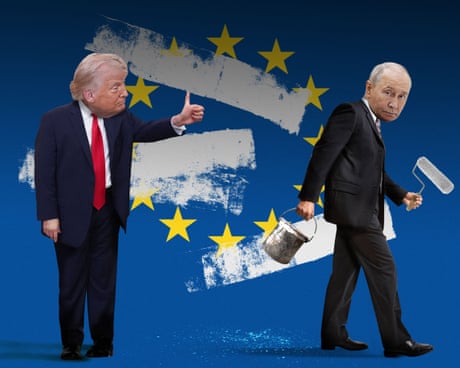
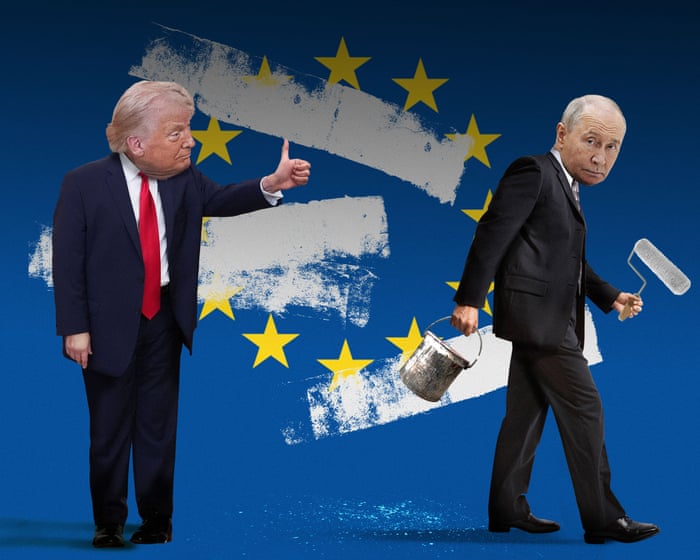
Russian meddling probably didn’t affect the referendum result – but the Kremlin’s motives for wanting to undermine the EU still matter

Russian territorial aggression against Ukraine didn’t feature much in the Brexit referendum campaign. It made headlines briefly when Boris Johnson blamed Moscow’s 2014 annexation of Crimea on the European Union.

According to the Vote Leave frontman, Vladimir Putin’s land grab was a consequence of Brussels making foreign policy “on the hoof” and having “pretensions to running a defence policy”.

Rafael Behr is a Guardian columnist

Continue reading...

© Composite: Guardian Design/Getty Images/Reuters/EPA

© Composite: Guardian Design/Getty Images/Reuters/EPA

© Composite: Guardian Design/Getty Images/Reuters/EPA

  •  

Russia did try to interfere in Brexit referendum, head of MI5 confirms

Ken McCallum says Kremlin attempted to influence vote through social media and TV reports but had little impact

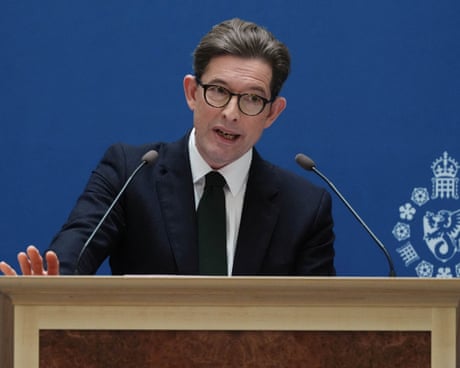
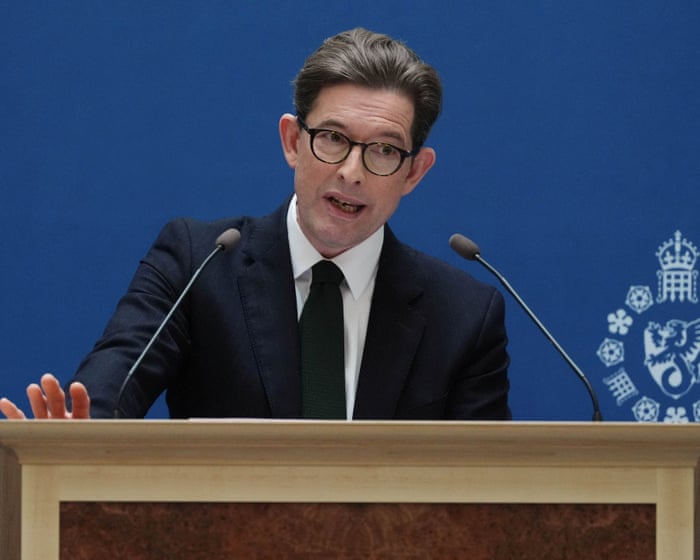
Russia did try to interfere in the Brexit referendum through social media and television reports, the head of MI5 said on Tuesday, but he added that did not mean the Kremlin had any impact on the result.

Ken McCallum endorsed comments by Andy Burnham, who raised the issue over the past two days, though he said continuing to debate it risked giving the Kremlin a needless propaganda victory.

Continue reading...

© Photograph: Jonathan Brady/Reuters

© Photograph: Jonathan Brady/Reuters

© Photograph: Jonathan Brady/Reuters

  •  
❌