❌

Reading view

OFITE: Dez anos de teatro, uma lição de resistência

Há peças que envelhecem e outras que permanecem atuais porque continuam a falar de nós. “O Inspetor Geral”, de Nikolai Gógol, é uma dessas obras. Escrita no século XIX, esta comédia satírica chega agora ao palco pela mão da OFITE – Oficina de Teatro do Estreito, assinalando simbolicamente os dez anos de atividade da companhia. […]
  •  

FAO Warns 132 Million Could Fall Into Extreme Poverty by 2030

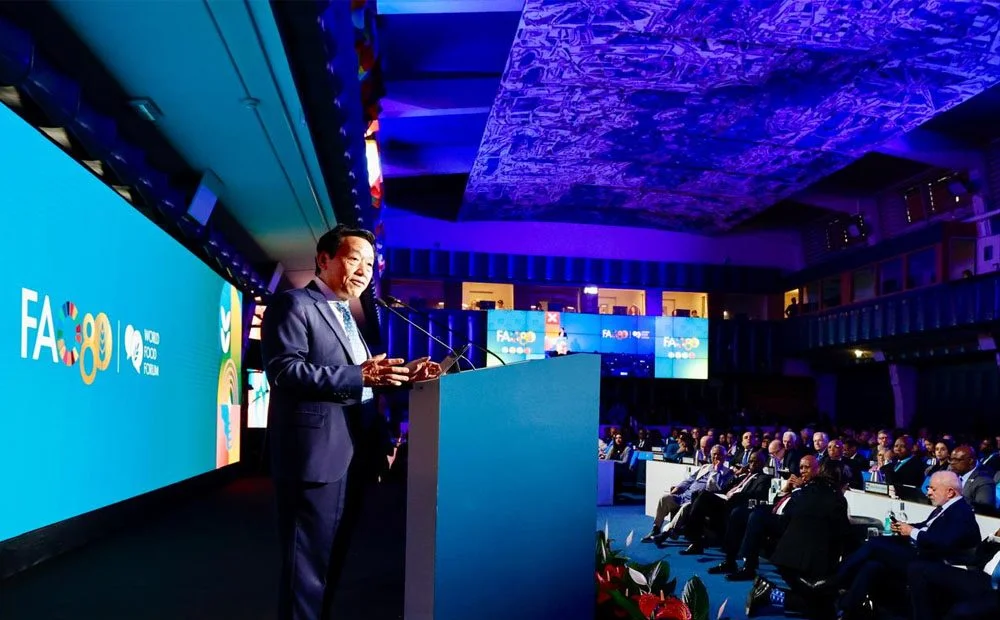
The warning was not delivered as a certainty. The FAO insists the scenario can still be avoided. Photo: FAO.

More than 132 million people risk falling into extreme poverty over the next four years as intensifying droughts and severe floods batter agrifood systems worldwide, the Food and Agriculture Organization (FAO) warned Monday in Rome.


FAO Director-General Qu Dongyu issued the warning on October 12 at the opening of the plenary sessions of the World Food Forum 2026 in Rome. The event, held under the slogan “Innovate Today, Nourish Tomorrow,” runs through Friday, October 16.

Qu Dongyu told delegates of the World Food Forum 2026 (WFF) that extreme weather now threatens global food security at a scale the world has rarely confronted. The agency’s technical models identify a single driver behind the projected plunge, the hardening of droughts and floods that strike agricultural systems.

RELATED: FAO Opens Rome Forum With Focus on Global Food Security

According to the agency’s technical projections, the intensification of extreme weather events is hitting agrifood systems hard and threatening global food security. Qu described the impact of these phenomena as severe, stressing that the consequences fall most heavily on the Global South.

The forum brings together government delegations, farming communities, scientists and international investors. Their goal is to design structural responses to a climate crisis that, in the FAO’s assessment, punishes vulnerable regions with particular harshness.

FAO stressed that the projected outcome is not inevitable. According to the organization, it can only be avoided if governments and financial actors multiply and accelerate investments in three areas: technological innovation, the strengthening of rural and smallholder resilience, and the adaptation of local crops to changing climate conditions.

World Food Forum 2026: Flagship event opens under theme “Innovate Today. Nourish Tomorrow.”@FAODG QU Dongyu also inaugurates Global Youth Forum as week-long programme gets underway#WorldFoodForumhttps://t.co/xRTTdNk0Mo

— FAO Newsroom (@FAOnews) October 12, 2026

Global South Bears Brunt

The agency also cautioned that ecological imbalances, aggravated by what it called predatory development models, are deepening inequality gaps and threaten the human right to food. Both dynamics, it said, converge in extreme poverty.

That framing sharpens the demand for deep change in international agricultural governance. Whether the projected outcome can be averted depends, according to the FAO, on urgency converting into investment.

This year’s edition places significant emphasis on Latin America, with the participation of leaders from a range of political backgrounds. The forum is scheduled to close with institutional messages from UN Secretary-General António Guterres and Pope Leo XIV, in a gathering intended to strengthen global commitments against hunger.

FAO’s projection adds to a growing body of warnings from international organizations about the links between climate change, food insecurity and poverty. Whether the forum produces concrete financial commitments, rather than statements of intent, is likely to be the key test of its outcome.

Strategic alliances against hunger sit at the center of the agenda. For the FAO, the equation is direct. Faster funding and smarter innovation today determine how many families avoid destitution by the end of the decade.

The alert lands as the forum seeks to convert pledges into action. Delegates have five days in Rome to turn the warning into commitments, and the 132 million figure now frames every negotiation in the room.

  •  

Russia is building satellite network that could put all of Europe in reach, defense executive warns

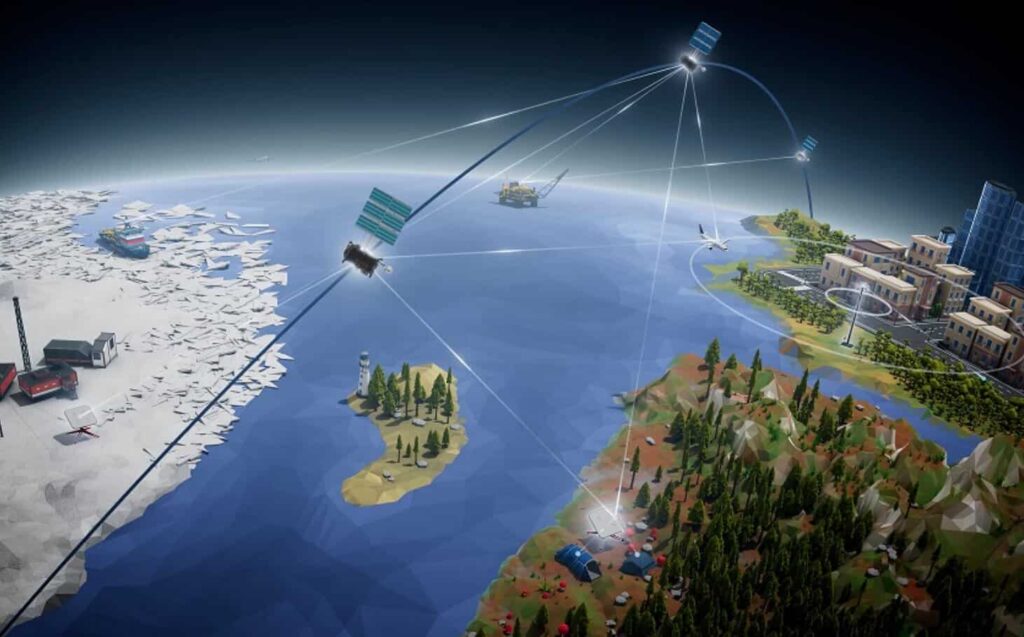
Illustration of the Russian Rassvet satellites by Bureau 1440

Russia is building a satellite network that could soon put all of Europe within its reach. The “Rassvet” satellite system is an extraordinary threat, first to Ukraine and then to the rest of Europe, Oleksandr Danyliuk, the head of the private European aerospace and defense technology company Destinus, said at the Warsaw Security Forum, according to Ukrinform.


Rassvet is Russia’s answer to Starlink, a low-orbit satellite network built by Bureau 1440 to give Moscow’s forces communications that no one else can switch off. European states must invest more quickly in cheap, effective, mass-produced systems to counter it.

“They will be able to navigate to any point in Europe without problems. This needs to be stopped,” said Danyluik, a former Ukrainian finance minister, said.

Cheap systems, made at scale

Danyliuk’s prescription is already being used on Ukraine’s front. Europe should invest in inexpensive, effective systems that can be mass-produced, he argues, the same approach Ukraine uses, and that Russia also turns against it.

“This gap needs to be filled as quickly as possible,” he said.

He urged allies not to overlook threats that might look secondary today, pointing to Rassvet as exactly that kind of slow-building danger.

Appearing strong is not enough to deter Russia, Danyliuk argued, because Moscow can gauge how ready European states actually are.

Ukraine races to catch up

Both sides are now scrambling to own the satellite link rather than rent it. Ukraine is building a satellite system of its own, similar to Starlink but beyond any single company’s control, President Volodymyr Zelenskyy said on 4 October.

He argued Kyiv should be free to turn Starlink on Russian military targets, warning that China and other states will share comparable satellite technology with Moscow within months.

By Ukrainian estimates, Russia still needs five to eight years to complete Rassvet, which so far reaches Ukraine only in brief passes. That window is the time Danyliuk says Europe must use.

  •  

Cuba President Diaz-Canel Denounces U.S. Blockade at World Food Forum

He highlights the ethical and political responsibility governments bear to guarantee the inalienable human right to food.

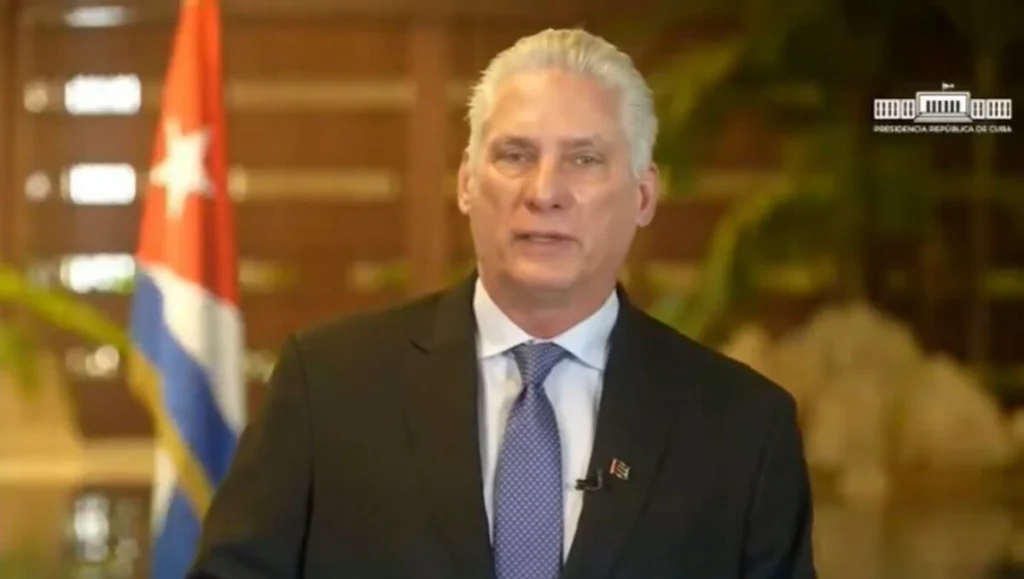
On Monday, Cuban President Miguel Diaz-Canel participated in the 2026 World Food Forum (WFF), organized by the United Nations Food and Agriculture Organization (FAO) in Rome, Italy.

RELATED:

Venezuelan Acting President Rodriguez Attends 2026 World Food Forum

During his address, he expanded on his denunciation of the ethical and political responsibility governments bear to guarantee the inalienable human right to food.

The Cuban leader warned that global problems such as armed conflicts, the climate crisis and economic turmoil disproportionately affect developing nations, where more than 640 million people suffer from extreme hunger.

Diaz-Canel emphasized that the challenges facing the Cuban nation are linked not only to global economic and environmental factors but also to the cumulative impact of more than six decades of the U.S. economic, commercial, and financial blockade.

He detailed how this policy of strangulation directly restricts the Cuban people’s access to international markets, advanced technologies, financing, agricultural inputs and fuels essential to sustaining the country’s agricultural sector.

Brazilian President Luiz Inácio Lula da Silva affirmed Cuba during the FAO conference, saying the island’s food crisis is not due to a lack of production.

“Cuba is going hungry because they [the U.S.] don’t want it to have access to the basics.” pic.twitter.com/519PcARBTt

— Belly of the Beast (@bellybeastcuba) March 7, 2026

The Revolution’s Structural Response to the Energy Blockade

The Cuban president strongly denounced the intensification of Washington’s aggression through the imposition of an energy blockade beginning in January.

This punitive measure affects the entire agri-food value chain, disrupting planting, food refrigeration, industrial processing, the transportation of supplies and distribution logistics intended to serve the population.

Nevertheless, Diaz-Canel asserted that, in the face of this systematic aggression, the Cuban people have transformed the challenge into an opportunity to accelerate profound structural changes.

Cuba’s strategy focuses on territorial decentralization, the promotion of scientific innovation, the transition to renewable energy in local food systems and the strengthening of domestic production to reduce dependence on external inputs, consolidating the country’s resilience under extraordinarily adverse conditions.

Live | FAO World Food Forum 2026 https://t.co/7kkZBg8ZFO

— teleSUR English (@telesurenglish) October 12, 2026

Strategic Partnership with FAO and Castro’s Legacy

Diaz-Canel highlighted the support provided by the FAO, a multilateral organization that has mobilized nearly US$100 million in resources, technical assistance and training to strengthen Cuban key productive sectors.

In this context, Cuba announced its incorporation into the Global Alliance Against Hunger and Poverty by presenting two projects with significant social impact designed to protect the most vulnerable sectors of the population.

Likewise, under the Hand-in-Hand Initiative, Cuba promoted two projects aimed at strengthening coffee and honey production chains, sectors of high strategic value for boosting rural employment, environmental sustainability, and export revenue.

As Cuba marks the centennial year of the birth of Commander Fidel Castro, Diaz-Canel reaffirmed that Castro’s longstanding advocacy for the right of peoples to a dignified life continues to guide Cuba’s social model.

He concluded by calling for the consolidation of a combative and solidarity-based multilateralism, stressing that food must be a collective right rather than a commodity subject to speculation or the political blackmail of imperialism.

teleSUR/ JF

Source: teleSUR

  •  

Venezuelan Acting President Rodriguez Attends 2026 World Food Forum

She will highlight her county’s policies to strengthen domestic food supplies amid more than 1,000 unilateral coercive measures.

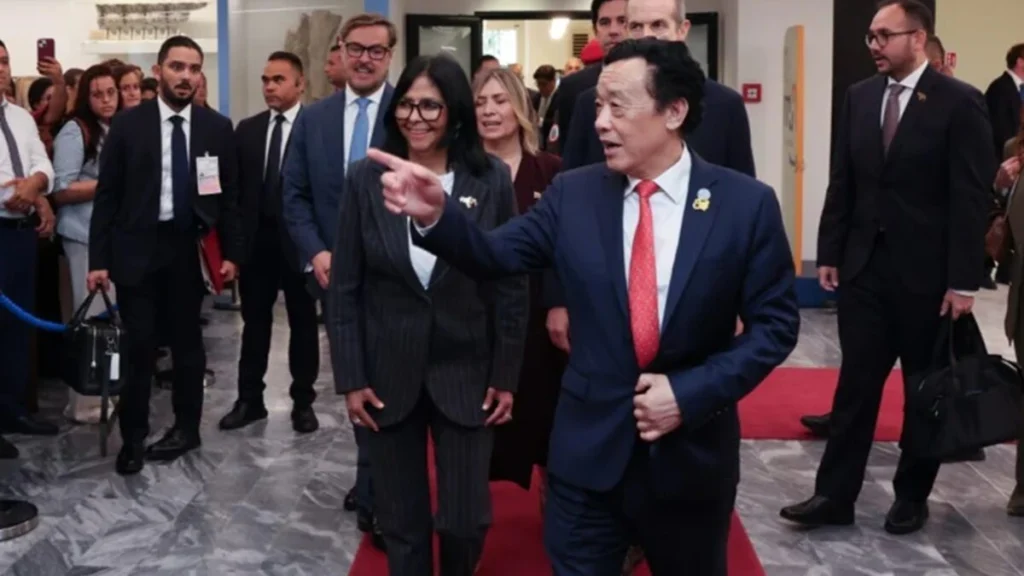
On Monday, Venezuelan Acting President Delcy Rodriguez arrived at the headquarters of the Food and Agriculture Organization of the United Nations (FAO) in Rome, Italy, to participate in the 2026 World Food Forum (WFF).

RELATED:

Venezuela Presents Venezuela Renace Plan Update 100 Days After Earthquakes

She was accompanied by a delegation of high-ranking Venezuelan officials, including Foreign Minister Felix Plascencia and Ambassador Plenipotentiary Maria Elena Uzzo.

After being received by FAO Director-General Qu Dongyu, Rodriguez formally joined the activities of the 2026 WFF, which will take place from Oct. 8-16.

The acting president’s agenda is primarily aimed at highlighting Venezuela’s progress, strategies and challenges in agricultural production, environmental sustainability and resilient agrifood systems.

More specifically, Rodriguez will present the resilience policies implemented to consolidate domestic supplies and overcome the impacts stemming from more than 1,000 unilateral coercive measures imposed against the Venezuelan nation.

Following the opening of the 2026 forum, heads of state and government from around the world will participate in an opening panel, where they will discuss their capabilities or limitations in ensuring food security.

Venezuelan Acting President Delcy Rodriguez has arrived in Rome, Italy, to lead the national delegation at the 2026 World Food Forum, convened by the Food and Agriculture Organization of the United Nations (FAO). ​Upon her arrival, she was received by FAO Chief Economist Maximo… pic.twitter.com/K1SQnxzAzn

— teleSUR English (@telesurenglish) October 11, 2026

The 2026 World Food Forum, whose theme is “Innovate Today. Nourish Tomorrow,” is a major global hybrid event focused on transforming agrifood systems, empowering young people and ensuring food security. The forum is organized around three main pillars:

1. Global Youth Action: Amplifying young leaders, innovators and youth networks to drive grassroots and policy-level transformation.

2. FAO Science and Innovation Forum: Highlighting scientific discoveries, digital tools, traditional knowledge and technology in food production and distribution.

3. FAO Hand-in-Hand Initiative Investment Forum: Connecting young visionaries, farmers and entrepreneurs with financial institutions, investors and development partners.

teleSUR/ JF

Sources: Presidential Press – FAO

  •  

Ukrainian drones hit three of Russian tech giant Yandex’s data centers in four days. Ukraine’s president says the bots thinned out too

ukrainian drones hit three russian tech giant yandex’s data centers four days ukraine’s president says bots thinned out too · post flickr/hesham elmahdy social media internet trolls networks ukraine news

Ukraine’s drone strikes on Russian tech giant Yandex thinned out social media bots, Ukrainian President Volodymyr Zelenskyy said on 12 October. Network data do show Yandex’s automated traffic collapsing after the strikes. Disinformation researchers say that traffic is search crawling, not trolls. A Ukrainian social media monitor told Euromaidan Press its own data show no clear drop in bot activity either.

Russian influence operations are a live threat to European votes. In August, the Matryoshka network fabricated news clips aimed at Sweden’s general election. German and French authorities flagged the same network targeting Germany’s local votes and French presidential hopeful Gabriel Attal. A way to switch such networks off would hand allies a new tool, which is why the claim needs testing.

The president’s claim

Addressing the Warsaw Security Forum by video link, Zelenskyy said that once Ukraine began answering Russia’s operation against Ukrainian data centers and its strikes reached Yandex, many social media platforms suddenly became a little easier to breathe on.

Many people noticed less hatred, discord, and provocation because there were fewer bots, he said. It was quite clear where those bots came from, he noted. Their disappearance once Yandex went down proves again that Europe is not the source of the problems, he added.

Lithuanian Prime Minister Mindaugas Sinkevičius said at the same forum that allies should ask Zelenskyy to strike more data centers in Russia, answering a question on how to protect their elections from interference.

Three data centers in four days

Drones first hit Yandex’s data center in Sasovo, Ryazan Oblast, on 8 October. Yandex said it shut the site down completely. The next day, a strike on its Kaluga site completely disabled several modules, the company said. Yandex calls Kaluga its largest data center, Russian science outlet T-Invariant noted.

Ukrainian drone maker Fire Point said its FP-1 long-range drones carried out that strike.

After the first strike, on Sasovo, a source at Yandex summed up the mood for The Bell: “Things are rotten. We keep working.”

Overnight on 11 October, drones hit the third site, in Vladimir. Yandex said it fully halted that data center too. Vladimir Oblast Governor Aleksandr Avdeev acknowledged an attack on “infrastructure” near the city. It started a fire and cut power to two substations serving 5,000 residents, he claimed.

Dima, have you tried turning it off and on again?

— Fire Point (@FirePointUA) October 11, 2026

What the traffic data show

Automated web requests from Yandex’s network fell to 0.4% of their two-week peak after the third strike, Cloudflare Radar data showed, Cybernews reported. That chart counts automated requests to websites, mostly from Yandex’s own search crawlers. It does not count social media posts.

The chart “has nothing to do with social media,” the Russian opposition analysis group Antibot4navalny wrote.

To those implying that Kremlin-controlled social media bot/troll farms became silent after Ukraine hit a Yandex data center, posting this CloudFare chart ( radar.cloudflare.com/bots/as13238 ):Hate to disappoint you all ⤵

— antibot4navalny | bot blocker | блокировщик ботов (@antibot4navalny.bsky.social) 2026-10-11T20:54:52.717Z

Russia’s overall bot traffic last week looked much like any other week. Yandex’s own figure began recovering on Sunday. Covert troll farms usually hide behind residential proxies, hacked devices, virtual private networks (VPNs), and Western cloud providers, the outlet added.

What Ukrainian social media shows so far

Yevhen Luzan tracks Ukrainian social media sentiment as an analyst at the Ukrainian nonprofit CAT-UA. Its daily reviews sample about 500 random posts. On 11 October, that sample showed an unusually small share of posts criticizing Ukraine’s authorities, he told Euromaidan Press. Accounts showing signs of bot activity made up only a few tenths of a percent of that criticism. That is within the margin of error.

The same day, though, US President Donald Trump’s deal for Russian diesel supplies dominated Ukrainian feeds. Luzan said a rally-around-the-flag effect could explain the shift, as outrage at Washington crowded out domestic stories.

“To state it definitively and draw a cause-and-effect link from this correlation would be too bold,” he said.

Across the wider pool of about 10,000 daily mentions, CAT-UA sees no significant drop in posting activity in recent days. The curve shows only the usual rises and dips around the start and end of the week, Luzan said.

“For now, even a hypothetical drop in bot farm activity dissolves entirely in the natural fluctuations of the information space,” he said.

How a crawler chart became a bot story

The claim that Russian social media bots fell by half is unproven and built on a misread chart, disinformation analyst Joohn Choe concluded in a fact-check. It traces back to an 8 October post by security researcher Jeremiah Fowler. That post said Russian bot traffic had dropped to 49%. On 11 October, radio reporter Jamie Dupree spread it on X. Tom’s Hardware then ran it under a headline calling the crawler traffic “Russian disinformation bot traffic,” wording it has since changed.

According to Cloudflare Data Explorer the amount of russian bot traffic has dropped to 49% after Ukraine struck a yandex data center. Could this disrupt the midterm elections in the US? pic.twitter.com/SRtMyjaV22

— Jeremiah Fowler Security Researcher (@yoda69) October 8, 2026

Ukrainian military analyst Tatarigami claimed that Texas separatist accounts with identical “Veteran, Christian, Father, MAGA” bios had gone quiet. He said Quebec separatists and Polish anti-EU accounts went quiet alongside them.

Polish military analyst Jarosław Wolski claimed that AfD’s online support fell 56%, posting a chart without naming its source. Another X user said “Polish” bots had vanished.

Zderusyfikowany internet (ukraińskie trafienia w centra Yandexa) nagle objawia cuda w socjalach: poparcie dla AfD w socjalmediach spadło o 56%. Mniej "polskich" kont szczujących na Ukraińców, mniej "ukraińskich" szczujących na Polaków, poparcie w sieci dla MAGA gwałtownie spadło… pic.twitter.com/zi4rwqNR9I

— Jarosław Wolski (@wolski_jaros) October 11, 2026
  •  

Diretor da Fórum denuncia que Flávio negociava delação de Vorcaro contra Lula

A divulgação de um áudio em que Daniel Vorcaro, ex-dono do Banco Master, afirma ter financiado o documentário Lula, dirigido por Oliver Stone, ampliou a disputa política entre Luiz Inácio Lula da Silva (PT) e Flávio Bolsonaro (PL). O episódio ganhou novos contornos após o diretor de redação da Fórum, Renato Rovai, denunciar um suposto acordo no qual Flávio negociaria uma delação de Vorcaro contra Lula e, em contrapartida, se comprometeria a proteger o banqueiro caso fosse eleito. A denúncia ainda precisa ser comprovada.

A revista Veja publicou nesta sexta-feira (9) trechos de uma gravação atribuída a Vorcaro, na qual ele afirma ter colocado dinheiro na produção do documentário sobre Lula e diz que o financiamento teria ocorrido de maneira irregular. Segundo a publicação, os pagamentos envolveriam cerca de R$ 30 milhões em espécie, além de repasses ao Instituto Lula. Até o momento, os valores mencionados não foram comprovados publicamente.

Antes da publicação da Veja, Rovai afirmou, em publicação na rede X nesta quinta-feira (8), que o vazamento estaria relacionado a um suposto entendimento entre Vorcaro e Flávio Bolsonaro. Segundo o diretor da Fórum, o banqueiro teria interesse em divulgar informações contra Lula, enquanto o senador se comprometeria a protegê-lo caso fosse eleito presidente.

Celular de Vorcaro não registra o suposto pagamento

Uma apuração publicada pelo UOL nesta sexta-feira acrescentou informações ao caso. Segundo o veículo, as conversas extraídas do celular de Vorcaro, apreendido pela Polícia Federal (PF) em novembro de 2025, não apresentam registros de pagamentos ou patrocínios ao documentário de Oliver Stone. O aparelho contém, porém, referências a investimentos em produções sobre Jair Bolsonaro e Michel Temer.

O UOL também informou que o documento com o relato detalhado dos pagamentos de R$ 30 milhões em espécie, citado pela Veja, não aparece nas três propostas de delação apresentadas pela defesa do banqueiro. Uma dessas propostas, entretanto, mencionava o patrocínio a filmes sobre Lula e Michel Temer. Fontes ouvidas pelo UOL na Procuradoria-Geral da República (PGR) e na PF disseram desconhecer a gravação e o documento específico descrito pela revista.

A PGR rejeitou a proposta de colaboração de Vorcaro por considerar que ela não apresentava novidades relevantes em relação às provas já obtidas. Segundo o UOL, o banqueiro não chegou a prestar depoimento oral no âmbito das tratativas. A defesa de Vorcaro afirmou que ele teria elementos para sustentar suas declarações.

Relação de Flávio com Vorcaro entra no radar da PF

A relação entre Vorcaro e Flávio Bolsonaro também aparece nas investigações sobre o financiamento de Dark Horse, filme sobre a trajetória do ex-presidente Jair Bolsonaro.

Reportagens do Intercept Brasil revelaram mensagens relacionadas à negociação de US$ 24 milhões, equivalentes a aproximadamente R$ 134 milhões, para financiar a produção. Segundo informações publicadas pelo UOL, ao menos US$ 10,6 milhões, cerca de R$ 61 milhões, teriam sido pagos para custear o projeto. Os valores negociados não devem ser confundidos com os recursos efetivamente transferidos.

Flávio admitiu ter se encontrado com Vorcaro após a primeira prisão do banqueiro, em novembro de 2025, e afirmou que a reunião tratou do encerramento de sua participação no projeto. As movimentações financeiras relacionadas ao filme são objeto de investigação da Polícia Federal.

Campanha de Lula anuncia medidas judiciais

A controvérsia ganhou força às vésperas do segundo turno presidencial, marcado para 25 de outubro. A campanha de Lula negou as acusações relacionadas ao documentário e anunciou medidas judiciais contra Vorcaro e a revista Veja. Também acusou os envolvidos de tentar interferir no processo eleitoral. Entre as providências anunciadas estão pedidos de investigação e medidas judiciais contra os responsáveis pela divulgação das acusações.

O Grupo Prerrogativas também acionou a Polícia Federal para pedir a investigação de uma suposta articulação envolvendo Vorcaro e a campanha de Flávio Bolsonaro. A representação solicita que sejam verificadas informações sobre negociações para uma entrevista do ex-banqueiro a uma emissora de televisão e sobre a existência de uma gravação atribuída a ele. O grupo afirma que não teve acesso ao áudio e pede que as informações sejam apuradas pela polícia.

The post Diretor da Fórum denuncia que Flávio negociava delação de Vorcaro contra Lula appeared first on Diário da Manhã - O Jornal do leitor Inteligente.

  •  

O pré-colapso da(s) democracia(s)

Após 2500 anos de presença na Europa, a democracia contemporânea vive um dos seus períodos mais paradoxais: nunca houve tanta informação disponível, nunca foi tão fácil aceder ao debate público, nunca os cidadãos tiveram tantos (e diferentes) meios para se expressar e, no entanto, em tempo algum o espaço democrático pareceu tão vulnerável, tão teatral, […]
  •  

UK parliament hosts TRENDS forum on Muslim Brotherhood networks in Europe

British parliamentarians, former ministers, researchers and security experts gathered at the House of Lords in London for the sixth TRENDS Annual Forum on Political Islam, focusing on Muslim Brotherhood networks in Europe, education, funding and digital influence.

The London meeting opened the first part of the forum, organized by TRENDS Global and TRENDS Research & Advisory. Proceedings will continue on September 10 at the French Senate in Paris, with a focus on legislative responses and cooperation between European and partner countries.

Opening the event, Dr. Mohammed Abdullah Al Ali, Chairman of Trends Group, argued that political Islamist movements operate across borders and can exploit the openness of democratic societies to build influence in education, media, business and the digital sphere. He stressed the distinction between Islam as a religion and Islamism as a political ideology seeking power and influence.

Dr. Khalifa Mubarak Al Dhaheri, Director of Mohammed Bin Zayed University for Humanities, focused on Britain, describing it as a longstanding centre for individuals and networks associated with the Muslim Brotherhood and political Islam. He said the organization should not be treated as representative of Muslims in Britain or elsewhere in Europe and warned that ideological loyalties placed above citizenship can create “societies within societies.”

From Education to Funding

The first session examined the Brotherhood’s ideological structures and its influence on education and younger generations. Participants also discussed the Gaza Children’s Village, established in July 2025 by Palestinian-American neurosurgeon Dr. David Hassan in cooperation with IMPACT-se, as an alternative educational model to counter incitement and extremism.

The second session turned to legislation, prevention and enforcement. Lord Walney, who moderated the discussion, urged a review of existing legal tools and warned of a “blind spot” allowing some networks and think tanks to penetrate charities and the education sector. He also advocated greater intelligence sharing and international cooperation.

Baroness Foster of Oxton addressed financial oversight, arguing for tighter scrutiny of charities, their funding and tax benefits. Former MP Daniel Kawczynski urged the Home Office to respond to parliamentary demands to ban the Muslim Brotherhood and designate it as a terrorist organization. Lady Olga Maitland warned that “soft extremism” and structures targeting young people require updated legislation.

Matthew J. Leavitt of the Labour Party described the Brotherhood as a “multi-headed beast” and urged Britain to examine evidence gathered in Austria, Germany and France. Major Jason Olson, a U.S. Navy officer and former counter-extremism official, argued that prevention should begin in schools.

Markus Sheff, CEO of IMPACT-se, identified education as the first line of defence against digital extremism, advocating critical thinking and digital literacy in school curricula.

Pressure for a UK Response

Sir Oliver Dowden, former Deputy Prime Minister and Chair of the UK-UAE Parliamentary Friendship Group, addressed the Brotherhood and its links to extremism, noting growing attention to the issue among British parliamentarians and the need for institutions to better assess potential threats to the United Kingdom.

Tom Wilson, Chairman of the Counter Extremism Group, and Dr. Alan Mendoza, Executive Director of the Henry Jackson Society, highlighted the legal and media difficulties involved in exposing front organizations. They announced the “Ban the Brotherhood” campaign and proposed using parliamentary privilege to bring evidence into the public domain.

Professor Andrew Davies of the University of Birmingham advocated carefully targeted bans on organizations that threaten social cohesion and religious pluralism. Professor David Abrahams, Senior Adviser at the Arab Global Network and former Deputy Chairman of RUSI, described political Islam as an “existential threat” while stressing the need to protect religious freedom and pluralism.

Alessandro Bertoldi, Executive Director of Italy’s Milton Friedman Institute, questioned whether a ban alone would be sufficient without confronting the Brotherhood’s operational tools. He also raised the need to monitor the use of artificial intelligence to spread its messaging.

Phil Rosenberg, President of the Board of Deputies of British Jews, advocated an international alliance against extremist ideology, noting that Muslims themselves are among its largest victims. Imam Mohammed Tawhidi, counter-extremism adviser at TRENDS, described the Brotherhood as the “parent company” of organizations including al-Qaeda, ISIS and Hamas, while stressing that the vast majority of Western Muslims reject this approach.

Measuring the Brotherhood’s Reach

TRENDS researcher Hamad Al Hosani argued that the Brotherhood increasingly operates through flexible networks and community institutions able to exploit democratic freedoms. Any response, he said, should protect national security without collectively stigmatizing Muslim communities.

Badriya Al Riyami presented figures from the 2025 Global Brotherhood Power Index. Europe ranked fourth at 17.0%, behind the Americas at 24.8%, Asia at 22.5% and Africa at 20.2%. She described Europe as an important political and media base for the organization.

Participants recommended moving beyond procedural bans by addressing networks and ideological structures, strengthening educational programs and improving capabilities to track extremist content spread through digital platforms and artificial intelligence. Citizenship and tolerance education were identified as key preventive tools.

The meeting drew a broad parliamentary and political audience, including Richard Tice, Sir Robert John Blackman, Baroness Deech, Baroness Foster of Oxton, Nadhim Zahawi, Lord Howard of Lympne, Lord Austin of Dudley, Lord Eric Pickles, Sir Michael Ellis and Sir Oliver Dowden.

Journalists attending included Marcus Donaldson of GB News, Camilla Turner of the Sunday Telegraph and Natalie Lisbona of the Daily Mail.

The forum now moves from Westminster to the French Senate, where its second part will examine legislative responses, research cooperation and measures to counter Brotherhood-linked networks while protecting religious freedom and equal citizenship.

  •  
❌