The author and her family moved to the Gold Coast this year.
Courtesy of Melissa Noble
My family of five moved from a small country town to a city earlier this year.
I wanted to spend more time with my parents, and there is plenty to love about the city.
However, I miss the slower pace of life and the close-knit community.
I've always been a city mouse, so when we decided to move from Melbourne, Australia, to Bright in country Victoria in 2021, I wasn't sure how long I'd last. Our family ended up falling in love with the slower pace of life and the people, and spent four years in the small alpine town at the foothills of the Victorian Alps.
But in January, we moved from Bright to the Gold Coast, where I grew up. My parents' health was declining, and I wanted to spend quality time with them before it was too late.
Moving from a small regional town of fewer than 3,000 people to a city of almost 700,000 was a profound lifestyle shift for our family of five. We had to make new friends, learn how to navigate a traffic light again (joking!), and get used to the buzzing city life.
Overall, we've gained a lot from moving to the city, and I feel it's been especially beneficial to our kids, as it's helped build resilience. But there are definitely things about country life that I do miss, if I'm being honest.
Life is full of trade-offs, and we've definitely made a few.
We've gained convenience and accessibility
In country Victoria, our nearest major retailer was an hour's drive away. If the kids needed new shoes or I needed new underwear, off we'd drive to the nearest major town. It often felt like a mission just to access simple amenities.
Nowadays, everything we need is at our fingertips. If we want to eat Italian one night and Nepalese the next, we can. The Gold Coast has all the amenities we need, and a good mix of beaches, hinterland hikes, nightlife, festivals, and an up-and-coming food scene.
There are more career and education opportunities
Cities generally offer better career and education opportunities, without a doubt. In our family, my husband has probably benefited the most in that regard.
When we moved here in January, he expanded his Muscle Freedom remedial massage and myotherapy business and started a clinic on the Gold Coast. Since then, the opportunities have been incredible, and he's treated some of Australia's biggest sporting identities. That would likely never have happened in country Victoria (unless they were holidaying there).
Likewise, our kids seem to be thriving at school and in their extra-curricular activities, many of which were unavailable where we used to live.
I enjoy the anonymity, and the diversity here is also a big plus
When I was having a bad mental health day in Bright, there was no escaping friends and family (bless them). Once, at the supermarket, I was weeping in the bread aisle, only to be greeted by my husband's cheerful colleague, who was keen to chat about the weather. I wanted to scream and run away.
In the city, I quite enjoy the anonymity and being a number in the crowd, especially on harder days.
I also love having access to a diverse range of art, music, entertainment, and food on the Gold Coast. After four years living in the country, I began to feel a bit starved of culture.
My kids are also mingling with children from different backgrounds and walks of life, which I am really happy about.
However, we miss having nature at our doorstep, and wide open spaces
Bright is surrounded by mountains, forests, rivers, and cycling trails, with gorgeous national parks a short drive away. It really is a smorgasbord of activities for outdoor enthusiasts.
The Gold Coast has plenty of sunshine and offers some spectacular natural scenery, but you do have to drive to access it. I've actually put on a few kilos living in the city, and I think it's mainly because I'm not walking or cycling as much.
When we recently returned to Bright for a family holiday, I realized how much I've missed those wide open spaces. The air seems to feel fresher there.
Living in suburbia on the Gold Coast, the blocks are tighter, and some areas feel like the properties are on top of each other. Even as I write this, I can overhear the next-door neighbor arguing with her husband about his messy household habits.
I also miss the close-knit community and slower pace
I've been lucky enough to make some wonderful friends on the Gold Coast. The kind who check in on us when we're sick or offer to babysit if my husband and I need a night out. But it also seems that people are busier in the city, and get-togethers happen less often.
In a small town like Bright, it's easier to catch up with people because everyone lives close by. I found that living in the country helped me form deeper connections with friends. That brought a sense of security, knowing that someone always has your back.
Since moving to the city, life has felt frantic. For the first six months, every weekend was jam-packed with catch-ups with family and new and old friends.
In a small country town, the pace of life was much slower. Recently, while we were holidaying in Bright, I felt my shoulders relax, and my stress levels decrease. There's something to be said for a simple life.
What our next chapter holds
We'd intended to give the Gold Coast 12 months and then make a call about where to base ourselves long-term. But now that we're almost at that mark, we've realized it's too soon to make a decision.
And so, we'll be spending 2027 here, then reassessing our options late next year. Part of me craves the open skies, fresh mountain air, and the stillness I took for granted in the country, but I'm also enjoying having Aldi a kilometer away and more choices overall.
I suppose at the end of the day, there's no perfect place to live, just places that suit you at different life stages. For now, the Gold Coast is giving us convenience, variety, and time with my folks, and I intend to enjoy the best of what city life has to offer.
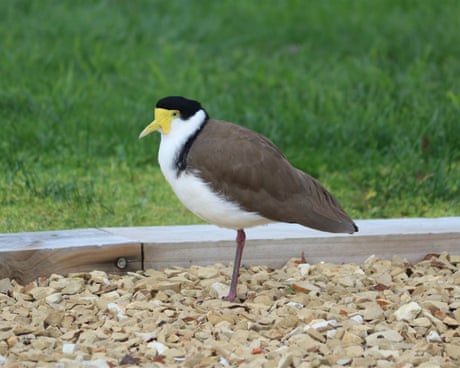
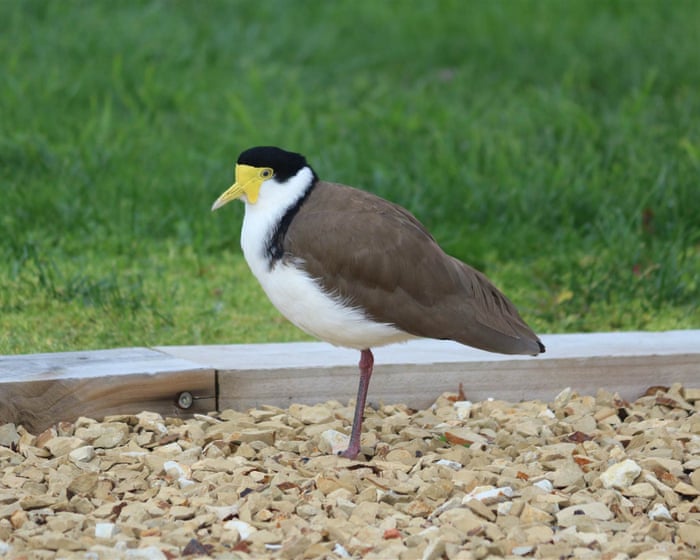
While masked lapwings have a reputation for swooping during nesting season, Windsor Park oval’s resident plover just wants a good innings
At Windsor Park in Riverside, just outside Launceston in northern Tasmania, a masked lapwing has claimed prime real estate in the middle of a community sports ground, showing complete indifference to the weekend cricket matches taking place around it.
Warming a nest of eggs, the bird has been affectionately dubbed “Faf Swoop Plessis” by locals – a play on former South African cricket captain Faf du Plessis.
Steve Hamilton was fishing in Winter Garden when he was attacked by gator, which was later killed
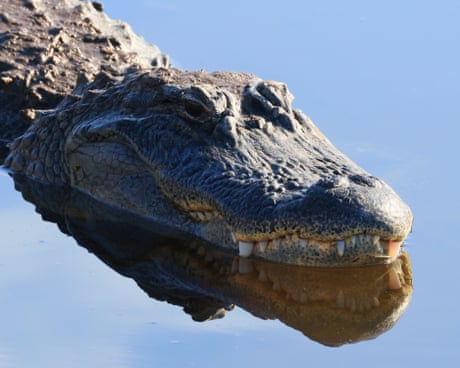
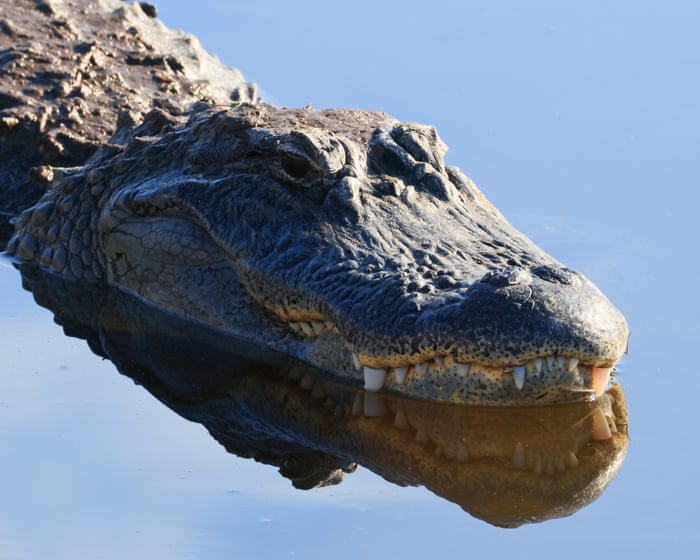
A man fishing at a pond in Florida was killed on Friday by an alligator that was almost 12ft long in a rare kind of animal attack, according to authorities and media reports.
Steve Hamilton, 71, was on the shoreline in the community of Winter Garden when the animal dragged him into the water, the Florida news outlet WOFL reported, citing local police and the state’s fish and wildlife conservation commission.
For its 2026 Global Cities Index, economic advisory firm Oxford Economics ranked 1,000 cities across the globe based on five categories: economics, human capital, environment, and quality of life.
Every category is viewed from an economic lens, even quality of life, where indicators include income equality and housing expenditure, among others.
"The Global Cities Index records the progress cities are making across a comprehensive range of metrics," Mark Britton, managing director of city services at Oxford Economics, said in the report. "Sitting alongside our forecasts and scenario models, its ability to highlight how paths change under different conditions and its capacity for comparability shows you not just where cities stand today, but also where they are heading."
The overall list features several US cities in the top 20 — eight, to be exact, with New York taking the No. 1 spot. However, when highlighting quality of life specifically, only one US city made the cut.
Quality of life, which accounts for 25% of a city's overall score, wasn't a bright spot for the US, but plenty of other cities excelled in that category. See which cities ranked highest in quality of life, according to Oxford Economics.
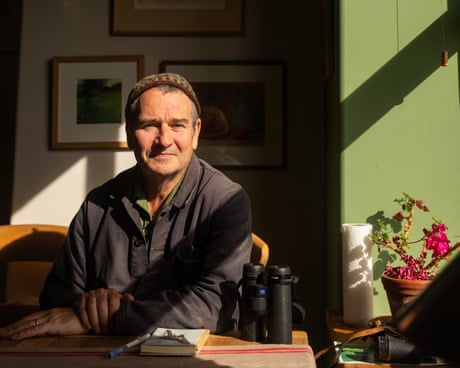
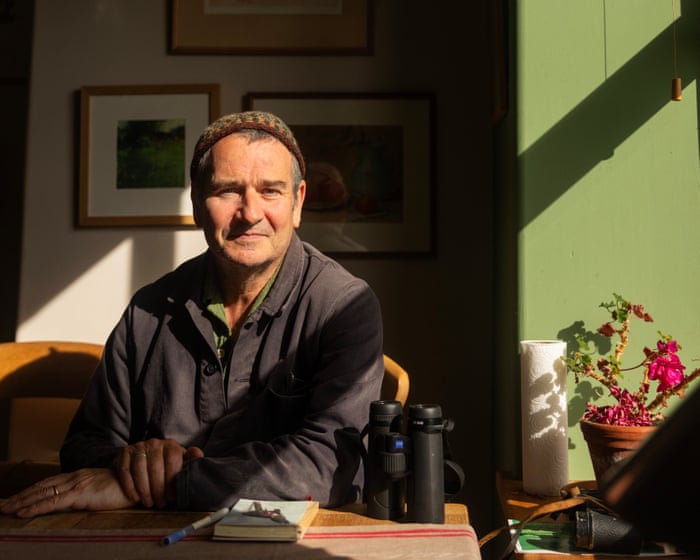
As Mark Cocker approaches a landmark for the world’s oldest column in an English-language newspaper, he is still inspired by powerful encounters with nature
In the autumn of 1987, Mark Cocker sat in a field near Norwich and watched a jay burying acorns for the long winter ahead. He described the scene in his first country diary for the Guardian. Thirty-nine years on, some of those jay-planted acorns will be mature oaks now, and Cocker is completing his 1,000th diary for the world’s oldest column in an English-language newspaper.
In his next diary, he will reflect on the changing birdlife around Flint Clough, in the Peak District, where he first marvelled at rare birds aged 12 after devouring bird books in his bedroom. As a boy, he would find cuckoo, golden plover, ring ouzel and twite, a once-common bird which is now virtually extinct in England.
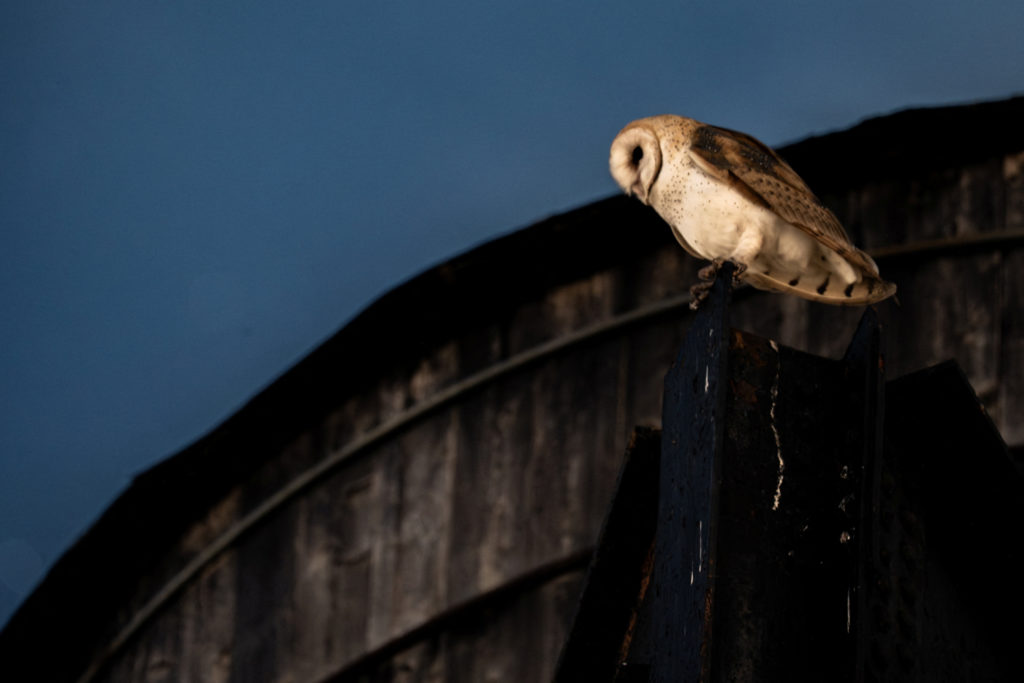
This is the first documented instance of barn owls nesting in Manhattan in modern history, according to one expert, and the owls have attracted nightly crowds of people in the street eager to get a glimpse of the elusive birds.
In our Divorce Diaries series, we speak to people in Ireland about their experience of marriage and divorce. This week, a woman in her 50s with several children talks about separation from her perspective
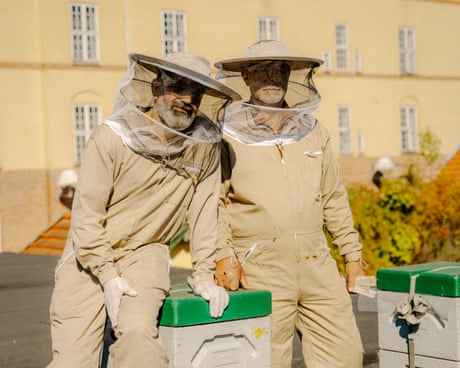
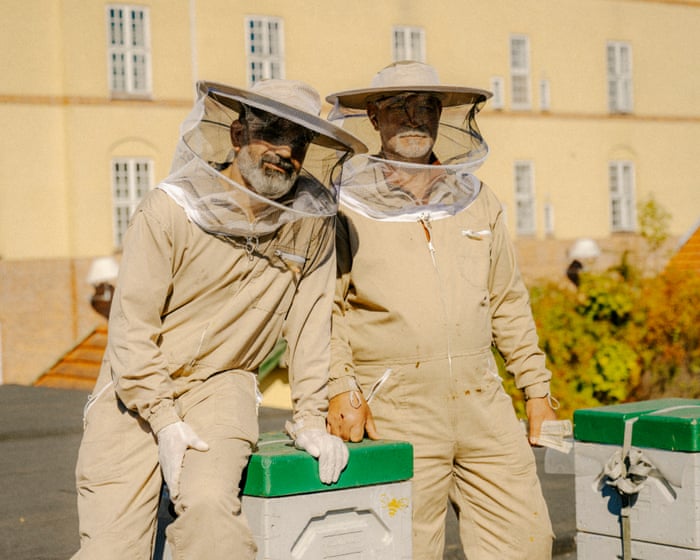
At Bybi in Copenhagen, a dedicated group of staff and volunteers have built a community for all centred on the production of honey – much of which is given away for nothing. Could it be replicated elsewhere?
The bees at Bybi, a collective of beekeepers in Copenhagen, live on the roof. Their home is a complex of Victorian buildings, right in the centre of the city, that looks like an idealised vision of the modern social enterprise, ennobled by the architecture of the past. It’s a place of cottage industry in concert with nature, where the marginalised are brought in from the fringes and corporations stand waiting to help, where jobs happen but a lot of the work is done by volunteers, and where – this bit is important – a lot of time is spent discussing ideas.
Oliver Maxwell, Bybi’s 48-year-old founder, encourages me to examine the buildings more closely. They were once a prison, a workhouse and a hospital; their functions today – a homeless shelter, a young offender institution and, until recently, a job centre – are not so different. Denmark’s Victorian transformation, from “agricultural backwater to industrialised agriculture”, was reflected in how they treated people, Maxwell says.
by Scott McClallen, Townhall: New York Mayor Zohran Mamdani claims that the American Dream is dead for many Americans. When talking to podcast host and comedian Theo Von, Mamdani compared achieving the American Dream to playing the lottery. Von said: “It used to feel like if you did enough work, you did this, and you did these […]
Finding fossils usually means months of fieldwork, a hammer, and a lot of patience. In Finnmark, Norway’s northernmost region, it took none of that. According to the University of Cambridge, a cluster of rocks had broken loose from a cliff above a sheep field. When they split open on landing, they exposed a fossil of […]
Apparently, African wild dogs enjoy knocking around balls of elephant dung like a football. It’s this playfulness that has endeared them to researchers—but, as Helen Sullivan points out, they have their work cut out for them trying to protect this persecuted big predator. Sullivan follows conservationists in southern Africa who are carefully managing tiny, isolated populations and attempting to introduce genetic diversity. The story of the three sisters who are flown over from Mozambique to be introduced to Waterberg—a South African municipality three hours from Johannesburg—is heart-wrenching. Yet in such a harsh environment, individual tragedies have to be endured while staying focused on the bigger picture: the fragile recovery of the species as a whole.
As we help Greyling and Hlako lift a crate off the pickup, a dusty paw flops out of one corner, and I think of something my uncle says: “You can smell the world in a dog’s paw.” Mooney and I back away, watching from inside a container as Hlako moves the car so that the overheating dog is in the shade. Though it is late afternoon, the temperature is still around 90 degrees.
Hlako and Greyling release the dogs one at a time, opening the crate and waiting until a dog walks, then trots, out. The first is less sure on her feet, the second seems almost normal, until Mooney points out that she would have run much faster from the crate and people had she not still been a bit dozy. The sisters stand together in a grassy area, point their noses in the air, move their satellite-dish ears and lie down under a thorn tree; it has been a long day.
 Login