❌

Reading view

My husband and I have different definitions of 'financially responsible.' Building a house is forcing us to compromise.

The writer and her husband smile for the camera while standing in front of rural land they own in Maine.
My husband and I bought land, and are starting the process of building a house.

Lisa Leslie

  • When it comes to money, I'm a big budgeter, and my husband prefers taking risks.
  • Now that we're building a house together, our differences are causing some disagreements.
  • We've learned to stay flexible and balance each other's approaches.

My husband and I have very different ideas about financial responsibility.

When we're feeling stressed about money, my instinct is to run the numbers and account for every financial what-if. He's a big-picture dreamer who sees what something could become and is more willing to say, "We'll figure it out."

His attitude has paid off before. He had the vision for our first home, which we bought for under $100,000 and recently sold for a decent profit after 13 years of renovations.

I know some of the best things we've done together wouldn't have happened without my husband's willingness to take a chance, but our differences have still caused some friction over the years.

Now that we're building a new home together, we're trying to balance my need to plan for the unknown with his belief that we'll find a way forward.

After 13 years, we took a risk and sold our home

Concrete boat ramp leads into a calm forest-lined inlet beneath a cloudy sky.
We sold our home and bought land in a part of Maine we love.

Lisa Leslie

For 13 years, we'd lived in the same place. My husband had moved frequently as a child, and he wanted his two daughters to have a consistent place to call home.

Leaving this house behind was bittersweet, but my oldest stepdaughter had just bought her own house, and my younger one was heading off to college. We were ready for what came next.

We could have bought an existing house needing renovations. Instead, we found land in southern Maine that felt worth taking a risk on.

We've always loved the area. My family has an annual reunion there, where we spend a week at the beach. Our new property will hopefully give us that lifestyle without the summer crowds: It's more than 2 ½ acres with hiking trails next door, a nearby kayak and paddleboard launch, and the ocean just a short drive away.

We decided to go for it, and by the end of August, our old house was nearly empty. My younger stepdaughter left for college on a Wednesday, we moved the rest of our things to a rental on a Thursday, and officially sold the house that Friday.

Every estimate comes with an 'unless'

A gravel path leads into a dense wooded forest with tall trees and early autumn leaves.
If excavators hit ledge, our costs could go up.

Lisa Leslie

In September, we began building our 1,500-square-foot house.

We're now paying $3,000 a month for a rental home — with a construction loan on top of that — and keeping track of a lot of numbers, from lumber and labor to excavation, plumbing, electrical, permits, and finishes.

My husband is doing most of the construction himself, which is what makes this project possible. If we had to pay for all of the labor, we probably couldn't afford to build right now.

However, that's not to say this hasn't been a very stressful time. We think we've accounted for everything, but every estimate has an asterisk: Unless lumber prices go up. Unless a contractor's price changes.

Unless we hit ledge — that is, solid bedrock beneath the soil that can be expensive to excavate. We might have to rethink the foundation or adjust the entire plan once we see what's underground.

I find that uncomfortable, but my husband doesn't.

We're leaving room to adjust

The writer and her husband posing in front of trees on their land in Maine.
We've made some compromises, and we'll likely have to make more.

Lisa Leslie

My husband can picture what this property could become over time, and has big dreams for it.

He wanted a garage, a small cottage where our family could stay when they visit, a little more space, and nicer finishes in some areas. I kept bringing us back to what we could afford right now, and how much we wanted to keep in savings rather than put everything into the house.

After a lot of discussion, we decided to start small. We're building for the life we have today, while — at his request — leaving room for the one we might want tomorrow. The garage and cottage can wait. For now, we're focusing on getting the house right without stretching our budget too far.

That means staying flexible. For instance, my husband wants a finished basement, and I agreed, knowing this would give us the option to add a third bedroom down the road.

Though the cost difference between a basement and an unfinished crawl space isn't huge upfront, hitting ledge could put us thousands — or even tens of thousands — over budget.

We're willing to give the basement a shot, but if excavation costs start climbing, we may have to scale back to a crawl space and save the extra bedroom for another day.

We have a plan, but we know it might change once we get further into the build. I'll keep making the spreadsheets and asking for the numbers. He'll keep looking at the big picture and reminding me why we decided to do this.

This project, and my husband, have taught me that financial responsibility isn't necessarily about eliminating every risk, but knowing which risks are worth taking and staying open to changing course.

Read the original article on Business Insider
  •  

My husband retired just as we became empty nesters. Now we're together nearly 24/7, and it's been a strange adjustment.

Two people pose for a selfie beside water with a rustic wooden building and autumn trees in the background.
The author and her husband are spending a lot of time together after retiring and becoming empty nesters.

Courtesy of Susan Teresa

  • When my husband and I became empty nesters, he retired, too.
  • We used to have busy, individual lives, but now we are always together.
  • It took a lot of adjustment and honest conversations, but we're learning to navigate our new normal.

My husband and I have been married for 26 years, together for 32. That's more than half my life. I thought we'd experienced just about every version of our life together.

Then we became empty nesters. And then my husband retired.

We're now together 24/7 with nowhere else we need to be, and I realized that all these years, I'd never spent this much time with him.

Since the day he brought home his office belongings, I've caught myself thinking more than once, "Oh, you're still here?

Our home feels different now

Without school schedules or workdays organizing our lives, we have more unstructured time than we know what to do with. We navigate quiet hallways lined with unoccupied bedrooms.

We now split the responsibility for coddling our cat, who suffers from separation anxiety. We announce, "We're back," to the furniture and the cat, forgetting we left the house otherwise empty.

Our aching hearts inspired us to collaborate on a shared list of silver linings. We drafted wish lists, imagining what we could do now that we no longer had to accommodate five personalities with varying interests.

While we shared many ideas and dream list to-dos — things like traveling to Tuscany for cooking and painting retreats — we hadn't anticipated that our day-to-day would also require attention and planning.

The trouble with together-time all the time

Throughout our marriage, my husband and I had always noted how similar his parents and mine were. Connected at the hip, one parent was seldom without the other.

We, on the other hand, prided ourselves on allowing each other space. We'd spent decades insisting we weren't like them — valuing independence, traveling separately, and encouraging each other to pursue our interests.

Then, when my husband retired, we instantly became our parents. With freedom to do whatever we wanted, we fell into the rhythm our parents had modeled: together all day, every day.

Sometimes you really can have too much of a good thing.

I'm an introverted writer who loves spending time in my rich inner world. He's an extroverted adventurer always on the go — kayaking, swimming, walking on the beach, sometimes all three in the same day.

One day, the realization that we had to structure our time hit hard. I'd been sitting at my writing desk when my husband opened the door to ask what we were having for lunch.

Not wanting to be rude, I talked with him for a moment, then asked for a few minutes to finish my thought. He left. I stared at my screen, hands still on the keyboard. My thought was gone.

While we enjoy being together, we're learning the importance of agreeing on when to be together and when to allow each other space.

We're creating a new rhythm

Mornings offer the perfect opportunity to plan our day over coffee, breakfast, and a card game — usually rummy. Between playful attempts to end each other's winning streaks, we check the weather, compare plans, and decide what we'd like to do. Our morning ritual helps shape our lives now that external demands no longer impose structure on our time.

Unless we have plans with friends, mealtimes serve as natural meeting points. An unexpected result: his cooking is improving. I'm now enjoying gourmet meals in the middle of the day, and again at dinner. He gets to run around outdoors, while I get to lock myself in my attic feminine sanctuary and write.

In the evenings, we wind down together. After sharing a home-cooked meal, we enjoy a movie or simply each other's company.

We're embracing new opportunities to grow together

Now that we're home together most of the time, honest communication, negotiation, and compromise have become essential tools. After decades of countless demands on our time, we're now free to choose how we spend it.

We're not always perfect. Some days, I join him outdoors when I'd rather stay home. Sometimes he interrupts when I'm in the flow.

I'm learning to ask for space when I need it. He's learning that he can pursue his desire to travel — even without me.

After 32 years, I never imagined we'd have to learn how to spend time apart. Having all the time in the world together doesn't mean we have to spend every minute of it that way.

These days, staying happily married sometimes means knowing when to leave each other alone.

Read the original article on Business Insider

  •  

Russian Competitors’ Absences To Influence the 2026 World Gymnastics Championship

The World Gymnastics Championships in Rotterdam begin with the absence of Russia’s Angelina Melnikova—who was denied an entry visa by Dutch authorities—at a time when the first qualification spots for the Los Angeles 2028 Olympic Games are up for grabs.

RELATED:

Angelina Melnikova to Lead Russia at the European Artistic Gymnastics Championships

The absence of Melnikova, the reigning world and European champion, will significantly impact the course of the Artistic Gymnastics World Championships in Rotterdam, which begin this Saturday in the Netherlands. The competition will award direct Olympic qualification spots to the three countries that reach the podium in the team event, in both the men’s and women’s categories.

Russia’s participation will be severely limited; in addition to Melnikova, the team will be without Anna Kalmykova—the all-around runner-up at the most recent European Championships—and Viktoria Listunova, a member of the gold-medal-winning team at the Tokyo Olympics. All three gymnasts were denied entry visas.

The Russian Gymnastics Federation described the decision as discriminatory and a violation of the principles of equality that should govern any sporting competition. Meanwhile, the Russian ambassador to the Netherlands accused Dutch authorities of deliberately denying the visas to weaken the Russian team.

The Dutch Ministry of Health, Welfare and Sport rejected these accusations, stating that athletic performance plays no role whatsoever in the evaluation of visa applications, which are governed by the European Union’s Visa Code.

Welcome to #Rotterdam2026 ❤️‍🔥

🎥 A little taste of the action on the first day of Podium Training at the Ahoy Arena.#WorldGymnastics #Gymnastics pic.twitter.com/222XeJkdM6

— World Gymnastics (@gymnastics) October 15, 2026

At the same time, attention will also be focused on the return of Brazil’s Rebeca Andrade, a four-time medalist at the Paris 2024 Olympic Games. This will be the gymnast’s first major international competition since stepping away from the sport over the past year to recover—both physically and mentally—from the previous Olympic cycle.

Her return will be gradual: Andrade plans to compete, at least initially, on the balance beam and vault. The Brazilian—a silver medalist in the all-around at both the Tokyo 2020 and Paris 2024 Games—leads the Brazilian team alongside Flavia Saraiva; the squad earned a bronze medal in the team event in Paris.

The absence of Melnikova and American Simone Biles—the most decorated gymnast in history, who has not competed since the Paris Games—positions Algeria’s Kaylia Nemour as the top contender for the all-around title.

Nineteen-year-old Nemour won the Mediterranean Games this summer with a total score of 57.750, the highest mark recorded by any gymnast this season. However, she will face stiff competition from 16-year-old Qinqin Ke of China, the reigning Asian champion, and 18-year-old American Hezly Rivera, who will be making her World Championship debut.

In the men’s competition, Japan’s Daiki Hashimoto will aim for his fourth consecutive world all-around title. Should he succeed, the 25-year-old gymnast will move closer to the record held by his compatriot Kohei Uchimura, who won six consecutive gold medals between 2009 and 2015.

His primary rival may well be his teammate Shinnosuke Oka, the reigning Olympic champion. Also in the mix is ​​Croatia’s Illia Kovtun, the current European champion and a world medalist in 2021 and 2023. China’s Boheng Zhang—an Olympic and world silver medalist—will not participate due to a last-minute injury.

Japan enters as the favorite for the men’s team gold, led by Hashimoto and Oka, though they will face a strong challenge from the Chinese squad. The United States and Great Britain—the latter having won the European title in Zagreb—emerge as the top contenders for the third spot and Olympic qualification.

In the women’s division, a revamped United States team will aim to secure its eighth consecutive world team title. Italy—an Olympic silver medalist in Paris—and Brazil, which took bronze at the same event, will be their main rivals

#Sports | Olympic champion Angelina Melnikova will lead the Russian women’s artistic gymnastics team at the European Championships in Zagreb following Croatia’s last-minute reversal of her visa ban, amid an administrative dispute and neutrality protocols.https://t.co/ky7mmLCXdJ

— teleSUR English (@telesurenglish) August 12, 2026
  •  

EU regions demand targeted investment for automotive industry amid electrification push

European regions and cities demand clear rules and solid financial backing to help Europe’s ailing car industry through the shift to electric vehicles (EVs). The European Committee of the Regions (CoR) on Wednesday adopted an opinion on the European Commission’s Automotive Package, arguing that the transition will only succeed if regions are adequately equipped to carry it.

Regions said electrification is crucial to achieving climate-neutral road transport, but that success depends on affordability and access. They called for charging infrastructure across regions, funded by European, national and regional budgets, as well as targeted demand support in lower-income regions.

“Europe’s regions and cities have spoken with one voice: competitiveness and electrification by 2035 go hand in hand,” said María Chivite, President of the Navarre region in Spain, who drafted the opinion. Europe can only lead the transition, she argued, if regions receive “real financing”.

The Commission proposed the Automotive Package in December. It suggests a 90-percent-cut in tailpipe emissions from 2035, with the remaining 10 percent offset through low-carbon steel or e-fuels and biofuels. The CoR welcomed these temporary flexibilities but warned that they must not delay zero-emission mobility.

Brigitte Torloting, Chair of the Automotive Regions Alliance (ARA) and Vice-President of France’s Grand Est region, warned that time is short and “global competition will not wait for us”. She called for a strategy that protects automotive production in the regions, backed by strong European instruments such as “European preference.” Without a clear framework and targeted investment, she said, Europe risks losing its industrial base, from small and medium-sized enterprises (SMEs) to major suppliers.

Made in the EU

“European preference” is an approach first introduced in the Commission’s proposal for an Industrial Accelerator Act in March and is designed to prioritise EU-based manufacturing. The Commission suggests public procurement contracts and state-subsidised industrial projects to source a minimum percentage of materials or components from European producers. For EV production, the Commission proposed that 70% of components for new cars – excluding the battery – must originate within the EU.

CoR members also welcomed the “Made in the EU” approach to strenghten European production but insisted it must be proportionate, so that SMEs and regional supply chains are not buried in red tape.

With automotive production concentrated in specific territories, the opinion also calls for targeted cohesion funding, skills and quality jobs.

According to EU figures for 2024, the automotive industry contributed 7 percent of EU gross domestic product (GDP), about EUR 170 billion in exports and supported around 13.8 million jobs, 3.5 million of them in manufacturing. According to CoR figures, the 41 regions organised in the Automotive Regions Alliance (ARA) generate more than 40 percent of EU GDP.

This story was produced by the European Newsroom (enr) in cooperation with the European Committee of the Regions (CoR). The editorial responsibility lies with the enr. 

Press contact:

Theresa Sostmann
Tel. +32475999415

Theresa.Sostmann@cor.europa.eu

  •  

Shipowners are already avoiding Bulgarian ports

A week after two cargo ships were struck by drones off the Bulgarian coast, the attack was repeated even closer to our territorial waters with a similar outcome: one vessel was sunk, and another was abandoned by its crew, resulting in injuries and likely numerous fatalities. This is already having tangible consequences for Bulgaria. “Attacks […]

  •  

China Claims Gold and Bronze As World Rowing Coastal Championships Conclude

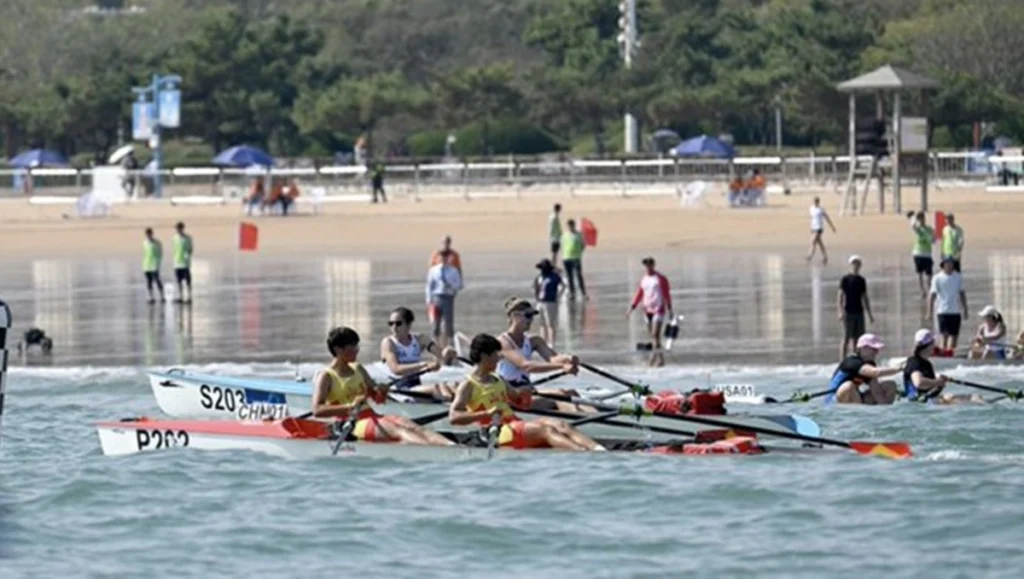
Zhang Yuanyuan and Sun Luping claimed gold in the women’s double sculls.

On Tuesday, China won one gold and one bronze medal as the 2026 World Rowing Coastal Championships concluded in Qingdao, Shandong Province. Zhang Yuanyuan and Sun Luping claimed gold in the women’s double sculls, while compatriots Long Zhentao and Yang Yujiao took bronze in the mixed double sculls.

RELATED:

China Marks 90th Anniversary of Long March Victory With Cultural Exhibition

Zhang and Sun made a strong start in the women’s double sculls final, establishing an early lead before maintaining their advantage to the finish. The pair avoided collisions involving rival crews around the turning buoys to secure the title.

“The waves were really big during the race, and at one point I wasn’t sure how things would turn out. But we performed well throughout, and I’m proud that we were able to win for our country,” Sun said.

Zhang said the race demanded quick decisions when navigating the turning buoys, adding that winning a world title in her home province of Shandong made the achievement particularly special.

The 2026 World #Rowing Coastal Championships opened at Golden Beach, Qingdao.
Competitions run Oct 11–13 with 7 #coastalrowing events.#Athletes from 18 countries gather for this top-tier global sea rowing event. #sports pic.twitter.com/pmBVU2bF4f

— GoShandong (@DazhongDaily) October 11, 2026

Americans Kory Rogers and Christopher Bak won the men’s double sculls, overcoming challenging wind conditions. “You can’t tell on camera, but the wind is really strong today; the surface of the water is pretty flat, but you really felt that heavy, heavy wind. We kept pushing. You never know what can happen on a buoy,” Bak said.

France’s Alexis Fortier produced a late comeback to win the men’s solo title, edging Bak by just 0.79 seconds after recovering from an early setback. “I was involved in a clash at the second buoy and I lost some ground, then I managed to catch up person by person and got past. I never gave up and carried on to the finish. It went well and I’m very happy,” Fortier said.

The United States also won the women’s solo and women’s coxed quadruple sculls titles, while Italy took gold in the men’s coxed quadruple sculls and Finland prevailed in the mixed double sculls. The U.S. topped the medal table with three golds and two silvers and received the national federation trophy.

Qingdao will next host the World Rowing Beach Sprint Finals, beginning October 18. Beach sprint rowing, which combines a running start on the beach with a short rowing course, will make its Olympic debut at the 2028 Los Angeles Games.

teleSUR/ JF

Source: Xinhua

  •  

Displaced Ukrainians need clarity about their future, EU regions say

European regions and cities are calling on the EU to give millions of displaced Ukrainians legal certainty and a genuine choice between building a future in Europe and returning home safely. Their appeal comes as Russian attacks on Ukraine’s critical energy infrastructure intensify ahead of what is expected to be another harsh winter for the war-torn nation.

Temporary protection for displaced Ukrainians was set to end in March 2028. Eurostat data from July shows that almost 4,5 million non-EU citizens who fled Ukraine were benefiting from the mechanism, which was established shortly after Russia’s full-scale invasion in 2022.

“Temporary protection was the right emergency response, but it cannot be the long-term answer,” said Antje Grotheer, Chair of the European Committee of the Regions’ (CoR) Working Group on Ukraine. “People forced to flee Ukraine because of Russia’s war need certainty about their future,” the President of the Bremen State Parliament added.

An opinion drafted by Grotheer and adopted by CoR members on Tuesday calls for timely, accessible information on legal options beyond temporary protection so that people can make informed decisions.

It notes that decisions on legal status are taken mainly at EU and national level, while their practical consequences are managed in cities and regions. Local authorities need predictable funding and administrative capacity to keep public services running and respond to housing pressures, the CoR said.

Grotheer demanded that cities and regions are given a voice in shaping the transition after the EU’s temporary protection runs out.

Preparing for winter

The opinion sets out three parallel priorities: supporting the inclusion of displaced Ukrainians in European communities, investing in their education and skills for the benefit of host societies and Ukraine’s recovery, and enabling voluntary, informed and safe return when conditions allow.

“It’s time now to realise that we should not only treat Ukrainians as vulnerable refugees; we should treat them as our partners,” said Ylva Johansson, EU Special Envoy for Ukrainians in the EU. “Their future is part of Ukraine’s future, and that future is in the European Union,” she added.

“The millions of Ukrainians currently living outside the borders of our country are a huge human potential that Ukraine cannot afford to lose,” said Tetiana Yehorova-Lutsenko, President of the Ukrainian Association of District and Regional Councils (UAROR) and Chair of Kharkiv Regional Council.

The UN Refugee Agency (UNHCR) reported that 49 percent of Ukrainian refugees – down from 61 percent in 2024 – have expressed hopes or intentions to return one day, with security, housing and essential services among the key conditions.

Protecting Ukraine’s energy infrastructure has been a central part of the EU’s support since 2022. In a letter to CoR members, President Kata Tüttő and Grotheer warn that the attacks risk depriving communities of basic living conditions. The letter recalls that the European Commission President Ursula von der Leyen had described the attacks as “a strategy of terror”.

“Cities and regions must act before the arrival of the cold further aggravates the already difficult humanitarian situation,” the letter warned. It said regions and cities can deliver support in the form of energy equipment, used municipal vehicles, medical supplies or IT equipment.

This story was produced by the European Newsroom (enr) in cooperation with the European Committee of the Regions (CoR). The editorial responsibility lies with the enr. 

Press contact:

Theresa Sostmann
Tel. +32475999415

Theresa.Sostmann@cor.europa.eu

  •  

Formula 1 to Return to Africa with a Grand Prix in Rwanda Starting in the Early 2030s

Formula 1 will return to Africa with the addition of the Rwanda Grand Prix to its calendar in the early 2030s, event organizers announced in a statement this Monday. A ten-year agreement will end the sport’s more than three-decade absence from the continent. The last race took place on March 14, 1993, at the Kyalami circuit in South Africa, where Frenchman Alain Prost won.

RELATED:

Formula 1 Confirms Türkiye Grand Prix Return for 2027

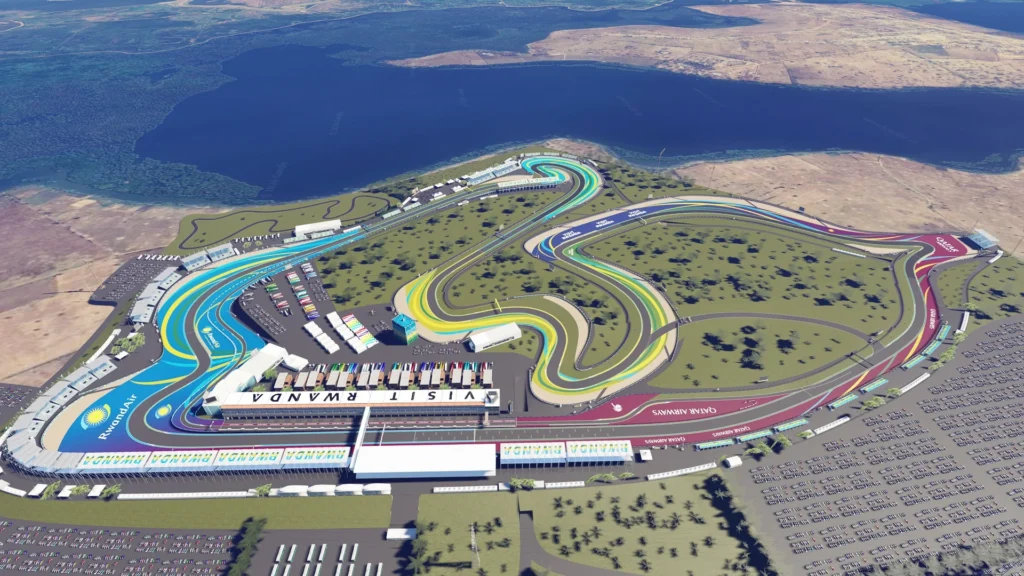
The race will be held on a new circuit to be built in Bugesera, approximately 40 kilometers south of Kigali, the Rwandan capital. According to Formula 1, the facilities are expected to be ready by the beginning of the next decade, the scheduled time for the Grand Prix’s debut on the global calendar.

The track will be designed to meet the International Automobile Federation (FIA) Grade 1 standards, a requirement for hosting top-tier motorsport competitions. The project is part of a broader initiative for sports, tourism, infrastructure, and commercial development led by the Rwanda Development Board.

The venue will not be used solely for the race. Formula 1 stated that the complex will host international motorsport competitions, major events, conferences, and shows throughout the year, aiming to foster economic growth and long-term investment in the region.

In recent years, Rwanda has positioned itself as an African sports hub by hosting events such as the Cycling World Championships, the 2023 FIFA Congress, and the Basketball Africa League.

Africa, we’re back. 🌍

From the early 2030s, the African Grand Prix will join the calendar and take place in Bugesera, Rwanda 🇷🇼#F1 pic.twitter.com/c5gSRl7FNt

— Formula 1 (@F1) October 13, 2026

Rwandan President Paul Kagame highlighted that the agreement represents a long-term investment for the country. “This ten-year partnership is also an investment in Rwanda’s future. The Bugesera circuit, alongside the new international airport, will generate jobs, training, tourism, and new business opportunities for our country and our region for decades to come,” he stated.

For Formula 1 President and CEO Stefano Domenicali, the return to Africa marks a historic moment, as it will allow the competition to have a presence on every continent. “Africa has always been part of Formula 1’s future, and from the start, we were determined to return in the right way—with the right partner, a long-term commitment, and a clear vision to create a meaningful impact,” he declared.

The championship organizers maintain that Africa represents “one of the most promising growth opportunities for the sport,” with over 100 million fans. Furthermore, nearly 60 percent of followers in key sub-Saharan African markets are under the age of 35.

#Sports | George Russell (Mercedes) set the fastest time in the only free practice session for the Singapore Grand Prix, the seventeenth round of the Formula One World Championship and the season’s final sprint race.https://t.co/gRM4MmvLfV

— teleSUR English (@telesurenglish) October 12, 2026
  •  

AI is changing Russia’s drone war on Ukrainian cities, deputy air defense commander says

geran-5

Russian forces appear to use AI to plan air attacks and recognize targets amid raids on Ukrainian cities. This may include recent air attacks on Odesa that have come in waves with short gaps, Deputy Air Force Commander for Air Defense Colonel Yurii Cherevashenko says, Ukrinform reports.

Russia has already equipped its jet-powered Geran-4 drones with machine vision, allowing them to recognize and track targets on their own in the final seconds of flight. Recently, a single jet drone hit a locomotive in Odesa Oblast in late September and killed two railway workers.

The scale of Russia's AI use is hard to measure, Cherevashenko continues, but Ukrainian specialists already see its elements in how attacks are organized. The long, wave-by-wave strikes on Odesa would be far harder to plan and coordinate without it, he believes.

"Russian forces use AI to lay out attack routes and to recognize targets," Cherevashenko says, framing it as his own assessment rather than a confirmed fact.

The sea is harder to defend than land

Odesa Oblast is home to the biggest port in Ukraine, "Southern". Protecting it is a challenging task as guarding the airspace over water is tougher than over land, Cherevashenko says. Some air defense assets do not perform as well at sea, and in some cases, crews can intercept a target only as it approaches.

Weather adds to the problem, with storms and fog, while the open sea gives Russia more freedom to choose drone routes and launch points. To protect ports and the coast, Ukraine uses drone motherships, platforms that carry other drones aloft to extend their flight time and keep watch over set areas.

Ukraine answers AI with AI

Ukraine is also building its own AI for air defense. Automated turrets using machine vision now help counter Russian drones. According to Army Media, the Air Force says such turrets have scored their first shoot-downs, including of Geran-5 jet drones, with one soldier saying 50 rounds were enough to bring down a Geran.

Ukraine's Defense Ministry is going further. In late September, it unveiled an AI system called SPECTR, built by its A1 Artificial Intelligence Center and already in testing with several combat units, to analyze battlefield data, predict Russian moves, and suggest options to commanders.

  •  

I Lost Myself When I Lost Hong Kong

A powerful reflection on the pull of nostalgia, on learning to accept that a past life is gone even as you tentatively reach back for it. Tiffany Huang captures the ache of lost opportunities and regretted paths, of staying a course out of duty and responsibility even as your sense of home erodes. It’s a gorgeous, bittersweet read about what it means to move on long before you’ve fully let go.

You unmasked for the first time, revealing smooth cheeks, a sharp chin, and a long nose. You talked about your book, in progress for several years now, about a Hong Kong man drifting aimlessly around the world. I asked you how you felt about the protests and noted the resignation in your tone. You wanted to write a book about what it meant to be a man from Hong Kong; if Hong Kong disappeared, what would happen to the man? You told me about your family, and it was clear we were not meeting to talk about writing anymore. When you spoke, you chose your words carefully. You didn’t ask me about my boyfriend, only how I felt about returning to America. When I hesitated, you did not ask why, and when I spoke, you listened instead of interrupting me. I didn’t want to leave.

  •  

Laser Scans Reveal 23 Hidden Ship Carvings on a 3,000-Year-Old Cyprus Temple — Made From the Bronze Age Collapse to the Age of Homer

Forty years ago, archaeologist Lucien Basch and researcher Michal Artzy published a set of 19 ship graffiti carved into the walls of Kition Kathari, an archaeological site beneath the modern city of Larnaca on Cyprus’s southern coast. Ever since, those images have been cited as textbook examples of Late Bronze Age maritime iconography in the […]

  •  

Epic long jump Tentoglou wins Gold …but forgets the medal (video)

Greek long jump athlete Miltos Tentoglou won gold during the European Athletics Championships in Birmingham on Tuesday night. His jumps ranged between 8.19 and 8.44, clinching his victory with 8.44, his highest score during his fourth and last attempt. 28-year-old Tentoglou added his fourth gold medal at successive European championships, securing a position as the […]

The post Epic long jump Tentoglou wins Gold …but forgets the medal (video) appeared first on Keep Talking Greece.

  •  

Regions, cities warn EU budget overhaul could derail affordable housing investment

Brussels (enr) – Local and regional leaders raised concerns that the next multiannual EU budget risks undermining investment in affordable homes needed to alleviate Europe’s deepening housing crisis.

“Europe’s housing challenge is not simply about building more housing units,” said Kata Tüttő, President of the European Committee of the Regions (CoR), an EU advisory body home to democratically elected regional and local representatives from all 27 Member States.  

At a gathering in Brussels on Thursday, they demanded the EU “move from political ambition to concrete investment and delivery,” arguing that failing to invest now will only put affordable housing further out of reach for millions of Europeans.

As negotiations over the EU’s next long-term financial framework gather pace, cities and regions fear that affordable housing could become a casualty of competing spending priorities as several EU member states seek to cut the European Commission’s proposed €2 trillion budget for ‌2028-2034.

Tüttő called on the European Investment Bank (EIB), the EU’s lending arm, to “mobilise the scale of investment” that cities and regions need to “make communities liveable” by providing essential infrastructure. She cited public transport, as well as energy and water infrastructure, as key examples.

Italian MEP Irene Tinagli, Chair of the European Parliament’s Special Committee on the Housing Crisis (HOUS), said addressing the housing crisis “requires investment, better coordination across all levels of government and a shared commitment from European institutions, Member States, regions and cities”.

The CoR and EIB on Thursday agreed on closer cooperation in key areas including social infrastructure, housing, and energy. The European Investment Bank’s president, Nadia Calviño, said “investing into resilient cities and regions, into cohesion and housing” was a strategic priority.

According to EIB figures, the world’s largest multilateral development bank provided a record €5 billion in financing for housing projects across Europe in 2025. The EIB is targeting an increase to €6 billion this year, Calviño confirmed.

The investments are a contribution to the European Commission’s Affordable Housing Plan, which was launched in December and aims to boost housing supply, mobilise public and private investment, and support Member States and regions in expanding social and affordable housing.

According to the Commission’s estimates, however, the EU needs to build 2 million homes each year to meet current demand, which amounts to an investment of approximately €153 billion per year.

This story was produced by the European Newsroom (enr) in cooperation with the European Committee of the Regions (CoR). The editorial responsibility lies with the enr.

  •  

Ukraine reconstruction funds risk bypassing cities and regions, local leaders’ alliance warns 

Gdańsk/Brussels (European Newsroom) – Ukrainian cities and regions risk being left out in deciding how billions in reconstruction funds are being used unless they are given a robust role in the planning, governance and implementation of reconstruction support, a joint statement by the European Alliance of Cities and Regions for the Reconstruction of Ukraine warned. 

Meeting on the sidelines of the Ukraine Recovery Conference (URC) 2026 in Gdańsk, Poland, the alliance called for a “localisation marker” in donor planning tools and ring-fenced funding with direct local access. 

Antje Grotheer, President of the State Parliament in Bremen, Germany, and chair of the European Committee of the Regions’ (CoR) Working Group on Ukraine, argued that local and regional authorities should have a greater voice in donor discussions and reconstruction planning. She stressed that Ukraine’s decentralisation reforms have been key to maintaining resilience during the war.   

“We feel there is an increasing need for stronger coordination of support that targets municipalities and regions,” Grotheer said.  

Oleksii Riabykin, Deputy Minister for Rebuilding and Minister for Development of Communities and Territories of Ukraine, said his country is already moving from emergency reconstruction to building resilient communities. Experience gained by Ukrainian cities, towns and villages during the war can help strengthen resilience across in Europe, he said. 

EU law implementation

The joint statement released Wednesday stressed that over 70 percent of EU law is implemented at local level, but most reconstruction funding for Ukraine is still channeled through national governments, leaving municipalities to compete over the leftovers. At the URC 2026 in Gdańsk, the CoR and its alliance partners demanded a structural fix.  

The alliance also encouraged Ukrainian regions to exploit existing EU programmes and platforms. It underscored the contribution of neighbouring EU countries to both Ukraine’s military efforts and its reconstruction, arguing that they should receive targeted support.  

EU member states that share a border with Ukraine are Poland, Slovakia, Hungary and Romania. 

The alliance brings together EU and Ukrainian local and regional authorities and was co-founded by the CoR, an EU advisory body, in June 2022 following Russia’s full-scale invasion of Ukraine.  Its goal is to coordinate an effective reconstruction of Ukraine that involves local and regional authorities rather than centralising the implementation of funds to the state. 

The URC was also established after Russia’s full-scale invasion, building on the foundations of the annual Ukraine Reform Conference established in 2017 by supporters of Ukraine, including the European Union.  

The URC 2026 takes place on June 25 and 26 and focuses on the sectors most impacted by Russia’s attacks, such as energy, critical infrastructure, and logistics. The lead-up to the conference was overshadowed by escalating dispute between Warsaw and Kyiv. Ukrainian President Volodymyr Zelensky had named an army unit after Ukrainian underground fighters from World War II who are also blamed for massacres of tens of thousands of Poles and Jews in what is now western Ukraine.  In response, Poland’s right-wing conservative President Karol Nawrocki stripped Zelensky of a high Polish order of merit. 

This story was produced by the European Newsroom (enr) in cooperation with the European Committee of the Regions (CoR). The editorial responsibility lies with the enr. 

  •  
❌