❌

Reading view

22 House lawmakers press Trump to implement Russia sanctions law. Diesel deal draws bipartisan backlash

US President Donald Trump signs the Lindsey O. Graham Sanctioning Russia and Iran Act in the Oval Office, 18 September 2026

A bipartisan group of 22 House lawmakers is urging President Donald Trump to fully implement the new Russia sanctions law and revoke a license allowing certain Russian diesel transactions. In a letter sent on 15 October, they copied Secretary of State Marco Rubio and Treasury Secretary Scott Bessent and requested details on planned sanctions, tariffs and waivers.

Their request comes as the law’s first requirements fall due on 18 October, while lawmakers from both parties challengethe administration’s decision to allow certain Russian diesel transactions. Some restrictions take effect automatically, while others require presidential action. The law does not specify a penalty for the president missing the deadline.

    What the Russia sanctions law requires

    Congress passed the Lindsey O. Graham Sanctioning Russia and Iran Act of 2026 by votes of 86–11 in the Senate and 262–159 in the House. Trump signed it on 18 September. Graham, a Republican senator from South Carolina, died in July.

    Restrictions taking effect automatically on 18 October include a ban on US banks and broker-dealers processing transfers to or from the Russian government, a ban on new US investment in Russia, a ban on new US investment in Russia’s energy sector, and a ban on US energy exports to Russia.

    Other measures require presidential action by the same date. The law directs Trump to review and sanction Russian officials, oligarchs and shadow-fleet vessels, sanction the Bank of Russia, specified Russian banks and state-owned companies, and impose tariffs of up to 500% on Russian goods. Tariffs of up to 100% can apply to goods from countries among the five largest importers of Russian oil or gas, or among the top five countries facilitating Russian oil sanctions evasion.

    Trump may waive sanctions, restrictions and tariffs under the law if he first certifies in writing to Congress that a waiver is in the US national interest and submits a report explaining its basis.

    The diesel license at the center of the dispute

    House members also urged Trump to revoke General License 135, which the Treasury Department issued on 9 October and that is valid until 7 April 2027. It permits certain transactions involving Russian-origin diesel, including imports into the United States. Trump said Russia would immediately supply more than 300,000 tons of diesel to US and global markets and predicted prices would fall sharply, according to a 9 October Truth Social post.

    On 13 October, a bipartisan group of 12 senators also urged Trump to rescind the deal and revoke the license. Seven senators said the deal conflicted with a 2022 law banning Russian energy imports.

    The Graham Act says nothing in its provisions affects the Treasury secretary’s existing authority to issue general licenses. That provision does not resolve whether the diesel license complies with the separate 2022 law.

    A White House official told Newsweek the administration would comply with the Graham Act. Bessent said the administration would use “all the legal authorities we have” and called the deal “good for the American people,” Fox News reported on 11 October.

    How the sanctions could be lifted

    Separately, the law sets a process for terminating sanctions, restrictions or duties against Russia. Trump must report to Congress that Russia has signed a peace agreement accepted by Ukraine’s government and ceased military hostilities against Ukraine, as well as activities to overthrow, dismantle or subvert its government. Congress has 30 days to block termination through a joint resolution of disapproval, or 60 days for reports submitted between 10 July and 7 September.

    •  

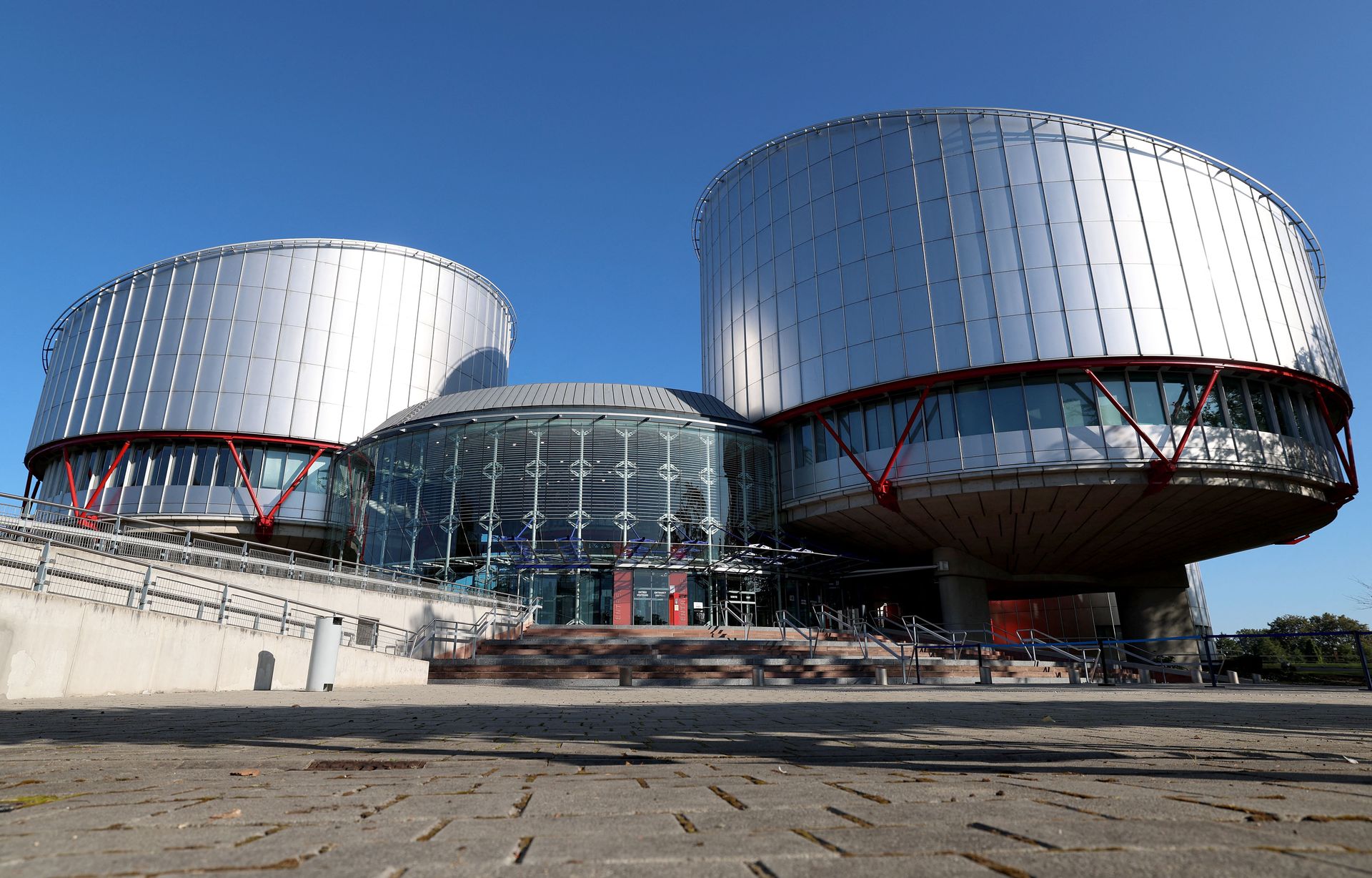
    ECHR opens proceedings againt Hungary over detention, 'torture' of Ukrainian bank staff

    "The fact that the ECHR has accepted the complaint and opened proceedings indicates that there are reasonable legal grounds for the case, that it has legal merit, and that the court intends to examine it on its merits," the Ukrainian state-owned Oschadbank said.

    •  

    Portugal must catch up in AI race, warns development bank chief

    Gonçalo Regalado, CEO of the Portuguese Development Bank (Banco Português de Fomento) - Photo: António Pedro Santos/Lusa

    Portugal must capitalise on its energy resources and digital infrastructure to attract investment in artificial intelligence (AI) and help Portuguese businesses expand internationally, according to Gonçalo Regalado, CEO of the

    The post Portugal must catch up in AI race, warns development bank chief appeared first on Portugal Resident.

    •  

    Greek FinMin backs banks: ATMs disappear in villages, citizens to “withdraw cash” from cafes

    The Greek countryside is deserting, the villages are “extinguishing” and banks have no interest in the areas. Greek Finance Minister and Eurogroup chief, Kyriakos Pierrakakis, had a brilliant idea: village cafes to operate as ATMs, facilitate citizens to come to cash. According to a report by aftodioikisi.gr, in most of the remote villages, there is […]

    The post Greek FinMin backs banks: ATMs disappear in villages, citizens to “withdraw cash” from cafes appeared first on Keep Talking Greece.

    •  

    “Greece welcomes participation of foreign institutions in its banking system,” says BoG governor

    Greece’s central bank sees the further participation of foreign financial institutions in the share capital of Greek banks as absolutely desirable, Bank of Greece governor Yannis Stournaras said in statements to the German newspaper “Handelsblatt” on Monday. He noted that further participation of global financial institutions on the path toward a European banking union would […]

    The post “Greece welcomes participation of foreign institutions in its banking system,” says BoG governor appeared first on Keep Talking Greece.

    •  

    Iran War: Wall Street’s Quiet Jackpot

    Billions of dollars (UnlimPhotos)

    Billions of dollars (UnlimPhotos)

    Since the outbreak of the US-Israeli conflict with Iran in late February 2026, the six largest Wall Street banks have posted one blockbuster quarter after another. It’s a paradox that isn’t really one: market volatility — the very thing savers and businesses dread — is precisely what trading desks feed on.

    Numbers That Boggle the Mind

    On July 14, 2026, five of the biggest US banks reported earnings on the same day, and the results surprised even the most bullish analysts. JPMorgan Chase, the nation’s largest bank by assets, posted quarterly profit of $16.9 billion, once again driven by its equities trading division, which “took advantage of market volatility triggered by the war in Iran.” Revenue in that division jumped 35% year-over-year, and equity markets revenue soared 86%.

    According to several financial outlets, JPMorgan’s profit — including gains on its equity holdings — actually came close to $21 billion for the quarter, an all-time record for the bank.

    Goldman Sachs was no exception: the investment bank also handily beat forecasts, lifted both by conflict-driven volatility and by SpaceX’s record-breaking IPO, which Goldman co-led. Its merger-advisory fees rose 55%, and in the first half of 2026 alone it advised on $1.2 trillion in announced mergers and acquisitions — an unprecedented pace for any investment bank, putting it $425 billion ahead of its nearest rival.

    All told, in the second quarter of 2026 alone, the five biggest banks combined (JPMorgan, Bank of America, Goldman Sachs, Citigroup and Wells Fargo) posted roughly $49 billion in combined profit. In the first quarter, the six largest US banks — those five plus Morgan Stanley — had already collectively booked nearly $48 billion in profit, well above year-earlier levels.

    Why Does War Benefit the Banks?

    The mechanism is no mystery to market professionals, even if it startles the general public. A trading floor doesn’t make money when markets are calm — it makes money when they move. Every geopolitical jolt — a military strike, a rumored ceasefire, a partial closure of the Strait of Hormuz — triggers waves of buying and selling across stocks, currencies and commodities. Every transaction generates fees.

    Since the first US-Israeli strikes on February 28, 2026, bond, oil and stock markets have swung wildly with each twist of the conflict and every dashed hope of a truce. That chronic instability has directly fueled investment banks’ trading revenues.

    On top of that comes an indirect effect: the war slowed, then unleashed in waves, mergers-and-acquisitions activity and IPOs — two highly lucrative businesses for investment banks, which collect substantial advisory fees on every deal.

    Goldman Sachs itself acknowledges as much in black and white in its quarterly financial report filed with the US securities regulator (SEC): the Iranian conflict has had “significant implications for the global economy,” combining disrupted oil supply, higher oil prices and heightened equity-market volatility — precisely the ingredients of the trading desk’s playbook.

    A Paradox That Goes Beyond the Banks

    This phenomenon isn’t confined to the banking sector. Major oil companies — especially European majors with large trading arms, such as TotalEnergies — have seen profits surge on the back of price swings following the partial closure of the Strait of Hormuz, a route for roughly a fifth of the world’s oil and gas. Defense contractors, for their part, are reporting record order backlogs, led by Lockheed Martin, Boeing and Northrop Grumman, buoyed by allied nations rearming.

    Meanwhile, households and non-financial businesses bear the flip side of that same volatility: higher energy prices, costlier freight, and mounting uncertainty for long-term investment. The conflict has thus become a vast transfer of wealth, in which the very instability harming the real economy is simultaneously enriching a handful of financial and industrial players positioned to capitalize on it.

    At a Glance

    • Q1 2026: the six largest US banks combined for nearly $48 billion in profit.
    • Q2 2026: five of them posted roughly $49 billion in combined quarterly profit.
    • JPMorgan: record quarterly profit of nearly $21 billion (including gains).
    • Goldman Sachs: M&A advisory fees up 55%, with its M&A backlog at a five-year high.
    • Mechanism: market volatility, driven by the twists and turns of the US-Israeli conflict with Iran since February 28, 2026, has mechanically boosted investment banks’ trading and advisory revenues.

    L’article Iran War: Wall Street’s Quiet Jackpot est apparu en premier sur FrenchDailyNews.

    •  
    ❌