❌

Reading view

Dozens Detained as French Police Repress Demonstrations Over Education

French police repressed protesters in Paris on Saturday, detaining dozens during unauthorized demonstrations demanding better education conditions and opposing budget cuts and the high cost of living, authorities reported.


The Paris police prefecture said law enforcement forces intervened to disperse two unauthorized demonstrations that had formed mid-morning.

RELATED: France Suspends Stun Grenades After Teen Loses a Hand

By 11:00 local time, 61 people had been detained, 589 preventive checks had been carried out and four fines imposed under the security operations, an official report stated.

The first protest consisted of a union gathering of about 100 people in the Gare du Nord area, while the second was made up of high school students on rue de Rennes.

  •  

PSOE Unanimously Backs Sánchez as Candidate for Nov. 29 Elections

The PSOE’s Federal Committee on Saturday unanimously proclaimed Pedro Sánchez as its candidate for reelection and ratified its candidacies for the Nov. 29 elections.


Territorial leaders showed unity and confidence that they can defeat the polls’ bad omens at the meeting, according to EFE.

For the first time, more women than men will head the lists for the Congress of Deputies, at 52%, and in the Senate the party is also moving toward parity by increasing ten points the percentage of women leading candidacies compared with 2023.

RELATED: Spain: President Sanchez Approves New Decrees to Address the Housing Crisis

The party’s federal leadership introduced few changes this time to the candidacies submitted by the territories, and the noise generated was much lower than in 2023.

The Federal Committee met shaken by the resignation of its spokesperson, Montse Mínguez, who on Friday decided to leave all her posts after the controversy generated by her partner’s real estate businesses.

Sánchez revealed at a press conference in Brussels that he had asked Mínguez not to resign, but that she was “broken,” and he called her an extraordinary spokesperson and an immense politician. He lamented that politics sometimes mistreats good people.

  •  

Trump Temporarily Waives Sanctions on Russia

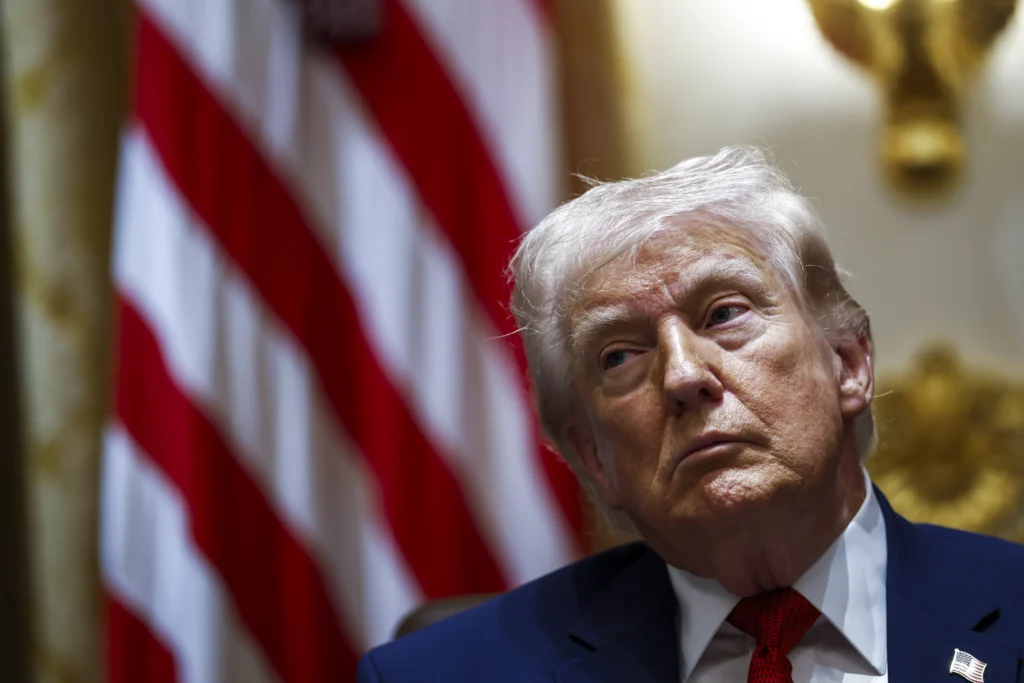
(FILE) U.S. President Donald Trump. Photo: EFE.

U.S. President Donald Trump signed an executive order Friday temporarily suspending the application of a broad package of sanctions against Russia, arguing before Congress that the measure responds to the national interest.


The decision affects a law named after the late Republican senator Lindsey Graham of South Carolina, which seeks to toughen sanctions against the Russian economy and limit the flow of financial resources.

Trump had enacted that legislation on September 18 but has now temporarily exempted the application of several of its provisions, according to the order.

RELATED: White House Press Secretary Zacharia Resigns After 5 Days in the Job

The order exempts sanctions against persons and entities linked to the Russian government; financial and trade restrictions and tariffs planned for Russian products, and those from certain countries that buy Russian hydrocarbons, according to the order.

The decision does not eliminate the sanctions the United States had already imposed on Russia through previous executive orders.

The exemptions from the new law will remain in force until Trump or the Secretary of State, in consultation with the Secretary of the Treasury and the U.S. Trade Representative,

BIG: Trump waived sanctions targeting Russian fossil fuel sales just days before they were due to take effect.

The measures would have imposed tariffs of up to 100% on goods from major importers of Russian oil and gas.

Russian officials welcomed the waiver, while U.S. lawmakers… pic.twitter.com/j5DGn28Ml8

— Clash Report (@clashreport) October 17, 2026

The decision comes after Washington temporarily authorized commercial operations with Russian-origin diesel until April 7, 2027, including its import into the United States, despite the sanctions in force against Moscow.

Trump announced on October 9 that he had agreed with his Russian counterpart, Vladimir Putin, on the supply of diesel to international markets, with the aim of easing energy and fuel prices.

The Republican president said Russia would initially deliver more than 300,000 tons of fuel and would later supply additional quantities, conditioned in part on the state of its refineries, he said.

The agreement has drawn criticism from lawmakers of both parties, who question its possible effects on economic pressure against Moscow and its compatibility with U.S. legislation, according to the critics.

Detractors warn that revenue from the sale of Russian fuel could help finance the war against Ukraine, while the Administration defends the need to contain energy costs, according to the critics and the Administration.

  •  

Global South Academic Forum Opens in Shanghai

The Global South Academic Forum is being held in Shanghai this Saturday and Sunday, bringing together prominent political leaders, academics, researchers and media representatives from Asia, Africa and Latin America.


Inspired by the spirit of the historic Tricontinental Conference held in Havana in 1966, the forum commemorates that legacy six decades on and warns that the task of decolonizing the Global South has not yet been completed, according to the forum.

RELATED: China Proposes Open-Source AI Platform For BRICS At Summit

The event’s debates will focus on how to strengthen state governance capacity, social mobilization and institutional innovation through party organizations, according to the forum.

Today in Shanghai, China, I addressed the 2026 Global South Academic Forum, convened under the theme “Global South Political Parties: Governance and Modernisation.”

At the opening, I reflected on the historical struggles that shaped the Global South, particularly the pursuit of… pic.twitter.com/T54hZxJ91R

— Professor Naana Jane Opoku-Agyemang (@NJOAgyemang) October 17, 2026

The official program includes a rigorous analysis structured around various high-level panels, including Governance and Institution Building, highlighting the importance of state capacity and institutional strength as cornerstones of national development in the Global South, according to the program.

  •  

TVBrics and Cuba’s Canal Habana Sign Content Cooperation Agreement

TVBrics and Cuba’s Canal Habana signed a cooperation agreement today to expand their joint content library, Prensa Latina reported.


Under the agreement, the two outlets will exchange content on BRICS countries, develop joint projects and promote quality journalism to strengthen the objective international news agenda of Global South media.

RELATED: African Union Head Asks BRICS to Strengthen Ties

“For the channel it is a real pleasure to begin collaborative work with TVBrics. It is a way to show part of the dynamics of the Cuban capital as a partner of this important association, the BRICS,” Canal Habana director Erduy Varela said. He added that his expectations are to share experiences and ways of doing and communicating television in this new multimedia era.

TVBrics general director Janna Tolstikova said information cooperation between BRICS countries and states sharing the association’s values is important, adding that constructive dialogue between media helps lay the foundations for fruitful cooperation at the highest state level and favors the stability of international relations. She added that TVBrics is open to all countries willing to cooperate on the basis of equality, mutual respect, consideration of national interests and recognition of global diversity.

Tolstikova congratulated Canal Habana on the start of the collaboration, which she said will make Cuba’s cultural richness known to an international audience and offer the channel’s viewers audiovisual content of interest about BRICS and other Global South countries.

Canal Habana, founded in 2006, is part of the state-run Televisión Cubana system. It broadcasts in Spanish throughout Cuba and reports on political, economic, social, cultural and sports news in Havana, as well as major national and international events.

In Cuba, Prensa Latina and Canal Caribe already participate in content exchange through TVBrics. In Latin America, the network also collaborates with media from Argentina, Brazil, Venezuela, Colombia, Mexico, Chile and Uruguay. Among BRICS partner countries, media from Belarus, Bolivia, Vietnam, Kazakhstan, Malaysia, Thailand and Nigeria participate.

  •  

U.S. Photojournalist Heidi Levine Beaten by Masked Israeli Settlers

U.S. photojournalist Heidi Levine, a contributor to The Washington Post, was hospitalized Friday after being violently attacked by about 80 masked Israeli settlers while covering the olive harvest in the West Bank village of Abu Falah, northeast of Ramallah.


The attackers beat Levine with sticks, kicked her while she was on the ground and stripped her of her cameras, phone and belongings, despite her wearing a marked press vest, according to accounts of the assault.

RELATED: Gaza Famine Deaths Hit 466 as Hunger Crisis Deepens After 3 Years of Genocide

Speaking from the Ramallah hospital where she was in stable condition, Levine said the attackers pushed her to the ground and kept kicking her, and that her bulletproof vest and helmet likely saved her life.

Reporters at the scene denounced that the Israel Defense Forces (IDF) did not intervene to stop the assault and backed the extremists.

Masked Israeli settlers attacked Palestinian villagers on Friday, setting olive groves on fire and slinging rocks.

Caught in the attack was Post photographer Heidi Levine. “They just kept kicking me and kicking me, like probably 50 times,” Levine said. https://t.co/9YLUuU9ktP pic.twitter.com/0SrFcIW4as

— The Washington Post (@washingtonpost) October 16, 2026

The Palestinian Red Crescent confirmed it assisted six people injured during the incursion in Abu Falah, including a Palestinian hit by shots from armed settlers.

The rescue of the reporters and farmers was possible thanks to the resistance of the village’s young people, who responded to the attacks with stones, according to accounts from the scene.

  •  

White House Press Secretary Zacharia Resigns After 5 Days in the Job

White House press secretary Katie Zacharia resigned Friday after just five days in the job, following President Donald Trump’s advice.


Zacharia’s departure came barely a week after she was named to the post, succeeding Karoline Leavitt, and after a heavily questioned first press briefing before the media.

RELATED: Trump’s Attack on Mail-In Voting Seeks to Create an Advantage for Republicans

The crisis was directly linked to doubts about her legal training. After initially announcing her and publicly describing her as a lawyer, questions arose over the past week as to whether she had actually passed the bar exam to practice as such, despite being a graduate of Pepperdine University’s law school in California.

Definitive confirmation of the suspicions came last Thursday, when Zacharia admitted in an interview with Fox News that she had not passed the bar exam. The revelation intensified media criticism and opened an intense debate about vetting and background-check processes at the White House.

Facing the media siege, Trump chose to intervene publicly Friday morning. Leaving the White House, Trump told reporters that he had directly advised Zacharia to reconsider remaining in the job given the hostility of the environment.

President Trump is a kind, wonderful, gracious, thoughtful, enthusiastic, and hardworking man. I wish more Americans appreciated him. No one will ever make America great the way he has and continues to.

It was an honor to work for him. pic.twitter.com/Tp4NizrhE2

— Katie Zacharia (@KatieZacharia) October 17, 2026

The U.S. president said there is no rush to immediately announce a replacement to fill the vacancy left by Zacharia at the press room podium.

  •  

The Memory Shortage Comes for Schools

For today’s high schoolers, a typical school day from a decade ago must seem like something from the Dark Ages. These days, students are issued digital textbooks instead of physical ones, they learn how to conduct chemistry experiments through apps that simulate a science lab, and they take standardized tests on a Chromebook. All of this is the result of many years of frenzied investment in ed tech, capped by a pandemic that forced virtual learning. The overwhelming majority of schools nationwide provide each student with their own laptop or tablet.

All of these screens have changed the dynamic of the classroom. When a student is supposed to be using their school-issued iPad to diligently take notes during math class, they might instead be messaging a friend. Across the country, some parents and teachers are mounting a backlash against screens in the classroom. In April, the Los Angeles school board voted to stop giving devices to its youngest students and implemented screen-time limits for all grades.

But other schools are pulling back on ed tech for an entirely different reason. Chromebooks, like essentially all other consumer electronics, need RAM, or random-access memory. So do the data centers that power every conversation with a chatbot. The AI industry is using so many memory chips that it’s led to a global shortage, making gadgets much more expensive. For an individual consumer, the memory crunch—RAMageddon, if you will—means having to spend a few hundred dollars more on a new computer. But school districts, many of which are already cash-strapped, buy hundreds or thousands of computers every year. The administrators I spoke with for this story told me that they have had to scramble to acquire all the electronics they now need. As RAMageddon drags on, they said, something has got to give.

[Read: If you need a laptop, buy it now]

Schools started picking up on the memory shortage last winter, months before most of the country. They have to figure out bulk orders for laptops and tablets long before the academic year begins. Many of them turn to third-party vendors, which have typically provided quotes that are locked in for a month, giving technology directors time to secure the funds from their districts to make purchases that can run millions of dollars. As memory prices have soared, Mark Samberg, the chief technology officer of Chatham County Schools in North Carolina, is hearing a different message from his vendors. “Now quotes are going to be good for 48 hours, a week, or 14 days,” he told me.

Samberg scooped up the Chromebooks he could find. Other districts have been less lucky. In March, a Chromebook vendor warned Homewood-Flossmoor High School in Illinois that its prices would be going up soon. Steve Richardson, the district’s IT director, quickly placed an order, only to be eventually told it couldn’t be fulfilled because memory chips were on back order. “We were kind of in dire straits,” Richardson told me. In 2023, Chromebooks cost the school $353 a piece. The price rose to $400, then $412, and then $427. The most recent batch that Richardson purchased, in August, cost $508 each. But the district needed them to ensure that every student had a Chromebook ahead of the PSAT, which is now entirely digital.

So far, schools have been willing to stomach the costs to continue giving every student a device. Districts initially decided to implement “one to one” policies on the premise that technology can be an equalizing force in the classroom; many educators and administrators still believe that. Dorann Avey, the board chair of the State Educational Technology Directors Association, told me that she is concerned that RAMageddon will widen the digital divide. Devices are not for “just writing papers,” she said. “We’re trying to prepare students to learn different software that is workplace- and workforce-appropriate.”

That has meant making difficult trade-offs. Because of the extra spending on laptops for students, Homewood-Flossmoor didn’t buy any new smart whiteboards or computers for teachers this year. In Texas, the Paradise Independent School District has considered asking students to bring in their own laptop or tablet, Director of Technology Doug Bryant told me.

A common solution has been to extend the lifetime of a laptop. Instead of replacing a device every four years, schools are opting for seven or eight to reduce how many units they need to purchase in a given year. But that introduces new problems: Older computers sometimes aren’t able to update to the latest operating system, which could create cybersecurity risks. Schools are already a top target for hackers, because they store lots of sensitive personal information but have limited resources. Plus, as a device gets older, its battery degrades and may ultimately need to be replaced. That costs “time and money,” Avey said. “But it’s still less money than buying brand-new devices.”

All of this may not be enough. Multiple administrators told me that they are already considering rolling back their one-to-one device policies because of RAMageddon, and the challenges for schools are poised to mount. Heading into this school year, some districts were able to skirt the worst of the memory shortage by buying Chromebooks before prices really started to soar. Aaron Smith, the CTO of Loudoun County Public Schools, told me that he sought special permission from his school board to commit to purchasing nearly 24,400 Chromebooks in February instead of May. Memory prices jumped so quickly over that time span that the decision ultimately saved the district $1.66 million, he said. But Smith and other technology directors may not have the same luck as they begin looking to purchase gadgets for the next school year. An executive at Micron, one of the world’s largest RAM manufacturers, recently warned that there’s “no line of sight” to the end of the memory shortage. If schools wait to buy, prices could end up going up even more. But buying early might mean devices will languish in storage for months as the warranty clock ticks away.

RAMageddon will force schools to scrutinize which tech purchases actually improve learning, and which don’t. The fallout will reach far beyond Chromebooks. “We’re not going to be able to afford the servers that we thought we were,” said Samberg, the Chatham County Schools CTO. Those servers power functions such as security cameras, badge readers, and account logins—and every one of them needs RAM.

© Illustration by The Atlantic. Source: Getty

  •  

A Pena de Morte

VTM

A segunda tentativa falhada para executar esta mulher do Estado americano do Tennessee deu novo fôlego ao debate sobre a pena de morte. Este caso começa por colocar muitas dúvidas até sobre a metodologia usada, que alguns asseguram que é eficaz e indolor, mas na verdade não resultou assim. Não foi eficaz e poderá ter causado sofrimento extremo à vítima. E depois de uma primeira tentativa falhada, voltou-se a sujeitar a condenada ao mesmo suplício com o mesmo resultado. É altamente questionável tudo o que se passou.

Os bispos católicos do Estado do Tennessee, juntamente com os bispos da Comunhão Anglicana, apressaram-se a pedir uma comutação da pena e que não se procedesse a uma nova tentativa de execução, não desvalorizando a gravidade do crime que foi cometido e o sofrimento da família da vítima, que ela foi acusada de matar. Os bispos sublinham, sobretudo, que a necessária atribuição de responsabilidade por um crime muito grave não deveria exigir outra morte. Na base deste entendimento está a dignidade que pertence a cada pessoa, criada à imagem de Deus. A vida humana é sagrada. Nem mesmo os crimes mais graves podem anular essa dignidade ou excluir definitivamente a possibilidade de arrependimento e redenção. A justiça não é vingança. Como é que se compreende que uma sociedade condene alguém por ter tirado a vida a uma pessoa e depois essa mesma sociedade pratica o que condena?

Para a Igreja Católica a pena de morte é inadmissível e defende a sua abolição em todo o mundo, porque é um ataque à dignidade da pessoa humana e não é protetora da sociedade. A dignidade da pessoa não se perde após a prática de crimes muito graves. Além do mais, os Estados atuais já têm formas de detenção eficazes, sem necessidade de tirar a vida e que não anulam a possibilidade de redenção aos culpados. O Estado deve defender a vida sempre e em todos os casos. Os países que a defendem e praticam alegam que a pena de morte é dissuasora, mas, na verdade, não há provas claras de que assim seja e apesar de praticarem a pena de morte, continuam a registar altos índices de criminalidade.

O Papa Francisco apelou a “todos os cristãos e homens de boa vontade” que lutem, “não só pela abolição da pena de morte, legal ou ilegal, em todas as suas formas, mas também para melhorar as condições carcerárias, no respeito pela dignidade humana das pessoas privadas da liberdade”.

The post A Pena de Morte appeared first on A Voz de Trás-os-Montes.

  •  

China e Coreia do Norte inauguram ponte entre países; estrutura passa a ser principal conexão terrestre

A mais importante rota de travessia terrestre entre a China e a Coreia do Norte foi aberta nesta quinta-feira (15) após atrasos nas obras. O objetivo principal da chamada Ponte Nova do Rio Yalu, que tem cerca de 3 km de extensão, é facilitar o transporte e aumentar as trocas comerciais entre os países. Leia mais (10/15/2026 - 13h13)
  •  

Militares veem Escudo das Américas com apreensão e preveem resistência

Militares de alta patente ouvidos sob reserva pela Folha demonstram apreensão com a possibilidade de que, se o senador Flávio Bolsonaro (PL) confirmar seu favoritismo e vencer o presidente Luiz Inácio Lula da Silva (PT) no segundo turno das eleições, o Brasil passe a integrar o Escudo das Américas, iniciativa contra o crime organizado liderada pelos Estados Unidos de Donald Trump. Leia mais (10/14/2026 - 23h00)
  •  

China acena à direita latino-americana às vésperas do segundo turno no Brasil

Em um aceno à direita latino-americana, o responsável da China pelos assuntos da região, Qiu Xiaoqi, afirmou na segunda-feira (12) que Pequim desenvolverá relações amistosas com todos os países latinos, independentemente do crescimento de governos de direita e de seu alinhamento com os Estados Unidos. Leia mais (10/13/2026 - 04h55)
  •  

This is a South African cheetah, and it’s in trouble

When researchers mapped almost 100,000 square kilometers of South Africa, or nearly 40,000 square miles, they only found 83 mature adults. They called their project the Free-Roaming Cheetah Census, and it’s the most comprehensive survey of cheetahs ever conducted in the region. The cheetahs that inhabit the unprotected areas here move naturally across borders, going between South Africa, Botswana, Namibia, and Zimbabwe. But farming, construction, development, and fences are making it harder for them to move around. Cheetahs need vast connected landscapes to survive. If they don’t mix with other cheetah groups, their genetic pool can be lost. There’s another big challenge for these animals: farmers. They sometimes kill cheetahs, because they believe cheetahs kill their livestock. But the researchers found that cheetahs hunt mostly wild prey. The species is currently listed as vulnerable, but the census suggests they should be reclassified as endangered in South Africa.This article was originally published on Mongabay

  •  

Despite legacy court case, Zambian Vedanta mine pollution continues

The Zambian government is investigating a chemical spill in its Copperbelt Province allegedly linked to Konkola Copper Mines (KCM), owned by U.K.-based multinational Vedanta Resources. Residents in Chingola district told Mongabay they observed discoloration of the Kafue River and fish die-off on Sept. 28, raising fresh concerns about the environmental and social impacts of mining operations in one of Zambia’s most important copper-producing regions. According to a statement by Gilbert Siame, Zambia’s minister of Green Economy and Environment (MGEE), the incident was caused by a leaking pipe at KCM’s tailings leach plant and an overflow from the company’s pollution control dam outside Chingola. “The pollution control dam was full, that’s why it spilled,” Eugene Mulenga, Chingola-based human rights activist and coordinator for caritas, told Mongabay. “The [chemical] discharge happens all the time, mostly at night, and the local residents consume this water because they don’t have another option.” Following the Sept. 28 spill, tests conducted by the Zambia Environmental Management Agency (ZEMA), KCM and local water utility Mulonga Water Supply and Sanitation Company showed elevated levels of turbidity and conductivity downstream along the Kafue River. In a statement issued Oct. 1, KCM contested its responsibility in the spillage, saying that company officials reported the incident to ZEMA and asked for a fact-based investigation. Mongabay reached out to the company but did not receive a response by the time of publication. Siame noted in the statement shared with Mongabay that authorities are still testing water samples to confirm heavy metals and…This article was originally published on Mongabay

  •  

AI Is Creating “Doom Loops” All Over the Economy

Technocrats are stealing the world’s data for their own AI training advantage, while killing the golden goose in the process, as this article makes clear. That lack of ethics and morality is seen everywhere in the world of Technocracy. For instance, read the Crucible of Tokens to learn about the biggest heist of private property in world history. They have no conscience about doing anything wrong, and that is the problem. Read up on psychopathy! ⁃ Patrick Wood, Editor.

Recently unredacted legal documents and depositions in the New York Times‘ lawsuit against Microsoft and OpenAI revealed something extraordinary: executives knew full well of the destructive powers of AI when they rushed to launch products featuring the tech in the wake of the explosive success of OpenAI’s ChatGPT.

Internal Microsoft documents quoted by the newspaper’s lawyers warned of an ugly reality now playing out across the entire economy: “doom loops,” in which AI monetizes the work of human creatives while undermining the economic systems that funded their work in the first place.

“Our AI content strategy has started a ‘doom loop’ that will hurt the performance of our models and the entire web at the same time,” one internal Microsoft document reads. “It is highly unusual that an end-product threatens the economic foundations of its essential suppliers, but that is the situation we have created for our LLM business with respect to its ‘content supply chain.’”

The closer you look, the more you see doom loops everywhere. Journalists, for example, used to publish work under the assumption that online platforms would drive readership to them. But now, tools like ChatGPT and Google’s Gemini simply summarize their articles without sending readers to their sites, sparking a crisis that seems poised to wipe out the independent media.

Similar stories are playing out across other industries, from music to filmmaking. Writ large, many are concerned that AI will eventually be strong enough to wipe out huge numbers of jobs, creating a situation in which unemployed consumers won’t have the funds to support the economy.

The irony, as the Microsoft document pointed out, is that the AI industry is a snake eating its own tail: the very products that it’s pushing on users rely on fresh cultural content even as they destroy the economic incentives to create it.

It’s also a dire situation for the open web, which recently celebrated the macabre turning point of being dominated by more AI slop than human-authored content. As companies — most notably Google — are fundamentally changing the way users interact with the web, more and more newspapers, media outlets, and local news stations are seriously struggling to make ends meet.

Worse yet, as the legal documents in the NYT‘s copyright lawsuit showed, insiders admitted that the entire operation is built on theft.

“Millions of people around the world will soon consider large models ‘hoovering up’ all their work to be an astonishing theft of unprecedented proportions,” an internal Microsoft document admitted.

Plenty of other creative industries are also feeling the pressure as AI-related doom loops continue to undermine livelihoods. According to the latest data from the US Bureau of Labor statistics, it’s a bloodbath — with more than 200,000 jobs in “creative” industries having been lost over the last four years alone, roughly the time since OpenAI launched ChatGPT.

AI-generated music is rapidly crowding out human-produced tracks on streaming services, forcing platforms to figure out where to draw the line. Some have implemented hard and fast rules, while others continue to allow users to exploit algorithms with slop.

Hollywood studios are also doubling down on AI while protesting actors struggle to have their voices heard. Many of them fear that their likeness or voice could soon be rendered worthless, representing an existential threat to their livelihoods.

Even the job market is embroiled in its own doom loop. More and more desperate job seekers are turning to AI to brush up their resumes and manipulate AI-powered job portals, while recruiters are drowning in a wall of almost identical applications.

“We’ve got this tragic situation where each side has a problem,” applicant tracking system company Greenhouse CEO Daniel Chait told Wired. “They’re using AI to solve their own problem, but in ways that make the problem worse.”

“And so more AI use begets more AI use, to no one’s benefit,” he added. “The more it’s happening, the worse it gets.”

Similarly, the use of AI in the classroom has skyrocketed, with students using the tech to complete their homework, offloading their cognitive faculties to the machine. Meanwhile, their teachers are using AI to come up with assignments, slowly effacing the human in the loop. Educators who bristle at the idea of using the tech are finding themselves at odds with school administrators.

The effects AI has had on education has been nothing short of a disaster. A recent study by the Brookings Institution’s Center for Universal Education concluded that the risks of using generative AI in education massively outweighed the benefits. The associated dangers have never been more apparent, with educators warning that college students are rapidly losing the ability to read.

Proponents of AI, including OpenAI and Microsoft’s lawyers in the ongoing New York Times lawsuit, argue that AI brings something new to the table. They argue that the output of AI models is sufficiently differentiated from the original content it draws on, falling under “fair use,” a longstanding doctrine in US copyright law.

Whether this argument will hold up in court remains to be seen. Besides, we’ve already seen companies, like Anthropic, settle for billions of dollars after being found to have violated copyright laws.

But considering how the tech is simultaneously undermining the very economic systems that produced the data they need to exist in the first place, that may not be a winning strategy in the long run.

By ripping out the carpet from underneath many parts of the economy — and reaping all the financial gains from it — the AI industry is trapping itself in a doom loop of its own creation, a cynical strategy that won’t benefit anybody but those at the very top who kicked the ladder down behind them.

Read full story here…

  •  

Rare Southern African succulent listed as critically endangered amid mining threat

The brown clockfig, an extremely rare succulent growing in the hot, arid border region of Namibia and South Africa, was recently assessed as critically endangered by the IUCN, the global wildlife conservation authority. The western Gariep Valley is a vast landscape spanning the southern part of Tsau ǁKhaeb National Park in Namibia and the Richtersveld region of Northern Cape province in South Africa. It’s in this harsh environment, shaped by extreme heat and dryness, that the brown clockfig (Cheiridopsis brownii) grows on quartz ridges, shale, gravel, and sandy soils, and in cracks and fissures in desert mountains. The IUCN estimates the species, with thick leaves and daisy-like yellow flowers, has a total range of 424 square kilometers (164 square miles) in the valley, but occupies only around 60 km2 (23 mi2) of this area. Habitat loss due to overgrazing is among its major threats. Another is the demand for mineral resources such as diamonds, with mining permits being issued across the region. That’s placed more of the species’ already limited habitat under pressure in both South Africa and Namibia. “The vast desertification of the Aniesvlakte [plain in South Africa’s Richtersveld region] as a direct result of severe overgrazing, as well as the mass desertification caused by sand moving from the coast due to unrehabilitated mines, are threatening to swallow most of the remaining population in South Africa,” Pieter van Wyk, a botanist with South African National Parks (SANParks), who carried out the most recent assessment, told Mongabay via email. Another…This article was originally published on Mongabay

  •  

La Comunidad de Madrid defiende la gestión de las listas de espera tras las acusaciones de alterar la prioridad en el Ramón y Cajal

“La gestión de la lista de espera quirúrgica de todos los hospitales de la Comunidad de Madrid corresponde a los propios servicios asistenciales, de acuerdo con los criterios clínicos establecidos y con la responsabilidad de los profesionales implicados en la atención de los pacientes, refrendado además, por el comité semanal de quirófanos”. Fuentes del Gobierno madrileño responden así a la última polémica en torno a la sanidad pública en la región, las acusaciones de que jefes del hospital Ramón y Cajal ordenaron cambiar la prioridad en las listas de espera quirúrgicas de traumatología sin consultar con los cirujanos al cargo.

  •  

Ayuso exhibe su "orgullo" por el éxito de la Fórmula 1 en Madrid y critica la ausencia del Gobierno

Concluido ya el Gran Premio de España de Fórmula 1 celebrado esta semana en Madrid, la presidenta de la Comunidad de Madrid celebra lo que considera un éxito. "Estamos encantados con el resultado de este primer Gran Premio de España de Fórmula 1, primero porque es el Gran Premio de todos los españoles y después ante los ojos del mundo", ha señalado Isabel Díaz Ayuso a su llegada a un encuentro informativo protagonizado por el alcalde de la capital, José Luis Martínez-Almeida.

  •  
❌