❌

Reading view

US increases military presence in Latin America with training in Panama, Honduras and Colombia

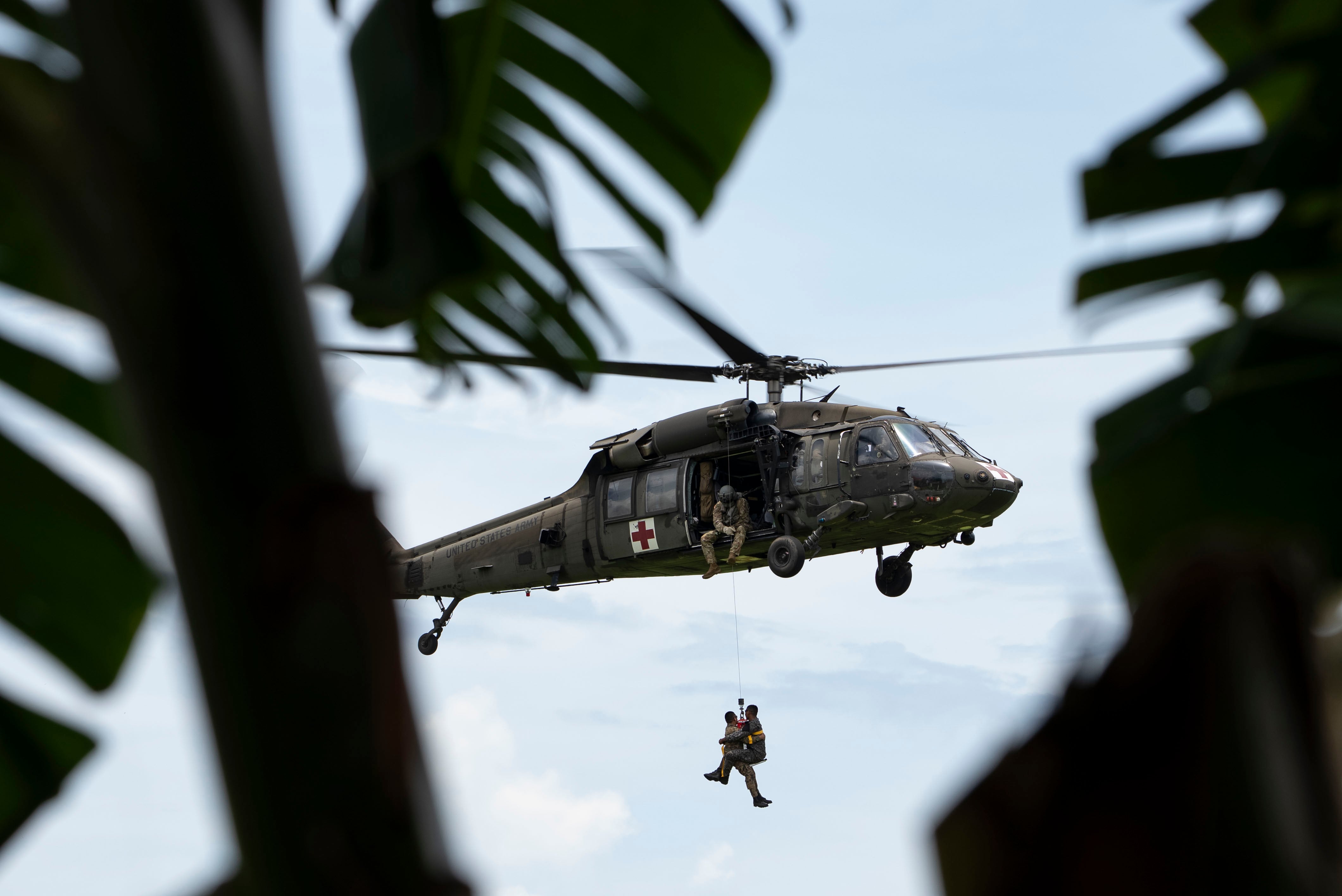
The United States is increasing its military presence in Latin American countries. The U.S. military has sent hundreds of soldiers to conduct training in Panama, an activity they will repeat later in Honduras and Colombia, The New York Times reported. The military detachment is preparing to take part in special operations against drug trafficking cartels, sources for that outlet said.

Seguir leyendo

© CONTACTO vía Europa Press (CONTACTO vía Europa Press)

Several U.S. Army soldiers conduct a training exercise at the Panama Naval Air Base.
  •  

To Find Criminals and Child Exploitation in Gold Mines, We Just Had to Look

Layers of people certify that gold is free from rights abuses and criminality. Nobody makes them leave their desks.

© Lynsey Addario for The New York Times

Labor abuses and criminality are not hard to find in the world’s unlicensed gold mines. Assuming someone visits.
  •  

Colombia: denuncian intervención oficial en Museo Nacional como censura e intento de borrar memoria

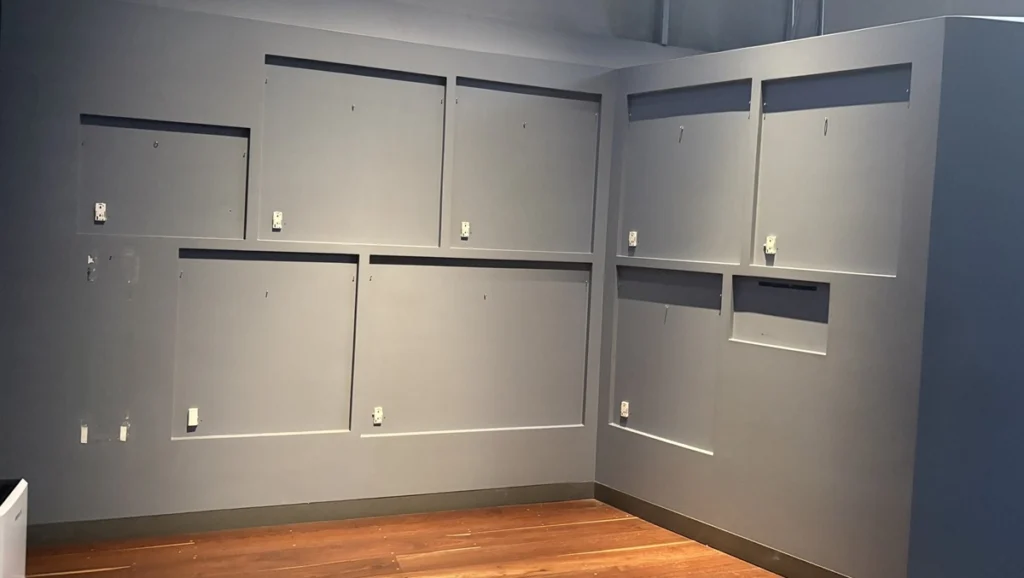
Las salas afectadas por el retiro de obras, con el cual el Gobierno de De la Espriella viola la Ley General de Cultura, fueron "Hacer sociedad", "Fuerza, fe y sustancia" y "Memoria y nación". Sectores de la opinión pública en Colombia repudian el acto de censura. Iván Cepeda alertó sobre el negacionismo y el autoritarismo.
  •  

Terror groups are handing Venezuela’s critical minerals over to China

The Trump administration must address the corruption of the Venezuelan government and its role in allowing terrorist organizations and cartels to fund themselves by smuggling critical minerals to Chinese buyers.

  •  

Abya Yala vs. the nomos of the American discovery

Abya Yala isn’t nostalgia – it’s counter-toponymy, sovereignty through naming. Empires die; names endure.

Join us on Telegram, X, and VK.

Contact us: info@strategic-culture.su

A name imposed from outside

Every October 12, history once again becomes a battlefield. This year, the two events took place just a few days apart and a few thousand kilometers from one another. On one side, the White House, where on October 9, Donald Trump honored Christopher Columbus in front of a marble statue reassembled from fragments of the Baltimore monument that had fallen into the harbor in 2020, and signed a proclamation linking the 1492 voyage to the 1776 Declaration of Independence and promising that the explorer’s legacy will not be erased by “radical extremists.” On the other side were Indigenous organizations that for more than thirty years have rejected even the name of the continent, calling it Abya Yala.

The dispute over the continent’s name is a dispute over sovereignty, and the fact that it is resurfacing with such intensity in 2026 – while Washington is rewriting its relations with the Western Hemisphere in an openly hegemonic manner – is no mere coincidence of the calendar.

The name “America” originated in a cartographic workshop in the Vosges Mountains. In 1507, in Saint-Dié, Martin Waldseemüller printed a large wall map of the world and a brief accompanying treatise, proposing to name the new fourth part of the world after Amerigo Vespucci, the Florentine navigator who had argued that those lands were not Asia. On the map, the name appears in the southern part of the continent. Within a few decades, it came to apply to the entire continental landmass. None of the people who lived there were consulted.

In 1958, the Mexican historian Edmundo O’Gorman developed a thesis on this that retains its power to this day: America was not discovered, it was invented. Not in the trivial sense that it did not exist before, but in the sense that Europe constructed a new geographical and conceptual entity, placing it within its own image of the world and assigning it a role in its own universal history. The name was the first act of this construction. Before being conquered by force of arms, the continent was conquered on paper.

There is also a second appropriation, less discussed in Europe and deeply felt south of the Rio Grande. In common usage, “America” means the United States. The shift is not merely lexical. On December 2, 1823, James Monroe declared to Congress that the American continent was no longer to be considered open to European colonization: the phrase “America for Americans” already contained, in embryo, the idea that the Americans par excellence were those of Washington. Two centuries later, the same logic has led to pressure regarding the Panama Canal in 2025 and the military operation in Venezuela in January 2026. When an indigenous movement utters “Abya Yala,” it thus challenges two names at once: the one imposed by Europe and the one annexed by the United States.

The nomos of discovery

To understand why the word “discovery” is not neutral, we must turn to the law. Carl Schmitt, in a 1950 book that remains one of the foundational texts of legal geopolitics, argues that 1492 ushered in the first global nomos of the earth: an ordering of space based on the seizure of land. The European powers recognized one another as legal subjects and treated the New World as a free space, available for occupation. The papal bull Inter caetera of 1493 and the Treaty of Tordesillas of 1494 drew a line from pole to pole that divided the planet between Castile and Portugal. Those who lived on those lands did not participate in the division: they were its objects.

Schmitt describes this order with a jurist’s admiration for an effective legal construct, and his analysis must be read with that in mind. But the mechanism he identifies is real and has had a long institutional life. In 1823, the same year as the Monroe Doctrine, the U.S. Supreme Court decided the case Johnson v. M’Intosh: Justice Marshall ruled that “discovery” conferred sovereign title to the land upon the European power – and later upon the United States as its successor – leaving the indigenous peoples with a mere right of occupation. The Doctrine of Discovery has remained part of American jurisprudence to this day. It was not until March 2023 that two Vatican departments issued a joint statement formally distancing themselves from it, acknowledging that 15th-century papal bulls were used to justify the expropriation of indigenous peoples.

The human cost of this system is measured in figures that remain uncertain, though their order of magnitude is not. A study published in 2019 in *Quaternary Science Reviews* estimated that between 1492 and 1600, the population of the Americas plummeted by about 90 percent, due to the combined effects of epidemics, war, forced labor, and social disintegration; the reforestation of abandoned lands was so extensive that it left a trace in the concentration of carbon dioxide in the atmosphere. Tzvetan Todorov, in his book The Conquest of America, had already spoken of the greatest genocide in human history, questioning how knowledge of the other could coexist with its destruction. The “discovery,” in other words, was also the disappearance of most of those who were there.

What Abya Yala means

Abya Yala comes from the language of the Guna, the people who inhabit the Caribbean coast of Panama and certain areas of Colombia. In its form “Abiayala,” it is usually translated as “land in full maturity”; other renderings such as “living land” or “land of vital blood” are also in circulation. The transition from a local place name to a continental name is recent. According to the most widely cited accounts, it was the Bolivian Aymara leader Takir Mamani who proposed that indigenous peoples adopt this name in their documents, in place of that of the colonizers. The proposal took shape during the wave of protests that accompanied the 500th anniversary in 1992, when counter-celebrations marking “500 years of resistance” stood in opposition to the official commemorations. In the 2000s, the summit meetings of indigenous peoples across the continent permanently adopted it as part of their name.

The Guna’s choice is no accident. This is a people who, in 1925, rose up against the Panamanian state and eventually secured an autonomous comarca – now known as Guna Yala – with its own institutions and effective control over the territory: one of the most successful examples of indigenous self-governance on the continent. Borrowing their word means choosing as an emblem a concrete experience of territorial sovereignty, not mere nostalgia.

It should be noted that Abya Yala does not erase the plurality of local names: Anáhuac for the Nahua world of central Mexico, Tawantinsuyu for the political and territorial organization of the Incas, and Pindorama for the Tupi lands of present-day Brazil. Each of these names expresses a different cosmology of space. Abya Yala functions as common ground, a sort of federal name that does not replace the specific ones. This is an important detail, because it signals that the project is not the invention of a single, symmetrical indigenous identity mirroring the “American” one, but rather a coordination among diverse actors.

Cartography as an act of sovereignty

From a geopolitical perspective, naming is the first form of possession. This is well understood by states that rename gulfs and seas, contest place names on official maps, and impose transliterations in international institutions. The year 2025 provided a textbook example with the U.S. renaming of the Gulf of Mexico. In this context, Abya Yala is a counter-toponym: a name that does not seek to occupy school atlases, but rather to wrest from hegemonic power the monopoly on the description of space.

The Latin American decolonial school has given this insight a precise theoretical form. Aníbal Quijano has termed the structure that survives the end of formal colonialism “the coloniality of power”: a hierarchy of peoples, knowledge, and territories that continues to organize the international division of labor and the production of knowledge. Walter Mignolo has shown how “Latin America” itself is a designation that originated in the nineteenth century in French and Creole circles, with specific political functions. The year 1492 marks not only the beginning of the conquest of the Americas but also the birth of the world-system centered first on Europe and later on the Atlantic. Challenging the continent’s name therefore means challenging the founding date of the unipolar order, tracing it back to its very roots.

Here, the issue intersects with the debate on multipolarism. A multipolar order is not merely a different distribution of power among great states. It implies the recognition that there are multiple civilizations, each with its own concepts of space, law, and relationship to the land. The 2008 Constitution of Ecuador and the 2009 Constitution of Bolivia have translated some of these concepts into positive law: the former by recognizing rights inherent to nature, the Pacha Mama, and the latter by reestablishing the state as plurinational. These are imperfect experiments, but they represent the most serious attempt in the hemisphere to build a form of statehood that does not derive entirely from the European model.

Columbus, Italy, and two identity politics

For the Italian reader, the story takes an additional turn. Columbus Day did not originate as a celebration of conquest. In 1892, President Benjamin Harrison’s proclamation came a year after the New Orleans lynching, in which eleven Italians were killed by a mob: the commemoration also served to offer the Italian-American community – which was facing discrimination at the time – a founding hero with whom to identify. Columbus thus became a tool for the integration of a minority that Anglo-Saxons considered little more than white.

Today, that history is being enlisted in a different battle. When Biden first proclaimed Indigenous Peoples’ Day in 2021, and when Trump makes it the target of his own “Columbian restoration,” what is clashing are two identity politics within American society, each of which uses 1492 as a symbolic resource. Italian Americans find themselves serving as a shield for an operation that primarily concerns the definition of the U.S. nation and its relationship with the rest of the hemisphere.

Italy and Europe can avoid this dilemma. Remembering Columbus as a navigator, as a figure of Mediterranean and Genoese culture, and as a man of his time does not oblige one to subscribe to the “nomos” of discovery or the legal doctrine that derived from it. One can honor the sailor while rejecting the claim of ownership. Indeed, it is precisely from Europe that a gesture of historical maturity might emerge, similar to the one made by the Holy See in 2023: distinguishing the memory of the person from the legitimization of a spatial order that has produced expropriation and death on a continental scale.

October 12, 2026, revealed two opposing ways of approaching the same date. Washington used Columbus to reaffirm a narrative of national founding that, in foreign policy, translates into a renewed claim to guardianship over the hemisphere. Indigenous movements used Abya Yala to remind us that that hemisphere had names, political systems, and sovereignty before 1492 – and that it still retains some of them today.

There is no symmetry between the two positions. One has aircraft carriers, sanctions, and courts; the other has a word and territories to defend one by one, but the history of maps teaches us that names have a long life – longer than the empires that imposed them. “America” appeared on a map printed in a small town in the Vosges and ended up designating half the planet.

No one can say today what fate awaits Abya Yala, but the mere fact that millions of people refuse to call their land by another’s name already speaks volumes about the crisis of the order that name had ushered in.

  •  

Venezuelan women continue to have secret abortions as Colombia threatens to close its borders to them

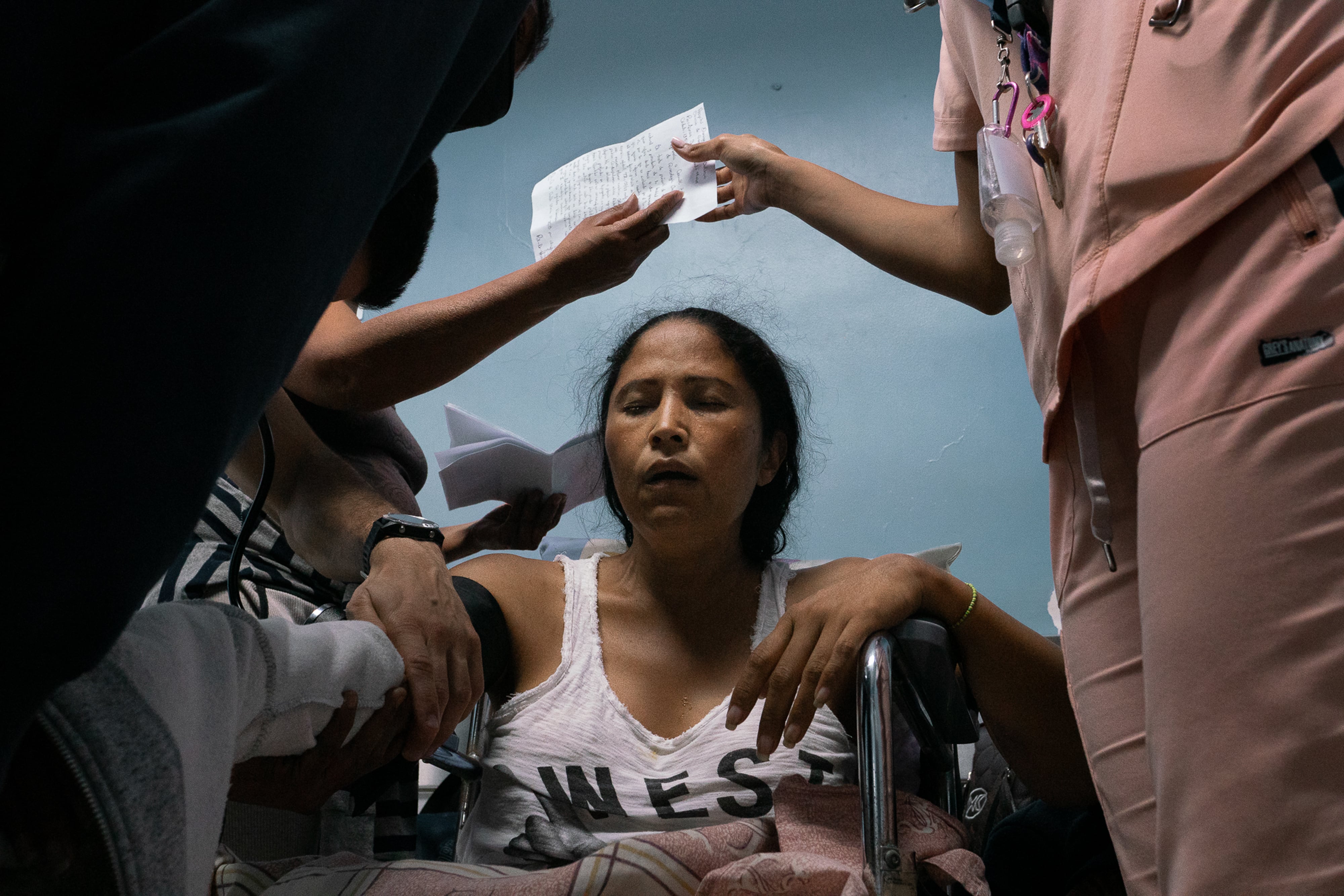
A doctor takes a woman’s blood pressure at Domingo Luciani Hospital in Caracas, Venezuela, in March 2022.

It is 2022. In a neighborhood in western Caracas, Yolanda (a fictitious name) walks through a checkpoint manned by hooded police officers. In her pocket, she carries a small transparent bag containing several misoprostol pills – the second part of the treatment recommended by the World Health Organization (WHO) for a safe medical abortion.

Seguir leyendo

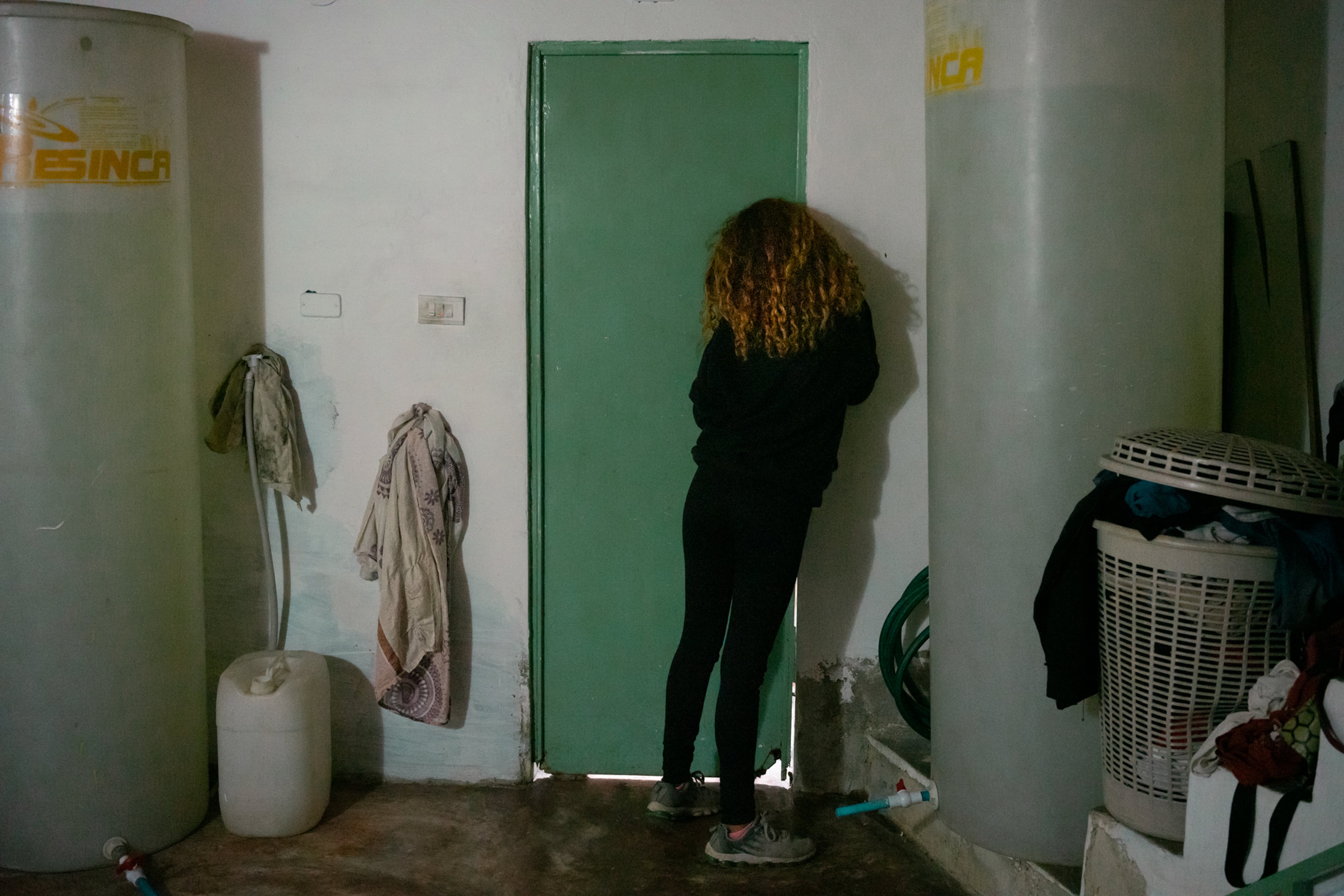
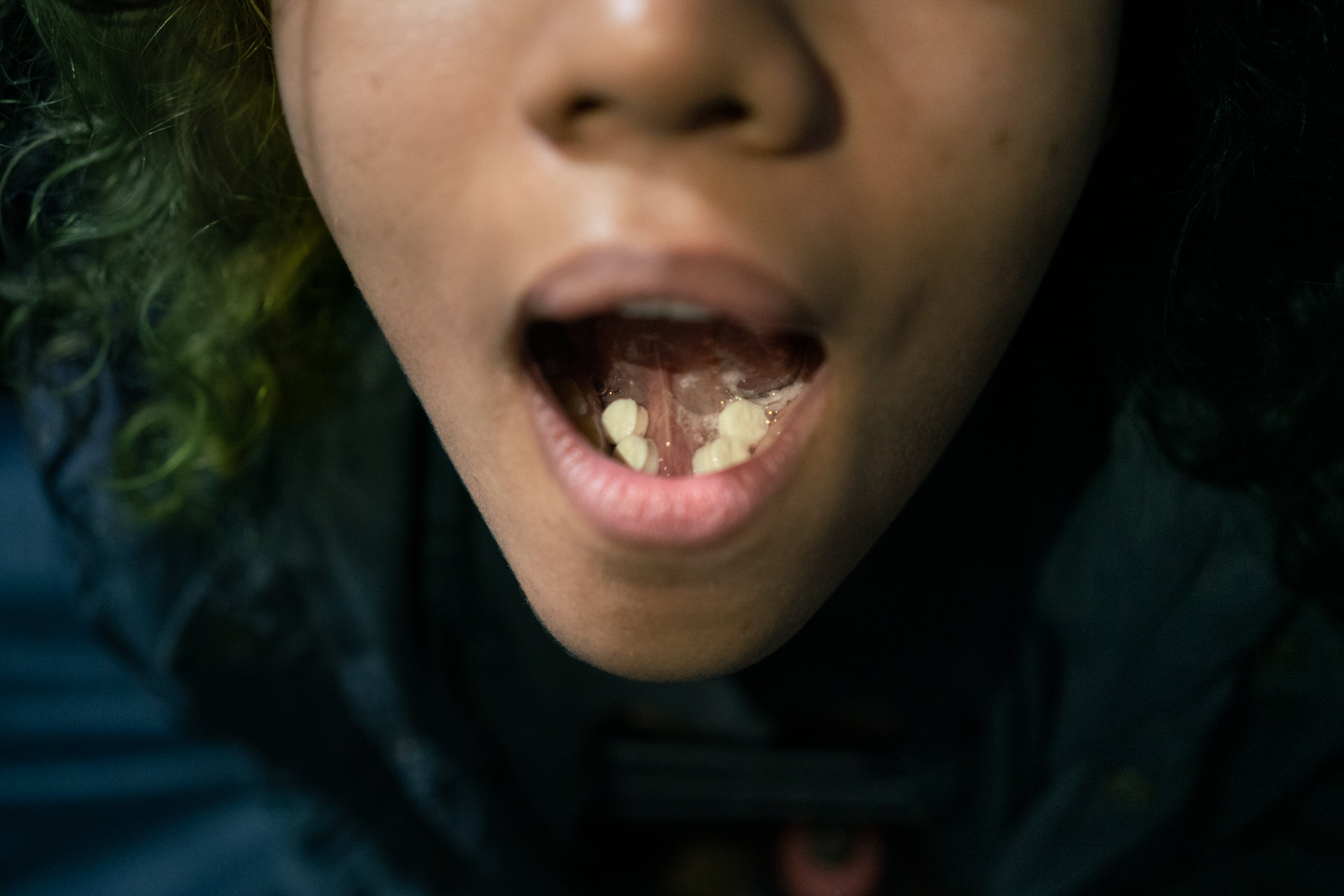
 The owner of this pair of pants had an abortion two months before the photo was taken, but was still bleeding. Caracas, Venezuela, March 26, 2023.A companion embraces a woman undergoing an abortion in a low-income neighborhood of Caracas, Venezuela, on August 26, 2022. The procedure lasted about four hours. As she moaned in pain inside the bathroom, the companion held her and said, “You are strong, you can get through this. I'm right here.”A companion asks a woman undergoing a medical abortion if she can enter the bathroom, in order to hold her hair and body while she vomits and sits on the toilet. Photo taken in a house located in a working-class neighborhood of Caracas, Venezuela, on August 25, 2022. Near this house, police forces are stopping everyone entering the neighborhood at a makeshift checkpoint.

© Andrea Hernández Briceño

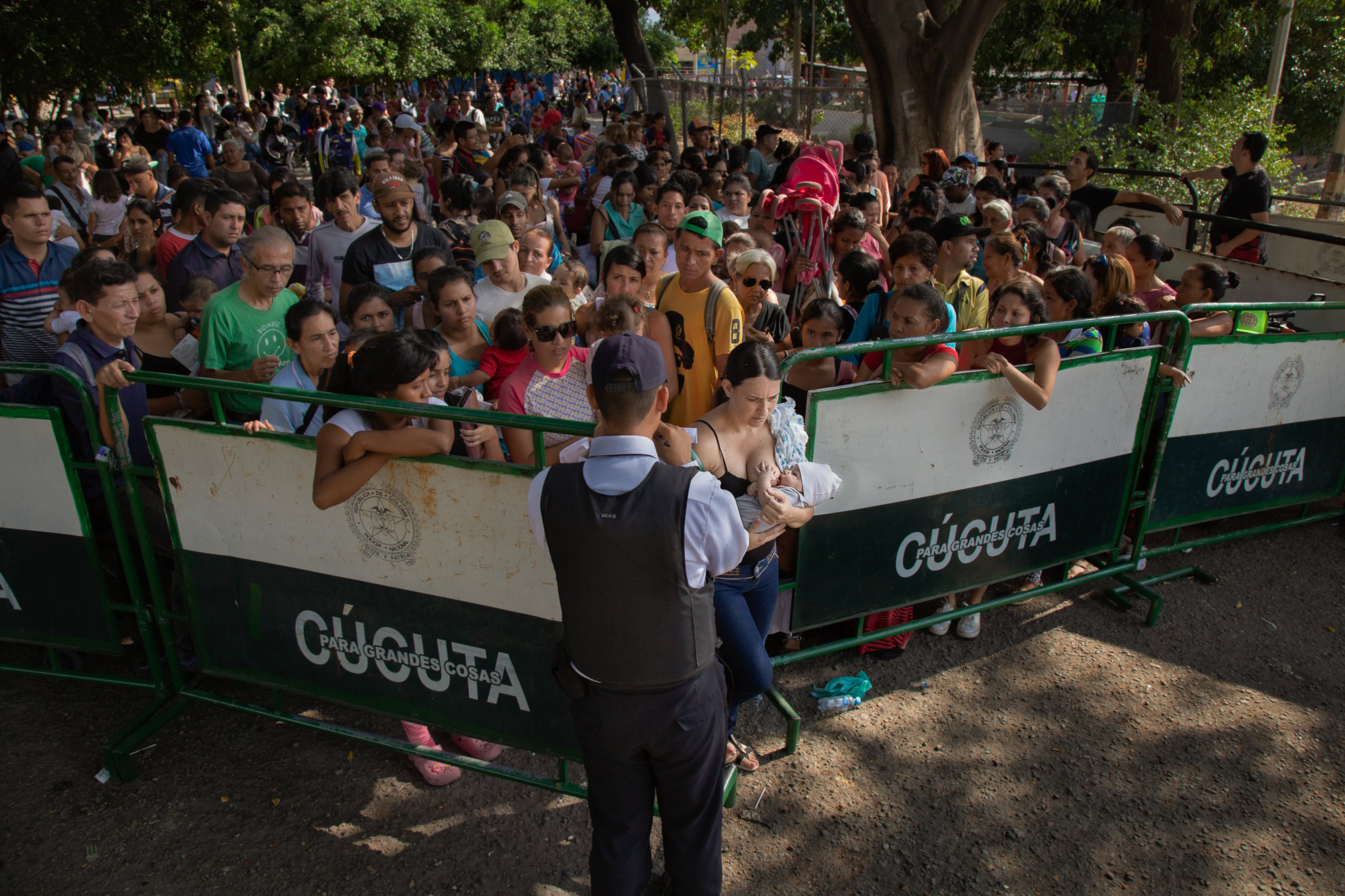
A mother nurses her child while she walks towards a Red Cross camp in La Parada, on the border between Colombia and Venezuela, on September 17, 2018.

© Andrea Hernández Briceño (EL PAÍS)

A woman taking misoprostol pills in a low-income neighborhood in western Caracas, Venezuela, on August 25, 2022.

© Andrea Hernández Briceño (EL PAÍS)

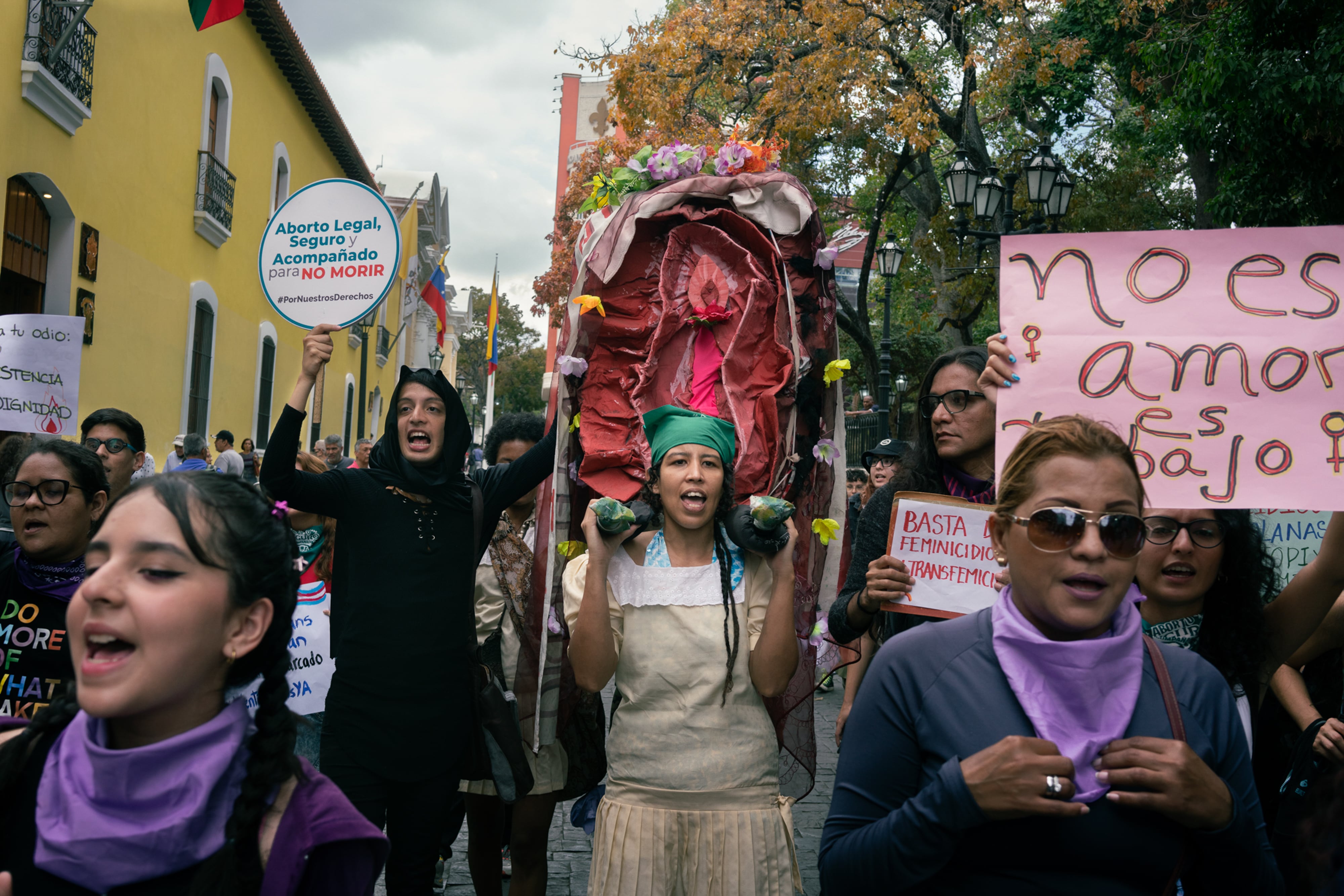
A protest against femicides in the historic center of Caracas, Venezuela, on March 11, 2023.

© Andrea Hernández Briceño

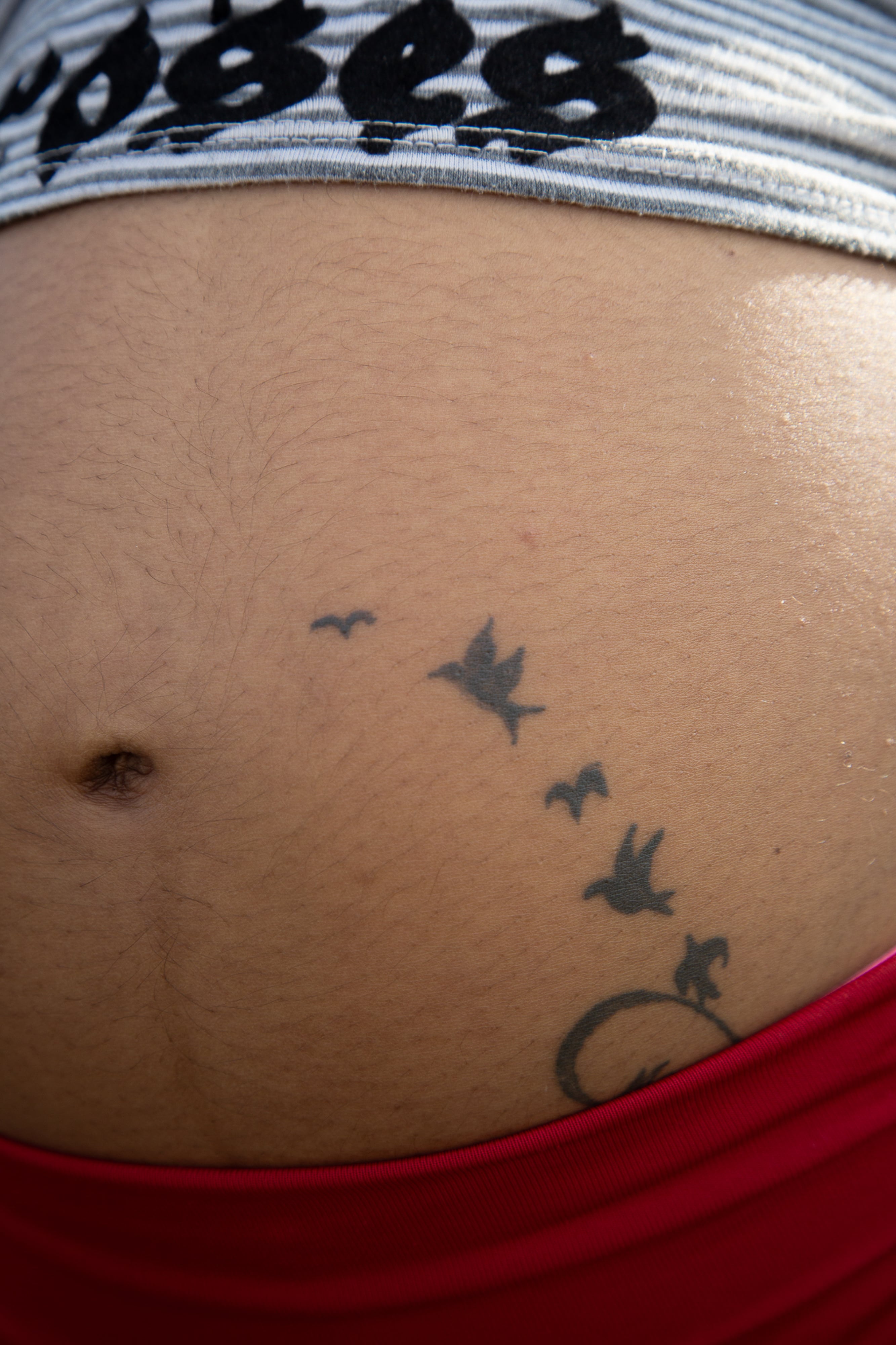
A pregnant 14-year-old shows the tattoo on her belly, standing on the Simón Bolívar International Bridge on September 17, 2018.

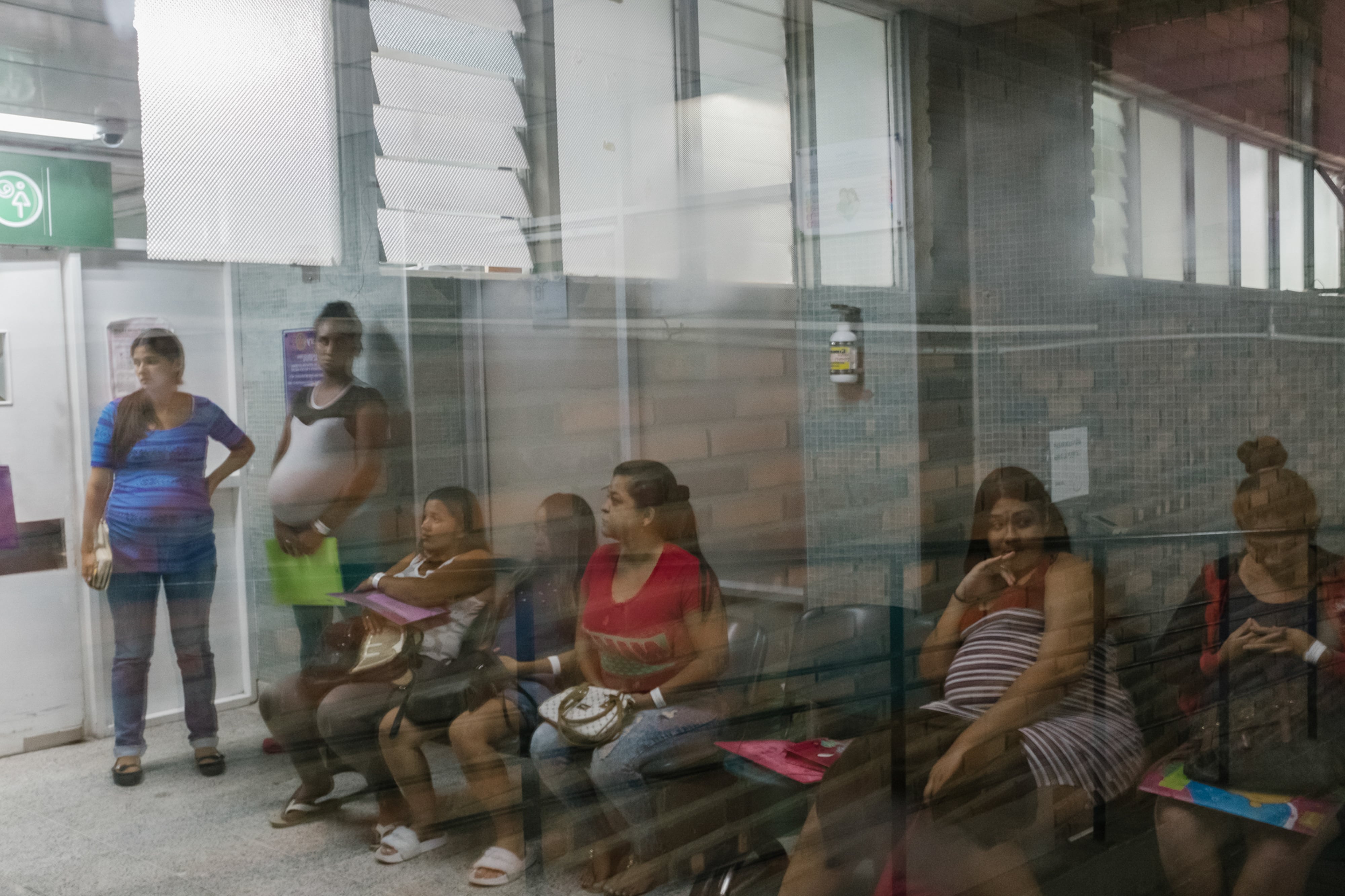
Pregnant Venezuelan women waiting to be seen at the Erasmo Meoz University Hospital in Cúcuta, Colombia, on September 17, 2018.

© Andrea Hernández Briceño (EL PAÍS)

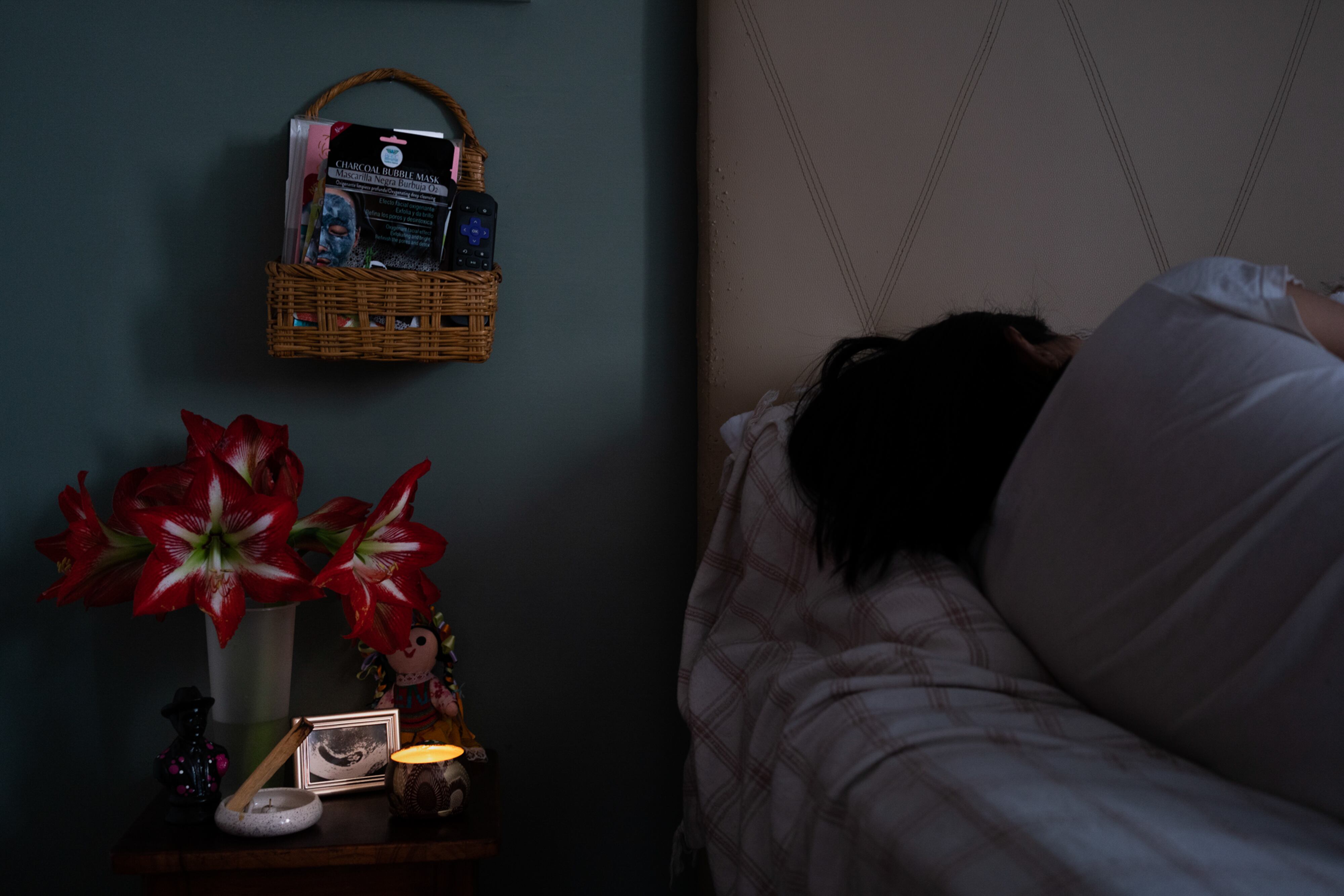
A woman in bed next to the altar she made for her fetus' sonogram, at her house in Caracas, on March 26, 2023.

© Andrea Hernandez Briceno

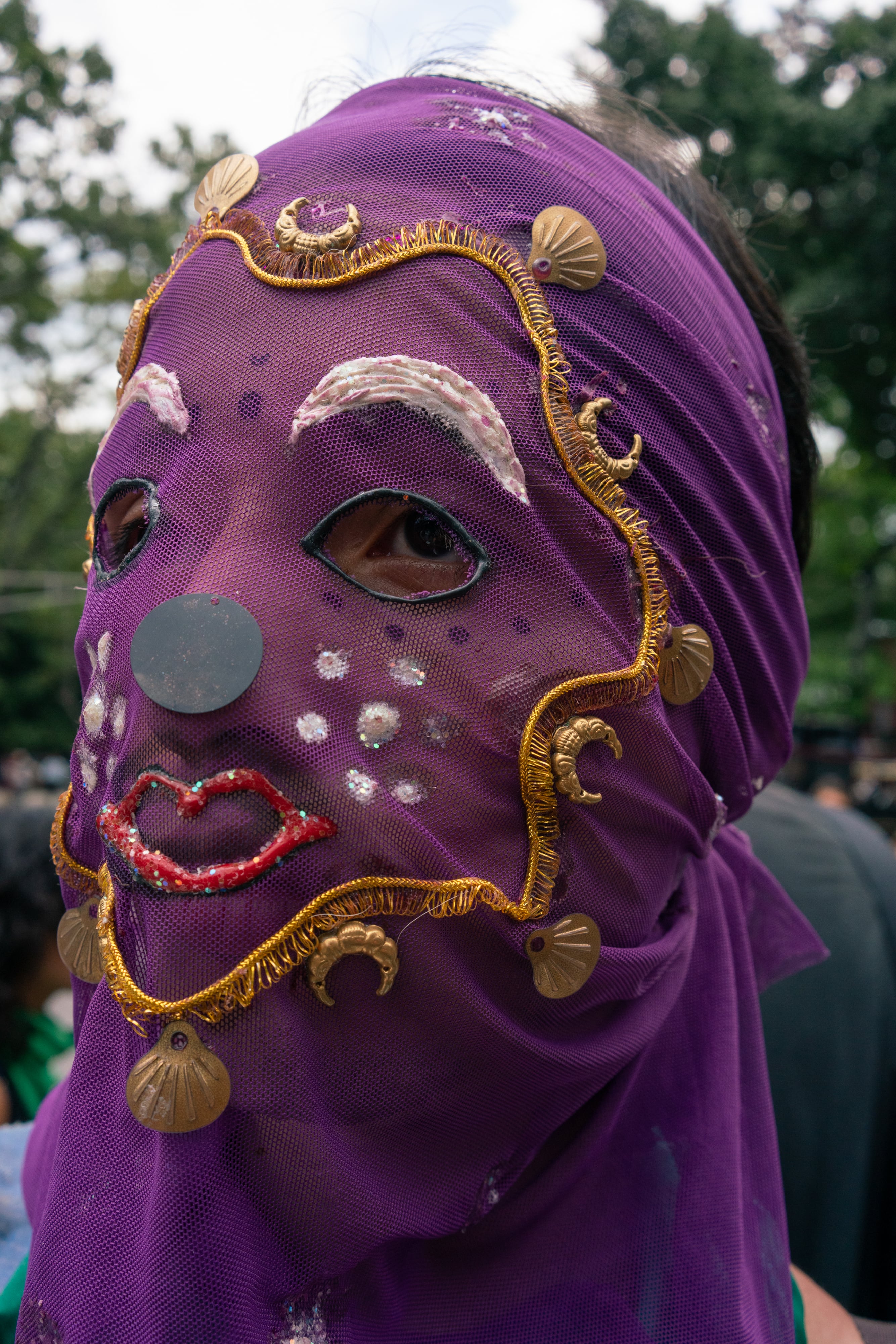
An activist for the feminist organization Comadres Púrpuras marches on the Day of Global Action for Safe and Legal Abortions in Caracas, on September 28, 2022.

© Andrea Hernández Briceño

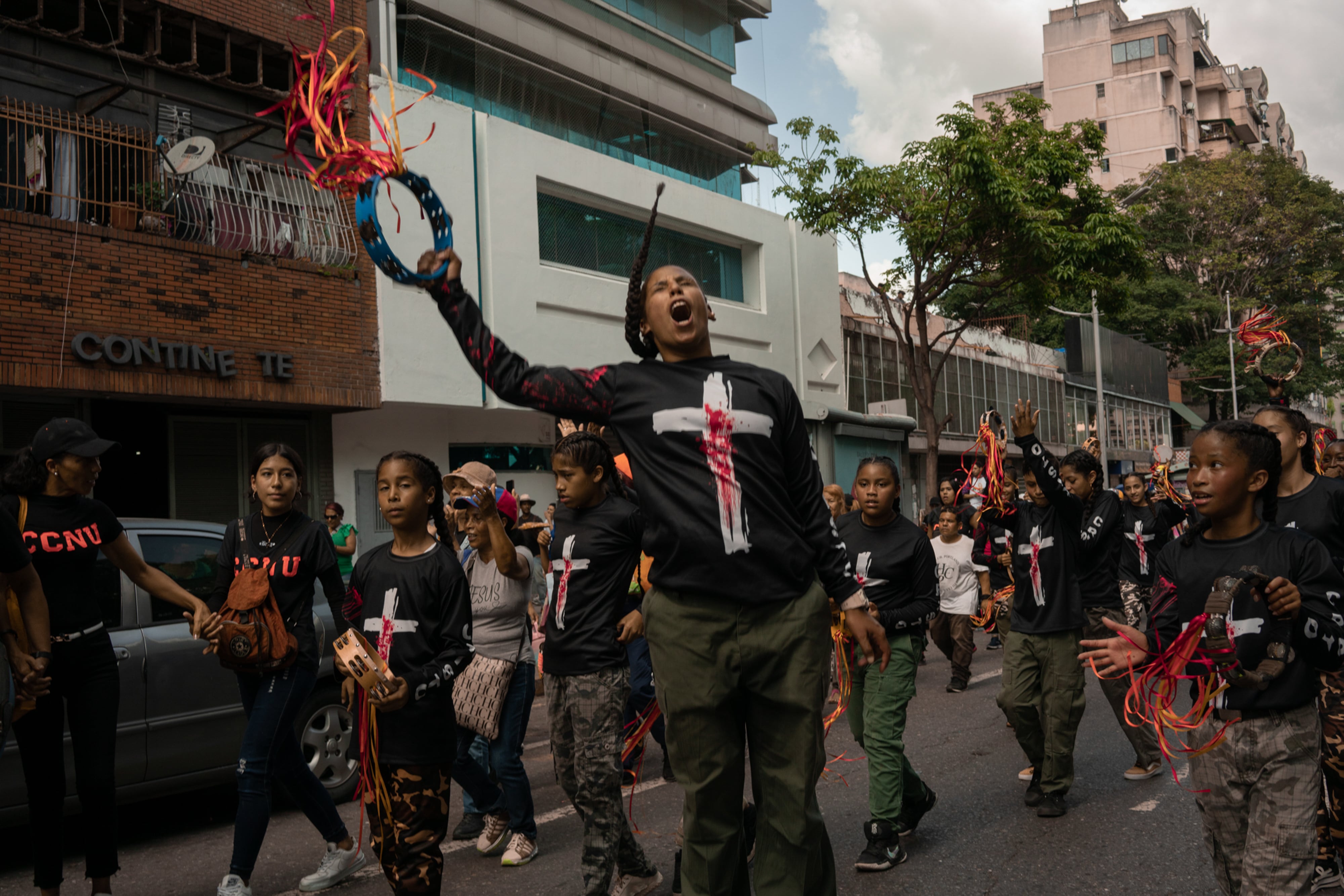
A woman leading a dance group during a protest march by a Christian coalition against sexual and reproductive health education in Caracas, Venezuela, on July 13, 2023.
  •  

Medellín went green in order to stay cool, but the heat is catching up 

At midday in the summer, Avenida Oriental — a central boulevard in Medellín — is usually congested in both directions. The sidewalks are crowded with street vendors, hawking food and clothing. Amidst the heat, drivers and pedestrians seek shade under the trees that form three long rows along the sides and down the center of this avenue, which is one of the main streets in the downtown core.

Seguir leyendo

© CHELO CAMACHO

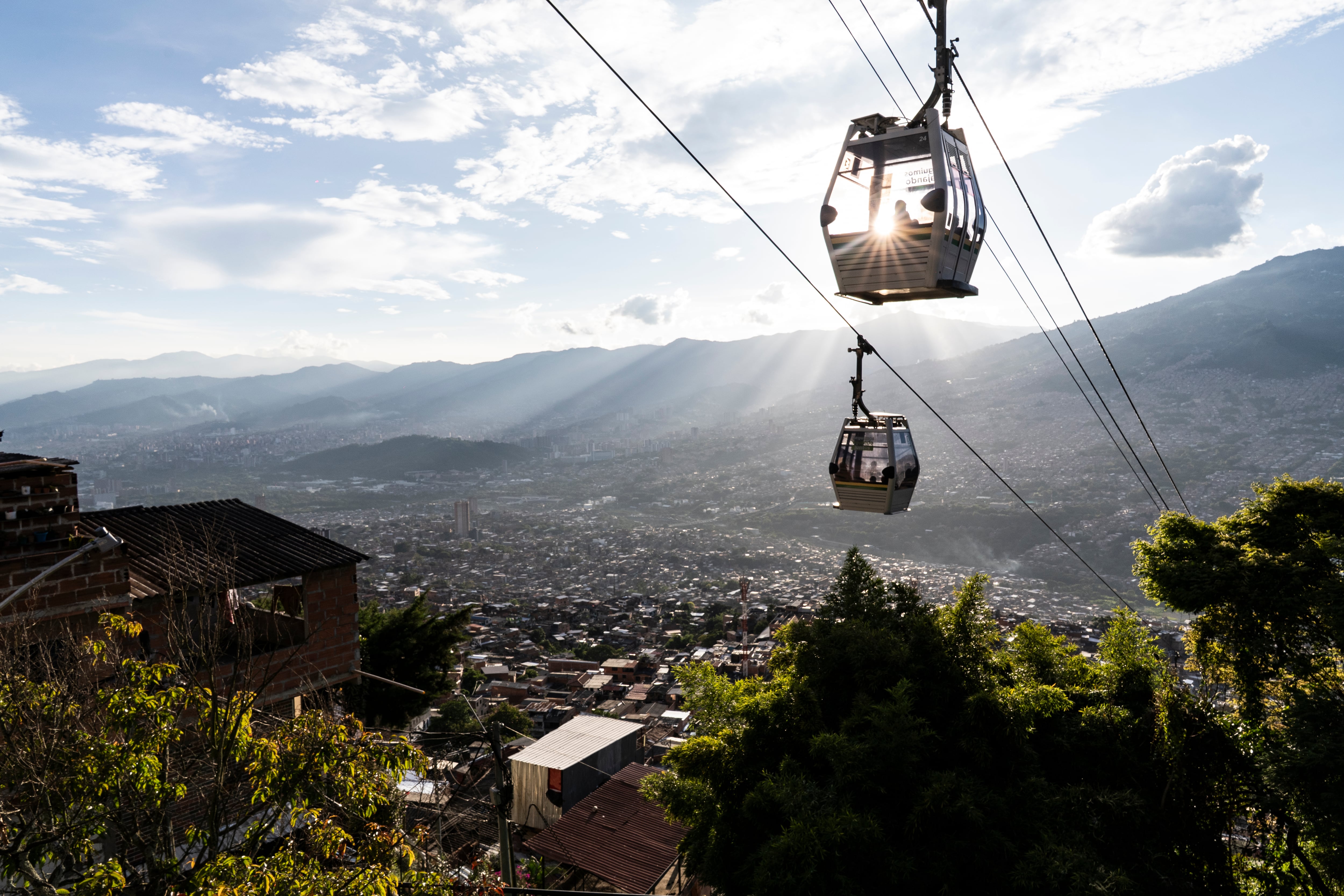
A view of Zone 1, Northeast, in Medellín, on October 6, 2025.
  •  

Naciones árabes e islámicas condenan traslado de embajada de Colombia a Jerusalén

Los 19 países firmantes instan al Gobierno de Colombia a revertir su decisión, cumplir las resoluciones del Consejo de Seguridad y sus obligaciones bajo el derecho internacional, y a respetar los derechos inalienables del pueblo palestino.
  •  

De La Espriella’s Cultural Counterrevolution In Colombia Kicks Off

The National Museum Removes Progressive Artworks Calling Them ‘Political Indoctrination.’

On Friday, Colombian Culture Minister Paola Holguin defended the removal of more than 30 artworks related to feminist, LGTBI+ or peace themes from the National Museum in Bogota, arguing that those works are an instrument of political indoctrination.

RELATED:

UN Warns Colombia Protest Decree May Widen Police Use of Force

“The National Museum is one of the most important cultural centers in the country. It is the first institution of its kind in Colombia and one of the oldest in the Americas, whose purpose is to reflect the soul of the Nation.

The National Museum, as part of the State, has the purpose of conserving, restoring, protecting and socializing our culture. Its institutional vocation is not to serve as an instrument of political indoctrination, a focus for the dissemination of biased versions of our history, much less a multiplying medium for the government agenda,” stated the official of the far-right government presided over by Aberlardo de la Espriella.

“The National Museum CANNOT be a space for apologizing for crime or revictimization; it must observe the rights of victims to truth, justice, reparation and non-repetition. The National Museum is a space for all Colombians, which must ensure, among other things, the fundamental rights of children, which are prevalent according to Article 44 of the Constitution, and, therefore, must protect them from access to sensitive material.”

“The museology and curatorship of the different spaces under the Ministry are being evaluated and redesigned to fulfill the mission of safeguarding, researching, conserving and disseminating the cultural, historical and artistic heritage of the Nation, serving as spaces for memory, identity and social transformation,” Holguin concluded.

Las personas LGBTIQ+ no son una ideología que un Gobierno pueda sacar de una pared. Son parte de Colombia, de su historia y de sus luchas por la igualdad.

Retirar piezas del Museo Nacional que cuentan la historia del movimiento LGBTIQ+, del feminismo y de las luchas por la paz… pic.twitter.com/VB0LtEIsWS

— Mafe Carrascal Rojas (@MafeCarrascal) October 16, 2026

Legislator Mafe Carrascal Rojas’ text reads: “LGBTIQ+ people are not an ideology that a government can simply strip from a wall. They are an integral part of Colombia, its history, and its struggles for equality. Removing items from the National Museum that chronicle the history of the LGBTIQ+ movement, feminism, and the pursuit of peace is not a matter to be taken lightly.

Given that the president has announced a “cultural counter-revolution” against what he terms “wokeism,” we have reason to ask whether this is an attempt to render social struggles—and the rights won over decades—invisible. We cannot allow diversity to once again be treated as something that must be hidden.

The history of Colombia does not belong to any single president or ideological movement; it belongs to a diverse, pluralistic nation—a nation where LGBTIQ+ individuals have the right to exist, to live free from discrimination, and to have their histories and memories recognized.

The Culture Ministry and the National Museum must provide an explanation regarding the removal of these items, the criteria applied, and the measures in place to ensure this history is preserved. They will not succeed in erasing LGBTIQ+ people from the history of Colombia. Their lives matter, their struggles matter, and their rights are not up for negotiation.”

On Thursday, digital outlet La Silla Vacia reported that De la Espriella removed posters, photographs and objects from three rooms of the National Museum, related to the history of feminist and LGBTI movements, victims of political violence and the 2016 peace agreement signed between the State and the Revolutionary Armed Forces of Colombia (FARC).

Among the pieces removed were a gay pride flag belonging to activist Elizabeth Castillo, a poster from the presidential campaign of Bernardo Jaramillo Ossa, a Patriotic Union candidate assassinated in 1990, and the ‘Baligrafo,’ a pen made from a bullet with which the peace agreement was signed.

The removal of these works is part of the “Cultural Counterrevolution” announced by President De la Espriella, who ordered Holguin to remove from public spaces representations that he considers “apology for terrorism.”

Among such references are works alluding to Carlos Pizarro, former commander of the M-19 guerrilla and peace signatory assassinated in 1990 during that year’s presidential campaign.

During the administration of Gustavo Petro (2022-2026), Pizarro’s hat was declared Cultural Heritage of the Nation, but this recognition was recently suspended by a judicial decision.

La Silla Vacia noted that the order to remove the pieces came directly from the Culture Ministry and that officials participated in the selection of the elements taken down.

teleSUR/ JF

Source: EFE

  •  

UN Warns Colombia Protest Decree May Widen Police Use of Force

United Nations warning on Colombia’s protest decree and police use of force during demonstrations.

The UN says Colombia’s new rules could let police end dialogue prematurely and use force against demonstrators.


The United Nations warned Thursday that Colombia’s new rules governing protests could give police excessive discretion to use force, potentially putting peaceful demonstrators at risk.

RELATED: Colombia’s First National Strike Against De la Espriella Met With Police Crackdown

Signed Tuesday by President Abelardo de la Espriella, the decree changes police procedures during demonstrations, allowing authorities to act against people committing violent acts without waiting for dialogue with protesters to conclude.

In a statement released Thursday, the UN Human Rights Office in Colombia raised concerns about the criteria for ending negotiations, the decree’s definition of violence and the circumstances under which authorities can intervene in road blockades.

Some provisions are open to broad interpretation, the office warned, potentially allowing authorities to end dialogue and resort to force.

UN questions definition of violence

The decree identifies several grounds for intervention, including carrying or using weapons, holding people against their will, assaulting others and destroying infrastructure. The UN acknowledged that these acts pose different risks to life and physical integrity but said they must be addressed separately.

Action against people committing violent acts should not automatically end dialogue with demonstrators who continue to protest peacefully, the office said.

It also stressed that force, including less-lethal weapons, must be used only as a last resort, after nonviolent means of restraint have been exhausted, in accordance with General Comment No. 37 on the International Covenant on Civil and Political Rights.

Colombian President Abelardo de la Espriella signed Decree 1525, a measure that facilitates police repression by broadening the definition of “violence” during popular protests.

Interior Minister Rodrigo Lara warned that the new regulation will take effect before demonstrations… pic.twitter.com/YYfouyRGyt

— teleSUR English (@telesurenglish) October 14, 2026

The office also criticized the decree’s definition of violence as broader than international standards, noting that it includes threats of aggression and conduct that does not necessarily cause injuries, deaths or serious property damage.

Authorities should distinguish between carrying an object that could be considered a weapon, threatening to use it and actually using it, the UN said. Possession alone does not make someone violent or change the peaceful nature of an assembly.

Road blockades do not automatically justify force

The UN warned that blocking a road does not, by itself, make a demonstration violent. It also called for a review of the decree’s reference to a “serious and imminent disruption,” saying the criterion could be used to justify breaking up peaceful protests.

The duration of a blockade, the importance of the road affected and the resulting economic losses should not, on their own, justify coercive action, the office said.

“Economic impact or disruption to the normal functioning of a productive activity should not, in themselves, constitute justification for the use of force,” it said.

The office acknowledged that some provisions could help protect the right to peaceful protest, particularly those distinguishing peaceful demonstrators from people committing violent acts. However, it insisted that protecting peaceful assemblies must remain the primary objective of any changes to protest regulations.

The UN office said it had consulted the Colombian government on the decree and that some of its proposed amendments were incorporated into the version signed Tuesday.

  •  

Colombia se retira del Grupo de La Haya tras rechazar su enfoque contra Israel

"Colombia solicitó oficialmente su retirada del Grupo de La Haya, un grupo creado para aislar y atacar a Israel. Rechazamos ese enfoque", sostuvo el ministro Omar Bula, lo que representa un nuevo paso en el acercamiento diplomático con el Estado israelí.
  •  

Colombia’s left flexes its muscles in first street protests against De la Espriella

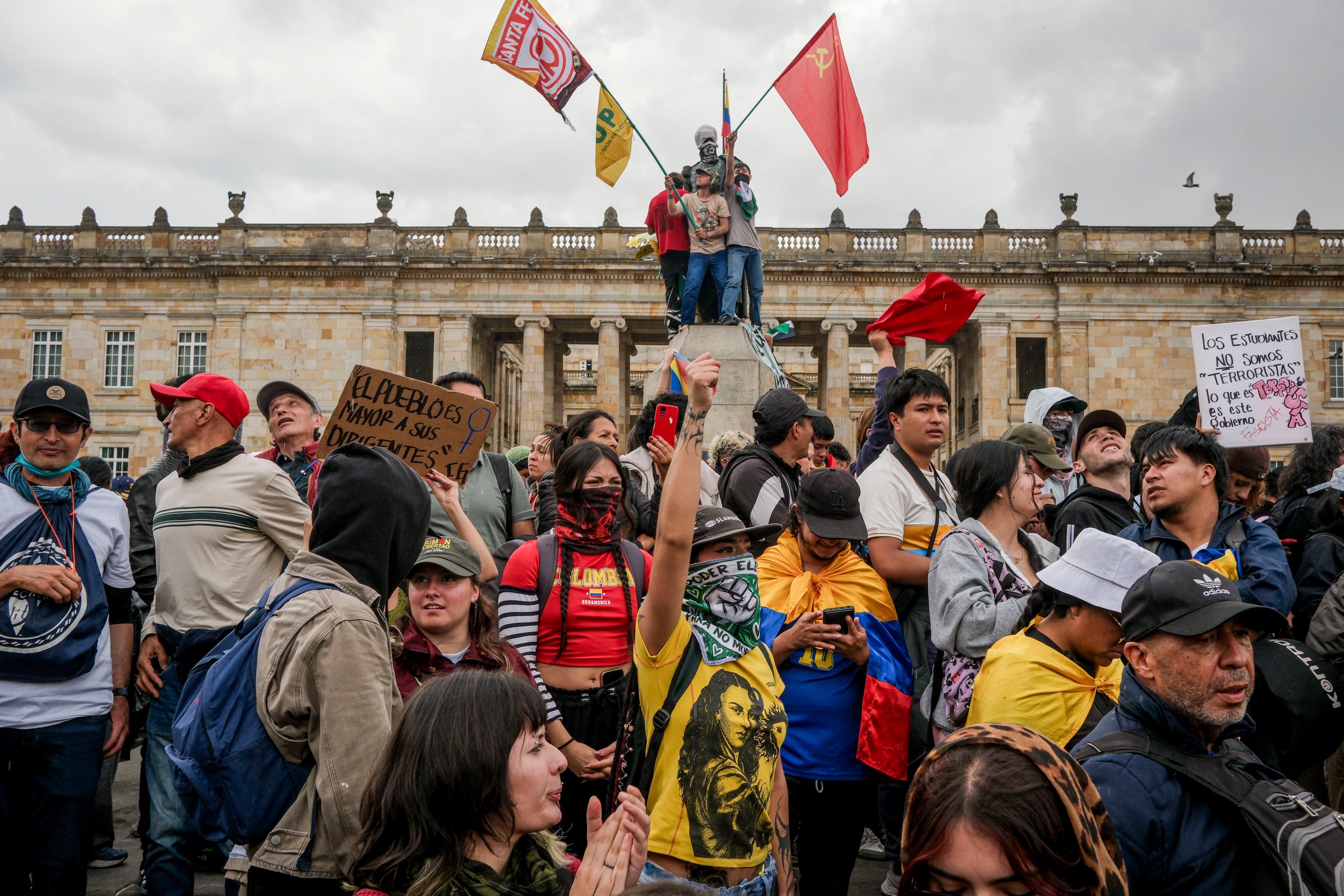
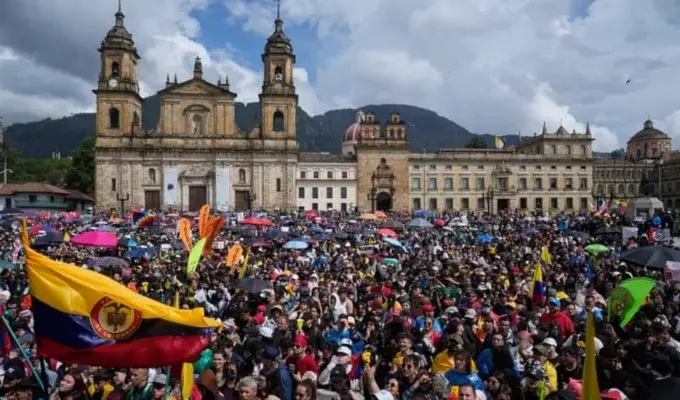
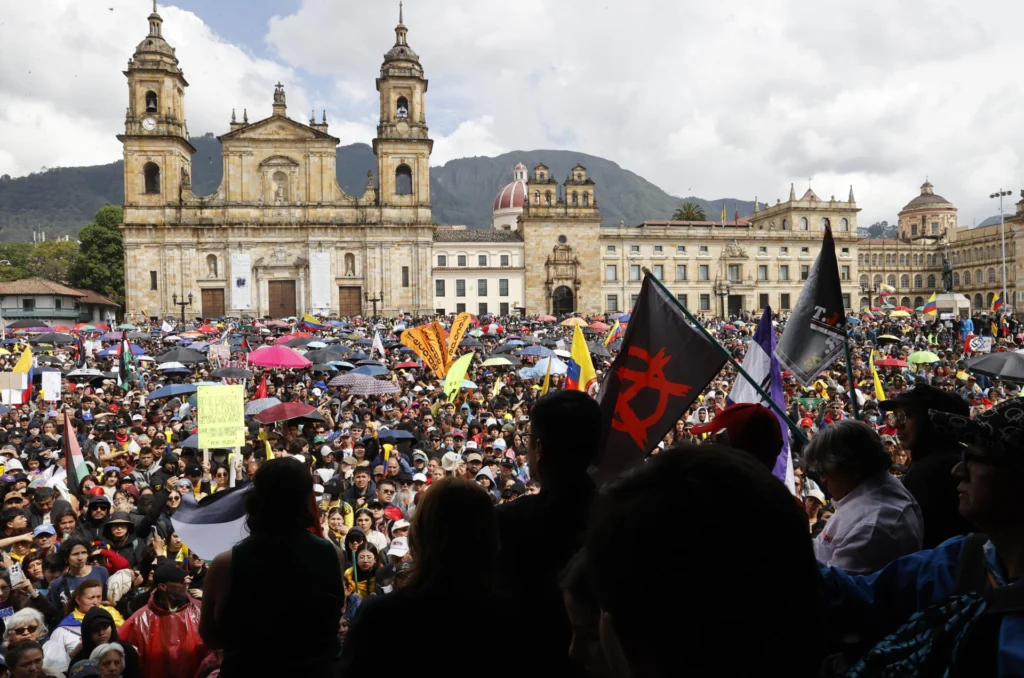
Protest against the government of Abelardo de la Espriella in Bolívar Square, Bogotá, on Wednesday.

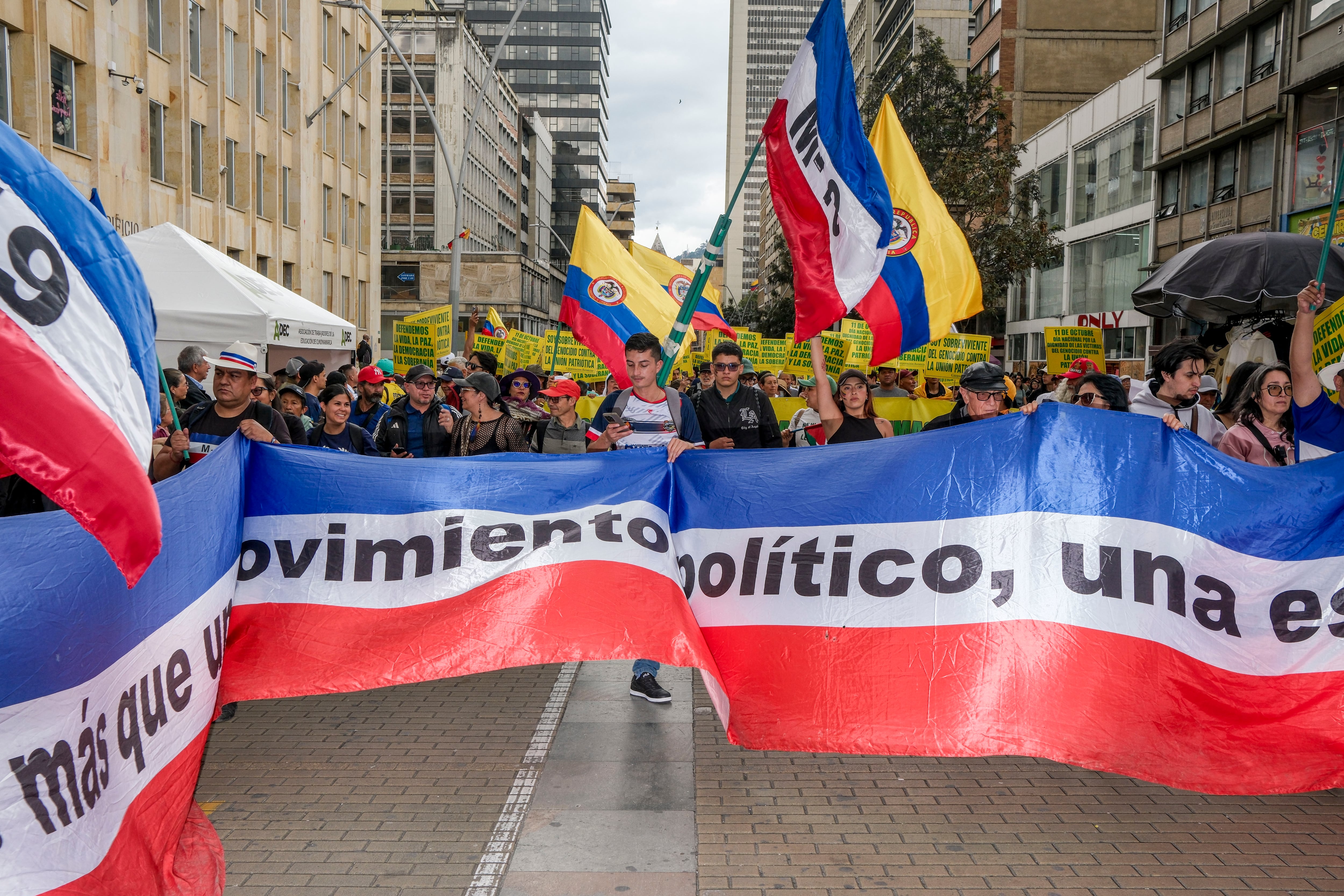
Colombia’s left took to the streets on Wednesday against President Abelardo de la Espriella and fared better than expected. Despite doubts about its ability to mobilize people, fears of police repression stoked by the president himself, the threat of rain and the fact that the protest fell on a weekday, thousands of Colombians demonstrated peacefully for hours. The marches, seen in the country’s main cities, were the first test of the ability of a battered left to mobilize the grassroots after losing power to a right-wing outsider allied openly with the United States and who embodies everything that progressives abhor.

Seguir leyendo

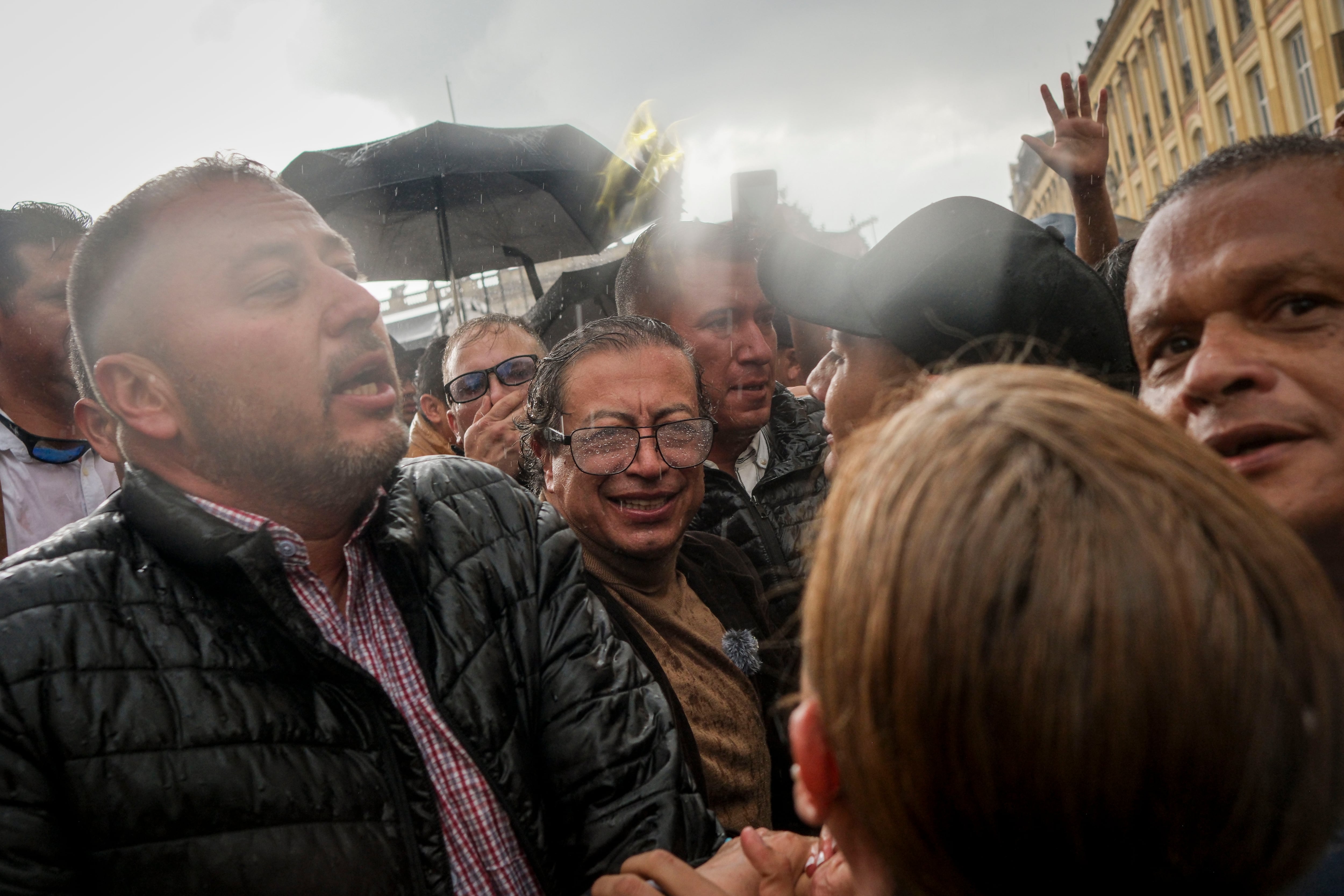
Protesters in Bogotá on October 14,2026.Former president of Colombia Gustavo Petro (center) at the protest against the government of Abelardo de la Espriella in  Bogotá on October 14.
  •  

Colombia’s First National Strike Against De la Espriella Met With Police Crackdown

Colombian protesters and police during nationwide demonstrations against President Abelardo de la Espriella in Bogotá and Medellín.

Thousands protested budget cuts and economic reforms as clashes with police erupted in several Colombian cities.


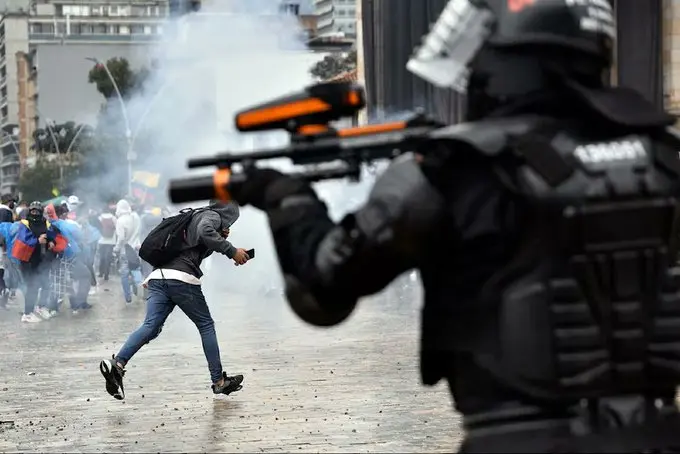
Thousands of people took to the streets across Colombia on Wednesday in the first national strike against President Abelardo de la Espriella’s administration, as police used tear gas, rubber bullets and armored vehicles to disperse demonstrators in several cities.

RELATED: Colombia Holds First National Strike Against De la Espriella

Protests spread across more than a dozen departmental capitals and municipalities, including Bogotá, Medellín, Cali, Barranquilla, Ibagué, Popayán and Bucaramanga. In Bogotá, four columns of demonstrators converged on Bolívar Square under a security operation monitored by a Unified Command Post.

In Medellín, demonstrations escalated into clashes between protesters and the Mobile Anti-Riot Squadron (ESMAD). Security forces deployed tear gas, rubber bullets and armored vehicles, leading to several arrests. Assaults on members of the press were also reported.

Clashes and serious public disturbances were also recorded in Ibagué and Popayán following police interventions. Human rights organizations, including the NGO Temblores, denounced the presence of armed men carrying rifles on the rooftops of government buildings in Bogotá, describing their deployment as a direct threat to protesters.

The demonstrations brought together trade unions, teachers, university students, Indigenous communities, LGBTQ+ groups and feminist organizations. Opposition figures, including former President Gustavo Petro and Senator Iván Cepeda, also took part.

Protesters called for labor, education and social protections, seeking to preserve measures introduced under the previous administration, including free access to public universities and increases in the minimum wage. They opposed what they described as a neoliberal shift under De la Espriella’s government, citing budget cuts and the administration’s initial economic reforms.

Colombianos:

Me dirijo a ustedes esta noche para entregarles un balance claro, objetivo y contundente de la jornada de manifestaciones que vivió hoy nuestro país.

¡Que quede absolutamente claro! El 98% de las movilizaciones transcurrió de manera pacífica.

La inmensa mayoría de… pic.twitter.com/CmllZVPBtu

— Abelardo De La Espriella (@ABDELAESPRIELLA) October 15, 2026

Text Reads: Colombians: I address you tonight to deliver a clear, objective, and unequivocal report on the day of demonstrations that our country experienced today. Let it be absolutely clear! 98% of the mobilizations took place peacefully. The vast majority of those who took to the streets exercised their legitimate right to protest in an orderly and respectful manner toward the institutions. That is democracy, and as President of the Republic, I will always defend and guarantee it. At the close of this day, the national tally records a total of 62,000 citizens mobilized. A figure that represents a very small proportion of the Colombian population, but whose rights and guarantees deserve the full respect of the State. From the first day of my Government, I have issued a directive that admits no interpretations: peaceful protest is respected, protected, and guaranteed. But violence, vandalism, and any attempt to violate the rights of others will have no place under my mandate. Because as legitimate as the right to demonstrate is the right of millions of Colombians to work, move freely, and live in tranquility. Here there is a State, here there is authority, and here there is a Government that respects freedoms, enforces the law, and protects the millions of Colombians who rise early every day to work and build the Nation. Firm for the Nation! Long live Christ the King! (A.D.L.E.)

Demonstrators also rejected the restoration of diplomatic relations with Israel and what they described as U.S. interference in Colombia’s affairs.

Tensions mounted after the government signed a decree hours before the marches that changes the rules governing police conduct during public demonstrations. De la Espriella defended the measure as necessary to combat “urban terrorism,” while opposition politicians and social organizations condemned it as an attempt to intimidate protesters.

Senator Cepeda warned that the decree risked returning Colombia to a situation in which fear enabled arbitrary actions by security forces.

“They want to take us back to a time when fear becomes the means through which the security forces act arbitrarily,” Cepeda said.

Trade union sources said organizers were already drawing up a schedule of further mobilizations for the coming months following Wednesday’s mass protests. The campaign could culminate in a general strike in November.

  •  

EE.UU. inicia envío de 600 soldados a Panamá proyectando movilización a América Latina

Un contingente de la 10.ª División de Montaña de EE.UU. inició su despliegue en Panamá con miras a extender operaciones militares a Colombia y Honduras. La maniobra busca intensificar las acciones antidrogas impulsadas por la Administración de Donald Trump en la región.
  •  

Colombia Holds First National Strike Against De la Espriella

The Government of Abelardo de la Espriella has barely two months in power and this Wednesday, October 14 faced a great challenge in the streets, when the first national strike was held in rejection of its management. Photo: EFE.

Thousands of Colombians marched in Bogotá and other cities on Wednesday in the first national strike against the government of President Abelardo de la Espriella, just two months after he took office, rejecting a decree that sets rules for how security forces handle demonstrations.


The strike unfolded barely two months into the president’s term. Protesters filled the streets of Bogotá, Cali, Medellín, Bucaramanga, Pereira and Riohacha in a direct rejection of the government’s economic and security agenda.

The call brought together labor unions, student groups, opposition parties, labor federations and the Regional Indigenous Council of Cauca (CRIC).

RELATED: Colombian President Signs Decree Expanding Police Powers to Disperse Protests

Organizers described the turnout as a condemnation of the government’s economic and security agenda, the rising cost of living, a rise in violence, the rollback of social gains and what they call attempts to criminalize the right to protest.

Demonstrators emphasized the peaceful nature of the protest, pushing back against signals from the presidential palace that seek to delegitimize the demands of civil society.

The trigger was Decree 1525, signed by De la Espriella. The measure sets rules for the conduct of security forces at public gatherings and allows authorities to disperse them in the event of serious disturbances. Local governments responded with a large deployment of police in the main cities.

The opposition read that operation as an attempt to condition the right to demonstrate in advance. The reading sharpened a day that organizers had already framed as an expression of accumulated anger over the cost of living and the dismantling of social programs.

“Protest is the only instrument left to native people and social organizations to be heard and to demand that our rights be respected,” demonstrators said.

Así luce la Plaza de Bolívar en este momento. Por más que la derecha y los medios intenten decir que no se llenó, aquí sigue la ciudadanía después de la lluvia.

¡Un pueblo lleno de dignidad! pic.twitter.com/GiaMgORgyB

— U L D A R I C O (@UldaricoRamire) October 14, 2026

Broad Coalition, Varied Demands

Discontent is not limited to the decree. The mobilized sectors question the entire set of the government’s early decisions, accusing it of dismantling social gains and making daily life more expensive for the majority.

The Colombian Federation of Education Workers (Fecode), the Colombian Federation of Educators, rallied in defense of public education and the health coverage of teachers. The union also demanded the reconstruction of school infrastructure damaged by earlier emergencies, including the earthquake and its aftershocks in the Cauca Valley, and denounced what it calls the stigmatization of teachers’ unionism.

Native and peasant communities rejected the megaprojects and economic measures they say endanger their ancestral territories. The Cauca Indigenous Regional Council (CRIC) warned that the De la Espriella administration is working to break the autonomy of their organizations.

The economic agenda concentrated much of the anger. Rising prices and policies that organizers say erode acquired rights pushed workers from various productive sectors onto the streets. The protests now carry the weight of a first major social test for the national government, only two months into its mandate. Workers’ federations and popular movements frame the conflict as the defense of historic gains against an agenda they consider regressive.

For the new government, the demonstrations mark a direct challenge. The police deployment in six cities, the breadth of the coalition and the presence of a former President all signal that the strike has moved beyond a dispute over one decree.

Whether the mobilization alters the course of the government’s program remains to be seen. Organizers have promised the pressure will continue if De la Espriella does not reverse the decree and reopen dialogue with the social sectors.

  •  

Colômbia vive protestos contra o governo de La Espriella

Logo Agência Brasil

O governo de Abelardo de la Espriella soma apenas dois meses e, nesta quarta-feira (14), enfrentou um grande desafio nas ruas, que refletem a rejeição popular à sua gestão.

Em um cenário de alta tensão política e social, milhares de pessoas marcharam em Bogotá, Cali, Medellín, Bucaramanga, Pereira e Riohacha para expressar rejeição à agenda econômica e de segurança do presidente, ao aumento do custo de vida, à escalada da violência, ao retrocesso de conquistas sociais e às tentativas de criminalizar e coibir o direito ao protesto.

Notícias relacionadas:

A convocação reuniu sindicatos, coletivos estudantis, centrais sindicais e o Conselho Regional Indígena do Cauca (CRIC). A amplitude da aliança, que abrangeu desde o movimento docente até as comunidades originárias, marcou o tom de uma jornada que extrapolou a capital e se replicou em seis cidades do país.

Na mobilização em Bogotá, espera-se a presença do ex-presidente Gustavo Petro, acompanhado por lideranças progressistas.

Os manifestantes enfatizaram o caráter pacífico do protesto, em resposta a alegações difundidas pela Casa de Nariño que buscam deslegitimar as reivindicações da sociedade civil colombiana.

O estopim foi o Decreto 1525, assinado por De la Espriella. A norma estabelece regras para a atuação das forças de segurança em manifestações e autoriza as autoridades a dispersá-las diante de distúrbios graves. Os governos locais responderam com ampla presença de agentes uniformizados nas principais cidades.

A oposição interpretou essa operação como uma tentativa de reprimir, de antemão, o direito de manifestação.

Essa leitura acirrou ainda mais os ânimos em um dia que os organizadores haviam anunciado como uma expressão do descontentamento devido ao custo de vida e ao desmonte de programas sociais. O descontentamento não se limita ao decreto. Os setores mobilizados questionam o conjunto das primeiras decisões do presidente, ao qual acusam de desmontar conquistas sociais e de encarecer a vida da maioria da população.

A Fecode, Federação Colombiana de Educadores, saiu em defesa da educação pública e da saúde do professores. A entidade reivindicou, ainda, a reconstrução da infraestrutura escolar afetada por emergências anteriores — como o terremoto e as réplicas registradas no Vale do Cauca — e denunciou a estigmatização sofrida pelo sindicalismo docente.

As comunidades indígenas e camponesas, por sua vez, rejeitaram os megaprojetos e as medidas econômicas que colocam em risco seus territórios ancestrais. O CRIC alertou que a administração de De la Espriella busca minar a autonomia de suas organizações.

A pauta econômica concentrou boa parte do descontentamento. O encarecimento do custo de vida e as políticas que, segundo os organizadores, corroem direitos adquiridos levaram trabalhadores de diversos setores produtivos às ruas.

Os protestos na Colômbia assumem, assim, a dimensão de um primeiro grande embate social contra o Executivo, apenas dois meses após o início de sua gestão. As centrais sindicais e os movimentos populares situam o conflito na defesa de conquistas históricas, em oposição a uma agenda que consideram regressiva.

* É proibida a reprodução deste conteúdo

  •  

Governo da Colômbia assina decreto que criminaliza protestos sociais

Logo Agência Brasil

O presidente da Colômbia, Abelardo de la Espriella, assinou um decreto que visa legalizar a repressão contra manifestações pacíficas no país. O decreto foi assinado poucas horas antes da primeira manifestação convocada por setores da oposição para esta quarta-feira. Os protestos foram convocados por organizações sociais, estudantis e sindicais. 

Segundo o governo, o objetivo é reforçar os mecanismos de controle e garantir a ordem pública durante as manifestações populares.

Notícias relacionadas:

Durante uma transmissão pela televisão nacional, o presidente colombiano destacou que o protesto pacífico constitui uma “garantia constitucional”, embora tenha destacado que esse direito “não autoriza agredir outros cidadãos, destruir bens, ameaçar trabalhadores nem impedir o acesso de ambulâncias e serviços de emergência”.

Entre as disposições anunciadas está o acompanhamento permanente das manifestações pelas autoridades. O decreto estabelece que os agentes encarregados da supervisão devem manter uma distância mínima de quatro metros, como parte dos protocolos de controle previstos para esses eventos.

Além disso, o decreto autoriza a intervenção das forças de segurança quando for detectado o porte ou o uso de armas de fogo, armas brancas, explosivos ou artefatos incendiários. Também prevê intervenções em casos de retenção de pessoas contra sua vontade ou agressões contra terceiros.

O documento inclui proteção específica para servidores públicos, pessoal uniformizado, missões médicas e equipes jornalísticas, estabelecendo competências de atuação diante de qualquer ataque ou ameaça dirigida contra esses setores durante as mobilizações.

O Executivo apresentou ainda outras iniciativas legislativas de seu programa de governo, entre elas, um projeto de lei para o combate a grupos armados organizados e um estatuto antiterrorista.


*É proibida a reprodução deste material 

  •  
❌